Blog

  • Sustainable Security

    Chemical weapons elicit a very specific emotive and political response from populations, namely, anxiety. What are the drivers behind the fears surrounding chemical weapons? 

    “War, like revolution, is founded upon intimidation. A victorious war…destroys only an insignificant part of the conquered army, intimidating the remainder and breaking their will…Terror…kills individuals, and intimidates thousands”.

    Writing in 1920, Leon Trotsky thus attributed the power of war and terrorism to its psychological effect. The ability to intimidate and coerce is the key strategy in a world in flux; fear and uncertainty are the weapons of choice for terrorist groups. The observation that terrorists endeavour to kill few and create fear among many has been woven tightly into the fabric of terrorism discourse for decades.  

    But the current century has witnessed an evolved threat paradigm in which the aim of a new type of terrorist group is to achieve “a lot of people watching and a lot of people dead”. Chemical weapons are often presented as the apex of such a goal. Yet increasingly it is argued that chemical weapons are merely a tool to elicit fear that far exceeds their actual destructive clout. This fear is a very human response. The psychological power of chemical weapons is intrinsically linked to their contaminant nature, indiscriminate harm and ability to undermine an individual’s sense of security.

    Are chemical weapons really weapons of mass destruction, with a devastating impact on infrastructure, life, and property? Or, are they weapons of terror? Distinguishing between the two, this article queries how uncertainty feeds the fears surrounding chemical weapons. To what extent does the weapon of terror moniker depend on the concept of mass destruction?

    The enduring power of contamination
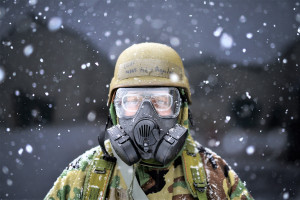
    new-york-national-guard

    Image credit: New York National Guard/Flickr.

    Chemical weapons have an ancient history. Early hunter-gatherers learned to poison their arrows to ensure an effective kill. Poison gas as a weapon of war was recorded by Thucydides in 428 BCE. The scorched earth tactic of poisoning wells using the rotten corpses of people who had died from infectious disease was used across the Ottoman era and Middle Ages. Chemical weapons have been utilised – or attempted – in many conflicts since then. The British government, for example, approved the use of sulphur fumes at the siege of Sebastopol during the Crimean War. Even in Afghanistan and Iraq, the US Army used white phosphorous grenades, as did the British.

    As scientific advances began to allow a greater multiplicity of chemical agents in industrial quantities, concerns mounted over potential consequences. In recognition of the sentiment that injury or death by poison is inhumane, the Hague Conventions (1899 & 1907) outlawed the battlefield use of poisoned weapons and toxic gas via projectiles. The declaration prohibiting the dissemination of asphyxiating and deleterious gases was ratified by all major powers except the US which refused to sign, arguing that projectiles as detailed in the convention had not yet been fully developed.

    The use of poison has long been regarded as morally reprehensible. This harks back to disdain inherent to poisoning and its associations with chemical weapons: in contrast to the hero’s death by sword in battle, poisoning is regarded as cowardly and secretive. Yet this became more acute in the aftermath of the Hague Conventions: moral indignation follows the breaking of accepted conventions, shattering indoctrinated agreement as to non-use. In the early 20th century, both Allies and Axis powers were reluctant to be the first to breach the law.

    Even General John Pershing, having established the U.S. military’s first gas warfare unit in 1917, denounced chemical weapons as “abhorrent to civilization…a cruel, unfair and improper use of science…fraught with the gravest danger to non-combatants”. By the end of WWI, over 124,000 tonnes of chlorine, phosgene and mustard gases had been dispersed, causing approximately 90,000 deaths and 1,230,853 injuries and earning WWI the moniker, “the chemist’s war”. Though the development of gas masks reduced the number of casualties in the later years, the scale of chemical warfare had set the precedent for a lingering psychological and moral response. That even Hitler refused to use chemical weapons on the battlefield (if not in the gas chambers) cemented their standing as a wholly unacceptable weapon of war.

    For decades, the threat from chemical weapons remained largely in the hands of states. Almost two decades since the Chemical Weapons Convention came into force outlawing the production, stockpiling, and use of chemical weapons, the threat of non-state actors obtaining or producing chemical weapons has become of increasing concern. Large quantities of improperly disposed unconventional weapons have been unearthed in recent decades. After WWII, for instance, tons of mustard gas, sarin, soman, tabun, hydrogen cyanide and many other agents were left in storage facilities near towns and cities, buried in landfills across the world or dumped at sea. During the Cold War, chemical weapons facilities proliferated across the world, shrouded in secrecy. Throughout this time, in the Soviet Union thousands of tonnes of chemical materials were simply dumped in undisclosed, unchartered locations. With the collapse of the Soviet Union, some chemical research units were abandoned, leaving available a mass of untraced and unacknowledged weaponry.

    Chemical weapons and non-state actors

    Various terrorist organisations have spent years working on developing chemical weapons, of which the so-called Islamic State (IS) is but one. The eleventh volume of al-Qaida’s Encyclopaedia of Jihad provides instructions on how to construct chemical and biological weapons, although al-Qaida seems to have balked at actually using such weapons. Where groups have succeeded in their use, they have created vast shockwaves, with minimal outlay. In 1978, a Palestinian group injected non-lethal quantities of mercury into Jaffa oranges leading many countries to cease imports, jeopardising a market worth $172 million to Israel at the time. In 1989, terrorists reportedly laced Chilean grapes with cyanide, costing the Chilean fruit industry $333 million, despite the chemical only having been identified in two grapes.

    In 1995, Aum Shinrikyo unleashed the largest gas attack in peacetime history on several lines of the Tokyo subway, killing 12 people and injuring thousands. Though the proportion of people killed was relatively low compared to numbers injured, the attack demonstrated the ability of non-state actors to obtain and use significant quantities of non-conventional weapons. It has subsequently been cast as a “crossing of the Rubicon” (to pass a point of no return), foreshadowing further similar attacks.

    Chemical anxieties

    Chemical weapons elicit a very specific emotive and political response. When the threat and impact of terrorist attacks using conventional weapons against Western targets is so real, why does the as-yet unrealised potential for chemical terror attacks in the West retain a particular power over our thinking?

    Attempts to explain the anxieties surrounding chemical weapons remain incomplete when considered alongside conventional weapons with similarly cruel capabilities. Why, as in Aleppo or Homs, do we regard using explosives to tear people apart as more humane than burning or asphyxiating them to death? Weapons such as “soft nosed” bullets (which disintegrate upon entry to the body) were banned alongside asphyxiating gases by the 1899 Hague Conventions, yet they do not receive such global censure.

    Part of the concern specifically attributed to chemical weapons lies in the human fear of unpredictable, adverse events such as the potential to develop illness after exposure. The most terrifying threats are those perceived not just as lethal but as dehumanising. The fear of chemical weapons is therefore, at least partially, a result of their potential to cause insidious harm.

    So the potency of chemical weapons lies in the unknown and in how they fester in the imagination of those who have felt threatened by them. Chemical weapons attacks are distinguished by the propagation of functional somatic – medically unexplained – physical symptoms, bestowing unconventional weapons a “psychogenic” hallmark. A result of the potential for chemical weapons to yield psychiatric illness, the notion that the long-term psychological consequences of unconventional weapons may be worse than acute physical, is popular in psychological circles. The many chemical incidents in which low-risk patients far outnumbered those whose exposure could be confirmed, contribute to this “weapon of terror” epithet: the perception of exposure to a toxin is a greater determinant of health status and anxiety than actual exposure. After the Aum Shinrikyo attack, over 4,000 people with no sign of exposure sought medical care.

    Many chemicals are perceived by the public as having a high to extreme degree of uncertainty; many, too, elicit strong anxiety, which can drive somatic symptoms. In order to form judgement under uncertainty, people form intuitive assessments upon relevant information. Attempting to decrease their uncertainty, people may apply preconceived beliefs (for instance, that chemicals are dangerous) to symptoms, even if benign, constructing a causal link between symptom and event.

    Consider, for instance, cases in Israel, a nation so subject to the corollaries of war that it has been termed a natural station for the study of stress. During the 1991 Gulf War, Israel endured 18 Scud ballistic missile attacks from Iraq. The stress of conventional bombardment was compounded by the fear that the missiles contained nerve agents; residents had been instructed to carry gas masks and prepare for Iraqi use of biological or chemical weapons. Fearing contamination, over 1,000 patients attended medical facilities with symptoms such as tremors and breathing difficulties. Only 22% of patients had been genuinely injured: none by biochemical agents. 27% of casualties had mistakenly injected themselves with atropine, an antidote to nerve agents.

    Conclusion

    There are two schools of thought explaining the power of chemical weapons. On one hand is the argument that chemical weapons can be harnessed as weapons of mass destruction. This bears significant political pull. On the other, there is scepticism as to their capabilities, where instead they are branded weapons of psychological terror. The schism between “weapon of terror” and “weapon of mass destruction” is rarely acknowledged. Conflation of the two allowed Tony Blair to drawn upon their psychological power to justify the 2003 invasion of Iraq, which shattered the Middle East.

    The truth lies somewhere in between. The psychological and physical fallout of chemical weapons are, essentially, two sides of the same coin. Feared or sustained physical harm gives rise to short-term anxiety and long-term psychological distress. Chemical weapons victims may never be definitively free from the physical effect, thus the psychological effects may endure. Uncertainty directly impacts upon fear, and is thus one of the most influential features of human history. As human experience is a complex nexus of affect, behaviour, cognition and physiology, chemical weapons are disturbing for their ability to bear upon each, fracturing this integration. Uncertainty can become visceral. While war does not accommodate certainty, the potential use of chemical weapons will feed doubt and continue to draw substantial political influence.

    Clare Henley divides her time between acting as Assistant to the Director of the Oxford Process, and as Project Officer at Refugee Trauma Initiative. She previously worked on the Humanitarian Impact of Nuclear Weapons Initiative at Chatham House, and at the Maudsley Hospital’s Centre for Anxiety Disorders and Trauma. Prior to this, she interned on a decontamination project with the Behavioural Science team at Porton Down, Public Health England. Clare has an MSc in War and Psychiatry from King’s College London, where her thesis focused on the psychological impact of chemical, biological, radiological and nuclear weapons. Her other work focused on topics such as the impact of war on child soldiers and of being held hostage. She also has a BSc in Psychology from the University of Exeter.
  • Preparing for the Impact of a Changing Climate on U.S. Humanitarian and Disaster Response

    Preparing for the Impact of a Changing Climate on U.S. Humanitarian and Disaster Response

    The New Security Beat | The New Security Beat | July 2011

    Issue:Climate change

    Climate-related disasters could significantly impact military and civilian humanitarian response systems, so “an ounce of prevention now is worth a pound of cure in the future,” said CNA analyst E.D. McGrady at the Wilson Center launch of An Ounce of Preparation: Preparing for the Impact of a Changing Climate on U.S. Humanitarian and Disaster Response. The report, jointly published by CNA and Oxfam America, examines how climate change could affect the risk of natural disasters and U.S. government’s response to humanitarian emergencies.

    Connecting the Dots Between Climate Change, Disaster Relief, and Security

    The frequency of – and costs associated with – natural disasters are rising in part due to climate change, said McGrady, particularly for complex emergencies with underlying social, economic, or political problems, an overwhelming percentage of which occur in the developing world. In addition to the prospect of more intense storms and changing weather patterns, “economic and social stresses from agricultural disruption and [human] migration” will place an additional burden on already marginalized communities, he said. 

    Paul O’Brien, vice president for policy and campaigns at Oxfam America said the humanitarian assistance community needs togalvanize the American public and help them “connect the dots” between climate change, disaster relief, and security. 

    As a “threat multiplier,” climate change will likely exacerbate existing threats to natural and human systems, such as water scarcity, food insecurity, and global health deterioration, said Vice Admiral Lee Gunn, USN (ret.), president of CNA’s Institute for Public Research. Major General Richard Engel, USAF (ret.), of the National Intelligence Council identified shifting disease patterns and infrastructural damage as other potential security threats that could be exacerbated by climate change.

    “We must fight disease, fight hunger, and help people overcome the environments which they face,” said Gunn. “Desperation and hopelessness are…the breeding ground for fanaticism.”

    U.S. Response: Civilian and Military Efforts 

    The United States plays a very significant role in global humanitarian assistance, “typically providing 40 to 50 percent of resources in a given year,” said Marc Cohen, senior researcher on humanitarian policy and climate change at Oxfam America. 

    The civilian sector provides the majority of U.S. humanitarian assistance, said Cohen, including the USAIDOffice of Foreign Disaster Assistance (OFDA) and the State Department’s Bureau of Population, Refugees, and Migration. These organizations provide leadership, funding, and food aid to developing countries in times of crisis, but also beforehand: “The internal rationale [of the Office of Foreign Disaster Assistance] is to reduce risk and increase the resilience of people to reduce the need for humanitarian assistance in the future,” said Edward Carr, climate change coordinator at USAID’s Bureau for Democracy, Conflict, and Humanitarian Assistance.

    The U.S. military complements and strengthens civilian humanitarian assistance efforts by accessing areas that civilian teams cannot reach. The military can utilize its heavy lift capability, in-theater logistics, and command and control functions when transportation and communications infrastructures are impaired, said McGrady, and if the situation calls for it, they can also provide security. In addition, the military could share lessons learned from its considerable experience planning for complex, unanticipated contingencies with civilian agencies preparing for natural disasters. 

    “Forgotten Emergencies” 

    Already under enormous stress, humanitarian assistance and disaster response systems have persistent weaknesses, such as shortfalls in the amount and structure of funding, poor coordination, and lack of political gravitas, said Cohen. 

    Food-related aid is over-emphasized, said Cohen: “If we break down the shortfalls, we see that appeals for food aid get a better response than the type of response that would build assets and resilience…such as agricultural bolstering and public health measures.” Food aid often does not draw on local resources in developing countries, he said, which does little to improve long-term resilience. 

    “Assistance is not always based on need…but on short-term political considerations,” said Cohen, asserting that too much aid is supplied to areas such as Afghanistan and Iraq, while “forgotten emergencies,” such as the Niger food crisis, receive far too little. Furthermore, aid distribution needs to be carried out more carefully at the local scale as well: During complex emergencies in fragile states, any perception of unequal assistance has the potential to create “blowback” if the United States is identified with only one side of a conflict.

    Engel added that many of the problems associated with humanitarian assistance will be further compounded by increasing urbanization, which concentrates people in areas that do not have adequate or resilient infrastructure for agriculture, water, or energy. 

    Preparing for Unknown Unknowns

    A “whole of government approach” that utilizes the strengths of both the military and civilian humanitarian sectors is necessary to ensure that the United States is prepared for the future effects of climate change on complex emergencies in developing countries, said Engel. 

    In order to “cut long-term costs and avoid some of the worst outcomes,” the report recommends that the United States:

    • Increase the efficiency of aid delivery by changing the budgetary process;
    • Reduce the demand by increasing the resilience of marginal (or close-to-marginal) societies now;
    • Be given the legal authority to purchase food aid from local producers in developing countries to bolster delivery efficiency, support economic development, and build agricultural resilience;
    • Establish OFDA as the single lead federal agency for disaster preparedness and response, in practice as well as theory;
    • Hold an OFDA-led biannual humanitarian planning exercise that is focused in addressing key drivers of climate-related emergencies; and,
    • Develop a policy framework on military involvement in humanitarian response.

    Cohen singled out “structural budget issues” that pit appropriations for protracted emergencies in places like Iraq, Afghanistan, and Darfur against unanticipated emergencies, like the 2010 earthquake in Haiti. Disaster-risk reduction investments are not a “budgetary trick” to repackage disaster appropriations but a practical way to make more efficient use of current resources, he said: “Studies show that the return on disaster-risk reduction is about seven to one – a pretty good cost-benefit ratio.” 

    Edward Carr said that OFDA is already integrating disaster-risk reduction into its other strengths, such as early warning systems, conflict management and mitigation, democracy and governance, and food aid. However, to build truly effective resilience, these efforts must be tied to larger issues, such as economic development and general climate adaptation, he said. 

    “What worries me most are not actually the things I do know, but the things we cannot predict right now,” said Carr. “These are the biggest challenges we face.”

    Article source: The New Security Beat

    Image source: Oxfam International

    Comments

    Post new comment


  • Sustainable Security

    The United States, Niger & Jamaica: Food (In)Security & Violence in a Globalised World

    due to a complex range of interconnected issues from climate change to misguided economic policies, political failure and social marginalisation, over 2 billion people across the world live in constant food insecurity. Anna Alissa hitzemann takes a sustainable security approach to look at the importance of “physical and economic access to basic food” by exploring the links between food insecurity and violence.

    Read Article →

    The Global Land Rush: Catalyst for Resource-Driven Conflict?

    Michael Kugelman of the Woodrow Wilson International Center, argues that the factors that first sparked many of the land acquisitions during the global food crisis of 2007-08 — population growth, high food prices, unpredictable commodities markets, water shortages, and above all a plummeting supply of arable land — remain firmly in place today. He writes that land-lusting nations and investors are driven by immediate needs, and they have neither the incentive nor the obligation to slow down and adjust their investments in response to the wishes of distant international bureaucrats. This, he argues, has serious consequences for global security.

    Read Article →

    Human Security and Marginalisation: A case of Pastoralists in the Mandera triangle

    This paper seeks to bring out the relevance of human security in pastoral areas of Mandera triangle and the relationships and contradictions that exist between it and national security. The “Mandera Triangle” encompasses a tri-border region of Ethiopia, Somalia, and Kenya that exemplifies, in a microcosm, both a complex and a chronic humanitarian crisis that transcends national boundaries.

    Read Article →

  • Marginalisation of the majority world

    Marginalisation of the majority world

    A complex interplay of discrimination, global poverty, inequality and deepening socio-economic divisions, together make for key elements of global insecurity. While overall global wealth has increased, the benefits of this economic growth have not been equally shared. The rich-poor divide is actually growing, with a very heavy concentration of growth in relatively few parts of the world, and poverty getting much worse in many other regions. The ‘majority world’ of Asia, Africa and Latin America feel the strongest effects of marginalisation as a result of global elites, concentrated in North America and Europe, striving to maintain political, cultural, economic and military global dominance.

    A New Road for Preventative Action

    East West Institute | East West Institute | June 2011

    Issues:Climate change, Competition over resources, Global militarisation, Marginalisation

    A gap continues to exist between the international community’s rhetoric about conflict prevention and its responsibility to protect people from severe human rights violations. The record of human misery caused by violent conflict is testimony to the chronic  lack of political will to respond collectively to newand emerging threats to peace. The ineffectiveness of many global efforts at preventive diplomacy is evidence that traditional diplomatic approaches,  including the use of force, simply may not work.

    Article source: East West Institute

    Image source: AfghanistanMatters

    Read more »

    Drones Don’t Allow Hit and Run

    Prof Susan Breau | Oxford Research Group | June 2011

    Issues:Global militarisation, Marginalisation

    If You Use Drones You Must Confirm and Report Who They Killed, Says Legal Team.

    International lawyers have identified an existing but previously unacknowledged requirement in law for those who use or authorise the use of drone strikes to record and announce who has been killed and injured in each attack.

    A new report, ‘Drone Attacks, International Law, and the Recording of Civilian Casualties of Armed Conflict’, is published on 23 June 2011 by London-based think tank Oxford Research Group.

    Article source: Oxford Research Group

    Image source: Official U.S. Navy Imagery

    Read more »

    The economies of violence

    The Economist | The Economist | June 2011

    Issue:Marginalisation

    Are countries poor because they are violent or violent because they are poor?

    Yesterday it was Afghanistan and Congo. Today it is Côte d’Ivoire and Libya. Violence, it seems, is always with us, like poverty. And that might seem all there is to be said: violence is bad, it is worse in poor countries and it makes them poorer.

    But this year’s World Development Report, the flagship publication of the World Bank, suggests there is a lot more to say. Violence, the authors argue, is not just one cause of poverty among many: it is becoming the primary cause. Countries that are prey to violence are often trapped in it. Those that are not are escaping poverty. This has profound implications both for poor countries trying to pull themselves together and for rich ones trying to help.

    Article source: The Economist

    Image source: B.R.Q.

    Read more »

    Paul Rogers on Development, Climate Change, Conflict and Migration

    Action Aid | youtube | June 2011

    Issues:Climate change, Competition over resources, Marginalisation

    Paul Rogers, Professor of Peace Studies at Bradford University, and Oxford Research Group’s Global Security Consultant, talks to Action Aid about the issues that will dominate international security and world development over the coming decades.

    Source: youtube

    Read more »

    South Sudan: Enhancing Grassroots Peacebuilding

    Hope Chichaya | Insight on Conflict | June 2011

    Issues:Competition over resources, Marginalisation

    South Sudan’s referendum has come and gone. What lies ahead post-independence in terms of peace, development and security is however still to be determined. The 15 years of war left over one million people dead and more than three million displaced. Negotiations led to the Comprehensive Peace Agreement (CPA) in 2005, which included provision for a referendum on independence for the Southerners.  The referendum was held in January, with overwhelming support for succession. But serious challenges face South Sudan as it prepares for independence on 9 July 2011.

    Article source: Insight on Conflict

    Image source: United Nations Photo

    Read more »

    Security Studies and the Marginalisation of Women and Gender Structures

    James Chisem | e-International Relations | May 2011

    Issue:Marginalisation

    In her seminal 1987 text, Bananas, Beaches and Bases, Cynthia Enloe directs the reader’s attention to the realm of international politics and asks the question “where are the women?”. One might reasonably be expected to answer – they are everywhere. From the political economy, in which women comprise 80% of the global factory workforce and unpaid female domestic labour is estimated to contribute up to 35% of global GDP, to modern warfare, a theatre wherein the majority of victims are women gender is centrally implicated in the machinations of the international system.

    Article source: e-International Relations

    Image source: jrseles

    Read more »

  • Climate change

    Climate change

    Climate change is high on both domestic and international political agendas as countries face up to the huge environmental challenges the world now faces. Whilst this attention is welcome, less energy is being focused on the inevitable impact climate change will have on security issues. The well-documented physical effects of climate change will have knock-on socio-economic impacts, such as loss of infrastructure, resource scarcity and the mass displacement of peoples. These in turn could produce serious security consequences that will present new challenges to governments trying to maintain stability.

    Selling Nature to Save Nature, and Ourselves

    Stephen Leahy | Terraviva | July 2011

    Issues:Climate change, Competition over resources, Marginalisation

    Avoiding the coming catastrophic nexus of climate change, food, water and energy shortages, along with worsening poverty, requires a global technological overhaul involving investments of 1.9 trillion dollars each year for the next 40 years, said experts from the U.N. Department of Economic and Social Affairs (UN-DESA) in Geneva Tuesday.

    “The need for a technological revolution is both a development and existential imperative for civilisation,” said Rob Vos, lead author of a new report, “The Great Green Technological Transformation”. 

    Article source: Terraviva

    Image source: Paul Keller

    Read more »

    A New Road for Preventative Action

    East West Institute | East West Institute | June 2011

    Issues:Climate change, Competition over resources, Global militarisation, Marginalisation

    A gap continues to exist between the international community’s rhetoric about conflict prevention and its responsibility to protect people from severe human rights violations. The record of human misery caused by violent conflict is testimony to the chronic  lack of political will to respond collectively to newand emerging threats to peace. The ineffectiveness of many global efforts at preventive diplomacy is evidence that traditional diplomatic approaches,  including the use of force, simply may not work.

    Article source: East West Institute

    Image source: AfghanistanMatters

    Read more »

    Global Climate Change Vulnerability and the Risk of Conflict

    Uppsala University | Center for Sustainable Development | June 2011

    Issue:Climate change

    In a study from the Center for Sustainable Development at Uppsala University in Sweden titled “Climate Change and the Risk of Violent Conflicts in Southern Africa,” authors Ashok Swain, Ranjula Bali Swain, Anders Themnér, and Florian Krampe examine the potential for climate change and variability to act as a “threat multiplier” in the Zambezi River Basin. The report argues that “socio-economic and political problems are disproportionately multiplied by climate change/variability.” A reliance on agriculture, poor governance, weak institutions, polarized social identities, and economic challenges in the region are issues that may combine with climate change to increase the potential for conflict. Specifically, the report concludes that the Matableleland-North Province in Zimbabwe and Zambezia Province in Mozambique are the areas in the region most likely to experience climate-induced conflicts in the near future.

    Article source: The New Security Beat

    Image source: The City Project

    Read more »

    Finding the Right Paddle: Navigating Climate Change Adaptation and Mitigation Strategies

    The New Security Beat | The New Security Beat | June 2011

    Issue:Climate change

     After decades on the periphery, climate change has made its way onto the national security stage. Yet, while the worlds of science, policy, and defense are awakening to the threats of rising sea levels, stronger storms, and record temperatures, debate continues over the means and extent of adaptation and mitigation programs. In a world of possibilities, how to decide which paddle to use to navigate uncertain waters?

    A report from E3G titled, Degrees of Risk: Defining a Risk Management Framework for Climate Security, contends that a more rigorous risk management approach is needed to deal with the security implications of climate change, and cues should be taken from the risk management approach of the national security community. Risk management, while not a “panacea” for divisive climate change politics, “provides a way to frame these debates around a careful consideration of all the available information.”

    The report calls for a three-tier, “ABC” framework for international planning:

    1) Aim to stay below 2°C (3.6°F) of warming
    2) Build and budget assuming 3-4°C (5.4-7.2°F) of warming
    3) Contingency plan for 5-7°C (9-12.6°F) of warming

    Article source: The New Security Beat

    Image source: Pondspider

    Read more »

    Paul Rogers on Development, Climate Change, Conflict and Migration

    Action Aid | youtube | June 2011

    Issues:Climate change, Competition over resources, Marginalisation

    Paul Rogers, Professor of Peace Studies at Bradford University, and Oxford Research Group’s Global Security Consultant, talks to Action Aid about the issues that will dominate international security and world development over the coming decades.

    Source: youtube

    Read more »

    Climate Change, Nuclear Risks and Nuclear Disarmament: From Security Threats to Sustainable Peace

    Jurgen Scheffran | World future Council | June 2011

    Issues:Climate change, Global militarisation

    This study brings to light the multidimensional interplay between climate change, nuclear risks and nuclear disarmament, and its critical implications for the strategic security environment. In addition, it explores prospects and openings to tackle these key challenges, stressing the role played by institutions to “strengthen common ecological and human security, build and reinforce conflict-resolution mechanisms and low-carbon energy alternatives, and create sustainable lifecycles that respect the capabilities of the living world.”

    Read the full report here.

    Image source: GreenDominee

    Read more »

  • Iraq’s shadow over Afghanistan

    The current surge in United States military forces in Afghanistan part of a strategy designed to bring the war to an end from a position of strength. The great strains within the US military mean that the deployment of 30,000 troops to Afghanistan can be sustained only if forces can be withdrawn from Iraq at the scheduled rate: that is, all combat-forces out by August 2010 and the remaining (approximately 50,000) personnel by the end of 2011. The dynamics of violence in Iraq present a serious challenge to this strategy.

    Washington is thus engaged in a delicate balancing-act: managing disengagement from Iraq while ensuring that the United States will retain a significant military presence in the country well beyond 2011 in order to exercise a maximum degree of influence. 

    A new label

    The US forces remaining in Iraq after the substantial withdrawal of August 2010 – which follows the evacuation of troops from Iraqi cities at the end of June 2009 – are intended to perform a variety of roles. Some may be engaged in training Iraqi forces; others in guarding the huge embassy-complex in Baghdad; and still more in what will be described as support-roles at Balad and other air-bases that have acquired a distinct air of permanency. In addition to these core military contingents, there will be many US security-contractors, themselves mostly ex-military. 

    What will happen in the sixteen months between August 201o and December 2011 is pivotal. It is probable that at some point the remaining 50,000 American troops in Iraq will be designated “non-combat” – a wordplay that barely conceals the establishment by the US army of a new type of unit known as an “advise-and-assist” brigade (AAB). A new report explains their role:

    “These brigades are to have traditional strike capabilities, as well as advisory roles, the ability to augment local forces with ‘combat enablers’ and command and control (C2) tools to support its own manoeuvre units and indigenous units” (see Daniel Wasserbly, “US forces analyse future role of advise-and-assist brigades in Iraq”, Jane’s International Defence Review, January 2010).

    In effect, army units are both taking on new roles but retaining their existing and full combat-capabilities. It follows that their phased withdrawal will depend very much on the extent to which Iraq becomes a more peaceful state in which the interests of the United States and other western interests are secured.

    An evolving strategy

    The pattern of insurgent activity in Iraq suggests that this outcome is uncertain. In the course of 2009, the levels of violence across Iraq tended to stabilise after an initial decline. Around 5,000 Iraqi civilians were killed, and it was the first time since 2006 that there was no significant slump during the period (see “Civilian deaths from violence in 2009”, Iraq Body Count, 31 December 2009). 

    There were, moreover, significant changes in the types of violence. The first few months of the year were dominated by major suicide-bombing attacks on mosques or crowded markets in Shi’a areas. The intention was most likely to provoke sectarian antagonism and then encourage fearful members of the Sunni minority to see the insurgents as their defenders, leading in turn to a violent destabilisation of the government in the run-up to the Iraqi elections on 7 March 2010.

    In the second half of 2009, paramilitary groups began to target large government ministries in suicide-attacks. These naturally were located in high-security zones, but the assailants found ways of penetrating the cordons; in a series of attacks in August, October and December, five sets of government offices and ministries were hit and scores of civil servants killed (see “Iraq: the path of war”, 18 December 2009).

    These attacks in particular caused deep unease among the American and allied agencies, not least because of the levels of security that had to be breached (see Roger Hardy, “Violence returns to Iraq”, BBC News, 8 December 2009). By the end of 2009, there were serious concerns as to whether the Iraqi security forces were capable even of protecting government buildings, and deep suspicions that the insurgents had access to inside information.

    The operations extended beyond Baghdad, and they included frontal-assaults on Iraqi security forces. In Anbar’s provincial capital of Ramadi, for example, two suicide-bomb attacks in early January 2010 in a part of the city regarded as safe killed twenty-four people (mostly police-officers) and wounded around sixty, including the provincial governor Qassim Mohammed.

    Even this surge left the overall degree of violence in Iraq much lower than it had been in 2007.  In this respect, a further shift in the focus of activity in the past ten days is notable: namely, towards hitting “symbolic” targets and a return to the mass killing of Shi’a civilians.

    The biggest coordinated actions in several months were launched on 25 January 2010, when in the space of nine minutes coordinated blasts targeted three major hotels frequented by foreign visitors (and western journalists). Again despite high security, bombs were detonated close to the Ishtar Sheraton, the Babylon and the Hamra hotels, killing thirty-six people and wounding seventy-one (see Anthony Shadid & John Leland, “Baghdad Blasts Shatter Sense of Security in Capital”, New York Times, 26 January 2010). On the following day it was the turn of the Iraqi interior-ministry’s forensics offices, where at least seventeen people were killed and many more wounded.

    The hotel incidents aroused most international comment, but the interior-ministry attack caused the greatest domestic worry, especially from civil servants (see Anthony Shadid, “Latest Bombings Add New Layer of Anxiety and Suspicion in Baghdad”, New York Times, 27 January 2010). Indeed, the fact that a great escalation of security since August 2009 has had little apparent effect is creating pervasive fear among government officials (see Khalid al-Ansary & Hadeel Kamil, “Civil Servants Fear More Attacks”, Institute for War and Peace Reporting – Iraq Crisis Report 320, 21 January 2010).

    The spate of attacks on government targets has been accompanied by the targeting of Shi’a citizens – in this case, pilgrims taking part in the major religious festival centred on Karbala, 80 kilometres southwest of Baghdad. On 1 February, a female suicide-bomber killed more than forty people among a large crowd of pilgrims; and on 3 February there were three more attacks, including a huge car-bomb in Karbala itself which killed twenty-three people and injured scores more.

    A stressed project

    This combination of events and trends indicates that powerful paramilitary groups in Iraq (including al-Qaida) retain their ability to organise, plan and coordinate a deadly campaign. Their success in targeting some of the most heavily protected districts of Baghdad and other cities is a sign of a rooted influence among some sections of the Sunni population. Washington’s military and political analysts are deeply concerned that the campaign reflects a reorganisation of the insurgency that could further weaken official Iraqi security forces at the very time that US troops prepare to reduce their own role and depart the scene.

    The worry from the Pentagon’s perspective is that the forthcoming “advise-and-assist” brigades may have to do much more than these bland terms suggest: namely, remain in Iraq in large numbers and even engage in direct combat-operations against insurgents. That, in turn, implies that further stresses will be felt throughout the US military just as the surge in Afghanistan reaches its peak later in 2010. 

    Most Americans and citizens of other western countries may think that the Iraq war is more or less over, and that whatever remains of the conflict has nothing to do with Afghanistan. It seems probable that both beliefs are wrong. The implications for the United States, and other foreign powers waging the Afghanistan war, are serious.

  • Sustainable Security

    Colombia and Mexico: The Wrong Lessons from the War on Drugs

    As activists around the world participate in a Global Day of Action against criminalisation of drug use, evidence from the multi-billion dollar War on Drugs in Colombia suggests that militarized suppression of production and supply has displaced millions of people as well as the problem, not least to Mexico. The wrong lessons are being exported to Central America and beyond, but a groundswell of expert and popular opinion internationally is calling for alternative approaches to regulating the use and trade in drugs.

    Read Article →

    Militarised Public Security in Latin America: Mexico Gambles on Vigilante Security

    A new alliance between the Mexican security forces and citizen ‘self-defence’ groups in Michoacán state has brought some short term success in the fight against the Knights Templar cartel. But what will be the long-term consequences of legitimizing heavily armed vigilante groups in Mexico?

    Read Article →

  • Global militarisation

    Global militarisation

    The current priority of the dominant security actors is maintaining international security through the vigorous use of military force combined with the development of both nuclear and conventional weapons systems. Post-Cold War nuclear developments involve the modernisation and proliferation of nuclear systems, with an increasing risk of limited nuclear-weapons use in warfare – breaking a threshold that has held for sixty years and seriously undermining multilateral attempts at disarmament. These dangerous trends will be exacerbated by developments in national missile defence, chemical and biological weapons and a race towards the weaponisation of space.

    Influential European Figures Issue Unprecedented Statement on Nuclear Dangers

    Top Level Group of UK Parliamentarians For Multilateral Nuclear Disarmament and Non Proliferation | http://toplevelgroup.org/ | April 2010

    Issue:Global militarisation

    Tagss:nuclear disarmament, nuclear non-proliferation

    Reported on the website of the Top Level Group of UK Parliamentarians For Multilateral Nuclear Disarmament and Non Proliferation, 41 senior European statesmen and women recently signed an unprecedented European statement highlighting the world’s growing nuclear dangers and calling for greater international efforts to address them. Representing a range of political persuasions, this is a non-partisan scaling up of the European political presence in the international nuclear debate. It also signals the formation of a new European Leadership Network for Multilateral Nuclear Disarmament and Non-Proliferation, designed to allow ongoing and coordinated European interventions on crucial nuclear issues.

    Source: Top Level Group of UK Parliamentarians For Multilateral Nuclear Disarmament and Non Proliferation

    Image source: BlatantNews.com

    Read more »

    Beyond “liddism”: towards real global security

    Paul Rogers | openDemocracy | April 2010

    Issue:Global militarisation

    A decade of pitiless wars and brutal inequalities has made the arguments of the book “Losing Control: Global Security in the 21st Century” – first published before 9/11, and now in its third edition – more relevant than ever. In his 450th column for openDemocracy, Paul Rogers looks back and forward.

    Read more »

    Afghanistan: victory talk, regional tide

    Paul Rogers | openDemocracy | March 2010

    Issue:Global militarisation

    A seductive narrative of military progress in Afghanistan is spreading among United States analysts. The real story is more complicated.

    Photo source: The U.S. Army

    Read more »

    Yemen: state fragility, piety, and the problems with intervention

    Lisa Wedeen | NOREF | March 2010

    Issue:Global militarisation

    In this recent publication from the Norwegian  Peacebuilding Centre (NOREF), Lisa Wedeen argues that “The seemingly neutral category of “failed states,” as applied to Yemen, constructs the country as a place in need of intervention. In obscuring more than it reveals about local realities, outside interference runs the risk of being counterproductive.”

    Read more »

    How small arms and light weapons proliferation undermines security and development

    Rachel Stohl, EJ Hodendoorn | Center for American Progress | March 2010

    Issues:Global militarisation, Marginalisation

    The proliferation of small arms and light weapons is an immediate security challenge to individuals, societies, and states around the world and an enormous hurdle to sustainable security and development.

    Read more »

    America and Israel: a historic choice

    Paul Rogers | openDemocracy | March 2010

    Issue:Global militarisation

    Pictured to the left, past construction in Har Homa settlement in East Jerusalem (courtesy of activestills); yet as Paul Rogers argues ‘The serious row between Washington and Tel Aviv is about far more than the construction of homes in east Jerusalem; it goes to the heart of the close military alliance between the two states.’

    Read more »

  • Sustainable Security

    Authors Note: This article summarises key findings of my book Malte Brosig (2015) Cooperative Peacekeeping in Africa: Exploring Regime Complexity. London & New York: Routledge.

    Introduction

    Peacekeeping enjoys an unprecedented popularity amongst policymakers at the moment. At no point in history have there been more peacekeepers deployed worldwide. The United Nations (UN) and regional organisations are currently deploying more than 100,000 troops and police in missions around the globe but most are located in Africa. The challenges individual missions are facing are well-discussed among experts. Much of the relevant literature focusses on dos and don’ts of peacekeeping practices. Regardless of individual cases we can observe the emergence of a larger inter-organisational peacekeeping system which I refer to as African peacekeeping regime complex in which the most relevant organisations such as the UN, the African Union (AU), Regional Economic Communities (RECs) and European Union (EU) are intimately inter-connected. Thus, the challenges actors are facing are not only individual ones and so solutions to these challenges are increasingly based on multi-actor coordination. How the peacekeeping regime complex emerged and how actors are positioned within it will be explored in this contribution.

    Peacekeeping Today

    Modern peacekeeping is confronted with high expectations and an enormous task complexity. Peacekeeping activities reach far beyond ceasefire monitoring, and also involve countering rebel and terror groups, protecting the civilian population, disarming combatants, supporting elections, reforming the security apparatus, state building and engaging in humanitarian relief. In sum, the expectation is that peacekeepers are not simply administering fragile peace, but also working to prevent a relapse into conflict by addressing its root causes. Naturally, these activities are conducted under considerable insecurity in a fragile environment where conflict has not often ceased, but is instead suppressed. Progress is uncertain and backlashes are likely.

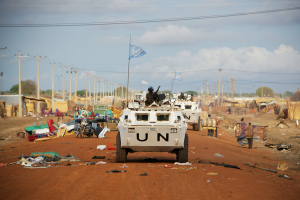
    Zambian peacekeepers from the United Nations Mission in Sudan (UNMIS) patrol streets lined with looted items awaiting collection in Abyei, the main town of the disputed Abyei area on the border of Sudan and newly independent South Sudan. In a statement yesterday, the United Nations strongly condemned the burning and looting currently being perpetrated by armed elements in the area, following the seizure of Abyei town by Sudanese Government troops on 20 March.

    Zambian peacekeepers from the United Nations Mission in Sudan. Image by United Nations Photo via Flickr.

    The demand for peacekeepers and the existing complexity and high expectations peacekeeping is confronted with in practice lead to an overburdening of single actors. For the African continent, we can identify a group of relevant organisations which play a central role within the African peacekeeping regime complex. These are the UN, AU, RECs and EU. None of these actors are capable of dominating the regime complex fully. They all are facing the harsh realities of resource scarcity. Resources can be material goods (financial, military) or social kinds like competences or political (in) capacities or deployment doctrines.

    Examples of this resource scarcity and its effects are easy to find. While the UN remains the most essential actor, it does not have command over the resources which would allow it to outperform regional organisations. This becomes very clear when looking at deployment times and/or the issue of peace enforcement. With its heavy bureaucracy in the background, the UN’s response times are on average around six months which is far from a rapid response. Issues of peace enforcement and counter-terrorism are also politically controversial within the UN and thus the UN’s missions find it difficult to engage in this kind of activity. In practice, there remains a considerable gap in the UN response to severe crises.

    On the part of African actors, much has been achieved within the last decade. An African Peace and Security Architecture (APSA) has been erected which builds on close cooperation between the AU’s headquarters in Ethiopia and RECs. Considerable efforts have been made to establish the African Standby Force (ASF). Indeed, the AU is now actively involved in practically all emerging conflicts on the continent. Still, it falls short of being able to independently respond to crises in a sustainable and comprehensive manner. The design of the ASF which consists of around 25,000 troops only makes up a minority of all deployments to the African continent. While the AU is willing to deploy in situations where the UN is reluctant to do so, the AU’s resource constraints are significant. The lack of funding is a compelling example. Despite efforts of the Commission chair to reduce external dependencies, the peacekeeping budget is predominately being financed by international donors. AU peacekeeping missions are not sustainable to maintain and can only operate with much reduced task complexity. Thus, because of resource constraints, they are neither long-term nor comprehensive in nature.

    In the case of the EU, the situation is different. It is the most well-resourced organisation of all but does not have a global mandate. While the EU has deployed around 17 missions to Africa since 2003, these have been rather small in ambition, scale and duration. Most missions train security forces, but only a few are actively engaging in operational peacekeeping. This does not result from an absence of resources but is wanted politically.

    How the Multi-Actor Approach is Shaping Modern Peace Operations

    Given the very visible limitation of each single actor, it is hardly surprising that peacekeeping today is a multi-actor game forming a regime complex. A regime complex can be characterised as a form of decentralised and non-hierarchically organised governance. Actors are overlapping with regard to their membership and/or operational ambit and are tightly interconnected which makes it difficult to decompose the system into individual units. What a regime complex constitutes is mostly defined in terms of the relationship of its constituent parts which are constantly interacting with one another. In the case of peacekeeping in Africa, we can detect such a system.

    In the overwhelming number of cases, we can observe forms of cooperative peacekeeping in which actors are pooling their resources. The most pervasive forms of cooperation are the sequential and co-deployment of troops. This has also led to a division of labour and institutional specialisation between the involved actors. For example, the AU often functions as a first-deployer, sending out troops in situations which are not consolidated and remain hostile and fragile. These deployments which are rather short-term oriented aim to prepare the ground for a larger more comprehensive and longer-term engagement from the UN. The UN’s response is often slower but more sustainable and also covers complex peace building tasks and stays in countries for an extended period of time. The role of the EU is less ambitious, but not less important. In the operational peacekeeping theatre, the EU contributed a high number of missions which are targeted and confined in terms of deployment times (short-term) and tasks (usually training missions). They aim from the beginning not to take over comprehensive tasks but are designed to fill in functional niches other actors leave. Financially, the EU is one of the main donors for AU peacekeeping missions. Since 2004, the EU’s African Peace Facility has provided €1.9bn for institutional capacity building and peacekeeping missions. Recent peacekeeping missions deployed to the Central African Republic (CAR) and Mali broadly follow this track of interaction.

    However, the exchange of resources between the AU-EU-UN which forms the backbone of the peacekeeping regime complex is not a simple functional mechanism. The exchange of resources is, for example, also influenced by peacekeeping doctrines. These are not automatically complementary. In the case of the AU and UN, the AU’s exit strategy is not necessarily compatible with the UN’s entry strategy. While the AU deploys in situations of continuing hostilities and aims at stabilising the situation, the UN takes a more conservative approach aiming to deploy only in situations where at least a ceasefire is in place. What happens if the AU stabilisation efforts do not lead to tangible progress can be seen in Somalia. Although the AU has called for UN take over since the deployment of AMISOM in 2007, no UN takeover occurred.

    Doctrinal divisions also exist with regards to robust peacekeeping in already deployed missions. While the AU and African states often accept that within peacekeeping missions the use of force is sometimes needed to actively deter and encounter rebels or terrorists, this view is mostly not shared by the UN and EU. As a consequence, active peace enforcement in cases of deployed UN missions (CAR, Mali, DRC) tend to be outsourced. In case of the DRC, a Force Intervention Brigade (FIB) was set up and staffed by African countries or France continued its military operations hunting down terrorists in Mali.

    Apart from questions of doctrinal complementarity, the supply and demand for resources varies significantly between actors. An organisation which is stronger on the supply side can chose how to design its involvement in peacekeeping while an organisation which is experiencing a strong demand but little supply is in an inferior position. This can be seen when comparing the EU and AU. The EU is in the position to provide what it deems adequate (many small scale targeted missions), the AU is in the complete opposite situation. It cannot maintain longer-term missions on its own and relies both on external funding and operational handover to the UN.

    Conclusion

    Modern peacekeeping operates in a multi-actor environment which displays decentred governance structures to which we can refer as a regime complex. Apart from the fact that the UN Security Council bears a general responsibility for peace, there is no overarching or strict hierarchy between the UN-AU-EU. Despite the absence of externally delegated roles within the regime complex, assumed roles emerged as a consequence of individual institutional resource scarcity, doctrinal compatibility and the size of demand vs supply of resources. Certainly politics is not missing in this system. There is no formally agreed script according to which organisations can be expected to act and thus the exact mode of interaction varies between cases. Domestic conflict dynamics leave their imprint too.

    In the end, taking an inter-organisational perspective to peacekeeping is not a trivial under-taking because it constitutes a form of global governance which transcends the individual organisation. While we have long accepted that the classical nation state has lost parts of its domestic sovereignty to the forces of globalisation we also have to recognise that the same is true for international organisations. In this regard actorness and governance qualities do not exclusively rest in actors themselves but also in how they organise interaction with one another. The peacekeeping regime complex is one example and one that is shaping the lives of millions who live in some of the most vulnerable situations.

    Malte Brosig is Associate Professor in International Relations at the Department of International Relations at the University of the Witwatersrand in Johannesburg. He joined the Department in 2009 after he received his PhD from the University of Portsmouth. His main research interests focus on issues of international organization interplay and peacekeeping in Africa. He is the author of Cooperative Peacekeeping in Africa: Exploring Regime Complexity which was published at Routledge. Prof Brosig is a rostered consultant for the United Nations University’s Centre for Policy Research in Tokyo and holds fellowships at the Canadian Centre for R2P at the University of Toronto, the European Centre for Minority Issues in Flensburg and the German Institute for Global and Area Studies in Hamburg.

  • Debate Over the Relationship Between Climate Change and Security

    Debate Over the Relationship Between Climate Change and Security

    Katie Harris, with a reponse by Francesco Femia and Caitlin Werrell | AlertNet | February 2012

    Issue:Climate change

    Two articles recently posted on the AlertNet Climate Conversations blog have highlighted a new framework for debating the issue of climate change. That it is a critically important issue is accepted, yet argument is now focused on the degree to which climate change is not only designated a key driver of conflict, but to what extent climate change and its impact should be defined through a security lens at all. Katie Harris of the Overseas Development Institute suggests that while the security narrative of climate change may have caught the attention of the political and security classes, it has the dangerous potential to undermine both the theoretical understanding of the complex factors underlying conflict, and any practical attempts to promote cooperation over resources in conflict-sensitive regions such as the Levant.

    Francesco Femia and Caitlin Werrell from the Center for Climate and Security broadly agree with Harris’ call for a nuanced approach to climate change and conflict, but take issue with the concept of a ‘climate-security narrative’ that interferes with specific cases of conflict-analysis. Rather than overwhelming this analysis, Femia and Werrell defend not only the sophistication of recent research into the relationship between climate change and conflict, but also its emphasis on the role of climate change as one conflict variable among many.


    Climate Conversations – Climate-security as agent provocateur
    By Katie Harris | February 18 2012

    I want to take you back to 2007. Margaret Beckett was UK Foreign Secretary and chairing a United Nations Security Council debate. Instigated by the UK, this was the first Security Council debate to link security to climate change.

    In the five years since Beckett stood before the Security Council, the topic of “climate-security” has been bounded around in all manner of debates.  It has been seized by government agencies, thinktanks, NGOs and the media. For some it is a “quick and dirty” way to grab the attention of those who are not normally interested in climate change, those who see it as a distant concern, of no concern of theirs, or simply a barrier to economic growth.

    In many ways, framing climate change as a security issue has helped to raise awareness of its critical importance. It may even have contributed to increased policy traction.

    But it is a dangerous tactic to gain popular attention. First, for those who want to identify the possible connections between a changing climate and the potential for increased violent conflict, nuance is key (as un-sexy as that may be). Second, it is unwise to promote such a narrative, given the role of perceptions in conflict. It is not, as conflict and security folk would say, “conflict sensitive”.

    Take the Levant (Syria, Lebanon, Israel, Jordan and the occupied Palestinian territory) as an example. Evidence shows that perceptions matter. As an International Institute for Sustainable Development report argues, “in the context of continuing distrust and political tension it is possible to imagine that allocations of resources could become increasingly tense. Control over them may become perceived as an increasingly key dimension of national security, and resource scarcity could be a pretext for their greater militarisation”.

    Using a play on words, Betsy Hartmann has coined the phrase “operation enduring narrative” to reflect the continued presence of the climate-security debate. Indeed, climate-security is being taken up by the UK Foreign Secretary William Hague as well as the UK’s Ministry of Defence.

    I want to stress that we must take seriously the challenges that climate change may present for security, the sharing of scarce natural resources and possible impacts on patterns of migration and food security. That said, I’m arguing that we need a more cautious approach to how we understand the role of climate change in such dynamics, and more caution in how we treat the issue overseas.

    In many parts of the world that have had the “climate-security” spotlight shone on them, climate change is unlikely to be the biggest thing affecting their immediate security. I’m referring specifically to those places currently experiencing violent conflict.

    So yes, it is important to recognise the need to act now on climate change, but we must do so in a way that helps us get a better handle on how we can support communities that are vulnerable to the impacts of climate change and conflict in ways that are positive, proactive and meaningful. As with many  other factors affecting peace and security, good governance is required to create the right institutional environment to handle tensions and conflict in peaceful ways.

    WATER SUCCESSES

    The water sector, for example, has led the way in showing how, with the right support, contested water sources can foster peace through cross-border cooperation. The Good Water Neighbors project is one such example.

    Working with 25 neighbouring communities from Israel, Jordan and the occupied Palestinian territory, the project has turned wise use of water into an entry point to promote cooperation, create trust, increase willingness to cooperate and change attitudes. While long-term sustainable change requires the support of wider governance and political systems, this has been at least a first step at the local level.

    The climate-security narrative continues to be pushed forward in 2012, without enough focus on the opportunities for collaboration, cooperation and negotiation that are vital to avoid the very doomsday scenarios that are being promoted.

    Yet, as my recent ODI report shows, it is welcome news that the UK government is maintaining its focus on the need to promote good governance, address the underlying causes of conflict and support communities at risk of climate change and conflict through the Department for International Development (DFID).

    To date, DFID funds for climate change are being delivered through the usual array of development channels, rather than being diverted to those more commonly associated with security and military interventions. Whether this will continue depends on how the climate-security narrative plays out this year – and the influence of new dialogue around issues from everything from the role of climate change in the Arab Spring to Arctic security.

    Katie Harris works on conflict and climate change issues for the London-based Overseas Development Institute.

    To read the original article, click here

    To read Katie Hariss’ ODI blog on climate change and security policy, click here


    Climate Conversations – Climate-security a reality, not a narrative
    By Francesco Femia and Caitlin Werrell | February 21 2012

    AlertNet posted an interesting piece recently titled “Climate-security as agent provocateur.” The author, Katie Harris of the London-based Overseas Development Institute, rightly calls for “nuance” in making the case for the potential security and conflict implications of climate change.

    The essence of the article is that though the “frame” or “narrative” of climate-security may have generated increased interest and action from the world’s policy-makers, it can be dangerous if done poorly. We couldn’t agree more.

    Also, as Harris states, “for those who want to identify the possible connections between a changing climate and the potential for increased violent conflict, nuance is key…” Indeed it is!

    However, despite these wise words of caution, the article omits a couple key points that may address some of the author’s concerns, including the significant evolution of climate and security scholarship in recent years, and how climate-security is actually defined in this space, specifically in relation to conflict.

    First, the climate and security discourse is evolving. More and more is being done to tease out the connections between climate change, security and conflict as additional regional and local climate data become available.

    There are too many reports to list here, but a number of recent studies from Busby et al., Hsiang et al., Mabey et al.,  Werz & Conley, and an entire special issue from the Journal of Peace Research, come to mind. In this work, “the security implications of climate change” is no mere frame, but a well-analyzed reality and probability, which factors in a number of specific human variables, in particular conflict-ridden and conflict-prone regions of the world, such as the Sahel and Central Asia.

    While more needs to be done to better incorporate non-environmental variables into such assessments (such as the numerous locale-specific social, political and economic drivers of conflict), the field has come a long way since the phrase “climate change is a security threat” was uttered late last century.

    Second, the article repeats a common misconception about the climate-security discourse which we would be remiss to not address (and which we discussed in a previous blog response to an AlertNet piece). Harris states:

    In many parts of the world that have had the ‘climate-security’ spotlight shone on them, climate change is unlikely to be the biggest thing affecting their immediate security. I’m referring specifically to those places currently experiencing violent conflict.

    This is a perfectly reasonable statement. However, the serious scholars and practitioners in the climate-security sphere rarely, if ever, refer to climate change as “the biggest thing affecting the immediate security” of people in countries experiencing, or likely to experience, conflict.

    A ‘THREAT MULTIPLIER’

    In most cases, climate change is treated as one serious variable among many, often defined as a “threat multliplier” or “accelerant of instability.” In other words, the discourse is indeed sensitive to the other drivers of conflict, despite Harris’ assertion that climate-security is not “conflict sensitive.”

    Among those who are serious about exploring the connections, climate change is a phenomenon that in many cases may exacerbate the current tensions that lead to conflict, whether it is resource scarcity, economic disparity, population mobility, or poor governance. Climate change is not an independent variable looming out there on its own (a recent panel discussion hosted by the Woodrow Wilson International Center for Scholars fleshes out this concept brilliantly).

    In this context, the assertion that climate change may be a security risk is not an alarmist tactic, by any means. It is the exploration of a very probable reality. And fully exploring this risk is a necessary prerequisite for developing solutions. As Harris states:

    The climate-security narrative continues to be pushed forward in 2012, without enough focus on the opportunities for collaboration, cooperation and negotiation that are vital to avoid the very doomsday scenarios that are being promoted.

    Once again, agreed. But in order to focus on opportunities for cooperation, it is important to fully flesh out the climate-security risks that such cooperation must address in order to avoid these so-called “doomsday scenarios.” Continued research on the climate-security nexus, more work on further incorporating the non-environmental drivers of conflict into climate-security studies, and a continued promotion of the excellent work that has already been done, will be key for devising the smart and “conflict sensitive” solutions that Harris is calling for.

    Nuance is, indeed, key.

    In short, we should not let the occasionally irresponsible use of the climate-security “frame” discredit the responsible scholarship addressing the climate-security “reality.” Harris’ article should be seen as a call to do more in this space, not less.

    Francesco Femia and Caitlin E. Werrell are founding directors of the Center for Climate and Security. This blog first appeared on the center website.

    To read the original article, click here

    Comments

    Post new comment