Blog

  • Competition over resources

    Competition over resources

    In the environmentally constrained but more populous world that can be expected over the course of this century, there will be greater scarcity of three key resources: food, water and energy. Demand for all three resources is already beyond that which can be sustained at current levels. Once population growth and the effects of climate change are factored in, it is clear that greater competition for such resources should be expected, both within and between countries, potentially leading in extreme cases to conflict.

    Water Conflict: Violence Erupts Along Ethiopia-Kenya Water-stressed Border

    Circle of Blue | Circle of Blue | July 2011

    Issue:Competition over resources

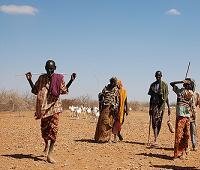
    In a small village along the waters of Lake Turkana in northwestern Kenya, two fishermen were murdered last month as they were putting out their nets.

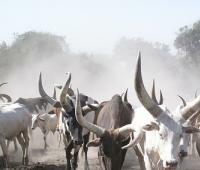
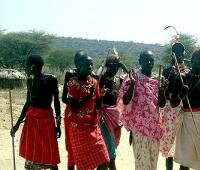
    A cascade of retaliatory violence between the Kenyan Turkana and Ethiopian Daasanach (sometimes called Merille) has led to the deaths of at least four Ethiopians and 20 Kenyans ethnic groups, though some Kenyan government officials place the toll as high as 69, according to the Kenya-based Daily Nation. Though the fighting has been localized, it has put pressure on both nations to deal with strife between nomadic groups who are competing for diminishing resources.

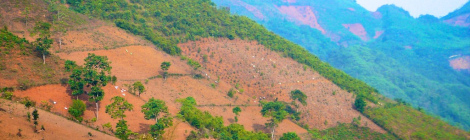
    Image source: Aocrone

    Article source: Circle of Blue

    Read more »

    A New Road for Preventative Action

    East West Institute | East West Institute | June 2011

    Issues:Climate change, Competition over resources, Global militarisation, Marginalisation

    A gap continues to exist between the international community’s rhetoric about conflict prevention and its responsibility to protect people from severe human rights violations. The record of human misery caused by violent conflict is testimony to the chronic  lack of political will to respond collectively to newand emerging threats to peace. The ineffectiveness of many global efforts at preventive diplomacy is evidence that traditional diplomatic approaches,  including the use of force, simply may not work.

    Article source: East West Institute

    Image source: AfghanistanMatters

    Read more »

    Paul Rogers on Development, Climate Change, Conflict and Migration

    Action Aid | youtube | June 2011

    Issues:Climate change, Competition over resources, Marginalisation

    Paul Rogers, Professor of Peace Studies at Bradford University, and Oxford Research Group’s Global Security Consultant, talks to Action Aid about the issues that will dominate international security and world development over the coming decades.

    Source: youtube

    Read more »

    South Sudan: Enhancing Grassroots Peacebuilding

    Hope Chichaya | Insight on Conflict | June 2011

    Issues:Competition over resources, Marginalisation

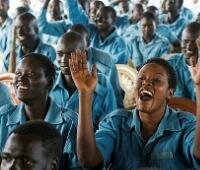
    South Sudan’s referendum has come and gone. What lies ahead post-independence in terms of peace, development and security is however still to be determined. The 15 years of war left over one million people dead and more than three million displaced. Negotiations led to the Comprehensive Peace Agreement (CPA) in 2005, which included provision for a referendum on independence for the Southerners.  The referendum was held in January, with overwhelming support for succession. But serious challenges face South Sudan as it prepares for independence on 9 July 2011.

    Article source: Insight on Conflict

    Image source: United Nations Photo

    Read more »

    Petroleum and its Impact on Three Wars in Africa: Angola, Nigeria and Sudan

    Adrian Gonzalez | Peace Studies Journal | May 2011

    Issue:Competition over resources

    This article focuses on the complex role that oil has played in many conflicts on the African continent. It begins by highlighting oil’s influential role within war at a wider international level and provides a brief theoretical base from which to explore oil’s role in the African continent. Then, the article provides evidence of petroleum’s impact on violent conflicts in three African countries, namely Angola, Sudan and Nigeria, in order to highlight oil’s multi-faceted role on war in Africa.

    Article source: Peace Studies Journal

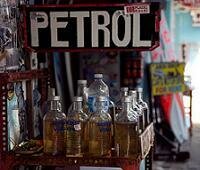
    Image source: Maks Karochkin

    Read more »

    Wikileaks reveals Arctic could be the new cold war

    Greenpeace UK | Greenpeace UK | May 2011

    Issues:Climate change, Competition over resources, Global militarisation

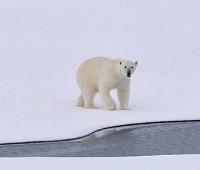
    New Wikileaks releases today have shown the Arctic oil rush is not just a threat to the environment and our climate, but also to peace. The documents show how deadly serious the scramble for Arctic resources has become. And the terrible irony of it is that instead of seeing the melting of the Arctic ice cap as a spur to action on climate change, the leaders of the Arctic nations are instead investing in military hardware to fight for the oil beneath it. They’re preparing to fight to extract the very fossil fuels that caused the melting in the first place.

    Article source: Greenpeace UK

    Image source: U.S. Geological Survey

    Read more »

  • Competition over resources

    Competition over resources

    In the environmentally constrained but more populous world that can be expected over the course of this century, there will be greater scarcity of three key resources: food, water and energy. Demand for all three resources is already beyond that which can be sustained at current levels. Once population growth and the effects of climate change are factored in, it is clear that greater competition for such resources should be expected, both within and between countries, potentially leading in extreme cases to conflict.

    Reinventing Energy Futures

    Institute for the Future | Four Visions Map | February 2012

    Issues:Climate change, Competition over resources

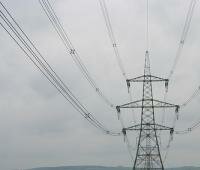
    Over the next few decades, the increasing demand for resources and the pressures of climate change are going to force some rapid and potentially difficult decisions on the role of energy in the global economy. A useful exercise has been undertaken by the Institute for the Future in terms of exploring a number of scenarious that could come to characterise our political, social and economic systems depending on the energy choices we make today.

    Image source: Ulleskelf. 

    Read more »

    Someday, none of this will be yours: the predatory state eyes ‘public’ land

    Rhodri C. Williams | Terra Nullius | January 2012

    Issue:Competition over resources

    Ambiguous legal structures bequeathed to post-colonial and other developing states have complicated the meaning of ‘public’ land. Recent interpretations have followed the trends of either the development and human rights communities, such as attempts at post-conflict restitution; or the private property rights of foreign investors vis-á-vis state control. As described below by Rhodri C. Williams in his TerraNullius blog, at the heart of the issue is the highly contested nature of the line between private and public land ownership, leading to grey-area treatment of some land. Williams also explains how violence can arise when the basic human attachment to land conflicts with state claims, and how policy recommendations from international donors and institutions such as the World Bank can aggravate delicate and conflict-prone situations.

    Article Source: Terra Nullius

    Image Source: rudenoon

    Read more »

    South Sudan: Conflict is ‘fact of life’

    Today Programme | BBC News | January 2012

    Issues:Competition over resources, Global militarisation

    In a radio interview for the BBC, Dr Sara Pantuliano of the Overseas Development Institute highlights a tribal conflict in Jonglei State that has grown particularly violent. The conflict between the Murle and Luo-Nuer groups has traditionally centred on cattle-raiding (cattle being a vital element of the region’s economy for centuries), but recently it has taken on the character of a ‘military assault’ along ethnic lines. Dr Pantuliano attributes this change to both the sheer number of weapons flooding the region, and to the anonymity and consequent remoteness of modern warfare. Compounding these factors is the diminished status of chiefs and elders and the effectiveness of the traditional checks and balances that they enforce, compromised as they have been by the protracted civil wars of the past.

    Article Source: BBC

    Image Source: Oxfam International

    Read more »

    Land, livelihoods and identities: Inter-community conflicts in East Africa

    Laura A. Young and Korir Sing’Oei | Minority Rights Group International | December 2011

    Issues:Competition over resources, Marginalisation

    In a report published in December 2011, Minority Rights Group International highlights the problems facing minority groups, specifically in an area covering Kenya, Uganda and Jonglei State in South Sudan. Competition over resources has increased the potential for confrontation not only with local dominant ethnic groups, but also with the state and international corporations, thereby increasing the liklihood of different forms of conflict on different levels. Progressive legal protections are often not enforced because of a disconnect at state-level between legislation and law-enforcement, which only exacerbates existing problems caused by long-standing discrimination. Moreover, conflict involving already marginalised people adversely affects the women and children in these groups in particular, which in turn re-impacts on the community because of the traditional roles that women play in family cohesion and as food producers.

    Many problems arise not simply because people belonging to minority groups are themselves marginalised, but also their community and governance structures which previously had been successful in mediating conflict such as (in an East African context) cattle raiding. Marginalisation not only discriminates against individuals because of their backgrounds or beliefs but also rides roughshod over communal organisation and mediation, leaving groups unable to adapt to change or protect their interests when threatened by more powerful entities.

    To read the full report and press release, click here

    Image Source: Leonie_x

    Read more »

    In Colombia, Rural Communities Face Uphill Battle for Land Rights

    Kayly Ober | New Security Beat | November 2011

    Issue:Competition over resources

    “The only risk is wanting to stay,” beams a Colombian tourism ad, eager to forget decades of brutal internal conflict; however, the risk of violence remains for many rural communities, particularly as the traditional fight over drugs turns to other high-value goods: natural resource rights.

    Article Source: New Security Beat

    Image Source: Philip Bouchard

    Read more »

    Safeguarding South Asia’s Water Security

    Michael Kugelman | Seminar | November 2011

    Issue:Competition over resources

    In today’s era of globalization, the line between critic and hypocrite is increasingly becoming blurred. Single out a problem in a region or country other than one’s own, and risk triggering an immediate, yet understandable, response: Why criticize the problem here, when you face the same one back home? Such a response is particularly justified in the context of water insecurity, a dilemma that afflicts scores of countries, including the author’s United States. However, in South Asia, the dilemma is considerably more urgent. The region houses a quarter of the world’s population, yet contains less than 5% of its annual renewable water resources.

    Article Source: Seminar

    Image Source: hceebee

    Read more »

  • Climate change

    Climate change

    Climate change is high on both domestic and international political agendas as countries face up to the huge environmental challenges the world now faces. Whilst this attention is welcome, less energy is being focused on the inevitable impact climate change will have on security issues. The well-documented physical effects of climate change will have knock-on socio-economic impacts, such as loss of infrastructure, resource scarcity and the mass displacement of peoples. These in turn could produce serious security consequences that will present new challenges to governments trying to maintain stability.

    How Climate Change Can Amplify Social, Economic, and Political Stresses

    Janani Vivekananda | Woodrow Wilson Centre for International Scholars | June 2011

    Issue:Climate change

    International Alert’s Janani Vivekananda discusses how climate change will will interact with other social, economic and political stressors to drive instability.

    “Rather than climate change being this single, direct causal factor which will spark conflict at the national level,” Vivekananda said, these stressors “will shift the tipping point at which conflict might ignite.” In places that are already weakened by instability and conflict, climate change will simply be an additional challenge.

    Source: youtube 

    Read more »

    Connections Between Climate and Stability: Lessons From Asia and Africa

    The New Security Beat | The New Security Beat | May 2011

    Issue:Climate change

    “We, alongside this growing consensus of research institutes, analysts, and security agencies on both sides of the Atlantic, think of climate change as a risk multiplier; as something that will amplify existing social, political, and resource stressors,” said Janani Vivekananda of International Alert, speaking at the Wilson Center on May 10.

    Image source: aheavens

    Article source: The New Security Beat

    Read more »

    Wikileaks reveals Arctic could be the new cold war

    Greenpeace UK | Greenpeace UK | May 2011

    Issues:Climate change, Competition over resources, Global militarisation

    New Wikileaks releases today have shown the Arctic oil rush is not just a threat to the environment and our climate, but also to peace. The documents show how deadly serious the scramble for Arctic resources has become. And the terrible irony of it is that instead of seeing the melting of the Arctic ice cap as a spur to action on climate change, the leaders of the Arctic nations are instead investing in military hardware to fight for the oil beneath it. They’re preparing to fight to extract the very fossil fuels that caused the melting in the first place.

    Article source: Greenpeace UK

    Image source: U.S. Geological Survey

    Read more »

    Assessing the Security Challenges of Climate Change

    Obayedul Hoque Patwary | Exclusively written for sustainablesecurity.org | May 2011

    Issue:Climate change

    At the outset of the twenty first century, climate change has become one of the greatest challenges to international peace and security. It is seriously affecting hundreds of millions of people today and in the coming decades those affected will likely more than double, making it the greatest emerging humanitarian and security challenge of our time. Climate change acts as a threat multiplier for instability in some of the most volatile regions of the world. Projected climate change will seriously aggravate already marginal living standards in many Asian, African, and Middle Eastern nations, causing widespread political instability and conflict.

    Image source: Olando 7

    Read more »

    A New Strategy for the US: From the Control Paradigm to Sustainable Security

    Schuyler Null | The New Security Beat | May 2011

    Issues:Climate change, Competition over resources, Global militarisation, Marginalisation

    Writing for the New Security Beat, Schuyler Null discusses a recent event on creating a new national security narrative for the US held at the Woodrow Wilson Center. The event was based on a white paper by two active military officers writing under the pseudonym “Mr. Y” (echoing George Kennan’s famous “X” article). In “A National Strategic Narrative,” Captain Wayne Porter (USN) and Colonel Mark Mykleby (USMC) argue that the United States needs to move away from an outmoded 20th century model of containment, deterrence, and control towards a “strategy of sustainability.”

    Image source: LizaP.

    Read more »

    Sustainable Security and Environmental Limits

    Rachel Tansey | Quaker Council for European Affairs | May 2011

    Issues:Climate change, Competition over resources, Global militarisation, Marginalisation

    The Quaker Council for European Affairs publicises a briefing on the topic of Sustainable Security, specifically highlighting environmental concerns:

    “The treatment of the natural world by humankind has contributed towards the two related major trends that are likely to drive insecurity in the coming decades: climate change and competition over natural resources.”

    Article source: Quaker Council for European Affairs

    Image source: kretyen

    Read more »

  • An Uncertain Future: Law Enforcement, National Security and Climate Change

    An Uncertain Future: Law Enforcement, National Security and Climate Change

    Chris Abbott | Oxford Research Group | January 2008

    Issue:Climate change

    Tag:report

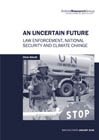
    Climate change will have serious environmental, socio-economic and security consequences for both developed and developing nations alike. This report explores these consequences and demonstrates that they will present new challenges to governments trying to maintain domestic stability. Those agencies tasked with protecting and sustaining national security will need to adapt to better cope with a changing global environment.

    However, if governments simply respond with traditional attempts to maintain the status quo and control insecurity they will ultimately fail. As this report shows, the risks of climate change demand a rethink of current approaches to security and the development of sustainable ways of achieving that security, with an emphasis on preventative rather than reactive strategies.

    Download in English or Spanish as PDF

  • Sustainable Security

    Authors’ Note: The opinions expressed by the writers are theirs alone and not necessarily those of the United States government or any of its departments.

    As a response to the attacks by violent extremists around the world, policymakers have invested considerable effort into comprehending terrorists’ use of the Internet and initiating counter-measures.

    The internet is undeniably an important factor in understanding the radicalization trajectories of many violent extremists. A senior official at the U.S. Department of Homeland Security recently observed that extremists’ “deft use of Internet propaganda, together with that content’s wide availability, has broadened the population of potentially vulnerable individuals, and shortened the timespan of their recruitment.” Supporting this statement, terrorism expert Magnus Ranstorp lists social media as one of nine factors that may exacerbate causes of an individual’s radicalization, including individual and social factors as well as cultural and ideological motivators.

    Research has also shown that the internet facilitates both early engagement with violent ideologies and opportunities for learning and sharing criminal information. For instance, a study by the University of Maryland’s START terrorism consortium found that “the internet played a primary or contributing role in the radicalization of 86%” in the cases of over 200 U.S.-based foreign fighters. These individuals used the internet to “view extremist materials, research conflicts, groups and attack methods, and participated in online communities of like-minded individuals.” Moreover, results from the same dataset show that the internet “may be speeding up the radicalization timeframe” as compared to radicalization before the advent of the internet. Similar findings from a study of over 200 terrorist offenders in the United Kingdom found that 54% of the perpetrators used the internet to learn about their intended criminal activities and, in 44% of the cases, extremist media (e.g., videos, audio lectures and photographs) were found, viewed, or downloaded by the perpetrators.

    The authors of the UK study, however, recognize that terrorists’ use of the internet “is perhaps unsurprising given the ubiquity of Internet usage in the most benevolent activities across wider society.” Indeed, a good deal of research has examined terrorists’ expansive use of the internet, such as the terrorist organization known as the Islamic State of Iraq and Syria (ISIS) to build a network of ideological conformity through social media platforms like Twitter. A report from the Institute for Strategic Dialogue has shown not only how life under the Islamic State is romanticized through social media postings, but also how important digital connectivity can be to those in the field, describing young women in ISIS controlled territory who resort to “climbing pine trees to gain Internet reception.”

    Countering extremism online

    Image credit: Andres Eldh/Flickr.

    These studies shed light on the particular ways that terrorists use the internet and underscore the importance of law enforcement intervention into online criminal activities. However, an ongoing challenge for researchers and policymakers engaged in preventing and countering violent extremism (CVE) is how to proactively address the role of the internet and social media in the context of violent extremism before criminal activity has occurred. To respond to that challenge, two broad policy approaches have emerged.

    One approach advocates for online content removal and account suspension in order to reduce the supply of non-criminal but potentially extremist content. The European Commission recently instituted content-flagging mechanisms modelled after an initiative by the British government’s Counter Terrorism Internet Referral Unit. Outside of government, technology companies also have taken steps to remove terrorist content. In December 2016, social media companies announced their own cooperative efforts to use hashing techniques to quickly identify and take down extremist images and content that violate terms of service agreements. In their latest annual transparency report, Twitter suspended around 636,000 accounts between August 2015 and December 2016 for promoting extremist content.

    Research studies that have assessed whether content removal and account suspension efforts work to curb the propagation of violent extremist messages suggest promising outcomes. For instance, a report from the George Washington’s Program on Extremism found that “over time, individual users who repeatedly created new accounts after being suspended suffered devastating reductions in their followers.” While ISIS users quickly learn how to overcome account suspensions and restore some followers, the study suggests these actions to reestablish followers have only “limited benefits” once a suspension has occurred.

    Yet, as technology companies like Twitter, Microsoft, and Facebook become more effective at detecting extremist content with tools that recognize unique “fingerprints” of extremist content, terror groups have also become more agile in how they use the internet to facilitate their work. Terrorism researcher Audrey Alexander describes how attempts to limit terrorist content online have pushed extremists away from public platforms and to encrypted tools like WhatsApp, Telegram, and ProtonMail. Indeed, Telegram now “appears to be the top choice among both individual jihadists and official jihadist groups.” The covert nature of these platforms poses significant barriers to researchers and authorities seeking to understand, track, and measure the terrorist threat.

    Another method for combatting online violent extremist content suggests creating counter narratives to refute terrorist claims. The idea is to craft messages that will appeal to vulnerable individuals to persuade them that violence is not the answer.  To explore this approach, the U.S. government has sponsored an initiative along with support from Facebook that known as the Peer to Peer: Challenging Violent Extremism program to engage young people, who may be most vulnerable to violent extremist messages, to create credible counter message for their own peers. Since the program launched in 2015, over 5,000 students have taken part. The 2016 winning team from Rochester Institute of Technology developed an awareness campaign called “Ex-Out Extremism” to “open people’s eyes” to violent extremism and to encourage them to take a stand against it. While initiatives like Peer to Peer typically reach broad audiences, foster educational engagement and increase public awareness, researchers have pointed out that continued work is needed to understand what can inoculate or prevent radical ideologies from taking root in the first place.

    A more targeted approach for reaching at-risk individuals online has been piloted at Jigsaw, Alphabet’s technology incubator focusing on geopolitical challenges, to redirect users from ISIS propaganda to curated YouTube videos that credibly debunk ISIS recruiting themes. Similarly, the Institute for Strategic Dialogue conducted a pilot study to direct individualized online intervention services to those demonstrating affinity to violent extremist groups through their online activities. The results found that intervention messages that reached at-risk individuals were “highly likely” to cause behavior change, either by prompting radicalizing individuals to change their privacy settings or to send direct messages to the intervenors for more engagement.  While these results are based on a very small sample, directed intervention programs may offer options for providing “off ramps” to individuals at critical points.

    The value of partnerships

    Whether intervening online to remove content and suspend accounts or developing credible counter messages or intervention options, effectively addressing violent extremism will require innovative partnerships inside and outside government.  To this end, in 2016 the United States government launched an interagency task force to address countering violent extremism with representation from both security and non-security agencies along with engagement from civil society groups.  While these multidisciplinary partnerships are challenging bureaucratically, they underscore the need for developing networked approaches to emerging security challenges. Similar cooperative agreements might span across national boundaries, not only for the purposes of information sharing between law enforcement officials, but also to include cooperation, such as the recent announcement by the Netherlands and Kenya to build a comprehensive partnership around a range of security related issues including deradicalization efforts.

    Although some have suggested that there is little evidence that terrorism prevention works, there is a small but growing literature providing support for the application of prevention science to the problem of violent extremism. Without question, more attention is needed for rigorous assessment of these programs, especially with regard to evaluating the effectiveness of online campaigns. To fill this gap, the RAND Corporation recently released an evaluation toolkit for countering violent extremism, which includes guidelines for assessing programs’ social media metrics. The London-based Royal United Services Institute has published a guide to CVE program design and evaluation, which provides guidance for articulating relevant impact measures. Ultimately, these resources, coupled with innovative public and private sector partnerships, will contribute to preventing radicalization to violence both online and offline.

    Tackling online radicalization will undoubtedly be a major security priority for policymakers in the future. Following the deadly May 22, 2017 bomb explosion in Manchester, leaders of the G7 convened in Taormina, Italy to reaffirm their efforts to counter terrorism and violent extremism.  In a statement, members underscored several areas for continued engagement, not only through traditional counterterrorism measures like “knowledge-sharing” and cutting off “sources and channels of terrorist financing,” but also through technology sector engagement “to substantially increase their efforts to address terrorist content” and well as civil society engagement to promote “alternative and positive narratives rooted in our common values.” The future war against online extremism may prove to be a long and difficult one, but it is a fight that must be won.   

    Dr. Susan Szmania has served in government and academic positions addressing violent extremism.  She is currently a senior research analyst at the U.S. Department of Homeland Security in the Office for Community Partnerships.  In this capacity, she leads the research and analysis line of effort on the U.S. government’s interagency Countering Violent Extremism Task Force.  Prior to this work, Dr. Szmania was a senior researcher at the University of Maryland’s National Consortium for the Study of Terrorism and Responses to Terrorism, and she served in government positions at U.S. Embassies in Sweden and Spain to implement programs to counter violent extremism. She received her Ph.D. in Communication Studies from the University of Texas at Austin in 2004.

    Matthew Conway has served in various research capacities focusing on conflict and extremism, both independently and with two London-based think-tanks. He is currently a research adviser for the Department of Homeland Security’s Office for Community Partnerships, where he focuses on Countering Violent Extremism research. He received his Master’s in Conflict, Security and Development from King’s College London in 2015 and his Bachelor’s in Political Science and International Studies from the University of Wisconsin-Madison in 2013.

  • Sustainable Security

  • UK Trident renewal

    UK Trident renewal

    The Acronym Institute | The Acronym Institute | August 2011

    Issue:Global militarisation

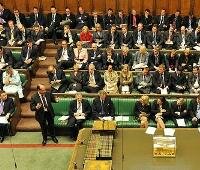
    In the UK, the Conservative-Liberal Democrat coalition government continues to pursue the renewal of Britain’s Trident nuclear weapon system amidst criticism of the opacity of the procurement process and concerns over the substantial and increasing costs of the project. Adding fuel to public anger over widespread government cuts, the Defence Secretary Liam Fox’s long overdue announcement in May 2011 that the Initial Gate for the project had been approved was accompanied by the revelation that when inflation is taken into account the price tag for just the new submarines (excluding missiles, warheads and running costs) is likely to be £25 billion, as opposed to the £11-14 billion announced in 2006. With the defence budget already curtailed by the October 2010 Comprehensive Spending Review (CSR) and under strain on account of a projected deficit of £36 billion over the next 10 years, these latest figures have prompted further concerns that Trident is being replaced at the expense of conventional military capabilities. Moreover as the Ministry of Defence (MoD) is now locked in yet another battle with the Treasury pressing questions are being asked about the costs, benefits, priority and opportunity costs of Trident replacement as compared with other areas of government expenditure. On 3 August, the Defence Select Committee – a cross-party committee of MPs -criticised the government over its “rushed” and “badly done” Strategic Defence and Security Review (SDSR). Responding, Jim Murphy, the UK’s Shadow Defence Secretary said “events have exposed the mismatch between policy ambition and the resources provided by ministers”.

    Originally scheduled for September 2009 the Initial Gate announcement, which gave the green light for the next stages of procurement to be undertaken (up to 15% of the budget), had been postponed numerous times whilst decisions were made regarding design, particularly over which type of nuclear reactor to use in the new submarines. The Defence Secretary’s Initial Gate statement in the Commons revealed that the new PWR3 reactor would be used, which will increase costs further. The decision to install the PWR3 instead of the currently used PWR2 reactor in the new subs was based on the results of a safety assessment which was accidentally made public by the MoD when anunredacted version of the report was posted on the internet. This led to criticisms of the MoD as well as of Parliamentary Under Secretary of State for Defence Equipment, Support and Technology, Peter Luff, who contradicted the report in Parliament. Anxieties over safety were amplified when an MoD report was published that assessed that government funding cuts are likely to jeopardise the safety of the UK’s nuclear weapons. Likewise, an official inquiry into the August 2010 fire at Aldermaston Atomic Weapons Establishment (AWE) contained strong criticism of the private management consortium (AWE plc, comprising US arms dealer Lockheed Martin, SERCO and Jacobs Engineering) that runs this publicly-funded nuclear weapons plant, particularly with regard to fire prevention and response. The report led the government’s Health and Safety Executive to investigate whether to take legal action against the AWE Management group. Nonetheless, despite a catalogue of problems associated with private sector management of AWE and other UK nuclear sites, in May the Scottish Herald revealed that the nuclear warhead storage base at Coulport is to be sold off to a consortium of private companies also led by, Lockheed Martin.

    The statement on the Initial Gate was accompanied by the publication of areport describing work on the Trident renewal programme to date, the decisions taken at Initial Gate and around £3 billion of work scheduled to take place in advance of the Main Gate. Dr Fox also identified spending on long lead items that would cost a further £500 million. Alongside the announcement came the news that, in line with the Coalition Agreement under which it was agreed that the Liberal Democrats could continue to make the case for alternatives, an18-month study to review the “costs, feasibility and credibility of alternative systems and postures” would be undertaken. The study will be conducted by the Cabinet Office and overseen by Armed Forces Minister and Liberal Democrat Nick Harvey who is more open to exploring alternatives to Tridentthan his senior colleague, Conservative Defence Minister Liam Fox, who hasmade it clear that he is absolutely opposed to change. By way of compromise, the study will consider only nuclear weapons options for replacing the role assigned to Trident in the UK’s nuclear deterrence posture, with no consideration of non-nuclear options for deterrence and security. In Scotland meanwhile, following the May 2011 elections which gave the Scottish National Party (SNP) a strong working majority in the Scottish Parliament, a resolution is to be tabled calling for the removal of UK nuclear weapons from Scottish territory. If successful, such a resolution could have far-reaching implications for the storage of nuclear warheads at Coulport and the deployment of Trident, currently homeported at the MoD’s naval base at Faslane.

    In spite of his unswerving commitment to replacing Trident, Liam Fox was keen to stress the UK’s disarmament credentials on the occasion of the ‘P5 follow-on meeting to the 2010 NPT Review Conference’, using the opportunity to confirm that part of the warhead reduction announced by the UK’s most recent Strategic Defence and Security Review (SDSR) has been completed. Not long afterwards, former UK Foreign Secretary Margaret Beckett reignited the debate over the policy of Continuous-at-sea-deterrence (CASD) when she raised the possibility of “not necessarily needing four boats”.

    Article source: The Acronym Institute

    Image source: UK Parliament

    Comments

    Post new comment


  • Drought in east Africa the result of climate change and conflict

    Drought in east Africa the result of climate change and conflict

    Felicity Lawrence | The Guardian | July 2011

    Issues:Climate change, Competition over resources, Marginalisation

    Aid agencies say that weather in the region has become more erratic and years of war leave populations especially vulnerable

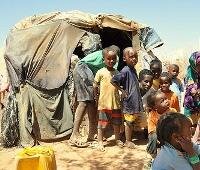
    Prolonged drought in the Horn of Africa is the immediate cause of the severe food crisis already affecting around 10 million people in parts of Kenya, Ethiopia, Djibouti and Somalia. Rains have failed over two seasons, with a strong La Niña event having a dramatic impact across the east coast of Africa. Now this year’s wet season has officially ended, there is little prospect of rain or relief before September.

    How far the current conditions, classified by the UN as “pre-famine” – one step down from “catastrophe” – can be attributed to climate change is not clear. The last intergovernment panel on climate change reportsuggested that the Horn of Africa would get wetter with climate change, while more recent academic research has concluded that global warming will increase drought in the region. However, according to aid agencies, the weather has become more erratic and extreme in recent years. The same area suffered a drought in 2006 as well as flash floods.

    The structural causes of the crisis go deeper. The Horn of Africa has long been one of the most conflict-riven areas of the world and a focus of geopolitical struggles from the days of the British empire, through the cold war, to today’s the “war on terror”.

    Read the rest of the article here.

    Image source: Oxfam International 

    Comments

    Post new comment


  • Aid and the Middle Income Countries Dilemma: UK Aid to India

    Aid and the Middle Income Countries Dilemma: UK Aid to India

    Andy Sumner | Global Dashboard | January 2011

    Issue:Marginalisation

    The UK parliament’s development committee begins its inquiry into UK aid to India next week with a question mark over the future of UK aid to a country where there are 450 million poor people – a third of the world’s poor -living below US$1.25/day. In fact, 8 Indian states alone have more poor people than the 26 poorest African countries combined.

    This is emotional territory – on both the UK and India side – during Cameron’s autumn 2010 visit sparks flew with the Indian finance minister calling UK aid ($700m) ‘peanuts’ in an angry response to the suggestion that the UK might end aid to India.

    An Indian official’s memo leaked to the BBC largely concurred with the ‘who do you guys think you are?’ line.

    It might be that the Indians got mad because DFID signaled it wanted to direct more aid to individual states rather than the central government. More recently the idea of an emerging power, that is a foreign aid donor itself, accepting aid has raised substantial debate within India itself.

    DFID’s Secretary of State, Andrew Mitchell is said to be open to discussion either way but was persuaded so far by Cameron that the UK can’t be seen to be cutting aid to a country that British people think is a poor country even if it isn’t.

    Donors have a somewhat tangled logic on middle income countries (MICs):

    1. The mission of donors is poverty reduction

    2. 72% of the poor live in MICs

    3. Donors are withdrawing from MICs, where the poor live

    4. Oops…

    Currently, India receives about $2bn of aid/year from donors and the UK makes up about a third of this. Since 1998, India has received more UK overseas aid than any other country. Further DFID works in 27 MICs and spends about a third of bilateral programming in MICs in 2008/9. In contrast, almost a half of EU ODA is to MICS.

    The paradox is India, like many other countries was ‘graduated’ out of ‘poor country’ status by the World Bank in 2009 to middle income status (more than $1000 per person per year) but is still home to a third of the world’s poor or 450 million people. India is still IDA (World Bank) eligible but will likely graduate three years from now.

    Of course this is a good news story of India getting richer but with an underside. Recent research suggests the level of inequality in India is at ‘Latin American type levels’ but the capacity for redistribution by taxation is limited as it would mean prohibitively high levels of taxation.

    So sound like these’s still a case for UK aid?

    The debate on UK aid to India is polarised but clear enough –

    The case against UK aid to India is based on the large resources of the central government in India and that UK aid is small compared to: $300bn forex reserves; the Indian space programme and nuclear programme and India’s own aid programme estimated at at least $550m+.

    Of course Pakistan also has a nuclear programme but no one in the suggesting cutting aid to Pakistan that is also now a middle income country and home to perhaps up 90 million poor people…

    The case for continued UK aid to India is those 450 million poor people, most of whom live in India’s poor states in a decentralised system where some Indian states have been compared to fragile states in Africa.  Also the poor in India are lower caste, tribes, etc and so very marginalised – not just a bit poor but very poor. Which makes reducing poverty much harder due to entrenched marginalization.

    UK aid currently focuses on national-led level poverty programmes and 4 ‘focus states’ – Andhra Pradesh, West Bengal, Orissa and Madhya Pradesh. Of course only one of these is on the BIMARU (in hindi, sick) states group that are often thought to be the poorest states in India. By conventional reckoning Andhra Pradesh wouldn’t be poor, and West Bengal, while not poor, has certainly had some economic hard times as of late. The other two, most people would count as poor states.

    If UK aid was ended there is no guarentee that the poorest states would be ‘topped’ up central government. Central allocations to states are based on the “Gadgil formula” which the Indian central Planning Commission uses to determine the allocation of central funds to the states. This is how it goes – feel free to correct fiscal experts if I’ve got this wrong – allocations are largely (60%) based on population size, with the rest accounted for by income per capita, tax collection, irrigation and power projects and ‘special problems’. There are also transfers under centrally sponsored and central sector schemes and a third category of transfer that is known as the ad hoc transfer and is non-formulaic. In short, remove aid from the poorest states and there is no guarantee of a top up.

    What could DFID and donors do differently?

    i. Focus on poor people, not poor countries

    If the focus of aid is poor people not poor countries then the low income/middle income country way of looking at the world needs a rethink. DFID could switch its aid allocation metrics to fit DFID’s mission – ie from poor countries (low or middle income countries) to poor people. The new Oxford University and UN multidimensional poverty index (MPI) measure might be one alternative tool. But there are many others.

    ii. Think beyond traditional aid

    Maybe aid is no longer about money transfers with MICs. There is the ‘do no harm’ agenda – designing favourable and coherent development policies on remittances and migration, trade preferences, climate negotiations and climate financing, as well as tax havens – and a case for making aid increasingly about global public goods (and the importance of MICs support to these) and multilateralism, especially in middle-income countries and where aid might be channelled through the United Nations Children’s Fund, for example, or a new global fund for cash transfers to households as a direct poverty and redistributive measure.

    OR maybe MICs may not want traditional aid at all.

    iii. See equity and shared prosperity as a global and donor concern not just a domestic issue

    More equitable countries reduce poverty faster, and stubborn asset, gender or identity inequality (ie caste systems) might begin to explain persistent poverty amid wealth in MICs. This entails some thinking on what aid is for and it’s role perhaps in supporting political voice of the poor and marginalized in policy processes. Any attempt to discuss inequality will be viewed as an infringement on political sovereignty but is domestic inequality solely a domestic issue if it hinders the effectiveness of aid? And it’s not just UN agencies such as UNICEF talking about equity even the IMF thinks inequality is now real concern as it slows down poverty reduction.

    What is more of a mystery is why India accepts aid that amounts to 0.1-0.2% of GNI. Could it be:

    Path dependency – it’s always happened so why stop now?

    Or foreign policy relationship maintenance – why rock the boat?

    Or is it that aid is doing good in the poorer states so why stop even if the central government could fund it?

    Or something else?

    And a final thought, after India, what about aid to Ghana?  Which is due to graduate to middle income status next year…

    This article originally appeared on Global Dashboard. 

    Comments

    Post new comment


  • Sustainable Security

    Deforestation: REDD-y for peace or fuelling conflict?

    REDD forestry efforts don’t pay enough attention to their influence on local conflict dynamics. For REDD+ to be an effective mechanism to curb deforestation and strengthen peace opportunities, it has to pay more attention to pre-existing land and forest conflicts linked to tenure, take into account the interests of the local communities and be more sensitive to the local context

    Read Article →