Blog

  • The Responsibility to Protect and the Refugee Crisis

    The world is witnessing unprecedented forced displacement due to conflict, persecution, and human rights violations. The conflict in Syria has been a major source of this displacement, producing over 7.6 million internally displaced persons and over 4.8 million refugees. The escalation of armed conflict in Iraq since 2014 has also contributed to a dire humanitarian and displacement crisis, and recent data indicate that Iraq is one of the three main origin countries—along with Syria and Afghanistan—for asylum seekers and migrants arriving in Europe. The conflicts in Syria and Iraq have been characterized by mass atrocity crimes including war crimes, crimes against humanity, and possible acts of genocide. As the death tolls and casualties associated with attempts to flee these conflicts continue to rise, the failure of the international community to adequately protect civilian populations targeted by violence underscores concerns regarding the international norm of Responsibility to Protect (R2P). Over ten years after its acceptance by all member states at the United Nations World Summit, the framework for collectively responding to mass atrocities when states have manifestly failed to protect their populations remains weakened by critiques of selective use and by its conflation with coercive humanitarian intervention in the aftermath of its application in Libya. R2P’s association with controversial coercive measures threatens to undermine its legitimacy and overlooks important non-coercive opportunities for implementing the human protection principles that are at its core. In particular, in the wake of mass atrocity situations, facilitating access to asylum and other forms of protection for refugees and displaced persons represents an essential step towards fulfilling R2P.

     Linking the Responsibility to Protect and Refugee Protection
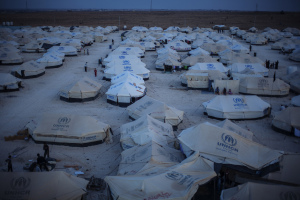
    DFID Syrian Camp

    Za’atari refugee camp, Jordan. Image by DFID via Flickr.

    There are strong foundations for emphasizing R2P as refugee protection. First, the international norm is intended to apply to mass atrocity situations where there is evidence of war crimes, crimes against humanity, ethnic cleansing, or genocide. The refugee crises associated with World War II, the Vietnam War, the Rwandan genocide, and the Balkans conflicts of the 1990s underscore the connection between mass displacement and mass atrocity crimes. International indifference or opposition to collective refugee burden-sharing in these cases frequently resulted in further victimization. In his study of mass killings, Benjamin Valentino argues that greater international response to refugees could have helped reduce the death toll of many of the 20th century’s worst genocides.

    An emphasis on R2P as refugee protection also bolsters the non-coercive and non-violent aspects of the human protection norm at a time when significant criticism surrounding the third pillar of the framework regarding forceful intervention threatens to erode its legitimacy and global consensus. Humanitarian interventions raise concerns about selectivity and often pose significant risks with regard to civilian harm. These risks are compounded by the power asymmetries and realpolitik dynamics that typically characterize coercive interventions. Further associations of R2P with forceful interventions will understandably trigger greater contestations of the norm and undermine the potential for its evolution into meaningful legal obligations. As an alternative to the use of force, states can respond to mass atrocity situations with mechanisms of refugee protection like facilitating access to asylum, granting temporary protection, and upholding the principle of non-refoulement, thus addressing R2P’s call for collective international response in a timely and decisive manner to protect civilian populations and prevent further victimization.

    Allocating Responsibility for Refugees

    While there are robust foundations for connecting the human protection norm to mass displacement and refugee response, the implementation of R2P as refugee protection faces significant impediments both in Europe and the United States. One major obstacle is refugee burden-sharing. The 1951 Refugee Convention and its 1967 Protocol do not specify how, in the face of major refugee crises, states should equitably allocate legal, financial, or physical responsibilities for protection. While states are obligated by the principle of non-refoulement not to contribute to refugees’ harm by returning them to their place of persecution, international law grants states the right to retain control over their sovereign borders. As such, states are not compelled to grant asylum. A related problem is that the existing refugee protection regime relies on post-World War II assumptions that forced displacement is a temporary phenomenon and refugees will be able to return to their country of origin following the resolution of the conflict. Despite data indicating that displacement has become increasingly prolonged, the repatriation of refugees to their home countries remains more heavily promoted than their resettlement or local integration in host countries.

    To date, neighboring states in the Middle East have absorbed the vast majority of refugees fleeing atrocities in Syria and Iraq. This disproportionate burden on states in the region is in line with global trends in the distribution of refugees. Because proximity to place of origin has been a key determinant of distribution, developing countries that can least afford to host refugees have assumed the overwhelming responsibility for them. This inequality in refugee burden-sharing emerges not only due to geographical proximity, but also reflects the increased ability of developed countries to prevent refugees from arriving on their territories. In the ongoing crisis, inequitable burden-sharing is also apparent on a regional level within the European Union (EU), as southern European states have continued to bear the primary responsibility for screening and processing asylum claims. While other EU members have partially shared the burden by committing financial resources to assist Greece and Italy and by hosting some refugees through relocation frameworks, as of November 2015 only three states—Germany, Austria, and Sweden—fulfilled their committed quotas for relocating refugees.   Debates over refugee burden-sharing in Europe have underscored tensions between EU principles and individual member states’ willingness to implement norms of equity in refugee protection.

    While discussions of refugee burden-sharing have largely focused on capability—that is, states’ relative capacities to assist refugees based on factors like economic development, population, and territorial size—the criteria that ought to govern the allocation of refugee responsibility remain ambiguous. The EU plan for distributing asylum seekers approved in September of 2015 utilized economic strength, population, unemployment, and the number of asylum applications approved in the last five years as criteria; however, this resettlement plan has faced opposition from central and eastern European states, and Poland announced that it would not participate. Complicating the task of determining how refugee protection responsibilities should be allocated is the notion that a country’s culpability in the creation of the displacement might also shape its obligations to respond.

    The Securitization of Refugees

    Even if consensus can be reached at the international level regarding principles of equitable refugee burden-sharing, policymakers can increasingly expect resistance from their domestic publics rooted in logics that link refugees to fears of terrorism and perceptions of foreigners as threatening. The implementation of R2P as refugee protection thus faces significant hurdles related to the securitization of asylum seekers—particularly those from Muslim-majority countries—as threats to both national security and cultural values in the United States and Europe. Increased fears of terrorist infiltration via refugee flows have produced calls to round up Syrian refugees and resulted in the U.S. House of Representatives passing H.R. 4038, the American Security Against Foreign Enemies (SAFE) Act. Opposition to refugees at the domestic level has also manifested in arson attacks against refugee shelters in Germany and violence against refugees in France. As refugees are increasingly conflated with migrants, and the current crisis emanates largely from the Middle East, perceptions of asylum seekers have become linked to broader debates about immigration and Islam. In this context, domestic political forces in Europe and the US have framed the refugee crisis in ways that undermine the potential for R2P to be successfully reoriented as refugee protection.

    Navigating these obstacles requires grappling with representations of refugees in social and political discourse, as well as articulating how refugee burden-sharing can serve states’ national interests. Organized and predictable responses for allocating refugee responsibilities could, for example, support greater international stability and reinforce principles of cooperative security. In an increasingly interdependent global environment, fulfilling R2P through refugee protection could arguably compliment counterterrorism policies and contribute to an international protective infrastructure that facilitates better coping with transnational threats and humanitarian emergencies.

    Alise Coen is currently Assistant Professor of Political Science at the University of Wisconsin-Sheboygan, USA. Her article, ‘R2P, Global Governance, and the Syrian Refugee Crisis’ was recently published in the International Journal of Human Rights. She is on Twitter at @alise_coen
  • Protected: About us

    This content is password protected. To view it please enter your password below:

  • Protected: About us

    This content is password protected. To view it please enter your password below:

  • VIDEO – Transforming Food Systems in a Global Context

    In this talk for the Food Systems Academy, Paul Rogers puts the challenges of transforming food systems in a global, human security context. He argues that food is at the centre of the third great transition humankind has to go through.

    Running order:

    Part 1. Why 1945?: 0 – 2 minutes 45 seconds

    Part 2. Proxy wars to the end of the cold war: 2 min 45 sec – 5 min 42 sec

    Part 3. The big issues: 5 min 42 sec – 20 min 45 sec

    Part 4.  The third great transition: 20 min 45 sec – 28 min 49 sec

    Part 5 – Looking ahead: 28 min 49 sec – end

    Paul Rogers is professor in the department of peace studies at Bradford University and Global Security Consultant at Oxford Research Group.  He is the author of numerous books including Why We’re Losing the War on Terror (Polity, 2007), and Losing Control: Global Security in the 21st Century (Pluto Press, 3rd edition, 2010). He is on twitter at: @ProfPRogers 

    The Food Systems Academy is an open educational resource aiming to transform our food systems. This video can also be viewed on their website.

    Featured Image: U.S. Army Huey helicopter spraying Agent Orange over Vietnamese agricultural land (Originally from U.S. Army Operations in Vietnam R.W. Trewyn, Ph.D. , (11) Huey Defoliation National Archives: 111-CC-59948, originally found in Box 1 Folder 9 of Admiral Elmo R. Zumwalt, Jr. Collection: Agent Orange Subject Files. – Item Number: VA042084; via Wikipedia)

  • VIDEO – Transforming Food Systems in a Global Context

    In this talk for the Food Systems Academy, Paul Rogers puts the challenges of transforming food systems in a global, human security context. He argues that food is at the centre of the third great transition humankind has to go through.

    Running order:

    Part 1. Why 1945?: 0 – 2 minutes 45 seconds

    Part 2. Proxy wars to the end of the cold war: 2 min 45 sec – 5 min 42 sec

    Part 3. The big issues: 5 min 42 sec – 20 min 45 sec

    Part 4.  The third great transition: 20 min 45 sec – 28 min 49 sec

    Part 5 – Looking ahead: 28 min 49 sec – end

    Paul Rogers is professor in the department of peace studies at Bradford University and Global Security Consultant at Oxford Research Group.  He is the author of numerous books including Why We’re Losing the War on Terror (Polity, 2007), and Losing Control: Global Security in the 21st Century (Pluto Press, 3rd edition, 2010). He is on twitter at: @ProfPRogers 

    The Food Systems Academy is an open educational resource aiming to transform our food systems. This video can also be viewed on their website.

    Featured Image: U.S. Army Huey helicopter spraying Agent Orange over Vietnamese agricultural land (Originally from U.S. Army Operations in Vietnam R.W. Trewyn, Ph.D. , (11) Huey Defoliation National Archives: 111-CC-59948, originally found in Box 1 Folder 9 of Admiral Elmo R. Zumwalt, Jr. Collection: Agent Orange Subject Files. – Item Number: VA042084; via Wikipedia)

  • Iraq and Syria: The Thirty-Year War, continued

    A version of this article was originally published on Paul Roger’s column on openDemocracy on 11 September 2014.

    Soon after the start of the Iraq war in March 2003, I wrote of the risk of a “thirty-year war” in the Middle East. More than eleven years on – and after thirteen years of the “war on terror” – Barack Obama has now committed the United States to “degrade and ultimately destroy” the Islamic State with “a comprehensive and sustained counter-terrorism strategy”.

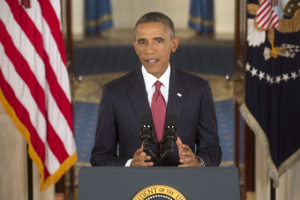
    President Barack Obama delivers an address to the nation on the U.S. Counterterrorism strategy to combat ISIL, in the Cross Hall of the White House, Sept. 10, 2014. (Official White House Photo by Chuck Kennedy)

    President Barack Obama delivers an address to the nation on the U.S. Counterterrorism strategy to combat ISIL, in the Cross Hall of the White House, Sept. 10, 2014. (Official White House Photo by Chuck Kennedy)

    This will be a long-term project that goes way beyond Obama’s own second term, and thus his 10 September Address to the Nation may be the most important speech of his presidency. Beyond that, it is likely to be the prelude to two more decades of war – and perhaps even on to that thirty-year timescale.

    The BBC summarises the strategy as Obama outlined it:

    * A systematic campaign of airstrikes against IS targets “wherever they are”, including in Syria;

    * Increased support for allied ground forces fighting against IS – but not President Assad of Syria;

    * More counter-terrorism efforts to cut off the group’s funding and help stem the flow of fighters into the Middle East;

    * Continuing humanitarian assistance to civilians affected by the IS advance.

    The Iraq element of this strategy has already been underway for a month, with at least 154 airstrikes by 10 September.  An initial analysis of the targets attacked shows that the Islamic State paramilitaries are lightly armed, highly mobile and prone to use commercial vehicles for much of their mobility. They have acquired US weapons, not least from overrunning Iraqi army bases, but they use these sparingly. A Breaking Defense analysis suggests that their capabilities would be limited against well-protected and well-armed defenders, but that their versatility would make it difficult for air-strikes to degrade and ultimately destroy them.

    Tip-toeing back into Iraq

    The United States intention is to work with other states, including the Iraqi government and the Iranian (though that is not admitted in public). Also it already has its own substantial forces in the region, primarily air and naval power. The latter includes the George H W Bush carrier battle-group in the Persian Gulf and the USS Cole cruise-missile-armed destroyer in the eastern Mediterranean. The USS Cole itself was an early victim of an al-Qaida-linked operation when it was bombed in Aden harbour in October 2000, killing seventeen American sailors and injuring thirty-nine.

    The US airforce has even stronger forces available: air-bases in Kuwait, Qatar, the United Arab Emirates and Turkey as well as facilities in Jordan. It could also utilise the large UK base at RAF Akrotiri in Cyprus. President Obama has stated that the US operations will differ greatly from the “boots-on-the-ground” wars in Iraq and Afghanistan, with their deploymernt of huge numbers of ground troops. More indicative of what is intended are the operations in Yemen and Somalia, with their heavy reliance on armed-drones, special forces, and aid to local militias.

    In each of these examples, though, early successes have been followed by regroupings of opponents. The Yemeni government is currently struggling to cope with a resurgent al-Qaida in the Arabian Peninsula (AQAP). Al-Shabaab in Somalia may have been excluded from some of the country’s few large urban areas, but it has influence across swathes of countryside as well as regional abilities through to Kenya and beyond.

    In any case, the US secretary of state John Kerry has acknowledged – in a revealing comment at a Baghdad press conference on 9 September – that in extreme circumstances, the United States might commit combat-troops on the ground in Iraq. Indeed, several hundred more US troops are already heading for Iraq, albeit reportedly for defensive purposes only; but special-forces units are likely to be already in the country, many of them involved directly in combat (though again this would never be acknowledged officially).

    In the labyrinth

    All this raises the issue of why the Islamic State’s paramilitary capabilities have come to the fore so rapidly and lethally. It remains a central question. The answer will determine how deeply the US and its coalition partners gets immersed in a new war, and relates quite strikingly to how the United States conducted the previous war in Iraq before the withdrawal of most of its forces in 2011.

    The well-informed Guardian journalist Martin Chulov reports that at the core of the Islamic State’s paramilitary force is a tightly-knit group around its leader Abu Bakr al-Baghdadi. Many of them are Iraqis who fought the American and British special forces in perhaps the most vicious phase of that singularly dirty war, which lasted for three years from late 2004.

    At that time, the US joint special-operations command (JSOC) under General Stanley McChrystal was facing a relentless and capable insurgency inflicting huge US casualties. In response it developed a new form of network-centric warfare focusing on mobile special-force groups that were highly autonomous yet connected in “real time” to a wide range of intelligence capabilities.

    The operation reached its peak in 2005 in the form of Task Force 145 (TF 145), comprising four groups working in four geographical locations around central Iraq. Three of the groups were based on US forces – SEAL Team 6 from the navy, a Delta squadron and a Ranger battalion. The fourth, Task Force Black, was organised around a British SAS squadron.

    The entire JSOC operation was centred on rapid night-raids that killed or captured insurgent suspects. Those captured would often be subject to intensive interrogation (a.k.a. torture) – the results immediately used, sometimes within hours, to prompt further raids. Steve Niva, in his remarkable academic paper “Disappearing violence: JSOC and the Pentagon’s new cartography of networked warfare” in the journal Security Dialogue (June 2013) recounts: “By the summer of 2005, JSOC teams undertook an estimated 300 raids per month, hitting targets every night, eventually turning their focus to suspected local players and middle managers in insurgent networks”. A further valuable source is Mark Urban’s book Task Force Black (2010).

    The learning game

    The full death-toll among the insurgents is not known but believed to be in the thousands. More significant in this context, however, is that many tens of thousands of insurgents were detained by JSOC units and others. Some of them were kept for years in squalid conditions in huge prison-camps such as Camp Bucca, south of Basra – which at its peak had 20,000 inmates. Some of the prisoner abuse came to light at Abu Ghraib, but other centres were engaged as well in straightforward torture (one was the infamous “Black Room” at Camp Nana near Baghdad).

    By 2009, Barack Obama had been elected president in the US and the war began to wind down. Most of the prisoners were released, including the current Islamic State leader, Abu Bakr al-Baghdadi, who may himself have been radicalised partly by his time in Camp Bucca. Nouri al-Maliki, prime minister of Iraq since 2006, was marginalising the Sunni minority. From the Sunni ranks arose a renewed extreme lslamist group in Iraq which developed into the Islamic State, linking increasingly from 2011 onwards with paramilitaries fighting Bashar al-Assad’s regime in Syria.

    The Islamic State is thus part of a long-term evolution of a process that originated in Iraq in 2003, was badly knocked back by McChrystal’s JSOC forces by 2008, but has now re-emerged to provide the hardline core of a revived movement – veterans of urban conflict against well-trained and heavily-armed US troops, marines, and special forces.

    These are people likely to have an intense hatred of the United States and its forces – coupled with a cold ability to avoid that hatred clouding their judgment. They will be people, including Abu Bakr al-Baghdadi himself, who will positively welcome US military action, especially when it extends to the greater use of special forces and the even more welcome possibility of regular troops. These are individuals who survived intense air-attacks and special-force operations for years in Iraq. They will be prepared for what now, following Obama’s speech, is likely to ensue: a new phase in a very long war.


    Paul Rogers is professor in the department of peace studies at Bradford University and Global Security Consultant at Oxford Research Group.  He is the author of numerous books including Why We’re Losing the War on Terror (Polity, 2007), and Losing Control: Global Security in the 21st Century (Pluto Press, 3rd edition, 2010). He is on twitter at: @ProfPRogers 

    Featured Image: Iraqi troops run through a smoke screen in Baqubah, central Iraq, 22 June 2007, followed by US troops from the 3rd Stryker Brigade Combat Team. The action was part of Operation Arrowhead Ripper against al-Qaida in Iraq (precursor of Islamic State) as part of the 2006-07 Diyala Campaign. Source: Sgt. Armando Monroig, 5th Mobile Public Affairs Detachment, Tikrit (via Wikipedia)

  • Interview – Aidan Hehir

  • Myanmar: peaceful transition to democracy or storm clouds on the horizon?


    MyanmarPublished last week, Myanmar: Storm Clouds on the Horizon is International Crisis Group’s latest Asia report. It focuses on the potential for political violence and social instability as Mynamar’s leaders are undertaking reforms “to move the country decisively away from its authoritarian past”. For most of the past 50 years, the government of the Republic of the Union of Mynamar (also referred to as Burma) has been under direct or indirect control by the military. Since independence in 1948, the people of Myanmar have suffered civil wars which have mainly been struggles for ethnic and sub-national autonomy. The country has consistently been in the news for human rights violations. Perhaps one of the world’s most well-known political prisoners, the Nobel Peace Prize laureate and opposition politician Aung San Suu Kyi, also chairperson of the National League for Democracy (NLD) was released in 2010 after 21 years under house arrest.
    Thein Sein, current president of Myanmar, has put in place a far-reaching and radical reform agenda. The ICG’s report focuses on what reforms have been achieved and what this may mean for a possible resurrection of violence because “political prisoners have been released, blacklists trimmed, freedom of assembly laws implemented, and media censorship abolished. But widespread ethnic violence in Rakhine State, targeting principally the Rohingya Muslim minority, has cast a dark cloud over the reform process and any further rupturing of intercommunal relations could threaten national stability.” With former political prisoners being released, 2,000 high-profile activists and opposition politicians being allowed to return home, and further liberalization of the media, “social tensions are rising as more freedom allows local conflicts to resurface”.

    The report notes that “The easing of authoritarian controls has created the space for the population to air grievances, the ability to organise in a way that was not possible before, and the opportunity to have a real influence on government policies and decisions” which has led to an “exponential growth in civil society activity”. In order for the transition from authoritarian rule to democracy to be stable, and for peace and security to be sustainable, the government of Myanmar will have to face and resolve major challenges. Widespread militarization and the political and social marginalization (past and present) of ethnic and religious groups will have to be addressed. For example, it has been estimated that the recent 2012 violence between Rohingya Muslims and Rakhine Buddhists in Rakhine State led to an estimated 90,000 displaced people in addition to dozens of casualties. It will not be sufficient to react to past and present violence by allowing more freedom of speech and liberalizing the press. Trying to contain the violence and reducing state repression alone will not address the underlying drivers of insecurity. The government will have to take a sustainable security approach and make great efforts in order to actively address the causes of long-standing grievances. Addressing only the symptoms cannot lead to long-term stability and the rebuilding of trust between communities.

    The ICG offers several options to minimize the risks associated with single party dominance during Myanmar’s political transition. These include changing the electoral system to some form of proportional representation, building coalitions between the NLD and other political parties, and building bridges between the NLD and current president Thein Sein as well as other political forces- particularly the old guard. The ICG recommendations underscore the importance of all parties, and the majority of people, to feel involved in the political process. The marginalization of any political or ethnic/religious groups will most probably lead to further violence and insecurity in the future.

    ICG’s full report and details of the policy recommendations can be read here.

    Anna Alissa Hitzemann is a  Peaceworker with Quaker Peace and Social Witness. She currently works with Oxford Research Group as a Project Officer for the Sustainable Security Programme, with a focus on our ‘Marginalisation of the Majority World’ project.

    Image source: Rusty Steward

  • From Surveillance to Smuggling: Drones in the War on Drugs

    From Surveillance to Smuggling: Drones in the War on Drugs

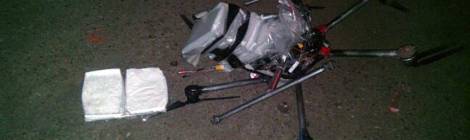
    In Latin America drones are being used as part of the War on Drugs as both regional governments and the US are using surveillance drones to monitor drug trafficking and find smuggling routes.. However, as drones are increasingly being used by drug cartels themselves to transport drugs between countries, could Latin America find itself at the forefront of emerging drone countermeasures?

    Read Article →

  • A top-down approach to sustainable security: the Arms Trade Treaty

    A top-down approach to sustainable security: the Arms Trade Treaty

    2012 has been hailed as a potential landmark year in the push for greater regulation of the global trade in conventional arms. After more than a decade of advocacy to this end, negotiations took place throughout July towards the world’s first Arms Trade Treaty (ATT), which is intended to establish the highest possible common international standards for the transfer of conventional weapons. However, although significant progress was made during the month of intense negotiations, the ATT is not yet open for signature. In this article, Zoë Pelter explores what role a potential treaty – if reopened for further negotiation – could play in a move towards sustainable security.

    Read Article →