Category: Article

  • Multiple Futures Project – Navigating Towards 2030

      The following is an excerpt from Multiple Futures Project (MFP) Findings and Recommendations:

    The Multiple  Futures  tell  the  story  of  four  plausible worlds  in  2030, and  are  constructed  to  reflect  their  underlying  logic  and  reasoning.  None of these is what the future actually will be, but each provides a common  ground  for  structured  dialogue  on  the  risks  and vulnerabilities  that  will  potentially  endanger  Alliance  populations, territorial integrity, values and ideas. 

    The  first  future  is  called Dark  Side  of  Exclusivity,  and  describes  how globalization, climate change and resource scarcity significantly affect the  capacity  of  states  outside  the  globalized  world  to  function effectively and meet the needs of their populations. Weak and failed states are sources of instability, and the states of the globalized world are faced with strategic choices on how to react. 

    The second future, called Deceptive Stability, refers to a world where advanced nations are preoccupied with  societal  change and how  to manage the coming demographic shift as native populations age and young migrants  fill  the  void.   States  in  this world of  relative benign stability are preoccupied.  They focus inward on social cohesion, legal and  illegal migration,  and  transnational  issues  related  to  diasporas.  This leaves them ill-prepared to deal with geopolitical risk. 

    Clash of Modernities, the third future, sketches a world where a strong belief  in  rationalism,  coupled  with  ingenuity  and  technological innovation,  fuels  and  promotes  horizontal  connections  between advanced  networked  societies  across  the  globe.  This  network  is challenged  from  the  outside  by  authoritarian  regimes  of  the hinterlands,  and  from within  by  a  precarious  balance  between  civil liberties and oversight by the state. 

    The  fourth  future  is  called  New  Power  Politics,  in  which  growing absolute wealth, including the widespread proliferation of WMD, has
    increased the number of major powers, between whom there  is now a  tenuous  balance.  Globalization  through  trade  integration  and
    internationally  agreed  standards  is  undermined  as  these  powers compete  for  and  impede global  access  to  resources  and  spheres of
    influence.

    Each  of  the  futures  provides  a  backdrop  for  conceptual  analysis.  Together  they present  a  canvas on which  to  evaluate  risks,  threats,
    potential  strategic  surprises,  implications  and,  of  course, opportunities.  The  study  has  yielded  a  rich  set  of  Risk  Conditions, ranging  from  ‘failed  states’  and  ‘disruption  of  access  to  critical resources,’  to  ‘increasing  ethnic  tension’  and  the  ‘challenge  of conflicting  values  and  world  views.’  When  linked  with  the  six potential  Sources  of  Threat  identified  in  the  MFP,  the  resulting Threatening Actions  or  Events  yield  33  Security  Implications  and  26 Military Implications.

    All Multiple Futures Project documents can be found here.

  • The Other Resource Wars

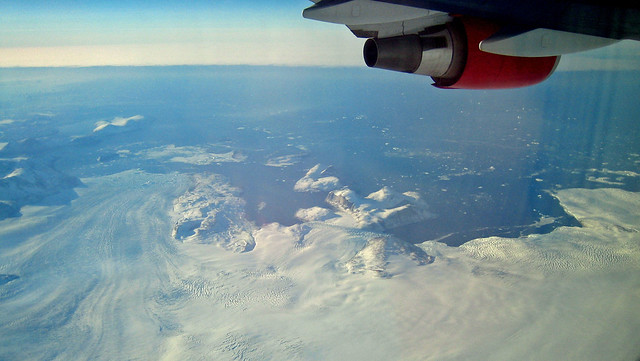
    At mysterious pace, and for reasons that remain hotly disputed, the ice of the Arctic Ocean appears to be steadily retreating. The latest estimates by the National Snow and Ice Data Centre at the University of Colorado, which use remote sensing data from Nasa satellites to make their findings, suggest that this year’s ice levels are well below their long-term average: in mid-August ice covered 2.30 million square miles in the Ocean, which is nearly 650,000 square miles less than the average 1979-2000 figure, even if it marginally exceeded the record-breaking lows of 2007 and 2008(1).


    Exactly when the Arctic Ocean will become ice-free for much of the year is impossible to judge, and estimates have varied widely: some experts argue that by the year 2020 trans-Arctic shipping could well be commonplace in the months of late summer, when ice reaches its annual minimum, while others think that, if present trends continue, such an eventuality is only likely to come about decades later. But what is certain is that the region is becoming much more accessible than ever before: there is now more human interaction in places, on both land and sea, that were once considered wholly remote and hostile.


    This heightening level of activity poses a very different threat to international stability than is commonly supposed. In recent years there has been speculation about growing rivalry for control over the Arctic’s natural resources, notably the large deposits of oil and natural gas that independent bodies, such as the US Geological Survey, think are located there. But there is no convincing reason why any country would want to risk open conflict over these reserves, even if they exist in such voluminous quantities: for example, there are other parts of the world where oil and natural gas can be recovered with a far greater ease, and at a far lower cost, than the Arctic region is likely to offer for decades to come. By the time the region does become more accessible, alternative fuel sources are likely to have been pioneered in any case.


    The presence of valuable natural resources in the Arctic region, or even the mere possibility of finding them, instead poses a subtly different challenge to international peace than usually supposed. For instead of fighting over resources, governments could instead feel threatened by the heightened foreign presence that the search, or exploitation, of these resources will bring to places that are important for other, quite independent, reasons. This is potentially a recipe for international mistrust that could conceivably spill over.


    One such example is Greenland. In the eyes of American military planners, this huge, frozen land mass occupies a vital strategic location whose fate cannot be ignored. This is because it would potentially make a natural vantage point for any hostile power seeking to exercise control over the trans-Atlantic sea lanes upon which the American economy heavily depends. So during the Second World War, for example, Washington was deeply concerned by Nazi efforts to establish bases along Greenland’s warmer southern coasts and deployed the US Navy to track and eliminate any putative threat. In April 1941, the exiled Danish government then signed a treaty with the Americans allowing Washington “almost unlimited rights to establish bases and military installations in Greenland”, leading to the establishment of thirteen army and four navy bases, one of which, at Thule, remains in active use today.


    Nearly seven decades on, Greenland is regarded as a very important source of highly valued natural resources, including oil, natural gas and the rare earth metals that are used in mobile phones, hybrid cars and missile guidance systems. In the years ahead, the island is certain to attract large-scale investment by foreign companies and, in the case of state-owned enterprises, their governmental sponsors.


    In some, perhaps many cases, this will lead to a series of company mergers and acquisitions that do not bring any foreign boots onto local soil, just as Chinese companies have in recent years sought to acquire stakes in companies like Unocal and Rio Tinto. But equally foreign nationals can sometimes undertake the search for, and exploitation of, some natural resources: the oilfields at Cabinda in Angola, for example, are home to thousands of expatriate Chinese workers. So it is possible to imagine mistrust, tension and destabilisation between Washington and Beijing if, for example, the Chinese should in the years ahead establish a strong presence in Greenland.


    This is a danger presented not just by the exploitation of natural resources but by the growing human interaction in parts of the world that, until recently, were too climatically hostile to be accessible. So as the waters of the Arctic Ocean steadily become more navigable, Russia and the United States may start to feel threatened by the growing presence of commercial and, more obviously, military vessels as they exercise their right, under international law, to make “innocent passage” through the territorial seas that lie adjacent to every coastal state.


    This is partly because they would be both unaccustomed to such military movements and, in all likelihood, relatively unprepared for them, even if, over the past two years, both countries have released internal documents that emphasise the need for greater defence spending on the Arctic region.(2) But their alarm would also reflect, more importantly, the strategic importance of the area: for example, Russia’s northern coasts are home to several key ports and industrial complexes, and also provide a potentially major shipping route that would link east and west


    So the presence of natural resources within existing borders, in places like Siberia and Alaska, will heighten the strategic fears of each respective country: both Russia and the United States will fear an attack on their resources as the region becomes more accessible and an increasing number of foreign ships make their way, quite legitimately, into surrounding waters. But these areas would have strategic value- as shipping routes, for example- even if they were devoid of resources.


    In other words, instead of being a prize over which competing nations will be tempted to fight, natural resources in the Arctic region will have a destabilising influence only in an indirect sense.


    Such mistrust and suspicion can only be alleviated by more international dialogue. For example, NATO ships could avoid straying into Russian territorial waters without giving Moscow prior notice, even though international law puts them under no such obligation, and large areas of the Arctic region could realistically be demilitarised.


    End notes:

    1 – ‘North by Northwest’, report by the National Snow and IceDataCenter, University of Colorado 17 August 2010

    2 – NSPD 66, January 2009; ‘Russian National Security Strategy Until 2020’, 20 February 2009


    Image Source: psd

  • Hot and Cold Wars


    Climate change will do more than just raise the temperature. Around the equator, rising temperatures and declining precipitation will lower agricultural production. People in this area (especially Africa and the Middle East) are particularly reliant on agriculture to support income and livelihoods. This trend (Hot Wars), coupled with rapidly increasing populations, will create conditions for livelihood wars. 
    At the Arctic Pole especially, the increasing temperature will lead to a vastly different outcome. Warming there will make it increasingly likely that resources (energy, minerals, timber, etc.) will become economically viable both on land and offshore. New transportation routes may come into common use with the disappearance of sea ice. This trend (Cold Wars) will set the stage for resource conflict.
    These two distinct behaviors will orient a kaleidoscope of impacts from climate change rather than a uniform one.  Even within Hot and Cold zones, there will be differences in climate change, demographic and industrial change, and adaptation capacity that will produce a myriad of differing consequences.
    Out of the Hot and Cold Zones, increased tension due to instances of declining and expanding resources will set the stage for conflict, given sustained trends and conflict triggers (see Figure 1). Climate and conflict has long been a reality in the “Old Tension Belt” and impacts will focus on developing countries. Conflict has been rare in the Arctic, but that may change in the race to control new resources. This conflict will include developed countries.
     
    Figure 1: The Two Tension Belts
     
    Now that the debate on the existence of climate change is over, the time is to move to the next question. What will be the social consequences of climate change? This effort will require a commitment of resources equal to that devoted to building climate models. So far, it has not been on the agenda for climate talks.
    My book on Climate Change and Armed Conflict: Hot and Cold Wars (Routledge Press) was recently released in paperback.  The book examines historic and forecast cases of climate change and conflict.
    http://www.routledge.com/books/details/9780415592512/
    The book builds on my project the “Inventory of Conflict and Environment” or ICE, an online collection of more than 200 categorically coded case studies. There are also search and expert options exploring and applying the case database.  There will be new cases focusing on climate change and conflict added in January 2011.

    http://www1.american.edu/ted/ICE/index.html

    Image source: James Lee
  • Louisiana is Sinking

    The devastating nexus of climate change, competition over resources and marginalisation

    Hurricane Katrina and the sinking of coastal Louisiana stand as a reminder that we must address climate change, competition over resources and marginalisation as the root causes of conflict before it is too late.

    Most will remember the horrific pictures on the news in 2005 when Hurricane Katrina struck New Orleans. Nearly 2,000 people died, thousands more were left homeless and displaced, the material destruction was catastrophic with damages well over $100 billion.

    The aftermath of Hurricane Katrina once again proved that marginalised people have the least resources to cope with environmental constraints and natural disasters. Nowhere in New Orleans was the devastation greater than in the Lower Ninth Ward, a predominantly poor African American neighbourhood. Most residents of the Lower Ninth Ward had fewer options of where to go, did not want to leave their homes behind and lost everything due to the damage caused by Katrina and their lack of financial resources to rebuild the community.

    Katrina was not the last and probably not the most destructive disaster to hit Louisiana. Over the past years, a significant discovery has been made: Coastal Louisiana is sinking, at a rapid rate. Some estimate that an area the size of a football field is lost roughly every half hour.

    Once again, this will affect already marginalised communities the most. Science Illustrated argues “something drastic must be done” because “the current state of affairs means that they [the affected communities] may soon be the first climate refugees in United States history”.

    CLIMATE CHANGE

    Climate change sceptics appear to be fighting a losing battle in the face of greater levels of sound scientific data. Yet, governments are still reluctant to take necessary steps like drastically cutting carbon emissions and switching to green renewable energy sources. Hopefully this will change as addressing climate change will be essential in tackling the security challenges of an increasingly interconnected world.

    At the World Economic Forum in Davos, Lord Stern, author of a 2006 UK government review on climate change, admitted he had got it wrong: “Looking back, I underestimated the risks. The planet and the atmosphere seem to be absorbing less carbon than we expected, and emissions are rising pretty strongly. Some of the effects are coming through more quickly than we thought then. This is potentially so dangerous that we have to act strongly. These risks for many people are existential”.

    The risks are indeed existential for many people living in the coastal communities of Louisiana. Rising sea levels, mainly due to melting ice caps, are threatening those who live in the Louisiana Delta.

    When interviewed by PBS, Torbjörn Törnqvist, geoscientist at Tulane University who studies Louisiana’s wetlands, said: “there is no doubt that the sinking land is a direct implication of climate change, because it actually reflects what we see worldwide. And if we go forward, we know that sea-level (rise) will continue to accelerate. The only thing there is uncertainty about is how large that continued acceleration will be. But I think the important thing we know now is that, even in the past century, accelerated sea-level rise has already contributed to the loss of these wetlands […] ultimately it [climate change] could very well become the single most important factor.”

    Although climate change and the consequent rising sea levels are an important reason why coastal Louisiana is rapidly losing land, there is more to it. To prevent flooding, extensive levees have been built (some more than 100 years ago) around the edges of the Mississippi river and channels and water ways have been carved to redirect flows. However, the levees prevent the land in that area from receiving sufficient sediments to stay above water, and the manmade channels through the wetlands have weakened the buffer zone for hurricanes and storms. So sea levels are rising and the land is sinking.

    These factors combined account for “the largest land loss currently on the planet”, says Val Marmillon, the managing director of America’s Wetland Foundation. “The massive land loss is not only threatening to destroy an entire ecosystem, including dozens of endangered animal species, but it could also severely affect local residents. Up to 2 million people are at risk of having to leave their homes.”

    DRILLING FOR OIL

    In addition to rising oceans, manmade levees and diversions, oil drilling along the coast has also contributed to rapid subsidence of the marshlands. The oil and natural gas industry, with annual revenue of approximately US $325 billion, started drilling in Louisiana in 1901. This has caused the wetlands to collapse and erode as channels are being dug for oil pipes. The process of removing oil from beneath the land is causing it to further sink, letting in salt water which destroys much of the natural habitat.

    The Sustainable Security Programme at Oxford Research Group (ORG) sees “competition over resources” as one of the main drivers of global conflict: “there will be greater scarcity of three key resources: food, water and energy. Demand for all three resources is already beyond that which can be sustained at current levels.” A recent ORG publication states that “a narrow resource base for these energy reserves is at the root of the strategic importance of the Persian Gulf and does much to explain recent and current conflicts, but the even greater global concern stems from the potential impact of climate change”.

    Oil drilling in the Gulf of Mexico off the coast of Louisiana is detrimental to the environment, impedes addressing the causes of climate change and most importantly further marginalises already disenfranchised coastal communities.

    MARGINALISATION

    The political, social and economic marginalisation of the people of New Orleans and coastal Louisiana plays a central part of this story. Frances Fox Pivan in her article Marginalization and American Politics argues that in the case of Katrina “many of the victims had been marginalized before the hurricane and the floods overwhelmed them, which is surely part of the reason that the danger of hurricane and the ensuing floods was ignored. As is amply evident, this was not simply a natural disaster.”

    She goes on to link marginalisation, poverty, the effects of natural disaster and violent crime: “Behind those images [of Katrina] was an intricate story of marginalization in the United States. The population of the city [New Orleans] was overwhelming black, and poor. The median income was only 70 percent of the national average, and poverty rates were twice the national average. The main jobs were low wage jobs in the hotels, casinos, restaurants and bars that catered to the tourist industry. Government income support programs, including welfare and food stamps and subsidized housing, that sometimes supplemented the earnings of some poor people, had been whittled away for several decades, and especially under the presidency of George W. Bush. The schools were bad, with high dropout and suspension rates, and the illiteracy rate of the city hovered at about 40 percent. Homicide rates were extraordinarily high, roughly ten times those of New York City.”

    In the current situation of the sinking wetlands, most of the 2 million people who are directly affected are also living on the margins of society. According to 2011 US Census data the poverty rate in Louisiana is the second highest in the nation at 20.4% and 9.4% are living in extreme poverty. 14.1% of the population are affected by food insecurity and over 33% are in low-wage jobs as Louisiana is one of the five US states without a minimum wage law.

    Small island communities in the Mississippi Delta, such as the Isle de Jean Charles, are inhabited by members of various Native American tribes. Some tribes do not have recognised status from the US government and hence have no access to any help from the state. Many people in the area live off the land they live on and sustain themselves through fishing and other subsistence activities. What will they do when their land disappears? Where will they go?

    Marginalised people have much fewer resources to cope with a changing environment. They do not have options. Desperate people are also more willing to turn to desperate means. The case of Louisiana exemplifies the dangerous nexus of climate change, competition over resources and marginalisation. Working towards sustainable security will mean addressing those underlying factors in order to prevent violent conflict.

    In President Obama’s second inaugural address, he put climate change centre stage as one of his top three priorities: “Some may still deny the overwhelming judgment of science, but none can avoid the devastating impact of raging fires, and crippling drought, and more powerful storms. The path towards sustainable energy sources will be long and sometimes difficult. But America cannot resist this transition; we must lead it.”

    Words will no longer be enough. We must see action, now.

    Image source: Brother O’Mara

  • Afghanistan: propaganda of the deed

    The military campaign now being waged in the Afghan province of Helmand is being described in much of the world’s media as the biggest such operation since the one which secured “regime-change” in Kabul in October-November 2001. A coordinated military assault involving 15,000 troops – from the United States, Britain and Afghanistan itself – aims to seize the town of Marjah and surrounding areas, which are described as the Taliban’s last stronghold in Helmand.

    Operation Moshtarak (the word means “together” in the Dari language), even before its launch, has been the subject of a series of high-profile news stories with an almost uniformly positive “spin”. Their consistent core is that the operation’s purpose is to curb Taliban influence over Helmand as a whole; that the province is, alongside neighbouring Kandahar, the pivot of Taliban power in Afghanistan; and, therefore, that victory would be likely to turn the whole course of the war in Afghanistan in favour of the Nato/Isaf project.

    The herald of success

    The task of reaching an accurate assessment of the real state of the conflict must look beyond such public-relations campaigns from military sources. The starting-point here is to acknowledge that after a long process of internal deliberation the Barack Obama administration has embarked on a policy markedly different from its predecessor. Washington’s new approach combines a readiness to negotiate and compromise (even with significant elements of the Taliban leadership) in order to end the war with a belief that it needs to do so from a position of clear military strength. Operation Moshtarak is the first major step in this military-diplomatic process.

    Why, though, is the assault getting so much advance publicity? At first sight this seems puzzling, for it evidently gives Taliban strategists detailed warnings of what they are about to face. The rationale is fourfold: to intimidate some militants into abandoning the fight; to encourage civilians to evacuate the area (thereby reducing casualties); to make the best of the fact that the Afghan security services are so penetrated by Taliban sympathisers that it is pointless to keep operations secret; and – a crucial domestic consideration in the United States and Britain – to wring some positive publicity from a situation of diminishing popular support for the war. For Nato’s military planners and their political overlords, it is essential to demonstrate that the war can be won; what better way than to depict Operation Moshtarak as the instrument that breaks Taliban control of a key province?

    The problem is that this narrative of anticipatory semi-triumphalism in no way corresponds to current signals from elsewhere in Afghanistan, including Helmand. For example, a new report from the Center for A New American Security co-authored by Major-General Michael T Flynn (Isaf’s director of intelligence) highlights the remarkable capabilities of the Taliban and is very cautious about progress (see Fixing Intel: A Blueprint for Making Intelligence Relevant in Afghanistan, 4 January 2010). A number of other recent reports similarly point to a versatile and resilient opponent (see CJ Chivers, “As Marines Move In, Taliban Fight a Shadowy War”, New York Times, 1 February 2010).

    Two senior military officers – Major-General Andrew Mackay, a former commander of Britain’s task-force in Helmand, and Steve Tatham – make an especially potent criticism of the country’s war-fighting approach. They argue that “a fresh ‘hearts and minds’ strategy is required which focuses less on winning bloody battles against the enemy, and more on understanding their culture, economy and psychology” (see Eddie Barnes, “MoD ‘is not capable’ of winning war”, Scotland on Sunday, 3 January 2010).

    Such critical, topical and ground-level analyses at least suggest that the intense and positive publicity devoted to Moshtarak is more a public-relations exercise than a realistic estimate of the current situation. In this respect, the experience of an earlier military operation of comparable scale – the attempt to send a giant turbine to the Kajaki dam in northern Helmand in August-September 2008 – casts an interesting light.

    What comes after

    This operation received huge publicity in the British media, most of which hailed it as one of the great successes of the war. The plan was to supplement the dam’s already working turbine with another that would be divided into seven large sections (of over twenty tonnes each), then carried by road from Kandahar airbase to Kajaki through 280 kilometres of largely hostile territory. No less than 5,000 troops were involved to ensure the safe transfer of the turbine: from Britain (3,000), the United States, Australia, Denmark and Canada (a total of 1,000), and Afghanistan (1,000).

    The logistics were enormous: a 4-kilometre convoy of 100 vehicles – supported by fifty Viking armoured vehicles and constant air-cover from British, American, French and Dutch planes and American drones – took six days to travel the route, deliver the turbine, and (again over six days) return to secure bases. Along the way, one Canadian soldier and a reported 200 Taliban were killed. The way was now ready to import Chinese technicians to instal the turbine (which was a Chinese design), and for Nato/Isaf to bask in the secure knowledge that this part of Helmand province had been made safe and was on the development path.

    The British ministry of defence (MoD) was upbeat about the result:

    • “With the delivery of the turbine complete, work can now begin on its installation and the much larger programme of the rejuvenation of the electrical distribution network needed to pass the extra power to the areas of Sangin, Musa Qaleh, Kandahar and the provincial capital of Helmand, Lashkar Gah. The new turbine is capable of producing 18.5MW of economically viable, renewable energy, which will be in addition to the dam’s current 16.5MW output”

    • “The additional electricity it will eventually provide will light up classrooms, allowing Afghans across southern Afghanistan to learn to read and write in evening classes; farmers to store their produce in chilled storage, allowing greater export opportunities for the booming wheat markets; and clinics to provide improved health services” (see “Kajaki dam troops return to base”, Military Operations [Ministry of Defence, 8 September 2008]).

    The MoD concluded its report on the successful operation by quoting George Wilder, a contractor working on the USAID contract to upgrade the power- plant:

    • “There’s still a lot to do, but I’ve been waiting for this for a long time. It’s a great day for Afghanistan and it feels like my birthday.”

    The entire operation was portrayed both as a success in itself and as the start of a process that would have a ripple-effect across much of southern Afghanistan. It could, it was claimed, be a turning-point in the war.

    What happened next? By March 2009, six months on, there were reports that the turbine was still waiting to be unpacked (yet alone installed); and that security concerns were delaying progress in the work. Now the whole project has been abandoned (see “US postpones Afghan dam project”, BBC News, 14 December 2009).

    The immediate trigger of the decision was that the Chinese contractor charged with installing the turbines withdrew overnight because of poor security. The job was always going to be huge; it would have involved the deployment of several hundred tonnes of cement and other supplies, and the mobilisation of a large team of engineers, technicians and labourers. At last, USAID has accepted that a further operation on this scale across land still controlled by the Taliban is unfeasible. It has reluctantly arranged for the turbine sections to be put into storage, and is now seeking energy projects elsewhere in Afghanistan in which it can invest.

    A complex reality

    The Kajaki power-plant experience has implications, direct and indirect, for Operation Moshtarak. First, it reveals the possibility of Nato using its huge firepower advantages to push Taliban paramilitaries out of larger towns – but being unable to prevent the Taliban from retaining control of many rural areas, to the degree that the movement can prevent the completion of an important infrastructure project.

    Second, what might come after the impending operation is likely to be much more significant than what happens during it. As Moshtarak unfolds, it is almost certain that the Taliban will be evicted from Marjah and the surrounding areas; indeed, there may even be relatively little fighting as local Taliban commanders avoid localised conflicts that they cannot win. The great risk then is that Taliban rule will be replaced by regional governance of a kind that is all too typical of the Hamid Karzai regime’s record elsewhere: corrupt, dysfunctional, incompetent, with a police force that may be be infiltrated by Taliban sympathisers.

    This is not to denigrate the efforts of defence ministries and departments yet again to represent the current operation as a decisive turning-point. Such efforts are, from their perspective, a necessary part of their work that becomes especially important at a time when support for the war is diminishing.

    But it has always to be remembered is that the official representation of Afghanistan’s condition is just one part of a much wider picture; and that any worthwhile assessment of what is happening in the country must take into account many other factors. In this respect, the dismaying outcome of the Kajaki operation may be a more accurate reflection of Afghan realities than the publicity accompanying Operation Moshtarak.

  • Climate Change and the Military

    The Climate Change and The Military (CCTM) project initially consists of  two elements. The first  is the recent report Climate Change and The Military: The State of Debate.
    “It  is  the belief  of  the  authors  of  this  text  that recent evidence of  abrupt climate  change  and threatening  tipping points has brought the challenge of  climate change into the urgent timescale of  military  contingency  planning. Climate  change  is  a common  security  problem  that  requires global co-operation in which the defence and security community have an important role to play.   It  is  our  fear  that  if  COP 15  fails  to  deliver  an effective, predictable  and  institutionally  robust climate  protection  system,  that preserving  security  and  stability  at  current  levels  will  become increasingly difficult. 

    It is clear to us that on issues of  climate change and security,  the past is not an adequate guide to the future.   The broader climate policy making world needs to hear from the defence and security community  about  the  concerns  of  the military.    If  the military were  to be  excluded  from  the discussion at this stage on  the spurious grounds that they would be “securitising”  the debate,  we should  not  be  surprised  if  individual  national  militaries  developed  separate  and  potentially conflicting approaches to the subject. 

    This  paper aims to describe the state of  the current debate on  climate  change and security, and provide  a framework  for discussion  in which the military can play  a clear  role  in  the debate on climate change mitigation and delivering sustainable human security, while starting  to address  the direct  impacts  of  climate  change  on  its  core  aims  of  national  security,  regional  and  global stability.”
     

    The full full report is available here.

     The second element, a statement by the Project Military Advisory Council calling for effective action at Copenhagen, is avaiable here.

  • Exploring the security implications of climate change in South Asia – International Alert co-hosts South Asia Climate and Security Expert Roundtable in Dhaka

    International Alert, together with the Bangladesh Institute for Peace and Security Studies (BIPSS) and  the Regional Centre for Security Studies and the Peacebuilding and Development Institute in Sri Lanka, co-hosted an expert roundtable on the Security Implications of Climate Change in South Asia in Dhaka, Bangladesh on 29th-30th March 2010.

    The two-day event brought together experts from Bangladesh, India, the Maldives, Nepal, Pakistan and Sri Lanka for an important regional exchange on issues related to climate change and security. International Alert’s recent work on climate change, fragility and conflict has shown that the security implications of climate change are a very real but relatively unexplored issue worldwide and in this region. This event marked the start of a significant process, creating a space for a critical discussion on the interlinkages between climate change and conflict in South Asia.

    Participants discussed the various and interconnected ways in which climate change is affecting fragile communities in the region. Case studies from the experts offered insights from each country – from the impacts of climate-related changes on rice and wheat yields, and thence on health and livelihoods in Bangladesh, to tensions arising from dam construction diverting water between upstream industry and downstream agricultural users in the Sindh province of Pakistan, to disputes over access to ground water in rural communities in India.  

    In many of these communities, the failure of governance structures to address risks such as food shortages and reduced access to drinking water erodes peoples’ trust in their governments. In certain contexts, this mistrust and diminished support can lead to an increased risk of political instability and violent conflict. The case studies showed how the impacts of climate change increase the risk of armed conflict in the poorest and least well-governed countries. At the same time, the shadow of conflict and the background condition of state fragility make it harder for communities to deal with the impact of climate change.

    The two-day meeting underlined the fact that these inter-related problems demand inter-related solutions. The triangle of climate change, conflict and fragility needs to be addressed by a unified approach – building resilience.

    This approach can be operationalised by taking forward five policy objectives:

    – Adaptation to climate change needs to be conflict-sensitive. In fragile contexts, all interventions must respond to the needs of the people, involve them in consultation, take account of power distribution and social order, and avoid pitting groups against each other.

    – Development needs to be climate-proof.

    – Shifts towards low-carbon economies must be supportive of development and peace.

    – Steps must be taken to strengthen social capacity to understand and manage climate and conflict risks. This means communicating the knowledge available on the issue in an open and honest manner to enable understanding, awareness and response.

    – Greater efforts are needed to support regional responses to these regional challenges.

    Acknowledging the importance of addressing climate and security in the region, the participants of the expert workshop initiated the South Asia Network on Security and Climate Change (SANSaC) – the first network to address this dual problem and its interlinked solutions in South Asia.

    The SANSaC network will share a communiqué from the roundtable with the Heads of Governments at the next meeting of the SAARC in Bhutan. The group intends to meet in the future to advance the dialogue on the key themes emerging from this event, including promoting regional approaches, institutional reform and building stronger relationships between the state and the citizens.


    Source: International Alert

    Image source: Orangeadnan

  • The Climate Security Council?

    Last Wednesday, the United Nations Security Council held its second ever debate on climate change, at the request of Germany, who holds the monthly presidency. UN Secretary General Ban Ki-Moon, Director of the UN Environment Program Achim Steiner, President of Nauru Marcus Stephen, and Australia’s Parliamentary Secretary for Pacific Island Affairs Richard Marles all addressed the Council, along with representatives of 62 member states.

    Stephen wrote powerfully in the New York Times last week about the threat rising sea levels pose to his Pacific island country’s existence, and did not hold back in the Council, usually a place of diplomatic stoicism. Speaking on behalf of the Pacific Small Island Developing States, he said they were facing “the single greatest security challenge of all – that is, our survival” and put the question: “Where would we be if the roles were reversed? What if the pollution coming from our island nations was threatening the very existence of the major emitters? What would be the nature of today’s debate under those circumstances?”

    As it happened, the nature of the debate was twofold. On the ostensible subject, “Maintenance of international peace and security: impact of climate change”, most states agreed that it would have – and in some cases already is having – profound implications for international peace and security, and that the UN had a key role to play coordinating efforts on mitigation and adaptation to climate change. But discussion on this remained secondary to complex political wrangling over the role of the Security Council in addressing the topic. Whilst this is the case for any issue before the body – in discussions on whether to mandate armed intervention into a specific country, for example, the debate focuses not just on the rights and wrongs in that instance, but also the wider precedent it may set – there were added complexities with climate change.

    China and Russia displayed their usual reticence about extending the Security Council’s competencies into new areas. They were joined by Brazil, India, and many developing countries in the G77 bloc, who opposed attempts to move the issue away from the General Assembly-mandated UN Framework Convention on Climate Change (UNFCCC), in which all member states have equal footing and decisions are made by consensus, and into the 15 member body where China, Russia, France, the UK and U.S. hold veto power, and are some of the biggest greenhouse gas emitters, on either cumulative or per capita bases. The underlying fear of developing countries was that such a move would circumvent the core principles which make the existing climate change regime palatable – namely, the recognition of states’ “common but differentiated responsibilities” to act on climate change, and the right to sustainable development.

    Indeed, if the Security Council were to take overall control of climate action, this would be a regressive step, potentially allowing developed countries off the hook for their failure to meet existing targets under the Kyoto Protocol, and removing the impetus to agree a further UNFCCC commitment period. States proposing that the Security Council address the issue (primarily the EU, U.S. and small island states) were therefore at pains to stress that it would be complementary to existing UN bodies and processes, and should not encroach upon their remits. They argued that as a major security threat, it was right that the Council afford these dimensions of climate change due consideration. But as the UN body with the most diplomatic bite – only the Security Council has the power to authorise military force – it is easy to see why there are concerns that it could dominate the issue.

    During the debate there was related apprehension about the excessive securitisation of climate change. Many states pointed out that climate change was a cross-cutting issue, as much related to sustainable development and humanitarian relief as security, and that looking at it as a security issue would not address the underlying causes of the problem. Bolivia noted that developed countries gave $10 billion in climate change finance annually, which amounted to just 1% of defence spending, and suggested the Council adopt a resolution to cut defence and security spending by 20%, using the money saved to address the impacts of climate change. Papua New Guinea echoed Nauru’s Marcus Stephen, pointing out that if the Security Council could address issues such as development and HIV/AIDs as security problems (without them becoming militarised), then why not climate change?

    The non-binding Presidential Statement which was finally agreed did not include mention of a Special Representative on Climate Change and Security, which had been one of Germany’s original proposals. Many countries remained open to the idea of a representative, but opposed them being answerable to the Security Council, instead suggesting they be appointed by the General Assembly.

    On one level, the outcome was disappointing. Russia initially vetoed adoption of the statement, later agreeing to a watered down version merely noting the “possible security implications” of climate change. Ambassador Susan Rice of the U.S. lambasted the lack of stronger action as “pathetic”, “short sighted” and “a dereliction of duty”. However, given that the first Council debate on climate change in 2007 was unable to agree any formal outcome, getting a Presidential Statement was something of a success.

    There remains wide disagreement between states over whether climate change merely exacerbates conflict, or is a distinct threat itself. Academic opinion is still divided, and the Security Council’s position often lags a good ten years behind the latest research on peacebuilding and conflict prevention, so this is not hugely surprising. It is also difficult to untangle the opposition to climate-security links on conceptual grounds from opposition for political reasons related to Security Council ‘mission creep’, as discussed above.

    In 2009, the General Assembly requested that the Secretary General produce a report on the possible security implications of climate change. A few states strongly disputed its findings on Wednesday. Nevertheless, the Presidential Statement recommended that in his regular reports to the Council, the Secretary General begin to include information on the possible influence of climate change upon conflict situations around the world. These are important first steps towards mainstreaming climate change in conflict assessments, even if we are a long way from any legally binding resolution.

    Another reason for optimism is the level of participation in the debate. I followed many Security Council meetings whilst working in the UN community last year, and never saw so many member states request to speak. Most countries took the discussion seriously, and even where they disagreed on whether the Council had a mandate to act, they spoke strongly on the devastating impacts of climate change.

    The question now is: how long will it take for states to take this rhetoric seriously; to realise the gravity of the situation, break the cycle of mistrust in international negotiations and commit to unified multilateral action to address this issue – in whatever forum they choose? The answer is unclear.
    There is one thing we can be confident about – this won’t be the last time the Security Council discusses climate change.


    Joe Thwaites is a graduate in politics from the University of York, UK. He has worked on conflict prevention at the Quaker United Nations Office and represented Friends of the Earth at the UNFCCC.

  • Selling Nature to Save Nature, and Ourselves

    THE HAGUE, Jul 5, 2011 (IPS) – Avoiding the coming catastrophic nexus of climate change, food, water and energy shortages, along with worsening poverty, requires a global technological overhaul involving investments of 1.9 trillion dollars each year for the next 40 years, said experts from the U.N. Department of Economic and Social Affairs (UN-DESA) in Geneva Tuesday.

    “The need for a technological revolution is both a development and existential imperative for civilisation,” said Rob Vos, lead author of a new report, “The Great Green Technological Transformation”. 

    Absent in the U.N. report is a call for the other necessary transformation: what to do with the market-driven economic system that has put humanity on this catastrophic collision course? Attempts to “green” capitalism are failing and will fail, according to many of the more than 200 social science researchers at a groundbreaking international conference in The Hague titled “Nature Inc?” Jun. 30 to Jul. 2. 

    “We must start tackling and questioning some core capitalist dictums, such as consumerism, hyper-competition, the notion that ‘private’ is always better, and especially economic growth,” says Bram Büscher, the conference co-organiser and researcher at the Institute of Social Studies (ISS) at Erasmus University in The Hague, Netherlands. 

    Equally important is to stop looking at nature as a collection of economic objects and services that “must only benefit some specific idea of human economic progress”, Büscher told IPS. 

    Governments, the World Bank, the United Nations and development agencies, international conservation organisations and others have all come to see markets as the only way to mobilise enough money to end deforestation, increase the use of alternative energy, boost food production, alleviate poverty, reduce pollution and solve a host of other serious and longstanding problems. 

    Started as a small gathering of academics, Nature Inc? became a major event as hundreds of experts from around the world wished to participate. Büscher believes the main reason for this is that many are actively doing research on environmental and conservation issues and are increasingly running into new market schemes like carbon credit trading, payments for ecosystem services, biodiversity derivatives and new conservation finance mechanisms, and so on. 

    “Payments for ecosystem services are the newest tropical ‘miracle’ crop,” said Kathleen McAfee of San Francisco State University. 

    The market is putting new values on tropical forests as carbon sinks, reservoirs of biodiversity or ecotourism destinations, McAfee said during the conference. 

    The World Bank, U.N. and others say that the only way to generate large corporate sector and private investment to protect tropical forests is by payments for ecosystem services such as carbon and biodiversity offset markets such as Reduced Deforestation and Degradation for biodiversity known as REDD+. These are also touted as the way out of poverty for communities living in or near forests. 

    “However, markets are preconditioned on inequality and will only make matters worse,” McAfee said. 

    Markets will look for the cheapest land available, which means the poorest will be displaced because they don’t have formal land tenure or they will be persuaded by promises of large payments. In order to secure the investment, carbon traders will place restrictions on the use of the land for decades. 

    Technical assessments and monitoring will also be needed, which results in high costs as was the case for a project in Costa Rica, McAfee said. “The poor got very little…it didn’t even cover their costs,” she noted. 

    When the European Union committed to reduce its carbon emissions by 20 percent by 2020, some European multinational industries with high carbon footprints simply moved to countries like the United States where there were no restrictions, said Yda Schreuder of the University of Delaware. 

    “Europe going it alone on carbon reductions has resulted in higher overall emissions globally,” said Schreuder, author of “The Corporate Greenhouse”, a critical look at the political economy of the climate change debate. 

    Globalisation greatly enables companies to quickly shift their operations to where costs or restrictions are lower. To meet its 2020 target, Europe reduced its use of coal 35 to 50 percent by switching to renewable energy like wind, but mainly through much higher use of natural gas obtained from Russia. 

    Natural gas emits much less carbon than coal. However, over the same time period, Russia increased its use of coal for domestic energy because it could make more money selling natural gas to Europe, Schreuder said. 

    “The World Trade Organization encourages all this to happen. Markets are a driving force behind increasing emissions of carbon,” she added. 

    Digging deeper into these schemes reveals their inherent contradictions and unintended consequences, but they are “often promoted in lyrical win-win language”, said Büscher. 

    Many believe the green technology transformation that the new U.N. report calls for is unlikely to succeed without a move away from the economic growth-at-all-costs paradigm that dominates nearly everyone’s thinking. There is an overwhelming need to find alternatives and stop promoting an economic system that has created the crisis. 

    “These are incredibly complex problems and there are no simple solutions,” Büscher concluded. 

    Article source: Terraviva

    Image source: Paul Keller

  • NGOs Call for Immediate and Full Reporting of Every Casualty in Libya

    Fifteen humanitarian and human rights organisations have this week called on the states implementing the no-fly zone in Libya to commit to recording and reporting on civilian casualties in that country.

    Their call comes in an open letter (text below) sent to all members of the UN Security Council, the Arab League and the African Union.

    The international communitys intervention in Libya, mandated by UNSC 1973 and based on civilian protection, lacks any means by which such protection can be evaluated. In addition to the protection of civilians by all necessary measures, Resolution 1973 and 1970 mandate that those responsible for attacks on civilians ought to be held accountable, and that the Libyan authorities should comply with the international legal regime. Without a serious casualty reporting mechanism, it is hard to see how any of these mandates could be met to the satisfaction of all parties.


    The co-signatories of the letter call for states to commit to: immediate and comprehensive recording of all civilian casualties whether children, women, or men, who have been killed injured, displaced, or who are missing. Monitoring should be done using all means presently available and be followed-up by full on-the-ground, incident-level investigations as soon as is feasible. 

    The signatories further urge that the mechanisms employed be transparent and open to public scrutiny, in particular to Libyans.

    The letter will remain open for further signatories.


    Full text of the joint letter

    To: The President of the UN Security Council
          UN Ambassadors of States within the Security Council
          Governments represented on the UN Security Council
          Governments of Coalition forces involved in Libya
          The Secretary General of the United Nations
          The Secretary General of the Arab League
          The Chairman of the African Union Commission

    Casualty Recording in the Libya Conflict

    We, the undersigned organisations, call on all parties to the armed conflict in Libya that, along with exercising every possible restraint in their conduct of military operations, they commit to recording and reporting on the civilian casualties of conflict from military operations in that country.


    We define this as the immediate and comprehensive monitoring and documentation of all civilian casualties whether children, women, or men who have been killed, injured, displaced, or who are missing. Monitoring should be done using all means presently available and be followed-up by full on-the-ground, incident-level investigations as soon as is feasible. We further urge that the mechanisms employed be transparent and open to public scrutiny, in particular to Libyans.

    As a key element of humanitarian protection obligations, as well as the accountability that underpins good governance, whether by domestic parties to conflict or international state actors, it is of the utmost importance that civilian casualties are carefully and conscientiously monitored in any military action. This remains equally true when military intervention is proposed to protect civilians from further harm. Credible information on the nature and extent of civilian casualties is a crucial means by which to guide and to assess the efficacy of such interventions, including any operational precautions taken to minimise harm to civilians.

    The UN Security Council Resolution 1973 on Libya passed on the 17th of March 2011 expresses grave concern at heavy civilian casualties in that country, asserts that its purpose is the protection of civilians, and demands a complete end to violence against them. Given its objectives and its implementation, SC Resolution 1973, by its own terms, requires a full and thorough investigation of its consequences for civilians.

    Detailed monitoring and documentation of civilian casualties is also central to investigations into accountability as well as possible violations of international human rights and humanitarian law which are also objectives in both SC Resolutions 1970 and 1973. This accountability applies to all parties to the armed conflict, including the Libyan armed forces under Muammar Gaddafi, Libyan opposition armed forces, and state armed forces acting under SC Resolution 1973.

    A commitment to monitoring and fully documenting casualties would therefore be in accordance with, and of benefit to, the goals expressed in both SC Resolutions 1970 and 1973, as well as being consistent with the general principle of responsibility to protect. Specifically, it would safeguard:

    Accounting for violence against civilians

    Stressing the need to hold to account those responsible for attacks, including by forces under their control, on civilians… (SC Res. 1970)

    Compliance with the international legal regime

    Considering that the widespread and systematic attacks currently taking place in the Libyan Arab Jamahiriya against the civilian population may amount to crimes against humanity. (SC Res. 1970)

    Demands that the Libyan authorities comply with their obligations under international law, including international humanitarian law, human rights and refugee law and take all measures to protect civilians…’ (SC Res.1973)

    Accountability of Intervention

    Authorizes Member States… to take all necessary measures to protect civilians and civilian populated areas under threat of attack in the Libyan Arab Jamahiriya… (SC Res. 1973)

    It should also be noted that the present lack of credible data on civilian casualties is compromising effective planning of a humanitarian response. Thus, thorough monitoring and documenting of casualties will serve the dual purpose of fulfilling those objectives built into SC Resolutions 1970 and 1973, whilst also informing humanitarian efforts when feasible.

    The undersigned believe that the protection of civilians, which is an expressed goal of SC Resolution 1973, must be underpinned by a commitment from the parties to the conflict to reliable monitoring of the impact on civilians monitoring which can only be achieved though the resolute and robust recording of casualties.

    References:
    UNSC 1970:
    http://www.un.org/News/Press/docs/2011/sc10187.doc.htm
    UNSC 1973:
    http://www.un.org/News/Press/docs/2011/sc10200.doc.htm

    Signatories:

    Seb Taylor
    Director, Action On Armed Violence, UK

    Ajmal Samadi
    Director, Afghanistan Rights Monitor, Afghanistan

    Sarah Holewinski
    Executive Director, Campaign for Innocent Victims in Conflict, USA

    Jorge A. Restrepo
    Director, Conflict Analysis Resource Center, Colombia

    Igor Roginek
    Human Losses Research Coordinator, Documenta, Croatia

    Fredy Peccerelli
    Executive Director, Guatemalan Forensic Anthropology Foundation, Guatemala

    Dr Ghassan Elkahlout
    Chief Executive Officer, Human Relief Foundation, UK

    Ucha Nanuashvili
    Executive Director, Human Rights Center, Georgia

    Tom Malinowski
    Washington Advocacy Director, Human Rights Watch, USA

    Hamit Dardagan
    Co-Founder, Iraq Body Count, UK

    Phil ya Nangoloh
    Executive Director, NamRights, Nambia

    Dr Ian Davis
    Director, NATO Watch, UK

    Chris Langdon
    Managing Director, Oxford Research Group, UK

    Mirsad Tokača
    President Managing Board, Research and Documentation Center, Bosnia and Herzegovina

    Abdullahi Sheikh Abukar
    Executive Director, Somali Human Rights Association, Somalia


    Article source: Oxford Research Group


    Image source: Defence Images