Category: Article

  • Is it Time for Sustainable Development Goals?

    From MDGs to… SDGs? That’s one of the ideas swirling around in discussions ahead of the Rio 2012 sustainable development summit next year, anyway.

    You can see the attraction. With less than a year to go, there are precious few concrete ideas on the table for what the summit might produce, especially in the area of “institutional framework for sustainable development”, one of two key themes for the event (sure, there’s much talk of a new World Environment Organisation, but colour me very unconvinced of the case for that). So might SDGs help to fill the gap?

    Well, that would depend on what they cover. The government of Colombia has set out a proposal for SDGs that would cover various sectors – atmosphere, climate resilience, land degradation, sustainable agriculture, biotech, waste and so forth. This would mainly be about ‘reaffirming’ (that awful word – who, other than diplomats, ever ‘reaffirms’ anything?) commitments made at Rio 1992. But you have to wonder: important though delivery of existing commitments undoubtedly is, is ‘reaffirmation’ of stuff agreed 20 years ago really going to set any pluses racing outside the sustainable development priesthood?

    Much more interesting, on the other hand, is the idea that SDGs could provide an institutional foundation for the nine planetary boundaries identified – and quantified – by the Stockholm Resilience Centre. The core idea in the boundaries approach is to define a ‘safe operating space for humanity’ – and, of course, the global economy. So if you’re looking for a serious synthesis of environment and economic development, this is ground zero.

    Of course, a host of questions would still need to be answered. One would be about what timeline the SDGs would span: 25 years, like the MDGs’ 1990-2015 timescale, or much longer than that?

    There’s also the small question of which countries would be covered, and how. The MDGs were basically about developing countries (Goal 8 notwithstanding) – an approach that clearly wouldn’t be possible with SDGs, given the huge sustainability impact of consumptions levels in rich countries. So would the SDGs apply globally, but not to specific countries – leaving them open to the charge that they’re rhetorical aspirations, not serious engines of change? Or would they apply to individual states – opening up the issue of how to differentiate countries’ commitments?

    Then, of course, we’d need to know how the SDGs would relate to the MDGs. Some (greens, especially) would like to see SDGs replace MDGs beyond 2015. But lots of developing countries would be deeply suspicious of any perceived dilution of focus on poverty reduction, or anything that looked like it might ‘pull the ladder up after developed countries’ by denying them space to develop – and large and influential aid donors might well agree.

    And we’d need to figure out an institutional home for the Goals, too. It would be crucial for them not to be ‘owned’ by the environment priesthood – if SDGs became seen as UNEP’s baby, they’d be stillborn at birth. Instead, it might be interesting to set up a new, independent, scientifically based international institution to monitor planetary boundaries – kind of like a global Congressional Budget Office for planetary boundaries. (Normally, I’m adamantly opposed to creating new international institutions, given how many we have already – but here, I think there’s a compelling case.)

    Finally, there’s the question of process. It’s almost certainly too late to define any set of SDGs in time for Rio. Instead, the best option now would be for Rio to provide a launch pad for a process to define a set of SDGs – perhaps leaving open, for now, how they might relate to post-2015 MDGs further down the line. This would create valuable time for some serious outreach, above all to developing countries – though not too much time, given that you’d want to have the SDGs finalised before the US slides back into Presidential election mode from 2015 onwards. 12-18 months would probably be about right – with the Goals signed off at a UN summit in, say, spring 2014.


    This article originally appeared on Global Dashboard. 

  • Debate Over the Relationship Between Climate Change and Security

    Two articles recently posted on the AlertNet Climate Conversations blog have highlighted a new framework for debating the issue of climate change. That it is a critically important issue is accepted, yet argument is now focused on the degree to which climate change is not only designated a key driver of conflict, but to what extent climate change and its impact should be defined through a security lens at all. Katie Harris of the Overseas Development Institute suggests that while the security narrative of climate change may have caught the attention of the political and security classes, it has the dangerous potential to undermine both the theoretical understanding of the complex factors underlying conflict, and any practical attempts to promote cooperation over resources in conflict-sensitive regions such as the Levant.

    Francesco Femia and Caitlin Werrell from the Center for Climate and Security broadly agree with Harris’ call for a nuanced approach to climate change and conflict, but take issue with the concept of a ‘climate-security narrative’ that interferes with specific cases of conflict-analysis. Rather than overwhelming this analysis, Femia and Werrell defend not only the sophistication of recent research into the relationship between climate change and conflict, but also its emphasis on the role of climate change as one conflict variable among many.


    Climate Conversations – Climate-security as agent provocateur
    By Katie Harris | February 18 2012

    I want to take you back to 2007. Margaret Beckett was UK Foreign Secretary and chairing a United Nations Security Council debate. Instigated by the UK, this was the first Security Council debate to link security to climate change.

    In the five years since Beckett stood before the Security Council, the topic of “climate-security” has been bounded around in all manner of debates.  It has been seized by government agencies, thinktanks, NGOs and the media. For some it is a “quick and dirty” way to grab the attention of those who are not normally interested in climate change, those who see it as a distant concern, of no concern of theirs, or simply a barrier to economic growth.

    In many ways, framing climate change as a security issue has helped to raise awareness of its critical importance. It may even have contributed to increased policy traction.

    But it is a dangerous tactic to gain popular attention. First, for those who want to identify the possible connections between a changing climate and the potential for increased violent conflict, nuance is key (as un-sexy as that may be). Second, it is unwise to promote such a narrative, given the role of perceptions in conflict. It is not, as conflict and security folk would say, “conflict sensitive”.

    Take the Levant (Syria, Lebanon, Israel, Jordan and the occupied Palestinian territory) as an example. Evidence shows that perceptions matter. As an International Institute for Sustainable Development report argues, “in the context of continuing distrust and political tension it is possible to imagine that allocations of resources could become increasingly tense. Control over them may become perceived as an increasingly key dimension of national security, and resource scarcity could be a pretext for their greater militarisation”.

    Using a play on words, Betsy Hartmann has coined the phrase “operation enduring narrative” to reflect the continued presence of the climate-security debate. Indeed, climate-security is being taken up by the UK Foreign Secretary William Hague as well as the UK’s Ministry of Defence.

    I want to stress that we must take seriously the challenges that climate change may present for security, the sharing of scarce natural resources and possible impacts on patterns of migration and food security. That said, I’m arguing that we need a more cautious approach to how we understand the role of climate change in such dynamics, and more caution in how we treat the issue overseas.

    In many parts of the world that have had the “climate-security” spotlight shone on them, climate change is unlikely to be the biggest thing affecting their immediate security. I’m referring specifically to those places currently experiencing violent conflict.

    So yes, it is important to recognise the need to act now on climate change, but we must do so in a way that helps us get a better handle on how we can support communities that are vulnerable to the impacts of climate change and conflict in ways that are positive, proactive and meaningful. As with many  other factors affecting peace and security, good governance is required to create the right institutional environment to handle tensions and conflict in peaceful ways.

    WATER SUCCESSES

    The water sector, for example, has led the way in showing how, with the right support, contested water sources can foster peace through cross-border cooperation. The Good Water Neighbors project is one such example.

    Working with 25 neighbouring communities from Israel, Jordan and the occupied Palestinian territory, the project has turned wise use of water into an entry point to promote cooperation, create trust, increase willingness to cooperate and change attitudes. While long-term sustainable change requires the support of wider governance and political systems, this has been at least a first step at the local level.

    The climate-security narrative continues to be pushed forward in 2012, without enough focus on the opportunities for collaboration, cooperation and negotiation that are vital to avoid the very doomsday scenarios that are being promoted.

    Yet, as my recent ODI report shows, it is welcome news that the UK government is maintaining its focus on the need to promote good governance, address the underlying causes of conflict and support communities at risk of climate change and conflict through the Department for International Development (DFID).

    To date, DFID funds for climate change are being delivered through the usual array of development channels, rather than being diverted to those more commonly associated with security and military interventions. Whether this will continue depends on how the climate-security narrative plays out this year – and the influence of new dialogue around issues from everything from the role of climate change in the Arab Spring to Arctic security.

    Katie Harris works on conflict and climate change issues for the London-based Overseas Development Institute.

    To read the original article, click here

    To read Katie Hariss’ ODI blog on climate change and security policy, click here


    Climate Conversations – Climate-security a reality, not a narrative
    By Francesco Femia and Caitlin Werrell | February 21 2012

    AlertNet posted an interesting piece recently titled “Climate-security as agent provocateur.” The author, Katie Harris of the London-based Overseas Development Institute, rightly calls for “nuance” in making the case for the potential security and conflict implications of climate change.

    The essence of the article is that though the “frame” or “narrative” of climate-security may have generated increased interest and action from the world’s policy-makers, it can be dangerous if done poorly. We couldn’t agree more.

    Also, as Harris states, “for those who want to identify the possible connections between a changing climate and the potential for increased violent conflict, nuance is key…” Indeed it is!

    However, despite these wise words of caution, the article omits a couple key points that may address some of the author’s concerns, including the significant evolution of climate and security scholarship in recent years, and how climate-security is actually defined in this space, specifically in relation to conflict.

    First, the climate and security discourse is evolving. More and more is being done to tease out the connections between climate change, security and conflict as additional regional and local climate data become available.

    There are too many reports to list here, but a number of recent studies from Busby et al., Hsiang et al., Mabey et al.,  Werz & Conley, and an entire special issue from the Journal of Peace Research, come to mind. In this work, “the security implications of climate change” is no mere frame, but a well-analyzed reality and probability, which factors in a number of specific human variables, in particular conflict-ridden and conflict-prone regions of the world, such as the Sahel and Central Asia.

    While more needs to be done to better incorporate non-environmental variables into such assessments (such as the numerous locale-specific social, political and economic drivers of conflict), the field has come a long way since the phrase “climate change is a security threat” was uttered late last century.

    Second, the article repeats a common misconception about the climate-security discourse which we would be remiss to not address (and which we discussed in a previous blog response to an AlertNet piece). Harris states:

    In many parts of the world that have had the ‘climate-security’ spotlight shone on them, climate change is unlikely to be the biggest thing affecting their immediate security. I’m referring specifically to those places currently experiencing violent conflict.

    This is a perfectly reasonable statement. However, the serious scholars and practitioners in the climate-security sphere rarely, if ever, refer to climate change as “the biggest thing affecting the immediate security” of people in countries experiencing, or likely to experience, conflict.

    A ‘THREAT MULTIPLIER’

    In most cases, climate change is treated as one serious variable among many, often defined as a “threat multliplier” or “accelerant of instability.” In other words, the discourse is indeed sensitive to the other drivers of conflict, despite Harris’ assertion that climate-security is not “conflict sensitive.”

    Among those who are serious about exploring the connections, climate change is a phenomenon that in many cases may exacerbate the current tensions that lead to conflict, whether it is resource scarcity, economic disparity, population mobility, or poor governance. Climate change is not an independent variable looming out there on its own (a recent panel discussion hosted by the Woodrow Wilson International Center for Scholars fleshes out this concept brilliantly).

    In this context, the assertion that climate change may be a security risk is not an alarmist tactic, by any means. It is the exploration of a very probable reality. And fully exploring this risk is a necessary prerequisite for developing solutions. As Harris states:

    The climate-security narrative continues to be pushed forward in 2012, without enough focus on the opportunities for collaboration, cooperation and negotiation that are vital to avoid the very doomsday scenarios that are being promoted.

    Once again, agreed. But in order to focus on opportunities for cooperation, it is important to fully flesh out the climate-security risks that such cooperation must address in order to avoid these so-called “doomsday scenarios.” Continued research on the climate-security nexus, more work on further incorporating the non-environmental drivers of conflict into climate-security studies, and a continued promotion of the excellent work that has already been done, will be key for devising the smart and “conflict sensitive” solutions that Harris is calling for.

    Nuance is, indeed, key.

    In short, we should not let the occasionally irresponsible use of the climate-security “frame” discredit the responsible scholarship addressing the climate-security “reality.” Harris’ article should be seen as a call to do more in this space, not less.

    Francesco Femia and Caitlin E. Werrell are founding directors of the Center for Climate and Security. This blog first appeared on the center website.

    To read the original article, click here

  • Israeli know-how helping to combat hunger in Africa

    Israel has been a leader in developing innovative drip-irrigation systems that reduce the amount of water needed for farming.

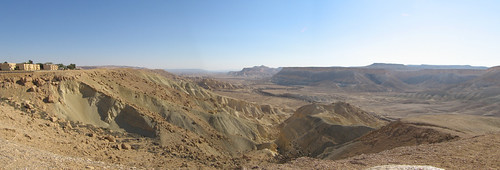
    Most of Israel is arid, with the Negev Desert spanning 60 percent of the country. Desertification, water scarcity and soil erosion makes it increasingly difficult to farm, endangering the livelihoods of those who depend on agriculture for both food and income.

    But Israel is not alone in facing these challenges – dry lands cover 47% of the Earth’s surface. With 60% of the world’s food insecure people living in dry areas, desertification and poverty go hand in hand, particularly in sub-Saharan Africa.

    But the simplest techniques can go a long way in strengthening food security, increasing incomes and improving the livelihoods of millions of people.

    Israel has been a leader in developing innovative drip-irrigation systems that reduce the amount of water needed for farming. Today, these innovations are empowering farmers in the dry Sahel region across sub-Saharan Africa to combat problems of water scarcity.

    One such example is the Family Drip Irrigation System (FDIS), developed by the International Program for Arid Land Crops at Ben-Gurion University of the Negev, in partnership with Israeli irrigation company Netafim (owned by three kibbutzim – Hatzerim, Magal and Yiftah – and two private equity funds – Markstone Capital and Tenne).

    FDIS is a simple irrigation technology, which is combined with gravity-powered low water pressure. The Foreign Ministry is partnering with local government agencies and NGOs to introduce FDIS in countries across Africa to deliver the advantages of drip-irrigation to small farmers at low costs.

    Dov Pasternak, a professor from Ben-Gurion University, and director of the International Center for Research in the Semi-Arid Tropics, developed the Africa Market Garden concept, which provides farmers with the tools to improve their livelihoods.

    In Niger, women in Tanka village are using low-pressure drip-irrigation systems to grow okra, tomatoes, eggplant and other vegetables. The women work together in a cooperative, meeting monthly to decide how the garden should be run. They manage their own plots, but share skills, tools and water with one another. By selling their vegetables at nearby markets, these women have tripled their incomes, enabling their families to eat better and their children to attend school.

    Based on the Africa Market Garden concept, MASHAV, the Foreign Ministry’s Center for International Cooperation, has developed Techno-Agriculture Innovation for Poverty Alleviation, or TIPA, a simple, innovative technique, which it is introducing in semi-arid regions in countries, such as South Africa and Senegal. The TIPA concept consists of a cooperative of approximately 100 farmers, based in a five hectare area, where farmers manage their own plots installed with the FDIS.

    In South Africa, the Israeli Embassy has worked with Ikamba Labantu, a local NGO, to introduce TIPA in the Eastern Cape, one of the country’s poorest provinces. This system enables farmers, who were otherwise at the mercy of the region’s erratic rainfall, to plant crops four times a year, leading to a 400% increase in output. And in Senegal, the embassy is collaborating with World Vision and Green Senegal, two NGOs that have worked with Senegalese Water Services to introduce TIPA in communities in the area of Bembay and Thies.

    Israeli institutions are leading the way by showing that sharing expertise and replicating innovative strategies can be a powerful tool in helping to sustain livelihoods of small farmers in dry areas.

    In addition to international partnerships, cooperation at the farmer level also gives power to small farmers by allowing access to a larger group and a stronger voice. There are numerous innovative projects being developing by research institutions, universities, NGOs and farmers groups worldwide that are helping to guarantee stable incomes, and alleviate hunger and poverty.

    As the overuse of scarce resources continues and pressures brought about by climate change intensify, we must ensure that successful innovations are replicated and scaled-up. These simple, yet innovative techniques give small farmers the skills and tools to improve their livelihoods, and can have a significant impact on alleviating hunger and poverty.

    Danielle Nierenberg is co-director of the Worldwatch Institute’s Nourishing the Planet project. Janeen Madan is a food and agriculture research intern with Nourishing the Planet. (www.NourishingthePlanet.org)


    Article Source: WorldWatch Institute

    Image Source: GregTheBusker

  • Strategic Thinking in a Resource-constrained World

    Two new reports surveying the strategic trends that are likely to shape the next few decades of global politics point very clearly to the prospect of a severely resource-constrained world. Released two days apart, both the new Chatham House report on Resource Futures and the US National Intelligence Council report on Global Trends 2030: Alternative Worlds raise a number of important questions relating to conflict and security. 

    According to the Chatham House report,

    “The spectre of resource insecurity has come back with a vengeance. The world is undergoing a period of intensified resource stress, driven in part by the scale and speed of demand growth from emerging economies and a decade of tight commodity markets. Poorly designed and short-sighted policies are also making things worse, not better. Whether or not resources are actually running out, the outlook is one of supply disruptions, volatile prices, accelerated environmental degradation and rising political tensions over resource access.”

    The report outlines what the authors refer to as volatility being “the new normal.” For this reason “High and fluctuating prices are spurring new waves of resource nationalism and making unilateral and bilateral responses more attractive.” This should be cause for concern, especially in relation to the ways in which the response of governments and other actors to scarcity (or at least perceptions of scarcity) can interact with existing tensions and conflicts between and within communities. As the report highlights, “In addition to efforts to reduce demand at home, governments and other actors have moved to ensure access to affordable resources, reshaping the landscape of international politics. The return to largely protectionist and beggar-thy-neighbour manoeuvres – often in reaction to short-term supply bottlenecks or perceptions of scarcities rather than actual ones – can act as fuel to the fire.”

    As well as mapping the consumption and trade trends across a series of important resources, the report also discusses the impact of external variables such as population growth and climate change. These are “multiple stress factors” which “render countries vulnerable to different types of shocks such as environmental disasters, political unrest, violent conflict or economic crises – increasing both local and systemic risks. Such factors can create new tensions and flashpoints as well as exacerbating existing conflicts and divisions along ethnic and political lines.”

    The report includes a section on resource conflict flashpoints (p. 114) which outlines fifteen different potential flashpoints relating to territorial/economic zone disputes in resource-rich areas, shared water resources and transboundary river systems and resource-related rebellion and insurgency. The report is also linked to an interactive website that maps some of these trends and potential flashpoints.

    The day after this report was released, the US National Intelligence Council released their own on the key trends over the next twenty years that the United States will need to adapt to or try and shape in order to “think and plan for the long term so that negative futures do not occur and positive ones have a better chance of unfolding.”

    Among other so-called mega trends such as urbanisation and changing demographics, the report echoes the Chatham House research by pointing to an increasingly complex situation in terms of global resources. The report argues that,

    “We are not necessarily headed into a world of scarcities, but policymakers and their private sector partners will need to be proactive to avoid such a future. Many countries probably won’t have the wherewithal to avoid food and water shortages without massive help from outside. Tackling problems pertaining to one commodity won’t be possible without affecting supply and demand for the others.”

    The key trend or ‘tectonic shift’ as the report calls it is that “demand for food is expected to rise at least 35 percent by 2030 while demand for water is expected to rise by 40 percent. Nearly half of the world’s population will live in areas experiencing severe water stress. Fragile states in Africa and the Middle East are most at risk of experiencing food and water shortages, but China and India are also vulnerable.”

    While this may lead some towards overly pessimistic conclusions about a world defined by instability, human insecurity and geopolitical tensions, it is refreshing to see the NIC emphasising the importance of how the US can respond now. In his forward, the Council’s Chairman Christopher Kojm states that “We are at a critical juncture in human history, which could lead to widely contrasting futures. It is our contention that the future is not set in stone, but is malleable, the result of an interplay among megatrends, game-changers and, above all, human agency.” It is worth noting the deliberate use of the phrase ‘alternative worlds’ in the repo

    While some degree of adaptation to these structural trends mapped out by both Chatham House and the National Intelligence Council will undoubtedly be necessary, the importance of both of these reports is that they remind us of the need for clear and far-sighted thinking on policy responses now. The worst case scenarios that these reports discuss are not inevitable and risks can be mitigated. National security policymakers will do well to study the scenarios outlined in these two impressive reports and to try and understand the drivers and ‘tipping points’ that lead to certain pathways. Both reports offer prescriptions for current decision makers (the Chatham House recommendations on ‘targeted resource dialogues’ and ‘coalitions of the committed’ are particularly worthwhile). While volatility and uncertainty might be the ‘new normal’ in global resource politics, one thing is entirely certain – inaction and ‘business-as-usual’ when facing “a critical juncture in human history” is a recipe for disaster.

    Image source: Stayraw 

  • Paul Rogers on Development, Climate Change, Conflict and Migration

    Paul Rogers, Professor of Peace Studies at Bradford University, and Oxford Research Group’s Global Security Consultant, talks to Action Aid about the issues that will dominate international security and world development over the coming decades.

    Source: youtube
  • A Sustainable Security Approach to the ‘War on Drugs’

    A new report from Open Briefing argues that the illicit drugs trade and the militarised government responses are the greatest threats to state and human security in the Americas. The report outlines the almost total failure of current strategies and calls for a sustainable security approach to address this. The report puts this failure in stark terms stating that “By focusing on ineffective supply reduction strategies, the war on drugs is destroying the countries of Latin America in order to protect those of North America.”

    The authors, Chris Abbott and Joel Vargas, conclude that decriminalising some drugs and legalising others should form the foundation of a sustainable security strategy to tackle the violent crime associated with the illicit drugs trade in the Americas. The report outlines the following integrated programmes that would constitute an effective strategy:

    • Decriminalising some drugs and legalising others in a staged process.
    • Separating the law enforcement and military elements of tackling drug-related organised crime.
    • Addressing citizen security challenges, including lack of personal safety.
    • Addressing police corruption through career-long training, supervision and assessment.
    • Disarmament, Demobilisation and Reintegration programmes for former cartel members.
    • Radically increasing funding for drug education and treatment programmes in North America.

    The report is well-timed as it comes just ahead of the Sixth Summit of the Americas on 14-15 April in Cartagena, Colombia. In fact the authors explicitly call for the Summit to allow for a proper debate on the potential legalisation of drugs so that Central American states can be “allowed to develop their own policy strategies rather than be pressured to continue strategies that only benefit others.”

    The 9-page report is available in English and Spanish here.

    Image source: truthout.org

  • “Mali: Another Long War?” – Sustainable security on channel 4 news

    (This piece was originally published by Channel 4 News on Tuesday 22 January 2013, and is the second of two parts)

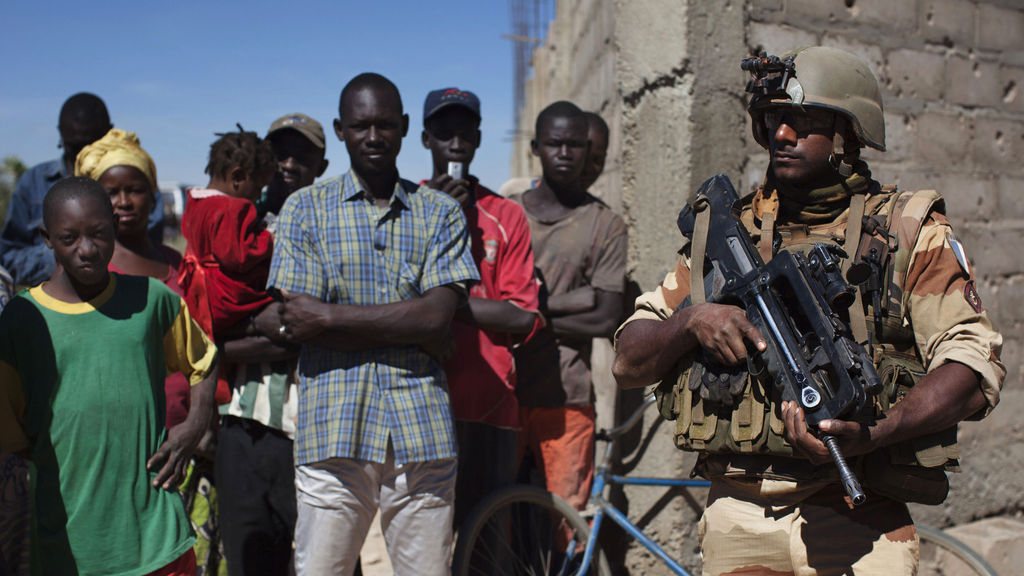
    French soldierThere is a stark warning today the western intervention strategy in Mali is “flawed”. Part two of a special paper also says France and others are likely to be involved in the conflict “for some time”. 

    Not unlike the United States in both Afghanistan and Iraq, the French government has begun the intervention with talk of short timelines and minimal troops on the ground before quickly changing its tune, write Anna Alissa Hitzemann and Ben Zala for the Oxford Research Group. 

    The initial deployment of 800 French troops may end up numbering more than 2,500 and President François Hollande has stated France’s mission is to ensure that “when we end our intervention, Mali is safe, has legitimate authorities, an electoral process and there are no more terrorists threatening its territory”. This does not seem to tally with the earlier statement by the French Foreign Minister that the current level of French involvement in the country would last for “a matter of weeks”. 

    The latest reports are that the Islamist fighters have been preparing for this intervention by carving a network of caves and tunnels into cliff faces to house bases and supplies of fuel and ammunition. This, combined with the concerns about the roles of both the Malian security forces and a number of potential contributors to the ECOWA force in relation to the abuse of civilian populations (and the likely blowback effect of such actions), mean that stability in Mali will be almost impossible achieve with military force alone. 

    It is also far from clear whether the African states that are set to join the intervention will be able commit forces for a drawn-out insurgency. After Chad, the second biggest promised contributor of troops is Nigeria, which has pledged a contingent of 900. 

    Yet the Nigerian government itself is fighting its own Islamist-inspired insurgency with the Boko Haram group in the country’s north. Despite a relative decline in Boko Haram attacks in recent months and even the potential for Saudi-backed peace talks between the rebels and the government, fighting could easily intensify once more, in which case Nigeria is unlikely to remain involved in Mali in any significant way.     

    Without taking serious action to address the sense of marginalisation and disenfranchisement of those who were willing to join one of the rebel groups, there are few reasons to think the current intervention will produce a durable peace in Mali.

    Not only have France and its allies underestimated the difficulty of fighting the northern rebels among civilian populations in which bombing from above is of little use, there appears to be no sign of a plan as to how the factors underlying the uprising (including the original Tuareg rebellion) can be addressed. 

    Without taking serious action to address the sense of marginalisation and disenfranchisement of those who were willing to join one of the rebel groups — Tuareg, Islamist or otherwise — there are few reasons to think the current intervention will produce a durable peace in Mali.

    Ongoing conflict 

    While military force is considered the only option, feelings of resentment amongst elements of the population of northern Mali are likely to increase. Not only this, it will provide ample encouragement to other anti-Western paramilitary groups across North and Sub-Saharan Africa, the Middle East, and Central, South and Southeast Asia. 

    The central lesson of the western interventions and small-scale military operations (including Pakistan, Yemen, Somalia and elsewhere) of the post 9-11 era, has been that reacting to the symptoms of insecurity once they are deeply manifested, and few options other than military force remain, is a fundamentally flawed strategy for global security. This means that France and others are likely to now be involved in an ongoing conflict in Mali for some time. 

    Not only do the (so far conspicuously absent) plans for a post-conflict stabilisation process need to be settled between France and its coalition partners now, a serious commitment to assisting the Malian government to going much further in addressing the marginalisation of the north will be crucial. 

    Until the focus shifts from military control to working towards solving the root causes of the conflict, no viable sustainable security will be found for Mali. 

    Image source: Channel 4 News (from original article)

  • The heart of India is under attack

    The low, flat-topped hills of south Orissa have been home to the Dongria Kondh long before there was a country called India or a state called Orissa. The hills watched over the Kondh. The Kondh watched over the hills and worshipped them as living deities. Now these hills have been sold for the bauxite they contain. For the Kondh it’s as though god had been sold. They ask how much god would go for if the god were Ram or Allah or Jesus Christ.

    Perhaps the Kondh are supposed to be grateful that their Niyamgiri hill, home to their Niyam Raja, God of Universal Law, has been sold to a company with a name like Vedanta (the branch of Hindu philosophy that teaches the Ultimate Nature of Knowledge). It’s one of the biggest mining corporations in the world and is owned by Anil Agarwal, the Indian billionaire who lives in London in a mansion that once belonged to the Shah of Iran. Vedanta is only one of the many multinational corporations closing in on Orissa.

    If the flat-topped hills are destroyed, the forests that clothe them will be destroyed, too. So will the rivers and streams that flow out of them and irrigate the plains below. So will the Dongria Kondh. So will the hundreds of thousands of tribal people who live in the forested heart of India, and whose homeland is similarly under attack.

    In our smoky, crowded cities, some people say, “So what? Someone has to pay the price of progress.” Some even say, “Let’s face it, these are people whose time has come. Look at any developed country – Europe, the US, Australia – they all have a ‘past’.” Indeed they do. So why shouldn’t “we”?

    In keeping with this line of thought, the government has announced Operation Green Hunt, a war purportedly against the “Maoist” rebels headquartered in the jungles of central India. Of course, the Maoists are by no means the only ones rebelling. There is a whole spectrum of struggles all over the country that people are engaged in–the landless, the Dalits, the homeless, workers, peasants, weavers. They’re pitted against a juggernaut of injustices, including policies that allow a wholesale corporate takeover of people’s land and resources. However, it is the Maoists that the government has singled out as being the biggest threat.

    Two years ago, when things were nowhere near as bad as they are now, the prime minister described the Maoists as the “single largest internal security threat” to the country. This will probably go down as the most popular and often repeated thing he ever said. For some reason, the comment he made on 6 January, 2009, at a meeting of state chief ministers, when he described the Maoists as having only “modest capabilities”, doesn’t seem to have had the same raw appeal. He revealed his government’s real concern on 18 June, 2009, when he told parliament: “If left-wing extremism continues to flourish in parts which have natural resources of minerals, the climate for investment would certainly be affected.”

    Who are the Maoists? They are members of the banned Communist party of India (Maoist) – CPI (Maoist) – one of the several descendants of the Communist Party of India (Marxist-Leninist), which led the 1969 Naxalite uprising and was subsequently liquidated by the Indian government. The Maoists believe that the innate, structural inequality of Indian society can only be redressed by the violent overthrow of the Indian state. In its earlier avatars as the Maoist Communist Centre (MCC) in Jharkhand and Bihar, and the People’s War Group (PWG) in Andhra Pradesh, the Maoists had tremendous popular support. (When the ban on them was briefly lifted in 2004, 1.5 million people attended their rally in Warangal.)

    But eventually their intercession in Andhra Pradesh ended badly. They left a violent legacy that turned some of their staunchest supporters into harsh critics. After a paroxysm of killing and counter-killing by the Andhra police as well as the Maoists, the PWG was decimated. Those who managed to survive fled Andhra Pradesh into neighbouring Chhattisgarh. There, deep in the heart of the forest, they joined colleagues who had already been working there for decades.

    Not many “outsiders” have any first-hand experience of the real nature of the Maoist movement in the forest. A recent interview with one of its top leaders, Comrade Ganapathy, in Open magazine, didn’t do much to change the minds of those who view the Maoists as a party with an unforgiving, totalitarian vision, which countenances no dissent whatsoever. Comrade Ganapathy said nothing that would persuade people that, were the Maoists ever to come to power, they would be equipped to properly address the almost insane diversity of India’s caste-ridden society. His casual approval of the Liberation Tigers of Tamil Eelam (LTTE) of Sri Lanka was enough to send a shiver down even the most sympathetic of spines, not just because of the brutal ways in which the LTTE chose to wage its war, but also because of the cataclysmic tragedy that has befallen the Tamil people of Sri Lanka, who it claimed to represent, and for whom it surely must take some responsibility.

    Right now in central India, the Maoists’ guerrilla army is made up almost entirely of desperately poor tribal people living in conditions of such chronic hunger that it verges on famine of the kind we only associate with sub-Saharan Africa. They are people who, even after 60 years of India’s so-called independence, have not had access to education, healthcare or legal redress. They are people who have been mercilessly exploited for decades, consistently cheated by small businessmen and moneylenders, the women raped as a matter of right by police and forest department personnel. Their journey back to a semblance of dignity is due in large part to the Maoist cadre who have lived and worked and fought by their side for decades.

    If the tribals have taken up arms, they have done so because a government which has given them nothing but violence and neglect now wants to snatch away the last thing they have – their land. Clearly, they do not believe the government when it says it only wants to “develop” their region. Clearly, they do not believe that the roads as wide and flat as aircraft runways that are being built through their forests in Dantewada by the National Mineral Development Corporation are being built for them to walk their children to school on. They believe that if they do not fight for their land, they will be annihilated. That is why they have taken up arms.

    Even if the ideologues of the Maoist movement are fighting to eventually overthrow the Indian state, right now even they know that their ragged, malnutritioned army, the bulk of whose soldiers have never seen a train or a bus or even a small town, are fighting only for survival.

    In 2008, an expert group appointed by the Planning Commission submitted a report called “Development Challenges in Extremist-Affected Areas”. It said, “the Naxalite (Maoist) movement has to be recognised as a political movement with a strong base among the landless and poor peasantry and adivasis. Its emergence and growth need to be contextualised in the social conditions and experience of people who form a part of it. The huge gap between state policy and performance is a feature of these conditions. Though its professed long-term ideology is capturing state power by force, in its day-to-day manifestation, it is to be looked upon as basically a fight for social justice, equality, protection, security and local development.” A very far cry from the “single-largest internal security threat”.

    Since the Maoist rebellion is the flavour of the week, everybody, from the sleekest fat cat to the most cynical editor of the most sold-out newspaper in this country, seems to be suddenly ready to concede that it is decades of accumulated injustice that lies at the root of the problem. But instead of addressing that problem, which would mean putting the brakes on this 21st-century gold rush, they are trying to head the debate off in a completely different direction, with a noisy outburst of pious outrage about Maoist “terrorism”. But they’re only speaking to themselves.

    The people who have taken to arms are not spending all their time watching (or performing for) TV, or reading the papers, or conducting SMS polls for the Moral Science question of the day: Is Violence Good or Bad? SMS your reply to … They’re out there. They’re fighting. They believe they have the right to defend their homes and their land. They believe that they deserve justice.

    In order to keep its better-off citizens absolutely safe from these dangerous people, the government has declared war on them. A war, which it tells us, may take between three and five years to win. Odd, isn’t it, that even after the Mumbai attacks of 26/11, the government was prepared to talk with Pakistan? It’s prepared to talk to China. But when it comes to waging war against the poor, it’s playing hard.

    It’s not enough that special police with totemic names like Greyhounds, Cobras and Scorpions are scouring the forests with a licence to kill. It’s not enough that the Central Reserve Police Force (CRPF), the Border Security Force (BSF) and the notorious Naga Battalion have already wreaked havoc and committed unconscionable atrocities in remote forest villages. It’s not enough that the government supports and arms the Salwa Judum, the “people’s militia” that has killed and raped and burned its way through the forests of Dantewada leaving 300,000 people homeless or on the run. Now the government is going to deploy the Indo-Tibetan border police and tens of thousands of paramilitary troops. It plans to set up a brigade headquarters in Bilaspur (which will displace nine villages) and an air base in Rajnandgaon (which will displace seven). Obviously, these decisions were taken a while ago. Surveys have been done, sites chosen. Interesting. War has been in the offing for a while. And now the helicopters of the Indian air force have been given the right to fire in “self-defence”, the very right that the government denies its poorest citizens.

    Fire at whom? How will the security forces be able to distinguish a Maoist from an ordinary person who is running terrified through the jungle? Will adivasis carrying the bows and arrows they have carried for centuries now count as Maoists too? Are non-combatant Maoist sympathisers valid targets? When I was in Dantewada, the superintendent of police showed me pictures of 19 “Maoists” that “his boys” had killed. I asked him how I was supposed to tell they were Maoists. He said, “See Ma’am, they have malaria medicines, Dettol bottles, all these things from outside.”

    What kind of war is Operation Green Hunt going to be? Will we ever know? Not much news comes out of the forests. Lalgarh in West Bengal has been cordoned off. Those who try to go in are being beaten and arrested. And called Maoists, of course. In Dantewada, the Vanvasi Chetana Ashram, a Gandhian ashram run by Himanshu Kumar, was bulldozed in a few hours. It was the last neutral outpost before the war zone begins, a place where journalists, activists, researchers and fact-finding teams could stay while they worked in the area.

    Meanwhile, the Indian establishment has unleashed its most potent weapon. Almost overnight, our embedded media has substituted its steady supply of planted, unsubstantiated, hysterical stories about “Islamist terrorism” with planted, unsubstantiated, hysterical stories about “Red terrorism”. In the midst of this racket, at ground zero, the cordon of silence is being inexorably tightened. The “Sri Lanka solution” could very well be on the cards. It’s not for nothing that the Indian government blocked a European move in the UN asking for an international probe into war crimes committed by the government of Sri Lanka in its recent offensive against the Tamil Tigers.

    The first move in that direction is the concerted campaign that has been orchestrated to shoehorn the myriad forms of resistance taking place in this country into a simple George Bush binary: If you are not with us, you are with the Maoists. The deliberate exaggeration of the Maoist “threat” helps the state justify militarisation. (And surely does no harm to the Maoists. Which political party would be unhappy to be singled out for such attention?) While all the oxygen is being used up by this new doppelganger of the “war on terror”, the state will use the opportunity to mop up the hundreds of other resistance movements in the sweep of its military operation, calling them all Maoist sympathisers.

    I use the future tense, but this process is well under way. The West Bengal government tried to do this in Nandigram and Singur but failed. Right now in Lalgarh, the Pulishi Santrash Birodhi Janasadharaner Committee or the People’s Committee Against Police Atrocities – which is a people’s movement that is separate from, though sympathetic to, the Maoists – is routinely referred to as an overground wing of the CPI (Maoist). Its leader, Chhatradhar Mahato, now arrested and being held without bail, is always called a “Maoist leader”. We all know the story of Dr Binayak Sen, a medical doctor and a civil liberties activist, who spent two years in jail on the absolutely facile charge of being a courier for the Maoists. While the light shines brightly on Operation Green Hunt, in other parts of India, away from the theatre of war, the assault on the rights of the poor, of workers, of the landless, of those whose lands the government wishes to acquire for “public purpose”, will pick up pace. Their suffering will deepen and it will be that much harder for them to get a hearing.

    Once the war begins, like all wars, it will develop a momentum, a logic and an economics of its own. It will become a way of life, almost impossible to reverse. The police will be expected to behave like an army, a ruthless killing machine. The paramilitary will be expected to become like the police, a corrupt, bloated administrative force. We’ve seen it happen in Nagaland, Manipur and Kashmir. The only difference in the “heartland” will be that it’ll become obvious very quickly to the security forces that they’re only a little less wretched than the people they’re fighting. In time, the divide between the people and the law enforcers will become porous. Guns and ammunition will be bought and sold. In fact, it’s already happening. Whether it’s the security forces or the Maoists or noncombatant civilians, the poorest people will die in this rich people’s war. However, if anybody believes that this war will leave them unaffected, they should think again. The resources it’ll consume will cripple the economy of this country.

    Last week, civil liberties groups from all over the country organised a series of meetings in Delhi to discuss what could be done to turn the tide and stop the war. The absence of Dr Balagopal, one of the best-known civil rights activists of Andhra Pradesh, who died two weeks ago, closed around us like a physical pain. He was one of the bravest, wisest political thinkers of our time and left us just when we needed him most. Still, I’m sure he would have been reassured to hear speaker after speaker displaying the vision, the depth, the experience, the wisdom, the political acuity and, above all, the real humanity of the community of activists, academics, lawyers, judges and a range of other people who make up the civil liberties community in India. Their presence in the capital signalled that outside the arclights of our TV studios and beyond the drumbeat of media hysteria, even among India’s middle classes, a humane heart still beats. Small wonder then that these are the people who the Union home minister recently accused of creating an “intellectual climate” that was conducive to “terrorism”. If that charge was meant to frighten people, it had the opposite effect.

    The speakers represented a range of opinion from the liberal to the radical left. Though none of those who spoke would describe themselves as Maoist, few were opposed in principle to the idea that people have a right to defend themselves against state violence. Many were uncomfortable about Maoist violence, about the “people’s courts” that delivered summary justice, about the authoritarianism that was bound to permeate an armed struggle and marginalise those who did not have arms. But even as they expressed their discomfort, they knew that people’s courts only existed because India’s courts are out of the reach of ordinary people and that the armed struggle that has broken out in the heartland is not the first, but the very last option of a desperate people pushed to the very brink of existence. The speakers were aware of the dangers of trying to extract a simple morality out of individual incidents of heinous violence, in a situation that had already begun to look very much like war. Everybody had graduated long ago from equating the structural violence of the state with the violence of the armed resistance. In fact, retired Justice PB Sawant went so far as to thank the Maoists for forcing the establishment of this country to pay attention to the egregious injustice of the system. Hargopal from Andhra Pradesh spoke of his experience as a civil rights activist through the years of the Maoist interlude in his state. He mentioned in passing the fact that in a few days in Gujarat in 2002, Hindu mobs led by the Bajrang Dal and the VHP had killed more people than the Maoists ever had even in their bloodiest days in Andhra Pradesh.

    People who had come from the war zones, from Lalgarh, Jharkhand, Chhattisgarh and Orissa, described the police repression, the arrests, the torture, the killing, the corruption, and the fact that they sometimes seemed to take orders directly from the officials who worked for the mining companies. People described the often dubious, malign role being played by certain NGOs funded by aid agencies wholly devoted to furthering corporate prospects. Again and again they spoke of how in Jharkhand and Chhattisgarh activists as well as ordinary people – anyone who was seen to be a dissenter – were being branded Maoists and imprisoned. They said that this, more than anything else, was pushing people to take up arms and join the Maoists. They asked how a government that professed its inability to resettle even a fraction of the 50 million people who had been displaced by “development” projects was suddenly able to identify 1,40,000 hectares of prime land to give to industrialists for more than 300 Special Economic Zones, India’s onshore tax havens for the rich. They asked what brand of justice the supreme court was practising when it refused to review the meaning of “public purpose” in the land acquisition act even when it knew that the government was forcibly acquiring land in the name of “public purpose” to give to private corporations. They asked why when the government says that “the writ of the state must run”, it seems to only mean that police stations must be put in place. Not schools or clinics or housing, or clean water, or a fair price for forest produce, or even being left alone and free from the fear of the police – anything that would make people’s lives a little easier. They asked why the “writ of the state” could never be taken to mean justice.

    There was a time, perhaps 10 years ago, when in meetings like these, people were still debating the model of “development” that was being thrust on them by the New Economic Policy. Now the rejection of that model is complete. It is absolute. Everyone from the Gandhians to the Maoists agree on that. The only question now is, what is the most effective way to dismantle it?

    An old college friend of a friend, a big noise in the corporate world, had come along for one of the meetings out of morbid curiosity about a world he knew very little about. Even though he had disguised himself in a Fabindia kurta, he couldn’t help looking (and smelling) expensive. At one point, he leaned across to me and said, “Someone should tell them not to bother. They won’t win this one. They have no idea what they’re up against. With the kind of money that’s involved here, these companies can buy ministers and media barons and policy wonks, they can run their own NGOs, their own militias, they can buy whole governments. They’ll even buy the Maoists. These good people here should save their breath and find something better to do.”

    When people are being brutalised, what “better” thing is there for them to do than to fight back? It’s not as though anyone’s offering them a choice, unless it’s to commit suicide, like some of the farmers caught in a spiral of debt have done. (Am I the only one who gets the feeling that the Indian establishment and its representatives in the media are far more comfortable with the idea of poor people killing themselves in despair than with the idea of them fighting back?)

    For several years, people in Chhattisgarh, Orissa, Jharkhand and West Bengal – some of them Maoists, many not – have managed to hold off the big corporations. The question now is, how will Operation Green Hunt change the nature of their struggle? What exactly are the fighting people up against?

    It’s true that, historically, mining companies have often won their battles against local people. Of all corporations, leaving aside the ones that make weapons, they probably have the most merciless past. They are cynical, battle-hardened campaigners and when people say, “Jaan denge par jameen nahin denge” (We’ll give away our lives, but never our land), it probably bounces off them like a light drizzle on a bomb shelter. They’ve heard it before, in a thousand different languages, in a hundred different countries.

    Right now in India, many of them are still in the first class arrivals lounge, ordering cocktails, blinking slowly like lazy predators, waiting for the Memorandums of Understanding (MoUs) they have signed – some as far back as 2005 – to materialise into real money. But four years in a first class lounge is enough to test the patience of even the truly tolerant: the elaborate, if increasingly empty, rituals of democratic practice: the (sometimes rigged) public hearings, the (sometimes fake) environmental impact assessments, the (often purchased) clearances from various ministries, the long drawn-out court cases. Even phony democracy is time-consuming. And time is money.

    So what kind of money are we talking about? In their seminal, soon-to-be-published work, Out of This Earth: East India Adivasis and the Aluminum Cartel, Samarendra Das and Felix Padel say that the financial value of the bauxite deposits of Orissa alone is $2.27 trillion (more than twice India’s GDP). That was at 2004 prices. At today’s prices it would be about $4 trillion.

    Of this, officially the government gets a royalty of less than 7%. Quite often, if the mining company is a known and recognised one, the chances are that, even though the ore is still in the mountain, it will have already been traded on the futures market. So, while for the adivasis the mountain is still a living deity, the fountainhead of life and faith, the keystone of the ecological health of the region, for the corporation, it’s just a cheap storage facility. Goods in storage have to be accessible. From the corporation’s point of view, the bauxite will have to come out of the mountain. Such are the pressures and the exigencies of the free market.

    That’s just the story of the bauxite in Orissa. Expand the $4 trillion to include the value of the millions of tonnes of high-quality iron ore in Chhattisgarh and Jharkhand and the 28 other precious mineral resources, including uranium, limestone, dolomite, coal, tin, granite, marble, copper, diamond, gold, quartzite, corundum, beryl, alexandrite, silica, fluorite and garnet. Add to that the power plants, the dams, the highways, the steel and cement factories, the aluminium smelters, and all the other infrastructure projects that are part of the hundreds of MoUs (more than 90 in Jharkhand alone) that have been signed. That gives us a rough outline of the scale of the operation and the desperation of the stakeholders.

    The forest once known as the Dandakaranya, which stretches from West Bengal through Jharkhand, Orissa, Chhattisgarh, parts of Andhra Pradesh and Maharashtra, is home to millions of India’s tribal people. The media has taken to calling it the Red corridor or the Maoist corridor. It could just as accurately be called the MoUist corridor. It doesn’t seem to matter at all that the fifth schedule of the constitution provides protection to adivasi people and disallows the alienation of their land. It looks as though the clause is there only to make the constitution look good – a bit of window-dressing, a slash of make-up. Scores of corporations, from relatively unknown ones to the biggest mining companies and steel manufacturers in the world, are in the fray to appropriate adivasi homelands – the Mittals, Jindals, Tata, Essar, Posco, Rio Tinto, BHP Billiton and, of course, Vedanta.

    There’s an MoU on every mountain, river and forest glade. We’re talking about social and environmental engineering on an unimaginable scale. And most of this is secret. It’s not in the public domain. Somehow I don’t think that the plans afoot that would destroy one of the world’s most pristine forests and ecosystems, as well as the people who live in it, will be discussed at the climate change conference in Copenhagen. Our 24-hour news channels that are so busy hunting for macabre stories of Maoist violence – and making them up when they run out of the real thing – seem to have no interest at all in this side of the story. I wonder why?

    Perhaps it’s because the development lobby to which they are so much in thrall says the mining industry will ratchet up the rate of GDP growth dramatically and provide employment to the people it displaces. This does not take into account the catastrophic costs of environmental damage. But even on its own narrow terms, it is simply untrue. Most of the money goes into the bank accounts of the mining corporations. Less than 10% comes to the public exchequer. A very tiny percentage of the displaced people get jobs, and those who do, earn slave-wages to do humiliating, backbreaking work. By caving in to this paroxysm of greed, we are bolstering other countries’ economies with our ecology.

    When the scale of money involved is what it is, the stakeholders are not always easy to identify. Between the CEOs in their private jets and the wretched tribal special police officers in the “people’s” militias – who for a couple of thousand rupees a month fight their own people, rape, kill and burn down whole villages in an effort to clear the ground for mining to begin – there is an entire universe of primary, secondary and tertiary stakeholders.

    These people don’t have to declare their interests, but they’re allowed to use their positions and good offices to further them. How will we ever know which political party, which ministers, which MPs, which politicians, which judges, which NGOs, which expert consultants, which police officers, have a direct or indirect stake in the booty? How will we know which newspapers reporting the latest Maoist “atrocity”, which TV channels “reporting directly from ground zero” – or, more accurately, making it a point not to report from ground zero, or even more accurately, lying blatantly from ground zero – are stakeholders?

    What is the provenance of the billions of dollars (several times more than India’s GDP) secretly stashed away by Indian citizens in Swiss bank accounts? Where did the $2bn spent on the last general elections come from? Where do the hundreds of millions of rupees that politicians and parties pay the media for the “high-end”, “low-end” and “live” pre-election “coverage packages” that P Sainath recently wrote about come from? (The next time you see a TV anchor haranguing a numb studio guest, shouting, “Why don’t the Maoists stand for elections? Why don’t they come in to the mainstream?”, do SMS the channel saying, “Because they can’t afford your rates.”)

    Too many questions about conflicts of interest and cronyism remain unanswered. What are we to make of the fact that the Union home minister, P Chidambaram, the chief of Operation Green Hunt, has, in his career as a corporate lawyer, represented several mining corporations? What are we to make of the fact that he was a non-executive director of Vedanta – a position from which he resigned the day he became finance minister in 2004? What are we to make of the fact that, when he became finance minister, one of the first clearances he gave for FDI was to Twinstar Holdings, a Mauritius-based company, to buy shares in Sterlite, a part of the Vedanta group?

    What are we to make of the fact that, when activists from Orissa filed a case against Vedanta in the supreme court, citing its violations of government guidelines and pointing out that the Norwegian Pension Fund had withdrawn its investment from the company alleging gross environmental damage and human rights violations committed by the company, Justice Kapadia suggested that Vedanta be substituted with Sterlite, a sister company of the same group? He then blithely announced in an open court that he, too, had shares in Sterlite. He gave forest clearance to Sterlite to go ahead with the mining, despite the fact that the supreme court’s own expert committee had explicitly said that permission should be denied and that mining would ruin the forests, water sources, environment and the lives and livelihoods of the thousands of tribals living there. Justice Kapadia gave this clearance without rebutting the report of the supreme court’s own committee.

    What are we to make of the fact that the Salwa Judum, the brutal ground-clearing operation disguised as a “spontaneous” people’s militia in Dantewada, was formally inaugurated in 2005, just days after the MoU with the Tatas was signed? And that the Jungle Warfare Training School in Bastar was set up just around then?

    What are we to make of the fact that two weeks ago, on 12 October, the mandatory public hearing for Tata Steel’s steel project in Lohandiguda, Dantewada, was held in a small hall inside the collectorate, cordoned off with massive security, with an audience of 50 tribal people brought in from two Bastar villages in a convoy of government jeeps? (The public hearing was declared a success and the district collector congratulated the people of Bastar for their co-operation.)

    What are we to make of the fact that just around the time the prime minister began to call the Maoists the “single largest internal security threat” (which was a signal that the government was getting ready to go after them), the share prices of many of the mining companies in the region skyrocketed?

    The mining companies desperately need this “war”. They will be the beneficiaries if the impact of the violence drives out the people who have so far managed to resist the attempts that have been made to evict them. Whether this will indeed be the outcome, or whether it’ll simply swell the ranks of the Maoists remains to be seen.

    Reversing this argument, Dr Ashok Mitra, former finance minister of West Bengal, in an article called “The Phantom Enemy”, argues that the “grisly serial murders” that the Maoists are committing are a classic tactic, learned from guerrilla warfare textbooks. He suggests that they have built and trained a guerrilla army that is now ready to take on the Indian state, and that the Maoist “rampage” is a deliberate attempt on their part to invite the wrath of a blundering, angry Indian state which the Maoists hope will commit acts of cruelty that will enrage the adivasis. That rage, Dr Mitra says, is what the Maoists hope can be harvested and transformed into an insurrection.

    This, of course, is the charge of “adventurism” that several currents of the left have always levelled at the Maoists. It suggests that Maoist ideologues are not above inviting destruction on the very people they claim to represent in order to bring about a revolution that will bring them to power. Ashok Mitra is an old Communist who had a ringside seat during the Naxalite uprising of the 60s and 70s in West Bengal. His views cannot be summarily dismissed. But it’s worth keeping in mind that the adivasi people have a long and courageous history of resistance that predates the birth of Maoism. To look upon them as brainless puppets being manipulated by a few middle-class Maoist ideologues is to do them a disservice.

    Presumably Dr Mitra is talking about the situation in Lalgarh where, up to now, there has been no talk of mineral wealth. (Lest we forget – the current uprising in Lalgarh was sparked off over the chief minister’s visit to inaugurate a Jindal Steel factory. And where there’s a steel factory, can the iron ore be very far away?) The people’s anger has to do with their desperate poverty, and the decades of suffering at the hands of the police and the Harmads, the armed militia of the Communist Party of India (Marxist) that has ruled West Bengal for more than 30 years.

    Even if, for argument’s sake, we don’t ask what tens of thousands of police and paramilitary troops are doing in Lalgarh, and we accept the theory of Maoist “adventurism”, it would still be only a very small part of the picture.

    The real problem is that the flagship of India’s miraculous “growth” story has run aground. It came at a huge social and environmental cost. And now, as the rivers dry up and forests disappear, as the water table recedes and as people realise what is being done to them, the chickens are coming home to roost. All over the country, there’s unrest, there are protests by people refusing to give up their land and their access to resources, refusing to believe false promises any more. Suddenly, it’s beginning to look as though the 10% growth rate and democracy are mutually incompatible.

    To get the bauxite out of the flat-topped hills, to get iron ore out from under the forest floor, to get 85% of India’s people off their land and into the cities (which is what Chidambaram says he’d like to see), India has to become a police state. The government has to militarise. To justify that militarisation, it needs an enemy. The Maoists are that enemy. They are to corporate fundamentalists what the Muslims are to Hindu fundamentalists. (Is there a fraternity of fundamentalists? Is that why the RSS has expressed open admiration for Chidambaram?)

    It would be a grave mistake to imagine that the paramilitary troops, the Rajnandgaon air base, the Bilaspur brigade headquarters, the unlawful activities act, the Chhattisgarh special public security act and Operation Green Hunt are all being put in place just to flush out a few thousand Maoists from the forests. In all the talk of Operation Green Hunt, whether or not Chidambaram goes ahead and “presses the button”, I detect the kernel of a coming state of emergency. (Here’s a maths question: If it takes 600,000 soldiers to hold down the tiny valley of Kashmir, how many will it take to contain the mounting rage of hundreds of millions of people?)

    Instead of narco-analysing Kobad Ghandy, the recently arrested Maoist leader, it might be a better idea to talk to him.

    In the meanwhile, will someone who’s going to the climate change conference in Copenhagen later this year please ask the only question worth asking: Can we leave the bauxite in the mountain?

  • Assessing the Security Challenges of Climate Change

    At the outset of the twenty first century, climate change has become one of the greatest challenges to international peace and security. It is seriously affecting hundreds of millions of people today and in the coming decades those affected will likely more than double, making it the greatest emerging humanitarian and security challenge of our time. Climate change acts as a threat multiplier for instability in some of the most volatile regions of the world. Projected climate change will seriously aggravate already marginal living standards in many Asian, African, and Middle Eastern nations, causing widespread political instability and conflict.

    A crucial new quality of current climate change is its speed and extent. The matter is thus not one of individually occurring, monocausal crises and conflicts, but rather one of a great number of destabilising, mutually amplifying factors. To comprehend the danger of climate change, the CNA report on “National Security and the Threat of Climate Change” released in April 2007 has clearly stated that-

    “When climates change significantly or environmental conditions deteriorate to the point that necessary resources are not available, societies can become stressed, sometimes to the point of collapse.”

    Recent Scientific Assessment Regarding Climate Change

    The recent scientific assessment presents a worrisome picture regarding climate change. The evidence of the scientific community clearly suggests that the scale of climate change has continued to widen at an accelerated pace. According to the Fourth Assessment Report of IPCC, eleven of the last twelve years (1995-2006) rank among the twelve warmest years in the instrumental record of global surface temperature (since 1850). The report presents a statistical idea about this trend where it suggests that the 100-year linear trend (1906-2005) of 0.74 °C is larger than the corresponding trend of 0.6 °C (1901-2000) given in the Third Assessment Report (TAR). The linear warming trend over the 50 years from 1956 to 2005 (0.13 °C per decade) is nearly twice that for the 100 years from 1906 to 2005.

    The IPCC in its Fourth Assessment Report also concludes that some extreme weather events have changed in frequency and intensity over the last 50 years. It has been observed that:

    – Cold days, cold nights and frosts have become less frequent over most land areas, while hot days and hot nights have become more frequent.

    – Heat waves have become more frequent over most land areas.

    – The frequency of heavy precipitation events (or proportion of total rainfall from heavy falls) has increased over most areas.

    – The incidence of extreme high sea level has increased at a broad range of sites worldwide since 1975.

    Regarding future climate change, IPCC projected that continued Green House Gas (GHG) emissions at or above current rates would cause further warming and induce many changes in the global climate system during the 21st century that would very likely be larger than those observed during the 20th century.

    Security Implications of Climate Change

    Climate change is a very complex phenomenon that affects many aspects of international politics and acts as a stressor making situations of instability, conflict and humanitarian crises more likely and severe. Climate change presents both direct and indirect threat to the security and stability of the society and the state. This has been discussed below in detail:

    Primary threats of climate change

    Resource scarcity and conflict

    Climate induced resource scarcity always has the potential to be a contributing factor to conflict and instability. Over the past centuries there have been various instances in which climate change has exerted a highly negative influence on societies, in some cases triggering crises or aggravating conflicts and, in combination with other factors, leading to the collapse of entire societies. Some recent examples include: the 1994 genocide in Rwanda that was furthered by violence over agricultural resources; the situation in Darfur, Sudan, which had land resources at its root and which is increasingly spilling over into neighbouring Chad; the 1970s downfall of Ethiopian Emperor Haile Selassie through his government’s inability to respond to food shortages; and the 1974 Nigerian coup that resulted largely from an insufficient response to famine (CNA Report, 2009)

    Water crises

    Climate change aggravates water quality and availability in regions that are already struggling hardest with water scarcity: Africa, South Asia, the Middle East and the Mediterranean. 1.1 thousand million people are currently without access to safe drinking water (German Advisory Council on Global Change, 2008) and the situation is likely to be aggravated through climate change. This global crisis may in turn fuel existing internal or inter-state conflicts and social conflict and heighten competition among different users of the scarce water resources. The Indus water dispute is a glaring example of how water can complicate relations between states. It is predicted that unresolved water issue could trigger Indo-Pak war which would have unpredictable consequences in the international arena.

    Migration

    Large scale migration is another consequence of climate change which has deep security implications. Changes in local and regional climatic conditions in the form of sea level rise, heat stress, desertification, flooding and drought severely restrict livelihood options for large groups in developing countries. On the one hand, these changes may directly challenge basic subsistence of already disadvantaged communities in the region, thereby further increasing their vulnerability across social, economic and institutional settings. On the other hand, increasing local vulnerability could potentially trigger large-scale internal displacement and migration in search of new avenues for employment and settlement that can further lead to destabilization and violence. Such destabilization may take place at various levels: local (group vs. group), national (group vs. state) and international (state vs. state) level. For instance, an exercise at the National Defense University, published in the New York Times in August 2009, explored the potential impact of a destructive flood in Bangladesh that sent hundreds of thousands of refugees streaming into neighbouring India, touching off religious conflict, the spread of contagious diseases and vast damage to infrastructure. Indicating the severity of the problem, the Deputy assistant secretary of defenSe for strategy Amanda J. Dory commented that:  “It gets real complicated real quickly.”

    Climate shock

    Climate change is expected to increase the intensity and frequency of climatic shocks. In recent years, abrupt climatic disasters are increasing in frequency and touching the lives of more people. Such abrupt disaster which is also termed as ‘climate pearl harbour’ is reinforcing wider risks and vulnerabilities, leading to short and long-term setbacks to human security.

    Melting of Himalayan Glacier

    The fast melting of Himalayan glacier due to climate induced global warming also present severe security challenges to countries like Bangladesh. The expanding volume of water is causing higher sea levels which in turn can submerge a significant portion of land area. For instance, a rise above one metre, which could be reached by 2050, means Bangladesh could lose 15 per cent to 18 per cent of its land area, turning 30 million people into “environmental refugees”.

    Natural Disaster

    Another consequence of climate change that has the potential to undermine the security of the state and individuals is related to natural disasters. Global warming is predicted to increase the frequency and intensity of various natural disasters e.g. tropical storms, flash floods, landslides etc. For instance, according to the Bangladesh Ministry of Environment and Forests, between 1991 and 2000, 93 major disasters were recorded in Bangladesh, resulting in nearly 200,000 deaths and causing US $ 5.9 billion in damages with high losses in agriculture and infrastructure. As a result, governments and individuals are still dealing with the effect of one event when another hazard strikes. Impacts of global warming and climate change thus challenge our development efforts, our human security and our future.

    However, climate change not only leads to primary security challenges, but also presents a number of secondary threats.

    Secondary Threats of Climate Change

    Possible increase in the number of weak and fragile states

    Climate change is likely to lead to an increase in the number of weak and fragile states. Weak and fragile states have inadequate capacities to guarantee the core functions of the state, notably the state’s ability to deliver basic services and maintain public order, and therefore already pose a major challenge for the international community. The impacts of unabated climate change would hit these countries especially hard, further limiting and eventually overstretching their problem-solving capacities. This is particularly relevant to regions like South Asia (the most crisis-ridden in the world -World Bank, 2006) and Africa, whose state institutions and intergovernmental capacities are weak. It is therefore foreseeable that climate change will overwhelm political structures and will further complicate economic and social problems of these regions.

    Health Risks

    Current weather conditions heavily impact the health of poor people in developing nations, and climate change has a multiplying effect. It is estimated that the health of 235 million people a year is likely to be seriously affected by gradual environmental degradation due to climate change (Human Impact Report, Global Humanitarian Forum, 2009). This is based on the assumption that climate change will increase malnutrition, diarrhoea and malaria. Malnutrition is the biggest burden in terms of deaths. Climate change is projected to cause over 150,000 deaths annually and almost 45 million people are estimated to be malnourished because of climate change, especially due to reduced food supply and decreased income from agriculture, livestock and fisheries. (Human Impact Report, Global Humanitarian Forum, 2009).

    Threat to global economic development

    Climate change slows – and in the worst cases reverses – progress made in fighting poverty and disease, and threatens the long terms sustainability of development progress. Climate change can lead to the destruction and devaluation of economic capital, as well as the loss of skilled and productive workers through environmentally induced migration and an increase in climate-induced diseases and malnutrition. Furthermore, economic resources that would normally be channelled directly into the production process instead have to be spent on adaptation measures, e.g. preparing for extreme events, or on reconstruction or the delivery of additional health services. Unabated climate change thus results in reduced rates of growth which will increasingly limit the economic scope, at national and international level. According to the Stern Review, which was commissioned by the British government, climate change impacts could cost 5-20% of global GDP each year (Stern, 2006) which can halt progress in meeting the Millennium Development Goals.

    Increases in Poverty

    Climate change compounds existing poverty by destroying livelihoods. Specifically, rising temperatures, changing rainfall patterns, floods, droughts and other weather-related disasters destroy crops and weaken or kill livestock. The majority of the people suffering from the impacts of climate change are already extremely poor. Currently about 2.6 billion people – two thirds of them women – live in poverty (below $2 a day) with almost 1 billion living in extreme poverty (less than $1 a day). About 12 million additional people are pushed into poverty today because of climate change (Human Impact Report, Global Humanitarian Forum, 2009).

    Energy, infrastructure and transport

    In view of the predicted climate trends and their associated socio-economic processes, key infrastructures are facing new demands. Climate induced consequences negatively affect the key infrastructures and make it more vulnerable which has wide ranging security implications such as:

    – The impacts of climate change may damage key infrastructures, such as energy supply, and consequently destabilise public order.

    – Wide-ranging destruction of the coastal infrastructure may lead to mass migration movements and trigger tensions in regions of destination.

    – The decline in hydroelectric power generation may additionally reinforce competition/conflicts over fossil energy sources.

    – New supply channels may additionally increase GHG emissions and thus aggravate problems-including the drivers of conflict.

    Food crisis

    Reduced or constrained agricultural productivity is often conceived as potentially the most worrisome consequence of climate change which reduces food security – especially in the poorest part of the world where hunger is already an issue. As a result, more than 850 million people worldwide are currently undernourished (German Advisory Council on Global Change, 2008) and the situation is likely to worsen in future as a result of climate change. Such impacts are particularly severe in developing regions such as South Asia, Sub-Saharan Africa and the dry land belt that stretches across the Sahara and the Middle East. This situation can trigger regional food crisis and further undermine the economic performance of weak and unstable states, thereby encouraging or aggravating destabilization, the collapse of social systems and violent conflicts.

    Gender and climate change

    Though climate change affects everyone, it is not gender neutral. Women are, in particular, more vulnerable to the effects of climate change as they represent 70% of those living below the poverty line. Consequently, they are most likely to bear the heaviest burdens when natural disasters strike. When poor women lose their livelihoods, they slip deeper into poverty and the inequality and marginalization they suffer from because of their gender, increases. In this way, climate induced disaster presents a very specific threat to their security.

    North-South Conflict

    Climate change can fuel conflict between the industrialized north and the developing south over the sharing of burden caused by unabated climate change. Though the industrialized countries have been primarily responsible for climate change, developing countries are bearing the main burden of the rising costs associated with climate change impacts. This reality has also been reflected through the words of Kofi Annan, the former Secretary General of the UN, as he stated that: “The countries most vulnerable…contribute least to the global emissions of greenhouse gases. Without action they will pay a high price for the actions of others.”

    The unabated climate change thus herald the onset of a diplomatic freeze between the main drivers of climate change and a substantial number of developing countries that are especially hard hit by its impacts.

    Radicalization and terrorism

    Radicalization and terrorism may be increased in many developing societies due to the climate induced social and economic deprivation. Many developing countries do not have the government and social infrastructures in place to cope with the types of stressors that could be brought on by global climate change. When a government can no longer deliver services to its people, conditions are ripe for the extremists and terrorists to fill the vacuum. The radical and terrorist exploit this condition as a recruiting ground by offering various social services to the people. Lebanon’s experience with the militant group Hezbollah is a glaring example of how the central governments’ inability to provide basic services has led to the strengthening of a radical organization.

    Undermining the Conditions of Human Rights

    Climate change affects the situation of human rights adversely. Food security and access to drinking water could be challenged by the impacts of climate change in affected countries and regions, destruction caused by rising sea levels and extreme weather conditions could put people’s livelihoods at risk. In this way, climate change can endanger the human dignity to a large number of people by denying them the conditions in which they will not be able to safeguard their human rights.

    Cultural Threat

    Climate change can jeopardise the cultural heritage of people and society. As people are losing their places and livelihoods, increasing number of people are becoming climate refugees – leaving their history and tradition behind. It is predicted that some of the endangered groups in Africa which are coming under further stress due to climate impacts will be disappeared in future, thereby posing a threat to the cultural security of the society and the state.

    Limiting the prospect of international cooperation

    Climate change can also put additional stretch on international system by limiting the potential of cooperation over the management of scarce resources. When the countries come under further stress caused by climate change, they will become more insular and may take in-ward approach, thereby limiting the prospect of international cooperation in managing natural resources.

    International Legal Complications

    It is predicted that climate change could deepen the international legal complications. If the prediction of the scientific community becomes true, then countries like Maldives will be nowhere in the global Map in the foreseeable future. This could completely destabilize international maritime boundaries, and fuel tensions between maritime countries.

    Concluding thoughts

    At this juncture of history, it needs to be recognized that environmental crisis potentially has more pervasive and more security implications than any other crisis. For this reason, environmental challenges should be placed at the core of security considerations in a rapidly changing world. Hence, effective international cooperation should occur to address the unpredictable consequences of climate change.

    Finally, I would like to conclude quoting the Obama’s Noble Peace Prize acceptance speech where he clearly states that:

    ‘It is undoubtedly true that development rarely takes root without security; it is also true that security does not exist where human beings do not have access to enough food, or clean water, or the medicine they need to survive…This is why the world must come together to confront climate change. There is little scientific dispute that if we do nothing, we will face more drought, famine and mass displacement that will fuel more conflict for decades.’

    Image source: Oland0 7

    Obayedul Hoque Patwary is a graduate of the department of Peace and Conflict Studies of Dhaka University, Bangladesh. He is working as a Research Analyst at the Bangladesh Institute of Peace and Security Studies. His research mainly focuses on the issue of ‘climate change and security’ and the ‘transnational security threats’.

  • Climate Change and Security Threats: Time to Call a Spade a Spade?

    When does a serious environmental problem become a security threat?

    Professor Tim Flannery, a leading scientist and public intellectual in Australia wrote a piece in the Guardian newspaper a few days ago reflecting on the links between climate change and the extreme temperatures and bushfires ravaging Australia at present. He notes that “Australians are used to hot summers. We normally love them. But the conditions prevailing now are something new. Temperature records are being broken everywhere.” What is important for thinking about the security consequences of climate change is that towards the end of the article, Flannery reflects:

    “Australia’s average temperature has increased by just 0.9 of a degree celsius over the past century. Within the next 90 years we’re on track to warm by at least another three degrees. Having seen what 0.9 of a degree has done to heatwaves and fire extremes, I dread to think about the kind of country my grandchildren will live in. Even our best agricultural land will be under threat if that future is realised. And large parts of the continent will be uninhabitable, not just by humans, but by Australia’s spectacular biodiversity as well.”

    Conditions in which large parts of the continent are threatened in such a way would appear to raise some pretty serious questions about Australia’s national security (let alone the human security of those individuals living in areas where agriculture has failed or fires threaten homes and livelihoods). Yet recently a number of commentators have become particularly concerned about the so-called ‘securitisation’ of climate change, largely due to a sense of there being “alarmist views about climate change on conflict risk.” This has led some to argue that rather than helping to raise the profile of the issue in terms of the need for urgent policy change, we in fact now need to “disconnect security and climate change.” According to Professor Betsy Hartmann of Hampshire College, “A fear of imminent doom runs deep in popular culture and, like the grim reaper, stalks the environmental movement.” This, she argues allows “security agencies and analysts” to distract us from feelings of empathy towards those affected by climate change and to instead cause us to fear them and to “turn to the military to protect us.” According to Professor Mike Hulme of the University of East Anglia,

    “What climate change means to us and means to the world is conditioned by what we do, by the way we govern, by the stories we tell. Presenting climate change as the ultimate security crisis is crudely deterministic, detached from the complexities of our world, and invites new and dangerous forms of military intervention.”

    All of this matters as the potential world in which Flannery is imagining that his grandchildren might have to live in is becoming more and more likely the longer multilateral efforts drag on. Richard Haass, the President of the Council on Foreign Relations, when asked to look ahead to the big global governance challengers for 2013 recently stated that: “It is becoming increasingly clear that efforts at mitigation are not just falling short but that the gap between what is needed and what is likely to happen is widening.”

    The whole notion of the ‘securitisation’ of climate change pre-supposes that we get to choose whether climate change is a security threat or not – it emphasises what political scientists refer to as human agency. Of course we can choose to label something as a threat or not (yes, perhaps it may even not be the end of the world if we use the dreaded T word!). But in the face of increasingly extreme weather and related natural disasters (let alone serious discussions about whether states such as Kiribati can survive within their own national borders), it does seem that we can sensibly talk about the security threats posed by climate change in the decades to come regardless of whether we can specifically link particular instances of conflict and climate change in the past.

    The point is that simply because something may pose a security threat does not mean that we have to respond in the traditional way – to throw military force at it. It’s abundantly clear that there is no military solution to climate change and that addressing the problem at source means changing (among other things) the ways we use energy. But that doesn’t mean that our current energy policies are not a fundamental security threat. They are. And why can’t we use better energy policies to ensure our security?

    Image source: HighExposure