Category: Article

  • Beyond Supply Risks: The Conflict Potential of Natural Resources

    While the public debate about resource conflicts focuses on the risk of supply disruptions for developed countries, the potentially more risky types of resource conflict are usually ignored. As part of a two-year research project on behalf of the German Federal Environment Agency, adelphi and the Wuppertal Institute for Climate, Energy, and Environment have analyzed the risks of international conflict linked to natural resources in a series of reports titled Beyond Supply Risks – The Conflict Potential of Natural Resources.

    Resource extraction, transportation, and processing can create considerable crises and increase the risk of conflicts in producing and transit countries. This phenomenon – widely referred to as the “resource curse” – impacts consuming countries only if it leads to shortages and higher prices. However, in the producing and transit countries it can have much wider destabilizing effects – from increasing corruption to large-scale violent conflict. In addition, the extraction, processing, and transportation of resources often create serious environmental risks. Overexploitation, pollution, and the degradation of ecosystems often directly affect the livelihoods of local communities, which can increase the potential for conflict.

    The eight reports that comprise Beyond Supply Risks explore plausible scenarios over the next two decades, focusing on four case studies: copper and cobalt in the Democratic Republic of Congo; theNabucco natural gas pipeline project across Southern Europe and Turkey; lithium in Bolivia; and rare earth minerals in China.

    Lithium in Bolivia

    Bolivia possesses the world’s largest known lithium deposits, a potentially important resource for the development of electric vehicles. While the development of Bolivia’s lithium reserves could provide major economic benefits for one of the poorest countries in Latin America, our analysis identifies two main potential risks of conflict.

    First, the environmental consequences of developing industrial-scale lithium production might have negative effects on the livelihoods of the local population. The local population in the lithium-rich department of Potosí has shown that it is capable of organizing itself effectively in defense of its interests, and past resource conflicts have turned violent, making a conflict-sensitive approach all the more important. 

    Second, the Bolivian economy is largely dependent on natural resources, and consequently is susceptible to price shocks. At present, this risk is primarily associated with natural gas. But lithium production, if developed, might be subject to the same dynamics, which could potentially destabilize the political system. 

    For consuming countries, these conflicts threaten supplies of lithium only if local protests or broader destabilization were produce bottlenecks in the supply chain.

    Rare Earths and China

    Like lithium, rare earths are likewise essential for some new technologies. China’s well publicized monopoly on 97 percent of the global production spurred a heated debate on the security of supply of strategic minerals. While our case study identifies supply risks for consuming countries, it also outlines some of the conflict risks China might face internally.

    First, local populations could protest against the severe ecological impact of rare earth mining and production. In addition, conflicts might arise if those who profit from economic development (entrepreneurs or regional power-holders) undermine the traditional centralized party structures and expand their own influence.

    International conflicts over access to Chinese rare earth resources, while they dominate the headlines, do not appear to be the dominant risk. Instead, internal political tensions could result in a weakened China that is not able to exploit its monopoly position for foreign policy gains. Or the government could enter into multilateral agreements and thus avoid a confrontational approach towards consumer nations.

    Ultimately, the actual rate of diffusion of environmental technologies and the development of new technologies remain the key factors in determining whether relative shortages in global supply of rare earths will in fact occur. If industrialized nations and emerging economies commit to the same technologies to attain climate policy goals, international resource governance and coordinated promotion of (environmental) technology will also play a role in preventing conflict and crisis over rare earths.

    The Way Forward

    The series concludes with five recommendations to mitigate the risks of future resource conflicts:

    • Introduce systematic policy impact assessments to understand how policy goals and strategies, especially in regard to climate and environmental policy, interact with resource conflict risks.
    • Increase the transparency of raw material markets and value creation chains to prevent extreme fluctuations in prices and improve information on markets, origins, and individual players.
    • Improve the coherence of raw material policy by linking raw material policies with security, environmental, and development policies.
    • Demand and promote corporate social responsibility along the whole value chain.
    • Increase environmental and social sustainability as a means of strengthening crisis and conflict prevention by systematically taking into account social and conflict-related aspects in the resource sector.

    However, none of these strategies alone would be capable of mitigating all the risks of future resource conflicts. But together they represent a methodology that, with intense coordination among the key players, could make a far-reaching contribution to reducing risk and preventing international conflict over the long term.

    The individual reports from the project can be downloaded here:

    • Conflict Risks (GERMAN only)
    • Supply and demand (GERMAN only)
    • Case Study: Nabucco Pipeline (GERMAN only)
    • Case Study: Congo
    • Case Study: Bolivia
    • Case Study: China
    • Conflict Resolution Strategies (GERMAN only)
    • Summary and Recommendations

    Lukas Ruettinger is a project manager for adelphi, mainly focusing on the fields of conflict analysis and peacebuilding as well as resources and governance. Moira Feil is a senior project manager for adelphi and has participated in more than 30 projects with various partners and clients on natural resource links to crises, conflicts and peacebuilding, and corporate responsibility.

    Sources: Government Accounting Office.

    Article source: The New Security Beat

    Image source: Olmovich

  • Climate change, conflict and fragility: understanding the linkages, shaping balanced responses

    Thousands of negotiators, activists and lobbyists have descended on Copenhagen for two weeks to attempt to seal a global deal on climate change. Issues on the negotiating table include how much wealthy polluters like the US put towards financing measures to help people in poorer countries cope with the impacts they are already experiencing, and how the rich states will share their low carbon technology with poor states so that the unindustrialised world can still develop without relying on fossil fuels.

    But as the negotiations unfold, one very real issue unlikely to be given much discussion space is the heightened risk of violent conflict. Factors linking climate change and the potential for conflict include a number of powerful threats to human security, such as water scarcity, land degradation, decreased food production. The risk will be greatest in poor, badly governed countries, many of which have a history of armed conflict. International Alert’s report ‘A Climate of Conflict’ estimates that just under three billion people live in 46 conflict-affected countries, where climate change could create a high risk of violent conflict, and a further in two billion people living in an additional 56 countries face a high risk of instability as a result of climate change.

    Attention to the security implications of climate change is slowly increasing among politicians and strategists in the developed world, yet climate change negotiators are largely silent on the matter. Specialists in climate change are not generally well informed about it and, although development specialists universally agree that the poorest will be worst hit by climate change, they have not resolved how to deal with the issue of fragile states in climate negotiations.

    It is essential to address this issue, but necessary to do so carefully. The potential conflict implications are among the most compelling arguments for rich states to take action against climate change. But there are three notes of warning.

    First, there is the risk of over-stating the conflict dimension in an attempt to persuade a sceptical, even disaffected or merely ill-informed public to support cuts in carbon emissions. Fuelling fears that climate change will generate threats like terrorism and mass immigration* will lead to oversimplified and inaccurate perceptions of the security angle. In the political debate, exaggerated positions will inevitably be vulnerable.

    Secondly, securitising the issue runs the risk of a damaging response that overlooks cost-effective and sustainable options in favour of high cost and probably ineffective military ones. The point here is that policy responses must be based on a thorough understanding of not only the reality of the conflict risk but also of how it is shaped. Effects of climate change such as more frequent natural disasters, long-term water shortages and food insecurity could combine with other factors and lead to violent conflict. The reason why this can happen lies in the context of poverty, weak governance, political marginalisation and corruption. These factors limit the capacity to adapt to climate change and simultaneously drive conflict. Policy responses need to look not only at the immediate risk of violence, for example by reforming the security sector, and not only at the specific environmental impacts, for example by taking steps to reduce the risk of disaster, but also at the broader context of failures of governance.

    Thirdly, climate negotiators have not paid attention to fragile states and conflict risks. Most negotiators are climate and legal experts whose remits do not extend beyond the talks. They have neither incentive nor expertise for taking account of the complex web of that links climate, conflict, governance and development.

    Nonetheless, to be effective, the global agreement must make it possible to address these linkages. This means taking the discussion beyond the question of how to raise climate funds for adaptation and mitigation, into thinking about how to spend and what governance and institutional changes are needed so spending can be effective.

    Policies for adaptation have to respond to the political and social realities in which they are intended, or they will not work. Climate change impacts are linked to conflict, development, government, human rights, trade and the world economy. The problems are interlinked and so the responses must be interlinked.

    International Alert’s latest report ‘Climate Change, Conflict and Fragility’ recommends that adaptation strategies should be more conflict-sensitive. Water management in water stressed countries for example should be decided by understanding the systems of power and equity. This must involve the poorest and most marginalised, and avoid pitting groups against each other.

    Likewise, peace-building needed to be climate-proofed by paying attention to the availability of resources for livelihoods such as agriculture – which could be under pressure because of climate change – for returning ex-combatants or people displaced by conflict.  For example, in Liberia, which is in the process of recovery from war, many ex-combatants are returning to villages hoping to make a living from agriculture. But climate scientists predict that crop yields in parts of West Africa could halve by 2020. The prospect arises of returned fighters becoming resentful unemployed farmers, and thus potential recruits, with their combat experience, in a new conflict.

    The efforts of rich countries to shift to a low-carbon economy must be peace-friendly and supportive of development. We don’t want a repeat of the hasty actions in 2007/8 that saw the diversion of food crops and land use to biofuel production playing a role in pushing food prices up, causing conflict in over 30 countries.

    Getting the negotiators in Copenhagen to understand these interlinkages will mean there’s a good chance that responses to climate change could yield a double dividend: increasing resilience to climate change and to violent conflict. Failure to take account of the linkages though could result in the millions or billions of dollars of new funding actually becoming part of the problem.


    *For example, see the US public education campaign on climate change, September 2009 http://www.secureamericanfuture.org/

    Janani Vivekananda is Senior Climate Policy Adviser on climate change and security at International Alert, the London-based peacebuilding organisation. She co-authored Alert’s latest report Climate Change, Conflict and Fragility, and A Climate of Conflict: The links between climate change, peace and war, published by International Alert in 2007.

  • Arma Virumque Cano: Capital, Poverty and Violence


    This article addresses how systems of capital that underpin the present world structure perpetuate both global insecurity and endemic poverty. By upholding the practice of global arms sales, violence is endorsed by state and non-state actors continuing this inequity. Alternatives to the dominant security paradigm nevertheless exist.


    Poverty is violence, an enjoined condition sustained by capital and yet paradoxically ignored by it. Capital is possessed and dispensed by the various capitalist constructs that currently function and while the 2008 global recession revealed many variables within these constructs as extremely suspect, they nevertheless remain, guaranteeing continued wealth for elite powers. The poor in turn exist insecure, in need and in want. As little action is offered against these inequitable systems, state or global – governments seem more intent on short-tem economic ‘Band-aids’ the focus being save OUR souls – the poor linger, trapped in violence, deprived of voice and rights.


    Essayists such as Peter Singer and Thomas Pogge have highlighted the factors that constitute much of the global systemic inequity of capital, although one remains particularly pervasive, that of the global sale of armaments. The possession and deployment of arms by governments, militia groups and organized crime perpetuate inequality, poverty and violence; with a gun there is no reason or inquiry, the means displays the message. Arms and the man, in reference to the title of this piece, defend their capital interests and so uphold suffering. A sobering statistic emerges from the Commission of Human Security: The United Nation’s Security Council, responsible ‘for the maintenance of international peace and security’ (www.un.org) has (with the exclusion of China) four permanent members – France, the Russian Federation, the United Kingdom and the United States – who together sell 78% of global exports of conventional weapons  (Figures taken from Commission of Human Security Final Report, 2003:134).  Germany, although not a permanent member of the Security Council, is another major contributor and is responsible for another 5% of conventional weapon sales. It is estimated that about two-thirds of these exports go to developing countries (ibid.). The question as I have suggested in previous articles following the peace education theorist Betty Reardon is what kind of ‘security’ are the permanent members of this council purporting to deal in and who is this security really for?  


    In peace theory, conflict is inevitable but when handled constructively conflict is a force for positive change. Both Gandhi and Martin Luther King Jr. practiced methods of non-violence and constructive activism, which resulted in effective change and the people of the Philippines, adopted similar successful methods in their overthrow of the Marcus dictatorship. Violence however, the default of state security, seldom achieves anything other than more violence, what counts here is control and fear. The semantically loaded term terrorism has become the early 21st century’s global mantra for continued armament-as-security spending. Capital thus spent and accrued denies resources for social justice programs such as the UN’s Millennium Development Goals. Regarding terrorism the sociologist Zygmunt Bauman notes that young people in deprived areas become potential targets for extremism [1], Jean Paul Sartre also comments that it is not their violence but ours (the ‘haves’) that oppresses and to the poor it is “the last refuge of their humanity” [2]. Bauman and Sartre’s writings are separated by forty-five years but they detail the same systematic insecurities that sustain poverty and violence, a lack of resources such as education and a systemic disregard for humanity by capital forces.


    Democratic governments, wary of their standing in the next election rarely activate radical policies to address inequity. After all why would they? Democratic regimes are in most cases so closely linked to elites and private business in order to ensure their own re-election that status-quo policies tend to dominate over radical changes by default; what’s theirs is theirs, why share? If this sounds simplistic it is meant to be. The economist Ha-Joon Chang reiterates the point that free market policies are not there to make poor countries richer. He further identifies the complex financial instruments that brought down economies in 2008[3]. Ha-Joon Chang recommends banning these financial instruments as products dangerous to society, which is fine, but other systems continue, namely the socialization that validates greed and competition for resources and rewards players with gleaming cars and kitchens. And in case this appears solely as the advertising campaign for western capitalism I believe that Kim Jung-il has a pretty nice place and a sweet ride; tending to support the adage of William Pitt, the Elder that unlimited power is apt to corrupt the minds of those who possess it no matter the flavour of the ideology.  


    So are there alternatives to the violence of poverty so sustained by the inequities and violence of capital? Realists and pragmatists would say no, this is how it is – social Darwinism. It’s unlikely that Darwin would approve of that term but appropriating other’s resources and ideas for one’s own needs tends to be a realist trait and realist colonizers powered by arms have rarely suffered the indignities of colonization, although it must be said that Japan fared rather well after the Second World War, at least up to 1990. Realism merely (merely?) reiterates tired falsehoods however, we return to the question of inequitable systemic violence and who is interested in acting against it.  The answer can be surprising. On a flight to Japan A US soldier who had served two terms of duty in Iraq told me in conversation that many US soldiers felt angered by the US government’s misappropriation of capital in Iraq and with a certain amount of pride recounted how he and others of the US military had worked in deprived areas of the South to build hospitals and relief housing. Soldiers of course simply bear the brunt of policy. They are placed in exceptional circumstances by the judgments of other humans – predominantly guided by capital interests – and those soldiers not morally driven (and yes even soldiers share this trait, my father being one of them) can contravene all manner of international laws and human rights.  The philosopher William James posits in The Moral Equivalent of War[4] that the “fatalistic view of war-function… is nonsense” and instead argues for a channeling of the military for solely “constructive interests” – the relief work mentioned above. James echoes H.G. Wells who also saw the military purpose as one of “service and cooperation and of infinitely more honorable emulations.” The question of addressing the enduring links between capital, poverty and violence remains a systemic one.


    If like the soldier above many more hold the capacity for humanism then this capacity needs to be imparted into positive action. The aforementioned peace educator Betty Reardon writes, “citizens both female and male are taking it upon themselves of monitoring governments own compliance with laws and fulfillment of policies as an active demonstration of the responsibility of democratic citizenship.” These actions remind governments of their obligations, “urging them to make needed changes before it becomes necessary to embark on measures of organized dissent and/or undertake non-violent resistance”[5]. Rights-driven frameworks are a mainstay of peace education and human rights organizations. They present substance to challenge both state and non-state actors who seek to utilize violence through arms as a means to control and prevail. Existing systems of capital uphold the two deeply iniquitous problems of poverty and violence ensuring their continuance. Social responsibility lies with each of us and it is our duty as responsible citizens therefore to redress these iniquities guided by powerful means such as peace education, to exist without greed and to live as one as wise as Gandhi suggested, in a world separated from the burden of violence and unequal capital in a world we want to see.


    [1] Bauman, Z.  Liquid Fear. Cambridge: Polity Press, 2006.

    [2] Fanon, F. The Wretched of the Earth. Middlesex: Penguin, 1961.

    [3] Ha-Joon Chang. 23 things they don’t tell you about capitalism London, Allen Lane, 2010

    [4] James, W. The moral equivalent of war.New York: American Association for International Conciliation, 1910

    [5] Reardon, B. Education for a culture of peace in a gender perspective. Paris: UNESCO Publishing, 2001.


    Author: I. R. Gibson (Associate Professor Interfaculty Institute for International Studies, Ritsumeikan University, Kyoto, Japan) Email: [email protected] 

    Image source: jamesfischer


  • UNSC’s Climate Change Session Masks Members’ Intransigence

    Last week’s discussion at the U.N. Security Council on the security implications of climate change was an important step in the right direction. This is only the second time that the subject, which may turn out to be the defining issue for global security in the 21st century, has made it onto the agenda of the U.N. body charged with maintaining international peace and security. The discussion’s importance is limited, however, since the real path to addressing the security implications of climate change lies outside the council. The special session, initiated by Germany, focused specifically on the council’s role in preventing climate-induced conflict over increasingly scarce food, water and arable land. The solution to these conflicts, however, can only be found in reducing carbon emissions — including by scaling up the deployment of renewable energy technologies and increasing energy efficiency measures — and not in responding to climate crises once they have occurred.     

    The physical effects of a warming climate are now widely regarded as, in the words of theU.K. National Security Strategy document, “risk multipliers.”  Everyone from the U.S. National Intelligence Council to the Royal Society has highlighted the link between the consequences of higher global temperatures and human insecurity.

    Read the full article here. You will need a subscription to WPR to read the full article; if you are not subscribed already then you can get a free trial subscription here.

    Image source: United Nations Photo

  • Israel’s shadow over Iran

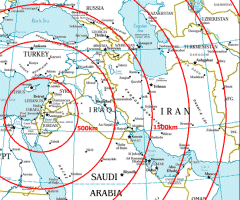
    Most of the international attention on Iran in the second half of 2009 focused on the political turmoil following the presidential election of 12 June. The discussion of Iran’s nuclear capabilities and plans receded from the foreground, though it continued behind the scenes among all the states and international agencies involved. The signs are that, whatever the outcome of the domestic confrontation between the Mahmoud Ahmadinejad regime and the opposition, the coming months will see a sharpening of tension over the nuclear issue. This raises the question of whether there will be a military assault on Iran’s nuclear facilities – most likely by Israel, since there is little likelihood that the Barack Obama administration would countenance direct United States military action against Iran – in an attempt to stop the country from acquiring a nuclear weapon (see “Iran, Israel, America: the nuclear gamble”, 2 October 2009).

    In current circumstances, any unexpected or dramatic incident is likely to be read in terms of its bearing on the complex interplay over the nuclear question of Iran, Israel and the United States.  The assassination by a remote-controlled bomb of the Iranian quantum-physicist (and opposition supporter) Massoud Ali Mohammadi on 12 January 2010 is one such. The Iranian government immediately attributed Dr Mohammadi’s killing to the United States and Israel, working in collaboration with internal dissidents.  

    Tehran’s accusation against its main adversaries is as predictable as Washington’s denial of any involvement in the murder. While the truth of this event remains to be established, what can be said is that on a larger diplomatic front the United States has little to gain from any rupture in relations with Tehran. The rhetoric in Washington from conservative sources and supporters of Israel may be as strong as ever, and is more than matched by the propaganda of the Ahmadinejad government; but in reality the US and Iran actually have overlapping interests. Both have reason, albeit for different reasons, to oppose al-Qaida and the Taliban (with Iran recalling the deaths of Iranian diplomats at the Taliban’s hands in 1998); and the US government is well aware of the potential for Iran to make things very difficult for it in Iraq.

    The deep state

    Two pieces of evidence, however, suggest that events involving Israel may make the delicate Tehran/Washington relationship even harder to sustain. The first is that sources close to the Israeli government confirm and are clear that training and other preparations continue for possible military action against Iran. This is not to say that an attack is imminent, or indeed inevitable: just that the option is, and will remain, readily available.

    The Binyamin Netanyahu government has been careful to moderate its public pronouncements about Iran; but its repeated statements that Iran is Israel’s primary security concern – far outweighing Hamas, Hizbollah and certainly the Palestinians on the West Bank – are far more than rhetoric. Some nuclear analysts in the United States believe that Washington could come to terms with a nuclear-armed Iran, should that be Tehran’s ultimate aim; for Israel, such an outcome is simply not acceptable.

    The second piece of evidence enters here, namely a range of reports suggesting that Iran has gone much further than previously believed in protecting its nuclear facilities.  The reports centre on news of a new nuclear plant being constructed inside a mountain near the holy city of Qom (see William J. Broad, “Iran Shielding Its Nuclear Efforts in Maze of Tunnels”, New York Times, 6 January 2010).

    The argument is being made that the Qom development – news of which follows Iran’s admission in September 2009 that it is building a uranium-enrichment plant inside a mountain near Qom – is just one of many of this type; that a programme of systematic protection of sensitive sites has been operating for several years; and that these are sufficiently robust to greatly diminish the likely success of any air-strikes.  The reports do not explicitly claim that the diverse sites are clearly linked to a nuclear-weapons (as distinct from a civil nuclear-power) programme, but the implication is that they are, and that they’re intended as a form of deterrence.

    It is impossible to verify these reports. What can be said is that Iran has huge experience in tunnel-engineering, not least in carving road-and-rail routes through mountainous terrain, as well as the construction of subway-systems in three cities (Tehran, Isfahan and Shiraz).  Some of the world’s leading tunnelling-contractors, including Germany’s Herrenknecht, have offices in Tehran. President Ahmadinejad himself, a transport engineer by profession, was in 1998 a co-founder of the Iranian Tunnelling Association.

    Iran has, therefore, the capability to protect sensitive facilities and there is a fair amount of evidence that it has done so. Any kind of nuclear development is seen in the country as a powerful symbol of modernity (and is to that extent popular); and the risk of an attack on nuclear facilities, even if they are not weapons-related, makes protection a high priority for the authorities.

    Indeed, if as is probable Iran did embark on a scheme some years ago to develop a major civil-nuclear programme that could also give it the potential to “break out” into nuclear weapons, then its thinking from the start would have been that an Israeli military assault was at some point likely.  From that early point it would have made eminent sense to focus intense efforts on extremely strong protection of selected facilities; indeed it would be a sign of political and technical incompetence not to have done so.

    It is still feasible that Iran is not actually engaged in developing nuclear weapons but is determined to maintain that option. Merely to do this in a survivable way, however, would require sophisticated levels of protection. The latter would be far better provided by tunnelling into mountains than digging deep holes and covering facilities with substantial layers of concrete, earth and rock. The latter option would leave facilities vulnerable to attack by the 2.3-tonne GBU-28 “bunker-busting” bomb available to the Israelis; whereas such a weapon would have little if any effect on deep tunnels other than to wreck entrances (and even this risk can easily be countered by dummy entrances and other technical tricks).

    The US air force has for some years funded the development of a far more powerful system, the 13.6-tonne GBU-57A/B Massive Ordnance Penetrator (MOP). The first of these are due to be deployed later this year, though there are no indications whatsoever that they will be made available to the Israelis (see “MOPping Up: The USA’s 30,000 Pound Bomb”, Defense Industry Daily, 22 December 2009). In any event, if Iran has created deeply buried facilities within mountains, even the GBU-57 would have little effect.

    The hard choice

    The logic of the foregoing is that even if Iran has not yet decided to divert into a nuclear-weapons programme, there is a strong risk of an Israeli attack – but that Iran’s leadership will be confident that a raid would leave important parts of any programme intact. Moreover, Iran’s elite could respond to an attack from the middle-east’s only nuclear-weapons power by withdrawing from the non-proliferation treaty; mobilising the people around a unifying cause; portraying the country as a regional leader against aggression; and “really” going all-out for nuclear weapons.  The result would be yet more assaults by Israel in subsequent months, with complex political effects across the region in which (for example) the reaction of Arab elites and Arab citizens would be very different.

    The long-term consequences of any Israeli operation against Iranian nuclear targets are unpredictable, but probable among them is serious regional instability. Yet where the dominant security paradigm remains fixated on Iran’s nuclear potential, this would not be enough to stop Israel. 

    The United States clearly recognises this fact, and the Barack Obama administration – unlike its predecessor – well understands how damaging a war would be. The watchwords of the Washington’s dealings with Tehran in coming months will continue to be caution and patience. It is far less certain that the US president has any serious control over Israel’s plans and calculations. For that reason alone, a crisis remains likely some time in 2010.

  • Towards sustainable civilian security in South Sudan

    Last week saw the start of yet another armed anti-government revolt in South Sudan’s Jonglei state.  Reportedly led by Murle militia leader Major General David Yau Yau, there are now fears that the revolt will escalate as a result of longstanding local grievances with the army of South Sudan, the Sudan People’s Liberation Army (SPLA).

    The unrest comes as a result of a widely criticised government-led civilian disarmament campaign in Jonglei state – so-called ‘Operation Restore Peace’ – which was launched after violent clashes between Lou Nuer and Murle communities in January. Carried out by the SPLA, with an additional 15,000 soldiers and 5,000 members of the South Sudan Police Service, the campaign has been condemned by the United Nations Mission in South Sudan and groups such as Human Rights Watch for alleged human rights violations including killings; allegations of torture, simulated drowning and beatings; rape and attempted rape; and abductions. On October 3rd, Amnesty International issued a press statement calling on the government to take immediate action to end these reported human rights violations, launching a new report ‘Lethal Disarmament’ which highlights abuses in Pibor County of Jonglei State.

    Not for the first time, the Government of South Sudan’s  civilian disarmament initiative has failed to improve security in South Sudan. In 2006, as described by the Human Security Baseline Assessment at Small Arms Survey, the SPLA’s forcible civilian disarmament operation in northern Jonglei State succeeded in collecting 3,000 weapons from the local community. However, as a result of the campaign’s focus on the Lou Nuer community and martial and poorly planned approach, as well as a lack of subsequent security guarantees for the community, heavy fighting ensued and more than 1,600 people were killed.

    In 2008, Interim President  of Southern Sudan, Salva Kiir issued a decree to start a six month disarmament period across the country. Conducted by the SPLA, the aim of the operation was to get all civilians to surrender their weapons in a peaceful manner, although ‘appropriate force’ could be used. However, as operational logistics were not outlined after the decree, a lack of centralised strategy resulted in various outcomes and in many places, an increased sense of insecurity. For example, in Lakes State local police had their weapons confiscated and weapons searches became violent as reportedly drunken soldiers stole from people’s homes.

    Thus far, civilian disarmament operations in South Sudan have done little to increase long term security. After decades of war, small arms and light weapons are notoriously rife in the young country, but attempts to solve this problem by confiscating these weapons does little to deal with the root causes of insecurity and communities’ need for self-protection.  Small Arms Survey estimates that prior to the interim separation of Sudan and South Sudan after the Comprehensive Peace Agreement in 2005, there were between 1.9 and 3.2 million small arms in circulation, with about two-thirds of these in civilian hands.  While these weapons come from a number of sources – including the SPLA during the Second Civil War – it is also important to understand why civilians feel they must arm themselves.

    South Sudan’s severe underdevelopment, lack of infrastructure – with only 300km of paved road  – seasonal floods, and subsequent lack of service provision and security capacity, means that there is a considerable absence of established security services across the country.  Persistent, and often deadly, cattle raiding and escalating inter-communal armed conflict between groups such as the Lou Nuer and Murle in Jonglei State leave individuals and communities to seek ways to protect themselves and their property. Subsequently, informal community security structures are common; ranging from community initiatives to groups such as the Lou Nuer’s ‘White Army’, which was originally formed to protect cattle and now constitutes a major threat to Murle communities in Jonglei. In effect, the Government’s inability to ensure security at the community level means that groups are forced to take matters into their own hands, often challenging the state’s right to a monopoly of violence because of a lack of confidence in its ability to provide adequate protection.

    In current approaches to civilian disarmament, communities are often left in a ‘security vacuum’, without the means to protect themselves from immediate security threats but without any guarantees that even short term immediate security assistance will be provided.  This state of vulnerability in turn leads to community backlashes, rapid re-arming or attempts not to turn weapons in.

    As stated in a report by Saferworld in February 2012, ‘on its own, civilian disarmament does virtually nothing to address the factors fuelling demand and supply of these weapons, which requires a much more complex and long-term strategy.’  Reducing and managing the proliferation of civilian use of small arms and light weapons will require the Government of South Sudan to create a holistic strategy that addresses the demand for weapons as well as their supply. As has been proven in efforts until now, addressing the single issue of weapons supply without dealing with the underlying need for guns undermines attempts to decrease proliferation of small arms and light weapons. A government strategy would necessarily address structural issues, including the state’s capacity to provide professional security services that can be relied upon for protection, such that communities feel safe from immediate threats.

    In no small measure, this will involve degrees of security sector reform, particularly with focused training on civilian interaction and ethnic impartiality in operations if the army is to be used for future operations. As the latest Amnesty report demands, the Government must ‘provide security forces carrying out civilian disarmament with the necessary training and resources to enable them to have a clear understanding of how to carry out disarmament in accordance with international human rights standards’. This must also include measures to address the structural issues facilitating civilian arms possession, including sales of weapons to civilians by government security forces because of lack of pay and porous regional borders that allow illicit trade. Such augmentation of basic infrastructure and security capacity in South Sudan will take years, and so attempts to reduce proliferation must also include measures to address immediate security threats, in addition to tackling longer term structural, capacity and training issues. 

    Civilian disarmament campaigns in South Sudan currently attempt to tackle one of the many symptoms of the country’s militarised post-war society. Instead, these campaigns must be seen as one aspect of an overarching and sustainable disarmament and security sector reform strategy that must be undertaken long term, while ensuring that the immediate security of communities is safeguarded and that their need for weapons to protect themselves is adequately addressed and reduced. 


    Image Source: ENOUGH Project

  • A New Road for Preventative Action

     A gap continues to exist between the international community’s rhetoric about conflict prevention and its responsibility to protect people from severe human rights violations. The record of human misery caused by violent conflict is testimony to the chronic lack of political will to respond collectively to new and emerging threats to peace. The ineffectiveness of many global efforts at preventive diplomacy is evidence that traditional diplomatic approaches, including the use of force, simply may not work.

    Article source: East West Institute

    Image source: AfghanistanMatters

  • Reinventing Energy Futures

    Over the next few decades, the increasing demand for resources and the pressures of climate change are going to force some rapid and potentially difficult decisions on the role of energy in the global economy. While many governments are now taking seriously the need to think about ‘energy security’ few have engaged with the full set of questions raised about current energy policies by the need to move to a low-carbon economy in the first half of this century.

    A useful exercise has been undertaken by the Institute for the Future in terms of exploring a number of scenarious that could come to characterise our political, social and economic systems depending on the energy choices we make today.

    The Reinventing Energy Futures: Four Visions Map developed by the Institute is “an invitation to explore four corners of possibility for the future of energy. It is a tool to make connections across a broad array of action domains where control over our resources will play out. In the difficult to forecast field of energy futures, where data and projection models often clash and expertise runs deep and narrow, this map is a way to frame new actions.”

    While the document’s design aesthetic may not be everyone’s cup of tea (as if sustainablesecurity.org is a thing of style and beauty!) the issues raised and the way the different visions are mapped out makes for interesting reading and challenges us to think carefully about where future energy demand fits in our attempts at achieving a sustainable security today.  

    The Reinventing Energy Futures: Four Visions Map can be accessed here.

     Image source: Ulleskelf. 

  • Perpetuating Uncertainty: Trident and the Strategic Defence and Security Review

    Above all, the UK government’s new Strategic Defence and Security Review (SDSR) confirms the intention to retain and then replace the UK’s nuclear weapons, though the final decision has been put off until 2016.[1] David Cameron thus confirmed to parliament that he will be ‘steaming through’ with the decision on the initial design phase for replacing Trident this year.[2] The SDSR also announces warhead reductions and so-called ‘value for money’ measures, packaged to make Britain appear as if it were a ‘responsible’ nuclear state, contributing to ‘multilateral disarmament’ whilst reducing costs for the taxpayer.[3] Such mythmaking must be resisted. Firstly, because Trident can never be ‘value for money’ as it is has no value- military or otherwise- yet currently costs over £2 billion a year to run, whilst at least £700 million will be spent over the next five years on its replacement.[4] Trident thus not only takes money away from education- at a time when universities are facing 40% cuts to their teaching budgets and the NHS- expected to find £20 billion in savings by 2014, but makes the world a far more dangerous place.[5]

    The only way the UK can act responsibly as a nuclear weapon state is by realising its legally-binding obligations to scrap all its nuclear weapons and begin negotiations on a global abolition treaty, as required by the nuclear Non-Proliferation Treaty (NPT). States without nuclear weapons argue that unless states with nuclear weapons- such as the UK- continue to resist their commitments under the NPT and put off making serious advances towards the total elimination of their arsenals, nuclear weapons will, inevitably, spread. Brazilian diplomat Orlando Ribeiro therefore points out that reductions in the number of nuclear weapons alone will ‘not lead to disarmament because qualitative arms races will continue’.[6] Look, for instance, at how the UK spends billions on construction programmes at AWEs Aldermaston and Burghfield, enabling the testing, design and construction of a successor warhead.[7]

    In order to explain why the UK continues to cling on to Trident- a Cold War relic with no military utility- which wastes billions in a time of austerity, we must consider Trident’s political significance within the US-NATO military alliance. This will enable us to evaluate the potential for the UK to move away from the failed policies of yesteryear and towards a foreign policy based on disarmament, diplomacy and sustainable security.

    What’s stopping the UK from disarming?

    Baroness Shirley Williams, a Lib Dem peer, enthusiastically welcomed the SDSR, arguing that the UK ‘is now leading the nuclear powers (P5) towards disarmament, essential to a more secure and less dangerous world’.[8] The first half of this statement is surely an exaggeration- designed to develop a feel-good-factor about the UK taking such limited measures whilst vindicating Lib Dem policy. Still, by casting disarmament and diplomacy- not military prowess- as a means by which the UK can act responsibly and show leadership, Williams indicates a potential new global role for Britain.

    This is especially relevant now given that, according to the new National Security Strategy, the UK faces ‘no major state threat at present and no existential threat to our security, freedom or prosperity.’[9] Furthermore, the UK’s armed forces are apparently no longer capable, following SDSR defence cuts, of launching overseas missions on the scale of Afghanistan or Iraq.[10] So the Lib Dems, who have a good track record of opposing Trident and supporting a Nuclear Weapons Convention (NWC) – a global treaty which would ban nuclear weapons permanently and ensure their elimination- should be encouraged to continue speaking out.

    However, the idea that Britain, given its current military and political alliances, could ‘lead’ on disarmament is persuasively questioned by George Monbiot. In an article reflecting on the government’s addiction to nuclear weapons, Monbiot argues that the one force that could finally ‘kill’ Trident is the US. For only once the US has begun to dismantle its (over 9,600) nuclear weapons and ‘ordered’ the UK to follow suit would such disarmament occur.[11] Recalcitrant parliamentary and public opinion in the UK (54% of whom now want to scrap Trident) thus ‘counts for nothing’.[12] One could also add world public opinion into this formulation, given that a global abolition treaty has the support of two-thirds of all governments and members of the public everywhere.[13]

    US intransigence in the face of repeated international calls to disarm was exemplified by remarks made by Assistant Secretary of State for Arms Control, Verification and Compliance Rose Gottemoeller’s October speech to the UN’s First Committee on Disarmament. Gottemoeller referred to the idea of beginning negotiations on a NWC now as ‘an impractical leap’.[14] Moreover, whilst Barack Obama and Hillary Clinton profess to want a world without nuclear weapons, they state that ‘this may not be achieved in our lifetime or successive lifetimes’.[15]

    Yet, in a June House of Lords debate, Baroness Williams correctly drew attention to the fact that, at the 2010 NPT Review Conference, ‘the great bulk of non-nuclear powers decided to press for a nuclear weapons convention to abolish nuclear weapons completely by 2025’. In response, a Conservative spokesperson echoed the US position in stating that ‘a whole series of things need to be done before one comes to the happy situation where the nuclear world is disarmed and a convention could then get full support. If we try to rush to a convention first of all, we might end up delaying the detailed work that is needed on the path to get there’.[16] The baleful logic expressed here can be summarised as- ‘we can only negotiate a treaty prohibiting nuclear weapons once they’ve been eliminated’. Following the final document of the 2010 NPT, which recognised the importance of an NWC as endorsed in the UN Secretary General’s five-point plan for disarmament, one might have hoped that nuclear weapon states would have taken their responsibilities to the international community- and international law- more seriously.[17]

    Perhaps one reason why the US and UK seem incapable of doing so, is that, whilst some in elite circles may genuinely believe nuclear disarmament to be desirable, its realisation is incompatible with another, much more deeply entrenched idea within the psyche of the powerful- an idea repeated by Hillary Clinton in a September speech to the Council on Foreign Relations- that the ‘United States can, must, and will lead in this new century’.[18] Thus behind Obama’s surface rhetoric of ‘change’, conventional Western thinking is still based on narrow, exclusive security concerns- the US ‘control paradigm’.[19] So, as Tariq Ali observes, whilst Obama is perceived as a break with the depredations of the Bush administration ‘only the mood music has changed’.[20]

    A subservient or independent foreign policy?

    Baroness Williams is a member of the Top Level Group of Parliamentarians for nuclear Non-Proliferation and Disarmament, which also contains several former defence ministers.[21] The Top Level Group believes that UK and European statespersons can have an impact internationally, by persuading US Senators that they should ratify treaties such as the Comprehensive Test Ban Treaty (CTBT) – which the UK and France ratified in 1998- as part of a step-by-step approach to disarmament. At present, however, getting even common sense legislation such as the bilateral US-Russian Strategic Arms Reduction Treaty (START) – seen as the necessary precursor to CTBT ratification- through the Senate is a painfully slow process, producing conservative and even retrograde agreements.

    Any residual ambition the Obama administration had of accelerating disarmament has thus been stymied by reactionary vested interests keen to hamper the Democrats before the November mid-term elections and ensure investment and jobs in their constituencies’ military-industrial complexes (some of which are Democratic) are preserved. This has led to Obama’s recent call for $80 billion to upgrade the US’s nuclear arms complex (described as the largest funding request since the Cold War) and the planned investment, over the next decade, of ‘well over $100 billion in nuclear delivery systems’.[22]

    In this ultra-partisan atmosphere, any voices of sanity to counteract the bullying and obstruction of the far-right are welcome. The Top Level Group thus employs political common sense (relevant to its incrementalist logic) by turning their diplomatic skills to face the US Congress. Their strategy appears to be based on the idea that even small moves in the US nuclear weapons posture- from longstanding recidivism to glacial disarmament- will enable the UK to act. Witness, for example, the speed with which Foreign Secretary William Hague fell into line following the US announcing its 2010 Nuclear Posture Review. Hague revealed for the first time the size of the UK’s nuclear arsenal whilst, in the SDSR, the UK gave an assurance that it ‘will not use or threaten to use nuclear weapons against non-nuclear weapons states parties to the NPT’.[23]

    Yet, as Peter Burt points out, because the assurance ‘would not apply to any state in material breach of those non-proliferation obligations’ this ‘potentially leaves out states such as North Korea and Iran’. As with the US’s own new declaratory posture, this assurance may be revoked ‘if future threats or proliferation of nuclear weapons make it necessary to do so’. [24] For Zia Mian, the crucial question- applicable to both the US and UK- is therefore, who determines whether a non-nuclear weapon state is in compliance with its obligations or not? Judging by the US’s responses to such questions, Mian concludes that the answer to this question is ‘the US alone’, whilst reserving itself the right to enforce its decision militarily, in total violation of the UN Charter.[25]

    This understanding of the US-UK power dynamic- the infamously one-sided ‘special relationship’- is an unquestioned, and perhaps unquestionable, fact of life for many MPs. Former defence minister Eric Joyce, reflecting on Ed Miliband’s position on Trident replacement at Labour’s annual conference, thus argued that Britain currently has no independent foreign policy and is simply locked into ‘US electoral cycles’.[26] Similarly, former Secretary of State for Defence Des Browne has commented that members of the Western alliance will only taken action on nuclear weapons when the US has told them what to do.[27] The British elite are quite aware of the damage being done by such servility, but tend to only venture honest appraisals when talking to themselves. Thus Douglas Hurd, the former Foreign Secretary, giving evidence in 2009 to the Foreign Affairs Committee, argued that Tony Blair’s ‘subservience’ to the US over Iraq ran against British national interests.[28]

    Hurd’s description here chimes with Mark Curtis’s analysis that rather than being a ‘poodle’ the UK has become ‘willingly subservient’ and now freely chooses to support US actions. Curtis argues that a change occurred under Tony Blair, whereby Britain became ‘in its major foreign policies’ largely a ‘US client state while its military has become an effective US proxy force’.[29] With regards to Trident it has been conclusively demonstrated that the UK’s nuclear weapons absolutely depend on continued US technical and political support so that, in Blair’s own words, it is ‘inconceivable we would use our nuclear deterrent alone, without the US’.[30]

    The debate preceding the publication of the SDSR sheds some light on how British servility is playing out regarding Trident replacement. In September, a leaked letter from Defence Secretary Liam Fox to David Cameron expressed grave concerns over the cuts facing the UK military budget, expected to be around 10-20%. The eventual reduction was a mere 8%- so that Britain still has the fourth largest defence budget in the world.[31] Just days after the MoD leak, Fox reported back from a meeting with US Defense Secretary Robert Gates that ‘Britain would keep the deterrent and other capabilities valued by Washington’. Gates was also reported as saying that the US wanted Britain to keep its deterrent as it did not want ‘sole responsibility’ for providing a nuclear umbrella to NATO countries.[32] Fox used all his cunning to make this helpful US opinion known as pressure was building on the MoD from the public and civil society to include Trident in the SDSR and from the Treasury to make deep cuts to its budget. Following this, Hillary Clinton herself waded in on the argument, stating that the US was ‘worried’ about the UK’s planned defence cuts- primarily because it appeared that defence spending could fall below NATO’s required standard of 2% of GDP.[33]

    Who’s in favour of disarming NATO?

    If we are to understand why senior US politicians feel so compelled to pronounce on the internal budgetary affairs of a foreign country, it is therefore imperative that we turn to the politics of NATO. NATO is presently preparing its new, ultra-secretive, strategic concept. German representatives are pushing for nuclear disarmament to be given a prominent place in the final document. Germany is currently home to an estimated 20 NATO nukes, with the rest of NATO’s European 180 B-61 thermonuclear-gravity bombs based in Belgium, Italy, the Netherlands and Turkey.[34] According to a 2006 opinion poll, almost 70% of people in European countries that currently host US nuclear weapons want a Europe free of nuclear weapons.[35] The New York Times reports that Germany’s call for disarmament has not gone down well in Paris, which opposes NATO ‘having any role or influence in disarmament issues, fearing that it could undermine France’s sovereignty’.[36]

    Britain- whose own NATO/US nuclear weapons were silently withdrawn between 1996 and 2008 has, meanwhile, declined to comment on the matter.[37] Fascinatingly, at the same time as Berlin has been trying to extricate itself from the nuclear balance of terror (for example, by retiring its Tornado fighter jets, and instead deploying the Eurofighter, which can’t carry B-61s) it is reported that Paris and London have begun serious discussions about sharing nuclear submarine patrols and testing facilities.[38] The need to consider such moves on the part of France, and more particularly the UK, is clearly more pressing now given the parlous state of their finances, whilst circumventing CTBT obligations. By sharing the burden of having to constantly deploy nuclear submarines at sea, the old enemies will save on the costs of building and maintenance.

    Perhaps more importantly, Germany’s disarmament initiatives will be resisted and the US- who enjoys the additional international legitimacy that is conferred by its allies remaining nuclear-armed- will be appeased. The famous phrase, attributed to Lord Ismay, NATO’s first Secretary General, that the alliance was founded to ‘keep the Russians out, the Germans down, and the Americans in’ remains salient. These days, of course, China is also handy for justifying NATO expansion and, if we listen to our Prime Minister, Trident replacement.[39]

    In his first speech as Labour leader, Ed Miliband disavowed the invasion of Iraq (but not the NATO-led occupation of Afghanistan) and spoke of how ‘this generation wants to change our foreign policy so that it’s always based on values, not just alliances’.[40] Trident’s cost to the British people is clear- £100 billion over its lifetime- its value, at a time of massive and ‘regressive’ public spending cuts, is also clear.[41] Trident should therefore be the first cut made by this government. The problem is that those in power who do value Trident, value it because they value highly the US-led NATO alliance. If Ed Miliband, or any other British leader, acted as if Britain were a sovereign nation in its foreign policy and scrapped Trident, the UK’s role as the ‘spear-carrier for pax Americana’ would immediately be called into question.[42] But by scrapping Trident and supporting a Nuclear Weapons Convention, the UK would find a new role as a leader for disarmament and diplomacy, helping to create new international political constituencies alongside the 130 nations who want a global abolition treaty, and a more secure and equitable world, now.

    (by Tim Street, Coordinator, ICAN-UK, with thanks to Alicia Dressman)


    About the author: Tim Street is Coordinator with ICAN-UK

    Image source: Duncan~


    [1]                   ‘Securing Britain in an Age of Uncertainty: The Strategic Defence and Security Review’, p.5, http://bit.ly/bfWByX

    [2]     ‘Strategic Defence and Security Review’, Hansard, 19/10/10, http://bit.ly/9qIUHN

    [3]     The number of warheads aboard each sub will be reduced from 48 to 40, the total number of operationally available nuclear warheads reduced from fewer than 160 to no more than 120 and the overall number of nuclear weapons that the UK has will be reduced from around 225 to not more than 180 by the mid-2020s.

    [4]                   ‘The Future of the British Nuclear Deterrent’, House of Commons Library, p.16, http://bit.ly/btKNxE and ‘Strategic Defence and Security Review’, Hansard, 19/10/10, http://bit.ly/9qIUHN

    [5]                   ‘NHS budget rise will feel like cut says thinktank’, The Guardian, http://bit.ly/bTiGvI and ‘Universities alarmed by 40% cut to teaching budget’, The Guardian, http://bit.ly/bn5cVv


    [6]     ‘International perspectives on the Nuclear Posture Review’, Carnegie Endowment for International Peace, http://bit.ly/dgDhC9

    [7]     ‘Atomic Weapons Establishment’, Hansard, 09/09/09, http://bit.ly/d7Tl0C

    [8]     ‘Defence review significant step towards disarmament’, Liberal Democrats News, http://bit.ly/cFND9r

    [9]     ‘A Strong Britain in an age of Uncertainty: The National Security Strategy’, p.15

    [10]             ‘National security strategy’s real test will come when the next shock arrives’, The Daily Telegraph, http://bit.ly/dsA2wA

    [11]             United States Discloses Size of Nuclear Weapons Stockpile’, Federation of American Scientists, http://bit.ly/aot5pb

    [12]    ‘War with the ghosts’, Monbiot.com, http://bit.ly/duhHeo

    [13]            ‘Publics around the World Favor International Agreement To Eliminate All Nuclear Weapons’, World Public Opinion 2008, http://bit.ly/aoW7Y1

    [14]                 ‘Remarks by Rose E. Gottemoeller’, US Mission to the UN, http://bit.ly/cmJAAU

    [15]    ‘Remarks at the United States Institute for Peace’, Hillary Clinton, http://bit.ly/Rxyjb

    [16]    ‘Nuclear Non-Proliferation’, House of Lords debate, http://bit.ly/cEcbeC

    [17]    2010 NPT RevCon Final Document, p.20, http://bit.ly/9WFc1x

    [18]    ‘Clinton pledges another century of American global leadership’, Foreign Policy, http://bit.ly/c6SG2S

    [19]    Why we’re losing the war on terror, Paul Rogers, 2008, p.x

    [20]               ‘Only the mood music has changed’, Tariq Ali, Pulsemedia.org, http://bit.ly/91iriP

    [21]    Top Level Group, http://toplevelgroup.org/

    [22]    Phil Stewart, ‘Obama wants $80 billion to upgrade nuclear arms complex’, Reuters, http://reut.rs/av4Cp1and ‘The New START Treaty- Maintaining a Strong Nuclear Deterrent’, White House, http://bit.ly/9x4P4r

    [23]    ‘Strategic Defence and Security Review’, UK Mission to the UN, http://bit.ly/bNnSEM

    [24]    ‘Delay to Trident replacement’, Nuclear Information Service, http://bit.ly/dsapSs

    [25]            ‘Questions to ask the US about the negative security assurance offered in the US Nuclear Posture Review’, NPT News in Review, http://bit.ly/anjuh4

    [26]            ‘Ed Miliband wants Trident rethink – ex-defence minister’, BBC, http://bbc.in/auSb6n

    [27]    Comments made during a speech at ‘A World without Nuclear Weapons’, The Royal Society, March 2010

    [28]    The British Political Approach to UK-US Relations, Parliament.uk, http://bit.ly/cHspNC,

    [29]    Web of Deceit, Mark Curtis, 2003, pp.112-114

    [30]    John Ainslie, The Future of the British bomb, 2005, p.10 and A Journey, Tony Blair, 2010, p.636

    [31]            ‘Defence review: Cameron unveils armed forces cuts’, BBC, http://bbc.in/bV25yf


    [32]            ‘UK to Retain Nukes, Defense Secretary Tells US’, Nuclear Threat Initiative, http://bit.ly/b7Q1sE

    [33]          ‘Hillary Clinton says US worried over UK defence budget’, BBC, http://bbc.in/957BbA

    [34]               ‘Nuclear weapons likely to stay in Germany’, Spiegel Online, http://bit.ly/ahhbAB

    [35]                Nuclear Weapons in Europe: Survey Results in Six European Countries, STRATCOM, http://bit.ly/dh2wu3

    [36]            ‘NATO Document Addresses Nuclear Disarmament’, New York Times, http://nyti.ms/aCrnPW

    [37]                ‘No Nukes at Lakenheath’, Arms Control Wonk, http://bit.ly/c6oF85

    [38]            ‘What to Do About Europe’s Secret Nukes’, TIME, http://bit.ly/7wfKvf and ‘Britain and France could share nuclear testing site’, The Daily Telegraph, http://bit.ly/cBTrAu

    [39]             ‘Cameron Says China Uncertainty Requires U.K. to Maintain Nuclear Deterrent’, Bloomberg, http://bit.ly/aWmVE7

    [40]          ‘Labour conference: Ed Miliband speech in full’, The Guardian, http://bit.ly/9kK0I9

    [41]          ‘Spending review cuts will hit poorest harder, says IFS’, The Guardian, http://bit.ly/9xk40b

    [42]               ‘The rise and fall of the NPT: an opportunity for Britain’, Michael MccGwire, http://bit.ly/d5huGc, p.134


  • The Costs of Water Insecurity

    The post-Rio +20 discussion has focused a great deal on trade-offs between the global environment and the global economy. This sort of thinking obscures the extent to which global trends like increasing competition over scarce resources not only threatens both national and human security but actually threatens long-term economic stability as well. In an interview for the Woodrow Wilson Center, explorer and a co-founder of Earth Eco International, Alexandra Cousteau explains how this relates to the global use of water.

    The New Security Beat blog, a project of the Woodrow Wilson Center which emphasises the connections between population, health and environment policies for global security, have picked up on the importance of this issue at a time of continuing global economic crisis. The false trade-off between environmental sustainability and economic recovery was reflected in the Rio+20 talks. While the talks produced a laudable outcome document on “The Future We Want” which calls for “integrated and sustainable management of natural resources and ecosystems that supports, inter alia, economic, social and human development” very little of substance on the most pressing environmental and development issues emerged from the meeting. The talks were by and large overshadowed by economic crises in Europe and elsewhere with the predictable result that short-term and competitive impulses outweighed long-term and strategic discussions.

    Alexandra Cousteau’s interview highlights that a healthy economy is dependent upon sustainable approaches to resources such as fresh water supplies. One of the key reasons for this is that increased competition over water creates insecurity of many different kinds (sometimes with the potential for conflict) – and this is never good news for growth and development.

    The full New Security Beat article with an excerpt from Alexandra Cousteau’s interview is available here.

    Image source: Oxfam International.