Category: Article

  • Military Aviation and the Environment: Why the Military should care

    Ian Shields writes exclusively for sustainablesecurity.org:

    Aviation has come a long way in the century or so since the Wright brothers first flew, and there can be no doubt that it has brought some great benefits: bringing people closer together, allowing (through travel) individuals to experience other places and other cultures, and permitting a greater degree of freedom. The militaries have, after a rather slow start, grasped the opportunities that airpower now represents, and no major military power would seriously consider going to war without airpower and, ideally, mastery of the airspace over their own ground forces. Furthermore, there have been many scientific advances that have benefited mankind in general whose origins were in advances in military aviation, invariably forged in the crucible of war.  Moreover, military airpower can contribute to humanitarian missions as witnessed following the floods in Pakistan, while with more precise weapons fewer civilian casualties are sustained due to aerial bombing: compare present-day Afghanistan with WWII Dresden.

    But this article is not an ethical debate about the efficacy of military airpower, it is a look at the impact that military airpower has on the environment now, and what steps need to be taken to minimise that impact. I say “minimise” because there has to be a degree of realism here: Plato said that only the dead have seen the end of war: I will assume that military aviation is here to say and it is impact reduction that we should seek rather than an unrealistic desire to end the military use of the air completely.

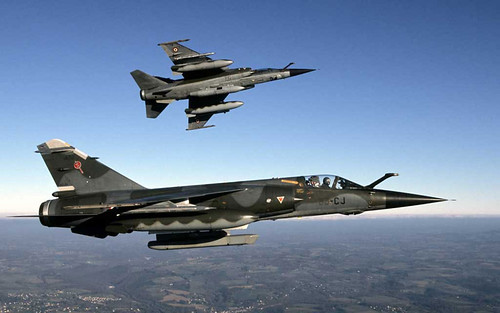
    The impact of the civil airline industry on the environment is well documented, but what is less well considered is the impact of the military sector. This article will identify three key areas where military aviation has a major impact on the environment, and suggest mitigation policies for each: hydro-carbon use, ground contamination and noise.

    Unsurprisingly, by far and away the greatest environmental impact that military aviation has is the use of hydro-carbons.  Military aircraft, for reasons of speed, power and response, utilise rapid-response, high power output engines for their attack and air defence aircraft.  While this gives the necessary performance, environmental considerations are low on the priority list when designing new jet engines, the polar opposite from the civilian airline market where the cost-factor has driven up fuel efficiency.  In America, the United States Air Force accounts for some 1% of the total hydro-carbon use across the country: it is, simply, a gas-guzzler.  It is unlikely that environmental, or even cost, pressures will significantly reduce the carbon footprint while military requirements will continue to demand the immediate thrust response that in turn will require the type of engines presently in use and in development.  However, the military requirement is not unchanging and a spin-off from two particular changes will be a reduction in hydro-carbon use.  The first is increasing use of simulation for flying training on the grounds of cost, efficiency and safety; note that environmental concerns are placed firmly in the second-order effects bracket.  The second, and more subtle change, is the increased use of unmanned or remotely-piloted air vehicles.  This move, on the grounds of greater endurance and lower risk to the operator, has resulted in smaller and lighter vehicles since there is no requirement for the bulky and heavy life-support equipment needed to sustain on-board aircrew.  Furthermore, with no risk to the operating crew, the platforms themselves do not have been as responsive, and engines are generally configured more for endurance than immediate response, resulting in lower hydro-carbon use (1).  For both of these changes, then, while reducing fuel use will be a benefit it will not be an intentional goal: military requirements will continue to predominate and those seeking to reduce the environmental impact of military aviation will need to be mindful of the military imperative.

    The other two concerns, though real, have far less environmental impact than hydro-carbon use.  Ground contamination falls into two categories: first, and far from unique to military aviation, is the damage done to the soil at airbases: pollution from leaked aviation fuel, oils and hydraulic fluid used to service the aircraft, de-icing fluid used on aircraft and on runways, all leech into the local water courses and contaminate the environment.  Of course, this happens on civilian airfields too, but at military bases there is the added issue of ammunition and high explosives.  Although Britain’s Royal Air Force has disposed of its stock of nuclear weapons, one wonders what the radiation levels are like at the former storage sites, especially for the early and very crude weapons.  However, there is good news here: as with other airports, environmental standards at today’s military air bases are high and increasing: the loss of Crown Immunity and raising awareness of standards are reducing such pollution markedly.  Furthermore, and praise where praise is due, the UK’s Ministry of Defence has a generally good record for cleaning up sites when they vacate them. Nevertheless, aviation requires the use of some potentially very harmful chemicals and with the rise in use of carbon-fibre (excellent in aircraft as it is strong, light and flexible; really dangerous due to the carcinogenic properties of the material if broken by, say, an accident or hostile fire) new problems are likely to be encountered.  Present legislation goes a long way to minimise this form of environmental damage, but we cannot afford to be complacent.  Second, spent ammunition, as well as the destruction it causes with its initial effect (think the effects of the Dambusters Raid of WW II) there has been marked ground contamination from used ammunition in the past.  Again, this article is not about the ethics of military airpower, but in terms of environmental impact it is good to note that Depleted Uranium is no longer used as ammunition by the RAF.  However, destruction from the air is achieved almost exclusively through kinetic effect, and it is only recently that consideration has been given both to the environmental after-effects of destruction, and to the environmental impact of the chosen weapon system.  These moves are in the right direction, and are to be welcomed, but there remains a long way to go.

    My final area of concern is with noise pollution.  While the civilian sector has invested a great deal of money in making jet engines quieter (and, of course, more fuel efficient to reduce operating costs) the same cannot be said for the engines in jet fighters and attack aircraft.  The military requirements from their engines are, as intimated earlier, different from a civilian airliner, with the need for immense thrust at any moment (achieved by the use of “after-burners”: the pumping of aviation fuel into the rear of the engine where it is ignited by the hot gases) which achieves the goal, but not only burns considerably more fuel but creates a great deal of noise.  Anyone who has ever attended an airshow where military jets are performing will understand!  The noise issue is further evident with the large, and defensible, amount of training the military pilots undertake.  Back in the 1980s low-flying jets, practicing evading enemy radar systems were a common feature of the more open space across the UK, and the source of many, many complaints for noise.  While that has reduced due to a reduced requirement to low fly and a decrease in overall military jet numbers, the increasing use of night-vision devices with the need to practice night low-flying has brought a different noise disturbance.  Furthermore, it is primarily in the helicopter and transport fleets that this increase has risen, with the inhabitants of those areas frequented by such aircraft subject to considerable night-time disturbance.  While all is done within reason to decrease the disturbance, and the military has a fair point in claiming that it must practice, much more could and should be done to reduce further the level of noise contamination.  Again, more investment in simulation would enable much more of this training to be undertaken synthetically; while live flying training will always be required, particularly in military aviation where the unexpected is more common than in the civilian sector, and while military simulators do not represent sufficient fidelity (due to under-investment), this problem is one that has a reasonable solution that should be pursued with greater vigour.

    As an adjunct to this consideration of air power, man’s attempts to reach higher, above the atmosphere and into space, continue apace with ever more countries keen to have at least their own satellites, if not launch capability.  There is no near-term likelihood of an alternative to the massive hydro-carbon use for launch: as the military – and civilian – use of space continues, the environmental bill for overcoming earth’s gravity will continue to be significant: an interesting point for the future.

    To conclude. Military aviation has a marked impact on the environment.  It is unlikely that ecological pressures alone will change the military mindset, although they can help to shape it.  There are some benefits accruing from changes in behaviour (albeit that the changes are driven by military necessity), and increased simulation in particular is having a beneficial effect.  Nevertheless, military aviation will continue to be environmentally unfriendly and efforts to reinforce good behaviour will have to continue.  But why should the military start to take its impact, particularly its use of hydro-carbons and the subsequent carbon output, seriously?  Ask any serious military man or woman about the experience of fighting, conflict, war (or whichever synonym you care to name) and they will emphatically state that they wish it could cease.  No sensible person who has experienced conflict would wish to repeat it, and all militaries wish to see a more secure world.  It is therefore ironic that carbon-generation, in which military aviation in particular excels, is clearly linked to climate change, and climate change itself threatens security and the global peace.  In seeking to deter or resolve conflict, it is possible that military aviators and aviatrix are inadvertently creating an even greater problem for the future than the ones they are presently seeking to resolve(2).

    (1) As an aside and outwith the main thrust of this article, there are marked human security concerns about the increased use of unmanned vehicles that have yet to be fully explored (see, for example,

    http://www.huffingtonpost.com/laura-colarusso/military-drones-and-the-e_b_278195.html

    (2) The UK MoD’s own Development, Concepts and Doctrine Centre has identified the security threat that climate change represents.  See the DCDC’s Global Strategic Trends Out To 2040 (and in particular pages 21 and 106):

    http://www.mod.uk/NR/rdonlyres/38651ACB-D9A9-4494-98AA-1C86433BB673/0/gst4_update9_Feb10.pdf

    About the author: Ian Shields is a retired, senior Air Force Officer and now a respected commentator on Defence and security matters, particularly with relation to Air and Space Power. He holds an MA from KCL, and MPhil from Cambridge and is presently undertaking a PhD in International Studies, also at Cambridge. He can be contacted via his web-site, www.ian-shields.co.uk

    Image source: chanelcoco872

    <!–[if gte mso 9]>

    Normal
    0

    false
    false
    false

    MicrosoftInternetExplorer4

    <![endif]–><!–[if gte mso 9]>

    <![endif]–><!–[if gte mso 10]>

    <![endif]–>

  • How Food Could Determine Libya’s Future

    As Libya’s protesters-turned-rebels fight a series of hard battles with forces loyal to Muammar Qaddafi, the United States — and the much of the world — struggles to find a meaningful response to the conflict. U.S. lawmakers have proposed such aggressive options as enforcing a no-fly zone over Libya or arming anti-Qaddafi rebels, both of which the White House has kept on the table. Critics of these plans argue that they risk involving the U.S. in another military engagement. But there’s another option that the U.S. could consider, one that might give anti-Qaddafi rebels crucial help while avoiding the messy complications of direct involvement: Send food.

    Food shortages in eastern Libya, the largest rebel-controlled area, have reached dire levels. Fighting has left food stocks depleted and food supply chains in shambles. Around Benghazi, food prices have reportedly risen by 50 to 75 percent. Due to its poor suitability for agriculture, Libya imports the majority of its food, which has become largely impossible since fighting broke out. The United Nations-run World Food Program is attempting to alleviate the food shortage, but so far with little success. Last Thursday, a ship that the World Food Program had chartered to carry 1,000 tons of flour to Benghazi, the provisional capitol of the rebel leadership, abandoned the trip after reports of attacks by pro-Qaddafi aircraft in the area. As food runs out and the conflict drags on, eastern Libya’s food crisis will only get worse. Qaddafi appears willing to use the shortage as a weapon against the rebels, reportedly blocking food from reaching the besieged rebel-held town of Zawiya.

    It still appears unlikely that Qaddafi will step down on his own accord. If the rebels are to free Libya, it will probably mean taking Tripoli by force and toppling Qaddafi outright. Currently, rebels in eastern Libya are mustering an army — mostly raw recruits and seized weapons — which they may use to do just that. But Benghazi is just over 1,000 km, about 630 miles, from Tripoli. Defeating Gadaffi would require this irregular force to travel hundreds of miles across the Mediterranean coast, all the while supplying itself through what would likely be a series of battles along the Gulf of Sidra, Sirte, and then in Tripoli itself.

    Warfare has changed much since Napoleon’s Grande Armée marched across Europe, but one of the Little Corporal’s maxims is just as true in Libya today as it was near Waterloo two centuries ago: armies march on their stomachs. The anti-Qaddafi rebels are no different. The push to Tripoli would require consistent access to — amongst other things — food supplies. While having adequate food alone would not be sufficient to take the capitol (they also need war materials, training, and transportation), it is an absolute necessity. And, right now, the rebels don’t have enough. But we do.

    The United States has the capacity and infrastructure to supply rebel-controlled eastern Libya with substantial amounts of food aid. These shipments could be transported directly into the rebel center of Benghazi, a major seaport with more than adequate facilities. The food aid would not only alleviate the emerging humanitarian crisis in eastern Libya — an important effort in itself — it would help the rebel cause. The shipments would boost the morale of rebel fighters and, more important, provide the supplies necessary to feed the newly formed army during any push towards Tripoli.

    The U.S. may be unable or unwilling to supply Libya’s rebels with everything they need to topple Qaddafi — since protests began in Libya and before that in Egypt, President Obama has made clear that the grassroots Arab uprisings must remain grassroots and Arab, rather than being co-opted by the U.S. But we can supply food. Supplying Benghazi with food aid is a viable and meaningful policy option short of risking the military entanglement Obama appears determined to avoid. Whether or not Libya’s revolution is ours to fight, it could well be ours to feed.

    Image source: B.R.Q.

    This article first appeared on The Atlantic.

  • Sustainable Security and Environmental Limits

    “Sustainable security – A briefing for Friends“, has been co-produced by peace and security think tank the Oxford Research Group (ORG), Northern Friends Peace Board (NFPB) and Quaker Peace & Social Witness (QPSW) in order to stimulate discussion, reflection and action among Quakers.

    Sustainable security is a paradigm that recognises we must work to tackle the causes of insecurity, not respond to it with attempts to control, often by military means. It is about curing the disease, rather than fighting the symptoms. The briefing identifies the major trends likely to cause large scale loss of life and security over the coming decades as:

    • marginalisation of the majority world (the global South);
    • climate change;
    • competition over resources;
    • global militarisation.

    With respect to environmental limits, the briefing says the following;

    The earth, which is abundant in natural and material resources, has been used to fulfil
    the desires (some essential, some not) of the population that lives on it. Many of the
    resources which have been exploited, such as fossil fuels, cannot be replaced; the extraction of others places habitats and ecosystems in danger; others produce damaging pollutants when used.

    The treatment of the natural world by humankind has contributed towards the two
    related major trends that are likely to drive insecurity in the coming decades: climate
    change and competition over natural resources.

    Climate change is high on the international political agenda. The likely and actual physical effects of these processes are well documented; the earth will be changed. Climate change will also have dramatic social and economic impacts. For example: a loss of, or damage to, infrastructure, shifts in disease patterns (e.g. spread of diseases like malaria and dengue fever, as the mosquitoes that transmit the infection are able to inhabit new locations because of changing temperatures), human crises as a result of more frequent extreme weather events such floods, water scarcity, and the mass displacement of peoples as some regions become uninhabitable. These trends could produce serious security consequences.

    A closely related driver of insecurity is competition over resources. The planet is more heavily populated than ever, and today some populations are already consuming far more than their share of the planet’s resources. As population growth continues, there will be greater scarcity of resources including food, water and energy, particularly if consumption patterns also increase. Once major demographic changes and the effects of climate change are factored in, greater competition for such resources should be expected. This will have local and global effects, as those nations rich in natural resources become subject to competition between local populations and international corporations who wish to buy their resources for sale in other parts of the world.

    Resource-conflict is already an issue: many anti-war activists cited oil as a cause behind the invasion of Iraq (central to the Persian Gulf, an oil-rich region) in 2003; water access is an ongoing source of tension between Syria, Lebanon, Jordan and Israel and the occupied Palestinian territories around the River Jordan basin; and in the same region, there are differences in how much water Israeli settlers and Palestinian inhabitants of the West Bank are able to access. The final example will relate in future also to climate change, as the Middle East is highly likely to suffer increased occurrences of drought. Competition will make some existing conflicts worse, and produce new struggles.

    These two related environmental crises will disproportionately affect the poor, and further entrench marginalisation. The Climate Justice movement has been prominent in describing the injustice of this situation: it is the poorest that have contributed least to the greenhouse gas emissions that are catalysing climate change, yet they will suffer most because of it.

    Read the whole briefing here.

    The above illustrates the normative underpinnings of QCEA’s sustainable energy security programme, and may help people understand why Quakers, with a strong tradition in working for peace, justice and equality, are working on issues related to sustainability, and indeed, energy security. It is precisely because the issues of climate change and increased competition over resources, including energy, have such strong implications for peace, justice and equality, that they cannot be ignored. The political importance of energy (and more broadly, resource) security, at European level, is a strong driver of traditional, militaristic security concepts – where “our” security increases the insecurity of others. It is this concept that the Quaker Council for European Affairs, by emphasising sustainable energy security – a sustainability that recognises both environmental and social sustainability not just within Europe, but in the wider world – urges against.

    Article source: Quaker Council for European Affairs

    Image source: kretyen

  • The Security Implications of the Current Resource Scramble

    Respected security analyst and author Michael Klare’s new book ‘The Race for What’s Left’ discusses the growing competition for resources across the globe driven by the depletion of fossil fuels, minerals, water and arable land. Klare argues that the full extent of the political, economic and security implications of this trend are yet to be fully understood in mainstream political circles. The alternative to this, Klare contends, is a coming race to adapt to a resource and climate-constrained world which can offer a way out of war, widespread starvation and environmental catastrophe.

    The book argues that the current scramble for the world’s resources and the new “assault on resource frontiers” is qualitatively different to the historical exploitation of undeveloped territories in years gone by. The analysis presented shows that “never have we seen the same combination of factors that confronts us today: a lack of unexplored resource preserves beyond those now being used for development; the sudden emergence of rapacious new consumers; technical and environmental limitations on the exploitation of new deposits; and the devastating effects of climate change.”

    One of the most interesting findings of the book is that “for all the importance and forthcoming scarcity of oil, gas, and vital minerals, perhaps the fiercest resource struggle in the coming decades will involve food and the land it is gown on.”  Klare describes the trend towards global ‘land grabs’ led by the governments of China, India, South Korea, and the Persian Gulf countries across parts of Africa, Central and Southeast Asia and even Russia. The relationship between this trend and the marginalisation of dispossessed and angry populations is likely to be a key driver of violence. The book states that “Land ownership has always been a source of conflict in the countryside, especially where notions of customary land rights collide with formal decrees handed down by distant, often suspect government bureaucracies; when the official new owners are foreigners who appear completely oblivious to the historic claims and customs of the people they are displacing, the hostility will be far greater still.”

    Klare is explicit in the stakes here: “The race we are on today is the last of its kind that we are likely to undertake” and this book provides a devastating critique of ‘business as usual’ thinking in times of intense global insecurity.

    More information on the book (including a sample chapter) is available here and a recent review on the Huffington Post is available here. An interesting video has also been released where the author explains a number of the issues raised in the book which can be seen here.   

    Image source: thelGl  
     

  • Minority Youth Bulges and the Future of Intrastate Conflict

    The global distribution of intrastate conflicts is not what it used to be. During the latter half of the 20th century, the states with the most youthful populations – a median age of 25.0 years or less – were consistently the most at risk of being engaged in a civil war or in an internal conflict, where either ethnic or religious factors, or both, came into play (an ethnoreligious conflict). However, the tight relationship between demography and intrastate conflict has loosened over the past decade. Ethnoreligious conflicts have gradually, though noticeably, increased among a group of states with a median age greater than 25.0 years, including Thailand, Turkey, Sri Lanka, Indonesia, and Russia.  The salient feature of these intrastate conflicts has been an armed struggle featuring a minority group that is age-structurally more youthful than the majority populace. The difference in age-structural maturity reflects a gap in fertility between the minority and majority, either in the present or in the recent past.  

    Most social scientists are likely to explain a minority-majority gap in median age and fertility as the product of history and culture, an artifact of income differences, and/or the result of discriminatory policies or inadequate protections on the part of the state. While political demographers recognize these as contributing factors, they also argue that the political volatility and rapid population growth that are associated with youthful minorities are central features in a dynamic relationship known as the demographic security dilemma.

    The demographic security dilemma, first described by Christian Leuprecht, arises when a state permits or promotes the political, economic, and social marginalization of an ethnoreligious minority. The more states marginalize a dissonant minority, turn a blind eye to a minority’s exclusion from mainstream social and economic participation, or allow minorities to exclude themselves, the wider the majority-minority fertility gap and the more rapidly those youthful minorities grow as a proportion of the state’s population. Minority youth bulges naturally lead to political tensions. Notably, minority-state tensions do not naturally emerge out of the opposite circumstance: when the majority is youthful and the ethnoreligious minority is not.

    What can governments do to prevent the minority-majority fertility gap? Make sure that health, family planning, and educational programs are extended equitably to minorities. An absence of proactive policies to bring youthful communities into the economic, social, and political mainstream tends to strengthen radical and traditionalist religious political organizations, which often take advantage by filling in gaps in local services and governance. Typically, they restrict girls’ access to education, thwart women’s attempts to gain social and economic autonomy, restrict speech, and campaign against modernization and secularization.

    How can foreign affairs analysts forecast risks associated with youthful minorities? That’s easier said than done. Due to restrictions associated with ethnic and religious data collection and the political sensitivities surrounding conclusions drawn from these data, relatively few countries currently provide public access to data that are disaggregated by ethnic and religious affiliation. For now, analysts attempting to estimate qualities of a minority’s age structure must approximate from related measures, such as estimates of minority birth and death rates, fertility rates, and school attendance. Rather than being accessible from a central source, these are published in scattered government reports and in the international demographic and public health literature.

    Despite ongoing high fertility across sub-Saharan Africa and the Arabian Peninsula, UN demographers foresee a world in the not-too-distant future that will be dominated by states with populations near or below replacement-level fertility (just above two children per woman). In that future, analysts can expect the ethnoreligious composition of many states to be extremely sensitive to minority-majority fertility gaps.

    However, understanding the implications of minority demographic trends could hinge on the ability of researchers to gain access to sub-national ethnoreligious data. For this to happen, some governments will have to overturn laws that currently prohibit identification by ethnicity or religion, while data collectors will need to promote conditions that encourage survey participants to self-identify their ethnic and religious affiliations anonymously, and without fear.

    Article Source: The Stimson Center

    Image Source: CharlesFred

  • Scarcity, security and institutional reform

    On 25th August Alex Evans presented a paper on scarcity issues – water, food, energy, land and climate security, to staff from the UN Department of Political Affairs as part of a three day session on security threats organised by the Geneva Centre for Security Policy. 

    Alex’s paper highlights the interconnected nature of scarcity issues and the need for the multilateral system to mitigate scarcity trends collectively.

    It goes on to highlight seven key agendas requiring focus:

    1) Improved surveillance and early warning

    2) Mitigation of unsustainable population growth

    3) Increased focus on agriculture – especially smallholder agriculture

    4) Social protection systems and safety nets

    5) Increased natural resource governance

    6) Conflict prevention

    7) Upgrade emergency response capacity 

    For more details on each of these issues you can read Alex’s excellent paper here.

    Alex Evans is a Non-Resident Fellow at the Center on International Cooperation (CIC) at New York University. This article originally appeared on Global Dashboard. 

  • Competition over resources: Drivers of insecurity and the Global South

    ‘By 2050, the global population is expected to peak at 9 billion. In an environment already constrained and changed by human activities, we can expect greater scarcity of three resources vital to the maintenance of both the economic order as it now stands, and the preservation of human life in general: energy, water and food. At current population levels, demand for some key resources is already unsustainable. As the number of people on the planet – and the number of people living “affluent” lifestyles – increases, and the effects of climate change are factored in, greater competition over resources is highly probable – affecting individuals, communities and states.’

    This paper is the first in a series of four papers written as part of the Sustainable Security and the Global South project, one each covering four likely drivers of insecurity over coming decades: competition over resources, climate change, marginalisaiton of the majority world and global militarisation.

    Each paper is the result of long-term collaboration between ORG and partners across the ‘Global South’. This collaborative network – made up of activists, analysts and academics from a range of think tanks, civil society organisation and research institutes – have recommended background reading, provided expert review and written illuminating case studies commission for each paper.

    See the full article here.

    Image source: Maks Karochkin

  • National security and the paradox of sustainable energy systems

    Unlike economic policy, national security is rarely influenced by popular decisions taken in the public domain. While citizen-led movements in Western democracies may help to encourage or discourage a particular military intervention or diplomatic alliance, the actual coordination of efforts to mitigate major security threats rests with top tier generals, qualified analysts and skilled specialists. The public may elect leaders who will, by popular mandate, appoint experts to govern domestic and/or foreign intelligence organisations. But the actual responsibility over national security lies far beyond the public sphere, situated centrally, in the upper echelons of government. Centralised management of national security decision-making reflects the realities of a global system whereby rogue nations issue warnings by testing ‘low-intensity’ nuclear weapons, extremists pledge to murder innocent civilians en masse, cyber attackers plot to expose state secrets and organised criminals smuggle large volumes of deadly weapons into the hands of drug czars and tribal warlords. It is a system bedevilled by deadly, chaotic forces. Only experienced individuals at the highest levels of government are qualified to deal with these deadly forces and to take calculated measures designed to protect the innocent. However, even with the best and brightest at the helm, ‘success’ is not always guaranteed. Threat multipliers in the form of climate destabilisation and volatility in financial markets are further complicating matters so that the challenges of understanding and mitigating security threats in the 21st century are perhaps more daunting than they have ever been in modern history. 

    At the start of a century characterised by constrained resources, rapid population rises and the collapse of oppressive regimes – some home to high-yielding oil provinces – the need to gain access to sensitive information and the capability to process and manage sensitive information flows is of paramount importance for decision-makers whose job it is to maximise the safety of citizens. So too, is the availability of predictable fossil fuel supplies and the capacity to manage conventional supply chains, essential for ensuring the smooth functioning of day-to-day telecommunications and transportation systems. At least, for now and irrespective of whether or not they are aware of it, citizens in Western economies demand acute regularity in the functioning of electrical grids and cost effective fuel supplies for manufacturing, importing and delivering basic goods. Affordable energy keeps commerce afloat and allows for a minimal standard of living without which, most people and especially people with investment capital, would either relocate or protest. Ideally, in societies organised on the basis of industrial capitalism (which nearly all are), telecommunications and transport systems will not merely function predictably, but will prosper and grow. Attracting foreign investment and foreign companies from abroad depends on creating a stable environment for businesses to operate. 

    Steady access to affordable energy supplies also enables advanced economies to thrive by facilitating an environment in which livelihoods are not stifled by a lack of lighting, heating, refrigeration, medical equipment, clean water and sanitation. These fundamental energy and infrastructure services, once they become readily available and cost competitive, create the conditions from which innovations and new products like the Internet and renewables technologies can emerge. It could therefore be argued, that like a seed to a tree, green shoots stem from brown roots. Is it any wonder why most countries are moving rapidly ahead with business as usual? Without growth, trade and industry stagnate, inflation can rise, so too can food prices and when that happens – as we’ve witnessed in the Arab Spring – populations can revolt. Industrial growth, in a global capitalist system that is overwhelmingly dependent on oil and gas, must continue or the global economy will collapse. Alternatively, an energy transition, where fossil fuels are gradually phased out or replaced by renewable sources may be on the horizon. But whether or not a global energy system fuelled by renewables will yield economic growth on par with that of the 20th century will largely depend on the prudence of heads of state and industry in managing the transition. Meanwhile, global carbon emissions have risen by even more than previously thought, according to new a recent article published by the Guardian.

    Jeremy Rifkin, senior adviser to many European heads of state, including the European Commission has put forth a vision for a ‘Third Industrial Revolution (TIR)’ which aims to integrate smart communications technologies with distributed, renewable energy resources into an ‘energy Internet’. This energy Internet, according to Rifkin, constitutes an essential paradigm shift, which will spell an end to the old embedded top-down hierarchies of centralised governance, which the Second Industrial Revolution produced. The old top-down method of organising fossil-fuelled energy and telecommunications networks will be replaced by a new way of laterally organising renewable-fuelled energy and transnational information communication networks. The TIR has gained popular support throughout Europe at various governance scales, legitimising Rifkin’s recommendations for a complete overhaul of existing infrastructure and services delivery systems. This overhaul consists of 5 pillars: 

    • Shifting to Renewable Energy
    • Converting Buildings into Power Plants 
    • Hydrogen and Other Energy Storage Technology
    • Smart Grid Technology
    • Plug in, Electric, Hybrid, and Fuel Cell based Transportation 

    Rifkin’s optimism is a refreshing break from many of the dire forecasts we’re accustomed to hearing. His solutions-oriented approach, is aligned closely with those of some of the world’s leading industrialists as evidenced by their involvement in the TIR Global CEO Business Roundtable – a committee of TIR supporters who gather informally to discuss how to strategically implement Rifkin’s vision. At the same time, there is a missing element to Rifkin’s thesis. If national security is deeply concerned with ensuring a steady stream of access to conventional energy sources and requires a high degree of central control over sensitive information in order to mitigate 21st century threats, then Rifkin’s TIR vision, which advocates a decentralised, renewable ‘energy Internet’ leaves open the question of security as it relates to the realities of a fossil fuel industry-dependent global economy. What’s more, there is evidence that while the TIR vision has widespread support amongst heads of state and industry, governments everywhere are going to great lengths to secure access to diminishing fossil fuel reserves. A recent post by SustainableSecurity.org, ‘The Security Implications of the Current Resource Scramble,’ draws attention to the work of Michael Klare, which provides several cases in point. Klare is Defense Correspondent for The Nation magazine and has published, among other works, a book titled The Race for What’s Left, in which he outlines in great detail the efforts of the world’s most powerful nation-states, pursuing access to increasingly scarce, yet fundamental resources. This work lies in stark contrast to Rifkin’s bestseller, The Third Industrial Revolution, which paints a much rosier picture. Klare’s analysis presents us with a possible future in which governments continue to work closely with industry to protect their populations from fundamental supply shortfalls for many of the good reasons outlined above.

    The transition away from a centralised global economy built around conventional energy sources to a decentralised global economy mostly fuelled by renewable resources is one we must make for the sake of our children’s futures and that of our planet. Rifkin has outlined a game plan for smoothing the transition in a way and on a scale which powerful government decision-makers and industry leaders can support. But there needs to be another parallel conversation on what the TIR vision means for the future of national security. If, as Rifkin argues, the historical development of telecommunications, infrastructure and energy systems are interwoven, then a move to make one sustainable overhaul in one of these sectors must be reflected in both the other two sectors. Rifkin’s plan acknowledges this fact, but leaves open the question of security. If national security is at present, deeply concerned with preserving access to conventional energy, then how would national security for a decentralised renewable energy Internet be managed? Who would manage it? And what role, if any, could the public play in helping to alleviate some of the burdens of 21st century threat mitigation? 

    Phillip Bruner is Founder of the Green Investment Forum and a guest lecturer in global political economy at the University of Edinburgh


    Image source: Truthout


  • Security is not simply the absence of conflict

    I wrote a blog a few weeks ago on climate and security, following the discussion at the UN Security Council sponsored by the German Presidency.  Last Friday I took part in a related workshop and thought I would return to theme briefly with one comment and one message.

    Comment – At the event, the AU representative raised a legitimate question – why, when the AU sees southern Africa as a model of peace on the continent, do consultants supported by developed countries focus on the threat of climate induced instability and insecurity? Are we simply using the climate issue as a stick to beat the region again because we have a different view of governance and a more pessimistic take on the region’s political direction?

     No.  I underlined the many challenges the region was already tackling – from building sustainable growth into their economies, through creating jobs to improving health and education services. And on top of that, governments are already managing elements of climate stress today, both within countries and increasingly through co-operation at the regional level.

    What the scientific modelling makes clear is that if global temerepature continues to rise unabated, it will place significant additional stress on ALL economies, but that the emerging economies on this continent will be among the first to take real strain.  Unchecked climate change will make the poorest even more vulnerable, with related food and water stress and climate migration.   It will raise tension levels over access to diminishing resources, particularly water.

    Climate change is therefore a threat mutliplier, and governments must be alive to the potential it has to disrupt sustainable growth and stability and exacerbate tensions within and between countries.  The Hadley Centre brought out an interactive 4-degree map to demonstrate where the threats come from – I commend this to people who wonder what I am writing about.

    Now the message – the story around climate change can be relentlessly pessimistic, so I ended the workshop on two positive notes.  First is that there are strong examples of improving regional co-operation, for example on regional water management.  And second  that there is a way to avoid the more extreme climate security threats – a legally binding international framework for reducing global emissions and keeping average temperature rise under 2 degrees.

    So rather than dismiss the climate security argument, I encourage Africa to be open-minded about the real threat climate change poses to human and national security.  And then use this as a strong argument for all major emitters to come to the negotiating table with more ambition.

    John L Smith – Head, Climate Change Team

    Article source: FCO Climate change team blog

    Image source: climatesafety

  • Oxford Research Group Director Dr. John Sloboda launches SustainablySecurity.org

     Swimming Upstream to Sustainable Security

    “Extremist violence and terrorist attacks are often the final, murderous manifestations of a long process rooted in helplessness, humiliation and hatred. Therefore, any comprehensive approach has to also address the upstream factors, the conditions that help fuel violent extremism.”  These words come, not from a left-leaning NGO, but from the mouth of John Brennan, a long-serving CIA officer, who is now President Obama’s senior advisor on counter-terrorism.   They come in a major address given last month at the Centre for Strategic and International Studies, a highly ‘establishment-linked’ Washington think-tank.

    These sentiments mark a huge shift in rhetoric and focus from the mindset of the post-9/11 Bush administration. For a spokesperson of the President to suggest that the USA is “committed to using every element of our national power to address the underlying causes and conditions that fuel so many national security threats, including violent extremism. We will take a multidimensional, multi-departmental, multinational approach” seems a million miles from George Bush’s assertion that, “You’re either with us or against us in the fight against terror.” However, sentiment alone is not enough. New thinking requires new kinds of action on the international stage, and concrete signs of such action are few and far between.

    Since 9/11 we  have seen year on year increases in military budgets, yet the dominant US-led project funded by these increases has yielded few unambiguous security gains. Despite US troops now beginning to withdraw from Iraq, the violence that has cost the lives of at least 100,000 Iraqi civilians continues; truck bombs and mortars killed 95 people on one day alone in August this year. General Stanley McChrystal, the top US Commander in Afghanistan, last week submitted a review to US and NATO commanders in which he outlined grave concerns about the failure of current strategy there.  The resurgence of the ‘Taliban’ is likely to lead to a separate request that the US administration consider allocating extra troops. For the time being, the focus is not on achieving long-term security, but rather on avoiding immediate and humiliating defeat.
     
    The war on terror has created over 4 million refugees and resulted in the detention of over 120,000 people without trial, some for more than 6 years.  Despite this, the threat of terrorism is no doubt still real; al-Qaeda’s remaining leadership, which has most likely moved across the border from Afghanistan to Pakistan, still wields influence. The Somali al-Shabaab has perhaps come under the sway of such influence and lawless Somalia represents a potential future launching point for terrorist attacks. Although previous attempts to tackle the problem may have prevented terrorist attacks in the short-term, little has been done to eliminate the long-term threat.
     
    It is being increasingly realised that to effectively tackle the security problems the world faces,  resources must be diverted away from military spending towards diplomacy and development to address the conditions that ferment radicalisation amongst the marginalised. But the specific details of how this should best be done are still some way from being articulated, let alone turned into workable policies.   The global financial crisis has meant that military budgets are now under greater scrutiny. In the UK, following the 2010 general election, the new government will hold a defence spending review. The review will provide a key opportunity to reconsider costly projects such as the replacement of trident and the building of two new Royal Navy aircraft carriers. But without clear and compelling alternatives, closely articulated in detail as well as commanding strong public support, governments may squander such opportunities and adopt a “business as usual” approach, tinkering at the margins rather than adopting a fundamentally new approach.   The disappointingly status-quo oriented governmental responses to the global banking crisis of 2008 shows what the default response is likely to be unless there is compelling and persistent encouragement to “step outside the box”.

    One task is to demonstrate in necessary detail that diverting money from defence towards diplomacy and development will be cost effective in the long run.  It needs to be established beyond any reasonable doubt that responses that attempt to control the symptoms of insecurity have proved more expensive than responses that address the root causes. For instance, in the 15 years from 1990 to 2005 conflict had an economic cost to Africa’s development of $284billion. As the IANSA, Oxfam, and Saferworld report that identified this figure states: “If this money was not lost due to armed conflict, it could solve the problems of HIV and AIDS in Africa, or it could address Africa’s needs in education, clean water and sanitation, and prevent tuberculosis and malaria.” Whilst widening social divisions, poverty and injustice exist; radical groups are always likely to find recruits amongst the marginalised.

    Even with increased resources, such issues cannot be tackled by one state alone, however powerful. Approaches to development must be collaborative. The often-uncoordinated actions of aid agencies and donor countries have at times proved counterproductive. For this reason, another task facing the world is to work out how to productively strengthen the capacity of regional and international organisations. More detailed attention needs to be given to showing how organisations such as the UN can better facilitate co-ordinated efforts of nation states to address the social, economic, and political problems that breed insecurity. Likewise, we need to examine closely how organisations such as the AU and ASEAN can be strengthened to address particular regional issues such as the absence of arms control architecture in the Asian region.

    Climate change and competition over resources represent further key challenges to global security. As with marginalisation, there is an increasing realisation that these issues can only be tackled collaboratively.  It has now been broadly accepted that the Climate Conference in Copenhagen must result in an agreement from developed countries to reduce carbon emissions by 80% by 2050, and that strong targets are agreed in the short to mid-term (40% by 2020 from a 1990 base). But even these will not be sufficient unless developing countries likewise commit to ambitious reductions in carbon emissions. Is there yet sufficient clarity about how they will be given the appropriate support to do so by their more developed counterparts? 

    We face multiple resource crises, of food, water, and energy.  The International Energy Agency has suggested that oil supplies are likely to peak as early 2020 and an ‘oil-crunch’ is likely to occur this decade.  Competition over resources may escalate and become more aggressive.  To avoid early resource conflict, ambitious proposals such as Professor John Matthews’ bio-pact need to be developed and promoted within the international system so that robust and credible solutions are to hand as the situation becomes more critical.

    If we are to avoid future global disaster on an epic scale, then the step change in security thinking that has already begun must result in the adoption of sustainable security policies that encompass the principles of collective, human and just security.  Left to follow their own momentum, governments are unlikely to fully embrace sustainable security.  When seen primarily through the lens of national interest, sustainable security concepts will tend to be appropriated (and diluted) as means to sustain the status quo and existing power relations.   If sustainable security is to become an end, with the security of humanity in its totality as the goal then community groups, faith groups, NGOs, and many other elements of civil society (including journalists) must coordinate their efforts to promote such policies. John Brenner’s call for security policies to “swim upstream” is admirable, but unless this call propels us far beyond national interest, the rapid current of realpolitik is likely to dump us all far downstream.  We hope that this new website will provide a focus for swimming strongly and persistently upstream.