Blog

  • Oxford Research Group

    Sustainablesecurity.org is a project of the Sustainable Security Programme at Oxford Research Group (ORG). ORG, which is now based in two offices in London, is one of the UK’s leading of advocates for alternatives to global conflict. By combining in-depth political and technical expertise and experience in promoting serious analysis, dialogue and change, we develop alternative thinking on security issues.

    With 30 years of building trust between policy-makers, military and civil society and academics,  ORG works to address the toughest security questions using detailed research and drawing on deep understanding of how human beings behave. Our consultants combine detailed knowledge of global security issues together with a deep understanding of political decision-making, and many years of expertise in facilitating constructive dialogue.

    ORG is a registered charity, and a public company limited by guarantee under English law. It was first established in 1982 by Dr. Scilla Elworthy.  ORG, and its founder, was awarded the Niwano Peace Prize in 2003. The Independent newspaper named ORG as one of the top 20 think-tanks in the UK in 2005.

    The Sustainable Security Programme

    The programme aims to develop the sustainable security concept and promote it to a wide international audience, ensure that voices from the global South play a central role in its development, and define specific options for sustainable security policies. These aims are achieved via in-depth research, dialogues with analysts and decision makers and providing new avenues for creative thinking and discussion on the real threats to global security in the 21st century.

    For more information, please click HERE

  • Development for Peace: The Decline of Naxalite Violence in India

    After decades of largely unsuccessful military interventions against a long-standing Maoist insurgency, India’s large-scale labor market program MGNREGS has helped reduce conflict dramatically.

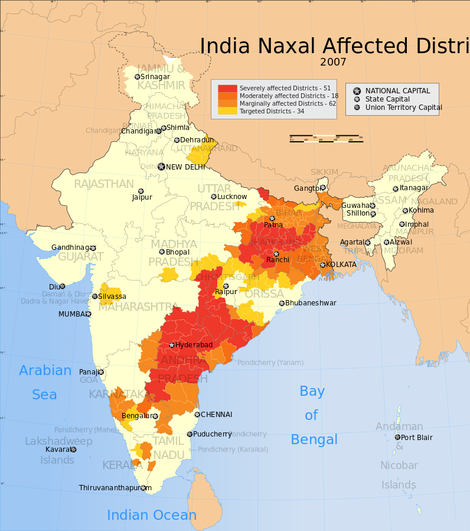
    Other than the conflict in Kashmir, Maoist violence is India’s longest-standing internal national security threat. The Maoists are predominantly active in the eastern parts of India, with strongholds in forest areas and places with substantial tribal populations who have seen little improvement in their living conditions since Indian independence 70 years ago. Over time, more than 160 districts have been affected by Maoist violence, and decades of military force by the Indian government have been largely unsuccessful. Conflict intensity escalated in the mid-2000s, but since then Maoist-related deaths have seen an unprecedented decline to reach the lowest level of violence in The number of districts severely affected by Maoist violence fell from 51 districts in 2007 to 12 districts in 2013, and the total number of Maoist-affected districts declined from 165 to 120 districts in the same time period.

    Areas with Naxalite activity in 2007. Image credit: Wikimedia.


    Areas with Naxalite activity in 2013. Image credit: Wikimedia.


    The Naxalite-Maoist insurgency in India

    The conflict started with a peasant revolt in the village of Naxalbari in the state of West Bengal in 1967, which led to a rising insurgency called the Naxalite movement. Naxalites use guerilla tactics in their fight against the government, and aim to overthrow the Indian state to create a liberated zone in central India. They wanted to improve the living conditions of the local population through redistribution of land and the revenue from mining activities.

    The intensity of the Maoist conflict rose dramatically in the mid-2000s, when previously competing Naxalite groups came together to create the Communist Party of India (Maoist). Large parts of east India were heavily affected by that violence, and the Indian government lost de facto territorial control over a number of districts. Civilians were often caught in between the Maoists and government security forces, since both sides had to rely on the local population for information and assistance in remote forest areas.

    In 2006, the Indian Prime Minister Manmohan Singh referred to the Maoist insurgency as the “single biggest internal security challenge ever faced by our country.” Maoist-related deaths rose rapidly, peaking with a large attack in 2009-10 that killed 76 policemen in Dantewada district. In recent years, fatalities have fallen to some of the lowest levels in decades, and the Maoists have been pushed out of many traditional areas of their control. According to government statistics, Naxalite deaths have risen by 65% and surrenders by 185% between 2014 and 2016. Maoist activities are now almost exclusively limited to 35 districts, although the insurgents retain a presence in 68 districts across 10 states.

    What factors explain this sharp rise and fall in violence?

    The Indian central and state governments responded to the increased violence after the creation of the Communist Party of India (Maoist) with a variety of measures. Personnel and spending on security forces were increased, and central and state paramilitary forces started operations against the Maoists that came to be referred to as Operation Green Hunt by the media. At the same time, expenditures on development programs were increased as well, with the hope of improving the living conditions of the local population and thereby the traditionally strained relationship between civilians and the government in Maoist-affected areas.

    One of the first development programs in Maoist-affected areas in this time period was MGNREGS (Mahatma Gandhi National Rural Employment Guarantee Scheme), rolled out across India between 2006 and 2008. MGNREGS guarantees 100 days of employment per year for each household at the minimum wage in public-works programs. The work projects focus on drought-proofing, irrigation and infrastructure improvements in Indian villages.

    The only eligibility criterion is that a household lives in a rural area and is prepared to work full-time in manual jobs at the minimum wage. This allows households to self-select into the program when they need it and covers about 70 percent of the population, making it the world’s largest public-works program. The annual expenditures under the scheme amount to about one percent of India’s GDP. In addition to its size, the program is unprecedented in India and worldwide because the program provides a legal guarantee for employment, which is enforceable in courts. It was rolled out in three separate phases, and the first implementation phase of the program was targeted to 200 of India’s poorest districts, many of which are in Maoist-affected areas, such as Dantewada and Bastar districts in Chattisgarh, and Anantapur district in Andhra Pradesh.

    What role did MGNREGS play in tackling Maoist violence?

    Image credit: Adam Jones/Wikimedia.

    Comparing districts that received MGNREGS to very similar districts that did not receive the program until later, in our research we find police attacks on Maoists intensified after MGNREGS came into effect. This is consistent with an improvement in the relationship of civilians with the government as a result of the program. Since civilians may have important information about the location of the Maoists, who rely on them for shelter and information on police movements, MGNREGS seems to have helped win civilians over and encourage them to share that information with the security forces. The Indian Home Ministry also attributes the increased success of catching Maoists to better intelligence gathering.

    In concurrence with the increase in police-initiated attacks, we find that the Maoists started retaliating against civilians. The rebels traditionally concentrated on attacking government forces rather than civilians, which makes this shift an important change in behavior. In leaflets and other documents, Maoists claim that the killed civilians were police informants and threaten to attack other civilians cooperating with the police.

    MGNREGS therefore appears to have contributed to the effectiveness of government forces by winning the “hearts and minds” of the local population. While this improved effectiveness lead to a short-run increase in violence as government forces become more pro-active, violence declined over time as security forces won more battles against the insurgents.

    This matches the recent substantial decline in Maoist-related violence. Up until around 2010 when MGNREGS was a relatively new program, Maoist fatalities increased substantially, and many top leaders surrendered. Since then, India has seen an impressive decline in Maoist-related deaths and areas under Maoist control. Anti-poverty programs like MGNREGS can therefore support more traditional counter-insurgency strategies if they manage to improve the local population’s relationship with the government. Since civilians take on large risks when choosing to share information on insurgents with government forces, this strategy will only be successful if civilians believe that the benefits from the program are large and long-lasting enough to be worth potential retaliation by the insurgents.

    MGNREGS was set up to be a more permanent program than other initiatives because of the legal guarantee and was enacted partly due to pressure from NGOs and social activists, who also played an important role in monitoring implementation quality. This buy-in from government and NGOs makes the program very different from similar programs elsewhere, and is likely to have contributed to its success.  Lower actual benefits than promised by the government remain a challenge in many developing countries, including India, however. If governments do not ensure a high level of implementation quality, transitory programs and broken promises will sow distrust with citizens, making future investments less effective.

    Authors’ Note: This text is based on our article “Guns and Butter? Fighting Violence with the Promise of Development”, published in the Journal of Development Economics in January 2017.

    Gaurav Khanna is an assistant professor of Economics at the School of Global Policy and Strategy, University of California – San Diego. His research focusses on conflict and the markets for education and labor in developing countries. 

    Laura Zimmermann is an assistant professor in Economics and International Affairs at the University of Georgia. Her research focuses on the labor-market and political economy impacts of government programs in developing countries, and she has worked widely on effects of MGNREGS in India.  

  • The Anthropocene and Global Environmental Governance

    The Anthropocene denotes a new geological epoch characterized by the unprecedented impact of human activities on the Earth’s ecosystems. While the natural sciences have advanced our understanding of the drivers and processes of global change, the social sciences address the fundamental challenge of governance and politics in the Anthropocene.

    On Monday 29 August 2016, the official Working Group on the Anthropocene reported to the International Geological Congress underway in Cape Town and recommended to adopt the Anthropocene as the official term for our contemporary geological epoch. The suggested term Anthropocene denotes the all-encompassing influence of the human species on our planetary systems. The 35 scientists currently serving on the working group have voted 30 to three in favor of formally designating the Anthropocene, with two abstentions. While this suggestion will be reviewed by further commissions – first by the Subcommission on Quaternary Stratigraphy, then International Commission on Stratigraphy and finally the Executive Committee of the International Union of Geological Sciences – it is a strong signal that something extraordinary is going on.

    When did the Anthropocene begin?

    mongolian-development-bank

    Image by Asian Development Bank/Flickr.

    Geologists of the future might well remember 16 July 1945 as the beginning of the Anthropocene. This day witnessed the explosion of the first nuclear bomb at the White Sands Proving Ground, New Mexico, under the code name ‘Trinity’. The debris from more than 500 above-ground nuclear tests conducted between 1945 and 1963, when the Test Ban Treaty took effect, has created a detectable layer of radioactive elements in sediments all around the planet. However, other potential start dates have been suggested. In their original proposal of the Anthropocene, Crutzen and Stoermer argue for the beginning of the Industrial Revolution in 1750 as an appropriate start date, while others have has suggested an earlier start date around 3000 BC, when agriculture and livestock cultivation intensified and the first centralized political authorities emerged. An intermediary position also exists, for example Lewis and Maslin, who propose the noticeable decline in atmospheric CO2 concentrations between 1570 and 1620 as a good marker for the start of the Anthropocene.

    Beyond its symbolic and metaphoric value, these discussions illustrate the radically different nature of current global environmental change. System Earth is rapidly changing, potentially shifting to life-threatening modes of operation. Climate change, biodiversity loss, disruption of the nitrogen and phosphorous cycles, plastic soup in the oceans and men-made chemicals found in (human) embryos, these are the symptoms and most visible signs of the great acceleration and earth system transformation underway. In other words: space ship earth is on a collision course, and the autopilot has been set by its own crew. The Anthropocene hypothesis has become a rallying call for action in the light of scientific evidence that warns against dangerous global environmental change and the ensuing environmental insecurities produced by systemic tipping-points, feedback-loops and emergent properties of complex systems. The Anthropocene hypothesis also highlights specific challenges for governance: how to deal with the apparent urgency of global change while taking into account scientific and normative uncertainties; how to distribute responsibility in a fair and equitable manner; and finally how to embrace complexity as an ontological category of the Anthropocene.

    Global governance scholars and the Anthropocene

    But how will the field of global governance studies react to the Anthropocene hypothesis? Will scholarship continue down a business-as-usual path, with a disciplinary focus and a narrowly conceived ethical and normative agenda? Or will the field of global governance studies engage in a more radical epistemological and ontological debate? I argue that global environmental governance research is fruitfully challenged by the Anthropocene hypothesis, potentially leading to a reorientation of theory and practice. I see three reasons for this.

    First, the Anthropocene hypothesis calls into question long-held assumptions about the human-nature dualism and has therefore been associated with the end-of-nature discourse. At the heart of most environmental activism over the last five decades lies the conviction that nature exists independent of human agency and that (supposedly) ‘natural’ states of our planet, such as a stable climate system, should be protected. However, if the nature-human dualism is questioned by the advent of the Anthropocene, what does this mean for popular conceptions of conservation, wilderness and sustainability and for environmental politics more generally? In the words of Paul Wapner: “Nature, then, is not a separate realm, as many environmentalists assume but, because it is always interpreted through cultural lenses, is part and parcel of human affairs.” The challenge for global environmental governance scholarship is to scrutinize human agency as part of a broader ‘earth-system’ perspective.

    Second, the notion of the Anthropocene, and the related idea of a unified human force that exerts unprecedented influence on the earth system, challenges governance scholarship in two ways. First, it urges scholars to take a more system-theoretical perspective in order to identify the system-wide drivers of anthropogenic global change and the systemic reactions produced by various social sub-systems. And second, global governance scholarship is urgently needed as a corrective to accounts of the Anthropocene that neglect the fact that human agency is not uniform across the planet, and that contributions to the problem and the distribution of risks and opportunities arising from global environmental change are highly uneven.

    Third, the Anthropocene hypothesis propels governance research to the center of attention, as the question becomes: how can we steer towards socio-natural co-evolution and a resulting safe operating space fur human development? As a result, this position opens up opportunities for genuine interdisciplinarity, in which the social sciences in general and global governance scholarship more specifically are not just a ‘junior partner’ of the sciences, but contribute fundamental insights into drivers, solutions and complex feedbacks between agency, unintended consequences and reactions to these.

    From scholarship to policies

    However, while there are good arguments for adopting the Anthropocene as an official geological epoch and for fruitful engagement from a social sciences and governance perspective, what is less evident is how we will address the challenges associated with the Anthropocene in broader political terms. Governance strategies for the Anthropocene fall roughly into two broad camps: first, a global elitist managerial approach, underpinned by a sense of human ingenuity and epitomized by ever-more vocal calls for geoengineering, an approach that puts some people’s interests before others. Advocates of this vision of the future Anthropocene see potentials rather than threats. On this account, a new glorious epoch is dawning, one of men-made unprecedented progress towards a post-human evolution and eternal future.

    The second vision is more humble and less secure about its eventual success: a bottom-up approach based on cultural and political diversity, equity, fairness and a broader eco-centric ethos. A political vision that favors deliberation over efficiency and fairness over effectiveness and is enshrined already (in broad terms) in the internationally agreed Sustainable Development Goals as part of the global development agenda until 2030.

    While the Anthropocene as a term might be almost universally accepted, the contestations about its political and normative contours have only just begun. The election of the climate change-denier Donald Trump as the 45th President of the United States of America does not leave much room for optimism in this respect. In particular his announcement to withdraw from the international climate change negotiations (in one or another form) calls into question some of the modest signs of progress that we could witness recently. This should motivate everyone interested in shaping the Anthropocene to get involved in the necessary and difficult debates about how we want to shape our common future.

    Philipp Pattberg is professor of transnational environmental governance and policy at VU Amsterdam, The Netherlands. He specializes in the study of global environmental politics, with a focus on climate change governance, biodiversity, forest and fisheries governance, transnational relations, public-private partnerships, network theory and institutional analysis. Pattberg’s current research scrutinizes institutional complexity, functional overlaps and fragmentation across environmental domains (http://fragmentation.eu/). At VU Amsterdam, Pattberg heads the Department of Environmental Policy Analysis, a team of more than 25 researchers that was evaluated in a 2014 international review as ‘world leading’ and as being ‘one of the highest profile academic research groups involved with sustainability governance from around the world’.

  • In piaffe: multilateral nuclear disarmament dialogue in the year of the horse

    In piaffe: multilateral nuclear disarmament dialogue in the year of the horse

    Shortly after the lunar New Year, UN Secretary-General Ban Ki-moon challenged the Conference on Disarmament to run with the ‘spirit of the blue horse’ towards substantive engagement on multilateral nuclear disarmament in 2014. While the regime may not achieve this speed, there are initiatives underway this year that may well help nuclear disarmament dialogues pick up speed ahead of the 2015 NPT review conference.

    Read Article →

    Beaux Gestes and Castles in the Sand: The Militarisation of the Sahara

    Whatever the benefits for Mali, the French-led eviction of jihadist groups from northern Mali may have made the wider Sahara a less safe place, and has done little to lower the capacity of such groups to threaten European interests.. In 2014, France is implementing a major redeployment of its forces in Africa into the Sahel and Sahara. Meanwhile, the US has been quietly extending its military reach from Djibouti to Mauritania. However, as elsewhere, the western military approach to countering Islamist insurgency in the Sahel rests on very unsteady foundations and the potential to provoke wider alienation and radicalisation is strong.

    Read Article →

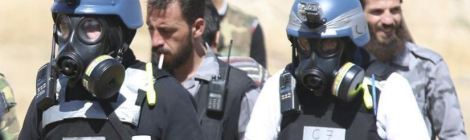
    Chemical Weapons Use in Syria: a Test of the Norm

    Recent events in the Syrian civil war have proved an unparalleled test of the norm against the use of chemical weapons. At its core this was a test of the willingness of countries to uphold the norm, in this case in the face of a flagrant violation, and a response that in the end stumbled upon a satisfactory conclusion—reaffirming the special category of chemical arms—but which in the process said a great deal about current attitudes to the use of military force as a means of humanitarian intervention.

    Read Article →

  • US Special Operations Forces: An Interview with Mark Moyar

    Acclaimed military historian Dr. Mark Moyar discusses the history and current use of US special operations forces, America’s most elite soldiers.

    This interview was originally conducted for the Remote Control project.

    Q. Your book Oppose Any Foe was recently published. The book examines the history of U.S. special operations forces. What are the origins of America’s special operations forces and why were they created?

    Most of America’s special operations forces trace their roots to World War II. The Army Rangers were created in 1942 as a means of collaborating with the British Commandos, at a time when the Commandos were a central element of Winston Churchill’s raiding strategy. The Rangers were disbanded after World War II and again after the Korean War, but they were reincarnated in the 1970s and have been a part of the US Army ever since. President Franklin Roosevelt created the US Marine Corps Raiders in 1942 because his son, who was enamored with commando-type forces, convinced him to form Marine special operations forces despite objections from the head of the Marine Corps. Marine special operations forces were dissolved in 1944, not to be reconstituted until 2006, and eventually the new organization took on the Raider name.

    The US Navy fielded Frogmen in WWII as a means of clearing channels for amphibious landings, and retained some of the units after the war. In 1961, some of the Frogmen were converted into members of Sea, Air, Land Teams (SEALs). The Office of Strategic Services, the primary US intelligence agency during World War II, created special operations forces such as the Jedburghs and Operational Groups, which in the 1950s became the model for the US Army Special Forces.

    Q. In the early years, how strategically effective were US special operations forces?

    During both World War II and the Korean War, the United States formed special operations forces for the purpose of raids on enemy “soft spots.” In both cases, the Americans soon discovered that opportunities for such missions were few and far between. Given the need for regular infantry in these wars of grinding attrition, the special operations units were routinely employed in conventional infantry missions. For the purposes of stealth and speed, these units carried less heavy equipment than other line units, which proved to be a major handicap in conventional combat.

    The heavy losses sustained in battle led to the dissolution of most special operations units prior to the ends of both World War II and the Korean War. The special units of the Office of Strategic Services were somewhat more effective in their role of supporting resistance movements behind enemy lines, but for the most part they had little impact on the tide of battle, and they too were disbanded after the war. The US Navy Frogmen were a notable exception to the general trend, as their performance in clearing obstacles prior to amphibious landings was deemed so successful that they were retained after war’s end.

    Q. In your book, you describe how the future of special operations forces at the end of the 1950s looked bleak, but that the Vietnam War seemed to mark a turning point. What roles were US special operations forces used for during the Vietnam campaign and how did this experience effect their organisational structure and future use?

    President John F. Kennedy was more interested in special operations forces than any other US President, before or since. He enlarged the Army Special Forces and created new units in order to counter insurgencies in Vietnam and other third-world countries. The largest Special Forces program, the Civilian Irregular Defense Groups (CIDGs), performed both guerrilla and counterguerrilla missions, as they shifted from defending their villages to attacking infiltrating North Vietnamese Army units.

    In addition, the Special Forces attempted to insert intelligence collectors and saboteurs into North Vietnam, but most of the people they sent were compromised or killed. Special operations units also carried out reconnaissance missions in Laos and Cambodia, advised paramilitary forces, and conducted raids. After the war, conventional forces and special operations forces blamed each other for failures in Vietnam, based largely on inaccurate perceptions of the war, and those accusations would remain a source of friction for decades to come. Because conventional officers had greater clout, the special operations forces suffered the greater loss in resources after the war.

    Q. In the post-Vietnam era, there was a rise in hostage taking by Islamic terrorists which created the need for soldiers who could take out terrorists quickly and effectively without harm coming to hostages. How did this demand change U.S. special operations forces?

    In the post-Vietnam era, as in other post-conflict eras, special operations forces sought new missions to keep them occupied and demonstrate their worth. An upsurge in hostage taking by Islamic terrorists in the early 1970s led to the reconstitution of the US Army Rangers in 1974 and the formation of Delta Force in 1977 and SEAL Team Six in 1980. The Delta Force mission to rescue US hostages in Tehran in April 1980 failed spectacularly, but it led to a series of reforms with far-reaching implications for special operations forces.

    In the aftermath of the abortive raid, the US government formed the Joint Special Operations Command to alleviate the command problems that arose during the operation, as well as the 160th Special Operations Aviation Battalion to prevent recurrence of aviation mishaps. The Iran calamity also gave impetus to the reforms of 1986, which included creation of Special Operations Command, appointment of an Assistant Secretary of Defense for Special Operations, and authorization of a separate funding line for special operations forces. The inception of Delta Force and SEAL Team Six gave special operations forces permanent raiding capabilities, which would be used for different ends in the early twenty-first century.

    Q. Moving into the twenty-first century, the post-9/11 era has seen a significant increase in the use and numbers of US special operations forces. During the Afghanistan campaign, U.S. special operations forces played an important role in the overthrow of the Taliban. How much did the Afghanistan experience and its perceived successes influence the strategic thinking behind the U.S. military campaigns which would follow?    

    The Northern Alliance militias defeated the much larger Taliban armed forces in 2001 thanks to US Special Forces advisers, whose chief task was the guiding of precision munitions onto Taliban targets. It was the first time that American SOF played a role that could be characterized as strategically decisive, and thus encouraged the view that SOF were a strategic instrument. That view in turn fueled decisions to enlarge SOF and employ them in isolation from conventional forces. Efforts to rely primarily or solely on SOF, however, did not yield the anticipated successes.

    The use of SOF to support local actors failed twice in Afghanistan shortly after the fall of the Taliban- at Tora Bora at the end of 2001 and in Operation Anaconda in early 2002. SOF would also come up short when the Obama administration charged them with the task of building an army of Syrian rebels. Both George W. Bush and Barack Obama attempted to achieve strategic success through SOF surgical strike operations against the leaders of insurgent and terrorist organizations, but the elimination of large numbers of leaders failed to destroy these organizations.

    Q. What were some of the reasons for these failures you mention?

    SOF did not achieve their objectives at Tora Bora because their Afghan partners were not as competent or reliable as the Northern Alliance had been. The Afghan militiamen at Tora Bora failed to pursue Bin Laden aggressively, ensuring that he would escape. In Operation Anaconda, the Afghan partners panicked at the first setback and abandoned the battlefield. In the case of Syria, American special operators were unable to recruit substantial numbers of rebels because the White House put unrealistic constraints on recruitment and because most of the moderate rebels had been wiped out by the time the United States was prepared to back them.

    The many tactical achievements of surgical strike operations did not produce strategic success because the enemy was able to replace lost personnel with competent individuals, in part as the result of popular dissatisfaction with the surgical strikes.

    Q. As you previously mentioned, US special operations forces have expanded much since 9/11. Do you think the US is over-reliant on special operations forces and, if so, why has the US become so dependent on them?

    After 9/11, the Bush administration built up special operations forces for “manhunting” operations against extremist leaders, in the hope that extremist organizations could be destroyed through decapitation. Those organizations proved capable of withstanding the precision strikes, which led the United States to the use of special operations forces against lower levels of insurgent groups. Whereas the Bush administration sought to employ the special operators in concert with conventional forces in Iraq and Afghanistan, the Obama administration began seeking ways to use them as low-cost substitutes for large conventional forces.

    The Obama administration also decided to send more special operations forces into failed and failing states such as Somalia, Yemen, and Iraq to support friendly governments or insurgents. There is now general recognition in the US SOF community that the operators have more work than they can handle with their existing manpower base, and hence some of their work must be shifted to other military forces or civilian agencies.

    Since 9/11, the demands for SOF have exceeded the supply, which explains why the stresses on the forces have become unsustainable. Rectifying the problem will require reducing the deployment pace of special operations forces, which means that some tasks will either have to be performed by other forces, or not performed at all. US conventional forces have the capacity to perform some of those tasks, so the best solution is to shift duties to the conventional forces.

    Q. How much transparency and accountability has there been regarding the use of special operations forces in the US? 

    From their inception, US special operations forces have functioned under conditions of greater secrecy than other military forces. The primary reason has been the need to conceal their activities from the enemy–the more that was known about them, the better the enemy could combat them. Secrecy, though, has also shielded special operations forces from the scrutiny of the American public, media, and Congress

    Lack of transparency has at times made it more difficult to hold special operations forces accountable. Congress, which for decades held special operations forces in high esteem, turned against Special Operations Command in the latter part of the Obama administration as a result of the command’s unwillingness to share information with Congress. Ultimately, Congress used its authority over funding to compel greater transparency.

    Q. One of the many interesting things about your book is that it highlights how important certain presidents were in deciding the types of roles that special operations forces were used for. Thus far, has the use of special operations forces under Trump differed from their use under Obama? 

    It is too early to tell how the use of special operations forces will differ under the Trump administration. The Defense Department is still fleshing out strategy, and has yet to fill key positions. Given the heavy involvement of special operations forces in a multitude of pressing tasks, a certain amount of continuity is inevitable.

    About the interviewee

    Mark Moyar is director of the Project on Military and Diplomatic History at CSIS. The author of six books and dozens of articles, he has worked in and out of government on national security affairs, international development, foreign aid, and capacity building. Dr. Moyar’s newest book is Oppose Any Foe: The Rise of America’s Special Operations Forces (Basic Books, 2017), the first comprehensive history of U.S. special operations forces. He is currently writing the sequel to his book Triumph Forsaken: The Vietnam War, 1954-1965. Moyar has served as a professor at the US Marine Corps University and a senior fellow at the Joint Special Operations University and has advised the senior leadership of several US military commands. He holds a BA summa cum laude from Harvard and a PhD from Cambridge.
  • ‘Blue Helmet Havens’ – Separation and Segregation in Peacekeeping

    In peacekeeping missions, peacekeepers live seperated and segregated from the local communities which they are mandated to protect. This wide gulf between the everyday lives of peacekeepers and locals has consequences for peace interventions’ effectiveness and outcomes.

    A truism of international peace interventions is that peacekeepers – and international peacebuilding personnel writ large – live in the same place as local residents, but do not live in the same world. The peacekeeping world is air-conditioned, clean, and well-guarded; it consists of decent housing, generous pay, access to vehicles, domestic help, and, usually, a robust (if limited) social life that revolves around expensive restaurants, hotels, bars, and clubs. In other words, peacekeepers live, work, and socialize in what I call ‘blue helmet havens’, distinct from the spaces most locals inhabit. They are spatially, economically, culturally, and in many cases linguistically separated or segregated from the majority of the local population of the ‘peace-kept’ city. As a Goma-based source put it, peacekeepers are ‘living in Congo’ but not ‘living Congo’.

    The security and safety of peacekeeping personnel and property is the dominant justification for the ‘bubble’ in which peacekeepers live. Notably, this separation is enacted not only by barriers, bunkers, and security guards, but also by various peacekeeping rules, regulations, and norms that mitigate – if not actively discourage – informal or social contact between peacekeepers and locals.

    Thus, peacekeepers’ off-duty movements are circumscribed by the security perimeter zone that is established by the mission’s internal security service, which delineates where peacekeepers can live, shop, and socialize and, in capitals and other urban areas, excludes vast swathes of the host cities. Even within the zone, peacekeepers are advised never to move on foot. They are required to live in gated and guarded compounds; are given black-lists of proscribed social venues; and, besides being prohibited from buying sex while in the mission area, are also strongly discouraged from having any intimate or sexual relationships with locals. These formal rules and regulations are reinforced by informal norms and mission cultures, which are heavily oriented towards keeping the peacekeeping bubble intact and exclusive. Cumulatively, the extremely risk-averse approach that missions take towards peacekeepers’ interactions in and with their surroundings means that the contact between peacekeepers and locals is both sparse and essentially transactional. There exists a wide gulf between the everyday lives of peacekeepers and locals, and very few means to bridge it.

    Peacekeeping-as-enterprise in the peacekeeping ‘bubble’

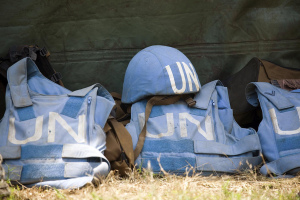
    UN helmets

    Image by UN Photo via Flickr.

    But why is this important? Research shows that the gap in proximity and understanding between the international and the local matters for peace interventions’ effectiveness and outcomes. For example, in her book Peaceland, Séverine Autesserre argues that the shared everyday habits, practices, and narratives of international interveners simultaneously enable international peacebuilders to work in challenging environments, and degrade the effectiveness of peacebuilding interventions. In other words, she asserts a direct link between the peacebuilding bubble and peacebuilding outcomes.

    My own research also deals with the distorting effects of the peacekeeping bubble. Using the analytical lens of the peacekeeping economy – which encompasses the services, establishments, and activities needed to allow peacekeeping and peacekeepers to function, and which to a large extent frames and contains the peacekeeping bubble – I have argued that in areas with robust peacekeeping economies, peacekeeping appears to locals more as an enterprise than protection or development. Where peacekeeping economies flourish, they are as visible and tangible to local citizens as anything else done by peacekeeping missions – maybe even more so. It is thus unsurprising that, when people look around them and see money flowing and where it flows, they conclude that, heroic narratives aside, peacekeeping is not that different after all: it is all about the money. This in turn fosters cynicism and resentment among local citizens towards the peacekeeping mission, from which it is plausible to draw a connection to subpar results. On the peacekeepers’ side, meanwhile, what is striking is the extent to which their arms-length relation to the local reveals a sense of vulnerability – a perception of themselves as potential victims of exploitation, crime, or violence, thus upending the normal framing of peacekeepers as powerful, dominant protectors. On both sides, the strict separation between the peacekeepers and the local encourages, if not fosters, a lack of understanding and trust.

    Taken together, then, this paints a picture of peacekeeping and peacekeepers as purposefully disconnected from the local everyday, apart from the microeconomic transactions contained by, and constitutive of, the peacekeeping economy. When it comes to how peacekeeping really works, the peacekeeping bubble is as relevant and significant as the peacekeeping mandate. Problems associated with this bubble’s existence include local suspicion of missions’ activities and motives; and a dearth of knowledge of, and empathy towards, locals from peacekeepers – each of which could be reasonably conjectured to inhibit the effectiveness and transformative potential of peacekeeping.

    Security, estrangement, and stasis in peacekeeping transformation

    An obvious implication of this contention is that international peace interventions will work better and more empathetically if the prevailing separation and segregation is lessened, such that the international and local ‘everydays’ are more enmeshed and aligned. But how would this work? Is it even possible?

    There are modest proposals that missions could immediately initiate in order to promote an environment of mutual trust and more substantive formal and informal contact between peacekeepers and locals, which could eventually make peacekeeping environments safer for both peacekeepers and locals alike. For example, to mitigate the negative effects of the peacekeeping economy on the local economy and labour market, missions could:

    • implement better scrutiny and oversight of subcontractors employed by missions (with respect to labour standards and protections) and of landlords the mission rents from (to ensure that ill-gotten gains are not rewarded);
    • give guidance to peacekeepers on how to relate to their employees, prioritizing the rights of the employee equal to those of the peacekeeper;
    • make greater efforts to procure goods and supplies locally, working with and monitoring local suppliers to forestall potential negative side-effects on local markets;
    • and use of training methods and materials that do not rely on scare stories and fear to coerce obedience, thus encouraging more receptive attitudes towards locals by peacekeepers.

    The most significant obstacle to peacekeeping transformation lies in the area of security. The tendency in peacekeeping missions to take greater and greater precautions to obviate danger and avoid risk is not without reason: persuading member states to contribute troops and money to peacekeeping is significantly more challenging if the UN is perceived to be reckless, and recruiting civilian peacekeepers also becomes more difficult. But ‘security’ in peacekeeping increasingly seems to mean the elimination of risk – whether stemming from armed groups, organized or ordinary criminals, fraudsters and scam artists, or everyday activities like driving, eating out, having sex, or walking down the street. According to such a standard, peacekeeping missions will never be fully secure. Nor, for that matter, will anything else. Peacekeeping institutions (headquarters and missions) and peacekeepers surely recognize this reality, yet there is little evident willingness at any level to push back against ever-escalating security demands and regulations.

    In this heavily securitised and risk-averse environment, where protection of peacekeepers is (and always has been) mandated equal to protection of civilians, separation is the path of least resistance. This implies that fundamental transformation in how peacekeeping missions situate themselves to local people and communities is unlikely. Missions’ estrangement and alienation from the local community and the local ‘everyday’ is a feature, not a bug; and thus that whatever losses may ensue – of legitimacy or effectiveness – is a price that the peacekeeping apparatus is willing to pay.

    Kathleen Jennings is a senior researcher at the Fafo Research Foundation in Oslo. Her work focuses on UN peacekeeping, gender, and political economy in sub-Saharan Africa. Jennings recently defended her PhD thesis on gendered peacekeeping economies in Liberia and the DR Congo. She has previously worked at the Norwegian Peacebuilding Resource Centre and the Council on Foreign Relations.

  • Belize: challenges and contradictions in gang policy

    Belize: challenges and contradictions in gang policy

    Like its neighbours in the northern triangle (El Salvador, Honduras and Guatemala), Belize has a high murder rate that is closely connected to the strong presence of gangs. But the character of gang activity in Belize is quite different from its Central American neighbours. Belize has pioneered some innovative solutions to the problem it is facing. But it will need to overcome the challenges of internal resistance and an acute lack of resources in order to address the political, economic and social issues that marginalise Belize’s large youth population.

    Read Article →

    Colombia and Mexico: The Wrong Lessons from the War on Drugs

    As activists around the world participate in a Global Day of Action against criminalisation of drug use, evidence from the multi-billion dollar War on Drugs in Colombia suggests that militarized suppression of production and supply has displaced millions of people as well as the problem, not least to Mexico. The wrong lessons are being exported to Central America and beyond, but a groundswell of expert and popular opinion internationally is calling for alternative approaches to regulating the use and trade in drugs.

    Read Article →

    The New Insecurity in a Globalized World

    Writing exclusively for SustainableSsecurity.org, Elizabeth Wilke argues that a new conceptualization of insecurity and instability is needed in a world with greater and freer movement of goods, services and people – both legal and illicit – greater demands on weakening governments and the internationalization of local conflicts. The new insecurity is fundamentally derived from the responses of people and groups to greater uncertainty in an increasingly volatile world. Governments, and increasingly other actors need to recognize this in order to promote sustained stability in the long-term, locally and internationally.

    Read Article →

    Conflict, Poverty and Marginalisation: The case of Curvaradó and Jiguamiandó (Urabá, Colombia)

    In Colombia there are many regions where poverty and the absence, or weak presence, of the state has facilitated the emergence of violence by armed groups. Among these are the Afro-Colombian communities of the Curvaradó and Jiguamiandó in the Urabá region. Whilst the Colombian government fails to fully develop social development programs (including education, health and infrastructure) and sustainable economic development policies to assist marginalised communities, the people of Curvaradó and Jiguamiandó will remain poor, uneducated, vulnerable, and at risk of lose their territories once again.

    Read Article →

    Mano Dura: Gang Suppression in El Salvador

    Widespread social exclusion makes El Salvador fertile ground for gang proliferation and, over time, gang members have resorted to greater levels of violence and drug activity. Yet, government approaches have proved spectacularly ineffective: the homicide rate escalated, and gangs have adapted to the climate of repression by toughening their entry requirements, adopting a more conventional look, and using heavier weaponry. Sonja Wolf argues for approaches which focus on prevention and rehabilitation and looks at why such approaches have been continually sidelined.

    Read Article →

  • Islamic Feminisms – A Challenge to Patriarchy and Traditional Religious Authority

  • Mali: Another Long War? (Part 2)

    Mali - Another Long War(This piece was originally published by Channel 4 News on Tuesday 22 January 2013, and is the second of two parts by Ben Zala and Anna Alissa Hitzemann)

    There is a stark warning today the western intervention strategy in Mali is “flawed”. Part two of a special paper also says France and others are likely to be involved in the conflict “for some time”

    Not unlike the United States in both Afghanistan and Iraq, the French government has begun the intervention with talk of short timelines and minimal troops on the ground before quickly changing its tune, write Anna Alissa Hitzemann and Ben Zala for the Oxford Research Group.

    The initial deployment of 800 French troops may end up numbering more than 2,500 and President François Hollande has stated France’s mission is to ensure that “when we end our intervention, Mali is safe, has legitimate  authorities, an electoral process and there are no more terrorists threatening its territory”. This does not seem to tally with the earlier statement by the French Foreign Minister that the current level of French involvement in the country would last for “a matter of weeks”.

    The latest reports are that the Islamist fighters have been preparing for this intervention by carving a network of caves and tunnels into cliff faces to house bases and supplies of fuel and ammunition. This, combined with the concerns about the roles of both the Malian security forces and a number of potential contributors to the ECOWA force in relation to the abuse of civilian populations (and the likely blowback effect of such actions), mean that stability in Mali will be almost impossible achieve with military force alone.

    It is also far from clear whether the African states that are set to join the intervention will be able commit forces for a drawn-out insurgency. After Chad, the second biggest promised contributor of troops is Nigeria, which has pledged a contingent of 900.

    Yet the Nigerian government itself is fighting its own Islamist-inspired insurgency with the Boko Haram group in the country’s north. Despite a relative decline in Boko Haram attacks in recent months and even the potential for Saudi-backed peace talks between the rebels and the government, fighting could easily intensify once more, in which case Nigeria is unlikely to remain involved in Mali in any significant way.

    Without taking serious action to address the sense of marginalisation and disenfranchisement of those who were willing to join one of the rebel groups… there are few reasons to think the current intervention will produce a durable peace in Mali.

    Not only have France and its allies underestimated the difficulty of fighting the northern rebels among civilian populations in which bombing from above is of little use, there appears to be no sign of a plan as to how the factors underlying the uprising (including the original Tuareg rebellion) can be addressed.

    Without taking serious action to address the sense of marginalisation and disenfranchisement of those who were willing to join one of the rebel groups — Tuareg, Islamist or otherwise — there are few reasons to think the current intervention will produce a durable peace in Mali.

    Ongoing conflict

    While military force is considered the only option, feelings of resentment amongst elements of the population of northern Mali are likely to increase. Not only this, it will provide ample encouragement to other anti-Western paramilitary groups across North and Sub-Saharan Africa, the Middle East, and Central, South and Southeast Asia.

    The central lesson of the western interventions and small-scale military operations (including Pakistan, Yemen, Somalia and elsewhere) of the post 9-11 era, has been that reacting to the symptoms of insecurity once they are deeply manifested, and few options other than military force remain, is a fundamentally flawed strategy for global security. This means that France and others are likely to now be involved in an ongoing conflict in Mali for some time.

    Not only do the (so far conspicuously absent) plans for a post-conflict stabilisation process need to be settled between France and its coalition partners now, a serious commitment to assisting the Malian government to going much further in addressing the marginalisation of the north will be crucial.

    Until the focus shifts from military control to working towards solving the root causes of the conflict, no viable sustainable security will be found for Mali.

    Anna Alissa Hitzemann is a  Peaceworker with Quaker Peace and Social Witness. She currently works with Oxford Research Group as a Project Officer for the Sustainable Security Programme, with a focus on our ‘Marginalisation of the Majority World’ project.

    Ben Zala is a Lecturer in International Politics at the University of Leicester.

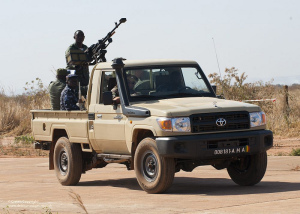
    Image source: Malian Airfield Protection Vehicle and Crew at Bamako, Mali. Source: UK Ministry of Defence.


  • Mali: Another Long War? (Part 2)