Blog

  • Climate Wars

    Climate Wars

    Gwynne Dyer | CBC Radio One | January 2009

    Issue:Climate change

    Tag:podcast

    Global warming is moving much more quickly than scientists thought it would. Even if the biggest current and prospective emitters – the United States, China and India – were to slam on the brakes today, the earth would continue to heat up for decades.

    At best, we may be able to slow things down and deal with the consequences, without social and political breakdown. In this three-part series for Canadian radio, Gwynne Dyer examines several radical short- and medium-term measures now being considered – all of them controversial.

    Listen to the podcast here:

    • Part 1
    • Part 2
    • Part 3

  • Sustainable Security

    Like its neighbours in the northern triangle (El Salvador, Honduras and Guatemala), Belize has a high murder rate that is closely connected to the strong presence of gangs – but the character of gang activity in Belize is quite different from its Central American neighbours. Belize has pioneered some innovative solutions to the problem it is facing. But it will need to overcome the challenges of internal resistance and an acute lack of resources in order to address the political, economic and social issues that marginalise Belize’s large youth population.

    Belize’s gangs have been a persistent feature of the insecurity facing this tiny and sparsely populated country, which sits straddling Central America and the Caribbean, one foot in each but not completely in either. Murders have risen above 40 per 100,000 inhabitants in recent years, around a third of which are gang affiliated according to official police statistics. The murder rate in Belize City, home to an overwhelming concentration of gangs, peaked at 180.2 in 2012.

    While the red and blue associated with the Crips and Bloods of LA (from which Belize’s gangs originated in the 80s and 90s) are seen elsewhere, the gangs remain a primarily urban phenomenon. In particular, they are symptomatic of the deep-rooted structural challenges that are most starkly present in the Southside of Belize’s former capital. There, large, marginalised and impoverished families live in a situation of social isolation and neglect, blanketed by the stigmatisation that results from the social prejudices and intolerances surrounding ‘Southside issues’. What’s more, youth living in the area must contend with a continuous exposure to often extreme and graphic violence, be it in the family or community environment.

    Gang activity in Belize is not as well organised as in its Spanish-speaking neighbours, where links with organised crime are much stronger and crimes of extortion and large-scale drug trafficking activities more prevalent. In Belize the gangs are also more highly fractured. They are typified by smaller groups whose ‘turf’ often extends no more than a couple of streets and whose members may number little over a dozen. Personal conflicts, often-stretching back generations, fuel aggression and revenge attacks.

    Beyond a driver of insecurity, the gangs are a symptom of the more deep-rooted structural challenges facing Belize, where social injustices, challenging socio-political conditions, and an acute lack of government resources have combined with an increasingly youthful population (69.8% under the age of 35) to create a large pool of marginalised youth lacking in opportunities.

    It is only by targeting these root causes, rather than simply repressing the gangs themselves, that the issue can be successfully addressed, and elements of Belize’s approach to youth and insecurity deserve to be widely lauded in this respect.

    A community building approach

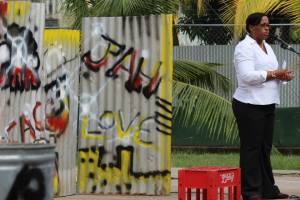
    An event at a high school in Belize City organised by RESTORE Belize

    An event at a high school in Belize City organised by RESTORE Belize. Source: RESTORE Belize

    Located within the Office of the Prime Minister, RESTORE Belize was launched in 2010 at the behest of the Government to lead a community-building approach to the restoration of law and order. It seeks to target the social roots of crime and violence and promotes a strategic and comprehensive cross-sector effort involving state institutions, the private sector and civil society, as well as implementing its own programs in the area. It coordinates closely with other institutions, including the police, and forms part of an effort to improve relations between the Belizean State (of which the police are the foremost visible representation) and the population.

    Through its Community Action for Public Safety program, for example, it engages in human development activities focused on the Southside of Belize City, developing infrastructure including recreational and social facilities for youth as well as rehabilitation facilities for youth offenders. Similarly, its Metamorphosis Program engages young people deemed to be at-risk of school dropout and gang affiliation in an intensive program that involves counselling, weekend retreats, drug and alcohol therapy, as well as parenting classes and home visits by social workers.

    Belize has also sought to increase its capacity to engage in conflict resolution. In cooperation with the United States, mediators have been trained to work in schools, youth facilities and the prison service as well as directly in local communities. The Conscious Youth Development Program, for example, has a team of mediators that are deployed as first responders following incidents of gang violence in order to calm the immediate situation and prevent escalation.

    These community building approaches seek to cultivate change in the individual while providing tangible improvements to their personal and community environments. Furthermore, by engaging with them as individuals as opposed to ‘gang members’ they aim to foster their trust and confidence in the Belizean state and society. This is especially important because large segments of the Belizean population hold negative views of youth, who in turn resent being characterised as a source of the ills affecting society.

    Resistance

    One of the major challenges to these approaches – and a standard by which their progress can be judged – therefore, is overcoming resistance from those that favour more draconian policies. As an example, some schools in Belize, many of which are independently run, are strict, conservative, elitist and intolerant of ‘Southside problems’. Youth from such areas are often earmarked from the outset if their family members have been affiliated with gangs, while strictly enforced uniform codes work to further ostracise those from poorer backgrounds who often struggle to meet the financial costs. Given that free schooling is available only until the age of 12, many drop out prior to embarking on secondary education, despite it being a legal requirement up until 14 years of age. While interventions such as RESTORE Belize’s scholarship program assist in this regard, the stigmatisation and institutional marginalisation of such youth requires deep-rooted changes in attitudes and institutional cultures. Liaison efforts are being pursued to this end, but the autonomous nature of many of these schools means progress is often slow and hard fought. Meanwhile, with a national dropout rate of 8.4%, rising as high as 19.5% in certain schools in Southside Belize City, the scale of the challenge that remains is clear.

    Stigma and repression

    The issue of stigmatisation of youth is furthermore evident in the contradictory nature of other policies. For example, the Crime Control Act criminalises gang membership, meaning that by taking part in programs aimed at gang members and their leaders, these individuals are in essence incriminating themselves. Similarly, just as RESTORE Belize was launched, the Ministry of National Security rolled out Operation Jaguar, a hard-line approach involving military and police checkpoints and stop-and-search operations that had been developed and planned in isolation.

    Perhaps the starkest example, however, is that of the Gang Suppression Unit (GSU) – an elite police unit whose raison d’etre is the repression of gang activity. Widely perceived to operate beyond the law, the GSU is suspected of involvement in a number of high profile political and human rights abuses. While ‘harder’ approaches may be required to compliment ‘softer’ interventions, the lack of transparency and accountability surrounding the unit and allegations of their involvement in such offenses undermines efforts to build trust and confidence and to transform the perceptions of marginalised youth towards the state. The placement of RESTORE Belize within the Office of the Prime Minister was specifically designed to aid in efforts to mould a strategic cross-agency approach, but it is clear that a silo mentality continues to impede progress on this front.

    An uphill task

    Beyond attitudinal resistance, the country is also facing an acute shortage of resources which affects all security and justice institutions, greatly undermining state capacity in these sectors, as well as more widely. As an example, the National Forensic Science Service struggles to perform even the most basic functions: a lack of DNA analysis capabilities, training and equipment means they are often unable to verify matches between suspects and evidence found at crime scenes. Even where sufficient evidence can be brought to take a case to trial, the lack of public prosecutors further undermines the state’s judicial functions. With only eleven public prosecutors it is no surprise that impunity is high and prosecutions for major crimes often face severe delays, especially when it is considered that there were 145 murders in 2012 alone. Add this to a police force lacking in vehicles and even basic equipment and the scale of the task becomes even more daunting.

    Belize thus faces an uphill task in overcoming the challenges provided by gang violence. The approach followed by instances such as RESTORE Belize and the Conscious Youth Development Program are highly commendable for their recognition that youth, including those involved in gang activity, should not be treated as a plague on society that can simply be exterminated through repressive actions. But for their full value to be achieved there is a need for wider changes. Youth must be provided with greater opportunities to thrive, while state capacities need bolstering in order to improve its ability to provide security and justice to its citizens. Such changes, however, require significant resources that Belize is lacking. Furthermore, support to engage in these inherently longer-term efforts will be tested by the attitudes of those that continue to see Belize’s youth in a negative light, or that become impatient, and understandably so, with the immediate threats to their security.

    Matthew Budd is a security analyst at RESDAL (Latin American Security and Defence Network), where he specialises in public security issues, and is also studying for a Masters in Conflict, Security and Development at King’s College London. He is currently working on the second edition of RESDAL’s Public Security Index, which is the only existing resource to provide information on the public security context and institutional responses to them in the Central American region. The upcoming edition will incorporate the case of Belize alongside those of Spanish-speaking Central America.

    Featured image: A Belize City high school. Source: Flickr | Carsten ten brink

  • Sustainable Security

    Donald Trump’s victory in the US presidential elections has raised serious questions about whether the Joint Comprehensive Plan of Action, a landmark nuclear accord signed in July 2015, has a future.

    The election of Donald Trump as US President potentially means very uncertain times for the future of US-Iranian relations. For example, during his presidential campaign trail, Trump declared—“My number one priority is to dismantle the disastrous deal with Iran”. If the Trump administration acts on his campaign rhetoric, there is a distinct possibility that it will be overwhelmed by multiple contradictions and problems.

    The Iran Nuclear Deal

    The deal, formally known as the Joint Comprehensive Plan of Action (JCPOA), stripped Iran of the ability to develop a nuclear weapon system into the next decade in exchange for the gradual lifting of crippling sanctions.  The deal holds Iran to agree to cap enrichment levels of uranium at 3.67 percent for the next fifteen years, which will cut the Iranian enrichment capacity by two-thirds. Under the agreement, Iran ended up shipping the lion’s share of its 20 percent enriched uranium abroad. The deal also provided for more intrusive monitoring by the International Atomic Energy Agency (IAEA), the UN’s nuclear watchdog, and for the heavy water reactor at Arak to not produce weapons grade plutonium. On November 20th 2016, as a gesture of good will, Iran shipped its remaining heavy water abroad as well. Thus, the breakout capability of Iran to potentially make a nuclear bomb was noticeably extended from two-months to a year, giving further assurance to the international community that the Islamic Republic will not be closer to making a bomb any time soon.

    In exchange, Iran would be relieved from the nuclear-related sanctions, and if it violates the agreement, the sanctions will be re-imposed through a snap-back mechanism built in to the agreement.  Since the signing of the agreement, all the reports by the monitoring agencies, including the IAEA, indicate that Iran has abided by its end of the bargain. Seen in this context, it is easy to understand the expression of concern and apprehension surrounding Trump’s ascent to power among many members of Iran’s ruling elite.

    What President Trump could mean for US-Iran relations

    Two very different futures in US-Iran relations may lie ahead.
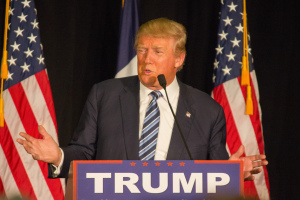
    • Withdrawal
    trump

    Image by Matt Johnson/Flickr.

    First, the Trump administration may decide to withdraw from the nuclear deal, impose further sanctions on, and try to isolate Iran.  Trump may seek better ties with Russia and tolerate the Assad regime in Syria in an attempt to defeat and dismantle the Islamic State in Iraq and Syria (ISIS). Trump has declared the defeat of ISIS to be his number one priority in the Middle East and seeks to partner with the anti-ISIS coalition. Yet Iran has been actively involved in the war against ISIS in Syria in alliance with Russia.. It thus remains to be seen how the Trump administration could resolve this contradiction if it tries to defeat ISIS whilst simultaneously escalating tensions with Iran.

    Since the Republicans currently control both houses of Congress and many of their members were opposed to the deal when it was signed, bolstered by their electoral victory, they may introduce new bills demanding the renegotiation of the agreement, or prevent sanctions relief, and propose the imposition of new US unilateral sanctions on Iran. In November 2017, the US Senate passed a bill with a vote of 99 to 0 to extend the Iran sanctions for another decade, and the Obama administration—which previously had threatened to veto such a bill— has stated that the president is not likely to veto it. In addition, the Trump foreign policy team has stated that they plan to impose new sets of sanctions on Iran for its missile defense system. These new political developments are certain to evoke a reaction from Tehran in kind. If such an escalation of the anti-Iran campaign in Washington continues, despite the Islamic Republic fulfilling its obligations under the nuclear deal, absent new diplomatic breakthroughs between Tehran and Washington, in all likelihood, the deal as we know it now would be dead and Washington’s tensions with Tehran would grow. If this outcome materializes, it would undermine the Rouhani administration and the moderates and would strengthen the position of hardliners in Iran’s factional politics.

    President-elect Trump, who identified the nuclear pact as “disastrous” and “the worst deal ever” and labeled the Islamic Republic as “the foremost terrorist state” is less likely to oppose further congressional sanctions on Iran. Hence, while the newly appointed Secretary of Defense, General James Matthis, has stated that he would not be inclined to scrap the nuclear deal, he has also stated publically that it is not ISIS but Iran that is the single most critical security threat to the United States. dditionally, the powerful pro-Israeli lobby group, the American Israel Public Affairs Committee, the neo-conservatives and influential foreign policy voices on the right—like the National Security Adviser, General Michael Flynn, John Bolton, James Woolsey, and Newt Gingrich— have been pushing hard for further containment of and confrontation with Iran.

    From the Netanyahu administration’s standpoint, discarding the nuclear deal would have a dual impact. On the one hand, such an initiative would prevent the Islamic Republic from reaping the benefit of sanctions relief, thus allowing it to expand its economic and political influence in the region- an undesirable outcome for the Israeli leadership.–On the other hand, unilaterally tearing up the deal would remove all the inhibitions on the part of Iranian leaders to develop a nuclear arsenal, another undesirable outcome for Israel. To prevent this from happening, US/Israeli cyberattacks on Iran’s nuclear program, using sophisticated worms such as Stuxnet, or even military strikes, could be ordered in future.

    The Israeli leadership would therefore most likely favor an option in which the current nuclear agreement would stand, but with a new interpretation which would prevent Iran from receiving the full economic and political benefit of sanctions relief. In other words, the nuclear agreement should not lead to normalization of relations with Tehran and the policy of containment of the Islamic Republic with the ultimate goal of regime change should persist. It is also important to note that, since Trump’s cabinet is so far is dominated by hard-liners, they are likely to be in favor of accelerating pressure on Tehran and ensuring that it does not reap the benefit of sanctions relief and expand its regional power.

    • Limited Rapprochement

    The second option offers a different outlook, one that serves both countries’ national interests, whereby the Trump administration could consider seeking a limited rapprochement with Iran, holding out the prospect of future diplomatic—if not commercial—ties between the two countries.  This option uses the nuclear deal as a way to ease tensions between Tehran and Washington on other longstanding problems. This approach will also render Iran more responsive to cooperation on specific issues of regional conflict such as the fight against ISIS and the Taliban while at the same time making progress toward possible venues for cooperation, such as shaping the future of Syria, Iraq, Yemen, and Afghanistan.

    The advantages of this approach will outweigh its costs, as Tehran and Washington are likely to find several overlaps in pursuit of their foreign policy interests. Moreover, this approach would allow Washington to build up a new momentum to accommodate Tehran’s emerging economic interests while also using its leverage over the country’s regional role to mitigate the negative impact of instability in the Middle East. The challenge is to recognize that building trust and sustainable cooperation between Tehran and Washington is the key first step to reversing the troubled and tumultuous status quo of tensions and enmity between the two nations.

    While Trump may not seek a new sanctions regime against Iran so long as the latter abides by its obligations, the influence of neo-conservatives in his administration probably means that the removal of first-order sanctions, imposed by the US, is unlikely to happen any time soon.

    Tehran’s Reaction

    Iran’s President Hassan Rouhani has noted that the election of Donald Trump as the US president will have no effect on Iran’s foreign policy conduct. Rouhani has also stated that the nuclear deal is independent of the new US administrations’ decision and cannot be rescinded by the government’s change in Washington. “Iran’s sagacity,” Rouhani has asserted, “was in having the nuclear deal endorsed as a resolution by the UN Security Council and not just an agreement with a single country or administration, so it cannot be changed by decisions of one government,”.  A recent US Senate vote to extend the sanctions on Iran for ten more years is likely to undermine Rouhani’s position, who sees that his chances of getting re-elected in May 2017 are quickly vanishing under the threat of further sanctions by the United States.  Sensing that, given these sanctions, he cannot ultimately make good on his promise of an economic renaissance after the nuclear deal, Rouhani was emphatic: “If the Iran Sanction Act is carried out, it will be a clear and obvious violation of the [nuclear] agreement and will be met with a very harsh response from us.”  The Obama administration has said that the new round of sanctions did not violate the nuclear agreement.

    The United States, one observer notes, cannot unilaterally unravel or amend the agreement without violating international law. Any attempt to directly undermine the deal or even renegotiate it will isolate the United States- not Iran.  Beyond Iran, pulling out of the deal would also risk intensifying tensions in the region, most notably in Syria, Yemen, Iraq, and Afghanistan, countries in which Iran has played a significant role. This choice is equally fraught with difficulties in part because several key nations have signed off on this agreement. Thus, unilaterally negating or sabotaging the nuclear agreement is likely to have serious international implications beyond the region. The United States is likely to emerge out of step with the UN resolution and all the signatories to this agreement.

    Furthermore, such a policy is imbued with so many deep uncertainties that it may backfire.  The real question is, then, what exactly can the United States do if Iran continues to abide by its obligations under the nuclear deal and continue its rapprochement with the European Union by simply deepening their commercial and trade ties with those countries?  Cognizant of the unpredictability surrounding the future of US policy toward Iran, the Islamic Republic has kept the option of walking away from the deal open, while not abandoning its “Eastern Strategy” that is predicated on maintaining its extensive bilateral ties with Beijing and Moscow. The Islamic Republic is likely to continue to maintain these ties as an insurance policy against the possible continuation or escalation of Washington’s policy of containment and confrontation. Along the same lines, should Trump adopt hostile policies toward Iran, this will likely empower the Islamic Republic’s hardliners, creating more political pressure on the moderates there, thus complicating their chances of winning the 2017 presidential elections. Should this scenario materialize, Tehran is likely to assume a more aggressive regional policy posture in response to Washington’s belligerence.

     The Future: which option will Trump take?

    In an interview with CNN in September of 2015, Trump the businessman revealed his concern about America being shot out of the Iranian market, while the Chinese, the Russians and the Europeans have expanded their trade and commercial ties with Iran since the signing of the agreement in July of 2015. Trump should know that the US cannot hope to emerge as a major economic partner for Iran by imposing a new set of sanctions or ratcheting up political pressure on Tehran. It may turn out that Trump, like his Republican predecessors, would conclude that US bilateral trade, military and political ties with its Arab Gulf Cooperation Council (GCC) allies are much more significant than Iran.

    It is also likely that Trump, the candidate of the Republican Party, who had to appeal to that conservative constituency, would turn out to be different from the Trump the president. He may find it necessary to move ideologically to the center and heed the centrist logic of power politics. His past record as a businessman, who regularly funded the political campaigns of both Democrat and Republican politicians, and repeatedly changed his position on political issues during the presidential campaign, may predispose him toward adopting an erratic as well as a pragmatic course with no clear political vision. This may lead to a foreign policy style that would be more transactional rather than ideological.

    However, having won the presidency as a Republican candidate, he could be captured by the very party establishment that he derided during his campaign.  So far his campaign promise of “draining the swamp” has turned out, in practice, to involve filling his administration with hawks from the Republican Party, Washington insiders and the Wall Street establishment. Therefore, it is possible that he will decide to outsource his Iran policy to a cabinet dominated by conservative hardliners. In that case, the anti-Iran agenda discussed above would become ascendant. In the past, many Republican politicians have stated that the complete political capitulation of Tehran is the only acceptable outcome that they would support. However, if he chooses to play an active role in formulating his administration’s Iran policy, then Trump the pragmatist may have the sway.

    While the early signs are not promising, it is simply too early to know which option the Trump administration will choose and what the details of his future policies might be, but there is no reason to believe that things will improve beyond present conditions, and more than likely, there is reason to believe that Trump may be a far better ally to Israeli Prime Minister Netanyahu and the Saudi Royal family than was the Obama administration, a realistic possibility for which Tehran has surely a contingency. How these emerging realities will play out in coming months and years remains to be seen. The choice for the Trump administration—engaging or isolating Iran—couldn’t be more stark and profound.

    Mahmood Monshipouri, PhD, teaches Middle Eastern Politics at San Francisco State University and the University of California at Berkeley.  He is the editor, most recently, of Inside the Islamic Republic: Social Change in the Post-Khomeini Iran.

    Manochehr Dorraj, PhD, is professor of International Affairs and Middle Eastern Studies at Texas Christian University (TCU).  He is the author of From Zarathustra to Khomeini: Populism and Dissent in Iran and coeditor of Iran Today: An Encyclopedia of Life in the Islamic Republic.

  • Sustainable Security

    The crisis in Darfur has been called the first genocide of the 21st century. There have been many explanations offered for this human tragedy. But what is often overlooked is the economic value of violence for the Sudanese State and the way that politics and resources have been connected to it across time.

    Intractable conflicts and mono-causal explanations seldom make good bedfellows. Never is this more the case than in Darfur, Sudan, which over the last 15 years has witnessed death and suffering, 2.5 million people displaced and a descent into chaos, aided and abetted by complex, shifting internal dynamics and a large number of uninformed and all too often, unprincipled outside interests.

    Described as the first genocide of the 21st century, early explanations for the conflict were attributed to longstanding tensions between “Arabs” and “ Africans” – a sort of stereotypical farmer versus nomad binary, which created violence  backed by militias from both sides. Tribal divisions were also used to create ideas about innate differences, with Sudanese Government ministers such as Dr. Mustafa Osman Ismail, claiming that death and displacement could be attributed to “tribal fightings” between “rebels who belong to specific tribes, fighting a militia who also belongs to specific tribes” (sic.) Others claimed that the war was environmental in nature, with tensions emanating from the loss of nomad livelihoods due to desertification and the creep of the Sahara to the south. Finally, writers such as Mahmood Mamdani argued that the conflict should be attributed to colonial center-periphery relations and the propensity of administrators to write “race into history” through administrative tribalism and the creation of hierarchies of power and privilege.

    The Economic Value of Violence

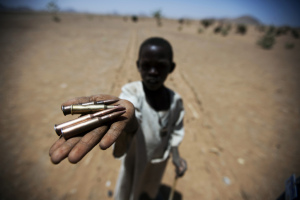
    A child holds up bullets collected from the ground in Rounyn, a village about 15 kilometres from Shangel Tubaya, North Darfur. Most of the village’s population has fled to camps for internally displaced because of heavy fighting between Government of Sudan and rebel forces.

    Image by UN Photo via Flickr. 

    In the search for an answer to the crisis in Darfur, all of these explanations emphasized clear distinctions between the characteristics and behavior of parties to the conflict, while paying less attention the larger context around the violence. That larger context relates to the economic value of violence for the Sudanese State and the way that politics and resources have been connected to it across time. Throughout Sudan’s history, whether in colonial times during the Anglo-Egyptian Condominium (when cotton production and gum arabic became key commodities for export to the West), or in the post-colonial period where land, oil and minerals have played central roles, it is the need for people, labor and resources embedded in contested tracts of land, that has galvanized the political elite and driven their behavior forward. Darfur has played a key role in this regard, supplying labor to Aba Island, White Nile for cotton picking and votes of allegiance to Sudan’s Umma Party. The region has also supplied bright, but otherwise disenfranchised young men for Hassan al-Turabi’s brand of Political Islam, premised on the reward of inclusion and moral salvation. Over time, a landscape of difference has emerged which is connected to resources and that is driven by political or religious ideology, backed up by violence. Those who are outside the centers of power and who attempt to claim their rights or their own share of resources have typically been viewed as a threat and as a result, have been subjected to disproportionate levels of violence in order to protect elite interests.

    In Darfur, the extreme violence that accompanied the start of the crisis in 2003, emanated from fears that the region would join forces with the South and take up arms against the ruling political class.  However, rather than seeking a political solution to this problem, the people were subjected to horrific violence which included murder, rape, the burning of villages, land dispossession and enclosure of the remaining population in camps. As part of the effort to quash dissent, the Government used tried and tested methods of deploying proxy militia groups to take on the dirty work of clearance and control. Viewed from the ground, these developments created an over-simplified understanding of the crisis on the part of media, policymakers and NGOs that what was going on in Darfur was in fact a race war – an age-old conflict between “Africans” who cultivated crops in villages and “Arabs” who lived as nomads on the edge of the Sahara. Yet this convenient subterfuge of a “racial war” belied the actual reality on the ground, where racialized identities were often blurred and where most groups farmed and moved animals as part of everyday life. It also camouflaged a central strategy of the political elites which has been called “aktul al ‘Abid bil ‘abid (kill the slave by the slave) and which has been deployed over and over again in Sudan to clear territories – particularly those that might have resources that the government can use.

    Across the life of the conflict, activists have advocated for all kinds of strategies to thwart the violence: publicity campaigns, diplomacy, ICC warrants and divestment, to name but a few. However, most of these approaches have failed to appreciate the way that violence is linked to economics in Sudan and how this creates pressure for the State to maintain a large patronage network and a military and intelligence infrastructure in order to survive. Resources mean power, but to stay in power requires feeding the insatiable demands of supporters who are part of this network; it also requires rewarding those who are part of informal networks such as proxy militias, with either money or loot.

    Yet as the financial needs have grown, the government’s coffers have gone into terminal decline.  In particular, since the Comprehensive Peace Agreement in 2005 and the decision of the South to secede from Sudan in 2011, the resource base of the Sudanese government has shrunk dramatically. Over this time, unsustainable foreign debt, international sanctions, the loss of 75% of oil reserves to the South, the loss of half of Sudan’s fiscal reserves and the loss of two thirds of Sudan’s international payments capacity has crippled the state’s ability to function. These problems have made borrowing impossible and left its strategy to stay in power increasingly untenable. Faced with extreme financial pressure and limited capacity to deliver, resource extraction has become the central plank of Sudanese policy, precisely because it is one of the few ways to realize cash quickly in an economy whose other sectors have atrophied due to war. Darfur has proved to be an irresistible draw in this regard because it has substantial gold deposits, land use policies that are conducive to dispossession and a population that has been traumatized due to war.

    Gold Mining on the Cheap

    In what some might consider an unlucky coincidence, the downsizing of government coffers coincided with the discovery of gold in Northern Darfur at the end of 2011, in an area called Jebel Amer. Once virgin territory, and home to the Beni Hussein people, it didn’t take long for the ground to be pockmarked with thousands of tiny “artisanal” mine-shafts as the efforts to produce gold ramped up. Mining permits, which should have been sanctioned by the Sultan of the Beni Hussein, have instead been passed into the hands of government sponsored militias to administer, while locals have simply been refused access to their land.  In 2013, 70,000 people were displaced in a short period of time in the area, and according to Amnesty International hundreds more were killed (Insert links). Strangely reminiscent of colonial tactics of terra nullius, land that was once full of people living their daily lives has been miraculously declared “empty”. This “empty” land is now open to gold speculators and mining agents to go about their business instead.

    Casualties from land clearance are one part of the story, but another part concerns the dangers of the mining process itself. In Jebel Amer where the search for gold has turned the area into something reminiscent of the Wild West, the drive for profit has superseded the need to pay attention to geology. “Artisinal” mining, while sounding quaint, is anything but: it is dirty, dangerous, with few safeguards to protect those involved. In one area of Jebel Amer where 95 miners were trapped, it was revealed that a main shaft of 60 meters had been dug with 22 smaller shafts radiating off the bottom. Not surprisingly, its stability had been compromised leading to implosion from within. Similar problems occurred at Kori and Abdulshakur mines with 37 lives lost, although in remote areas devastated by conflict, information is in scarce supply.

    Sustainability in these areas is hardly a concern of mining supporters. If deaths from unsafe mining have impacted the local population, then another major issue is environmental toxicity and the use of mercury, cyanide and other poisonous chemicals to extract the gold. These chemicals have played havoc with the local environment and led to the loss of farmland for years to come.  Those whose ancestral lands have been affected have noted cases of soil erosion, sinkholes and land and groundwater contamination. Noting the bad taste of the local water, locals have also pointed to the growth of diseases and skin complaints that were never seen before.

    Those who stand to gain from these practices, have no interest in stopping them. In particular the notorious Janjaweed Leader Musa Hilal, has taken personal charge of the gold mining operations as a way to augment his earnings and his political clout vis a vis the government in Khartoum. Embroiled in a heated argument with the government in 2013 over his compensation for militia activities, he has now installed himself in the gold mining areas of Jebel ‘Amer and is reputed to be personally earning $54 million per year for his efforts. This astounding sum of money would appear to be corroborated by a recent UN Security Council Panel of Experts’ Report in April 2016, which claims that $123million from gold extraction is now fueling the violence in Darfur, despite all efforts to institute sanctions, travel bans and asset friezes.

    If expecting Musa Hilal to mend his ways is a stretch too far, then at least we might expect the international community to take action. Yet here too, the Security Council is involved in a heavy bout of geopolitics with Russia and China lining up on one side, and the UN Panel of Experts on the other. Demands that Russia be allowed to “edit” the UN Experts’ report and remove critical paragraphs are hardly that surprising given their deep involvement in gold mining activities both in Darfur and elsewhere in Sudan, where they have been awarded large blocks for exploration. Close friends such as the Government of Qatar have also provided support with the supply of equipment for gold mining, and according to locals, with the purchase of ore from local producers so that it can be disguised later once it has left Sudan.

    Creating sustainable security in this context requires a multi-faceted approach, which on one hand stands up to the perpetrators of violence and on the other, rejects ill-gotten gains filtered through external markets so that they come up clean.  It also requires pressure for land reform, so that speculators cannot so easily make a play to grab land that is not theirs. It is not enough to sign peace agreements in lavish hotels in Doha, Qatar, when the situation calls for a much deeper analysis of why Darfur has been entrapped in a spiral of violence for so long. As history has shown, the international community’s penchant for quick fix peace agreements is worthless without the fundamentals to govern peace over the long term. Perhaps it is now time to look below the surface of the violence in Darfur and make the effort to understand the social and political landscape from which these problems first took root.

    Dr. Anne Bartlett is Associate Professor in the School for Humanities and Languages at UNSW (Australia). She has worked on Darfur and Sudan for over 15 years, during which time she has undertaken research on armed groups and also the effect of humanitarian intervention on the cities and population of the region. Bartlett has published extensively on the Darfur crisis and has given numerous talks on the subject worldwide. She is currently President of the Sudan Studies Association.

  • From Within and Without: Sustainable Security in the Middle East and North Africa

    From Within and Without: Sustainable Security in the Middle East and North Africa

    Chris Abbott and Sophie Marsden | Oxford Research Group | March 2009

    Issues:Climate change, Competition over resources, Global militarisation, Marginalisation

    Tag:report

    The Middle East and North Africa is a region of great diversity. It encompasses Arab and many other ethnic populations, theocratic and secular states, democracies and authoritarian regimes. A region of immense wealth and crippling poverty; it is blessed (some might say cursed) with vast resources, not least oil, but has not always proved able to manage them for the benefit of ordinary people. While it is often viewed from the outside as a source of terrorism and conflict, the regional perception is one of foreign occupation and other external interference.
    This report is based on the outcomes of a consultation that Oxford Research Group (ORG) and the Institute for Peace Studies (IPS) held in Egypt in October 2008. Bringing together security experts, academics, government officials and civil society leaders from across the Middle East and North Africa, the two-day meeting explored the implications of the sustainable security framework for the region.

    Download as PDF

  • Sustainable Security

  • Sustainable Security

    The Costs of Security Sector Reform: Questions of Affordability and Purpose

    In considering security sector reform, questions of affordability have often been subordinated to questions of effectiveness and expediency. A recent series of reviews of security expenditures by the World Bank and other actors in Liberia, Mali, Niger and Somalia has highlighted several emerging issues around the (re)construction of security institutions in fragile and conflict-affected states.

    Read Article →

    Human Security and Marginalisation: A case of Pastoralists in the Mandera triangle

    This paper seeks to bring out the relevance of human security in pastoral areas of Mandera triangle and the relationships and contradictions that exist between it and national security. The “Mandera Triangle” encompasses a tri-border region of Ethiopia, Somalia, and Kenya that exemplifies, in a microcosm, both a complex and a chronic humanitarian crisis that transcends national boundaries.

    Read Article →

  • Climate change

    Climate change

    Climate change is high on both domestic and international political agendas as countries face up to the huge environmental challenges the world now faces. Whilst this attention is welcome, less energy is being focused on the inevitable impact climate change will have on security issues. The well-documented physical effects of climate change will have knock-on socio-economic impacts, such as loss of infrastructure, resource scarcity and the mass displacement of peoples. These in turn could produce serious security consequences that will present new challenges to governments trying to maintain stability.

    World Development Report 2010: Development and Climate Change

    Issue:Climate change

    The World Development 2010 climate Change Report published in September outlines how a 2 degree centigrade rise in global temperature would likely cost Africa 4% of GDP whilst the impact on India would be %5 of GDP. Read more »
    A world in need: The case for sustainable security

    Paul Rogers | Open Democracy | September 2009

    Issues:Climate change, Competition over resources, Global militarisation, Marginalisation

    A hurricane of crises across the world – financial meltdown, economic recession, social inequality, military power, food insecurity, climate change – presents governments, citizens and thinkers with a defining challenge: to rethink what “security” means in order to steer the world to a sustainable course.  The gap between perilous reality and this urgent aspiration remains formidable.

    SustainableSecurity.org Associate Editor Paul Rogers, highlights the need for fresh, effective and transforming approaches to security. 

    This article was originally posted on openDemocracy

    Read more »

    Oxford Research Group Director Dr. John Sloboda launches SustainablySecurity.org

    Issues:Climate change, Competition over resources, Global militarisation, Marginalisation

    The tragic events of September 11th 2001 propelled the western security agenda down a reactive, narrow, and self-defeating path defined by the ‘War on Terror.’ The eighth anniversary of 9/11 is marked by a groundswell of voices from policymakers and analysts acknowledging that the greatest threats to global security require moving beyond a limited focus on terrorism. This groundswell is partly a response to the multiple failings of the current approach, but has been given new energy by the global financial crisis and the increased prominence of issues such as climate change.

    However, the specific policy recommendations arising from these new assessments still tend to be framed predominantly in terms of national self interest and preservation of the status-quo, rather than in terms of a more fundamental transformation of global relations in the direction of collective human security. Yet such a transformation is viewed by many as the only sure means of securing lasting security for the people of any individual nation. An emerging approach, which focuses on addressing the root causes of conflict, systemically, and collaboratively, to achieve long term change, has come to be known as; ‘sustainable security’. SustainableSecurity.org is a new platform for developing this approach, coming to understand its implications for policy, and promoting these implications to those who can act on them.

    Read more »

    Public opinion favours greater government action to tackle climate change

    Issue:Climate change

    A new poll conducted by WorldPublicOpinion.org, a University of Maryland initiative, has found that, in 15 out of 19 nations, a majority of those surveyed felt that their national government should give a higher priority to tackling climate change. Read more »

    National Security And The Threat of Climate Change

    Issue:Climate change

    CNA Corporation, a US Department for Defense funded think-tank, published this report in April 2007. The report was produced by CNA’s writers and researchers under the guidence of a Military Advisory Board (MAB) consisting of retired admirals and generals.  Read more »
    A new security paradigm: the military climate link

    Paul Rogers | openDemocracy | August 2009

    Issue:Climate change

    Tags:US Military

    SustainableSecurity.org Associate Editor Professor Paul Rogers’s latest article for openDemocracy highlights the fact that many leading military analysts in the United States are increasingly alert to the link between security and climate change. If, at the same time, these analysts could expand their view of whose security is at risk, the policy consequences could be immense.  Read more »

  • A New Road for Preventative Action

    A New Road for Preventative Action

    East West Institute | East West Institute | June 2011

    Issues:Climate change, Competition over resources, Global militarisation, Marginalisation

     A gap continues to exist between the international community’s rhetoric about conflict prevention and its responsibility to protect people from severe human rights violations. The record of human misery caused by violent conflict is testimony to the chronic lack of political will to respond collectively to new and emerging threats to peace. The ineffectiveness of many global efforts at preventive diplomacy is evidence that traditional diplomatic approaches, including the use of force, simply may not work.

    Article source: East West Institute

    Image source: AfghanistanMatters

    Comments

    Post new comment


  • Climate change

    Climate change

    Climate change is high on both domestic and international political agendas as countries face up to the huge environmental challenges the world now faces. Whilst this attention is welcome, less energy is being focused on the inevitable impact climate change will have on security issues. The well-documented physical effects of climate change will have knock-on socio-economic impacts, such as loss of infrastructure, resource scarcity and the mass displacement of peoples. These in turn could produce serious security consequences that will present new challenges to governments trying to maintain stability.

    Policies for Renewable Energy in Developing Countries

    Issue:Climate change

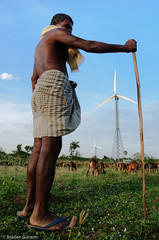
    In late 2010 the Heinrich Boell Foundation and the World Resources Institute convened a group of international experts to discuss policies and incentives for increasing the use of renewable energy in the developing world. WRI’s Davida Wood and Lutz Weischer discuss the key lessons learned at the workshop and their work on helping developing countries make the transition to renewable energy.


    Image source: Braden Gunem.

    Read more »

    Environment, Energy, Economy: a threefold challenge to sustainable security

    Phillip Bruner | Exclusively written for sustainablesecurity.org | December 2010

    Issues:Climate change, Competition over resources

    As we turn a watchful eye toward COP16 it’s tempting to get sidetracked by other major events going on around the world. There are, after all, a host of developments which stand to have an impact on security in the immediate future and arguably, many of us have become perhaps too accustomed to placing economic and energy woes ahead of the environment on our individual lists of urgent priorities. We are, after all, in the middle of the worst global financial meltdown since the Great Depression and as banks stop lending, governments cut spending, unemployment rises, public outcry gathers momentum and as we’ve already seen in Ireland and Britain recently, even in highly-developed economies social unrest can translate into violence toward governments. We’re also running out of cheap and easy access to oil, which is “the lifeblood of modern civilization,” according to the 2005 Hirsch Report – not to mention modern militaries – and as developing countries continue to rapidly industrialise, Western governments grow weary of asymmetries in energy demand per capita as well as huge demographic shifts in population size and age, which tend to favour the East. That said, it helps to be reminded that economic and energy woes go hand-in-hand when it comes to addressing climate change. Therefore, in order for activists and government representatives alike to find common ground on which to build lasting and constructive partnerships for addressing major security threats, an interdisciplinary approach is needed that can help to elucidate how environmental, energy and economic dilemmas are deeply intertwined.

    Read more »

    Israeli know-how helping to combat hunger in Africa

    Danielle Nierenberg & Janeen Madan | WorldWatch Institute | December 2010

    Issues:Climate change, Competition over resources

    Israel has been a leader in developing innovative drip-irrigation systems that reduce the amount of water needed for farming.
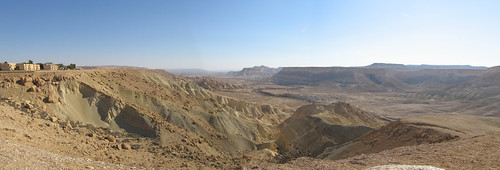
    Most of Israel is arid, with the Negev Desert spanning 60 percent of the country. Desertification, water scarcity and soil erosion makes it increasingly difficult to farm, endangering the livelihoods of those who depend on agriculture for both food and income.

    But Israel is not alone in facing these challenges – dry lands cover 47% of the Earth’s surface. With 60% of the world’s food insecure people living in dry areas, desertification and poverty go hand in hand, particularly in sub-Saharan Africa.

    But the simplest techniques can go a long way in strengthening food security, increasing incomes and improving the livelihoods of millions of people.

    Article Source: WorldWatch Institute

    Image Source: GregTheBusker

    Read more »

    Climate Change and Security

    Paul Rogers | Oxford Research Group | December 2010

    Issue:Climate change

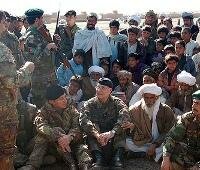
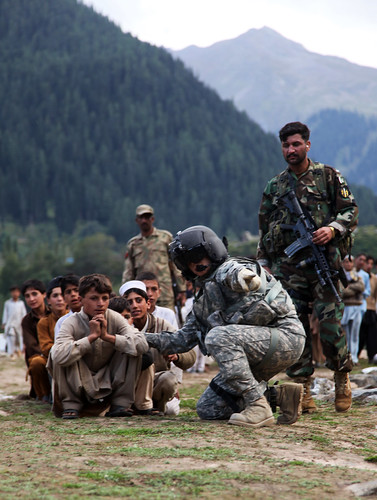
    The consequences of climate change for human security are profound, but much of the last decade has been lost in avoiding those consequences. The implications for human security are serious. Today, with the consequences of climate change being increasingly recognised by military analysts, there is a risk of the “securitising” of the climate change agenda leading simply to military responses rather than a more preventative course of a rapid shift to a low-carbon society.
    Author: Oxford Research Group’s Security Consultant Paul Rogers

    Image Source: DVIDSHUB

    Read more »

    Rapid Climate Change, Short-lived Forcers & Geoengineering: IES at the European Parliament to discuss about geoengineering with Jason Blackstock

    Issue:Climate change

    On 9th November the Institute for Environmental Security organised the fourth in a series of events at the European Parliament run in collaboration with Nirj Deva, MEP, Vice President of the European Parliament Development Committee.

    The speaker was Jason Blackstock, a Fellow at the Centre for International Governance Innovation (CIGI) at the University of Waterloo in Ontario and Visiting Research Scholar at the International Institute for Applied Systems Analysis in Vienna. His subject was Towards Climate Security & Equity in 2020: Rapid Climate Change, Short-lived Forcers & Geoengineering.

    Jason Blackstock stressed the urgency of understanding rapid climate change and in particular the impact of short lived climate forcers other than the greenhouse gasses dealt with by the UNFCCC.

    Source: Institute for Environmental Security

    Image Source: davedehetre

    Read more »

    Development in Lao PDR: The food security paradox

    Issues:Climate change, Competition over resources

    Tags:climate change, food security, human security, Lao PDR, SDC working paper

    Food security will remain out of reach for many people, especially women and children, in the Lao People’s Democratic Republic, or Laos, if the country continues to emphasize commodities and resources development at the expense of the environment and livelihoods while ignoring global trends for food and energy. Read more »