Blog

  • Competition over resources

    Competition over resources

    In the environmentally constrained but more populous world that can be expected over the course of this century, there will be greater scarcity of three key resources: food, water and energy. Demand for all three resources is already beyond that which can be sustained at current levels. Once population growth and the effects of climate change are factored in, it is clear that greater competition for such resources should be expected, both within and between countries, potentially leading in extreme cases to conflict.

    Beyond Supply Risks: The Conflict Potential of Natural Resources

    Lukas Rüttinger and Moira Feil | The New Security Beat | August 2011

    Issue:Competition over resources

    While the public debate about resource conflicts focuses on the risk of supply disruptions for developed countries, the potentially more risky types of resource conflict are usually ignored. As part of a two-year research project on behalf of the German Federal Environment Agency, adelphi and the Wuppertal Institute for Climate, Energy, and Environment have analyzed the risks of international conflict linked to natural resources in a series of reports titled Beyond Supply Risks – The Conflict Potential of Natural Resources.

    Article source: The New Security Beat

    Image source: Olmovich

    Read more »

    Increasing Competition Over the Indus

    David Michel | Stimson Center | August 2011

    Issue:Competition over resources

    Water managers in the Indus Basin will have to overcome a host of overlapping socio-economic, environmental, and policy pressures as they strive to fulfill their society’s future water needs writes the Stimson Center’s David Michel.

    Image source: sunbeer.

    Read more »

    Next Israeli-Lebanese war looms large

    Dr Joseph A. Kechichian | Gulf News | July 2011

    Issue:Competition over resources

    Beirut is immersed in political squabbles while Tel Aviv is building international support on disputed sea borders

    Israel is preparing for its fifth war against Lebanon, as it believes that Beirut is not entitled to offshore natural gas deposits, allegedly falling outside non-demarcated maritime borders. This wild assertion is advanced allegedly because the 2007 marine boundary negotiations between Israel and Cyprus on the one hand, and those between Beirut and Nicosia separately, delineated offshore lines.

    Article source: Gulf News

    Image source: portland general

    Read more »

    Drought in east Africa the result of climate change and conflict

    Felicity Lawrence | The Guardian | July 2011

    Issues:Climate change, Competition over resources, Marginalisation

    Aid agencies say that weather in the region has become more erratic and years of war leave populations especially vulnerable

    Prolonged drought in the Horn of Africa is the immediate cause of the severe food crisis already affecting around 10 million people in parts of Kenya, Ethiopia, Djibouti and Somalia. Rains have failed over two seasons, with a strong La Niña event having a dramatic impact across the east coast of Africa. Now this year’s wet season has officially ended, there is little prospect of rain or relief before September.

    Article source: The Guardian

    Image source: Oxfam International

    Read more »

    Selling Nature to Save Nature, and Ourselves

    Stephen Leahy | Terraviva | July 2011

    Issues:Climate change, Competition over resources, Marginalisation

    Avoiding the coming catastrophic nexus of climate change, food, water and energy shortages, along with worsening poverty, requires a global technological overhaul involving investments of 1.9 trillion dollars each year for the next 40 years, said experts from the U.N. Department of Economic and Social Affairs (UN-DESA) in Geneva Tuesday.

    “The need for a technological revolution is both a development and existential imperative for civilisation,” said Rob Vos, lead author of a new report, “The Great Green Technological Transformation”. 

    Article source: Terraviva

    Image source: Paul Keller

    Read more »

    Conflict Minerals in the Democratic Republic of the Congo: Aligning Trade and Security Interventions

    Ruben de Koning | SIPRI | July 2011

    Issues:Competition over resources, Global militarisation

    Mineral resources have played a crucial role in fuelling protracted armed conflict in the east of the Democratic Republic of the Congo (DRC). This Policy Paper examines the the prospects for and interactions between various trade- and security-related initiatives that are aimed at demilitarizing the supply chains of key minerals. It also describes the changing context in which such initiatives operate. Finally, it offers policy recommendations for how the Congolese Government and international actors can coordinate and strengthen their responses in order to break resource–conflict links in eastern DRC.

    Article source: SIPRI

    Image source: Tim Pearce, Los Gatos

    Read more »

  • Sustainable Security

    For various reasons, South Sudan faces serious problems of food insecurity. What are the possible solutions to this issue? 

    South Sudan faces serious problems of food insecurity due to low per capita levels of domestic food production, periodic droughts, widespread poverty, political unrest, and, since late 2013, renewed armed conflict between the central government and rebel forces led by former vice-President Riek Machar.  Moreover, large fiscal deficits and expansionary monetary policy have led to high rates of inflation, balance of payments deficits and a sharp depreciation of the South Sudanese pound. This in turn has resulted in an economic crisis that has further worsened household welfare. In this context, enhancing food security (physical, social and economic access to sufficient, safe and nutritious food for all people at all times) will require a multi-faceted set of public and private investments, sound policies and targeted interventions for especially vulnerable households.

    South Sudan’s Food Insecurity                   

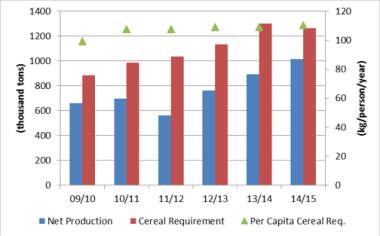
    Much of South Sudan receives little rainfall and only 5 percent of the arable land is currently cultivated. Nonetheless, the country has significant potential for increased cereal production, especially in the southern regions with the highest annual rainfall. Sorghum and maize account for most of the country’s domestically produced cereal, but there is little marketable surplus due to small farm size, low productivity and weak market incentives for sales.  Accurate data on crop area and production for South Sudan are scarce, and there is considerable uncertainty in the estimates, particularly since the renewal of armed conflict. According to annual FAO/WFP supply estimates, food production increased rapidly in recent years, from 660 thousand tons in 2009/10 to nearly 900 thousand tons in 2014/15, an average growth rate of 9.6 percent per year, due mainly to expansion of area harvested by 5.5 percent per year.

    Figure 1—South Sudan Cereal Production, 2009/10 – 2014/15
    sudan-figure-1

    Source: Based on FAO/WFP data.

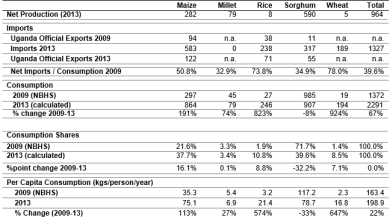
    Alternative estimates of production derived from the household consumption data (2009 NBHS) suggest cereal production was 21 percent higher than the 2008/90 FAO/WFP estimate. Estimates of trade flows derived from the 2009 National Baseline Household Survey consumption figures, suggest that imports were a major source of supply just prior to Independence, reaching perhaps 700 thousand tons in that year.

    Independence and the nearly complete disruption of trade with northern Sudan resulted in a major shift in the composition of cereal imports between 2009 and 2013, however. In 2009, cereal imports (mainly sorghum) totaled about 700 thousand tons, mostly from northern Sudan. By 2013, cereal imports had risen to nearly one million tons, with sorghum imports following from about 450 thousand tons to 320 thousand tons, while maize imports rose to 580 thousand tons, with imports of rice and wheat each totaling about 200 thousand tons.

    Table 1—South Sudan Estimated Cereal Production, Consumption and Imports (‘000 tons), 2009 and 2013
    Source: Adapted from Table 2 in Dorosh et al., 2016.

    Perhaps not surprisingly given the large private sector import flows, maize and sorghum prices in South Sudan are closely linked with prices in northern Uganda.

    Figure 2—South Sudan: Domestic and Import Parity Prices of Maize, 2008-15
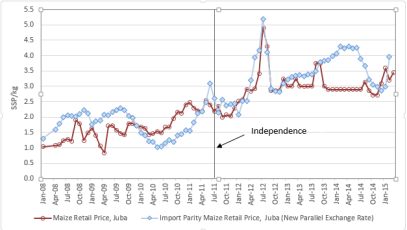
    Notes: The exchange rate of the South Sudanese Pound (SSP) to the US Dollar in January, 2015 was 2.95. Source: Adapted from Figure 3 (Dorosh et al., 2016).

    Notes: The exchange rate of the South Sudanese Pound (SSP) to the US Dollar in January, 2015 was 2.95.
    Source: Adapted from Figure 3 (Dorosh et al., 2016).

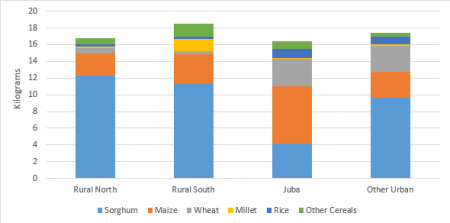
    Consumption of maize was nearly to that of sorghum (75.1 and 78.7 kgs/capita per year, respectively), as per capita maize consumption rose by 113 percent, while per capita sorghum consumption fell by 33 percent. Rice and wheat consumption also increased sharply, from 3.2 and 2.3 kgs/capita per year, respectively, in 2009 to 21.4 and 16.8 kgs/capita per year in 2013 – a 574 percent increase in per capita rice consumption and a 647 percent increase in per capita wheat consumption. The 2009 NHBS data, still the only source for detailed information on consumption patterns in South Sudan, show significant variation in consumption patterns across households. Throughout South Sudan, sorghum and maize are generally the major cereals consumed. Sorghum is the predominant cereal in rural areas, particularly in the north, while in Juba, maize and wheat are more widely consumed.

    Figure 3—South Sudan Average Monthly Kilogram Cereal Consumption Per Person
    south-sudan-figure-3

    Source: Calculated using data from South Sudan National Baseline Household Survey, 2009.

    Livestock are also a major source of income and food consumption in South Sudan, as well as a store of wealth, but the data on livestock are even more uncertain than the cereal data. Nationally, there were an estimated 11.74 million cattle in 2009, an average of 1.34 animals per person. Ownership is higher in the northern regions than in the south (1.58 and 0.88 animals per person, respectively). In 2013, approximately 45 percent of the population lived in households that consumed dairy products; consumption per capita in the northern regions is twice that of the south.

    Looking ahead
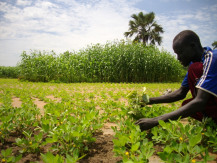
    oxfam-south-sudan

    Image credit: Oxfam International.

    In the medium term, increasing production of both crops and livestock is essential for food security in South Sudan, not only to reduce reliance on imports, but also to raise incomes of farmers. Rapid expansion of agricultural extension services, provision of improved seeds and increased fertilizer availability have led to large increases in agricultural production in neighboring Ethiopia, and have the potential to do likewise in South Sudan. Complementary investments in rural roads and other road infrastructure are also required, along with funds for maintenance.

    In the short term, though, food aid and targeted relief programs are badly needed to reduce the high levels of malnutrition in for the country as currently 31 percent of children under five are stunted and 23 percent are wasted. A national food security reserve system that ultimately would be supplied by domestic procurement of cereals was also proposed before the recent unrest, but such a system may take years to develop.

    In addition, maintaining incentives for the private sector import trade is essential to boost availability of cereals and minimize large spikes in prices. This would require a return to macro-economic stability in terms of both domestic inflation and exchange rates, as well as availability of foreign exchange. Keeping border controls and tariffs on cereal imports to a minimum could also help minimize transactions costs. Finally, none of these policies and investments will be effective in substantially improving food security without an end to armed conflict. Food security is possible for the people of South Sudan, but only with a restoration of peace, major new investments and sound government policies.

    Paul A. Dorosh is the Division Director of IFPRI’s Development Strategy and Governance Division. His previous positions include IFPRI Senior Research Fellow and Program Leader of the Ethiopia Strategy Support Program in Addis Ababa (2008-2010), Senior Economist at the World Bank (2003-2008), senior research fellow with IFPRI in Dhaka, Bangladesh (1997-2001) and Associate Professor at Cornell University (1994-97). He holds a Ph.D. in Applied Economics from the Food Research Institute, Stanford University and a B.A. in Applied Mathematics from Harvard University, and has published research on agricultural markets, food policy, international trade, economy-wide modeling and the rural-urban transformation.
  • Sustainable Security

    Beyond Privacy: The Costs and Consequences of Mass Surveillance

    Last week the new UN privacy chief said UK surveillance was “worse than [George Orwell’s novel] 1984”. In the two years since the Snowden leaks revealed the existence of bulk internet and phone surveillance by US intelligence services and their partners, including the UK, the British government continues to engage in the mass collection of citizens’ communications data.

    Read Article →

    The cooling wars of cyber space in a remote era

    As current discussions highlight the possibility of “major” cyber attacks causing a significant loss of life or large scale destruction, it is becoming harder to determine whether these claims are hype or are in fact justified fears. Esther Kersley, Katherine Tajer and Alberto Muti offer some clarity on the subject by assessing the major issues in cyber security today to help better inform the debate and assess what threats and challenges cyber issues really do pose to international peace and security.

    Read Article →

  • Sustainable Security

    Summary

    April has seen the inexperienced Trump Administration further escalate US military activities from Iraq and Syria to Afghanistan and Yemen. Attacking Syrian regime targets for the first time sent a clear signal of muscular change from the Obama era and suggested to President Trump a means to reverse his negative domestic approval ratings. However, it is the crisis over North Korea’s nuclear missile programme that has the greatest potential to escalate suddenly and disastrously into a conflict of global significance.

    Introduction

    Last month’s briefing, Sustainable Security in the Trump Era, discussed the outlook for the sustainable security approach in terms of the incoming Trump administration, concluding that in all three major areas of concern – economic, environmental and military – the Trump prospect was not positive. It would maintain a highly sceptical approach to climate change even if it might end up getting left behind technologically and economically, and its economic policies would do nothing to reduce the widening wealth/poverty inequalities that cleave American society.

    In terms of US security policy, the indications after two months in office were that Trump would expand the military budget and armed forces, give military commanders greater freedom of action, was willing to support an expanded global military posture and saw this as integral to “making America great again”. This briefing continues the overall theme in relation to the military outlook, the main emphasis being on the potential for a crisis involving North Korea.

    The Military Posture

    The March briefing identified a number of areas where the military posture was being expanded. These included an increased use of air power in supporting Iraqi troops attempting to take control of Mosul, the expanded use of Special Forces in Yemen, more powers for US forces to initiate action against militias in Somalia, and the deployment of additional ground troops to Iraq. In the past month there have been further indications of a military expansion.

    • In Iraq, the use of air power in Mosul has increased still further, although the so-called Islamic State (IS) remains entrenched in the western heart of the city.
    • In northern Syria, the US Air Force has been establishing an airfield between Kobane and Raqqa to support the looming offensive against this other stronghold of IS. Up to 1,000 more US troops are anticipated to join the 950 US Special Forces, Rangers and Marines already bolstering the mainly Kurdish Syrian Democratic Forces militia for this offensive.
    • In western Syria, the US Navy carried out a major sea-launched cruise missile raid on an Assad-regime air base in response to a suspected government attack on rebel-held Khan Sheikhoun that used chemical agents and killed many civilians.
    • In Yemen there have been 85 armed drone and strike aircraft attacks since President Trump’s inauguration, more than President Obama approved in 2015 and 2016 combined.
    • In Afghanistan the US Air Force used the world’s most powerful conventional bomb, the GBU-43/B Massive Ordnance Air Burst (MOAB), for the first time against an IS faction.
    • Also in Afghanistan, Trump’s National Security Advisor, General H R McMaster, arrived on a surprise visit that coincided with the deployment of several hundred US Marines to bolster the Afghan National Army, which was suffering increasing losses from attacks by Taliban and other armed opposition groups. There were calls for a further major increase in US military forces in the country at the start of the so-called “fighting season”.
    • Reports at the end of the month that the Trump administration has decided to hand more authority to the Pentagon in terms of how it conducts the wars in Iraq and Syria.
    • Trump diverted a ‘powerful armada’, including a carrier battle group and a nuclear submarine, towards North East Asia and says he fears a “major, major conflict” with North Korea.

    It is in this context that the burgeoning crisis with North Korea requires specific analysis.

    A Crisis out of Nowhere?

    During the course of the past month the issue of North Korea’s nuclear and missile development programmes has come to the fore for reasons which are not easy to pinpoint. It is true that there have been some additional tests of steadily more advanced missiles (one of which failed completely) and there is a possibility that a new nuclear test is being readied. Beyond this, though, little has changed on the North Korean side, and it is the Trump administration that has started to rethink policy, with this stemming from two factors.

    One, as already mentioned, is that Trump’s attitude to security is to focus far more on the use of military force and far less on diplomacy, in marked contrast to the Obama administration. In a sense this harks back to the George W Bush administration after the 9/11 attacks and the subsequent termination of the Taliban regime in Afghanistan. In his January 2002 State of the Union Address to Congress, Bush extended the war against al-Qaida and the Taliban to a conflict with the “axis of evil” centred on Iraq, Iran and North Korea. In the past 15 years, the Iraqi regime of Saddam Hussein has been terminated and the Trump White House is taking a harsh line over the recent Iran nuclear deal. This leaves North Korea and it is here that the second factor comes into play.

    Until a few months ago, US policy was to use sanctions and diplomacy in dealing with North Korea, not least in collaboration with China as the one state with serious influence over Pyongyang. This was based on an assessment that North Korea’s progress towards a functioning nuclear force capable of targeting the United States was still quite a few years off.

    There are credible reports that recent US intelligence analysis indicates that this is no longer the case and, specifically, that North Korea is progressing to the point where it could produce seven or eight nuclear weapons each year, compared with the previous assumption of one a year. It is also believed to be having success in shrinking the size and weight of warheads so that they can be carried by long-range missiles and that it is within a very few years of producing reliable intercontinental ballistic missiles (ICBMs) that could reach the United States. On a worst case assessment the belief is that North Korea might have up to 40 nuclear weapons by the end of President Trump’s first term, as well as being able to deploy the first of a number of ICBMs.

    The extent to which this is an exaggeration is simply not clear but that is not entirely relevant since President Trump and his advisors believe that the time to act is now. As he put it a few days ago: “People put blindfolds on for decades, and now it’s time to solve the problem”. This is because the worst case assessment is very much dependent on a very intensive programme of testing of missiles and of warheads and without this the progress of North Korea’s whole nuclear programme will be hugely limited.

    How to Act

    At the time of writing (28 April) the approach of the Trump administration appears still to be one of seeking much tougher sanctions in order to change the policies of the North Korean regime, but these will have minimal effect without severe sanctions on North Korea’s ability to import fuel. Since China is the dominant supplier, cooperation between Washington and Beijing has to be forthcoming but there are both generic and specific reasons why Beijing is not too sympathetic to putting further pressure on North Korea. The first are that any action which precipitates a collapse of the regime could lead to a war of survival by the regime, including the risk of nuclear use, it would certainly lead to a huge influx of refugees into China and even if the regime collapsed without social catastrophe, the prospect of a unified pro-Western regime on its borders does not appeal to Beijing.

    The specific reasons revolve around the manner in which the United States is using its military power in the expectation that the Pyongyang regime will change its policies, and there is a particular concern that the radar linked to the Terminal High Altitude Area Defence (THAAD) anti-missile system now being deployed in South Korea has the capacity to gain considerable intelligence on some of China’s key defence capabilities.

    China is also likely to be far more aware of the psychology of the North Korean regime and the way it sees its nuclear force as essential to state survival. Like some other states, it is only too well aware that not long after Gaddafi’s Libya gave up its WMD programme the regime was terminated with considerable NATO military support.

    In short, rapid action to effect a change in North Korea’s nuclear and missile plans has no chance of success – only longer-term careful diplomatic action may work. If not, then China, the United States and others will have to get used to the idea that a nuclear-armed North Korea will be a feature of the security of the region. It is worth noting that some leading Western military figures from the Cold War era that had experienced the dangers of the East-West nuclear confrontation ended their careers supporting the idea of global nuclear disarmament. That opportunity was lost and the world may have to get used to the consequences, at least in the case of North Korea.

    Conclusion

    Such a prospect, though, will not appeal to the Trump White House, and given that his administration is already putting far more emphasis on military thinking and options, there really is a risk that in the coming months the decision may be taken to undertake pre-emptive military action against North Korea’s warhead and missile production facilities. This is a highly unwelcome and potentially disastrous prospect but Trump has said that North Korea has to curb its ambitions. In effect he has drawn a red line and, since he criticised Mr Obama for doing so over Syrian chemical weapons and then failing to carry out his threat, President Trump may feel he can hardly afford the opprobrium that would follow should he fail to respond in this case.

    Moreover, this has a particular relevance for the UK, where the Foreign Secretary, Boris Johnson, has said that the UK would support further US action in Syria. With the Royal Air Force having conducted its first ever exercises with South Korean and US counterparts in Korea last November, this raises the issue of whether the same would apply in the case of North Korea, an interesting question at the start of a general election campaign.


    Image credit: Uri Tours/Flickr

    Paul Rogers is Global Security Consultant to Oxford Research Group and Professor of Peace Studies at the University of Bradford. His ‘Monthly Global Security Briefings’ are available from our website. His new book Irregular War: ISIS and the New Threats from the Margins will be published by I B Tauris in June 2016. These briefings are circulated free of charge for non-profit use, but please consider making a donation to ORG, if you are able to do so.

  • Sustainable Security

    The central premise of sustainable security is that we cannot successfully control all the consequences of insecurity, but must work to resolve the causes. In other words, ‘fighting the symptoms’ will not work, we must instead ‘cure the disease’.

    Current approaches to national and international security are based on the premise that insecurity can be controlled through military force or balance of power politics and containment. The most obvious recent example of this approach has been the so-called ‘war on terror’, which essentially aims to ‘keep the lid’ on terrorism and insecurity, without actually addressing the root causes.  Such approaches to security are deeply flawed and are distracting the world’s politicians from developing realistic and sustainable solutions to the new threats facing the world in the 21st century.

    An alternative approach is needed: that of ‘sustainable security’. The central premise of sustainable security is that we cannot successfully control all the consequences of insecurity, but must work to resolve the causes. In other words, ‘fighting the symptoms’ will not work, we must instead ‘cure the disease’. Such a framework must be based on an integrated analysis of security threats and a preventative approach to responses.

    Sustainable security focuses on the interconnected, long-term drivers of insecurity, including:

    • Climate change: Loss of infrastructure, resource scarcity and the mass displacement of peoples, leading to civil unrest, inter-communal violence and international instability.
    • Competition over resources: Competition for increasingly scarce resources – including food, water and energy – especially in already unstable parts of the world.
    • Marginalisation of the majority world: Increasing socio-economic divisions and the political, economic and cultural marginalisation of the vast majority of the world’s population.
    • Global militarisation: The increased use of military force as a security measure and the further spread of military technologies (including chemical, biological, radiological and nuclear weapons).

    There are many other factors that can threaten the security of humans around the world (such as radicalisation , rapid increases in the global population and the shortcomings of current forms of global governance ), but these four drivers reflect the deep complexity of modern insecurity.  The world has never been so interconnected and yet so socio-economically divided, with such apparent environmental limits. And never before have traditional approaches to warfare and use of force proved so counter-productive.

    Sustainable security makes a distinction between these trends and other security threats, which might instead be considered symptoms of the underlying causes and tend to be more localised and immediate (for example terrorism or organised crime). It promotes a comprehensive, systemic approach that takes into account the interaction of different trends which are too often analysed in isolation. It also places particular attention on how the current behaviour of international actors and western governments is contributing to, rather than reducing, insecurity.

    The world has never been so interconnected and yet so socio-economically divided, with such apparent environmental limits. And never before have traditional approaches to warfare and use of force proved so counter-productive.

    Sustainable security goes beyond analysis of threats to the development of a framework for new security policies. It takes global justice and equity as the key requirements of any sustainable response, together with progress towards reform of the global systems of trade, aid and debt relief; a rapid move away from carbon-based economies; bold, visible and substantial steps towards nuclear disarmament (and the control of biological and chemical weapons); and a shift in defence spending to focus on the non-military elements of security. This takes into account the underlying structural problems in national and international systems, and the institutional changes that are needed to develop and implement effective solutions.

    By aiming to cooperatively resolve the root causes of threats using the most effective means available, sustainable security is inherently preventative in that it addresses the likely causes of conflict and instability well before the ill-effects are felt.

    The sustainable security framework is being developed and promoted by Oxford Research Group. For more information on the work of the Sustainable Security programme, click here.

  • Sustainable Security

    The inclusion and participation of young people in societies is a necessary condition for sustainable peace. The neglect of young people’s current needs and future livelihoods is a recipe for renewed conflict.

    Despite all the sermonizing on the important role of young people for a society’s future and the United Nations Security Council Resolution 2250 (December 2015) on the importance to include youth in peacebuilding, the active and independent participation of youth is rarely welcomed. Across the globe youths are criticized either for their political apathy or their open political protest that travelled around the world in 2011 and 2012. In the debate on peace and conflict especially there is a significant divide: children are mostly seen as victims and the United Nations have an important advocacy role. At the same time, many governments perceive youths (age 15 to 25) as perpetrators of violence and potential troublemakers. While there have been calls to include youths in peacebuilding by giving them voice and agency, the inclusion of youth in current peacebuilding programs rarely includes elements other than education or training.

    Colombia’s comprehensive peace accord is an example. Youths appear 13 times in the 310 pages but only as part of other marginalized or excluded groups such as women, elderly, or the indigenous people. Under a broader perspective of peace being defined as more than the mere absence of war and armed conflict, this lack of youth’s political citizenship is counterproductive for sustainable peace. Neglected and/or criminalized young people either leave their countries and seek a better life elsewhere or they use violence to survive or to get attention from adults. They do not develop trust in the government and its institutions.

    The mismatch between formal possibilities and realities

    Image credit: wjgomes/Pixabay.

    A research project of the German Institute of Global and Area Studies on youth participation in postwar societies funded by the Federal Ministry of Economic Cooperation and Development  has provided interesting evidence for there being a significant mismatch between increasing formal possibilities of political participation of youths and their neglect and criminalization by adult society. In a first step, we collected data on the risks and opportunities for youth social, economic, and political participation – such as education, elections, employment– in 21 post-war societies (10 in Sub-Saharan Africa, six in Asia, four in Latin America, one in the Middle East). Many post-war societies liberalize their political regimes after the end of war.

    Political and civil rights are expanded, elections are introduced as a means of formal participation at the national as well as the local level. Consequently, young people in these countries – often the first generation that grew up and was socialized after the end of war –  should have bright perspectives. While youths participate in society, they do so overwhelmingly in civil society organizations (sports clubs, religious organizations and cultural activities) but to a much lesser extent in the political system. In a second step we conducted field research in three countries – El Salvador, Nicaragua, and South Africa – all perceived as rather successful cases of liberal peacebuilding at least in the first decade after war’s end. But even there young people feel marginalized.

    Youths in El Salvador, Nicaragua, and South Africa face a set of common challenges: The most pressing problem is finding decent work. While the first post-war generations have a significantly better formal education than their parents, youth unemployment is higher than adult unemployment. Even if young people can find work, available jobs offer low pay, long working hours, short contracts and few social benefits. Many youths are not able to make the important transition to adulthood and are unable to form a family. Political activism and citizenship should provide perspectives for change in demographically young societies. But a set of structural conditions influences youth political participation negatively: Poverty and inequality limit youth political activism, most of all in the rural areas and especially for young women.

    Overall, young people confront a generational bottleneck due to the war generation remaining in power, dominating economy, society, and politics, shaping the rules of post-war order and the possibilities for youth political participation. Although young people are interested in political participation they do not trust politicians and existing institutions. They do not “see benefits in participating” as change does not happen; they feel existing political parties only approach them during campaigns for their votes; and that they have neither real voice nor impact. Hence, they do not trust in elections as a mechanism of change. If and where young people organize as autonomous and independent actors, adults and elders view their political activism as problematic and as a challenge to their own status. They aim at integrating young people in a subordinate position for example in youth wings of political parties or other forms of controlled and supervised participation.

    Blocked transitions

    How do young people cope with these problems? Based on A.O. Hirschman’s classic book we can distinguish various strategies of exit, voice, and loyalty. Confronted with little future options and opportunities many youths exit through inner migration as well as out of country. El Salvador is an extreme example as a fifth of the population lives outside of its borders. While this may be an option for individual survival and upward social mobility, its potential for promoting change is limited. Other forms of exit are related to individual withdrawal from society via apathy, drug abuse or by joining a gang.

    Nicaraguan and South African youths have fewer options to leave. In these cases, the majority of young people are mostly muddling through taking the few chances they have to survive. South African participants in our project’s focus group discussions stated that change was only possible through the ruling African National Congress. Becoming a member is not necessarily a sign of confidence in the party but could rather signal high levels of realism regarding existing power relations. In this sense, the strategy of displaying loyalty might not be the best but a viable way of getting along regarding access to the labor market and other important public goods.

    Last but not least, there is the possibility of youth acquiring a voice. While political citizenship through the existing formal channels does rarely allow for significant changes, young people opt for non-violent as well as violent protest.  Salvadorian and Nicaraguan youths are at the forefront of ecological protests about problems such as water scarcity and the canal project linking the Pacific and the Atlantic.

    In South Africa, youths protest against corruption. While most young people prefer non-violent protest, they also acknowledge that violence can be used to get attention by the governmental institutions. As a girl living in a high crime area stated: “If you want to get the attention of the government you have to ‘toi toi’ – make a lot of noise”. But protesting also bears the risk that young people and their claims are criminalized and repressed.

    Youth needs to be included for sustainable peacebuilding

    The active and participatory inclusion of young people is a necessary condition for sustainable peace. Post-war societies produce high risks for sustainable peace if the society fails to integrate young people into the political system and to allow them to participate in political decisions and actions. Where the war-time generation has an exclusive control of social and political resources generational conflict will arise. This might lead to renewed armed conflict and war or shift violence from the political arena to society and crime.

    El Salvador provides evidence of the escalation of violence due to a lack of social and economic integration of young people. Despite a formally democratic political system the country remains one of the most violent worldwide. These changing patterns of violence provide important lessons for other processes of peacebuilding. Where protest is criminalized and violence is answered with state repression, armed groups tend to institutionalize. Giving young people a chance to voice their concerns as well as express their hopes – and acting on them in concert with them – is much cheaper and provides an important pattern of conflict prevention and sustainable peace. Implementation of UN  Resolution 2250 at different levels thus needs to open space for youth active participation and shared decision making for a peaceful future.

    Sabine Kurtenbach is a Senior Research Fellow at the German Institute of Global and Area Studies.

  • Global militarisation

    Global militarisation

    The current priority of the dominant security actors is maintaining international security through the vigorous use of military force combined with the development of both nuclear and conventional weapons systems. Post-Cold War nuclear developments involve the modernisation and proliferation of nuclear systems, with an increasing risk of limited nuclear-weapons use in warfare – breaking a threshold that has held for sixty years and seriously undermining multilateral attempts at disarmament. These dangerous trends will be exacerbated by developments in national missile defence, chemical and biological weapons and a race towards the weaponisation of space.

    Articles EXCLUSIVELY written for sustainablesecurity.org

    Issues:Climate change, Competition over resources, Global militarisation, Marginalisation

    To browse a list of all of the articles EXCLUSIVELY written for sustainablesecurity.org – follow this link

    Read more »

    “Mali: Another Long War?” – Sustainable security on channel 4 news

    Ben Zala and Anna Alissa Hitzemann | | January 2013

    Issue:Global militarisation

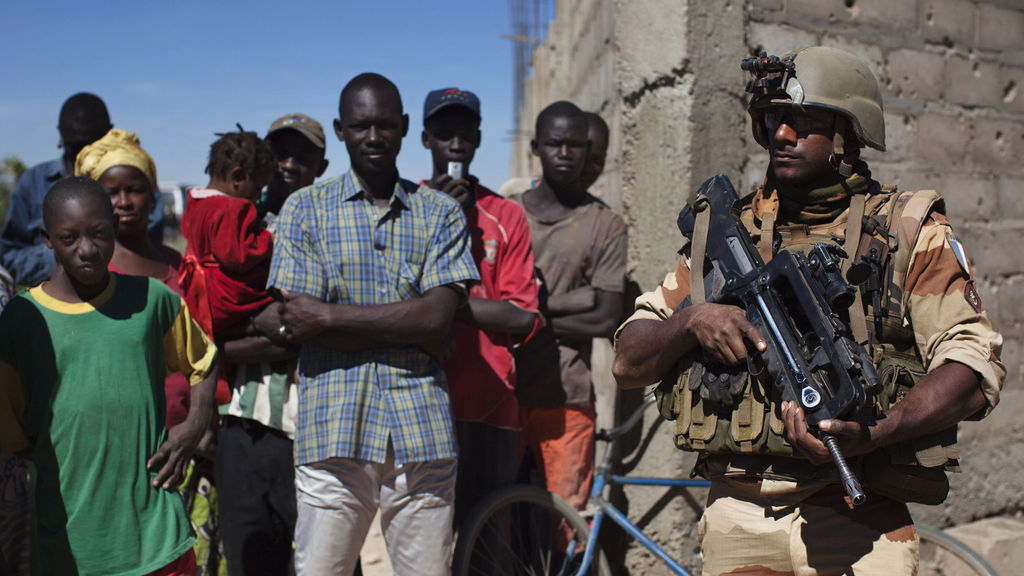
    French soldierNot unlike the United States in both Afghanistan and Iraq, the French government has begun the intervention with talk of short timelines and minimal troops on the ground before quickly changing its tune, write Anna Alissa Hitzemann and Ben Zala for Channel 4 News .

    Image source: Channel 4 News (from original article)

    Read more »

    “Mali: Why Western Intervention is destined to fail” – Sustainable security on Channel 4 News

    Issue:Global militarisation

    Britain is on standby and the US is already transporting French troops into Mali. But the west is “betting on the wrong horse” by intervening in the region. Now well over a decade after the beginning of the so-called war on terror, yet again, another western nation is leading a military intervention against Islamist paramilitaries based in a largely ungoverned region of a state in the Global South, write Anna Alissa Hitzemann and Ben Zala for Channel 4 News.

    Image source: Defence Images

    Read more »

    Myanmar: Peaceful Transition to Democracy or Storm Clouds on the Horizon?

    Anna Alissa Hitzemann | | November 2012

    Issues:Global militarisation, Marginalisation

    Published last week, Myanmar: Storm Clouds on the Horizon is International Crisis Group’s latest Asia report. It focuses on the potential for political violence and social instability as Mynamar’s leaders are undertaking reforms “to move the country decisively away from its authoritarian past”.  

    Image source: Rusty Steward

    Read more »

    A top-down approach to sustainable security: The Arms Trade Treaty

    Zoë Pelter | | November 2012

    Issue:Global militarisation

    Will an Arms Trade Treaty work towards sustainable security? As the future of the world’s first global treaty on the arms trade is discussed by the First Committee of the United Nations General Assembly, this article explores how the potential treaty – if reopened for further negotiation – could assist sustainable security policy.
    Image source : Oxfam

    Read more »

    Towards sustainable civilian security in South Sudan

    Zoë Pelter | | October 2012

    Issue:Global militarisation

    Civilian disarmament campaigns in South Sudan currently attempt to tackle one of the many symptoms of the country’s militarised post-war society. Instead, these campaigns must be seen as one part of an overarching and sustainable disarmament and security sector reform strategy that must be undertaken long term, while ensuring that the immediate security of communities is safeguarded and that their need for weapons to protect themselves is adequately addressed and reduced.  In South Sudan, there is a need for proactive strategy – not reactive operations – towards sustainable civilian security.
     Image Source: ENOUGH Project

    Read more »

  • Sustainable Security


    Welcome back! We’ve just re-launched with a brand new look, great new authors and, as always, lots to say!

    Sustainablesecurity.org is space to debate, discuss and develop understandings of modern insecurity within a  ‘sustainable security’ framework, which realises the interconnected underlying drivers of challenges to global security and seeks to counter them with preventive policy solutions.

    The blog is a project of the Sustainable Security programme of Oxford Research Group, originally launched in September 2009.

    Sustainablesecurity.org is space to debate, discuss and develop understandings of modern insecurity within a  ‘sustainable security’ framework, which realises the interconnected underlying drivers of challenges to global security in the 21st century. Through topical discussion pieces, we aim to explore the integrated, preventive policies that are needed to solve these threats at source.

    As well as covering a range of pertinent modern security challenges, the website highlights four key interconnected drivers of global insecurity:

    • Climate Change
    • Competition over natural resources
    • Global militarisation
    • Marginalisation

    Articles and resources are allocated to one or more of these headings, but the overall emphasis is on the interconnected nature of these threats and the need for comprehensive, multilateral approaches to them. For a wider range of topics, try our ‘Hot Topics’ tag cloud in the sidebar to the right.

    Don’t forget, you can sign up for updates about new blog posts and special features.

    We hope you enjoy exploring the new site!

    SusSec Team

    Image source: John Martinez Pavliga

  • Thinking strategically about the future climate

    Thinking strategically about the future climate

    Duncan Depledge | RUSI | February 2011

    Issue:Climate change

    The publication of the Strategic Defence and Security Review and the Coalition’s first National Security Strategy provided ample opportunity for the government to deliberate on the strategic implications of climate change for the UK.  Yet while claims that we continue to live in a post-Cold War ‘age of uncertainty’ lay at the heart of both documents, on  closer reading there is very little to suggest that uncertainty about climate change was a concern for those who conducted the review. Despite a significant amount of intellectual debate, the wording of these documents remains remarkably close to that of the UK’s first National Security Strategy, published over two years ago.

    Whilst this lack of attention to climate change is unacceptable, it is – to some extent – understandable given the more ‘visible’ threats of terrorism, cyber-attacks and the ongoing war in Afghanistan. Nevertheless, the marginalisation of environmental factors stands in stark contrast to the tone of a speech delivered by William Hague just prior to the publication of the SDSR. The Foreign Secretary stated that ‘climate change is among the biggest foreign policy challenges we face over the next century as it underpins our security and prosperity’.

    Hard Times for Soft Power

    The SDSR was a missed opportunity to review the UK’s place in the world. A key theme to emerge from the fallout surrounding the Review is that much greater emphasis is to be placed on strategic thinking in the UK over the coming years.  This was encapsulated in the Public Administration Committee’s recent warning that ‘a lack of strategic thinking at the heart of government threatens the UK’s national interests’ and raises ‘serious concerns’ about Whitehall’s capacity to provide the strategic analysis and assessment needed to support the Foreign Secretary’s mission of extending the UK’s ‘global reach and influence’.

    We can hence expect to see the government addressing how, as a country, we can improve strategic thinking. This will most likely encourage a rethinking of how we educate our leaders and the wider policy community, and of the types of structures and institutions that will be required to support such efforts. As part of this education, due consideration will need to be given to the many different dimensions of strategy that will be pertinent in the coming century, and the climate change dimension cannot be divorced from this process.

    While there is still a need for highly granulated forms of climate change knowledge, what we do know is that the process will have implications for the way security is managed in many parts of the world where the UK has significant economic and strategic interests. We must therefore reflect on what any detrimental developments in these areas will mean for the way in which the UK secures its interests in the twenty-first century. We have already seen the devastating impact of the global economic meltdown on the UK and its ability to manage its debt, not to mention the repercussions throughout the rest of the EU. The defence sector has been adversely affected, as has the UK’s ability to project ‘soft power’ through diplomatic missions, development programmes and aid. The 2006 Stern Review showed how economic crises on a similar, if not larger, scale are not hard to envisage as the world is forced to come to terms with new environmental conditions.

    Read the full article at RUSI

    Image source: U.S. Geological Survey

    Comments

    Post new comment


  • Marginalisation of the majority world

    Marginalisation of the majority world

    A complex interplay of discrimination, global poverty, inequality and deepening socio-economic divisions, together make for key elements of global insecurity. While overall global wealth has increased, the benefits of this economic growth have not been equally shared. The rich-poor divide is actually growing, with a very heavy concentration of growth in relatively few parts of the world, and poverty getting much worse in many other regions. The ‘majority world’ of Asia, Africa and Latin America feel the strongest effects of marginalisation as a result of global elites, concentrated in North America and Europe, striving to maintain political, cultural, economic and military global dominance.

    A New Strategy for the US: From the Control Paradigm to Sustainable Security

    Schuyler Null | The New Security Beat | May 2011

    Issues:Climate change, Competition over resources, Global militarisation, Marginalisation

    Writing for the New Security Beat, Schuyler Null discusses a recent event on creating a new national security narrative for the US held at the Woodrow Wilson Center. The event was based on a white paper by two active military officers writing under the pseudonym “Mr. Y” (echoing George Kennan’s famous “X” article). In “A National Strategic Narrative,” Captain Wayne Porter (USN) and Colonel Mark Mykleby (USMC) argue that the United States needs to move away from an outmoded 20th century model of containment, deterrence, and control towards a “strategy of sustainability.”

    Image source: LizaP.

    Read more »

    Sustainable Security and Environmental Limits

    Rachel Tansey | Quaker Council for European Affairs | May 2011

    Issues:Climate change, Competition over resources, Global militarisation, Marginalisation

    The Quaker Council for European Affairs publicises a briefing on the topic of Sustainable Security, specifically highlighting environmental concerns:

    “The treatment of the natural world by humankind has contributed towards the two related major trends that are likely to drive insecurity in the coming decades: climate change and competition over natural resources.”

    Article source: Quaker Council for European Affairs

    Image source: kretyen

    Read more »

    Human Security and Marginalisation: A case of Pastoralists in the Mandera triangle

    Abdul Ebrahim Haro | Exclusively written for sustainablesecurity.org | May 2011

    Issues:Competition over resources, Marginalisation

    This paper seeks to bring out the relevance of human security in pastoral areas of Mandera triangle and the relationships and contradictions that exist between it and national security. The “Mandera Triangle” encompasses a tri-border region of Ethiopia, Somalia, and Kenya that exemplifies, in a microcosm, both a complex and a chronic humanitarian crisis that transcends national boundaries. The resident Somali pastoral population is highly vulnerable to periodic droughts and floods; high levels of poverty; long-term disruption to the traditional systems of livelihood; ongoing inter-clan conflicts and border tensions between states. 

    Image source: TURKAIRO

    Read more »

    The economic relationship of armed groups with displaced populations

    Josep Maria Royo Aspa | Forced Migration Review | March 2011

    Issues:Global militarisation, Marginalisation

    Practically all armed groups are heavily dependent on external support. Armed groups primarily seek support from both other states and from the diasporas, displaced populations and other armed groups, in order to prevent the burden of  the war effort from falling entirely on the civil population they claim to protect, a situation that has its own political costs. States too need external support to deal with outbreaks of instability and violence; during the Cold War this was normal and it still continues today in most current armed conflicts.

    Image source: Gustavo Montes de Oca

    Article source: Forced Migration Review

    Read more »

    NGOs Call for Immediate and Full Reporting of Every Casualty in Libya

    NGO coalition | Oxford Research Group | April 2011

    Issues:Global militarisation, Marginalisation

    As rebel forces reportedly claim that 10,000 deaths have occurred and up to 55,000 have been injured since the start of the conflict in Libya, a group of NGOs have sent a call to those intervening in Libya to commit to properly monitoring and recording every casualty in the conflict.

    This call is made in the belief that the accurate recording and reporting of all casualties will benefit accountability, any assessment of the international intervention, and humanitarian programming.

    Article source: Oxford Research Group

    Image source: Defence Images

    Read more »

    How the Competing Security Needs of Caribbean Community Members have Crystallized Through Multilateralism and Consensual Decision-Making

    Serena Joseph-Harris | Exclusively written for sustainablesecurity.org | April 2011

    Issues:Competition over resources, Global militarisation, Marginalisation

    In a paper exclusively written for sustainablesecurity.org, Serena Joseph-Harris (former High Commissioner for Trinidad and Tobago) focuses on competition over natural resources, the role of maritime routes in the Caribbean, and the importance of multilateral approaches to finding sustainable solutions in the Caribbean.

    Image source: Len@Loblolly

    Read more »