Blog

  • China and the Responsibility to Protect

    The Responsibility to Protect (R2P) is a significant, if controversial, development in international affairs. China has proposed its own semi-official version of R2P called “Responsible Protection”.

    Author’s Note: This article highlights issues discussed in more depth in various publications, including Andrew Garwood-Gowers, ‘China’s “Responsible Protection” Concept: Reinterpreting the Responsibility to Protect (R2P) and Military Intervention for Humanitarian Purposes’ (2016) 6 Asian Journal of International Law 89 and Andrew Garwood-Gowers, ‘R2P Ten Years after the World Summit: Explaining Ongoing Contestation over Pillar III’ (2015) 7 Global Responsibility to Protect 300.

    Introduction

    Over the last decade and a half the Responsibility to Protect (R2P) principle has emerged as a significant normative development in international efforts to prevent and respond to genocide and other mass atrocity crimes. Yet it has also been controversial, both in theory and in practice. R2P’s legal status and normative impact continue to be debated in academic and policy circles, while its implementation in Libya in 2011 reignited longstanding concerns among many non-Western states over its potential to be misused as a smokescreen for regime change. These misgivings prompted Brazil to launch its “Responsibility while Protecting” (RwP) concept as a means of complementing and tightening the existing R2P principle. China, too, has proposed its own semi-official version of R2P called “Responsible Protection” (RP). This contribution explores the key features and implications of the lesser known Chinese initiative.

    The R2P Principle
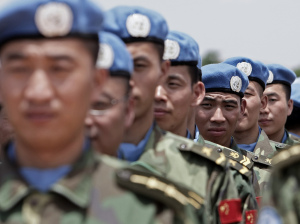
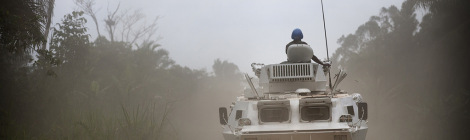
    Peacekeeping - UNAMID

    Image by UN Photo via Flickr.

    R2P first appeared in a 2001 report by the International Commission on Intervention and State Sovereignty (ICISS), a body set up by the Canadian government to consider how the international community should address intra-state humanitarian crises. However, after the initial concept proved contentious a modified version of R2P – labelled “R2P-lite” by one commentator – was unanimously endorsed by states at the 2005 World Summit. In its current form R2P consists of three mutually reinforcing pillars. The first is that each state has a responsibility to protect its populations from the four mass atrocity crimes (genocide, war crimes, crimes against humanity and ethnic cleansing). Pillar two stipulates that the international community should encourage and assist states in fulfilling their pillar one duties. Finally, pillar three provides that if a state is manifestly failing to protect its populations the international community is prepared to take collective action in a timely and decisive manner on a case-by-case basis, in accordance with Chapter VII of the UN Charter.

    Action under pillar three can encompass non-coercive tools such as diplomacy and humanitarian assistance, as well as coercive means including sanctions and the use of force. The international community’s pillar three responsibility is framed in conservative terms, creating only a duty to consider taking appropriate action, rather than a positive obligation to actually respond to a state’s manifest failure to protect. Crucially, the UN Security Council remains the only body that can authorise coercive, non-consensual measures under pillar three. R2P does not grant states a right to undertake unilateral humanitarian intervention outside the Charter’s collective security framework. Overall, R2P is best characterised as a multi-faceted political principle based on existing international law principles and mechanisms.

    The most well-known instance of pillar III action to date is the international community’s rapid and decisive response to the Libyan crisis in early 2011. The Security Council initially imposed sanctions and travel bans on members of the Gaddafi regime before passing resolution 1973 authorising the use of force to “protect civilians and civilian populated areas under threat of attack’’. China, Russia, Brazil and India each abstained on the vote to mandate military force against Libya. As the extent of NATO’s military targets and support for the Libyan rebels became apparent, many non-Western powers criticised the campaign for exceeding the terms of the Security Council resolution. For these states, the eventual removal of the Gaddafi regime confirmed their perception that R2P’s third pillar could be manipulated for the pursuit of ulterior motives such as the replacement of unfriendly governments.

    The post-Libya backlash against R2P was at least partly responsible for Security Council deadlock over Syria. Russia and China have exercised their vetoes on four separate occasions to block resolutions that sought to impose a range of non-forcible measures on the Syrian regime. At the same time, there has been renewed debate about the strengths and weaknesses of R2P’s third pillar. In late 2011 Brazil’s RwP initiative proposed a series of decision-making criteria and monitoring mechanisms to guide the implementation of coercive pillar three measures. While RwP initially attracted significant attention and discussion, Brazil’s foray into norm entrepreneurship was short-lived and R2P has remained unaltered.

    Reframing R2P as “Responsible Protection”

    China’s traditional insistence on a strict interpretation of sovereignty and non-intervention has made it uncomfortable with the coercive, non-consensual aspects of R2P’s third pillar. As a result, Beijing has consistently emphasised the primacy of pillars one and two, while downplaying the scope for pillar three action. In this respect, its decision not to veto resolution 1973 on Libya came as something of a surprise.

    China’s contribution to the post-Libya debate over R2P’s third pillar is less widely documented than Brazil’s efforts. In mid-2012 the notion of “Responsible Protection” was floated by Ruan Zongze, the Vice President of the China Institute for International Studies (CIIS),  which is the official think tank of China’s Ministry of Foreign Affairs. Although China has not explicitly adopted the concept as a formal policy statement on R2P, its implicit endorsement means it can be described as a “semi-official” initiative.

    RP is primarily concerned with R2P’s third pillar and, in particular, providing a set of guidelines to constrain the implementation of non-consensual, coercive measures. It consists of six elements or principles, which are drawn from just war theory and earlier R2P proposals such as the 2001 ICISS report and Brazil’s RwP. In this respect, RP represents a repackaging of previous ideas, rather than an entirely original initiative. However, by reframing these concepts in stricter terms it reflects a distinctive Chinese interpretation of R2P that seeks to narrow the circumstances in which non-consensual use of force can be applied for humanitarian purposes.

    The first element draws on the just war notion of “right intention”. It provides that the purpose of any intervention must be to protect civilian populations, rather than to support “specific political parties or armed forces”. This conveys Beijing’s concerns over the motives and objectives of those intervening under the banner of R2P, as expressed during the Libyan experience. Element two relates to the “right authority” criterion. It reiterates the longstanding Chinese position that only the Security Council can authorise the use of coercive measures, and that there is no right of unilateral humanitarian intervention granted to states.

    RP’s third element is based on the traditional principle that military intervention should be a “last resort”. Its call for “exhaustion of diplomatic and political means of solution” is consistent with Beijing’s broader policy preference for diplomacy and dialogue over forcible measures. However, insisting on a strict, chronological sequencing of responses may deprive the international community of the flexibility needed to ensure timely and decisive action on humanitarian crisis. For this reason, some clarification or refinement of element three may be needed. The fourth element of RP draws on aspects of the just war principles of “right intention” (like element one) and “reasonable prospects”. In relation to the latter, it provides that “it is absolutely forbidden to create greater humanitarian disasters” when carrying out international action. This stipulation reflects Beijing’s position that external intervention often exacerbates humanitarian crises and can ultimately cause more harm than good.

    Element five of RP provides that those who intervene “should be responsible for the post-intervention and post-protection reconstruction of the state concerned”. Although the notion of a responsibility to rebuild appeared in the original 2001 ICISS report it was not included in the text of the World Summit Outcome document in 2005 and therefore does not form a component of the current concept of R2P. It is unclear whether China’s RP concept is explicitly seeking to resurrect this dimension or whether this element is simply intended to emphasise Beijing’s broader perspective on peacebuilding and development in post-conflict societies. Finally, element six calls for greater supervision and accountability of those carrying out UN authorised civilian protection action. This is a similar demand to that made in Brazil’s RwP proposal, though little detail is given as to what form any such monitoring mechanism would take.

    Conclusion

    Overall, the Chinese notion of RP is an attempt to reinterpret and tighten the content of R2P’s third pillar so that it aligns more closely with Beijing’s own normative preferences and foreign policy objectives. Compared to RwP and the ICISS report, RP outlines a narrower set of circumstances in which military intervention for humanitarian purposes would be appropriate. Some aspects of the proposal would certainly benefit from clarification and refinement.

    However, it is notable that despite strongly criticising the way R2P was implemented in Libya, China has chosen to engage with, and actively shape, the future development of the norm. This illustrates the extent to which China, as a permanent member of the Security Council, is enmeshed in the ongoing debate over R2P. In fact, RP is explicitly framed as an example of China “contributing its public goods to the international community”. In the future we can expect China and other non-Western powers to play increasingly influential roles in the development of international security and global governance norms.

    Andrew Garwood-Gowers is a lecturer at the Faculty of Law at Queensland University of Technology (QUT) in Brisbane, Australia. He has written extensively on R2P and the law governing the use of military force, with publications in leading journals including Global Responsibility to Protect, the Asian Journal of International Law, Journal of Conflict and Security Law and the Melbourne Journal of International Law.

  • Floating liabilities? Maritime armouries, risks and solutions

  • Targeting Civilians in Civil Conflicts: Why Ideology Matters

    To understand why some groups fighting in civil conflicts target civilians more than others, it is vital to examine the role of ideology.

    Recent civil wars in Iraq and Syria underscore the fact that different armed groups fighting in the same conflict can adopt strikingly different approaches to the treatment of civilians. While historically about 40 percent of states and rebels have exercised restraint, others’ victimization of civilians has been routine and manifold. Much of the current understanding attributes these differences to armed groups’ material resources, organization, territorial control, and similar factors. While providing important insights, these accounts are incomplete at best because they either neglect or downplay the critical role that ideology plays in targeting civilians.

    Mainstream Explanations of Civilian Victimization

    Many analysts share a key assumption with the classical literature on insurgency and counter-insurgency – such as the works of T.E. Lawrence and Mao Tse-Tung – that securing the support of local populations is critical for fighting groups. Several implications are drawn. For example, groups that enjoy local population’s support may be less prone to victimize civilians, particularly in the communities that serve as their home or recruitment base. Conversely, such support can backfire because the enemy forces can attempt to raise its costs for the local population by targeting civilians in this community.

    Based primarily on the study of the Greek Civil War (1942–1949), another influential account argues that groups with higher degree of control over a territory are likely to selectively target enemy forces rather than indiscriminately attack civilians. In this view, information flows are pivotal: higher degree of territorial control means better information and this makes it possible and expedient to identify and selectively target specific individuals.

    Another assumption is that the fighting groups’ capabilities – their size, training, and experience – relative to their rivals can also affect their targeting patterns. Weak groups can be more prone to victimize civilians than stronger groups as they can fail to limit the collateral damage of their operations to civilians. Alternatively, when they lack resources to secure civilian support through offering benefits, such groups can also deliberately choose to target civilians as an alternative way to coerce such support. An analysis of violence in Afghanistan between 2004 and 2009, disaggregated by province and month, supports this view.

    The amount of material resources at the armed group’s disposal and where it obtains them may also affect its targeting patterns. If groups acquire their resources through exploiting natural resources or through foreign sponsorship, they may be more likely to attack civilians than if they depended on the local population for resources. External donor characteristics can matter as well, with a small number of democratic donors believed to have a more restraining effect than either autocratic donors or many donors.

    A survey of former fighters in Sierra Leone’s civil war (1991–2002) suggests that organizational characteristics are the pivotal factor. According to this view, civilian abuse is likely to be higher if groups rely on material incentives in their recruitment (thus attracting more opportunists), have an ethnically diverse group of fighters (thus lacking ways to control the fighters’ behavior through social pressure), and lack disciplinary mechanisms. This view resonates with Niccolo Machiavelli’s aversion toward mercenaries and Mao Tse-Tung’s insistence that “it is only undisciplined troops who make the people their enemies.”

    More recently, some analysts have drawn attention to the role of political and ethnic cleavages, which had previously been downplayed in large cross-national studies of civil wars. Based on a study of Spanish Civil War (1936–1939), one view maintains that civilians who have mobilized for one belligerent group are likely to be attacked by rivals as they would be considered assets for this group. A study of violence against civilians in African conflicts between 1989 and 2009 holds that ethnic background can serve as a cue for targeting because in an environment of uncertainty about people’s allegiances it serves as a shortcut for identifying potential enemy supporters.

    Much of this thinking on civil wars has tended to relegate ideology to a secondary role, if any at all. Yet, a notable resurgence of attention shows just how consequential ideology can be in understanding civil wars.

     Why Ideology Matters

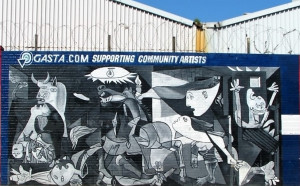
    Mural in Belfast, Northern Ireland based on the painting “Guernica” by Pablo Picasso. Image credit: Rossographer.

    Research shows that in newly democratizing countries, a combination of nationalist ideology and unconsolidated democracy can help ignite internal and international conflict in the first place. Revolutionary ideologies have historically been critical ingredients for a robust insurgency by fostering strong commitment and mobilization. They can enhance fighting capacity by boosting morale. Although often based on case studies of specific groups or lacking in-depth systematic evidence, qualitative literature on civil wars and traditional research on terrorism historically have pointed at the role of ideology in armed groups’ target selection (one solid case study can be found here).

    In a recent study our working hypothesis is that far from being a mere rhetorical device, ideology can be the key factor that explains civilian victimization patterns across fighting groups in civil wars. We draw on the established concept of ideology which sees it as “shared framework of mental models that groups of individuals possess that provides both an interpretation of the environment and a prescription as to how that environment should be structured”. We argue that its effect on civilian victimization can work through two channels.

    The first is through framing some groups as hostile to the armed groups’ cause. The ideology that an armed group espouses identifies the group’s vision and the sources of threats to achieving this vision. These threat perceptions foster identifying friends and enemies of the cause. The ideology can then frame “enemies” as legitimate targets. Belonging to a certain ethnicity or territory may be a marker, but it need not be just any civilian from within these groups that becomes a legitimate target – only those can be identified as such who are seen through the ideological prism as hostile to the group’s cause.

    However, there is nothing automatic between seeing members of a specific group as hostile and victimizing them. The second channel through which ideology can affect civilian victimization is through determining strategies that the group accepts as legitimate in achieving its vision. Of course, in some cases different types of violence may be included or excluded for strategic reasons. But a group’s ideology can also prescribe adopting a strategy that is costly for the group from the material or organizational point of view. That is, some strategies may be filtered out despite presenting strategic or material advantages. This is probably because they go against the group’s vision or its identity as a certain ideological force. Therefore, some ideologies will see civilian victimization as part of their legitimate repertoire of violence to attain its vision, while others will impose constraints on or even exclude it from the group’s approach.

    It might be tempting to follow this reasoning by drawing a typology of ideologies by their approach to civilian victimization. However, often broad ideological frameworks are adapted to local conditions – they are crystallized into specific ideologies that different groups adopt. In other words, groups in different contexts that seem to share an ideology may develop different approaches, such as European leftist groups in 1970-1990s like Baader-Meinhof Group in West Germany and the Red Brigades in Italy. Instead, we should understand an armed group’s ideology in its particular context.

    Case Study: Northern Ireland

    In our study, we examined these ideas using quantitative and qualitative empirical evidence on armed group violence in Northern Ireland’s conflict between 1969 and 2005.  This conflict provides a fertile ground for this study because it involved a number of groups that differed from one another in several ways and because there were considerable differences in civilian killings across groups, locations and time. Unlike many other conflicts, it has also been well documented on the level of individual fatalities, which makes it possible to test our ideas with more nuance than previous studies. Our dataset provides details on almost all fatalities directly attributed to the conflict (3,702) and allows disaggregating them by perpetrator group, location, victim’s identity, etc. Then we try to see whether different perpetrator group characteristics, such as their size, structure, or ideology, consistently predict whether the victim is civilian or combatant as well as the victim’s ethnic identity. We do this in a framework that simultaneously accounts for all suggested factors.

    While the two main ideologies embraced by the fighting groups – Irish Republicanism and Unionism – shared similarities, such as the focus on nationalism, historically they developed distinct approaches. Drawing on the civic nationalist ideology of the French Revolution, Irish Republicanism stressed the oppression of all Irish people and adopted an anti-colonialist identity that aimed to end imperial control. This entailed a reluctance to target would-be members of the “imagined community” of free Ireland and instead emphasized focusing on combatants who were viewed as struggling to preserve imperial domination.

    Drawing on the historical “Protestant Ascendancy” movement, the ideology of Unionism came to emphasize a defensive settler identity that viewed Catholics as “fifth-columnist” Irish nationalists who intend to dismantle Northern Ireland and its union with Britain. We conjectured that these ideological differences were likely to shape the fighting groups’ targeting patterns. While the group ideologies were further crystallized during the course of the conflict, their key tenets remained.

    Our preliminary findings from statistical analysis suggest that the fighting group ideologies were the strongest and most consistent predictors of civilian victimization patterns. Fighting groups that embraced Unionist ideology, such as Ulster Defence Association (UDA) or Ulster Volunteer Force (UVF), were on average more likely to target civilians and launch cross-ethnic attacks on civilians, while Republican fighting groups, such as the Provisional Irish Republican Army (Provisional IRA) or Irish National Liberation Army (INLA), were on average more likely to focus on combatants. These results hold when we account for all other suggested factors, such as group size or resources. Our qualitative historical study suggests that these differences emerged because of differences in previously adopted norms, patterns of recruitment, and relations with the British state forces.

    While civilian targeting was prevalent in the initial stages of the conflict in early 1970s, over time it decreased in terms of total numbers. Republican groups were responsible for the largest number of total fatalities and Loyalist paramilitaries were responsible for the largest number of civilian killings. After mid-1970s, all three armed blocs – state forces, Unionist groups, and Irish Republican groups – killed fewer civilians than before, but relative proportions (combatant-civilian) remained the same.

    Implications

    Naturally, our study may be limited by its focus on civilian killings rather than civilian abuse more generally or our focus on one civil war. Nonetheless, our tentative findings strongly indicate that ideological factors need to be taken much more seriously than before in trying to understand and hopefully prevent civilian victimization by armed groups in civil wars. Neglecting these factors or downplaying their significance is simply dangerous. This is all the more important at the time when transmission of ideas is considerably enhanced by technology, which does not discriminate between benevolent or harmful ideologies. This, for example, is most drastically illustrated by Isil’s media-savvy, effective propaganda.

    Anar K. Ahmadov is Assistant Professor of Political Economy at Leiden University.

    James Hughes is Professor of Comparative Politics and Director of the Conflict Research Group at the London School of Economics and Political Science (LSE).

  • Language, Religion, and Ethnic Civil Wars

    Many have argued that civil wars are more likely to occur along religious divisions. But evidence indicates that intrastate conflict is actually more likely within linguistic dyads than among religious ones.

    In the 1990s Samuel Huntington argued that conflict across civilizational or religious lines would replace the ideological divisions that had defined political struggles during the Cold War period. Opining that Islam has ‘bloody borders’, he believed that conflicts would be particularly prevalent between ‘Muslims’ and ‘non-Muslims’. This led Huntington to further suggest that a future clash between ‘Islamic civilization’ and the West might occur.

    Since September 11th 2001 and the subsequent proclamation of the “War on Terror,” Huntington’s thesis has gained widespread attention among political leaders and citizens around the world. In 2014, for example, Tony Blair asserted that “religious difference will fuel this century’s battles.” During the 2016 US presidential campaign, President-elect Donald Trump seemingly subscribed to Huntington’s ideas when calling for “a total and complete shutdown of Muslims” entering the country to prevent violent attacks on US citizens.

    Whereas many social scientists would agree that ideological conflict between communism and capitalism, both between and within states, has declined since the end of the Cold War, no agreement exists about what, if anything, replaced ideology. Most scholars who study internal conflict or civil war would not distinguish between linguistic, religious, and racial markers but rather classify these categories as part of the larger concept of ethnicity. Yet some conflict researchers follow Huntington and identify religious differences as particularly conflict-prone. In doing so, important alternatives such as ethno-nationalist mobilization based on linguistic identities often receive too little attention.

    Are internal conflicts mostly about religion or language?

    azaz_syria

    Image by Christiaan Triebert/Flickr.

    In a study that is forthcoming in the Journal of Conflict Resolution, I and my co-authors Lars-Erik Cederman (ETH Zürich) and Manuel Vogt (Princeton University) conduct such a comparison. We analyse the probability of internal armed conflict between linguistically and religiously distinctive groups between 1946 and 2009.

    Contrary to Huntington’s thesis, linguistic differences show a strong and robust relationship with the outbreak of intrastate conflicts. In fact, we find that linguistic divisions are more conflict-prone than religious differences.

    These findings continue to hold when we focus only on the years since 1990 – the period to which Huntington’s thesis should be the most relevant. Our results further suggest that in no world region are religious differences more likely to be associated with internal armed conflict than linguistic divisions. We find the strongest support for a greater conflict-proneness of language compared to religion in Eastern Europe and Asia.

    Even in the Middle East, we find a slightly higher, if uncertain, probability of armed conflict across linguistic than religious lines. The Middle Eastern finding at least in part results from multiple Kurdish rebellions in Turkey, Iraq, and more recently Syria as well as smaller uprisings of linguistic minorities in Iran.

    When focusing only on conflicts that involve Muslim groups, we do not find substantial differences to other world religions. Although the majority of all armed internal conflicts today take place within Muslim-majority states, the majority of Muslim groups do not engage in violent rebellion. Our analyses also reject the thesis that Muslim groups disproportionately engage in conflict with non-Muslim groups.

    Why Linguistic Differences?

    Instead linguistic differences continue to be more frequently related to armed uprisings within states. While the brutal civil war in Syria captured headlines over the past years in many Western countries, destructive conflicts across linguistic lines haunt South Sudan, Burma, and Turkey.

    Of course, linguistic differences are more widespread than religious divisions. In other words, ethnic groups in any given country are more likely to be divided by language than by religion. Notwithstanding these differences in frequency, our results indicate that linguistic divisions are disproportionately more often related to armed conflict than religious distinctions.

    In our forthcoming article, we argue that it is the power of nationalism that makes linguistic divisions more conflict-prone than religious ones. Language gained political relevance in the late 18th century when the French Revolution transferred political authority from absolutist rulers to the people. About the same time that political power became vested in European peoples, the industrial revolution created incentives to further homogenize European nation-states. Mass schooling and mass newspapers laid the basis for imagined national communities.

    These developments provided both motive and opportunity for violent conflict across linguistic boundaries. Where members of ethnic groups are barred from having their children taught in their native language or experience linguistic discrimination in the job market and their interaction with the state, some of them will voluntarily assimilate into the dominant culture, but others develop grievances and may even refuse assimilation.

    The elites of such discriminated groups can voice these grievances through publications in their own language and use it to express nationalist aspirations and demands. When the host state is unable or unwilling to address these demands, violent conflict becomes more likely. These dynamics are illustrated by Sri Lanka’s decades-long civil war between Singhalese and Tamils, and recurrent Kurdish rebellions in Turkey.

    Given the link between industrial advancement and language-based nationalism it is unsurprising that we find higher rates of linguistic conflict in the relatively highly developed regions of Eastern Europe and Asia rather than in Sub-Saharan Africa. Central and Eastern Europe may even be considered as the cradle of linguistically-based nationalism.

    The multi-ethnic Austro-Hungarian and Ottoman empires did not fulfil the modern creed of “one people, one state,” and violently disintegrated during World War I. The Soviet Union and Yugoslavia followed suit in the early 1990s. To this day, Turkey has not come to terms with its Kurdish minority, and once more experiences internal conflict.

    Yet the idea of nationalism did not remain contained to Europe. A highly flexible concept, it informed the national liberation struggles of former colonial subjects against the European colonial powers. The lines of division here were usually race and language rather than religion. For decades, the Israeli-Palestinian conflict was a conflict between Hebrew-speakers of European origin and Arab speakers, who had lived in Palestine for centuries. Only in the past two decades has it taken on more religious undertones.

    Policy Solutions?

    Linguistic and religious differences will remain with us for the foreseeable future. However, very few of these fault lines can be expected to erupt in violent conflict. Whether linguistic differences transform into seemingly incompatible nationalist projects, or whether religious divisions into ostensibly intractable positions, depends on how political leaders from different groups interact with one another.

    Frequently armed rebellion emerges in politically highly exclusive and discriminatory contexts. Where political leaders with specific linguistic or religious backgrounds are barred from decision-making that affects their groups, conflict is more likely to break out than in states where they have some influence in government circles. Exclusion along ethnic lines creates clear insiders and outsiders, fosters grievances among the excluded, and suggests that there is “no other way out” but violent resistance. Zimbabwe, both under Smith and Mugabe, Iraq under Saddam Hussein, and Burma to the present day are examples of ethnically exclusionary regimes. Each of these states also experienced violent rebellion by excluded groups.

    In another joint study published in “Peace and Conflict 2016”, we show that excluding political elites with different linguistic or religious backgrounds from governmental power is pervasive in the Middle East and North Africa. So is political discrimination that denies the Palestinians in Gaza citizenship rights, keeps the Shia from voting in Qatar, or persecutes Kurds for political reasons in Turkey.

    ethnic-conflict-graph

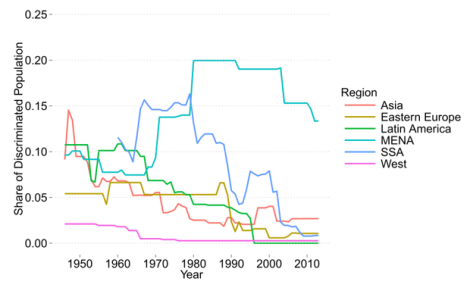
    Figure 1 displays the average population share that experiences discrimination for different world regions and years. The data derives from the Ethnic Power Relations (EPR) dataset available at https://growup.ethz.ch/pfe.

    Figure 1 reveals that ethnic discrimination remains staggeringly high in the Middle East although the region has experienced some improvements over the past twenty years. That religious differences in the Middle East erupt into violent conflict may be less of a surprise once this context is taken into account.

    Our research thus suggests that avoiding ethnic exclusion and discrimination through power-sharing in multi-ethnic governmental coalitions will reduce the likelihood of armed conflict across both linguistic and religious lines. Elite accommodation in power-sharing coalitions has contributed to greater stability in such diverse places as Bosnia, Nigeria, Burundi, and Malaysia regardless of the type of ethnic differences. Although no panacea, power-sharing is associated with a substantial decrease in the likelihood of internal armed conflicts compared to exclusive environments.

    While there has been a trend towards ethnic accommodation since the end of the Cold War, we do not know enough about its origin. Future research needs to investigate the causes of accommodation in greater detail and pay particular attention to appropriate solutions for violent conflict across linguistic lines relative to religious differences.


    Nils-Christian Bormann is lecturer and Humanities and Social Science Fellow in the Politics Department at the University of Exeter.

    Manuel Vogt is a visiting postdoctoral research associate at Princeton University and senior researcher at ETH Zürich.

    Lars-Erik Cederman is Professor of International Conflict Research at ETH Zürich and the author of Inequality, Grievances, and Civil War (Cambridge University Press, 2013).

  • Mano Dura: Gang Suppression in El Salvador

    Mano Dura: Gang Suppression in El Salvador

    Widespread social exclusion makes El Salvador fertile ground for gang proliferation and, over time, gang members have resorted to greater levels of violence and drug activity. Yet, government approaches have proved spectacularly ineffective: the homicide rate escalated, and gangs have adapted to the climate of repression by toughening their entry requirements, adopting a more conventional look, and using heavier weaponry. Sonja Wolf argues for approaches which focus on prevention and rehabilitation and looks at why such approaches have been continually sidelined.

    Read Article →

  • Markets, Minerals and Mayhem in Darfur

    The crisis in Darfur has been called the first genocide of the 21st century. There have been many explanations offered for this human tragedy. But what is often overlooked is the economic value of violence for the Sudanese State and the way that politics and resources have been connected to it across time.

    Intractable conflicts and mono-causal explanations seldom make good bedfellows. Never is this more the case than in Darfur, Sudan, which over the last 15 years has witnessed death and suffering, 2.5 million people displaced and a descent into chaos, aided and abetted by complex, shifting internal dynamics and a large number of uninformed and all too often, unprincipled outside interests.

    Described as the first genocide of the 21st century, early explanations for the conflict were attributed to longstanding tensions between “Arabs” and “ Africans” – a sort of stereotypical farmer versus nomad binary, which created violence  backed by militias from both sides. Tribal divisions were also used to create ideas about innate differences, with Sudanese Government ministers such as Dr. Mustafa Osman Ismail, claiming that death and displacement could be attributed to “tribal fightings” between “rebels who belong to specific tribes, fighting a militia who also belongs to specific tribes” (sic.) Others claimed that the war was environmental in nature, with tensions emanating from the loss of nomad livelihoods due to desertification and the creep of the Sahara to the south. Finally, writers such as Mahmood Mamdani argued that the conflict should be attributed to colonial center-periphery relations and the propensity of administrators to write “race into history” through administrative tribalism and the creation of hierarchies of power and privilege.

    The Economic Value of Violence

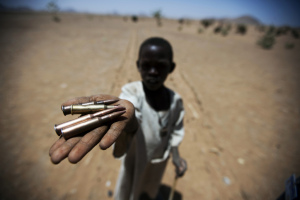
    A child holds up bullets collected from the ground in Rounyn, a village about 15 kilometres from Shangel Tubaya, North Darfur. Most of the village’s population has fled to camps for internally displaced because of heavy fighting between Government of Sudan and rebel forces.

    Image by UN Photo via Flickr. 

    In the search for an answer to the crisis in Darfur, all of these explanations emphasized clear distinctions between the characteristics and behavior of parties to the conflict, while paying less attention the larger context around the violence. That larger context relates to the economic value of violence for the Sudanese State and the way that politics and resources have been connected to it across time. Throughout Sudan’s history, whether in colonial times during the Anglo-Egyptian Condominium (when cotton production and gum arabic became key commodities for export to the West), or in the post-colonial period where land, oil and minerals have played central roles, it is the need for people, labor and resources embedded in contested tracts of land, that has galvanized the political elite and driven their behavior forward. Darfur has played a key role in this regard, supplying labor to Aba Island, White Nile for cotton picking and votes of allegiance to Sudan’s Umma Party. The region has also supplied bright, but otherwise disenfranchised young men for Hassan al-Turabi’s brand of Political Islam, premised on the reward of inclusion and moral salvation. Over time, a landscape of difference has emerged which is connected to resources and that is driven by political or religious ideology, backed up by violence. Those who are outside the centers of power and who attempt to claim their rights or their own share of resources have typically been viewed as a threat and as a result, have been subjected to disproportionate levels of violence in order to protect elite interests.

    In Darfur, the extreme violence that accompanied the start of the crisis in 2003, emanated from fears that the region would join forces with the South and take up arms against the ruling political class.  However, rather than seeking a political solution to this problem, the people were subjected to horrific violence which included murder, rape, the burning of villages, land dispossession and enclosure of the remaining population in camps. As part of the effort to quash dissent, the Government used tried and tested methods of deploying proxy militia groups to take on the dirty work of clearance and control. Viewed from the ground, these developments created an over-simplified understanding of the crisis on the part of media, policymakers and NGOs that what was going on in Darfur was in fact a race war – an age-old conflict between “Africans” who cultivated crops in villages and “Arabs” who lived as nomads on the edge of the Sahara. Yet this convenient subterfuge of a “racial war” belied the actual reality on the ground, where racialized identities were often blurred and where most groups farmed and moved animals as part of everyday life. It also camouflaged a central strategy of the political elites which has been called “aktul al ‘Abid bil ‘abid (kill the slave by the slave) and which has been deployed over and over again in Sudan to clear territories – particularly those that might have resources that the government can use.

    Across the life of the conflict, activists have advocated for all kinds of strategies to thwart the violence: publicity campaigns, diplomacy, ICC warrants and divestment, to name but a few. However, most of these approaches have failed to appreciate the way that violence is linked to economics in Sudan and how this creates pressure for the State to maintain a large patronage network and a military and intelligence infrastructure in order to survive. Resources mean power, but to stay in power requires feeding the insatiable demands of supporters who are part of this network; it also requires rewarding those who are part of informal networks such as proxy militias, with either money or loot.

    Yet as the financial needs have grown, the government’s coffers have gone into terminal decline.  In particular, since the Comprehensive Peace Agreement in 2005 and the decision of the South to secede from Sudan in 2011, the resource base of the Sudanese government has shrunk dramatically. Over this time, unsustainable foreign debt, international sanctions, the loss of 75% of oil reserves to the South, the loss of half of Sudan’s fiscal reserves and the loss of two thirds of Sudan’s international payments capacity has crippled the state’s ability to function. These problems have made borrowing impossible and left its strategy to stay in power increasingly untenable. Faced with extreme financial pressure and limited capacity to deliver, resource extraction has become the central plank of Sudanese policy, precisely because it is one of the few ways to realize cash quickly in an economy whose other sectors have atrophied due to war. Darfur has proved to be an irresistible draw in this regard because it has substantial gold deposits, land use policies that are conducive to dispossession and a population that has been traumatized due to war.

    Gold Mining on the Cheap

    In what some might consider an unlucky coincidence, the downsizing of government coffers coincided with the discovery of gold in Northern Darfur at the end of 2011, in an area called Jebel Amer. Once virgin territory, and home to the Beni Hussein people, it didn’t take long for the ground to be pockmarked with thousands of tiny “artisanal” mine-shafts as the efforts to produce gold ramped up. Mining permits, which should have been sanctioned by the Sultan of the Beni Hussein, have instead been passed into the hands of government sponsored militias to administer, while locals have simply been refused access to their land.  In 2013, 70,000 people were displaced in a short period of time in the area, and according to Amnesty International hundreds more were killed (Insert links). Strangely reminiscent of colonial tactics of terra nullius, land that was once full of people living their daily lives has been miraculously declared “empty”. This “empty” land is now open to gold speculators and mining agents to go about their business instead.

    Casualties from land clearance are one part of the story, but another part concerns the dangers of the mining process itself. In Jebel Amer where the search for gold has turned the area into something reminiscent of the Wild West, the drive for profit has superseded the need to pay attention to geology. “Artisinal” mining, while sounding quaint, is anything but: it is dirty, dangerous, with few safeguards to protect those involved. In one area of Jebel Amer where 95 miners were trapped, it was revealed that a main shaft of 60 meters had been dug with 22 smaller shafts radiating off the bottom. Not surprisingly, its stability had been compromised leading to implosion from within. Similar problems occurred at Kori and Abdulshakur mines with 37 lives lost, although in remote areas devastated by conflict, information is in scarce supply.

    Sustainability in these areas is hardly a concern of mining supporters. If deaths from unsafe mining have impacted the local population, then another major issue is environmental toxicity and the use of mercury, cyanide and other poisonous chemicals to extract the gold. These chemicals have played havoc with the local environment and led to the loss of farmland for years to come.  Those whose ancestral lands have been affected have noted cases of soil erosion, sinkholes and land and groundwater contamination. Noting the bad taste of the local water, locals have also pointed to the growth of diseases and skin complaints that were never seen before.

    Those who stand to gain from these practices, have no interest in stopping them. In particular the notorious Janjaweed Leader Musa Hilal, has taken personal charge of the gold mining operations as a way to augment his earnings and his political clout vis a vis the government in Khartoum. Embroiled in a heated argument with the government in 2013 over his compensation for militia activities, he has now installed himself in the gold mining areas of Jebel ‘Amer and is reputed to be personally earning $54 million per year for his efforts. This astounding sum of money would appear to be corroborated by a recent UN Security Council Panel of Experts’ Report in April 2016, which claims that $123million from gold extraction is now fueling the violence in Darfur, despite all efforts to institute sanctions, travel bans and asset friezes.

    If expecting Musa Hilal to mend his ways is a stretch too far, then at least we might expect the international community to take action. Yet here too, the Security Council is involved in a heavy bout of geopolitics with Russia and China lining up on one side, and the UN Panel of Experts on the other. Demands that Russia be allowed to “edit” the UN Experts’ report and remove critical paragraphs are hardly that surprising given their deep involvement in gold mining activities both in Darfur and elsewhere in Sudan, where they have been awarded large blocks for exploration. Close friends such as the Government of Qatar have also provided support with the supply of equipment for gold mining, and according to locals, with the purchase of ore from local producers so that it can be disguised later once it has left Sudan.

    Creating sustainable security in this context requires a multi-faceted approach, which on one hand stands up to the perpetrators of violence and on the other, rejects ill-gotten gains filtered through external markets so that they come up clean.  It also requires pressure for land reform, so that speculators cannot so easily make a play to grab land that is not theirs. It is not enough to sign peace agreements in lavish hotels in Doha, Qatar, when the situation calls for a much deeper analysis of why Darfur has been entrapped in a spiral of violence for so long. As history has shown, the international community’s penchant for quick fix peace agreements is worthless without the fundamentals to govern peace over the long term. Perhaps it is now time to look below the surface of the violence in Darfur and make the effort to understand the social and political landscape from which these problems first took root.

    Dr. Anne Bartlett is Associate Professor in the School for Humanities and Languages at UNSW (Australia). She has worked on Darfur and Sudan for over 15 years, during which time she has undertaken research on armed groups and also the effect of humanitarian intervention on the cities and population of the region. Bartlett has published extensively on the Darfur crisis and has given numerous talks on the subject worldwide. She is currently President of the Sudan Studies Association.

  • The Trump Presidency and Iran’s Nuclear Deal

    Momentum towards a nuclear weapons ban treaty: what does it mean for the UK?

    International momentum towards a treaty to ban nuclear weapons reached a milestone in the December 2014 Vienna conference. Even assuming that the UK does not initially sign up to such a treaty, it is subject to the pressures of a changing legal and political environment and could find its present position increasingly untenable – not least on the issue of Trident renewal.

    Read Article →

    Nuclear Weapons: From Comprehensive Test Ban to Disarmament

    Despite not yet entering into force, the 1996 Comprehensive Test Ban Treaty has succeeded in almost eliminating nuclear weapons testing and in establishing a robust international monitoring and verification system. A breakthrough in its ratification by the few hold-out states could have important positive repercussions for the Nuclear Non-Proliferation Treaty or nuclear disarmament in the Middle East.

    Read Article →

    Humanitarian Consequences of Nuclear Weapons: Five Reasons for the P5 to participate in Vienna

    The ‘humanitarian dimension’ initiative highlighting the consequences of nuclear weapons has evolved and consolidated itself in the non-proliferation regime since 2010. The five nuclear weapons states (NWS or P5) under the NPT – China, France, Russia, UK and US – boycotted the first two international conferences on the humanitarian consequences of nuclear weapons. A third conference will be held in Vienna on 8-9 December 2014. This article gives five reasons why the P5 should consider participating.

    Read Article →

    Building the Case for Nuclear Disarmament: The 2014 NPT PrepCom

    The humanitarian impact of nuclear weapons, highlighted by a wide-ranging, cross-grouping, multi-aim initiative which continues to consolidate itself in the non-proliferation regime, has come to the fore in the 3rd Prepatory Committe for the 2015 NPT Review Conference. Frustrated with the lack of progress towards NPT Article VI commitments to complete nuclear disarmament, the initiative has invigorated attention to the urgency of nuclear disarmament and a need for a change in the status quo. NPT member states and civil society continue to engage actively in publicizing the humanitarian consequences of nuclear weapons as an impetus to progress towards nuclear disarmament.

    Read Article →

    The Threat of Nuclear Disconnect: Engaging the Next Generation

    The dramatic decrease in public awareness and engagement in the nuclear weapons debate since the 1980s poses a risk to our future, as younger generations and future policy shapers will be less familiar with the challenges posed by nuclear weapons when they take the helm. But nuclear weapons are too dangerous a threat for an entire generation to disconnect from. BASIC’s Rachel Staley explores the ramifications of not updating the nuclear debate.

    Read Article →

    In piaffe: multilateral nuclear disarmament dialogue in the year of the horse

    Shortly after the lunar New Year, UN Secretary-General Ban Ki-moon challenged the Conference on Disarmament to run with the ‘spirit of the blue horse’ towards substantive engagement on multilateral nuclear disarmament in 2014. While the regime may not achieve this speed, there are initiatives underway this year that may well help nuclear disarmament dialogues pick up speed ahead of the 2015 NPT review conference.

    Read Article →

  • A long road ahead: integrating gender perspectives into peacekeeping operations

  • Colombia and Mexico: The Wrong Lessons from the War on Drugs

    As activists around the world participate in a Global Day of Action against criminalisation of drug use, evidence from the multi-billion dollar War on Drugs in Colombia suggests that militarized suppression of production and supply has displaced millions of people as well as the problem, not least to Mexico. The wrong lessons are being exported to Central America and beyond, but a groundswell of expert and popular opinion internationally is calling for alternative approaches to regulating the use and trade in drugs.

    The arrest of the Mexican drug kingpin Joaquin ‘El Chapo’ Guzman on 22 February was cheered by US and Mexican officials as the most important success against narco-trafficking since the killing of Pablo Escobar two decades earlier. Designated in 2013 by the Chicago Crime Commission as the ‘public enemy number one’ and featured among the ‘most powerful’ by Forbes, he was the leader of the Sinaloa Federation. This is considered the most powerful drug trafficking group worldwide, responsible for around 25% of the cocaine that enters the US market and enjoying connections in various continents.

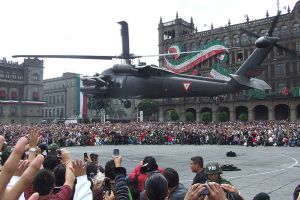
    UH-60 Black Hawk fotografiádo después del desfile militar del 15 de septiembre de 2009 en la ciudad de méxico

    Mexican UH-60 Black Hawk lands in the Zocalo, Mexico City’s main square, 15 September 2009. (Source: Wikipedia)

    If the ‘War on Drugs’ logic is followed, the event should mark the beginning of the end of drug-related violence in Mexico. But the lessons from the elimination of Pablo Escobar and the defeat of the Medellín (and later Cali) cartels in Colombia suggest otherwise. Whether El Chapo continues to run operations from jail, full leadership is assumed by the remaining commander, or the group breaks into smaller factions, the drug business is likely to survive.

    What could be reinforced is the trend to fragmentation already in place, which does not necessarily means less violence, at least in the short and medium term, and could give birth to a decentralized and networked drug business. In this sense, Mexico could well be now where Colombia was 15-20 years ago.

    Colombia’s success narrative

    Despite their different insertion into the global political economy of drugs, both countries are remarkable examples of militarized approaches to the drug war promoted by the US in Latin America (and beyond). The focus is almost entirely on the supply side: criminalization, eradication and aggressive enforcement with the aim to put a halt to the global supply of illegal drugs. The burden is mostly assumed by countries of production and transit that are evaluated on an annual basis against compliance with those prescriptions.

    The terms of the debate about this issue have until recently been limited and based on partial evidence in at least two aspects. Success is measured by the figures of crops eradication, detentions and seizures of drugs, not by net impact on the trade (drug availability and market prices). And the consequences in violence, violations of human rights, marginalization, corruption and institutional failure, have been exclusively attributed to illegal drugs and organized crime and not to the war on drugs itself. Fortunately, those terms are changing and a range of new voices, including at highest political levels, are joining a necessary and urgent discussion.

    Colombia has undertaken an amazing journey in this regard. Once criminalized in the international arena through its identification with the drug trade, in recent years it has been promoted as the brightest example of success in the drug war. The narrative of success is based on two main elements: the defeat of the big cartels in the 1990s and Plan Colombia in the 2000s.

    However, the story has critical under-reported angles. What followed the demise of Medellin and Cali was not elimination of the drug trade but the decentralization and fragmentation of the market into around 300 smaller, flatter and networked groups. The Revolutionary Armed Forces of Colombia (FARC) – and, to a lesser extent, National Liberation Army (ELN) insurgents and United Self-Defense Forces of Colombia (AUC) paramilitaries – furthered their involvement in the drug business and provided the armed ‘muscle’ in order to finance their nation-wide expansions.

    Moreover, the biggest cocaine profits shifted from Colombia to Mexico, contributing to the financial and armed power of its drug trafficking groups as the smaller rings and armed actors in Colombia lacked the power, contacts and/or will to control international logistics and operations, not to mention distribution in the US. The vacuum was filled by the Mexican cartels that established a direct buying presence in Colombia (and later Peru), logistic bases in the Caribbean and Central America for transportation, and distribution networks in the US market.

    Plan Colombia

    The largest counter-drugs programme ever launched, Plan Colombia was funded by the US with more than $7 billion to conduct massive aerial spraying of illicit crops and provide equipment and training to the Colombian armed forces.

    The focus of Plan Colombia was counter-insurgency against the FARC, particularly after the US Congress unblocked in 2002 the use of counter-drug funds for counter-terrorism. The group was weakened by increased state military power and mobility, and is currently involved in peace talks with the government. But it retains 8,000 combatants and has increasingly relied on urban militias. More importantly, despite the propaganda, the FARC was never the only (nor main) group involved in drug trafficking.

    The AUC paramilitaries had a mixed criminal-political character from their beginnings. Born out of an array of self-defence groups and narco-trafficking interests, these two ‘souls’ coexisted for years but the drug trade eventually prevailed. The demobilization of more than 31,000 AUC combatants in 2006 was immediately followed by the emergence of 30 new criminal groups that drew membership from former AUC members and mid-level commanders and sought (and eventually won) control of cultivation and trade in areas and routes formerly under paramilitary control.

    With an estimated initial membership of 4,000 members, these new criminal groups later expanded throughout the territory and are now present in 17 out of 32 departments. Those groups have never been a unified project but an array of decentralized criminal networks. Infighting and shifting alliances are the norm among them and with sectors of the FARC and the ELN also involved in drug trafficking. According to the Colombian police, they were responsible for half the total murders committed in 2010.

    Uncounted costs

    The Colombian success in the war on drugs has been partial at best and come at a high price. Taking the accumulated figures of the US International Narcotics Control Strategy Report, around 2 million hectares have been fumigated to eradicate crops since 2000. Massive herbicide spraying destroyed coca, but also livelihoods and protected natural areas, and impacted food security, health and the environment. The complex marginalization problems of rural communities that resort to coca as a livelihood strategy were addressed through securitization and criminalization (coca farmers have often been identified with the FARC). The result, for many, was forced displacement and further vulnerability. Cultivation expanded to new areas and departments, and fragmented as a result.

    The levels of violence have decreased slightly nowadays, but the homicide rate stayed at 32 for 100,000 in 2013, well above Mexico in its worst year of violence (2011, with 24 for 100,000). Also in 2013, between 140,000 and 219,000 persons (depending on the sources) were forcibly displaced in Colombia. Those figures are lower than in the past but nonetheless immense and add to a total of 6 million people forcibly displaced since 1985. The specialized agency Insight Crime interprets the current high incidence of this phenomenon in the Pacific regions and intra-urban settings as an indicator of displacement by criminal –not political- violence.

    Mexico’s War on Drugs

    Regardless of the real situation on the ground, those policies (and apparently, the high levels of popular support enjoyed by then Colombian president Alvaro Uribe) inspired President Felipe Calderón to launch an all-out war against drugs in Mexico in 2007. Around 100,000 soldiers and thousands of marines were deployed to fight the cartels in an effort to overcome the problems of corruption and ineffectiveness of the police forces, a policy later backed by the US under the Merida Initiative. The strategy got results, with relevant high and mid-level commanders of drug trafficking groups captured or killed, and seizures of illegal drugs soaring amidst the crackdown.

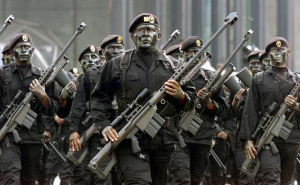
    Mexican Special Forces with Barrett M82 sniper rifles.

    Mexican Special Forces with Barrett M82 sniper rifles. (Source: Wikipedia)

    But the destabilization of the drug market triggered an escalation of violence. Violent competition for power erupted within the groups and coalitions as leaders were eliminated, coupled with fierce battles for territorial control among groups. The response against the state scaled up with the cartels creating militarized wings and using sophisticated military weaponry and tactics to fight the military and the police. The process of fragmentation and decentralization accelerated and the six big cartels of 2006 have split into around 15 today, coupled with a diversification of transnational criminal activities and soaring incidences of kidnapping and extortion. The Sinaloa Federation and the Zetas remain the most powerful cartels but have also suffered splits and setbacks.

    More than 60,000 people have died and 26,000 ‘disappeared’ in just six years. The formerly respected military have been accused of grave human rights violations including extrajudicial killings and forced disappearances. More than 4,000 complaints for human rights violations by military personnel were filed in 2006-2010 This was more than the total figure for the previous 15 years.

    Mexico has come under close scrutiny by the Inter-American Court on Human Rights and other international institutions. On June 12, the UN Special Rapporteur on extrajudicial, summary or arbitrary executions warned about unacceptable levels of violations to the right to life and impunity. Although recognizing some positive steps by the government of Enrique Peña Nieto, he warned that “a heavy-handed military approach is unlikely to improve the situation” and what is needed is “systematic, holistic and comprehensive strengthening of the rule of law”.

    As in Colombia, the Mexican victims of violence face further victimization as the government and sectors of the media dismiss them as criminals. Families and civil society groups claiming for justice may become targeted themselves. Unabated violence and institutional failure are the factors behind the emergence of armed self-defence groups, first in Michoacán and Guerrero and currently in around 10 states, as civilians take up arms to face lawlessness and fight the cartels (and sometimes corrupt authorities). This adds a new layer of armed actors whose evolution may not be easily put under control.

    Challenging the Colombian success narrative

    In Colombia, and later in Mexico, the militarized drug wars have proved ineffective in halting the drug trade but their impact is hugely negative on security and human rights, development and governance. While marginalization feeds the illegal economy, the securitized responses criminalize communities and add abuses and institutional failure to the problem of exclusion. The focus on the military also delays the hugely needed efforts to establish functioning justice systems and effective rule of law. Meanwhile, the drug business learns and adapts, moving from strict hierarchies to networked configurations.

    Despite those evidences, growing international debates about drug policies and a shifting internal public opinion, the US continues to promote a securitized approach to drugs that is most evident now in Central America. The use of Colombia as a symbol of success for Mexico and others, and as an actual ‘proxy’ to provide support in counter-narcotics and counter-insurgency to third parties including West Africa, should raise some basic questions about the premises, effectiveness and potential consequences of those policies.

    This month, the West African Commission on Drugs – an expert panel convened by Kofi Annan and chaired by former Nigerian president Olusegun Obasanjo – has called for decriminalization of drug use and to “avoid militarisation of drug policy and related counter-trafficking measures, of the kind that some Latin American countries have applied at great cost without reducing supply.”

    This potentially brings West Africa into line with the Organisation of American States, which in a report of May 2013 proposed “alternative legal and regulatory regimes” for tackling drugs, starting with cannabis”. Uruguay has already decriminalized cannabis and Colombia’s President Juan Manuel Santos, re-elected this month, has at times advocated drug policy reform. Enrique Peña Nieto has recently called on the US to start an open debate and a revision of ‘failed’ hemispheric policies whose outcome has been the rise of drug production and consumption.

    There are growing calls internationally to open a global debate over drug use and the policies needed to address it, including addressing demand in consumer countries. No less a figure than Sir William Patey, British Ambassador to Afghanistan from 2010 to 2012, has called for legalization of the heroin trade as the war on drugs in Afghanistan fails to address the complex problems at the roots of opium cultivation. Dozens of high profile British individuals and organisations, including the Prison Governors Association, have also called for decriminalization of drug use.

    The debate seems to be reaching a tipping point as the numbers and diversity of the sceptical and critical voices grow worldwide. Now it is the turn of policy makers to listen and act.

    Mabel González Bustelo is a journalist, researcher and international consultant specialized in international peace and security, with a focus on non-state actors in world politics, organized violence, conflict and peacebuilding. You can follow her at her blog The Making of War and Peace, her webpage, and Twitter (@MabelBustelo).

  • Sustainable Finance and Energy Security

    Sustainable Finance and Energy Security

    General volatility in financial markets – fuelled by irresponsible lending and trading practices, as well as evidence of market manipulation – have had an effect on oil prices. Although the specific effects of the finance sector on oil prices requires further investigation, we can already understand that a sustainable and secure future will require the development of a wider energy mix to meet rising demand. To this end, more sustainable financial systems must be developed to service the real needs of citizens

    Read Article →

    National security and the paradox of sustainable energy systems

    The transition away from a centralised global economy built around conventional energy sources to a decentralised global economy mostly fuelled by renewable resources is one we must make for the sake of our children’s futures and that of our planet. Writing for sustainablesecurity.org, Phillip Bruner asks if national security is at present, deeply concerned with preserving access to conventional energy, then how would national security for a decentralised renewable energy Internet be managed? Who would manage it? And what role, if any, could the public play in helping to alleviate some of the burdens of 21st century threat mitigation?

    Read Article →

    Environment, Energy, Economy: a threefold challenge to sustainable security

    Whether it’s the economy, energy or the environment which you value most, when it comes to security, each holds equal weight. If security can be defined in terms of what is or isn’t sustainable, then it must evolve to incorporate additional elements that transcend more traditional views on geopolitics.

    Read Article →