Blog

  • Sustainable Security


    Bay of bengal Climate InsecurityThere is no region of the world that faces more threats from climate change than South Asia. Of particular concern is the littoral surrounding the Bay of Bengal, including the Eastern Indian states of West Bengal and Odisha, Bangladesh, and coastal Burma. This region is uniquely vulnerable to a changing climate because of a combination of rising sea levels, changing weather patterns, and uncertain transboundary river flows. Away from the seashore, China holds the high ground in the Tibetan Plateau and the Himalayas, and complicates the geopolitical picture further by acting as the source of the region’s fresh water.

    On the Bay of Bengal’s coast these problems of a changing climate combine with already existing social problems like religious strife, poverty, political uncertainty, high population density, and rapid urbanization to create a very dangerous cocktail of already security threats. Climate change has been called a “threat multiplier” or “an accelerant of instability” by military and intelligence communities because of how it will impact these already existing threats. With a population of more than 300 million people (91 million in West Bengal, 42 million in Odisha, 142 million in Bangladesh, 52 million in Burma), tense militarized borders, overlapping ethnic and religious communities, and uncertainty about the future, there is no region in the world that faces a more dangerous combination of threatsfrom climate change than here.

    Rising Sea Levels

    One of the key tenets of national security is the ability of a country to ensure the integrity of its sovereign territory. Yet, as glaciers far from South Asia melt, the sea rises and encroaches upon its farms, villages, and cities. As Hemingway wrote about going bankrupt, sea level rise happens “gradually, then suddenly.” Slowly, a rising ocean brings increasing intrusion of brackish water into groundwater, harming costal agriculture. Moreover, gradual ocean encroachment harms the coast’s natural protections, whether dunes, reefs, barrier islands, or mangrove forests. Then, suddenly, when a major cyclone blows in a storm surge will overcome previously unsurmountable barriers.

    The shorelines of the Bay of Bengal stand to lose swaths of territory from sea level rise. Bangladesh, as a country predominantly composed of river delta, is most at risk. It stands to lose 11% of its territory – home to 15 million people – from a sea level rise of only 1 meter, a level that is not a particularly extreme prediction over the next 4 decades. Few invading armies could do worse damage.

    Oddly enough, the world’s oceans do not rise at the same rate. With rising global sea levels, in some areas the sea level could actually fall while it rises in others. A recent study from the National Center for Atmospheric Research (NCAR) found that sea level rise will be particularly high along the Bay of Bengal, due to changes in currents caused by rapid surface warming of the Indian Ocean.

    In the region, the cities of Dhaka, Kolkata, and Yangon all lie in major river deltas and are vulnerable to storm surges. In its 2007 report, the Intergovernmental Panel on Climate Change (IPCC) specifically listed cities in Asian mega deltas as “hotspots for vulnerability” because of sea level rise and changing patterns of river flow. Already straining at their infrastructure limits, these densely packed cities are becoming more vulnerable in a warming world.

    Changing Transboundary Water Flow

    Water does not stay within lines on a map. Instead, gravity draws it inexorably from the mountains to the sea. China, through its control of Tibet, controls the headwaters of almost all of the major rivers of Asia – only the Ganges lies outside of China’s control, originating in India. Of the major rivers that empty into the Bay of Bengal, all cross borders. Water is only plentiful during the monsoon season, so these rivers provide much-needed sustenance to agriculture, people, and ecosystems throughout their trip to the sea during the dry season – when they are fed by glacier and snow melt. Competition and tension over that flow is evident around the world when water crosses borders.

    This is true of Bangladesh and India, for which the flow of the Ganges are a source of tension. The Farakka Barrage on the Ganges River, just 10 miles upriver from the Bangladesh border, allows India a measure of control over the river. The dam allows India to divert the flow of the Ganges down a canal to the Hooghly River and into the port of Kolkata. Since the dam was built in 1975, there have been allegations from Bangladesh that India diverts water in the dry season and releases too much in the monsoon season. In 1996, the two countries agreed to a 30 year treaty to share the Ganges’ flow, but tensions still remain.

    The Brahmaputra River, meanwhile, provides a source of tension between the two regional powers, India and China. China recently announced that they are building a series of hydroelectric dams along the Brahmaputra’s upper reaches in Tibet, but they have forsworn any attempt to divert or hold back the great river’s flow. However, these assurances have not quieted all voices in India, who point to plans in China’s South-North Water Diversion Project to divert water from the Brahmaputra in order to ensure water for industry and the cities of China’s parched north. China’s leaders have denied these extravagant plans, but their engineers have lobbied for such a project. It would complete a dream of Chairman Mao’s, who said: “Southern water is plentiful, northern water scarce. If at all possible, borrowing some water would be good.”

    Climate change exacerbates these concerns about transboundary water management in the region. Climate change is threatening both the glaciers that sit at the top of these mighty rivers, feeding them during the dry season, and the very viability and predictability of the Indian Monsoon rains. Temperatures in the Tibetan Plateau and the Himalayas have risen 1.5 degrees Celsius since 1982, a rate more than three times as fast as the global average. Meanwhile, changes in weather patterns due to climate change could cause repeated failures in the monsoon. While there is little likelihood of an immediate and total melting of the glaciers, uncertainty about their future flows is enough to stoke tension in the region.

    The Potential for Conflict

    Climate change is altering the environment of the region; the glaciers are retreating, the rivers’ flows are becoming more unpredictable, and the seas are rising. However, whether those changes manifest themselves into either civil or interstate conflict will depend upon how both the populations and the governments in the region react to those changes. How long governments have to adapt depends upon unpredictable weather and climate patterns – but as the Stern Review bore out, earlier action is almost always cheaper and more effective than waiting. How governments adapt is important as whether; some adaptations, like capturing water that would otherwise flow across borders in new reservoirs could actually make the threat of conflict worse. If countries do not work cooperatively, they could stoke conflict.

    Throughout history, one of the most effective ways to deal with climate change has been migration – from a climate that is no longer hospitable to one where living is easier. However, modern borders do not reflect the historical ties between the regions. Migration is a natural response. However, in areas with already high population density and an overlapping patchwork of ethnic and religious communities, new immigrant communities often come into direct conflict with established communities. Last year saw ethnic strife in the Indian state of Assam between indigenous Bodos and immigrant Muslims, many of whom hailed from over the nearby border in Bangladesh. Over 75 people died, and over 400,000 people were temporarily displaced. In this region, it is impossible to say whether a group of migrants are “climate refugees” or simply moving to a place with better economic opportunity, but this is what we should expect in the future.

    It is difficult to find examples of any interstate wars fought directly over water; to the contrary, water has been a catalyzer of cooperation. However, as countries realize that they can control and shape water flow through mega dams and water diversion projects, there is a danger that the claims of downstream countries could be ignored. Along the Mekong River, for example, China has proceeded to dam and control the river’s flow through its territory – leading downstream neighbors to complain that China is causing droughts. Yet because of the power imbalance between China and smaller countries like Laos and Cambodia, the Chinese have little to fear. Similar thinking by Chinese leadership over dam building along the Brahmaputra, their shared river with India, could lead both countries to stumble into a conflict that neither of them want.

    In the age of climate change, conflict is more likely as threats are multiplied. Nowhere is this truer than around the Bay of Bengal. However, war is never pre-ordained. Instead, the threat of conflict is determined by how countries react. Good international governance can encourage countries to not simply pull up the drawbridge and think only of themselves, but will encourage them to see what their actions will mean for regional neighbors. Climate change is increasing the threat of wars and unrest around the Bay of Bengal; but foresight about its impacts can help the region’s leaders work together to solve a problem that knows no boundaries.

    Andrew Holland is Senior Fellow for Energy and Climate at American Security Project, a Washington D.C based think tank. He is an expert on energy, climate change, and infrastructure policy. He has over seven years of experience working at the center of debates about how to achieve sustainable energy security and how to effectively address climate change.

    Image source: amioascension

  • Sustainable Security

  • Sustainable Security

  • Sustainable Security

  • Sustainable Security

  • Sustainable Security

    Tackling South African water insecurity will require addressing the technical deficiencies, governance gaps and social inequality that are currently having a dangerous and environmentally devastating impact. The links between environmental health and socio-political stability are clear in South Africa, where there has been an exponential increase in violent protests over poor or privatized service delivery, social marginalization, and unequal access to water. South Africa must act  to solidify the links between resilient societies and resilient ecosystems.

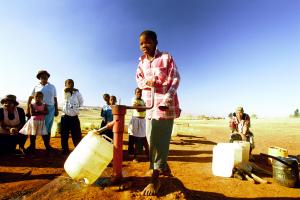
    Rural water pump near Ulundi, South Africa. Source: Trevor Samson / World Bank (via Flickr)

    Rural water pump near Ulundi, South Africa. Source: Trevor Samson / World Bank (via Flickr)

    Last month, the Intergovernmental Panel on Climate Change (IPCC) unveiled the third and final Working Groupreport from its from its landmark Fifth Assessment. This, together with the Second Working Group Report released on 31 March, 2014, is required reading for those wishing to examine the societal impacts of climate change and the potential pathways for twenty-first century resilience. For the first time, the IPCC included a chapter on human security. This is a significant achievement that should increase understanding of the increased threat and impacts on individual livelihoods that climate change is bringing, particularly in the developing world. It is clear that the connections between environmental security and human security run deep, but it is less clear just how societies can build resilience and whether the political will exists to pursue it.

    Adding to the complexity is the fact that these challenges manifest themselves uniquely across the world. Due to factors of geography, history, politics, and social development, each region and country experiences climate change in a distinctive way. For Africa, the picture is predictably bleak. The region as a whole has contributed the least to greenhouse gas emissions, faces some of the worst consequences of climate change, and has the weakest capacity to cope with the impacts.

    The country of South Africa provides a fascinating example of how difficult building ecological resilience can be. Already the 30th driest country in the world, it is expected to experience further drying trends, and an increase in extreme weather events, including cycles of extreme drought and sudden excessive rains. In relative terms, the country has in fact been a significant contributor to global climate change due to its energy-intensive economy. As such, the country has a global responsibility to engage fully with the IPCC reports and begin developing robust responses to environmental insecurity. However, doing so presents major challenges for a country that remains a “dual economy” with one of the highest rates of income inequality (and inequality of opportunity) in the world.

    This is all the more troubling given the country’s progressive stance on environmental issues. In fact, environmental security has been, and will remain, a vital component of the evolving South African identity following the end of apartheid in 1994. The issue of environmental security in South Africa is one that has for years resonated across diverse sections of the population. There are strong cultures of conservation and environmentalism running throughout the country. However, the “Rainbow Nation” continues to suffer from sustained environmental degradation in ways that alter the natural landscape, destroy necessary biodiversity, and hinder social development.

    Promises to Keep: water legislation and service delivery

    Take for instance the issue of water security. South Africa has long been seen as a world leader in progressive water policy, particularly given its need to address unequal water policies of the Apartheid era. Its Constitution and its National Water Act explicitly declares the human right to water, guaranteeing a minimum allocation of 6000 litres of free, clean water a month for every South African. Nelson Mandela championed the cause, claiming that access to water is “central in the social, economic and political affairs of the country, [African] continent and the world. It should be a lead sector of cooperation for world development.” The guiding vision for South African water policy is eloquently summed up by the former slogan for the Department of Water Affairs and Forestry: “some, for all, forever.” The progressive language of water rights enshrined in the country’s legal frameworks is a point of pride amongst South African citizens, but also a flashpoint around which grievances often converge.

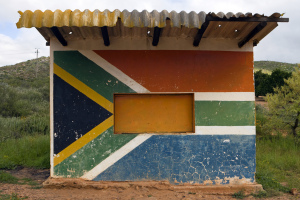
    Unused farm stall on the road between Clanwilliam and Citrusdal. Source: John Hogg/World Bank (via Flickr)

    Unused farm stall on the road between Clanwilliam and Citrusdal. Source: John Hogg/World Bank (via Flickr)

    However, while the Constitution and the National Water Act overturned the discriminatory water policies of the Apartheid era, they remain vague and non-committal on the delivery of their lofty promises. Given all the competing priorities and demands for investment, the country has neglected to invest the necessary resources to create, maintain and upgrade its water infrastructure and to adequately promote water conservation in the face of increased demands on the precious resource.

    In addition, the continued failure of sustainable agricultural practices and the promotion of economic growth in a business-as-usual and water-intensive manner have severely degraded South Africa’s water resources. All told, 48% of South Africa’s wetlands are critically endangered. Another telling example comes from the province of KwaZulu-Natal, where the pursuit of economic development and social advancement has led to a rapid rate of environmental transformation. The rate of loss of unprotected natural areas is approximately 1% per annum, meaning that if it continues at this rate they (and all of the attendant services they provide) will be lost by 2050. Pushing back against these trends requires significant efforts on the part of many different actors. This will be, of course, a very difficult task.

    Beyond technical deficiencies and economic tradeoffs, there remains a governance gap within the country that exacerbates the problems. The management of its water is largely disjointed and erratic. The various levels of government and the disparate non-state actors involved in water conservation and distribution are often arranged in Unsurprisingly, this leads to the multiplication of environmental stresses because stakeholders often lack technical knowledge, fail to adapt best environmental practices, contribute to spoiling common-pool resources, and contribute to social alienation from the natural world. This impedes economic development and hardens social cleavages between the rich, whose water flows freely and cheaply, and the poor, who suffer the debilitating effects brought upon by a lack of access to adequate water supplies. Thus, what is often lost in the discussion are the ways in which healthy ecosystems deliver valuable services to people. In essence, we are surrounded by ecological infrastructure.

    The social component of South African water security combines with technical deficiencies and governance gaps to create a dangerous and environmentally devastating impact. This reflects the connections between environmental health with socio-political stability. Unfortunately, for South Africa, the picture is troubling. Non-violent resistance has been a common tactic, but even more concerning has been the recent exponential increase in violent protests over poor service delivery, privatization of service delivery, social marginalization, and the persistent inequality in access to water. One of the ways that could assist the country avoid further civil strife is to significantly increase sustainable environmental management and adjust its governance priorities to deliver upon the laudatory promises of its environmental legislation.

    The Resilience of South Africa

    On May 7th, 2014, South Africans will head to the polls for national elections. This will be the fourth election since the fall of Apartheid, and the first for the “born frees” – the generation of young South Africans born and raised in a democratic South Africa. Most opinion polls indicate that the ruling African National Congress (ANC) party will be re-elected by a sizeable margin, though its support has dropped significantly in recent years. This is due in part to widening perceptions that the ANC has grown entrenched in its own privilege, reflected by ongoing corruption scandals and ineffective economic policies.

    As South Africa moves further away from the legacy of Apartheid, it must confront continued social alienation, the pervasive effects of deep inequality, and the monumental challenge of building ecological resilience and sustainability. As service delivery protests increase, it is clear how the social cleavages of modern-day South Africa often manifest themselves around issues of water, sanitation, the environment, and human dignity.

    The latest IPCC reports are remarkable achievements for a number of reasons. Not least, they clearly acknowledge the continued connections between human and environmental security. In this sense they reflect the growing awareness that to build resilient societies means to invest in resilient ecosystems, and vice versa. For South Africa, in possession of arguably the most progressive water legislation in the world, this requires actively investing in the ecological systems that builds and sustains human dignity. This will require the country to reconcile its rhetoric with its practice. A tall order to be sure, but one that is absolutely crucial for the country to fulfill the promise of its recent past.

    Cameron Harrington is a Post-Doctoral Fellow in the Global Risk Governance Programme at the University of Cape Town. His work is based upon research supported by the National Research Foundation of South Africa. Any opinion, findings and conclusions or recommendations expressed in this material are those of the author(s) and therefore the NRF does not accept any liability in regard thereto.


  • Marginalisation of the majority world

    Marginalisation of the majority world

    A complex interplay of discrimination, global poverty, inequality and deepening socio-economic divisions, together make for key elements of global insecurity. While overall global wealth has increased, the benefits of this economic growth have not been equally shared. The rich-poor divide is actually growing, with a very heavy concentration of growth in relatively few parts of the world, and poverty getting much worse in many other regions. The ‘majority world’ of Asia, Africa and Latin America feel the strongest effects of marginalisation as a result of global elites, concentrated in North America and Europe, striving to maintain political, cultural, economic and military global dominance.

    The Securitisation of Aid?

    Saferworld | Saferworld Briefing | March 2011

    Issues:Global militarisation, Marginalisation

    Poor people want to feel safe just like anyone else. Security and access to justice for poor people are development goals in their own right whether in the midst of endemic violence, such as in parts of Somalia or Afghanistan, or in more stable countries where the police and judicial services may still be inadequate, unfair or abusive. Basic security and the rule of law are also necessary for other areas of development to take root and flourish.

    Image source: Demosh

    Read more »

    Rushing Carefully in Libya

    John Norris | Center for American Progress | March 2011

    Issues:Global militarisation, Marginalisation

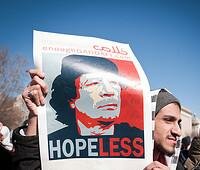
    Executive Director of the Sustainable Security and Peacebuilding Initiative at the Center for American Progress, John Norris discusses the need to consider options carefully to avoid militarising the West’s response to the crisis in Libya. He writes that blowing up a runway or imposing a no-fly zone are not silver bullets. And one would hope that after the experience of both Afghanistan and Iraq—and earlier interventions such as Kosovo and Bosnia—we understand that war is a dangerous, uncertain business.

    Image source: Quigibo. 

    Read more »

    Parag Khanna on Marginalisation, the ‘BRICS’ and the Arab Revolt

    Parag Khanna | Harvard Business Review | February 2011

    Issue:Marginalisation

    What do Egypt, Iran, Pakistan, and Nigeria all have in common? They are very populous, Muslim-majority countries, all facing constant political unrest and on the brink of collapse. And yet they are also all part of Goldman Sachs’ “Next Eleven,” the much-anticipated extension of its fabled category of “BRICs” — comprised of Brazil, Russia, India, and China.

    Image source: messay.com. 

    Read more »

    The Arab Uprising and the Implications for Western Policies

    Frederick Bowie | openDemocracy | February 2011

    Issue:Marginalisation

    Writing for openDemocracy, journalist Frederick Bowie analyses the implications for the West of the uprisings across the Arab world. Led by the Egyptians and the Tunisians, the Arab world stands on the brink of inventing forms of democracy and participation that should not only destroy the dominant Orientalist image of the region once and for all, but from which the people of the US and Europe have much to learn, too.

    Image source: Steve Rhodes. 

    Read more »

    Migration Due to Climate Change Demands Attention

    Issues:Climate change, Marginalisation

    Governments in Asia and the Pacific need to prepare for a large increase in climate-induced migration in the coming years, says a forthcoming report by the Asian Development Bank (ADB).
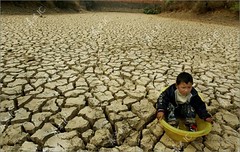
    Typhoons, cyclones, floods and drought are forcing more and more people to migrate. In the past year alone, extreme weather in Malaysia, Pakistan, the People’s Republic of China, the Philippines, and Sri Lanka has caused temporary or longer term dislocation of millions. This process is set to accelerate in coming decades as climate change leads to more extreme weather.

    Article source: Asian Development Bank

    Image source: Hamed Saber

    Read more »

    China’s drought and global food prices

    Issues:Competition over resources, Marginalisation

    What a rollercoaster ride the story of global food prices has been this year – and we’re only a month in.



    Back in January, when news emerged that food prices had reached a new record high, many analysts were relatively sanguine about the rise. As I noted in a Global Dashboard post on 6 January, the new price spike was largely driven by meat, sugar and vegetable oils, rather than, as in 2008, staples like wheat or rice.

    Governments weren’t sliding into panic measures – unlike in 2008, when over 30 of them imposed export bans, forcing prices still higher. And while the 2008 spike was marked by protests in 61 countries (with violent unrest in 23 of them), that didn’t seem to be happening this time around.

    How things can change in a month. No sooner had I published that post than Algeria erupted in rioting over high food prices – and while food prices weren’t the cause of recent events seen in Tunisia, Yemen and Egypt, they have certainly formed part of the backdrop.

    Read the full article at China Dialogue

    Image source: vivianepereiras

    Read more »

  • Sustainable Security

  • Sustainable Security

  • Sustainable Security