Blog

  • Understanding Sexual Violence in the Democratic Republic of Congo

  • “The Most Toxic War in History” – 25 Years Later

    This month marks the 25th anniversary of the start of Operation Desert Storm, the combat phase of the Gulf War. Precipitated by Iraq’s invasion and annexation of Kuwait in August 1990, the conflict was the first to see the widespread use of depleted uranium (DU) ammunition. US and UK forces subsequently acknowledged firing a combined 286,000kg of DU – the vast majority of which was fired by US Abrams and M60 tanks, and A10 and Harrier aircraft.

    The decision to deploy the radioactive and chemically toxic weapons, which had been under development since the 1950s as a response to Cold War concerns over defeating Soviet armoured divisions, would prove highly contentious in the following years. Once the media and military’s enthusiasm for what was promoted as a new paradigm in high-tech low-casualty warfare began to subside, veterans, journalists and civil society organisations in the US and UK increasingly began to challenge the general conduct of the war, and the use of DU in particular.

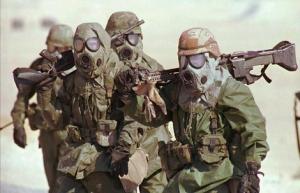
    Soldiers in Gulf War wearing gas masks. Image by Wikimedia

    Soldiers in Gulf War wearing gas masks. Image by Wikimedia.

    This was largely to be expected, and had been anticipated just six months before the conflict in a US military study on the environmental and health risks of DU: “Public relations efforts are indicated, and may not be effective due to the public’s perception of radioactivity. Fielding and combat activities present the potential for adverse international reaction.” Those wishing to continue to use DU weapons recognised that they would need to plan vigorous public relations efforts in order to justify their continued use, a pattern that continues today. Following 1991, this saw DU branded as the “Silver Bullet” – a weapon capable of such astonishing feats, and so militarily important, that any concerns over its potential health or environmental impacts should be disregarded.

    “The most toxic war in history”

    As increasing numbers of veterans began to report post-deployment health problems in the years that followed, attention began to focus on the overall toxicity of the conflict. From oil fires and pesticides, to the use and disposal of chemical weapons, the Gulf War was increasingly viewed as “the most toxic in history”. Whether it was – conflict pollution had been developing in concert with the mechanisation of warfare and industrialisation throughout the 20th Century, or whether this just represented a growing awareness of the linkages between chemicals and health is a matter of debate. Nevertheless, questions were asked about whether possible exposures to a suite of chemicals could be responsible for the ailments reported by veterans. These ranged from birth defects to chronic fatigue, and led to the emergence of the catch all term Gulf War Syndrome (GWS).

    United States troops wearing NBC [Nuclear Biological and Chemical] outfits with a 'wounded' soldier on a stretcher during an exercise before the start of operations in Kuwait, 1991.

    US troops wearing Nuclear Biological and Chemical outfits with a ‘wounded’ soldier on a stretcher during an exercise before the start of operations in Kuwait, 1991. Image by Wikimedia.

    In the decade that followed a number of internal reviews, which were triggered by public concern over veterans, flagged problems caused by the haste to deploy DU weapons. For example, a 2000 review by the US Government Accounting Office found that there had been significant failures in the training policies intended to minimise the exposure of military personnel to DU. It also found flaws in the systems of data collection necessary to determine exposure levels and subsequent health impacts, not only for DU but also for other toxic exposures.

    In the case of DU, it also became clear that scientifically unjustified assumptions had been made about the health risks it posed. These ranged from basic information about the quantity of DU released when targets are struck, to the complex biological responses within the human body when cells are exposed, with the in vitro and animal studies necessary to identify DU’s role in causing cancer only initiated in 2000. For those troops caught in friendly fire incidents, or who returned to, or repaired, DU damaged vehicles, it was clear that the scientific knowledge available on these and other issues was insufficient to answer their concerns about the health risks they faced.

    The clear lesson from DU’s use in 1991 is that far more data is required on the health risks and environmental behaviour of the substances used in munitions before they are deployed. Indeed, such data should be a pre-requisite for determining both the legality and acceptability of munitions prior to their use. In the rush to deploy the weapons, DU advocates found it all too easy to rely on assumptions that were not based on robust scientific evidence. Similarly, the lack of accurate monitoring of other toxic battlefield exposures hampered efforts to determine the cause or causes of GWS among military personnel. The situation was similar to that experienced by veterans from the conflict in south-east Asia, when efforts were made to quantify their exposure to dioxin contaminated herbicides.

    Increasing concerns over the health of Iraqi civilians

    Concerns over the health risks that DU weapons posed to Iraqi civilians took rather longer to emerge but by 1996, reports had begun to circulate from western journalists visiting Iraqi hospitals. Harshly affected by the sanctions regime, which blocked access to basic equipment and medication, medical professionals were identifying changes in the rates and age distribution of certain cancers, and in the prevalence of birth abnormalities.

    Politicisation of the findings by the Iraqi regime, and a disinterest in the humanitarian consequences of the legacy of the 1991 conflict, contributed to a failure to meaningfully address these reports. Yet the problems that the US military had faced in trying to determine the health effects being reported by their own troops during the 1990s also applied for those who sought, and continue to seek, to examine the impact of the weapons on Iraqi civilians.

    Sole of shoe at 'Highway of Death' in Iraq, where DU munitions were used to destroy tanks and other vehicles of Saddam Hussein's retreating army in Gulf War

    Sole of shoe at ‘Highway of Death’ in Iraq, where DU munitions were used to destroy tanks and other vehicles. Image by Christiaan Briggs.

    As was the case with military personnel, systems to track and record potential environmental exposures for communities in conflict were, and remain, largely absent. Mechanisms for warning civilians about possible environmental exposures are largely non-existent, in spite of the numerous pollution risks found in contemporary conflicts. Systems to follow up possible exposures in order to determine health effects in the medium to long-term are almost unheard of. What civilian epidemiological or exposure research there is, is often undertaken independently with minimal resources, as a result studies may be temporally or geographically limited, which can leave methodologies open to criticism.

    The new norm?

    The pollution generated in 1991 affected military personnel and public and environmental health across the Persian Gulf area, with smoke plumes travelling 1,600km and oil slicks affecting 440km of coastline, but it was not unique by contemporary standards. The conflict in Ukraine is also thought to have produced significant pollution, due to the fighting taking place in one of the most heavily industrialised regions on Earth. Elsewhere, current Russian and Coalition bombing operations against Islamic State controlled oil facilities in Syria have also caused widespread air, water and soil pollution. This is also likely to be the case for the conflict as a whole, which has seen half of Syria’s housing stock pulverised to rubble and fighting in and around industrial areas. From Iraq, to Libya and South Sudan, isolated and strategically valuable oil and gas facilities are often the targets of choice for militaries and armed groups alike.

    Instability and armed conflicts also degrade the institutional frameworks that safeguard environmental and public health. These forms of degradation can create pollution problems in their own right, for example by limiting governmental systems of oversight or management for industrial or domestic wastes. Institutional damage also reduces the capacity of the State to properly address pollution threats to public health and the environment. Instability can also slow or halt progress towards the implementation of multilateral environmental agreements, be they on waste, water or biodiversity, ensuring that the environmental legacy of armed conflict lasts well beyond the cessation of hostilities. Together with the direct environmental damage caused by conflict, the diminution of environmental governance and institutional capacity has serious implications for the attainment of the environmental dimensions of the Sustainable Development Goals.

    Lessons learned?

    A quarter of a century on from the Gulf War, what have we learned? As anticipated in 1990, DU weapons have not become any more acceptable, with an overwhelming majority of States demonstrating their concerns at the UN General Assembly every two years. This has helped encourage a shift in US policy on their use. Gulf War veterans are still seeking recognition for their illnesses but the experiences from 1991, and Vietnam before it, have helped catalyse progress on the collection of “environmental intelligence” for troops on deployment.

    Gunners of 26 Squadron (Sqn) Royal Air Force (RAF) Regiment based at RAF Honington wearing the GSR10 gas mask during an exercise. Image by Defence Images

    Gunners of 26 Squadron (Sqn) Royal Air Force (RAF) Regiment based at RAF Honington wearing the GSR10 gas mask during an exercise. Image by Defence Images.

    Rather less progress has been made for the civilians living in environments polluted by conflict, and much more could and should be done to gather data on environmental risks and integrate it into humanitarian assistance and public health systems. As for environmental protection in times of war, little has changed since 1991. For that reason Ukraine deserves praise for sponsoring a resolution on the necessity of greater environmental protection and more effective response ahead of this May’s UN Environment Assembly.

    Last year, the Toxic Remnants of War Project completed a study that examined whether a more formalised mechanism of post-conflict environmental assistance could not only help address wartime environmental damage when it does occur, but also help to strengthen norms against the most damaging military behaviours. For inspiration, we looked to the treaties on land mines and cluster bombs but also to the norms and principles established by international environmental and human rights law. Although primarily a think piece, it clearly demonstrated that elements of these systems are readily transferrable to the protection of the environment in relation to armed conflicts – if the political will could be mobilised to address the topic in a meaningful way.

    Building the political will for the systemic change that could overhaul the existing ad-hoc responses to wartime environmental damage, and challenge the weakness of current protection under international humanitarian law is a significant challenge, but if we fail to do so we will be ignoring the lessons from 1991 and from many conflicts since.

    Doug Weir is the Coordinator of the International Coalition to Ban Uranium Weapons and manages the Toxic Remnants of War Project, which studies the environmental and public health legacy of conflict pollution @detoxconflict. The Project is a founding member of the Toxic Remnants of War Network, which advocates for a greater standard of environmental protection in conflict @TRWNetwork.

  • The Syrian War and the Foreign Fighters from the Muslim World

    Foreign fighting in Syria is not driven primarily by devotion to Islam, nor is it motivated mainly by socioeconomic grievances. Rather, foreign fighters join the Syrian civil war to defend their Muslim brethren. Framing the war as a threat to the Muslim (Sunni) community, transnational Islamist movements offer alternative identities and a sense of belonging for alienated people from across the Muslim world.

    In recent years the conflict in Syria has become a lodestone for young Muslims who travel to join the fight. According to estimates from the U.S. National Counterterrorism Center, and reports by The Soufan Group (TSG), foreign fighters from more than 90 countries have joined the Syrian civil war since its inception in 2011, and their numbers already exceed the rate of volunteers who went to Afghanistan, Pakistan, Iraq, Yemen or Somalia at any point in the last 20 years. While the actual figures of foreign fighters in these and other sources vary, and though we do not know how many of them actually engage in the fighting, there are consistent estimates of the numbers of volunteering fighters and the distribution of their countries of origin.

    To be sure, volunteering fighters join various parties in the complex war, like Hezbollah combatants who fight for the Syrian army and foreigners who fight for the Kurdish YPG forces, yet, the concept of foreign fighters relates here to those volunteers joining jihadi movements, mainly the Islamic State and Jabhat Fath al-Sham (formerly known as Jabhat al-Nusra) organizations. Special attention is afforded to the growing stream of European Muslims to these jihadi groups in Syria, and their potential extremist actions upon return to their home countries. However, most foreign volunteers have come from Muslim countries in the Middle East and North Africa. The recruitment process is generally conducted on an individual basis. Taking place across the world, the recruitment relies largely on social media, with videos and appeals produced in a range of languages, describing the caliphate as a utopian political venture, and providing young men and women with an adventurous trip. Salafi mosques and associations also seem to take an active role in recruiting and trafficking volunteers to fight the Syrian war in the name of Islam.

    Although by no means a new phenomenon, the causes of the widening spread of foreign fighting remain unclear. As most of these foreigners are utterly detached from the events in the countries to which they journey, and have little political and material benefit to gain from these wars, the opportunity to attain martyrdom in the next life appears to be a major appeal. Yet, Islam in and of itself is not the primary factor behind foreign fighters joining the jihad. Examination at the individual level indicates that many of those who choose to join extremist groups in Syria have only basic knowledge of Sharia. Islamic State entry forms leaked in early 2016, also demonstrate that while some characteristics of the volunteers (like age and marital status) can be traced, there are no discernible demographic and socioeconomic profiles of foreign fighters in Syria.

    An inspection of the foreign fighters’ countries of origin adds to this confusion, as the spate of volunteering warriors does not originate primarily in countries dominated by radical Islamist movements, nor is it confined to countries where economic and political conditions are the worst. Rather, foreign fighters join the Syrian civil war from countries with different profiles in terms of both the role of Islamism in socio-political life, and the political authority of the regime. Four countries are notable among the home countries of the foreign fighters in Syria: Tunisia, Saudi Arabia, Morocco and Jordan. Tunisia, where the “Arab Spring” revolt was initially ignited, has become the largest source of foreign fighters joining the jihadi groups in Syria, with roughly 3,000 Tunisian warriors recorded between 2011 and 2014; Saudi Arabia is next with estimates of 2,500 fighters during that period. On the other hand, countries like Egypt, Yemen and Sudan produced far fewer volunteering fighters.

    The role of identity

    Image (cropped) credit: Freedom House/Flickr.

    Why then do foreign fighters travel from the Muslim world to fight in Syria? Foreign fighters are motivated by the quest for identity and belonging. Their recruitment is based on religious sentiments, sparked by Islamist movements striving to defend cultural and religious values of the Muslim community. Alienated individuals who seek alternative identities and a sense of belonging find them in their transnational communities. The combination of these factors has stimulated the shift from nationalist identities to pan-Islamist orientations, promoted through a fear-provoking discourse.

    This process was coupled with the emergence of transnational jihadi networks, which carried out political activism aimed at defending the Muslim nation. Recruitment of Muslim fighters thus relies on established messaging practices, by which the recruiting groups frame distant civil conflicts as posing a direct threat to the larger transnational community. Interestingly, these messages are most effective in countries like Tunisia and Saudi Arabia where major Islamist movements are co-opted, taking part in negotiated relations with the ruling elite vis-à-vis implementing Islamic norms in socio-political life. In these countries, legal or semi-legal Islamist movements embrace relatively moderate discourses of sectarian identity, remaining pragmatic and non-violent toward the state. Under such restrained relationships, Islamist sentiments of alienated groups evolve into transnationalist inclinations.

    Alienated individuals then aim their rage and frustration at external enemies. That is, restrained relations between the state and Islamist movements at the national level may well explain the relatively large number of foreign fighters recruited from subnational regions that are alienated from the state, as these fighters see transnational jihad as a way to vent socio-political rage and Islamic sentiments that find limited local opportunities for expression.

    Possible solutions

    To counter the appeal of transnationalist messages, home countries need to establish civic identities and offer competing national narratives. Governments should encourage the inclusion of alienated groups in national discourses and strengthen their sense of belonging to the state. To be sure, the establishment of civic identities is conditioned by state effectiveness and legitimacy — it can be achieved only if the state reconstitutes its position as an institution that provides the needs of its citizens.

    Indeed, state ideology and policies also affect people’s choice to join foreign fighting. Preferring to allow troublesome elements to leave the country, some governments turn a blind eye to efforts to recruit their citizens to join transnational wars. Some countries even encourage the phenomenon. Consider for example the dual policy vis-à-vis Islamism which is well-embodied in the Saudi stance toward foreign fighting in the Syrian civil war. While actively involved in the regime’s domestic de-radicalization efforts, Saudi clerics offer contradicting messages about fighting jihad in foreign countries, with some of them openly calling upon the Muslim world to fight Bashar al-Assad’s supporters, including Syrian Alawites, Iran and Hezbollah. Egypt’s clerics, on the other hand, promote clear anti-jihadist ideology, with multiple campaigns launched by Al-Azhar to renounce the radical ideas spread among young people by groups like Islamic State. Directed by Egyptian President al-Sisi, Al-Azhar leaders hold talks with religious leaders in other countries in the region to thwart Islamic State ideology and to diminish the phenomenon of foreign fighters’ volunteering in the Syrian civil war.

    The policy implication from the multifaceted causes of foreign fighting in Syria is that governments in the Muslim world should not only raise the constrains on going to Syria but also take preventive measures including information campaigns aimed at radicalized and alienated young people, offering opportunities for local expression of their socio-political needs and encouraging their sense of belonging to the state.

    Meirav Mishali-Ram is a lecturer at Bar Ilan University. Her research interests focus on international conflict and civil war, particularly in the Middle East and South Asia. She is the author of many articles and a forthcoming book on the Arab-Israel and India-Pakistan protracted conflicts. Her most recent article on foreign fighting in Syria is available at Taylor and Francis Online: “Foreign Fighters and Transnational Jihad in Syria,” Studies in Conflict & Terrorism.

  • Nomadism, Land Disputes and Security

    Violence between nomads and sedentary populations has become widespread across the globe and there is an urgent need to address the root causes of this escalation of violence.

    Conflicts between nomadic and sedentary communities are increasing. Control over the use of land and natural resources is very often at the heart of these conflicts, which are becoming a common occurrence in much of West, Central and East Africa. In Nigeria the escalation of violent incidents between nomadic Fulani herdsmen and sedentary farmers has reached such a level that it is seen as more dangerous than the exactions of Boko Haram. This is not limited to Africa as there are also increased levels of conflicts between nomadic pastoralists and sedentary farmers in India, Pakistan, Afghanistan, Yemen, China, Tibet, and Mongolia. Violent clashes between nomads and sedentary populations have become widespread across the globe. In light of this, understanding the causes of these conflicts and clashes is essential in order for effective remedial initiatives to be found.

    Agriculture, Climate Change and Sedentarisation

    3317132339_fbfd77a60b_b

    Nomadic homes of the Dassanech tribe in Ethiopia. Image Carsten ten Brick via Flickr.

    There are several different factors behind this increase of conflicts. The spreading of agriculture, nature conservation areas, oil and mineral extraction, and tourism, are putting increased pressure on the territories traditionally used by nomadic communities for transhumance, grazing and sources of livelihoods. As summarised by Elliot Fratkin, a leading expert on pastoralism, these threats include “the expansion of farmers, ranchers, and game parks on their lands; the privatisation, commodification, and subdivision of the range; the growth of cities, the outmigration of poor pastoralists to urban areas, and dislocations brought about by drought, famine, and political conflict“. Climate change is another non-negligible factor pushing for increased competition on the control of lands and natural resources. In recent decades, changes in climate patterns have led to extreme situations of drought pushing for changes of transhumant routes and modification in pastoral migration patterns. The Security in Mobility Initiative observes that: “The increase in frequency and length of drought cycles has forced herders to move more frequently, often to new destinations for extended periods. This adaptive trend has gone hand in hand with an increase in inter‐communal conflict.”

    All these factors are contributing to daily increases of disputes between sedentary and nomadic communities, including destruction of crops, over-grazing of land, indiscriminate bush burning, cattle theft and straying of cattle. These daily occurrences can sometimes lead to more serious escalations of violence as some of the recent conflicts have shown. For example, the report of the International Commission of Inquiry on Darfur highlighted that one of the main contributing factors to the conflict in the Darfur region was “the competition between various tribes, particularly between sedentary tribes and nomadic tribes over natural resources as a result of desertification.” This tragically led to the multiplication of extremely violent raids against sedentary villagers, and the destruction of ancestral patterns of cooperation that had previously governed the relationship between the different groups. This is only a single illustration of a common regional pattern as indeed, pastoralist-sedentary tensions are a common element in many of conflict areas, as seen in Uganda, Kenya, Southern-Sudan, Ghana, Mali, Niger, Nigeria and Somalia.

    These conflicts are not only based on competition to access natural resources, as very often there are some deeply embedded tensions between nomadic and sedentary communities, which is reflected in the lack of inclusion and respect for nomadism in political, economic and legal institutions. Governmental agencies and developmental organisations often view nomadism as an anachronism, or a primitive way of life, which needs to be ‘modernised’. A predominant perception is that nomadism was a primitive form of civilisation and that humankind has developed into a more ‘civilised’ settled form of life. This is often transformed into very aggressive forms of forced sedentarisation, which means the settling of a nomadic population. Whilst these forceful forms of imposed sedentarisation have started to be challenged at the international level, their legacy is still felt at the local levels where many agencies (public and private) are still pursing forceful imposed policies of sedentarisation (‘development through sedentarisation’). This not only creates serious resentment from the nomads but also creates extreme pressure points with their sedentary neighbours.

    Marginalisation, Land Insecurity and Invisibility

    Most nomadic communities are facing a lack of access to education, poor healthcare and economic marginalisation, often leading to breakdown in traditional modes of living and further marginalisation. The lack of land security is an important factor contributing to nomads increased marginalisation and insecurity. Traditionally, most nomadic communities rely on customary systems of communal land usage that are usually not recognised by State authorities. Most governments have adopted an approach based on western individualistic land tenure systems, favouring private ownership. Consequently, nomadic peoples’ mobile and collective patterns of land tenure are not recognised. Most national land tenure systems are supporting sedentary forms of land usage as they rely on the colonial concept of ‘productive use of the land’. Under this approach, farmers, settled agriculture, and other intensive forms of land usage are the only forms of recognised land tenure.

    Whilst there have been there has been some positive evolutions to challenge this predominant sedentary vision of land tenure rights — with examples of the adoption of  ‘Pastoral Code’ in Mauritania and Niger recognising access to grazing resource and migratory routes — generally nomadic peoples’ rights to land are not recognised under the formal land management regulations. More generally, most legal systems across the globe primarily support a sedentary approach to citizenship and justice: to get citizenship one needs a permanent abode, and to get access to justice one needs a permanent residency. International law has not fared any better as in general nomadic peoples have remained peripheral to the development of international law. Worst still is the fact that nomadic peoples have generally been the victims of rules governing title to territory and sovereignty that have been developed under dominant sedentary principles. Under international human rights law, there have been some positive evolutions acknowledging the need to recognise the specificity of nomadic peoples’ rights, such as mobile education or access to water resources. But in general nomadic people find very little protection under the international system of human rights. Even the ever-expanding legal regime to protect indigenous peoples has not integrated the specific demands and needs of nomadic communities. For example, the United Nations Declaration on the Rights of Indigenous Peoples, which was adopted in 2007 by the United Nations General Assembly, does not mention nomadism or nomadic peoples.

    Thinking more broadly in terms of international politics and international relations, nomadic peoples are nearly invisible. At a time when conflicts between nomads and sedentary communities are on the rise, this invisibility and lack of access to international politics is problematic. The voices of the nomads are not heard, or even considered. Civil society organisations have tried to remedy such invisibility in supporting the emergence of a ‘global nomadic movement’. This has notably resulted in the adoption of the Dana Declaration on Mobile Peoples and Conservation in 2002 and in the Segovia Declaration of Nomadic and Transhumant Pastoralists in 2007. These two declarations, developed with the inputs and direct participations of representative of nomadic and pastoralist organisations, represent significant advocacy documents calling for more visibility in international law and politics.

    A Way Forward?

    The threat to nomadic peoples, and nomadism as way of life, is global. The danger is not only that humankind could lose precious cultural and social assets, but also that it could suffer the loss of a very sustainable way of life. For centuries nomadism and mobility in the use of natural resources has ensured a sustainable access to sources of livelihood for many nomadic communities who often live in very fragile and harsh environments. Pushing these communities outside these zones creates serious environmental strains on areas of the globe that cannot sustain an extensive sedentary use of the resources. There is an urgent need to recognise the rights of the nomads to perpetuate their way of life and to maintain a mobile use of the natural resources. A clarification of the rights of the nomads over their grazing rights, demarcation of zone of transhumance, and recognition of their access to water sources would contribute to alleviate the escalating tensions. The overemphasis on agriculture, the lack of recognition of grazing rights, and the loss of their territories are all contributing factors pushing several nomadic groups to engage into violence. Not that violence is ever justified, but there is an urgent need to address the root causes of this escalation of violence. From this perspective there is a need from the international community, but also state authorities and developmental agencies, to actively engaged with nomads and ensure their inclusion in a fair and participative manner to the regulations regarding land tenure and the use of natural resources. As it has been seen recently in several West and East African countries, paramilitary groups and terrorist organisations can often thrive on these tensions and turn these into full-scale violent conflicts.

    Jérémie Gilbert is Professor in International and Comparative Law at the University of East London (UK). He has published various books, articles and book chapters on the rights of indigenous peoples, looking in particular at their right to land. His latest monograph is ‘Nomadic Peoples and Human Rights’  (Routledge, 2014).  He has worked with several indigenous communities across the globe and has served as a consultant for several international organisations. He was one of the invited independent experts for United Nations Expert Seminar on Treaties and other arrangements between States and Indigenous Peoples, and was a consultant for the Expert Mechanism on the Rights of Indigenous Peoples. Contact:

  • Rwanda’s Gacaca Courts: Vengeance Through Law

    The Gacaca courts were set up in the aftermath of the Rwandan genocide to try and help Rwandans live together in peace. But research suggests that this system has been used as a tool for vengeance, and political and economic gain. 

    In the aftermath of the 1994 Rwandan genocide, the Rwandan Patriotic Front (RPF) government was faced with the task of bringing justice and reconciliation to a divided and devastated country. Gacaca, meaning “justice amongst the grass”, a traditional justice system once used to try local disputes between neighbours, was restored to relieve the overwhelmed prison system.

    Initially, it was well received. For those accused of genocide crimes, it was a long awaited step towards justice, an opportunity for the truth to be heard and them to be judged (see Tertsakian 2008: 376).  For the survivors, it meant that they would be able to tell their story and have justice for their loved ones.

    Between 2001 and 2012, gacaca processed nearly two million cases.  Most, if not all have involved Hutu as defendants. Gacaca was set up to try only genocide crimes. Crimes committed by RPF and out of revenge were excluded from the mandate. Waldorf notes that:

    Early on Penal Reform International warned that the implementation of gacaca was emphasizing legalistic retribution over socio-political reconciliation.  Since then, gacaca has become increasingly retributive, both in design and practice

    As a result, the legal system is perceived as being used against Hutu to not only criminalize them, but to obtain their wealth and resources. This paper examines the ways in which gacaca has been used as a tool for vengeance and to serve political or economic interests.

    The misuse of gacaca

    Beginning in March 2008, I carried out ethnographic research in Gisenyi and Cyangugu Rwanda as well as Goma and Bukavu Democratic Republic of the Congo (DRC). My research has emphasised that Hutu participants did not outright reject gacaca, rather they rejected how the system was being misused, as Zach, a Hutu participant, argued

    Gacaca is good idea, but those who work in the government are bad. The rules are written in a book but they are not obeyed. …Gacaca would be very good, if the government didn’t influence the decisions.  But this is not the case; judges are influenced by soldiers, genocide survivors and others.

    According to another Hutu participant, Huey:

    Some Hutu begin a business and the government will stop them.  There are many example of this.  One man had a very successful business of selling materials for repairing cars.  However, people took him to gacaca because he had lots of money.  He gave them money even though he wasn’t guilty.  He gave them lots of money.  Now he had to change the way he conducts business.  He doesn’t like to show the materials he has, because he’s scared that he will get dragged back to gacaca.

    Alphonse, another Hutu participant, agreed “They (the government) like to charge rich Hutu. When they don’t find anything, they take that Hutu to a different district and charge him with the same crimes there.” Robert was a Hutu participant arrested for genocide crimes in 1997 and for ‘genocide ideology’ in 2008. He believes the underlining cause for both arrests centred on property disputes:

    I was accused of killing my neighbour by his brother.  During the genocide, my neighbour was caught at a roadblock.  I explained to the men there that this man was my brother, but he didn’t have his identity card to prove it.  They told me they wouldn’t kill him, but to find some way to prove his identity.  I went to the District Office and paid for an identity card that said my neighbour was Hutu and my brother.  It was a lot of money. They released my neighbour, who fled to Congo.  When he arrived at the border, the Interahamwe killed him.  I fled with my family to Congo after the genocide.  When I returned, I was arrested on genocide crimes for this man’s death.  I had spent years in prison when the formal courts found me innocent.  I told them everything and they found that my neighbour’s brother had lied. Next the brother brought me in front of gacaca for the same crimes [killing his brother]. The gacaca judges were confused as to why this case was in front of them.  They agreed with the previous ruling and I was released.  [Why was your neighbour’s brother going to all these lengths to charge you?] Because, while I was in Congo, my neighbours had moved into my house and did not want to give it back.  When I returned, I reclaimed my house, but it was stripped of all windows and doors.  Two days later I was arrested for the death of his brother.

    Robert was in fact lucky. According to Human Rights Watch (HRW), Rwandan law protects an individual from double jeopardy. However, the practice has been allowed due to a loophole in the 2004 Gacaca law. HRW reported a case that was nearly identical to Robert’s, where a man was cleared by the formal courts and then given a thirty-year sentence in gacaca. He was released upon a successful appeal. In another case, in the district of Huye, a gacaca judge told how there were two cases where the men were acquitted in conventional courts, but convicted with lengthy prison sentences through gacaca (ibid).

    Coercion within gacaca

    gacaca

    Image credit: Elisa Finocchiaro/Flickr.

    According to Douglas, a Hutu participant, who was also a RPF member and gacaca official, guilt and innocence are often determined by the government. He told me “For those Hutu who are rich, the decision is always made before he is charged, before the judges reach a decision.” The involvement of the government became evident when I was allowed to attend a gacaca proceeding in Douglas’s jurisdiction.

    The accused was a former leader, who had been convicted by the formal courts of killing someone during the genocide. Upon appeal to the Supreme Court, the man’s conviction was overturned. He was finally released from prison and freed for only one night, when the police arrested him again. People from surrounding areas had accused him of killing and stealing a motorcycle during the genocide. However, some of those murder charges were the same accusations that the Supreme Court had previously overturned.

    Douglas explained that a genocide survivors’ organisation had initiated a campaign to mobilise survivors to accuse those who were ‘guilty’ of genocide crimes. However, the organisation and gacaca officials were unable to find anyone to accuse this particular man. As a result, the trial was cancelled and the case was postponed for a month. I asked Douglas if this was a form of coercion:

    Oh for sure, I’ve already been contacted. …I was told that I have to convince the judges and that we must charge this former leader and find him guilty.  We have to do this.  This is a heavy burden… As a team, we say that he is guilty. But in private we know this prisoner is innocent, we have no choice.  That prisoner was my neighbour.  I had seen everything that happened.  A former local leader took him to the market, where those Tutsi were.  He did nothing! He didn’t kill or hurt anybody!

    Genocide ideology, a tool for vengeance

    In all likelihood the ending of gacaca will not offset the misuse of the legal system as a tool for vengeance. In 2008, the Rwandan government passed Law No. 18/2008 that defined genocide ideology as:

    an aggregate of thoughts characterized by conduct, speeches, document and other acts aiming at exterminating or inciting others to exterminate people basing on ethnic group, origin, nationality, region, colour, physical appearance, sex, language, religion or political opinion, committed in normal periods or during war.

    Human rights organisations have been concerned with the imprisonment of Rwandans on vague accusations of ‘genocide ideology.’ Amnesty International argues that ‘genocide ideology’ legislation, like gacaca, ‘is compounded by the reality and perception that most accused come from one ethnic group.’  Furthermore, it is not uncommon for individuals to use ‘genocide ideology’ laws for personal gain.

    In fact, Amnesty was only able to find one case where a Hutu attempted to bring ‘genocide ideology’ charges against a Tutsi. The individual was offended after a Tutsi neighbour had called him a Hutu. The case was dropped by the prosecution. Robert believed that in connection with gacaca, ‘genocide ideology’ becomes a weapon that is used to discriminate and imprison innocent Hutu:

    Gacaca is used for stopping those Hutu who are rising up in society.  It allows Tutsi to take their property.  It helps to promote young Tutsi to occupy jobs.  A Tutsi can claim genocide ideology as a way of forcing a Hutu out of their post. It is like a business, anyone who gets into an argument at work can be accused of genocide ideology. Then they get put into prison.  Just ask why charges of genocide ideology only exist against Hutu, but Tutsi have genocide ideology as well.

    In 2008, Robert was arrested on allegations of ‘genocide ideology’ made by the same man who accused him of murder. Robert felt that having failed to obtain his property through accusations of genocide crimes, the man now turned to ‘genocide ideology.’

    I decided to rebuild a granary, after a few days the community leader came to me and told me that I must destroy the granary, because it was in the road.  I told him he didn’t have the authority… My neighbours sent that official, the same ones who had me arrested before, those that accused me before. They called the police and told them I had insulted them [a way of saying that a racial/ethnic epithet was used].  It was planned! The leader had told them that I had beaten him.  I am an old man; the leader is a young man. I cannot beat him!  When I got to prison, they charged me with crimes of genocide ideology and opposition to the government’s programmes. My wife’s brother came to intervene on my behalf.  He told me that I must be quiet; because they have many things they could charge me with.  The Police Commissioner also told me to go home and keep quiet.  Now I’m quiet.

    The other man involved was a neighbour, with whom Robert was having a boundary dispute with.  According to Robert, the men believe that if Robert returned to prison, he wouldn’t be able to pay back a bank loan and his house would be repossessed, solving both problems. Robert’s testimony highlights how the misuse of the legal system through gacaca and genocide ideology presents challenges to reconciliation. While, at the same time, demonstrating that there is a desire and a demand for it, he states,

    Those Tutsi were looking for any reason to condemn me to prison.  I didn’t do anything.  If I say anything, they will get me again and put me in prison. Everyday they accuse me.  Their (genocide survivors) agenda is like revenge there was no reason for them to do what they did.   They see me and their hearts accuse themselves.  When I was released (the first time) they were not happy to see me…In 2002, after I was released, I had electricity and water and my neighbours didn’t.  They came to me asking me for water.  They say, “This Hutu has TV, water, we have nothing”.  They think of me as being rich.  They say, “this Hutu, who has all these things, how can he get these things”? It’s a major reason why they want to punish me.  I put myself in Allah’s hands. …The best thing for all Rwandans would be to share power and forget.  To work for the nation, forget about the divisions or favouritism and use the same Arusha Accords as a power sharing agreement.  Only then can Rwanda be one house with one parent, to care for all children.

    Conclusion

    Much has been written and debated about whether or not gacaca has achieved reconciliation in Rwanda. While most would agree and recognize that gacaca was “one of the most ambitious transitional justice experiments in history”, it was also developed and carried out within the context of “deep political and ethnic division, fear, suspicion, intimidation and corruption” (see Tertsakian 2008: 362). The consequences of this is that gacaca was never going to be able to bring about reconciliation for all Rwandan, but rather contributed further wounds of mistrust and division.

    Larissa R. Begley received her PhD in Social Anthropology from the University of Sussex. She is currently a lecturer in African and African American Studies at Iowa State University. Her research focuses on understanding the implication of genocide ideology laws as a form of state violence in Rwanda.
  • Losing control over the use of force: fully autonomous weapons systems and the international movement to ban them

    Losing control over the use of force: fully autonomous weapons systems and the international movement to ban them

    Later this month, governments will meet in Geneva to discuss lethal autonomous weapons systems. Previous talks – and growing pressure from civil society – have not yet galvanised governments into action. Meanwhile the development of these so-called “killer robots” is already being considered in military roadmaps. Their prohibition is therefore an increasingly urgent task.

    Read Article →

  • Muslim Paranoia? Ideology and the Limits of Engagement

    A recurring feature of Western counter-radicalisation discourse is the ‘Muslim paranoia narrative’, a belief that resentment towards Western societies is motivated by a paranoid and conspiracy-riven worldview. This association between radicalisation and paranoia appears repeatedly through official statements and policy documents.

    Radicalisation is at the forefront of policy debates as ISIS continues to draw recruits from Western democracies. Recent summits in Washington and Sydney on countering violent extremism have highlighted the importance of undermining extremist narratives, mobilising moderate Muslims who oppose ISIS, and working to address underlying drivers of radicalisation. Yet representatives of Muslim communities have met this approach with considerable scepticism, both in Western states and across the Muslim world. A common complaint is that Muslims are singled out and caricatured as a unique danger, which only increases the level of vilification experienced by Muslims.

    The Muslim paranoia narrative

    islamic_center_of_murfreesboro_with_flag

    Image by Saleh M. Sbenaty via Wikimedia.

    In recent research published in Critical Studies on Terrorism, I explore the underlying ideological conditions that work against engagement with Muslim communities thought vulnerable to radicalisation. I examine what I call the “Muslim paranoia narrative”, a recurring feature of Western counter-radicalisation discourse that helpfully captures these underlying ideological dynamics. In the Muslim paranoia narrative, resentment towards Western societies is said to be motivated to some degree by a paranoid and conspiracy-riven worldview, which is thought to thrive in alienated and disempowered communities. Terrorist recruiters exploit distorted outlooks to fuel a sense of injustice about the plight of Muslims abroad. This association between radicalisation and paranoia appears repeatedly through official statements and policy documents, including those associated with ongoing counter-radicalisation strategies like the US State Department’s Digital Outreach Team.

    The Muslim paranoia narrative is worth examining because it is a clear tension point in contemporary radicalisation strategies that are increasingly focused on engagement and collaboration. The negative connotations associated with paranoia connect palpably with the sense of vilification often highlighted by Muslim critics of these programs. And the paranoia narrative can be connected to a broader ideological imaginary. Tracing the Muslim paranoia narrative from its ideological roots provides a window into the assumptions and priorities informing radicalisation discourse and contextualises the reticence of Muslim communities towards it.

    The Muslim paranoia narrative is especially intense in the United States where my research is focused. Richard Hofstadter is widely understood to have established the now commonplace account of political paranoia in his famous essay “The Paranoid Style in American Politics”, which identified a recurring strain in American politics characterised by a “sense of heated exaggeration, suspiciousness, and conspiratorial fantasy”. Hofstadter positioned political paranoia on the periphery of pluralistic American democracy as the irrational pathology of angry extremists, and contrasted it with a rational political centre where sensible politics occurred. Although Hofstadter wrote this seminal piece in 1964, it is difficult to overestimate its traction and influence. This is in large part due to the fact that Hofstadter deployed many of the most common conceptual features of post-War liberalism, which abhorred populism and focused on the mediation of competing interests through bargain and compromise. America was situated as a moderate democracy, pragmatic, centrist and non-ideological, in contrast to the radical politics sweeping the post-War Europe. Although liberalism has evolved significantly over the intervening years, the basic conceptual features set out by Hofstadter have remained pervasive in contemporary perspectives on political paranoia.

    One reason for this is that political extremism is still largely understood through the same centre/periphery framework. This dynamic is at the heart of radicalisation discourse in the US, where the political and religious beliefs of Muslim communities have emerged as a subject of concern. In this context, the Muslim paranoia narrative locates paranoia not just on the fringe of liberal democracies, but also on the periphery of international power and legitimacy from the point of view of political leaders and security experts. Here the pervasive perspective on political paranoia folds together with a long-running orientalist narrative about the supposedly dysfunctional characteristics of Muslim cultures, particularly in the Middle East, which has often framed America’s regional encounters.

    A problematic narrative

    The Muslim paranoia narrative is involved in a powerful process of ideological reproduction that works against engagement and collaboration with Muslim communities. Underlying liberal and orientalist frameworks situate Muslim cultures as dysfunctional and anti-modern, while associating Muslim resentment about Western foreign policies with problematic and potentially pathological modes of thought. Like post-War liberal orthodoxy secured by contrast with paranoid populism, contemporary liberal modernity is secured by contrast with the paranoia of alienated Muslims.

    At the same time, contemporary radicalisation discourse disciplines the wider public against consideration of Muslim grievances and associated criticisms of US policy. For instance, the identification of political paranoia as a subject of concern has the double effect of producing a strong general deterrent against the interrogation of elite power and political controversy, when the personal and professional costs of such engagements are potentially catastrophic. The taint of irrationality can be devastating, even by association – undermining credibility and calling motivations into question.

    In this sense, the Muslim paranoia narrative can be understood in terms of powerful ideological scripts in American political culture, rather than as an objective description of an ideational precursor to radicalisation in Muslim communities. The broader point is that potent narratives around extremism and oriental otherness have undermined the approach of successive US administrations to counter-radicalisation. These scripts have worked against a persuasive encounter with Muslims critical of American foreign policy, when such criticisms are framed as the product of a problematic thoughts and dysfunctional culture.

    This problem is clear enough in the practical setting of counter-radicalisation programs like the US State Department’s Digital Outreach Team (DOT), a group of bloggers tasked with confronting views critical of American policy on foreign language websites, and, more recently, discrediting ISIS affiliated users on social media. For our purposes it is interesting to note that according to the State Department “the Digital Outreach Team contrasts objective facts with the often emotive, conspiracy-laden arguments of US critics in the hope that online users will take a fresh at their opinions of the US”.  And this frame manifested in the online activities of the DOT where time was spent “ridiculing myths and conspiracy theories and calling users with extreme views radicals, but claiming to enjoy engaging with users who post objective views.” Perhaps unsurprisingly, a close analysis of DOT work following President Obama’s 2009 Cairo Address found that a large majority of people who expressed a view about the DOT were negative in their comments, with half openly “ridiculing and condescending”. Although there were no doubt many reasons for the widespread hostility to the DOT, it should be obvious that labelling people paranoid and irrational is highly antagonistic, particularly when considered in the context of the wider set of intimations that have historically been associated with such language.

    Indeed, it is critical to acknowledge that although the identities and relations highlighted in my analysis of the Muslim paranoia narrative exist within a specific policy discourse, they bear no necessary relationship to the lived experience of differentiated Muslim people, who often refuse classification in these terms. Moreover, it is critical to acknowledge that there is still no conclusive evidence for a particular terrorist profile; for a common pathway or pattern to radicalisation; or for predicting which holders of radical views will become violent. Without critical awareness of the ideological conditions identified here and a sustained attempt to move beyond them, the crucial work of engagement, partnership and community building will be likely ineffectual.

    Tim Aistrope is Lecturer in the School of Political Science and International Studies at the University of Queensland.

  • The Arctic: Hot or Not?

    Carefully Managing Water Resources to Build Sustainable Peace

    Carefully planned interventions in the water sector can be an integral part to all stages of a successful post-conflict process, from the end of conflict, through recovery and rebuilding, to […]

    Read Article →

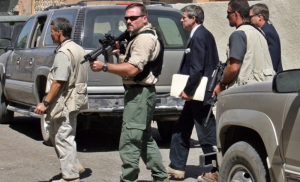
  • From Sandline to Bottom line: The Regulation of PMSCs in the UK

    The UK is the state of registration for a large number of land-based and maritime PMSCs. How compatible is the UK regulation model for PMSCs with international norms, especially those concerning human rights?

    Author’s note: this commentary draws upon work found in a previous article written by the author – ‘Regulation of the Private Military and Security Sector: Is the UK Fulfilling its Human Rights Duties?’ in (2016) 16(3) Human Rights Law Review 585-599.

    There are a large number of Private Military and Security Companies (PMSCs) registered in the UK. In 2011 the Security in Complex Environments Group (SCEG) was appointed by the UK government as its partner for the development and accreditation of standards for the UK private security industry when operating overseas. SCEG is a special interest group within Aerospace Defence and Security (ADS), a trade organisation advancing the UK aerospace, defence, and security industries. SCEG lists nearly 60 UK-registered PMSCs as members. Separately, 21 UK-registered PMSCs are currently listed as members of the International Code of Conduct Association (ICoCA), set up in 2013 to oversee the implementation of a non-binding international code for private security companies, although a much larger number of UK PMSCs, over 150, had signed up to the International Code of Conduct for Private Security Providers of 2010. This emerging system of national and international self-regulation was a political choice by the UK government based on free-market thinking and limited resistance to a powerful and profitable industry.

    Options for Regulation

    Image credit: chuck holton/Flickr.

    The post-Cold War peace dividend, which led to a surplus of well-trained former armed forces personnel, combined with the damage done to the UK’s reputation in the late 1990s by Sandline International, led to some soul searching about the regulation of the overseas operations of an emergent private military and security industry. Sandline was a private military company with a previous history of involvement in conflicts in Africa, headed by former British Army Officer Tim Spicer, that had breached a UN and UK arms embargo against Sierra Leone by supplying arms to President Kabbah. The recommendations of the Legg Report of 1998, that the government consider introducing a system of licensing for PMSCs operating out of the UK, were a direct outcome of the ‘Sandline Affair’.  The UK Foreign and Commonwealth Office’s (FCO) Green Paper, ‘Private Military Companies: Options for Regulation’ of 2002, provided a thoughtful examination of the reasons for growth of the industry, including a convincing rationale for regulating what was at the time still a fledgling industry:

    Bringing non-state violence under control was one of the achievements of the last two centuries. To allow it again to become a major feature of the international scene would have profound consequences. Although there is little risk of a return to the circumstances of the 17th and 18th centuries when privateers were hard to distinguish from pirates, and Corporations commanded armies that could threaten states, it would be foolish to ignore the lessons of the past. Were private force to become widespread there would be risks of misunderstanding, exploitation and conflict. It would be safer to bring PMCs and PSCs within a framework of regulation while they are a comparatively minor phenomenon.

    In outlining the options for regulation, the Green Paper clearly favoured a system of government licencing over a system of self-regulation based on a voluntary code of conduct. The Montreux Document (on Pertinent International Legal Obligations and Good Practices for States Related to Operations of Private Military and Security Companies During Armed Conflict) of 2008, a non-binding document agreed to by a number of countries (mainly those with a PMSC industry such as the UK or those that were hoisting significant number of contractors such as Iraq), also expressed a preference for a licensing system. The Montreux Document identifies exiting legal obligations incumbent upon states in their relationships with PMSCs when either acting as the host state, home state (state of registration) or contracting state, but it did not take the form of a binding treaty. It also recommends good practices for governments to adopt when engaging with PMSCs, but there is no supervision or enforcement of any aspect of the Document.

    Given this support, the creation of a system of licensing seemed likely, particularly as such a regime had been introduced for UK domestic private security operators in the 2001 Private Security Industry Act, after a period of ineffective self-regulation. Indeed, when considering the Green Paper later in 2002 the Foreign Affairs Committee stated that, while self-regulation would establish better standards of PMSC conduct, it would not by itself prevent rogue or disreputable UK companies from acting against or, indeed, damaging UK interests or policies. Therefore, the Committee recommended a mixed system of general and specific licences.

    However, the UK’s experience with contractors during its involvement in conflicts in Afghanistan from 2001 and Iraq from 2003 had significant effects. By the time the government came to reconsider the matter in 2009, a much more powerful PMSC industry in terms of reach, capability and lobbying influence, combined with a new climate of austerity following the financial crisis beginning in 2008, to push  the Conservative-led government rapidly towards the least burdensome, least interventionist and, moreover, least expensive option of self-regulation.

    Despite further consultations revealing concern with a system of self-regulation, when the government re-engaged with the issue of regulation, it proceeded to create a system in which government backing for a national system of self-regulation was keyed into voluntary international codes. Concerning the latter, the UK government has been a keen supporter of the Montreux Document 2008, which provides a non-binding framework for states, as well as the International Code of Conduct for Private Security Providers of 2010. The latter contains a set of standards for security companies to respect human rights and humanitarian law, and which provides for a non-binding international form of self-regulation for the companies themselves. On the other hand, the UK has opposed any form of binding treaty requiring states to legislate for the regulation of PMSCs as proposed by the UN Working Group on Mercenaries, an item that has been on the agenda of the UN’s Human Rights Council since 2010.

    Flaws in Self-Regulation

    Ignoring the Rogue Traders

    In 2009 the FCO optimistically estimated that in time 90% of PMSCs would opt-in to a system of voluntary self-regulation. Even if this happened, it would still leave 10% of unregulated rogue companies, potentially trading on their willingness to engage in shady operations rather than on their corporate social responsibility. A voluntary system may raise standards in the industry as a whole but it ignores the central point of regulating the industry: to deter and punish those most likely to commit abuses.

    Nemo Judex in Causa Sua (no-one should be a judge in his own cause)

    Self-regulation in its pure form means that the industry is essentially being given the task of acting as a judge in its own cause. This basic injustice has been partly addressed in the regime within the UK by creating a national system of monitoring, inspection and enforcement through SCEG, separated from the industry association (ADS). This has also been duplicated at the international level, with PMSC membership of the International Code of Conduct being separate from the system of monitoring and enforcement in the hands of the ICoCA. At national level, the SCEG consists of a mixture of PMSCs, with some legal and insurance industry membership, as well as representatives from the FCO and the Department of Transport. At the international level, the ICoCA comprises states (Australia, Norway, Sweden, Switzerland, UK, US), civil society and industry representatives, with equal representation of the three pillars in the Board of Directors. Clearly it is not solely a case of the industry judging the actions of its members, but a truly independent body would not include the industry at all.

    Under the voluntary system put in place in the UK, the auditors comprise individuals from bodies accredited by the UK Accreditation Service (UKAS) as being able to measure the management, performance and activities of PMSCs against national (PSC1 US National Standard, 2012), and international standards (ISO 18788/28007, 2015), and these individuals and bodies are presumably approved because they are independent of PMSCs.

    Limited Sanctions for Non-Compliance

    Sanctions are limited, the main one comprising exclusion of a non-compliant PMSC, a sanction that ultimately does not stop the company in question from trading, as shown by the US experience of transition from ostracised ‘Blackwater’ (responsible for the 2007 Nisour Square lethal shooting of 17 civilians in Iraq), to the renamed ‘Xe Services’ in 2009, and then to ’Acedemi’ in 2011.

    Applicable Standards?

    The question of what standards are to be applied is not as straightforward as the documents (International Code of Conduct, PSC and ISO standards) suggest; that this system will be upholding human rights, humanitarian law and other applicable principles of international law. Given that these laws are not directly applicable to PMSCs, indeed most are designed to cover states not business actors, there is a certain amount of picking and choosing, adapting and interpreting, of standards. This is found at the international level, where the International Code of Conduct (ICoCA) covers some human rights but not others; and in the adoption of PSC1 (2012) as the national standard and ISO 18788/28007 (2015) as the international standards. These standards are not formulated in inter-governmental fora where the development and application of international norms normally take place. PSC1 was formulated by ASIS (an organisation for security professionals), and approved by the American National Standards Institute (ANSI); while ISO 18788/28007 was produced within the International Organization for Standardization (ISO), a non-governmental international organisation consisting of national standard-setting bodies.

    Failure to Close the Accountability Gap

    The UK government shows limited willingness to engage with its positive responsibilities under international law to ensure that private actors within its jurisdiction respect relevant national and international laws in foreign countries in which they operate. Arguably, the government’s presence on both the SCEG at national level and the ICoCA at the international level may address this deficiency, but its critical scrutiny of the practices of PMSCs in these fora is difficult to ascertain or gauge. In any case, it is certainly not as robust as a system of licencing that would require all UK-registered PMSCs to demonstrate to the licensing authorities due diligence in vetting, training, deploying and controlling personnel in conflict zones and other fragile situations. This must be backed up by a system of penalties and fines on companies and their directors for breach of the licence conditions and, ultimately, punishment for individual contractors committing serious crimes over which the UK authorities can, despite government protestations to the contrary, exercise criminal jurisdiction.

    The rapid implementation of soft voluntary standards that might have been expected does not appear to have materialised as the number of certified UK registered companies is low (at just over 40 land and maritime PMSCs according to the SCEG website). This means that a majority of UK-registered companies remain unregulated. Given that such companies often operate in unregulated spaces in other countries, there remains a major accountability gap. In these circumstances it is very difficult to see how the government’s backing for a system of voluntary self-regulation for UK-registered PMSCs, no matter how sophisticated the system appears to be, has worked to close this gap.

    Nigel D. White is Professor of Public International Law at University of Nottingham.

  • Interreligious Peacebuilding: An Emerging Field of Research and Practice