Category Archives: Securitisation of the Sahel-Sahara
Securitisation of the Sahel-Sahara focuses on the build-up of Western military forces in the Sahel-Sahara region of Africa in the context of ‘War on Terror’ interventions in Libya, Mali, Niger and Nigeria.
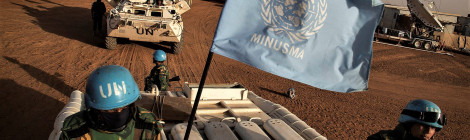
UN Peacekeeping and Counter-Terrorism
There are strong calls to give UN peacekeeping operations more robust mandates to engage in counter-terrorism tasks. But the idea of UN peacekeepers conducting counter-terrorism operations is not without its […]
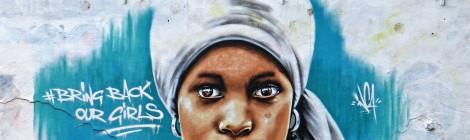
Time to Talk to Boko Haram?
Now that Boko Haram has been significantly decimated, should Nigeria and its international partners begin to consider a political approach through negotiations with the group? Nigerians heaved a heavy sigh […]

Q&A: Boko Haram in Cameroon
In May 2014, Cameroon declared war on Boko Haram at the Paris Summit. Since then, Boko Haram has intensified its activities in the Far North Region of the country, making […]
Boko Haram: Can a Peace Deal be Negotiated?
Recent talk of peace negotiations in Chad and a ceasefire between the Nigerian government and Boko Haram were a sham. So is negotiating with Boko Haram even possible? What might be the terms on which a political settlement could be reached, and with whom?
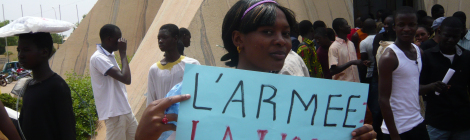
Too Quiet on the Western Front? The Sahel-Sahara between Arab Spring and Black Spring
While the world’s attention has been focused on the US-led military interventions in Iraq and Syria a quieter build-up of military assets has been ongoing along the newer, western front of the War on Terror as the security crises in Libya and northeast Nigeria escalate and the conflict in northern Mali proves to be far from over. In the face of revolutionary change in Burkina Faso, the efforts of outsiders to enforce an authoritarian and exclusionary status quo across the Sahel-Sahara look increasingly fragile and misdirected.
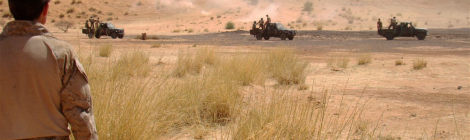
Quiet Legacies and Long Shadows: The Obama era of counterterrorism in the Sahel-Sahara
Despite the crumbling façade of its interventions in Iraq and Afghanistan, the US is preparing for a new century of ‘light footprint’ warfare, using Africa as its laboratory.

VIDEO – Militarisation of the Sahel: An interview with Richard Reeve
Sustainable Security programme Director Richard Reeve discusses our latest report ‘From New Frontier to New Normal: Counter-terrorism operations in the Sahel-Sahara’. The report, commissioned by the Remote Control project, finds that 2014 is a critical year for militarisation of the Sahel-Sahara and the entrenchment of foreign powers there.
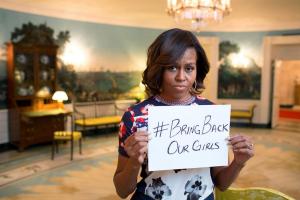
Boko Haram: Completing the circle of liberal interventionism?
Following the abduction of over 200 school girls from Chibok in northern Nigeria, clarion calls on social media for action in Africa have once again become an excuse to flex military muscle, as the rhetoric of ‘humanitarian’ interventions is increasingly outfitted with the tactics of the war on terror.
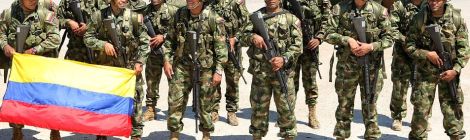
Exporting (in)Security? Questioning Colombian Military Engagement in West Africa
With skills and expertise in fighting insurgencies and drug trafficking networks, Colombia’s armed forces are increasingly being sought for engagement in similar security challenges in West Africa. But increasing Colombian engagement gives rise to a number of important questions – not least of which is the goal and expected outcomes of replicating militarised approaches to the war on drugs that have already failed in Latin America.
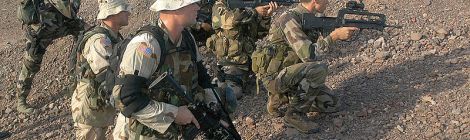
Beaux Gestes and Castles in the Sand: The Militarisation of the Sahara
Whatever the benefits for Mali, the French-led eviction of jihadist groups from northern Mali may have made the wider Sahara a less safe place, and has done little to lower the capacity of such groups to threaten European interests.. In 2014, France is implementing a major redeployment of its forces in Africa into the Sahel and Sahara. Meanwhile, the US has been quietly extending its military reach from Djibouti to Mauritania. However, as elsewhere, the western military approach to countering Islamist insurgency in the Sahel rests on very unsteady foundations and the potential to provoke wider alienation and radicalisation is strong.
Leave a Reply