Blog

  • Can the Nuclear Non-Proliferation Treaty outrun its double standard forever?


    NPT Double Standards 4President John F. Kennedy once said:

    “You cannot negotiate with people who say what’s mine is mine and what’s yours is negotiable.”

    However a small group of states (including the state of which Kennedy was President) have done just this in relation to the possession of nuclear weapons for decades. Five of them (China, France, Russia, the United Kingdom and the United States) have held the position of being the privileged few allowed to possess nuclear weapons under the terms of the 1968 Treaty on the Non-Proliferation of Nuclear Weapons (NPT)  while all others agree to forego developing the ‘ultimate weapon’ in return for access to civilian nuclear technology. Three others have refused to sign the treaty (India, Israel and Pakistan) and instead developed their own nuclear weapons (overtly in the cases of India and Pakistan after 1998 and covertly in the case of Israel from the late 1960s) happy to free-ride on the lack of global proliferation ensured by the treaty. To paraphrase Kennedy, the decision of these eight states (nine if you include North Korea from 2003 onwards) to inflict mass destruction on an adversary is theirs, but everyone else’s decision to acquire the same capability can be negotiated away.

    What is perhaps most extraordinary about the NPT ‘grand bargain’, as it is often called (although given that the five nuclear weapon states have exactly the same access to civil nuclear technology as the rest of the signatories, ‘bargain’ here really is a polite term for ‘scam’), is that it has remained largely intact for so long. For something built on such a seemingly unsustainable basis as an institutionalised double standard (particularly one that relates to the ultimate survival of nation states), the fact that its indefinite extension was negotiated in 1995 and that the treaty is still with us defies most conventional wisdoms about the ‘dog-eat-dog’ nature of self-help politics in an anarchical international system. Yes, the treaty may have been abused by some states and used as a cover to develop covert weapons programmes (Iraq, Libya, North Korea and possibly Iran) and one state has even withdrawn from the treaty under Article X (North Korea in 2003), but these are four cases in a treaty that boasts 189 signatories.

    Challenging sustainable security

    In many ways the success of the treaty regime provides one of the most robust challenges to the whole concept of sustainable security. Why bother addressing the root causes and underlying drivers of nuclear proliferation if you can effectively stem the flow of nukes by maintaining a treaty which promotes a ‘norm’ of non-proliferation as good international behaviour, and allows you to deflect charges of hypocrisy as long as you make encouraging noises about ‘eventual’ nuclear disarmament at some unspecified point in the future?

    However, like a building with rotten foundations, it may be that what has appeared to be a relatively sustainable global non-proliferation regime is far less stable than many believe it to be. Recently, Egyptian negotiators walked out of the UN talks that are held in the lead-up to each five yearly review conference of the NPT. This dramatic move from Egypt was a public expression of the long-held private frustrations of its diplomats who, after being effectively promised serious negotiations towards a Middle East Weapons of Mass Destruction Free Zone (WMDFZ), in return for their support for the indefinite extension of the Treaty in 1995 (and re-affirmed explicitly at the review conference in 2010), face the continued postponement of such talks. The problem is, Israel has no interest at all in such a zone – why would it? A combination of the NPT and Western action against would-be proliferators such as Iraq, Libya and Iran have meant that the construction of a WMDFZ in the Middle East would mean that Israel would either have to join and give up its position as the only state in the region with nuclear weapons, or be the one state in the region that refuses to join. Either way, it would also mean attracting global attention to its nuclear weapons arsenal, something Israel has managed to successfully avoid of late in all the focus on the weaponisation concerns over Iran’s civil programme.

    Calling it like it is

    Before leaving the NPT preparatory talks, Egypt’s Ambassador Hisham Badr explicitly referred to the resolution passed in 1995 that called for negotiations on a Middle Eastern WMDFZ, and called out those that thought they could get away with Egypt sticking to its side of the bargain and getting little in return. His comments challenged the idea that the double standard could be maintained indefinitely when he stated clearly that “we cannot wait forever for this resolution to be implemented.”

    Perhaps the most worrying signs here are the responses to Egypt’s move. Israeli diplomats have effectively said that with the security situation in Syria, in Egypt itself and elsewhere in the region, a WMDFZ is the least of its concerns. The United States has referred to the episode as “theatrics” and in the meantime has pushed on with negotiating a nuclear trade pact with Saudi Arabia. These trade deal talks are taking place at a time when experts are tracking an increase in the acquisition of strategic ballistic and cruise missiles by the Kingdom. The other nuclear weapons states have been conspicuously quiet throughout.

    So rather than seeing this as a sign of the potential unravelling of an unsustainable regime based on a double standard, those who have most to gain from the NPT arrangement (both inside and outside the regime), are betting on this being just another ‘NPT in crisis’ – a moment they assume will pass. Whether this storm will blow over (like a mushroom cloud over the Pacific Ocean…no, sorry that bad pun is stopping right there!) is now THE big question for those concerned about nuclear threats. If the regime falls apart and 189 states are no longer happy to give up nuclear weapons, the simple days of dealing with Iranian and North Korean nuclear ‘crises’ will be looked back upon with great fondness.

    Time for regime change?

    While the NPT regime story is one of a continuing death foretold, it is difficult to see how the all-important 2015 review conference can outrun the double standard that sits at the heart of the regime without all signatories applying some degree of what could be called a ‘sustainable security’ approach. As Egypt’s actions make clear, anything less than a regime specifically geared towards addressing the reasons why some states seek nuclear weapons  – including regional insecurity, conventional weapons imbalances and the prestige attached to nuclear arsenals by their possessors – is a regime existing on borrowed time.

    Ben Zala is a Lecturer in International Politics at the University of Leicester.

    Image source: Wikimedia

  • Syria’s Uneven Aid Distribution Threatens Future Peace

  • Thinking beyond the bomb: how can the UK help create a nuclear weapons-free world?

    One of the main problems for supporters of nuclear disarmament, in terms of their advocacy efforts, is that the experience and process of disarming will be unique for each nuclear possessor state and constitute a journey into the unknown. Thus while South Africa and former Soviet states Ukraine, Kazakhstan and Belarus dismantled or gave up their nuclear arsenals, there is a limited amount we can learn from their experiences in terms of how existing nuclear possessors may disarm.

    What’s more, nuclear disarmament can seem negative and intangible, perhaps because there is no common idea of what it would look or feel like. In order to address this it is useful to explore different approaches to abolition, for example, the debate between unilateralists and multilateralists, so we can be clearer about the causes and consequences of disarmament. This article therefore focuses on what the UK can do to help create a nuclear weapons free world (NWFW) as a vital public good.

    The fall and rise of unilateralism 

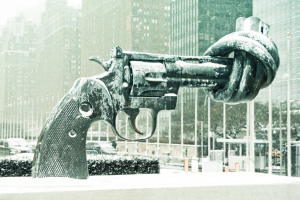
    Disarmament Sculpture (Twisted Revolver) covered in ice and snow, outside the visitors entrance to the United Nations Building in New York City.

    Disarmament Sculpture (Twisted Revolver) covered in ice and snow, outside the visitors entrance to the United Nations Building in New York City. CC: Luke Redmond via Flickr.

    Labour’s new leader Jeremy Corbyn has long been committed to unilateral nuclear disarmament and has recently revived the debate over whether the UK should be a nuclear weapon state (NWS). Unilateralism would entail the UK eliminating its nuclear arsenal without seeking concessions from other states. From the late 1980s up to the Scottish National Party’s breakthrough in 2015, all of Britain’s main political parties rejected this stance. The parliamentary consensus has instead favoured multilateral disarmament, commonly understood to mean a step-by-step negotiating process involving the other nuclear powers with Trident as a bargaining chip. Other steps the UK has taken in order to support this approach include ratification – unlike the US – of the Comprehensive Test Ban Treaty and support for a verified Fissile Materials Cut-off Treaty, albeit one which only limits future production of such materials.

    This approach might appear, at first glance, to be practical, with the US and Russia taking the lead, based on the fact that they have 93% of the world’s nuclear weapons, and to align with public opinion. For example, whilst some surveys show that a majority of voters (54%) would prefer Britain to abandon its nuclear weapons and not replace them, other surveys show that a larger majority (81%) favour an international plan ‘for totally eliminating nuclear weapons according to a timeline’. Thus, as a 2007 study by the Simons Foundation found, the UK ‘boasts a high level of support for elimination of nuclear arms and nuclear testing all over the world’.

    Given the significant public support for abolition and the fact that the UK, like all other NWS, has dual obligations under the nuclear non-proliferation treaty (NPT) – firstly to eliminate its own nuclear arsenal and secondly to help create the conditions for a NWFW – it is apparent that the UK could be doing much more and without waiting for reconciliation between China, Russia and the US.

    As the NPT makes clear, the elimination of nuclear weapons and the achievement of general and complete disarmament will be facilitated by ‘the easing of international tension and the strengthening of trust between States’. This should lead the UK – both as an NWS and a permanent member of the UN Security Council – to consider how it may act responsibly, both enabling nuclear possessors to move towards disarmament and reducing the incentives for others to seek non-conventional deterrents.

    British interpretations of multilateralism

    During Gordon Brown’s tenure as Prime Minister the Foreign and Commonwealth Office produced an information paper entitled ‘Lifting the Nuclear Shadow: Creating the Conditions for Abolishing Nuclear Weapons’, wherein the government outlined how it would fulfil its commitments under the NPT. The document stated that the UK would ‘continue to work towards the total elimination of our own nuclear arsenal and all others through multilateral, mutual and verifiable agreements’. Furthermore, when ‘useful’, the government would willingly include in any negotiations ‘the small proportion of the world’s nuclear weapons that belong to the UK.’

    Using such vague and misleading language to wriggle out of national responsibilities is an unedifying but unfortunately common trait of official documents, with the government having previously stated that the NPT ‘does not establish any timetable for nuclear disarmament’. Firstly, as former US Ambassador for the NPT Lewis Dunn notes, the 120-member Non-Aligned Movement ‘has long argued for negotiation of a time-bound framework for eliminating nuclear weapons’, yet this has been strenuously resisted by the UK and other nuclear powers.

    Secondly, does the UK’s stance mean it concurs with NATO’s 2012 Deterrence Defence Posture Review, which declared that ‘as long as nuclear weapons exist, NATO will remain a nuclear alliance’? The question here is how soon Trident would be put on the table in a multilateral negotiating process for disarmament given that it is assigned to NATO. For example, does the UK government think that including Trident would only be ‘useful’ after Russia and the US agree bilaterally to reduce their nuclear arsenals from over 7,000 weapons each to low numbers approaching the 200-300 weapons that China, France and the UK each maintain? The need here is for more clarity from the government so the public can get a better sense of the timescale that is being proposed.

    Lifting the Nuclear Shadow goes on to acknowledge that NWS have a ‘special responsibility’ to lead on eliminating nuclear weapons, but that this first requires certain ‘political and security conditions’ to be met, via ‘a co-operative project with the active engagement of the entire international community.’ If it is accepted that a more cooperative and peaceful world will benefit multilateral disarmament efforts how can we judge whether the UK has lived up to its ‘special responsibility’ in this area?

    Creating the conditions for a NWFW 

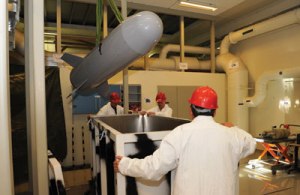
    A verification exercise took place at the mock-up nuclear weapon dismantlement facility in Norway in June 2009

    A verification exercise took place at the mock-up nuclear weapon dismantlement facility in Norway in June 2009. CC: http://www.norway-un.org

    A brief review of the UK’s actions in recent years shows that in several ways the UK has directly undermined efforts for disarmament to make headway. This point is most obviously illustrated by the fact that the UK is planning to spend tens of billions of pounds on replacing Trident – an immensely powerful type of nuclear weapon integrated within an aggressive military alliance that does not rule out the first use of nuclear weapons. Significantly, the UK does this whilst seeking to portray itself as the most progressive NWS and an active supporter of a NWFW in its public diplomacy.

    In reality the UK has, so far, not taken any unilateral or multilateral disarmament steps. What the UK has done, since the end of the Cold War, is to make quantitative reductions to its nuclear forces whilst acquiring, as Nick Ritchie points out, a nuclear weapons system – Trident – that provides an increased capability over its predecessor – Polaris. The reductions trend continued with the 2010 Strategic Defence and Security Review, which announced that ‘the number of warheads on board each submarine would be reduced from a maximum of 48 to a maximum of 40, the number of operational missiles on the Vanguard Class submarines would be reduced to no more than eight, and the number of operational warheads reduced from fewer than 160 to no more than 120.’

    These reductions, while unilateral, cannot be described as disarmament, because they have not taken place in a verifiable, irreversible and transparent manner as envisaged by the 2000 NPT Review Conference’s 13 steps. While the UK has so far not undertaken disarmament, it has begun to investigate how this might occur in future through initiatives with Norway and the US. These projects have brought together experts aiming to address the technical and procedural challenges of verifying nuclear warhead dismantlement.

    Understanding how nuclear possessors think

    Adopting truly progressive policies capable of fostering international cooperation would require the UK to develop an understanding of other state’s threat perceptions. For example, disarmament advocates and scholars often assert that the UK’s nuclear status legitimates nuclear possession for all, encouraging proliferation, and that this undermines the NPT.

    While it is true that Russia sees the UK’s nuclear arsenal as part of NATO’s overall military capabilities, the UK’s nuclear arsenal alone cannot be considered, from a strategic point of view, a key factor in the decision-making of any state currently possessing or with the potential to acquire nuclear weapons. Rather, it is clear from the strategic studies literature that US conventional superiority – at the head of the NATO alliance – and domestic political dynamics are far more important considerations for states, including China and Russia, because nuclear weapons are ‘force equalisers’. China and Russia thus primarily see their nuclear weapons as deterrents against the West’s overwhelming conventional military superiority and policies of containment and expansion. This should lead British decision-makers to consider carefully the legal and political consequences of overseas power projection.

    Take, for example, the UK’s involvement in NATO’s 1999 bombing of Yugoslavia (code named Operation Allied Force), which was, according to the Foreign Affairs Select Committee ‘contrary to…the basic law of the international community – the UN Charter’. According to Russian defence analyst Nikolai Sokov, the significance for Moscow of NATO’s bombing campaign was that it showed how the US could use force without the authorisation of the UN Security Council. Such considerations, for Sokov, led Russia to ‘enhance reliance on nuclear weapons in a departure from all documents adopted in the 1990s’ in order to deter the West from conducting ‘limited conventional wars’, principally in Russia’s near abroad.

    More widely, as Raju Thomas notes, NATO’s ‘unrestrained use of force’ gave ‘an additional post-hoc justification for an Indian nuclear deterrent’, in the ‘context of the new Western-dominant world order’, bringing nuclear powers China, India and Russia together in protest against the bombing. These three states shared concerns about aggressive intervention being justified on humanitarian grounds, as each had to deal with a potentially secessionist region with parallels to Kosovo. For China this was Tibet and Xinjiang, for India, Kashmir, and for Russia, Chechnya. Subsequent US- or NATO-led regime-change operations in Afghanistan, Iraq and Libya have also stoked concerns, not least in Iran, about where the West would seek to intervene next.

    Profiting from proliferation 

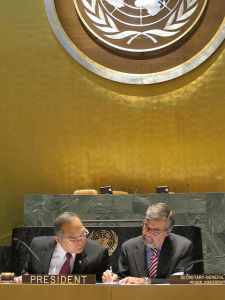
    The top leadership consult seconds before opening the last session of the 2010 review conference of the Non-Proliferation Treaty on Nuclear Weapons (NPT). From left; NPT President Ambassador Libran N. Cabactulan and NPT Secretary-General Tom Markram.

    The top leadership consult seconds before opening the last session of the 2010 review conference of the Non-Proliferation Treaty on Nuclear Weapons (NPT). From left; NPT President Ambassador Libran N. Cabactulan and NPT Secretary-General Tom Markram. CC: UN Norway (New York). Image via: Flickr

    Perhaps as a means of placating Indian anger and drawing it into the Western orbit, in 2008 Washington made a highly controversial deal with New Delhi, providing assistance to India’s civilian nuclear energy program, and greater help with other energy and satellite technology, despite India refusing to join the NPT. The UK followed the US in July 2010, sealing an agreement with India for the export of civil nuclear technology that continues to this day. As Nicolas Watt reported, this move raised ‘fears of leakage’ to India’s ‘military nuclear programme’, meaning the UK would be engaged in blatant proliferation which would likely lead to responses from New Delhi’s rivals in Beijing and Islamabad.

    The British government has also in recent years lobbied for India to join the Nuclear Suppliers Group, which was interpreted as a way of boosting India’s standing as ‘an atomic power’ and thus provide a larger export market for Western technology. Yet, as Fredrik Dahl explains, China and other states have questioned whether India should be given exceptional access ‘into a key forum deciding rules for civilian nuclear trade’ despite being outside the NPT, under which it would have to commit to disarmament.

    The UK could also support non-proliferation by carefully considering how arms transfers affect political dynamics in regions suffering from conflict. For example, arming human rights abusing regimes in the Middle East contributes to tensions and reduces the chances of establishing a Weapons of Mass Destruction Free Zone, which the government claims to support.

    Overall, if progress on non-proliferation and disarmament is to be made, short-term economic and political goals must not be allowed to trump critical national and international security concerns. Advocates of multilateral disarmament therefore need to produce and enact policies that make sense across government. Moreover, without a clear understanding of the various economic, psychological and strategic factors driving proliferation and what might enable disarmament, it will be a meaningless exercise for politicians to argue that Britain favours the international elimination of nuclear weapons.

    Tim Street is the Senior Programme Officer on the Sustainable Security programme at Oxford Research Group (ORG) and a PhD student at Warwick University.

  • Pre-Colonial Institutions, Conflict and Peace in Africa

    Many researchers have focused on how the institutions of the nation-state can help build peace. Though useful, this focus can often ignore how institutions older than those of the nation-state can contribute to peacebuilding processes.

    Can the introduction of “right” institutions facilitate peace in fragile states? Conflict researchers grappling with this question have mostly focused on the institutions of the nation-state. From this perspective, states can exit the conflict trap by introducing fair elections, capable national bureaucracies, independent judiciaries and constitutional protections against misrule. However, this state-centric perspective ignores the reality that national political institutions are far from the “only game in town” in many of the world’s most conflict prone states. Recent research suggests that institutions older than those of the nation-state can contribute to peace.

    African pre-colonial institutions

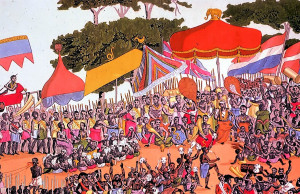
    ashanti_yam_ceremony_1817

    Image via Public Domain.

    A powerful example of how non-national political institutions contribute to peacemaking is found in the case of pre-colonial “customary” institutions in Africa.  As students of African history should know, post-colonial national institutions were layered on top of a pre-existing mosaic of kingdoms and state-like entitities, many of which have roots to the pre-colonial era.

    Consider the Ashanti Kingdom in Ghana. This political structure existed prior to colonialism, endured numerous conflicts with British colonizers, and was eventually recognized as a subnational political entity with special prerogatives. Today, after decolonization, several Ashanti institutions remain, such as the King, the customary court system and the council of elders. These institutions of the Ashanti Kingdom have served as an important platform for bargaining with the Ghanaian state, as well as in dispute resolution between conflicting parties in Ashantiland.  A similar pattern is found in the Buganda Kingdom in Uganda, where Buganda pre-colonial institutions have been incorporated into the constitution and serve as the main focal point for interactions between the Buganda ethnic group and the government.

    While some have pointed to customary institutions in Africa as a source of ethnic tension and conflict, this view is not correct. Recent research suggests that customary institutions play important roles as arbiters of conflict in state peripheries where central governments are weak. In a recent article in the Journal of Peace Research, I argue and demonstrate that this is an instance of a more general relationship. In Africa, where customary institutions are plentiful and many states have low capacity, strong pre-colonial institutions can serve as tools for peaceful bargaining and thus conflict reduction.

    To evaluate this claim, I collected data on the pre-colonial institutional affiliation of over 243 politically relevant ethnic groups as listed in the Ethnic Power Relations database. The data was collected from the ethnographic atlas, a collection of comparative ethnographic data on over 800 ethnic groups. Combining these data sources enabled a comparison of the degree to which contemporary ethnic groups inherited centralized pre-colonial political institutions such as kingdoms, chieftaincies and empires.

    Within this sample of ethnic groups, I investigated whether groups that were excluded from political power – which a decade of research suggests are the most conflict-prone ethnic groups – were less likely to experience armed conflict if they had inherited strong pre-colonial institutions. The results clearly show that ethnic groups who are excluded from power, but inherit pre-colonial institutions, are less likely to be involved in civil conflict in the period between 1945-2010. This is consistent with the claim that these groups can rely on their pre-colonial institutions to bargain with governments, avoiding armed conflict.

    Reasons for the success

    Why are ethnic groups with inherited political structures more adept at avoiding conflict? I argue that strong centralized customary institutions improve their capacity to engage in non-violent bargaining that avoids costly conflict. When groups have centralized customary institutions they can make their promises to respect agreements more credible by enshrining them in centralized political authorities, such as the Ashanti King (in Ghana). When agreements are guaranteed by a customary institution, such as a king or a traditional legislature, this raises the cost of violating the agreement, since reneging will have reputation costs for the customary institutions themselves, and since customary authorities can sanction violators. Furthermore, having strong centralized authority in customary institutions minimizes the risk of  “spoilers” to an agreement, i.e. factions of the given ethnic group that will not abide by the will of group leaders.

    For these reasons,  groups with decentralized customary institutions face greater constraints on their bargaining credibility since no preeminent authority can be used to guarantee that agreements will be respected. This is exemplified in the roles of centralized customary authorities in striking non-violent bargains with central governments in Africa. In Uganda, the institutions of the Buganda kingdom, such as the traditional authority of the King himself and the traditional Buganda legislature, have been relied on in deals made with the Ugandan regime. In Ghana, the Ashanti Kingdom has been pivotal in brokering with the Ghanean state, and has used its centralized customary court system to ratify land-rights acts and to adjudicate land-disputes in Ashantiland. In South Africa, Zulu authorities have used their customary institutions, such as the office of the Zulu king, to extract concessions from the South African government, regarding their role as traditional rulers in Kwazulu province.

    Conclusion

    This research on pre-colonial institutions has implications for how we approach the link between political institutions and peacebuilding in fragile states. First, it prompts the recognition that political institutions other than those related to national governments are vital to ensuring civil peace at the local level. Instead of seeing national institutions as the most vital to peace, we should see them as one category of a rich institutional mosaic. Crucially, in states where national institutions fail to penetrate the periphery, customary political institutions will be more central to building peace and good governance.  Second, it shows that traditional or “customary” institutions in Africa should not be seen as obsolete remnants of a forgotten era, but as vital parts of Africa’s institutional mosaic when it comes to building peace. Instead of inducing conflict and fueling ethnic antagonisms, these institutions play vital roles in containing conflict. Their local presence and importance to peace should be recognized by policymakers and scholars alike.

    Tore Wig is a post-doctoral fellow at the Department of Political Science at the University of Oslo.  He is currently affiliated with the project Disentangling the Economic Effects of Political Institutions (DEEPI), which seeks to study the historical (and contemporary) causal links between aspects of democratic institutions, economic growth and inequality.

  • The Legal Case Against the Saudi-Led Intervention in Yemen

  • Climate refugees: Human insecurity in a warming world

    Climate refugees – those forced from their homes due to the impacts of a warming world – are living proof of the international community’s failure to prevent climate change. International coordinated action is urgently required to forge a protective framework for increasingly vulnerable populations.  

    In the last six years, 140 million people – some two per cent of the Earth’s population – have been displaced by weather-related disasters alone. The Intergovernmental Panel on Climate Change (IPCC) highlights that climate-induced displacement presents a global-scale, long-term threat to human security. A new report from the Environmental Justice Foundation (EJF) meanwhile, argues that current global governance on climate change and displacement fails to mitigate serious threats to human security in some of the most deprived regions of the world.

    Asymmetric impacts, global concern

    The degradation of the natural environment as a result of climate change undermines the social, economic and political support structures which all human communities rely on but disproportionately affects the world’s most vulnerable and marginalised populations. The worst-affected countries and populations within countries also tend to be those least responsible, historically, for the carbon-intensive global economy which fuels the climate crisis.

    The threat that climate change presents to human security is not only related to the dramatic impacts accompanying and following rapid-onset disasters. Slow-onset processes of change such as rainfall variability can erode household-level resilience – the ability to absorb and respond to stressors – by degrading and reducing access to physical, financial, social, political and natural capitals. This is why, for poor and marginalised households, negative impacts which unfold over time can lead to a downward spiraling of livelihood insecurity.

    Although both the sequencing and geography of climate change impacts and their effect on ecological, social, economic and political systems are critical determinants of vulnerability, their intensity is not. Even in response to steady changes in natural systems, social systems can rupture and shift dramatically. This shifting can ‘downgrade’ entire systems – causing changes to cascade through systems across scales and fundamentally reconfiguring both the system and its resilience to future stress. This capacity for abrupt change to transfer across scales means that the negative impacts which climate change has on human security are a global concern.

    Demographic changes, particularly those resulting from overpopulation and large-scale, unplanned movements of people, can further undermine the coping capacity of social-ecological systems. In this sense, population displacement can be both a cause and result of human insecurity linked to climate change. The distinct patterns of displacement that are associated with climate change unfold over different timescales, requiring different policy and programmatic interventions, which exacerbates the challenge to decision-makers.

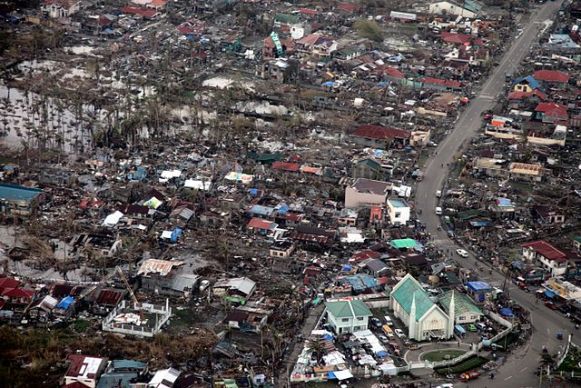
    Aftermath of Typhoon Haiyan in Tacloban, Philippines

    Aftermath of Typhoon Haiyan in Tacloban, Philippines. Source: Wikimedia

    The need for a rights-based approach

    Looking at vulnerability by ecological zone, employing disaster risk reduction technologies and mainstreaming climate change adaptation can all assist in alleviating climate-induced displacement. But at the same time, rights-based standards and instruments are urgently required to define the obligations of states, ensure sufficient resourcing and enshrine the entitlement of affected populations to move safely, positively and with dignity. Upon examining the various legal and policy frameworks currently governing climate-induced displacement at the international level, it becomes apparent that the ‘protection gap’ is more like a series of holes. This suggests the need for a new global framework which is broad in scope and sensitive to the needs of multiple populations of concern.

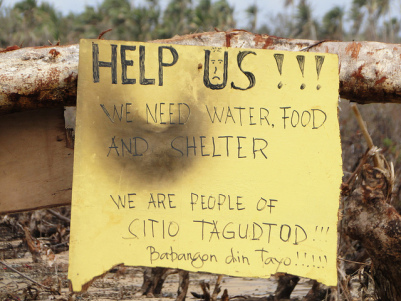
    One of the key gaps is the inadequate assistance provided to displaced populations in the aftermath of extreme climatic events. Absence of sufficient support leaves the worst affected unable to recover and increases their vulnerability to future threats. Six months after Typhoon Haiyan which hit southeast Asia in November 2013, two million people remained without shelter and exposed to another typhoon season. The 140.5 million people worldwide displaced by climate-related disasters since 2008 indicate the scale of this challenge. With projections pointing to increases in the frequency and magnitude of future extreme weather events, the number in need of assistance is expected to soar.

    The international community also fails to safeguard those fleeing gradual changes such as rainfall variability and saltwater intrusion. Research shows that slow-onset changes are significant drivers of permanent out-migration – one recent study estimates that an additional 2°C rise in temperatures could force up to 5% of Indonesia’s population (12.4 million) to migrate by the end of the century. When people move across borders to cope with environmental change – whether to seek employment or as an act of desperation – international governance systems fail to recognise the key climatic driver of their movement. The hundreds of thousands of Somalis who fled into Kenya in 2011 were unique in being granted prima facie refugee status by the UN’s refugee agency – even though many were escaping from drought and not conflict or persecution. Failing to recognise the problem makes it very hard to build fair and equitable solutions.

    Planned or assisted relocation and resettlement also represents a significant protection gap. Vietnam, Mozambique, the US, China, Papua New Guinea and several small island states are a few of the countries currently implementing relocation and resettlement programmes. However, these are undertaken in the absence of rights-based standards. This can make marginalised populations on the fringes of society vulnerable to a whole host of new pressures and abuses. In Vietnam and Mozambique, ill-conceived and poorly executed has destroyed livelihoods, raised unemployment, increased debt and removed access to basic infrastructure.

    The starkest protection gap is for ‘sinking island’ states. Around 40 small island states are considered to be at serious risk from climate change, with the 574,000 inhabitants of the lowest-lying islands of the Maldives, Tuvalu, Marshall Islands and Kiribati facing the biggest threats. The submersion or climate-induced collapse of a state has significant implications for human rights, national security and legal sovereignty. Whole populations will be rendered ‘stateless’ – with no territory of their own and no right to be admitted into other countries.

    Sign on display in Philippines following Typhoon Hayan

    Sign on display in 2013 following Typhoon Haiyan. Source: Flickr | European Commission DG ECHO

    A new legal environment

    A crucial first step for the international community is to continue to interrogate the relationship between climate change, human insecurity and population displacement. In particular, legally-worded, rights-based definitions to describe climate-induced displacement should be the starting point to seal the cracks in global governance frameworks.

    Many have suggested using the 1951 Refugee Convention to extend protection to those displaced by the effects of climate change. There are a myriad of reasons why this is not practical or desirable but the strongest one is perhaps the fact that renegotiating or amending the 1951 Convention may undermine existing protections for those fleeing conflict and persecution by allowing countries to pull out of what many already consider to be a burdensome agreement. From the Guiding Principles on Internal Displacement to the international laws on statelessness, there are various other legal instruments which some have thought might apply to climate-induced displacement. All however, lack the specificity to provide sufficiently strong protection to those affected by different types of climate-induced displacement.

    The current preferred approach of several international organisations working under the Advisory Group on Climate Change and Human Mobility – which includes the International Organization for Migration (IOM) and the United Nations High Commissioner for Refugees (UNHCR) among others – is to integrate population mobility into country-level climate change adaptation plans. This approach has the benefit of greater uptake from states and bespoke support tailored to fit the specific needs of different populations in different areas, but it fails to define collective obligations which commit states to upholding rights-based standards.

    A stronger approach may arise out of a global climate treaty under the United Nations Framework Convention on Climate Change (UNFCCC). Previous agreements from 2010 and 2012 already feature significant articles on climate-induced migration, displacement and resettlement. A draft negotiating text at the December 2014 Conference of Parties (COP) in Lima included a provision via the Warsaw International Mechanism on Loss and Damage for a “climate change displacement coordination facility” to provide assistance and relief. A global agreement – or at the very least a series of overlapping regional agreements – is likely the only way to guarantee that climate refugees receive the protection and assistance that they deserve.

    Those advocating for new global frameworks are looking ahead to 2015, when crucial climate negotiations in Paris as well as the development of a post-2015 disaster risk reduction agreement to replace the Hyogo Framework for Action, may well define future global processes to address climate-induced displacement. This year will also see the Nansen Initiative – a state-led consultative process – have its final, global consultation on the development of a protection agenda for persons displaced across borders by climate change.

    A concerted international effort, beginning now, can seal the cracks in global governance frameworks, enabling people to better cope with and adapt to climate change and – where necessary – relocate safely, positively and with dignity.

    Steve Trent (@steventrent) is Executive Director at Environmental Justice Foundation (EJF) with over 25 years experience in human rights and environmental advocacy, investigations and project management.

    Featured Image: Dwellings in Manila, Philippines face large waves produced by Typhoon Kiko in 2009. Source: Flickr | Global Water Partnership (Cropped from original)

  • Inspirations for Post-liberal Peacebuilding from Latin America

    The political changes in certain South American countries, including most notably the case of Bolivia, could act as inspirations in the ongoing search for locally grown, hybrid variants of a post-liberal peace.

    Author’s Note: This article presents key arguments from my article Jonas Wolff (2015) Beyond the liberal peace: Latin American inspirations for post-liberal peacebuilding, Peacebuilding, 3:3, 279-296, DOI: 10.1080/21647259.2015.1040606.

    Responding to the sobering results of international peacebuilding missions around the world, a rich academic debate has emerged that, from different perspectives and with different aims, criticizes the practices and premises of peacebuilding. In particular, critics have suggested that the liberal template of social and political order (‘liberal peace’ and ‘liberal democracy’) which guides peacebuilding is a crucial part of the problem. As a consequence, scholars have started to think about – and empirically study – alternatives to the liberal peace. This idea of a hybrid, peaceful order that develops out of the encounter between external and local efforts at building peace is captured, most prominently, by Oliver Richmond’s notion of ‘post-liberal peace’. The crux of this deliberately ill-defined concept is that it denotes the emergence of hybrid social orders that somehow combine liberal and non-liberal (but not necessarily anti-liberal or non-democratic) norms and practices. Such orders, thereby, go beyond and may also partially contradict liberal principles – but do so without following an established, alternative template. According to Richmond (and other critical peacebuilding scholars), local resistance to, and local appropriation of, international peacebuilding activities will inevitably produce such hybridity. Yet, there is still limited empirical evidence and rather abstract theoretical ideas about what such post-liberal forms of peace could look like.

    With this piece, I bring in experiences that are usually not reflected in the debate about peacebuilding, namely: current political changes in a series of South American countries, including most notably the case of Bolivia. The context in which these processes occur is very different from the so-called post-conflict societies in which peacebuilding takes place. Yet, precisely because of these differences, conditions for locally driven experiments with post-liberalism are arguably better in Latin America.

    While the attempt to move beyond liberal peacebuilding does certainly not need yet another template to be implemented worldwide, these experiences might well serve as inspirations in the ongoing search for locally grown, hybrid variants of a post-liberal peace. Against those that defend liberal peacebuilding by suggesting that there is, simply, no alternative (as Roland Paris has argued), the Latin American experience at the very least shows that there are actual alternatives to liberal mainstream conceptions of political and economic order – even if post-liberal experiments in South America are limited and uncertain, diverse and contradictory.

    Post-liberalism in South America
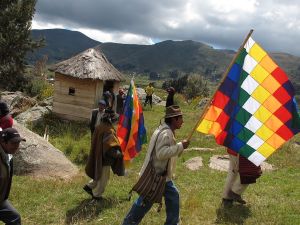
    1024px-Aymara_ceremony_copacabana_1

    Photos of a traditional Aymara ceremony in Copacabana, on the border of Lake Titicaca in Bolivia. Image via Wikimedia Commons.

    In recent years, scholars working on Latin American politics have noted ‘post-neoliberal’ and ‘post-liberal’ trends in the region. On the one hand, the so-called left turn, i.e. the election and reelection of several left-of-center governments across the region, has been accompanied by attempts to turn away from neoliberal economic policies. On the other, with diverse experiences of participatory democracy at the local level and, in the Andean region, the adoption of new constitutions that partially deviate from the mainstream model of liberal democracy, contours of a possible post-liberal democracy have begun to take shape. These developments are diverse and contradictory, but they share one basic commonality: They are the result of attempts to go beyond liberal, representative democracy and neoliberal, market-oriented economics without entirely replacing the preexisting political or economic order through a new, alternative model of development. The new constitutions in Bolivia and Ecuador, for instance, maintain all the well-known institutions of representative democracy and the usual series of political and civil rights but add or strengthen mechanisms of direct democracy and societal participation, expand the notion of human rights in areas of economic, social and cultural rights and include collective indigenous rights.

    In the area of economic policy, contemporary attempts to strengthen the economic role of the state and expand social policies, to deepen the domestic market and implement some kind of redistributive policies differ from country to country, but in general do not break with the entire neoliberal model. The prefix ‘post’ in both post-liberal democracy and post-neoliberalism is precisely meant to capture this partial, and hybrid, combination of continuity and change.

    Redefining the nation-state and the rule of law

    A core question for international peacebuilding concerns the related task of nation-building. For obvious reasons, most post-conflict societies lack a common national identity. An innovative response that has emerged from Latin America, and particularly from the indigenous movements in Bolivia and Ecuador, is the notion of a ‘plurinational state’. On the one hand, this concept openly breaks with the unitary conception of the nation-state: The state at hand is supposed to not only include different cultures (‘multicultural’) or ethnic communities (‘pluriethnic’), but several nations or peoples that have their own right to self-determination. On the other hand, however, the concept as used and constitutionally recognized in Bolivia and Ecuador is rather a hybrid: It combines an overarching national identity with an acknowledgment of particular indigenous identities. The plurinational state, contradictory as this may seem, is both a unitary nation-state and an umbrella organization that includes partially autonomous indigenous peoples. This formula has been severely contested – and continues to be so – in both countries and is, certainly, far from offering a panacea for the complex problems of nation-building in divided societies. But it may still be worthwhile to take into account.

    Directly related to this, another crucial issue in the peacebuilding debate concerns the rule of law – and, more specifically, the tension between liberal state law that is to be implemented ‘from above’ (but usually does not work very well) and local forms of community justice that exist at the grassroots level (and frequently work much better but exhibit non- or illiberal features). The same kind of tension exists in a series of Latin American countries and concerns the existence of indigenous or community justice at the local level – also not least a result of the factual absence of the state’s judicial institutions especially in rural areas. Responding to this reality and to increasing claims by indigenous movements, several Latin American countries since the 1990s have progressively recognized indigenous customs and practices. In the case of Bolivia, the new constitution goes so far as to place ordinary and indigenous legal jurisdiction on an equal footing.

    In general, research on indigenous community justice in the Andean region shows that it works relative well: When compared to the state’s justice system, which is often hardly pre-sent in rural areas and frequently perceived as alien, community justice provides an important mechanism for resolving a broad range of conflicts in ways that local populations generally regard as much more efficient and legitimate. While studies show that indigenous community justice is not at all arbitrary, but follows specific rationalities, its logic is clearly different from the rationality guiding ordinary state justice: The overall aim is to preserve the social harmony of a given community; its main strategy is some kind of reconciliation. From this perspective, long-term imprisonment is irrational, while what is regarded as physical punishment from a liberal perspective (e.g., whipping with nettles, ice water baths) is considered rather symbolic acts of purification and/or reconciliation.

    Just as in quite a few post-conflict societies legal pluralism in the Andean region is both an empirical reality and a normative challenge – and research on the experiences in Bolivia, Colombia, Ecuador and Peru offers a series of crucial insights about both the diverse practices of indigenous/community justice and about different ways of dealing with legal pluralism in more or less pluralist ways.

    Broadening democratic participation and human rights

    In the mainstream model of liberal democracy, the people do not in fact govern but through elected representatives. In debates about peacebuilding, a common criticism has precisely been directed against an overly focus on (early) elections. In South America, disenchantment with the ways in which real-existing representative democracy worked has led to experiments with more direct and ‘participatory’ forms of democracy. Important innovations in this regard include the introduction of recall referenda that enable the citizens to revoke the mandate of their elected representatives and different types of participatory budgeting and participatory development planning.

    A related criticism of liberal peacebuilding concerns its focus on a relatively narrow, and specifically liberal, set of political and civil rights. Especially when combined with neoliberal recipes of economic reform, this frequently implies a disregard for economic, social and cultural rights, which are equally established as human rights at the international level. Yet, given the existing socioeconomic conditions in the global South, liberal democracy’s emphasis on formal political equality rings quite hollow to many people. As a consequence, across Latin America, the failure of democratic regimes to significantly reduce the dramatic socioeconomic inequalities has led, since the turn of the century, to a reemergence of the ‘social question’ and the ‘left turn’ discussed above.

    Social and economic rights have consequently been strengthened in several countries, but most notably in the new constitutions adopted in Bolivia and Ecuador (but, previously, also in Brazil, Colombia and Venezuela). And, with the ‘leftist turn’ (and the commodity boom), governments have generally started to govern a bit more in line with this notion of socioeconomic rights by expanding social policies, improving basic public services, and reducing poverty. To be sure, nowhere in the region has the constitutional recognition of a broad catalog of human rights led to a consistent policy of guaranteeing universal socioeconomic rights. Still, the constitutional promise of progressive change at least establishes an important normative reference point for those that mobilize in the name of ‘social justice’.

    Caveats

    The experiences indicated above also caution against expecting too much from experiments with alternatives to liberal democracy and neoliberal economics. Most notably for the debate on peacebuilding, the search for (some kind of) post-liberal political order – and, thus, also for post-liberal peace – is itself a conflict-ridden process. While ‘localizing’ peacebuilding may plausibly reduce conflicts between external and local actors, it may well increase intra-local struggle – precisely because local-local interactions then become decisive. If the very fundamentals of the politico-economic order are up for discussion, this plausibly increases the risk of violent conflict. In fact, the process of constitutional change in Bolivia was characterized by an open clash between different conceptions of democracy – and by mutual allegations that what was presented as democratic by the opponent was precisely the opposite (colonial or imperialist, exclusive or secessionist, autocratic or totalitarian).

    The Bolivian attempt to construct some kind of post-liberal democracy also brought about more specific risks. On the one hand, the transition process meant dismantling an existing structure of democratic institutions and led to a certain, if temporary, institutional vacuum during which the democratic shape of the future political order was uncertain. On the other hand, features of Bolivia’s new political order such as the emphasis on direct democracy do not only increase the power of the people, but more specifically the power of the majority; at the same time, a popular president can use plebiscitary mechanisms to further increase and consolidate his/her power vis-à-vis the opposition, minorities or other powers and levels of the state.

    Finally, the current economic crisis, triggered by the decrease in international commodity prices, reveals the limitations of the post-neoliberal economic policies in the region – and immediately threatens the advances in the reduction of poverty and inequality.

    Conclusion

    The most important feature of the debates about post-liberal peace, post-neoliberal economics and post-liberal democracy is, arguably, that they are not aimed at identifying yet another universal peacebuilding template. If anything, the main academic and political purpose is to open up discussions that have been too narrow and closed for too long. Thinking about alternatives, however, still requires concrete ideas about elements and characteristics, dynamics and paths that may characterize (different) post-liberal configurations. And while theoretical reflections are certainly needed, the very idea of post-liberalism as something arising ‘bottom up’ from dynamics at least partially driven by local knowledge and local agency points to the need to empirically study developments that point in some post-liberal direction. In this sense, I have argued, recent experiences from Latin America do offer political inspirations as well as important caveats which might be of interest for both scholars of peacebuilding and for those engaged in building whatever kind of hybrid peace in whatever kind of place.

    Jonas Wolff is head of the research department ‘Governance and Societal Peace’ and executive board member of the Peace Research Institute Frankfurt (PRIF) as well as adjunct professor (Privatdozent) at Kassel University. He studied Political Science, Economics and Sociology at University of Frankfurt, where he also received his PhD. He completed his habilitation at the University of Kassel. His research focuses on Latin American politics, international democracy promotion, and the interrelation between social conflict, political transformation and economic development.

  • Too Quiet on the Western Front? The Sahel-Sahara between Arab Spring and Black Spring

    Too Quiet on the Western Front? The Sahel-Sahara between Arab Spring and Black Spring

    While the world’s attention has been focused on the US-led military interventions in Iraq and Syria a quieter build-up of military assets has been ongoing along the newer, western front of the War on Terror as the security crises in Libya and northeast Nigeria escalate and the conflict in northern Mali proves to be far from over. In the face of revolutionary change in Burkina Faso, the efforts of outsiders to enforce an authoritarian and exclusionary status quo across the Sahel-Sahara look increasingly fragile and misdirected.

    Read Article →

    The Costs of Security Sector Reform: Questions of Affordability and Purpose

    In considering security sector reform, questions of affordability have often been subordinated to questions of effectiveness and expediency. A recent series of reviews of security expenditures by the World Bank and other actors in Liberia, Mali, Niger and Somalia has highlighted several emerging issues around the (re)construction of security institutions in fragile and conflict-affected states.

    Read Article →

    Beaux Gestes and Castles in the Sand: The Militarisation of the Sahara

    Whatever the benefits for Mali, the French-led eviction of jihadist groups from northern Mali may have made the wider Sahara a less safe place, and has done little to lower the capacity of such groups to threaten European interests.. In 2014, France is implementing a major redeployment of its forces in Africa into the Sahel and Sahara. Meanwhile, the US has been quietly extending its military reach from Djibouti to Mauritania. However, as elsewhere, the western military approach to countering Islamist insurgency in the Sahel rests on very unsteady foundations and the potential to provoke wider alienation and radicalisation is strong.

    Read Article →

  • Losing control over the use of force: fully autonomous weapons systems and the international movement to ban them

    Losing control over the use of force: fully autonomous weapons systems and the international movement to ban them

    Later this month, governments will meet in Geneva to discuss lethal autonomous weapons systems. Previous talks – and growing pressure from civil society – have not yet galvanised governments into action. Meanwhile the development of these so-called “killer robots” is already being considered in military roadmaps. Their prohibition is therefore an increasingly urgent task.

    Read Article →

  • A Faustian Special Relationship

    Donald Trump has recently been critising his democratic allies, but he has been eager to revive the special relationship with the UK. Likewise, Theresa May has pledged to “renew the special relationship for this new age”. What are the drivers behind this development?

    Donald Trump has a thing for rebuking America’s democratic allies and their leaders—his latest target being Australia’s Prime Minister, Malcolm Turnbull. The UK appears to be an exception to this trend. In his first interview with the British press as president-elect, Trump explained that the UK has a “special place” in his half-Scottish heart and pledged to support a post-Brexit UK-US trade deal. Reportedly a big fan of Winston Churchill—and of Boris Johnson’s Churchill Factor—he also asked the UK government to loan him a Churchill bust that his Republican predecessor George W. Bush kept in the Oval Office.

    This got some people in the UK excited—and not just Trump’s old friends like Nigel Farage. Indeed, shortly after Trump’s inauguration, Downing Street announced that Prime Minister Theresa May would be the first world leader to visit America’s new president. On January 23, four days ahead of May’s visit, Sean Spicer, the White House press secretary, confirmed that two leaders would talk trade (of course he called May “the British head of state”) and that the US has “always had that special relationship with Britain.” He then added, with a peculiar giggle: “We can always be closer.”

    Looking at the visual images the media coverage left behind in isolation, you might think that May’s visit was a roaring success—the beginning of a beautiful Conservative-Republican friendship à la Margaret Thatcher and Ronald Reagan. Image one depicts the two leaders shaking hands against the background of Trump’s main Oval Office redecorations—the Churchill bust and the portrait of Andrew Jackson. Image two shows Trump and May holding hands while walking from the Oval Office to the press conference. Image three: a well-attended, convivial press conference.

    These images now depict a day that will live in infamy in the history of British foreign policy. A day after May left Washington—that is, on the Holocaust Remembrance Day—Trump’s “Muslim ban” came into force, causing worldwide shock and pain. Now even her supporters had to wonder: How did we ever think we could we do business with this misogynistic, racist man? And why was the prime minister prevaricating instead out outright condemning Trump’s policy?

    The standard answer is cold realpolitik. Scheduled to formally take the country outside the EU’s single market in 2019, the UK government is desperately searching for new trade deals. The U.S. market is the primary target—this was implicit in May’s Lancaster House speech (“We will continue to be reliable partners, willing allies and close friends”) and explicit in her speech at the Republican Party conference in Philadelphia (“I am delighted that the new Administration has made a trade agreement between our countries one of its earliest priorities”). Viewed from this perspective, hugging Trump close, while doing so in an extremely unedifying manner, is in Britain’s best interest—it is certainly in the best of interest of some Britons, as George Monbiot pointed out in his latest weekend column for The Guardian.

    Most Conservatives and probably at least a third of the British voters are in quiet support of staying the course. On the same day Trump’s press secretary giggled about the need for an ever closer special relationship. William Hague, former British foreign secretary and no supporter of Brexit, penned in The Daily Telegraph that the special relationship was Britain’s only “indispensable alliance.” Subsequent events did little to make him change his mind. To Hague, rather than retaliating against Trump’s policies—which is a minority demand anyway—the UK government should host the American president this summer as planned. As for the image of the queen being “within grabbing distance of America’s helmsman,” Britons would do well to recall that she has dealt with thugs before, wrote Hague on January 31.

    theresa-may-donald-trump-900

    Image (modified) by UK Home Office and Gage Skidmore.

    Bannon’s rules

    The special relationship has always been asymmetric, with the Americans acting as rule-makers and the British as rule-takers. That said, the rules have never before been made by Stephen Bannon, the American president’s “chief strategist.” Having likened himself to revolutionaries such as Lenin and Thomas Cromwell (and also figures like Darth Vader and Satan)  Bannon appears to be bent on remaking international order by moving the US away from “multilateralism”, “liberalism” and “democracy” and towards America First-styled “sovereignty” and “traditional values.” In practice, this means that the US is now openly hostile to the UN, WTO, NATO, the Five Eyes, to say nothing of the fragile global governance regimes on climate, human rights and arms control—while simultaneously being “open-minded” about Putin’s Russia and Europe’s far right.

    Related, Bannon, former executive chairman of Breitbart News, an information hub for conspiracy theorists, ultra-conservatives, authoritarians, fascists, white supremacist and other “alt-right” aficionados, seems to think of international relations are fundamentally inter-racial relations. American politics and American foreign policy textbooks cannot shed light on this particular America. A combination of Samuel Huntington, Carl Schmidt and Jared Taylor’s White Identity might.

    In every generation for the past seventy years there were those who saw the special relationship as a Faustian bargain for Britain. Their arguments usually never made it into the mainstream, however. As of last week, this has changed—compare the aforementioned Monbiot or Paul Mason in The Guardian to Gideon Rachman in The Financial Times, for example.

    As thousands of Londoners surrounded the US embassy this past Saturday under the banner “Make America Think Again,” it is worth asking where May’s Trump policy might take Britain. Among several memorable statements the prime minister made in her Philadelphia speech, one that received no media scrutiny was the claim that the UK and the US together “defined the modern world.” Not a diplomatic thing to say, but not necessarily wrong either. The British Empire, in its many forms and iterations, transformed the globe by making Britain and “Neo-Britains” rich, and those on the outside poor. Britain also never challenged the rise of the U.S. the way it challenged other imperial rivals—before the democratic peace came the Anglo-Saxon peace. And once the US moved to establish the so-called liberal international order after World War II, a special role was reserved for Britain. “Whenever we want to subvert any place, we find the British own an island within an easy reach,” said one American spook in 1952. The statement has aged well—it helps explain British foreign policy after Suez, after East-of-Suez, after the end of the Cold War and after 9/11. It may well be valid in the Trump era as well, albeit this time the island in question is likely to be Britain itself—Oceania’s “Airstrip One,” as depicted by Orwell in 1984.

    Srdjan Vucetic is Associate Professor at the Graduate School of Public and International Affairs. His research interests involve American and Canadian foreign and defence policy and international security. Prior to joining the GSPIA, Srdjan was the Randall Dillard Research Fellow in International Studies at Pembroke College, University of Cambridge.