Blog

  • Marginalisation of the majority world

    Marginalisation of the majority world

    A complex interplay of discrimination, global poverty, inequality and deepening socio-economic divisions, together make for key elements of global insecurity. While overall global wealth has increased, the benefits of this economic growth have not been equally shared. The rich-poor divide is actually growing, with a very heavy concentration of growth in relatively few parts of the world, and poverty getting much worse in many other regions. The ‘majority world’ of Asia, Africa and Latin America feel the strongest effects of marginalisation as a result of global elites, concentrated in North America and Europe, striving to maintain political, cultural, economic and military global dominance.

    Kenyan Somali Islamist Radicalisation

    Africa Briefing N°85 | International Crisis Group | January 2012

    Issue:Marginalisation

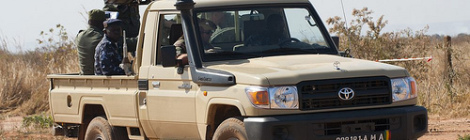
    International Crisis Group has released a briefing paper illustrating the Islamist radicalisation of ethnic Somalis in Kenya, and the causes behind the trend. Decades of economic marginalisation of the Somali-dominated North Eastern Province border region has combined with government and public suspicion of ethnic Somalis to produce an unpleasant climate where either Somali loyalty is questioned, or Somalis are accused of ‘taking over’ when they move into the cities or succeed in business and politics. On the other hand, this has been compounded by the shift of East African Muslims in general away from Sufism and towards the conservative strand of Wahhabi Islam that posits the Muslim umma against the secular state, thereby enabling Somalia-based Al-Shabaab to capitalise on grievances in Kenya and encourage oppositional and even irredentist tendencies. The response of the government has overwhelmingly been one of force.

    Article Source: International Crisis Group

    Image Source: tik_tok

    Read more »

    WEF examines the Risks of Global Marginalisation

    World Economic Forum | Global Risks 2012 | January 2012

    Issue:Marginalisation

    A new report from the World Economic Forum highlights the increasing importance of marginalisation as a security issue over the coming decades. The seventh edition of the WEF’s Global Risks report describes what they see as the ‘seeds of dystopia’ threatening both social and political stability across the world.

    Image source: ectopic (ibandera). 

    Read more »

    Stories of harassment, violence and discrimination: migrant experiences between India, Nepal and Bangladesh

    Fiona Samuels, Sanju Wagle, Tahmina Sultana, Mirza Manbira Sultana, Navneet Kaur and Shantamay Chatterjee | Overseas Development Institute | January 2012

    Issue:Marginalisation

    A recently published Project Briefing from the Overseas Development Institute reports on the findings of a study examining the experience of Nepalese and Bangladeshi migrants in India. This vulnerable group of people face marginalisation on many different levels, having been compelled to emigrate in the first place because of economic hardship; and facing job-, wage-, and housing-insecurity on arrival because of their ambiguous legal status. Fear of disclosure or of being identified by their accents prevents migrants not only from taking a stand against exploitation, but also from forming networks within the host communities, thereby compounding the other forms of insecurity. In addition, migrants are often marginalised on their return home: “There is a common belief that women who Migrate to india engage voluntarily in commercial sex work once there,” while husbands left behind suffer from the stigma surrounding their wives’ supposed profession. The briefing concludes with recommendations for mitigating insecurity experienced by this group, who would otherwise be at permanent risk of violence and exploitation.

    To read the full briefing, click here

    Image Source: FriskoDude

    Read more »

    Land, livelihoods and identities: Inter-community conflicts in East Africa

    Laura A. Young and Korir Sing’Oei | Minority Rights Group International | December 2011

    Issues:Competition over resources, Marginalisation

    In a report published in December 2011, Minority Rights Group International highlights the problems facing minority groups, specifically in an area covering Kenya, Uganda and Jonglei State in South Sudan. Competition over resources has increased the potential for confrontation not only with local dominant ethnic groups, but also with the state and international corporations, thereby increasing the liklihood of different forms of conflict on different levels. Progressive legal protections are often not enforced because of a disconnect at state-level between legislation and law-enforcement, which only exacerbates existing problems caused by long-standing discrimination. Moreover, conflict involving already marginalised people adversely affects the women and children in these groups in particular, which in turn re-impacts on the community because of the traditional roles that women play in family cohesion and as food producers.

    Many problems arise not simply because people belonging to minority groups are themselves marginalised, but also their community and governance structures which previously had been successful in mediating conflict such as (in an East African context) cattle raiding. Marginalisation not only discriminates against individuals because of their backgrounds or beliefs but also rides roughshod over communal organisation and mediation, leaving groups unable to adapt to change or protect their interests when threatened by more powerful entities.

    To read the full report and press release, click here

    Image Source: Leonie_x

    Read more »

    Inequality: What’s the policy narrative?

    Andy Sumner | Global Dashboard | December 2011

    Issue:Marginalisation

    The following article from Global Dashboard takes on the issue of ‘inequality’ by attempting to address what exactly is understood by the term, why it is so bad for society, and what can be done about it. While many reports focus on the damage done to economic growth by inequality, or the sheer moral wrong in the existence of extreme poverty, this piece also refers to the security implications of high inequality when combined with other potential social faultlines such as ethnicity. However, the closing list of policy recommendations, tested with success in many Latin American countries, shows that this threat can be alleviated if met with determined cross-societal political will.

    Article Source: Global Dashboard
    Image Source: Hans Zinsli

    Read more »

    Boko Haram: Nigeria’s growing new headache

    Strategic Comments | International Institute for Strategic Studies | November 2011

    Issue:Marginalisation

    The International Institute for Strategic Studies  has published an article in Strategic Comments that focuses on the threat posed to Nigerian security by the Boko Haram Islamist group.  By placing Boko Haram in a religious context, both historical and geographical, the author examines its recent emergence as an ideological player in Nigerian society.  However, while articulating its vision through an Islamist framework, the group is largely focused on local issues of economic and religious marginalisation in the north, where 75% of the population live in poverty, compared with 27% in the south. The article also touches on conflict in the Niger Delta over control of resources, in a wider reference to the troubles facing the government in Abuja.

    Article Source: International Institute for Strategic Studies

    Image Source: pjotter05


    Read more »

  • Competition over resources

    Competition over resources

    In the environmentally constrained but more populous world that can be expected over the course of this century, there will be greater scarcity of three key resources: food, water and energy. Demand for all three resources is already beyond that which can be sustained at current levels. Once population growth and the effects of climate change are factored in, it is clear that greater competition for such resources should be expected, both within and between countries, potentially leading in extreme cases to conflict.

    A world in need: The case for sustainable security

    Paul Rogers | Open Democracy | September 2009

    Issues:Climate change, Competition over resources, Global militarisation, Marginalisation

    A hurricane of crises across the world – financial meltdown, economic recession, social inequality, military power, food insecurity, climate change – presents governments, citizens and thinkers with a defining challenge: to rethink what “security” means in order to steer the world to a sustainable course.  The gap between perilous reality and this urgent aspiration remains formidable.

    SustainableSecurity.org Associate Editor Paul Rogers, highlights the need for fresh, effective and transforming approaches to security. 

    This article was originally posted on openDemocracy

    Read more »

    Oxford Research Group Director Dr. John Sloboda launches SustainablySecurity.org

    Issues:Climate change, Competition over resources, Global militarisation, Marginalisation

    The tragic events of September 11th 2001 propelled the western security agenda down a reactive, narrow, and self-defeating path defined by the ‘War on Terror.’ The eighth anniversary of 9/11 is marked by a groundswell of voices from policymakers and analysts acknowledging that the greatest threats to global security require moving beyond a limited focus on terrorism. This groundswell is partly a response to the multiple failings of the current approach, but has been given new energy by the global financial crisis and the increased prominence of issues such as climate change.

    However, the specific policy recommendations arising from these new assessments still tend to be framed predominantly in terms of national self interest and preservation of the status-quo, rather than in terms of a more fundamental transformation of global relations in the direction of collective human security. Yet such a transformation is viewed by many as the only sure means of securing lasting security for the people of any individual nation. An emerging approach, which focuses on addressing the root causes of conflict, systemically, and collaboratively, to achieve long term change, has come to be known as; ‘sustainable security’. SustainableSecurity.org is a new platform for developing this approach, coming to understand its implications for policy, and promoting these implications to those who can act on them.

    Read more »

    Scarcity, security and institutional reform

    Alex Evans | Global Dashboard | August 2009

    Issue:Competition over resources

    On 25th August Alex Evans presented a paper on scarcity issues – water, food, energy, land and climate security, to staff from the UN Department of Political Affairs as part of a three day session on security threats organised by the Geneva Centre for Security Policy. 

    Alex’s paper highlights the interconnected nature of scarcity issues and the need for the multilateral system to mitigate scarcity trends collectively. Read more »

    Peak Oil likley to occur within the next decade

    Issue:Competition over resources

    In an interview with the Independent newspaper, Dr Fatih Birol, the Chief Economist at the International Energy Agency (IEA) in Paris, has warned that most governments and members of the public underestimate the rate at which the world’s oil supplies are running out. Dr Birol suggested that global production is likely to peak in around ten years – a decade earlier than most governments predict. Read more »

    Beyond dependence and Legacy: Sustainable Security in Sub-Saharan Africa

    Chris Abbott and Thomas Phipps | Oxford Research Group | June 2009

    Issues:Competition over resources, Marginalisation

    Tag:report

    Sub-Saharan Africa is too readily dismissed from the outside, but the regional perception is often one of optimism. It is an area rich in natural resources: ranging from oil and natural gas to other minerals such as chrome, nickel and zinc. Nearly half the population are under the age of 14, making the region free from the demographic burden of an ageing workforce prevalent in other parts of the world. Read more »

    From Within and Without: Sustainable Security in the Middle East and North Africa

    Chris Abbott and Sophie Marsden | Oxford Research Group | March 2009

    Issues:Climate change, Competition over resources, Global militarisation, Marginalisation

    Tag:report

    The Middle East and North Africa is a region of great diversity. It encompasses Arab and many other ethnic populations, theocratic and secular states, democracies and authoritarian regimes. A region of immense wealth and crippling poverty; it is blessed (some might say cursed) with vast resources, not least oil, but has not always proved able to manage them for the benefit of ordinary people. Read more »

  • Sustainable Security

    Too Quiet on the Western Front? The Sahel-Sahara between Arab Spring and Black Spring

    While the world’s attention has been focused on the US-led military interventions in Iraq and Syria a quieter build-up of military assets has been ongoing along the newer, western front of the War on Terror as the security crises in Libya and northeast Nigeria escalate and the conflict in northern Mali proves to be far from over. In the face of revolutionary change in Burkina Faso, the efforts of outsiders to enforce an authoritarian and exclusionary status quo across the Sahel-Sahara look increasingly fragile and misdirected.

    Read Article →

    The Costs of Security Sector Reform: Questions of Affordability and Purpose

    In considering security sector reform, questions of affordability have often been subordinated to questions of effectiveness and expediency. A recent series of reviews of security expenditures by the World Bank and other actors in Liberia, Mali, Niger and Somalia has highlighted several emerging issues around the (re)construction of security institutions in fragile and conflict-affected states.

    Read Article →

    Beaux Gestes and Castles in the Sand: The Militarisation of the Sahara

    Whatever the benefits for Mali, the French-led eviction of jihadist groups from northern Mali may have made the wider Sahara a less safe place, and has done little to lower the capacity of such groups to threaten European interests.. In 2014, France is implementing a major redeployment of its forces in Africa into the Sahel and Sahara. Meanwhile, the US has been quietly extending its military reach from Djibouti to Mauritania. However, as elsewhere, the western military approach to countering Islamist insurgency in the Sahel rests on very unsteady foundations and the potential to provoke wider alienation and radicalisation is strong.

    Read Article →

  • Sustainable Security

    One of the leading sources of refugees in Europe is the impoverished east African nation of Eritrea. What role has the international community played in this crisis?

    Eritrea’s relationship with the international community (IC) has always been complicated. Eritreans see the IC’s history with their nation as one fraught with violation, neglect and, perhaps above all else, multiple betrayals. The first betrayal is seen to have taken place during the 1940s decolonisation process when Eritrea, against the wish of its people, was tied with Ethiopia in a UN enacted federal arrangement. The second betrayal occurred when the UN, who sponsored the federal arrangement, looked the other way when the Emperor of Ethiopia annexed Eritrea in violation of the arrangement. This was followed by another betrayal when the IC kept silent during the thirty years Eritrean War for Independence. Yet another betrayal occurred when the guarantors and witnesses of the Eritrea-Ethiopia Boundary Commission abdicated their responsibility to ensure its implementation. The recent imposition of sanctions by the IC on Eritrea added to this feeling of betrayal. All these events have certainly generated a psychology of victimhood among Eritreans and a belief that that the IC have sacrificed the interests of its people for geostrategic interests and politics. The IC’s response to Eritrea’s refuge crisis represents the latest chapter in this history of betrayal.

    This article argues that both the actions taken and those not taken by the IC contributed to the refugee/migration crisis in Eritrea. The actions taken included imposing sanctions and a concerted effort to isolate the country, while actions not taken include failure to implement a binding and final verdict of the International Court of Arbitration.

    Causes of the Exodus from Eritrea

    In recent years, the world has witnessed an unprecedented flow of people from Eritrea. The exodus, which has picked up momentum is the outcome of several factors that have been accumulating over the years. Relative to its population size, Eritrea has produced the largest flow of refugees/migrants in the world. What is driving people to leave the country in such large numbers? There are multiple causes of the exodus.

    • The no-war no-peace situation
    • The implementation of indefinite national service
    • A harsh political environment
    • Major economic difficulties such as mass unemployment
    • A lack of future opportunities and prospects for the country’s youth
    • The imposition of sanctions
    • A blanket asylum provision by host countries

    The rejection of the International Court of Arbitration verdict on the border issue by Ethiopia generated a no-war no-peace situation. The peace agreement was supposed to lead to peaceful coexistence between the Eritrea and Ethiopia. This no-war no-peace situation created constant tensions, a fear of an outbreak of war, and occasional engagement between the armies of the two countries along their common border. This means Eritrea has had to put itself in a constant state of high alert. It also compelled the Eritrean governement to extend its national service indefinitely. The majority of capable labour forces in the country are therefore tied to the national service system. Consequently, the economy suffered immensely because of a lack of a sufficient labour force. The youth who are in the national service have to pay a high price. They do not get proper salary; and they are not able to pursue a normal social and working life which could include education, building and supporting family, accumulating wealth, etc.

    The political environment has also hardened considerably. The country has been under an undeclared state of emergency since 2000. Gradually, the political climate became more authoritarian and less plural: political opposition was not tolerated; deviant views and political differences were perceived as dangers to national unity, stability and survival. Therefore, dissidence was harshly dealt with. Many ended up in prison accused of betraying or endangering the security of the nation. The economy, which was slowly recovering from the thirty years of independence war, suffered immensely from the two-year border war (1998-2000) between Eritrea and Ethiopia and the no-peace no-war situation. A major part of state budget now goes to military expenses and staggering unemployment overshadows the nation. What was primarily a subsistence economy spiralled down due to a shortage of an able workforce.

    The UNSC imposed sanctions further exacerbated the economic difficulties because they discouraged external investment and other bilateral relations with the wider world, particularly the West. The international community’s policy is geared towards isolation in order to force the Eritrean government to change its policy; however it achieved the opposite effect. Eritrea has been described as “hell on earth” and this was used to justify the blanket asylum provided by European governments. This open asylum policy further attracted a greater number of asylum and refugee seekers, even children who are not affected by the national service appeared at the doors of European countries claiming that they were fleeing from national service.

    Abdication of Responsibility

    The international community, represented by the UN, AU, EU and USA, assumed the responsibility of implementating of the of the EEBC’s verdict which it helped broker. The two-year war between Eritrea and Ethiopia was ended through the signing of the Algiers Agreement in December 2000. The UN AU, EU and USA put down their signatures as witnesses to and guarantors of the agreement. The main provisions of the agreement were:

    (i) The establishment of the Eritrea-Ethiopia Border Commission (EEBC). The EEBC consisting of eminent international judges was mandated to demarcate and delineate the border between the two countries. The EEBC was instructed, “The Commission shall not have the power to make decisions ex aequo et bono” (Article 4(2), Algiers Agreement 2000).

    (ii) That the verdict be final and binding. With regards to guaranteeing the implementation, the Cessation of Hostility Agreement of June 2000 notes, “The OAU and the United Nations commit themselves to guarantee the respect for this commitment of the two Parties until the determination of the common border on the basis of pertinent colonial treaties and applicable international laws” (Article 14).

    This guarantee shall be comprised of measures to be taken by the international community should one or both of the parties violate this commitment, including appropriate measures to be taken under Chapter VII of the United Nations Charter by the UN Security Council (Article 14 (a).

    The EEBC, per its mandate, issued its verdict on 13 April 2002 where it was stipulated to be implemented within a year, but to date it is still awaiting acceptance by Ethiopia. The verdict awarded the flashpoint of the conflict, the village of Badme, to Eritrea. Upon realising the decision, Ethiopia rejected it, calling it illegal, irresponsible and unjust. When the EEBC concluded its work in 2007 and announced that the border was virtually demarcated and the issue closed, the Prime Minister of Ethiopia called it legal nonsense and requested a renegotiation. The witnesses and guarantors, instead of honouring their solemn commitment and invoking Chapter II of the United Nation Charter, opted for appeasement. Indeed, US officials actively and systematically engaged in devising ways of renegotiating the verdict, particularly, Jandyi Frazer, George Bush’s Assistant Secretary of African Affairs, and Suzan Rice, Obama’s ambassador to the UN, who both played an important role in undermining the EEBC verdict.

    Eritrea is of the opinion that the border is delineated and demarcated, and therefore feels that Ethiopia should vacate from the Eritrean territories it illegally occupies. The juxtaposing Ethiopian stance is that the border issue can only be settled through bilateral dialogue, a position that declares the EEBC verdict null and void. Ethiopia has violated UNSC resolutions ordering it to implement the verdict without any consequence. This is because the USA tacitly sides with Ethiopia. Following the footsteps of the USA, the UN, AU and EU remain silent on the issue allowing the festering stalemate to continue with all the consequences effecting the people of the two countries and the region as a whole.

    The International Community’s Double Standards

    N0027571 Life in Eritrea, North Africa, refugee ca

    Image credit: Wellcome Images/Flickr.

    After signing the agreement of cessation of hostility in Algiers, in December 2000, the parties directed their attention to conducting proxy wars. Both governments were actively involved in support of opposition to each other’s government in the hope of weakening or even deposing. In addition, they intervened in neighbouring countries. Somalia became the obvious victim of the proxy war between Ethiopia and Eritrea. While Eritrea ended up supporting Union of Islamic Court (UIC), Ethiopia sided with warlords and the Transitional Federal Government (TFG). Finally, Ethiopia invaded Somalia in December 2006 and vanquished the UIC. This contributed to the emergence of al-Shabaab , a radical Islamic extremist group operating in Southern Somalia.

    Proxy war has become a rule rather than exception in the Horn of Africa. What has also become a rule is the international community (IC), mostly driven by geostrategic interest of the big powers, punishing and rewarding regional actors participating in wars highly selectively. Many scholars have purported that the Ethiopia-Eritrea conflict is the epicentre of conflicts in the Horn of Africa. This means settling the Ethiopia-Eritrea conflict would go a a long way in helping the larger endeavour to settle all the intricate conflicts in the region. In this respect, it will be in the interests, as well as part of the moral, political and legal obligation, of the IC to address the conflict. There is an obligation the IC to be even-handed, objective, neutral and balanced in treating its members. The reality is, however, that the IC practices double standards and its dealing with Ethiopia and Eritrea is a vivid testimony to this double standard.

    Eritrea was accused of supporting al-Shabaab and destabilising the region. But most of the evidence for Eritrea’s involvement ironically originates from Ethiopia. For the last five years, the Somalia-Eritrea Monitoring Group (SEMG), established to check that the sanctions are not violated, has not found any evidence that Eritrea is supporting al-Shabaab, yet the sanctions have not been lifted. As stated, Eritrea supports Ethiopian opposition groups as Ethiopia supports Eritrean opposition groups. Eritrea supported UIC when Ethiopia invaded Somalia. Ethiopia frequently attacks targets inside Eritrea; it openly threatens to depose the Eritrean government, which is against international law. Eritrea violates human rights as does Ethiopia. However, it is only Eritrea that is under UNSC sanctions and being subjected to isolation from the international community. Ethiopia is considered an indispensable ally of the US global war on terror, therefore it is excused of whatever misdeeds. This is a double standard that damages the credibility and integrity of IC, particularly the UN.

    Conclusion

    The no-war no-peace situation created a serious sense of insecurity, tension and instability in Eritrea. This in turn necessitated the implementation of indefinite national service in order to not only to defend the country from Ethiopian invasion, but also to ensure the economic and social survival of the nation. Tying the able-bodied Eritreans to national service deprives the economy of vital labour force. This curtails development. The conflict with Ethiopia triggered a chain of causal factors affecting the refugee crisis: constant fear of war, indefinite national service, economic stagnation, political hardship, and hopelessness compelling people to flee the country. It is understandable that few would wish to live under such circumstances.

    If the international community had honored its responsibility and upheld the implementation of the International Court of Arbitration per its commitment in 2002, the chain of causal factors producing the exodus might have been avoided. By now the relationship between the two countries could have been pacified. It would also meant that the actual international pressure on the Eritrean government would have also been effective, morally defensive and legitimate as opposed to hypocritical. The failure of the international community to put pressure on Ethiopia to implement and uphold the final and binding border verdict affects not only Eritrea, but also the region as a whole and, as the recent development demonstrate, Ethiopia. For Eritreans the current behaviour of the IC is déjà vu, and brings back the ghost they have been trying exoricse for the last seventy years.

    Redie Bereketeab is Senior Researcher and Associate Professor at the Nordic Africa Institute.

  • Sustainable Security

    Far-right terrorism has re-emerged as a serious security issue in the United States. What are is the drivers behind this phenomenon?

    The recent violence in Charlottesville Virginia, perpetrated by white supremacists and neo-Nazis that had gathered for a “Unite the Right” rally, has refocused attention on right-wing terrorism in the United States.  During the rally, James Alex Fields Jr., a possible neo-Nazi sympathizer, drove a car into a crowd of counter-demonstrators, killing one person and seriously wounding 19 others.  The car attack has been described by U.S. Attorney General Jeff Sessions and Republican and Democratic elected officials alike as an (alleged) act of right-wing domestic terrorism, and the U.S. Justice Department has promised to open an official civil rights investigation of the incident.

    What are the macro-causes of domestic right-wing terrorism in the United States?  In a published study, I attempted to address this question by statistically evaluating all identifiable “right-wing” terrorist attacks in the United States for the period 1970 to 2011.  My goal was to try to determine the economic, social and political factors that drive right-wing terrorism.  In the study, terrorism is defined as an act of premeditated political violence perpetrated by nongovernment organizations intended to influence a wider audience.  I identified domestic terrorist incidents as “right-wing” if they were perpetrated by groups or individuals that were motivated by racist, white supremacist, antiabortion and violent, extreme antigovernment ideologies.

    It is important to distinguish the events in my analysis from hate crimes, which are spontaneous rather than premeditated or strategically-calculated acts, and from legal, nonviolent far-right political activities.  The groups and individuals in the analysis are outside of mainstream politics in the United States and have deliberately adopted the use of violence to achieve their goals, rather than nonviolent political strategies such as voting, lobbying and forming protest movements.

    The drivers of US far-right terrorism

    James Alex Fields, Jr., who conducted the Charlottesville car attack. Image credit: Rodney Dunning/Flickr.

    It does not seem that right-wing terrorism is driven by economic grievances or distress.  Across the board, socioeconomic factors that are commonly argued to produce resentments that fuel right-wing terrorism were not significant.  For example, right-wing terrorism is not more likely to occur in U.S. states that have a larger percentage of their populations below the poverty line or that have higher levels of unemployment or income inequality.  I specifically examined two economic factors commonly argued by scholars to be associated with the rise of violent right-wing extremism: the structural decline of blue-collar manufacturing and the “Farm Crisis” that took hold of the United States in the 1980s.  Both of these are said to have produced strong resentments that violent right-wing groups exploited to garner recruits, thereby becoming more active and dangerous.  Neither of these factors, however, do a good job predicting when and where right-wing terrorism occurs in the United States.

    States that have suffered heavy industrial manufacturing job losses in a given year or a decline in family farms due to foreclosure do not disproportionately experience right-wing terrorism.  The apparent lack of a direct relationship between economic distress in the United States and right-wing terrorism mirrors findings for terrorism writ-large, globally.  Other studies of economically-aggrieved countries or individuals have not found them to be more terrorism-prone.

    I also examined a series of social factors.  The propaganda of right-wing extremist groups often mentions immigration, growing ethnic diversity and the decline of white demographic dominance in the United States as motivating threats.  Far-right protestors in Charlottesville illustrated this by chanting “You Will Not Replace Us!” and “Blood and Soil!”  However, I did not find actual racial and ethnic diversity on the ground to be a statistically significant driver of right-wing terrorism.

    Nationwide, the increase in the nonwhite population, and the growth of the nonwhite Hispanic or Latino population, in the United States, bears little relation with ebbs and flows of right-wing terrorist attacks.  Similarly, states with rapidly growing nonwhite population were not found to experience more right-wing attacks.  This does not foreclose the possibility that growing ethnic diversity in the U.S. is a driver of right-wing terrorism.  However, it is possible that the perceived rather than actual threat of demographic change and growing diversity fuels violent extremism.  This effect might be better revealed by a study of individual attitudes as drivers of terrorism.

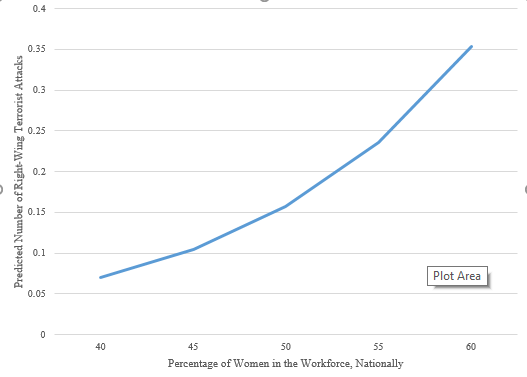
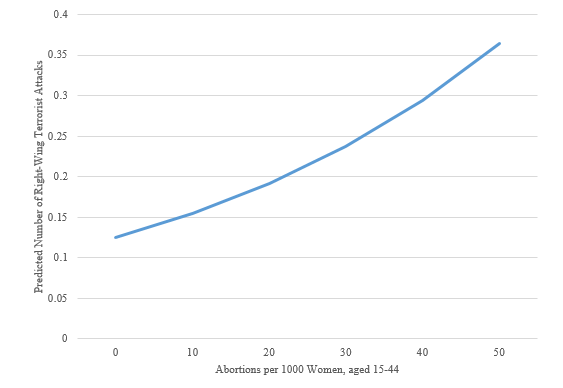
    Related to fears among violent right-wing extremists that whites are being “replaced” by nonwhite immigrants and others is the belief among extremists that traditional male roles have been undermined by the empowerment and enhanced personal autonomy of women in contemporary America.  I investigated this by testing two measures of women’s status: the national rate of female participation in the workforce and the rate at which women seek abortions.  Both of these are frequently-used measures of actual women’s empowerment and are also potent political and cultural symbols of women’s equality.  I find both to be associated with a significant increase in right-wing terrorism.

    Holding constant other factors such as past experience of right-wing terrorism at the state level, unemployment, income, population, urbanization, size and growth of the economy and region of the country, I found that for each five percent increase in women’s employment nationally, the U.S. states experienced a 50 percent increase in rates of domestic right-wing terrorist attacks.  Similarly, for every increase of 10 medical abortions per 10,000 live births, a state experienced a 24 percent increase in right-wing terrorist attacks.  Of course it is possible that this latter abortion rate finding is simply reflecting abortion clinics being targeted by anti-abortion extremists.  However, when I removed attacks on abortion clinics from the data, the abortion rate in a state still is a statistically significant predictor of terrorism. This suggests that the controversy of abortion itself is a driver of all types of right-wing terrorism.

    Figures 1 and 2 help to illustrate these effects.

    Figure 1. Impact of Women’s Employment on Right-Wing Terrorism


    Figure 2. Impact of Abortion Rates on Right-Wing Terrorism


    Finally, I considered some political and policy factors that have been hypothesized to drive right-wing terrorism. There are several schools of thought on the impact that partisan control of government might have on violent right-wing extremism.  One holds that when Republicans win elections and hold public offices, violent far-right extremists increase their activities because they feel emboldened.

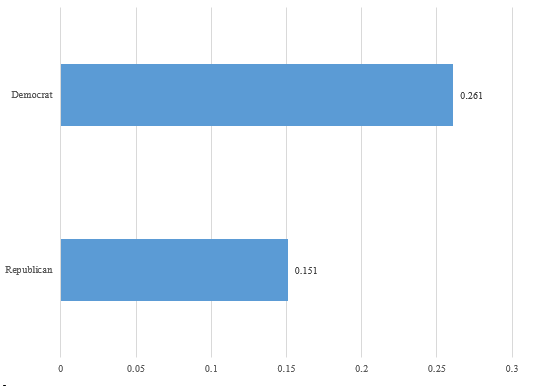
    The other school argues that Democratic Party control, and policies that Democratic politicians frequently seek to enact such as gun control or enhanced social policies that increase the size of the federal government, antagonizes right-wing extremists, prompting them to strike back by launching terrorist attacks.  I tested for both and found that right-wing terrorist attacks were more common when a Democrat controlled the White House, and increased dramatically after the elections of both Bill Clinton and Barack Obama.

    In fact, Democratic control over the White House increases right-wing attacks by almost 73 percent.  Figure 3 presents the different projected rates of right-wing terrorism under Democratic versus Republican presidencies.  The partisan effect, however, seems limited to national politics.  Partisan control over state government does not significantly affect patterns of right-wing terrorism.

    Figure 3. Predicted Right-Wing Terrorism Under Democratic and Republican Presidencies


    This particular finding is interesting given the argument that U.S. President Trump has emboldened right-wing extremists through his rhetoric and his policies and policy proposals.  However, the impact of the Trump presidency cannot be assessed by the study as the analysis does not cover terrorism after 2011.  The data I used to conduct the original analysis has not yet been updated through 2017, when Trump assumed office.  It will be critical to retest the role of partisan control over the White House once this data is available.

    While who controls the White House is found to affect patterns of right-wing terrorism, the national partisan effect seems to not be linked to specific federal government policies.  Policies such as increases in federal income taxes or the 1994 federal ban on the sale assault weapons – both of which were an anathema for right-wing extremists – are not statistically significant predictors of attacks.

    Conclusion

    The sum of these findings is that several of the more symbolic factors, such as reaction against the empowerment of women or control over the government by an ideological “enemy,” that are significant drivers of terrorism rather than structural economic factors, demographic change or government polices enacted.  This finding is, perhaps, not so surprising.  On a general level, symbolic issues are frequently important motivators for terrorists world-wide.  Consider, for example, the symbolic importance of cleansing Muslim society from the influence of Western culture for a movement like Boko Haram in Nigeria or reconstructing an imagined Caliphate for the Islamic State (ISIL) movement.  More specific to the phenomenon of right-wing terrorism, the results underscore the potency of the U.S. President as a (singular) symbol of government and political direction of the country as well as the cultural impact of changing women’s statuses.

    It is also important to consider that the study is very much a preliminary investigation into the drivers of domestic right-wing terrorism.  The study focused on the most basic structural factors that precipitate right-wing terrorism.  Future research might look beyond structural precipitants to examine factors that facilitate the motivation, planning and execution of right-wing terrorist attacks, such as the role played by social media, hate speech online, etc.

    Author’s Note: Graphs of marginal effects of a 5-unit change (Women’s Employment), 10-unit change (Abortion Rates) and 1-unit change (Republican to Democrat) on counts of right-wing terrorist events. In models, state unemployment rate, inequality, population, population growth, urbanization rate, area, gross state product per capita, growth of gross state product per capita, region (Midwest, South, West) and previous year right-wing attacks are controlled for.

    James A. Piazza is Liberal Arts Research Professor of Political Science at the Pennsylvania State University. Piazza’s research focuses on terrorism, counterterrorism, political violence and intra-state armed conflict. His published work has appeared in the American Journal of Political Science, the Journal of Politics,International Organization, Comparative Political Studies, International Studies Quarterly, Journal of Conflict Resolution, Public Choice, Journal of Peace Research, Political Psychology, Conflict Management and Peace Science, Political Research Quarterly, Foreign Policy Analysis, International Interactions, Defence and Peace Economics, Southern Economic Journal, Security Studies, Terrorism and Political Violence and Studies in Conflict and Terrorism. He can be contacted at . His website:  http://polisci.la.psu.edu/people/jap45

  • Sustainable Security

    This content is password protected. To view it please enter your password below:

  • Sustainable Security

    For decades, national and international actors have used Disarmament, Demobilization and Reintegration (DDR) programs for combatants as standardized key elements of peace operations, but these programs are not without their problems. 

    There is an African expression: “Softly, softly, catchee monkey!” which means that with patience and perseverance obstacles can be overcome. The saying exemplifies the qualities and skillset needed by peacebuilders in the difficult task of reintegrating combatants through Disarmament Demobilization and Reintegration (DDR) programs. What turns people towards armed mobilization and political violence and how can individuals be steered away from it? These are questions that have vexed governments and international organizations for some time now. Yet nobody seems to have a definite answer to what it takes to reintegrate ex-combatants, insurgents and rebels. What kinds of activities and skills underpin reintegration and more importantly: can they be acquired over time?

    DDR and the Changing Context of Conflict

    DDR programs are designed and intended to facilitate the transformation of combatants into civilians (see below). The understanding that DDR programs are essential in helping to prevent war’s recurrence in post-conflict situations is at the heart of current international aid practice and the academic literature on peacekeeping and stabilization.

    Disarmament is the comprehensive collection, documentation, and disposal of small arms, ammunition, explosives and light and heavy weapons of ex-combatants and the civilian population.

    Demobilization is the formal and controlled discharge of active combatants from armed groups. The first stage involves the processing of combatants in temporary centers. The second stage encompasses a ‘reinsertion’ package.

    Reintegration is the process by which ex-combatants return to civilian life and gain sustainable employment and income during the post-conflict recovery period. Reintegration addresses social and economic issues.

    DDR programming today is frequently mandated in on-going conflict contexts. There are two major challenges for ensuring the implementation of DDR interventions in these settings:

    1. When there is no peace to keep due to on-going hostilities. To this one must add of lack of a political agreement and political buy-in from warring parties. There have been doubts about whether DDR activities will work in such settings (also called non-permissive environments).
    1. When ongoing conflicts lack the stability required to facilitate the economic reconstruction needed to provide ex-combatants jobs entering the labor market, raising questions about how to implement effective DDR programs that prevent conflict relapse.

    The Scale of DDR

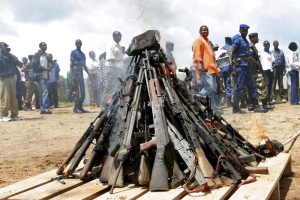
    Weapons being burnt during the official launch of the Disarmament, Demobilization, Rehabilitation and Reintegration (DDRR) process in Muramvya, Burundi. Burundian military signed up voluntarily to be disarmed under the auspices of United Nations peacekeepers and observers. 2/Dec/2004. Muramvya, Burundi. UN Photo/Martine Perret. www.un.org/av/photo/

    Weapons being burnt during the official launch of the Disarmament, Demobilization, Rehabilitation and Reintegration process in Muramvya, Burundi. Image by United Nations Photo via Flickr.

    DDR has grown significantly during the last decades. The first UN effort in Central America demobilized 18,000 fighters in the early 1990s. In recent years, 101,000 combatants were demobilized in Liberia.  150,000 combatants were due to be processed through DDR in South Sudan before the outbreak of the ongoing civil war and this number is expected to double or triple with the implementation of the peace agreement between the warring factions.  According to the UN department of Peacekeeping Operations, in 2013 estimated mandated caseloads for on-going DDR operations in peacekeeping contexts alone were over 400,000. DDR efforts, in other words, seem here to stay as long as conflicts around the world show no sign of abating.

    DDR programs comprise a number of elements. They are highly standardized following the introduction in 2006 of the United Nation’s Integrated DDR Standards. Never before have DDR programs been so comprehensive in their scope and areas of competency, comprising an ever expanding field of interventions such as access to land, cash transfers, skills training and job placement.

    Despite the abundant literature on lessons to be learned from previous DDR processes there is little evidence that DDR programs actually produce the desired outcomes, and important loopholes and gaps remain; particularly around the mechanisms at stake in successful social and economic reintegration of former combatants.

    Very few DDR programs aim to achieve a sustainable reintegration of ex-combatants. Arguably, the aim has been to provide a tangible peace dividend and stabilize the situation in the short term (for instance in Sierra Leone, Liberia, South Sudan, Nepal, just to name a few countries). In other words, the theory and policy of DDR is driven by realist and strategic rationalities: security first.

    A dominant assumption underlying academic theory, policy and practice in the field of peacekeeping is the indispensability of DDR in the early transition from war to peace. Indeed, the rather rigid model of DDR that has evolved over the past decade has become part of the orthodoxy of UN peacekeeping, part of a sequencing of programs and activities that UN missions rarely deviate from. In recent years, this orthodoxy has increasingly been questioned, both in terms of the content of the DDR templates along with the outcomes/effectiveness of the intervention and, not least, the very serviceability of the concept to broader processes of peacekeeping. The important questions regarding DDR programs we have to ask ourselves are: Why do we approach these issues the way we do? Is the offer of a DDR program better than no program at all since it is believed that they make a substantial difference to the lives of ex-combatants and community members?

    Vocation Skills Training vs Spending

    The potential success of a DDR programme depends largely on the type, quality and length of the vocational skills training provided to ex-combatants. In practice, though, the type of training carried out often does not even amount to half of the duration required for a civilian in peace circumstances. In other words, training does not lead to jobs, and it might not even provide access to employment at all. More often than not, training is poorly suited to labour market needs. Furthermore, without capital, the returns on skills training could be low. If the outcomes are that meagre, then why are education and skills training still so central to DDR? For some critical observers, vocational training persists because it is what donors and implementing actors know and are willing to fund, and it therefore involves little risk (the measurement of success is straightforward: the number of graduated trainees). If DDR has been ineffective in facilitating economic reintegration for former combatants, the reason may be that the programs’ approach to the problem is wrong because skills training will not be effective in environments characterized by fragility, conflict and violence. In contrast to the poor results of training and education, recent research has shown that capital-centred DDR activities are among the best performing ones. Capital-centric intervention refers to start-up grants, in-kind capital transfers and cash injections.

    In Burundi, for instance, a reinsertion allowance was offered for eighteen months, with the amount depending on rank. A business start-up grant worth about $1200 was also offered. Comparing the results for those who received it with those who did not, researchers found a large reduction in poverty among the former.

    This review of DDR experiences suggests that ex-combatants tend to use the cash received wisely to satisfy their immediate needs and that some manage to save and invest. In Liberia cash transfers had a positive impact on local and national security. This is reflected, for example, in the low levels of violence reported in parts of Liberia, where the Danish Refugee Council ran a dollar-a-day program for ex-combatants after the war ended. Injections of capital – cash, capital, livestock – seem to stimulate self-employment and raise long-term earning potential. The main assumption is that these programs are cost-effective and enable ex-combatants to expand their income generating activities.

    DDR Bureaucracy and the Promise of Peace

    An important assumption of DDR program concerns the special needs of ex-combatants – as opposed to the broader population – for reintegration support in order to leave behind militancy and adopt a civilian life and identity. However, that is not necessarily the case. Ex-combatants are a heterogeneous group, with some of them more at ‘risk’ than others. Some ex-combatants might even share traits with youth at risk of recruitment by radical groups or violent gangs. Programs should be targeted at those at the highest risk of crime, violence, or future insurgency. But increasingly, DDR programs directly target civilians insofar as they have a relation with an ex-combatant (spouses and children), as it is the case in the recently launched DRC reinsertion and reintegration program. This prompts us to ask: are DDR programs faced with a difficult balancing act between equity and security? In other words, is this kind of targeted assistance rewarding violence? The answer seems to be ‘yes’.

    Conclusion

    DDR programs, rather than being value-free, amount to a normative process of change, with the aim of altering the identity from that of a combatant to a civilian, and from individual dependency on military structures to civilian self-resilience. It is believed that DDR programs are able to facilitate this change. DDR as a technocratic intervention amounts to a belief in the ability to arrive at the optimal answer to any discussion through the application of particular practices. In other words, DDR programs keep the promise that disarmament and reintegration can be achieved by bureaucratic means. Bureaucracies require standardization for efficiency and rationalized training.

    Today, however, effective DDR requires greater participation of local populations. DDR activities have still not found ways to adapt and respond to local contexts of armed violence and fragility in sensible, realistic and cost-effective ways.  DDR interventions require locally differentiated analyses rooted in local perceptions and participation, as well as inclusive processes in designing prioritized programs. To be honest: the bulk of the world’s fighters, gang members, insurgents and high risk youth do not want to be reintegrated: but have expectations of physical protection and material support for their own projects. They should have a say in this multimillion dollar enterprise.

    Jairo Munive is a postdoctoral research fellow at the Danish Institute for International Studies in Copenhagen. His research focuses on DDR processes in Africa. Previously worked as a consultant for DANIDA, ILO and UNDP. He has published in various journals such as:  the Journal of Agrarian Change, Conflict Security and Development, and Forced Migration Review.

  • South Sudan: Enhancing Grassroots Peacebuilding

    South Sudan: Enhancing Grassroots Peacebuilding

    Hope Chichaya | Insight on Conflict | June 2011

    Issues:Competition over resources, Marginalisation

    South Sudan’s referendum has come and gone. What lies ahead post-independence in terms of peace, development and security is however still to be determined. The 15 years of war left over one million people dead and more than three million displaced. Negotiations led to the Comprehensive Peace Agreement (CPA) in 2005, which included provision for a referendum on independence for the Southerners.  The referendum was held in January, with overwhelming support for succession. But serious challenges face South Sudan as it prepares for independence on 9 July 2011.

    The challenges facing a new nation

    A range of challenges are present themselves with this new nation attempting to stand on its own. Aside from the issues of governance and poor service delivery, the most serious is the seemingly unending internal conflicts. Hence, the government of the new South Sudan should consider:

    • Embracing pluralism by allowing political participation of the citizenry. To do otherwise could pave the way for more conflicts through insurgencies, militia activities, army defections, and latent grievances within the security sector.

    • Post-referendum negotiations between the Sudan People’s Liberation Movement (SPLM) and National Party Congress (NCP) should focus on ensuring a peaceful separation and a constructive North-South relationship based on mutual benefit from the oil resources, averting the ‘resource curse’.

    • South Sudan has to cooperate with its neighbours to overcome security threats by the Lord’s Resistance Army (LRA) and other militia, as well as cross border conflicts. The state of Western Equatoria is particularly suffering under rampaging LRA troops, displacing farmers, and potentially leading to a humanitarian crisis due to heightened food insecurity. Communities will increasingly turn to militia groups for protection if government security is absent.

    • At the national level, the significant role of opposition parties and civil society in the forthcoming transition needs to be acknowledged. There is thus a need for an inclusive constitutional review committee adhering to the agreements of the CPA.

    The gravity of violence needs further deliberate and integrated efforts. The 2010 Human Rights Report: South Sudan noted the abuses and internal conflicts South Sudan faces at independence. Inter-ethnic fighting, post-election militia attacks, cattle rustling, and LRA attacks, all resulted in deaths and displacement in the South since the referendum.

    Coupled with the violence, 2 million Internally Displace Persons (IDPs) and 350,000 refugees have returned to the South since 2005. Given the lessons learnt from the returnees of Liberia, there is a need to find ways of enhancing co-existence between host communities and returnees.

    What role can grassroots peacebuilding play here?

    Enhancing grassroots peacebuilding

    Grassroots peacebuilding encompasses efforts of enhancing localised structures and mechanisms of constructively responding to violence, aiding relief, and conflict transformation. This vital approach is the social fabric that builds durable peace. It is the people at the grassroots who have suffered most from the war, and continue to suffer through displacement, grief, trauma and day-to-day community clashes. Peace is a common good that we must promote and guard.

    March was characterised by community clashes in Mvolo between the Jur and the Dingas in Western Equatoria. Over 60 died and many more internally displaced. With a history of tribal clashes, cattle rustling, and growing insecurity, one would ask: what can be done at a grassroots level to enhance peacebuilding?

    Improving accountability of security forces

    One option for grassroots level work is the improvement of security forces. There are several cases where security forces were blamed for instigating or participating in violence. As illustrated by these incidents, it becomes imperative for a new country to respect the rights and rule of law. It is through the promotion and protection of human rights that peace among the people is enhanced across all sectors and levels.

    When looking at peacebuilding and security reforms in prior post-conflict zones, three lessons are obvious:

    • A lack of governance of the security sector is often a source of conflict and forms a key obstacle to peacebuilding.

    • Security institutions can play an effective, legitimate and democratically accountable role in society.

    • If law-breakers face prosecution and social disapproval, people will be discouraged from engaging in armed violence. This is underlined by the 2011 Word Development Report, with the call for citizen security and justice in order to break the cycle of violence. Indeed, there is need to improve accountability among the security forces and fostering restorative justice in South Sudan so as to prevent and manage a relapse into violence.

    Realise the role of religion

    A second option for grassroots engagement is to work with and through religious communities and structures. In many cases the Church seems to have greater leverage than almost anybody else in brokering peace talks between warring factions. The historical, cultural and traditional embeddedness of the Church has credibility and relevance to the community. It’s extensive network reaches even into the most remote areas. Further, the Church has an integration of social and pastoral work focusing on the psycho-social and spiritual dimension of conflict transformation, although the church is at times blamed for exlusionist tendencies. As an indicator for church influence, around 40% of the population of South Sudan regard themselves Catholics and 30% Anglicans.

    Quiet diplomacy

    A third grassroots option is quiet diplomacy. Influential civil society leaders, among them high profile religious leaders, have the potential of applying preventative diplomacy mechanisms in cooperation with the government.

    This back door approach is suggested because the state is still young. It is further backed up by the cultural background, suggesting that a leader should not be degraded in public. Instead of undermining transparency, this approach acknowledges the huge expectations of a new nation. Normal and open confrontation may be acceptable to the public, but may not bring about the desired democratic state.

    Conclusion and recommendations

    Grassroots peacebuilding has to be enhanced across South Sudan. This can be done through holding the security forces and leaders accountable; realising the essential (commending, condemning, correcting and coalescing) role of the Church, and the application of quiet diplomacy. It is hoped that localised and indigenous peacebuilding efforts can consolidate peace, stability, security and development. Therefore, I would like to make the  following recommendations:

    1. People, parties and civil society to:

      • strengthen women, youth, and community participation in peacebuilding;
      • empower local government structures;
      • invest in education and especially adult literacy;
      • adopt a comprehensive security framework of human security;
      • continue applying corrective and commending public figures through quiet diplomacy.
    2. The government of South Sudan to:

      • build supporting impartial partnerships towards grassroots peacebuilding;
      • enhance trauma healing across all sectors and levels of the country;
      • establish and empower local government structures so as to enhance accountability among county and state executives;
      • deploy security personnel, especially the police, to actively protect the citizenry from community clashes, militia attacks, and the LRA;
      • invest in education in every village;
      • retain and emphasise the rule of law across the country.
    3. The international community:

      • to support grassroots peacebuilding through partnerships;
      • to encourage and facilitate continued dialogue and cooperation between the governments of Sudan and South Sudan.
      • to build impartial supportive partnership with the people of South Sudan and its government, while drawing a clear line between the government and the SPLM.

    Article source: Insight on Conflict

    Image source: United Nations Photo

    Comments

    Post new comment


  • Sustainable Security

    From Surveillance to Smuggling: Drones in the War on Drugs

    In Latin America drones are being used as part of the War on Drugs as both regional governments and the US are using surveillance drones to monitor drug trafficking and find smuggling routes.. However, as drones are increasingly being used by drug cartels themselves to transport drugs between countries, could Latin America find itself at the forefront of emerging drone countermeasures?

    Read Article →

  • New Report: Britain Needs Full International Security Review

    New Report: Britain Needs Full International Security Review

    Paul Rogers | Oxford Research Group | May 2010

    Issues:Global militarisation, Marginalisation

    The new British Defence Secretary, Dr Liam Fox, has now announced the beginning of the long-awaited Strategic Defence Review and the indications are that the process will be completed before the end of 2010. Given Britain’s role in the European Union and NATO, and its close links with the United States, the outcome of the review will be watched with interest in many countries.

    The incoming Conservative-Liberal-Democrat coalition government believes that a Strategic Defence Review is urgently required for a number of reasons, including

    • the inability of the UK Ministry of Defence to maintain current commitments and programmes on present-day funding levels;
    • the high cost of existing and future programmes;
    • the recent experience of wars in Iraq and Afghanistan and how far the methods that have been employed, have achieved their goals; and
    • serious constraints on UK public spending that are likely to persist for up to a decade.

    The new government has also set up a cross-departmental National Security Council that will further develop the trend to a national security strategy established by the Labour government. While this is a welcome move, it comes in the context of recent programme decisions made ahead of the review that, if not reversed, will direct the defence posture in such a narrow manner that a wider and much-needed reappraisal of Britain’s security will prove impossible. Instead, questions need to be asked about what is needed to limit conflict and create a more peaceful environment in an era of new global security challenges.

    The two most significant programmes are:

    • The aircraft carrier/F-35 strike aircraft programme
    • Like-for-like replacement of the Trident nuclear system

    These are very substantial in terms of costs, but their greater importance is in the manner in which they will dictate a particular role for the UK defence posture – what is in effect a scaled down version of the much larger US global power projection capability. Essentially, they will determine a role for Britain in international security which is out of date and more related to the Cold War, bearing little relation to the issues of global insecurity and conflict, which will be dominant in the next two to three decades. 

    Britain’s National Security Strategy

    In the last two years of the Labour government, some interesting attempts were made to inject some new thinking into UK defence policy. The first was the National Security Strategy of March 2008, and more recently, there was a Defence Green Paper published earlier this year. Following the Green Paper, the Conservative Party, then in opposition, published its own national security Green Paper, A Resilient Nation.

    While the National Security Strategy of 2008 was published in an environment in which the war on terror, Iraq and Afghanistan were hugely prominent, it did seek to look well beyond the immediate circumstances:

    “The Cold War threat has been replaced by a diverse but interconnected set of threats and risks, which affect the United Kingdom directly and also have the potential to undermine wider international stability. They include international terrorism, weapons of mass destruction, conflicts and failed states, pandemics and transnational crime. These and other threats and risks are driven by a diverse and interconnected set of underlying factors, including climate change, competition for energy, poverty and poor governance, demographic change and globalisation.” (NSS para 1.3)

    This wider approach with its recognition of the underlying trends of climate change, marginalisation and energy insecurity, also comes through to a more limited extent in the recent Green Papers, albeit with more of an emphasis on national security in the Conservative contribution. It goes some way towards the analysis of global challenges, developed in recent years by Oxford Research Group and other organisations that see the need for a radical re-thinking of the approaches of countries such as Britain to international security (see Global Security After the War on Terror).

    While ORG is not arguing against the maintenance of defence forces per se, it places much more emphasis on long-term conflict-prevention. It argues that the more substantive problems that will be faced in the coming decades, stem from a dangerous combination of severe environmental constraints, especially climate change and energy shortages, and an increasingly divided world community in which the benefits of globalised economic growth have been excessively concentrated in about one-fifth of the global population. In such circumstances there is the very strong risk of societal breakdown as well as desperate responses from within the majority of the world’s people who are marginalised and will be under increasing environmental constraints.

    There is the further risk that the main emphasis for security policies will be on suppressing such actions and maintaining the status quo, rather than responding to the underlying drivers of insecurity. ORG has long argued that the much more appropriate response is to embark on a transition to low carbon economies to combat the fundamental problem of climate change, while developing a socio-economic system that acts to reverse the dangerous trend towards the marginalisation of the majority of the world’s people. It also argues the need to shift resources to the development of conflict resolution techniques to deal with radical disagreement.

    What is significant about some of the thinking in the National Security Strategy and the two Green Papers is that the analysis of future dangers, implicit in an environmentally constrained and economically divided world, is present and the risks are acknowledged. What is not done, however, is to follow this through in terms of what it means for an integrated strategy, involving major aspects of economic and environmental policy. Moreover, the timing of two major military projects that are in the early yet crucial stages of their development means that unless decisions are reversed, the possibility of entering into a genuinely far-sighted strategic security review is greatly diminished, if not rendered impossible.

    The first project is the planned replacement of the Trident nuclear force with a broadly similar system and the second is the building of two very large new aircraft carriers deployed with a maritime variant of the US-produced F-35 strike aircraft. The carriers will be the largest warships ever to see service with the Royal Navy and will give the UK a global strike capability that it has not had for close to forty years, harking back almost to the days of Empire.

    The sheer scale of the two projects – the planned nuclear force replacement and the carrier procurement – will inevitably determine the UK defence posture. In essence, the UK’s ability to intervene in conflicts in the Persian Gulf and elsewhere will be much increased, and it will have a nuclear strike capability that could, in extreme circumstances, be available in support of operations in overseas theatres.

    However, the cost of constructing and deploying such systems will be so high, especially at a time of financial stringency, that there will be relatively little left for other programmes. What is more, the whole tenor of the defence posture will be one of maintaining control in a fragile and uncertain world, rather than addressing the underlying trends likely to result in that fragility and uncertainty – a matter of keeping the lid on problems or “liddism” as it has been termed.

    Trident

    Britain’s current nuclear force comprises four Vanguard-class ballistic missile submarines, each capable of deploying with 16 missiles. While these are usually fitted with three independently-targetable warheads of about 100 kilotons of explosive power (8x the Hiroshima bomb), some are deployed with a much smaller single warhead for what has variably been called tactical or sub-strategic use. Neither term is now used, not least as they give the impression of a willingness to use nuclear weapons in less than extreme circumstances of national survival. – UK governments prefer to avoid acknowledging this aspect of the UK nuclear posture.

    Britain maintains its nuclear force with at least one missile submarine at sea at any one time – what is termed “continuous at-sea deterrence” or CASD.

    The Trident system is due for renewal by the 2020s and current plans involve a broadly like-for-like replacement. Given that the Aldermaston/Burghfield nuclear weapons development and production complex in Berkshire costs around £1 billion a year, and given the cost of the new submarines and the high cost of deploying them with numerous support facilities, the likely life-time cost of replacing Trident will approach £100 billion, much of it front-loaded to the next 10-15 years. The intention of the previous Labour government was to exclude the Trident replacement programme from a post-election Strategic Defence Review. That was also the intention of the Conservatives when in opposition and is likely to remain the case, in spite of some Liberal-Democrat concerns over the Trident replacement issue.

    Given the commitment of significant world political figures, including President Obama, to the idea of moving towards a nuclear-free world, there are major steps that the British government could take to further progress in that direction. They include:

    • Cutting the UK nuclear stockpile from the present size, estimated at 160 warheads, to under one hundred;
    • Ending continuous at-sea deterrence and mothballing one of the four submarines; and
    • Ruling out the hugely expensive like-for-like replacement of Trident and including the options of going for a much more limited nuclear system, or even considering phasing out nuclear weapons altogether.

    Such moves do not in themselves involve the UK giving up its nuclear forces in the short term but they would signal a strong commitment to substantially lower nuclear forces while also leaving open the possibility of going further, should the international and domestic political environments allow. They would also make it easier to have a comprehensive security review which would not be possible if the nuclear question is excluded.

    The Aircraft Carriers

    The second major issue is the carrier programme. The two new carriers, the 65,000-tonne Queen Elizabeth-class ships, each nearly three times the size of the current Invincible-class ships, are large vessels capable of a range of uses, but the reality is that they are intended as force-projection warships equipped with an extremely expensive new strike aircraft. The combined total order for the carriers and the RAF is expected to be 130 planes at a cost per plane of £94 million, although this cost continues to rise. Along with escorts and support ships, maintaining and deploying the carriers will dominate naval capabilities for the lifetime of the ships.

    The Lockheed F-35, in particular, is already a greatly troubled project with substantial cost overruns and long delays. In some ways, the problems facing this project are reminiscent of the Eurofighter project, a Cold War-era plane that should have been cancelled in the early 1990s but had built up too much momentum for politicians to take such a decision. Famously described in 1997 by a former defence minister, Alan Clark, as “essentially flawed and out of date”, he commented on its role in job creation thus: “we must find a less extravagant way of paying people to make buckets with holes in them”. Eurofighter survived – as the Typhoon – in smaller numbers than planned, and was eventually adapted at great cost, to fulfil some new roles. at great cost, to fulfil some new roles. It was, though, very much an example of a project overtaken by events. The US F-35 programme is also essentially a project of the 1990s.

    The planned British purchase of F35 strike aircraft in combination with the carrier programme will be more of an imperial throwback than a real contribution to Britain’s security.

    The entire UK carrier/F-35 programme should be cancelled. Replacements might include two much smaller sea control ships utilising the rapidly developing UCAV (drone) technologies, with a much scaled-down purchase of one of the F-35 alternatives currently available.

    The real problem here is that a serious review of Britain’s security cannot be done if the future defence posture is already dictated by Trident replacement and the carrier/F-35 programme. The right option therefore is to scale down the existing Trident force, review its replacement and cancel the carrier/F-35 programme before much more money is wasted.

    The Issue of Procurement

    Perhaps the most serious financial issue facing the Ministry of Defence is the persistent failure to control the cost of individual programmes. Among current programmes that have hugely overrun their original estimates, the most extreme is the replacement of the Nimrod MR2 maritime patrol and surveillance aircraft with the Nimrod MRA4. This was due to be deployed in 2003, was subject to innumerable delays and cost increases and will not now enter service until 2012. Only 9 aircraft will be procured instead of the original 21, largely because of the huge cost increases currently estimated at around £400 million per aircraft.

    Because of many problems with the current MR2, including concerns over airworthiness, these planes were withdrawn from service two months ago, leaving the RAF to try to fill the gap with a mix of other aircraft and helicopters, none of them remotely comparable in the maritime role to the MR2. The MR2/MRA4 saga is one of many examples of delayed programmes and cost overruns that have plagued defence procurement for many years.

    Successive governments have sought to bring costs and programmes under control but with very little success, mainly because of the nature of what was described by President Eisenhower, more than fifty years ago, as the military industrial complex. For Britain, one of the key issues is that the complex is essentially self-organising but not self-regulating. Very few companies operate in the advanced defence sector, and there is little competition as well as a pervasive climate of mutual interest. Thus, senior civil servants and senior military, especially those concerned with procurement, are frequently able to acquire lucrative consultancies not long after they retire, and independent oversight of large programmes is effectively absent. Successive defence select committees have had little impact and the National Audit Office concentrates on individual programmes and is liable to be constrained by issues of secrecy and restricted terms of reference.

    Any serious defence/security review has to address the procurement issue, even though it will be singularly difficult to come up with any effective measure of oversight. At the same time, there are lessons to be learnt from the evolution of the Police Complaints Authority and, perhaps more significantly, the Financial Services Authority, especially as the latter has recently shown itself willing to take on major financial institutions.

    A viable option would be to establish a Defence Procurement Authority, outside of the control of the Ministry of Defence, which would provide the continuing scrutiny of defence procurement as a whole which has been so singularly lacking in the past.

    Conclusion

    Britain is beginning to embrace the idea of looking at international security in a manner that goes beyond a traditional defence review, with the National Security Strategy, the Green Papers and the new National Security Council being evidence of this. In the face of current financial constraints and the carrier/Trident issue, though, there is every sign that the forthcoming defence review will be very limited in its remit, and therefore fundamentally inadequate.

    Instead:

    • The review should be inter-departmental and overseen at Cabinet Office level.
    • It should address the issue of defence procurement.
    • It should be wide-ranging and able to develop integrated policy on broadly-based global security issues, such as climate change, economic marginalisation and conflict-prevention.
    • It will not be able to do this effectively, unless the carrier/F-35 programme is cancelled and replaced with a smaller and much more versatile option, and the Trident force and its replacement are substantially scaled down.
    • Each constrains an effective and far-sighted review – together they make a genuine review well-nigh impossible.

     www.oxfordresearchgroup.org.uk

    Comments

    Post new comment