Blog

  • Sustainable Security

    Implementation of the interim deal with Iran, which freezes the country’s nuclear enrichment in exchange for limited sanctions relief, began last week. As an initial outcome of this deal, we are witnessing a substantial shift in diplomatic relations and relationships between Iran and its regional neighbours – some positive, some not. This deal marks a significant step for the international non-proliferation regime, but will it achieve the trust and confidence-building goals intended? As the US and Iran face increasing domestic pushback on the terms of the agreement, questions remain on the interim deal’s impact on relations in the region and abroad, and the effect these relations may have on the prospects of coming to a full comprehensive follow-up agreement between Iran and the P5+1 countries.

    The Interim Deal
    P5 + 1 Iran 2

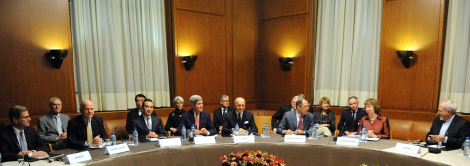
    P5+1 foreign ministers — as well as European Union High Representative Catherine Ashton and Iranian Foreign Minister Javad Zarif — at the United Nations Headquarters in Geneva, Switzerland, after the group concluded negotiations about Iran’s nuclear capabilities on November 24, 2013. Source: US State Department (Flickr)

    The current deal, in which Iran will halt further progress on its nuclear programme and roll back key elements in return for temporary and limited sanctions relief from the P5+1, was originally negotiated at the end of November in Geneva, but the details of implementation were confirmed in early January. After a decade of negotiations to solve the Iranian “nuclear crisis”, the implementation of this deal marks a significant step forward for the international non-proliferation regime, and is an important success story for international diplomacy. Despite the misgivings of a number of sceptics, this six-month interim deal brings countries together to work towards developing assurances around Iran’s nuclear programme, acting as a trust and confidence building exercise with the intention to create opportunity and space for a more ambitious longer term agreement in the future.

     A Positive Impact on Diplomatic Relations…

    As an initial outcome of this deal, we are witnessing a substantial shift in diplomatic relations and relationships between Iran and its regional neighbours. While the outset of the interim deal saw a number of sceptics, encouraging reactions have developed, including positive official responses from Kuwait, Qatar, Bahrain and Oman. Even the Prime Minister of the UAE officially welcomed the deal and called for lifting sanctions and a partnership with Iran.

    Relationships between Iran and Western partners have also begun to restore themselves as a result of the deal. After three decades of no sustained direct contact, back channels were set up prior to and early on during Rouhani’s presidency to help unlock the negotiations and in a pinnacle moment in September, Barack Obama and Hassan Rouhani spoke on the phone after the UN General Assembly.

    The United Kingdom also hasn’t had bilateral diplomatic relations with the Islamic Republic since 2011, when the British Embassy in Tehran was stormed.  However, the UK and Iran agreed to renew direct diplomatic links during November’s Geneva talks and shortly thereafter, a newly appointed British chargé d’affaires, Ajay Sharma, travelled to Iran as the first British envoy since 2011. It was announced on the 28th of January that a delegation of Iranian parliamentarians will visit London during the summer months. This follows a visit by British Members of Parliament, led by former Foreign Secretary Jack Straw MP, to Tehran that took place in early January.

    This overall confidence-building between regional states and diplomatic restoration between Iran and the P5+1 negotiating partners promises to improve the chances of negotiating a comprehensive nuclear deal next month.

    …But Not for Everyone
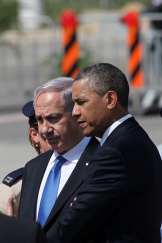
    Netanyahu and Obama

    US President Obama with Israeli Prime Minister Netanyahu Source: The Israel Project

    However, the possible détente between Iran and Western countries – the US in particular – may be a game changer for some regional states and parties. Israel’s response to the interim deal has been continuously vocal and disapproving from the start, with Israeli Prime Minister Benjamin Netanyahu condemning the deal as a “historic mistake”. It comes as somewhat of a personal defeat for the Israeli Prime Minister, who has been campaigning to strip Iran from all of its enrichment capability. Some analysts have hinted that this deal will damage the prospects for the Weapons of Mass Destruction Free Zone in the Middle East as it will pull Israel even further away from the negotiation table. Perhaps, though, the fear of losing US interest will bring them even closer to it.

    Responses in Saudi Arabia have also been less than enthusiastic: while the official response labelled the deal as a good solution to the Iranian nuclear programme, the unofficial response fears proliferation in the region and the enhancement of Iran’s role as a regional power. Members of the Saudi royal family have labelled Obama’s strategy with Iran as flawed and claimed that sanctions relief was a huge mistake that will now give Iran the upper hand. The Saudis see this deal as giving Iran more power, which threatens their status as a regional hegemon. In an unusual turn of events, this sees Saudi Arabia’s and Israel’s interests aligning—both feeling disappointed and outraged towards the US and fearing Iran’s potential.

    Hints of a rift between Gulf Cooperation Council (GCC) states have also been noticed as a result of this deal. Unlike Saudi Arabia, most of these states have signalled their modification in policy to match US goodwill towards Iran. This is especially seen in Oman, a state with strong historic ties to Iran and which helped broker the initial back channels established between the Islamic Republic and US in early 2013. At the IISS Manama Dialogue in December 2013, Omani Foreign Minister Youssef bin Alawi candidly spoke out against the Saudi proposal to upgrade the GCC union. The Sultanate state has always intended to pursue an independent foreign policy path, careful to balance relationships on both sides of the Gulf. The proposal, which strengthens the union of the GCC, was rejected by the Omani Sultanate on the grounds that there is a failure to agree on the foundations of the GCC and economic integration, but it would also force Oman to align more closely with Saudi Arabia which might in turn antagonise Oman’s relationship with Iran. With the complex combination of global and regional structural shifts and intersecting economic interests, this is perhaps the first of many small fissures between the Gulf States and regional partners that will come as unintended consequences of this deal.

    Hurting at home

    Even within Iran, the reaction has been mixed, and Rouhani has faced criticism for being too close to the West. Since his election in June of last year, he and his administration have been leading a public relations campaign to repair relations with the West, but he has faced problems with hardliners who are sceptical of US motivations or hold on to historical grudges.  While this deal helps to relieve some of Iran’s economic hardship, Rouhani has gone out on a limb in easing off enrichment, a capability which is seen by many within Iran to be entrenched within their national identity.

    Obama faces similar problems in Washington, as lawmakers in the Congress come dangerously close to causing the collapse of the deal by supporting the Nuclear Weapons Free Iran Act (S.1881) in the Senate. This bill, introduced in December by New Jersey Democratic Senator, Robert Menendez, imposes additional financial sanctions against Iran if it were to default on the terms of the interim deal, or if a long term deal was not agreed to after the end of the six months. Terms of the initial deal with Iran stipulates there will be no new nuclear related sanctions but core sanctions will remain intact for now and Iran will continue to lose $4-$5 billion in revenue per month.

    Crucially,  the Nuclear Weapons Free Iran Act would require zero enrichment from Iran, which is a red line for Iranians. Under the terms of the Non-Proliferation Treaty, all Parties have the inalienable right “to develop research, production and use of nuclear energy for peaceful purposes without discrimination”. Blatant discrimination against these rights is a deal breaker for Iran and in response (or perhaps retaliation) to Menendez’s bill, Iranian parliament has proposed new legislation that would allow for Iran to increase uranium enrichment to 60 percent, enough for weapons grade uranium. Iranian Foreign Minister Mohammad Javad Zarif has threatened that if bill S.1881 is passed in Congress, “the entire [interim] deal is dead”.

    Moving Forward

    The next round of talks between Iran and the P5+1 to negotiate a more comprehensive nuclear deal is reportedly to be held in New York in mid-February. However, with domestic and regional backlash from the deal threatening to collapse the interim deal – and worse, threatening to prohibit the agreement of a more sustainable deal in February – the chance of achieving further negotiations now depends on successful physical implementation of the interim deal Joint Plan of Action.

    While many remain sceptical of the parties involved or the implications on the region and beyond, this interim deal is a positive breakthrough for the international non-proliferation regime, which has needed a major boost like this for some time. We have a major opportunity ahead of us for restoring trust and strengthening Iran’s partnership on the global non-proliferation and disarmament agenda. This potential for such positive outcomes must now be the focus of the next month, because losing the momentum of this deal and starting from scratch would be a setback that global security cannot afford.

    Rachel Staley is currently the Programme Manager for the British American Security Information Council (BASIC) in their London office. Since 2011, Rachel has managed the operations of the office and assisted in developing the organisation’s programmes working on nuclear non-proliferation and disarmament in the Middle East, as well as engaging directly in the Trident renewal debate in the United Kingdom. Rachel holds an MA with Distinction in Non-Proliferation and International Security from King’s College London and a BA with Honours in International Affairs and Anthropology from Northeastern University.

    Featured image: British Foreign Secretary William Hague, German Foreign Minister Guido Westerwelle, EU foreign policy chief Catherine Ashton, Iranian Foreign Minister Mohammad Javad Zarif, Chinese Foreign Minister Wang Yi, US Secretary of State John Kerry, on early November 24, 2013 in Geneva. Source: European External Action Service (Flickr)

  • Sustainable Security

    The vast majority of civil wars occur in a small number of countries. What causes conflicts to geographically cluster in this way?

    Studies of intrastate armed conflicts show that the majority of civil wars cluster in a small number of states. According to the widely-used Uppsala Conflict Data Program’s Armed Conflict Database, 30 states experienced more than 60 percent of all new armed conflict onsets between 1946 and 2013. In this period, Burma, Ethiopia, India, Indonesia, and Sudan alone account for about 30% of the world’s new ethnic conflicts.

    The conflict trap

    Conflict researchers and development economists such as Paul Collier attribute the clustering of internal war to state failure and conflict traps: weak states cannot deter rebellion. Civil war, in turn, impoverishes individuals, destroys institutions, and plants feelings of revenge. All of these factors increase the risk of conflict recurrence.

    Yet neither India and Burma nor Ethiopia and Indonesia qualify as failed states. Moreover, their political regimes cannot explain the frequency of rebellion either. Burma and Sudan have been repressive autocracies for most of the period but India has been democratic for the vast majority of its existence. Existing explanations, then, do not fully account for why armed conflict clusters in these countries.

    Civil war diffusion within states

    In a recent study in International Studies Quarterly, my co-author Jesse Hammond and I highlight an alternative explanation for the concentration of so many conflicts in these multi-ethnic states. We explore the diffusion of ethnic civil wars within one country. Unlike earlier research on the diffusion of armed conflict across international borders, we study how government’s decision to fight one rebel group can trigger additional rebellions by rebels from other ethnic groups.

    To separate diffusion from recurrence dynamics, we move from country-level to ethnic-group-level analysis. Our study includes all states between 1946 and 2009 that (1) experienced at least one civil war and (2) contain at least three distinct ethnic groups – two in conflict, and one potential challenger. This selection leaves us with 49 states, 415 ethnic groups, and 127 ethnic armed conflicts.

    On the basis of this data, we model the yearly probability of a new ethnic conflict breaking out. According to our theory of diffusion, the location of ongoing conflicts as well as the duration and number of armed challengers are the main factors that affect the probability of new conflicts. Nearby conflicts should increase the motivation for additional rebellions; longer conflicts and more rebels should increase the opportunity for fighting.

    To construct those measures of motivation and opportunity, we combined data on the geographic location of ethnic groups’ settlement areas from the Geographic Research of War – Unified Platform at ETH Zurich with data on conflict zones from the Peace Research Institute Oslo. Whereas the left panel in Figure 1 shows the settlement areas of ethnic groups in Chad, the right panel shows the extent of an active armed conflict between 1999 and 2002. For these years, we compute the distance between peaceful ethnic group and the conflicts zones and note whether some groups are directly affected by fighting. We repeat this for all ethnic groups in all states in our sample.

    Figure 1. Examples of ethnic groups’ settlement patterns (left) and conflict zones (right) in Chad


    Equipped with these measures our study argues that there are four pathways of conflict diffusion within states– two that affect the motivation of potential challengers, and two more that increase their opportunity to rebel.

    How armed conflict increases the motivation for additional rebellions

    On the motivation side, ongoing fighting may harm members of nearby but previously neutral ethnic groups. Even if fighting does not directly affect other ethnic groups, increased state repression that results from fear of additional uprisings might. In turn, members of previously peaceful ethnic groups become aggrieved about state violence and decide to take up arms to defend themselves. India’s repressive policy in its Northeastern states may have had exactly this effect.

    Our second motivational mechanism states that an ongoing civil war encourages already disaffected groups to take up rebellion as a strategy. Witnessing nearby groups’ rebellions provides a blueprint on how to potentially overcome political and economic inequalities such as exclusion from state power.

    On its own, political discrimination does not frequently trigger rebellion; disadvantaged groups exist for long periods of time without mobilizing. However, seeing nearby groups with similar political disadvantages rise up against repressive political regimes can provide the spark for additional rebellions.

    Patterns of armed uprising against the Burmese and Indonesian states soon after decolonization exemplify these patterns at the domestic level. Although it goes beyond the scope of our study, we argue that similar mechanisms operate at the international level.  Although the states in North Africa and the Middle East have been among the most repressive and ethnically discriminatory regimes in the world for decades, Arab citizens only rose up their rulers in 2011 after witnessing the Tunisian revolution.

    How armed conflict increases the opportunity for additional rebellions

    unimad-darfur

    Image credit: UNAMID/Flickr.

    Turning to our opportunity mechanisms, we argue that ongoing internal armed conflicts can provide important signals about the government’s repressive capacity. If the government is strong, it will crush any rebellion quickly. If it fails to quickly and decisively defeat one rebel organization, other ethnic groups may perceive the government as weak and rebel to gain concessions from the state.

    While the 2003 rebellion in Sudan’s Darfur region has various causes, our opportunity logic offers a good explanation for its timing. For two decades, the Sudanese government was unable to decisively defeat the Sudan People’s Liberation Army and its various offshoots. As the southern rebellion endured, aggrieved groups in the Darfur region realized that Khartoum might be vulnerable to extending concessions to them when facing additional violence.

    A similar dynamic is at play when the government fights multiple challengers at the same time. The economic and military costs of armed conflict drain governments’ resources. This makes it possible for additional ethnic challengers that were too weak to confront the government alone to join the fray. The increasing number of ethnic challengers in Burma exemplifies this last pathway to domestic conflict diffusion.

    Conclusion

    To summarize, governments that violently confront rebel groups rather than negotiate enter a slippery slope that may lead to even more civil wars. Armed conflicts with one ethnic rebel group have inspired members of other ethnic groups to rebel in Northeast India, Burma, Indonesia, Sudan, or the Democratic Republic of Congo.

    Why then do governments fight rebels rather than accommodate them? One answer may be that government leaders prefer monopolizing power rather than sharing it to extract more resources from the state or to reduce the risk of coups. Where the cost of conflict is not borne by elites but by citizens, such a strategy may pay off.

    Other research shows that giving in to rebel demands makes governments appear weak and potentially triggers additional challenges. Future research will have to uncover the exact conditions under which governments prefer one risk over the other.

    Our study adds to our understanding of countries caught in conflict traps. We believe that our study’s findings are particularly relevant for counterinsurgency and peacekeeping strategies. In addition to ending one civil war and keeping it peaceful, governments and international institutions need to contain armed conflicts in space. Otherwise, they are very likely to infect other ethnic groups in the same country.

    Nils-Christian Bormann is lecturer and Humanities and Social Science Fellow in the Politics Department at the University of Exeter.

    Jesse Hammond is assistant professor in the Department of Defense Analysis at the Naval Postgraduate School in Monterey, California.

  • Boiling point

    Boiling point

    Joydeep Gupta | China Dialogue | May 2010

    Issue:Competition over resources

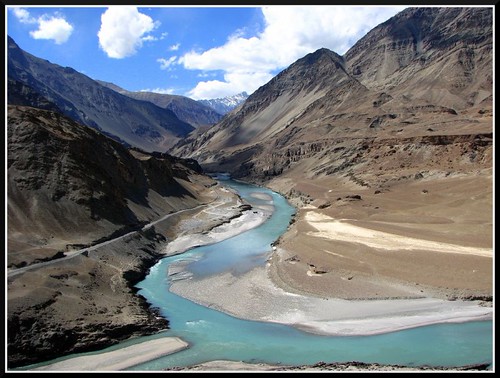
    If Pakistani householders look carefully at their electricity bills, they will find they have been charged an extra amount for NJP – the Neelum Jhelum Project. It has been going on for years and is an attempt by the Pakistani government to raise money for a hydroelectric project on the Neelum River, a tributary of the Jhelum in Kashmir.

    But while Pakistan – unable to get loans for the project from international agencies due to the ongoing terrorism problem – is still raising money, India is diverting the water upstream, meaning there will not be enough of it in the Neelum for Pakistan to build the project it wanted.

    India is within its legal rights to do this. Under the 1960 Indus Water Treaty (IWT), it is allowed to build run-of-the-river projects as long as it delivers all the water to Pakistan at the end of it. And that is exactly what India is doing; channeling the water for its own hydroelectricity project, before releasing it directly into the Jhelum further downstream. Pakistan is so incensed that, in late April, it announced it would approach the World Bank, which is the arbitrator under the IWT, in an effort to stop the Indian project.

    Water is rapidly overtaking the territorial dispute over Kashmir to become the biggest bone of contention between India and Pakistan. And the rhetoric in Pakistan is getting uglier by the day. One of the first questions this Indian reporter faced in Islamabad in late March was: “Why is India stealing our water?” The question came from a Pakistani journalist at the start of a workshop on precisely this topic, which brought together journalists from India and Pakistan as well as water experts. After two days of discussion, the Pakistani journalist said: “Now I know India is not stealing our water and that it is sticking to the treaty. But does it not realise we need more water? How can we survive without it?”

    Much of the reportage in the Pakistani media is not so nuanced, and charges of water theft by India – the upper riparian country – are bandied about regularly. There is no doubt that India has built and is continuing to build hydroelectric projects in the upper reaches of the rivers that flow into Pakistan. But it has been scrupulous in sticking to the IWT, which says India can build run-of-the-river projects on the Indus, Jhelum and Chenab rivers, as long as the quantity of water that flows into Pakistan through these waterways is not reduced. The treaty also allows India to store 3.6 million acre feet (MAF) of this water, before the rivers flow into Pakistan.

    Whenever Pakistani government officials are asked about the water dispute, they agree that India is sticking to the IWT. But that is not the way it is reported in much of the Pakistani media, and even one of Pakistan’s Islamic fundamentalist groups recently said its ire against India was partly a result of it “stealing our water”.

    This perception has grown due to “lack of transparency and lack of timely data from India”, said Danial Hashmi, senior engineer at Pakistan’s Water and Power Development Authority (WAPDA). “That leads to lack of trust. We have to keep asking them for water flow data that should be coming to us automatically, and without delay.”

    The origins of the water dispute lie back in the nineteenth century, when Britain ruled the subcontinent and British engineers started to build what became the world’s largest canal irrigation system in the Indus river basin. That became a huge issue when Pakistan was carved out of India in 1947, splitting the river basin and its canals. As it was located upstream, India had control of the rivers and there were repeated disputes over water flow until the World Bank mediated the IWT, giving the three eastern rivers – Ravi, Beas and Sutlej – to India and the other three to Pakistan.

    India’s High Commissioner to Pakistan, Sharat Sabharwal, has repeatedly said: “The IWT has served both countries well and has been operational even in times of war. It assigned to Pakistan 80% of the water in the Indus system of rivers.”

    John Briscoe, a water expert who has worked in the subcontinent for 35 years, was the World Bank adviser involved in choosing the neutral expert to adjudicate between India and Pakistan on the Baglihar dam in the Indian part of Kashmir. (Read John Briscoe’s article for chinadialogue here: “Bankrolling change”). Briscoe says that the IWT could be a “stable basis for cooperation if India and Pakistan had normal trustful relations. [Then] there would be a mutually-verified monitoring process which would assure that there is no change in the [water] flows going into Pakistan.”

    Since both countries agree that India is sticking to its part of the IWT, why is less and less water available to farmers in Pakistan? Daanish Mustafa, an academic in the geography department at King’s College, London, said it was partly because the planners had not foreseen how there would be less water flowing down these rivers due to changes in the Himalayan environment.

    Deforestation in the catchment area of the Indus basin means more and more silt is flowing down these rivers, choking the channels and reducing water flow. Another key issue is the dependence of these rivers on the Himalayan glaciers. While it has now been established that these glaciers are in no danger of disappearing in the next few decades, there is no doubt that they are receding due to global warming. A detailed satellite-based study by the Indian Space Research Organisation came to the conclusion this March that Himalayan glaciers have shrunk by 16% in the last 50 years.

    In the entire Himalayan ranges, glacier melt is responsible for less than 10% of the annual flows in these rivers. But that is not the case in the Indus basin. As the westernmost of the river basins formed by the Himalayas, it gets much less of the monsoon rain than the eastern Himalayas and is consequently far more dependent on the glaciers.

    So Pakistan is asking India for water in an environment where the total water flow is shrinking all the time. This had not been foreseen when the IWT was signed 50 years ago, but today it threatens to become the major flashpoint between the two nuclear-armed neighbours in south Asia, despite conciliatory messages from parts of the Pakistani establishment. “This is a problem that can be solved only through cooperation and not confrontation,” Pakistan’s environment minister Hameed Ullah Jan Afridi pointed out at the March workshop, which was organised by the voluntary organisation LEAD Pakistan and sponsored by the British government.

    India is the upper riparian country in the Indus basin, but the rivers do not start in India. They start in the Tibet Autonomous Region of China. Unless China is brought to the discussion on how to control deforestation in the basin’s catchment area and how best the dwindling water supplies can be shared in a situation where glaciers are retreating due to global warming, the water-related tension between India and Pakistan can only get worse. Eminent Pakistani lawyer Tariq Hassan recently said: “Water is the most strategic issue facing the subcontinent. If there is a war here in the future, it will be over water.”

    Independent experts like Briscoe say that, while India is sticking to the IWT, it needs to be more generous because of the “great vulnerability and legitimate concern of Pakistan” over water scarcity, which has already ensured that the Indus, the mother river of the subcontinent since pre-history, no longer even flows to the Arabian Sea but instead trickles to its death in the sands of Sindh.


    About the author: Joydeep Gupta is a director of the Earth Journalism Network at Internews and secretary of the Forum of Environmental Journalists of India.
    Source: China Dialogue

    Image Source: Sanju

    Comments

    Post new comment


  • Sustainable Security

    Contributing an Article

    We are always on the lookout for new authors with new perspectives to add to the debate on the blog – especially if you think we’ve missed something!

    We aim to address a wide range of evident and emerging security issues and take a broad and integrated approach to the term ‘security’. Generally, we look for insightful pieces which seek to explore, question and suggest solutions for ongoing security situations and the underlying issues which drive them. While we do place an emphasis on our ‘key’ drivers (climate change, marginalisation, competition over resources and militarisation), contributors should not feel limited to these subjects alone.

    Please note that, as a nonprofit blog that serves as a resource for interested readers, sustainablesecurity.org does not have the resources to pay contributors.

    If you are interested in contributing an article, please get in touch with us using the form to the right.

    Guidelines

    • 1,400 words max.
    • Please fact-check your article, especially if the subject is controversial or emerging . Although we check submissions carefully, authors are ultimately responsible for the factual accuracy of their contributions.
    • We do not use footnotes or endnotes. Embedded links for information that is sourced from other websites are a great opportunity to support your argument and opinions, especially for subjects that are not common knowledge. Please be sure to include a hyperlink for specific statistics and quotations.
    • Spelling: UK or US English – we don’t mind which, as long as it is used consistently throughout your article.
    • Please avoid unnecessary jargon and explain any that is used in a clear and concise manner.
    • You are welcome to cross-post your article in other places if we are accredited as the original site of publication.
    • We do not reprint pieces published elsewhere (with the exception of Sustainable Security programme staff articles that have been featured in the media).

    Would you like to contribute a video?

    Our readers would love it if you did! Sustainablesecurity.org deals with an often complex interplay of difficult subjects.  We are therefore very interested in presenting analysis of these issues in a range of media for those who wish to interact in different ways with our content.

    If you are interested and have the means to produce a video, get in touch with us using the form above with ‘VIDEO’ in the subject line. Thanks!

    Legal stuff…

    All content and downloads are licensed under a Creative Commons Attribution-NonCommercial-NoDerivs 3.0 Licence unless stated otherwise.

    We look forward to hearing from you!

    SusSec Team

  • Sustainable Security

    Nuclear Weapons: From Comprehensive Test Ban to Disarmament

    Despite not yet entering into force, the 1996 Comprehensive Test Ban Treaty has succeeded in almost eliminating nuclear weapons testing and in establishing a robust international monitoring and verification system. A breakthrough in its ratification by the few hold-out states could have important positive repercussions for the Nuclear Non-Proliferation Treaty or nuclear disarmament in the Middle East.

    Read Article →

    10 years of US Drone Strikes in Pakistan – What Impact Has it Had?

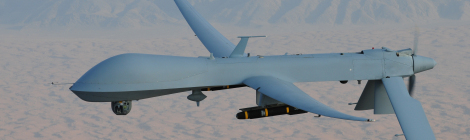
    This week marks 10 years since the first reported US drone strike in Pakistan. It has also seen the resumption of US drone strikes in the country following a five-month pause. Considering the length of time the CIA-led programme has been running, a number of questions deserve consideration: namely, how effective has the decade long covert drone programme been in Pakistan and what impact have drones had on wider Pakistani society? As the military technology for remote-control warfare spreads, there is a need to question whether drones provide significant tactical advantage or whether their proliferation could lead to greater long-term global insecurity.

    Read Article →

    US Drone Strikes in Pakistan: ineffective and illegitimate

    Strikes by unmanned combat air vehicles, or armed drones, have become the tactic of choice in US counterterrorism efforts in Yemen, Somalia and, the topic of current controversy, Pakistan. The lack of transparency, dubious effectiveness, civilian casualties and negative consequences for US national security being highlighted by current debate means that Washington needs to re-evaluate its approach.

    Read Article →

    Can the Nuclear Non-Proliferation Treaty outrun its double standard forever?

    The recent walkout by Egyptian negotiators at UN talks have demonstrated that, like a building with rotten foundations, the nuclear non-proliferation regime is far less stable than many believe it to be. Egypt’s actions make clear that anything less than a regime specifically geared towards addressing the reasons why some states seek nuclear weapons is a regime existing on borrowed time.

    Read Article →

  • Sustainable Security

    Authors’ note: This piece presents a summary of the article: Gëzim Visoka and John Doyle, ‘Neo-Functional Peace: The European Union Way of Resolving Conflicts’, Journal of Common Market Studies. Vol. 54, No. 4, 2016, pp. 862-877. Free access link: http://onlinelibrary.wiley.com/doi/10.1111/jcms.12342/epdf.

    Today, the European Union (EU) plays an important role in preventing conflicts, as the EU’s role facilitating dialogue between Kosovo and Serbia shows. But the EU’s role as regional peacebuilder could suffer drawbacks as a result of internal turbulences cases by the Brexit and other lingering disintegrationalist forces.

    Introduction

    The European Union has expanded its role in preventing conflicts and building peace, but its institutional practices remain insufficiently conceptualized. In this piece we argue that, drawing from a strong self-perception toward a neo-functionalist interpretation of its own history, the EU has started to use its own internal model of governance as an approach for resolving protracted disputes, through deconstructing highly political issues into technical meanings in order to achieve mutually acceptable agreements. We illustrate this by examining the EU’s approach in facilitating a dialogue for normalising relations between Kosovo and Serbia. However, the EU’s role as regional peacebuilder can suffer drawbacks as a result of internal turbulences cases by the Brexit and other lingering disintegrationalist forces.

    The EU’s approach to resolving conflicts and building peace

    Nicolas Raymond

    Image by Nicolas Raymond via Flickr.

    In the past ten years, the European Union (EU) has increased its role in resolving conflicts and building peace in its neighbouring regions and beyond. However, analysis of the EU peacebuilding work has placed EU practice almost entirely within traditional instruments of security governance, such as conflict prevention and mediation, crisis management, post-conflict stabilization and normative frameworks, such as human rights, human security and civilian protection. This is largely because scholars have argued that the EU’s peacebuilding framework does not yet represent a coherent intellectual project and relies on existing liberal peacebuilding frameworks affiliated with restoring security, strengthening the rule of law, supporting democratic processes, delivering humanitarian assistance, and supporting economic recovery. Yet the EU’s peace support operations should not only be studied through the lens of liberal peacebuilding, but should also be seen as self-mirroring its internal dynamics of neo-functional integration and consolidation. Thus, the EU’s external actions are partly based on the externalization of its own model of integration, especially neo-functionalism which accounts for the incremental convergence of self-interest through economic and technocratic co-operation in a particular sector, which then can spill over to other sectors and enable broader political co-operation and integration.

    The EU’s peacebuilding approach is different to that of other international actors, mainly due to the contextual factors regarding how it has transformed internally, how its complex institutional and multi-layered governance works and what capacities, norms and practices it invokes in dealing with external situations. The domination of new alternative accounts, such as liberal intergovernmentalism, in explaining the EU’s common foreign and security policy, as well as the complex unfolding of EU enlargement, development, and peacebuilding policies, have overshadowed neo-functionalism’s space in exploring developments in EU peacebuilding. Liberal intergovernmentalism grants more agency to the national preferences of member states than the EU institutions in shaping internal and external policy.

    In peacebuilding studies, there is a tendency to avoid neo-functionalism, because it can be associated with technocracy – the rule of experts and bureaucratic procedures, based on universal blueprints, privileging of external knowledge and imposition of frameworks for governing societies.

    Despite its overshadowed academic relevance, neo-functionalism continues to be an underlining frame of reference and culture of practice among EU policy-makers and bureaucrats. Neo-functionalism accounts for the incremental convergence of self-interest through economic and technocratic co-operation in a particular sector, which can spill over to other sectors and enable broader political co-operation and integration. The increased role of the EU in merging peace, development and security speaks to the neo-functionalist evaluation of EU governance of external security. Neo-functionalism, therefore, is not only relevant for theorizing regional integration, but can also help us understand the EU’s peace support practices.

    Neo-functional peace: Kosovo-Serbia Dialogue

    The EU’s neo-functionalist approach has played a crucial role in normalizing relations between Kosovo and Serbia, and in resolving a range of outstanding political disputes. In policy discourse, the Kosovo–Serbia dialogue was presented as a major success of European foreign policy and evidence that the EU was a reliable partner of the UN. But, how has the EU managed to resolve one of the protracted conflicts in Europe?

    First, as prescribed by neo-functionalists, background conditions need to be conducive for a peace process to work. In the case of Kosovo and Serbia, the background conditions were ripe for both sides to initiate a peace process, whereby the normalization of relations between Kosovo and Serbia emerged as a key condition for advancing the stalled EU integration process for both countries. The peace processes between Kosovo and Serbia in the past two decades are marked by several missed opportunities. The EU’s integration perspective for Kosovo and Serbia has been the driving force for both sides to engage in dialogue. Hence, despite its unpopularity now in Europe, the enlargement of the EU in the Western Balkans is key to transforming protracted conflicts.

    Second, neo-functionalist approaches prefer technical dialogue and agreements in areas of ‘low politics’, which permit confidence-building, socialization and development of mutual commitments. A key feature of Kosovo–Serbia Dialogue was the conversion of sensitive political issues into technocratic process. The essence of this process was to find a mutually agreeable solution, leading to Serbia’s removal of its parallel institutions in Kosovo and de facto acceptance of Kosovo’s legal and political authority territory Kosovan territory, but also as an independent state in the region. Equally important and sensitive was Serbia’s demand to expand political rights and the scope of local self-governance of the Serb community living in Kosovo. The technical dialogue has resulted in a number of important agreements on regional co-operation and representations, integrated border management, regulation of customs steps, return of cadastral records and civil registry and recognition of university diplomas. The agreements were written in technical language but had far-reaching political implications.

    Third, in neo-functionalist logic, technical agreements had a spill over effect which launched a high-level political dialogue and resolved numerous outstanding sensitive political issues. After each agreement, the EU outlined the need for continuing dialogue, for pragmatism and for new agreements. The technical dialogue has facilitated a high-level political dialogue and in turn, the political dialogue later allowed new technical agreements.  In fact, technical dialogue proved to be insufficient without upgrading the process to the highest political level that would ensure stronger political commitment, domestic legitimacy and faster progress in implementing the outcomes of the dialogue. The key breakthrough in the Kosovo–Serbia Dialogue was the negotiation of the ‘First Agreement Governing the Principles for Normalisation of Relations’, which permitted progress on sensitive political issues, such as sovereignty and regional membership, without negatively affecting the self-interest and domestic legitimacy of parties.

    Fourth, neo-functionalist interactions are often embedded in multi-meaning liminalities to enable each party to interpret agreements in their own terms. While Kosovo utilized them to strengthen sovereignty, Serbia utilized the agreements to improve and advance the rights of Serbs in Kosovo and enhance its EU accession agenda.  If, however, a highly political vocabulary was used to describe the contentious issues, neither party would have been able to reach any agreement. Liminality was chosen to reduce the potential politicization of these issues and create space for both parties to sell to their domestic audiences these technical agreements as favourable deals in their national interest. For instance, the agreement on the freedom of movement provides that citizens of Kosovo and Serbia would cross the border not with passports but with ID cards, accompanied only by a written entry/exit. In this way the question of recognizing the Kosovo passport was avoided, by using alternative national documents.

    Another interesting example is the IBM agreement, which for Kosovo is referred to as integrated border management, while Serbia refers to it as integrated boundary management. The substance of this agreement is in favour of Kosovan sovereignty, as it is a de facto demarcation of the border, setting the permanent border crossing between two countries where each party recognizes the jurisdiction on their respective sides.

    Fifth and final feature, as the EU’s desire to reward intentions and rhetorical commitments, rather than tangible results and outcomes of the peace process, which does not exclude the possibility for encapsulation, spillback and retrenchment of all sides in the peace process. From the EU’s perspective, just the fact that the parties are talking to each other and the dialogue has not failed completely constitutes a promising basis for success. The EU has tried to promote positive conditionality and delivered some benefits irrespective of actual implementation. The facilitative role of the EU has proven to be more effective than the previous imposing nature of UNMIK in Kosovo. Nevertheless, conditionality and incentives for EU integration have certainly been key ingredients that have transformed the conflicting positions of actors.

    Conclusion

    Despite numerous achievements, the dialogue between Kosovo and Serbia was not without challenges. The agreements deriving from technical dialogue have only partially been implemented. Each side has delayed the implementation of certain parts of agreements that were not seen to be in their best interests. Both Kosovo and Serbia ran into domestic legal and institutional complications, especially in cases which required legislative change. There is some evidence (but still limited to date) that the agreements have improved people’s lives. The main critical uncertainty is how the implementation of agreements will reshape political and institutional life in Kosovo and what role it will have in fostering local peacebuilding and ethnic reconciliation. Another critical uncertainty is the EU integration dynamics of Serbia and Kosovo, which serve as a key incentive for both sides’ engagement in the normalization dialogue. The rise of euroscepticism, refugee crises and regional instability has made enlargement unpopular within the European Union. Most importantly, Brexit and other internal challenges can hold back EU’s role as regional peacebuilder. Moreover, it remains uncertain what the endgame of the dialogue will be, especially the regulation of diplomatic relations between Kosovo and Serbia. Despite these difficulties, the progress made since 2011 compared to previous international engagement is clear, especially in opening the prospects for resolving key outstanding issues. Nevertheless, these future uncertainties show that this neo-functional peace could experience setbacks, but is a promising approach through which to view the EU’s engagement in the resolution of protracted conflicts.

    The key principles of neo-functionalism, such as the interplay between technical and political, deconstructing of larger political issues into smaller technical decisions, spillover effects and shifting grounds of interests – when decontextualized and modified from their original usage to describe the EU integration process – are a useful means to conceptualize how the EU addressed the protracted conflict around the sensitive questions of sovereignty, recognition and political autonomy. This neo-functional approach does not seek to make progress by avoiding sensitive issues and focusing on something else; rather, it seeks to deconstruct the contentious issues into acceptable technical and everyday decisions. Another distinct feature of EU’s neo-functionalist approach is the extensive involvement of local actors and ownership of the process. While liberal and technocratic peacebuilding is often associated with the imposition of external blueprints and template-like solutions, and suppressing local alternative dispute resolution approaches, EU’s approach can be different. It can be a situational strategy, where the local actors are the main parties that decide on the form and substance of agreements and implementation.

    EU’s neo-functionalist distinctiveness lies in its ability to transform disagreement by deconstructing language and practice and translating their meaning differently, by providing facilitative space through third parties. This sequential approach to the peace process has been first and foremost a practice and process-driven approach. Technocracy in this context does not depoliticize issues, but it helps reframe, temporarily at least, the meaning of things in such a fashion that it enables the transformation of hostilities and building of interdependent co-operation. It is this logic from its own history which makes neo-functional approach again a useful way to think about EU peace support practices. This approach deserves more merit and needs to explore how it can be utilised in contemporary peace-making and mediation efforts, especially in frozen and protracted conflicts.

    Dr Gëzim Visoka is a Lecturer in Peace and Conflict Studies at Dublin City University. His latest book entitled “Peace Figuration after International Intervention: Intentions, Events, and Consequences of Liberal Peacebuilding” is out this month with Routledge.

    Professor John Doyle is Director of the Institute for International Conflict Resolution and Reconstruction and the Executive Dean in the Faculty of Humanities and Social Sciences at Dublin City University.

  • Sustainable Security

  • Himalayan Sub-regional Cooperation for Water Security

    Himalayan Sub-regional Cooperation for Water Security

    Issues:Climate change, Competition over resources

    Trans-boundary collaboration over the issue of shared water is critical since water is scarce in most areas. Today, the Himalayan region is facing severe water stresses. To overcome the challenge, there is a need to promote Himalayan Sub-Regional cooperation to ensure water security and a climate of peace and progress. There is no alternative to cooperation in view of the retreat of glaciers, resulting decline in river flows in parts of the region and flooding in other parts, tectonic changes in the Himalayan region, threat to food security and the risk of increase in inequity. A cooperative and open approach to Himalayan rivers, starting with new fundamentals has become imperative in this regard.

    In this backdrop, BIPSS hosted the Second International Workshop on “Himalayan Sub-regional Cooperation for Water Security” in Dhaka on January15-16, 2010 in collaboration with the Strategic Foresight Group, India.

    Speaker presentations, participant lists and previous reports are available here.

  • Sustainable Security

    One of the negative aspects of China’s increasing engagement with African states is the spread of small arms and/or light weapons especially in conflict zones and were opposition is violently suppressed. These weapons have undoubtably contributed to the enhancement of closer ties between China and authoritarian regimes and served as an instrument for consolidating its presence in the continent.

    China has developed an extensive presence in Africa through infrastructure such as airports, roads, hospitals,  convention centers,  media investment, agricultural  and health education, among many other  activities that seemingly put China in a good light.  At the same time many of China’s seemingly worthwhile activities by have not consolidated its ties to the African political elite and incumbent regimes as much as its arms sales to authoritarian regimes have.  Its positive contributions in the continent have been offset by the lure of the benefits that are associated with arms sales to African states despite their negative consequences in growing African states.

    Chinese small arms have been implicated in ethnic violence and war crimes in Sudan, South Sudan and the Democratic Republic of Congo (DRC) among others.  They have also been instrumental in the suppression of democratic progress in Zimbabwe, and at the same time expanding its influence and political economic ties with the authoritarian regime of President Robert Mugabe. China’s worldview which puts social and economic rights over individual liberties and political rights is often quick to supply weapons to authoritarian African states because it does not make human rights observance a condition for arms sales to any country. Incumbent African regimes that face severe threats to their survival are therefore quick to turn to China as a source of arms supply in the struggle to preserve their power.

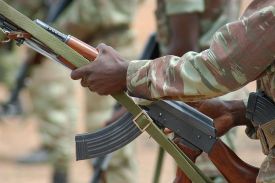
    Apart from the lure of profits for China’s arms sales to Africa, there is also the added benefit of China finding employment opportunities for its skilled Chinese citizens. This contributes to spreading its technical and personnel   influence in the continent. At times, an arms supply relationship also involves establishing an arms factory in a recipient state that requires the expertise of skilled Chinese scientists, engineers, and industrial managers. Such a relationship for China leads to a long term business and security relationship with the African country. This is one reason why China’s influence in Sudan is so strong. However, what happens is that weapons that are sold by China or produced by China in Africa end up fueling and feeding the conflicts in countries such as the DRC, Sudan, South Sudan, and the Central African Republic, among others.  Regime survival or incumbent regime power consolidation efforts fuel arms transfers in South Sudan and Burundi. Chinese arms are often implicated in these conflicts because of China’s aggressive arms sales strategy w is based on the following:

    • A “catch all” customers strategy that has established an arms transfer or military relationship with several large  African states such as Egypt, Nigeria, Ethiopia, Zimbabwe, and South Africa, as well as smaller states like the Republic of Congo, Equatorial Guinea, Eritrea,  Burundi, and Sierra Leone, among others;
    • A favorable  financing strategy especially for African countries that cannot afford to buy sophisticated weapons and  afford to pay the market price for small or light weapons; and
    • China’s use of frequent and aggressive small arms marketing of its and more sophisticated military hardware at annual arms exhibits in various states within the continent. The wide array of Chinese arms enables China to sell weapons to both rich authoritarian African states as well as poorer smaller ones. The Chinese policy of placing no human rights or democracy conditions on arms sales as well its overall policy of non-interference in the politics of African states translates into the availability and affordability of Chinese arms in many African states.

    The bloody footprints of China’s arm sales in Africa

    Image credit: Lance Corporal Jad Sleiman/Wikimedia.

    It is not therefore surprising that arms from China have been implicated in the Ethiopian-Eritrean conflict in which China is known to have supplied arms to both sides in the conflict. It is also well documented that Chinese weapons were used in Sudan’s suppression of rebels in Darfur following a revolt in 2003 which led to a genocide against the region’s people.  It is alleged that the light weapons used in the massacres in eastern DRC were of Chinese origin. There, children as young as 11 years old were given weapons  by warlord Thomas Lubanga, and forced to participate in interethnic killings in the early 2000s. Furthermore, Chinese trained Congolese troops have been implicated on several occasions in ethnic killings of innocent civilians in the eastern DRC.  Similarly, in 2009 Chinese-trained Guinean Commando units were responsible for the killings of about 150 people during a protest against authoritarian and undemocratic rule in the country.

    According to the Stockholm International Peace Research Institute ( SIPRI) report of 2010, China was found to be the foremost exporter of arms to Africa. The Chinese Type 56 which is China’s version of the Russian Kalashnikov (AK47) assault rifle is much easier to use as a light weapon.  The argument could be made that in spite of China’s claim that it does not interfere in the internal affairs of other countries, the fact that it supplies weapons to warring factions within a sovereign nation is itself inherently interventionist by nature. Such interference produces consequences such as gross human rights violations, murder, rapes, tortures, and extra-judicial killings. China’s arms sales to Africa attract negative attention especially because they are made available to states like Sudan and Zimbabwe and the DRC, known for blatant human rights violations in Africa. This often means that China is reaping the profits of selling weapons to both incumbent regimes and rebel groups. The general outcome is the consolidation and expansion of its ties and presence in the continent.

    Looking forward: an unsustainable arrangement

    China’s propensity to spread small arms and light weapons (SALW) among African states will end up undermining whatever positive perception it has generated in the continent as well as taint its goals to support sustainable development and contribute to the national development goals of individual African states.  In particular,  it will cast doubt on its  willingness to support Millenium Development Goals, and other specific  development goals in the continent such as the Program for Infrastructure Development in Africa and similar such programs.

    So far, China’s military to military ties with African states has been a source of frustration for the United Nations.While it China contributes to peacekeeping efforts  in the continent, the United Nations does not know details of its military engagement, or specific  military ties,  with the countries in which its peacekeepers  are deployed such has the DRC, South Sudan, Liberia, Mali, among others. In other words, the expanding military ties with African states, and perhaps the access by rebels to Chinese arms are factors that are likely to undermine UN peacekeeping functions of disarmament of ex-combatants. It is difficult to know whether Chinese arms complement or undermine the efforts to enhance security in fragile African states. It is a question of whether China is willing to ensure that its military ties with countries of concern such as the DRC, Sudan, South Sudan, and Zimbabwe, complement peacekeeping activities there or help to promote peace, stability, democracy and development.

    Human rights organizations have often called attention to the destabilizing role that Chinese arms play in conflict zones in Africa. China so far seems determined to support and forge closer ties with authoritarian regimes in their goals of power consolidation, oppression of the opposition. China on the other hand is preoccupied with spreading its influence, consolidating its ties and deepening its engagement with every African state regardless of whether it is democratic or authoritarian. Accordingly, Chinese SALWs are supplied to both national armies in Africa as well as to rebel groups in the DRC, Chad and Uganda, and now the warring factions in South Sudan.

    China’s supply of arms to both rebels and national armies is often a violation of embargoes as well as a blatant case of economic self-interested behavior. The glimmer of hope in all this is that China has at times bowed to international pressure to cease supplying weapons in areas of gross human rights violations such as was the case with Darfur. But overall China still gives priority to concern over sovereignty and often defers  to incumbent regimes such that human rights  observance and non-proliferation of SALWs  are relegated a secondary role in China’s foreign policy rights towards Africa states.

    Earl Conteh-Morgan is Professor of International Studies in the School of Interdisciplinary Global Studies at the University of South Florida, Tampa, Florida. He is currently working on a book-length manuscript on Sino-African relations from a Political Economy Approach.