Blog

  • Sustainable Security

    Getting Older But Not Wiser: the Arms Trade Treaty’s First Birthday

    April 2nd marked the first anniversary of the adoption of the much celebrated Arms Trade Treaty (ATT), the world’s first treaty to establish common standards of international trading in conventional weapons and which in turn aims to ‘ease the suffering caused by irresponsible transfers of conventional weapons and munitions’. But with the continued irresponsible arms trading and an overall rise in the global arms trade, it seems that some states have yet to put the ideals of the ATT into practice.

    Read Article →

    The New Insecurity in a Globalized World

    Writing exclusively for SustainableSsecurity.org, Elizabeth Wilke argues that a new conceptualization of insecurity and instability is needed in a world with greater and freer movement of goods, services and people – both legal and illicit – greater demands on weakening governments and the internationalization of local conflicts. The new insecurity is fundamentally derived from the responses of people and groups to greater uncertainty in an increasingly volatile world. Governments, and increasingly other actors need to recognize this in order to promote sustained stability in the long-term, locally and internationally.

    Read Article →

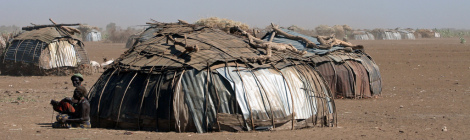
    Human Security and Marginalisation: A case of Pastoralists in the Mandera triangle

    This paper seeks to bring out the relevance of human security in pastoral areas of Mandera triangle and the relationships and contradictions that exist between it and national security. The “Mandera Triangle” encompasses a tri-border region of Ethiopia, Somalia, and Kenya that exemplifies, in a microcosm, both a complex and a chronic humanitarian crisis that transcends national boundaries.

    Read Article →

  • Sustainable Security

    Carefully Managing Water Resources to Build Sustainable Peace

    Carefully planned interventions in the water sector can be an integral part to all stages of a successful post-conflict process, from the end of conflict, through recovery and rebuilding, to […]

    Read Article →

  • Sustainable Security

     ATT2012 has been hailed as a potential landmark year in the push for greater regulation of the global trade in conventional arms. After more than a decade of advocacy to this end, negotiations took place throughout July towards the world’s first Arms Trade Treaty (ATT), which is intended to establish the highest possible common international standards for the transfer of conventional weapons.  However, although significant progress was made during the month of intense negotiations, the ATT is not yet open for signature. The future of possible work towards a treaty now lies with the First Committee of the UN General Assembly, as discussions continue about the possibility of a second round of negotiations. As the Committee’s session nears an end, this article explores what role a potential treaty – if reopened for further negotiation – could play in a move towards sustainable security.

    The scale of the arms trade is significant; it’s impact, devastating in many parts of the world. From 2006-10, the top five arms exporting countries – the United States, Russia, Germany, the United Kingdom and France – delivered nearly 92 million major conventional weapons* . The recipients of arms transfers include countries such as Sudan, Yemen, Egypt and Libya, where the use of government stockpiles against civilians over the past two years has been particularly abhorrent. However, even as the volume of international transfers continues to increase – by 24 per cent from 2002-2006 to 2007-2011 – there is still no overarching global regulation of the trade. Instead, there exists only a patchwork of national laws and regional agreements that fail to impose any consistent international standard of trade.

    This lack of comprehensive global standards to regulate transfers of conventional arms – which range from battle tanks, combat aircraft and missile launchers to small arms and light weapons – has allowed a flow of weapons to actors who use them in contravention of international humanitarian and human rights law, including terrorist groups and human rights abusers. This in turn prolongs conflict, undermining stabilisation and development efforts. Indeed, as 30 high-profile Oxfam and Amnesty International supporters stated in a letter to UN Secretary General Ban Ki-Moon in at the start of the July’s negotiation conference:

    Every year an average of two bullets for every person on this planet is produced. With so few global rules governing the arms trade, no one really knows where all those bullets will end up – or whose lives they will tear apart. Under the current system, there are less global controls on the sales of ammunition and guns than on bananas and bottled water. It’s a ridiculous situation. The deadly and poorly regulated trade in arms leads to serious human rights abuses, armed violence, conflict, poverty and organized crime around the world. The lack of clear binding principles governing decisions on international arms transfers combined with patchy, diverse and poorly implemented national regulations are inadequate to deal with the increasingly globalised nature of the arms trade. As a result, irresponsible users are allowed to violate international humanitarian and human rights law.

    If negotiated, the ATT would establish much needed internationally agreed norms of responsible state behaviour with regards to arms transfers; with criteria that aims to prevent the transfer of weapons to the aforementioned irresponsible actors.

    What would this mean in practice? An ATT would act to ensure that arms-exporting states have an obligation to conduct comprehensive risk assessments in line with international humanitarian and human rights law before approving international transfers of arms. In so doing, an ATT would provide a crucial delineation of the circumstances under which transfers should not be allowed.

    This has important implications. For example, following a government review of arms exports to the Middle East and North Africa in 2011, the United Kingdom revoked 158 licenses because the exports were found to violate two main criteria for the UK’s Consolidated Criteria for arms exports: respect of human rights and fundamental freedoms, and risk that the exported weapons might be used for internal repression. The impact of certain earlier UK export decisions had become clear in Bahrain in February 2011, when a British-supplied arsenal of crowd control weapons – including stun guns, shotguns, crowd control ammunition and canisters of teargas – was reportedly used by security forces in a brutal crackdown against popular protests**. Although some licenses were revoked, the UK has a further 600 extant licenses to countries such as Syria, Bahrain and Yemen, where rights abuses are notoriously continuing. The aim of the ATT is to ensure that exporting countries consider the dangers to civilians and human rights while deciding whether or not to transfer arms and to prevent transfers where abuse is likely. An ATT is therefore hoped to help stem the flow of arms to actors – state and non-state – who use violent action to undermine rule of law and the international humanitarian laws that seek to protect civilians and sustain security.

    The consequences of irresponsible arms transfers reverberate further than governmental misuse. For example, the 2008 Final Report of the UN Panel of Experts on Sudan stated that arms originating from the stockpiles of Sudan, Chad and Libya had been used in attacks by the Justice and Equality Movement (JEM) forces in Sudan, a militia group included in the UN Security Council arms embargo on Sudan (Darfur region) from 2005 onwards. In the case of JEM attacks on the city of Omdurman in 2008, chain-of ownership tracing by the Panel identified numerous weapons manufactured in Spain, Belgium and Bulgaria, which had originally been legitimately shipped to Libya . Although many of the weapons were formerly exported to Libya in the early 1980s, the report stood as a clear sign of the danger of legitimately transferred arms leaking into the illicit market from irresponsible end-users. By assessing the responsibility of end-users before transferring arms, the ATT might go some way towards encouraging states to stem the flow of weapons to illicit markets from the back-doors of irresponsible end-users. In turn, it is hoped that it will work against the militarisation of societies that threatens the stability of the majority of civilians.

    Treaty negotiations keenly acknowledged the disproportionate impact of small arms and light weapons (SALW) on civilian populations during and after violent conflict and accordingly, SALW are covered in the scope of the treaty. As noted by the UN office for Disarmament Affairs (UNODA) ‘small arms are cheap, light, and easy to handle, transport and conceal. A build-up of small arms alone may not create the conflicts in which they are used, but their excessive accumulation and wide availability aggravates the tension. The violence becomes more lethal and lasts longer, and a sense of insecurity grows, which in turn lead to a greater demand for weapons…They are the weapons of choice in civil wars and for terrorism, organized crime and gang warfare.’  Including these weapons type in the treaty’s scope – and therefore extending beyond the UN Register of Conventional Arms – will increase the number of disarmament tools available to tackle the prolific spread of these weapons and their devastating impact and threat to sustained security during and following armed conflict.

    Each of these aims seeks to counter a pattern of increasing spread of arms and trend towards militarisation which, far from protecting societies, drives insecurity around the world. This is true for states – with the aforementioned trend towards increased spending for conventional arms and annual increases in world military expenditure from 1998-2010 – but also for civilian society. Around the world, millions of people face the direct and indirect consequences of increased militarisation on a daily basis, whether living under the constant threat of weapons held by local gangs or criminals, or direct trauma, injury or fatality as a result of use of weapons in conflict or terrorist action. In the face of these situations, both where the state abuses civil rights or where the state is unable to protect communities from armed non-state groups, communities often choose to seek further weapons as a means of protection, and so cycles of increased militarisation and violence continue to threaten the stability of societies. By stemming a downwards flow of weapons, and making assessments about the likelihood of irresponsible or abusive use of transferred arms, a treaty of this nature may serve to prevent violent conflict and/or help to make conflict less deadly.

    The current draft text does much towards these goals, by including provisions related to record keeping, international assistance and implementation, as well as creating a Secretariat to help signatory states implement the treaty, especially those who may lack the bureaucratic capacity to do so right away. More importantly, it clearly outlines the obligations that signatories would have to conduct comprehensive risks assessments in line with IHL and IHRL before approving transfers and effectively underlines the circumstances in which transfers should not be made.

    However, there are still a number of issues with the draft treaty, which at present leaves loopholes in regulation that would allow for on-going abuses as a result of arms transfers if it is used as a base for further negotiations. As outlined efficiently in Control Arms’ recent briefing ‘Finishing the Job: delivering a bullet-proof ATT’ , at present the draft treaty text falls short in a number of ways. Necessary improvements to the draft include: addressing the exclusion of ammunition from the scope of the treaty; the lack of a provision that requires state reports on transfers to be publically available; lack of provisions for states to consider risks that transferred arms may be diverted or used for corruption, against development or in gender-based violence; and current ambiguity about controls when dealing with states not party to the treaty. It will also be vital for key exporting nations such as the United States to be on board with the treaty for it to be effective. If negotiations are re-opened, negotiators must once again carefully navigate the need to sharpen the treaty scope and criteria with a need to have the participation from a majority of states.

    There is clearly quite some way to go before the treaty could come into force and be implemented effectively. The ATT clearly cannot act as a panacea for conflict-affected countries, nor will it hinder inter-state arms trade or domestic controls. However, if successfully negotiated and implemented, it could be an effective filter to curb the worst of irresponsible and illicit arms trading. The ATT may currently seem abstracted from the real impact of the arms trade, but in the end, as stated by the Control Arms Campaign, ‘the ATT will be judged according to its success in preventing transfers that risk contributing to or facilitating human suffering’. As UK Ambassador Jo Adamson said at the opening of the First Committee session, with the ATT ‘we have a real live example of where we can make a real difference in the real world to real people.’

    *(data on conventional weapons exports and military expenditure derived from SIPRI Yearbook 2012: http://www.sipri.org/yearbook/2012/06)
    **All information in this paragraph can be found in the UK Parliament Committees on Arms Export Controls report ‘Scrutiny of Arms Exports (2012)’  http://www.publications.parliament.uk/pa/cm201213/cmselect/cmquad/419/41902.htm 

    Zoë Pelter is a Research Officer of Oxford Research Group’s (ORG) Sustainable Security Programme. 

    Image source: Oxfam

  • Taliban

    Taliban

    Afghanistan: propaganda of the deed

    Paul Rogers | openDemocracy | February 2010

    Issue:Global militarisation

    Tagss:Afghanistan, International politics, Taliban

    The deluge of publicity about a large-scale military operation against the Taliban must be set against Afghan realities that tell a different story. The task of reaching an accurate assessment of the real state of the conflict must look beyond such public-relations campaigns from military sources.

    Image source: Reuters

    Read more »

  • Sustainable Security

  • Sustainable Security

    The world is witnessing unprecedented forced displacement due to conflict, persecution, and human rights violations. The conflict in Syria has been a major source of this displacement, producing over 7.6 million internally displaced persons and over 4.8 million refugees. The escalation of armed conflict in Iraq since 2014 has also contributed to a dire humanitarian and displacement crisis, and recent data indicate that Iraq is one of the three main origin countries—along with Syria and Afghanistan—for asylum seekers and migrants arriving in Europe. The conflicts in Syria and Iraq have been characterized by mass atrocity crimes including war crimes, crimes against humanity, and possible acts of genocide. As the death tolls and casualties associated with attempts to flee these conflicts continue to rise, the failure of the international community to adequately protect civilian populations targeted by violence underscores concerns regarding the international norm of Responsibility to Protect (R2P). Over ten years after its acceptance by all member states at the United Nations World Summit, the framework for collectively responding to mass atrocities when states have manifestly failed to protect their populations remains weakened by critiques of selective use and by its conflation with coercive humanitarian intervention in the aftermath of its application in Libya. R2P’s association with controversial coercive measures threatens to undermine its legitimacy and overlooks important non-coercive opportunities for implementing the human protection principles that are at its core. In particular, in the wake of mass atrocity situations, facilitating access to asylum and other forms of protection for refugees and displaced persons represents an essential step towards fulfilling R2P.

     Linking the Responsibility to Protect and Refugee Protection

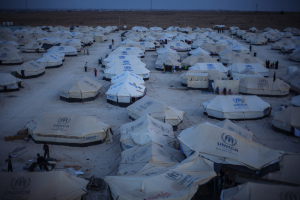
    DFID Syrian Camp

    Za’atari refugee camp, Jordan. Image by DFID via Flickr.

    There are strong foundations for emphasizing R2P as refugee protection. First, the international norm is intended to apply to mass atrocity situations where there is evidence of war crimes, crimes against humanity, ethnic cleansing, or genocide. The refugee crises associated with World War II, the Vietnam War, the Rwandan genocide, and the Balkans conflicts of the 1990s underscore the connection between mass displacement and mass atrocity crimes. International indifference or opposition to collective refugee burden-sharing in these cases frequently resulted in further victimization. In his study of mass killings, Benjamin Valentino argues that greater international response to refugees could have helped reduce the death toll of many of the 20th century’s worst genocides.

    An emphasis on R2P as refugee protection also bolsters the non-coercive and non-violent aspects of the human protection norm at a time when significant criticism surrounding the third pillar of the framework regarding forceful intervention threatens to erode its legitimacy and global consensus. Humanitarian interventions raise concerns about selectivity and often pose significant risks with regard to civilian harm. These risks are compounded by the power asymmetries and realpolitik dynamics that typically characterize coercive interventions. Further associations of R2P with forceful interventions will understandably trigger greater contestations of the norm and undermine the potential for its evolution into meaningful legal obligations. As an alternative to the use of force, states can respond to mass atrocity situations with mechanisms of refugee protection like facilitating access to asylum, granting temporary protection, and upholding the principle of non-refoulement, thus addressing R2P’s call for collective international response in a timely and decisive manner to protect civilian populations and prevent further victimization.

    Allocating Responsibility for Refugees

    While there are robust foundations for connecting the human protection norm to mass displacement and refugee response, the implementation of R2P as refugee protection faces significant impediments both in Europe and the United States. One major obstacle is refugee burden-sharing. The 1951 Refugee Convention and its 1967 Protocol do not specify how, in the face of major refugee crises, states should equitably allocate legal, financial, or physical responsibilities for protection. While states are obligated by the principle of non-refoulement not to contribute to refugees’ harm by returning them to their place of persecution, international law grants states the right to retain control over their sovereign borders. As such, states are not compelled to grant asylum. A related problem is that the existing refugee protection regime relies on post-World War II assumptions that forced displacement is a temporary phenomenon and refugees will be able to return to their country of origin following the resolution of the conflict. Despite data indicating that displacement has become increasingly prolonged, the repatriation of refugees to their home countries remains more heavily promoted than their resettlement or local integration in host countries.

    To date, neighboring states in the Middle East have absorbed the vast majority of refugees fleeing atrocities in Syria and Iraq. This disproportionate burden on states in the region is in line with global trends in the distribution of refugees. Because proximity to place of origin has been a key determinant of distribution, developing countries that can least afford to host refugees have assumed the overwhelming responsibility for them. This inequality in refugee burden-sharing emerges not only due to geographical proximity, but also reflects the increased ability of developed countries to prevent refugees from arriving on their territories. In the ongoing crisis, inequitable burden-sharing is also apparent on a regional level within the European Union (EU), as southern European states have continued to bear the primary responsibility for screening and processing asylum claims. While other EU members have partially shared the burden by committing financial resources to assist Greece and Italy and by hosting some refugees through relocation frameworks, as of November 2015 only three states—Germany, Austria, and Sweden—fulfilled their committed quotas for relocating refugees.   Debates over refugee burden-sharing in Europe have underscored tensions between EU principles and individual member states’ willingness to implement norms of equity in refugee protection.

    While discussions of refugee burden-sharing have largely focused on capability—that is, states’ relative capacities to assist refugees based on factors like economic development, population, and territorial size—the criteria that ought to govern the allocation of refugee responsibility remain ambiguous. The EU plan for distributing asylum seekers approved in September of 2015 utilized economic strength, population, unemployment, and the number of asylum applications approved in the last five years as criteria; however, this resettlement plan has faced opposition from central and eastern European states, and Poland announced that it would not participate. Complicating the task of determining how refugee protection responsibilities should be allocated is the notion that a country’s culpability in the creation of the displacement might also shape its obligations to respond.

    The Securitization of Refugees

    Even if consensus can be reached at the international level regarding principles of equitable refugee burden-sharing, policymakers can increasingly expect resistance from their domestic publics rooted in logics that link refugees to fears of terrorism and perceptions of foreigners as threatening. The implementation of R2P as refugee protection thus faces significant hurdles related to the securitization of asylum seekers—particularly those from Muslim-majority countries—as threats to both national security and cultural values in the United States and Europe. Increased fears of terrorist infiltration via refugee flows have produced calls to round up Syrian refugees and resulted in the U.S. House of Representatives passing H.R. 4038, the American Security Against Foreign Enemies (SAFE) Act. Opposition to refugees at the domestic level has also manifested in arson attacks against refugee shelters in Germany and violence against refugees in France. As refugees are increasingly conflated with migrants, and the current crisis emanates largely from the Middle East, perceptions of asylum seekers have become linked to broader debates about immigration and Islam. In this context, domestic political forces in Europe and the US have framed the refugee crisis in ways that undermine the potential for R2P to be successfully reoriented as refugee protection.

    Navigating these obstacles requires grappling with representations of refugees in social and political discourse, as well as articulating how refugee burden-sharing can serve states’ national interests. Organized and predictable responses for allocating refugee responsibilities could, for example, support greater international stability and reinforce principles of cooperative security. In an increasingly interdependent global environment, fulfilling R2P through refugee protection could arguably compliment counterterrorism policies and contribute to an international protective infrastructure that facilitates better coping with transnational threats and humanitarian emergencies.

    Alise Coen is currently Assistant Professor of Political Science at the University of Wisconsin-Sheboygan, USA. Her article, ‘R2P, Global Governance, and the Syrian Refugee Crisis’ was recently published in the International Journal of Human Rights. She is on Twitter at @alise_coen

  • A War Gone Badly Wrong – The War on Terror Ten Years On

    A War Gone Badly Wrong – The War on Terror Ten Years On

    Paul Rogers | Oxford Research Group | September 2011

    Issues:Global militarisation, Marginalisation

    The atrocities in New York and Washington on 11 September 2001 led to protracted wars in Afghanistan and Iraq. Ten years after the attacks, this briefing assesses the consequences of the response from the United States and its coalition partners. It questions whether the response was either appropriate or wise and whether the results so far have been counterproductive and may indicate the need for a changed security paradigm.

    Such a fundamental rethink of the way western governments respond to insecurity must go beyond the current approach in which intelligence, counterinsurgency and counter-terrorism are all beginning to merge into a seamless web of a single security posture. Such a posture is likely to be no more successful than the policies adopted in 2001.

    The Context of 9/11

    Prior to the Bush administration being formed in January 2001, the Republican Party had become strongly influenced by neoconservative thinking, much of it embodied in the Project for the New American Century. This saw the United States playing a role of sustained world economic and political leadership in the unipolar world of the 21st Century. With the fall of the Soviet Union and with China embracing many elements of a mixed economy, the view from Washington was that free market democracy was the only way forward and that the United States had a duty to lead.

    After the election, the administration made a series of decisions that demonstrated that in foreign and defence matters there would be a strongly unilateral approach when this was considered in US interests. In the early months of 2001, it became clear that there would be no ratification of the Comprehensive Nuclear Test Ban Treaty, the United States would withdraw from the Anti-Ballistic Missile Treaty and there would be reduced support for strengthening the Biological Weapons Treaty. Caution over negotiations on preventing the weaponisation of space and establishing an International Criminal Court were evident, and, in a move that surprised many European governments, the US withdrew from the Kyoto Climate Change Protocols. By September of that year, the determination of the Bush administration to pursue the idea of a New American Century was clearly established, and there seemed little to hinder what was honestly seen as a noble aim that would benefit the world community.

    In such a context, the 9/11 attacks were particularly visceral in their impact and there was little doubt that the administration would respond with great vigour, including large-scale military action against the defined enemy of the al-Qaida movement and its Taliban hosts in Afghanistan. Those few analysts and organisations that counselled caution, including Oxford Research Group, received scant attention. Their view was that the 9/11 attacks should be seen as appalling examples of transnational criminality, the response being rooted in policing and international legal processes aimed at bringing to justice those behind the attacks. Furthermore, to see the attacks as requiring a major military response – a “war on terror” – would be assigning to the perpetrators precisely the attention that they sought, and would likely prove deeply counter-productive.

    Military Responses

    The initial intentions of the coalition military action in Afghanistan were to terminate the Taliban regime and destroy the core of the al-Qaida movement, with the Taliban leader, Mullah Omar, and the head of al-Qaida, Osama bin Laden, being key targets. While neither was killed nor captured during the successful termination of the Taliban regime, the early fall of that regime and the dispersal of al-Qaida meant that considerable success had been achieved by the end of 2001. In his first State of the Union address, in January 2002, President Bush was able to point to this success as proof of the rightness of US policy, and he went on to extend the war on terror to encompass an “Axis of Evil” of three states. These were Iraq, Iran and North Korea, with all three seen as sponsors of terrorism and seekers of weapons of mass destruction. In this address and in his graduation speech at the West Point Military Academy five months later, President Bush argued forcefully that the United States had the right to pre-empt future threats, with this even including further regime terminations.

    In March 2003, coalition operations to terminate the Saddam Hussein regime in Iraq commenced and the regime fell within three weeks. Once again, some independent analysts, including Oxford Research Group, warned of the dangers of enforced regime termination, and there was much public opposition in Europe, but the determination of the Bush administration, aided by support from some allies, notably the Blair government in Britain, ensured that the war would proceed. By 1 May 2003, the combination of the success in Afghanistan and the apparent military victory in Iraq meant that President Bush could deliver his “Mission Accomplished” speech on the flight deck of the USS Abraham Lincoln.

    War Aims

    By the middle of 2003, there were clear US policy aims in terms of the military action to respond to the 9/11 atrocities. These can be summarised as follows:

    • Maintain control in Afghanistan, including the development of two large military bases at Bagram and Kandahar.
    • Facilitate Afghanistan’s transition to a pro-western developing society while expecting most of the support for this to come from European allies.
    • Consolidate basing arrangements established during the Afghan War with Central Asian republics, ensuring a US military presence in a geo-strategically important region.
    • Continue counter-terror operations against the remnants of al-Qaida and similar movements.
    • Develop a long-term military presence in what would become a peaceful pro-Western Iraq, not least to limit Iranian influence in the region.
    • Ensure that the Coalition Provisional Authority in Iraq oversees the development of a free-market economy with wholesale privatisation of state assets, especially oil facilities, a flat-rate tax system and minimal financial regulation.

    Three elements of these aims deserve elaboration. One is that there was a confidence in Washington that the Afghan War was over, that the Taliban would not re-emerge and that European allies would bear the brunt of reconstruction and development. The second was the emphasis on creating a model free market society in Iraq, an ideological project that was seen as providing an example that would prove so successful that other states in the region would surely follow suit. The third, and possibly most important, was that by maintaining a substantial military presence in Iraq and Afghanistan and controlling the Persian Gulf and Arabian Sea through the US Navy’s Fifth Fleet, Iran would be thoroughly constrained. Given that Iran was seen as the most serious of all threats to US interests in the region, this would be a hugely positive outcome.

    The 9/11 attacks had a deep and persistent impact within the United States, and many of the subsequent actions, including regime termination in Iraq, could be presented as utterly necessary responses to the atrocities. The confidence of the administration in mid-2003 stemmed from the belief that the terrible setback for US security demonstrated by the attacks had been turned round. Indeed, the Middle East and South-West Asia were being made safe in a manner which would clearly get the New American Century back on track, an outcome that was sure to prove very positive for world security.

    Consequences

    Al-Qaida. For the first five years after 9/11, the loose affiliates clustered around the al-Qaida movement were actually far more active than in the five years before. As well as many incidents in Pakistan, Afghanistan and Iraq, the movement was involved in attacks in Istanbul, Jakarta, Bali, Sinai, Amman, Mombasa, Casablanca, Saudi Arabia, Yemen, northern Tunisia, Madrid and London. There were failed attempts at major attacks in France, Italy, the UK and the United States, and many of the actual attacks involved overseas US interests, especially hotels. The death of Osama bin Laden in May of this year was seen in the United States as marking the end of a long war, but there are still active paramilitary groups with regular attempts at attacks on western interests. Islamist paramilitaries based in Pakistan and Yemen are of particular concern, and the Mumbai attack nearly three years ago had a profound effect on Indian perceptions of security. Groups linked loosely to the al-Qaida movement have been particularly active in Iraq in recent months, and the attack on the UN offices in the Nigerian capital, Abuja, by Boko Haram paramilitaries is an indication of the growth of yet another movement, as was the attack on the Algerian Military Academy at Cherchell in August.

    Iraq. Far from seeing Iraq make a transition to a peaceful pro-western state, the outcome was a bitter seven-year insurgency combined with persistent inter-communal violence. At times during the war coalition forces had close to 200,000 troops in the country with many thousands of private security contractors also deployed. While the violence lessened in 2009 and 2010, recent reports, in mid-2011, point to a deteriorating security environment, with increased losses among US troops and the likelihood that a substantial military presence will have to be maintained. Moreover, the war has left a potent legacy of large numbers of young paramilitaries with experience of insurgency in urban environments against well-trained and well-armed professional US troops.

    Afghanistan. By 2006, Taliban and other armed opposition groups (AOG) had re-emerged and established control of substantial parts of the country, leading to a steady increase in NATO forces from a base figure of around 30,000. By mid-2010, numbers had risen to 140,000, all but 40,000 being US troops. In spite of this massive surge in troops, Taliban and other AOG paramilitaries maintained control of substantial parts of the country and, when pushed back, turned to other tactics including assassinations of Afghan government officials and security personnel. The extensive use of Special Forces in night raids and of armed drones both in Afghanistan and Pakistan became tactics of choice for the US forces. While many paramilitaries were killed or captured, both tactics were deeply controversial, not least because of civilian deaths and injuries. With the 2012 re-election campaign approaching, the Obama administration declared a willingness to negotiate with Taliban and AOG elements in order to draw down force levels, but by mid-2011 it was far from clear that the opponents were serious about such engagement. Moreover, there were reports that some senior US military commanders were critical of troop withdrawals, fearing another Taliban resurgence.

    Iran. Perhaps the most significant aspect of the post-9/11 wars has been the increased influence of Iran. Far from being constrained by US actions in Afghanistan and Iraq, the problems that arose in both countries have meant that Iran has more freedom to exert influence. While this is noticeable in western Afghanistan it is far more prominent in Iraq where the Shi’a majority has sought close links with Tehran. It is not a case of Iran dominating Iraqi politics since nationalist and other attitudes limit that. What is clear, though, is that the current Iraqi government is happy to maintain substantial economic and political relations with Iran and is almost certain to continue to do so in the coming years.

    Costs of War

    In addition to these outcomes – wholly unexpected by the wars’ architects – there is the issue of the direct human and economic costs of the wars. In mid-2011, the Eisenhower Research Project at Brown University in the United States published an assessment of these aspects of the post 9/11 conflicts. Among its conclusions were the following:

    • The overall death toll, including civilians, uniformed personnel and contractors is 225,000.
    • If the long term care of thousands of maimed US personnel is included, the wars have so far cost between $3.2 and $4.0 trillion dollars. This includes the estimated $600 to $950 billion federal obligations to veterans, a cost rarely included in other analyses.
    • There have been 7.8 million refugees created among Iraqis, Afghans and Pakistanis.
    • The wars are being funded substantially by borrowing, with $185 billion in interest already paid and another $1 trillion likely by 2020 (Source: Brown University Press Notice, 29 June 2011).

    Conclusion

    This briefing has sought to compare the original war aims of the Bush administration in the aftermath of the 9/11 attack with the actual outcomes. Only by doing that is it possible to get a clear idea of the unexpected consequences in terms of the longevity of the conflicts, the human costs, the financial implications and the political developments.

    While the original war aims may be explainable, given the horror of the attacks and the attitudes of the Bush administration, the unexpected consequences of the decisions taken have been remarkable.

    A brief war in Afghanistan is shortly to enter its second decade, seven years of war in Iraq have yet to bring a lasting peace, and Pakistan remains deeply unstable. Meanwhile, groups linked loosely with the al-Qaida movement make progress in Yemen, Nigeria, Algeria and the Horn of Africa.

    Unless a comprehensive assessment of the wars is made, along the lines of this brief review but in much greater depth, it is not at all clear that lessons will be learnt in a manner likely to increase caution in responding too readily and rapidly to difficult circumstances in the future with military force.

    It has become increasingly clear over the last decade that the United States and its partners must learn from the evident failure of the “war on terror” by paying more attention to the underlying causes of the conflicts, especially the factors motivating young paramilitaries to take extreme action.

    Such a shift in thinking about global security should lead to efforts to avert “revolts from the margins” amid a divided and ecologically constrained world at the root: via emancipatory social-economic action, and making a transition to low-carbon economies and other forms of what is now known as ‘sustainable security.’ The anniversary of the 9/11 attacks provides an important opportunity to engage in exactly this kind of honest reflection and long-term thinking.

    At present, the outlook is somewhat bleak. The United States and its coalition allies have indeed started to learn from a decade’s failures; but the lessons they are drawing show them still to be rooted in a “control paradigm”: keeping the lid on conflicts (“liddism”) rather than preventing their emergence. The control paradigm still dominates, albeit in a slightly different form. Rather than a reliance on “boots on the ground” and troop “surges”, and the sustained use of air-power and precision-guided munitions, we are likely to witness a blurring of the roles between the military and agencies such as the CIA; an assumption of paramilitary roles by intelligence agencies; and a deployment of the military’s special forces in “taking out” threats whenever and wherever they arise.

    In the context of an increasingly fragile and uncertain world, and of a situation where radical groups and individuals from marginalised communities are capable of probing the innate weaknesses of advanced industrial states, these measures are seriously misconceived in terms of finding solutions to the problems western states are facing. This new way of attempting to “control” global insecurity, exemplified in the reaction to Osama bin Laden’s death, may initially prove popular. But so, once, were the wars in Afghanistan and Iraq. It is difficult to imagine that the newer type of “transnational” warfare will be any more successful than the failed policies of the last decade.

    Paul Rogers is Professor of Peace Studies at the University of Bradford and Global Security Consultant to Oxford Research Group (ORG). His international security monthly briefings are available from www.oxfordresearchgroup.org.uk, where visitors can sign-up to receive them via email each month with the ORG newsletter. These briefings are circulated free of charge for non-profit use, but please consider making a donation to ORG, if you are able to do so.

    Photo credit: Brian Boyd

    Comments

    Post new comment


  • Afghanistan: victory talk, regional tide

    Afghanistan: victory talk, regional tide

    Paul Rogers | openDemocracy | March 2010

    Issue:Global militarisation

     A seductive narrative of military progress in Afghanistan is spreading among United States analysts. The real story is more complicated.

    There has in March 2010 been a cautious drumbeat of optimism about the United States’s military effort in Afghanistan. A series of briefings from senior military figures has begun to suggest that real progress on the ground is being made. A number of articles from astute observers confirms the picture of a turning-point having been reached (see Fareed Zakaria, “A Victory for Obama”, Newsweek, 22 March 2010)

    The more hopeful atmosphere among American strategists and analysts in the early spring of 2010 draws in particular on two developments: the apparent expulsion of Taliban elements from the centre of Afghanistan’s southern Helmand province (which in turn anticipates a probable move to take control of the city of Kandahar city in coming months); and the Pakistani security forces’ capture on 8 February 2010 of a senior Taliban leader, Mullah Abdul Ghani Baradar, and some of his close associates.

    At first sight, these two events do indeed support the argument that the United States and its Nato/International Security Assistance Force (Isaf) partners are making significant advances. It is appropriate then to assess them in the context of the broader military picture in Afghanistan and the region.

    An embedded enemy

    The first piece of evidence for a turning tide is the steady advance of American forces on areas where Taliban militias operate in Helmand. This fuels the consistent perception that the Taliban is a both a homogenous and an “external” entity: an integrated grouping which enters a region from elsewhere to occupy territory. The argument, which underpins much of the military analysis of recent operations, generates the conclusion that Taliban units can be or are being “expelled” from parts of Helmand; and that their comrades who must have similarly moved in to take control of most of Kandahar city can and must also be evicted.

    The mindset at work here is both enduring and notably impervious to contrary evidence. Its lineage can be traced to the mid- and late-1990s, when the view took hold among western agencies that the Taliban was composed of a network of militants trained in Pakistani madrasas who had then “inflitrated” across the border. The implication is that the Taliban are not ordinary Afghans but in essence outsiders; and that the US-led coalition is engaged less in counterinsurgency than in a fight to liberate much of Afghanistan from foreign (or at least non-local) forces.

    However, both experience on the ground and what is known of the longer-term history of the Taliban make this case hard to sustain. A truer understanding of the movement needs to take into account the mujahideen struggle against the Red Army in the 1980s, a decade before the name “Taliban” emerged to describe the new formation. A valuable source here is a new Taliban “memoir” which both describes a fascinating personal trajectory and reveals the deep Islamist motivation that from the start fired the anti-Soviet campaign (see Abdul Salam Zaeef, My Life with the Taliban, C Hurst, 2010).

    The evidence of Abdul Salam Zaeef’s account is that the mujahideen may have tended to live at a certain distance from the society around them – but they belonged fully to Pashtun society and were in no way “outsiders”. By the early 1990s, as much of Afghanistan was descending into rampant and brutal warlordism, they formed the core of an expanding Taliban movement. True, some militants did join the struggle from Pakistan and elsewhere – including the nucleus of what became al-Qaida – but the Afghan Taliban were always far more “embedded” in or close to their own communities than the dominant western perception assumed.

    The point is very relevant to the current campaign in central Helmand. There, many Taliban militants have indeed been dispersed into local communities – but (rather as they retreated from Kabul in November 2001) they have not been “defeated” in the conventional sense of that term. The same logic applies to the image of Kandahar city as a Taliban stronghold which will have to be besieged and “taken”; for if Taliban elements are immersed in the city’s very social fabric, the notion of defeat and eviction makes very little sense (see “Afghanistan: from insurgency to insurrection”, 8 October 2009).

    This suggests that the apparent political willingness among some western governments to envisage negotiation and compromise with “moderate” sections of the Taliban may be a more realistic way forward than the dream of vanquishing the enemy on the battlefield – if indeed this proposal were to be accepted on the other side (see Syed Saleem Shahzad, “War and peace: A Taliban view”, Asia Times, 26 March 2010). Some respected analysts (such as those associated with the of the International Crisis Group) in any case take a different view, arguing strongly that certain designated leaders at least – such as Abdul Ghani Baradar himself – be brought before the International Criminal Court to answer war-crimes charges (see Candace Rondeaux & Nick Grono, “Prosecuting Taliban War Criminals”, International Herald Tribune, 24 March 2010).

    An interested region

    The second piece of evidence adduced for optimism about the Afghan war is the newfound activism of Pakistani security agencies against members of the Afghan Taliban. This includes the detention of leading figures in the Quetta shura in northern Balochistan, and the arrest of Mullah Abdul Ghani Baradar (see Shibil Siddiqi, “’Strategic depth’ at heart of Taliban arrests”, Asia Times, 24 March 2010).

    The Pakistani operations have been interpreted as a welcome shift by the Pakistani army and the powerful Inter-Service Intelligence agency (ISI) towards greater collaboration with US/Nato forces in the “anti-terrorist” struggle.

    Here again, as with the perception of the nature of the Taliban, there is a misunderstanding. Pakistan’s fundamental calculation is the need to maximise its political influence in a future Afghanistan (see Shaun Gregory, “Pakistan and the “AfPak” strategy”, 28 May 2009). This would give the country its much-vaunted “strategic depth” to counter the regional superpower of India, and provide a buffer against Russian and other intrusions to the north and west. The Islamabad elite is particularly concerned about the close relationship that the Hamid Karzai regime has developed with India, including enhanced links with Indian military intelligence (see Kanchan Lakshman, “India in Afghanistan: a presence under pressure”, 11 July 2008).

    Pakistan’s military worries too that the Afghan president is reaching out to elements of the Taliban, perhaps even in ways that go further than what his United States overlords would wish. A pro-Indian Karzai regime that is dealing with the Taliban is simply not something that Pakistan can accept. In this light, the real aim of Pakistan’s policing actions is not to aid the United States and far less to help Karzai: it is to gain more leverage over the Taliban.

    These considerations of national interest also cast the US-led military operations in Helmand and elsewhere in a very different light. The US and it coalition partners are – following the new strategy outlined by Barack Obama in his West Point speech on 1 December 2009 – continuing to build up their troop-strength towards a total of around 140,000 on the ground; but this “surge” will not be the real dynamic of change in Afghanistan (see “Afghanistan: new strategy, old problem”, 3 December 2009).

    Rather, Afghanistan’s future will be decided by the evolving interaction between (principally) Kabul and Islamabad, with other regional powers – Delhi certainly, but also Tehran, Beijing and even Moscow – playing a role and seeking advantage. The US/Isaf’s massive financial and military commitments lead western states naturally to regard themselves as the masters of Afghanistan’s destiny; but the hard reality is that emerging regional geopolitics are consigning the west more and more to the sidelines (see Harry Reid, “We are doing all the fighting but China will win the peace”, Herald [Glasgow], 25 March 2010).

    This regional dimension accentuates the United States’s predicament. In Afghanistan, as in Iraq, the proclamation of approaching victory in a grinding war has often been followed by further reversals. And behind the noise and smoke of combat, other interested parties are quietly reordering the “grand chessboard”. A conflict now approaching its tenth year has more surprises to come.

    Comments

    Post new comment


  • Marginalisation of the majority world

    Marginalisation of the majority world

    A complex interplay of discrimination, global poverty, inequality and deepening socio-economic divisions, together make for key elements of global insecurity. While overall global wealth has increased, the benefits of this economic growth have not been equally shared. The rich-poor divide is actually growing, with a very heavy concentration of growth in relatively few parts of the world, and poverty getting much worse in many other regions. The ‘majority world’ of Asia, Africa and Latin America feel the strongest effects of marginalisation as a result of global elites, concentrated in North America and Europe, striving to maintain political, cultural, economic and military global dominance.

    The New Insecurity in a Globalized World

    Elizabeth Wilke | SustainableSecurity.org | September 2012

    Issues:Global militarisation, Marginalisation

    Writing for SustainableSsecurity.org, Elizabeth Wilke argues that a new conceptualization of insecurity and instability is needed in a world with greater and freer movement of goods, services and people – both legal and illicit – greater demands on weakening governments and the internationalization of local conflicts. The new insecurity is fundamentally derived from the responses of people and groups to greater uncertainty in an increasingly volatile world. Governments, and increasingly other actors need to recognize this in order to promote sustained stability in the long-term, locally and internationally.

    Image source: bass_nroll

    Read more »

    Causes of Conflict: A Strategic Perspective on US–Sino Relations in the Caribbean

    Serena Joseph-Harris | Exclusively written for sustainablesecurity.org | August 2012

    Issues:Global militarisation, Marginalisation

    Author and former High Commissioner of Trinidad and Tobago to the Court of St. James, Serena Joseph-Harris writes that China’s increasing regional profile in the Caribbean highlights the challenges now posed to American exceptionalism as Beijing defines its own course in the region. This article focuses on the potential within the Caribbean Basin for the burgeoning proceeds presently derived from increases in the legitimate investment, trade, and commerce emanating from Beijing and Washington to become entwined with illicitly derived funds generated from transnational crime activities, specifically the trafficking of drugs.

    Image source: caribbeanfreephoto

    Read more »

    Moving Beyond Crisis: Survival 2100 and Sustainable Security

    William Rees | Movement for a Just World | June 2012

    Issues:Climate change, Competition over resources, Global militarisation, Marginalisation

    In a piece for the International Movement for a Just World, William Rees maps out a vision for what he calls ‘Survival 2100.’ The goal of such a strategy would be “to engineer the creation of a dynamic, more equitable steady-state economy that can satisfy at least the basic needs of the entire human family within the means of nature.” The alternative, Rees argues is to “succumb to more primitive emotions and survival instincts abetted by cognitive dissonance, collective denial, and global political inertia.”
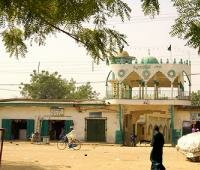
    Image source: hundrednorth.

    Read more »

    Three Killings: an analysis of the ideologies driving Mohamed Merah, George Zimmerman, and the murderer of Shaima Alawadi

    John Feffer | Foreign Policy in Focus | April 2012

    Issue:Marginalisation

    This article by Foreign Policy in Focus co-director John Feffer powerfully explores three recent and geographically diverse killings in the context of marginalisation. Feffer links the fatal beating of an Iraqi-born American woman in California, the shooting of Trayvon Martin in Florida, and Mohamed Merah’s killing spree in Toulouse to the notion of trespass: “The message behind all three is this: you should not be here, you are not one of us, and your death shall serve as a warning.”

    Merah himself was a member of a minority in France that is still yet to fully realise its place in French society, but that is only part of the context in which he operated: his own sense of trespass came from an intolerant ideology shared with a borderless fringe, dictating that Muslims who join the western ‘enemy’ armed forces (or who simply become too western) put themselves beyond the pale in doing so. As such, the concept of trespass is not merely a question of geography but also incorporates trespass of the mind, which is equally deserving of punishment. Feffer notes that the vast majority of Al-Qaeda’s victims are Muslims, a clear example of self-appointed leaders punishing disloyal or failed members of their own group. Other examples of this conception of trespass include honour killings and the 2011 terrorist attack by Anders Behring Breivik, who believed that Norway had betrayed its Christian European roots and so was motivated to punish the young liberal inheritors of that transgressive philosophy.

    Image Source: Lightgraph

    Read more »

    Peacebuilding IN Europe? An analysis of how European peacebuilding efforts overseas could apply closer to home

    Dan Smith | Dan Smith’s Blog | February 2012

    Issue:Marginalisation

    EU attitudes to peacebuilding have always assumed that it essentially applies to other people, who live outside of the Union’s developed borders. However, since the financial crisis of 2008 and the austerity that followed, the certainties underpinning western models of aid and conflict-resolution have taken a knock from the riots and protest movements shaking cities from Athens to London. While not equating the various reactions and levels of violence across the continent, Dan Smith suggests in both this piece and a follow-up post that EU peacebuilding efforts would be well-directed inwards. In particular, he highlights a growing alienation from professionalised political systems, and how a very small number of actors can cause havoc against a background of marginalisation, both real and perceived. He therefore recommends that we focus our attention on the context against which people act, rather than on the actors themselves, because it is only through ‘mobilising social energy for building peace’ that individuals can find a place in society and disaffection can be tackled at its root cause.

    Article Source: Dan Smith’s Blog

    Image Source: how will i ever


    Read more »

    Marginalisation and Political Violence: Understanding Boko Haram

    Ronan Farrell | Consultancy Africa Intelligence | February 2012

    Issue:Marginalisation

    The Nigerian militant group Boko Haram has become one of the most potent examples of the ways in which underlying structural inequalities can drive political violence. The brutal attacks on 25 December last year are only the latest in a number of violent events linked to the group and fighting has continued over the last two months. Writing for Consultancy Africa Intelligence, Ronan Farrell discusses the emergence of Boko Haram against a backdrop of economic growth in Nigeria (on the back of high oil and gas prices) but extreme inequality.

    Image source: pjotter05. 

    Read more »

  • Sustainable Security