Blog

  • Sustainable Security

    Environment, Energy, Economy: a threefold challenge to sustainable security

    Whether it’s the economy, energy or the environment which you value most, when it comes to security, each holds equal weight. If security can be defined in terms of what is or isn’t sustainable, then it must evolve to incorporate additional elements that transcend more traditional views on geopolitics.

    Read Article →

  • Perpetuating Uncertainty: Trident and the Strategic Defence and Security Review

    Perpetuating Uncertainty: Trident and the Strategic Defence and Security Review

    Tim Street | ICAN-UK | October 2010

    Issue:Global militarisation

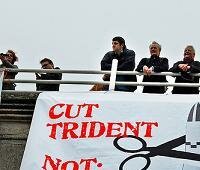
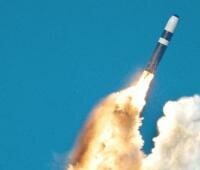
    Above all, the UK government’s new Strategic Defence and Security Review (SDSR) confirms the intention to retain and then replace the UK’s nuclear weapons, though the final decision has been put off until 2016.[1] David Cameron thus confirmed to parliament that he will be ‘steaming through’ with the decision on the initial design phase for replacing Trident this year.[2] The SDSR also announces warhead reductions and so-called ‘value for money’ measures, packaged to make Britain appear as if it were a ‘responsible’ nuclear state, contributing to ‘multilateral disarmament’ whilst reducing costs for the taxpayer.[3] Such mythmaking must be resisted. Firstly, because Trident can never be ‘value for money’ as it is has no value- military or otherwise- yet currently costs over £2 billion a year to run, whilst at least £700 million will be spent over the next five years on its replacement.[4] Trident thus not only takes money away from education- at a time when universities are facing 40% cuts to their teaching budgets and the NHS- expected to find £20 billion in savings by 2014, but makes the world a far more dangerous place.[5]

    The only way the UK can act responsibly as a nuclear weapon state is by realising its legally-binding obligations to scrap all its nuclear weapons and begin negotiations on a global abolition treaty, as required by the nuclear Non-Proliferation Treaty (NPT). States without nuclear weapons argue that unless states with nuclear weapons- such as the UK- continue to resist their commitments under the NPT and put off making serious advances towards the total elimination of their arsenals, nuclear weapons will, inevitably, spread. Brazilian diplomat Orlando Ribeiro therefore points out that reductions in the number of nuclear weapons alone will ‘not lead to disarmament because qualitative arms races will continue’.[6] Look, for instance, at how the UK spends billions on construction programmes at AWEs Aldermaston and Burghfield, enabling the testing, design and construction of a successor warhead.[7]

    In order to explain why the UK continues to cling on to Trident- a Cold War relic with no military utility- which wastes billions in a time of austerity, we must consider Trident’s political significance within the US-NATO military alliance. This will enable us to evaluate the potential for the UK to move away from the failed policies of yesteryear and towards a foreign policy based on disarmament, diplomacy and sustainable security.

    What’s stopping the UK from disarming?

    Baroness Shirley Williams, a Lib Dem peer, enthusiastically welcomed the SDSR, arguing that the UK ‘is now leading the nuclear powers (P5) towards disarmament, essential to a more secure and less dangerous world’.[8] The first half of this statement is surely an exaggeration- designed to develop a feel-good-factor about the UK taking such limited measures whilst vindicating Lib Dem policy. Still, by casting disarmament and diplomacy- not military prowess- as a means by which the UK can act responsibly and show leadership, Williams indicates a potential new global role for Britain.

    This is especially relevant now given that, according to the new National Security Strategy, the UK faces ‘no major state threat at present and no existential threat to our security, freedom or prosperity.’[9] Furthermore, the UK’s armed forces are apparently no longer capable, following SDSR defence cuts, of launching overseas missions on the scale of Afghanistan or Iraq.[10] So the Lib Dems, who have a good track record of opposing Trident and supporting a Nuclear Weapons Convention (NWC) – a global treaty which would ban nuclear weapons permanently and ensure their elimination- should be encouraged to continue speaking out.

    However, the idea that Britain, given its current military and political alliances, could ‘lead’ on disarmament is persuasively questioned by George Monbiot. In an article reflecting on the government’s addiction to nuclear weapons, Monbiot argues that the one force that could finally ‘kill’ Trident is the US. For only once the US has begun to dismantle its (over 9,600) nuclear weapons and ‘ordered’ the UK to follow suit would such disarmament occur.[11] Recalcitrant parliamentary and public opinion in the UK (54% of whom now want to scrap Trident) thus ‘counts for nothing’.[12] One could also add world public opinion into this formulation, given that a global abolition treaty has the support of two-thirds of all governments and members of the public everywhere.[13]

    US intransigence in the face of repeated international calls to disarm was exemplified by remarks made by Assistant Secretary of State for Arms Control, Verification and Compliance Rose Gottemoeller’s October speech to the UN’s First Committee on Disarmament. Gottemoeller referred to the idea of beginning negotiations on a NWC now as ‘an impractical leap’.[14] Moreover, whilst Barack Obama and Hillary Clinton profess to want a world without nuclear weapons, they state that ‘this may not be achieved in our lifetime or successive lifetimes’.[15]

    Yet, in a June House of Lords debate, Baroness Williams correctly drew attention to the fact that, at the 2010 NPT Review Conference, ‘the great bulk of non-nuclear powers decided to press for a nuclear weapons convention to abolish nuclear weapons completely by 2025’. In response, a Conservative spokesperson echoed the US position in stating that ‘a whole series of things need to be done before one comes to the happy situation where the nuclear world is disarmed and a convention could then get full support. If we try to rush to a convention first of all, we might end up delaying the detailed work that is needed on the path to get there’.[16] The baleful logic expressed here can be summarised as- ‘we can only negotiate a treaty prohibiting nuclear weapons once they’ve been eliminated’. Following the final document of the 2010 NPT, which recognised the importance of an NWC as endorsed in the UN Secretary General’s five-point plan for disarmament, one might have hoped that nuclear weapon states would have taken their responsibilities to the international community- and international law- more seriously.[17]

    Perhaps one reason why the US and UK seem incapable of doing so, is that, whilst some in elite circles may genuinely believe nuclear disarmament to be desirable, its realisation is incompatible with another, much more deeply entrenched idea within the psyche of the powerful- an idea repeated by Hillary Clinton in a September speech to the Council on Foreign Relations- that the ‘United States can, must, and will lead in this new century’.[18] Thus behind Obama’s surface rhetoric of ‘change’, conventional Western thinking is still based on narrow, exclusive security concerns- the US ‘control paradigm’.[19] So, as Tariq Ali observes, whilst Obama is perceived as a break with the depredations of the Bush administration ‘only the mood music has changed’.[20]

    A subservient or independent foreign policy?

    Baroness Williams is a member of the Top Level Group of Parliamentarians for nuclear Non-Proliferation and Disarmament, which also contains several former defence ministers.[21] The Top Level Group believes that UK and European statespersons can have an impact internationally, by persuading US Senators that they should ratify treaties such as the Comprehensive Test Ban Treaty (CTBT) – which the UK and France ratified in 1998- as part of a step-by-step approach to disarmament. At present, however, getting even common sense legislation such as the bilateral US-Russian Strategic Arms Reduction Treaty (START) – seen as the necessary precursor to CTBT ratification- through the Senate is a painfully slow process, producing conservative and even retrograde agreements.

    Any residual ambition the Obama administration had of accelerating disarmament has thus been stymied by reactionary vested interests keen to hamper the Democrats before the November mid-term elections and ensure investment and jobs in their constituencies’ military-industrial complexes (some of which are Democratic) are preserved. This has led to Obama’s recent call for $80 billion to upgrade the US’s nuclear arms complex (described as the largest funding request since the Cold War) and the planned investment, over the next decade, of ‘well over $100 billion in nuclear delivery systems’.[22]

    In this ultra-partisan atmosphere, any voices of sanity to counteract the bullying and obstruction of the far-right are welcome. The Top Level Group thus employs political common sense (relevant to its incrementalist logic) by turning their diplomatic skills to face the US Congress. Their strategy appears to be based on the idea that even small moves in the US nuclear weapons posture- from longstanding recidivism to glacial disarmament- will enable the UK to act. Witness, for example, the speed with which Foreign Secretary William Hague fell into line following the US announcing its 2010 Nuclear Posture Review. Hague revealed for the first time the size of the UK’s nuclear arsenal whilst, in the SDSR, the UK gave an assurance that it ‘will not use or threaten to use nuclear weapons against non-nuclear weapons states parties to the NPT’.[23]

    Yet, as Peter Burt points out, because the assurance ‘would not apply to any state in material breach of those non-proliferation obligations’ this ‘potentially leaves out states such as North Korea and Iran’. As with the US’s own new declaratory posture, this assurance may be revoked ‘if future threats or proliferation of nuclear weapons make it necessary to do so’. [24] For Zia Mian, the crucial question- applicable to both the US and UK- is therefore, who determines whether a non-nuclear weapon state is in compliance with its obligations or not? Judging by the US’s responses to such questions, Mian concludes that the answer to this question is ‘the US alone’, whilst reserving itself the right to enforce its decision militarily, in total violation of the UN Charter.[25]

    This understanding of the US-UK power dynamic- the infamously one-sided ‘special relationship’- is an unquestioned, and perhaps unquestionable, fact of life for many MPs. Former defence minister Eric Joyce, reflecting on Ed Miliband’s position on Trident replacement at Labour’s annual conference, thus argued that Britain currently has no independent foreign policy and is simply locked into ‘US electoral cycles’.[26] Similarly, former Secretary of State for Defence Des Browne has commented that members of the Western alliance will only taken action on nuclear weapons when the US has told them what to do.[27] The British elite are quite aware of the damage being done by such servility, but tend to only venture honest appraisals when talking to themselves. Thus Douglas Hurd, the former Foreign Secretary, giving evidence in 2009 to the Foreign Affairs Committee, argued that Tony Blair’s ‘subservience’ to the US over Iraq ran against British national interests.[28]

    Hurd’s description here chimes with Mark Curtis’s analysis that rather than being a ‘poodle’ the UK has become ‘willingly subservient’ and now freely chooses to support US actions. Curtis argues that a change occurred under Tony Blair, whereby Britain became ‘in its major foreign policies’ largely a ‘US client state while its military has become an effective US proxy force’.[29] With regards to Trident it has been conclusively demonstrated that the UK’s nuclear weapons absolutely depend on continued US technical and political support so that, in Blair’s own words, it is ‘inconceivable we would use our nuclear deterrent alone, without the US’.[30]

    The debate preceding the publication of the SDSR sheds some light on how British servility is playing out regarding Trident replacement. In September, a leaked letter from Defence Secretary Liam Fox to David Cameron expressed grave concerns over the cuts facing the UK military budget, expected to be around 10-20%. The eventual reduction was a mere 8%- so that Britain still has the fourth largest defence budget in the world.[31] Just days after the MoD leak, Fox reported back from a meeting with US Defense Secretary Robert Gates that ‘Britain would keep the deterrent and other capabilities valued by Washington’. Gates was also reported as saying that the US wanted Britain to keep its deterrent as it did not want ‘sole responsibility’ for providing a nuclear umbrella to NATO countries.[32] Fox used all his cunning to make this helpful US opinion known as pressure was building on the MoD from the public and civil society to include Trident in the SDSR and from the Treasury to make deep cuts to its budget. Following this, Hillary Clinton herself waded in on the argument, stating that the US was ‘worried’ about the UK’s planned defence cuts- primarily because it appeared that defence spending could fall below NATO’s required standard of 2% of GDP.[33]

    Who’s in favour of disarming NATO?

    If we are to understand why senior US politicians feel so compelled to pronounce on the internal budgetary affairs of a foreign country, it is therefore imperative that we turn to the politics of NATO. NATO is presently preparing its new, ultra-secretive, strategic concept. German representatives are pushing for nuclear disarmament to be given a prominent place in the final document. Germany is currently home to an estimated 20 NATO nukes, with the rest of NATO’s European 180 B-61 thermonuclear-gravity bombs based in Belgium, Italy, the Netherlands and Turkey.[34] According to a 2006 opinion poll, almost 70% of people in European countries that currently host US nuclear weapons want a Europe free of nuclear weapons.[35] The New York Times reports that Germany’s call for disarmament has not gone down well in Paris, which opposes NATO ‘having any role or influence in disarmament issues, fearing that it could undermine France’s sovereignty’.[36]

    Britain- whose own NATO/US nuclear weapons were silently withdrawn between 1996 and 2008 has, meanwhile, declined to comment on the matter.[37] Fascinatingly, at the same time as Berlin has been trying to extricate itself from the nuclear balance of terror (for example, by retiring its Tornado fighter jets, and instead deploying the Eurofighter, which can’t carry B-61s) it is reported that Paris and London have begun serious discussions about sharing nuclear submarine patrols and testing facilities.[38] The need to consider such moves on the part of France, and more particularly the UK, is clearly more pressing now given the parlous state of their finances, whilst circumventing CTBT obligations. By sharing the burden of having to constantly deploy nuclear submarines at sea, the old enemies will save on the costs of building and maintenance.

    Perhaps more importantly, Germany’s disarmament initiatives will be resisted and the US- who enjoys the additional international legitimacy that is conferred by its allies remaining nuclear-armed- will be appeased. The famous phrase, attributed to Lord Ismay, NATO’s first Secretary General, that the alliance was founded to ‘keep the Russians out, the Germans down, and the Americans in’ remains salient. These days, of course, China is also handy for justifying NATO expansion and, if we listen to our Prime Minister, Trident replacement.[39]

    In his first speech as Labour leader, Ed Miliband disavowed the invasion of Iraq (but not the NATO-led occupation of Afghanistan) and spoke of how ‘this generation wants to change our foreign policy so that it’s always based on values, not just alliances’.[40] Trident’s cost to the British people is clear- £100 billion over its lifetime- its value, at a time of massive and ‘regressive’ public spending cuts, is also clear.[41] Trident should therefore be the first cut made by this government. The problem is that those in power who do value Trident, value it because they value highly the US-led NATO alliance. If Ed Miliband, or any other British leader, acted as if Britain were a sovereign nation in its foreign policy and scrapped Trident, the UK’s role as the ‘spear-carrier for pax Americana’ would immediately be called into question.[42] But by scrapping Trident and supporting a Nuclear Weapons Convention, the UK would find a new role as a leader for disarmament and diplomacy, helping to create new international political constituencies alongside the 130 nations who want a global abolition treaty, and a more secure and equitable world, now.

    (by Tim Street, Coordinator, ICAN-UK, with thanks to Alicia Dressman)


    About the author: Tim Street is Coordinator with ICAN-UK

    Image source: Duncan~


    [1]                   ‘Securing Britain in an Age of Uncertainty: The Strategic Defence and Security Review’, p.5, http://bit.ly/bfWByX

    [2]     ‘Strategic Defence and Security Review’, Hansard, 19/10/10, http://bit.ly/9qIUHN

    [3]     The number of warheads aboard each sub will be reduced from 48 to 40, the total number of operationally available nuclear warheads reduced from fewer than 160 to no more than 120 and the overall number of nuclear weapons that the UK has will be reduced from around 225 to not more than 180 by the mid-2020s.

    [4]                   ‘The Future of the British Nuclear Deterrent’, House of Commons Library, p.16, http://bit.ly/btKNxE and ‘Strategic Defence and Security Review’, Hansard, 19/10/10, http://bit.ly/9qIUHN

    [5]                   ‘NHS budget rise will feel like cut says thinktank’, The Guardian, http://bit.ly/bTiGvI and ‘Universities alarmed by 40% cut to teaching budget’, The Guardian, http://bit.ly/bn5cVv


    [6]     ‘International perspectives on the Nuclear Posture Review’, Carnegie Endowment for International Peace, http://bit.ly/dgDhC9

    [7]     ‘Atomic Weapons Establishment’, Hansard, 09/09/09, http://bit.ly/d7Tl0C

    [8]     ‘Defence review significant step towards disarmament’, Liberal Democrats News, http://bit.ly/cFND9r

    [9]     ‘A Strong Britain in an age of Uncertainty: The National Security Strategy’, p.15

    [10]             ‘National security strategy’s real test will come when the next shock arrives’, The Daily Telegraph, http://bit.ly/dsA2wA

    [11]             United States Discloses Size of Nuclear Weapons Stockpile’, Federation of American Scientists, http://bit.ly/aot5pb

    [12]    ‘War with the ghosts’, Monbiot.com, http://bit.ly/duhHeo

    [13]            ‘Publics around the World Favor International Agreement To Eliminate All Nuclear Weapons’, World Public Opinion 2008, http://bit.ly/aoW7Y1

    [14]                 ‘Remarks by Rose E. Gottemoeller’, US Mission to the UN, http://bit.ly/cmJAAU

    [15]    ‘Remarks at the United States Institute for Peace’, Hillary Clinton, http://bit.ly/Rxyjb

    [16]    ‘Nuclear Non-Proliferation’, House of Lords debate, http://bit.ly/cEcbeC

    [17]    2010 NPT RevCon Final Document, p.20, http://bit.ly/9WFc1x

    [18]    ‘Clinton pledges another century of American global leadership’, Foreign Policy, http://bit.ly/c6SG2S

    [19]    Why we’re losing the war on terror, Paul Rogers, 2008, p.x

    [20]               ‘Only the mood music has changed’, Tariq Ali, Pulsemedia.org, http://bit.ly/91iriP

    [21]    Top Level Group, http://toplevelgroup.org/

    [22]    Phil Stewart, ‘Obama wants $80 billion to upgrade nuclear arms complex’, Reuters, http://reut.rs/av4Cp1and ‘The New START Treaty- Maintaining a Strong Nuclear Deterrent’, White House, http://bit.ly/9x4P4r

    [23]    ‘Strategic Defence and Security Review’, UK Mission to the UN, http://bit.ly/bNnSEM

    [24]    ‘Delay to Trident replacement’, Nuclear Information Service, http://bit.ly/dsapSs

    [25]            ‘Questions to ask the US about the negative security assurance offered in the US Nuclear Posture Review’, NPT News in Review, http://bit.ly/anjuh4

    [26]            ‘Ed Miliband wants Trident rethink – ex-defence minister’, BBC, http://bbc.in/auSb6n

    [27]    Comments made during a speech at ‘A World without Nuclear Weapons’, The Royal Society, March 2010

    [28]    The British Political Approach to UK-US Relations, Parliament.uk, http://bit.ly/cHspNC,

    [29]    Web of Deceit, Mark Curtis, 2003, pp.112-114

    [30]    John Ainslie, The Future of the British bomb, 2005, p.10 and A Journey, Tony Blair, 2010, p.636

    [31]            ‘Defence review: Cameron unveils armed forces cuts’, BBC, http://bbc.in/bV25yf


    [32]            ‘UK to Retain Nukes, Defense Secretary Tells US’, Nuclear Threat Initiative, http://bit.ly/b7Q1sE

    [33]          ‘Hillary Clinton says US worried over UK defence budget’, BBC, http://bbc.in/957BbA

    [34]               ‘Nuclear weapons likely to stay in Germany’, Spiegel Online, http://bit.ly/ahhbAB

    [35]                Nuclear Weapons in Europe: Survey Results in Six European Countries, STRATCOM, http://bit.ly/dh2wu3

    [36]            ‘NATO Document Addresses Nuclear Disarmament’, New York Times, http://nyti.ms/aCrnPW

    [37]                ‘No Nukes at Lakenheath’, Arms Control Wonk, http://bit.ly/c6oF85

    [38]            ‘What to Do About Europe’s Secret Nukes’, TIME, http://bit.ly/7wfKvf and ‘Britain and France could share nuclear testing site’, The Daily Telegraph, http://bit.ly/cBTrAu

    [39]             ‘Cameron Says China Uncertainty Requires U.K. to Maintain Nuclear Deterrent’, Bloomberg, http://bit.ly/aWmVE7

    [40]          ‘Labour conference: Ed Miliband speech in full’, The Guardian, http://bit.ly/9kK0I9

    [41]          ‘Spending review cuts will hit poorest harder, says IFS’, The Guardian, http://bit.ly/9xk40b

    [42]               ‘The rise and fall of the NPT: an opportunity for Britain’, Michael MccGwire, http://bit.ly/d5huGc, p.134


    Comments

    Post new comment


  • Sustainable Security

  • Global militarisation

    Global militarisation

    The current priority of the dominant security actors is maintaining international security through the vigorous use of military force combined with the development of both nuclear and conventional weapons systems. Post-Cold War nuclear developments involve the modernisation and proliferation of nuclear systems, with an increasing risk of limited nuclear-weapons use in warfare – breaking a threshold that has held for sixty years and seriously undermining multilateral attempts at disarmament. These dangerous trends will be exacerbated by developments in national missile defence, chemical and biological weapons and a race towards the weaponisation of space.

    Why START is only a beginning on the long road to nuclear disarmament

    Andrew Futter | sustainablesecurity.org | June 2010

    Issue:Global militarisation

    The ‘New START’ agreement recently signed by the US and Russia is an important first step on the road to nuclear disarmament but much of the hard work in reducing and potentially eliminating the vast stockpiles of nuclear weapons held by nations across the globe is still to be done. Before any meaningful multilateral talks and possible agreements on abolition can seriously begin, the US and Russia will need to go much further in reducing their nuclear ordinance writes Andrew Futter, exclusively for sustainablesecurity.org

    Image source: PhillipC

    Read more »

    Less Is More: Sensible Defense Cuts to Boost Sustainable Security

    John Norris & Andrew Sweet | Center for American Progress | June 2010

    Issues:Climate change, Competition over resources, Global militarisation, Marginalisation

    From the Center for American Progress:

    “If we are to meet the myriad challenges around the world in the coming decades,” argues Secretary of Defense Robert Gates, then our “country must strengthen other important elements of national power both institutionally and financially, and create the capability to integrate and apply all of the elements of national power to problems and challenges abroad.” Gates’s experience leading our armed forces under two presidents underscores the importance of not relying solely on our unquestioned military might to protect our shores and national security interests around the globe. Instead, Gates maintains, we need to adopt the concept of sustainable security—a strategy that embraces the need to slim defense spending, bringing our own fiscal house in order while investing in nonmilitary economic and social development programs abroad to combat the conditions that breed poverty and political instability.

    Article and image source: Center for American Progress

    Read more »

    The UK and the NPT: Rhetoric, Simulations and Reality

    Tim Street | ICAN-UK | May 2010

    Issue:Global militarisation

    Recently returned from the NPT Review Conference in New York, the International Campaign to Abolish Nuclear Weapons’ UK Co-ordinator, Tim Street, reflects on the UK’s contribution to the conference exclusively for sustainablesecurity.org. He writes that without sufficient progress on a legally-binding timeframe for disarmament, the current window of opportunity for nuclear abolition may not only close, but a new era of nuclear proliferation and terror may be opened.

    Read more »

    New Report: Britain Needs Full International Security Review

    Paul Rogers | Oxford Research Group | May 2010

    Issues:Global militarisation, Marginalisation

    A new report by the Oxford Research Group on the UK’s Strategic Defence Review calls for the cancellation of the aircraft carrier project, the scaling-down of the Trident programme, and the establishment of an independent Defence Procurement Authority.

    Image source: Sgt Rob Knight RLC (MOD/Crown 2010).

    Read more »

    Nuclear weapons: beyond non-proliferation?

    Rebecca Johnson | OpenDemocracy | April 2010

    Issue:Global militarisation

    The stakes are high and the outcome too close to call as the Review Conference of the Non-Proliferation Treaty opens for four weeks of intense debate in New York.

    The eighth Review Conference of the 1968 Non-Proliferation Treaty (NPT) will get under way at the United Nations in New York next week.  Scheduled to run for a month, the Conference brings together top diplomats from 189 countries and over 2000 representatives of civil society to debate a range of issues relating to nuclear disarmament, security and preventing the further spread of nuclear weapons and the fissile materials that make them.


    Source: OpenDemocracy

    Image source: The Official CTBTO Photostream

    Read more »

    NUCLEAR ABOLITION: Dramatic Arab Appeal for a Nuclear-Free World

    Fareed Mahdy | GLOBAL PERSPECTIVES Magazine for international cooperation | April 2010

    Issue:Global militarisation

    NUCLEAR ABOLITION: Dramatic Arab Appeal for a Nuclear-Free World

    ISTANBUL (IDN) – Call it perfect timing or a sheer historical coincidence; be it because they feel caught between the Israeli nuclear hammer and the Iranian might-be atomic anvil or just because they truly want it, the fact is that the leaders of 22 Arab countries have launched an unprecedented massive and pressing call to free the world from nuclear weapons.

    During their summit in Sirt, Libya, Arab leaders had to deal with a heavy agenda centred on the Israeli-Palestinian crisis, Tel Aviv’s ongoing challenges to the world community and its progressive violation of international law by further building colonies on occupied territories and East Jerusalem as well as the Darfur conflict, the threatening instability in Yemen, the Somali drama and, above all, the need for more coherent, collective Arab policies, among other key issues.

    Source: GLOBAL PERSPECTIVES Magazine for international cooperation

    Image source: BlatantNews.com

    Read more »

  • Sustainable Security

  • Sustainable Security

    The Global Land Rush: Catalyst for Resource-Driven Conflict?

    Michael Kugelman of the Woodrow Wilson International Center, argues that the factors that first sparked many of the land acquisitions during the global food crisis of 2007-08 — population growth, high food prices, unpredictable commodities markets, water shortages, and above all a plummeting supply of arable land — remain firmly in place today. He writes that land-lusting nations and investors are driven by immediate needs, and they have neither the incentive nor the obligation to slow down and adjust their investments in response to the wishes of distant international bureaucrats. This, he argues, has serious consequences for global security.

    Read Article →

  • Sustainable Security

    Sustainablesecurity.org is space to debate, discuss and develop understandings of modern insecurity within a  ‘sustainable security’ framework, which realises the interconnected underlying drivers of challenges to global security and seeks to counter them with preventive policy solutions.

    The blog is a project of the Sustainable Security programme of Oxford Research Group, originally launched in September 2009, and re-launched with a new look in 2013.

    Sustainablesecurity.org is space to debate, discuss and develop understandings of modern insecurity within a  ‘sustainable security’ framework, which realises the interconnected underlying drivers of challenges to global security in the 21st century. Through topical discussion pieces, we aim to explore the integrated, preventive policies that are needed to solve these threats at source.

    As well as covering a range of pertinent modern security challenges, the website highlights four key interconnected drivers of global insecurity:

    Articles and resources are allocated to one or more of these headings, but the overall emphasis is on the interconnected nature of these threats and the need for comprehensive, multilateral approaches to them.

    The views and opinions discussed do not necessarily reflect the views of Oxford Research Group or the Remote Control project, which collaborates with us on the Remote Control Warfare series.

    Editorial Staff

    Alasdair McKay is the Communications Officer for ORG.

    Alasdair is available at [email protected]

  • Sustainable Security

    Acclaimed military historian Dr. Mark Moyar discusses the history and current use of US special operations forces, America’s most elite soldiers.

    This interview was originally conducted for the Remote Control project.

    Q. Your book Oppose Any Foe was recently published. The book examines the history of U.S. special operations forces. What are the origins of America’s special operations forces and why were they created?

    Most of America’s special operations forces trace their roots to World War II. The Army Rangers were created in 1942 as a means of collaborating with the British Commandos, at a time when the Commandos were a central element of Winston Churchill’s raiding strategy. The Rangers were disbanded after World War II and again after the Korean War, but they were reincarnated in the 1970s and have been a part of the US Army ever since. President Franklin Roosevelt created the US Marine Corps Raiders in 1942 because his son, who was enamored with commando-type forces, convinced him to form Marine special operations forces despite objections from the head of the Marine Corps. Marine special operations forces were dissolved in 1944, not to be reconstituted until 2006, and eventually the new organization took on the Raider name.

    The US Navy fielded Frogmen in WWII as a means of clearing channels for amphibious landings, and retained some of the units after the war. In 1961, some of the Frogmen were converted into members of Sea, Air, Land Teams (SEALs). The Office of Strategic Services, the primary US intelligence agency during World War II, created special operations forces such as the Jedburghs and Operational Groups, which in the 1950s became the model for the US Army Special Forces.

    Q. In the early years, how strategically effective were US special operations forces?

    During both World War II and the Korean War, the United States formed special operations forces for the purpose of raids on enemy “soft spots.” In both cases, the Americans soon discovered that opportunities for such missions were few and far between. Given the need for regular infantry in these wars of grinding attrition, the special operations units were routinely employed in conventional infantry missions. For the purposes of stealth and speed, these units carried less heavy equipment than other line units, which proved to be a major handicap in conventional combat.

    The heavy losses sustained in battle led to the dissolution of most special operations units prior to the ends of both World War II and the Korean War. The special units of the Office of Strategic Services were somewhat more effective in their role of supporting resistance movements behind enemy lines, but for the most part they had little impact on the tide of battle, and they too were disbanded after the war. The US Navy Frogmen were a notable exception to the general trend, as their performance in clearing obstacles prior to amphibious landings was deemed so successful that they were retained after war’s end.

    Q. In your book, you describe how the future of special operations forces at the end of the 1950s looked bleak, but that the Vietnam War seemed to mark a turning point. What roles were US special operations forces used for during the Vietnam campaign and how did this experience effect their organisational structure and future use?

    President John F. Kennedy was more interested in special operations forces than any other US President, before or since. He enlarged the Army Special Forces and created new units in order to counter insurgencies in Vietnam and other third-world countries. The largest Special Forces program, the Civilian Irregular Defense Groups (CIDGs), performed both guerrilla and counterguerrilla missions, as they shifted from defending their villages to attacking infiltrating North Vietnamese Army units.

    In addition, the Special Forces attempted to insert intelligence collectors and saboteurs into North Vietnam, but most of the people they sent were compromised or killed. Special operations units also carried out reconnaissance missions in Laos and Cambodia, advised paramilitary forces, and conducted raids. After the war, conventional forces and special operations forces blamed each other for failures in Vietnam, based largely on inaccurate perceptions of the war, and those accusations would remain a source of friction for decades to come. Because conventional officers had greater clout, the special operations forces suffered the greater loss in resources after the war.

    Q. In the post-Vietnam era, there was a rise in hostage taking by Islamic terrorists which created the need for soldiers who could take out terrorists quickly and effectively without harm coming to hostages. How did this demand change U.S. special operations forces?

    In the post-Vietnam era, as in other post-conflict eras, special operations forces sought new missions to keep them occupied and demonstrate their worth. An upsurge in hostage taking by Islamic terrorists in the early 1970s led to the reconstitution of the US Army Rangers in 1974 and the formation of Delta Force in 1977 and SEAL Team Six in 1980. The Delta Force mission to rescue US hostages in Tehran in April 1980 failed spectacularly, but it led to a series of reforms with far-reaching implications for special operations forces.

    In the aftermath of the abortive raid, the US government formed the Joint Special Operations Command to alleviate the command problems that arose during the operation, as well as the 160th Special Operations Aviation Battalion to prevent recurrence of aviation mishaps. The Iran calamity also gave impetus to the reforms of 1986, which included creation of Special Operations Command, appointment of an Assistant Secretary of Defense for Special Operations, and authorization of a separate funding line for special operations forces. The inception of Delta Force and SEAL Team Six gave special operations forces permanent raiding capabilities, which would be used for different ends in the early twenty-first century.

    Q. Moving into the twenty-first century, the post-9/11 era has seen a significant increase in the use and numbers of US special operations forces. During the Afghanistan campaign, U.S. special operations forces played an important role in the overthrow of the Taliban. How much did the Afghanistan experience and its perceived successes influence the strategic thinking behind the U.S. military campaigns which would follow?    

    The Northern Alliance militias defeated the much larger Taliban armed forces in 2001 thanks to US Special Forces advisers, whose chief task was the guiding of precision munitions onto Taliban targets. It was the first time that American SOF played a role that could be characterized as strategically decisive, and thus encouraged the view that SOF were a strategic instrument. That view in turn fueled decisions to enlarge SOF and employ them in isolation from conventional forces. Efforts to rely primarily or solely on SOF, however, did not yield the anticipated successes.

    The use of SOF to support local actors failed twice in Afghanistan shortly after the fall of the Taliban- at Tora Bora at the end of 2001 and in Operation Anaconda in early 2002. SOF would also come up short when the Obama administration charged them with the task of building an army of Syrian rebels. Both George W. Bush and Barack Obama attempted to achieve strategic success through SOF surgical strike operations against the leaders of insurgent and terrorist organizations, but the elimination of large numbers of leaders failed to destroy these organizations.

    Q. What were some of the reasons for these failures you mention?

    SOF did not achieve their objectives at Tora Bora because their Afghan partners were not as competent or reliable as the Northern Alliance had been. The Afghan militiamen at Tora Bora failed to pursue Bin Laden aggressively, ensuring that he would escape. In Operation Anaconda, the Afghan partners panicked at the first setback and abandoned the battlefield. In the case of Syria, American special operators were unable to recruit substantial numbers of rebels because the White House put unrealistic constraints on recruitment and because most of the moderate rebels had been wiped out by the time the United States was prepared to back them.

    The many tactical achievements of surgical strike operations did not produce strategic success because the enemy was able to replace lost personnel with competent individuals, in part as the result of popular dissatisfaction with the surgical strikes.

    Q. As you previously mentioned, US special operations forces have expanded much since 9/11. Do you think the US is over-reliant on special operations forces and, if so, why has the US become so dependent on them?

    After 9/11, the Bush administration built up special operations forces for “manhunting” operations against extremist leaders, in the hope that extremist organizations could be destroyed through decapitation. Those organizations proved capable of withstanding the precision strikes, which led the United States to the use of special operations forces against lower levels of insurgent groups. Whereas the Bush administration sought to employ the special operators in concert with conventional forces in Iraq and Afghanistan, the Obama administration began seeking ways to use them as low-cost substitutes for large conventional forces.

    The Obama administration also decided to send more special operations forces into failed and failing states such as Somalia, Yemen, and Iraq to support friendly governments or insurgents. There is now general recognition in the US SOF community that the operators have more work than they can handle with their existing manpower base, and hence some of their work must be shifted to other military forces or civilian agencies.

    Since 9/11, the demands for SOF have exceeded the supply, which explains why the stresses on the forces have become unsustainable. Rectifying the problem will require reducing the deployment pace of special operations forces, which means that some tasks will either have to be performed by other forces, or not performed at all. US conventional forces have the capacity to perform some of those tasks, so the best solution is to shift duties to the conventional forces.

    Q. How much transparency and accountability has there been regarding the use of special operations forces in the US? 

    From their inception, US special operations forces have functioned under conditions of greater secrecy than other military forces. The primary reason has been the need to conceal their activities from the enemy–the more that was known about them, the better the enemy could combat them. Secrecy, though, has also shielded special operations forces from the scrutiny of the American public, media, and Congress

    Lack of transparency has at times made it more difficult to hold special operations forces accountable. Congress, which for decades held special operations forces in high esteem, turned against Special Operations Command in the latter part of the Obama administration as a result of the command’s unwillingness to share information with Congress. Ultimately, Congress used its authority over funding to compel greater transparency.

    Q. One of the many interesting things about your book is that it highlights how important certain presidents were in deciding the types of roles that special operations forces were used for. Thus far, has the use of special operations forces under Trump differed from their use under Obama? 

    It is too early to tell how the use of special operations forces will differ under the Trump administration. The Defense Department is still fleshing out strategy, and has yet to fill key positions. Given the heavy involvement of special operations forces in a multitude of pressing tasks, a certain amount of continuity is inevitable.

    About the interviewee

    Mark Moyar is director of the Project on Military and Diplomatic History at CSIS. The author of six books and dozens of articles, he has worked in and out of government on national security affairs, international development, foreign aid, and capacity building. Dr. Moyar’s newest book is Oppose Any Foe: The Rise of America’s Special Operations Forces (Basic Books, 2017), the first comprehensive history of U.S. special operations forces. He is currently writing the sequel to his book Triumph Forsaken: The Vietnam War, 1954-1965. Moyar has served as a professor at the US Marine Corps University and a senior fellow at the Joint Special Operations University and has advised the senior leadership of several US military commands. He holds a BA summa cum laude from Harvard and a PhD from Cambridge.

  • Sustainable Security

    Humanitarian Consequences of Nuclear Weapons: Five Reasons for the P5 to participate in Vienna

    The ‘humanitarian dimension’ initiative highlighting the consequences of nuclear weapons has evolved and consolidated itself in the non-proliferation regime since 2010. The five nuclear weapons states (NWS or P5) under the NPT – China, France, Russia, UK and US – boycotted the first two international conferences on the humanitarian consequences of nuclear weapons. A third conference will be held in Vienna on 8-9 December 2014. This article gives five reasons why the P5 should consider participating.

    Read Article →

    Building the Case for Nuclear Disarmament: The 2014 NPT PrepCom

    The humanitarian impact of nuclear weapons, highlighted by a wide-ranging, cross-grouping, multi-aim initiative which continues to consolidate itself in the non-proliferation regime, has come to the fore in the 3rd Prepatory Committe for the 2015 NPT Review Conference. Frustrated with the lack of progress towards NPT Article VI commitments to complete nuclear disarmament, the initiative has invigorated attention to the urgency of nuclear disarmament and a need for a change in the status quo. NPT member states and civil society continue to engage actively in publicizing the humanitarian consequences of nuclear weapons as an impetus to progress towards nuclear disarmament.

    Read Article →

    The ‘High Politics’ of Sustainable Security

    If events like those in Ukraine have taught us anything it is that, despite the predictions of many, the potential for conflict between the major powers is still one of the defining characteristics of world politics. Crisis diplomacy and inter-state rivalry is back on the global agenda. But if policymakers, analysts and civil society actors are to try and come up with ways of reversing the trend towards an increasingly competitive, militarised and crisis-driven inter-state order, then thinking carefully through the implications of a sustainable security approach to great power politics would appear to be a most useful starting point.

    Read Article →

  • Sustainable Security

    Can the Nuclear Non-Proliferation Treaty outrun its double standard forever?

    The recent walkout by Egyptian negotiators at UN talks have demonstrated that, like a building with rotten foundations, the nuclear non-proliferation regime is far less stable than many believe it to be. Egypt’s actions make clear that anything less than a regime specifically geared towards addressing the reasons why some states seek nuclear weapons is a regime existing on borrowed time.

    Read Article →

    Beyond crime and punishment: UK non-military options in Syria

    The defeat of the UK government’s parliamentary motion on support in principle for military action against the Syrian regime means that Britain will play no part in any direct attack on Syria. What then are its options for resolving the Syrian conflict, protecting civilians and punishing those responsible for war crimes there? This article assesses what the UK can do in terms of pushing for a negotiated peace settlement and to hold accountable those responsible for using chemical weapons and any other war crimes committed during this century’s worst humanitarian crisis.

    Read Article →