Blog

  • Sustainable Security

    Drone-tocracy? Mapping the proliferation of unmanned systems

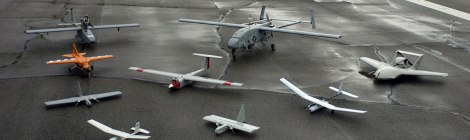
    While the US and its allies have had a monopoly on drone technology until recently, the uptake of military and civilian drones by a much wider range of state and non-state actors shows that this playing field is quickly levelling. Current international agreements on arms control and use lack efficacy in responding to the legal, ethical, strategic and political problems with military drone proliferation. The huge expansion of this technology must push the international community to adopt strong norms on the use of drones on the battlefield.

    Read Article →

    Nuclear Weapons: From Comprehensive Test Ban to Disarmament

    Despite not yet entering into force, the 1996 Comprehensive Test Ban Treaty has succeeded in almost eliminating nuclear weapons testing and in establishing a robust international monitoring and verification system. A breakthrough in its ratification by the few hold-out states could have important positive repercussions for the Nuclear Non-Proliferation Treaty or nuclear disarmament in the Middle East.

    Read Article →

    International Dimensions of the Ukraine Crisis: Syria and Iran

    The Russian annexation of Crimea may be in direct contravention of international agreements but is popular in Russia and almost certain to hold. Given tensions within Ukrainian society and its weak transitional government, there remains some risk of further intervention in eastern Ukraine and possibly the Trans-Dniester break-away region of Moldova. Even if there is no further escalation in the crisis, the deterioration in EU/Russian and US/Russian relations is of great concern, not least in relation to two aspects of Middle East security – the Syrian civil war and the Iran nuclear negotiations.

    Read Article →

    The Iran Interim Deal: Responses, Potential Impacts, and Moving Forward

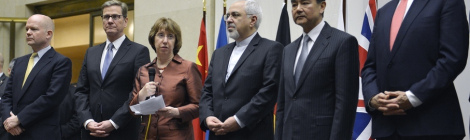
    Implementation of the interim deal with Iran, which freezes the country’s nuclear enrichment in exchange for limited sanctions relief, began in January. As a result, we are witnessing a substantial shift in diplomatic relations between Iran and its regional neighbours – some positive, some not. This deal marks a significant step for the international non-proliferation regime, but will it achieve the trust and confidence-building goals intended? As the US and Iran face increasing domestic pushback on the terms of the agreement, questions remain on the interim deal’s impact on relations in the region and abroad, and the effect these relations may have on the prospects of coming to a full comprehensive follow-up agreement between Iran and the P5+1 countries.

    Read Article →

    What next for Iran? Foreign Policy after a Nuclear Agreement

    If Iran and the P5+1 succeed in negotiating a robust agreement on the nuclear issue, then Iran will be less preoccupied with rebalancing its relationship with antagonistic western powers and its role in the Middle East and the wider region has scope for developing in many new directions. This briefing looks ahead to a post-agreement environment and assesses where Iran might chose to concentrate its resources. A key question is whether it will work to build better links with the US and selected European states or whether it will be more interested in the BRIC and other states, not least Turkey. Its choice will be influenced strongly by domestic politics and the urgent need for a more stable region.

    Read Article →

    Geneva II: Prospects for a Negotiated Peace in Syria

    The recent announcement that the so-called Geneva II conference would finally convene on 22 January 2014 is overdue but good news. What are the chances of it bringing peace? With an interim deal signed on Iran’s nuclear programme, Richard Reeve discusses what chance the great powers, Middle Eastern diplomats and the mediators of Geneva have as they turn their attention to ending the war in Syria.

    Read Article →

    Can the Nuclear Non-Proliferation Treaty outrun its double standard forever?

    The recent walkout by Egyptian negotiators at UN talks have demonstrated that, like a building with rotten foundations, the nuclear non-proliferation regime is far less stable than many believe it to be. Egypt’s actions make clear that anything less than a regime specifically geared towards addressing the reasons why some states seek nuclear weapons is a regime existing on borrowed time.

    Read Article →

  • Environment, Energy, Economy: a threefold challenge to sustainable security

    Environment, Energy, Economy: a threefold challenge to sustainable security

    Phillip Bruner | Exclusively written for sustainablesecurity.org | December 2010

    Issues:Climate change, Competition over resources

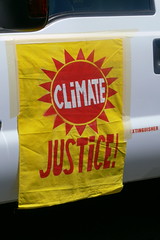
    As we turn a watchful eye toward COP16 it’s tempting to get sidetracked by other major events going on around the world. There are, after all, a host of developments which stand to have an impact on security in the immediate future and arguably, many of us have become perhaps too accustomed to placing economic and energy woes ahead of the environment on our individual lists of urgent priorities. We are, after all, in the middle of the worst global financial meltdown since the Great Depression and as banks stop lending, governments cut spending, unemployment rises, public outcry gathers momentum and as we’ve already seen in Ireland and Britain recently, even in highly-developed economies social unrest can translate into violence toward governments. We’re also running out of cheap and easy access to oil, which is “the lifeblood of modern civilization,” according to the 2005 Hirsch Report – not to mention modern militaries – and as developing countries continue to rapidly industrialise, Western governments grow weary of asymmetries in energy demand per capita as well as huge demographic shifts in population size and age, which tend to favour the East. That said, it helps to be reminded that economic and energy woes go hand-in-hand when it comes to addressing climate change. Therefore, in order for activists and government representatives alike to find common ground on which to build lasting and constructive partnerships for addressing major security threats, an interdisciplinary approach is needed that can help to elucidate how environmental, energy and economic dilemmas are deeply intertwined.  

    On April 11th, in a Joint Operating Environment report from the US Joint Forces Command, the announcement was made “that surplus oil production capacity could disappear within two years” and by 2015 “the shortfall in output could reach nearly 10 million barrels per day.” While the Department of Energy has shied away from making similar assessments, it’s significant to note the possible relationship between declining rates of extraction, erratic fluctuations in oil prices and volatility in the wider market. At the height of the financial crisis, oil prices swung from $147 in July 2008 to $32 in late December 2008 and then back up to $70-80 from late August 2009. Chris Skrebowski, adviser to the UK’s All Party Parliamentary Group on Peak Oil and Gas’ (APPGOPO) has said that “the credit crunch, the collapse of oil prices and uncertainty about the length and depth of recession” require investors to examine “how the recession stands to impact the trajectory of oil demand growth.”

    In his keynote address to the Chatham House Conference in London on February 1st 2010, OPEC Secretary General, Abdalla S. El-Badri highlighted the link between oil scarcity and economic recession as one in which government “concerns over security of supply” may come into conflict with “the need for a low-carbon future.” According to OPEC projections, demand for OPEC crude could be anywhere between 29 million and 37 million barrels per day by 2020. In response, El-Badri noted: “This translates into an uncertainty gap for upstream investments in OPEC Member Countries of over $250bn. There is therefore the very real possibility of wasting financial resources on unneeded capacity.”    

    How does a decline in cheap and easy access to oil coupled with an economic recession stand to impact the environment? Well, we all remember how COP15 failed to live up to the hype and while serious climate change practitioners and academics were and are perhaps too seasoned to expect miracles, Copenhagen served as an important reminder that the emergence of a legitimate international regulatory regime for GHG emissions is as far off as one to regulate cross-border capital flows or commercial and domestic fuel efficiency standards. The implications are that if leading governments and NGOs can’t broker a deal to cut carbon emissions and create incentives for renewable energy investments, private firms are left with the responsibility for generating a colossal $160 billion in capacity investment that will be required to meet rising global energy demand by 2015 and another $150 billion needed for capacity maintenance and replacement of lost capacity. Renewable energy, for many, holds the promise of a greener and brighter future in which coal, natural gas and even nuclear can be phased out. But in the context of economic stagnation in the West and rising energy demands in the East, it isn’t hard to imagine a large percentage of investment moving in the direction of what are at the moment and by comparison, low-risk endeavours.

    Whether or not ‘low risk’ to readers, can be ascribed to mountaintop removal mining in Appalachia, deep water drilling in the Gulf of Mexico or tar sands and oil shale extraction in Alberta, depends largely on one’s list of urgent priorities. If we can’t reach an intergovernmental deal to regulate GHG emissions and incentivise renewable investment (or by virtue of the same deal establish at least a regionally-competitive price for carbon that will help boost finance and innovation in carbon capture and storage), then firms are left with few options but to continue investing in fossil fuels in order to meet demand. If we can’t reach an intergovernmental deal to regulate speculative trading and irresponsible lending, then we can expect more erratic boom and bust cycles to follow after we’ve recovered from this one, standing to stifle what will become even more crucial investments in renewable technologies. Yet the present course of discourse, if you will, tends to view these issues as separate and distinct.

    Some analysts, representing both governmental and non-governmental organisations, appear convinced that economic matters have little to do with climate change and that the politics of energy supplies is not the domain of environmentalists. But if we take into consideration the myriad factors which tie energy supply and demand for fossil fuels in with rising GHG emissions and a recession that has stifled investment for much-needed innovation, then the case for a more interdisciplinary approach becomes readily apparent. From a national security standpoint, a lack of investment and innovation in renewable technologies challenges both the US and UK governments to make do with existing fossil fuel-intensive technologies, while under pressure to reduce overall expenditures. The US military in particular as the “largest single user of petrol in the world” according to BP, faces an overwhelming uphill battle in fighting two already costly wars. Meanwhile, the Joint Operating Environment report also reminds us of what has happened historically on occasions when there is serious economic upheaval: “One should not forget that the Great Depression spawned a number of totalitarian regimes that sought economic prosperity for their nations by ruthless conquest.”

    To complicate matters, a recent paper published by the Harvard Kennedy School cites ‘Mega Catastrophes,’ that may ensue in the event that average global temperatures increase by more than 4 degrees – putting pressure on both climate activists and government representatives to work more closely together in pursuit of a coordinated response. According to their most recent assessment, “melting and collapse of ice sheets in the West Antarctic or Greenland leading to drastic sea level rise (several meters over time)” could have significant and perhaps even irreversible consequences for vulnerable populations. The report goes on to note that: “Traditional responses to the risk of extreme events are of limited value in mitigating risks of a mega-catastrophe. The underlying changes in the climatic system could not be reversed over any time scale relevant for decision makers, limiting the efficacy of traditional recovery measures… Impacts could be difficult to smooth over time, even for governments.”

    Whether it’s the economy, energy or the environment which you value most, when it comes to security, each holds equal weight. If security can be defined in terms of what is or isn’t sustainable, then it must evolve to incorporate additional elements that transcend more traditional views on geopolitics. Depleting oil supplies and price volatility, vulnerability to economic shocks and climate change are all issues which are deeply interrelated. Any government in the West or the East that wishes to protect its citizens from further and/or ensuing trauma should devote ample time to coming up with more holistic models and methods for understanding the causal factors which interconnect all three. As such, I propose a new slogan for sustainable security: the three Es – ‘environment, energy, economy.’ In terms of priority, all are of equal importance to the future of modern civilizations.

    Phillip Bruner is Founder of the Green Investment Forum and a guest lecturer in global political economy at the University of Edinburgh

    Image source: NCPA Photos

    Comments

    Post new comment


  • Marginalisation of the majority world

    Marginalisation of the majority world

    A complex interplay of discrimination, global poverty, inequality and deepening socio-economic divisions, together make for key elements of global insecurity. While overall global wealth has increased, the benefits of this economic growth have not been equally shared. The rich-poor divide is actually growing, with a very heavy concentration of growth in relatively few parts of the world, and poverty getting much worse in many other regions. The ‘majority world’ of Asia, Africa and Latin America feel the strongest effects of marginalisation as a result of global elites, concentrated in North America and Europe, striving to maintain political, cultural, economic and military global dominance.

    Climate Adaptation, Development, and Peacebuilding in Fragile States – Finding the Triple-Bottom Line

    The New Security Beat | The New Security Beat | April 2011

    Issues:Climate change, Marginalisation

    “The climate agenda goes well beyond climate,” said Dan Smith, secretary general of International Alert at a recent Wilson Center event. “In the last 60 years, at least 40 percent of all interstate conflicts have had a link to natural resources” and those that do are also twice as likely to relapse in the five years following a peace agreement, said Neil Levine, director of the Office of Conflict Management and Mitigation at USAID.

    Article source: The New Security Beat

    Image source: DfID

    Read more »

    Climate-related Displacement and Human Security in South Asia

    Susan Chaplin | Institute for Human Security Working Paper | April 2011

    Issues:Climate change, Marginalisation

    Climate-related displacement is one of the key challenges facing South Asia in the coming decades. Although there is considerable debate about the salience of the term ‘climate refugees’ and extent to which climate change is a primary cause of forced displacement, there is no doubt that large numbers of people are already having to cope with the impact of environmental changes on their livelihoods and everyday life.

    Mano Dura: Gang Suppression in El Salvador

    Sonja Wolf | Exclusively written for sustainablesecurity.org | March 2011

    Issues:Global militarisation, Marginalisation

    Case study examining how  repressive policies against gangs in El Salvador drove gangs to further violence, heightening the cycle of militarisation.

    “In 2003 – eight months before the 2004 presidential elections – President Francisco Flores of the conservative ARENA party launched Plan Mano Dura (“Strong Hand”), ostensibly to dismantle the gangs and curb the number of homicides, most of which had been attributed to these groups. Backed by considerable media publicity, the measure entailed not only area sweeps and joint police-military patrols, but was also accompanied by a temporary anti-gang law that permitted the arrest of suspected gang members on the basis of their physical appearance alone. Both the nature and the timing of the initiative suggested that it had been designed to improve the ruling party’s electoral position rather than to ensure effective gang control.”

    Image source: VCK xD

    Read more »

    What’s the Real Mission In Libya?

    Chris Mathews | Huffington Post | March 2011

    Issues:Global militarisation, Marginalisation

    US TV News anchor Chris Mathews, writing for ther Huffington Post, asks what is the real mission in Libya? Not the no-fly zone – that’s a method. So what is the mission? How do we end this thing?

    Image source: Gumpingit. 

    Read more »

    Libya: Where Are the BRICs?

    Ben Zala | Foreign Policy in Focus | March 2011

    Issue:Marginalisation

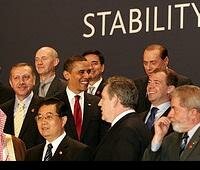
    Writing for Foreign Policy in Focus, Ben Zala from Oxford Research Group examines the wider implications of the UN Security Council vote on Libya for the quest to build a sustainable and peaceful world order that accommodates new centres of power.

    Image source: LondonSummit. 


    Read more »

    How Food Could Determine Libya’s Future

    Christopher Albon | The Atlantic | March 2011

    Issues:Global militarisation, Marginalisation

    As Libya’s protesters-turned-rebels fight a series of hard battles with forces loyal to Muammar Qaddafi, the United States — and the much of the world — struggles to find a meaningful response to the conflict. U.S. lawmakers have proposed such aggressive options as enforcing a no-fly zone over Libya or arming anti-Qaddafi rebels, both of which the White House has kept on the table. Critics of these plans argue that they risk involving the U.S. in another military engagement. But there’s another option that the U.S. could consider, one that might give anti-Qaddafi rebels crucial help while avoiding the messy complications of direct involvement: Send food.

    Image source: B. R. Q.

    Read more »

  • Sustainable Security

  • Sustainable Security

    The Costs of Security Sector Reform: Questions of Affordability and Purpose

    In considering security sector reform, questions of affordability have often been subordinated to questions of effectiveness and expediency. A recent series of reviews of security expenditures by the World Bank and other actors in Liberia, Mali, Niger and Somalia has highlighted several emerging issues around the (re)construction of security institutions in fragile and conflict-affected states.

    Read Article →

    Human Security and Marginalisation: A case of Pastoralists in the Mandera triangle

    This paper seeks to bring out the relevance of human security in pastoral areas of Mandera triangle and the relationships and contradictions that exist between it and national security. The “Mandera Triangle” encompasses a tri-border region of Ethiopia, Somalia, and Kenya that exemplifies, in a microcosm, both a complex and a chronic humanitarian crisis that transcends national boundaries.

    Read Article →

  • India’s 21st-century war

    India’s 21st-century war

    Paul Rogers | Open Democracy | November 2009

    Issues:Climate change, Global militarisation, Marginalisation

    Tagss:India, Maoists, Naxalite insurgency

    A year on from the election of Barack Obama as United States president, the conflicts that dominated Washington’s concern under his predecessor are still raging – and even increasing in intensity. This is particularly true of the arc of insecurity that stretches from the middle east through to southwest Asia, where – from Afghanistan and Pakistan to Israel-Palestine and Iran – the reality and potential of violence have hardly been diminished as a result of the change of administration.

    Moreover, alongside the high-intensity conflicts where Washington is directly or by proxy involved in this region, there are other slow-burn insurgencies that often receive less attention than they deserve. The persistent rebellion in India of the Maoist guerrilla movement known as the Naxalites is one such. A reason for paying more heed to this issue is that the evolving nature of the Naxalite conflict – including the Indian government’s approach in attempting to combat the movement – may represent a more accurate indicator of future trends in global insecurity even than the al-Qaida network.

    A potent legacy

    The internal United States debate about its future strategy in Afghanistan and Pakistan in particular has as much of its specific focus the current status of al-Qaida, and whether it still represents a major threat to US security interests.

    The argument over whether (and by how much) to increase US deployments in Afghanistan – prompted by General Stanley A McChrystal’s request for at least 40,000 more troops – is now complicated further by the political fallout of the now aborted rerun of Afghanistan’s presidential election. The effect of the confirmation of Hamid Karzai as the election winner and thus president for a third term in office (after the withdrawal on 1 November 2009 of his rival, Abdullah Abdullah) makes it even harder for the pro-”surge” advocates to make their case (see Charles A Kupchan & Steven Simon, “Pull the Plug on the Afghan Surge”, Financial Times, 3 November 2009).

    Many of those who oppose such a move argue that the US is making a strategic mistake by seeing the Afghan and Pakistani Taliban groups as the main focus of its efforts. These are so embedded in local societies on either side of the border that they cannot, so the argument goes, be defeated in the conventional sense. It is far more important in this view to concentrate specifically on the al-Qaida leadership and that movement’s most determined adherents. By doing so, the US military will lead the task of defeating terrorism and making the world a safer place.

    This argument, though yet to be won, can be seen as a significant departure from the dominant thinking of George W Bush’s “war on terror” – especially its tendency to describe any radical paramilitary group anywhere in the world as “terrorist”. The logic of this view, embraced with glee by the neo-conservatives that provided the Bush administration’s ideological fuel, was the radical division of the world into two absolutely polarised sides: with us or against us, there is no room for doubt or compromise.

    The search for a more nuanced and targeted approach reflects a degree of new thinking from Barack Obama. The problem he faces is that the mentality of the “war on terror” has proved so influential, including by other states facing their own domestic insurgencies, that it is very difficult to change course.

    A hidden rage

    A case in point is the New Delhi government’s developing assault on the Naxalite rebels in India.

    The Naxalite movement has its origins in a land dispute near the village of Naxalbari in the northern part of West Bengal in 1967. This lasted several years and appeared to have been brought under control. But later, a number of leftist groups fired by a Maoist ideology made links with disadvantaged peoples in parts of rural eastern India; in the early 2000s, this coalesced into a renewed movement (see Ajai Sahni, “India and its Maoists: failure and success”, 20 March 2007)

    Since then, the Naxalites have grown in power and influence. They are often brutal in their methods but have managed to win support from huge numbers of marginalised people, in part because of the great brutality inflicted by security forces in the areas the guerrillas control. The Indian authorities are increasingly concerned at the threat the movement poses to the country’s internal security – and even its much-vaunted economic miracle. For the state, and much of the economic elite, the Naxalite/Maoist rebels are simply terrorists who must be put down with whatever force is necessary (see “A world in revolt”, 12 February 2009).

    Since then, the Naxalites or Maoists have grown in power and influence, as part of a conflict with the authorities in which there has been great brutality on both sides. They are reported to be active in 220 of India’s 602 districts across fifteen of India’s twenty-eight states.

    Much of the activity is spread across India’s so-called “red corridor”, which stretches from the Nepalese border down to the southern state of Karnataka. A current report says: “With a force of 15,000 armed cadres, they control an estimated one-fifth of India’s forests. They are also believed to have 50,000 underground activists. Around 100,000 people, including the intelligentsia, are associated with various front organisations in different parts of the country” (see Prakash Nanda, “India’s deadly war within”, UPI Asia Online, 4 November 2009).

    The problem with this view is that the guerrillas draw on the genuine injustices inflicted on poor Indians in rural areas, including (for example) the many thousands dispossessed of their lands and livelihoods by mining corporations and new industries (see Arundhati Roy, “The heart of India is under attack”, Guardian, 30 October 2009). These injustices are part of the entrenched and increasing disparities in wealth and poverty that India’s breakneck race for growth has created.

    The war between the Indian state’s security forces (including the armed militias it has organised) and the Naxalites is taking place amid this landscape of desperate poverty and inequality. The rebels’ tactics include the use of roadside-bombs and ambushes, which have helped them kill over 900 Indian security personnel in 2006-09. In the period from April-June 2009 alone, they killed 112 security personnel in four key regions of combat: Chhattisgarh, Bihar, Jharkhand and Orissa; over three days in early June, twenty police lost their lives in two attacks (see Divy Khare, “Naxalites strike again, kill 10 cops in Jharkhand”, Times of India, 13 June 2009). In Maharashtra, two Naxalites lured a police patrol into a trap and in an hours-long fight, seventeen policemen died (see Jim Yardley, “A growing Maoist rebellion vexes India”, International Herald Tribune, 31 October 2009).

    The authorities are now being shocked by years of accelerating conflict into raising the level of their response. New Delhi is mounting a large-scale operation – Operation Green Hunt – that is expected to involve some 70,000 paramilitary forces. The aim is partly to counter the spread of Naxalite influence beyond the most densely forested areas that have been their core domain into open countryside; Operation Green Hunt seeks to force the rebels back into the forests where they can (it is supposed) be more easily contained (see Anuj Chopra, “Jungle lair of the Maoist rebels”, 5 November 2009).

    The carefully planned operation could take several years to complete. At its root is the firm belief that the target groups, however strong their support, constitute a threat to the emergence of the new India as a global economic power. In such circumstances, strategic ores must be mined and factories built on suitable land. Those in the way – leftist rebels or local villagers – simply cannot be allowed to interfere with India’s onward march to western-style modernity (see “China and India: heartlands of global protest”, 7 August 2008).

    It is especially pertinent to note that this rebellion has caught India somewhat by surprise. At the very time that India has finally embraced the consumer society, when burgeoning cities are replete with shopping-malls, entertainment venues and gated communities – violent extremists appear, as if from nowhere, to wreck the party and threaten the future (see Manmohan Singh, “’A Systemic Failure’”, OutlookIndia, 4 November 2009). The fact that much of what is happening can be understood as a desperate response from intensely marginalised people is discounted.

    A warming conflict

    The import of the Naxalites and other Maoist groups in India may go far beyond the major internal-security problem they pose. From another perspective, they represent an early example of the kinds of radical response that could – if present dominant policies continue – become far more widespread in the coming decades (see “A world on the edge”, 29 January 2009).

    In the 2010-40 period, climate change will affect the tropical and sub-tropical regions of the world in ever more pervasive ways. As the continents warm up much faster than the oceans and the croplands dry out, the consequence will be a sharp decline in the land’s ecological “carrying-capacity” (see Shanta Barley, “A World 4 degrees C warmer”, New Scientist, 3 October 2009)

    This is also a world where there are enormous gaps in living-standards, life-chances and access to resources; where 10% of the world’s people have over 85% of the household wealth; and where hundreds of millions of people in the global south (and north) are marginalised and resentful. The results, if such trends are allowed to continue, will be a combination of more fragile and failing states with intense migratory pressures; in turn this will reinforces the tendency of the world’s elites to seek to “close the castle gates” (see “A tale of two towns”, 21 June 2007).

    In this perspective, the rational approach would be led by an awareness of how the dangers of socio-economic divisions and environmental limits make a new definition of security essential (see “A world in need: the case for sustainable security”, 10 September 2009). A continuation of the current path may mean that al-Qaida will be seen as a short-term problem that withered away – and the Naxalite rebellion as the prototype conflict for the 21st century.

    Comments

    Post new comment


  • Sustainable Security

  • Sustainable Security

  • Sustainable Security

    Resources

    Climate-related Displacement and Human Security in South Asia

    Susan Chaplin | Institute for Human Security Working Paper | April 2011

    Issues:Climate change, Marginalisation

    Climate-related displacement is one of the key challenges facing South Asia in the coming decades. Although there is considerable debate about the salience of the term ‘climate refugees’ and extent to which climate change is a primary cause of forced displacement, there is no doubt that large numbers of people are already having to cope with the impact of environmental changes on their livelihoods and everyday life.

    Transatlantic Dialogue on Climate Change and Security

    Issue:Climate change

    On February 25, 2009, the International Institute for Strategic Studies (IISS) launched the “Transatlantic Dialogue on Climate Change and Security”, funded by a grant from the European Commission, with the purpose of analyzing the impact of climate change on global security and stability.
    Crude Calculation – The Continued Lack of Transparency Over Oil in Sudan

    Issue:Competition over resources

    Persistent calls for clear and transparent information on Sudan’s oil revenues have yet to yield satisfactory information, says a new report published by Global Witness today. With a referendum on independence for southern Sudan just days away, oil sector transparency is now more important than ever to preserving the fragile peace between north and south.

    New Report on Alternatives to Militarisation in the Indian Ocean

    Issue:Global militarisation

    In the Lowy Institute’s latest Strategic Snapshot, International Security Program Associate Ashley Townshend explores the strategic dynamics between China and India in the Indian Ocean.

    Teaching Religion, Taming Rebellion? Religious Education Reform in Afghanistan

    Issues:Global militarisation, Marginalisation

    In this Peace Research Institute Oslo (PRIO) Policy Brief, Kaja Borchgrevink & Kristian Berg Harpviken explore claimed links between Taliban militancy and religious education in Afghan and Pakistani madrasas.

    Access the report online at the PRIO website

    The New Faces of Violence and War: Peace and Security Challenges

    Issue:Marginalisation

    In this recent article, Mariano Aguirre, Director of the Norwegian Peacebuilding Centre in Oslo, examines the complex and unpredictable challenges to peace and security.
    Attach PDF: 

    Development in Lao PDR: The food security paradox

    Issues:Climate change, Competition over resources

    Tags:climate change, food security, human security, Lao PDR, SDC working paper

    Food security will remain out of reach for many people, especially women and children, in the Lao People’s Democratic Republic, or Laos, if the country continues to emphasize commodities and resources development at the expense of the environment and livelihoods while ignoring global trends for food and energy. Read more »

    Arms Flows and the Conflict in Somalia

    Issue:Global militarisation

    A new SIPRI report highlights the limitations of United Nations attempts to control the flows of arms into Somalia, and the role of potential arms-supplying states.
    A Study on the Inter-Relation between Armed Conflict and Natural Resources

    Andrea Edoardo Varisco | Journal of Peace, Conflict and Development | October 2010

    Issue:Competition over resources

    The article investigates the inter-relation between armed conflict and natural resources and its implications for conflict resolution and peacebuilding.

  • Sustainable Security