Blog

  • Belize: challenges and contradictions in gang policy

    Like its neighbours in the northern triangle (El Salvador, Honduras and Guatemala), Belize has a high murder rate that is closely connected to the strong presence of gangs – but the character of gang activity in Belize is quite different from its Central American neighbours. Belize has pioneered some innovative solutions to the problem it is facing. But it will need to overcome the challenges of internal resistance and an acute lack of resources in order to address the political, economic and social issues that marginalise Belize’s large youth population.

    Belize’s gangs have been a persistent feature of the insecurity facing this tiny and sparsely populated country, which sits straddling Central America and the Caribbean, one foot in each but not completely in either. Murders have risen above 40 per 100,000 inhabitants in recent years, around a third of which are gang affiliated according to official police statistics. The murder rate in Belize City, home to an overwhelming concentration of gangs, peaked at 180.2 in 2012.

    While the red and blue associated with the Crips and Bloods of LA (from which Belize’s gangs originated in the 80s and 90s) are seen elsewhere, the gangs remain a primarily urban phenomenon. In particular, they are symptomatic of the deep-rooted structural challenges that are most starkly present in the Southside of Belize’s former capital. There, large, marginalised and impoverished families live in a situation of social isolation and neglect, blanketed by the stigmatisation that results from the social prejudices and intolerances surrounding ‘Southside issues’. What’s more, youth living in the area must contend with a continuous exposure to often extreme and graphic violence, be it in the family or community environment.

    Gang activity in Belize is not as well organised as in its Spanish-speaking neighbours, where links with organised crime are much stronger and crimes of extortion and large-scale drug trafficking activities more prevalent. In Belize the gangs are also more highly fractured. They are typified by smaller groups whose ‘turf’ often extends no more than a couple of streets and whose members may number little over a dozen. Personal conflicts, often-stretching back generations, fuel aggression and revenge attacks.

    Beyond a driver of insecurity, the gangs are a symptom of the more deep-rooted structural challenges facing Belize, where social injustices, challenging socio-political conditions, and an acute lack of government resources have combined with an increasingly youthful population (69.8% under the age of 35) to create a large pool of marginalised youth lacking in opportunities.

    It is only by targeting these root causes, rather than simply repressing the gangs themselves, that the issue can be successfully addressed, and elements of Belize’s approach to youth and insecurity deserve to be widely lauded in this respect.

    A community building approach
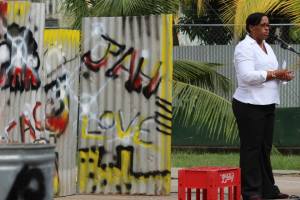
    An event at a high school in Belize City organised by RESTORE Belize

    An event at a high school in Belize City organised by RESTORE Belize. Source: RESTORE Belize

    Located within the Office of the Prime Minister, RESTORE Belize was launched in 2010 at the behest of the Government to lead a community-building approach to the restoration of law and order. It seeks to target the social roots of crime and violence and promotes a strategic and comprehensive cross-sector effort involving state institutions, the private sector and civil society, as well as implementing its own programs in the area. It coordinates closely with other institutions, including the police, and forms part of an effort to improve relations between the Belizean State (of which the police are the foremost visible representation) and the population.

    Through its Community Action for Public Safety program, for example, it engages in human development activities focused on the Southside of Belize City, developing infrastructure including recreational and social facilities for youth as well as rehabilitation facilities for youth offenders. Similarly, its Metamorphosis Program engages young people deemed to be at-risk of school dropout and gang affiliation in an intensive program that involves counselling, weekend retreats, drug and alcohol therapy, as well as parenting classes and home visits by social workers.

    Belize has also sought to increase its capacity to engage in conflict resolution. In cooperation with the United States, mediators have been trained to work in schools, youth facilities and the prison service as well as directly in local communities. The Conscious Youth Development Program, for example, has a team of mediators that are deployed as first responders following incidents of gang violence in order to calm the immediate situation and prevent escalation.

    These community building approaches seek to cultivate change in the individual while providing tangible improvements to their personal and community environments. Furthermore, by engaging with them as individuals as opposed to ‘gang members’ they aim to foster their trust and confidence in the Belizean state and society. This is especially important because large segments of the Belizean population hold negative views of youth, who in turn resent being characterised as a source of the ills affecting society.

    Resistance

    One of the major challenges to these approaches – and a standard by which their progress can be judged – therefore, is overcoming resistance from those that favour more draconian policies. As an example, some schools in Belize, many of which are independently run, are strict, conservative, elitist and intolerant of ‘Southside problems’. Youth from such areas are often earmarked from the outset if their family members have been affiliated with gangs, while strictly enforced uniform codes work to further ostracise those from poorer backgrounds who often struggle to meet the financial costs. Given that free schooling is available only until the age of 12, many drop out prior to embarking on secondary education, despite it being a legal requirement up until 14 years of age. While interventions such as RESTORE Belize’s scholarship program assist in this regard, the stigmatisation and institutional marginalisation of such youth requires deep-rooted changes in attitudes and institutional cultures. Liaison efforts are being pursued to this end, but the autonomous nature of many of these schools means progress is often slow and hard fought. Meanwhile, with a national dropout rate of 8.4%, rising as high as 19.5% in certain schools in Southside Belize City, the scale of the challenge that remains is clear.

    Stigma and repression

    The issue of stigmatisation of youth is furthermore evident in the contradictory nature of other policies. For example, the Crime Control Act criminalises gang membership, meaning that by taking part in programs aimed at gang members and their leaders, these individuals are in essence incriminating themselves. Similarly, just as RESTORE Belize was launched, the Ministry of National Security rolled out Operation Jaguar, a hard-line approach involving military and police checkpoints and stop-and-search operations that had been developed and planned in isolation.

    Perhaps the starkest example, however, is that of the Gang Suppression Unit (GSU) – an elite police unit whose raison d’etre is the repression of gang activity. Widely perceived to operate beyond the law, the GSU is suspected of involvement in a number of high profile political and human rights abuses. While ‘harder’ approaches may be required to compliment ‘softer’ interventions, the lack of transparency and accountability surrounding the unit and allegations of their involvement in such offenses undermines efforts to build trust and confidence and to transform the perceptions of marginalised youth towards the state. The placement of RESTORE Belize within the Office of the Prime Minister was specifically designed to aid in efforts to mould a strategic cross-agency approach, but it is clear that a silo mentality continues to impede progress on this front.

    An uphill task

    Beyond attitudinal resistance, the country is also facing an acute shortage of resources which affects all security and justice institutions, greatly undermining state capacity in these sectors, as well as more widely. As an example, the National Forensic Science Service struggles to perform even the most basic functions: a lack of DNA analysis capabilities, training and equipment means they are often unable to verify matches between suspects and evidence found at crime scenes. Even where sufficient evidence can be brought to take a case to trial, the lack of public prosecutors further undermines the state’s judicial functions. With only eleven public prosecutors it is no surprise that impunity is high and prosecutions for major crimes often face severe delays, especially when it is considered that there were 145 murders in 2012 alone. Add this to a police force lacking in vehicles and even basic equipment and the scale of the task becomes even more daunting.

    Belize thus faces an uphill task in overcoming the challenges provided by gang violence. The approach followed by instances such as RESTORE Belize and the Conscious Youth Development Program are highly commendable for their recognition that youth, including those involved in gang activity, should not be treated as a plague on society that can simply be exterminated through repressive actions. But for their full value to be achieved there is a need for wider changes. Youth must be provided with greater opportunities to thrive, while state capacities need bolstering in order to improve its ability to provide security and justice to its citizens. Such changes, however, require significant resources that Belize is lacking. Furthermore, support to engage in these inherently longer-term efforts will be tested by the attitudes of those that continue to see Belize’s youth in a negative light, or that become impatient, and understandably so, with the immediate threats to their security.

    Matthew Budd is a security analyst at RESDAL (Latin American Security and Defence Network), where he specialises in public security issues, and is also studying for a Masters in Conflict, Security and Development at King’s College London. He is currently working on the second edition of RESDAL’s Public Security Index, which is the only existing resource to provide information on the public security context and institutional responses to them in the Central American region. The upcoming edition will incorporate the case of Belize alongside those of Spanish-speaking Central America.

    Featured image: A Belize City high school. Source: Flickr | Carsten ten brink

  • Too Quiet on the Western Front? The Sahel-Sahara between Arab Spring and Black Spring

    Too Quiet on the Western Front? The Sahel-Sahara between Arab Spring and Black Spring

    While the world’s attention has been focused on the US-led military interventions in Iraq and Syria a quieter build-up of military assets has been ongoing along the newer, western front of the War on Terror as the security crises in Libya and northeast Nigeria escalate and the conflict in northern Mali proves to be far from over. In the face of revolutionary change in Burkina Faso, the efforts of outsiders to enforce an authoritarian and exclusionary status quo across the Sahel-Sahara look increasingly fragile and misdirected.

    Read Article →

    Beaux Gestes and Castles in the Sand: The Militarisation of the Sahara

    Whatever the benefits for Mali, the French-led eviction of jihadist groups from northern Mali may have made the wider Sahara a less safe place, and has done little to lower the capacity of such groups to threaten European interests.. In 2014, France is implementing a major redeployment of its forces in Africa into the Sahel and Sahara. Meanwhile, the US has been quietly extending its military reach from Djibouti to Mauritania. However, as elsewhere, the western military approach to countering Islamist insurgency in the Sahel rests on very unsteady foundations and the potential to provoke wider alienation and radicalisation is strong.

    Read Article →

    Sustainable Security and the Challenges of 2014

    2014 is a time for looking backwards and forwards. While the dynamics of the war on terror are still very much in play, the withdrawal from Afghanistan and the re-escalation of violence in Iraq and Libya present an opportune context for sincere reflections on the disastrous consequences of war without borders. Such inquiry needs to look forward too, to the implications of the current administration’s ‘war-lite’ and the unstoppable proliferation of remote control technologies.

    Read Article →

    Geneva II: Prospects for a Negotiated Peace in Syria

    The recent announcement that the so-called Geneva II conference would finally convene on 22 January 2014 is overdue but good news. What are the chances of it bringing peace? With an interim deal signed on Iran’s nuclear programme, Richard Reeve discusses what chance the great powers, Middle Eastern diplomats and the mediators of Geneva have as they turn their attention to ending the war in Syria.

    Read Article →

  • Rwanda’s Gacaca Courts: Vengeance Through Law

  • Conservation as a Tool for Post-War Recovery

  • Brexit and the Irish Nationalist Reaction

  • The European Union as a Peace Mediator

    The European Union (EU) has recently emerged as an international peace meditator, but emerging challenges, including the potential exit of the UK from the EU, may prevent it from strengthening its ability to mediate conflicts.  

    Mediation is an instrument of international conflict management through which third parties seek to contribute to a peaceful resolution of (violent) conflicts. While states are the dominant and most frequent providers of mediation, international organizations are not far behind. Recently, the European Union (EU) has emerged as a relatively new player in the field, acting both as a mediator itself and as a member of collective coordination mechanisms to support peace processes such as UN Contact Groups and Groups of Friends. Current initiatives such as the EU-facilitated dialogue between Belgrade and Pristina have demonstrated the EU’s potential as peace mediator.

    However, external and internal crises may prevent the EU from further strengthening its institutional capacities and resources for mediation. Externally, challenges to European security such as the civil war in Syria, the threat posed by the so-called Islamic State and the armed conflict in Eastern Ukraine in the context of rising tensions between NATO and Russia could lead to a shift in the EU’s foreign and security policy back towards a more traditional, “hard security” approach that focuses on the development of military instruments and defence cooperation. Internally, the results of the UK referendum on 23 June 2016 and a potential exit of the UK would certainly open up a debate on the future of EU foreign and security policy without one of its most influential member states. The fact that the EU’s long-awaited Global Strategy on Foreign and Security Policy will be published a week or two after the UK referendum suggests that the EU is well prepared to take the potential effects of a ‘Leave’ vote on this policy field swiftly into account. However, it is nevertheless plausible to assume that a ‘Brexit’ would push the EU towards a decisive crossroads as regards to the future development of its foreign and security policy, also potentially affecting its engagement in the field of peace mediation.

     The EU’s track record in peace mediation

    rock-cohen

    Image by Rock Cohen via Flickr.

    Although the number of EU mediation efforts is still relatively marginal compared to UN mediation involvement, the EU has nevertheless established a considerable track record as mediator in the past ten to fifteen years. During High Representative (HR) Javier Solana’s terms of office, mediation became an increasingly important element of the EU’s foreign and security policy toolbox. For example, in August 2001 the EU together with the US managed to broker the Ohrid Framework Agreement settling the conflict between the Macedonian government and the Albanian minority in 2001. A few months later, the High Representative and his team became involved in a mediation process between Serbia and Montenegro, which led to the Belgrade Agreement on the formation of a state union in March 2002. While the Western Balkans certainly remained one of HR Solana’s key priorities, the EU also played an important role in the multilateral effort to mediate the political crisis in Ukraine in the context of the country’s ‘Orange Revolution’ in 2003 and was a key supporter of the efforts by the Finnish NGO Crisis Management Initiative (CMI) to broker a peace agreement to the conflict in Aceh, Indonesia in 2004-5.

    While the EU had already been very active in the field of mediation when Javier Solana served as High Representative (1999-2009), it sustained its mediation activities during HR Catherine Ashton’s term of office (2009-2014) and continues to be involved in mediation processes since HR Federica Mogherini has taken over. In particular, the EU-facilitated dialogue between Belgrade and Pristina stands out as the most prominent example of EU mediation. Less publicly recognized are the EU’s efforts as co-mediator in the Geneva International Discussions (GID) on Georgia’s Territorial Conflicts that were initiated in October 2008 following the EU Special Representative for the South Caucasus and Crisis in Georgia together with OSCE and UN Special Representatives/Envoys  serving as co-chair in the talks between representatives of Georgia, South Ossetia, Abkhazia, Russia and the US. Apart from its direct involvement as mediator, EU actors have been engaged in a number of mediation support initiatives, often been less visible to a wider public. Examples include the EEAS Mediation Support Team’s efforts to assist Myanmar democratic transition and the EU Delegation’s organizational and financial support to the National Dialogue Conference in Yemen.

    The EU’s institutional framework for mediation

    The increase in EU mediation activities has been accompanied by the evolution of a more strategic and systematic EU approach to mediation, particularly in terms of policy development and capacity-building. A key development in this regard has been the adoption of the Concept on Strengthening EU Mediation and Dialogue Capacities. In this document, the EU formulated the plan to systematically enhance its existing mediation capacities and to strengthen its overall ability to engage in non-military conflict prevention and crisis management missions. It also spells out different roles and guiding principles of EU mediation, thereby addressing the need for greater internal coherence and closer cooperation with its international partners. A major role in mediation is ascribed to the EU Special Representatives, whose mandates often include mediation-related activities and which are often the key EU actors on the ground in the conflict region.

    To implement the Concept and to promote a more systematic approach to mediation, the Mediation Support Team (MST) within the EEAS was established in 2011 and has become a key hub of mediation knowledge and expertise. However, the MST is not the only institutional innovation that followed-up on the 2009 Concept. The establishment of the European Parliament Mediation Support Service to assist mediation initiatives undertaken by Members of the European Parliament and the creation of the European Institute of Peace illustrate that mediation remains a vibrant field of EU foreign policy.

    Is the EU an effective mediator?

    To what extent the EU is effective in its mediation efforts is an issue which still has to be comprehensively addressed in peace and conflict studies research. The answer to the question of EU effectiveness also depends on how one conceptualizes effectiveness and success in international mediation. A brief comparison of the EU-facilitated dialogue between Kosovo and Serbia with the EU’s role as co-chair in the Geneva International Discussions on the conflicts over South Ossetia and Abkhazia may illustrate this. In terms of conflict settlement, the EU-facilitated dialogue between Kosovo and Serbia has been relatively effective, given that it has led to several agreements between the parties, including compromises on previously heavily contested issues such as Kosovo’s participation in regional fora, freedom of movement and trade, and the governance of Northern Kosovo. Most importantly, the EU brokered the First Agreement of Principles Governing the Normalization of Relations in April 2013 that has been widely applauded as ground-breaking and historic. Although the parties are lagging behind when it comes to the implementation of some agreements, the Belgrade-Pristina dialogue still is a success story which can, at least partly, be attributed to the EU’s leverage vis-à-vis with the conflict parties due to their aspirations for EU accession and its mediation strategy that draws on this leverage to move parties toward agreement through the use of positive incentives.

    In case of the Geneva International Discussions, the EUSR and his team have been considerably less effective in brokering agreements between the parties compared to the Kosovo-Serbia case. Apart from the establishment of Incident Prevention and Response Mechanisms to facilitate exchange of information on security incidents at the administrative boundary line (ABL) between South Ossetia/Abkhazia and Georgia proper, the discussions have not resulted in any tangible results yet. However, a focus on conflict settlement alone would not be sufficient to make a comprehensive judgement on the EU’s effectiveness as a co-mediator in this case. The fact that the EU has managed to keep the parties at the negotiation table and stay committed to the mediation process is in itself an achievement, given the fact that the space for compromise between the parties seems to be very limited. In addition to the EU’s effort to stabilize the security situation on the ground through the EU Monitoring Mission (EUMM), the EU’s leading role in the GID has contributed to a stabilization of a conflict which was prone to escalation not that many years ago.

    What can we learn from this comparison about EU effectiveness in mediation? There are at least two lessons that could be drawn here. First, the Kosovo-Serbia case illustrates the great potential of the EU as a mediator in contexts where EU memberships serves as a huge incentive for compromise solutions. Second, the EU’s involvement in the Geneva International Discussions demonstrates that in less favourable contexts – due to a lack of EU leverage or a limited willingness to compromise from the conflict parties – the EU may not be able to achieve more than preserving the status quo and committing the parties to confront one another peacefully in negotiations rather than through violent means. Thus, there may be certain limits to what the EU is able to achieve, but this does not mean automatically that the EU is ineffective. Rather, the main task for the EU will be to fully exploit the potential it has, given the specific circumstances and context of the conflict in which it decides to engage.

    If the EU is able to further strengthen its profile as an international mediator, it will depend on the political will of the Member States. Although EU mediators such as EU Special Representatives enjoy a certain degree of leeway, it is the EU member states who decide on their mandates and the EU’s approach towards a particular conflict more generally. Moreover, individual Member States may provide EU mediation efforts with additional weight. In the Kosovo-Serbia case, for example, the UK and Germany have played a key role in moving Belgrade to compromise in the dialogue with Pristina by making it a condition for further progress on its path towards EU accession. While Germany has been the key driver behind the efforts of putting more pressure on Serbia to move forward in the implementation of agreements reached in the context of the EU-facilitated dialogue at different levels, the UK has played a key role in backing this policy publicly and through diplomatic channels. Given that the UK has been a firm supporter of the EU’s further enlargement, one potential effect of a ‘Brexit’ could be that in cases where enlargement is the key ‘carrot’ the EU can offer to conflict parties, there might be more reluctance to draw on this leverage due to a change to the EU’s internal balance between enlargement supporters and skeptics among the Member States. Thus, although a potential ‘Brexit’ may not inevitably affect and change the EU’s approach to mediation, it may have a long-term negative impact on the EU’s ability to use both pressure and political/economic incentives to spur agreement between conflict parties.

    Julian Bergmann is a research fellow with the Chair of International Politics at the Johannes Gutenberg University Mainz, working on a PhD thesis on the EU’s effectiveness as a peace mediator in secessionist conflicts. Together with Arne Niemann, he is also conducting a research project entitled “A Peacemaker in the Making? The European Union as an Actor in International Mediation”, funded by the German Foundation for Peace Research. Recent publications include Mediating International Conflicts: the European Union as an Effective Peacemaker? (Journal of Common Market Studies 2015, with Arne Niemann) and Reputation, Credibility and Manipulative Negotiation Style – Attributes of Successful Peacemakers? (Zeitschrift für Friedens- und Konfliktforschung 2014; in German).

  • State and Non-State Hybrid Warfare

    Hybrid warfare has become a popular term in academic, military and policy circles. But what does the term actually mean and how is this approach to warfare harnessed by state and non-state actors in practice?

    The term hybrid warfare (HW) came into prominence in 2014, when Russia annexed the Crimea, part of the Ukraine, proceeded to support autonomist Russian-speakers in the Ukraine, and crushed some Ukrainian regular battalions in border clashes. Barely six months later, hundreds of miles to the southeast, a revitalized non-state actor, the Islamic State of Iraq and Syria (ISIS) trounced the Iraqi Army in a ‘blitzkrieg’ that unraveled four Iraqi army divisions in the most humiliating defeat of an army since the Six Day War of June 1967. ISIS forces seized Iraq’s second largest city, Mosul located in the north, and proclaimed their caliphate there on June 29, 2014. These events were seen by many to be hybrid warfare in practice.

    Since 2014 there has been an explosion of op-eds, policy statements, policy papers and academic papers on the concept of hybrid war. Despite this plethora of literature, there is still a serious need to establish a better definition of HW, to describe its characteristics, assess the term’s relevance, and address the distinction between hybrid warfare as it is practiced by states and by non-state actors. This article addresses such issues.

    What is hybrid warfare?

    Image credit: Vitaly V. Kuzmin/Wikimedia.

    Despite gaining prominence since 2014, HW has been used to describe changes in the character of warfare since around 2005. The term was used to describe Hezbollah’s strategy in the 2006 Lebanon War. But some observers and strategic analysts have even argued that its contemporary origins lie in the Balkan War and the unraveling of Yugoslavia. Others have argued that elements of hybridity have occurred in many wars since the rise of ‘civilized’ warfare. In other words, there is nothing ‘new under the sun,’ except yet another term to describe the familiar.

    Defining HW has also been a matter of debate. While there are not as many definitions of HW as there are gainfully employed strategic thinkers (although at times it feels like it), it would be safe to say that there are as many definitions of the term and concept as there are countries worried by it or seeking to practice it. But even this is contestable too because a number of countries deny that what they actually practice hybrid warfare. Indeed, for Moscow ‘gibridnaya voina’ is what others (Western powers) have done to Russia. The definition I offer here derives largely from the various iterations of it by Frank Hoffman and others and from a variety of doctrinal manuals from the United States of America and those of other countries.  The term hybrid means something heterogeneous, multi-shaped or multi-varied. With respect to warfare, what does this mean? HW occurs when an actor practicing it against an opponent brings into play a ‘cocktail’ of conventional military capabilities, political warfare, terrorism, subversion, guerrilla warfare, organized crime, and, in contemporary times, cyber warfare. It may also include violations of international laws of war by the practitioner of hybrid warfare.

    However, haven’t nations in the past used a ‘cocktail’ of measures against their opponents? Is it not true that Russia, which stands accused of using HW, is successor to a nation, the Union of Soviet Socialist Republics, which used all kinds of measures and ‘skullduggery’ to advance its interests even times of peace? Hoffman argued that even though wars in the past, even the recent past, could also include both regular and irregular elements, these occurred in different places, were not coordinated, and often occurred in sequence or one after the other. In contemporary HW, all the above-listed elements are orchestrated to act in coordinated, coherent and often simultaneous ways. Hence, for the person or persons watching from outside as well as for the enemy, this ‘cocktail’ of measures – some designed to kill and others not to do so but just as deadly to morale and cohesion of the target — may become blurred into a unified force acting in a single and comprehensive battle-space. Thus, the practitioner of hybrid warfare achieves a synergistic effect against which the target is rendered hors de combat in lieu of a shooting war, before a shooting war starts, and during an actual war.

    When the term first appeared to describe what a certain number analysts like Hoffman saw as emerging trends some of their colleagues literally sighed because they wondered – politely and often not so politely — whether the term added anything new to describe wars other than the purely conventional or symmetric force on force clashes between like armies. Others wondered whether the term added much to the existing plethora of terms that describe wars other than purely conventional: irregular, guerrilla, low-intensity, fourth generation, asymmetric, new wars, forever war, etc. I argue that each term has a purpose and most should have a specified life-span before gracefully disappearing into the shadows instead of lingering on like an unwanted guest. Each term brings out certain aspects of indirect war associated with particular technologies, operational art, tactics, environment and cultural context. The same holds true for HW; if it still in existence a decade from now, then strategists are a dull lot indeed. Indeed, HW is not a prediction of what future warfare is going to be like. In this context, we need to avoid the ‘reification’ of HW.

    HW is also ‘transcultural.’ There are ways of warfare to be sure, but HW is not just Eurasian – Russian – or Oriental. This would be strategic ethnocentrism to borrow a recognized term from international relations scholar, Ken Booth. Russia is, indeed, right in arguing that the West, which sees itself as the target of HW, as being as much perpetrators of the genre as they are the victims. Russia perceives the West, rightly or wrongly, as making a ‘big issue’ of it in the last half decade because of the events in Ukraine where Moscow believes it has successfully blocked Western-inspired or even led HW against Russia’s resurgence. Ultimately, HW is a useful term because it draws out/highlights certain characteristics of contemporary warfare by states and non-state actors.

    HW is not replacing inter-state conventional warfare. The dominance of inter-state conventional warfare between roughly 1645 and 1945 has always been buffeted by forms of warfare that have been given various names throughout this three hundred year history. Many of these forms have actually been nothing more than appendages to conventional warfare; and HW is but one of the latest terms to describe certain characteristics of the contemporary conflict environment.

    Ultimately, though, HW is a useful term because it draws out/highlights certain characteristics of contemporary warfare by states and non-state actors.

    State and non-state hybrid war

    There are clear-cut differences between state and non-state hybrid warfare characteristics. Indeed, even the definition for state hybrid warfare might not fit what non-state actors do in terms of hybrid warfare. Russia is not the only state that has developed hybrid warfare capabilities; Iran, North Korea and China come to mind. Even here, we can see wide disparities in military power between these states that are alleged to be at the forefront of hybrid warfare developments. Similarly, IS was not the first to develop non-state hybrid warfare capabilities (nor will it be the last). In fact, when several American theorists, of whom the indefatigable former United States Marine Corps officer, Frank Hoffman, was in the lead in developing the concept, the focus was on groups like Hamas and Hezbollah.

    The output on hybrid warfare in 2014 and thereafter was almost overwhelmingly focused on the alleged hybrid warfare capabilities of these two distinctly different entities. This was, in fact, a huge problem: Russia on the one hand, and Islamic State are certainly not similar entities. Without meaning to state the obvious, one is a large and powerful legitimate state with a military establishment that has come out of the doldrums of the 1990s. Historically, the Russian military has engaged in some very innovative thinking, about which only a few Western experts are cognizant. For example, in the 18th century the great soldier, Frederick the Great of Prussia, was derisive of Russian military prowess. The Russians quickly disabused him of this derision when the Russian army trounced him in a major battle. In the 1920s and 1930s, Soviet officers formulated some very innovative military ideas, which those interested in current Russian military theorizing are revisiting. A considerable amount of literature has appeared in the West to address the matter of Russian hybrid warfare over the course of the past three years. This has elicited some humor and denials on the part of the Russians. Russian commentators argue that Russia, does not wage hybrid warfare, and that it is actually the West that is waging war against Russia. Russia is responding and developing its own approach to contemporary warfare, which Russians refer to as ‘New Generation.’

    For a state like Russia, hybrid warfare entails the composition of different elements of ways to wage war used simultaneously and in a coordinated manner to achieve one’s goals. If the measures work without leading to an extended or large-scale war or indeed lead to the achievement of the goals at stake below the threshold of the legal definition of war with the victim or the victim’s allies all the better as far as the state practitioner of hybrid war is concerned. Though the debate about evidence for Russia seeing contemporary warfare as being hybrid is still ongoing, for the sake of argument Russia’s hybrid capabilities as exhibited in the Ukraine and Crimea can be described as a ‘cocktail’ of measures that were used to achieve one’s goals in lieu of going to full-scale war, in shaping the theater of operations to one’s advantage, and as a force multiplier if need be in an actual exchange of violence with an enemy.

    HW is different for IS and entities like it. The literature on IS is now huge and almost unmanageable. Most of it, however, concentrates on its personalities, ideology and organizational structure. Very little deals with the military ideas or strategy of this entity, which is surprising because there remains the puzzle of explaining its military rise during the first Iraqi insurgency (2003-2011), its demise, which proved to be temporary, and then its rapid re-emergence from 2012 to 2015. Between 2016 and early 2017, it suffered enormous losses and has lost Mosul. However, the consensus is that the collapse of the caliphate in Iraq (and soon in Syria) will not be the end of that entity. How do we explain its military trajectory? Some analysts have argued that this is hybrid threat or hybrid entity. Unfortunately, the analysis of IS as a hybrid warfare has mainly been descriptive rather than analytical in that most of the literature narrates the trajectory of IS’ war fighting over the years without conceptualization or context. The underdevelopment of the literature on the hybrid threat posed by most dangerous current non-state actor then raises the question of how can we distinguish between the hybrid warfare capabilities of a state actor and that of a non-state actor.

    HW for a non-state actor also involves building a ‘cocktail’ of hybrid capabilities. Among these capabilities are political warfare techniques for propaganda against enemies, recruitment of supporters and shaping the ‘human terrain’ on the ground in the conflict zone in their favor. However, while states have the resources to develop robust hybrid capabilities only a few non-state actors in the contemporary conflict environment have been able to develop and maintain effective revolutionary political warfare infrastructures. These include the FARC in Colombia, the LTTE in Sri Lanka, Hezbollah in Lebanon, and of, course, Islamic State in Iraq and Syria. These groups have also incorporated terrorism to target civilians and to intimidate and terrify opponents or even force them to overreact. The practice of terrorism has, of course, been a subject of controversy even among its practitioners, some of whom have even distinguished between discriminate, which targets specific individuals or categories of people, and indiscriminate terrorism, which targets people collectively or whole communities. Indeed, indiscriminate terrorism became a source of contention even within the global constellation of violent jihadist groups such as al-Qaeda and Islamic State during the course of the war in Iraq between 2003 and 2011. These entities also develop robust guerrilla hit and run tactics for attacking small-scale enemy units. Finally, this limited set of non-state actors have moved up the spectrum of warfare to develop impressive semi-conventional forces, which have been able to conduct both offensive and defensive operations against seemingly more formidable conventional forces.

    Conclusion

    For an advanced and well-developed non-state actor hybrid warfare is part and parcel of their arsenal of war whereas for states it can be used in lieu of outright war. For a super-empowered non-state actor, hybrid warfare is scalar manner, defined as having ways of war – terrorism, guerrilla tactics, and semi-conventional war coupled with the requisite capabilities for each – necessary to go up and down the spectrum of conflict in accordance with environmental factors, enemy faced, operational art and tactics needed at a particular time.  When a non-state actor like IS first emerges, it is invariably weak, lacking in resources, personnel, and territory to control. This leads them down the path of using the most primitive and illegitimate form of political violence, namely terrorism. As such an entity develops it moves ‘up the chain’ of violence, as it were, to guerrilla warfare, which is more ‘advanced.’ As it acquires territory, which is both a sanctuary and a base, this enables it to develop semi-conventional ways of war. This has almost Hegelian march up the ladder of progress was, indeed, the trajectory of people’s revolutionary war as espoused by Mao Zedong and Vo Nguyen Giap in China and Vietnam respectively. So what is the difference?

    The key difference with hybrid warfare by contemporary non-state actors, like IS or the Liberation Tigers of Tamil Eelam, and state actors is that the progression towards a higher form of warfare is not one way; the lesser forms are not discarded. Indeed, they remain integral to the entity so that they can slide up and down the spectrum of violence when needed or when necessary. IS has its territory and Mosul, it will now revert to guerrilla warfare and terrorism. The ‘happy days’ of having a quasi-conventional military and a ‘state,’ are over, at least for now.

    The future is likely to witness the further evolution of HW; it will be developed both by states, including powerful and weak ones, as well as non-state actors. If HW is really nothing more than the effective, efficient, and often simultaneous use of a set of measures, military and non-military to achieve one’s goals before or during a war and if the use of these measures ultimately ensures that the lines between peace and war are blurred to the point of irrelevance, then we will see states scrambling to deal with this situation by devised offensive and defensive measures.

    Ahmed S. Hashim is Associate Professor in the Military Studies Programme at the Institute of Defence and Strategic Studies, RSIS, and specialises in Strategic Studies. He received his B.A. in Politics and International Studies from the University of Warwick, Great Britain and his M.Sc and Ph.D from the Massachusetts Institute of Technology (MIT). He has worked extensively in the fields of Strategy and Policy dealing in particular with irregular war and counter-terrorism for the past 20 years prior to taking up his current position at RSIS in 2011 where he teaches courses on insurgency and counterinsurgency, terrorism, and defense policies at RSIS and SAFTI Military Institute (SAFTI MI).

  • Mali: Another Long War? (Part 2)

  • Floating liabilities? Maritime armouries, risks and solutions

  • ‘Petropolitics’ and the price of freedom


    Demonstration condemning the ongoing use of weapons by rebel militias inside Tripoli.“As the price of oil goes down, the pace of freedom goes up… As the price of oil goes up, the pace of freedom goes down…” So says New York Times columnist Thomas Friedman, who argues that the first law of ‘petropolitics’ is that the price of oil and the pace of freedom are inversely correlated in countries “totally dependent on oil” for economic growth. Friedman’s attempt to link economic oil dependency and political freedom is an interesting one, which could go some way towards explaining why many of the world’s top oil-exporting countries are governed by heavy-handed authoritarian regimes. However, the correlation between recent oil price spikes and anti-authoritarian action – particularly in the Arab Spring – challenges Friedman’s assessment.

    Rather than being driven by drops in oil revenues for authoritarian regimes, popular unrest and armed resistance  in countries such as Libya may in fact be correlated with the price of oil remaining high. Inward pressure caused by oil price spikes on petroleum-fuelled supply chains for basic commodities can exacerbate already harsh living conditions, galvanising rebel factions to form a unified anti-authoritarian front against a regime that can no longer ensure price stability for essential goods. This seems true of the 2011 uprising in Egypt (the world’s largest wheat importer), as bread prices rose drastically following the doubling of global wheat prices between June 2010 and February 2011. The impact of high oil prices on the production, shipping and distribution of staple commodities such as corn and wheat – both of which saw severe price escalations of near 40% in 2008 – can lead to social unrest and, in the case of Egypt, the toppling of an authoritarian regime.

    High oil prices mean freedom on the rise?

    Since December 2010, when mass protests began gathering steam in Tunisia, oil prices have remained consistently high, hovering at $82 per barrel. Is it a coincidence that in September 2011, when rebels overtook the coastal town of Bani Walid, one of Colonel Gaddafi’s last strongholds, oil was just above $82 per barrel and the FAO food price index had reached a ten-year high? While oil revenues may be a temporary source of political stability for some authoritarian regimes, the pressure of increasing price volatility on supply chains, due to scarcity in supply, can convert to instability downstream as oil prices have a compounding impact on food prices. Indeed, in December 2010 just a week before the self-immolation of Tunisian food vendor Mohamed Bouazizi, New England Complex Systems Institute a Cambridge-based organisation comprised of faculty from Harvard, MIT and Brandeis, warned the US government that global food prices were about to cross a socially dangerous threshold. If anti-authoritarian action is any indication of freedom ‘on the rise’ then high oil prices in oil-dependent states are at least one major factor.

    Of those countries mentioned in the International Energy Agency’s 2011 list of top oil exporters, ten out of fifteen are classed by Freedom House as ‘Not Free’. Freedom House, ‘an independent watchdog organisation dedicated to the expansion of freedom around the world’, base their rankings on two broad categories: political rights and civil liberties. The former they define by a country’s electoral process, degree of political pluralism and level of participation/ functioning of government; the latter by degree of freedom of expression and belief, associational and organisational rights, rule of law, and personal autonomy and individual rights. The irony, according to Friedman, is that Western dependence on oil imports from countries which are ‘Not Free’ has channelled revenues to authoritarian regimes that oppose freedom. This paradox undermines Western credibility as champions of democracy. In a post-9/11 world, where militant extremists reportedly seek safe harbour in oil-exporting states like Saudi Arabia, the consequences of Western oil dependency undermine the West’s long-term security goals. But, when it comes to Friedman’s equation for ‘petropolitics’, the reverse may actually be true. Recent events such as the Arab Spring demonstrate that as the price of oil rises, impacting staple commodity prices, so too does the need for change – change that is blocked by Western dependence on remaining regimes.

    Bottom-of-the-barrel security

    Western countries reliant on fossil fuel imports from nations ruled by authoritarian regimes are suffering from a crisis of legitimacy – a crisis which could render us more insecure in the long term. In Algeria, where the Arab Spring has not resulted in full on revolution, violent extremists recently made their presence felt at the ‘In Amenas’ gas plant, brutally murdering 37 expatriate workers. The plant, which is jointly operated by BP, Norway’s Statoil and Algerian state oil and gas company Sonatrach, is a major supply source for Western markets. Algeria is responsible for roughly 12.2 billion barrels of crude oil reserves. 85% of Algeria’s oil exports are destined for European and North American markets. Under the leadership of Abdelaziz Bouteflika, whose five year executive terms are renewable indefinitely, Algeria certainly does not rate highly on the list of Freedom House ‘Freedom Ratings’. Military and intelligence services strictly monitor and interfere with open elections. But the Arab Spring may not ever reach Algeria precisely because of the stability brought to the country by a Western-funded heavy-handed regime, which goes to great lengths to protect the general population from militant Islamist extremists and pro-democracy activists alike. Saudi Arabia and UAE are governed by similarly oppressive regimes; regimes which subvert democracy in favour of ‘stability’. Both supply oil and gas to the West. Both benefit from revenues gained through Western dependence in spite of their heavy-handedness.

    Interests versus values

    The Arab Spring has been full of unfortunate surprises linking former and current administrations to corrupt leaders. Photos of a smiling Tony Blair, getting up close and personal with much maligned Colonel Gaddafi, were a hit in the mainstream press as well as online following the collapse of his regime. Not long before that, the Bush Family’s close ties to the Saudi royal family did little to lend credence to their Middle East pro-democracy campaigns in the early 90s and 2000s.

    Germany is in a similarly awkward position as the the largest energy consumer in Europe, with oil making up 38% of Europe’s overall consumption in 2011. Germany is Russian state-controlled energy giant Gazprom’s biggest European customer with 34% of total sales volume of Russian ‘blue fuel’ destined for German markets last year. There was therefore more than a hint of hypocrisy in Angela Merkel’s recent remarks during a visit by Vladimir Putin to a trade fair in Hanover that Russia ‘needs more NGOs’. The statement was made in regards to a Russian law passed last year requiring all NGOs that receive overseas funding to register as  ‘foreign agents’. Topless Ukrainian activists from the pro women’s rights group ‘Femen’ made their presence felt at the trade fair, drawing attention to  Russia’s crackdown on civil society groups and independent media organisations. Russia’s authoritarianism is a key element of the Putin government, but the issue arguably receives little mainstream coverage in the West compared to the Middle East.

    Germany and, by extension, Europe’s de facto dependence on Gazprom to meet their energy needs provides yet another example of why Western countries need to seek develop a more sustainable energy security strategy. It is difficult to legitimately champion broad concerns about upholding civil protections, when some of your largest business partners engage in the shadowy practice of denying basic freedoms to their own citizens.

    Renewable energy… and freedom?

    In light of the above we can welcome new approaches to energy security, which are aimed at reducing dependence on fossil fuel imports from authoritarian states. The Obama Administration’s ‘All of the Above’ energy strategy, as well as the pragmatism which the European Union, led by Germany, has shown in pushing forward a low carbon agenda are both steps in the right direction. Obama has pledged to double American energy efficiency by 2030, setting aside $2 billion over 10 years to support research into ‘a range of cost-effective technologies’, including electric vehicles, domestically-sourced biofuels, fuel cells, and domestically-produced natural gas. The plan also includes scope for reducing oil imports, while boosting renewable electricity generation from wind, solar and geothermal sources. Although Obama’s plan is far from low carbon, it shows promise. By comparison the UK Government, which at one time pledged to be the ‘greenest government ever’, has attempted to push forward its nationwide low carbon transition through the establishment of a Green Investment Bank. However, fairly recent public squabbles in the UK between Ed Davey, Secretary of State for Energy and Climate Change and Chancellor George Osborne the UK’s finance minister, have called that agenda into question.

    Friedman’s claim of an inverse correlation between high oil prices and authoritarianism is flawed. But his point about ‘petropolitics’ is still crucial to security, not only because he tries to link oil price fluctuations to authoritarian politics, but also because he highlights how Western dependence on foreign oil provides significant revenue streams on which remaining authoritarian governments can rely. It is also important to point out that as the global price of oil becomes more volatile due to price instability (see: ‘peaky behaviour’) the economic stability of authoritarian regimes that have consolidated their power bases around fossil fuels will almost certainly erode. Moreover, as the impact of oil prices continue to destabilise staple commodity prices, authoritarian regimes will almost certainly come under increasing pressure from their own populations to step down. Western countries that have formed dubious partnerships with these regimes in order to meet their energy security needs will risk further embarrassment when these regimes are toppled by the inevitable anti-authoritarian movements. Western leaders might then stand by and wait to pick a winner – a dubious strategy at best – in order to ensure that supply shipments are not further destabilised. But is this sustainable?

    Renewable energy is not the most obvious factor for bolstering the strength of nations. But it is fast becoming clear that Western dependency on fossil fuel imports from countries governed by heavy-handed regimes cannot go on. The International Energy Agency has recently announced that power generation from renewable sources worldwide will exceed that from gas and be twice that from nuclear by 2016. That’s a positive sign. As for oil, we will have to wait and see. But if the restoration of Western legitimacy as champions of the “free world” is a top priority for Western leaders, then more support for domestic renewable energy growth is essential.

    Phillip Bruner is Founder of the Green Investment Forum and a guest lecturer in global political economy at the University of Edinburgh

    Image source: United Nations Photo