Blog

  • Sustainable Security

    Nuclear Weapons: From Comprehensive Test Ban to Disarmament

    Despite not yet entering into force, the 1996 Comprehensive Test Ban Treaty has succeeded in almost eliminating nuclear weapons testing and in establishing a robust international monitoring and verification system. A breakthrough in its ratification by the few hold-out states could have important positive repercussions for the Nuclear Non-Proliferation Treaty or nuclear disarmament in the Middle East.

    Read Article →

    Humanitarian Consequences of Nuclear Weapons: Five Reasons for the P5 to participate in Vienna

    The ‘humanitarian dimension’ initiative highlighting the consequences of nuclear weapons has evolved and consolidated itself in the non-proliferation regime since 2010. The five nuclear weapons states (NWS or P5) under the NPT – China, France, Russia, UK and US – boycotted the first two international conferences on the humanitarian consequences of nuclear weapons. A third conference will be held in Vienna on 8-9 December 2014. This article gives five reasons why the P5 should consider participating.

    Read Article →

    Building the Case for Nuclear Disarmament: The 2014 NPT PrepCom

    The humanitarian impact of nuclear weapons, highlighted by a wide-ranging, cross-grouping, multi-aim initiative which continues to consolidate itself in the non-proliferation regime, has come to the fore in the 3rd Prepatory Committe for the 2015 NPT Review Conference. Frustrated with the lack of progress towards NPT Article VI commitments to complete nuclear disarmament, the initiative has invigorated attention to the urgency of nuclear disarmament and a need for a change in the status quo. NPT member states and civil society continue to engage actively in publicizing the humanitarian consequences of nuclear weapons as an impetus to progress towards nuclear disarmament.

    Read Article →

    The Threat of Nuclear Disconnect: Engaging the Next Generation

    The dramatic decrease in public awareness and engagement in the nuclear weapons debate since the 1980s poses a risk to our future, as younger generations and future policy shapers will be less familiar with the challenges posed by nuclear weapons when they take the helm. But nuclear weapons are too dangerous a threat for an entire generation to disconnect from. BASIC’s Rachel Staley explores the ramifications of not updating the nuclear debate.

    Read Article →

    In piaffe: multilateral nuclear disarmament dialogue in the year of the horse

    Shortly after the lunar New Year, UN Secretary-General Ban Ki-moon challenged the Conference on Disarmament to run with the ‘spirit of the blue horse’ towards substantive engagement on multilateral nuclear disarmament in 2014. While the regime may not achieve this speed, there are initiatives underway this year that may well help nuclear disarmament dialogues pick up speed ahead of the 2015 NPT review conference.

    Read Article →

    Chemical Weapons Use in Syria: a Test of the Norm

    Recent events in the Syrian civil war have proved an unparalleled test of the norm against the use of chemical weapons. At its core this was a test of the willingness of countries to uphold the norm, in this case in the face of a flagrant violation, and a response that in the end stumbled upon a satisfactory conclusion—reaffirming the special category of chemical arms—but which in the process said a great deal about current attitudes to the use of military force as a means of humanitarian intervention.

    Read Article →

    The Iran Interim Deal: Responses, Potential Impacts, and Moving Forward

    Implementation of the interim deal with Iran, which freezes the country’s nuclear enrichment in exchange for limited sanctions relief, began in January. As a result, we are witnessing a substantial shift in diplomatic relations between Iran and its regional neighbours – some positive, some not. This deal marks a significant step for the international non-proliferation regime, but will it achieve the trust and confidence-building goals intended? As the US and Iran face increasing domestic pushback on the terms of the agreement, questions remain on the interim deal’s impact on relations in the region and abroad, and the effect these relations may have on the prospects of coming to a full comprehensive follow-up agreement between Iran and the P5+1 countries.

    Read Article →

    What next for Iran? Foreign Policy after a Nuclear Agreement

    If Iran and the P5+1 succeed in negotiating a robust agreement on the nuclear issue, then Iran will be less preoccupied with rebalancing its relationship with antagonistic western powers and its role in the Middle East and the wider region has scope for developing in many new directions. This briefing looks ahead to a post-agreement environment and assesses where Iran might chose to concentrate its resources. A key question is whether it will work to build better links with the US and selected European states or whether it will be more interested in the BRIC and other states, not least Turkey. Its choice will be influenced strongly by domestic politics and the urgent need for a more stable region.

    Read Article →

    Can the Nuclear Non-Proliferation Treaty outrun its double standard forever?

    The recent walkout by Egyptian negotiators at UN talks have demonstrated that, like a building with rotten foundations, the nuclear non-proliferation regime is far less stable than many believe it to be. Egypt’s actions make clear that anything less than a regime specifically geared towards addressing the reasons why some states seek nuclear weapons is a regime existing on borrowed time.

    Read Article →

  • Climate change

    Climate change

    Climate change is high on both domestic and international political agendas as countries face up to the huge environmental challenges the world now faces. Whilst this attention is welcome, less energy is being focused on the inevitable impact climate change will have on security issues. The well-documented physical effects of climate change will have knock-on socio-economic impacts, such as loss of infrastructure, resource scarcity and the mass displacement of peoples. These in turn could produce serious security consequences that will present new challenges to governments trying to maintain stability.

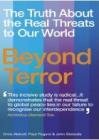
    Beyond Terror: The Truth About the Real Threats to Our World

    Chris Abbott, Paul Rogers and John Sloboda | Rider | April 2007

    Issues:Climate change, Competition over resources, Global militarisation, Marginalisation

    Tag:book

    Many leading military analysts in the United States are increasingly alert to the link between security and climate change. Is international terrorism really the single greatest threat to world security? Read more »

    Climate Wars

    Gwynne Dyer | CBC Radio One | January 2009

    Issue:Climate change

    Tag:podcast

    Global warming is moving much more quickly than scientists thought it would. Even if the biggest current and prospective emitters – the United States, China and India – were to slam on the brakes today, the earth would continue to heat up for decades. Read more »

    Tigers and Dragons: Sustainable Security in Asia and Australasia

    Chris Abbott and Sophie Marsden | Oxford Research Group | November 2008

    Issues:Climate change, Global militarisation

    Tag:report

    Asia is a region in transition, and transition creates uncertainty. The political, economic and societal landscape is shifting, with major new powers emerging and smaller states attempting to protect their interests in this changing dynamic. At the same time, climate change and the other long-term emerging threats to security will require regional responses and thus a degree of regional unity. Read more »

  • Beyond Terror: The Truth About the Real Threats to Our World

    Beyond Terror: The Truth About the Real Threats to Our World

    Chris Abbott, Paul Rogers and John Sloboda | Rider | April 2007

    Issues:Climate change, Competition over resources, Global militarisation, Marginalisation

    Tag:book

    Many leading military analysts in the United States are increasingly alert to the link between security and climate change. Is international terrorism really the single greatest threat to world security?

    Since the 9/11 attacks, many Western governments assume terrorism to be the greatest threat we face. In response, their dangerous policies attempt to maintain control and keep the status quo by using overwhelming military force. This important book shows why this approach has been such a failure, and how it distracts us from other, much greater, threats:

    • Climate change
    • Competition over resources
    • Marginalisation of the majority world
    • Global militarisation

    Unless urgent, coordinated action is taken in the next 5-10 years on all these issues it will be almost impossible to avoid the earth becoming a highly unstable place by the middle years of this century. Beyond Terror offers an alternative path for politicians, journalists and concerned citizens alike.

    For more information or to buy the book please click here. 

  • Sustainable Security

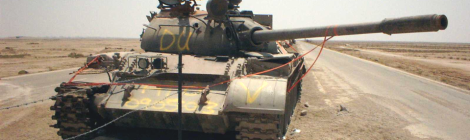
    DU-turn? The changing political environment around toxic munitions

    Is the US backpedalling on its use of depleted uranium (DU) rounds? There are indications that the use of these highly toxic munitions could increasingly be a political liability for the US, with countries affected by DU, like Iraq, other UN Member States, and populations in contaminated areas all expressing concerns over its use and impact. But stigmatisation, although important, is not enough on its own – in order to make sustained progress on accountability and in reducing civilian harm, a broader framework that addresses all toxic remnants of war is needed.

    Read Article →

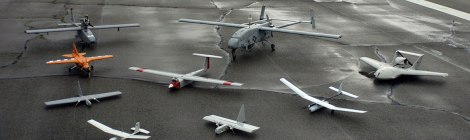
    Drone-tocracy? Mapping the proliferation of unmanned systems

    While the US and its allies have had a monopoly on drone technology until recently, the uptake of military and civilian drones by a much wider range of state and non-state actors shows that this playing field is quickly levelling. Current international agreements on arms control and use lack efficacy in responding to the legal, ethical, strategic and political problems with military drone proliferation. The huge expansion of this technology must push the international community to adopt strong norms on the use of drones on the battlefield.

    Read Article →

  • Sustainable Security

    This interview was conducted by the Remote Control project. 

    Sascha Dov Bachmann, Assessor Jur, LLM (Stel) LLD (UJ), is an Associate Professor in International Law (Bournemouth University, UK), Extraordinary Associate Professor in War Studies (Swedish Defence University, Sweden) and Guest Speaker at NATO School. Outside academics, he served in various capacities as Lieutenant Colonel (German Army Reserve) taking part in peacekeeping missions in operational and advisory capacities. Sascha acted as NATO’s Rule of Law Subject Matter Expert (SME) in NATO’s Hybrid Threat Experiment of 2011 and in related workshops at NATO and national level. He would like to thank Brigadier (Rtd) Anthony Paphiti, former ALS officer, for his insightful comments and discussions.

    In this interview, Dr. Bachmann discusses hybrid warfare, its use in Ukraine and Crimea by Russia, and whether NATO is adequately prepared to formulate effective responses to this method of warfare.


    Q. What is ‘hybrid warfare’?

    Hybrid warfare as a warfare concept is not new among those practising the art of war. However, contemporary events lead us to argue that today’s hybrid warfare “has the potential to transform the strategic calculations of potential belligerents [because it has become] increasingly sophisticated and deadly”.

    Hybrid war is a concept that has emerged shortly after the end of the Cold War and sums up the complexities of modern warfare, which go beyond conventional military tactics, often involving cyberwarfare, propaganda and a fluid, non-state adversary.

    The concept of hybrid warfare has been discussed by (mostly US) military writers since the beginning of the 21st century and its recognition as a theory in formal military doctrinal thinking is still not settled. Hybrid warfare may use elements from four existing methods and categories of full spectrum warfare, namely:

    • conventional warfare;
    • irregular warfare (such as terrorism and counter-insurgency);
    • related asymmetric warfare (unconventional warfare such partisan warfare);
    • and compound warfare (where irregular forces are used simultaneously against an opponent while being employed by state actors to augment their otherwise conventional warfare approach).

    Hybrid warfare builds on existing doctrinal elements and adds the following: evolving war-fighting capacities in the fifth dimension such as “cyber-warfare”; and activities in the so- called information sphere.

    Q. Who were the first actors to utilize hybrid warfare and why?

    According to Hoffman’s seminal work “Conflict in the 21st Century: The Rise of Hybrid Wars”, it was Hezbollah in its 2006 war with the IDF. Here, a non-state actor (NSA) did utilise war fighting capabilities normally not used by non-state actors such as blending conventional warfighting on the ground and activities in the information sphere. Other examples are Islamic State/Daesh which show a blend of capabilities which blur the line of traditional warfighting: such as the use of suicide bombers, improvised explosive devices, and the use of ‘ground troops’ in a conventional manoeuvre context augmented by strong propaganda/information sphere activities.

    Why: because these capabilities are available. Hezbollah (and IS) had and has a substantial potential of rockets/military hardware and is aptly using the possibilities available through social media in the information sphere unknown before. Both non-state actors are also utilising the opportunities of informing public opinion in the West thanks to a growing Muslim population in the West who have cultural and lingual access/connection to these conflicts/the nature of the conflict.

    Q. Is hybrid warfare something that states have used?

    Russia has used hybrid warfare.

    How:

    In a Keynote speech at the opening of the NATO Transformation Seminar on 25 March 2015, NATO Secretary General Jens Stoltenberg remarked:

    “Russia has used proxy soldiers, unmarked Special Forces, intimidation and propaganda, all to lay a thick fog of confusion; to obscure its true purpose in Ukraine; and to attempt deniability.  So NATO must be ready to deal with every aspect of this new reality from wherever it comes. And that means we must look closely at how we prepare for; deter; and if necessary defend against hybrid warfare.”

    Michael Kofman and Matthew Rojansky described Russia’s 2010 Military Doctrine of modern warfare:

    “…… as entailing “the integrated  utilization of military force and forces and resources of a non-military character,” and, “the prior implementation of measures of information warfare in order to achieve political objectives without the utilization of military force and, subsequently, in the interest of shaping a favourable response from the world community to the utilization of military force.”

    The employment of hybrid methods has been evident from Russia’s activities in Crimea and the Donbas region of Ukraine, with its deployment of “little green men”, namely, soldiers wearing unmarked uniforms that make direct state attribution difficult. According to Mark Galeotti, Professor of Global Affairs at New York University’s Center for Global Affairs:

    “The conflict in Ukraine has demonstrated that Moscow, in a bid to square its regional ambitions with its sharply limited resources, has assiduously and effectively developed a new style of ‘guerrilla geopolitics’ which leverages its capacity for misdirection, bluff, intelligence operations, and targeted violence to maximise its opportunities.”

    While there may be limitations to the way in which these methods were used in Ukraine, the use of non-attributable military personnel provides expert assistance to an enemy and, even if not directly engaged in hostile acts, provides advice and assistance to those who carry out such acts. Nevertheless, the seriousness of the threat posed by such forces should not be under-estimated. General Breedlove, currently Commander, US EUCOM and the Supreme Allied Commander Europe (SACEUR), is reported as saying,

    “if Russia does what it did in Crimea to a NATO state, it would be considered an act of war against the alliance.”

    In Ukraine, Russia employed a hybrid strategy by combining irregular warfare and cyber warfare to achieve its strategic objectives. Reuben F Johnson, writing in IHS Jane’s Defence Weekly, on 26 February 2015, considered that “Russia’s hybrid war in Ukraine ‘is working’.” They had combined a substantial ground force of 14,400 Russian troops supported by tanks and armoured fighting vehicles, backing up the 29,300 illegally armed formations of separatists in eastern Ukraine.

    Q. Does hybrid warfare hold military advantages for states over conventional warfare?

    Russia is winning the hybrid war in Ukraine: it has successfully annexed Crimea, and effectively turned Ukraine into a state on the brink of wider failure. In the process, Russia has successfully divided Western countries on how to respond to this act of aggression. Russia also successfully reactivated its Cold War disinformation mechanisms, successfully blurring reality and fiction for global observers. Russia has uncovered the West’s inability to find a common policy to respond to the unfolding events in Ukraine.

    Q. How does hybrid warfare relate to international law? Is this way of waging war covered in current international legal paradigms?

    Generally speaking, hybrid warfare does not change the international legal paradigms such as Article 2(4), 51 UN Charter and in the context of NATO, Article V of the NATO Treaty. Whether any form of hybrid attack, alone or cumulatively, amounts to a use of force and, if so, reaches the threshold of an “armed attack” to justify a military response under Article 51 – and what form that response would take – are very difficult questions to answer. They are situation/fact specific. Moreover, attribution may be problematic. In addition, hybrid warfare – with its possible elements of cyber, terrorism, asymmetric warfare etc. – might not reach the threshold of such an attack and hence allow affected states to ‘deny’ the existence of such warfare in order to continue with their diplomatic relations, trade  etc with the ‘aggressor’ state. Such behaviour might undermine existing alliances and weaken international comity.

    Q. How prepared, or perhaps unprepared, are NATO for formulating effective responses to hybrid warfare?

    NATO is in my opinion well prepared to formulate effective responses given its substantial work undertaken in the context of hybrid threats. NATO recognized as early as 2010 hybrid threats were a new security risk and designed a new NATO Bi-Strategic Command Capstone Concept, describing hybrid threats as emanating from an adversary who combines both conventional and unconventional – military methods to achieve its goals.

    In the two years following 2010, NATO drew up a specific threat catalogue, which identifies security-specific risks beyond conventional warfare threats: nuclear proliferation, terrorism, cybercrime and cyber-war, organized crime and its role in drugs, arms and human trafficking, migration, ethnic and religious conflicts, population conflicts due to resource scarcity and globalization.

    NATO recognized that these may amount to a concrete threat to the alliance or that it could be authorized by the United Nations, because of their capacity, to intervene. Recognizing this, NATO worked on a related global approach (Comprehensive Approach) in order to counter these risks. This approach envisaged involving state and non-state actors in a comprehensive defence strategy that combines political, diplomatic, economic, military technical and scientific initiatives. Despite intensive work on this approach as part of a “Countering Hybrid Threats” experiment in 2011, the NATO project work in 2012 had to stop due to lack of support from their members. (From our submission to the UK DC)

    Given this existing framework/ capstone on how to respond to hybrid threats and the inter-related nature of hybrid threats and warfare, I would like to argue with some confidence that NATO has the capability to formulate an effective doctrinal approach, notwithstanding the initial discontinuation of the work on the hybrid threat concept.

    Q. Do you think that hybrid warfare will be the main method of waging war in the future and how do you see the use of this form of warfare evolving?

    Hybrid warfare with its various forms such as cyber-attacks, the use and abuse of the information sphere, the use of a holistic mix of conventional and irregular warfare, the exploitation of country specific vulnerabilities, law fare etc, is here to stay due to its obvious benefits to the using power/state/actor: deniability and the possibility of staying under the threshold of an armed attack which would in a likeliness trigger a military/kinetic response. I am convinced that the elements of hybrid warfare will evolve further and will eventually be used by state and non-state actors alike. Whether the overall term “hybrid warfare” for such multi-modal forms of warfare/threats is to stay we will see. Hybrid war’s impact on international law and comity is significant and it will question some of our established doctrines/concepts.

  • New Research Highlights the Role of Climate Change as a Threat Multiplier in Fragile Regions

    New Research Highlights the Role of Climate Change as a Threat Multiplier in Fragile Regions

    Theresa Polk | New Security Beat | January 2012

    Issue:Climate change

    The role of climate change in exacerbating conflict situations has been confirmed by various recent studies, as reported by Theresa Polk at New Security Beat. Studies include research into the effects of the short-term weather systems El Niño and La Niña, which have shown to increase the risk of conflict in troubled areas such as Somalia. The first conclusion to draw from these studies is that climate change acts as a threat -multiplier in places that are already affected by issues such as poor governance or ethnic division; conversely, countries and regions that do have effective conflict-prevention mechanisms are generally able to withstand the extra stresses caused by climate change. The second conclusion is that there is no one-size-fits-all policy that can be applied to different communities coping with climate change and conflict risk, thereby showing the need for further context-specific research.


    New Research on Climate and Conflict Links Shows Challenges for the Field

    “We know that there will be more conflicts in the future as a result of climate change than there would have been in a hypothetic world without climate change,” said Marc Levy, deputy director of the Center for International Earth Science Information Network (CIESIN) at Columbia University’s Earth Institute, although existing data and methodologies cannot predict how many additional conflicts there will be, or which causal factors will matter most.

    Levy spoke at a December 19 panel at the Wilson Center on new research on the linkages between climate change and conflict. He was joined by Joseph Hewitt, technical team leader for USAID’s Office of Conflict Management and Mitigation; Joshua Busby, assistant professor at the Lyndon B. Johnson School of Public Affairs, University of Texas at Austin; and Solomon Hsiang, postdoctoral research associate at Princeton University’s Woodrow Wilson School of Public and International Affairs.

    Linking El Niño to Civil Conflict

    Princeton University’s Solomon Hsiang recently co-authored a study published in Nature that used statistical analysis to link observable changes in the global climate to conflict outcomes on the ground. The researchers looked at countries strongly impacted by the El Niño/Southern Oscillation and compared the onset of civil conflict in those countries during El Niño, relative to the La Niña state.

    “[El Niño] is the single dominant pattern of the entire planet’s climate on annual timescales,” said Hsiang. “So what is convenient here from a statistical standpoint is that the climate is going back and forth very rapidly…so there haven’t been major socio-political changes over that time horizon.”

    The study found that conflict risk for a given region doubled during the hotter and drier El Niño state, from an average of around three percent to six percent. “You can make a variety of different assumptions about what kind of statistical model you are using and you generally always get the same estimate,” said Hsiang. “The correlation between the global climate and conflict seems to be very, very robust to a variety of choices…It’s one of the most robust results I have seen in any of the statistical literature.”

    Nevertheless, “our study doesn’t say anything about why El Niño might be linked to conflict,” Hsiang clarified. “We are just showing an association. Climate is not the only thing driving conflict in these countries…it exacerbates an existing problem.”

    Identifying Chronic Vulnerability in Africa

    Working at the University of Texas at Austin, Josh Busby presented the Climate Change and African Political Stability program, a composite index mapping climate security vulnerability in a region with rising strategic significance and low adaptive capacity. The index incorporates not only physical exposure but also demographic, socio-economic, and political indicators.

    “We focus on situations where large numbers of people could be exposed to mass death from climate-related hazards,” said Busby. He identified southern Somalia, South Sudan, and much of the Democratic Republic of the Congo as among the most vulnerable regions, relative to the rest of Africa.

    These areas might not necessarily appear as the most vulnerable from a strictly climatic point of view, Busby said, but the composite analysis brings them into focus. For instance, many factors, including governance and a strong La Niña year, contributed to the famine Somalia experienced this year. Although the precise role of climate change is unclear, from a chronic vulnerability perspective, southern Somalia remains an area of concern, he said.

    Understanding Pre-Existing Conditions in Vulnerable States

    The Office of Conflict Management and Mitigation at USAID has commissioned research looking at the relationship between countries that are conflict affected, countries that are fragile, and countries that are highly vulnerable to climate threats, said Hewitt: “We wanted to better understand which countries are likely not to have the capacity, or likely not to have the ability, to manage the stresses and strains of climate threat.”

    “[Fragile states] are already characterized by many, many different challenges that contribute to causes of conflict, just aside from climate change itself,” Hewitt pointed out. “Any understanding of the relationship between climate change and conflict needs to understand how climate change is in some sense filtered through all of these existing characteristics.”

    On the other hand, many countries identified as highly vulnerable to climate change are not necessarily considered fragile. Despite the predicted changes in climate for these places, they have sources of conflict mitigation and resilience that will likely be able to handle the strains posed by climate change, Hewitt said. “We really want to try and understand what is happening in these countries. How are those countries positioned to confront those stresses, identify coping strategies, and adapt?”

    “Any programming that is done to address the consequences of climate threats needs to be attentive to the connections between the program and any pre-existing characteristics that either mitigate conflict or in some sense make the society more vulnerable to conflict” said Hewitt.

    Projecting Into the Future

    Columbia University’s Marc Levy noted that a strong case for linking climate stress to increased risk of conflict can be made by better explaining the causal chain that leads from environmental change to societal stress. According to the 4th IPCC Assessment, climate change will increase stress on a number of biophysical processes and systems relevant to human societies, such as agriculture, water, ecosystems, and disease. A body of research shows that these natural stresses make societies more vulnerable, consequently increasing their risk of conflict.

    Nevertheless, these conclusions are limited by data, according to Levy. Referencing Hsiang et al.’s study, he noted that “there are very few other things that you could measure in a large-end statistical global time series test than inter-annual variability and civil war.” And, importantly, climate change will alter the conditions that the study focused on. “By focusing on variability we know what happens to societies when you get variations around a mean, but we have almost no basis for figuring out what happens when the mean changes,” he said.

    “I think we need to firm up our knowledge base by looking more explicitly at how these things operate in high-risk countries. And perhaps start thinking about some customized approaches that might be relevant in high conflict risk countries that wouldn’t necessarily be on the radar outside of those countries,” Levy concluded.


    Article Source: New Security Beat

    Image Source:CMagdalin


    Comments

    Post new comment


  • Climate change

    Climate change

    Climate change is high on both domestic and international political agendas as countries face up to the huge environmental challenges the world now faces. Whilst this attention is welcome, less energy is being focused on the inevitable impact climate change will have on security issues. The well-documented physical effects of climate change will have knock-on socio-economic impacts, such as loss of infrastructure, resource scarcity and the mass displacement of peoples. These in turn could produce serious security consequences that will present new challenges to governments trying to maintain stability.

    Climate Change and Migration: An Asian Perspective

    Bart W. Édes, François Gemenne, Jonathan Hill and Diana Reckian | Asian Development Bank | April 2012

    Issue:Climate change

    The Asian Development Bank has recently published a report on the effects of climate change on migration in and from the continent. Although migration need not necessarily be a security concern, people can be propelled to move for reasons of personal safety, such as extreme weather events, or livelihood insecurity caused by long-term land degradation or river salination. This report provides a useful perspective on climate change, representing the conclusions drawn by an organisation based the region most likely to suffer the harshest consequences. To read the full report, click here.

    Image Source: Amirjina

    Read more »

    Debate Over the Relationship Between Climate Change and Security

    Katie Harris, with a reponse by Francesco Femia and Caitlin Werrell | AlertNet | February 2012

    Issue:Climate change

    Two articles recently posted on the AlertNet Climate Conversations blog have highlighted a new framework for debating the issue of climate change. That it is a critically important issue is accepted, yet argument is now focused on the degree to which climate change is not only designated a key driver of conflict, but to what extent climate change and its impact should be defined through a security lens at all. Katie Harris of the Overseas Development Institute suggests that while the security narrative of climate change may have caught the attention of the political and security classes, it has the dangerous potential to undermine both the theoretical understanding of the complex factors underlying conflict, and any practical attempts to promote cooperation over resources in conflict-sensitive regions such as the Levant.

    Francesco Femia and Caitlin Werrell from the Center for Climate and Security broadly agree with Harris’ call for a nuanced approach to climate change and conflict, but take issue with the concept of a ‘climate-security narrative’ that interferes with specific cases of conflict-analysis. Rather than overwhelming this analysis, Femia and Werrell defend not only the sophistication of recent research into the relationship between climate change and conflict, but also its emphasis on the role of climate change as one conflict variable among many.

    Read more »

    Reinventing Energy Futures

    Institute for the Future | Four Visions Map | February 2012

    Issues:Climate change, Competition over resources

    Over the next few decades, the increasing demand for resources and the pressures of climate change are going to force some rapid and potentially difficult decisions on the role of energy in the global economy. A useful exercise has been undertaken by the Institute for the Future in terms of exploring a number of scenarious that could come to characterise our political, social and economic systems depending on the energy choices we make today.

    Image source: Ulleskelf. 

    Read more »

    New Research Highlights the Role of Climate Change as a Threat Multiplier in Fragile Regions

    Theresa Polk | New Security Beat | January 2012

    Issue:Climate change

    The role of climate change in exacerbating conflict situations has been confirmed by various recent studies, as reported by Theresa Polk at New Security Beat. Studies include research into the effects of the short-term weather systems El Niño and La Niña, which have shown to increase the risk of conflict in troubled areas such as Somalia. The first conclusion to draw from these studies is that climate change acts as a threat -multiplier in places that are already affected by issues such as poor governance or ethnic division; conversely, countries and regions that do have effective conflict-prevention mechanisms are generally able to withstand the extra stresses caused by climate change. The second conclusion is that there is no one-size-fits-all policy that can be applied to different communities coping with climate change and conflict risk, thereby showing the need for further context-specific research.

    Article Source: New Security Beat

    Image Source: CMagdalin

    Read more »

    A tale of two cities: Durban and Brussels

    Camilla Toulmin | International Institute for Environment and Development | December 2011

    Issue:Climate change

    The UN climate change negotiations in Durban began under a cloud of low expectations, which have been partly dispelled by the last-minute agreement to extend the legally-binding Kyoto Protocol on greenhouse gas emissions. And while Canada, a major emitter, has pulled out of the Protocol, a new environmental divide has emerged that contrasts with the traditional paradigm of developed versus developing countries: the new faultline pits the United States, Canada, China and India, who oppose legal limits for a variety of economic reasons, against the European Union, African, Latin American and island states who favour binding measures – often for reasons of national survival.

    In an article by Camilla Toulmin, the Director of the International Institute for Environment and Development, the contrast is made between the dynamics that have driven both the climate talks in Durban and the debate on European financial regulation that ended with a British veto.

    Article Source: International Institute for Environment and Development
    Image Source: European Parliament

    Read more »

    Climate Change and Glacial Lake Outburst Floods

    Kate Diamond | New Security Beat | November 2011

    Issue:Climate change

    The Woodrow Wilson International Center for Scholars has published an article highlighting the uncertainty attached to predicting the effects of climate change. Focusing on the phenomena of glacial lakes in Nepal and Peru, it begins to explore the extreme complexity that characterises the relationship between climate change and other drivers of instability, as well as what is required to manage the risk with the help of local communities.

    Article Source: New Security Beat

    Image Source: Oxfam International

    Read more »

  • Sustainable Security

  • Sustainable Security

    Sustainablesecurity.org is a project of the Sustainable Security Programme at Oxford Research Group (ORG). ORG, which is now based in two offices in London, is one of the UK’s leading of advocates for alternatives to global conflict. By combining in-depth political and technical expertise and experience in promoting serious analysis, dialogue and change, we develop alternative thinking on security issues.

    With 30 years of building trust between policy-makers, military and civil society and academics,  ORG works to address the toughest security questions using detailed research and drawing on deep understanding of how human beings behave. Our consultants combine detailed knowledge of global security issues together with a deep understanding of political decision-making, and many years of expertise in facilitating constructive dialogue.

    ORG is a registered charity, and a public company limited by guarantee under English law. It was first established in 1982 by Dr. Scilla Elworthy.  ORG, and its founder, was awarded the Niwano Peace Prize in 2003. The Independent newspaper named ORG as one of the top 20 think-tanks in the UK in 2005.

    The Sustainable Security Programme

    The programme aims to develop the sustainable security concept and promote it to a wide international audience, ensure that voices from the global South play a central role in its development, and define specific options for sustainable security policies. These aims are achieved via in-depth research, dialogues with analysts and decision makers and providing new avenues for creative thinking and discussion on the real threats to global security in the 21st century.

    For more information, please click HERE

  • Sustainable Security

    The significant imbalances in the distribution of aid between different geographical areas in the current Syrian war threaten not only the immediate survival of civilians, but also the future prospects for peace.

    The Syrian crisis counts among the direst of our times, and never has there been a humanitarian emergency reaching comparable volumes of assistance. Formerly a relatively prosperous middle income country of about 21 million people, more than five years of war have plunged Syria into staggering poverty. Having lost their livelihoods, 13.5 million people are dependent on humanitarian aid.

    Irrespective of International Humanitarian Law (IHL), belligerents have targeted residential areas and vital infrastructure such as water and electricity supplies, as well as medical facilities. In a desperate effort to survive, half the country’s population have been forced to leave their homes, not knowing whether they will ever be able to return. Of these, 4.8 million have crossed the borders as refugees, while a further 6.1 million people remain uprooted within the country.

    While humanitarian assistance such as food and water, shelter, and medical aid are indispensable, it is deeply problematic that the distribution of aid in different areas in the country is highly uneven. Needs are estimated to be greatest in territory controlled by opposition forces – yet it is here that least aid is being delivered. In 2015, for example, only 27% of World Health Organisation administered medical aid reached opposition areas, as did the same share of food aid delivered by the World Food Programme only last month. Under the umbrella of the UN, both are the biggest humanitarian actors in their fields. Why are these imbalances occurring, and why are they critical for future peace negotiations and reconstruction?

    The Syrian war

    In Syria, the multitude of armed groups, estimated to number several hundred, complicates the distribution of aid as much as the fact that the country is now engulfed in not one, but two wars. Since 2011, civilians have been caught up in the original conflict between the regime and opposition groups seeking a change of government. But another battle is being fought between these opposition groups and Daesh, which proclaimed the establishment of their so-called Islamic State in July 2014. In areas controlled by the latter, the US-led international alliance is attacking Daesh positions across Syria and Iraq, while the Syrian and Russian air forces target other opposition-held areas.

    Given that the presence of armed groups, their alliances and infighting differ significantly at the local level, humanitarian actors are thus operating in a highly fragmented terrain that requires often daily negotiations and re-evaluation of safety concerns for their own staff.

    An aid system controlled by the government
    eu-aid

    Image credit: IOM Iraq/Flickr.

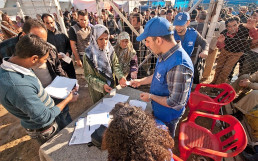
    To some extent, aid imbalances occur in war zones anywhere in the world. Generally, humanitarian aid can only be delivered when belligerents grant aid organisations permission to access people in need and guarantee for the security of their staff. Syria is exceptional, however, in the severity and persistence of aid imbalances. Although belligerents on all sides have interfered with aid deliveries, the Syrian government still controls about half the Syrian territory, thus presenting the single largest threat to impartial aid. By claiming to uphold Syrian sovereignty, it has quietly retained tight control over the aid system in place.

    Only 17 INGOs are permitted to operate in designated areas of the country with limited reach, and their choice of local partners is limited to NGOs licensed by the government. Even after more than five years, the UN are still not allowed to carry out needs assessments in the country independently of the government, and they have remained obliged to issue the annual Syrian Humanitarian Response Plan (SHARP) – which is the basis for planning and monitoring the response each year – jointly with them. Even if convoys are approved for deliveries into opposition areas through rapidly changing bureaucratic procedures which can stretch over months, they are regularly stripped of surgical equipment and even delivery kits at government checkpoints.

    Contravening the Hippocratic Oath and IHL, anti-terrorism legislation has rendered the medical treatment of anyone associated with the opposition a crime since June 2012. Intimidation, arrests and killings of medical staff, such as ambulance drivers, doctors and nurses were common at the beginning of the war, while medical facilities including hospitals, blood banks and coordination centres are regularly being subjected to targeted attacks.

    Horrifying accounts have emerged from those trapped in such conditions, such as in Eastern Aleppo, where the remaining population was evacuated over the past week after years of heavy assault. By designating all opposition-held areas as being controlled by “terrorists” – an expression which is by no means limited to Daesh – the regime has portrayed the populations in these territories as undeserving of aid. In so doing, it puts the lives of millions in need at risk.

    Fear of losing access

    Although the UN have long denounced the blockade of aid to opposition areas as an illicit  war tactic, they have continued to compromise for fear of losing access, which is becoming more and more restricted. Today, 5.47 million live in hard-to-reach areas and 861,200 are trapped in areas under siege in Syria alone. Although, again, it is not only the government conducting sieges, 15 out of 18 areas are currently besieged by its armed forces. Sieges seek to enforce surrender – just as as Darayya did after 2.5 years without aid to civilians. Where humanitarian aid does reach opposition areas, airstrikes by Syrian and Russian government forces destroy residential neighborhoods and carry out targeted strikes on medical facilities, leaving not only wounded fighters, but also civilians without resort.

    Conversely, not only has the government ensured that the vast majority of aid is channeled towards areas under its own control, but it has also used its leverage to strengthen its economy. Citing a lack of alternatives, the UN have paid tens of millions of US-dollars to implementing organisations and suppliers owned or run by individuals associated with the government who are under EU sanctions. These are not legally binding for the UN – yet current practice render them devoid of meaning. All these measures are without consequences for the government.

    A parallel system: the unofficial humanitarian response

    While opposition areas are systemically being deprived of direly needed humanitarian aid, an unofficial response has quietly emerged in parallel to the UN-led response which is co-ordinated with the government through SHARP. Early in the conflict, hundreds of local NGOs and expat-founded NGOs abroad sought to fill the gap the UN-led response left in opposition-held territory. From the conflict’s onset, the government refused to licence local NGOs in these areas, knowing full well that these are indispensable partners for major INGOs, most of whom had no prior experience of working in the country.

    While it is impossible to establish the actual financial volume of the unofficial deliveries, which are not accounted for in the annual SHARPs, they are highly unlikely to reach levels anywhere near that of the official UN-led response. Although Médecins Sans Frontières (Doctors without Borders) warned that since the beginning of the war that opposition-areas were being strongly disadvantaged in life-saving aid, it took three years until UN resolution 2156 was implemented, which allowed for additional cross-border deliveries mainly from Turkey – with deeply insufficient results, as present figures show. If local NGOs are permitted to work with the official response at all, strict monitoring processes are put in place on money spent, and rightly so. In the view of some, however, the recent revelations on UN-suppliers render these requirements into a farce.

    Why do belligerents seek to control aid?

    Where belligerents can ensure access to aid in areas under their own control, a resemblance of normality can be maintained in which former state services are being replaced by external assistance. Before the war, the Syrian government implemented socialist-inspired welfare programmes over the course of decades, including needs assessments, which aimed to maintain political consent even within a highly repressive dictatorship. It is now drawing on humanitarian aid as a substitute. In a similarly systemic manner, Daesh have sought to control humanitarian actors, of which only very few are managing to uphold access and operational independence. In areas controlled by Kurdish forces and different groups affiliated with the Free Syrian Army, aid deliveries are often facilitated and coordinated by the Local People’s Committees or Local Administrative Councils, respectively.

    While these are often credited for their efficiency, they are nonetheless political bodies who should not seek to monopolise aid deliveries for political gain. Belligerents seek to portray access to aid as a testimony to their ability to fulfill basic needs and protect survival. Where they manage to secure regular access to aid, the result is an order which is functional and might appear as either a continuation of the previous status quo or as a credible alternative to the latter. It is that perception which, by blocking aid deliveries to populations in territories under the control of the enemy, is sought to be destroyed with the aim of undermining their respective quest for legitimacy.

    The dangers of Syria’s aid imbalances

    Aid imbalances are dangerous not only because they raise the question as to who is most disadvantaged in receiving aid, but also because other wars have shown that access to social services and aid influence the directions in which people move. Demographic changes are a decisive factor in the outcome of war. From the viewpoint of belligerents, deserted neighborhoods are more difficult to defend because they lower the morale amongst fighters. For civilians, aid imbalances which privilege areas under the control of a given warring party over others deepen existing divides. Populations in areas less reached – especially if imbalances occur over long periods of time – will be physically and mentally weaker, exposed to poorer living conditions, and with comparatively fewer options to reach out for assistance. Violence, and in the Syrian case aerial bombardments in particular, prompt populations to flee; access to life-saving resources influence where they seek refuge.

    In Syria, data on population movements within the country are still scarce, but the key question is whether those who cannot afford to leave the country are drawn from opposition- into government-held areas out of sheer need. If so, the international aid system threatens to not only enhance social fragmentation, but also further depopulation. In a country where a third of the population has been forced to flee, how will peace negotiations allow for their voices to be heard? For those who remain in the country, in which areas are residents still strong enough to engage, where do factories and business remain functioning that can stem the unfathomable project of future reconstruction, and how will the divides that have been deepening for so long now be bridged?

    Future outlook

    With every day passing, the aid delivered contributes to shaping the conditions under which peace will be concluded and reconstruction will begin. Aid imbalances are no new phenomenon, but the scale at which opposition-held areas are being disadvantaged in the Syrian case is. The present war has plunged organisations in the official response into a most severe crisis.

    In an unprecedented decision, 73 local NGOs declared stopping all collaboration with the UN in October this year in protest against their perceived partiality. It has long been argued that in line with IHL, humanitarian aid must be carried out independently and it must be neutral and impartial in intent, but it is inevitably political in effect. In the Syrian war, however, humanitarian aid has become politicised to the point that it may severely impact on the outcome of the war.

    The idea that delivering some aid is better than no aid at all thus represents a dangerous approach. Although slow progress has been made in raising awareness of government interference over the course of this year, the struggles of the unofficial response in opposition areas in particular remain underestimated and underreported. With added pressures resulting from chronic shortages of funding, humanitarian organisations on all sides are caught up in having to reach as many recipients as possible – regardless of where they are located – to meet donor expectations. As a result, there is little room for self-critical reflection, and internal divides on the present responses remain largely invisible for the public.

    In contrast to these trends, concrete measures to counter present imbalances are urgently required. These could mean greater numbers of aid drops — similar to those recently resumed in Dayr al-Zur — in areas under siege, hard-to-reach areas, and others where ground access cannot be secured. They also require a coherent approach which does not tolerate interference by any warring party – including the government. For cases where belligerents insist on unacceptable compromises, protocols are needed which allow for humanitarian deliveries to be stopped as result.

    If it comes to a point where these measures are being taken, it must be clear that responsibility does not lie with the humanitarian system, but the warring party refusing to abide by the very principles on which humanitarian aid  is based. Addressing these challenges remains an indispensable condition for ensuring even and fair access to humanitarian aid for those in dire need now, and for their prospects of living in the country in the future.

    Dr. Esther Meininghaus is a Senior Researcher at the Bonn International Center for Conversion.