Blog

  • Sustainable Security

  • Sustainable Security

  • Marginalisation of the majority world

    Marginalisation of the majority world

    A complex interplay of discrimination, global poverty, inequality and deepening socio-economic divisions, together make for key elements of global insecurity. While overall global wealth has increased, the benefits of this economic growth have not been equally shared. The rich-poor divide is actually growing, with a very heavy concentration of growth in relatively few parts of the world, and poverty getting much worse in many other regions. The ‘majority world’ of Asia, Africa and Latin America feel the strongest effects of marginalisation as a result of global elites, concentrated in North America and Europe, striving to maintain political, cultural, economic and military global dominance.

    The New Insecurity in a Globalized World

    Elizabeth Wilke | SustainableSecurity.org | September 2012

    Issues:Global militarisation, Marginalisation

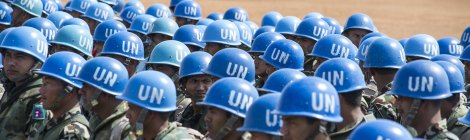
    Writing for SustainableSsecurity.org, Elizabeth Wilke argues that a new conceptualization of insecurity and instability is needed in a world with greater and freer movement of goods, services and people – both legal and illicit – greater demands on weakening governments and the internationalization of local conflicts. The new insecurity is fundamentally derived from the responses of people and groups to greater uncertainty in an increasingly volatile world. Governments, and increasingly other actors need to recognize this in order to promote sustained stability in the long-term, locally and internationally.

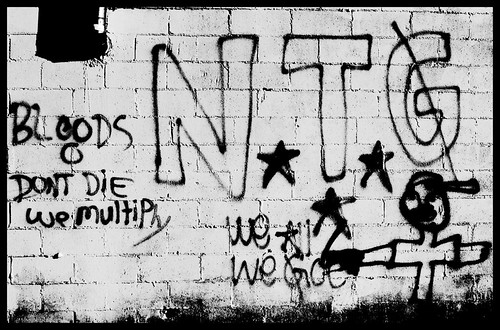
    Image source: bass_nroll

    Read more »

    Causes of Conflict: A Strategic Perspective on US–Sino Relations in the Caribbean

    Serena Joseph-Harris | Exclusively written for sustainablesecurity.org | August 2012

    Issues:Global militarisation, Marginalisation

    Author and former High Commissioner of Trinidad and Tobago to the Court of St. James, Serena Joseph-Harris writes that China’s increasing regional profile in the Caribbean highlights the challenges now posed to American exceptionalism as Beijing defines its own course in the region. This article focuses on the potential within the Caribbean Basin for the burgeoning proceeds presently derived from increases in the legitimate investment, trade, and commerce emanating from Beijing and Washington to become entwined with illicitly derived funds generated from transnational crime activities, specifically the trafficking of drugs.

    Image source: caribbeanfreephoto

    Read more »

    Moving Beyond Crisis: Survival 2100 and Sustainable Security

    William Rees | Movement for a Just World | June 2012

    Issues:Climate change, Competition over resources, Global militarisation, Marginalisation

    In a piece for the International Movement for a Just World, William Rees maps out a vision for what he calls ‘Survival 2100.’ The goal of such a strategy would be “to engineer the creation of a dynamic, more equitable steady-state economy that can satisfy at least the basic needs of the entire human family within the means of nature.” The alternative, Rees argues is to “succumb to more primitive emotions and survival instincts abetted by cognitive dissonance, collective denial, and global political inertia.”

    Image source: hundrednorth.

    Read more »

    Three Killings: an analysis of the ideologies driving Mohamed Merah, George Zimmerman, and the murderer of Shaima Alawadi

    John Feffer | Foreign Policy in Focus | April 2012

    Issue:Marginalisation

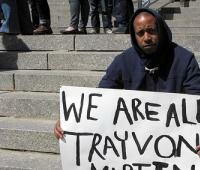
    This article by Foreign Policy in Focus co-director John Feffer powerfully explores three recent and geographically diverse killings in the context of marginalisation. Feffer links the fatal beating of an Iraqi-born American woman in California, the shooting of Trayvon Martin in Florida, and Mohamed Merah’s killing spree in Toulouse to the notion of trespass: “The message behind all three is this: you should not be here, you are not one of us, and your death shall serve as a warning.”

    Merah himself was a member of a minority in France that is still yet to fully realise its place in French society, but that is only part of the context in which he operated: his own sense of trespass came from an intolerant ideology shared with a borderless fringe, dictating that Muslims who join the western ‘enemy’ armed forces (or who simply become too western) put themselves beyond the pale in doing so. As such, the concept of trespass is not merely a question of geography but also incorporates trespass of the mind, which is equally deserving of punishment. Feffer notes that the vast majority of Al-Qaeda’s victims are Muslims, a clear example of self-appointed leaders punishing disloyal or failed members of their own group. Other examples of this conception of trespass include honour killings and the 2011 terrorist attack by Anders Behring Breivik, who believed that Norway had betrayed its Christian European roots and so was motivated to punish the young liberal inheritors of that transgressive philosophy.

    Image Source: Lightgraph

    Read more »

    Peacebuilding IN Europe? An analysis of how European peacebuilding efforts overseas could apply closer to home

    Dan Smith | Dan Smith’s Blog | February 2012

    Issue:Marginalisation

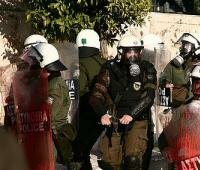
    EU attitudes to peacebuilding have always assumed that it essentially applies to other people, who live outside of the Union’s developed borders. However, since the financial crisis of 2008 and the austerity that followed, the certainties underpinning western models of aid and conflict-resolution have taken a knock from the riots and protest movements shaking cities from Athens to London. While not equating the various reactions and levels of violence across the continent, Dan Smith suggests in both this piece and a follow-up post that EU peacebuilding efforts would be well-directed inwards. In particular, he highlights a growing alienation from professionalised political systems, and how a very small number of actors can cause havoc against a background of marginalisation, both real and perceived. He therefore recommends that we focus our attention on the context against which people act, rather than on the actors themselves, because it is only through ‘mobilising social energy for building peace’ that individuals can find a place in society and disaffection can be tackled at its root cause.

    Article Source: Dan Smith’s Blog

    Image Source: how will i ever


    Read more »

    Marginalisation and Political Violence: Understanding Boko Haram

    Ronan Farrell | Consultancy Africa Intelligence | February 2012

    Issue:Marginalisation

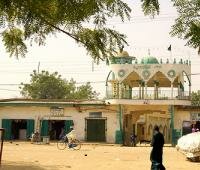
    The Nigerian militant group Boko Haram has become one of the most potent examples of the ways in which underlying structural inequalities can drive political violence. The brutal attacks on 25 December last year are only the latest in a number of violent events linked to the group and fighting has continued over the last two months. Writing for Consultancy Africa Intelligence, Ronan Farrell discusses the emergence of Boko Haram against a backdrop of economic growth in Nigeria (on the back of high oil and gas prices) but extreme inequality.

    Image source: pjotter05. 

    Read more »

  • Climate Change and Security

    Climate Change and Security

    Paul Rogers | Oxford Research Group | December 2010

    Issue:Climate change

    The consequences of climate change for human security are profound, but much of the last decade has been lost in avoiding those consequences. The implications for human security are serious. Today, with the consequences of climate change being increasingly recognised by military analysts, there is a risk of the “securitising” of the climate change agenda leading simply to military responses rather than a more preventative course of a rapid shift to a low-carbon society.

    A World Blowing Cold and Hot

    In 2009-10, the United Kingdom and much of the rest of north-west Europe experienced one of the coldest and most prolonged winters for several decades. In the minds of many people this seemed to confirm the view that the evidence for global warming was limited at best, and that the views of climate change sceptics were to be taken seriously. Furthermore, the winter’s experience came after the Copenhagen climate negotiations made little progress, and was also in the aftermath of a major controversy concerning climate change research at the University of East Anglia in the UK.

    In this context- of suspicion over the reality of climate change – many people in Western Europe found it difficult to believe that the month of January 2010 was actually one of the warmest on record. This was the case when expressed in global rather than European terms – while the north-east Atlantic had been experiencing severe cold, parts of North America had warmer than average winters, and temperatures were high in many other parts of the world.

    As 2010 progressed, two other weather events and one oceanic development added further to a sense of uncertainty. For much of the mid-summer period, Russia experienced exceptionally high temperatures which, in the case of the greater Moscow region, resulted in numerous forest fires leading to smog over the city. At the same time, further south in Central Europe, there was widespread flooding across 8 countries. In addition to this, there were appalling floods in Pakistan as the monsoon season was marked by some of the heaviest rainfall in decades. The full scale of the losses in Pakistan is still not clear.

    Few climate scientists sought to claim that these weather events were direct indicators of climate change, but an indirect connection was certainly suggested. While it may be a common mistake to confuse “short-term weather” with “long-term climate”, it has been widely predicted that as the atmosphere of the entire planet slowly heats up, then weather systems should be expected to become more energetic, leading to extremes of weather events such as intense tropical storms, exceptional monsoons or continental heat waves. The experiences in Russia and Pakistan could be no more than equivalent to some of the extreme events that have been witnessed in the past, but their conjuncture at least reminded many people of other aspects of climate change.

    The final element for 2010 was not a weather event as such, but a report that the Artic Ocean was experiencing one of the most substantial losses of mid-year sea ice on record. What seemed particularly surprising was that this should be happening within a matter of months of such a severe winter in the north-east Atlantic. In fact, the loss of sea ice was within the predictions that climate change models have produced in recent years. The overall impact of the loss of sea ice and the extreme weather experienced in Russia and Pakistan meant that by early September there was a widespread sense, once again, that climate change should be taken seriously.

    Climate Change in Context

    The possible impact of increased carbon dioxide levels in the atmosphere was well recognised over 40 years ago, and by the end of the 1980s there was serious concern that there would be substantial changes in the planet’s climate if carbon emissions were not curbed. Although not directly related to climate change, the potential destruction of the ozone layer through the release of CFC pollutants was recognised in the mid-1980s as being the first clear example of human activity having an impact on the entire global ecosystem. The ozone problem was relatively easy to counter, since CFCs could be replaced, and phasing them out through the Montreal Convention was agreed in 1987. Partly because of the sudden and serious nature of the CFC issue, climate change research was attracting far more attention by 1990.

    At the same time, there was one aspect that limited the extent of the concern. This was that studies of natural climate change in prehistoric times have indicated that most of the impact was in the north and south temperate latitudes. If this was repeated with human-induced climate change then at least the countries most likely to be affected would be wealthy enough to be able to adapt. With the tropics and sub-tropics buffered against excessive impacts, poorer people across the world might have less to contend with.

    By the early 1990s, advances in climate change science showed that the pattern of natural climate change would not be repeated by human-induced change, and that those parts of the world least able to cope would be seriously affected. By the early part of the 2000s, further work was actually showing that there would be an asymmetric impact. In broad terms, large parts of Antarctica, the southern oceans and the southernmost parts of the continental land masses would experience the smallest increases in temperature, whereas the Arctic region and most northern, sub-tropical and tropical land masses would experience above-average increases. There were also indications that rainfall would tend to increase over the oceans and Polar Regions but decrease over the tropical and sub-tropical land masses.

    The implications of this more recent understanding are profound, since those populations and societies least able to cope with the impact of climate change will have to contend with substantial changes. Decreases in crop yields and consequent food availability will be among the factors likely to make societies much more fragile and unstable, one effect being very substantial increases in migratory pressures, with these being strongly resisted by wealthier countries. When seen in combination with the persistent socio-economic divisions that already exist across the world, the potential for serious social unrest and political instability is considerable.

    The Recent Politics of Climate Change

    Among those resisting the implications of climate change have been large trans-national oil companies and oil-exporting countries. The former have funded policy institutes and others to promote critiques of climate change research and the latter have been deeply reluctant to support international protocols limiting carbon emissions. Beyond these forces, which may be powerful and well-funded, a much more serious issue in the first decade of the 21st century was that the world’s largest emitter of carbon, the United States, had an administration in power that was deeply suspicious of climate change. The United States withdrew from the Kyoto Climate Change Protocol within months of George W Bush assuming office in 2001, and throughout the next eight years, the United States played little part in climate change negotiations.

    While this altered with the election of Barack Obama in 2008, by the middle of this year, part of the opposition to his administration was coming from the Tea Party Movement and other right-wing elements in the Republican Party, one feature of their outlook being a deep suspicion of climate change combined with strong opposition to any limits on carbon emissions. November’s mid-term elections to Congress may determine whether these views solidify in Congress, – a major risk, if the Democrats lose control of either house.

    Climate Change and the Military

    We are at a point where a combination of factors, including the attitude of the Obama administration, means that the risks emanating from climate change are being more generally recognised. This coincides with a significant change in attitude among military planners. In military planning units and security think tanks across the western world climate change is now seen as one of the key future drivers of insecurity. It is an outlook that stems partly from a tendency for military analysts to look long-term. Unlike most political and commercial institutions that tend to focus on 4-10 year time spans, military planning is frequently much longer term, to a certain extent because military forces depend partly on the development of systems involving development and procurement processes that stretch over decades.

    Much of the analysis on climate change coming from military sources produces results that coincide with the ideas of radical environmental analysts, pointing to the social and political consequences, the risks of state failure and the rise of radical oppositional movements. However, when it comes to responses, the primary military focus is on maintaining the security of the state, either on its own or in alliance with others. This is to be expected and is legitimate from the perspective of a military organisation – its reason for being is to keep the state secure. Thus, the emphasis may be on increased border security and the patrolling of potential migratory routes, and the intervention capabilities necessary to stabilise failing states and ungoverned space that may be a consequence of the impact of climate change. What this almost never involves, is advocating the primary preventative measure that is required for responding to climate change – a rapid move towards an ultra-low carbon economy.

    The Military Complication

    Discussions with military analysts, including those who are engaging with Oxford Research Group’s Sustainable Security Programme, frequently focus on issues concerning climate change and security. There is sometimes recognition by some in the military that there should be a role for senior military officers in advocating a low carbon transition as part of a process of conflict prevention. The complication is that the loss of a decade at the start of the current century means that there will inevitably be numerous impacts of climate change, even if a low carbon transition can be achieved in the next two decades. From a military perspective it can therefore seem reasonable and legitimate to plan for security consequences. The problem is that this can have the negative effect of providing a political excuse to slow down the rate of transition. If “we”, in a rich country, can maintain our well-being by protecting ourselves from the security impacts of climate change, then engaging in the huge changes involved in a low carbon transition can assume a lesser political priority. This is an attractive proposition for most politicians given the likely electoral unpopularity of the transition.

    The response to this “securitising” of climate change is that some adaptation is undoubtedly going to be required, but that little of this has to do with the military. There will need to be a far greater focus on issues such as improving water management across the tropics and sub-tropics, breeding more drought-tolerant crops, preparing for more severe storms and protecting low-lying regions, but these are not the ultimate answer to climate change. That involves addressing the problem at root – controlling and minimising carbon emissions.

    A substantial element of Oxford Research Group’s Sustainable Security approach is the recognition that conflict prevention is at the root of society’s response to climate change, and that the next five years are crucial in moving towards a more emancipated and environmentally sustainable world. Where there is much work to do is in convincing those in the international security community that it is essential to prevent climate change and that responding to it by protecting elite societies is fundamentally inadequate. It is a huge task but it is at least aided by the manner in which military analysts do have the ability and willingness to think long-term. That is a welcome asset in difficult circumstances.

    Author: Oxford Research Group’s Security Consultant Paul Rogers

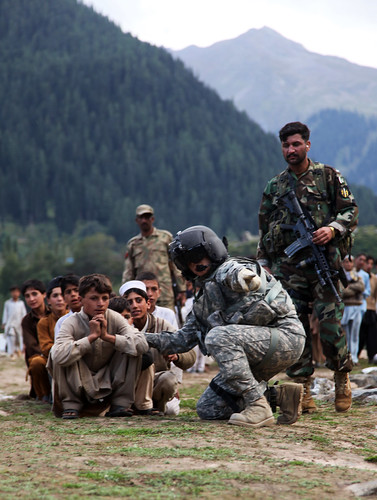
    Image Source: DVIDSHUB

    Comments

    Post new comment


  • The New Insecurity in a Globalized World

    The New Insecurity in a Globalized World

    Elizabeth Wilke | SustainableSecurity.org | September 2012

    Issues:Global militarisation, Marginalisation

    A new conceptualization of insecurity and instability is needed in a world with greater and freer movement of goods, services and people – both legal and illicit – greater demands on weakening governments and the internationalization of local conflicts. The new insecurity is fundamentally derived from the responses of people and groups to greater uncertainty in an increasingly volatile world. Governments, and increasingly other actors need to recognize this in order to promote sustained stability in the long-term, locally and internationally.

    Security of persons and property is absolutely necessary for economic, social, or political development on any large scale; people must have a reasonable belief in their own physical safety and that tomorrow they will be able to capture the fruits of their labor today. This extends not just to people in underdeveloped countries. Insecurity is a global and natural phenomenon – although admittedly undesirable – experienced by all people to varying degrees. The financial crisis has brought a large amount of uncertainty to people in the United States and the European Union about their futures and has seen a surge in political mobilization and social upheaval across the Atlantic. In an age of globalization where borders are more open, people and goods more mobile, which simultaneously facilitates the spread of prosperity as well as risk; i.e., there is greater opportunity for everyone, not just those engaged in legitimate activities. Furthermore, global openness also requires that events in one part of the world are necessarily felt in other parts. We learned this lesson all too well during the financial crises of 1998, and are still learning it after the 2008 crisis.

    Fundamentally, the question is still: how can we make lives and livelihoods better? The question is not restricted to the poor anymore, although the poor generally face much higher levels of risk and insecurity than the wealthy. The question is now focused on the creation and sustainment of secure, stable environments where people can exercise personal authority to improve their own outcomes. The answer is that lives are made qualitatively better when people’s environments are relatively stable, and they have the power to exercise autonomy over them.

    The absolute rise in risk and insecurity resulting from an open, global economic system has reshaped the nature of insecurity in two ways. First, people internalize more risk. The 9/11 attacks and the 2005 London bombings, in addition to news stories of “home-grown” terrorists or uncovered attack plots that came close to being enacted, remind people in the developed world that they are not entirely protected against international threats to their security. Second, the rise in risk creates demand for greater state interventions to curb the proliferation of insecurity. It does this first by placing demands on states by its constituents, and second by other states’ demands that they take action against persons or groups that promote violence or insecurity elsewhere. As demands on the state to provide greater security and stability increase, the ability of the state to establish and maintain sole authority over the use of force is constrained. In many places the state is incapable or unwilling to establish, maintain and consistently deliver a fair and impartial rule of law – i.e., provide a stable environment in which people can go about their daily lives with the reasonable expectation that the integrity of their persons, family, and property will be secure.

    As a side note, the inclusion of the term “unwilling” is deliberate here. Some states are unwilling to undertake necessary measures to establish secure environments, perhaps because they lack the resources, the opportunity cost of those resources is too high, or there is insufficient political will to allocate the necessary resources. In general, establishing authority over a space is a difficult task requiring huge amounts of money, manpower, experience, and a credible commitment to maintain those efforts into the long-term. To illustrate, in 2011 the United States Department of Defense spent an estimate $159 billion USD on operations in Afghanistan, most of these to train police and maintain security. If this number were the GDP for a nation, it would be the 58th largest economy in the world, far ahead of countries like Iraq, Angola, Ethiopia, Sudan, South Sudan, Uruguay, Bolivia, Cote d’Ivoire, Democratic Republic of Congo, Chad, Mali, and many other nations that are being increasingly asked to take on greater roles of governance and responsibility within their own borders. Aside from a lack of resources, states have other agendas and demands on political energy. This has been the case in Rio de Janeiro since the 1960s. The favelas around Rio are mazes of ad hoc buildings and streets built up on hilly terrain – very easy to defend and very difficult to infiltrate for outsiders. That is essentially what the state has become for many in the favelas of Rio – outsiders. In Rio and other cities, poor areas are run by local “informal” authorities” who provide a form of governance in the absence of the state. Donos provide public security, dispute resolution mechanisms, and a clientelistic form of service delivery that acts in part as a substitute for government functions. While there have been actions taken to combat the control of the favelas by narcotrafficking donos, the government of Rio has been, in general, tolerant of their control of these areas even if vocal about their disapproval of the donos.

    That “informal” groups provide some semblance of order is not to say that the lives of everyday people is secure in these areas. They are not. Yet, there are very few places in the world where there is absolutely no form of social control or order – someone is calling the shots practically everywhere. What is ultimately at the heart of growing local and regional insecurity are the dynamics at play between individuals who are seeking to reduce their personal insecurity, groups that promote or engage in illicit and/or violent activity, and states or other sovereign authorities. The social contract is being renegotiated as states compete with other groups for public authority, either because other groups are expanding into spaces formerly occupied or controlled by the state, or because the state is trying to expand into spaces formerly occupied or controlled by other groups.

    This dynamic inevitably creates insecurity for individuals at the micro-level. People come under competing jurisdictions, and have to learn to negotiate blurry lines of authority and safety.  As security increases, the incentive to take sides rises. This happens globally. The aggregation of personal responses to insecurity generates the instability that policy-makers seek to mitigate. When the state cannot provide protection or opportunity, unemployed, disenfranchised young people join street gangs across the globe – Chicago, Mumbai, Johannesburg, Kinshasa. They join organized criminal networks that will offer employment and protection throughout Latin America, Asia, and Africa. They join rebel movements, taking up arms against a state that cannot make credible promises of opportunity, equality, or personal security. They join terrorist groups that can offer them immediate protection, access to resources, and a sense of belonging and identity – a buffer against an uncertain world and a framework for organizing and making sense of one’s environment.

    Moreover, these decisions also have implications for conceptions of personal identity. Personal identity is a fundamental human need. People seek a sense of self, a way of organizing their world and the environments in which they find themselves. Instability necessitates changes in how people view themselves and their place in the world. As group, ethnic, regional, and national identities are redefined in the face of conflict or altered sovereignty, people are forced to renegotiate personal identities to incorporate these changes. In the face of dissonance between how they see themselves and the opportunities they have, people often adapt different identities to reduce this disconnect. This renegotiation comes through practice; as people practice new behaviors, they adopt their new identities. Hence, as people in areas of contested authority or beyond the reach of the state practice informality or criminality, this becomes a part of their identity over time.

    Even for those that are not willing to commit to sides, the insecurity caused by ill-defined or blurry lines of authority within a political, economic or special space leads civilians to hedge their bets against a clear victor and pay tribute to both sides, to the extent that they can. Civilians must learn to talk out of both sides of their mouths, so to speak, to appease one authority without offending the other. This must necessarily weaken the ability of the state to exert authority in contested spaces and confound efforts to establish authority in these spheres.

    The presence of criminal groups absolutely promotes this dynamic. Illicit, violent or other criminal groups have benefitted from the freer movement of goods and services at least as much as those in legitimate business. They have large stores of cash that they can use to buy favors and loyalty, as well as power and weapons to enforce order within their spheres of influence. In some parts of the world, illicit groups are the only groups with public authority – Jamaica, some of Rio’s favelas, most of Sinaloa, Mexico, the shantytowns of Mumbai, Nairobi, and even today, after a huge effort on the part of the Colombian government, parts of Calí and Medellín. These groups benefit from this kind of uncertainty on the part of civilians. They offer employment and an identity to young men, and favors, medication, and even some public services to the community. In return, they receive support – sometimes tacit, sometimes explicit – which builds legitimacy, which translates into authority. The more a non-state group can make state forces appear inept, corrupt, or unwilling to provide basic security to the people, the more people will turn to the group to provide it.

    The result is that, in the course of trying to promote their own personal stability – access to resources, a sense of identity, employment, safety –people either actively engage in activities that promote instability for others, or they acquiesce to a system that sustains insecurity.

    Furthermore, as boundaries become more fluid, formerly local or regional conflict takes on an increasingly international flavor with some unintended consequences.  Global supply chains for illicit goods and services imply an opportunity for many new types of illicit groups to participate. Hence,  the lines between types of violent destabilizing actors, activities, and events are blurry and becoming more so. Local street gangs in Latin American countries are being used by transnational drug-trafficking supply chains to enforce order in their zones of control and move drugs, people and weapons throughout the region. Similar gangs in megacities in India, Africa and Asia are being used like Tammany Hall-style political coercion delivering votes for local bosses. Formerly local gangs in the United States and elsewhere are adopting increasingly organized, hierarchical structures as their focus grows and their range of activities extends from local protection to drugs, prostitution, extortion and weapons trading. Some of them now resemble the top-down tiered structure of organized crime syndicates. Rebel groups use youth gangs in countries from Colombia to Nigeria as mercenary fighters, who then take their skills learned back to their neighborhoods with them. Rebel groups also are becoming less distinguishable from terrorist groups, and vice versa. As well, all of them are becoming indistinct from organized criminal networks and organizations as they turn to the movement and sale of illegitimate goods and services to finance their operations. Paramilitary groups and other violent non-state groups from across the globe convene in the Tri-Border Area of South America to laundery money and trade expertise and illicit goods. The Irish Republican Army (IRA) had well-known ties to the Cartagena and Medellin Cartels in Colombia, as well as the FARC, during the 1990’s. Previous demarcations between types of violence and insecurity as well as their perpetrators no longer apply as neatly as they used to.

    The second consequence is that local, regional, or national crises have spillover effects across borders. There is little true “global” insecurity. Rather, local, national, or regional instabilities have spillover effects that affect people beyond the area where the instability originates. Porous borders, low state capacity, and poorly guarded information can cause leakages of weapons, people, and goods that can decrease security everywhere. Regional conflicts create power vacuums where local, violent terrorist groups can set up operations and perpetrate instability not only in their own areas of operation, but also far-off targeted countries. Intrastate conflicts in Africa directly affect the probability of war in neighboring countries. Drug trafficking and violence in Central America filter through even the heavily guarded US-Mexico border. However, these sources of instability are not, in themselves, global in origin. Rather they are the organizational, and in some cases societal-level, responses to insecurity and instability locally that contribute to global insecurity.
    Third, insecurity breeds insecurity. Insecurity motivates people to take steps to reduce the insecurity to themselves – to exercise, or regain, control over their environment. Sadly, this often manifests itself in competition rather than cooperation, resulting in zero-sum approaches to reducing instability. If groups cannot cooperate effectively to reduce risk, which is often the case where insecurity exists, then one’s actions to reduce one’s own insecurity generates insecurity for others. As a simplified example, a man who burgles a home has generated insecurity for the homeowner even as the sale of the stolen items generates income for him.

    Fourth, unless credible commitments can be made on the part of all groups involved, the third issue cannot be overcome.  In the absence of credible commitments, the actors fall into a classic Prisoner’s Dilemma. None of them can credibly commit to provide security for one another. This can be the case between any combinations of states and non-state groups or actors.  In some parts of the world, there is no actor who can enforce societal contracts in which all sides agree to cooperate. States may not have either the capacity or the willingness to police their borders, ensure fair and enforceable dispute resolution, provide a fair and uncorrupt police force, or ensure tight control of the movement of goods and services – legal and illegal – within and beyond its borders. Partly, in an age of globalization, the sheer magnitude of movement and the increase in demands on the state makes this near impossible. Partly, despite rhetoric to the contrary, some states have not taken effective steps to try and a globalized world has made these places even more dangerous. However, the fact remains that without either a mechanism between competing parties, be they individuals, groups or states, or a third party who can credibly commit to enforcing contracts of cooperation over competition, it seems difficult, if not impossible, to overcome the problem of the third observation noted above.

    Fifth, many things promote insecurity, and they cannot all be thought of as separable. Environmental degradation and pollution, climate change and constrained natural resources, porous borders and weak state capacity, social or economic exclusion, and structural or institutional exclusion all exacerbate problems of insecurity and incentivize individuals to seek alternative situations that increase their short-term security and stability. Groups in resource-depleted areas can often also face ethnic or sectarian violence over access to resources. People in areas where unemployment is high turn to illegal or informal modes of income generation. Additionally, these problems all exacerbate one another. Lack of state control over resources or their distribution permits poor custodianship of those resources. Porous borders make illegal economies more lucrative. Conflict weakens state capacity. Globalization itself worsens insecurity by amplifying its effects across borders.

    Sixth, responses to insecurity can be seen as rational attempts to reduce insecurity. If a neighborhood has a high rate of crime and no police protection, it makes sense in the short-term to join a gang for protection. Unemployed, young men who face challenges in securing legitimate livelihoods join gangs to traffic drugs, or join rebel armies for a steady supply of food and pay. Socially excluded groups with no political means of securing access to resources will organize rebellions and wars to gain access. Related to this, steps to crack down on groups that cause insecurity may generate new problems, as the insecurity for the groups itself is increased. A notable example is that, as a result of the Mexican government’s crackdown on narco-trafficking groups, some groups have splintered off and begun extorting schools and other local officials. These are rational, if awful, responses to increased instability in the lives of the former traffickers. Attempts to crack down on insecurity should be ready for its expression in alternate forms.

    While it is undoubtedly the case that policy-makers and academics have begun to prioritize efforts to mitigate the spread of the kind of insecurity discussed here, too much emphasis is still placed on actions and reactions at the group and national level. Daily insecurity happens at the micro-level, beginning with individuals’ perceptions of and reactions to the environment in which they find themselves. While insecurity and conflict are all connected at the micro-, meso-, and macro- levels, there needs to me more analysis of risk and insecurity that recognizes the effect of these societal dynamics in individuals as well as groups, and understand how the effects at one level aggregate or disaggregate to levels above and below.


    Image source: bass_nroll


    Comments

    Post new comment


  • Sustainable Security

    Since the 9/11 attacks, and the ensuing “war on terrorism,” the U.S. government has engaged in a series of controversial counterterrorism policies. One such policy has been targeted killings, which have been used to try and eliminate the senior leadership of the global jihadist movement. How effective has the practice been?

    The recent high profile terrorist attacks perpetrated in the U.K. have generated a resurgence in the debate surrounding counterterrorism tactics. Targeted killings, defined by Alston as the “intentional, premeditated and deliberate use of lethal force, by States or their agents…against a specific individual who is not in the physical custody of the perpetrator,” are one such tactic; frequently employed, yet extremely controversial.  This practice most often takes two forms: kill/capture missions and unmanned aerial vehicle assaults (UAVs). Certainly the most well known of the former is that of the May 2nd, 2011 Navy SEAL raid on Usama bin Laden’s Pakistan compound. The use of UAVs has become much more common, with a recent Director of National Intelligence report indicating that 473 drone strikes had resulted in the deaths of around 2,500 terrorists and between 64-114 civilians.  Such civilian fatalities, criticized by independent organizations to be a low estimate, illustrate the largest criticism of the policy; that it can be, as it is even from China’s perspective, “a blank space in international law (that is) subject to abuse”.

    These issues have kindled a spirited discussion among scholars, but have yet to influence the policy’s role as a favoured strategy amongst policymakers.  Former President Obama, whose administration was responsible for the program’s significant expansion, declared just last year that “none of ISIL’s leaders were safe” and they were “going to keep going after them”. President Trump has also indicated that he plans to continue with the program, recently noting that “the terrorists and extremists and those who give them aid and comfort must be driven out from our society forever”.

    It would seem that the moral and legal consequences of targeted killings have been, at the very least, overlooked given the intense focus and leeway that has been granted to combating the global jihadist movement (GJM). However, this preference for the use of targeted killings as counterterrorism has become increasingly hard to rectify given the mounting lack of empirical evidence to support its effectiveness.  Indeed, a host of previous investigations into contexts both within and outside of the GJM has yielded a complex picture. This picture is one that does not necessarily indicate resounding ineffectiveness, but one that does not garner particularly strong support for the strategy either. Rather, conclusions regarding the capability of targeted killings vary by how the incident is perceived (discriminate vs. indiscriminate violence), what outcome is studied (group desistance; frequency versus severity), the type of leader killed (position in the group; presence of a tribal elder), and characteristics of the organization (size, structure, and ideology).

    Evaluating effectiveness

    Image credit: U.S. Air Force photo/Lt Col Leslie Pratt.

    Taking into account these nuances, my own work demonstrates that this policy has largely failed to decrease GJM-related terrorism, utilizing the Global Terrorism Database’s definition of, “the threatened or actual use of illegal force and violence to attain a political, economic, religious, or social goal through fear, coercion, or intimidation.” Rather, such killings, in the form of both kill/capture and UAVs, have been unsuccessful at decreasing the especially noxious outcomes resulting from jihadi terrorism; namely, casualties, along with the more detrimental attacks involving high civilian deaths and suicide attackers. Perhaps even more disconcerting, the deaths of certain al Qa’ida leaders like that of al-Awlaki, the infamous cleric responsible for many a terrorist’s radicalization, have led to an increase in incidents, or a backlash effect.

    Examining a slightly varied predictor in the form of monthly killings has yielded similar conclusions, again in the form of an increase in casualties. Still other al Qa’ida leaders’ deaths have produced decreases in terrorism incidents, while at the same time increasing other types of attacks. This displacement phenomenon is not new to studies of crime and terrorism, but adds to the general conclusion that targeted killings have yet to render consistent successes.

    While I have also discovered support for the notion that targeted killings are an effective deterrent, these findings are largely outweighed by the above. It would appear that this tactic, as one of the leading scholars on leadership decapitation Jenna Jordan notes, “is not enough to effectively fight a strong and emboldened terrorist organization.” Nevertheless, it may be too early to designate targeted killings a complete failure.  As Brian Forst has argued, “a failure to find is not at all the same as a finding of failure.” Certainly, other research has noted the short-term benefits like those present in the work of Patrick Johnston and Anoop Sarbahi, the lack of attacks on the U.S. Homeland, and the possibility that there are other purposes to the policy like that of retribution.

    Although not directly assessed in my work, the totality of countermeasure evaluations have become increasingly supporting of Laura Dugan and Erica Chenoweth’s contention that conciliatory, rather than punitive efforts, are the key to fighting terrorism. Actions like that of removing curfews, releasing prisoners, or even meeting to discuss issues have demonstrated their effectiveness in decreasing violence within the Israel-Palestine conflict. Even investigations outside the context of terrorism, like Matthew Dickenson’s study of Mexican drug-traffickers, are similarly reflective of the idea that incentives rather than punishments offer the most promise. Specifically, Dickensen has suggested that improving both the economic and law enforcement environments are better counter-narcos strategies than that of leadership removal. Jordan has also suggested that al Qa’ida’s organization, which tends to be bureaucratic, and its communal support, have been integral to its ability to rebound from killings. While such killings have the potential to affect the former, it is the opinion of this researcher that conciliatory efforts may have the best shot at addressing the latter.

    Conclusion

    All in all, and given the issues surrounding terrorist negotiation coupled with an ideology that is fraught with human rights’ violations, conciliatory actions are likely to remain unpopular. As the U.S. continues to fight a movement that has been responsible for a quarter of all deaths and injuries from terrorism, the policy of targeted killing is likely to remain.  Perhaps, at the very least, this strategy could be coupled with other efforts that address the larger causes and correlates of terrorism, like that of larger macro-level predictors.

    Jennifer Varriale Carson is an Associate Professor of Criminal Justice and the Coordinator of Undergraduate Research at the University of Central Missouri.  She holds a Ph.D. from the University of Maryland in Criminology and Criminal Justice.  Her work focuses on policy evaluation, particularly the use of quasi-experimental methods in assessing counterterrorism efforts, and can be found in a number of outlets including Criminology and Public Policy, Journal of Quantitative Criminology, and Deviant Behavior.

  • Sustainable Security

    It seems we can’t find what you’re looking for. Perhaps searching can help.

  • Sustainable Security

    Resources

    Tomorrow’s Crises Today: Rio – fighting in the favelas

    UN Habitat and IRIN | http://www.irinnews.org/pdf/in-depth/TomorrowsCrisesToday-Chapter6.pdf | September 2010

    Issue:Marginalisation

    ‘The sheer scale and chaotic construction of the favelas, which became home to hundreds of thousands of migrants, made them the ideal milieu for drug gangs to hide from the police and set up initially paternalistic, de-facto governments, albeit without any concrete political aims.’
    This report explores the human insecurity issues that stem from rapid urbanisation, poverty, cultures of violence and ineffective governance.

    The Great Transition

    Issues:Climate change, Competition over resources, Marginalisation

    Humanity appears caught in a trap with no way out. ‘Business as usual’ is no longer an option. However, halting and reversing our consumption of more and more ‘stuff’ appears likely to trigger a massive depression with serious unemployment and poverty. This is certainly true if all we do is ‘apply the brakes’ without fundamentally redesigning the whole economic system.
    Attach PDF: 

    Global Warring

    Issues:Climate change, Competition over resources

    In Global Warring: how environmental, economic and political crises will redraw the world map, Cleo Paskal combines climate research and interviews with geopolitical strategists and military planners, to identify the environmental problems that are most likely to start wars, destroy economies and create failed states.  Read more »

    Himalayan Sub-regional Cooperation for Water Security

    Issues:Climate change, Competition over resources

    Trans-boundary collaboration over the issue of shared water is critical since water is scarce in most areas. Today, the Himalayan region is facing severe water stresses. To overcome the challenge, there is a need to promote Himalayan Sub-Regional cooperation to ensure water security and a climate of peace and progress. There is no alternative to cooperation in view of the retreat of glaciers, resulting decline in river flows in parts of the region and flooding in other parts, tectonic changes in the Himalayan region, threat to food security and the risk of increase in inequity. Read more »

    Climate Change: Impact on Agriculture and Costs of Adaptation

    Various | International Food Policy Research Institute | September 2009

    Issues:Climate change, Competition over resources

    This Food Policy Report presents research results that quantify climate-change impacts, assess the consequences for food security and estimate the investments that would offset the negative consequences for human well-being. Read more »
    World Development Report 2010: Development and Climate Change

    Issue:Climate change

    The World Development 2010 climate Change Report published in September outlines how a 2 degree centigrade rise in global temperature would likely cost Africa 4% of GDP whilst the impact on India would be %5 of GDP. Read more »

    Share the World’s Resources (www.stwr.org)

    Issue:Marginalisation

    Tag:WEBSITE

    This website presents an extensive database of the latest news, analysis and information on a variety of international issues. There are currently over 2,000 articles available covering issues ranging from globalization to poverty, climate change, people power and much more.

    The objectives of Share the World’s Resources are Read more »

    The Three Pillars of Sustainable National Security in a Transnational World

    Dr. Nayef R.F. Al-Rodhan | Geneva Centre for Security Policy | September 2009

    In today’s transnational world, a sustainable national security policy cannot be achieved through national capabilities alone. Read more »
    Beyond dependence and Legacy: Sustainable Security in Sub-Saharan Africa

    Chris Abbott and Thomas Phipps | Oxford Research Group | June 2009

    Issues:Competition over resources, Marginalisation

    Tag:report

    Sub-Saharan Africa is too readily dismissed from the outside, but the regional perception is often one of optimism. It is an area rich in natural resources: ranging from oil and natural gas to other minerals such as chrome, nickel and zinc. Nearly half the population are under the age of 14, making the region free from the demographic burden of an ageing workforce prevalent in other parts of the world. Read more »
  • Sustainable Security

    Since the attacks of 9/11, the banner of national security has led to intense monitoring of the politics of Muslim and Arab Americans. Young people from these communities have come of age in a time when the question of political engagement is both urgent and fraught.

    Since the events of September 11, 2001, Muslim and Middle Eastern communities have increasingly been viewed through the prism of national security, and young Muslim, South Asian, and Arab Americans in particular have become objects of heightened scrutiny and surveillance. The U.S.-led global War on Terror has defined Muslim youth as objects of the counterterrorism regime, based on the presumption that young people are a cohort that is vulnerable to “radicalization” by Islamist movements and so they are increasingly in the crosshairs of intelligence agencies. The racialization of Muslims and Middle Easterners as terrorists is not new, however; there is a long history of constructing the Muslim and Arab as the “enemy” of the U.S. state, given its strategic interests in the Middle East during the Cold War and its enduring alliance with Israel. Post-9/11 repression also extends the imperial state’s policies of surveilling and containing radicals or leftist “subversives,” especially during wartime and the Cold War.

    The 9/11 generation

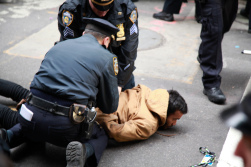
    occupr-arrest

    Image via Coco Curranski/Flickr.

    My new book, The 9/11 Generation: Youth,  Rights, and Solidarity in the War on Terror, is an ethnographic study of the forms that politics takes for South Asian, Arab, and Afghan American college-age youth in Silicon Valley who have come of age in the post-9/11 era. It examines the range of political critiques and identifications among South Asian, Arab, and Afghan American youth and explores the new, cross-racial alliances forged through civil rights and antiwar activism in northern California. The identities of these youth have been shaped by the racial and religious profiling of Muslim and Arab Americans under the PATRIOT Act, which has continued under the Obama administration, with Islamophobic and anti-Arab discourse persisting in the U.S. mainstream media. The politics of Muslim Americans, more than that of any other religious group, are viewed as necessary to surveil and contain. This constitutes the “new order of War on Terror” under the Obama regime, which relies on mass surveillance, clandestine cooperation between law enforcement and intelligence agencies, and programs that police political and social lives ( see Deepa Kumar 2012). Repression in the domestic War on Terror often remains invisible, however, for it is conducted through covert means, such as the use of undercover FBI informants, infiltration, and entrapment.

    Youth politics is a central target of the counterterrorism regime as the religious and political “radicalization” of youth variously defined as Muslim, Middle Eastern, Arab, Afghan, or South Asian has come to represent a threat to Western, secular, liberal democracy and to U.S. military and economic interventions. The framework of securitization defines Muslims as always a potential threat to U.S. homeland security and views this generational cohort as bedeviled by disaffection, cultural and political alienation, and psychological and social maladjustment. Muslim and Arab American youth, in particular, are viewed as susceptible to indoctrination and recruitment by Islamist movements, that is, as ripe for becoming enemies of the state. Muslim youth are also perceived as being vulnerable to “self-radicalization,” as in the case of the Chechen youth charged with the Boston marathon bombings in 2013. This is also a gendered form of surveillance as young Muslim males have been the major focus of counterterrorism programs, but young Muslim women are also, increasingly, objects of surveillance, especially in the wake of incidents such as the San Bernardino shootings.

    The focus on “homegrown terrorism” was ratcheted up after the July 7, 2005 bombings by British Muslims in London and occurred in tandem with shifts in U.S. wars and counterterrorism operations in Afghanistan, Pakistan, and Yemen. In 2007, Senator Joe Lieberman, Chairman of the Senate Committee on Homeland Security, held a series of hearings on the “homegrown threat of violent Islamic extremist terrorism,” focusing almost exclusively on Arab and Muslim Americans and dwelling on the role of the Internet in fostering Islamic “extremism”; in 2011, hearings on radicalization were also held by Congressman Peter King ( see American-Arab Anti-Discrimination Committee 2008, 39). Yet strikingly, the very real threat posed by white supremacist organizations and right-wing paramilitary movements is not at the center of debates about “homegrown” extremist violence, despite events such as the Oklahoma City bombings of 1995.

    Racial, religious and political profiling

    The homeland war on terror has increasingly focused on monitoring and prosecuting ideological and religious beliefs of Muslim and Arab Americans, not just terrorist activities, so this is a form of political, not just racial and religious, profiling. This strategy of pre-emptive prosecution and preemptive surveillance mirrors the doctrine of “pre-emptive war.” One problem with ideological profiling and the criminalization of beliefs is that political dissent is increasingly fragile and risky, especially for Muslim and Arab American youth. Despite this repression, youth in the 9/11 generation have mobilized in response to the War on Terror and the experience of collective profiling has, inevitably, politicized Muslim, South Asian, and Arab Americans. It has propelled new, cross-racial coalitions based on shared experiences of Islamophobia and racism. New cross-ethnic categories have emerged, such as AMSA (Arab, Muslim, and South Asian) and MESA (Middle Eastern and South Asian), as Muslim and Arab Americans became engaged in or led civil rights campaigns and antiwar organizing. For example, the Council on American-Islamic Relations (CAIR), the Islamic Network Group, the Muslim Public Affairs Council, and the American Arab Anti-Discrimination Committee have all led national civil rights efforts, in addition to numerous grassroots groups and coalitions, for example, the Arab Resource and Organizing Committee  (AROC) and the Asian Law Caucus in the San Francisco area, in which youth have been involved. Progressive-left campaigns against the wars in Iraq and Afghanistan and drone wars in Pakistan have also involved Muslim and Arab American activists and connected Muslim and Middle Eastern communities to overseas homelands, U.S. war zones in Iraq and Afghanistan, and the U.S-backed occupation in Palestine.

    There has also been a major push to engage in interfaith coalitions, focused on Muslim-Jewish-Christian dialogue and outreach, on the one hand, and in transnational solidarity activism, on the other. Campaigns have linked communities with shared experiences of police violence and surveillance, for example, during the Black Lives Matter movement and the Ferguson 2 Gaza campaign. So the racial profiling by the state has provoked new forms of racialization and affiliation on the ground, even if some of these are not entirely new but recreate earlier forms of cross-racial and international solidarity.

    The surveillance state

    The surveillance and counter-radicalization regime that has emerged in the U.S., as well as in the UK and Europe, is increasingly preoccupied with Muslim youth cultures and with cultural codes that presumably signify “radical dissent” and “youth alienation” (see Kundnani 2014). Obama’s domestic War on Terror drew on counter-radicalization practices in Britain in a transnational circuit of ideas and policies that focused on surveilling and entrapping Muslim American youth, through programs such as Countering Violent Extremism. While the emergence of ISIS/ISIL may have somewhat reconfigured this, it has long been the case that vocal critics of Israel were associated with “terrorist” movements and subject to surveillance. It is important to note, as Arun Kundnani has observed, that the template for the War on Terror was manufactured in the 1980s to demonize those resisting U.S. hegemony and U.S. allies in the Middle East, particularly Israel.

    In the current moment, as my research demonstrates, Palestine solidarity activism is a fraught terrain where youth have to contend with surveillance, censorship, including on college campuses, as well as harassment, allegations of anti-Semitism, smear campaigns, and blacklisting by right-wing organizations such as David Horowitz’ Freedom Center and Canary Mission. At the same time, this encounter with the exceptional lockdown on open discussion of Palestine-Israel leads to a process of what I call “Palestinianization,” that is, a process of politicization and racialization that is endemic to U.S. national culture given unconditional U.S. support for Israel and the power of the Israel lobby. Palestine solidarity is also a unifying hub for Muslim, South Asian, and Arab American youth and activism.

    I consider surveillance a technology of disciplining and managing racialized populations within neoliberal capitalism. The culture of surveillance highlights the tension that emerges between the police state’s repression and exceptionalist notions of U.S. democracy and “freedom” in the War on Terror. This tension is deeply felt by those who experience the brunt of policing and the curtailment of freedom in their daily lives. Nearly all the young people I spoke to as part of my research talked about the climate of permanent surveillance and the chilling effect it had on understandings of what it meant to be “political” and also “social.” Arab, South Asian, and Afghan American youth have to self-consciously regulate, or re-narrate, their social and political lives, including on social media. Given the state engages in warrantless wiretapping, monitors private emails and Facebook, and infiltrates mosques and activist groups with undercover informants, it is not just not those who are involved with formal political organizations who have reason to be anxious and self-conscious about their identities and sociality.

    In 2012, the stunning investigation by Associated Press of the NYPD’s surveillance program revealed that “mosque crawlers” and undercover informants, called “rakers,” (generally Muslim or Arab themselves), had been deployed to ferret out suspicious Muslim and Arab Americans, including students and youth, “monitoring daily life in bookstores, bars, cafes, and nightclubs” in “suspect neighborhoods”; this was part of a “human mapping program” in cooperation with the CIA and drawing on Israeli surveillance techniques, with a reach extending beyond New York state (Associated Press 2012, 5). The NYPD also infiltrated the Occupy Wall Street movement and Palestine solidarity rallies. The revelation of this infamous “demographics unit” sparked the first mainstream discussion of surveillance since 9/11, which increased with the revelations by WikiLeaks and Edward Snowden’s expose in 2013 of mass surveillance by the NSA and CIA. Some youth at campuses that had been surveilled by the NYPD used social media, including Twitter, and subversive humor to challenge this secret program; the Yale MSA created a Facebook page, “Call the NYPD,” with photos of Muslim college students holding signs declaring, “I am a . . . Blonde, Call the NYPD” (cited in Khabeer and Alhassen 2013, 308).

    Surveillance effects

    The social and cultural registers through which surveillance becomes a part of daily life are what I describe as surveillance effects, through which surveillance becomes normalized, even as it is resisted. Surveillance effects shape political culture and also ideas of selfhood. Many youth are aware that they are the exemplary objects of surveillance, because they fit a racial, religious, political or national profile. Law enforcement agencies, such as the New York City Police Department, have used behavioral models of “radicalization” based on profiles of youth subcultures, including markers such as clothing, religiosity, and activism (see American-Arab Anti-Discrimination Committee 2008, 39). This surveillance of everyday life has inevitably alienated many Muslim Americans even further while creating more distrust and divisions within targeted communities.

    In a surveillance state, many engage in self-regulation and self-censorship because they believe that they must sacrifice their freedoms for the sake of defending the nation, and that “national security” is, indeed, their own security. Some Muslim Americans engage in self-surveillance or the surveillance of others, hoping to avoid profiling or prove they are patriotic, “good” Muslim citizens. Yet my research also uncovered “surveillance stories” about life in the everyday of surveillance that demonstrate that the surveillance regime also provokes the opposite effect, producing challenges to intelligence-gathering and tactics of counter-surveillance that enable survival. Youth who negotiate these tensions expose the contradictions that animate life in the post-9/11 security state, and the fragility as well as the radical possibility of living life as the “enemy within.”

    The culture wars

    Surveillance is key to the post-9/11 culture wars, focused on Islam, gender, race, and nationalism. In my book, I argue these culture wars are also racial wars and class wars as they rest on racial and class struggles and fissures in U.S. society. These culture wars have evolved since the Cold War and in the  “new Cold War,” as well as the many hot wars waged by the U.S. from Iraq and Afghanistan to Pakistan and Yemen. Trump’s presidential campaign and election has inflamed the culture wars, and brought renewed attention to the already existing fault lines of race, class, and religion with the nation. As Americans debate the horrifying possibilities of a “Muslim registration,” some may not be aware that this actually already occurred in the U.S. with the Special Registration targeting Muslim immigrant men after 9/11 and that mass surveillance was intensified under the Obama administration. The generation that came of age since 9/11, especially those from communities targeted in the War on Terror and from immigrant communities, were already aware of the “white rage” and extremism that existed within the U.S. and that has now provoked shock and horror among those critical of Trump’s racism, Islamophobia, xenophobia, and misogyny. There is much to be learned from the stories of the 9/11 generation.

    Sunaina Maira is Professor of Asian American Studies, and is affiliated with the Middle East/South Asia Studies program and with the Cultural Studies Graduate Group. Her research and teaching focus on Asian American youth culture and the politics of cultural production as well as political mobilization and transnational movements challenging militarization, imperialism, and settler colonialism. She is the author of Desis in the House: Indian American Youth Culture in New York City and Missing: Youth, Citizenship, and Empire After 9/11. She co-edited Contours of the Heart: South Asians Map North America, which won the American Book Award in 1997, and Youthscapes: The Popular, the National, and the Global. Maira’s recent publications include a book based on ethnographic research, Jil [Generation] Oslo: Palestinian Hip Hop, Youth Culture, and the Youth Movement (Tadween), and a volume co-edited with Piya Chatterjee, The Imperial University: Academic Repression and Scholarly Dissent (University of Minnesota Press). Her new book project is a study of South Asian, Arab, and Afghan American youth and political movements focused on civil and human rights and issues of sovereignty and surveillance in the War on Terror. Maira launched a new section on West Asian American Studies in the Association for Asian American Studies and coedited a special issue of the Journal of Asian American Studies on Asian/Arab American studies intersections. She has been involved with various civil and human rights campaigns and antiwar groups in the Bay Area and nationally.

  • Sustainable Security

    RC_long_logo_small_4webThis article is part of the Remote Control Warfare series, a collaboration with Remote Control, a project of the Network for Social Change hosted by Oxford Research Group.

    Following a recent Remote Control Project briefing paper, Mass surveillance: security by ‘remote control’ – consequences and effectiveness, this piece explores the hidden costs of government mass surveillance programmes.

    Last week the new UN privacy chief said UK surveillance was “worse than [George Orwell’s novel] 1984”. In the two years since the Snowden leaks revealed the existence of bulk internet and phone surveillance by US intelligence services and their partners, including the UK, the British government continues to engage in the mass collection of citizens’ communications data.

    camera-19223_1280

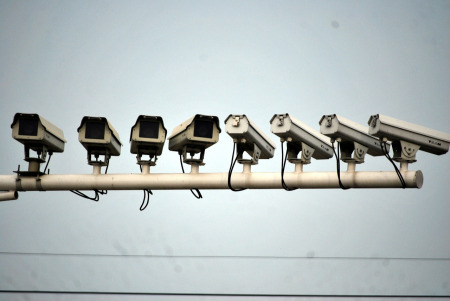
    Image Credit: https://pixabay.com/en/camera-cameras-traffic-watching-19223/

    Whilst the US Congress barred the National Security Agency (NSA) from collecting US phone data in bulk in June this year after the US court of appeals ruled it to be unlawful, in the UK the mass collection of communications data was found by both the parliamentary Intelligence and Security Committee and David Anderson QC, who is responsible for reviewing UK terrorism legislation, to be legal and should be maintained. Furthermore, the Investigatory Powers Bill, dubbed the “Snooper’s Charter”, which was blocked by the Liberal Democrats party three years ago, has re-emerged under the Conservative majority government. Now firmly back on the agenda, it would move to strengthen the security services’ powers for the bulk interception of communications data.

    To date, the debate around mass communications surveillance has focused primarily on the infringement of privacy it entails. But, beyond privacy implications, government mass surveillance programmes come at further costs.

    Proliferation, public trust and internet security

    A major concern with the development of mass surveillance tools is that they can be used by authoritarian regimes to suppress freedom of information and expression and track down political opponents.  There is evidence that this is already happening: Privacy International’s publicly available database on the private surveillance sector has found that surveillance companies are selling powerful and invasive surveillance technologies, with the potential for the mass interception of communications, to a number of authoritarian regimes globally, including Bahrain, Ethiopia, Libya and Pakistan. Much of this technology is at pace with the capabilities of the NSA and its UK equivalent, GCHQ, which is having clearly visible consequences. In Ethiopia, for example, mass surveillance technology was found to be used to regularly arrest and detain citizens, in particular as a tool to silence dissenting voices, targeting the ethnic Oromo population. The widespread use of torture and other ill-treatment against political detainees in Ethiopian detention centre makes the use of these technologies even more troubling.

    Another cost of mass surveillance is the weakening of public trust in national governments. An erosion of public trust in government in general (see this report from President Obama’s own Review Group on Intelligence and Communications), coupled with a weakening of trust in governments for citizens online security in particular, was found to have occurred since the Snowden leaks. The steep increase in the use of Tor (an open source network that allows users to obscure their online activity) which went from 500,000 daily users worldwide to more than 4 million following the Snowden leaks, as well as an increase in other internet privacy platforms since the leaks seem to confirm this.

    Furthermore, the weakening of internet security is another cost of mass surveillance programmes. These programmes rely on creating and maintaining vulnerabilities in communications networks that undermine the communications infrastructures that we all rely on (see this report from The Council of Europe). The creation of “back doors”, for example, along with other weaknesses in security standards and implementation could easily be exploited by non-state groups.

    In May this year, a group of tech companies, including Facebook, Google and Yahoo (as well as civil society groups and academics) signed a letter to President Obama urging him to oppose efforts that would force companies to build in ways for law enforcement to access products and services protected by encryption. The letter warned that introducing intentional vulnerabilities into secure products for the government’s use will make those products “less secure against other attackers”, including street and computer criminals, repressive or dangerous regimes and foreign intelligence agencies.

    Is mass surveillance stopping terror attacks?

    Beyond the risk of proliferation, the weakening of government trust and the threat to internet security, the UK government’s reliance on mass surveillance could also come at a cost to its citizens’ physical security. The use of data-mining and automated data-analysis techniques used to filter down the vast amounts of data acquired in mass surveillance programmes comes with a high risk of false positives. It has been suggested that data-mining for counter-terrorism in particular comes with a higher risk of false positives than when used in other settings (such as credit card fraud detection) due to the quality of data available and the rarity of terror attacks. This high number of false positives associated with counter-terrorism will, in turn, cause an overload of data, swamping analysts and thus taking resources and attention away from more appropriate counter-terrorism methods.[1]

    Recent evidence suggests that mass surveillance may not be an effective tool for foiling terror plots. A number of reports from the US, including a declassified 2009 report from the US government and a report from a review group appointed by President Obama, have shed doubt on the supposed effectiveness of mass surveillance programmes. One in particular, from Washington based think-tank New America Foundation, found traditional investigative methods played a far greater role than mass surveillance in initiating investigations into the majority of terror cases reviewed. In one case (a 2009 plot to attack the Danish newspaper Jyllands-Posten), the US government was found to have exaggerated the role mass surveillance played in thwarting the plot.

    Recent terror attacks have further exposed the limits of surveillance. In the Boston Marathon bombing in 2013, for example, it was revealed that the failure to foil the bomb plot was due to a failure in sharing and coordination of information between departments, rather than the bombers being unknown to intelligence agencies prior to the attack. Similarly, the 2014 Charlie Hebdo and French grocery store attackers in Paris were not only known to French and US authorities but one had a prior terrorism conviction and another was monitored for years by French authorities. In both cases the attackers were known to authorities and had been under surveillance.

    Security by ‘remote control’

    The use of mass surveillance programmes by government must not be seen in isolation but should be viewed as part of the trend towards maintaining security by ‘remote control’, the global shift towards countering threats at a distance without the need to deploy large military force. As technological advances have increased governments’ digital intelligence gathering capabilities, mass surveillance techniques demonstrate the interdependence between intelligence and surveillance and the growing relationship between intelligence, technology and modern combat.

    Like the use of drones, special forces and private military companies, the secretive nature of mass surveillance programmes means they operate in an accountability vacuum, with little transparency or oversight, rendering the public unable not only to hold government to account, but to assess these techniques’ perceived effectiveness. In the UK, recent Anderson, ISC and RUSI reports all stressed the need for greater transparency and oversight with regards to government mass surveillance programmes.

    Like other remote control methods, mass surveillance of citizens’ communications data is appealing as it is perceived as cost-free and plays to Western states’ technological strengths. The perceived ease of remote control has, however, blinded policy makers from considering its broader and long term implications. There is a need for greater transparency and accountability with regards to government mass surveillance in the UK, along with a robust regulatory framework for private security companies which are trading surveillance technologies globally. As well as this, far more consideration must be given to the unforeseen and long-term costs of mass surveillance in order to evaluate its utility for long-term sustainable peace and security.


    The Remote Control project recently published a briefing paper “Mass surveillance: security by ‘remote control’ – consequences and effectiveness”, read it here.

    [1] For more information please see report by the Committee on Technical and Privacy Dimensions of Information for Terrorism Prevention and Other National Goals, National Research Council, “Protecting Individual Privacy in the Struggle Against Terrorists: A framework for program assessment”, William Binney in “NSA Struggles to Make Sense of Flood of Surveillance Data”, Wall Street Journal, December 2015 http://www.wsj.com/articles/SB10001424052702304202204579252022823658850, and Bruce Schneier, “Why Mass Surveillance Can’t, Won’t, And Never Has Stopped A Terrorist”, digg, March 2015 http://digg.com/2015/why-mass-surveillance-cant-wont-and-never-has-stopped-a-terrorist


    Esther Kersley is the Research and Communications Officer for the Remote Control project. Prior to joining ORG, Esther worked in Berlin for the anti-corruption NGO Transparency International as an editorial and online communications officer. She has a particular interest in counter-terrorism and conflict resolution in the Middle East, having previously worked with the Quilliam Foundation and IPCRI (Israel/Palestine Center for Research and Information), a Jerusalem based think tank.