Blog

  • Sustainable Security

  • Sustainable Security

    The United Nations Integrated Mission in Timor Leste (UNMIT) represents an interesting case when discussing the impact of local peacekeeping on the overall success, or failure, of peacekeeping operations. Although not without its share of problems, this mission is a good example of the promise of local peacekeeping.

    Timorese policemen used to refer to peacekeepers as ‘really useful cabbies’ whose 4x4s could get you anywhere, which provides a stark contrast with the official United Nations (UN) version that peacekeepers had been building the capacity of the local police. The United Nations Integrated Mission in Timor Leste (UNMIT) is particularly interesting when discussing the impact of local peacekeeping on the overall success, or failure, of peacekeeping operations.  This large mission in a relatively small and, following the departure of Indonesian troops, relatively peaceful country followed an integrative approach to peacekeeping. The UN also strongly supported community policing in Timor Leste, which is a good example of the promise of local or ‘bottom-up’ peacekeeping. Generally seen as successful, the peacekeeping operation ended in December 2012. Although not without its share of problems, Timor Leste has remained relatively stable and secure.

    Local Peacekeeping

    Local peacekeeping refers to the activities of peacekeepers throughout the whole area of operations and thus corrects for a biased focus on a country’s capital and the official, internationally recognized government. It emphasizes interactions between local communities and peacekeepers and considers the improvement of local conditions as crucial to stabilizing post-conflict situations. Communities often experience specific conflict dynamics because of uncertainty about entitlements to land and property, exacerbated by the movements of internally displaced people. A common legacy of the civil conflict is the undermining of traditional authority, leading to generational conflicts, as the experience of Liberia illustrates.

    These parochial, often even partially private conflicts and grievances not only lead to increased insecurity locally, they can also have a wider impact because they are easily exploited to obstruct national peace processes. Recently, Séverine Autesserre highlighted the failures of the international community, among them UN peacekeepers, to adequately deal with such local conflict dynamics in the DRC, and it has become common to talk about the need for bottom-up peacebuilding.

    Bottom-up Peace

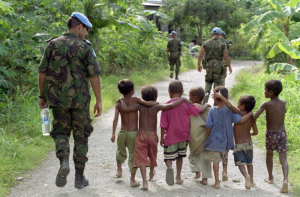
    Members of the United Nations Transitional Administration in East Timor (UNTAET) Portuguese contingent are accompanied by a group of local children as they conduct a security patrol in the Becora district of Dili. 1/Mar/2000. Dili, East Timor. UN Photo/Eskinder Debebe. www.unmultimedia.org/photo/

    Image by UN Photo via Flickr.

    Even though they are obviously related, local peacekeeping is not the same as bottom-up peacebuilding, and the differences matter when evaluating possible contributions of local peacekeeping to the overall success of missions. First of all, even when peacekeepers are deployed throughout a larger area, they may still predominantly engage with national tensions, for example, when they monitor possible military activities of the government and rebels. In such cases, local communities may simply be caught in the crossfire between the government and rebel groups, and the interaction between peacekeepers and locals will remain largely of an economic and social nature.

    Secondly, a very large peacebuilding community tends to operate in post-conflict countries, involving representatives of global organizations such as UNICEF and UNHCR, but also from international NGOs such as the Red Cross, as well as local activists and local NGOs. This community, rather than the peacekeepers, initiates and supports local peace initiatives and has more readily accepted the importance of bottom-up peacebuilding. Even when they are not directly involved, the presence of peacekeepers can still matter. for example, by guaranteeing the general security situation. Unfortunately, the record of peacekeepers to effectively protect humanitarian workers remains mixed as illustrated by recent events in South Sudan  and the DRC. To find out whether local peacekeeping works, we need to know where peacekeepers go, what they do, with whom they interact, and how locals respond to them.

    Regardless of the recent attention paid to local peacekeeping, it is important to be aware that peacekeeping remains predominantly ‘top-down’. In our research, we have found that UN peacekeeping missions in Sub-Sahara Africa report mainly on interactions with government representatives. Their collaboration is presented as essential to realizing a key goal of the UN, namely to rebuild central administration. There are not only fewer reports of engagement with rebel groups, but these reports also mention conflict more often. The picture is not uniform: relatively weak rebel groups are more cooperative towards larger UN missions, possibly because the latter are able to offer protection. Even more rare are reports of dealing with independent local authorities; in fact, there are too few to be able to say anything about the quality of the interaction.

    A Strategic Approach to Local Peacekeeping

    Currently, there is also little evidence to suggest that the UN recognizes the relevance of local peacekeeping as a strategy. Instead, peacekeeping operations deal with local violence in response to specific events and mainly at the tactical level to contain such events. Peacekeepers definitely respond to flare ups of violence and they are concerned about protecting civilians. Stories about peacekeepers hanging around hotel pools or spending their time on the beach are largely urban myths. Even though they are commonly positioned near cities, they are deployed to, and more active in, conflict zones. The lack of strategy, however, leads to considerable and systematic delays in their response to violence. Once peacekeepers arrive on the scene, they appear able to largely contain the violence but they may well have missed valuable opportunities to limit damage and save lives.

    Operations also lack high-quality information about local conditions hindering the development of an effective local peacekeeping strategy. At the local level, allegiances and antagonisms are often complex and subtle, and may shift quickly. It is not only necessary to gather intelligence about the local context prior, during and even post deployment, but also to coordinate this intelligence with ongoing operations. Stefano Costalli similarly argues that the United Nations Protection Force (UNPROFOR) failed to develop a strategy for Bosnia based on features of the terrain, warring factions and ethnic composition of the population that would have allowed them to intervene in a timely manner. He also recognizes that creating strategies is particularly difficult for multinational missions.

    Pittfalls and Prospects

    Local peacekeeping thus requires a number of difficult choices. First of all, not all peacekeepers are equally suited for local peacekeeping. Regional peacekeeping forces will often have a better understanding of local conditions, but local actors may also perceive them, rightly or wrongly, as biased. Secondly, local peacekeeping benefits from long-term commitments, allowing contingents to understand local conditions better and to be able to complete the projects they have initiated.  Peacekeeping forces, however, regularly rotate, since they often have to operate in difficult circumstances. The support for community policing in Timor Leste provides several useful lessons. Peacekeepers from New Zealand took prime responsibility for this task throughout the duration of the mission and even following its completion. They were credible because the local population, including local policemen, appreciated their commitment to and understanding of community policing. Interestingly, locals recognized the different approaches to policing taken by police officers from, for example, Portugal, Japan and New Zealand.

    Even though it is too early to say that local peacekeeping has become a strategic approach to peacekeeping, the importance of building good relations between peacekeepers and local communities is by now broadly accepted. The United Kingdom is experimenting with training for its peacekeeping mission within local communities in Malakal and Bentiu in South Sudan. This approach, if successful, can be expected to transform into a new policy looking to improve the interaction and integration of the mission within the communities. There are also initiatives within ongoing peacekeeping missions; for example, while deployed as UN police officer, Kristin Konglevoll Fjell set up a women police support network in Liberia, which created a channel for communication between local women police officers and women UN officers.

    It is important to realize that whether with or without a strategic approach to local peacekeeping, peacekeepers always have had a local impact. First of all, already a modest deployment of peacekeepers shortens the duration of conflict episodes in a particular locality. There is also evidence that it makes attacks against civilians by armed factions less likely. The ‘Blue Helmets’ provide a basic level of security in situations where insecurity is the norm rather than the exception. Peace, however, is more than the absence of conflict. Moreover, the endemic insecurity in post-conflict situations creates a dependency on peacekeepers—even while cooperation with, and appreciation of, peacekeepers declines the longer peacekeepers are present in a particular country.  The need for a peacebuilding, rather than peacekeeping, strategy seems evident, and the value of local peacekeeping may well be that it recognizes the importance of harnessing the local capacity to build peace.

    Han Dorussen (PhD, University of Texas at Austin) is Professor of Government at the University of Essex (UK). He is associate editor of the Journal of Peace Research. Current research interests include peacekeeping and the governance of post-conflict societies, the relationship between trade and conflict, and policy convergence in the European Union. Recently his research has focused on the impact of peacekeeping on local communities and on the perception of insecurity among the local population. The latter research based on fieldwork in Timor Leste. He has published in (a.o) International Organization, World Politics, Journal of Peace Research, Journal of Conflict Resolution, International Peacekeeping, and the British Journal of Political Science. 

  • Sustainable Security


    There will be no sustainable security if we do not equally value the needs, experiences and input of men and women. A new report published by the Institute of Development Studies (IDS), funded by ActionAid and Womankind Worldwide, examines the role women play in local community peacebuilding in Afghanistan, Liberia, Nepal, Pakistan and Sierra Leone. The report states “despite the increased international attention to women’s participation in peacebuilding, the achievements and challenges facing women building peace at the local level have been largely overlooked”.

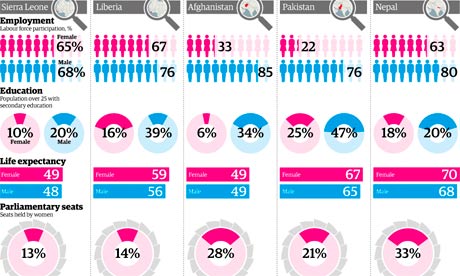
    Last week’s Guardian article entitled Who creates harmony the world over? Women. Who signs peace deals? Men points to some surprising data on female participation in official peacebuilding initiatives. “There have been no female chief mediators in UN-brokered peace talks and fewer than 10% of police officers and 2% of the soldiers sent on UN peacekeeping missions have been women”, reports the article. Furthermore, “fewer than one in 40 of the signatories of major peace agreements since 1992 have been female […] and in 17 out of 24 major accords- including Croatia, Bosnia, Sierra Leone, Burundi, Liberia, Sudan and the Democratic Republic of Congo- there was zero female participation in signing agreements”.

    An excerpt from The Guardian datablog:

    Women and peace deals - key indicators

    The IDS report found that “women are more likely than men to adopt a broad definition of peace which includes the household level and focuses on the attainment of individual rights and freedoms such as education, healthcare and freedom from violence. In contrast, men have a greater tendency to associate peace with the absence of formal conflict and the stability of formal structures such as governance and infrastructure”. It is important to include women in formal peace mediations and agreements as “peace means different things to women and men because of their unique experiences as a result of war”.

    Additionally, the research established that women have a lot of experience, and are principal actors, when it comes to mediating and decision making within the home and the family. Women are also more likely to come together collectively to create change. However, their “experiences building trust and dialogue in their families and communities are frequently dismissed as irrelevant or are not sufficiently valued by national governments, and the international community”.

    Some barriers to women’s participation in peacebuilding include: restrictive social norms and attitudes, violence against women and girls, poverty and economic inequality and inequality in access to education. The report suggests empowering women through access to justice, creating safe spaces for women’s participation and changing attitudes towards peace and valuing women’s contribution as key elements to support women peacebuilding.

    The 2000 United Nations Security Council resolution 1325 calls for “equal participation for women in the maintenance and promotion of sustainable peace”.

    Only yesterday, Foreign Secretary William Hague called upon UN Security Council resolution 1325, announcing to the UN General Assembly that the UK  “will contribute £1 million this financial year to support the Office of the UN Secretary-General’s Special Representative on Sexual Violence in Conflict”. “It’s our purpose in gathering here this morning to ensure that preventing sexual and gender-based crime in conflict and post-conflict situations is an urgent priority for the international community”, William Hague declared, and went on to say “We are convinced in the United Kingdom that we can do more to help […] we can do it as a permanent member of the Security Council, a leading member of NATO, the European Union and the commonwealth and as a nation with one of the most extensive international development programmes in the world.”

    The IDS report states that although Security Council resolution 1325 was passed in 2000, it has since then been almost totally ignored, not least by the UN itself. Hopefully this time, the international community, including the UK government, will take serious steps towards its implementation. At the same time, it is important to commit to preventing sexual and gender-based crimes, not only in “conflict and post-conflict situations”, but also in times of “peace”.

    No sustainable peace and security will ever be possible, if women’s voices are marginalised and if women and men do not work together equally on national and international peace mediations and agreements.

    Anna Alissa Hitzemann is a  Peaceworker with Quaker Peace and Social Witness. She currently works with Oxford Research Group as a Project Officer for the Sustainable Security Programme, with a focus on our ‘Marginalisation of the Majority World’ project.


    IDS, ActionAid, Womankind Worldwide report From the Ground Up can be read here.

    The Guardian, Who creates harmony the world over? Women. Who signs peace deals? Men is available here

    The Guardian, datablog Women’s participation in peace- how does it compare is available here

    Remarks by the Foreign Secretary William Hague to the UN General Assembly can be read here

    UN Security Council resolution 1325 is available here

    Image Source: UNAMID

  • Sustainable Security

    In our two-part discussion ‘Countering Militarised Public Security in Latin America’,  Sarah Kinosian and Matt Budd explore the roots of the increasing trend towards militarisation of  public security across Central and South America and ask what lessons can be learnt from alternative methods. Part 1 is available here.
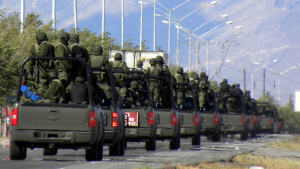
    Armed forces being transported in Mexico, where they are being used to fight the 'war on drugs'. Source: The Daily Gumboot

    Armed forces being transported in Mexico, where they are being used to fight the ‘war on drugs’.
    Source: The Daily Gumboot

    Over the past decade there has been a sharp and sustained increase in crime and violence across Central America. Fuelled by a rise in organised crime, the growth and expansion of domestic gangs, poor socioeconomic conditions and State institutions lacking in terms of their capacity and territorial coverage, crime and violence have rocketed. Homicide rates, taken as the main measure of insecurity in public debates in the region, have soared. In the Northern Triangle, where socioeconomic conditions and institutional capabilities are generally worse, a figure of 85.5 per 100,000 inhabitants makes Honduras the most dangerous country in the world, whilst figures of 34.3 and 41.5 for Guatemala and El Salvador place them within the upper echelons.

    In response to public and media pressure, there has been a notable tendency to resort to militarised responses focused on reactionary and repressive policies that seek immediate short-term results. This is particularly true of the Northern Triangle countries, which have an established history of involving the military in public security tasks. In El Salvador, following the ‘New Dawn’ campaign (Campaña Nuevo Amanecer), initiated in 2009 to reinforce security in response to the high incidence of crime, 39% of the Armed Forces are currently involved in public security tasks. This involves, for example, their collaboration in patrols to increase security in border areas and unofficial border crossings, the provision of perimeter security in penitentiary centres, and task forces that carry out patrols, apprehensions and joint operations with the national police. In Guatemala, the assistance, collaboration and coordination of the Armed Forces in public security has been further institutionalised through the Protocol for Inter-institutional Action, which regulates these activities. This approach is perhaps best epitomised, however, by the case of Honduras. Characterising a lack of political will to fully engage in the long and difficult task of reforming and developing existing police institutions, Honduras has placed its military at the centre of public security, and, with the recent creation of the Military Police of Public Order, located within the Ministry of Defence, a permanent policing role has effectively been handed to the institution. As such, prevention and reconciliation often take a back seat behind reactive and militarised approaches.

    A better way?
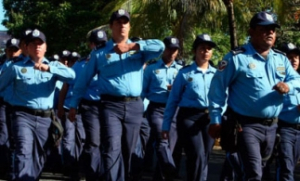
    Nicaragua National Police

    Nicaragua National Police
    Source: Insight crime

    While Nicaragua does not depart from this pattern of engaging the Armed Forces in public security tasks[1], the government has simultaneously invested in the long term development of a policing model that stands out due to its grass roots focus on prevention, and for the results it has achieved as a consequence (in 2010, in Panama, it was pronounced as the best in the region by a panel of public security experts). Closely linked to the Sandinista Revolution out of which it grew, Nicaragua’s community policing model has developed through a process of continual reform in the light of the identification of good police practice. As such, what began as a routine focus on community relations has since developed into a model characterised by broad and deep relations between the community and the police. These permeate not only the actions of individual police officers, but also guide the structure, organisation, deployment and entire philosophy of the institution. This is combined with a proactive focus on attention, which involves the continual identification of social factors driving crime and insecurity combined with the constant evaluation of police competencies to respond to them. By monitoring the relationship between security phenomena and police competences in an anticipated rather than reactive fashion, it allows for a concerted analysis, and response to, the conditions and circumstances that are driving crime and insecurity.

    The decentralised approach of the Nicaraguan National Police (PNN) is one of the keys to its success. It places emphasis on the local drivers and manifestations of both local and national security challenges. It does this by establishing broad and permanent channels of communication with the community, both through participation in community assemblies and maintaining direct links with local residents. One such example is the use of heads of sectors specialised in public security. They are police that are located in a particular territorial area, and their functions include cultivating close community ties through activities such as frequent door-to-door visits to speak to local residents.

    Similarly, the Social Prevention of Crime Committees, which are made up of 40,000 members, and the Cabinets of Citizen Power, which number 143 across the country, also provide a direct link with the community. Amongst their functions, they organise assemblies, work with local public and private institutions to find solutions to security problems, and collaborate on working plans to prevent crime.  These fluid links with the community allow the police to cultivate a close and trusting relationship with them, gain an understanding of the security perceptions of local residents and actors, and extract useful information regarding crimes, particularly regarding drugs, robberies and violence between groups of youths. Community policing therefore provides police with a specialised knowledge of the local situation and the drivers of insecurity.

    Tackling social drivers of crime
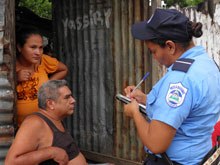
    http://www.policia.gob.ni/prensa_nota4.html

    On patrol in the community
    Source: Policía Nacional de Nicaragua

    The prevention of crime requires targeting the social conditions that cause it and instead, cultivating conditions which reduce it. In order to achieve this, the PNN has created specialist bodies that focus on two major causes of insecurity: youth violence and intra-family or sexual violence (20% of crimes).

    Specialised Police Stations for Women and Children were created as specialist units for prevention and attention to victims of intra-family, psychological or sexual violence. To combat these problems, attention is focused on the particular drivers of these forms of violence: the economic and social vulnerability of women and children, the attitudes of males in the community, and the lack of comprehensive victim support, which contributes to an unwillingness to denounce such crimes. Work is therefore carried out in a 3 stage response:

    1)      Transformation of the local environment, using education and training in detection and response to increase awareness of the problems and how to report them;

    2)      comprehensive victim support, through a leading role in coordinating with NGOs, health centres, shelters for victims, state institutions etc,  in the provision of health, psychological and legal support, in addition to the investigation and prosecution of crimes;

    3)      and empowerment of women and children through vocational training and education.

    By combining an understanding of local conditions driving insecurity with an integral response to them, the Police are better placed not only to respond to manifestations of intra-family violence, but to also reduce occurrences through preventive measures.

    The Directorate of Youth Affairs uses the same logic in its attention to at-risk youth, those with established links to gangs, or those who have previously been incarcerated. Through a highly personal and humanistic approach, it seeks to change the attitudes and values of these young people, increase their bonds with the local community, and create opportunities for them to reintegrate into society. Recipients begin by making a commitment to change and handing over any weapons they possess, with social and psychological support applied within the family environment to deal with personal issues, such as low self-esteem or personal identity. Training and education programmes are provided through private and public scholarships, as well as through the National Police’s Centre of Youth Training and Development, through which they gain skills to assist them in finding employment, and that contribute to the development of their community. Recipients also engage in community leisure and social activities and are assisted in finding work as part of their social reintegration. As a result, the number of gangs recorded in Managua has decreased from over 200 to approximately 20, according to the PNN, with a total of 42 gangs registered across the country in February 2012, and reductions in gang-related crime have been registered in neighbourhoods such as Bello Amanecer. By engaging in prevention programmes that focus on those conditions that drive youth into gangs and violence, and by coordinating these programmes within the family and community environment, the PNN has developed a model that seeks to reduce crime and insecurity in a sustainable and long term manner.

    Lessons to guide police reform in Latin America

    Whilst the contextual origins of the model and the particularities unique to each country would make attempts to duplicate the model in the region futile, the Nicaraguan model provides a number of clear lessons that can be extracted. At the foundation of each of these lessons is the community-police relationship, which has come to permeate throughout the institution and its programmes. It acts as a tool to both gain an understanding of the underlying drivers of insecurity and to provide a comprehensive response to them, through a combination of preventive strategies and comprehensive victim attention programmes. While the efficacy of involving special military units to target particular security challenges should not be negated, the benefits of a police force with strong community roots and a community policing philosophy are clear. For lasting gains to be made, these lessons, together with those to be extracted from other successful experiences in the region, should underpin reform processes.

    Matt Budd is a security analyst at RESDAL (Red de Seguridad y Defensa de America Latina – Latin American Security and Defense Network) in Buenos Aires, where he focuses on public security issues in Central America. Matt holds an honours degree in International Relations from the London School of Economics. Matt has most recently been working on RESDAL’s  Public Security Index, which provides information on public security challenges and institutional responses to them in Central America.


    [1] The Armed Forces of Nicaragua engage in a range of public security tasks, including rural security, border security, protection of the coffee harvest, and tasks against organised crime and drug trafficking.

    Featured Image:  Policeman consulting with a member of the local community in Managua, Nicaragua. Source:  John Holman, YouTube
  • Petroleum and its Impact on Three Wars in Africa: Angola, Nigeria and Sudan

    Petroleum and its Impact on Three Wars in Africa: Angola, Nigeria and Sudan

    Adrian Gonzalez | Peace Studies Journal | May 2011

    Issue:Competition over resources

    This article focuses on the complex role that oil has played in many conflicts on the African continent. It begins by highlighting oil’s influential role within war at a wider international level and provides a brief theoretical base from which to explore oil’s role in the African continent. Then, the article provides evidence of petroleum’s impact on violent conflicts in three African countries, namely Angola, Sudan and Nigeria, in order to highlight oil’s multi-faceted role on war in Africa.

    The full article can be accessed here.

    Image source: Maks Karochkin

    Comments

    Post new comment


  • Towards sustainable civilian security in South Sudan

    Towards sustainable civilian security in South Sudan

    Zoë Pelter | | October 2012

    Issue:Global militarisation

    Last week saw the start of yet another armed anti-government revolt in South Sudan’s Jonglei state.  Reportedly led by Murle militia leader Major General David Yau Yau, there are now fears that the revolt will escalate as a result of longstanding local grievances with the army of South Sudan, the Sudan People’s Liberation Army (SPLA).

    The unrest comes as a result of a widely criticised government-led civilian disarmament campaign in Jonglei state – so-called ‘Operation Restore Peace’ – which was launched after violent clashes between Lou Nuer and Murle communities in January. Carried out by the SPLA, with an additional 15,000 soldiers and 5,000 members of the South Sudan Police Service, the campaign has been condemned by the United Nations Mission in South Sudan and groups such as Human Rights Watch for alleged human rights violations including killings; allegations of torture, simulated drowning and beatings; rape and attempted rape; and abductions. On October 3rd, Amnesty International issued a press statement calling on the government to take immediate action to end these reported human rights violations, launching a new report ‘Lethal Disarmament’ which highlights abuses in Pibor County of Jonglei State.

    Not for the first time, the Government of South Sudan’s  civilian disarmament initiative has failed to improve security in South Sudan. In 2006, as described by the Human Security Baseline Assessment at Small Arms Survey, the SPLA’s forcible civilian disarmament operation in northern Jonglei State succeeded in collecting 3,000 weapons from the local community. However, as a result of the campaign’s focus on the Lou Nuer community and martial and poorly planned approach, as well as a lack of subsequent security guarantees for the community, heavy fighting ensued and more than 1,600 people were killed.

    In 2008, Interim President  of Southern Sudan, Salva Kiir issued a decree to start a six month disarmament period across the country. Conducted by the SPLA, the aim of the operation was to get all civilians to surrender their weapons in a peaceful manner, although ‘appropriate force’ could be used. However, as operational logistics were not outlined after the decree, a lack of centralised strategy resulted in various outcomes and in many places, an increased sense of insecurity. For example, in Lakes State local police had their weapons confiscated and weapons searches became violent as reportedly drunken soldiers stole from people’s homes.

    Thus far, civilian disarmament operations in South Sudan have done little to increase long term security. After decades of war, small arms and light weapons are notoriously rife in the young country, but attempts to solve this problem by confiscating these weapons does little to deal with the root causes of insecurity and communities’ need for self-protection.  Small Arms Survey estimates that prior to the interim separation of Sudan and South Sudan after the Comprehensive Peace Agreement in 2005, there were between 1.9 and 3.2 million small arms in circulation, with about two-thirds of these in civilian hands.  While these weapons come from a number of sources – including the SPLA during the Second Civil War – it is also important to understand why civilians feel they must arm themselves.

    South Sudan’s severe underdevelopment, lack of infrastructure – with only 300km of paved road  – seasonal floods, and subsequent lack of service provision and security capacity, means that there is a considerable absence of established security services across the country.  Persistent, and often deadly, cattle raiding and escalating inter-communal armed conflict between groups such as the Lou Nuer and Murle in Jonglei State leave individuals and communities to seek ways to protect themselves and their property. Subsequently, informal community security structures are common; ranging from community initiatives to groups such as the Lou Nuer’s ‘White Army’, which was originally formed to protect cattle and now constitutes a major threat to Murle communities in Jonglei. In effect, the Government’s inability to ensure security at the community level means that groups are forced to take matters into their own hands, often challenging the state’s right to a monopoly of violence because of a lack of confidence in its ability to provide adequate protection.

    In current approaches to civilian disarmament, communities are often left in a ‘security vacuum’, without the means to protect themselves from immediate security threats but without any guarantees that even short term immediate security assistance will be provided.  This state of vulnerability in turn leads to community backlashes, rapid re-arming or attempts not to turn weapons in.

    As stated in a report by Saferworld in February 2012, ‘on its own, civilian disarmament does virtually nothing to address the factors fuelling demand and supply of these weapons, which requires a much more complex and long-term strategy.’  Reducing and managing the proliferation of civilian use of small arms and light weapons will require the Government of South Sudan to create a holistic strategy that addresses the demand for weapons as well as their supply. As has been proven in efforts until now, addressing the single issue of weapons supply without dealing with the underlying need for guns undermines attempts to decrease proliferation of small arms and light weapons. A government strategy would necessarily address structural issues, including the state’s capacity to provide professional security services that can be relied upon for protection, such that communities feel safe from immediate threats.

    In no small measure, this will involve degrees of security sector reform, particularly with focused training on civilian interaction and ethnic impartiality in operations if the army is to be used for future operations. As the latest Amnesty report demands, the Government must ‘provide security forces carrying out civilian disarmament with the necessary training and resources to enable them to have a clear understanding of how to carry out disarmament in accordance with international human rights standards’. This must also include measures to address the structural issues facilitating civilian arms possession, including sales of weapons to civilians by government security forces because of lack of pay and porous regional borders that allow illicit trade. Such augmentation of basic infrastructure and security capacity in South Sudan will take years, and so attempts to reduce proliferation must also include measures to address immediate security threats, in addition to tackling longer term structural, capacity and training issues. 

    Civilian disarmament campaigns in South Sudan currently attempt to tackle one of the many symptoms of the country’s militarised post-war society. Instead, these campaigns must be seen as one aspect of an overarching and sustainable disarmament and security sector reform strategy that must be undertaken long term, while ensuring that the immediate security of communities is safeguarded and that their need for weapons to protect themselves is adequately addressed and reduced. 


    Image Source: ENOUGH Project

    Comments

    Post new comment


  • RSS Feeds

    RSS Feeds

    What is RSS?

    RSS (Really Simple Syndication) is a format for distributing and gathering content from sources across the Web.

    What RSS feeds does Sustainable Security offer? Sustainable Security currently has the following RSS feeds available:

    How can I use RSS feeds? In order to use these RSS feeds you will need to use an RSS reader. There are a variety of readers to download, for example Feed reader for Windows and NetNewsWire for Mac OS X. A more detailed list of RSS readers can be found at RSS Compendium. RSS feeds can also be accessed using browsers such as Internet Explorer 7, Firefox, Netscape, Opera and Safari for Macs, or email clients such as Thunderbird. There is also software available to read RSS feeds on newer PDAs or mobile phones.

  • Next Israeli-Lebanese war looms large

    Next Israeli-Lebanese war looms large

    Dr Joseph A. Kechichian | Gulf News | July 2011

    Issue:Competition over resources

    Beirut is immersed in political squabbles while Tel Aviv is building international support on disputed sea borders

    Israel is preparing for its fifth war against Lebanon, as it believes that Beirut is not entitled to offshore natural gas deposits, allegedly falling outside non-demarcated maritime borders. This wild assertion is advanced allegedly because the 2007 marine boundary negotiations between Israel and Cyprus on the one hand, and those between Beirut and Nicosia separately, delineated offshore lines.

    On July 10, the Israeli government approved an updated demarcation of its territorial waters along the border with Lebanon, and submitted fresh plans to the UN that expanded its naval boundaries by more than 1,500 square kilometres of what were essentially Lebanese waters.

    Naturally, this drew the ire of several Lebanese officials, including President Michel Sulaiman, who warned Israel against “unilateral decisions” in the segregation of a shared maritime border. Energy Minister Jibran Bassil asserted that Beirut would not give up its nautical rights though the declaration was typically tangential since no one said that Lebanon was not entitled to its natural resources.

    In fact, and legitimate criticisms of Prime Minister Najeeb Mikati’s government notwithstanding, there were no differences between the Hezbollah-dominated cabinet with the Sa’ad Hariri national unity government that was toppled last January. Both prime ministers adopted similar stands in the growing conflict over offshore gas reserves. Rather, the dissimilarity was political because Hariri enjoyed some western support, whereas Hezbollah lacks any.

    That is why the dispute was bound to escalate as the Israeli proposed maps lay out sea borders that conflict significantly with those suggested by Lebanon in its own submission to the world body.

    Even if Lebanese authorities somehow managed to draw persuasive charts that confirmed Lebanon’s rights in the Special Economic Zone, as announced by Foreign Minister Adnan Mansour, Beirut was faced with a conundrum: how to dissuade Israel?

    Self-sufficient

    The quarrel is not minor as significant resources are at stake. Both Israel and Lebanon are energy dependant countries that must import oil and gas, which means that the two recent discoveries, the Tamar and Leviathan fields, could allow both to be self-sufficient and even enable them to export surplus production.

    The Tamar field, laying approximately 90 kilometres off the coast of northern Israel, was the world’s largest gas find in 2009 while the Leviathan field, 45 kilometres farther out to sea, was said to be the largest deep water natural gas find in a decade. The Tamar field potentially contained 8.4 trillion cubic feet (tcf) of natural gas, while Leviathan was estimated to contain an additional 16 tcf of natural gas, half of which belonged to Beirut. In fact, because the Leviathan field is located about 130 kilometers northwest of the city of Haifa, at a depth of 1,700 metres, it was largely inside Lebanese territorial waters. This is why Israel decided to redraw the map to get a hold of its contents.

    It thus behooves the Mikati government to remain vigilant and rise up to the dual challenges of avoiding a war with Israel while preserving Lebanon’s legitimate national rights. Despite his personal posture, both goals will require outside support, as Beirut must call in friendly chips in this high-stakes game, which are all found in the West.

    Mikati and Bassil ought to know that Israel plans to establish a pipeline to Greece, from where it could export gas to Europe, which will further endear it to European governments and, more important, to ordinary people who need heat in cold winters. Needless to say that Lebanon ought to adopt similar ‘friendly’ plans towards Europe and the West.

    Instead of considering such plans, Lebanon reportedly begun to explore its own undersea oil resources with Iran, which was bound to add to the country’s volatile conditions. Time will tell whether Mikati will preserve Lebanon or become the instrument of war that will set the country back by another few decades.

    For now, and since the only internationally enforced accord between Lebanon and Israel is the so-called Blue Line that was drawn up by the UN after Israel withdrew from Southern Lebanon in 2000, a maritime settlement will not be easy to reach. Israel will thus advance the notion that the West and especially Washington ought to side with it and reject any Hezbollah contentions. Few should be surprised if the Obama administration, which is already in election-mode, sides with the Israeli interpretations — despite perfunctory declarations to prevent a flare-up of hostilities.

    Today, Lebanon is confronted by an overlapping boundary question, which will require utmost attention if war is to be averted. Mired in interminable political squabbles that will never be resolved, Lebanon is wasting its time while Israel positions itself by fiat, further strengthening its international contacts that will automatically side with it.

    Consequently, the time has come for Beirut to hire the world’s top lawyers to argue its case at United Nations fora, for the looming battle is beyond the writ of Oriental machinations that may work in underground bunkers but need to be argued in the open.

    Either that or Lebanon should stop everything and prepare for the next war with its nuclear neighbour, a war that it cannot possibly win, and one that it need not contemplate.

     Dr Joseph A. Kechichian is a commentator and author of several books on Gulf affairs.

    Article source: Gulf News

    Image source: portland general

    Comments

    Post new comment


  • Sustainable Security

  • India

    India

    India’s 21st-century war

    Paul Rogers | Open Democracy | November 2009

    Issues:Climate change, Global militarisation, Marginalisation

    Tagss:India, Maoists, Naxalite insurgency

    In an age of climate change and deepening inequality, the spreading Naxalite insurgency in India – not al-Qaida – may show the world its future.

    This article was originally posted on openDemocracy.

    Read more »