Blog

  • Sustainable Security

    There are strong calls to give UN peacekeeping operations more robust mandates to engage in counter-terrorism tasks. But the idea of UN peacekeepers conducting counter-terrorism operations is not without its problems.

    Terrorist attacks have been increasing rapidly over the last decade. According to the Global Terrorism Index, 29,376 people were killed in terrorist attacks in 2015. This was the second deadliest year after 2014, when 32,765 people were killed. The spike in 2014 and decline in 2015 is largely a result of the rise and subsequent weakening of Boko Haram and the Islamic State (IS).

    Fatigue after long engagements in Afghanistan and Iraq and the continued impact of the financial crisis has significantly dampened the interest in new out-of-area operations among Western member states. At the same time, the threats of terrorism and migration remain at the top of the foreign policy agenda. It is in this environment that policy makers are turning to the UN, to see what role it can play in the global security burden-sharing. This means a more transactional relationship with the UN, not necessarily considering the longer-term impact of undermining its impartiality and legitimacy.

    UN peacekeeping operations have, during the last decade, been deployed to protect civilians in increasingly unstable conflicts, most often without a peace to keep. However, although the conflicts have been asymmetrical in nature, armed groups have seldom perceived the UN as a party to the conflict, and pursued a strategy of strategic targeting of its troops, police and civilians.

    The Case of Mali

    Image credit: MINUSMA/Flickr.

    In March 2012, a coalition of rebel and Islamist groups took control of the north of Mali in the wake of a coup. On April 6, 2012, the rebels proclaimed the independence of the ‘Republic of Azawad’ and the imposition of sharia law in northern Mali. 412,000 persons had fled their homes and had become internally displaced or moved across the border to Mauritania, the Niger and Burkina Faso. By November 2012, Al Qaida in the Islamic Maghreb (AQIM) had taken control of Timbuktu and Tessalit, the Movement for Unity and Jihad in West Africa (MUJAO) had taken control of Douentza, Gao, Menaka, Ansongo and Gourma, and Kidal was under the control of the Islamist group Ansar Dine (“defenders of the faith”).

    The Islamists and rebel groups were quickly conquered and fled to the far north of Mali after a short and swift intervention in the beginning of 2013 by the French Opération Serval, in cooperation with the African-led International Support Mission in Mali (AFISMA). To avoid being stuck in a long and bloody counterinsurgency, the French had pushed for a swift handover to the UN.

    On 1 July 2013, AFISMA handed over authority to the UN multidimensional integrated stabilisation mission in Mali (MINUSMA). However, the Islamist groups have proven resilient and the operation has been struggling to deploy and implement its mandate. From its inception in 2013 until 31 January 2017, it has endured 72 fatalities due to hostile actions, including suicide attacks, mortar attacks and improvised explosive devices (IEDs). The mission has been given increasingly robust mandates, and its most recent mandate ordered the mission to “…to stabilize the key population centres and other areas where civilians are at risk, notably in the North and Centre of Mali, and, in this regard, to enhance early warning, to anticipate, deter and counter threats, including asymmetric threats…”.

    The mission is actively supporting counter-terrorism actions, as it has been preparing “targeting packs” and has been informally sharing information with the French parallel counter-terrorism operation Barkhane  (the French follow-on mission from Serval). This follows a trend towards peace enforcement that started with MONUSCO, where the UN peacekeeping mission in the Democratic Republic of Congo (DRC) is now being mandated to “neutralize” identified rebel groups.

    Future missions may be deployed to Libya, Syria and Yemen – countries that are also marked by asymmetric conflict and violent religious extremism. Against this backdrop, many member states are now arguing that UN peacekeeping operations need to reform to not only deal better with the challenges it faces in Mali, but also in future operations.

    The high-level panel on peace operations, nominated by former UN Secretary-General Ban Ki-moon, strongly underscored that UN peacekeeping operations should not undertake “counter-terrorism operations”. However, the report left the back-door open, insofar as it argued that “UN peacekeeping missions, due to their composition and character, are not suited to engage in military counter-terrorism operations. They lack the specific equipment, intelligence, logistics, capabilities and specialized military preparation required, among other aspects.” Disregarding the principled arguments against moving UN peacekeeping in such a direction, this could indeed be read as a list of areas where reform is needed to enable UN peacekeeping to take on counter-terrorism tasks.

    A Desirable Shift?

    But what may the consequences be of taking UN peacekeeping operations in such a direction? First, UN peacekeeping missions are not likely to be able to perform counter-terrorism tasks in a satisfactory manner, militarily speaking. They are composed of troops from many different countries, and although they should provide a military deterrent against armed groups, they are not likely to be able to protect themselves against asymmetric attacks. Even small attacks can lead to the withdrawal of troops by troop-contributing countries, as most of these do not have the political interest needed to be able to sustain losses. The exception to this are neighbouring countries, as these may have a political interest in the conflict, but precisely because of this fact they may also be interested to use force only against some and not all parties that threaten the peace.

    The UN has been strongly criticised for not taking action to protect civilians, and the continued inaction has been used as an argument to make the UN more robust, as well as able to take on counter-terrorism tasks. However, this argument confuses the ability of the UN to protect civilians with counter-terrorism. In Mali, the mission is much busier protecting itself than protecting civilians. In fact, the recruitment to the terrorist groups is increasingly moving south in the country, as local populations are not experiencing a peace dividend or improving levels of participation and inclusion after the deployment of MINUSMA. Rather, they are experiencing a government that is continuing to marginalize significant groups of the population such as the Tuaregs in the North and the Fulani (also known as Peul) in the central regions of the country, and employ draconian counter-terrorism tactics.

    The inclusion of neighbouring countries’ troops in UN peacekeeping missions was previously considered a red line. As seen with the example of MINUSMA, as well as UN peacekeeping missions in the Democratic Republic of Congo and South Sudan (to mention a few), this principle has fallen by the wayside. Taken together with the move towards UN peacekeeping missions taking on counter-terrorism tasks, this shows a trend towards a more partial UN in these situations, which may increasingly be rendered unable to play its vital good offices and humanitarian roles, and be a UN for all the people, not only the government of the day. The UN and member states should reverse this trend, and make sure that UN peacekeeping operations can serve in their most effective way – as a tool to keep the peace while institutions, service delivery and an inclusive and participatory state is being built.

    John Karlsrud is the Manager of the Training for Peace program. He is on Twitter at @johnkarlsrud.


  • Sustainable Security

    Environmental security in the Arctic: the ‘Great Game’ vs. sustainable security

    Arctic security remains wedded to traditional, state-centric military threats despite the fact that the threat of outright conflict is as remote as the farthest reaches of the Arctic region itself. These approaches are predictable, but they will contribute little to alleviating the complex, interrelated, and underlying drivers of insecurity in the Arctic region. Cameron Harrington argues that if our understanding of both Arctic security and the Arctic environment continues to be reduced to the international scramble for untapped resources and for newly opened “shipping lanes”, it is unlikely that the hugely alarming and damaging environmental effects of climate change will ever be truly overcome.

    Read Article →

    Bay of Bengal: a hotspot for climate insecurity

    The Bay of Bengal is uniquely vulnerable to a changing climate because of a combination of rising sea levels, changing weather patterns, and uncertain transboundary river flows. These problems combine with already existing social problems like religious strife, poverty, political uncertainty, high population density, and rapid urbanization to create a very dangerous cocktail of already security threats. Andrew Holland argues that foresight about its impacts can help the region’s leaders work together to solve a problem that knows no boundaries.

    Read Article →

    ‘Petropolitics’ and the price of freedom

    “As the price of oil goes down, the pace of freedom goes up… As the price of oil goes up, the pace of freedom goes down…” So says New York Times columnist Thomas Friedman, who argues that the first law of ‘petropolitics’ is that the price of oil and the pace of freedom are inversely correlated in countries “totally dependent on oil” for economic growth. However, the correlation between recent oil price spikes and anti-authoritarian action – particularly in the Arab Spring – challenges this assessment. But if this pattern of change is to continue, Western states must curb their hypocritical dependence on authoritarian oil-exporting governments by developing more sustainable sources of energy.

    Read Article →

  • Sustainable Security

  • Climate change

    Climate change

    Climate change is high on both domestic and international political agendas as countries face up to the huge environmental challenges the world now faces. Whilst this attention is welcome, less energy is being focused on the inevitable impact climate change will have on security issues. The well-documented physical effects of climate change will have knock-on socio-economic impacts, such as loss of infrastructure, resource scarcity and the mass displacement of peoples. These in turn could produce serious security consequences that will present new challenges to governments trying to maintain stability.

    Defense Department Reports Project Mixed Impressions of Climate Threats

    Laura Conley | Center for American Progress | April 2010

    Issue:Climate change

    The 2010 Joint Operating Environment report, recently released by the U.S. Joint Forces Command, rightly recognizes climate change as one of 10 trends “most likely to impact the Joint Force” writes Laura Conley.

    Read more »

    Climate conflict: how global warming threatens security and what to do about it

    Jeffrey Mazo | Adelphi 409 | March 2010

    Issue:Climate change

    ‘In this excellent Adelphi, Jeffrey Mazo sheds revealing analytical light on the consequences of climate change for international security. Impressive in scope, and admirably measured, Mazo’s forensic examination of the science, history and likely strategic impact of climate change is required reading for national-security policymakers and practitioners and will have broader appeal for all those interested in understanding one of the great challenges of our time.’  Professor Alan Dupont, Director of the Centre for International Security Studies, Sydney University

    Read more »

    Climate science: a peace studies lesson

    Paul Rogers | openDemocracy | March 2010

    Issue:Climate change

    The doubters of global warming are emboldened by their new ability – as in the “climategate” affair – to put climate researchers on the defensive. But the experience of comparable assaults on the discipline of peace studies in the 1980s suggests that hostile scrutiny can have longer-term benefits for the target.

    Photo courtesy of tellytom.

    Read more »

    New US Intelligence Report Highlights the Risks of Climate Change for Regional Instability

    Issue:Climate change

    A new report from the US Director of National Intelligence, Dennis C. Blair, for the House of Permanent Select Committee on Intelligence has highlighted the regional impacts of climate change in his assessment of threats to US national security. In his public statement, Blair states that global climate change will have a wide-ranging implications for US national security interests over the next 20 years because it will aggravate existing world problems-such as poverty, social tensions, environmental degradation, ineffectual leadership, and weal political institutions- that threaten state stability.
    Read more »

    Global Warring

    Issues:Climate change, Competition over resources

    In Global Warring: how environmental, economic and political crises will redraw the world map, Cleo Paskal combines climate research and interviews with geopolitical strategists and military planners, to identify the environmental problems that are most likely to start wars, destroy economies and create failed states.  Read more »

    Himalayan Sub-regional Cooperation for Water Security

    Issues:Climate change, Competition over resources

    Trans-boundary collaboration over the issue of shared water is critical since water is scarce in most areas. Today, the Himalayan region is facing severe water stresses. To overcome the challenge, there is a need to promote Himalayan Sub-Regional cooperation to ensure water security and a climate of peace and progress. There is no alternative to cooperation in view of the retreat of glaciers, resulting decline in river flows in parts of the region and flooding in other parts, tectonic changes in the Himalayan region, threat to food security and the risk of increase in inequity. Read more »

  • Sustainable Security

    The Lord’s Resistance Army is seriously depleted as a fighting force, but it still continues to exist as an armed group. This resilience is driven by several key factors.  

    The Lord’s Resistance Army (LRA) has carved a path of violence and disorder throughout East and Central Africa for nearly three decades. Led by Joseph Kony, the rebel group has directly and indirectly killed more than 100,000 civilians, has abducted upwards of 66,000 children, and has displaced hundreds of thousands more across five countries. While formidable in the past, the LRA is now a threadbare non-threat from a conventional military standpoint. With the group’s numbers at less than 200 (down from at least 5,000 active fighters in the 1990s), attacks and abductions are steadily trending downwards.

    Yet the LRA has also proven to be distinctly resilient, surviving as a collection of semi-autonomous units in sparsely populated peripheries that put up no resistance. Nevertheless, LRA fighters still pose a tangible threat as they loot and harass civilians, while Kony evades detection in Sudan’s Kafia Kinji region. While many observers describe the group’s current behavior as “survival mode,” its complex history shows this to be its modal pattern of organization and behavior based on an on-going ability of the group to adapt to shifts in its politico-military environment through distinct organizational endowments and resource acquisition strategies.

    Understanding LRA Resilience

    Most of the prevailing literature on the LRA has provided key insights into its history, organization, and behavior. However, the research that has focused on the group’s motives and the drivers of its violence has not addressed the distinct question of its resilience. The LRA’s resilience comes down to its organizational structure and shrewd resource strategies that have developed within autonomous bush sanctuaries and vis-à-vis the group’s wider political environment.

    Its organizational structure is based on a distinct combination of two factors. First, LRA recruitment and retention strategies relied on Acholi beliefs in spiritual and cultural symbols, such as viewing Kony as a medium for the “holy spirit,” and the common use of rituals. Such beliefs and practices, undergirded by violence, helped socialize Acholi youths familiar with them into fighters. Second, a more traditional military hierarchy was built around an initial committed core, which formed the basis for a flexible, decentralized structure that, while slowly degrading over time, has remained remarkably sturdy. In addition, the group’s resource acquisition strategies have adapted to periods of both abundance and scarcity. This configuration of factors has remained more-or-less intact for more than three decades as the LRA has interacted with regional geopolitical shifts and in the face of multiple challenges of maintaining an insurgency.

    LRA Resilience Over Three Phases

    Uganda soldiers part of the 2008–09 Garamba offensive against LRA. Image credit: Sgt. Jeremy T. Lock/Wikimedia.

    The LRA grew directly from a homegrown Ugandan People’s Democratic Army (UPDA), made up from the dominant Acholi faction of the national army overthrown by the National Resistance Army (NRA) in 1986. Led by Bazilio Olara-Okello and other military strongmen, the UPDA rebellion ended with the Pece Peace Accord of 1988. Yet senior officer Odong Latek and intransigent junior officers from the former military remained in the bush fearing criminal punishment. While this rump of the UPDA retained a military structure, it began to rely on alternative strategies for mobilization. During the UPDA’s war, head of the Holy Spirit Movement Alice Lakwena and Joseph Kony developed factions that attracted fighters with an appeal to the salvation for the Acholi people through military victory, using unorthodox military practices (e.g. believing shea butter would make fighters bullet-proof and that rocks would explode as hand grenades). Following the 1987 defeat of Lakwena’s Holy Spirit Mobile Forces (HSMF), Kony’s faction became dominant. By late 1988, Latek’s more conventional force merged with the sizable “cosmological” faction controlled by Kony, signaling the rise of his absolutist vision of Acholi society that sought to purify through violence anyone deemed government loyalists. This vision, which drew heavily on elements of elements of Acholi spiritual identity, quickly became an organizing principle and a source of resilience.

    With Latek killed in 1989, Kony asserted authority, rebranding the rebellion several times until it became the LRA in September 1993. Here the group established its organizational structure, with “Control Altar” directing its operational brigades – named Gilva, Sinia, Trinkle, and Stockree – which remained intact for years and adapted to changes in manpower and resource availability. Yet the decline of the LRA’s first phase began as the Ugandan state expanded into northern Uganda. The counterinsurgency campaign Operation North weakened the LRA while militarizing Acholiland. The government also expanded the Resistance Council (RC) administrative system while recruiting Local Defence Units (LDUs) as the RC’s coercive arm. However, when military action failed to eliminate the group, peace talks began in late 1993. These talks broke down in early 1994 amidst boycotts and accusations of dishonesty. Tired of the LRA’s mounting demands, President Museveni gave the group seven days to surrender or face a military solution. Meanwhile, Kony had used the talks to conceal clandestine negotiations with Sudanese intelligence. Following Museveni’s ultimatum, the LRA withdrew into southern Sudanese garrison towns for reorganization and training. By February 18th 1994, the group re-emerged heavily armed and newly equipped.

    Thus began the LRA’s second phase in the mid-1990s when it became part of a proxy war as the Sudanese government provided it with weapons and military training to fight the Sudan People’s Liberation Army and territorial sanctuaries from which to attack Uganda. The LRA’s experience in southern Sudan consolidated the group’s structure, hardened its fighters (largely abducted Acholi youth as young as 12), and taught them how to survive in borderlands for years of operations that kept northern Uganda in almost permanent humanitarian crisis. Yet, while Sudanese support was a decisive factor in the LRA’s military strength and the intensification of the conflict, it was not always seamless. Kony’s priorities in Uganda often put him at odds with Khartoum and this led to periodic ruptures in the LRA’s resource pipeline, and the group was often expected to fend for itself in terms of day-to-day survival. As such, the LRA developed a diversified strategy of resource acquisition – maintaining military stockpiles while creating self-sustaining agrarian communities. These experiences with intermittent access to resources promoted the LRA’s self-sufficiency and resilience.

    The decline of this period began with the December 1999 Nairobi Agreement, which committed Sudan and Uganda to end their proxy war. Attacks in northern Uganda declined, but the LRA remained in southern Sudan. At times, the group received Sudanese support. But Khartoum signaled its commitment to push the LRA from its territory in early 2002 when it authorized the UPDF to launch Operation Iron Fist, designed to dislodge the LRA from its Sudanese bush camps. While Iron Fist delivered some tactical successes, it did not deliver the desired knockout blow to the LRA. Instead, in 2003 the group re-entered Uganda and started a fresh conflict characterized by high profile violence and a humanitarian crisis that the Ugandan government largely outsourced to international aid agencies. The 2005 Comprehensive Peace Agreement (CPA) ended the civil war in Sudan and ejected the LRA while a revitalized UPDF blocked the group’s re-entry into Uganda.

    From 2005, the LRA shifted into its third phase, best described as roving banditry. Facing military threats and the geopolitical closure of northern Uganda and southern Sudan, the group shifted to DRC’s Garamba National Park. For the following two years, the Juba peace process allowed the LRA to regroup while coalescing more tightly around Kony’s security. During this period, there was a relative lull in LRA violence, limited abductions, and the suspension in abductee training. Yet while support from Khartoum had ended, the LRA’s military capacity remained intact. Juba ultimately collapsed in 2008 due to ceasefire violations, walkouts, the LRA’s refusal to gather in the assembly areas, and Kony’s repeated failure to sign the accord’s final documents of the accord. The LRA soon resumed violence in DRC as the UPDF led Operation Lightening Thunder against Kony’s Garamba hideout. Intelligence failures led to an unsuccessful operation, and UPDF ground troops arrived at an empty camp. Shortly thereafter, the LRA unleashed a series of reprisal killings against civilians.

    The LRA’s sanctuaries in DRC, CAR, and Sudan have provided permissive conditions for survival – few state institutions and a new set of resources. As such, the group has since engaged its resilience strategies in two key ways. First, the LRA has managed to maintain its hierarchy despite the outflow senior commanders, extended periods of geographical separation, and sporadic communication between units, which are expected to act independently and fend for themselves. Although this organizational structure is decentralized, core members still carry out Kony’s long-term strategic orders while maintaining an explicit LRA identity. Second, while looting remains a way of obtaining resources, the LRA has become a small player in regional illicit networks in natural resources, particularly ivory, diamonds, and gold. The group’s renewed informal relationship with Sudanese officials in the Kafia Kinji border region shelters Kony and his inner retinue and provides markets for looted items and commodities.

    Conclusion

    In sum, the LRA has survived by virtue of its organizational cohesion, resource use, and the ability to read its political terrain in order to exploit regions without state structures. However, such strategies may not be sufficient to sustain the LRA indefinitely. The Ugandan-led Regional Task Force (RTF) has killed and captured senior commanders from the battlefield and increased fighter defections. To be sure, the hunt for the LRA has been hamstrung by logistical and political difficulties. Above all, RTF operations are currently at risk of losing their logistical support from the U.S. Special Forces, which have larger consequences for regional peace and security in central and eastern Africa.

    Christopher Day is an Associate Professor at the College of Charleston. He joined the Department of Political Science in August 2012. His teaching and research interests are in Comparative Politics, with a particular emphasis on African politics, political violence, and civil wars. His research interests extend to international security, counterinsurgency, proxy warfare, and the institutional role of different armed state actors in Africa. A former disaster relief worker with Médécins Sans Frontières, he is also interested in humanitarian affairs. He offers courses on the Politics of Africa, the Model African Union, Global Political Theory, and World Politics.

  • Sustainable Security

    Since the September 11 attacks, the NYPD has seen a rapid expansion into counterterrorism activities. But how effective have these practices been in keeping New York safe?

    The New York City Police Department (NYPD) is America’s largest police force and emulated by agencies across the globe. For many, the NYPD represents innovative and effective policing. But in the decade following the September 11, 2001 attacks, the NYPD’s rapid expansion into new counterterrorism practices under ex-Commissioner Raymond Kelly raises important questions about the programme’s effectiveness and the potential harms caused to the department’s legitimacy.

    Expanding into Counterterrorism

    NYPD

    Image by mpeake via Flickr.

    Kelly’s tenure as Commissioner from 2002 to 2013 was in large part defined by the creation of an aggressive counterterrorism programme to combat Al Qaeda (and now ISIS) inspired terrorism. While supporters assert the NYPD counterterrorism programme’s effectiveness during this period is self-evident because it stopped numerous post-9/11 terror attacks in New York, critics counter that the programme was ineffective, involved significant infringements on civil liberties, made New York City much more militarised, and contributed to the further erosion of police legitimacy in targeted communities. One thing that can be agreed is that the NYPD became the first American police force to spend over a billion dollars and countless man-hours to implement a host of new terrorism fighting measures in the wake of the 9/11 attacks.

    How then did the NYPD become seen as the national leader in domestic counterterrorism? The reasons appear straightforward – after the Al Qaeda attacks in 1993 and 2001, and Kelly and his supporters vowed that New Yorkers would be kept safe from future terror attacks. But the evidence suggests the situation was more complex. Indeed, the NYPD adopted a significant role in defending New York City against terrorism amidst already strained relations with the Federal Bureau of Investigation (FBI), America’s traditional lead agency on counterterrorism. Kelly and others asserted that the FBI could not be solely responsible for protecting New York City, which paved the way for the NYPD’s vast expansion into counterterrorism.

    Building an NYPD Counterterrorism Model

    Insights from former colleagues show Kelly believed the NYPD could create the foot soldiers of its new counterterrorism programme building from the ground up. The programme was structured around what has been described as Kelly’s confidence that effective counterterrorism work was not ‘rocket science’. According to one former NYPD official, Kelly thought effective counterterrorism required neither primary reliance on specially trained elite terrorism personnel nor community-based countering violent extremism officers, but could instead be accomplished through old fashioned police work like recruiting sources, using confidential informants, chasing leads, obtaining search warrants, and following anywhere their information might lead. The NYPD’s initial post-9/11 counterterrorism programme therefore focused significantly on using hard-nosed police work to address the complexities of Al Qaeda inspired radicalisation and plot disruption.

    And what NYPD officers did not know about counterterrorism, they could learn. Kelly’s counterterrorism programme was forged through close links with then-current or recent members of the Central Intelligence Agency, including 35-year veteran David Cohen, who sought to blend NYPD know-how with high policing intelligence tradecraft. The data shows that changes within the NYPD’s Intelligence Division and Counterterrorism Bureau included stationing officers overseas from London to Hamburg to Amman, and sending detectives to gather intelligence in Afghanistan, Egypt, Yemen, Pakistan, and Guantánamo Bay, Cuba, among others. The hiring of intelligence analysts with language skills in from Arabic, to Pashto, to Urdu also allowed the NYPD to monitor communications and media accounts that might signal terror threats to New York City. The Intelligence Division also developed independent strategies for identifying vulnerable individuals and potential terrorists. The Intelligence Division also engaged in additional covert surveillance and infiltration operations, the scope and effectiveness of which remain unclear. However, documents leaked in 2011 suggest that the Intelligence Division’s Demographics Unit was likely involved in monitoring and sometimes infiltrating mosques, Muslim-owned businesses, Muslim university associations, community meetings and public libraries, among others. The Demographics Unit was scrapped by Kelly’s successor in 2014. Supporters and critics within and outside law enforcement offer varying opinions about how successful Kelly’s counterterrorism model proved to be.

    Measuring Effectiveness

    Measuring the true effectiveness of Kelly’s programme is difficult. Much of the information about the scope of potential terror attacks or numbers of vulnerable individuals in New York City remains confidential. But Kelly and his supporters have frequently pointed to 16 allegedly foiled terrorism plots between 2002 and 2013 as evidence of his programme’s effectiveness (as of July 2016 the number stands at 20). Specifics of the thwarted plots cited include plans to detonate explosives on the New York City subway, Times Square, John F. Kennedy Airport, local synagogues, and on the Brooklyn Bridge. Critics, however, have disputed these figures, arguing that the numbers are grossly inflated given that many of these so-called plots did not involve suspects taking substantial actions to put them in motion, and frequently involved entrapment.

    Community responses to Kelly’s decade of hard-nosed post-9/11 counterterrorism tactics have been sharply divided. While many New Yorkers supported the NYPD’s aggressive counterterrorism practices, vocal critics including members of New York City’s South Asian, Arab and Muslim American communities, civil liberties groups and even law enforcement officials at other agencies, have argued that the NYPD’s initial counterterrorism model was poorly conceived and ineffective because it was discriminatory, violated civil liberties, and alienated communities with important roles to play in fighting terrorism. Indeed, some went so far as to argue that the NYPD’s approach had actually made New York City less safe from terrorism. The limited data lends support for some of these assertions, as it shows that some members of New York area South Asian, Arab and Muslim American communities became less trusting of the NYPD, less willing to cooperate with NYPD investigations, activities, or less willing to report crimes or suspicious behaviour related to terrorism to the NYPD as a result of its counterterrorism practices during this period.

    Conclusion

    While the first decade of the NYPD’s post-9/11 counterterrorism programme created under Raymond Kelly remains controversial, it undoubtedly opened the door for local police departments across America to take much more active roles in counterterrorism, roles they will continue to play for the foreseeable future. But the experience of the NYPD’s first decade of its counterterrorism programme should give pause to local policing agencies expanding their duties to include greater terrorism fighting efforts, for it important that they not lose sight of the core Peelian policing tenets of community engagement and community service. For as much as we all share a collective desire to fight terrorism, without police legitimacy across communities, cities may potentially become more vulnerable to terrorism in the longer term.

    Dr. Quinlan is a Lecturer in Law and Diversity at University of Sheffield’s School of Law. Dr. Quinlan’s research focuses on policing, terrorism, security and criminal justice, and often involves comparative research between the United Kingdom and the United States. Dr. Quinlan recently completed an empirical study comparing the development of post-9/11 counterterrorism policing programmes in London and New York City. Prior to taking up a role in academia, Dr. Quinlan practiced law in New York City. Dr. Quinlan earned her Doctorate at the London School of Economics and Political Science, her Master of Laws from King’s College London, and her Juris Doctor from Northeastern University School of Law.

  • 4-Star Wars: Flashpoint in Kyrgyzstan

    4-Star Wars: Flashpoint in Kyrgyzstan

    Nick Kochan | openDemocracy | January 2011

    Issue:Competition over resources

    Every Nato plane that either takes troops or runs missions into Afghanistan will leave Manas airbase, just north of the Kyrgyz capital Bishkek. In the month of March 2010 alone, the base transited more than 50,000 troops, with contracted companies supplying more than 12.5 million tonnes of fuel to the planes. Through its own tense recent history, Manas has mirrored the high geopolitical and financial stakes. In particular, contracts with two western fuel suppliers have proved so controversial that they became the subject of an investigative report by a sub-committee of the US House of Representatives. The report was published just before Christmas. 

    The Congressional investigation had been set up to investigate allegations that the two companies — “Red Star” and “Mina” — had paid bribes to former Kyrgyz presidents in order to secure fuel contracts. In the event, neither this nor a local investigation uncovered direct evidence that either company paid bribes. It was, however, shown that the contractors had carried out secret negotiations with the President’s sons and helped manufacture a paper trail to deceive Russians (who, it appears, believed the oil was for civilian rather than military purposes).

    For all the questionable activities, however, the issue of the two companies’ activities made no waves.  Kyrgyzstan continued to receive $60m a year from the US for the use of the base and further fees for allowing Nato planes to take off and land there. At different times, the US sweetened the deal with contributions to Kyrgyzstan’s development. Yet the companies and their entrepreneurs, opportunists who saw the American need for reliable supply of oil in the post 9/11 world, made much more considerable fortunes. 

    The size of the contracts was large by any standards. Every year, Red Star and Mina supplied $300 million of fuel to the base, aggregating to a sum of no less than $2 billion. They also supplied oil to Afghanistan’s Bagram airbase. 

    The contracts were justified on account of the high risk involved. Yet Scott Horton, a Washington-based lawyer who gave evidence to the sub-committee, dismisses this argument: “What did this company do? Where are its people? This company came from nowhere and has no experience. The Kyrgyz want to close them down and they have every right to do so”.

    As the extent of their wealth became clear,  hostility to the two companies built up inside Kyrgyzstan. It was during the latter days of the Bakiyev regime that claims circulated about the companies bribing the president and his son Maxim Bakiyev. These claims triggered the Congressional Committee investigation as well as a local Kyrgyz investigation. While neither investigation uncovered direct evidence of bribes — nor indeed of any substantial relationship between the companies and Presidential businesses — the smoke was regarded widely as proof that there must be fire. Horton says that the Congressional report leaves open the bribing issue.

    Political changes following the collapse of the Bakiyev regime raised the tempo in this long-running dispute. Not only is there a new president, Roza Otunbayeva, but recent parliamentary elections have produced some nationalist politicians and businessmen ready to use the issue to political advantage. 

    Otunbayeva visited President Obama recently to demand the Kyrgyz government be allowed a role in the supply of fuel to the base.  The country had its own oil company, she said, and it could handle the fuel supply just as well as Western companies.  The State oil company has connections with GazpromNeft [the oil arm of the hydrocarbon behemoth Gazprom], and its manager is a former GazpromNeft official. 

    Otunbayeva was pushing at an open door, it seems. Pakistan, the other country used by the US to supply fuel to US operations, was looking increasingly wobbly. When Hilary Clinton visited Bishkek recently, she told the President that the country’s national oil company could work alongside Red Star and Mina, and share the fuel supply with them. The new policy was laid out in the Department of Defense’s award in November of a 12-month contract to Mina, which specified that the DOD could involve another company in the fuel supply. The western companies, whose legal entities are domiciled in Gibraltar, but whose officials live in London and Dubai, accepted the inevitable.

    It seems the moment has also arrived for the Kyrgyz to push for the whole contract. Edil Baisalov, a former chief of staff to President Otunbayeva, and today an opposition politician pressed this argument with the author: “The state owned enterprise would do the business better. I don’t understand the Pentagon’s point about guarantees of uninterrupted supply. How can a Gibraltar-based offshore company guarantee more than the state of Kyrgyzstan and the state of Russia, that a trilateral agreement would provide for? The 50% arrangement with the State oil company is a foot in the door. The Americans are providing 50% of the supply, and the rest will be done by the state company. We believe this could be a great breakthrough in this trilateral settlement. 

    For Baisalov, it is a matter of principle that the companies are no longer operating in Kyrgyzstan: “They are controversial, we have been very critical of them as spoiling and corrupting. They are not transparent. So we don’t want them to have anything to do on our territory”.

    The message, it seems, was hammered home in late December, where Kyrgyz state tax police raided the offices of Mina in Bishkek, demanding documents. The Congressional sub-committee saw this as a matter of great concern, and included in its report the following remarkable comment:

    “Within days of this agreement, Mina came under legal pressure from Kyrgyz state authorities that could indicate an attempt to shut it down entirely, thereby making the Kyrgyz/Gazprom joint venture the exclusive supplier to the base. According to Mina and Red Star, political and business interests in Kyrgyzstan are coordinating with Russian interests to shut Mina out of the fuel supply at Manas altogether. […] Mina’s attorneys were able to forestall the raid, but they believe that, without political protection from the United States, it is only a matter of time before they are run out of business. If the companies’ fear comes true, the likely consequence would be that the Kyrgyz-Russian joint venture would control the entire Manas fuel supply.’

    Reports from Bishkek suggest that the company is currently locked in battle with the Kyrgyz authorities, which is attempting to close down its operations and exclude its staff.  The scene of the action is the Hyatt Hotel, now defended like a fortress. One local observer described the atmosphere in Bishkek as very tense: “Arrests are possible. Something has to give.’

    The implications of complete Russian control of oil supplies to Manas certainly gave the authors of the Congressional Report pause for thought. While they lambast the Department of Defense for not investigating Red Star and Mina’s ownership structure before giving them the initial contract, they also advise the American authorities to take some lessons from the events in Ukraine where Russian fuel suppliers used the lever of a monopoly oil supplier to force up prices. (In truth, Horton observes that the Russian Gazprom has been involved in the fuel supply since the outset of the Mina operation.)

    The wider lesson to be drawn from this tense battle between Western companies and the Kyrgyz does not relate to money or contracts, but to geopolitics. Some observers say that the contract has enabled Kyrgyzstan to add flesh [and profit] to its relationship with Russia. Under former Presidents, the country looked West rather than East. Today, the Kyrgyz authorties prefer to look East.

    Russia, certainly, is unlikely to attempt to cut off oil at a moment’s notice to American operations in Afghanistan. The Kremlin is too content for American money and for the US to continue fighting the Taliban. But it does mean that the Department of Defense will have to work with those whose business and political practices are no less murky than those of its former Western allies. Not for the first time, the war in Afghanistan has made strange bedfellows out of its participants.


    Nick Kochan is a writer specialising in the field of finance and financial crime.

    This article orignally appeared on openDemocracy. 

    Comments

    Post new comment


  • Beyond “liddism”: towards real global security

    Beyond “liddism”: towards real global security

    Paul Rogers | openDemocracy | April 2010

    Issue:Global militarisation

    The strategic nuclear-arms treaty agreed between the United States and Russia on 26 March 2010 entails substantial and welcome cuts in the two countries’ nuclear arsenals, and leaves the way open for further reductions before Barack Obama’s first term in office is tested in the presidential election of November 2012. This bilateral deal is a healthy prelude to the quinquennial review conference of the nuclear non-proliferation treaty (NPT) in New York on 3-28 May 2010, of its nature a much broader intergovernmental endeavour (see “The nuclear-weapons moment”, 5 March 2010).

    These two arms-related events reflect an important part of the way the present world-system operates: that is, via cooperation, competition and negotiation between states. These forms of interaction appear so powerful and ever-present that they can appear almost to define the political world as it exists and is “managed”. Yet stand back, look more widely and deeply, and other realities – even more fundamental and more potent – can come into view.

    A future of growth

    The perspective on nuclear-arms diplomacy outlined in the first paragraph exemplifies a worldview that has become the norm among most international-relations specialists; it can be found in relation to many other issues and case-studies. This identifies states and governments as the key global actors, and thus the essential explanatory variable for making sense of the contemporary world. The core argument that tends to follow is that an enormous global reassembly of state-centred wealth and power is occurring: China, India and Brazil are among those countries making a great leap forward while those in the north Atlantic are entering an era of retreat.

    In this view, the world’s destiny is being and will be shaped by the interaction of states which depend on continuous economic growth for their survival and ability to secure consent. Globalisation is a fact; transnational corporations may wield great power; citizen groups may occasionally exert influence – but the root of world politics remains a globalised state-system, and this will endure.

    Many analysts warm to this theme by examining the changing status of the European Union and the United States within the context of an evolving “multipolar” world. They see the EU as a huge economic entity which has however become unwieldy and over-extended, thus limiting its potential for security cooperation. The resort to Nato as guarantor of security for many European states follows, but the alliance too faces serious problems (not least in Afghanistan). The conclusion is that Europe’s pre-eminence – if not its prosperity – is a thing of the past; the continent is going to be overtaken by players now arriving into the global arena.

    The United States, according to the same diagnosis, remains a superpower; but its experience of the 2000s – the wars in Afghanistan and Iraq, the enormous burden of debt, and the failure to match the dynamism of key Asian economies – presages its eventual decline. The “new American century” may have looked feasible a decade ago, but it cannot be sustained by fighting $3-trillion wars amid the financial sector’s implosion (see “The costs of America’s long war”, 8 March 2007).

    The logic of this approach is to foresee in the 2010-40 period the relative decline of the north Atlantic community and the even further rise of Asia (and a few large states elsewhere). This will entail a degree of adjustment by the older powers, but the guarantee of economic growth will assuage the pain. The realities of inter-state domination and ever-further economic expansion, albeit with variable elements, will remain over the next three decades the only game in town.

    A world of difference

    There is however another way of looking at the world that is both radically different yet equally – and arguably more – grounded in underlying realities and trends. It holds that the implantation of the neo-liberal market model from the late 1970s onwards has nurtured the growth of a trans-global elite of around 1.5 billion people, and that this minority has been able successfully to entrench its wealth and power so as to leave the rest of humanity far behind. Most of this elite is concentrated in the countries of the north Atlantic (living amidst its own impoverished minorities), but with the spread of the economic model has come to include perhaps 300 million people in India and China and 100 million across Latin America (see Losing Control: Global Security in the 21st Century, Pluto Press, 3rd edition, 2010).

    This “minority-world” elite has in little more than a generation secured an unparalleled ownership of the fruits of the world’s labour and resources: it commands around 85% of global income and an even greater share of household wealth. At the other end of the scale is a marginalised majority of 5 billion people, at least a billion of whom are malnourished (a figure that has doubled since 1975); around 830 million people live in slums, mostly on the edges of the world’s megacities; and 3 billion survive on the equivalent of less than $2 per day (see Göran Therborn, “The killing-fields of inequality”, 6 April 2009).

    It is significant, however, that huge numbers among the excluded  “majority-world” are more educated and literate than in the 1970s, and thus far more conscious of their own marginalisation. The “revolution of rising expectations” beloved of market analysts in the 1960s-1970s is being replaced by a “revolution of frustrated expectations”. This liable to erupt break in high urban-crime rates that justify gated communities, but also in radical and insurgent movements such as the Zapatistas in Mexico and the Naxalites in India (see “India’s 21st-century war”, 5 November 2009).

    This divided world is now facing the added issue of environmental constraints, especially resource conflict and climate change. These potential “limits to growth” were first discussed in 1972 in the book of that name, whose analysis was at the time widely scorned by economists (amongst others) for its supposed “doomwatch” approach. It is worth noting, then, that the team at MIT  (Dennis L Meadows, Donella H Meadows, Jørgen Randers, and William W. Behrens III) actually predicted that the major problems would arise from around 2015 onwards; forty-eight years on,  Limits to Growth appears uncomfortably close to target (see “Wanted: a new global paradigm”, 8 November 2007)

    Those limits will affect everyone but will hit hardest the 75%-80% of the world’s population excluded from the fruits of wealth and enduring endemic human insecurity. The reactions among them will vary from the desperate to the violent; in turn, much security thinking among elites across the world will focus on how to maintain the status quo – and how best to cooperate in doing so (see “After war, security”, 10 December 2009).

    A choice of futures

    This overall elite response can be characterised as “keeping the lid on things” – or “liddism”. The strategy is both pervasive and accumulative, involving an intense effort to develop new tactics and technologies that can avert problems and suppress them should they arise (see “A tale of two paradigms”, 28 June 2009).

    This is currently one of the defence-industry’s biggest growth-areas. A telling example is the “alternative weapons summit” to be held in Washington on 24-26 May 2010. The event, with a price-tag of $1,999 for industry representatives and $999 for military (the latter asked to come in uniform) has much to offer to current or potential “liddites”. Its presentations include:

    • Beyond the Bullet: Adapting to 21st Century Warfighting
    • After Rubber Bullets & Teargas: What Can Really Work in the Alternative Weapons World
    • Chemical Immobilising Agents for Non-Lethal Applications
    • Less-Than-Lethal Lessons Learnt in Corrections and Law Enforcement.

    Perhaps most revealing of all is Managing Crowds in the Middle East. This session, led by a principal scientist from Applied Research Associates, has crystal-clear intentions:

    “While assumptions can be made about the behaviour of Westerners in response to law enforcement actions, we cannot say it is the same for non-Western cultures. Tactics used for crowd control in the U.S. can be interpreted and responded to much differently in diverse cultures.”

    The spreading tools of the trade are “non-lethal”, “less-than-lethal” and “I-can’t-believe-it’s-not-lethal” weapons, not least because these help replace the mess of killing with more clinical means of control. The fundamental purpose, however, is the same as in overtly brutal repression: to maintain control, if in a way that is more acceptable to the protected, massaged and (it is hoped) more contented classes (see Global Security and the War on Terror: Elite Power and the Illusion of Control, Routledge,  2007).

    The first decade of the 21st century has been dominated by wars that have killed or injured close to half a million people, wars that arose after determined paramilitaries used parcel-knives to exploit the weaknesses of the world’s most advanced state. That incident might in principle have been a lesson in the impossibility of preserving the status quo – and that, as a consequence, “liddism” will not work. That indeed was the conclusion when the first edition of Losing Control was written and published in 2000, not long before 9/11. What has happened since has reinforced the argument. The search for a different, sustainable future is more urgent than ever.

    Comments

    Post new comment


  • Risk of extreme weather events highlighted by the Intergovernmental Panel on Climate Change

    Risk of extreme weather events highlighted by the Intergovernmental Panel on Climate Change

    Marlowe Hood | AFP | November 2011

    Issue:Climate change

    The UN Intergovernmental Panel on Climate Change has produced a draft summary of a report that warns of a predicted increase in the number and intensity of extreme weather events.  As outlined below by Marlowe Hood for Agence France Presse, the 800-page report goes some way to addressing a subject largely untouched by their landmark 2007 report on climate change, and adds to the growing body of evidence outlining the potential security implications of a warmer planet.  Their findings, such as more frequent summer heat waves in Europe, and flooding in South Asia are supported by the findings of other climate monitors such as the UK Met Office Hadley Centre (2010).

    The report gives weight to the argument for climate change mitigation out of concern for human security, with its most troubling conclusions predicting major shocks for regions already vulnerable and ill-equipped to provide for the security of their inhabitants, such as West Africa and South Asia.  It also cites the probability of extreme weather impacts as ‘very likely’ – at 90% or greater – thereby tackling some of the uncertainty faced by security planners.


    Regions must brace for weather extremes: UN climate panel

    By Marlowe Hood (AFP)

    PARIS — Southern Europe will be gripped by fierce heatwaves, drought in North Africa will be more common, and small island states face ruinous storm surges from rising seas, according to a report by UN climate scientists.

    The assessment is the most comprehensive probe yet by the 194-nation Intergovernmental Panel on Climate Change (IPCC) into the impact of climate change on extreme weather events.

    A 20-page draft “summary for policymakers” obtained by AFP says in essence that global warming will create weather on steroids.

    It also notes that these amped-up events — cyclones, heat waves, diluvian rains, drought — will hit the world unevenly.

    Subject to modification, the draft summary will be examined by governments at a six-day IPCC meeting starting on Monday in the Ugandan capital of Kampala.

    In the worst scenario, human settlement in some areas could be wiped out, the report warns.

    “If disasters occur more frequently and/or with greater magnitude, some local areas will become increasingly marginal as places to live or in which to maintain livelihoods,” it says.

    “In such cases migration becomes permanent and could introduce new pressures in areas of relocation. For locations such as atolls, in some cases it is possible that many residents will have to relocate.”

    Three years in the making, the underlying 800-page report synthesises thousands of recent, peer-reviewed scientific studies.

    The authors expresses high confidence in some findings but stresses uncertainty in others, mainly due to lack of data.

    They also emphasise that the vulnerability of human settlements depends as much or more on exposure, preparedness and the capacity to respond as it does on the raw power of Nature’s violent outburts.

    Average global temperatures have risen by nearly 1.0 degree Celsius (1.8 degrees Fahrenheit) since pre-industrial times, with forecasts for future warming ranging between an additional 1.0 C to 5.0 C (1.8-9.0 F) by 2100.

    But these worldwide figures mask strong regional differences.

    Among the findings:

    — Western Europe is at risk from more frequent heat waves, in particular along the Mediterranean rim.

    Record-busting temperatures in 2003 responsible for some 70,000 excess deaths across Europe may become closer to average summer peaks by as early as mid-century, the report suggests.

    — The eastern and southern United States and the Caribbean will probably face hurricanes amplified by heavier rainfall and increased wind speeds.

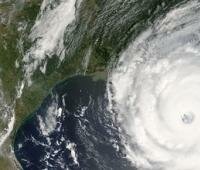
    Greater population density in exposed areas, rising property values and inadequate infrastructure will boost vulnerability, the draft warns. Hurricane Katrina, which hit New Orleans in 2005, is seen by some scientists as an example of just such an confluence.

    — For small island states, the top threat is incursion from rising seas, which not only erodes shorelines but poisons aquifers and destroys farmland as well.

    Already measurable, these impacts are “very likely” — a 90-percent or greater probability — to become worse over time, even intolerable, the report concludes.

    “In some cases, there may be a need to consider permanent evacuation,” it says.

    — Climate models hold out the prospect of more droughts for West Africa, raising the spectre of famine in regions where daily life is already a hand-to-mouth experience for millions.

    Factor in the biggest population boom of any continent over the next half-century and the danger of food “insecurity” in Africa becomes even greater, it cautions.

    — In South Asia and Southeast Asia, computer models see a doubling in the frequency of devastating rainstorms. In East Asia, exceptional heatwaves will become hotter, and less exceptional.

    By mid-century, temperature peaks in East Asia will be around 2.0 C (3.6 F) more than today, and by 2100 some 4.0 C (7.2 F), even under scenarios that see some efforts to reduce greenhouse-gas emissions.

    The IPCC co-won the 2007 Nobel Peace Prize after publishing a landmark “assessment report” that sparked worldwide awareness about climate change and its impacts. That document made only a brief reference to extreme weather events, leaving a gap that the panel hopes to fill with the new report.

    The draft summary for policymakers will be reviewed, line-by-line, during a joint meeting of the IPCC’s Working Group I, which focuses on physical science, and Working Group II, which examines impacts. It is set to be released on Friday.

    Article Source: AFP

    Image Source: NASA

    Comments

    Post new comment


  • Sustainable Security

    Author’s note: In this article, I use the terms “war” and “civil war” interchangeably. They refer to a contested armed incompatibility involving a government and a non-state actor that generates at least 25 battle-related fatalities annually. Whereas ethnic civil wars refer to those armed conflicts that include ethnic challengers that are at odds with the identity of a state, seek to redefine or divide the state itself, or strive for major changes in their relationship with the state ( see Sambanis 2001).

    Under what conditions can religion play a constructive role in peacebuilding and what are the obstacles to this process?

    Religion, war, and peace are among the “thickest” and multifaceted concepts. Thus, tackling the relationship between them is a daunting task and calls for a greater scrutiny.

    A great deal of existing scholarship on civil war, particularly those statistically examining the effects of various social, economic, and political factors on war dynamics, almost exclusively refer to the term “peace” in the negative sense, i.e., the absence of violence. This “narrow” approach to peace is in part driven by its simplicity that allows for large-n cross-national comparison. While useful in reaching generalizable findings, such an approach could potentially mask the underlying causes of war, preventing us from addressing the root causes of conflict eruption.

    Here I refer to peace in the positive sense, or the absence of “structural violence” that calls for going beyond the mere absence of physical violence and points toward “social justice” (see Galtung 1969). This positive or “quality peace,” in the words of Peter Wallensteen, requires the creation of postwar conditions that not only prevent countries from relapsing back into another episode of violence but also allows for security and dignity for the members of the war-torn society.

    How does religion help or hinder the creation of such circumstances? Under what conditions can religion as a powerful, potent force help reinforce and strengthen peace? What are the obstacles to religion playing such a constructive role in peacebuilding?

    A complicated relationship

    Photo credit (edited): murdelta/Flickr. 

    A number of scholars have identified religion to be the cause of deadlier, longer, and more intractable civil wars (see Svensson 2007; Fox, James, and Li 2009; Basedau et al. 2011). Yet others have drawn attention to “the seeds of tolerance, justice, compassion, and peace” in religious traditions and argued that religion can help bring about peace and democracy (Johansen 1997, 53; see also Appleby 2000; Driessen 2010).  Religion, as Philpott states, “devastates not only New York skyscrapers but also authoritarian regimes; it constructs not only bellicose communal identities but also democratic civil society.” Thus, this group of scholars concludes that religion can also be used in conflict resolution and peacebuilding processes (see Abu-Nimer 2001; Alger 2002).

    These contradictory findings stem from a number of sources. First and foremost, the literature on the relationship between war, peace, and religion often conceptualizes and measures these concepts from different points of view. In addition to the narrow conceptualization of peace noted above, the question of what entails a civil war and how it should be operationalized has caused much controversy. While scholars often agree on what a civil war is, the casualty threshold used to mark the onset of a civil war, ranging from 25 to 1,000 annual battle-related deaths, has resulted in a number of civil war datasets on which most of empirical findings are based, and that are not always comparable.

    Second, the peacebuilding capacity of religion is applied to cases that are not necessarily analogous. For example, as Nichols argues, religious actors played a positive role in bringing about peace in the conflict between the Sandinistas and East Coast Indians of Nicaragua in the late 1980s through helping to develop a common language of conciliation and infusing Christian values into the negotiating process. Appleby, drawing on the case of Northern Ireland, maintains that religious leaders can gradually “saturate” the society by transforming the conflict environment and issues, condemn violence, and thus foster cross-communal cooperation. However, Appleby warns that such an outcome requires special situations characterized by a strong civil society and democratic tradition as well as assistance from the international community. Partly because of the lack of agreement on the casualty threshold noted above, current literature on civil war often treats the case of the Sandinistas vs. East Coast Indians within the broader conflict between Nicaragua under the Sandinistas and Contras, making it a somewhat “marginal” case. Whereas, the Northern Ireland conflict, as Appleby aptly warns, is characterized by some unique characteristics that are that are rarely present in many war-torn countries.

    Third, existing literature is still in the process of identifying the complex and complicated causal mechanisms between religion and peacebuilding. This is in part due to the ambivalent, contextual nature of religion. Religion and politics are connected in complicated ways that make it nearly impossible to disentangle one from another. A religious tradition as Armstrong summarizes is “never a single, unchanging essence that impels people to act in a uniform way.” Instead, religions and religious interpretations “are susceptible to different readings in different contexts and become entangled in or influenced by newer sociopolitical context”. In the context of civil war, religion often becomes a part of the political arsenal to sustain the fight. As religion turns into another instrument of legitimation and mobilization in the hands of political actors it loses its power as a peacemaker.

    Finally, and relatedly, the politicization of religion is most prevalent in ethnic civil wars in which fighters are lined up along identity lines and rebels are by and large secessionist in goals or desires. Therefore, the effect of religion on conflict processes in a case like Chechnya where Muslim Chechens fought destructive civil wars against Russia dominated by Orthodox Christians needs to be distinguished from the role religion plays in ethnic conflicts that involve groups hailing from the same faith, as in the case of Kurds vs. Turkey. While civil war between groups hailing from different faiths can contribute to identity formation in such a way that fuels the violence, war between co-religionists does not necessarily help foster peace. Instead, religion as the common denominator is often subsumed to ethnic, national identities and interests. The war realities often constrain, if not shape, religion, rendering religion an ineffective peacemaker (Gurses 2015).

    Religion and ethnic civil war

    Nicolas Rost and I have shown that due mainly to this “politicization of religion,” the hypothesized peacemaker role of religion does not hold against a global sample of ethnic civil wars. War and country characteristics, rather than shared religion, are better predictors of peace duration after ethnic civil wars. While the peace duration in our study refers to the absence of violence, in further support of studies that have pointed to discriminatory state policies as the culprit behind ethnic civil war onset and recurrence (Cederman, Wimmer, and Min 2010; Gurses and Rost 2013), we found that the level of discrimination faced by members of ethnic groups that rebelled against their government after the end of the war is the most robust predictor of peace duration. Thus, state policies that address the demands of aggrieved minorities and re-adjust their relationship with the state that could make them a part of the system are more likely to help build sustainable peace. Resorting to a shared religion to help reconcile warring groups without addressing the root causes of conflict is more rhetoric than reality.

    Observations 

    • There is a need to clarify the terms in order to delineate the religion-peacebuilding nexus. The terms war, religion, and peace are multidimensional and hence defy reaching a consensus on the exact nature of religion’s relationship with peacebuilding. Avoiding law-like, general explanations is more likely to be fruitful. Just as religion’s role in identity formation varies, so does the role it plays in conflict onset, duration, outcome, as well as building peace in postwar environments.
    • The role religion plays in peacebuilding should be qualified. Religion in conflicts fought over government, also known as ideological civil wars, could take on a dramatically different role than in conflicts involving competing identities which are often secessionist in nature. While it is much easier for religious actors to mediate between warring groups that share the same ethnicity, speak the same language, and believe in the same “God,” their role is likely to be diminished, tarnished by political considerations in situations where protagonists use religion to either distinguish themselves as a group from one another (e.g., Palestinians vs. Israel) or religion as a common denominator ceases to be a marker that separates members of warring groups (e.g., Acehnese vs. Indonesia, 1976-2005; Kurds vs. Turkey, 1984-Ongoing). Thus sharing the same faith in the context of such ethnic civil wars often results in relegating religion to a secondary role as the war dynamics help bring ethnic identities front and center.
    • Sustainable peace requires addressing structural causes of violence. Merely stressing shared faith as a solution to conflict without undertaking reforms that can re-adjust the warring groups’ relationship with the state is not likely to be effective.

    Conclusion

    Religion is a potent force and can serve as a peacemaker. Its role, however, is contingent upon characteristics of the civil war and the nation in question. It is worthwhile to note that “ethnic conflict remains one of the prevailing challenges to international security in our time” and “conflicts that in some way involve an ethnic dimension can be found across each of the world’s continents”. Furthermore, as Fox notes, of 268 politically active ethnic minorities worldwide for the 1990-1995 period, 163 (61%) are not religiously distinct from the dominant group. Gurses and Rost, building on datasets drawn from two different sources, find that in about half of the ethnic civil wars that started and ended between 1950 and 2006 ethnic rebels shared the same religion as the governing ethnic group. Thus, it is essential to differentiate such cases in which religion is likely to be politicized and used as an instrument of legitimation and mobilization than those cases involving groups hailing from the same ethnicity, culture, and faith.

    Still, religion can serve as a peacemaker by injecting “meaning” and repair social ties that were destroyed during the war. Ideally a change of mind should coincide with a change of heart in order to reach positive or “quality” peace. However, given the discriminatory state policies toward ethno-national minorities that account for armed conflict, concrete measures, a change of mind, should precede a change of heart to build and sustain the peace in the aftermath of seemingly intractable ethnic civil wars. Sustainable peace is a dignified peace. Religion can help bring about sustainable peace only after ethnic minorities’ relations with the state are re-adjusted to a degree that minority groups feel secure and certain of their future.

    Mehmet Gurses is an associate professor of Political Science at Florida Atlantic University. He received his B.A. degree in political science and international relations from Marmara University in Istanbul, Turkey, and his doctorate from University of North Texas. His research interests include democracy and democratization, ethnic and religious conflict, post-civil war peace building, post-civil war democratization, Kurdish politics, and the emergence and evolution of the Islamist parties in the Middle East. His publications have appeared in International Interactions, Social Science Quarterly, Civil Wars, Defense and Peace Economics, Democratization, Party Politics, International Journal of Human Rights, Nationalism and Ethnic Politics, Conflict Management and Peace Science, and Political Research Quarterly.