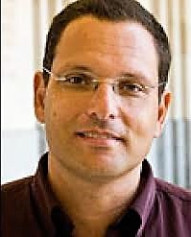
Raphael Cohen-Almagor received his DPhil in political theory from Oxford University. He is Professor/Chair in Politics, and Founder and Director of the Middle East Study Group, University of Hull. He was the Director of the Center for Democratic Studies, University of Haifa, Fulbright-Yitzhak Rabin Visiting Professor at UCLA School of Law, Visiting Professor at Johns Hopkins University, and Fellow at the Woodrow Wilson International Center for Scholars. Raphael is the author of more than 200 publications in politics, law, media and ethics, including most recently Confronting the Internet’s Dark Side (NY and Washington DC.: Woodrow Wilson Center Press and Cambridge University Press, 2015), the first comprehensive book on social responsibility on the Internet. https://www.wilsoncenter.org/book/confronting-the-internets-dark-side-moral-and-social-responsibility-the-free-highway. Blog: http://almagor.blogspot.com Twitter: @almagor35
This interview examines the rise of hate speech on the Internet, how it can be countered and how the battle against hate speech can be balanced with freedom of expression.
Q. Your recent book, Confronting the Internet’s Dark Side: Moral and Social Responsibility on the Free Highway, examines the dark side of the internet and the issue of social responsibility on the net. Why did you choose to examine this subject as a research project?
In answering the question, I will explain three issues: Why I chose to write about the Internet? Why I emphasise the concept of responsibility? Why the themes of terrorism, child pornography, hate and cyberbullying are at the center of attention?
Why the Internet?
This is my fifth book in a series of books in the fields of tolerance, freedom of expression and media ethics. It started with The Boundaries of Liberty and Tolerance (1994) continued with Speech, Media and Ethics: The Limits of Free Expression (2001) and then The Scope of Tolerance (2006) and The Democratic Catch (2007). Upon completing my research for the last two books in 2006, it was clear to me that my next big project would concern the Internet, a fascinating growing phenomenon that required close probing. I wished to examine the extent to which the mode of communication makes a difference, and whether the Internet constitutes a totally different issue that makes the theory that I have been developing over the years, the Democratic Catch, irrelevant.
Why responsibility?
I have done the majority of research during 2007-2008, when I was a Fellow at The Woodrow Wilson International Center for Scholars in Washington DC. The United States puts great emphasis on freedom of expression. The First Amendment is enshrined in the nation’s psyche. I was looking for a way to connect with my American colleagues in addressing the very delicate issue of boundaries to Internet’s freedom of expression. My book acknowledges the great importance assigned to the value of freedom of expression and supports balancing it against no less important value: social responsibility.
The forefathers of the Internet had the vision of creating a free highway, a public space where everyone can say what he or she has in mind. This wonderful innovation of unfettered platform has backfired. The Internet is open for use but unfortunately also for abuse. We should provide and promote responsible use and we should also fight against those who abuse. The abuse corrupt public space and has posed many challenges on all levels: individual, the community, the state and the international community. We are in the early stages of learning how to cope and how to combat Internet abuse. Slowly we are developing the necessary tools to enjoy innovation and freedom while, at the same time, we are adopting safeguards and rules of responsible conduct.
Confronting the Internet’s Dark Side makes a distinction between Netusers and Netcitizens. The term “Netuser” refers to people who use the Internet. It is a neutral term. It does not convey any clue as to how people use the Internet. It does not suggest any appraisal of their use. On the other hand, the term “netcitizen” is not neutral. It describes a responsible use of the Internet. Netcitizens are people who use the Internet as an integral part of their real life. That is to say, their virtual life is not separated from their real life.
Even if they invent an identity for themselves on social networks, they do it in a responsible manner. They still hold themselves accountable for the consequences of their Internet use. In other words, netcitizens are good citizens of the Internet. They contribute to the Internet’s use and growth while making an effort to ensure that their communications and Net use are constructive. They foster free speech, open access and social culture of respecting others, and of not harming others. Netcitizens are Netusers with a sense of responsibility.
Why the themes of terrorism, child pornography, hate and cyberbullying are at the center of attention?
At the outset, it was clear to me that I cannot possibly tackle all the problematic information that we find on the Internet. I asked myself: What troubles you the most, and what issues may present a compelling case for social responsibility? I thought that if I am able to reach some conclusions and suggestions about confronting some highly problematic issues, maybe the discussion can then serve as a spring-board to drive forward a motion for Internet social responsibility. After long and careful probing I decided to concentrate attention on violent, anti-social forms of Internet expression: hate speech and racism, use of the Internet by terrorist organizations, and child pornography. Later, another concern was added: Cyberbullying.
When I started my research for this book in 2006, cyberbullying was not on my radar. In 2010, I could no longer ignore it. Cyberbullying became a major concern. I changed the book structure to accommodate comprehensive research on this sensitive and most tragic topic.
Q. Sometimes the line between free speech and hate speech is not as clear cut as we would like it to be. How do you identify hate speech?
There is no single definition of hate speech and hate speech legislation varies from one country to another. The same speech might be illegal in the United Kingdom and legal in the United States. The United Kingdom passed the Public Order Act 1936 to protect minorities from hate speech and harassment while the United States permits the American Nazi Party and allowed them to march in Skokie, a Jewish neighbourhood that was heavily populated with Holocaust survivors. I find it hard to believe that such a march would be allowed in the UK. My definition of hate speech is: Bias-motivated, hostile, malicious speech aimed at a person or a group of people because of some of their actual or perceived innate characteristics. Hate speech expresses discriminatory, intimidating, disapproving, antagonistic and/or prejudicial attitudes toward those characteristics which include sex, race, religion, ethnicity, colour, national origin, disability, or sexual orientation. Hate speech is intended to injure, dehumanize, harass, debase, degrade, and/or victimise the targeted groups, and to foment insensitivity and brutality towards them.
Q. There could be a counter argument made that much information could be interpreted as “bias-motivated, hostile, malicious”. So, for example, a person could publish a study or statistics on the internet which claims that a certain racial, ethnic or religious group is less intelligent or commits more crime than another group. It is highly likely that some individuals would see this as “bias-motivated, hostile, malicious” behaviour. Yet the publisher of the data might simply claim that they are merely presenting their evidence and that they had no intention to “injure, dehumanize, harass, debase, degrade, and/or victimise the targeted groups”. Where would a case such as this fall in the hate speech/free speech distinction?
This is a very interesting question. Let me answer it with an example. For many years, I have related in my teaching on freedom of expression the case of Jean-Philippe Rushton, a Canadian psychology professor who has argued about hierarchy of races: Asians are smarter than whites, who are in turn smarter than blacks. In his 1999 book Race, Evolution, and Behavior, Rushton explained that brain and genital size are inversely related, and that races differ in brain size, intelligence, sexual behaviour, fertility, personality, maturation, lifespan, crime and in family stability. He explained that blacks are less intelligent than Orientals and Whites and they are more involved in criminal activities. While the IQ of Orientals is about 106, the IQ of Black people is around 70 to 75. Black people are also more sexually promiscuous and they lack social organization.
The science behind these assertions is debatable. Rushton’s theory evoked much criticism and has been perceived as racist. His theory attempts to explain everything by the sole criterion of race. It ignores social circumstances and social construction. It does not take into account other, no less important factors, such as individual abilities, class, poverty, education and family infrastructure. But is it hate speech?
In the spirit of the liberal marketplace of ideas, the search for the truth and open disputation of ideas with contrasting ideas, one may think that Rushton’s theory is problematic but it should be tolerated and debated. Its scientific facade needs to be exposed and simultaneously the true motives that guide Rushton should be explored. This, indeed, is my belief. Rushton’s theory is a hard case. It is opened to interpretations but it should not be silenced.
I also believe that Rushton’s theory was not guided only by scientific methods, that it had underpinning agenda which was not innocent, that it was motivated by other reasons rather than the urge to discover a scientific truth. Rushton was asked “Weren’t theories about race differences the reason for racism, genocide and the Holocaust?” Rushton answered: “The Nazis and others used their supposed racial superiority to justify war and genocide. But just about every idea – nationalism, religion, egalitarianism, even self-defence – has been used as an excuse for war, oppression or genocide. Science, however, is objective. It can’t give us our goals, but it can tell us how easy or difficult it will be to reach our goal. Knowing more about race differences may help us to give every child the best possible education and help us to understand some of our chronic social problems better”.
With this answer, Rushton was trivializing the Nazi crimes. Nazism was equated with nationalism, religion, egalitarianism, “even self-defence”. Rushton says nothing about the evil ideas of Nazism per se but how they were used for evil deeds, in the same way that other ideas, including noble ideas such as egalitarianism and well-established ideas such as self-defence, have been used for evil deeds. Then Rushton declares that his science is objective. His commitment is to scientific truth, no matter how crude that truth might be. And then he goes on to argue that his ideas may better children education. But surely not the education of every child. No matter how much you invest in the education of black children, they would not be able to escape their lot. They belong to the inferior race and therefore they are doomed to suffer the consequences of their brute luck.
What can help us understand Rushton’s reasoning is his behaviour and conduct outside the scientific world. Rushton was embraced by anti-black associations, by racists and bigots. Rushton not only did not flinch; he accepted their attention and the honour of being their star scientist.
In 2002, Rushton was appointed president of the Pioneer Fund, which has for decades funded dubious studies linking race to characteristics like criminality, sexuality and intelligence. Pioneer has long promoted eugenics, or the “science” of creating “better” humans through selective breeding. Set up in 1937 and headed by Nazi sympathizers, the Pioneer Fund’s mission was “to advance the scientific study of heredity and human differences”. It strove to improve the character of the American people through eugenics and procreation by people of white colonial stock. Rushton has spoken on the alleged IQ deficiencies of minorities at conferences of the racist American Renaissance magazine and website, and he has published a number of articles in the group’s newsletter. His work is often published on racist websites, including the anti-immigrant hate site, Vdare.com.
While appearing before and in support of racist groups, the above-mentioned sensitive and debatable statements then amount to hate speech. The context, as we learned from JS Mill’s theory On Liberty makes a great difference. A questionable race theory when invoked in Nazi and other radical extremist rallies is the fuel for their raging hatred, the validating force for their twisted beliefs, the scientific cloth that legitimized crude beliefs about hierarchy of races. Expressed in such forums, Rushton’s ideas become hate speech.
Q. Staying with the distinction between hate speech and free speech, religious criticism is commonly seen as an area where the lines become blurred. For example, sometimes actual bigotry towards religious minorities is dressed up as critique of religious beliefs and scripture. Where do you see the line being drawn on this issue?
Two separate issues are relevant:
- A speaker uses religion to incite violence against others.
- A speaker defames and offends a certain minority because of its religion.
Both have taken place in Britain. As for the first scenario:
The state cannot sit idly by while religious authorities incite violence. Such public figures need to decide: either they are public servants who adhere to the laws and values of the state or they incite to violence. If they chose the latter, they should resign immediately. And if they do not see the necessity in doing so, then the state should discharge them from all public responsibilities. This is true for all religious authorities and more so for popular public figures with a large crowd of adherents. The justice system should act and crack down on the phenomena that might lead to violence. Violent religious preachers might pose a real danger to the well-being of society.
As for the second scenario, I think offence should be taken more seriously than it is considered today. Much blood was shed unnecessarily because of the Danish cartoons. We should be respectful of all religions, understand and appreciate the power of religion to bring about change, positive and negative. One of Karl Marx’s greatest mistakes was underestimating the power of religion. Religion can motivate people to help others, and it can motivate people to destroy. This is true for any religion. Pushed to its extreme, fundamental religion can create a lot of damage. As extremes tend to feed each other, speakers should be cautious of the power of the word and avoid inflaming tensions, emphasising those things that bring people together, not that divides them, creating bridges rather than obstacles and alienation.
In this age, many terrorists were Muslim. But, of course, not all Muslims are terrorists. Only a small number of Muslims are terrorists and they represent Islam to the same extent that the KKK represents Christianity and the Kahane movement represents Judaism. To tag Islam as a terrorist religion is to defame religion unjustly. Such statements are unwarranted and only inflame an already tense environment.
Let me mention the work of organisations such as ‘TELL MAMA’, an Anti-Muslim Hatred group that seeks to consider and takes forward proposals to tackle anti-Muslim hatred. Its action plan aims to create an environment that prevents hate crime from happening.
Free expression is not a recipe for lawlessness. The balance between free speech and protecting the public should not, on such matters, lean to the former. Liberal democracies have an obligation to secure the well-being of its population, especially vulnerable minorities. Indeed, the litmus test of a decent or civilized liberal democracy is the status of minorities.
Q. In your research, have you observed a connection between hate speech and violent acts?
Yes, I did.
In 1999, 21-year-old Benjamin Nathaniel Smith, an avowed Aryan supremacist, went on a racially-motivated shooting spree in Illinois and Indiana over the July 4th weekend. Targeting Jews, African-Americans, and Asian-Americans, Smith killed two and wounded eight before taking his own life, just as law enforcement officers prepared to apprehend him. Smith embarked on his killing spree after being exposed to Internet racial propaganda. He regularly visited the World Church of the Creator (WCOTC) website, a notorious racist and hateful organisation founded in Florida in the early 1970s. Smith was so consumed by the hate rhetoric of WCOTC that he was willing to murder and to take his own life in pursuit of his debased hate devotion.
The same year there were two other hate-motivated murders. Buford Furrow used to visit hate sites, including Stormfront.org and a macabre site called Gore Gallery, on which explicit photos of brutal murders were posted. Whether inspirational or instructional, the Internet supplied information that clearly helped fuel the explosion of a ticking human time bomb. Furrow decided to move to action. He drove to the North Valley Jewish Community Center and shot an elderly receptionist and a teenage girl who cared for the young students attending the summer day school. He continued shooting, hitting three children, one as young as 5 years old, before leaving the facility. Shortly thereafter Furrow fatally shot a Filipino American postal delivery worker because he worked for the federal government and was not White.
In turn, Matthew Williams, a solitary student at the University of Idaho, turned to the Internet in search of a new spiritual path. Described as a “born fanatic” by acquaintances, Williams reportedly embraced a number of the radical-right philosophies he encountered online, from the anti-government views of militias to the racist and anti-Semitic beliefs of the Identity movement. He regularly downloaded pages from extremist sites and continually used printouts of these pages to convince his friends to also adopt these beliefs. At age 31, Matthew Williams and his 29-year-old brother, Tyler, were charged with murdering a gay couple, Gary Matson and Winfield Mowder, and with involvement in setting fire to three Sacramento-area synagogues. The police discovered boxes of hate literature at the home of the brothers.
In early 2001, Richard Baumhammers, another Aryan supremacist, shot down six people, all members of minorities, in suburban Philadelphia, inspired by material on the Internet. Tim Haney of the Allegheny County Police Department in Pennsylvania testified that computer records confiscated at Baumhammers’ home indicated his frequent visits to white supremacist Internet sites.
Michael Brad Magleby burned a cross on an interracial couple’s property. He also visited hate sites prior transmitting this hateful message. In 2002, Michael Kenneth Faust, a white supremacist who spent several hours a day on the Internet soliciting teens to take his classes on firearm use, shot and killed a teenager.
More recently, a 22-year-old man Keith Luke murdered two black people, and raped and nearly killed a third, on the morning after Barack Obama was inaugurated as president (January 21, 2009). When he was captured, Luke told police that he intended to go to a synagogue that night and kill as many Orthodox Jews as possible. Luke told the police that he had been reading white power websites for about six months (in other words, from about the time that Obama won the Democratic nomination) and had concluded that the white race was being subjected to a genocide in America. Therefore he had to act. This is a clear-cut case of propaganda translating directly into criminal violence.
Later the same year, on June 10, 2009, James von Brunn entered the U.S. Holocaust Memorial Museum in Washington DC and opened fire, killing Security Guard Stephen Tyrone Johns before he was stopped by other security guards. Von Brunn, a die-hard white supremacist anti-Semite, was an active neo-Nazi for decades long before the Internet became a viable public platform during the early 1990s. He utilized the Internet to publish his tracts and to spew hatred. Von Brunn ran a hate website called holywesternempire.org and had a long history of associations with prominent neo-Nazis and Holocaust deniers. For a period of time, he was employed by Noontide Press, a part of the Holocaust denying Institute of Historical Review, which was then run by Willis Carto, one of America’s most prominent anti-Semites.
In Canada, Craig Harrison was found guilty of an assault causing bodily harm to an individual whose race he did not like and was sentenced to two years less a day in jail. Observing the content of messages posted on the Net by him, the Canadian Human Rights Commission concluded that the materials were likely to expose those of the Jewish faith, Aboriginal peoples, francophones, blacks and others to hatred and contempt: “They are undoubtedly as vile as one can imagine and not only discriminatory but threatening to the victims they target”.
In 2014, The Southern Poverty Law Center (SPLC) published a two-year study that details incidents in which active users on one website, Stormfront.org, murdered nearly 100 people in the last five years. These incidents include: (a) the killing of three Pittsburgh police officers by Richard Poplawski in 2009. (b) Two years later, in 2011, Anders Behring Breivik’s murderous journey in which he detonated a truck bomb in front of a government building in Oslo, killing eight, and then went on a shooting spree in Utoya Island, murdering 69 others. (c) In May 2012, Jason Todd Ready killed four people before killing himself. (d) That same month, Eric Clinton Kirk Newman, also known as Luca Rocco Magnotta, was accused of torturing and dismembering a Chinese immigrant; (e) three months later, Wade Michael Page shot and killed six people at a Sikh temple before killing himself during a shootout with police.
Q. What practical actions can be taken to counter hate on the Internet and are there any promising initiatives currently underway to tackle this issue?
Speech v. Speech – This is the favourite American response, espoused by many Internet experts and human rights activists who argue that the way to tackle hate on the Net is by more communication, by openness and by exposing the problem. We need to show that all human beings deserve respect and concern, all have dignity, and that a racially based society negates liberal-democratic values that we all hold dear: pluralism, diversity, individuality, liberty, equality, tolerance, justice. Counter-speech includes expressive support for the targets of hate, highlighting the values of tolerance, pluralism, individualism and respect for others.
Education – activity at primary and high schools alerting about hate on the Internet; its forms and attractions (music, video games, activities for kids); why racism is logically incoherent, empirically unattainable, anti-democratic and inhumane; why it is harmful; who is targeted; history of hate and the connection between hate and some of the most horrific human catastrophes men inflicted upon other men.
In the USA, Partners Against Hate, an innovative collaboration of the Anti-Defamation League, the Leadership Conference on Civil Rights Education Fund, and the Center for the Prevention of Hate Violence, offers promising education and counteraction strategies for young people and the wide range of community-based professionals who work and interact with youth, including parents, law enforcement officials, educators, and community/business leaders. In turn, Family Online Safety Institute focuses on making the online safer for kids through the promotion of best practices, tools and education.
Adopting and enforcing school, university and workplace policies – institutions and organizations should adopt policies that exclude hate and bigotry off and online. They should ascertain that their computers are not used for purposes that are incompatible with these policies. Students and workers should not abuse their time at the education system and at the workplace and exploit the technology that is made available to them to preach hatred against others, or to engage in expressions that contravene and undermine civility and respect for others. Hate is destructive. There is no reason to provide scope for hate speech in schools and the workplace.
Netcitizenship – the term “Netcitizenship” means good citizenship on the Internet. It is about developing responsible modes of conduct when surfing the Internet which include positive contributions to debates and discussions, and raising caution and alarm against dangerous Net expressions. Netcitizenship encourages counter-speech against hate speech, working together to provide a safe and comfortable virtual community, free of intimidation and bigotry. One example is Wipeout Homophobia (WHOF) which was originated as a response to gay hatred on the Internet. Wipeout Homophobia provides communal support and promotes a vision of a more tolerant and just world. In 2012, this Facebook page had more than 300,000 members and 6 million visitors.
ISPs’ responsibility – ISPs and web-hosting companies should develop standards for responsible and acceptable practices for Net users. They should adopt clear and transparent hate speech policies and include them in their terms of service. ISPs should also devise friendly and easy-to-use mechanisms for Netusers to report violations of their terms of service. With continued development of technical solutions and innovation and with increased awareness of and adherence to basic Corporate Social Responsibility (CSR) we will assure a certain security level on the Internet, like in any other industry. What is required is more structure. CSR should be part of the web company’s strategy, in the frame of mind of the day-to-day operations. Indeed, CSR is a continuous living process.
Social media companies have teams of only a few hundred employees to monitor networks of billions of accounts. This is insufficient and it is also irresponsible. Social media companies need to address the problem far more seriously. Each company should have a group of highly-talented software engineers to devise a search algorithm that would flag out a string of words that may indicate that a person is engaged with anti-social and dangerous expressions. Facebook has such a team of specialists to deal with suspected fake identities. Facebook takes this issue very seriously. It is suggested to adopt a similar attitude to combat radical, extremist expressions as human lives are no less significant than fake identities. After flagging a string of violent words, a team of people who monitor social networks will then look at the context and, if they come to believe that the speech is dangerous, they will swiftly intervene, remove the dangerous content and block the extremist from continuing the dangerous activity. By such proactivity, social media companies can save many lives.
Affecting search engines results — If you Google the words “Martin Luther King”, one of the results you will receive is http://www.martinlutherking.org/, a hate site masquerading as an objective historical source about the American human rights leader. High school students who are asked to conduct research on the life and leadership of Mr King are likely to come across this site. Some of them might think this is a legitimate site, with credible eye-opener information. The Google algorithm used to determine search ranking does not evaluate the accuracy of information thus the site’s high ranking can potentially mislead many users, especially young users who conduct their very first research.
Google was under pressure to manipulate its search engine so as to boost or reduce websites’ page ranking. The controversy revolved around a clearly anti-Semitic website, http://www.jewwatch.com/, which sometimes was ranked first if you searched the word “Jew”. Thousands of netusers petitioned Google to remove the site.
Labelling, naming and shaming – Web-hosting companies like First Amendment, Go Daddy and Xanga.com (blog hosting) that are friendly to racial propaganda should be named and shamed.
International cooperation – In Europe, a continent that suffered a great deal from the horror of hate and bigotry, much less tolerance is afforded to such phenomenon compared to the United States. In 1996, a governmental organization in Germany, Jugendschutz.net, and a non-governmental organization in the Netherlands, Stichting Magenta, were the first organizations in the world to start a dedicated team to address the problems of racism, anti-Semitism, hate against Muslims, gays, and other discrimination or incitement to hatred, each in their own country.
In 2002, they founded the International Network Against Cyber Hate (INACH) whose vision is the international co-operation between complaints bureaus against discrimination, which allows the sharing of knowledge, the exchange of best practices and coordinated measures against hate speech, promoting respect, citizenship and responsibility, enabling Internet users to exercise their right of freedom of speech with respect for the rights and reputations of others, and to freely use the Internet without experiencing cyber hate. The mission of INACH is to unite and empower organizations fighting cyber hate, to create awareness and promote attitude change about on-line discrimination and to reinforce the rights of all Internet users. INACH monitors the Internet and publishes overviews and reports about the situation in different countries. INACH acts as an umbrella organization for hotlines specializing in racist and hateful content.
Other notable organizations fighting against hate are LICRA.org and the Dutch Centre Information and Documentation on Israel (CIDI). LICRA is the French International League against Racism and Anti-Semitism (Ligue Internationale Contre le Racisme et l’Antisémitisme). It was created in May 1926 in Paris. LICRA fights discrimination, racism and xenophobia especially as they are manifested on the electronic and print media. CIDI is the Netherlands’ prime source of information about Israel and the Jewish people. CIDI has published instructions explaining how to get anti-Semitic material removed from the Internet. CIDI believes that individual surfers have a responsibility to take action against hate.
Publishing overviews and reports on a regular basis –- publishing names of hate sites, highlights of their content, their locations, their ISPs, both successful and unsuccessful attempts to curtail their activities.
Law and adherence to international conventions — On global issues such as hate there is a need for international cooperation to respond to global concerns. As the Internet is an international medium, countries realize the urgency for transnational coordination. The Ministerial Council Decision 9/09 of the Organization for Security and Co-operation in Europe (OSCE) of December 2, 2009, on Combating Hate Crimes calls on the participating States to seek opportunities to co-operate and thereby address the increasing use of the Internet to advocate views constituting an incitement to bias-motivated violence including hate crimes and, in so doing, to reduce the harm caused by the dissemination of such material, while ensuring that any relevant measures taken are in line with OSCE commitments, in particular with regard to freedom of expression.
Further research may analyse the ways social media apps are used in spreading hate speech, the way modern technologies are exploited to spread hate speech and whether search engines and social networking sites should continue to assist hate groups in their agenda.
Future research may also compare between the utilization of the Internet to spout hatred to the way the Internet is being utilized to other anti-social groups: criminals, paedophiles and terrorists. There seem to be many commonalities between the modes of operation of these groups. Such comparative studies may help security agencies in the fighting against these phenomena.















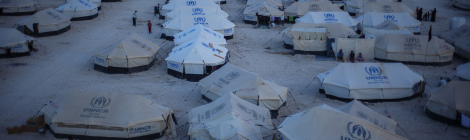
 Climate-related displacement is one of the key challenges facing South Asia in the coming decades. Although there is considerable debate about the salience of the term ‘climate refugees’ and extent to which climate change is a primary cause of forced displacement, there is no doubt that large numbers of people are already having to cope with the impact of environmental changes on their livelihoods and everyday life.

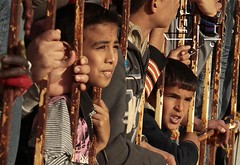 As Libya’s protesters-turned-rebels fight a series of hard battles with forces loyal to Muammar Qaddafi, the United States — and the much of the world — struggles to find a meaningful response to the conflict. U.S. lawmakers have proposed such aggressive options as
  Britain is on standby and the US is already transporting French troops into Mali. But a new paper says the west is “betting on the wrong horse” by intervening in the region.
 Delicious
 Digg
Digg StumbleUpon
 Reddit









 Delicious
 Digg
Digg StumbleUpon
 Reddit
Comments
Post new comment