Blog

  • Sustainable Security

    ‘Petropolitics’ and the price of freedom

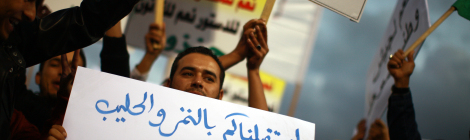
    “As the price of oil goes down, the pace of freedom goes up… As the price of oil goes up, the pace of freedom goes down…” So says New York Times columnist Thomas Friedman, who argues that the first law of ‘petropolitics’ is that the price of oil and the pace of freedom are inversely correlated in countries “totally dependent on oil” for economic growth. However, the correlation between recent oil price spikes and anti-authoritarian action – particularly in the Arab Spring – challenges this assessment. But if this pattern of change is to continue, Western states must curb their hypocritical dependence on authoritarian oil-exporting governments by developing more sustainable sources of energy.

    Read Article →

    Sustainable Finance and Energy Security

    General volatility in financial markets – fuelled by irresponsible lending and trading practices, as well as evidence of market manipulation – have had an effect on oil prices. Although the specific effects of the finance sector on oil prices requires further investigation, we can already understand that a sustainable and secure future will require the development of a wider energy mix to meet rising demand. To this end, more sustainable financial systems must be developed to service the real needs of citizens

    Read Article →

  • Sustainable Security

  • Iraq: the path of war

    Iraq: the path of war

    Paul Rogers | open Democracy | December 2009

    Issues:Competition over resources, Global militarisation

    Tagss:global security, globalisation, Iraq

    Most analysts agree that the security situation across Iraq as a whole has improved in 2008-09. The lower incidence of violence owes something to the consolidated sectarian geography of Baghdad and its environs as a result of the ferocious conflict of the mid-2000s. In any event the decline is relative rather than absolute, for Iraq continues to be a perilous place for many of its citizens.

    In conjunction with the opening of the official inquiry in Britain into the circumstances of the then prime minister Tony Blair’s decision to join the United States-led military campaign against Saddam Hussein’s regime in 2003, the persistent violence in Iraq reopens the question of the impulse of the war and whether other decisions with better outcomes could have been taken.

    A political target

    The everyday dangers in Iraq are illustrated by car-bombings in Mosul (against Christian churches) and Baghdad (near Iraq’s foreign and immigration ministries, and the Iranian embassy) on 15 December 2009; eight people were killed and over fifty injured in the blasts. These are not isolated incidents but part of a pattern of attacks that has evolved throughout 2009. 

    In the early part of the year, most of the attacks were directed at the Shi’a community’s mosques or crowded markets. In its second half, there has been a shift towards systematic bombings of government ministries that have often reached their targets despite high levels of security:

    ▪ on 19 August 2009, ninety-five people were killed and two ministries wrecked in central Baghdad 

    ▪ on 25 October 2009, 155 people were killed in further attacks outside government buildings in Iraq’s capital

    ▪ on 8 December 2009, at least 127 people were killed in car-bombings; many of those who lost their lives were civil servants.

    It is clear that this is a specific campaign to undermine the Nouri al-Maliki government in the run-up to the elections in spring 2010.

    The ease with which insurgents can penetrate highly secure areas is of particular concern to the authorities. Indeed, there is a widespread belief that the insurgents have access to inside information to prepare their operations.

    A grave intention

    These assaults are part of an ongoing if now less intense war that is approaching the start of its eighth year. The issue that dominated its launch, Saddam Hussein’s possession or otherwise of weapons of mass destruction (WMD), has been in effect forgotten. Tony Blair himself stated in a television interview broadcast on 13 December that he would have supported the regime’s overthrow whether WMD existed or not, a point that has raised once more the broader arguments for military action – not least that Saddam had used chemical weapons against Iraqi Kurds in the town of Halabja during the Iraq-Iran war of 1980-88.

    This specific case against Saddam Hussein is dubious, even though the chemical attack on Halabja on 16-17 March 1988 did indeed take place; it killed over 3,000 people and injured twice that number. But it is often forgotten that leading western powers chose to overlook the event, since Iraq was widely seen at the time as a de facto ally against revolutionary Iran.  Within a month, the United States navy was targeting and sinking the warships of its Iranian counterpart, in actions that did much to persuade the Iranians to agree a negotiated end to the war in August 1988.

    But the search for a pretext to effect regime-change in Iraq is in many ways less important than the fact that a firm intention to do so had existed long before the 9/11 attacks.  Nick Ritchie documents with great precision the determination of neo-conservatives and other Republicans to pursue this strategy from as early as 1997 (see The Political Road to War with Iraq: Bush, 9/11 and the Drive to Overthrow Saddam [Routledge 2006]).

    The extensive lobbying from the Republican right for regime termination in the late 1990s was related less to Iraq’s own oil power than to its location in the world’s key oil-bearing region. In particular, a little-noticed event in December 1998 intensified the neocon belief that the United States had to act against Saddam Hussein.

    A bleak arousal

    The background was that the pro-war faction in Washington was becoming concerned that 20% of the world’s oil was owned by two unfriendly states: Iran and Iraq. At the same time, there was at least some reassurance that Saudi Arabia, which controlled another 25% of global oil reserves, was sufficiently close to Washington and would prove trustworthy in a crisis.

    But the House of Saud itself was increasingly worried by domestic anti-American radicalisation, a feeling that was heightened by the United States air-force’s four-day assault on Iraq in December 1998.  A key stated aim of Operation Desert Fox was to damage Iraqi air defences, command-and-control systems and armaments-factories; though there were indications that the real purpose was to support of an attempted internal coup against the regime.

    The US air-force crew involved had undertaken training for this kind of operation; some of its key units operated the advanced F-15E Strike Eagle bombers from bases within Saudi Arabia. But as the momentum built, the Saudi authorities caused consternation in the Pentagon by refusing to allow these bases to be used for direct combat-operations – and even to allow the planes to be transferred to other bases in the region. The kingdom’s leaders in all probability feared that permission to “crusader” forces to attack another Arab country would incite further internal radicalisation.

    The Saudi decision, which meant that Desert Fox had to be undertaken with less competent forces, was a considerable shock to the Pentagon, to the Bill Clinton administration, and even more to the neo-conservatives. Those who had already been calling for regime-termination in Iraq now saw that the Saudi royal house too could not be relied on to support American actions.  The calculations turned bleak: almost half of the world’s oil was in three countries of which two were bitter opponents and the other at best unreliable. Something had to be done.

    A war ordained

    The calls for regime-termination in Iraq became more strident from the end of 1998. They rose to a crescendo after 9/11. Six weeks after the assaults on New York and Washington, an early column in this series argued that:

    “A powerful group in Iraq sees as essential an Iraq offensive, combining extensive air strikes with, in due course, military occupation of Iraq’s southern oilfields, support for Kurdish rebels in the north and Shi’a forces in the south” (see “From Afghanistan to Iraq?”, 21 October 2001).

    Before the end of 2001, well over a year before the war was launched, signs that its planning was underway were discussed in another column:

    “One indicator of possible action is the establishment of a US army headquarter in Kuwait, the HQ concerned being a key component of the army’s commitment to US Central Command, the unified military command that covers the middle east and southwest Asia, including both Afghanistan and Iraq. There are further reports that elements of five different army divisions are preparing for possible deployment to the Gulf early in 2002, including units that have recently undergone extensive desert-warfare training” (see “America’s theatre is the world”, 24 December 2001).

    These developments, all within the first year of the George W Bush administration’s term, were to be reinforced by a British prime minister armed with an implicit belief in the need to support the United States and in the utterly evil nature of the Iraqi regime. The hardening position towards Iraq had intensified after Bush’s inauguration in January 2001; it is now clear that Tony Blair had bought into it with a greater degree of commitment than most people (even those in his party and government) then appreciated.

    Before Operation Desert Fox, the likelihood of war with Iraq was already there.  After the Saudi action and George W Bush’s subsequent election it became almost certain. It may even be that 9/11 and the “diversion” into Afghanistan delayed its onset. The result of the decision was a war of terrible consequences that approaches the end of its seventh year with no end in sight.

    Comments

    Post new comment


  • Oxford Research Group Director Dr. John Sloboda launches SustainablySecurity.org

    Oxford Research Group Director Dr. John Sloboda launches SustainablySecurity.org

    Issues:Climate change, Competition over resources, Global militarisation, Marginalisation

     Swimming Upstream to Sustainable Security

    “Extremist violence and terrorist attacks are often the final, murderous manifestations of a long process rooted in helplessness, humiliation and hatred. Therefore, any comprehensive approach has to also address the upstream factors, the conditions that help fuel violent extremism.”  These words come, not from a left-leaning NGO, but from the mouth of John Brennan, a long-serving CIA officer, who is now President Obama’s senior advisor on counter-terrorism.   They come in a major address given last month at the Centre for Strategic and International Studies, a highly ‘establishment-linked’ Washington think-tank.

    These sentiments mark a huge shift in rhetoric and focus from the mindset of the post-9/11 Bush administration. For a spokesperson of the President to suggest that the USA is “committed to using every element of our national power to address the underlying causes and conditions that fuel so many national security threats, including violent extremism. We will take a multidimensional, multi-departmental, multinational approach” seems a million miles from George Bush’s assertion that, “You’re either with us or against us in the fight against terror.” However, sentiment alone is not enough. New thinking requires new kinds of action on the international stage, and concrete signs of such action are few and far between.

    Since 9/11 we  have seen year on year increases in military budgets, yet the dominant US-led project funded by these increases has yielded few unambiguous security gains. Despite US troops now beginning to withdraw from Iraq, the violence that has cost the lives of at least 100,000 Iraqi civilians continues; truck bombs and mortars killed 95 people on one day alone in August this year. General Stanley McChrystal, the top US Commander in Afghanistan, last week submitted a review to US and NATO commanders in which he outlined grave concerns about the failure of current strategy there.  The resurgence of the ‘Taliban’ is likely to lead to a separate request that the US administration consider allocating extra troops. For the time being, the focus is not on achieving long-term security, but rather on avoiding immediate and humiliating defeat.
     
    The war on terror has created over 4 million refugees and resulted in the detention of over 120,000 people without trial, some for more than 6 years.  Despite this, the threat of terrorism is no doubt still real; al-Qaeda’s remaining leadership, which has most likely moved across the border from Afghanistan to Pakistan, still wields influence. The Somali al-Shabaab has perhaps come under the sway of such influence and lawless Somalia represents a potential future launching point for terrorist attacks. Although previous attempts to tackle the problem may have prevented terrorist attacks in the short-term, little has been done to eliminate the long-term threat.
     
    It is being increasingly realised that to effectively tackle the security problems the world faces,  resources must be diverted away from military spending towards diplomacy and development to address the conditions that ferment radicalisation amongst the marginalised. But the specific details of how this should best be done are still some way from being articulated, let alone turned into workable policies.   The global financial crisis has meant that military budgets are now under greater scrutiny. In the UK, following the 2010 general election, the new government will hold a defence spending review. The review will provide a key opportunity to reconsider costly projects such as the replacement of trident and the building of two new Royal Navy aircraft carriers. But without clear and compelling alternatives, closely articulated in detail as well as commanding strong public support, governments may squander such opportunities and adopt a “business as usual” approach, tinkering at the margins rather than adopting a fundamentally new approach.   The disappointingly status-quo oriented governmental responses to the global banking crisis of 2008 shows what the default response is likely to be unless there is compelling and persistent encouragement to “step outside the box”.

    One task is to demonstrate in necessary detail that diverting money from defence towards diplomacy and development will be cost effective in the long run.  It needs to be established beyond any reasonable doubt that responses that attempt to control the symptoms of insecurity have proved more expensive than responses that address the root causes. For instance, in the 15 years from 1990 to 2005 conflict had an economic cost to Africa’s development of $284billion. As the IANSA, Oxfam, and Saferworld report that identified this figure states: “If this money was not lost due to armed conflict, it could solve the problems of HIV and AIDS in Africa, or it could address Africa’s needs in education, clean water and sanitation, and prevent tuberculosis and malaria.” Whilst widening social divisions, poverty and injustice exist; radical groups are always likely to find recruits amongst the marginalised.

    Even with increased resources, such issues cannot be tackled by one state alone, however powerful. Approaches to development must be collaborative. The often-uncoordinated actions of aid agencies and donor countries have at times proved counterproductive. For this reason, another task facing the world is to work out how to productively strengthen the capacity of regional and international organisations. More detailed attention needs to be given to showing how organisations such as the UN can better facilitate co-ordinated efforts of nation states to address the social, economic, and political problems that breed insecurity. Likewise, we need to examine closely how organisations such as the AU and ASEAN can be strengthened to address particular regional issues such as the absence of arms control architecture in the Asian region.

    Climate change and competition over resources represent further key challenges to global security. As with marginalisation, there is an increasing realisation that these issues can only be tackled collaboratively.  It has now been broadly accepted that the Climate Conference in Copenhagen must result in an agreement from developed countries to reduce carbon emissions by 80% by 2050, and that strong targets are agreed in the short to mid-term (40% by 2020 from a 1990 base). But even these will not be sufficient unless developing countries likewise commit to ambitious reductions in carbon emissions. Is there yet sufficient clarity about how they will be given the appropriate support to do so by their more developed counterparts? 

    We face multiple resource crises, of food, water, and energy.  The International Energy Agency has suggested that oil supplies are likely to peak as early 2020 and an ‘oil-crunch’ is likely to occur this decade.  Competition over resources may escalate and become more aggressive.  To avoid early resource conflict, ambitious proposals such as Professor John Matthews’ bio-pact need to be developed and promoted within the international system so that robust and credible solutions are to hand as the situation becomes more critical.

    If we are to avoid future global disaster on an epic scale, then the step change in security thinking that has already begun must result in the adoption of sustainable security policies that encompass the principles of collective, human and just security.  Left to follow their own momentum, governments are unlikely to fully embrace sustainable security.  When seen primarily through the lens of national interest, sustainable security concepts will tend to be appropriated (and diluted) as means to sustain the status quo and existing power relations.   If sustainable security is to become an end, with the security of humanity in its totality as the goal then community groups, faith groups, NGOs, and many other elements of civil society (including journalists) must coordinate their efforts to promote such policies. John Brenner’s call for security policies to “swim upstream” is admirable, but unless this call propels us far beyond national interest, the rapid current of realpolitik is likely to dump us all far downstream.  We hope that this new website will provide a focus for swimming strongly and persistently upstream.  


  • Sustainable Security

    Violence between nomads and sedentary populations has become widespread across the globe and there is an urgent need to address the root causes of this escalation of violence.

    Conflicts between nomadic and sedentary communities are increasing. Control over the use of land and natural resources is very often at the heart of these conflicts, which are becoming a common occurrence in much of West, Central and East Africa. In Nigeria the escalation of violent incidents between nomadic Fulani herdsmen and sedentary farmers has reached such a level that it is seen as more dangerous than the exactions of Boko Haram. This is not limited to Africa as there are also increased levels of conflicts between nomadic pastoralists and sedentary farmers in India, Pakistan, Afghanistan, Yemen, China, Tibet, and Mongolia. Violent clashes between nomads and sedentary populations have become widespread across the globe. In light of this, understanding the causes of these conflicts and clashes is essential in order for effective remedial initiatives to be found.

    Agriculture, Climate Change and Sedentarisation

    3317132339_fbfd77a60b_b

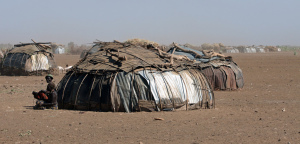
    Nomadic homes of the Dassanech tribe in Ethiopia. Image Carsten ten Brick via Flickr.

    There are several different factors behind this increase of conflicts. The spreading of agriculture, nature conservation areas, oil and mineral extraction, and tourism, are putting increased pressure on the territories traditionally used by nomadic communities for transhumance, grazing and sources of livelihoods. As summarised by Elliot Fratkin, a leading expert on pastoralism, these threats include “the expansion of farmers, ranchers, and game parks on their lands; the privatisation, commodification, and subdivision of the range; the growth of cities, the outmigration of poor pastoralists to urban areas, and dislocations brought about by drought, famine, and political conflict“. Climate change is another non-negligible factor pushing for increased competition on the control of lands and natural resources. In recent decades, changes in climate patterns have led to extreme situations of drought pushing for changes of transhumant routes and modification in pastoral migration patterns. The Security in Mobility Initiative observes that: “The increase in frequency and length of drought cycles has forced herders to move more frequently, often to new destinations for extended periods. This adaptive trend has gone hand in hand with an increase in inter‐communal conflict.”

    All these factors are contributing to daily increases of disputes between sedentary and nomadic communities, including destruction of crops, over-grazing of land, indiscriminate bush burning, cattle theft and straying of cattle. These daily occurrences can sometimes lead to more serious escalations of violence as some of the recent conflicts have shown. For example, the report of the International Commission of Inquiry on Darfur highlighted that one of the main contributing factors to the conflict in the Darfur region was “the competition between various tribes, particularly between sedentary tribes and nomadic tribes over natural resources as a result of desertification.” This tragically led to the multiplication of extremely violent raids against sedentary villagers, and the destruction of ancestral patterns of cooperation that had previously governed the relationship between the different groups. This is only a single illustration of a common regional pattern as indeed, pastoralist-sedentary tensions are a common element in many of conflict areas, as seen in Uganda, Kenya, Southern-Sudan, Ghana, Mali, Niger, Nigeria and Somalia.

    These conflicts are not only based on competition to access natural resources, as very often there are some deeply embedded tensions between nomadic and sedentary communities, which is reflected in the lack of inclusion and respect for nomadism in political, economic and legal institutions. Governmental agencies and developmental organisations often view nomadism as an anachronism, or a primitive way of life, which needs to be ‘modernised’. A predominant perception is that nomadism was a primitive form of civilisation and that humankind has developed into a more ‘civilised’ settled form of life. This is often transformed into very aggressive forms of forced sedentarisation, which means the settling of a nomadic population. Whilst these forceful forms of imposed sedentarisation have started to be challenged at the international level, their legacy is still felt at the local levels where many agencies (public and private) are still pursing forceful imposed policies of sedentarisation (‘development through sedentarisation’). This not only creates serious resentment from the nomads but also creates extreme pressure points with their sedentary neighbours.

    Marginalisation, Land Insecurity and Invisibility

    Most nomadic communities are facing a lack of access to education, poor healthcare and economic marginalisation, often leading to breakdown in traditional modes of living and further marginalisation. The lack of land security is an important factor contributing to nomads increased marginalisation and insecurity. Traditionally, most nomadic communities rely on customary systems of communal land usage that are usually not recognised by State authorities. Most governments have adopted an approach based on western individualistic land tenure systems, favouring private ownership. Consequently, nomadic peoples’ mobile and collective patterns of land tenure are not recognised. Most national land tenure systems are supporting sedentary forms of land usage as they rely on the colonial concept of ‘productive use of the land’. Under this approach, farmers, settled agriculture, and other intensive forms of land usage are the only forms of recognised land tenure.

    Whilst there have been there has been some positive evolutions to challenge this predominant sedentary vision of land tenure rights — with examples of the adoption of  ‘Pastoral Code’ in Mauritania and Niger recognising access to grazing resource and migratory routes — generally nomadic peoples’ rights to land are not recognised under the formal land management regulations. More generally, most legal systems across the globe primarily support a sedentary approach to citizenship and justice: to get citizenship one needs a permanent abode, and to get access to justice one needs a permanent residency. International law has not fared any better as in general nomadic peoples have remained peripheral to the development of international law. Worst still is the fact that nomadic peoples have generally been the victims of rules governing title to territory and sovereignty that have been developed under dominant sedentary principles. Under international human rights law, there have been some positive evolutions acknowledging the need to recognise the specificity of nomadic peoples’ rights, such as mobile education or access to water resources. But in general nomadic people find very little protection under the international system of human rights. Even the ever-expanding legal regime to protect indigenous peoples has not integrated the specific demands and needs of nomadic communities. For example, the United Nations Declaration on the Rights of Indigenous Peoples, which was adopted in 2007 by the United Nations General Assembly, does not mention nomadism or nomadic peoples.

    Thinking more broadly in terms of international politics and international relations, nomadic peoples are nearly invisible. At a time when conflicts between nomads and sedentary communities are on the rise, this invisibility and lack of access to international politics is problematic. The voices of the nomads are not heard, or even considered. Civil society organisations have tried to remedy such invisibility in supporting the emergence of a ‘global nomadic movement’. This has notably resulted in the adoption of the Dana Declaration on Mobile Peoples and Conservation in 2002 and in the Segovia Declaration of Nomadic and Transhumant Pastoralists in 2007. These two declarations, developed with the inputs and direct participations of representative of nomadic and pastoralist organisations, represent significant advocacy documents calling for more visibility in international law and politics.

    A Way Forward?

    The threat to nomadic peoples, and nomadism as way of life, is global. The danger is not only that humankind could lose precious cultural and social assets, but also that it could suffer the loss of a very sustainable way of life. For centuries nomadism and mobility in the use of natural resources has ensured a sustainable access to sources of livelihood for many nomadic communities who often live in very fragile and harsh environments. Pushing these communities outside these zones creates serious environmental strains on areas of the globe that cannot sustain an extensive sedentary use of the resources. There is an urgent need to recognise the rights of the nomads to perpetuate their way of life and to maintain a mobile use of the natural resources. A clarification of the rights of the nomads over their grazing rights, demarcation of zone of transhumance, and recognition of their access to water sources would contribute to alleviate the escalating tensions. The overemphasis on agriculture, the lack of recognition of grazing rights, and the loss of their territories are all contributing factors pushing several nomadic groups to engage into violence. Not that violence is ever justified, but there is an urgent need to address the root causes of this escalation of violence. From this perspective there is a need from the international community, but also state authorities and developmental agencies, to actively engaged with nomads and ensure their inclusion in a fair and participative manner to the regulations regarding land tenure and the use of natural resources. As it has been seen recently in several West and East African countries, paramilitary groups and terrorist organisations can often thrive on these tensions and turn these into full-scale violent conflicts.

    Jérémie Gilbert is Professor in International and Comparative Law at the University of East London (UK). He has published various books, articles and book chapters on the rights of indigenous peoples, looking in particular at their right to land. His latest monograph is ‘Nomadic Peoples and Human Rights’  (Routledge, 2014).  He has worked with several indigenous communities across the globe and has served as a consultant for several international organisations. He was one of the invited independent experts for United Nations Expert Seminar on Treaties and other arrangements between States and Indigenous Peoples, and was a consultant for the Expert Mechanism on the Rights of Indigenous Peoples. Contact:

  • Sustainable Security

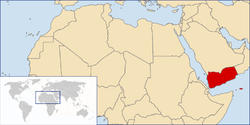
    It has been over a year since the Saudi bombardment of Yemen began. In that time a humanitarian catastrophe has been unfolding, killing over 6000 people and leaving millions without access to vital infrastructure, clean water or electricity, leaving the country on “the precipice of disaster.” The destruction on the ground has exacerbated the ongoing civil war between Yemeni forces and Houthi rebels, helping to create a power vacuum that has allowed the expansion of Al-Qaeda and ISIS with reports describing the latter making serious territorial gains, such as around the port city of Mukalla.

    The price has also been felt in Saudi Arabia, where mortars and rockets being fired by Houthi groups in Yemen are also killing civilians. Saudi sources claim 375 civilians have been killed since hostilities began. The Saudi regime has said that the conflict is being downscaled, but the death toll is increasing. It claims that it is only striking legitimate military targets, and that much of its work is to spread humanitarian aid, but many of the sites being hit are civilian. A recent air strike on a busy market place killed over 100 people, with witnesses reporting two missiles being fired from the air. According to UN officials 22 children were killed in the strike. The violence has been rightfully condemned by a range of campaign groups and NGOs, with a growing number of voices suggesting the intervention has not just been immoral, it has also been illegal.

    In July 2015 the European Parliament passed a motion to “Condemn the air strikes by the Saudi-led coalition and the naval blockade it has imposed on Yemen.” The motion went on to state that “air strikes by the Saudi-led military coalition in Yemen have killed civilians, in violation of international humanitarian law, which requires all possible steps to be taken to prevent or minimise civilian casualties.” One month later, Stephen O’Brien, Under-Secretary-General for Humanitarian Affairs and Emergency Relief at the United Nations, reported to the UN Security Council, that the “scale of human suffering [in Yemen] is almost incomprehensible.” Condemning “attacks on residential areas and civilian infrastructure” he asserted that the Saudi attacks are “in clear contravention of international humanitarian law.”

    These condemnations have been supported by a growing number of NGOs. Human Rights Watch, Oxfam and Médecins Sans Frontières (MSF) have all accused Saudi Arabia of breaking international humanitarian law. Amnesty International and Saferworld also recently commissioned a legal opinion from Philip Sands QC, which accused Saudi forces of breaking international humanitarian law. Since then, both the European Parliament and the UN have taken their concerns further. This January, a UN panel accused Saudi Arabia of “widespread and systematic” attacks on civilian targets. Its 51 page report “documented 119 sorties relating to violations of international humanitarian law” and reported starvation being used as a war tactic. The report concluded by stating that “not a single humanitarian pause to alleviate the suffering of the Yemeni people has been fully observed by any Yemeni party or by the coalition.”

    Last month, despite a concentrated lobbying operation from Saudi Arabia, parliamentarians in Brussels went further, voting overwhelmingly to support an arms embargo against Saudi Arabia. The vote was not legally binding, but it sent a strong political statement and set an important precedent. Commenting on the destruction of the first of three hospital facilities it has lost in the last year, Hassan Boucenine, Country Director of MSF, said “the fact of the matter is it’s a war crime. There’s no reason to target a hospital. We provided [the Coalition] with all of our GPS coordinates.” Since then MSF has announced the closure of its fourth and final hospital in the country, following air strikes in the area. Despite all of these widespread and credible criticisms and allegations, there is no solid evidence of Saudi forces taking any meaningful action to minimize harm to civilians, or making any serious attempts to investigate the deadly consequences of the bombing.

    To this backdrop you would hope that the international community would be applying pressure to the Saudi government and calling for meaningful peace negotiations. Unfortunately the exact opposite has happened, with governments like the UK fuelling the devastation by providing political support and selling large quantities of arms to Saudi Arabia. The Foreign Secretary, Philip Hammond, made the UK’s position very clear from the outset, when he pledged to “support the Saudis in every practical way short of engaging in combat.” Unfortunately he has stayed true to his word.

    The UK government has licensed over £2.8 billion of arms to Saudi since air strikes began last March. UK fighter jets and bombs have been central to the bombing campaign, with Eurofighter aircraft taking part in air strikes and UK-supplied Paveway IV bombs being dropped from the skies. Last year the UK sent bombs that were originally earmarked for the RAF to Saudi forces to be used against Yemen. UK arms export law is very clear. It says that licences for military equipment should not be granted if there is a “clear risk” that it “might” be used in violation of international humanitarian law. By any reasonable interpretation these criteria should surely prohibit all arms sales to Saudi Arabia that could be used in Yemen. The support has gone beyond arming Saudi forces. Earlier this year, the Saudi Foreign Minister confirmed that UK military personnel have been in Saudi control rooms assisting with the bombing and helping to train Saudi forces.

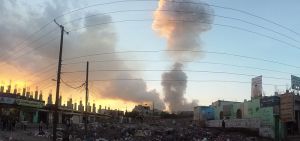
    Air_strike_in_Sana'a_11-5-2015

    Air strike in Sana’a. Image via Wikimedia Commons.

    In response to growing concerns, the House of Commons Committee on Arms Export Controls has called an investigation into the use of UK arms in the conflict. The first sessions have taken place and the Committee is expected to report later this year. The government’s response has been to discard the growing body of evidence and argue that is has not seen any sufficient evidence to conclude that Saudi is breaching international law. It argues that the UK is in constant dialogue with the Saudis while parroting the tired old line that it has some of the most ‘rigorous’ and ‘robust’ arms export controls in the world. One of the arguments for this approach is that the UK can use a positive influence over Saudi forces and ensure that they are following international law. This is an implicit theme when government spokespeople use lines such as “We regularly raise with Saudi Arabian-led coalition and the Houthi the need to comply with International Humanitarian Law in Yemen.” However there is no evidence that the UK has ever reined in Saudi aggression. When it comes to arms sales the power in the relationship lies almost entirely with the buyer.

    Of course the relationship is nothing new. For decades now successive UK governments, of all political colours, have given an uncritical level of support to the Saudi regime. One outcome of this partnership has been the high level of integration between UK and Saudi military programmes. Around 240 UK Ministry of Defence civil servants and military personnel work to support the contracts through the Ministry of Defence Saudi Armed Forces Programme (MODSAP) and the Saudi Arabia National Guard Communications Project (SANGCOM).

    The last time the UK relationship with Saudi was put under the microscope as much as it is today was in 2006, when the Serious Fraud office began looking into corruption relating to arms sales to Riyadh. The investigation threatened to unearth a litany of embarrassing details, but, after a concerted lobbying effort, including interventions by Tony Blair and the Attorney General, it was dropped. Shortly after the investigation was stopped a major deal on fighter jets was agreed, one that would be worth over £4.4 billion. This pattern of trading arms deals and political favours has only continued. In the last few months serious allegations have emerged that the UK helped to lobby behind the scenes to secure Saudi Arabia’s election to the UN Human Rights Council; a membership which would be laughable if the on-going consequences weren’t so serious. Furthermore, it is perhaps no surprise that Saudi was the only major state with the death penalty to be omitted from the UK’s anti-death penalty strategy.

    Earlier this month, CAAT and our lawyers at Leigh Day submitted a claim for a Judicial Review into the arms sales. We are calling on the Department of Business, Innovation & Skills to suspend all extant licences and stop issuing further licences for arms exports to Saudi Arabia while it holds a full review into whether the exports are compatible with UK and EU legislation. It is likely to be a long process, but it is also a very important one. The action is specific to Yemen, but it will expose the hypocrisies at the heart of UK foreign policy, particularly concerning human rights. The longer that this hypocrisy goes on the more victims there will be. If UK arms export law is worth anything then the government must finally stop arming Saudi Arabia.

    Andrew Smith is a spokesperson for Campaign Against Arms Trade (CAAT). You can follow CAAT on Twitter at @CAATuk.

  • Sustainable Security

    by Amira Armenta

    Colombia 2011 article smallIn Colombia there are many regions where poverty and the absence, or weak presence, of the state has facilitated the emergence of violence by armed groups. Among these are the Afro-Colombian communities of the Curvaradó and Jiguamiandó in the Urabá region

    The Urabá is located in the Northwest of Colombia, near the border with Panama. It is a region of great biodiversity, rich in minerals, oil, water, and timber, amongst other natural resources. Urabá is also one of the regions with the highest poverty rates, and lowest rates of schooling in the country. The region is inhabited by many indigenous peoples and Afro-Colombians, who are the traditional owners of hundreds of thousands of hectares of land. Collective ownership of these territories is supported by Colombian Law 70 of 1993.

    With the rise of drug trafficking in the country in the 80s, the region became a point of export of illegal narcotic drugs. At the same time, the illegal import of weapons soared to meet the growing demand of Colombian armed groups. Various increasingly powerful criminal groups (known as ‘paramilitaries’) began to invest money earned from their illegal activities in profitable lawful sectors such as the agribusiness – palm oil, bananas and cattle. In a few years Urabá went from being a marginal and sparsely populated region to a place where settlers converged, and multinational corporations and armed groups of all stripes were vying for control of territory and a stake in the business.

    In this context, poor rural communities such as bold”>Curvaradó and Jiguamiandó were sucked into the violence unleashed between the different armed groups. As the collective ownership of land was an obstacle to the economic interests of the new sectors (farmers and landowners whose funds often had an illicit origin), these groups used threats and harassment to banish the native people and appropriate their land. This violence and banishment was possible given the state of marginalization of the population, totally unprotected by the central government. Large palm oil plantations installed since then in the area have been financed largely with the laundered drug money. They use land violently obtained by the forced displacement.

    Since the 1990s, the Curvaradó and Jiguamiandó communities have specifically been the target of violence and subsequent displacement. They have lost their few belongings and have helplessly seen the powerful economic groups systematically seize their land.

    The Colombian government has recently begun a process of returning land to the inhabitants of the river basins of Curvaradó and Jiguamiandó and reparation for victims of violence. The move is encouraging, but it might not be enough to solve the problems. The history of violence can repeat itself any moment, as long as the causes that led to the banishment and violence are not addressed and those responsible are not punished. Standards of justice must apply, not just to those still operating outside the law, but also to those who now operate legally but whose past is murky.

    Whilst the Colombian government fails to fully develop social development programs (including education, health and infrastructure) and sustainable economic development policies to assist marginalised communities, the people of Curvaradó and Jiguamiandó will remain poor, uneducated, vulnerable, and at risk of lose their territories once again.

    Amira Armenta is a Researcher with the Drugs & Democracy Programme of the Transnational Institute (TNI), with a particular focus on Colombia.

    Image source: Yuliam Gutierrez

    Some Useful References

    Murder in Curvaradó: http://www.cipcol.org/?p=682  Bajo Atrato

    UNHCR on the situation of Colombian Afro Descendants: http://www.acnur.org/t3/fileadmin/scripts/doc.php?file=t3/fileadmin/Documentos/RefugiadosAmericas/Colombia/EN/Colombia_Situation_-_2011_International_Year_of_Afrodescendants

    Alternative Developments, Economic Interests and Paramilitaries in Uraba : http://www.tni.org/sites/www.tni.org/files/download/brief27fin.pdf

    El caso de Jiguamiandó y Curvaradó: http://www.lasillavacia.com/historia-invitado/22660/yamile-salinas-abdala/el-caso-de-jiguamiando-y-curvarado-estrategia-criminal

    Coca y violencia en el Chocó BiogeográficoL: http://www.tni.org/es/archives/archives_armenta_cocachoco

    Comisión Intereclesial de Justicia y Paz – Jiguamiandó y Curvaradó: http://justiciaypazcolombia.com/-Consejo-comunitario-de-Jiguamiando-

    Las tierra de Curvaradó de nuevo invadidas – Verdad Abierta : http://www.verdadabierta.com/paraeconomia/tierras/2944-las-tierras-de-curvarado-de-nuevo-invadidas

    Bajo Atrato se resiste a la violencia y a la pobreza: http://www.elcolombiano.com/BancoConocimiento/B/bajo_atrato_se_resiste_a_la_violencia_y_a_la_pobreza/bajo_atrato_se_resiste_a_la_violencia_y_a_la_pobreza.asp

  • Global militarisation

    Global militarisation

    The current priority of the dominant security actors is maintaining international security through the vigorous use of military force combined with the development of both nuclear and conventional weapons systems. Post-Cold War nuclear developments involve the modernisation and proliferation of nuclear systems, with an increasing risk of limited nuclear-weapons use in warfare – breaking a threshold that has held for sixty years and seriously undermining multilateral attempts at disarmament. These dangerous trends will be exacerbated by developments in national missile defence, chemical and biological weapons and a race towards the weaponisation of space.

    The SWISH Report (16)

    Paul Rogers | openDemocracy | January 2010

    Issue:Global militarisation

    On the anniversary of Barack Obama’s inauguration as United States president, the al-Qaida movement invites the respected SWISH management consultancy to assess its prospects.

    Read more »

    Israel’s shadow over Iran

    Paul Rogers | open democracy | January 2010

    Issue:Global militarisation

    Tagss:Iran, Israel

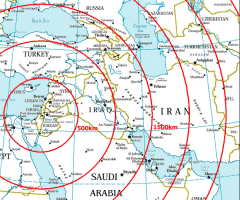
    Excerpt: Most of the international attention on Iran in the second half of 2009 focused on the political turmoil following the presidential election of 12 June. The discussion of Iran’s nuclear capabilities and plans receded from the foreground, though it continued behind the scenes among all the states and international agencies involved. The signs are that, whatever the outcome of the domestic confrontation between the Mahmoud Ahmadinejad regime and the opposition, the coming months will see a sharpening of tension over the nuclear issue. This raises the question of whether there will be a military assault on Iran’s nuclear facilities – most likely by Israel, since there is little likelihood that the Barack Obama administration would countenance direct United States military action against Iran – in an attempt to stop the country from acquiring a nuclear weapon.

    Image: Globalsecurity.org

    Read more »

    Yemen: Latest U.S. Battle Ground

    Stephen Zunes | Foreign Policy in Focus | January 2010

    Issue:Global militarisation

    Tagss:Al Qaeda, Yemen

    Excerpt: The United States may be on the verge of involvement in yet another counterinsurgency war which, as in Iraq and Afghanistan, may make a bad situation even worse. The attempted Christmas Day bombing of a Northwest Airlines flight by a Nigerian apparently planned in Yemen, the alleged ties between the perpetrator of the Ft. Hood massacre to a radical Yemeni cleric, and an ongoing U.S.-backed Yemeni military offensive against al-Qaeda have all focused U.S. attention on that country.

    Read more »

    Al-Qaida: the Yemen factor

    Paul Rogers | open Democracy | January 2010

    Issue:Global militarisation

    Tagss:Conflict, Yemen

    Expert: Most of the focus of the United States war on al-Qaida since 9/11 has been on Afghanistan, Pakistan and Iraq; relatively little attention has been given to the two states on either side of the Gulf of Aden – Yemen and Somalia. Any surplus resources away from the middle east and southwest Asia have tended to be devoted to Algeria and Mali as potential sites for al-Qaida activity.

    Yet, Paul Rogers points out that with Umar Farouk Abdulmuttalab’s attempt on 25 December 2009 to destroy a Northwest Airlines flight as it approached Detroit and his connections with Yemen, al-Qaida may simultaneously be in decline in Afghanistan and Pakistan, but growing in the Gulf of Aden.

    Read more »

    Iraq: the path of war

    Paul Rogers | open Democracy | December 2009

    Issues:Competition over resources, Global militarisation

    Tagss:global security, globalisation, Iraq

    Most analysts agree that the security situation across Iraq as a whole has improved in 2008-09. The lower incidence of violence owes something to the consolidated sectarian geography of Baghdad and its environs as a result of the ferocious conflict of the mid-2000s. In any event the decline is relative rather than absolute, for Iraq continues to be a perilous place for many of its citizens.

    In conjunction with the opening of the official inquiry in Britain into the circumstances of the then prime minister Tony Blair’s decision to join the United States-led military campaign against Saddam Hussein’s regime in 2003, the persistent violence in Iraq reopens the question of the impulse of the war and whether other decisions with better outcomes could have been taken.


    Originally published in openDemocracy.

    Read more »

    Global Security after the War on Terror

    Paul Rogers | Oxford Research Group | November 2009

    Issues:Climate change, Global militarisation, Marginalisation

    This paper examines the context of the decision to go to war after 9/11 and the anticipated results. It goes on to analyse the actual  consequences and seeks to explain why they have been so radically different to original expectations by the United States and its closest coalition partners such as the UK. The paper then updates the analysis of the major global challenges that Oxford Research Group has previously discussed and the need for a new paradigm focused on sustainable security. It concludes by assessing how the experience of the eight years that have followed the 9/11 atrocities might make a change of paradigm more likely.

    Read more »

  • Sustainable Security

    Author’s Note: This post is based on a journal article which first appeared in International Peacekeeping in 2016.

    During the Cold War, Denmark was a staunch supporter of UN peacekeeping. Following the fall of the Berlin Wall, however, Denmark gradually turned its back on peacekeeping. More recently, Denmark has given priority to NATO- and US-led operations. This shift was driven by a number of interweaving factors. 

    In its 2015 input to the High-Level Independent Panel on Peace Operations (HIPPO) chaired by Ramos-Horta, Denmark characterized itself as ‘a dedicated and engaged contributor to United Nations (UN) Peace Operations’. It also stated that ‘UN peace operation activities remain a central pillar of Denmark’s foreign and security policy’, and that Denmark since 1948 has provided more than 84,000 soldiers and staff members to more than 30 UN peacekeeping operations. The input to HIPPO did not mention that since 2001 Denmark has primarily made symbolic contributions of some 40-60 military observers, staff officers and advisors to UN operations, or that Denmark since 1995 has prioritized military operations led by other actors, notably the North Atlantic Treaty Organization (NATO) and the United States (US).

    Two drivers have shaped Denmark’s evolving support for UN-led blue helmet peace operations since the beginning: a national interest in preserving Denmark’s security and welfare and an altruistic desire to do good. The mutually reinforcing interaction between interests and altruism meant that peacekeeping became internalized into Denmark’s foreign policy identity. As a result, a third driver materialized by the late 1950s: an identity-driven urge to contribute to peacekeeping because it was the ‘natural’ thing, which constituted a source of national pride and made Danish policy makers feel good.

    When these three drivers “clicked” and reinforced one another, support for UN peace operations was strong and internalized as a major component of Danish foreign policy. When they stopped doing that, support for UN peacekeeping fell dramatically. This is the situation now, and it seems unlikely to change in the near future.

    Denmark’s history of peacekeeping during and after the Cold War

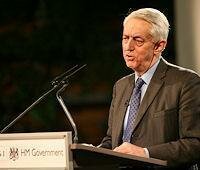
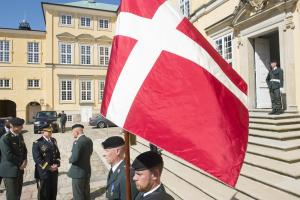
    Image credit: Danish Government.

    Denmark began supporting UN peacekeeping during the Cold War because it allowed Danish decision makers to promote their interests and values at the same time. UN peacekeeping was regarded as good for national security because it lowered international tension and provided a way of supporting Denmark’s key NATO allies without angering the Soviet Union. UN peacekeeping was also good for Danish values as it supported Denmark’s vison of a rule-based international society characterized by peaceful conflict resolution. The successful peacekeeping operation launched in 1956 in order to defuse the Suez crisis strengthened Denmark’s support for peacekeeping.

    The praise earned for the participation in this mission made Danish decision-makers realize that UN peacekeeping also provided an effective way of enhancing Denmark’s international prestige and influence. By the late 1950s peacekeeping had been internalized as part of Denmark’s foreign policy identity. Danish governments now portrayed UN peacekeeping as something ‘natural’ that Denmark should be proud to support. In 1964, Danish Foreign Minister Per Haekkerup even stated that it was a ‘duty’ for small nations like Denmark to support UN peacekeeping. This was not mere rhetoric. A feeling that one could not turn down a UN request thus influenced the 1964-decision to provide 1,000 personnel for a new UN peacekeeping operation on Cyprus.

    This mutually reinforcing interaction between interests, values and identity meant that Danish support for UN peacekeeping operations became routine. The absence of operational setbacks and casualties allowed this routine to produce a steady supply of Danish peacekeepers for the remainder of the Cold War. 34,100 Danish soldiers served on UN operations in the 1948-1989 period. Denmark had an average of 811 soldiers continuously deployed abroad and contributed eight percent of the total number of UN peacekeepers (419,100) during this period, making it one of the largest UN troop contributors per capita.

    The operational difficulties that the UN encountered in the Balkans in the early 1990s broke this routine. They served as an external shock undermining Denmark’s positive perception of UN peace operations. NATO’s successful bombing campaign and subsequent takeover of the UN operation in Bosnia in 1995 made the UN less attractive from an interest perspective. Denmark had always used UN peacekeeping as a way supporting its great power allies in NATO, and when they chose to abandon the UN in favour of NATO, Denmark followed suit.

    The strategic failure of the UN operation in Bosnia, culminating in the Srebrenica massacre, also gave rise to the perception in Denmark that UN peacekeeping was ill-suited for ‘doing good’ in the post-Cold War era. The tactical success enjoyed by the Danish tank squadron in Bosnia in 1994 reinforced this perception. One engagement (Operation Hooligan Buster) made international headlines. On 29 April 1994, the Danish tanks successfully fought their way out of a Serb ambush firing their 105 mm canons 72 times. They also blew up an ammunitions depot killing an estimated 150 Serb soldiers. This skirmish became a watershed. Denmark’s great power allies showered Denmark with praise, and the Danish use of tanks influenced NATO’s and UN approaches to ‘robust peacekeeping’. The charismatic Danish tank commander, Lars R. Møller, became a national hero, and Danish decision makers became convinced that peacekeeping was best conducted with combat capable units; a perception subsequently reinforced by NATO’s successful enforcement missions in the Balkans.

    Operation Hooligan Buster set in motion a process that in the course of the next two decades transformed Denmark’s foreign policy identity. The Danish peacekeeper, hailed for his ability to keep the peace without firing his weapon, was replaced by a new hero: the Danish warrior who made a difference on the battlefield. After Operation Hooligan Buster Danish politicians displayed far greater willingness to use force beyond self-defence. Denmark made large army contributions to NATO’s enforcement operations in the Balkans, advocated military invention in Albania as OSCE chairman in 1997, and allowed Danish fighter aircraft to conduct strike missions during NATO’s Kosovo War in 1999. Public support for the Kosovo war was higher in Denmark than anywhere else, and a large majority favoured contributing to a land war in case the air campaign failed. The strong public support for the war took Danish decision makers by surprise. Danish Minister of Defence Hans Haekkerup interpreted it as ‘a breakthrough in the history of Denmark’ and as proof that the Danish foreign policy identity had changed.

    Denmark and the War on Terror

    The US-led war on terror launched in response to the September 11 attacks in 2001 reinforced the Danish preference for NATO- and US-led operations and the emerging warrior identity. Denmark provided forces for the US-led wars against the Taleban and Iraq as well as the subsequent stabilization missions. The lion’s share of the approximately 20,000 Danish military personnel serving on international missions in the decade following 9/11 served in these two missions.

    The Danish participation in the NATO and US missions in Afghanistan proved very costly. Denmark lost more soldiers in Afghanistan (43) than on all other international missions conducted by the Danish armed forces since World War Two, and a 20 billion DDK price tag (2001-2017) made it the most expensive international operation ever conducted by Denmark.

    Surprisingly, the high costs and the less than satisfactory outcome of the Afghanistan war did not undermine domestic support for the mission. By 2011 when all 43 fatalities had occurred and it was clear that the mission would not succeed, 46% of the Danish population and a large majority in parliament continued to support it.

    The predominant understandings of Danish interests, altruism and foreign policy identity explain why. The government narrative portrayed the war as being in Denmark’s interest because it supported the United States and NATO and reduced the risk of terror attacks on Danish soil. The narrative also emphasized that the operation enhanced Denmark’s standing and influence in NATO and in Washington. The mission was portrayed as the right thing to do in altruistic terms, because it helped the Afghan people and in particular the Afghan women. Finally, the war reinforced the warrior ethos in the armed forces and their martial prowess, highlighted in a series of bestselling books, was a source of considerable national pride.

    Conclusion

    The current high level of Danish support for NATO- and US-led operations is driven by a mutually reinforcing combination of interest, altruism and identity that resembles the one that underpinned Denmark’s strong support for UN peace operations during the Cold War. An interest in supporting Denmark’s great power allies was an important driver then and now. A major Danish return to UN peace operations NATO has enhanced its military presence in Eastern Europe significantly since then, and it is currently asking Denmark to make a greater army commitment to deter Russia in Eastern Europe than it ever made in Afghanistan. This makes it impossible for Denmark to contribute to UN-led operations with anything but small personnel contributions officers and critical enables. In sum, all indications are that Denmark’s military support for UN peacekeeping will remain at the low level that has characterized it since 2001.

    Dr. Peter Viggo Jakobsen is an Associate Professor at the Royal Danish Defence College and a Professor (part-time) at the Center for War Studies at University of Southern Denmark. His is the author of Nordic Approaches to Peace Operations: A New Model in the Making? (London and New York: Routledge, 2009) and several other publications on (UN) peace and stabilization operations.

  • Three connected conflicts – Iraq, Afghanistan and Pakistan

    Three connected conflicts – Iraq, Afghanistan and Pakistan

    Paul Rogers | Oxford Research Group | February 2010

    Issue:Global militarisation

    Tagss:Afghanistan, Conflict, Iraq, Pakistan

    At the beginning of February, ISAF sources announced that a major military offensive was about to be mounted in Helmand Province in southern Afghanistan. This was Operation Moshtarak (“together”), involving 15,000 US, British and Afghan National Army troops, and would concentrate on clearing Taliban and other paramilitary groups from two areas, one of them centred on the town of Marja. The publicity given to the operation appeared designed partly to encourage civilians to evacuate areas under Taliban influence, but would also serve to highlight the capabilities of coalition forces at a time when support for the war in the United States and Britain was fragile.

    Given the size of the operation, it is likely that it will provide a major focus for western media attention for some weeks, but to get a full measure of its significance requires seeing it in the wider context of the conflicts in Iraq and Pakistan, and of the Status of the al-Qaida Movement. There have, in particular, been significant developments in both Iraq and Pakistan, with each likely to have an impact on what is now happening in Afghanistan.

    Iraq 

    The additional deployments of US troops to Afghanistan will take the overall numbers of NATO forces up to about 140,000 by the latter part of the year, with many thousands of private security personnel operating in the country as well. The ability of the Pentagon to maintain the US commitment of over 100,000 troops for any length of time will depend heavily on the rate at which forces can be withdrawn from Iraq, with this in turn depending on the levels of violence there.

    The main independent assessment of Iraqi civilian casualties, Iraq Body Count, has reported that overall numbers of civilian deaths due to violence fell in 2009 compared with the five previous years, but the in-year decline that was evident in 2008 did not continue through to the end of 2009. Moreover, the pattern of violence showed distinct trends during the year, indicating an insurgent capability that remained potent and dangerous. During the early part of the year, there were many attacks on Shi’a communities, with mosques and markets being targeted, but in August and October there were two major sets of attacks on government ministries in secure parts of Baghdad. The ability of paramilitary groups to penetrate secure zones caused great concern, especially as one of the main effects was to kill scores of civil servants and injure many hundreds.

    The change of emphasis in the attacks appeared to indicate a specific plan to demoralise the civil service and thereby destabilise the Malaki government in the run-up to the planned March elections. There were further major attacks in Baghdad in December and January. Most recently these have included the bombing of the forensic science laboratories of the Ministry of the Interior and the coordinated bombing of three large hotels frequented by western journalists and business people. The hotel attacks, in particular, were on very well-protected and supposedly secure buildings and were further evidence of the capabilities of the insurgents.

    Of added concern during January and early February, was a series of attacks on Shi’a communities. These were mostly centred on pilgrims going to the Imam Hussein shrine in Karbala. In the first week of February, more than a hundred were killed in three attacks, with hundreds more injured. The combination of parallel operations against government offices and Shi’a communities suggested a capability and determination on the part of the insurgents that gave little sign of them being in retreat.

    The Obama administration intends to remove all US combat troops from Iraq by the latter part of this year, but this is somewhat misleading in that many of the remaining forces, likely to be in excess of 50,000, are being reconfigured into “advice and assist” brigades (AABs) that may have as their main function the cooperation with Iraqi Army and police units as they expand their capabilities, but also retain full combat capabilities. If the current levels of violence persist and quite possibly escalate, then it will be very difficult for the Pentagon to maintain its intended timetable for withdrawal. That, in turn, will have an impact on the ability of the US Army and Marine Corps to maintain their enhanced deployments in Afghanistan.

    Pakistan

    The Obama administration’s policy towards Pakistan has three components:

    • encourage closer relations with India,
    • encourage the Pakistani military to be far more aggressive in controlling paramilitary groups, especially in the Federally Administered Tribal Areas (FATA), in Baluchistan and North-West Frontier provinces, and
    • engage much more heavily in its own military activities within Pakistan. 

    Washington recognises the Pakistani security context in which India, with more than six times the population and a far stronger military, is seen as the constant threat to the integrity of the state. There is, moreover, a pervasive fear of encirclement as India increases its commitments to Afghanistan. Last month, the Director of Indian Military Intelligence paid a visit to the Karzai administration in Kabul, a visit that received little media coverage in India but was seen in Islamabad as further proof of interference in its own sphere of influence. In difficult circumstances, the Obama administration is trying to ease Pakistan’s fears, but this may prove problematic, not least because of an India domestic perception that paramilitary groups in Pakistan represent a serious threat to the country. The prolonged attack on Mumbai over 15 months ago still resonates in India and there is a widespread assumption that those behind the attack had a degree of official backing.

    In encouraging the Pakistani Army to be more active in controlling paramilitary groups, the United States faces three difficulties. One is that the Army is not geared to sustained counter-insurgency operations, and in recent operations it has not devoted sufficient forces to do more than limit the influence of the groups. Secondly, the elite Army establishment is not willing to engage in operations within the country that might limit the capabilities of the Taliban and related militias across the border in Afghanistan. Against this, the United States is aided by the antagonism of many influential Pakistanis to the numerous bombing and other attacks within Pakistan. During 2009, there were around 3,300 people killed within Pakistan as a result of such attacks, and this lost the Pakistani Taliban and other groups much domestic support. However, this is complicated by the persistent opposition within Pakistan to more US military involvement within the country which brings us to the third problem relating to US policy.

    During the course of 2009, the United States substantially increased its military involvement in Pakistan. One aspect was an intensified programme of counter-insurgency training, one result being a recent attack on a US training unit near Bajaur Agency, killing three US soldiers and injuring two others. A far greater involvement in Pakistan has been the rapid increase in the use of armed drones in attacks on al-Qaida and Pakistani Taliban leadership elements. In 2009 there were 53 drone attacks, the largest number in any one year, and there were 12 more in the first five weeks of 2010. Many of the attacks now use multiple armed drones – in a single incident on 2 February, nine armed drones fired a total of 19 missiles in an attack on a village in the Degan area of North Waziristan. This was close to the border with Afghanistan’s Khost Province, where Taliban militias have successfully filled a security vacuum, left when US forces vacated some of their more remote military outposts. The attack was the largest use of armed drones so far and is reported to have killed 31 people.

    From a US perspective, the use of drones in Pakistan has been one of the very few examples of successful counter-terrorism activities in the region in recent years, and there is evidence that it has had an effect in weakening both the al-Qaida movement and the Pakistani Taliban. Because of this, such attacks are likely to be maintained at a high level and may even increase. There is, though, a substantial problem in that such attacks are seen by many sectors of public opinion in Pakistan as direct threats to the sovereignty of the country. This means that there is a difficult balance of political risk in that the large-scale use of armed drones, however effective from Washington’s perspective, may overturn the domestic opposition to internal paramilitary attacks and thereby prove counterproductive. What may further upset this balance is evidence of increasing Indian involvement in Afghanistan, including the activities of numerous Indian construction companies, the extensive training programmes for the Afghan judiciary and public administration, and the close links between the Afghan Army and the Indian military.

    Afghanistan

    Developments in Iraq and Pakistan may both have influence on the war in Afghanistan in the coming months, and that war is already taking on an unusual course. One aspect is the intensity of the fighting throughout the winter months, in contrast to the usual pattern of recent years where there has been a lull in the fighting. The change is in part due to the determination of coalition forces to increase pressure, now that more troops have been deployed, but it is also due to the versatility and adaptability of the Taliban paramilitaries. They have become far more adept at avoiding open conflict where they would face the greatly superior firepower of coalition forces, but they have also become far more proficient at the use of roadside bombs and, on occasions, taking the war to major towns and cities, including Kabul.

    This is significant, because in the past six months, coalition forces have redeployed units away from some of the more remote areas, concentrating more on larger urban populations. Taliban responses have therefore included urban attacks to demonstrate their capabilities while they have also sought to extend their control of rural areas in the absence of western forces. They have been aided in this latter move by corruption and maladministration by the Kabul government, often to the extent that Taliban governance in a particular district receives a guarded welcome because of its ability to impose order, however rigid and even brutal that order may be. The coalition’s current Operation Moshtarak may actually involve relatively little contact with Taliban paramilitaries and may therefore be seen as a success as troops slowly move into areas previously under Taliban control, albeit hindered by large numbers of roadside bombs. This could actually be a misleading impression given the capacity of Taliban elements to melt away and reform elsewhere from western troop concentrations.

    More generally, it remains clear that the Obama administration is keeping to its twin-track approach of attempting to put much heavier military pressure on the Taliban and their associates, while simultaneously being willing to negotiate with some elements. It is here that the US domestic dimension is highly relevant. The view from Washington is that serious progress must be made in Afghanistan in the next 12 to 18 months, or else the already weak domestic support for the war will ebb away still further. This time constraint has two implications. One is that there will be an assumption in Pakistan that the United States will not maintain its military forces in Afghanistan so that Pakistan must look to a post-American future. From Islamabad’s perspective, that future must include substantial Taliban involvement to ensure Pakistani influence, and that can result either from a negotiated settlement or a marked degree of Taliban success in the conflict. Thus, whatever Pakistan does about its internal paramilitaries, it will tend not to assist in the defeat of the Taliban across the border.

    The second implication is that Taliban planners may now have come to recognise that time is on their side – indeed the massive increases in US forces in Afghanistan should best be seen as indicators of Taliban prowess. This view is supported by recent reports that more foreign fighters, from right across the Middle East and beyond, are willing to join the conflict alongside the Taliban. If the view from Washington is that a way out of the mire is negotiating an acceptable settlement from a position of military strength, it is certainly possible that this is precisely the same view held by the Taliban leadership, except that the Taliban definition of “acceptable” may be very different from that in Washington.


    This article is also available as a PDF and can be downloaded here.

    Comments

    Post new comment