Blog

  • Sustainable Security

    Carefully planned interventions in the water sector can be an integral part to all stages of a successful post-conflict process, from the end of conflict, through recovery and rebuilding, to long-term sustainable development.

    Does the better post-war water resource management contribute to peacebuilding by generating legitimacy within a society and for the state? Research has become increasingly interested in the potential role of natural resources, especially freshwater resources in war affected societies, because the misuse of natural resources is increasingly being seen as one of the key challenges for sustaining and promoting peace. This link has of late received serious traction in research and policy circles as the international community stresses the significance of environment for the peaceful societies by including both in the 2015 UN Sustainable Development Goals.

    Water Management after War

    Post-war countries are among the most difficult policy arenas for international agencies and domestic stakeholders. The challenge is not only to bring an end to the war and prevent violence from reoccurring, but also to help countries reset the dynamic among their internal actors on a peaceful path. The long-term adverse effects of wars further amplify this policy challenge.

    Many of these challenges for post-war countries relate to political and social aspects. Lasting impressions of human rights abuses committed during wars continue to shape the relations among members of societies for decades to come. Both socio-economic crunch and political churning can challenge the stability of post-war countries for many years if not decades. The public health crisis has been found to be especially severe and affect disproportionately the civilian population in post-war countries. Environmental and climate change exposes war affected people further to new risks, exaggerating the human costs of war long after active combat has ceased.

    In order to address public health crisis and to reduce further human costs of war, it is critical for a post-war country to be able to provide access to clean water and sanitation for its population. Often in war times, water storage facilities and installations for water delivery are damaged and sometimes even targeted. Thus, after the end of the war it often needed for the focus to be placed on the rapid restoration of water infrastructure.

    When a war affected country fails to swiftly and smartly manage its water resources it amplifies the vulnerability of post-war communities on water and inevitably exacerbates and prolongs the human costs of war. Increasing demand for freshwater and climate change induced variability of its availability are further adversely affecting the agricultural production and the provision of sustainable livelihood for post-war communities. Thus, addressing the war related damages to the water infrastructure are often key to rebuilding a state after war. Then, it is necessary to develop the increasingly scarce water resources in a sustainable manner, which will bring inclusive development and promote peace in the society.

    Yet, even though the international community is aware of these tasks, — recent research indicates that while addressing water management in post-war period — the emphasis is usually placed on expert-oriented solutions, which bypass the complex and critical political aspects of it. Ignoring political factors might expedite the implementation process in short run, however, it can possibly create worrying challenges not only for the smooth operation of the water projects, but also for the peace itself.

    Lessons from Kosovo and Nepal

    Asian development Bank

    The Kali Gandaki “A” Hydroelectric Project in Nepal. Image by Asian devlopment bank via Flickr.

    A recent analysis of the post-war water resource management in Kosovo shows how the international community, choosing a highly expert driven technocratic approach to rebuild Kosovo’s water sector after the violent conflict came to an end, frequently clashed with political realities in this landlocked and conflict affected territory. The United Nations Interim Administration in Kosovo (UNMIK), which assumed trusteeship of the territory in 1999 until a European Union mission replaced it in 2008, favored technical solutions and bypassed the political realities. Especially the case of the divided city of Mitrovica exemplifies that UNMIK sought to avoid confrontation. As the central political authority in Kosovo, UNMIK rather paid outstanding water bills for Kosovo Serbs, than facilitating the collection of fees for supplied water. Overall, the empirical analysis shows that UNMIK’s technocrat driven management of the water sector in fact impeded the peace process rather than aided it.

    Other recent findings on the water resource development in conflict affected Nepal, show the positive potential of ecologically sensitive service provision as these can yield tremendous socio-economic benefits for rural communities. The provision of energy in Nepal remains a pivotal challenge. In 2010, almost a quarter of the country did not have access to electricity, and even those households that were connected did not receive continuous power. The capital, Kathmandu, experiences scheduled power cuts up to 14 hours a day during the drier winter season, when hydropower ebbs, and two to three hours a day in the water-rich monsoon months. The study of two localities in rural Nepal, shows that micro-hydropower development has had many positive effects for rural communities, especially in regard to socio-economic development. This improved socioeconomic status of households reflects a clear reduction in vulnerability to poverty and even food security as the improved cannels diverting water to the micro-hydropower station have improved irrigation of nearby fields. Though it does not immediately translate into improving the legitimacy of the Nepali state, by helping to bring over all sustainable development of its citizens, the state is most likely going to reap the benefit in the future. The experiences from the study of micro-hydropower development in Nepal show that the state needs to actively pursue and project the ownership of the water sector development process in a post-war period in order to legitimize itself.

    Conclusion

    There is certainly a need to acknowledge the long-term interplay of social, political, and ecological processes in post-war countries and to understand the potential and dynamics of natural resources and environmental issues in this context. The interactions of these processes decisively shape the post-war landscape. It is therefore prudent to help building a peace that is ecologically sensitive and socially and politically relevant and desirable.

    Thus, the carefully planned interventions in the water sector become an integral part to all stages of the post-conflict process, from the end of conflict, through recovery and rebuilding, to long-term sustainable development. A recently published article in the Hydrological Sciences Journal argues that for the best possible use of water resources in the peacebuilding process, there is a need for a comprehensive approach. Both the Nepal and Kosovo cases show the unintended consequences that result from narrow focused interventions in the post-conflict landscape. It is pivotal that the international community engaged in peacebuilding must plan, think and execute with a long-term perspective that sets the conditions for sustainable peace. Drawing on an extensive reading of the current literature, such a comprehensive approach includes a series of measures to be taken in a post-conflict setting: legal reforms and building of sound water institutions; careful planning of water use to achieve sustainable food security; and cooperative involvement of international, national and local stakeholders in the planning and managing of water resources.

    Further reading:

    Swain, A., & Jägerskog, A. 2016. “Emerging Security Threats in the Middle East.” Lanham: Rowman and Littlefield Publishers.

    Krampe, Florian. 2016. “Empowering Peace: Service Provision and State legitimacy in Peacebuilding in Nepal.” Conflict, Security, and Development 16 (1), pp. 53-73.

     Krampe, Florian. 2016. “Water for Peace? Post-Conflict Water Resource Management in Kosovo,” Cooperation and Conflict. DOI: 10.1177/0010836716652428.

     Ashok Swain. 2016. “Water and post-conflict peacebuilding.” Hydrological Sciences Journal  61 (7), pp. 1313-1322.

    Florian Krampe is a political scientist specializing in peace and conflict research, international relations, and political ecology at the Department of Peace and Conflict Research at Uppsala University.

     Ashok Swain is Professor of Peace and Conflict Research and Director of the Research School for International Water Cooperation at the Department of Peace and Conflict Research, Uppsala University. He is also Professor at the Department of Earth Sciences of Uppsala University.

  • Human Security and Marginalisation: A case of Pastoralists in the Mandera triangle

    Human Security and Marginalisation: A case of Pastoralists in the Mandera triangle

    Abdul Ebrahim Haro | Exclusively written for sustainablesecurity.org | May 2011

    Issues:Competition over resources, Marginalisation

    This paper seeks to bring out the relevance of human security in pastoral areas of Mandera triangle and the relationships and contradictions that exist between it and national security. The “Mandera Triangle” encompasses a tri-border region of Ethiopia, Somalia, and Kenya that exemplifies, in a microcosm, both a complex and a chronic humanitarian crisis that transcends national boundaries. The resident Somali pastoral population is highly vulnerable to periodic droughts and floods; high levels of poverty; long-term disruption to the traditional systems of livelihood; ongoing inter-clan conflicts and border tensions between states. Human security can be said to have two main aspects. It means, first, safety from such chronic threats as hunger, disease and repression. And second, it means protection from sudden and hurtful disruptions in the patterns of daily life – whether in homes, in jobs or in communities.

    Violence in the Mandera triangle is often viewed narrowly as a symptom of inter-tribal conflict over cattle and other common property resources. This line of thinking is questionable given that an important issue in understanding insecurity among pastoralist groups is their distant and often oppositional relationship to the state. As with other peripheral groups, pastoralists in the region have suffered systematic marginalization by central authorities and have a history of rejecting the authority of the state, which they view as threatening to their distinct nomadic way of life. Pastoralist violence must therefore be situated, in terms of these forces of mutual opposition and exclusion as well as the struggle for control of resources. Ultimately, pastoralists do not partake in the nation’s so-called ‘public goods’. They are often denied government services and since formal legal and police services are usually nonexistent in pastoralist communities, the state seldom plays a role in guaranteeing their security. When they do become an object of state interest and intervention, it often involves forced settlement and other coercive efforts which only strengthens their resolve to remain apart.

    Until rather recently there was a pronounced “blame the victim” approach in discussions about the pastoralists. The searing images from the famines of the 1970s and 1980s, much of it from the Sahel, reinforced the notion that the pastoralist was largely responsible for these immense difficulties. This understanding spurred much inappropriate development that is only now beginning to be fully understood and reassessed. The human security dimensions of the pastoralist plight are now more clearly understood as being attributable to a combination of population growth, immigration, conflict and specific government policies. Yet if we are to move beyond blaming the pastoralists, neither will simply victimising them suffice.

    An adequate conceptualization of human security for Mandera triangle states and other states in Africa should ‘link human security with human development’. Economic development will have to be at the top of the institutional agenda, since development and security are ‘two sides of the same coin’. Non-state actors do not have the power to bring about large-scale development or to resolve the new security threats alone, without any state assistance. In the final analysis, studies of internationalized pastoral conflicts in Mandera triangle suggest that interest in these conflicts is justified on a number of practical grounds which have been summarized by Peter Wanyande as follows:

    “First is that the conflicts are very costly to the governments and the peoples of the region as a whole and the individual countries in which they occur. The costs are in terms of loss of human life and property and the destruction of public infrastructure. Hundreds of thousands of people have been killed in many of the countries in which the conflicts occur. Many others have also suffered and continue to suffer untold psychological trauma associated with conflicts. Second, these conflicts drain the scarce resources available to the affected countries. Once conflicts occur, scarce resources are inevitably diverted to the purchase of military equipment at the expense of socio-economic development. This is not to mention the fact that the conflicts disrupt normal economic activities such as agriculture and trade. Third, the conflicts and violence they generate in any one country creates insecurity and related problems far beyond the countries in which they originate. Conflicts in the region have also caused diplomatic tensions between neighbouring countries in the region. Fifth, most of these conflicts have resulted in large numbers of refugees and displaced persons.”

    This implies that states in the region must invest a substantial effort in trying to understand, and abandon the current relative indifference to, the complex interconnections between regional political instability, poverty and lawlessness.

    Image source: TURKAIRO

    Abdul Ebrahim Haro is an employee of Practical Action Eastern Africa (an international NGO) in the Reducing Vulnerability Programme, and is the Area Coordinator for Somali Cluster Region in the tri-border areas of Kenya-Ethiopia-Somalia. Abdul Haro has a masters in International conflicts management and is a consultant in Pastoralism and security matters in pastoral areas.

    Comments

    Post new comment


  • Sustainable Security

  • Sustainable Security

    This article was originally published on openSecurity’s monthly Sustainable Security column on 27th January, 2014.  Each month, a rotating network of experts from Oxford Research Group’s Sustainable Security programme and their partners explore on-going issues of global and regional insecurity. 

    Sustainable Security is a concept that has been around for almost a decade now. It was first conceptualised by my colleagues Chris Abbott and Paul Rogers, whose thoughts on the subject have appeared many times in these pages. In 2000, Paul summed up what looked to many commentators like a surprisingly quiet decade of US hegemony as characterised by an unsustainable ‘control paradigm’, in which the symptoms of global insecurity were suppressed with force while their root causes were ignored and left to fester. The 9/11 attacks and subsequent ‘war on terror’ served to confirm Paul’s hypothesis that military domination would not be sufficient to ‘keep a lid’ on security challenges, even in the world’s most powerful states.

    The Sustainable Security paradigm has been developed by the Oxford Research Group as an alternative lens through which to view global security, identifying the underlying drivers of conflict and insecurity rather than its symptoms, such as violence, organised crime or radicalisation. The point is to understand how unmet human needs and feelings of insecurity interrelate and lead to violence, then to work to prevent conflict by addressing its root causes. The aim of this new monthly column on openSecurity is to facilitate precisely this kind of understanding through contributions from the Sustainable Security Programme’s network of experts on non-traditional security issues.

    Taking a sustainable security approach requires some thought about the future of our planet as well as its current unsustainable state. Changes to climate, demography, economic production and consumption, political and national identity, access to information and military technology will all condition the future security of our world. What, then, does 2014 hold in the way of challenges and opportunities?

    2014: the end of the war on terror?

    British Soldier with 1 Welsh Guards returns from patrol in Zarghun Kalay, Afghanistan Source: Ministry of Defence (Flickr)

    By the end of 2014, the last NATO combat troops should have withdrawn from Afghanistan. Does this mean that the alliance’s war on terror will end where it began 13 years earlier? I doubt it. Billions of dollars and thousands of lives later, Afghanistan looks about as stable as Iraq. Pakistan, India, Iran and other powerful actors will continue to play their own cards at the Afghan table and it is barely conceivable that the US and its allies will not seek to use their own military influence and proxies to keep the Taliban down, however appalling the post-Karzai elections this April.

    As much as President Obama has sought to distance himself from the toxic Bush legacy of overt and unilateral interventionism, the nature of the ‘Obama doctrine’ is war on terror-lite. It is covert, stealthy, and still the wrong side of international law. Obama’s strategy relies on the use of ‘remote control’ warfare: special forces, private military contractors and, above all, armed drones, or unmanned combat air vehicles (UCAVs). Since 2009, US drone attacks have escalated dramatically and killed hundreds, including civilians, in Pakistan, Yemen, Somalia and Afghanistan, where the UK also increasingly uses UCAVs. Withdrawing combat units does not mean that NATO states will cease to pursue war by remote control in Afghanistan.

    Arguments that UCAV systems and operators are more offensive or inclined to kill civilians miss the larger legal point that the US is increasingly pursuing undeclared wars and targeted assassinations, whether it employs drones, special forces, mercenaries, manned gunships or cruise missiles. The backlash to such action is demonstrable through the further radicalisation of communities living in fear of constant surveillance and attack from the unseen. It is employing terror against terror.

    2013 was something of a break-out year for UCAVs. Israel set many of the precedents that the US has followed in drone warfare as well as targeted killings. The technology is simple and easy to imitate. While the UK and France invest in US systems and test indigenous prototypes, China and Iran have flown their own first UCAVs. Russia and others are not far behind. Even very modest air forces like Nigeria’s have built their own rudimentary drones. Non-state constructors cannot be far behind. Drone proliferation may define this decade as wireless communications defined the last.

    Militarisation of the greater Middle East

    If 2013 was the year that the democratic hopes of the Arab Spring unravelled, 2014 may be the year that it turns to regional war. Libya appears to be at the vanguard, although there remains a chance that it could follow Yemen’s path of dialogue and isolate its increasingly prominent radical fringe. Egypt’s generals have learned nothing from Algeria’s tragic past and the leaden Mubarak years. Iraq’s Maliki regime still believes it has nothing to learn from Syria’s sectarian implosion, continuing to marginalise a Sunni minority.

    Neither the US, UK nor France is likely to want to overtly intervene in the inferno of Syria or the escalating crises of Iraq, Libya and Egypt; plenty of others will. Meanwhile, the Sahara is becoming steadily more militarised. France has just announced a major repositioning of its forces in Africa out of their urban and coastal bases and into the Sahel to hunt and destroy al-Qaida affiliates. Ever since 2009, US special forces, drone operators and private contractors have been quietly moving from Djibouti across the Sahel and Horn, increasingly sharing facilities with France.

    Transition tensions

    Away from the Middle East, 2014 could be a year of democratic consolidation among rising powers. No less than eight of the 15 largest emerging economies expect to hold elections this year and a couple more are already polarising around polls due in early 2015.

    Taksim Sqaure protestors, 16 June, 2013. Source: Wikimedia

    Taksim Sqaure protestors, Istanbul, Turkey, 16 June, 2013. Source: Wikimedia

    India, Brazil, Turkey, South Africa, Thailand and Egypt all plan to hold elections this year, in the wake of major protest movements in 2013. New parties from the margins are shaking up politics in India and South Africa, potentially increasing instability as the establishment fights back. Thailand is already politically paralysed as its metropolitan establishment lashes back at the populist aspirations of the rural majority. Turkey could see something similar if, as expected, conservative premier Erdogan seeks the presidency in August. Emerging giants Brazil and Indonesia will probably weather their elections better but nonetheless will be distracted.

    While 2014 may not be a peak year for economic growth or political stability among regional powers, overall the longer-term trend looks positive – marginalised groups, whether from the middle or working classes, asserting their rights and taking a stand against corruption and environmental degradation.  With notable exceptions in Egypt, Thailand and perhaps Turkey, there is a deepening of democratic culture, whether or not civil society is fully respected, in many major developing states and significant incidences of demilitarisation and respect for rights.  However, many of the biggest of them – Brazil, Mexico, Indonesia, Argentina to name just the democracies – are major oil, food and timber exporters with structural incentives to resist, for example, international efforts to restrict carbon emissions.

    Elections to the European Parliament in May and the US Congress in November may be less encouraging. The Tea Party trend and the rise of populist nationalism will continue squeezing progressive policy options on both sides of the North Atlantic.

    2014 as prelude to 2015

    Finally, 2014 is the year in which much of the work has to be done to prepare for the potentially landmark policy processes of 2015, each of which will have significant impact on future global security. For the UK, this includes the political parties setting their manifesto commitments ahead of the May 2015 general election and preparations for the ensuing review of National Security Strategy and Defence and Security Review. Three international processes also stand out.

    For arms reduction there is the quinquennial Nuclear Non-Proliferation Treaty Review Conference, due next May. Difficult debates are expected given the Obama administration’s focus on superiority in strategic conventional weapons.

    For climate change the UN Framework Convention on Climate Change is to set a new universal climate agreement to replace the 1997 Kyoto Protocol on carbon emissions after 2020. This will extend emissions targets from industrialised to developing countries but faces huge hurdles in overcoming resistance from energy lobbies and climate change sceptics in the most powerful states.

    To address development there is also the culmination of the Post-2015 Development Agenda process to supersede the Millennium Development Goals and forge a new agenda with the Sustainable Development Goals. This is a massive project and there remains much to be done to ensure that conflict-affected states are not left behind, as they have been by the MDGs, and that the new agenda tackles inequality as a crucial part of achieving sustainable human security and development.

    2014, then, is a time for looking backwards and forwards. While the dynamics of the war on terror are still very much in play, the withdrawal from Afghanistan and the re-escalation of violence in Iraq and Libya present an opportune context for sincere reflections on the disastrous consequences of war without borders. Such inquiry needs to look forward too, to the implications of the current administration’s ‘war-lite’ and the unstoppable proliferation of remote control technologies.

    This is also the year where we have the chance to get the agenda right for the big international policy decisions of 2015. Looming elections may make it a difficult year for politicians in the US, Europe and many emerging powers to show leadership on such controversial issues. Thus, 2014 will be an important year in deciding whether we continue to control the symptoms of global insecurity or whether we begin to address seriously the inequalities and injustices that underlie it.

    Richard Reeve  is the Director of Oxford Research Group’s Sustainable Security programme. He works across a wide range of defence and security issues and is responsible for the strategic direction of the programme. Richard has particular expertise in global security, Sub-Saharan Africa, peace and conflict analysis, and the security role of regional organisations.

  • Sustainable Security

  • Sustainable Security

    Human Security and Marginalisation: A case of Pastoralists in the Mandera triangle

    This paper seeks to bring out the relevance of human security in pastoral areas of Mandera triangle and the relationships and contradictions that exist between it and national security. The “Mandera Triangle” encompasses a tri-border region of Ethiopia, Somalia, and Kenya that exemplifies, in a microcosm, both a complex and a chronic humanitarian crisis that transcends national boundaries.

    Read Article →

  • Global militarisation

    Global militarisation

    The current priority of the dominant security actors is maintaining international security through the vigorous use of military force combined with the development of both nuclear and conventional weapons systems. Post-Cold War nuclear developments involve the modernisation and proliferation of nuclear systems, with an increasing risk of limited nuclear-weapons use in warfare – breaking a threshold that has held for sixty years and seriously undermining multilateral attempts at disarmament. These dangerous trends will be exacerbated by developments in national missile defence, chemical and biological weapons and a race towards the weaponisation of space.

    Resources and Militarisation in the East China Sea

    Ben Zala | | October 2012

    Issues:Competition over resources, Global militarisation

    As the long running tensions over the Senkaku/Diaoyu islands in the East China Sea appear to be coming to a head, the time for thinking through the alternatives to the militarisation of this conflict seems to be well and truly upon us. The conflict raises interesting issues about sovereignty claims based on offshore territories, particularly as we face a climate-constrained future as well as the increasing importance of competition over scarce resources. The latter is fast becoming one of the most important global trends if one thinks about the potential ‘drivers’ of conflict and even war.
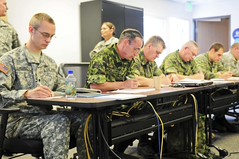
    Image source: Al Jazeera English. 

    Read more »

    Facing up to Global Insecurity: New Frameworks and New Tools

    Ben Zala | | October 2012

    Issue:Global militarisation

    Thinking through the consequences of the changing nature of global security, both in terms of threat assessments and policy responses to those threats (military and non-military), will certainly require new approaches at the broad conceptual level. Max G. Manwaring, a Professor of Military Strategy in the Strategic Studies Institute (SSI) of the U.S. Army War College has written an interesting piece on what he calls the “new security reality” in which business-as-usual approaches are of little use. 
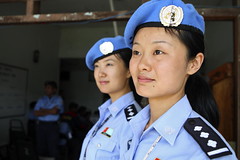
    Image source: Utah National Guard.

    Read more »

    No Sustainable Peace and Security Without Women

    Anna Alissa Hitzemann | | September 2012

    Issues:Global militarisation, Marginalisation

    There will be no sustainable security if we do not equally value the needs, experiences and input of men and women. A new report published by the Institute of Development Studies (IDS), funded by ActionAid and Womankind Worldwide, examines the role women play in local community peacebuilding in Afghanistan, Liberia, Nepal, Pakistan and Sierra Leone. The report states “despite the increased international attention to women’s participation in peacebuilding, the achievements and challenges facing women building peace at the local level have been largely overlooked”.

    Image source: United Nations Photo

    Read more »

    “Chronic Violence”: toward a new approach to 21st-century violence

    Anna Alissa Hitzemann | | September 2012

    Issues:Global militarisation, Marginalisation

    The Norwegian Peacebuilding Resource Centre (NOREF) recently published a Policy brief by Tani Marilena Adams, proposing and outlining the concept of “chronic violence” to “characterise the crisis of escalating social violence that currently affects about one-quarter of the world’s population”.

    Basing her analysis largely on Latin America, Adams approaches “chronic violence” from a sustainable security standpoint, arguing that violence itself should not be seen as the disease to be controlled, and the problem to be solved, but rather as a symptom of many complex underlying issues that need to be addressed.

    Image source: Shehan Peruma

    Read more »

    The New Insecurity in a Globalized World

    Elizabeth Wilke | SustainableSecurity.org | September 2012

    Issues:Global militarisation, Marginalisation

    Writing for SustainableSsecurity.org, Elizabeth Wilke argues that a new conceptualization of insecurity and instability is needed in a world with greater and freer movement of goods, services and people – both legal and illicit – greater demands on weakening governments and the internationalization of local conflicts. The new insecurity is fundamentally derived from the responses of people and groups to greater uncertainty in an increasingly volatile world. Governments, and increasingly other actors need to recognize this in order to promote sustained stability in the long-term, locally and internationally.
    Image source: bass_nroll

    Read more »

    Causes of Conflict: A Strategic Perspective on US–Sino Relations in the Caribbean

    Serena Joseph-Harris | Exclusively written for sustainablesecurity.org | August 2012

    Issues:Global militarisation, Marginalisation

    Author and former High Commissioner of Trinidad and Tobago to the Court of St. James, Serena Joseph-Harris writes that China’s increasing regional profile in the Caribbean highlights the challenges now posed to American exceptionalism as Beijing defines its own course in the region. This article focuses on the potential within the Caribbean Basin for the burgeoning proceeds presently derived from increases in the legitimate investment, trade, and commerce emanating from Beijing and Washington to become entwined with illicitly derived funds generated from transnational crime activities, specifically the trafficking of drugs.

    Image source: caribbeanfreephoto

    Read more »

  • Sustainable Security

  • The Arab World’s Next Battle: Water Supply and Population Growth on Collision Course

    The Arab World’s Next Battle: Water Supply and Population Growth on Collision Course

    Lester Brown | The Guardian | April 2011

    Issue:Competition over resources

    Long after the political uprisings in the Middle East have subsided, many underlying challenges that are not now in the news will remain. Prominent among these are rapid population growth, spreading water shortages, and growing food insecurity.

    In some countries grain production is now falling as aquifers – underground water-bearing rocks – are depleted. After the Arab oil-export embargo of the 1970s, the Saudis realised that since they were heavily dependent on imported grain, they were vulnerable to a grain counter-embargo. Using oil-drilling technology, they tapped into an aquifer far below the desert to produce irrigated wheat. In a matter of years, Saudi Arabia was self-sufficient in its principal food staple.

    But after more than 20 years of wheat self-sufficiency, the Saudis announced in January 2008 that this aquifer was largely depleted and they would be phasing out wheat production. Between 2007 and 2010, the harvest of nearly 3m tonnes dropped by more than two-thirds. At this rate the Saudis could harvest their last wheat crop in 2012 and then be totally dependent on imported grain to feed their population of nearly 30 million.

    The unusually rapid phaseout of wheat farming in Saudi Arabia is due to two factors. First, in this arid country there is little farming without irrigation. Second, irrigation depends almost entirely on a fossil aquifer – which, unlike most aquifers, does not recharge naturally from rainfall. And the desalted sea water the country uses to supply its cities is far too costly for irrigation use – even for the Saudis.

    Saudi Arabia’s growing food insecurity has led it to buy or lease land in several other countries, including two of the world’s hungriest, Ethiopia and Sudan. In effect, the Saudis are planning to produce food for themselves with the land and water resources of other countries to augment their fast-growing imports.

    In neighbouring Yemen, replenishable aquifers are being pumped well beyond the rate of recharge, and the deeper fossil aquifers are also being rapidly depleted. Water tables are falling throughout Yemen by about two metres per year. In the capital, Sana’a – home to 2 million people – tap water is available only once every four days. In Taiz, a smaller city to the south, it is once every 20 days.

    Yemen, with one of the world’s fastest-growing populations, is becoming a hydrological basket case. With water tables falling, the grain harvest has shrunk by one-third over the last 40 years, while demand has continued its steady rise. As a result the Yemenis import more than 80% of their grain. With its meagre oil exports falling, with no industry to speak of, and with nearly 60% of its children physically stunted and chronically undernourished, this poorest of the Arab countries is facing a bleak and potentially turbulent future.

    The likely result of the depletion of Yemen’s aquifers – which will lead to further shrinkage of its harvest and spreading hunger and thirst – is social collapse. Already a failing state, it may well devolve into a group of tribal fiefdoms, warring over whatever meagre water resources remain. Yemen’s internal conflicts could spill over its long, unguarded border with Saudi Arabia.

    Syria and Iraq – the other two populous countries in the region – have water troubles, too. Some of these arise from the reduced flows of the Euphrates and Tigris rivers, which they depend on for irrigation water. Turkey, which controls the headwaters of these rivers, is in the midst of a massive dam building programme that is reducing downstream flows. Although all three countries are party to water-sharing arrangements, Turkey’s plans to expand hydropower generation and its area of irrigation are being fulfilled partly at the expense of its two downstream neighbours.

    Given the future uncertainty of river water supplies, farmers in Syria and Iraq are drilling more wells for irrigation. This is leading to overpumping in both countries. Syria’s grain harvest has fallen by one-fifth since peaking at roughly 7m tonnes in 2001. In Iraq, the grain harvest has fallen by a quarter since peaking at 4.5m tonnes in 2002.

    Jordan, with 6 million people, is also on the ropes agriculturally. Forty or so years ago, it was producing more than 300,000 tonnes of grain per year. Today it produces only 60,000 tonnes and thus must import over 90% of its grain. In this region, only Lebanon has avoided a decline in grain production.

    Thus in the Arab Middle East, where populations are growing fast, the world is seeing the first collision between population growth and water supply at the regional level. For the first time in history, grain production is dropping in a region with nothing in sight to arrest the decline. Because of the failure of governments to mesh population and water policies, each day now brings 10,000 more people to feed, and less irrigation water with which to feed them.


    This article originally appeared on The Guardian website.  

    Comments

    Post new comment


  • Sustainable Security

    By Wim Zwijnenburg and Doug Weir

    Is the US backpedalling on its use of depleted uranium (DU) rounds? There are indications that the use of these highly toxic munitions could increasingly be a political liability for the US, with countries affected by DU, like Iraq, other UN Member States, and populations in contaminated areas all expressing concerns over its use and impact. But stigmatisation, although important, is not enough on its own – in order to make sustained progress on accountability and in reducing civilian harm, a broader framework that addresses all toxic remnants of war is needed.

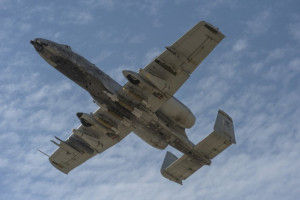
    A US Air Force A-10 being deployed to support Operation Inherent Resolve.

    A US Air Force A-10 being deployed to support Operation Inherent Resolve. Credit: US Air Force

    In a recent policy change, the Pentagon stated that it has not, and will not use DU in Iraq and Syria during Operation Inherent Resolve. The decision, which was cautiously welcomed by campaigners, contrasted with a statement made in October 2014, when the US announced the deployment of A-10 gunships to the conflict. The standard combat load for the A-10’s cannon includes a 30mm DU armour-piercing incendiary round, and in autumn 2014 a US Air Forces spokesperson said that the Air Force was ready to use DU again in Iraq and Syria.

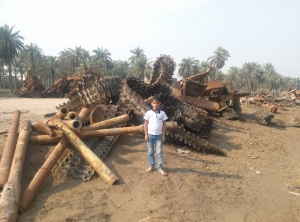
    Iraq is no stranger to DU: at least 404,000kg of the radioactive and chemically toxic heavy metal was fired in the country in 1991 and 2003. The fine dust created by DU impacts presents a hazard to civilians if inhaled, and both the dust and fragments of the ammunition can contaminate soil, vehicles and buildings. As DU particles are environmentally persistent, DU’s legacy can last long after conflicts end. Exposure to DU has been linked to increases of cancers and congenital birth defects in areas of Iraq that saw heavy fighting.

    Yet despite long-running concerns voiced by Iraqi civilians and international advocates, no robust civilian health studies have ever been undertaken in Iraq to determine this link. Progress on clean-up operations has been slow, and has been hindered by the US’ refusal to provide comprehensive targeting data to UN organisations and the Iraqi government.

    The evolving use of DU

    The A-10 gunship has long been promoted as a “tank killer”, with the US arguing that DU ammunition is crucial for this function. Justifying the apparent U-turn over Inherent Resolve, a US public affairs official explained that: “The ammunition is developed to destroy tanks on a conventional battlefield. Daesh [Islamic State] does not possess large numbers of tanks.”

    While its original Cold War close air support role did primarily concern the destruction of Soviet tanks and armoured vehicles, even then there were questions over the legality of DU. As a result, a 1976 legal review undertaken by the United States Air Force of the A-10’s DU ammunition sought to ensure that it was not used in populated areas and to restrict its use to armoured targets.

    A boy standing in front of military scrap metal in Shat’l arab, an area near Basrah.

    A boy standing in front of military scrap metal in Shat’l arab, near Basrah. Credit: Wim Zwijnenburg

    However, the role of the A-10 has evolved since the 1970s, as has its range of targets. This was clear from data from the 2003 Iraq War, acquired by PAX in 2014. It revealed DU use by A-10s against anti-aircraft guns, buildings, trucks and un-mounted troops. Data on targets from the conflicts in the Balkans painted a similar picture. With the A-10s role evolving from attacks on armour to more general close air support, aircraft were often called in for a broader range of operations, this led to DU being used against other targets, even in densely populated areas. Once loaded with the standard combat mix, a mixture of DU and high explosive rounds, it is impossible to change the type of munitions in flight for attacks against non-armoured targets of opportunity, thus heightening the risk of exposure to civilians close to other targets.

    Recently published figures on the 4,817 targets selected by US CENTCOM show that more than 120 tanks and armoured vehicles were destroyed in the first six months of the air campaign. There was therefore ample opportunity for the A-10 and its DU rounds to “kill tanks”, yet the US subsequently chose not to equip its A-10s with DU. Could this change in posture have more to do with a changing political environment, and in particular the growing stigmatisation of DU, than military calculations alone?

    Stigmatisation

    More than two decades after its first use in Kuwait and Iraq in the 1991 Gulf War, concern over the humanitarian and environmental legacy of DU has gradually increased.

    In recent years, legislation banning the weapons has been introduced in Belgium and Costa Rica. The European Parliament has also issued a number of resolutions calling for a moratorium on use and, most recently, a common EU position in favour of a ban. Since 2007, five UN General Assembly resolutions have been passed by large majorities. These have highlighted DU’s potential health risks, called for the release of targeting data to allow clean-up, for a precautionary approach to DU’s post-conflict management and, in 2014, for international assistance for states affected by DU use. This last resolution was supported by 150 states and opposed by just four, including the US. In addition to establishing soft law norms on DU, the process has also created a platform for an increasing number of states to voice their concerns over the weapons.

    Perhaps the most influential of these was from Iraq in March 2014, where its government expressed:

    [D]eep concern over the harmful effects of the use in wars and armed struggles of armaments and ammunitions containing depleted uranium, which constitute a danger to human beings and the environment.

    The Iraqi government called for the UN, its specialised agencies, member states and civil society to take a proactive approach to the issue and to condemn DU use. They also argued for:

    [A] binding and verifiable international treaty prohibiting the use, possession, transfer and trafficking of such armaments and ammunitions.

    Clearly then, the further use of DU munitions by the US in Iraq would have been viewed as unacceptable by the Iraqi government, and would have been likely to result in further criticism of the increasingly controversial munitions.

    Leaving through the back door?

    Could the changing political climate be influencing US policy on DU? The US had previously come under pressure from civil society campaign the International Coalition to Ban Uranium Weapons (ICBUW) in 2011 over fears that DU would be used against Gaddafi’s tanks in Libya. Recent evidence of DU’s international stigmatisation has come, ironically, from the Joint Strike Fighter, which is supposed to replace the ageing A-10 in its close air support role – a decision that is proving controversial in the US. During the fighter’s development, project partners including Australia, Norway and Denmark expressed concern over the US proposal that it would use a DU round, insisting that an alternative material be found. DU was eventually ruled out, as were other toxic metals such as beryllium. Elsewhere there are signs of shift away from DU in the US’s other medium-calibre ammunition.

    In 2008, just a year after the first UN General Assembly resolution, the US Army Environmental Policy Institute (AEPI) argued that alternatives were needed, stating that ‘the military should continue pursuing R&D for substitutes and be prepared for increased political pressure for current and past battlefield cleanup’. The Massachusetts Institute of Technology is one of several bodies researching less toxic materials, and in December 2014, published a new advance in manufacturing nanocrystalline tungsten alloys, which results in a material with similar properties to DU. DU’s toxicity is a key driver for this research.

    While changes in procurement policies are slow, decisions like that taken over Inherent Resolve are tangible signs that international pressure is changing DU policy. Nevertheless, the emerging threshold of acceptability for DU use remains poorly defined and it is unlikely that the US will seek to clarify it any time soon. Operation-specific factors – such as Iraq’s clear position in favour of a ban – are also likely to remain important in determining whether DU is used or not. Backlash over veteran exposure, community opposition and financial liabilities associated with former testing ranges may also influence policy within the US.

    The way forward

    Welcome as these developments are, they serve to highlight the current lack of formal obligations for post-conflict DU clearance and victim assistance. Unlike explosive remnants of war, and in spite of the soft norms developing at the UN General Assembly, accountability and assistance for past DU use is underdeveloped and requires attention from both civil society and the international community.

    As was the case with anti-personnel landmines, it will not be enough to simply stop DU being deployed. Protecting civilians requires that its legacy is also dealt with. DU remediation is costly and technically challenging, and states recovering from conflict require assistance to implement effective programmes.

    More broadly, DU is just one of a number of toxic munitions constituents, and munitions just one of a wide range of pollutants generated by conflict. These toxic remnants of war pose a threat to human and environmental health before, during and after conflict. Efforts to minimise the practices that generate them and work to ensure that their impact is properly assessed and responded to could contribute greatly to not only the protection of civilians but also of the environment upon which they depend. Tackling the causes and legacy of conflict pollution also provides a welcome opportunity to creatively merge the environment, public health, human rights and humanitarian disarmament in response to the toxic footprint of modern warfare.

    Wim Zwijnenburg works as a Program Leader Security & Disarmament for PAX, a Dutch peace organisation. He has a research program in Iraq on the impact of depleted uranium munitions, works on Toxic Remnants of War in Syria, emerging military technologies such as (armed) drones, and is supporting the Control Arms campaign in regulating the global arms trade.

    Doug Weir is the Coordinator of the International Coalition to Ban Uranium Weapons, a global coalition seeking a ban on the use of DU and for assistance to communities affected by its use. He also manages the Toxic Remnants of War Project, which explores state responsibility for the toxic legacy of military activities. 


    Featured image: A tank destroyed and contaminated with DU in 2003 near Basrah. Credit: UK Ministry of Defence