Blog

  • Sustainable Security

  • Sustainable Security

    The United States, Niger & Jamaica: Food (In)Security & Violence in a Globalised World

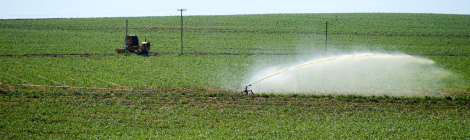
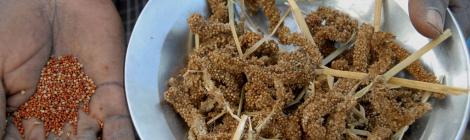
    due to a complex range of interconnected issues from climate change to misguided economic policies, political failure and social marginalisation, over 2 billion people across the world live in constant food insecurity. Anna Alissa hitzemann takes a sustainable security approach to look at the importance of “physical and economic access to basic food” by exploring the links between food insecurity and violence.

    Read Article →

    The Global Land Rush: Catalyst for Resource-Driven Conflict?

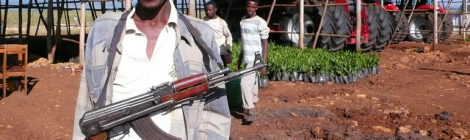
    Michael Kugelman of the Woodrow Wilson International Center, argues that the factors that first sparked many of the land acquisitions during the global food crisis of 2007-08 — population growth, high food prices, unpredictable commodities markets, water shortages, and above all a plummeting supply of arable land — remain firmly in place today. He writes that land-lusting nations and investors are driven by immediate needs, and they have neither the incentive nor the obligation to slow down and adjust their investments in response to the wishes of distant international bureaucrats. This, he argues, has serious consequences for global security.

    Read Article →

  • Sustainable Security

    Whether the UN Security Council should address climate change is a highly politicized issue. But a more fundamental question has been lost in this debate—what exactly could the Council do about climate change?

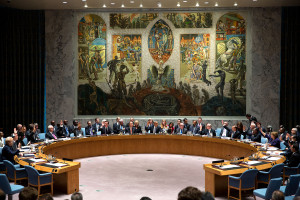
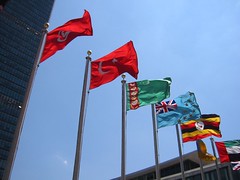
    Given growing concerns about the links between climate change, instability and conflict, it is no surprise that the issue has spilled over into the UN Security Council. Since 2007, the Council has conducted two formal and several informal (“Arria-formula”) sessions on the topic. Bringing the climate issue into the Council has been contentious: proponents, including several European member-states, small island developing states, and other vulnerable developing countries, have sought to use the Council’s agenda-setting power and inject a sense of urgency into global climate politics, particularly at moments when global progress on climate action seems stalled.

    Opponents have raised a range of concerns, including longstanding objections to the Council’s composition and procedures; fears of stretching the Council’s mandate beyond recognition, such that anything could be regarded as a security issue; and concerns about negatively impacting the “legitimate” forum for climate discussions, the UN Framework Convention on Climate Change (UNFCCC) and the Paris Agreement. These objections almost blocked a 2011 thematic debate on the issue, leading the Obama administration to rebuke reluctant Council members for “dereliction of duty”. Only informal sessions have been held since then. At the most recent, in May of this year, several member-states urged that the Council revisit the issue in formal session.

    Too often lost in such political maneuvering is a fundamental question: what might the Council actually do on climate, peace and global security? Surveying the record, one finds a range of different ideas that have been floated by academics, advocates, and some individual member-states. These include relatively modest add-ons, such as keeping the Council apprised of how climate change affects current peacekeeping operations or developing better early-warning capabilities. Bolder roles have also been floated: engaging the Council in proactive, preventive diplomacy on emergent challenges such as competition for Arctic resources or water in international river basins, or even creating a climate analogue to the Responsibility to Protect. There have also been calls to inject the Council into complex political challenges for which no obvious institutional home exists within the UN system, such as the existential plight facing several small-island states and the challenge of climate-driven displacement and refugees.

    There are real questions about whether the Council, as currently constituted, can play such roles productively. One basic challenge is how the Council manages information. Conceptually, early warning fits well with current Council efforts around issues such as famine and human rights emergencies. But in practice, past efforts to extend the gaze of early warning into new issue areas, such as conflict-related sexual violence, have met with opposition, narrow framing, and poor follow-through. There are also many practical challenges yet to be resolved, including how to effectively incorporate environmental variables into conflict-assessment tools, or even deciding which variables matter and by what mechanisms they operate. For an early-warning mechanism to have foreseen the role of drought in the Syrian conflict (a causal role about which there remains no consensus among scholars), it would have had to be able to see not just rainfall or run-off data, but also the water-policy choices of the Syrian regime and the impacts of declining rural subsidies on smallholder farmers.

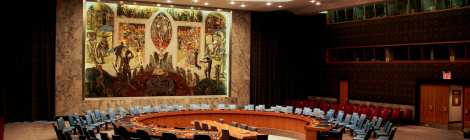
    Challenges facing the Security Council on climate change

    Image credit: The White House/Wikimedia.

    Even the seemingly straightforward exercise of informing the Council about aspects of climate change directly relevant to its ongoing activities around peacekeeping and fragile states has been challenging. The contentious 2011 session yielded a compromise that called on the Secretary-General to use his reporting function to keep the Council apprised about relevant “contextual information” on climate-conflict links. A review my colleagues and I conducted of 446 subsequent Secretary-General reports to the Council (through January 2016) found only 12 references linking climate change to some aspect of conflict or security (with 11 focused on Africa). Most of the content was highly generalized, noting general contextual trends such as urbanization, land tenure conflicts, or farmer-pastoralist tensions that might bear a climate signature. Even the handful of instances of specific reporting lacked the fine-grained subnational and temporal detail necessary for it to be of any operational or decision-making use. Climate-related references were also highly sporadic, with only one in 2012 and none in 2013.

    A second challenge resides in the Council’s largely reactive nature (when it can agree to react at all). Conflict prevention falls squarely within the Council’s mandate, and the high monetary cost of peacekeeping operations creates a strong incentive for prevention. The concept notes circulated by Council chairs for the 2007 and 2011 thematic debates (the UK and Germany, respectively) stressed conflict prevention as a key rationale for conflict engagement on climate. But for interstate preventive diplomacy, such as might be needed in shared river basins, the Secretary-General’s office has generally been a more effective tool than the Council. And on intrastate conflict, the Council has historically been reluctant to take preventive action. Efforts beginning in 2016 to implement a ‘horizon scan’ briefing from the Secretariat, focused on instability and emergent conflict, revealed the great reluctance of many member-states to appear on the Council agenda as ‘fragile’.

    A third problem is the tricky challenge of managing the political division of labor with the UNFCCC. Proponents of Council climate action have used past debates to try to jump-start sluggish climate diplomacy, even as opponents have warned about encroachment on or perturbation of the institutionalized process of global climate negotiations. Initial optimism around the Paris Agreement cooled such polarization, but was blunted by the Trump administration’s recent withdrawal from the accord. The deeper problem is that the Paris process seems to be half-heartedly engaging some of the critical challenges that would most resonate within the Council: blocking space for the Council while failing to really address the issues. On the looming problem of sea-level rise and the existential threat to small-island nations, the Paris Agreement’s provisions on loss and damage explicitly created an opening to address several relevant challenges, including early warning, emergency preparedness, slow-onset events, risk management, and the resilience of communities, livelihoods, and ecosystems (Article 8.4). This may limit political space for the Council on the issue of small-island statelessness, even as the weakness of the UNFCCC process on “liability and compensation” makes it a poor vehicle for serious movement on the problem. A similar dynamic of blunting political momentum through half-hearted response may be shaping up on climate-induced displacement; the UNFCCC’s 21st Conference of the Parties authorized a task force to develop recommendations on how to address the issue, scheduled to make a preliminary report in 2018.

    What can be done?

    Given such challenges, it may be that the relevant question is not “What climate role for the Council?” but rather “How can climate be part of the process of transforming the Council into a more effective body for sustainable security?” A first step in that direction would be to improve the Secretary-General’s reporting function, as agreed to during the 2011 debate. The most useful information for the Council is probably neither localized crisis briefings nor long-range climate-change scenarios, but rather regional-scale, medium-term assessments. Working on those spatial and temporal scales is most likely to yield forward-looking initiatives that can be supported by those member-states that find themselves most directly affected or vulnerable, as in the case of the Integrated Strategy for the Sahel. The strategy stressed building long-term resilience as one of its three pillars, along with inclusive governance and managing cross-border threats. A Security Council briefing in this context, on links among climate trends, migration, and conflict across the region, was well-received for both its specificity and the backing it had from member states in the region.

    A second step would be to challenge countries seeking a seat on the Council to articulate a specific vision of how the Council should move forward on the issue. Several aspirants for an elected seat have raised the issue in recent campaigns, but the question is also pertinent for those countries aspiring to a permanent seat on an expanded, reformed Council—notably, Japan, Germany, Brazil, and India. How, precisely, do they see the climate issue in relation to the Council’s mandate, with particular reference to preventive diplomacy, disaster vulnerability and displacement?

    Finally, while it may seem challenging in the current political moment, a symbolic gesture from the five permanent members (P5) would acknowledge member-states’ multiple roles across the UN system. Done properly, this could help legitimize an active (but not overreaching) Council role as part of a system-wide response. During the 2011 debate, Nigeria noted the P5’s dual role: “Seated around the table are those who could encourage developed countries to implement their commitments to reducing emissions and supporting developing countries with the requisite technological and financial assistance to address climate change effectively.” Imagine the legitimizing value that would have resulted if the US-China climate deal of 2014 had identified conflict prevention as part of its rationale for cutting emissions. Going forward, such commitments could be incorporated into the Nationally Determined Contributions that states offer under the Paris Agreement, and as action on the Sustainable Development Goals.

    The purpose of such measures is to begin to use climate engagements as a vehicle to transform the Council—into a body that is more capable of legitimate action, more proactive in peacebuilding and conflict prevention, and better able to take the long view of risks and responses.

    Ken Conca is a Professor of International Relations at American University in Washington, DC. His most recent book is An Unfinished Foundation: The United Nations and Global Environmental Governance (Oxford University Press). A more detailed version of the arguments here may be found there, and also in Ken Conca, Joe Thwaites, and Goueun Lee, “Climate Change and the UN Security Council: Bully Pulpit or Bull in a China Shop?” Global Environmental Politics 17/2: 1-20. Conca has been a member of the Scientific Steering Committee on Global Environmental Change and Human Security (GECHS) and is a founding member of the UN Environment Programme’s Expert Advisory Group on Conflict and Peacebuilding. He is, with collaborator Geoffrey Dabelko, the 2017 recipient of the Al-Moumin Environmental Peacebuilding Award.

  • Climate change

    Climate change

    Climate change is high on both domestic and international political agendas as countries face up to the huge environmental challenges the world now faces. Whilst this attention is welcome, less energy is being focused on the inevitable impact climate change will have on security issues. The well-documented physical effects of climate change will have knock-on socio-economic impacts, such as loss of infrastructure, resource scarcity and the mass displacement of peoples. These in turn could produce serious security consequences that will present new challenges to governments trying to maintain stability.

    Thinking strategically about the future climate

    Duncan Depledge | RUSI | February 2011

    Issue:Climate change

    The publication of the Strategic Defence and Security Review and the Coalition’s first National Security Strategy provided ample opportunity for the government to deliberate on the strategic implications of climate change for the UK.  Yet while claims that we continue to live in a post-Cold War ‘age of uncertainty’ lay at the heart of both documents, on  closer reading there is very little to suggest that uncertainty about climate change was a concern for those who conducted the review.  

    Article source: RUSI

    Image source: U.S. Geological Survey

    Read more »

    Migration Due to Climate Change Demands Attention

    Issues:Climate change, Marginalisation

    Governments in Asia and the Pacific need to prepare for a large increase in climate-induced migration in the coming years, says a forthcoming report by the Asian Development Bank (ADB).

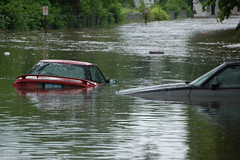
    Typhoons, cyclones, floods and drought are forcing more and more people to migrate. In the past year alone, extreme weather in Malaysia, Pakistan, the People’s Republic of China, the Philippines, and Sri Lanka has caused temporary or longer term dislocation of millions. This process is set to accelerate in coming decades as climate change leads to more extreme weather.

    Article source: Asian Development Bank

    Image source: Hamed Saber

    Read more »

    Transatlantic Dialogue on Climate Change and Security

    Issue:Climate change

    On February 25, 2009, the International Institute for Strategic Studies (IISS) launched the “Transatlantic Dialogue on Climate Change and Security”, funded by a grant from the European Commission, with the purpose of analyzing the impact of climate change on global security and stability.

    Hot and Cold Wars

    James Lee | Exclusively written for sustainablesecurity.org | January 2011

    Issue:Climate change

    Climate change will do more than just raise the temperature. Around the equator, rising temperatures and declining precipitation will lower agricultural production. People in this area (especially Africa and the Middle East) are particularly reliant on agriculture to support income and livelihoods. This trend (Hot Wars), coupled with rapidly increasing populations, will create conditions for livelihood wars. 

    Read more »

    Bridging the North-South divide: Sustainable Security for all

    Hannah Brock | Oxford Research Group | January 2011

    Issues:Climate change, Competition over resources, Global militarisation, Marginalisation

    For some years, the Oxford Research Group (ORG) has been analysing the likely underlying drivers of global insecurity over the coming years, and ways to develop sustainable responses to these threats. This analysis has focused on four trends that are expected to foster substantial global and regional instability, and large-scale loss of life, of a magnitude unmatched by other potential threats. These are climate change, competition over resources, marginalisation of the ‘majority world’ and global militarisation.

    Read the full article here.

    Author: Hannah Brock

    Image source: WorldIslandInfo.com

    Read more »

    US Security Establishment not Prepared for Climate Change

    Issues:Climate change, Competition over resources

    In a three-month investigation, a team of Northwestern University graduate students has found that the US security establishment is not adequately prepared for many of the environmental changes that are coming faster than predicted and that threaten to reshape demands made on the military and intelligence community. The Medill School of Journalism graduate student team has just begun publishing its findings on the national security implications of climate change with a series of print, video and interactive stories at Global-Warning.org. 


    Image source: Chairman of the Joint Chiefs of Staff. 

    Read more »

  • Sustainable Security

  • Sustainable Security

    Breaking the silence: Protecting civilians from toxic remnants of war

    Toxic remnants of war and their legacy of civilian harm is seriously under-explored as an area of conflict. There is a growing consensus that the current legal framework governing conflict and the environment is not fit for purpose – so how could new international norms that merge environmental protection with civilian protection come into effect?

    Read Article →

  • Sustainable Security

    Sustainable security and peacebuilding remain elusive in northern Uganda. But gender-relational peacebuilding offers a potential avenue to strengthen post-conflict peacebuilding efforts.

    Sustainable peacebuilding in post-conflict northern Uganda is intricately interwoven into the fabric of regional security. Intrastate conflicts in South Sudan and the Democratic Republic of the Congo, as well as the multidirectional refugee and rebel army flows across borders contribute to destabilizing regional peacebuilding and security efforts. When taking these regional concerns and ongoing internal problems into consideration, it becomes clear that sustainable security and peacebuilding remain elusive in northern Uganda. One avenue to strengthen current post-conflict peacebuilding efforts is to appropriately gender interventions. Implementing appropriately gendered interventions will need to adequately address ongoing gendered violence that has become central to both regional and internal conflicts.

    The Conflict in Uganda

    During active conflict between the Government of Uganda (GoU) and Lord’s Resistance Army (1987-2006), approximately 1.8 million northern Ugandans were internally displaced, many of them into poorly maintained internal displacement (IDP) camps. The conflict, displacement, and subsequent return processes have been deeply gendered. During the conflict, young girls and boys were abducted by the Lord’s Resistance Army (LRA); many were forced to fight, carry LRA cargo long distances, and were subjected to sexual violence. Abductions ended in northern Uganda when the LRA was pushed out of the country, but the LRA continues to be a threat to regional security and peacebuilding. Abductions continue in the Central African Republic and Democratic Republic of the Congo, and the LRA’s regional presence is but one more complex component of ongoing conflicts in South Sudan, the CAR, and the DRC.

    Beyond LRA abductions, women were often subjected to sexual violence both as abductees and while living in IDP camps. During encampment, women, treated as heads of household, were given aid to distribute among their family members; this essentially cut men out of their traditional roles as the breadwinner. The gendered allocation of resources challenged cultural norms – a phenomenon which many rural residents blame as one reason for increasing domestic violence during and after conflict. Many men and women lost access to education and economic productivity during encampment, creating employment crises post-conflict. Simultaneously, people were displaced from their land holdings, devastating their economic livelihoods; this is compounded by the rampant killing and stealing of cattle, a source of economic and social wealth. Thus, displacement decimated men’s ability to be economically productive and their sources of wealth and authority, necessary social capital for rites such as marriage, were all stripped away. Unemployment continues to be a pervasive problem as people lost access to their land and do not have the educational attainment necessary for wage employment.

    Despite the far-reaching gendered dynamics of conflict and the post-conflict return process on economic production, political standing, and kin relations, peacebuilding efforts in the region concentrate on physical forms of violence, such as rape.

    Research conducted in 2013 shows that many rural residents cited economic violence, such as access to land and resources, equitable employment, and social services, as a pervasive and unaddressed concern. When combined with ongoing dissatisfaction with the current government, the result is a suite of peacebuilding approaches that may fail to generate sustainable peace in northern Uganda, with wider implications for regional security.

    Redefining “Gendered” Approaches to Peacebuilding
    widows-program-1

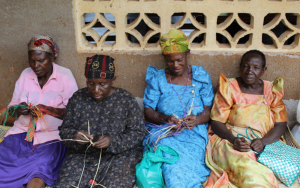
    Women from ‘The Widows’ Programme’ making crafts at the Twezimbe Development Centre, Mbikko, Uganda. Photo by Lisa Byrne via Flickr.

    “Gendered” peacebuilding approaches in past years became synonymous with women and conflict-related sexual violence, such as rape and defilement. Such ostensibly gender-sensitive approaches are inherently problematic; they ignore the experiences of men, the diverse experiences of women, and make women’s narratives valuable only insofar as they narrate conflict-related sexual violence. Resolutions, such as UNSCR 1820 and 1325, have made strides towards recognizing the impact of war on women; however, their operationalized emphasis on physical gendered violence continue to reflect this myopic perspective. Resolutions supporting gendered peacebuilding have historically failed to meaningfully include all genders, stereotype or homogenize the experiences of people in conflict, and may reflect non-local cultural values and understandings.

    Sexual violence is a serious concern during and after conflict, especially where it is a wartime tactic, there is little support for survivors of violence, and where local sociocultural norms and communities have broken down. However, homogenizing women as singularly vulnerable, passive, and the subject of violence obscures the diverse experiences of both women and men during and after conflict. These homogenous characterizations are paralleled by only addressing gendered violence among men as conflict is either an assault on or a reflection of masculinity. Both of these perspectives are imbued with often uncritical assumptions that fail to see genders as relational and embedded within complex social, political, and economic contexts.

    Thus, scholars developed a gender-relational approach to analyzing conflict and implementing peacebuilding frameworks. Gender-relational approaches stand in contrast to prior perspectives that rely on gender binaries and homogenous categories. Instead, gender-relational scholars examine gender as an intersectional category that is intimately bound up in social, political, and economic contexts before, during, and after conflict. Utilizing a gender-relational perspective allows researchers and peacebuilders to identify the most vulnerable in society, allowing precisely-targeted interventions and more effective implementation. Gendered peacebuilding in this way shifts the focus from women’s sexuality and sexual experiences and men’s masculinity, to identifying and targeting the contextually specific needs of the most vulnerable in post-conflict societies.

    Appropriately Gendering Peacebuilding to Promote Sustainable Peace

    Gendering peacebuilding in post-conflict northern Uganda must go beyond the censure of physical SGBV, such as rape, to take into account the complex experiences, relationships, and sociopolitical and socioeconomic needs prior to, during, and after conflict. In this local and regional context, gendering peacebuilding appropriately takes into account the various experiences of men and women as they are embedded within ancestral communities pre-conflict, during displacement and in the IDP camps, and post-conflict return process, and as they are affected by age, education, ability, and other intersectional categories.

    Engaging a gender-relational framework for peacebuilding in northern Uganda can illuminate a number of discrepancies between local needs and concerns and ongoing peacebuilding efforts. While traditional political systems, which predominately support and were led by men, degraded, the loss of property and cattle – traditionally for economic productivity, social status, and marriage and kinship – have negatively impacted all genders. Although the degradation of sociopolitical systems and loss of agricultural and pastoral productivity have disempowered men, it has simultaneously empowered women. Women have broken traditional gender roles by entering public workspaces and shouldering normatively male responsibilities. However, these shifts along with pervasive poverty have also contributed to domestic violence and local pushback against the implementation of international human rights standards.

    For example, although conflict-related sexual violence was, and remains, an entrenched concern in northern Uganda and the region more generally, many rural northern Ugandans are deeply concerned about economic forms of gendered violence. Both men and women cite land wrangling or grabbling – the forceful taking of land – as pervasive concerns that inhibit access to economic livelihoods, spiritual fulfillment, political authority, and kin networks. According to one resident in Nwoya District, before the war [SGBV] was there. During, it escalated and after has been added on because of land wrangles.” Although land is often wrangled by neighbors or even relatives, many rural residents fear land grabs from South Sudanese and other foreigners who are reportedly buying up large tracts of land for farming. Widows in particular cite the lack of support for them as they make claims with the legal, local political, or religious authorities to have their case heard and get their land back. Widowhood in rural northern Uganda is precarious – normally women rely on their husband for land ownership (not mandated by law) and when he passes away depend on the community to uphold their right to continue living and producing on the land. However, the unique challenges of the post-conflict region, including ongoing security concerns and a lack of arable land more generally, means that there is less support from elders, the legal system, and religious leaders for widows with land wrangling complaints. This example of widows demonstrates the power of gender-relational approaches to post-conflict peacebuilding.

    Land wrangling disproportionately affects women, widows, and the elderly, and remains a serious security and peace concern for residents throughout the northern reaches of Uganda. These ongoing conflicts are embedded within a nation-state that has consistent human rights violations and political uncertainty, and a region that is beset by internal and regional conflicts. Utilizing such data-driven approaches, we can better develop, implement, and target peacebuilding efforts towards those groups and the leaders that are in positions to help widows resolve such conflicts. As these conflicts are also intricately bound up in ongoing gendered divisions and reconfigurations, appropriately gendering peacebuilding has the potential to open avenues to contribute to regional conflicts and security concerns. Several organizations in the northern Uganda region have been conducting this difficult work, including the Refugee Law Project, Centre for Reparations and Rehabilitation, and the Women’s Advocacy Network. Each of these organizations were generated and are propelled forward by northern Ugandans and each reflects the myriad needs facing residents in the post-conflict period, such as economic violence and insecurity, education, social inequality, and lack of social services. By addressing these points as part of a gendered peacebuilding program, practitioners can grapple with pervasive concerns, such as land conflict, that affect both women and men; thus, they may also begin to unravel some of the regional security concerns tied to inter- and intrastate conflict.

    Amanda J. Reinke specializes in conflict resolution amid displacement. She received her PhD from the University of Tennessee’s Department of Anthropology and Disasters, Displacement, and Human Rights Program. Financial support provided by the W.K. McClure Scholarship and the Minority Health International Research Training Program (MHIRT) at Christian Brothers University (Grant Number T37MD001378; National Institute on Health and Health Disparities). Amanda can be contacted at or @LegalAnthro.

  • Sustainable Security

    Colombia and Mexico: The Wrong Lessons from the War on Drugs

    As activists around the world participate in a Global Day of Action against criminalisation of drug use, evidence from the multi-billion dollar War on Drugs in Colombia suggests that militarized suppression of production and supply has displaced millions of people as well as the problem, not least to Mexico. The wrong lessons are being exported to Central America and beyond, but a groundswell of expert and popular opinion internationally is calling for alternative approaches to regulating the use and trade in drugs.

    Read Article →

    Exporting (in)Security? Questioning Colombian Military Engagement in West Africa

    With skills and expertise in fighting insurgencies and drug trafficking networks, Colombia’s armed forces are increasingly being sought for engagement in similar security challenges in West Africa. But increasing Colombian engagement gives rise to a number of important questions – not least of which is the goal and expected outcomes of replicating militarised approaches to the war on drugs that have already failed in Latin America.

    Read Article →

  • Sustainable Security

    Conflict, Poverty and Marginalisation: The case of Curvaradó and Jiguamiandó (Urabá, Colombia)

    In Colombia there are many regions where poverty and the absence, or weak presence, of the state has facilitated the emergence of violence by armed groups. Among these are the Afro-Colombian communities of the Curvaradó and Jiguamiandó in the Urabá region. Whilst the Colombian government fails to fully develop social development programs (including education, health and infrastructure) and sustainable economic development policies to assist marginalised communities, the people of Curvaradó and Jiguamiandó will remain poor, uneducated, vulnerable, and at risk of lose their territories once again.

    Read Article →