Blog

  • Global militarisation

    Global militarisation

    The current priority of the dominant security actors is maintaining international security through the vigorous use of military force combined with the development of both nuclear and conventional weapons systems. Post-Cold War nuclear developments involve the modernisation and proliferation of nuclear systems, with an increasing risk of limited nuclear-weapons use in warfare – breaking a threshold that has held for sixty years and seriously undermining multilateral attempts at disarmament. These dangerous trends will be exacerbated by developments in national missile defence, chemical and biological weapons and a race towards the weaponisation of space.

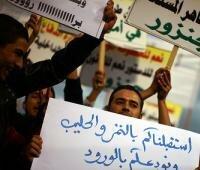
    Rushing Carefully in Libya

    John Norris | Center for American Progress | March 2011

    Issues:Global militarisation, Marginalisation

    Executive Director of the Sustainable Security and Peacebuilding Initiative at the Center for American Progress, John Norris discusses the need to consider options carefully to avoid militarising the West’s response to the crisis in Libya. He writes that blowing up a runway or imposing a no-fly zone are not silver bullets. And one would hope that after the experience of both Afghanistan and Iraq—and earlier interventions such as Kosovo and Bosnia—we understand that war is a dangerous, uncertain business.

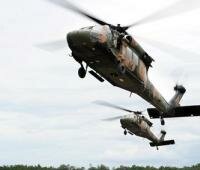
    Image source: Quigibo. 

    Read more »

    Human Security in practice

    Mary Kaldor | openDemocracy | February 2011

    Issue:Global militarisation

    One aspect of the global economic crisis that is rarely discussed is the hole in government budgets caused by the ongoing wars in Iraq and Afghanistan and by the mind-boggling expense of weapons systems like Trident or advanced combat aircraft or aircraft carriers. In the United States, the War on Terror enabled President Bush to double the military budget; excluding the supplemental cost of the wars in Iraq and Afghanistan. US military spending accounts for some $700 billion a year, roughly the same as Obama’s stimulus plan, and the cost of the wars may be as much as three trillion dollars. What makes this myopia worse is that conventional military spending does not appear to contribute to a sense of security, if it ever did.

    Read the full article here

    Image source: VinothChandar

    Read more »

    Bridging the North-South divide: Sustainable Security for all

    Hannah Brock | Oxford Research Group | January 2011

    Issues:Climate change, Competition over resources, Global militarisation, Marginalisation

    For some years, the Oxford Research Group (ORG) has been analysing the likely underlying drivers of global insecurity over the coming years, and ways to develop sustainable responses to these threats. This analysis has focused on four trends that are expected to foster substantial global and regional instability, and large-scale loss of life, of a magnitude unmatched by other potential threats. These are climate change, competition over resources, marginalisation of the ‘majority world’ and global militarisation.

    Read the full article here.

    Author: Hannah Brock

    Image source: WorldIslandInfo.com

    Read more »

    A New Military Paradigm

    Paul Rogers | openDemocracy | January 2011

    Issue:Global militarisation

    A near-decade of global war since 9/11 highlights the urgent need for revision of Washington’s military-led global strategy. A fresh analysis offers the ingredients for change –  a joint study by the LSE professor Mary Kaldor and the United States army colonel Shannon  D Beebe: The Ultimate Weapon is No Weapon: Human Security and the New Rules of War and Peace


    Image source: The National Guard. 

    Read more »

    A Backwards Step for Sustainable Security in the US

    Brian Katulis | Center for American Progress | January 2011

    Issue:Global militarisation

    Senior Fellow at the Center for American Progress, Brian Katulis writes of the rise of an influential faction among America’s right that can best be described as national security regressives. These are “conservative” voices such as Gov. Mitt Romney (pictured) who oppose strengthening and utilizing the full range of traditional tools of American statecraft, including assertive diplomacy, smart and balanced national security spending, and precise and targeted measures to combat terrorist groups. 
     

    Photo source: nmfbihop.

    Read more »

    New UN Resolution on Uranium Weapons

    Issue:Global militarisation

    148 states have supported a United Nations General Assembly resolution calling on state users of depleted uranium weapons to reveal where the weapons have been fired when asked to do so by affected countries

    Article source: International Coalition to Ban Uranium Weapons

    Image source: BlatantWorld.com

    Read more »

  • Sustainable Security

    In May 2014, Cameroon declared war on Boko Haram at the Paris Summit. Since then, Boko Haram has intensified its activities in the Far North Region of the country, making Cameroon the second most targeted country, in terms of attacks, by the sect. Hans De Marie Heungoup, Cameroon analyst at the International Crisis Group, provides insights on the rise of Boko Haram in Cameroon, the stakes for the country and efforts made by the Government to overcome the jihadist organisation.

    How would you describe the rise of Boko Haram in Cameroon?

    The penetration of Boko Haram in Cameroon took place gradually and in several phases. At each phase, the group has been able to change its modus operandi and adapt to the response of Cameroonian defence forces. While the first frontal attack of Boko Haram against Cameroon dates back to March 2014, the presence of members of the sect in the Far North was signaled as far back as 2009. In fact, in July 2009, after clashes between Boko Haram militants and security forces at Maiduguri in which more than 800 members of the sect were killed, including the founder Mohamed Yusuf, several members of Boko Haram found refuge in and/or transited through the Far North of Cameroon. But up until then, Cameroon had shown only little interest in the Islamist group.

    Boko Soosay

    Artwork of Boko Haram insurgent. Image by Surian Soosay via Flickr.

    Boko Haram’s interest in Cameroon grew between 2011 and 2013. This is an interesting phase because it is during this period that Boko Haram started spreading its religious ideology, mainly in the Logone and Chari and Mayo Sava divisions of the Far North, recruiting Cameroonians as fighters and using this part of the territory as a rear base or safe haven. Specifically, from 2011, in addition to seeking refuge on Cameroonian territory after attacks in Nigeria, members of Boko Haram regularly bought foodstuffs on different markets in the Far North. They also infiltrated former networks involved in trafficking, smuggling of motorbikes, adulterated fuel (zoua-zoua) and Tramol (drug) in the far north. It was also between 2011 and 2013 that they established most of their networks of arms caches on Cameroonian territory, with Kousseri serving as their logistics base. At the same time, like Chad, the Far North of Cameroon served as transit points for weapons bought by Boko Haram from Libya and Sudan. Fotokol in Cameroon has been one of the entry points of these arms into Nigeria.

    While until 2012 the presence of Boko Haram in the Far North was rather passive and unknown to the public, despite a few targeted killings and abductions of Cameroonians in the Mayo Sava and Logone and Chari divisions, the practice of kidnapping of foreigners, adopted from February 2013, marks a shift by Boko Haram to a more active approach on Cameroonian soil. Between 2013 and 2014, the jihadist group abducted 22 foreigners (French, Chinese, Canadians and Italians) in Cameroon and released them each time after the payment of ransoms the total amount of which was at least $11 million and the release of about forty of its members detained in Cameroon. In 2014, Boko Haram moved from the active approach to a frontal approach with attacks on police stations and military bases. Thus, from March 2014 to March 2016, Boko Haram carried out more than 400 attacks and incursions in Cameroon, as well as about fifty suicide bombings that left 92 members of security forces dead, injured more than 120 others and  killed more than 1350 civilians.

    Over the last two years, Boko Haram has been able to alternate between low-intensity attacks requiring only about ten fighters on motorbikes and conventional attacks that can mobilise more than 1000 fighters, as well as armored vehicles and mortars. Up to now, the abduction of the Vice-Prime Minister’s wife in July 2014, the thirty or so conventional attacks on Fotokol, Amchide and Kolofata in 2014 and 2015, as well as a series of suicide attacks that hit Maroua in July and August 2015 are the most spectacular actions carried out by Boko Haram in Cameroon.

    After this peak period, Boko Haram, whose firepower was at its best between July 2014 and March 2015 when it also controlled more than 30 000 square kilometers of territory in northeast Nigeria, gradually declined from January 2015 following renewed engagement of the Nigerian army ahead of the presidential election, and then the coming to power of Muhammadu Buhari who overhauled the apparatus to fight Boko Haram in Nigeria.

    Furthermore, the engagement of Chadian and Cameroonian troops, who inflicted huge losses and setbacks on Boko Haram, significantly weakened the group to the extent that, for the past nine months, it has not been able to carry out any conventional attacks in Cameroon and has lost most of the territories that it was holding in Nigeria (Cameroonian troops declare that they have killed more than 1500 members of Boko Haram in fights and arrested more than 900 suspected members. The Islamist group has also suffered huge logistical losses). Conscious of the new power balance, the jihadist organisation has resorted to purely asymmetric warfare, giving preference to suicide bombings and low-intensity attacks. From July 2015 to March 2016, Boko Haram carried out more than 50 suicide attacks in Cameroon, killing more than 230 people and wounding 500 others. This war has had an adverse effect on the economy of the Far North of Cameroon which was already the poorest and the region with the lowest school enrolment rate in the country before the war. It also led to an influx of 65 000 Nigerian refugees to Cameroon and caused the internal displacement of more than 93 000 people.

    Why did Boko Haram start attacking Cameroon?

    Boko Haram started launching a frontal attack on Cameroon because the Government strengthened the security apparatus in the Far North and dismantled about ten arms caches of the sect, as well as corridors for the transit of weapons. In fact, Cameroonian authorities were in an increasingly untenable situation at the beginning of 2014. Despite the head-in-the-sand policy adopted at the beginning which consisted of turning a blind eye on the presence of Boko Haram members in the Far North in the hope that they would not take on Cameroon, the sect continued to abduct foreigners and Cameroonians. Moreover, the Nigerian Government and press accused Cameroon of serving as a rear base and support for Boko Haram. Faced with such pressures and following the abduction of ten Chinese nationals at Waza, the only rational option for Cameroon was to declare war on the sect. Of course, once war was declared in May 2014, Boko Haram, in turn, increased its attacks in Cameroon to the extent that the country became the second major target of the Islamist group.

    How effective are the Cameroonian government’s counterinsurgency efforts?

    To combat Boko Haram, Cameroon has deployed two military operations, namely Operation EMERGENCE 4 made up of units of the regular army and Operation ALPHA comprising of units of the Rapid Intervention Battalion (BIR), the elite corps of the Cameroonian army. In addition to these operations, we have the multinational joint task force whose first military sector is based in Mora and comprises of 2450 Cameroonian troops. On the whole, about 7000 men have been deployed by Cameroonian defence forces in both operations they and the regional joint task force have efficiently warded off conventional attacks by Boko Haram. However, Cameroonian troops find it more difficult to thwart suicide bombings.

    Moreover, the weakness of Cameroon’s response against Boko Haram is the absence of a policy and measures to combat radicalization and a program for de-radicalization. Similarly, given that this region is the poorest and has the lowest school enrolment rate in the country, and that these factors have facilitated recruitment and indoctrination by Boko Haram, the Government’s response on the socioeconomic development level in the Far North is still fragmented, poor and ill-adapted to the stakes.

    How do you analyse the state of the regional cooperation against Boko Haram?

    To address the threat posed by Boko Haram, the states in the region (Nigeria, Cameroon, Chad, Niger and Benin) under the aegis of the Lake Chad Basin Commission set up a multinational joint task force. The regional task force has been slow to put in place, but after several delays, the multinational task force was set up and only finally went operational later in 2015. However, the multinational force is witnessing financial and logistical difficulties that are affecting its full operationalisation and few donors have so far delivered on their pledges. As such, only the first sector of the force is operational as of now.

    The other specificity of the regional response is that it has assumed more of a bilateral rather than multilateral orientation: like the military cooperation between Chad and Nigeria or Nigeria and Cameroon that, despite the bottlenecks recorded at the beginning, has improved significantly over recent months to the extent that the right of hot pursuit is now a reality. However, the major shortcoming of this regional response is that it focuses on military aspects. No serious brainstorming is done on development issues and the fight against radicalization at the regional level. In the same light, no reflection has been initiated on the ways to end this crisis now that Boko Haram is weakened.

    What do you see as the future of Boko Haram in the region and what will this mean for counterinsurgency efforts?

    The most likely scenario, in my view, is that Boko Haram will become a sort of criminal network with several small independent leaders. This network will comprise of fake religious leaders, real traffickers and criminals and remain in the area for several years until the states of the region resolve to adopt an African Marshall plan to boost trans-regional development: that will require investestment in social sectors such as schools, health centers; and development of high intensity labor force projects in the region to sustain fishing and agriculture around Lake Chad, to support the local industrial sector and build roads between and within provinces of the area. All these should be accompanied by a de-radicalization and counter radicalization project at the transregional level.

    Hans De Marie Heungoup is Cameroon analyst at the International Crisis Group. He conducts field research and provides analysis on prevailing security, social, legal, governance and political issues; proposes policy initiatives for governmental, intergovernmental, political, and nongovernmental stakeholders to address and resolve sources of conflict; and prepares detailed reports and briefing papers setting out relevant research findings and policy recommendations.
  • Sustainable Security

    In the UK, tens of thousands of deer are poached annually. This has significant implications for the sustainability of British deer populations and human health.

    Recessions and economic slumps have effects on various aspects of people’s security and presumably, people’s food security is a part of this. In order to cope with food insecurity, some people may steal food or other items for money to buy food, but there is also the possibility that some people will turn to poaching. The British Deer Society places the number of poached deer in the UK as high as 50,000 each year yet in 2009 only 335 incidents were reported to the police.

    In 2013, I undertook a study to gather information as to whether deer poaching in the UK is linked purely to economics or if people who poach deer have other motivations beyond food or money. I sent online questionnaires to all police constabularies and the questionnaire was advertised in the monthly publication of the British Association for Shooting and Conservation. I received responses from 27 wildlife crime officers and six gamekeepers. Drawing on Nurse’s (2013) typologies of wildlife crime offenders, I asked respondents about the change in poaching around the time of the 2008 recession and about their perspective on the motivations of poachers. The four typologies consist of traditional profit motive, external economic pressure, masculinity and as a hobby. In particular, the traditional profit-driven motivation of offenders was explored by attempting to uncover if there is, as suspected, a black market in venison. From this data, I hoped to create a more detailed picture of deer poaching and to further inform wildlife law and poaching prevention.

    UK deer poaching: why it matters

    Image credit: Peter Trimming

    Understanding more about deer poaching is important for two main reasons. The first is in relation to human health. Presumably, experienced hunters are trained to inspect the deer they kill or poach for diseases. There is the possibility though of poachers infecting themselves with Bovine Tuberculosis or Foot and Mouth disease, which are known to occur in deer in the UK, though no data indicating deer meat has been found with these diseases. Additionally, if the poacher is selling the meat on the black market, there is the further possibility that any disease could be passed on to other people and the public.

    The respondents suspected some poached deer meat makes it way to pubs and restaurants, so disease transmission to the public, whilst unlikely, is not impossible. The second point is in regards to the sustainability of deer populations. It is difficult to manage wildlife populations where there is a significant amount of poaching, such as is suspected in the UK. Hunting licences and potentially other management strategies, like culling, need to be grounded in accurate population numbers in order to not over exploit the species in question. If too many individuals are killed through hunting and poaching, this could endanger the stability and survival of the population. With tens of thousands of deer potentially being poached each year, it is difficult to see how deer populations can be properly estimated and therefore managed.

    The police and gamekeepers who responded stated there are individual poachers and groups of poachers who do so for profit and financial reasons. As suspected, poachers personally consume the poached deer, but probably also sell the meat to make money. This fits Nurse’s (2013) first typology, ‘Model A’, where offenders are driven by traditional profit motives. ‘Model B’ wildlife crime offenders are also financially driven, but the pressure on the offender is from an external source like an employer. In the context of deer poaching, this helps to explain the poaching undertaken by some gamekeepers. Landowners pressure gamekeepers to maintain the landscape in particular way. The respondents indicated though there is more driving poaching than simply economics. Nurse (2013) proposes there are also offenders who do so to maintain or assert their masculinity, ‘Model C’, and those who offend as a hobby, ‘Model D’. The data confirm these typologies. Men carry out nearly all poaching. Apparently, often these men poach together as a form of male bonding, as a form of ‘sport’, or as one respondent stated ‘just for the hell of it!’.

    Each of Nurse’s (2013) typologies then were found within the respondents’ answers. The implications of this are two-fold. First, deer poaching, and presumably other poaching, is not only driven by food insecurity and money and therefore the motivations, and uncovering those motivations, are complex. Even when money is at the heart of the motivation, there are further distinctions to be made. The food and/or profit from the poaching may be for an individual, for an organized crime group or for an employer. For non-profit driven poaching such as for status, sport and/or fun, the motivations can be equally challenging to uncover.  Uncovering motivations though is an important and useful endeavour as this data can be used to improve policy and prevention strategies. Second, that motivations are varied means that policy and prevention strategies also need to be varied. To have policy interventions and wildlife law enforcement strategies targeted solely at food insecurity or profit motivations are likely to be ineffective.

    Addressing the problem

    Poaching, of deer and other non-human animals, must then be addressed through a multi-faceted approach. In the first instance, the punishment for poaching in the UK is not a deterrent and the risk of being caught or prosecuted is low (Nurse 2013). This is partly because wildlife crime is not a concern for most police constabularies and not an offense that is prioritized. Making the fines higher, sentences harsher and confiscation of poaching equipment mandatory may help to address this aspect. Nurse (2013) suggests banning hunters and gamekeepers who are caught poaching from being able to receive licences in the future and/or from working in the industry. Second, wildlife crime is viewed as a victimless crime. This is not the case. Deer are shot by bullets and arrows, trapped in snares and/or torn apart by dogs. People can potentially eat uninspected diseased venison.

    The environment as a whole or at least the ecosystem where deer live can be disrupted by overexploitation – people and non-human animals are victims of this too from the loss of a healthy environment. Public awareness needs to be raised through concentrated media campaigns as to the value and impact of biodiversity and the environment. Whereas regard for the environment has increased in recent years, there is still much more to be done to increase the knowledge of our connection to the planet. Additionally, there should be wide spread information about the danger of consuming uninspected meat and venison. In conjunction with these strategies in times of particular economic hardship, extra support should be put in place to assist people who may poach because of food insecurity. Addressing the enforcement side of deer poaching can help to impact upon economic motivations. Changing the view that poaching is victimless may help to alter motivations related to status and sport.

    Deer poaching and wildlife crime are worthy of being made more of a priority not only because of the victimisation to the non-human animals and the environment, but also because these crimes impact upon people and communities. A multi-faceted approach increasing the attention on and penalties for wildlife crime as well as educating the public to the nature and risks associated with wildlife crime are necessary first steps to reducing the harm and suffering linked to wildlife crime in general and poaching in particular.

    Tanya Wyatt is a lecturer at the University of Northumbria.

  • Sustainable Security

  • Sustainable Security

  • Impact of Climate Change on Agriculture

    Impact of Climate Change on Agriculture

    Issues:Climate change, Competition over resources

    A report published on the 30th September by the International Food Policy Research Institute (IFPRI) estimates that 25 million more children will be malnourished by 2050 due to the effects of climate change. The report predicts that climate change will lead to price increases for the most important agricultural crops: rice, wheat, maize and soybeans. Wheat prices are projected to increase globally by 170 – 191% whilst rice prices may increase by 113 – 121%.

    The study: Climate Change: Impact on Agriculture and Costs of Adaptation, uses the IPCC Fourth Assessment Report’s A2 scenario with a best estimate temperature rise of 3.4 degrees centigrade and a likely range of 2.0 to 5.4 degrees centigrade. However, the report does not account for: the effects of increased variability in weather caused by climate change; the loss of agricultural lands due to rising seas levels; climate change induced increases in pests of diseases; or increased variability in river flows as glaciers melt.

    “Agriculture is extremely vulnerable to climate change, because farming is so water-dependent. Small-scale farmers in developing countries will suffer the most” not Mark Rosegrant, director of IFPRI’s Environment and Production Technology Division and report co-author. Gerald Nelson, IFPRI senior research fellow and report lead author suggested, “This outcome could be averted with seven billion U.S. dollars per year of additional investments in agricultural productivity to help farmers to adapt to the effects of climate change. Investments are needed in agricultural research, improved irrigation, and rural roads to increase market access for poor farmers. Access to safe drinking water and education for girls is also essential.”

    The full report can be downloaded here.


    Comments

    Post new comment


  • Sustainable Security

    Getting Older But Not Wiser: the Arms Trade Treaty’s First Birthday

    April 2nd marked the first anniversary of the adoption of the much celebrated Arms Trade Treaty (ATT), the world’s first treaty to establish common standards of international trading in conventional weapons and which in turn aims to ‘ease the suffering caused by irresponsible transfers of conventional weapons and munitions’. But with the continued irresponsible arms trading and an overall rise in the global arms trade, it seems that some states have yet to put the ideals of the ATT into practice.

    Read Article →

    Beyond crime and punishment: UK non-military options in Syria

    The defeat of the UK government’s parliamentary motion on support in principle for military action against the Syrian regime means that Britain will play no part in any direct attack on Syria. What then are its options for resolving the Syrian conflict, protecting civilians and punishing those responsible for war crimes there? This article assesses what the UK can do in terms of pushing for a negotiated peace settlement and to hold accountable those responsible for using chemical weapons and any other war crimes committed during this century’s worst humanitarian crisis.

    Read Article →

    A top-down approach to sustainable security: the Arms Trade Treaty

    2012 has been hailed as a potential landmark year in the push for greater regulation of the global trade in conventional arms. After more than a decade of advocacy to this end, negotiations took place throughout July towards the world’s first Arms Trade Treaty (ATT), which is intended to establish the highest possible common international standards for the transfer of conventional weapons. However, although significant progress was made during the month of intense negotiations, the ATT is not yet open for signature. In this article, Zoë Pelter explores what role a potential treaty – if reopened for further negotiation – could play in a move towards sustainable security.

    Read Article →

  • Global militarisation

    Global militarisation

    The current priority of the dominant security actors is maintaining international security through the vigorous use of military force combined with the development of both nuclear and conventional weapons systems. Post-Cold War nuclear developments involve the modernisation and proliferation of nuclear systems, with an increasing risk of limited nuclear-weapons use in warfare – breaking a threshold that has held for sixty years and seriously undermining multilateral attempts at disarmament. These dangerous trends will be exacerbated by developments in national missile defence, chemical and biological weapons and a race towards the weaponisation of space.

    Militarisation and Negotiated Agreements: Avoiding the Pitfalls

    Michael Krepon | Arms Control Wonk | February 2012

    Issue:Global militarisation

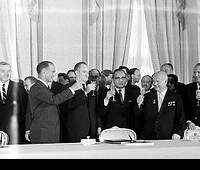
    Long-time and widely respected arms control watcher, Michael Krepon has written an interesting post on the Arms Control Wonk website about the perils of assuming that a negotiated outcome is always a good one. As the phrase goes, “the devil is in the detail” and looking very carefully at the relationship between militarisation and the provisions that get contained in treaties is all important.

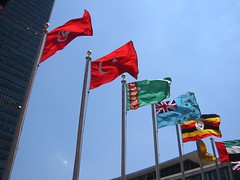
    Image source: UN.

    Read more »

    South Sudan: Conflict is ‘fact of life’

    Today Programme | BBC News | January 2012

    Issues:Competition over resources, Global militarisation

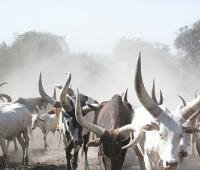
    In a radio interview for the BBC, Dr Sara Pantuliano of the Overseas Development Institute highlights a tribal conflict in Jonglei State that has grown particularly violent. The conflict between the Murle and Luo-Nuer groups has traditionally centred on cattle-raiding (cattle being a vital element of the region’s economy for centuries), but recently it has taken on the character of a ‘military assault’ along ethnic lines. Dr Pantuliano attributes this change to both the sheer number of weapons flooding the region, and to the anonymity and consequent remoteness of modern warfare. Compounding these factors is the diminished status of chiefs and elders and the effectiveness of the traditional checks and balances that they enforce, compromised as they have been by the protracted civil wars of the past.

    Article Source: BBC

    Image Source: Oxfam International

    Read more »

    Holding Libya Together: Security Challenges after Qadhafi

    Middle East/North Africa Report N°115 | Crisis Group | December 2011

    Issue:Global militarisation

    The structure of Libyan society under the Qadhafi regime, as well as during its demise and aftermath, was and remains peculiarly fragmented. The former dictator deliberately kept state institutions weak (in particular the army) in order to prevent the formation of an organised opposition and to create a cult of leadership centred on himself and his family. The consequence for the nature of the uprising was that rebel forces were fragmented, their control over the country was acquired piecemeal, and the internationally recognised National Transitional Council has had tenuous legitimacy outside its base in Benghazi and the east.

    Now that the regime has fallen, the process of rebuilding should be underway; but Libya has many autonomous, disconnected and heavily armed militias, all of whom have independent claims on their country’s liberation as well as the fire power to back those claims. A Crisis Group Report from December 2011 examines the tricky path that the authorities must navigate in order to successfully disarm, demobilise and reintegrate into society Libya’s rebel fighters, without plunging the country back into violence. Many of the young men who took up arms and joined the rebellion found in it a dignity long denied them by lack of economic and employment opportunities. So while the number of weapons in circulation must be dramatically reduced, the status that they bestow needs to be met by other means.

    Article Source: Crisis Group. To read the full Report, click here

    Image Source: United Nations

    Read more »

    Arms Flows to Sub-Saharan Africa

    Pieter D. Wezeman, Siemont T. Wezeman and Lucie Béraud-Sudreau | Stockholm International Peace Research Institute | December 2011

    Issue:Global militarisation

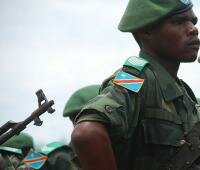
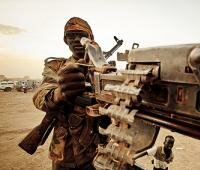
    SIPRI has published a policy paper examining arms flows into sub-Saharan Africa. The summary of the report indicates that even legal transfers into the continent have implications for peace and security, not only because many SALW (small arms and light weapons) make their way illicitly to rebel groups or countries under UN embargo, but also because, “The supply of arms can be argued to to have been an incentive for the recipients to try to achieve their goals via violence instead of dialogue.”  The summary also touches on the motives behind supplier countries’ weapons sales, which include securing access to natural resources in the mineral-rich continent.

    There is a general need for more clarity throughout the arms-transfer process, as African governments themselves are not necessarily forthcoming in their reasons for wishing to purchase weapons, despite regular expressions of support for international arms control initiatives. With the waters this muddied, arms purchased both legally and illegally pose a serious threat to security in Africa.

    (To view or purchase a copy of the full policy paper, please go to the Publications page on the SIPRI website)

    Article Source: Stockholm International Peace Research Institute

    Image Source: Enough Project

    Read more »

    Australia Remilitarizes

    Derek Bolton | Foreign Policy in Focus | December 2011

    Issue:Global militarisation

    Australia has recently begun to remilitarize in contrast to global trends of cuts in spending. As geopolitics shift from the Atlantic to the Pacific and the rise of China dominates concerns over the balance of global power, Australian investment in the military – and the navy in particular – shows a change in attitude towards security in the region.  However, as an article from Foreign Policy in Focus demonstrates, China has not reacted positively to the change in gear in military development nor to Australian intentions to reopen uranium sales to India. Moreover, a 2009 White Paper refers to potential Australian aspirations “…to have greater strategic influence beyond our immediate neighborhood”.

    Article Source: Foreign Policy in Focus

    Image Source: Australian Defence Force

    Read more »

    The Challenge of Managing State-owned Small Arms and Light Weapons in South Sudan

    Marius Kahl | Bonn International Center for Conversion | October 2011

    Issue:Global militarisation

    Countries emerging from a long period of armed conflict have to find solutions for getting widespread possession of small arms and light weapons (SALW) and related trade flows under control.  The Republic of South Sudan is a case in point.

    Article Source: Bonn International Center for Conversion (BICC)

    Picture Source: ENOUGH Project

    Read more »

  • video

    video

    The Power of Nightmares: The Rise of the Politics of Fear

    Adam Curtis | BBC | March 2006

    Issue:Global militarisation

    Tag:video

    A three-part BBC documentary series, written and produced by Adam Curtis. The films compare the rise of the neo-conservative movement in the United States and the radical Islamist movement, making comparisons on their origins and claiming similarities between the two. Read more »

  • Before the Cyberwar

    Before the Cyberwar

    R. Scott Kemp | Bulletin of the Atomic Scientists | June 2012

    Issue:Global militarisation

    Those concerned with the issue of militarisation as a driver of global insecurity are increasingly looking at the issue of cyberwarfare as the weapons of war become ever closely associated with the digital age. Waging war in the cyber domain raises some truly momentous questions about the nature of warfare, the laws of war and even what counts as self-defence. Nuclear expert, Scott Kemp has written an article in the Bulletin of the Atomic Scientists arguing that like the missed opportunity of the dawn of the nuclear age (in which possessing nuclear weapons was viewed as more important than the consequences of proliferation), policymakers today have an important opportunity to consider the implications – both intended and unintended – of cyberweapons.

    The article argues that in the early 1940s “The United States rushed into the nuclear age eager to cement its technical superiority, disregarding warnings of key statesmen and scientists that a decades-long nuclear arms race would ensue.” Kemp believes that we currently stand on the edge of a similar military revolution to the beginning of the nuclear age and that it is not too late to think carefully about the long-term consequences of creating a new “weapon of the weak.”

    Looking to the future, Kemp argues that “For states that have little to lose on the cyber front, an offensive approach may be interesting. But for the United States and other highly developed nations whose societies are critically and deeply reliant on computers, the safe approach is to direct cyber research at purely defensive applications.” Unlike the wrong-headed approach to nuclear weapons (in which a small clique of countries believed that they could develop a huge military advantage without opening a Pandora’s Box of imitation and proliferation of that same technology), the article argues for a much more strategic and far-sighted approach to the development of cyberwarfare capabilities.

    Such an approach would be based on an understanding of one of the central problems of world politics – known in the scholarly literature as the ‘security dilemma’ – in which arming oneself in order to defend against potential threats makes others feel threatened, who then in turn respond by arming themselves, thus starting a downward spiral of insecurity. Actions aimed at making yourself more secure today can in fact make you less secure tomorrow. As Kemp writes “Though Israel and the United States may have vast resources to support sophisticated and creative cyberweapons programs, it is worth remembering that such advantage could be its disadvantage: Each new cyberattack becomes a template for other nations – or sub-national actors – looking for ideas.”

    The article is a rare piece of rational and honest analysis in an area that is fast moving up the lists of national defence priorities in countries around the world. If Kemp is right and we are at an “Acheson and Lilienthal moment of the digital age”, then such clear-headed and strategic thinking about this new domain of warfare is going to need a great deal of support.

    The full article in the Bulletin of the Atomic Scientists can be accessed here.

    Image source: WFB

    Comments

    Post new comment