Blog

  • Sustainable Security

    Following the 1998 peace agreement, Northern Ireland has been promoted as a model for peacemaking. Human rights discourse played a role as a cause and cure of the conflict.

    Since the civil rights movement of the 1960s, the Northern Irish conflict has captivated imaginations far beyond the island. Following the 1998 peace agreement, the region has been internationally promoted as a model for peace-making. Politicians from the region have shared wisdom of the Northern Ireland peace process in far-flung countries in conflict, including the Philippines, Sri Lanka, Iraq, and Afghanistan. Some of the lessons exported from Northern Ireland’s peace process are general prescriptions, such as the necessity of engaging with enemies or the need for multi-party talks to include even the smallest parties. Broader lessons promoted about Northern Ireland’s peace process are claims about the role of human rights in conflict resolution. During the peace process, a popular history emerged with rights—political, economic, and human— occupying a central role as a cause and cure of the conflict.

    Human Rights as Political Narrative

    The broad outlines of this narrative are: after partition in 1921, the new state in Northern Ireland systematically denied civil and economic rights to Catholics and maintained Protestant dominance. In the late 1960s, when peaceful civil rights demands were met with both loyalist and state violence and state reforms failed, the republican movement was forced into armed struggle. During the conflict, the British state engaged in human rights violations, further compromising the legitimacy of UK governance. In the late 1990s, republicans, unionists, and the British state settled the conflict by agreeing to new political institutions that ensured equal rights for all.

    However, human rights lessons from Northern Ireland’s peace process are not quite as tidy as this narrative suggests. My longstanding ethnographic and historical research in the region suggests caution about the comforting certainties of this causal account. In the 1960s, grassroots advocates protested that nationalists’ civil rights were systematically undermined since partition, and throughout the conflict, “first generation” rights to speech and association, or freedom from torture, were violated and remain deeply contentious. At the same time, human rights were absorbed into the conflict, and became another arena for ethnopolitical contest. In the Good Friday Agreement (GFA), an explicit commitment to human rights was envisioned for the new political arrangements. Yet as the agreement was implemented, rights politics have often been vehicles for the claims of nationalists and unionists, rather than universal human subjects.

    Ethnopolitics and Human Rights
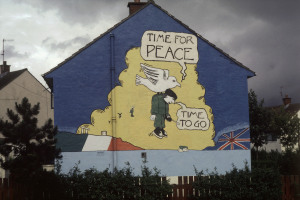
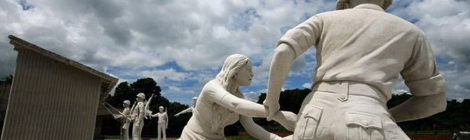
    Time_for_Peace

    “Time for Peace” mural, Whiterock Road, Belfast. Image available under the GNU Free Documentation License via Wikimedia Commons.

    Since the GFA, the tendency to argue ethnopolitical conflicts in terms of human rights has intensified, to the detriment of both wronged parties and broader understandings of human rights. A compelling example of how human rights were an incomplete solution to the conflict emerged early in the post-GFA era, in 2001, when a dispute in Ardoyne, north Belfast, resulted in shocking, violent loyalist protests at the Holy Cross Primary school (a Catholic girls’school). In June 2001, loyalists from the Glenbryn estate began picketing Holy Cross Primary School in nationalist Ardoyne, north Belfast. The school entrance was located just on the Glenbryn side of a famous “peace line.” Police in riot gear were deployed to protect small girls as they walked to school past lines of enraged adults. The dispute continued for four months, with violent conflicts during the summer break and a resumption of the pickets when the new term began in the autumn. Riots spread throughout north Belfast that autumn and winter, along with attacks on children travelling to other schools.

    Families of the distressed children eventually backed an unsuccessful challenge of police conduct under the Police (Northern Ireland) Act 2000, and under Articles 3, 8, 13, and 14 of the European Convention. That case, P.F. and E.F. v. the United Kingdom (Application no. 28326/09), was eventually ruled inadmissible by the European Court of Human Rights. Its long legal journey ended in 2010, when the European declared that, horrific as the protests were, there was no evidence of European convention breach.

    The dispute and legal proceedings very nearly derailed the new Human Rights Commission formed under the GFA.  In 2002-3, six members resigned or withdrew from the commission, citing multiple reasons related to the commission’s lack of authority and resources, its approach to drafting a Bill of Rights, and, most notably, its approach to handling the Holy Cross protests. Although the commission as a whole voted not to become involved, its casework committee committed the commission to supporting the families’ lawsuit. Individual commissioners took contradictory public positions and became increasingly divided. Meanwhile, the commission was perceived as part of an ethnopolitical conflict rather than as public advocates for either the protection of vulnerable people or fundamental rights.

    The Holy Cross protest was not resolved by human rights institutions or advocacy; some might argue that it has never been resolved. The situation revealed several problematic dimensions of treating human rights as a cure for conflict. One difficulty is that human rights laws concern the conduct of state actors. Paramilitary organizations, neighborhood associations, and transnational corporations do not sign human rights treaties.

    Human Rights in the Good Friday Agreement

    Another issue making it difficult for human rights law or advocacy to provide a resolution to conflict was how the GFA itself situates human rights principles in relation to power-sharing as a means to manage conflict. One innovation of the GFA is that it makes human rights central to the settlement, with the entirety of section 6 devoted to “Rights, Safeguards and Equality of Opportunity.” However, the GFA is more strongly oriented by political scientist Arend Lijphart’s consociational model. This model prescribes the management of conflict through power sharing among parties defined in ethnic or communal terms. Thus, the GFA situates human rights within a broader logic that privileges collective political rights. This conceptual maneuver mirrors the way political rhetoric and everyday life absorb human rights claims into regional ethnopolitics, rather than creating a transformative alternative to ethnopolitics.

    In the Holy Cross conflict, protagonists framed the dispute in terms of collective rights and alleged that these rights were being differentially allocated by the state. Families of the girls argued that the protests subjected them to inhuman and degrading treatment—violations of their human rights. Furthermore, they said, police did not use force to stop the protests because the girls were Catholic, but they would have ended any such protest by nationalists. Loyalists claimed that free assembly was an unconditional right, irrespective of sectarian content or whether violence might be a consequence.

    Unfortunately, the kinds of conflicts and challenges for human rights politics raised in the Holy Cross conflict are neither unusual nor uncommon in Northern Ireland. For example, in Donaldson v. the United Kingdom (Application no. 56975/09) the European Court of Human Rights refused to hear the complaint of a republican prisoner that his human rights were violated when the prison service did not allow him to wear a lily (a symbol of the republican struggle for a unified Ireland) outside his cell. Disputes over rights to display emblems may appear frivolous outside the region, but they are part of a broader process, in which human rights laws and institutions have been insufficient to resolve the disputes that emerge from Northern Ireland’s longstanding political conflict.

    Enduring Lessons and the Everyday Life of Rights

    In my 2014 monograph, I explore at length how rights politics have often functioned war by other means over time, rather than providing a comprehensive resolution to conflict. I conclude that advocacy such as the lesbian, gay, bisexual, and transgender (LGBT) equality movement have been more transformative in human rights terms than attempts to balance ethnopolitical rights. This cautionary point about how human rights politics have been received, reinterpreted, and transformed in the Northern Ireland context is not intended to dismiss the peace process’ significant achievements, including the profound diminution of political violence, paramilitary demobilizations, and decommissioning.

    Nevertheless, the successes of the process also require recognition that throughout the fitful implementation of the GFA, political polarization intensified, past violence and political symbols have been repeatedly contested, and riots surrounding parades and symbolic matters like flags have become dangerous and costly recurrent events, intimating, for some, a return to conflict. Violence casts a long shadow across the present peace; prosecutions and re-investigations of past murders and atrocities continue, recent killings like the murder of Kevin McQuigan last summer destabilize power-sharing institutions, and ministers continue to warn of resurgent paramilitary activity – such as a recent upsurge in bomb attacks.

    Understanding the role of human rights in everyday politics in both the past and present is necessary for making nuanced claims for human rights advocacy and law in conflict resolution. Northern Ireland’s tremendous reduction in violence must not be dismissed, but it is important to recognize that the settlement also sustains a form of ethnopolitics that is not always congruent with the goals of human rights advocacy. As the politics of the conflict continue to structure the settlement, it is fair to ask how transformative human rights politics have been. Such an approach can make us conscious of perilous conditions that constrain the present fragile peace, and highlight achievements that are durable and transferrable for the future.

    Dr. Jennifer Curtis is Honorary Fellow in Social Anthropology at the University of Edinburgh. She is the author of Human Rights As War By Other Means:  Peace Politics in Northern Ireland, published by the University of Pennsylvania Press. Her work focuses on how grassroots social movements appropriate and alter rights advocacy and law. She has conducted long-term ethnographic research in Belfast, Northern Ireland and in the United States.  She is currently completing an ethnographic monograph on race, sexuality, and civil rights in red state America, based on fieldwork in Missouri. The book explores the local and national significance of #BlackLivesMatter, movements for LGBT equality, and anti-equality movements, within the broader historical context of racialized violence, slavery, and inequality in the American South.

  • Sustainable Security

  • Yemen: state fragility, piety, and the problems with intervention

    Yemen: state fragility, piety, and the problems with intervention

    Lisa Wedeen | NOREF | March 2010

    Issue:Global militarisation

    Summary

    The issue of state fragility and the presence of radical religious movements in Yemen have occasioned misperceptions and confusions in recent debates about the country. This report argues that the language of “failed states” arises nearly exclusively in relation to countries deemed threatening to US security interests. Moreover, this language obscures rather than reveals how regime incentives to build state institutions can be incompatible with regime interests in survival. The result is that a seemingly neutral analytical category misrepresents local realities even while it is used as a warrant for policy initiatives that are likely to be counterproductive.

    The full report  is available here.

    Comments

    Post new comment


  • Sustainable Security

    This article by Chiara Oriti Niosi and Maud Farrugia originally appeared on openDemocracy on 19 December 2014.

    A spate of violence against women in the eastern DRC shows that there is still a long way to go on effective implementation of the UN Security Council Resolution 1325 on Women, Peace and Security, 14 years after its adoption.

    There are very few roads accessible by car in the South Kivu province of the eastern Democratic Republic of Congo (DRC). One of these is around Bukavu, the provincial capital. The road is used daily by locals, government officials, non-governmental organisations and United Nations agencies, including the United Nations Stabilization Mission for the DRC (MONUSCO), the world’s largest peacekeeping mission.

    In this area, over a few months in 2013, at least 40 women were reportedly attacked, sexually assaulted and robbed of all their goods while taking shortcuts on their way to markets. As often happens, such incidents went unreported for a long time, mainly because survivors feared being stigmatised as victims, and had little faith that their assailants would be prosecuted.

    What was happening? Too poor to afford basic transportation, heavily burdened Congolese women walk long distances to reach markets to sell their products. Congolese Armed Forces had obstructed the road to Bukavu with illegal barriers, forcing women who lacked the money to pay the tolls to choose the forest by-ways, risking attack.

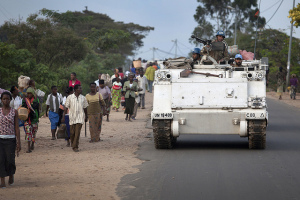
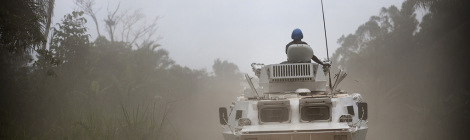
    MONUSCO peacekeeper patrol, South Kivu. Source: Flickr | MONUSCO

    MONUSCO patrol, South Kivu. Source: Flickr | MONUSCO

    But even if unreported, the risk of incidents should have been detected. The presence of illegal barriers was well known, but despite some on-going efforts to stop them, almost no peacekeepers from the government, non-governmental organisations or MONUSCO noticed the absence of women transporting goods along the road. This should have been striking considering how common it is to see women carrying large loads on their shoulders everywhere in this area of the DRC.The presence of illegal barriers was well known, but despite some on-going efforts to stop them, almost no peacekeepers from the government, non-governmental organisations or MONUSCO noticed the absence of women transporting goods along the road.

    This indicates not only a terrible gap in recognising and preventing sexual violence, but also a lack of attention to women’s roles in society, and to women’s potential contributions to security, early warning and early response, and peacemaking. In other words, a lack of concern for what is stated in UN Security Council Resolution 1325 on Women, Peace and Security, which acknowledges the vital role women can and should play in conflict management, conflict resolution and sustainable peace.

    Losing direction: the gaps in adopting a gender perspective

    In spite of growing efforts to raise awareness and knowledge of Resolution 1325 among international actors and national institutions, many peacebuilders are not yet used to applying a gender perspective. On one hand, the importance of gender is underestimated, and its potential to influence peace and conflict is not recognized. This is partly because gender is so rooted in each society’s behaviour that it is often confused with culture, or not even perceived at all–neither in the local peacekeeping environment, nor in the environment of origin of peaceworkers. Peaceworkers take great trouble not to ‘interfere’ with the culture of local people.

    The difficulties associated with discussing gender norms, while remaining sensitive to the cultural autonomy of the local population, end up being used to justify not working with gender at all. On the other hand, those difficulties have also created the perception that working with gender is the exclusive responsibility of specialized experts, with a specific budget. While this can be true for the implementation of gender programs, it is not true for adopting a gender perspective. The transversal nature of gender necessitates acting with a gender perspective.

    What dominates is a misinterpretation of ‘gender’, which for most practitioners is largely linked to reducing sexual violence. A shallow interpretation of gender inhibits this aspect of peacework. Although most strategies of civilian protection take into account threats, vulnerabilities, profiles of aggressors and attacks, and even indicators of conflict-related sexual violence, few consider the social roles assigned through gender alongside these other key elements. For example, if collecting water is a role traditionally taken on by women, and (male) armed actors have a record of sexual violence against women, it is crucial that local water points are secured away from them.

    But understandings of gender are not only about reducing sexual violence; they are crucial to every aspect of peace and conflict life. The transversal nature of gender, just like peace and conflict, means that gender influences women’s and men’s roles and behaviours in practical ways, from the level of the family to the institution. The daily activities conducted by men and women are frequently determined by gender, and can sway and be swayed by conflict and peace contexts.

    For instance, women’s and men’s daily activities will expose them to different knowledge. Where women are tasked with collecting water and wood, cultivating fields, childcare or visiting markets, while men maintain a breadwinner role, they will have access to different kinds of information which can be essential to recognize conflict patterns; information about a particular community’s needs, specific security threats, and local power brokers. Humanitarian situations can also challenge gender norms. It has been widely reported amongst Syrian refugees that, because men have been uncomfortable asking for assistance, women have added to their traditional responsibilities by looking for humanitarian aid outside of the home. Acquiring this breadwinner status has left some women on the receiving end of frustrations of their male partners, expressed through violence.The transversal nature of gender, just like peace and conflict, means that gender influences women’s and men’s roles and behaviours in practical ways, from the level of the family to the institution.

    In other cases, working with women directly can be crucial to achieving a sustainable peace. In reintegration programs especially, working with ex-combatants’ wives can be very helpful. Social connections with the host community, which are crucial for a sustainable reintegration, are often created by women via childcare, visits to the market and so on. In all these senses, a gender perspective can provide opportunities to drive positive changes towards peace and gender equality.

    Yet gender often is not included in peacekeepers’ observations. Why? One explanation is that in conflict situations, “hard issues”, such as armed attacks or massive destruction, are much more visible, easier to monitor and with immediate measurable impact, and so are more easily included in protection strategies. In contrast, gender issues come across as “soft issues”, and are often confined to the domain of “women’s issues”. Gender issues are not seen as priorities that must be considered for stepping towards peace; rather, they are considered ‘consequences’ of the conflict to which provide assistance.

    Commonly, gender is very much associated with women, rather than the gendered roles of women and men; women in conflict situations are mostly seen as vulnerable objects of peacekeeping initiatives. This understanding of gender relegates women to passive victimhood–rather than to persons that are not vulnerable per se, but are in a condition of vulnerability. This misinterpretation is very costly: not only reducing peace operations’ capacity to prevent violence, but also the participation of key active elements able to promote a sustainable peace.

    The implementation of Resolution 1325 suffers from this bias: it is often treated as an appendix to weightier matters, rather than being integral to conflict resolution or sustainable peace. The titular focus of Resolution 1325 on Women (rather than Gender), Peace and Security may itself be problematic. It risks being misinterpreted as advocating that the security of women be dealt with differently (and separately) from that of men; stressing the need to promote protection and participation of women, rather than highlighting the interdependence of women’s and men’s security for lasting peace. The existence of specific security threats towards a targeted group, for example the frequency with which sexual violence is directed against women and girls, or the forced recruitment into armed groups of children, does not mean that consequences will affect only that part of the population. Nor does it follow that the strategies of prevention should focus only on the ‘at risk’ group.

    Rather, the consequences of violations affect the population as a whole, at all levels of society. Attacks against women on routes to market have not only consequences for the victim personally, but on family relationships, where the victim suffers discrimination, and the husbands frustration. The socio-economic stability of the community itself is put at risk when the markets are closed due to declining participation. Consequently, such attacks have consequences also at a regional and national level. Indeed, security does not mean only protection against threats, but the creation of a protected environment at all levels: domestic, community, institutional, and international. Each man and each woman has a role to play in all those levels of security.

    Gender equality has further implications for security. If men and women do not have the same access to opportunities and rights, the security and peace of the society at large is compromised. An imbalance of rights and participation at the family level can have repercussions nationwide. What is essential is the interaction and participation of women and men together to build peace and prevent conflict.

    The greater aim of Resolution 1325 to integrate a gender perspective into all aspects of conflict prevention and resolution is thus missed in many efforts to implement it. Indeed, this tendency to dissociate, as opposed to integrate, gender into security and conflict resolution strategies also risks feeding the idea that the security and protection of women can only be provided for by women as security actors. This is only part of the picture. Training all mission personnel in operating with a gender perspective is more important.

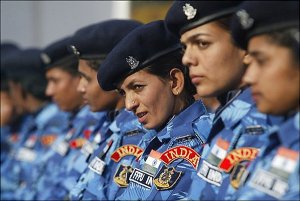
    Indian peacekeepers in UNMIL. Source: Wikimedia

    Indian peacekeepers in UNMIL. Source: Wikigender

    It is true that there is an immediate need to increase the number of women (military, police and civilian) deployed in peace support operations and to elevate their roles to those of their male counterparts. Female peacekeepers can play crucial roles in certain areas, including women’s protection: assisting women victims of violence, and patrols and community engagement in contexts where social norms restrict contacts between women and men. Female peacekeepers challenge broad conceptions around women’s–and men’s–roles in security. For instance, a Uruguayan female helicopter pilot with MONUSCO has aroused enormous interest among Congolese women, which has supported the mission’s engagement with local people. In Liberia, Indian female peacekeepers in the UN Mission in Liberia (UNMIL) have assumed a very high profile role guarding the President’s office. The percentage of women enrolling in the Liberian National Police rose from 13 percent in 2008 to 15 percent in 2009. The tendency to dissociate, as opposed to integrate, gender into security and conflict resolution strategies also risks feeding the idea that the security and protection of women can only be provided for by women as security actors.

    However, the presence of female peacekeepers is often the sole emblem of the UNSC resolution. While this is indeed part of the solution, the key is for each actor–male or female, military or civilian–to learn and to act with a gender perspective in all situations. In order to achieve this, a gender perspective needs to be taught, continuously cultivated and practiced before, during and after peace operations.

    Getting it right: South-South collaboration

    Sharing similar experiences and lessons learned between regions is an excellent way to gradually adopt the gender perspective. Latin America and Africa, for example, are regions that share a number of structural characteristics and face comparable challenges: post-colonial states, corruption, insecurity, inequality, young governments, histories of long-lasting internal conflicts, and post-dictatorial contexts. South-South collaborations between these regions enables a thoughtful approach based on the experiences countries have acquired over the years. Such collaborations, moreover, are all the more pertinent as many Troop Contributing Countries to peace operations deployed in Africa are from Latin American countries. Currently, 12 Latin American and Caribbean states contribute over 1,500 peacekeepers to UN missions in Africa, with the Uruguayan and Guatemalan commitments to MONUSCO being the largest.

    Resolution 1325 was originally neglected at the Latin American level. Since 2007, RESDAL’s investigations on women in the armed forces across the Latin American region have revealed a number of issues, including a lack of data on the subject, and a lack of discussion of gender issues within peace operations. The research papers promote collaboration between civil, military and police actors to improve gender equality within democratic institutions, and are an important resource for Latin American practitioners. As a result of such efforts, Resolution 1325 and related material were incorporated into the regional agenda within three years, notably in the IX Conference of Defense Ministers of the Americas.

    RESDAL has been uniquely positioned to use this regional advocacy experience to progress the Women, Peace and Security agenda in international peace operations. After conducting fieldwork in Haiti, DRC and Lebanon, where Latin American countries participate in United Nations peace operations, it became clear to RESDAL that it was necessary to carry out regular and pre-deployment training for military peacekeeping forces. To this end, RESDAL instigated a programme of classes on gender promotion in peacekeeping operations at various centers across Latin America that consider international legal frameworks and field experiences, as well as local understandings of gender.

    The implementation of Resolution 1325 cannot take shortcuts: the path to adopt is that of a comprehensive, multi-actor and practical gender approach. The 15th anniversary of Resolution 1325 next year provides an opportunity to follow such a path, advocating for an approach based on fieldwork and South-South collaboration to work with women and men towards a lasting peace.

    Chiara Oriti Niosi specializes in reducing sexual violence in conflict, with several years of experience at the United Nations Organization Stabilization Mission in DRC (MONUSCO). She currently works at RESDAL in the Women, Peace and Security program.

    Maud Farrugia holds a degree in Social Anthropology from the University of Cambridge. She is Assistant Researcher for the Women, Peace and Security program of RESDAL. 

    Featured image: A MONUSCO vehicle on patrol in Beni, Democratic Republic of Congo. Source: Flickr | MONUSCO

  • Sustainable Security

    Community-led counterterrorism presents an untapped opportunity, as it recognises that religiously defined communities have a distinct role to play in responding to growing terrorist recruitment efforts in Europe and North America.

    How is security against terrorism risk with a domestic origin to be created in an effective and sustainable way? The first instinct of many politicians, especially on the populist right, is to turn to the state and its diverse apparatus of police, military, and intelligence agencies as the canonical supplier of protection against violent risk. The so-called “travel ban” recently enacted in the United States is one example; the aggressive use of Section 44 stop and search powers in the United Kingdom is another.

    But a different dynamic is often at play when terrorism incidents are in fact interdicted—a dynamic that the state and its agents are less keen to publicize:

    • In 2008, British police arrested a man named Isa Ibrahim (né Andrew Philip), a convert to Islam, in Bristol, England, on the basis of information from the city’s Muslim community. A detective leading the investigation stated, “He was an unknown. Without the information from the community we may not have got to him. Without the community’s help he could have killed dozens of people.”
    • On February 17, 2015, three teenagers from the Bethnal Green neighborhood of east London boarded flights from London’s Gatwick airport to Turkey with plans to join the Islamic State. Distraught, their families appealed for their return, but also criticized the Metropolitan Police for failing to share information that might have allowed parents and close friends to have intervened and thereby prevented the girls’ departure. Even if the state would have lacked the authority to act coercively against the girls, family members persuasion and appeals from close relations could have mitigated IS’ allure.
    • In 2004, a Jamaican-born imam, Abdullah el-Faisal, was convicted in London of solicitation to murder and provocation of racial hatred. Yet a group of Salafists from Brixton had already brought el‑Faisal’s propaganda in favor of terrorism to the attention of London police some years earlier. The same Brixton-based Salafist group had also attempted (unsuccessfully) to persuade the English-born Richard Reid—later to secure renown as the ‘shoe bomber’—to reject el‑Faisal’s teachings.

    In each of these examples—and they can be multiplied—a nongovernmental actor with ties of some sort to an alleged terrorism suspect independently took an action that mitigated the threat of terrorism without priming or prompting by the state. In almost every case, the sheer fact of daily interaction endowed the relevant actor with an epistemic or credibility advantage in comparison to the government. The resulting intervention, to be sure, was not always a success. Sometimes, it was not forceful enough. Other times, the state failed to follow through. But still, each intervention made a terrorist act less likely in expectation. At a minimum, these examples should provoke an investigation of what I call the social production of counterterrorism—social mechanisms external to state apparatus that are conducive to collective security against terrorism—to ascertain better its magnitude and significance, its causal predicates, and its policy entailments.

    The social production of counterterrorism

    Image credit: Diamond Geezer/Flickr.

    Given the increasing claims made on behalf of state coercion and control, there is a pressing need to explore the potential theoretical or evidentiary foundations for an account of counterterrorism’s social production. In a series of articles, I have identified three causal mechanisms that might underwrite the social production of counterterrorism: ideological competition, ethical anchoring, and cooperative coproduction. Each works by changing the costs of terrorist groups’ action.  The first two involve raising the cost to terrorists of transparency at the moment of recruiting; the last involves raising the cost of opacity downstream.

    First, ideological competition is the possibility that social action can raise the cost of terrorism by providing substitute forms of social solidarity and vehicles of collective political action. The ideological competition mechanism works through the disciplining effect of competition, which, as in any other domain, conduces to higher costs and smaller operating margins. A terrorist organization seeking to attain certain policy goals or appealing on the basis of particular foreign policy disputes must compete in a market of social movements, both political and religious. The greater the competition it faces, the more onerous its task.

    By populating the marketplace of ideas more densely, ideological competition raises terrorism’s propagandizing and recruitment costs. At the same time, this mechanism is not free of risk: Perhaps a plurality of private associations that share the liminal political views—but not the penchant for violence—of terrorist organizations might instead hinder efforts to minimize terrorism risk. Beyond this enabling effect, an increase in the frequency of antiestablishment messaging by quietist but politically radical organizations may have the effect of legitimating terrorist organizations’ calls to arms. Ultimately, the net effect of ideological competition is an empirical question. The important point here is that ideological competition is at least a plausible candidate mechanism through which the social production of terrorism might work, even if its sign and magnitude may well vary according to circumstance.

    A second way in which social action can prevent a person from even considering the possibility of violent political action is through the ethical anchoring effect of close affiliations. This mechanism hinges on the manner in which a network of friends, colleagues, and kin members can impose social pressure on an individual to eschew the use of violence for political ends. Political violence necessitates the violation of generally shared ethical commitments, which in turn can lead to breaches with otherwise close members of familial and social networks. To the extent that members of tight social networks reiterate and reinforce those ethical norms, with the implicit threat of ostracism and social sanction in the background, recruitment costs will be higher. And to the extent that these networks furnish affirmative role models, individuals will feel less need to seek out violent forms of social action in the first instance.

    Finally, the possibility of cooperative coproduction focuses on the manner in which private individuals can substitute more fine-grained epistemic instruments for the blunter investigative methods government otherwise employs. Whereas ideological competition and ethical anchoring raise terrorist organizations’ front-end recruitment costs by increasing the price of effective publicity, this third species of social action against counterterrorism is valuable because it increases the cost of opacity during the period in which a terrorist group seeks to render its activities immune from public, and in particular official, scrutiny.

    For example, members of the public will be better able than the state to interpret ambiguous and fragmentary social cues from otherwise scattered and disconnected individuals in their social milieu. In the case of the Brixton Salafis, there is some reason to believe that they were able to discern the difference between individuals drifting toward violence, as opposed to those becoming more religiously committed but quietist. Even if the state can develop an extensive and deep system of intelligence collection through electronic data, undercover agents, and paid informants, it is still not at all clear that these sources have the same epistemic competence in situating nuanced social actions in context as members of a close-knit community. Moreover, there is always a concern that the state apparatus itself will be captured by elements with a xenophobic or racist agenda.

    Conclusion

    Assuming these causal mechanisms are fruitful, can the state promote them? To date, states have not seriously considered how efforts to promote beneficial social action intersect with other policy efforts. Nor have they seriously considered how efforts to promote counterterrorism’s social production might interact with other security‑related policies.

    The place to start in thinking about how to promote the social production of security is programs like the U.K.’s  Prevent  and the U.S.’s Countering Violent Extremism. These have been subject to considerable criticism, and have not succeeded in the main in fostering healthy relationships between Muslim communities and law enforcement. Often, quite the opposite has occurred. These programs, though, could be reengineered (with considerable effort) to be less directive, more inclusive, and more enabling of a range fof different voices.

    Moreover, any government’s security strategy will inevitably have coercive elements. At times, these may work at cross-purposes with security’s social production. A government that is serious about security (as opposed to mere security theater) will carefully examine any such conflicts, and do its best to mitigate rather than exacerbate them.

    Striving to achieve these policy goals at a moment when political pressures bend in a quite different direction will require vigorous argument and clear thinking in the coming years.

    Aziz Huq is an assistant professor at the University of Chicago Law School.

  • Competition over resources

    Competition over resources

    In the environmentally constrained but more populous world that can be expected over the course of this century, there will be greater scarcity of three key resources: food, water and energy. Demand for all three resources is already beyond that which can be sustained at current levels. Once population growth and the effects of climate change are factored in, it is clear that greater competition for such resources should be expected, both within and between countries, potentially leading in extreme cases to conflict.

    Reinventing Energy Futures

    Institute for the Future | Four Visions Map | February 2012

    Issues:Climate change, Competition over resources

    Over the next few decades, the increasing demand for resources and the pressures of climate change are going to force some rapid and potentially difficult decisions on the role of energy in the global economy. A useful exercise has been undertaken by the Institute for the Future in terms of exploring a number of scenarious that could come to characterise our political, social and economic systems depending on the energy choices we make today.

    Image source: Ulleskelf. 

    Read more »

    Someday, none of this will be yours: the predatory state eyes ‘public’ land

    Rhodri C. Williams | Terra Nullius | January 2012

    Issue:Competition over resources

    Ambiguous legal structures bequeathed to post-colonial and other developing states have complicated the meaning of ‘public’ land. Recent interpretations have followed the trends of either the development and human rights communities, such as attempts at post-conflict restitution; or the private property rights of foreign investors vis-á-vis state control. As described below by Rhodri C. Williams in his TerraNullius blog, at the heart of the issue is the highly contested nature of the line between private and public land ownership, leading to grey-area treatment of some land. Williams also explains how violence can arise when the basic human attachment to land conflicts with state claims, and how policy recommendations from international donors and institutions such as the World Bank can aggravate delicate and conflict-prone situations.

    Article Source: Terra Nullius

    Image Source: rudenoon

    Read more »

    South Sudan: Conflict is ‘fact of life’

    Today Programme | BBC News | January 2012

    Issues:Competition over resources, Global militarisation

    In a radio interview for the BBC, Dr Sara Pantuliano of the Overseas Development Institute highlights a tribal conflict in Jonglei State that has grown particularly violent. The conflict between the Murle and Luo-Nuer groups has traditionally centred on cattle-raiding (cattle being a vital element of the region’s economy for centuries), but recently it has taken on the character of a ‘military assault’ along ethnic lines. Dr Pantuliano attributes this change to both the sheer number of weapons flooding the region, and to the anonymity and consequent remoteness of modern warfare. Compounding these factors is the diminished status of chiefs and elders and the effectiveness of the traditional checks and balances that they enforce, compromised as they have been by the protracted civil wars of the past.

    Article Source: BBC

    Image Source: Oxfam International

    Read more »

    Land, livelihoods and identities: Inter-community conflicts in East Africa

    Laura A. Young and Korir Sing’Oei | Minority Rights Group International | December 2011

    Issues:Competition over resources, Marginalisation

    In a report published in December 2011, Minority Rights Group International highlights the problems facing minority groups, specifically in an area covering Kenya, Uganda and Jonglei State in South Sudan. Competition over resources has increased the potential for confrontation not only with local dominant ethnic groups, but also with the state and international corporations, thereby increasing the liklihood of different forms of conflict on different levels. Progressive legal protections are often not enforced because of a disconnect at state-level between legislation and law-enforcement, which only exacerbates existing problems caused by long-standing discrimination. Moreover, conflict involving already marginalised people adversely affects the women and children in these groups in particular, which in turn re-impacts on the community because of the traditional roles that women play in family cohesion and as food producers.

    Many problems arise not simply because people belonging to minority groups are themselves marginalised, but also their community and governance structures which previously had been successful in mediating conflict such as (in an East African context) cattle raiding. Marginalisation not only discriminates against individuals because of their backgrounds or beliefs but also rides roughshod over communal organisation and mediation, leaving groups unable to adapt to change or protect their interests when threatened by more powerful entities.

    To read the full report and press release, click here

    Image Source: Leonie_x

    Read more »

    In Colombia, Rural Communities Face Uphill Battle for Land Rights

    Kayly Ober | New Security Beat | November 2011

    Issue:Competition over resources

    “The only risk is wanting to stay,” beams a Colombian tourism ad, eager to forget decades of brutal internal conflict; however, the risk of violence remains for many rural communities, particularly as the traditional fight over drugs turns to other high-value goods: natural resource rights.

    Article Source: New Security Beat

    Image Source: Philip Bouchard

    Read more »

    Safeguarding South Asia’s Water Security

    Michael Kugelman | Seminar | November 2011

    Issue:Competition over resources

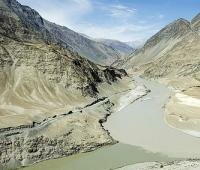
    In today’s era of globalization, the line between critic and hypocrite is increasingly becoming blurred. Single out a problem in a region or country other than one’s own, and risk triggering an immediate, yet understandable, response: Why criticize the problem here, when you face the same one back home? Such a response is particularly justified in the context of water insecurity, a dilemma that afflicts scores of countries, including the author’s United States. However, in South Asia, the dilemma is considerably more urgent. The region houses a quarter of the world’s population, yet contains less than 5% of its annual renewable water resources.

    Article Source: Seminar

    Image Source: hceebee

    Read more »

  • Sustainable Security

    In Deep Water: China tests its neighbours’ patience

    Control of water, including navigation rights, resource extraction and the exploitation of shared watercourses is at the heart of today’s geopolitical tensions in Asia. China’s recent actions in the South China Sea and Himalayas have given rise to further—and at times violent—conflict over the region’s natural resources. So will water insecurity lead to greater partnership in Asia? Or will it lead to a revival of China’s traditional sense of regional dominance and undercut efforts to build a rules-based approach to growing resource conflicts?

    Read Article →

    Deforestation: REDD-y for peace or fuelling conflict?

    REDD forestry efforts don’t pay enough attention to their influence on local conflict dynamics. For REDD+ to be an effective mechanism to curb deforestation and strengthen peace opportunities, it has to pay more attention to pre-existing land and forest conflicts linked to tenure, take into account the interests of the local communities and be more sensitive to the local context

    Read Article →

    US Drone Strikes in Pakistan: ineffective and illegitimate

    Strikes by unmanned combat air vehicles, or armed drones, have become the tactic of choice in US counterterrorism efforts in Yemen, Somalia and, the topic of current controversy, Pakistan. The lack of transparency, dubious effectiveness, civilian casualties and negative consequences for US national security being highlighted by current debate means that Washington needs to re-evaluate its approach.

    Read Article →

    Can the Nuclear Non-Proliferation Treaty outrun its double standard forever?

    The recent walkout by Egyptian negotiators at UN talks have demonstrated that, like a building with rotten foundations, the nuclear non-proliferation regime is far less stable than many believe it to be. Egypt’s actions make clear that anything less than a regime specifically geared towards addressing the reasons why some states seek nuclear weapons is a regime existing on borrowed time.

    Read Article →

    Bay of Bengal: a hotspot for climate insecurity

    The Bay of Bengal is uniquely vulnerable to a changing climate because of a combination of rising sea levels, changing weather patterns, and uncertain transboundary river flows. These problems combine with already existing social problems like religious strife, poverty, political uncertainty, high population density, and rapid urbanization to create a very dangerous cocktail of already security threats. Andrew Holland argues that foresight about its impacts can help the region’s leaders work together to solve a problem that knows no boundaries.

    Read Article →

  • Sustainable Security

    From Surveillance to Smuggling: Drones in the War on Drugs

    In Latin America drones are being used as part of the War on Drugs as both regional governments and the US are using surveillance drones to monitor drug trafficking and find smuggling routes.. However, as drones are increasingly being used by drug cartels themselves to transport drugs between countries, could Latin America find itself at the forefront of emerging drone countermeasures?

    Read Article →

    Belize: challenges and contradictions in gang policy

    Like its neighbours in the northern triangle (El Salvador, Honduras and Guatemala), Belize has a high murder rate that is closely connected to the strong presence of gangs. But the character of gang activity in Belize is quite different from its Central American neighbours. Belize has pioneered some innovative solutions to the problem it is facing. But it will need to overcome the challenges of internal resistance and an acute lack of resources in order to address the political, economic and social issues that marginalise Belize’s large youth population.

    Read Article →

    Nuclear Weapons: From Comprehensive Test Ban to Disarmament

    Despite not yet entering into force, the 1996 Comprehensive Test Ban Treaty has succeeded in almost eliminating nuclear weapons testing and in establishing a robust international monitoring and verification system. A breakthrough in its ratification by the few hold-out states could have important positive repercussions for the Nuclear Non-Proliferation Treaty or nuclear disarmament in the Middle East.

    Read Article →

    Colombia and Mexico: The Wrong Lessons from the War on Drugs

    As activists around the world participate in a Global Day of Action against criminalisation of drug use, evidence from the multi-billion dollar War on Drugs in Colombia suggests that militarized suppression of production and supply has displaced millions of people as well as the problem, not least to Mexico. The wrong lessons are being exported to Central America and beyond, but a groundswell of expert and popular opinion internationally is calling for alternative approaches to regulating the use and trade in drugs.

    Read Article →

    Mexico’s Conflicting Migration Policy Goals: National Security and Human Rights

    Mexico has rapidly become a major site of transmigration from Central America to the United States, as people move in search of employment opportunities or escape from social violence. This rise in migrant flows from Mexico’s southern border overlaps with problems of control of contraband, organised crime, and the trafficking of drugs and arms. However, the government’s militarised approach to the phenomenon means that the use of force and human rights violations go unresolved and military approaches to preserving public order go unchecked. As long as migration remains a security issue, instead of a developmental and human rights matter, it will not be tackled appropriately. Instead, the government must start to view the matter through a citizen, not national, security lens.

    Read Article →

    Exporting (in)Security? Questioning Colombian Military Engagement in West Africa

    With skills and expertise in fighting insurgencies and drug trafficking networks, Colombia’s armed forces are increasingly being sought for engagement in similar security challenges in West Africa. But increasing Colombian engagement gives rise to a number of important questions – not least of which is the goal and expected outcomes of replicating militarised approaches to the war on drugs that have already failed in Latin America.

    Read Article →

  • Sustainable Security

    Arctic InsecurityGenerally, the Arctic has elicited only minor attention outside the countries whose borders or territories fall within the loosely-defined region. But that is changing rapidly. As Kuupik Kleist, the former Prime Minister of Greenland, put it,

     “The Arctic used to be the last frontier. Now it seems we are at the center of the world.”

    While rapidly deteriorating environmental security in the region poses a grave threat to many regions of the world, the focus on militarized control of the area masks the very real need to mitigate further damage to the climate and increase our adaptive capacities to the inevitable climatic changes that will come in the 21st century.

    Realpolitik or Environmental Security?

    Indeed, much has been made lately about the ongoing and profound changes that are reshaping the Arctic region. There is no shortage of reports that detail the ways that climate change is forcing the region’s physical, social, and political environments into flux. Arctic sea ice is melting at an increasingly rapid rate, with the very real possibility that sometime between 2020-2050, the Arctic will soon experience its first (and undoubtedly not its last) sea ice-free summer. The effects of warming temperatures are likely to be dramatic: it will degrade habitats for vulnerable species, including polar bears and seals, and will accelerate and compound the effects of climate change, like volatile weather patterns and rising sea levels. A recent article in the journal Nature concluded that the long-term economic costs from a warming Arctic could reach $60 trillion, almost equal to the entire economic value of the world economy in 2012.

    But in the face of these worrying trends, discussion has instead focused on the economic opportunities offered by the ‘opening up’ of the Arctic, including the creation of new shipping routes and increasing the accessibility of fossil fuel reserves. The area north of the Arctic Circle is said to contain about 30% of the world’s undiscovered gas and 13% of the world’s undiscovered oil. The Governance of newly opened shipping lanes like the Northwest Passage will remain a contentious political question. While the region has thus far suffered from general neglect and inattention, it is unrealistic to expect that to continue in the future.

    Indeed, it is already becoming clear that the Arctic is the site of ongoing militarization. Recent security maneuvers have increased state control over the farthest reaches of state territory. In 2007, Russia planted its flag underneath the North Pole and resumed strategic bomber patrols over the area, echoing  its Cold War past. Canada’s official Arctic Foreign Policy proclaims “the first and most important pillar towards recognizing the potential of Canada’s Arctic is the exercise of our sovereignty over the far north.” Border disputes in the Arctic have led to strained relations for decades between Canada and Denmark as well as between Russia and Norway. Both cases have been peacefully resolved in the last few years. Yet, sovereignty and security have both been used to justify the proliferation of military ice-breakers, patrol ships, the creation of new deep water ports, and the deployment of military personnel including the Northern Rangers in Canada and the Danish Arctic command (which are both relatively small in terms of active personnel). Joint military operations conducted by Arctic countries (excluding Russia) such as Operation Cold Response and Operation Nanook have also contributed to the militarization of the Arctic.

    It is worthwhile then to examine how sustainable forms of security are useful in the Artic context. What is needed principally is an increased awareness of the integrated connections between the natural environment and security. Large-scale changes to the natural environment are security threats.  Whether through an increase in extreme weather events causing enormous health and economic costs; rising sea levels leading to coastal flooding and climate-induced migration; or desertification, which devastates crop production, the effects of environmental change are severe. The task then in the Arctic is to combat the tendency to view environmental degradation as an opportunity for national gain, which will do little to counter-act the severe global effects. Such conventional, strategic responses inevitably lead only to further suspicion, distrust, and discord. The Arctic is one of the clearest manifestations of this tendency.

    The Arctic will be without question a region of high strategic importance in the 21st century. Unfortunately, countries are likely to view the Arctic with an eye to using the region to bolster domestic support for increased militarization, surveillance, and sovereign control over vast, distant, territorial ‘frontiers’.  All told, Arctic security remains wedded to traditional, state-centric military threats despite the fact that the threat of outright conflict is as remote as the farthest reaches of the Arctic region itself. These approaches may be predictable, but they will contribute little to alleviating the complex, interrelated, and underlying drivers of insecurity in the Arctic region.

    Demilitarizing the Arctic

    So is the goal then to “demilitarize” the Arctic? Would the diverse sets of international issues arising from changes in the Arctic be better positioned in political terms, away from the exceptional demands that military thinking requires? Perhaps strengthening political institutions like the Arctic Council can alleviate the Arctic “rush” and ensure a lawful forum for state and indigenous negotiations in the Arctic. Formed in 1996, the Arctic Council has been the primary diplomatic forum used to facilitate cooperation, discussion, and negotiation. It was formed by eight Arctic countries (Canada, Denmark [Greenland], Finland, Iceland, Norway, Russia, Sweden, and the United States) and includes six Arctic indigenous organizations and other Arctic inhabitants. Recently, the Council accepted six new non-Arctic states as non-voting Observer states, joining six others already granted observer status. The new inclusions, China, India, Italy, Japan, Singapore, and South Korea, may appear at first glance to be curious admissions. Certainly they represent important economic and military powers but most exist far from region itself. However, after initial reticence from members like Canada, the Council accepted their inclusion on the basis of strengthening the Council’s legitimacy by undercutting any emerging alternative organizations, like the Arctic Circle Forum from usurping its authority.

    We should celebrate the decision by Council members to include new observer states: it allows these states to increase their awareness of Arctic issues and vulnerabilities, it opens up new avenues for cooperation and confidence-building measures, and it rightly spreads the responsibility for protecting the Arctic across the world. But while the Arctic Council remains an enduring and hopeful sign for managing political relations, the Council alone should not be expected to transform the underlying logic that continuously renders environmental security in strategic terms, obscuring the practices which have led to Arctic insecurity in the 21st century.

    The driver of Arctic insecurity is not simply the continued militarization or the politicization of the region by its encircling states. The reality is much more complex and multifaceted. In effect, by continuously focusing on security in these strategic terms, we can’t see the forest for the trees. The Arctic “great game” is not simply a metaphor we might use to romanticize geopolitical maneuvers; it is an expression of the profound material environmental shifts that are occurring rapidly and are a result of anthropogenic drivers related to modern carbon-based societies. The continual free-fall in terms of Arctic ice levels and the fact that the region has been warming twice as fast as lower latitudes is likely to have far more important, long-lastingand damaging global effects than a hypothetical, always-over-the-horizon conflict between states competing to protect their localized interests. That is a popular story that obscures the much more difficult and insidious problems related to diagnosing and combatting climate change.

    The fact that most states view the opening up of new Arctic sea lanes as a means to exploit vast and newly accessible energy sources reflects long-dominant understandings of both security and the environment. If our understanding of both Arctic security and the Arctic environment continues to be reduced to the international scramble for untapped resources and for newly opened “shipping lanes” (or melted sea ice, if you will), it is unlikely that the hugely alarming and damaging environmental effects of climate change will ever be truly overcome.

    It is essential then that environmental security in the Arctic is recast away from traditional and dominant security practices of resource development, national sovereignty promotion, and increased surveillance. While these practices will remain in the future, we still should encourage a much more profound rethink that places greater value not simply on increasing cooperative intergrovernmental forums (though these are important), but on greater collaboration with indigenous populations, on studying the global environmental interconnections between the Arctic and other regions, and on aggressively combatting climate change. Adaptation to the inevitable changes occurring in the region will of course require coordination and strategic planning, and the potential for conflict will be ever-present. But an overreliance on familiar narratives of climate change-induced conflict obscures the much more complex drivers of Arctic insecurity, namely our destructive relationship with the environment and its connection to conventional, strategic security logic.

    Cameron Harrington is an Adjunct Professor of Political Science at King’s University College and Brescia University College, at Western University (Canada), where he teaches in the areas of environmental politics and international relations. His Ph.D thesis, (pending completion September 2013) builds a framework to combat water insecurity in the 21st century by focusing on the ethics of security.

    Cameron tweets via @camharrington and can be reached at [email protected] 

    Image source: lafrancevi (HMCS CORNER BROOK on arctic patrol during Operation Nanook)

  • Sustainable Security