Blog

  • Sustainable Security

    Russia’s conflictual relationship with the West has been described as a Cold War-like confrontation. In reality, these powers are engaged in an asymmetric rivalry, not a Cold War.

    Russia’s relations with the United States and other Western nations have been increasingly conflictual. The Kremlin has challenged the position of American hegemony globally and in regional settings. Following election of Donald Trump as the U.S. President, Russia’s military strategy, cyber activities, and media role have been under particular scrutiny although the Kremlin has acted assertively since the second half of the 2000s.

    While many Western observers place responsibility for the conflict on Russia, some tend to blame the West. However, most observers agree that a Cold War-like confrontation is set to define the two sides’ relations. Today the narrative of a new Cold War commands the attention of political and scholarly circles.

    The Misleading Cold War Framework

    As compelling as it may seem to some observers, the Cold War framework is misleading. In particular, it fails to address the global power shift and transitionary nature of the contemporary international system. In today’s world, the old ideological rivalry is no longer applicable. The new world is no longer divided by the communism-capitalism dichotomy. Instead the competition of ideas is predominantly one between liberal and nationalist principles of regulating the economy and political system. While in the eyes of many the West continues to represent liberalism, the realities of Brexit, Trump, and tightening migration regulations in the European Union demonstrate the global power of nationalist ideas. On the other hand, China, Russia, and other allegedly autocratic and nationalist polities continue to favor preservation of liberal global economy, and oppose regional autarchy and Trump-favored protectionism.

    Instead of reviving old Cold War rules and principles, new rules and expectations about the international system and state behavior are being gradually formed. China, Russia, India, Turkey, Iran, and others are seeking to carve out a new space for themselves in the newly emerging international system, as the United States is struggling to redefine its place and identity in the new world.

    The described changes altered position of the only superpower in the international system. Structurally, it is still the familiar world of American domination with the country’s superiority in military, political, economic and symbolic dimensions. Yet dynamically the world is moving away from its US- and West-centeredness even though the exact direction and result of the identified trajectory remained unclear.

    As a result, many non-Western countries are developing their own rules and arrangements in world. Russia and other non-Western countries increasingly have international options they never had before as new global and regional institutions and areas of development outside the influence of the West gradually emerge.

    This does not mean re-emergence of a new international confrontation. Most non-Western nations are not looking to challenge the superpower directly and continuing to take advantage of relations ties with the West. The U.S.-balancing coalition or a genuine alternative to the West-centered world has not yet emerged. Unlike the previous eras, the contemporary world lacks a rigid alliance structure. The so-called Russia-China-Iran axis is hardly more than a figment of the imagination by American neoconservatives and some Russia conspiracy-minded thinkers. The world remains a space in which international coalitions overlap and are mostly formed on an ad hoc basis depending on issues of interests.

    Partly because of these global developments, the Cold War perspective also misunderstands Russia’s motives and power capabilities. Unlike the old era, Russia does not seek to directly confront or defeat the other side. Rather, the objective is to challenge the rival party for the purpose of gaining recognition and negotiating a greater space within the still largely West-influenced global order.

    Furthermore, Russia is in no position to challenge the Western nations globally given the large – and in some areas widening – gap between the U.S. and Russian capabilities. The importance of defending Russia’s interests and status by limited means has been addressed through the idea of asymmetric capabilities applied on a limited scale and for defensive purposes. When the chief of the Russian General Staff Valery Gerasimov first described the so-called hybrid war he did not mean to provide a template for an offensive military strategy. Rather, as several military analysts noted, he intended to recognize that the West had already being engaged in such war against Russia and that Russia had to be better prepared for the new type of war. While Russia’s President Vladimir Putin is not acquiescing to American pressures, he is engaged in asymmetric rivalry. The latter targets the competitor’s selected vulnerable areas and is designed to put on alert and disorient, rather than achieve a decisive victory. Asymmetric methods of Russian foreign policy include selective use of media and information technology, cyber power, hybrid military intervention, and targeted economic sanctions.

    Finally, the Cold War narrative underestimates a potential for Russia’s cooperation with the West in selected areas. The described asymmetric rivalry does not exclude the possibility of Russia and Western powers cooperating in some areas (nuclear non-proliferation, counter-terrorism, cyber issues) and regions (Middle East and North Korea) while perceiving each other as competitors over preferred rules and structure of the international system. In the increasingly fragmented world, Russia and the West may move beyond viewing each other as predominantly rivals if they learn to focus on issues of common concern and find a way to reframe their values and interests in non-confrontational terms.

    Future Co-operation?

    Cooperation with Russia remains possible and indeed desirable. Russia’s constant attempts to engage the United States and other Western nations in cooperation, including those over Iran and Syria, demonstrate the importance to the Kremlin of being recognized in relations with the outside world. Despite its internal institutional differences from Western nations, Russia sees itself as an indispensable part of the West and will continue to reach out to Western leaders in order to demonstrate Russia’s relevance.

    Although the West continues to possess the power of influence, Western leaders have not been effective in using such power. Instead of devising a strategy of selective engagement and recognition, they largely rely on containment and political confrontation in relations with Russia. The West remains fearful of Russia and wants to force the Kremlin to comply with Western demands to relieve pressures on Ukraine or conduct a more restrained foreign policy.

    These pressures are not likely to work. If the West continues to challenge Russia’s perceived interests, there are indeed reasons to expect that Putin may fight back. Even with a stagnating economy, the Kremlin commands a strong domestic support and an ample range of asymmetric tools for action.

    However, for reasons of psychological and economic dependence on the West, Russia, unless provoked, is not likely to engage in actions fundamentally disruptive of the existing international order. If the United States does not engage in actions that are viewed by Russia as depriving it of its great power status, the Kremlin will refrain from highly destabilizing steps such as abdication of the INF treaty or military occupation of Ukraine or other parts of Eurasia.

    As difficult as it might be to accept for the West, there is hardly an alternative to engaging Russia in a joint effort to stabilize the situation globally as well in various regions including Ukraine and wider Europe. The new policy must be based on understanding that the Kremlin’s “revisionism” is partly a reaction to the West’s refusal to recognize Russia as a potential partner. The alternative to the new engagement is not a compliant Russia, but a continued degradation of regional and global security.

    Andrei P. Tsygankov is professor of political science and international relations at San Francisco State University. He has published widely in the United States, Russia, Europe, and China. His books include Russia’s Foreign Policy and Russia and the West from Alexander to Putin, and he has recently edited the Routledge Handbook of Russian Foreign Policy (to be published in 2018).

  • Marginalisation of the majority world

    Marginalisation of the majority world

    A complex interplay of discrimination, global poverty, inequality and deepening socio-economic divisions, together make for key elements of global insecurity. While overall global wealth has increased, the benefits of this economic growth have not been equally shared. The rich-poor divide is actually growing, with a very heavy concentration of growth in relatively few parts of the world, and poverty getting much worse in many other regions. The ‘majority world’ of Asia, Africa and Latin America feel the strongest effects of marginalisation as a result of global elites, concentrated in North America and Europe, striving to maintain political, cultural, economic and military global dominance.

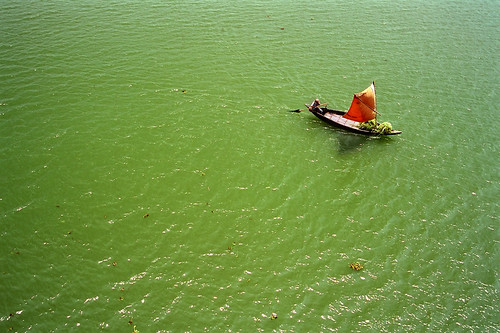
    Exploring the security implications of climate change in South Asia – International Alert co-hosts South Asia Climate and Security Expert Roundtable in Dhaka

    Janani Vivekananda | International Alert | April 2010

    Issues:Climate change, Competition over resources, Marginalisation

    International Alert, together with the Bangladesh Institute for Peace and Security Studies (BIPSS) and  the Regional Centre for Security Studies and the Peacebuilding and Development Institute in Sri Lanka, co-hosted an expert roundtable on the Security Implications of Climate Change in South Asia in Dhaka, Bangladesh on 29th-30th March 2010.

    The two-day event brought together experts from Bangladesh, India, the Maldives, Nepal, Pakistan and Sri Lanka for an important regional exchange on issues related to climate change and security. International Alert’s recent work on climate change, fragility and conflict has shown that the security implications of climate change are a very real but relatively unexplored issue worldwide and in this region. This event marked the start of a significant process, creating a space for a critical discussion on the interlinkages between climate change and conflict in South Asia.


    Source: International Alert

    Image source: Orangeadnan

    Read more »

    Turning swords into ploughshares: Environmental degradation and water poverty are reaching a tipping point after which serious instability and suffering will be unavoidable

    Prince El Hassan Bin Talal, Chairman of the West Asia-North Africa Forum | www.gulfnews.com | April 2010

    Issues:Climate change, Competition over resources, Marginalisation

    Good news does not sell newspapers. Nor, it seems, does the idea of respect for human dignity. In West Asia, where the majority of people have known little other than outright war or simmering conflict, it should come as little surprise that people have lost their faith in the possibility of real peace. Real peace can be a frightening prospect; it means burying the hatchet and beating swords into the proverbial ploughshares. No easy task when we are all burdened by historical and psychological baggage.

    Source: www.gulfnews.com

    Image source: Nino Jose Heredia/Gulf News


    Read more »

    How small arms and light weapons proliferation undermines security and development

    Rachel Stohl, EJ Hodendoorn | Center for American Progress | March 2010

    Issues:Global militarisation, Marginalisation

    The proliferation of small arms and light weapons is an immediate security challenge to individuals, societies, and states around the world and an enormous hurdle to sustainable security and development.

    Read more »

    New Report Highlights the Links between Poverty, Marginalisation and Terrorism

    Lia Brynjar with Skjølberg Katja | Norwegian Defence Research Establishment | March 2010

    Issue:Marginalisation

    New Report Highlights the Links between Poverty, Marginalisation and Terrorism

    A new report by the Norwegian Defence Research Establishment providing a critical survey of the academic literature on the causes of terrorism  demonstrates the link between marginalisation and levels of political violence and terrorism.

    Read more »

    Reimagining Development

    Issue:Marginalisation

     A new initiative of the Institute of Development Studies at the University of Sussex brings together 34 research projects exploring whether crises in food, finance, fuel and climate –  and the way that people are responding to then – present us with an opportunity to rethink or ‘reimagine’ what international development means and how it needs to change.

    Read more »

    The New Faces of Violence and War: Peace and Security Challenges

    Issue:Marginalisation

    In this recent article, Mariano Aguirre, Director of the Norwegian Peacebuilding Centre in Oslo, examines the complex and unpredictable challenges to peace and security.

    Attach PDF: 

  • Assessing the Security Challenges of Climate Change

    Assessing the Security Challenges of Climate Change

    Obayedul Hoque Patwary | Exclusively written for sustainablesecurity.org | May 2011

    Issue:Climate change

    At the outset of the twenty first century, climate change has become one of the greatest challenges to international peace and security. It is seriously affecting hundreds of millions of people today and in the coming decades those affected will likely more than double, making it the greatest emerging humanitarian and security challenge of our time. Climate change acts as a threat multiplier for instability in some of the most volatile regions of the world. Projected climate change will seriously aggravate already marginal living standards in many Asian, African, and Middle Eastern nations, causing widespread political instability and conflict.

    A crucial new quality of current climate change is its speed and extent. The matter is thus not one of individually occurring, monocausal crises and conflicts, but rather one of a great number of destabilising, mutually amplifying factors. To comprehend the danger of climate change, the CNA report on “National Security and the Threat of Climate Change” released in April 2007 has clearly stated that-

    “When climates change significantly or environmental conditions deteriorate to the point that necessary resources are not available, societies can become stressed, sometimes to the point of collapse.”

    Recent Scientific Assessment Regarding Climate Change

    The recent scientific assessment presents a worrisome picture regarding climate change. The evidence of the scientific community clearly suggests that the scale of climate change has continued to widen at an accelerated pace. According to the Fourth Assessment Report of IPCC, eleven of the last twelve years (1995-2006) rank among the twelve warmest years in the instrumental record of global surface temperature (since 1850). The report presents a statistical idea about this trend where it suggests that the 100-year linear trend (1906-2005) of 0.74 °C is larger than the corresponding trend of 0.6 °C (1901-2000) given in the Third Assessment Report (TAR). The linear warming trend over the 50 years from 1956 to 2005 (0.13 °C per decade) is nearly twice that for the 100 years from 1906 to 2005.

    The IPCC in its Fourth Assessment Report also concludes that some extreme weather events have changed in frequency and intensity over the last 50 years. It has been observed that:

    – Cold days, cold nights and frosts have become less frequent over most land areas, while hot days and hot nights have become more frequent.

    – Heat waves have become more frequent over most land areas.

    – The frequency of heavy precipitation events (or proportion of total rainfall from heavy falls) has increased over most areas.

    – The incidence of extreme high sea level has increased at a broad range of sites worldwide since 1975.

    Regarding future climate change, IPCC projected that continued Green House Gas (GHG) emissions at or above current rates would cause further warming and induce many changes in the global climate system during the 21st century that would very likely be larger than those observed during the 20th century.

    Security Implications of Climate Change

    Climate change is a very complex phenomenon that affects many aspects of international politics and acts as a stressor making situations of instability, conflict and humanitarian crises more likely and severe. Climate change presents both direct and indirect threat to the security and stability of the society and the state. This has been discussed below in detail:

    Primary threats of climate change

    Resource scarcity and conflict

    Climate induced resource scarcity always has the potential to be a contributing factor to conflict and instability. Over the past centuries there have been various instances in which climate change has exerted a highly negative influence on societies, in some cases triggering crises or aggravating conflicts and, in combination with other factors, leading to the collapse of entire societies. Some recent examples include: the 1994 genocide in Rwanda that was furthered by violence over agricultural resources; the situation in Darfur, Sudan, which had land resources at its root and which is increasingly spilling over into neighbouring Chad; the 1970s downfall of Ethiopian Emperor Haile Selassie through his government’s inability to respond to food shortages; and the 1974 Nigerian coup that resulted largely from an insufficient response to famine (CNA Report, 2009)

    Water crises

    Climate change aggravates water quality and availability in regions that are already struggling hardest with water scarcity: Africa, South Asia, the Middle East and the Mediterranean. 1.1 thousand million people are currently without access to safe drinking water (German Advisory Council on Global Change, 2008) and the situation is likely to be aggravated through climate change. This global crisis may in turn fuel existing internal or inter-state conflicts and social conflict and heighten competition among different users of the scarce water resources. The Indus water dispute is a glaring example of how water can complicate relations between states. It is predicted that unresolved water issue could trigger Indo-Pak war which would have unpredictable consequences in the international arena.

    Migration

    Large scale migration is another consequence of climate change which has deep security implications. Changes in local and regional climatic conditions in the form of sea level rise, heat stress, desertification, flooding and drought severely restrict livelihood options for large groups in developing countries. On the one hand, these changes may directly challenge basic subsistence of already disadvantaged communities in the region, thereby further increasing their vulnerability across social, economic and institutional settings. On the other hand, increasing local vulnerability could potentially trigger large-scale internal displacement and migration in search of new avenues for employment and settlement that can further lead to destabilization and violence. Such destabilization may take place at various levels: local (group vs. group), national (group vs. state) and international (state vs. state) level. For instance, an exercise at the National Defense University, published in the New York Times in August 2009, explored the potential impact of a destructive flood in Bangladesh that sent hundreds of thousands of refugees streaming into neighbouring India, touching off religious conflict, the spread of contagious diseases and vast damage to infrastructure. Indicating the severity of the problem, the Deputy assistant secretary of defenSe for strategy Amanda J. Dory commented that:  “It gets real complicated real quickly.”

    Climate shock

    Climate change is expected to increase the intensity and frequency of climatic shocks. In recent years, abrupt climatic disasters are increasing in frequency and touching the lives of more people. Such abrupt disaster which is also termed as ‘climate pearl harbour’ is reinforcing wider risks and vulnerabilities, leading to short and long-term setbacks to human security.

    Melting of Himalayan Glacier

    The fast melting of Himalayan glacier due to climate induced global warming also present severe security challenges to countries like Bangladesh. The expanding volume of water is causing higher sea levels which in turn can submerge a significant portion of land area. For instance, a rise above one metre, which could be reached by 2050, means Bangladesh could lose 15 per cent to 18 per cent of its land area, turning 30 million people into “environmental refugees”.

    Natural Disaster

    Another consequence of climate change that has the potential to undermine the security of the state and individuals is related to natural disasters. Global warming is predicted to increase the frequency and intensity of various natural disasters e.g. tropical storms, flash floods, landslides etc. For instance, according to the Bangladesh Ministry of Environment and Forests, between 1991 and 2000, 93 major disasters were recorded in Bangladesh, resulting in nearly 200,000 deaths and causing US $ 5.9 billion in damages with high losses in agriculture and infrastructure. As a result, governments and individuals are still dealing with the effect of one event when another hazard strikes. Impacts of global warming and climate change thus challenge our development efforts, our human security and our future.

    However, climate change not only leads to primary security challenges, but also presents a number of secondary threats.

    Secondary Threats of Climate Change

    Possible increase in the number of weak and fragile states

    Climate change is likely to lead to an increase in the number of weak and fragile states. Weak and fragile states have inadequate capacities to guarantee the core functions of the state, notably the state’s ability to deliver basic services and maintain public order, and therefore already pose a major challenge for the international community. The impacts of unabated climate change would hit these countries especially hard, further limiting and eventually overstretching their problem-solving capacities. This is particularly relevant to regions like South Asia (the most crisis-ridden in the world -World Bank, 2006) and Africa, whose state institutions and intergovernmental capacities are weak. It is therefore foreseeable that climate change will overwhelm political structures and will further complicate economic and social problems of these regions.

    Health Risks

    Current weather conditions heavily impact the health of poor people in developing nations, and climate change has a multiplying effect. It is estimated that the health of 235 million people a year is likely to be seriously affected by gradual environmental degradation due to climate change (Human Impact Report, Global Humanitarian Forum, 2009). This is based on the assumption that climate change will increase malnutrition, diarrhoea and malaria. Malnutrition is the biggest burden in terms of deaths. Climate change is projected to cause over 150,000 deaths annually and almost 45 million people are estimated to be malnourished because of climate change, especially due to reduced food supply and decreased income from agriculture, livestock and fisheries. (Human Impact Report, Global Humanitarian Forum, 2009).

    Threat to global economic development

    Climate change slows – and in the worst cases reverses – progress made in fighting poverty and disease, and threatens the long terms sustainability of development progress. Climate change can lead to the destruction and devaluation of economic capital, as well as the loss of skilled and productive workers through environmentally induced migration and an increase in climate-induced diseases and malnutrition. Furthermore, economic resources that would normally be channelled directly into the production process instead have to be spent on adaptation measures, e.g. preparing for extreme events, or on reconstruction or the delivery of additional health services. Unabated climate change thus results in reduced rates of growth which will increasingly limit the economic scope, at national and international level. According to the Stern Review, which was commissioned by the British government, climate change impacts could cost 5-20% of global GDP each year (Stern, 2006) which can halt progress in meeting the Millennium Development Goals.

    Increases in Poverty

    Climate change compounds existing poverty by destroying livelihoods. Specifically, rising temperatures, changing rainfall patterns, floods, droughts and other weather-related disasters destroy crops and weaken or kill livestock. The majority of the people suffering from the impacts of climate change are already extremely poor. Currently about 2.6 billion people – two thirds of them women – live in poverty (below $2 a day) with almost 1 billion living in extreme poverty (less than $1 a day). About 12 million additional people are pushed into poverty today because of climate change (Human Impact Report, Global Humanitarian Forum, 2009).

    Energy, infrastructure and transport

    In view of the predicted climate trends and their associated socio-economic processes, key infrastructures are facing new demands. Climate induced consequences negatively affect the key infrastructures and make it more vulnerable which has wide ranging security implications such as:

    – The impacts of climate change may damage key infrastructures, such as energy supply, and consequently destabilise public order.

    – Wide-ranging destruction of the coastal infrastructure may lead to mass migration movements and trigger tensions in regions of destination.

    – The decline in hydroelectric power generation may additionally reinforce competition/conflicts over fossil energy sources.

    – New supply channels may additionally increase GHG emissions and thus aggravate problems-including the drivers of conflict.

    Food crisis

    Reduced or constrained agricultural productivity is often conceived as potentially the most worrisome consequence of climate change which reduces food security – especially in the poorest part of the world where hunger is already an issue. As a result, more than 850 million people worldwide are currently undernourished (German Advisory Council on Global Change, 2008) and the situation is likely to worsen in future as a result of climate change. Such impacts are particularly severe in developing regions such as South Asia, Sub-Saharan Africa and the dry land belt that stretches across the Sahara and the Middle East. This situation can trigger regional food crisis and further undermine the economic performance of weak and unstable states, thereby encouraging or aggravating destabilization, the collapse of social systems and violent conflicts.

    Gender and climate change

    Though climate change affects everyone, it is not gender neutral. Women are, in particular, more vulnerable to the effects of climate change as they represent 70% of those living below the poverty line. Consequently, they are most likely to bear the heaviest burdens when natural disasters strike. When poor women lose their livelihoods, they slip deeper into poverty and the inequality and marginalization they suffer from because of their gender, increases. In this way, climate induced disaster presents a very specific threat to their security.

    North-South Conflict

    Climate change can fuel conflict between the industrialized north and the developing south over the sharing of burden caused by unabated climate change. Though the industrialized countries have been primarily responsible for climate change, developing countries are bearing the main burden of the rising costs associated with climate change impacts. This reality has also been reflected through the words of Kofi Annan, the former Secretary General of the UN, as he stated that: “The countries most vulnerable…contribute least to the global emissions of greenhouse gases. Without action they will pay a high price for the actions of others.”

    The unabated climate change thus herald the onset of a diplomatic freeze between the main drivers of climate change and a substantial number of developing countries that are especially hard hit by its impacts.

    Radicalization and terrorism

    Radicalization and terrorism may be increased in many developing societies due to the climate induced social and economic deprivation. Many developing countries do not have the government and social infrastructures in place to cope with the types of stressors that could be brought on by global climate change. When a government can no longer deliver services to its people, conditions are ripe for the extremists and terrorists to fill the vacuum. The radical and terrorist exploit this condition as a recruiting ground by offering various social services to the people. Lebanon’s experience with the militant group Hezbollah is a glaring example of how the central governments’ inability to provide basic services has led to the strengthening of a radical organization.

    Undermining the Conditions of Human Rights

    Climate change affects the situation of human rights adversely. Food security and access to drinking water could be challenged by the impacts of climate change in affected countries and regions, destruction caused by rising sea levels and extreme weather conditions could put people’s livelihoods at risk. In this way, climate change can endanger the human dignity to a large number of people by denying them the conditions in which they will not be able to safeguard their human rights.

    Cultural Threat

    Climate change can jeopardise the cultural heritage of people and society. As people are losing their places and livelihoods, increasing number of people are becoming climate refugees – leaving their history and tradition behind. It is predicted that some of the endangered groups in Africa which are coming under further stress due to climate impacts will be disappeared in future, thereby posing a threat to the cultural security of the society and the state.

    Limiting the prospect of international cooperation

    Climate change can also put additional stretch on international system by limiting the potential of cooperation over the management of scarce resources. When the countries come under further stress caused by climate change, they will become more insular and may take in-ward approach, thereby limiting the prospect of international cooperation in managing natural resources.

    International Legal Complications

    It is predicted that climate change could deepen the international legal complications. If the prediction of the scientific community becomes true, then countries like Maldives will be nowhere in the global Map in the foreseeable future. This could completely destabilize international maritime boundaries, and fuel tensions between maritime countries.

    Concluding thoughts

    At this juncture of history, it needs to be recognized that environmental crisis potentially has more pervasive and more security implications than any other crisis. For this reason, environmental challenges should be placed at the core of security considerations in a rapidly changing world. Hence, effective international cooperation should occur to address the unpredictable consequences of climate change.

    Finally, I would like to conclude quoting the Obama’s Noble Peace Prize acceptance speech where he clearly states that:

    ‘It is undoubtedly true that development rarely takes root without security; it is also true that security does not exist where human beings do not have access to enough food, or clean water, or the medicine they need to survive…This is why the world must come together to confront climate change. There is little scientific dispute that if we do nothing, we will face more drought, famine and mass displacement that will fuel more conflict for decades.’

    Image source: Oland0 7

    Obayedul Hoque Patwary is a graduate of the department of Peace and Conflict Studies of Dhaka University, Bangladesh. He is working as a Research Analyst at the Bangladesh Institute of Peace and Security Studies. His research mainly focuses on the issue of ‘climate change and security’ and the ‘transnational security threats’.

    Comments

    Nice one!

    Very good effort!

    fantastic article vaia!

    Post new comment


  • Sustainable Security


    This piece by sustainablesecurity.org’s Zoë Pelter and Richard Reeve was originally published on 5 September, 2013 on openDemocracy 

    4815774738_b9962f4875_bThe narrow defeat on 29th August of the UK government’s parliamentary motion on support in principle for military action against the Syrian regime has forced Prime Minister David Cameron to concede that Britain will play no part in any direct attack on Syria. If the UK is to play no military role in ‘punitive’ responses to the regime’s alleged use of chemical weapons, what options are open to the UK in terms of resolving the Syrian conflict, protecting civilians and punishing those responsible for war crimes there? And how does Cameron’s overt preference for the military option, with or without UN mandate, condition these non-military options?

    Pushing for peace

    The possibility of a negotiated peace in Syria should not be dismissed. Neither the regime’s military, militia and foreign allies, nor the variety of armed factions ranged against them (and, increasingly, each other) are exhausted. Nor do the Assad regime’s mid-year successes in central Syria presage any imminent likelihood of it regaining control of the north and east. The strategic stalemate that appeared to set in to the conflict in June, after pro-Assad forces retook al-Qusayr, arguably presented a breathing space for negotiations and the so-called Geneva II conference, proposed by the US and Russia, with UN and Arab League backing, the previous month. As recently as mid-August, the Geneva talks were expected to resume in September.

    But even convening these talks will now prove far harder. Expectation of Western intervention against President Bashar al-Assad, as well as their own increasing divisions, gives the Western-backed armed opposition groups an incentive to delay talks. Jihadist groups that have proved effective militarily are largely excluded. US and Russian facilitation of the Geneva process, however fraught, also tends to exclude the voices of regional actors like Turkey, Iran, Iraq and Saudi Arabia, each of which feels its interests very directly threatened in Syria and gives active support to one or more armed faction.

    This calls for a rethinking of the Geneva process, if not the 2012 transition roadmap, to bring in the full range of actors, not the abandonment of peace talks. Threat of US-led intervention and its own increasing international marginalisation, should it be proved to have launched a chemical attack on 21st August, could incline the Assad regime towards a negotiated settlement, perhaps even an exit and exile strategy.

    Cameron and PutinThis will not happen without pressure from Iran and Russia. Both have much to lose in Syria, but neither is entirely closed. Iran is still in its post-electoral opening and under severe economic pressure, looking to cut a wider deal with the West. Russia may not be comfortable with its isolated position defending the alleged user of chemical weapons. Like the US, it fears the growing influence of jihadi groups while the current stalemate continues. While there is little hope of Moscow abandoning its Security Council veto over action against Syria, it will be embarrassed if it stands almost alone defending Assad in the Council or against a General Assembly resolution. Neutrally collected and analysed evidence of Syrian regime culpability for chemical weapons attack will be crucial to shifting Russia’s position.

    Having made clear its preference for ‘punitive’ military action, and been frustrated by parliament in pursuing such action, the UK government is not ideally placed to broker negotiations. Yet the UK does have influence with Syrian opposition groups, in the Gulf States and, when it acts in concert with its less interventionist EU partners, with Russia, Turkey and Iran.

    Fighting impunity

    Again, the importance of due investigative and legal process through UN Fora is crucial. When asked on 29 August if he agreed that Assad should be prosecuted at the International Criminal Court (ICC), David Cameron replied curtly that these processes take time. Yes, the wheels of institutional responses turn slowly, not least justice institutions. Yet the most obvious response to any breach of customary international law on the use of chemical weapons (Syria is one of just five states not to have signed the 1993 Chemical Weapons Convention) is a war crimes prosecution through the ICC. It is not important that Syria has not signed the Court’s establishing Rome Statute. Assad and any responsible commanders could still be subject to international prosecution if the Security Council referred Syria formally to the ICC.

    The UN has been investigating a wide range of alleged crimes committed by both sides with a view to future prosecutions. Clearly, the presence on the Security Council of Syrian allies and a majority of non-signatories to the Rome Statute presents obstacles to referral, but the Council has overcome such obstacles before, notably China’s reluctance to see its Sudanese allies prosecuted over actions in Darfur. With France and other allies, the UK should take the lead within the Security Council in pushing to refer Syria to the ICC based on the same ‘moral minimum’ or red line that has been deployed in favour of armed intervention. This, in turn, may provide leverage to persuade pro- and anti-Assad factions alike to take peace negotiations more seriously.

    Notwithstanding the heavy shadow of its past action in Iraq, the UK’s moral standing is bolstered by commitment to legal and democratic process. The UK should take a breath, step back from punitive reaction and recommit itself to a multilateral, inclusive and legally rigorous approach to resolving the war in Syria and its many affiliated regional conflicts. No other form of intervention will effectively protect the lives and rights of Syrian civilians either in the current war or the difficult peace that must follow.

    Richard Reeve is the Director of Oxford Research Group’s Sustainable Security Programme. He works across a wide range of defence and security issues and has particular expertise in Sub-Saharan Africa, peace and conflict analysis, and the security role of regional organisations.

    Zoë Pelter is the Research Officer of Oxford Research Group’s (ORG) Sustainable Security Programme. She works on a number of projects across the programme, including Rethinking UK Defence and Security Policies and Sustainable Security and the Global South.

    Image sources:

    Image: The Prime Minister welcomes President Vladimir Putin to Downing Street ahead of the G8 Summit. Source: The Prime Minister’s Office

    Image: The Prime Minister during a joint press conference with US President Barack Obama. Source: The Prime Minister’s Office

  • WEBSITE

    WEBSITE

    Share the World’s Resources (www.stwr.org)

    Issue:Marginalisation

    Tag:WEBSITE

    This website presents an extensive database of the latest news, analysis and information on a variety of international issues. There are currently over 2,000 articles available covering issues ranging from globalization to poverty, climate change, people power and much more.

    The objectives of Share the World’s Resources are Read more »

  • Sustainable Security

    Carefully Managing Water Resources to Build Sustainable Peace

    Carefully planned interventions in the water sector can be an integral part to all stages of a successful post-conflict process, from the end of conflict, through recovery and rebuilding, to […]

    Read Article →

  • Sustainable Security

    Plan Colombia was an initiative aimed at combating drug cartels and left-wing insurgent groups and fostering economic development in Colombia. How effective was Plan Colombia in terms of decreasing drug production, generating economic development and reducing violence?

    In November 2016, the Colombian government signed and ratified a peace agreement with the Fuerzas Armadas Revolucionarias de Colombia (Revolutionary Armed Forces of Colombia, FARC), which officially brought an end to Colombia’s 53-year-long civil war. With this historic step towards peace, it is advisable to analyse and learn from some of the security policies Colombia implemented in the past. In a context where truth, justice and reconciliation are central aspects to achieving a sustainable and durable peace, it is particularly pertinent to look at the country’s largest, most extensive and controversial security, military and development policy programme: Plan Colombia.

    The plan

    The US $7.5 billion policy programme of Plan Colombia, which was implemented between 2000 and 2006, was an initiative to eliminate the production of illegal drugs, end violence, foster economic development and achieve social justice. Backed and financed by the United States and implemented largely during the presidency of the far-right populist Álvaro Uribe, Plan Colombia went well beyond being just a mere national security strategy. It was also an extensive programme borne out of the strong political conviction held by certain policymakers and leaders that Colombia’s security problems could only be solved through increased militarisation and attacks against FARC leaders and commandos (even if it meant risking the violation of international law).

    But what were the exact impacts of this militarised security and development imitative? What effects did the Plan have on reducing violence and illicit drug production in order to achieve development? And what lessons can be learned from the programme for building a society in which peace can be durably sustained?

    Plan Colombia had three main objectives: a) to diminish the cultivation, production and trafficking of illicit drugs by 50%; b) to bring an end to the violent conflict; and c) to spur economic growth and development in rural parts of Colombia that have been historically marginalised.

    The effects

    Image credit: Public domain.

    The policy programme largely failed in all of its three objectives. Despite the allocated US $3.8 billion to eradication efforts, Plan Colombia was only effective in reducing the cultivation coca crops from 160,000 hectares in 2000 to 74,000 in 2006. The intensified aerial spraying, however, did not have any significant effects on cocaine production, which only decreased by 5.3% in the period of implementation. Innovative production processes increased the productivity of coca per hectare and the increased coca supply from Bolivia and Peru provided input-substitutes for Colombian producers of illicit drugs.

    Plan Colombia’s effects on violence reduction were also rather ambiguous: the increased militarisation meant that violence from illegal armed groups decreased substantially over the time of implementation. FARC violence decreased from 489 cases of human rights violations in 2000 to 168 in 2006, similar to paramilitary violence, which went down from 1,191 cases to 510 in the same time span. These decreases in human rights violations by the illegal armed groups, as well as dramatic decreases in some of the main violence indicators, such as the homicide rate (43% decrease), the number of kidnappings (95% decrease) and the number of massacres (71.4% decrease) are arguments for the Colombian and the US governments to call Plan Colombia a success in reducing violence. However, human rights violations of the public forces (military and police) increased substantially from 270 cases in 2000 to 758 cases in 2006. For example, between 2004 and 2008, army troops extrajudicially executed more than 3,000 peasants, farmers, activists and community leaders to dress them in FARC uniforms and claimed they were killed in battle.

    Furthermore and linked to the aerial spraying and the increased human rights violations of the public forces, Plan Colombia caused various unintended costs as it directly led to an intensification of social and economic problems. While the GINI index stagnated at a high 0.59 between 2000 and 2006, the concentration of land ownership increased. In 2000 3.7% of the Colombian population possessed 40.7% of land, whereas in 2009 3.8% owned 41.1%. This is inter alia a result of as well as a factor for continued forced displacement in Colombia, which has increased by an estimated 300,000 internally displaced people per year since the beginning of the implementation of Plan Colombia in 2000. Rural poverty remains a major barrier for development and security with 65% of rural households living in poverty and 33% in extreme poverty without access to viable public services. These continued high levels of inequality, displacement, and poverty in agricultural regions are a major barrier for Colombia’s rural population to break out of the vicious cycle of poverty, dependence on drug income, and violence

    Despite these facts, during his tenure as Minister of National Defence (or “señor de la guerra”) Juan Manuel Santos was one of the main architects of this militarised initiative for peace, security and development, and his policy approach changed dramatically once he was elected president in 2010. His decision to embark on peace negotiations with the FARC also reflects a political realisation that effective security in Colombia cannot be achieved and sustained with a militarised approach à la Plan Colombia. However, while the strategy of the Santos government reflects a major shift in the country’s security strategy, there are many lessons yet to be learnt from the failures of Plan Colombia for the building of a peaceful future Colombia.

    Lessons learned

    Through its aerial spraying and the militarisation strategy, Plan Colombia had its most disastrous effects in geopolitically strategic areas of the country, many of which have been at the epicentre of the decades-long conflict such as the structurally marginalized regions of Cauca, Chocó and Urabá in the west and Putumayo and Nariño in the south. FARC commandos who controlled some of these areas for many years are now demobilising.

    Rather than witnessing a decrease in violence, these areas have experienced a recent spike in assassinations and forced disappearances, as paramilitary groups move in to fill the vacuum left behind by the demobilised FARC. This recent increase in violence is also linked to the historically weak state presence in rural Colombia. And the killings of community leaders, peasants and civil rights activists (35 since the beginning of the implementation process) are significantly diminishing chances of a secure and durable peace for Colombia.

    However, a call for a stronger presence of the state is oversimplified and misleading, as it disregards the lessons that need to be learnt from the failures of Plan Colombia – which after all was a state-driven strengthening of the military and its presence in these areas. Human rights violations of the military and the continued close ties between sections of the public armed forces and paramilitary groups make those who have been at the receiving end of violence suspicious of the state-backed security measures.

    Instead, security policy efforts should focus on supporting community organisations that for years have been building demilitarised spaces, such as Peace Communities or Comunidades de Paz, in which peasants, social leaders, indigenous communities, female and LGBT+ activists protect themselves from state, guerrilla, and paramilitary violence. As such, the current government faces the great challenge to go from fighting an enemy to protecting its most marginalised citizens who have turned away from the state in the search for security and peace.

    However, the challenge to achieve a sustained peace goes beyond the state’s capacity to provide protection. Much of the past failures to achieve increased security and peace (including Plan Colombia) are linked with structural failures to achieve wider socio-economic changes in Colombia. For too long, illegal armed groups, marginalised communities and peasants have relied and continue to rely on incomes of the illicit drug industry. Particularly in rural parts of the country where Plan Colombia’s aerial spraying of coca and poppy plants also heavily affected farmland for licit crops, the illicit economy remains the only viable option. This is particularly true given that the monthly minimum wage in Colombia is only 737,717 pesos (US $250), which is less than half of the average income of farmers working for the drug cartels and paramilitary groups (which is estimated at 1.8 million pesos/US $620 per month).

    And while the current peace treaty to some extent focuses on creating new markets and supporting farmers in marginalised areas, these plans for investments in many cases have been nothing but empty promises. The failure to commit to investment in farmland, fisheries, and infrastructure and to provide basic services of water, healthcare and education has recently resulted in new tensions between state forces and striking citizens.

    Conclusion

    Amid various struggles for a swift and thorough implementation, the current peace treaty truly represents a positive shift away from past militarised strategies for peace and security. However, the current situation following the ratification of the peace deal shows that the disastrous militarisation strategy Plan Colombia has left the country a painful aftermath. In order to break out of the vicious cycle of underdevelopment, dependence on drug income, and violence, Colombia needs a structural economic and social development plan that commits to long-term investments in infrastructure and basic services, that creates decent and well-paid jobs in the licit economy, and that provides security for communities and farmers who are being persecuted and killed by paramilitary groups.

    Tobias Franz is a postdoctoral researcher at the Centro Interdisciplinario de Estudios sobre Desarrollo (Interdisciplinary Centre for Development Studies, Cider), Universidad de los Andes, in Bogotá, Colombia. He holds a PhD in Economics from SOAS, University of London. His research focuses on the political economy of growth and development in Latin America, with a particular emphasis on institutions and organisations underpinning national and sub-nation economies in Colombia. His recent publications include Plan Colombia: illegal drugs, economic development and counterinsurgency – a political economy analysis of Colombia’s failed war (Development Policy Review) and Urban Governance and Economic Development in Medellín: An “Urban Miracle”? (Latin American Perspectives).

  • Sustainable Security

    International Dimensions of the Ukraine Crisis: Syria and Iran

    The Russian annexation of Crimea may be in direct contravention of international agreements but is popular in Russia and almost certain to hold. Given tensions within Ukrainian society and its weak transitional government, there remains some risk of further intervention in eastern Ukraine and possibly the Trans-Dniester break-away region of Moldova. Even if there is no further escalation in the crisis, the deterioration in EU/Russian and US/Russian relations is of great concern, not least in relation to two aspects of Middle East security – the Syrian civil war and the Iran nuclear negotiations.

    Read Article →

  • Sustainable Security

  • Sustainable Security