Attach PDF:
 As the long running tensions over the Senkaku/Diaoyu islands in the East China Sea appear to be coming to a head, the time for thinking through the alternatives to the militarisation of this conflict seems to be well and truly upon us. The conflict raises interesting issues about sovereignty claims based on offshore territories, particularly as we face a climate-constrained future as well as the increasing importance of competition over scarce resources. The latter is fast becoming one of the most important global trends if one thinks about the potential ‘drivers’ of conflict and even war.
Image source: Al Jazeera English.
Mineral resources have played a crucial role in fuelling protracted armed conflict in the east of the Democratic Republic of the Congo (DRC). This Policy Paper examines the the prospects for and interactions between various trade- and security-related initiatives that are aimed at demilitarizing the supply chains of key minerals. It also describes the changing context in which such initiatives operate. Finally, it offers policy recommendations for how the Congolese Government and international actors can coordinate and strengthen their responses in order to break resource–conflict links in eastern DRC.
Article source: SIPRI
Image source: Tim Pearce, Los Gatos
In late 2010 the Heinrich Boell Foundation and the World Resources Institute convened a group of international experts to discuss policies a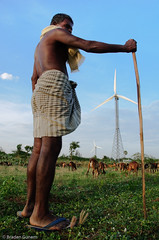 nd incentives for increasing the use of renewable energy in the developing world. WRI’s Davida Wood and Lutz Weischer discuss the key lessons learned at the workshop and their work on helping developing countries make the transition to renewable energy.
Image source: Braden Gunem.
Writing for the New Security Beat, Schuyler Null discusses a recent event on creating a new national security narrative for the US held at the Woodrow Wilson Center. The event was based on a white paper by two active military officers writing under the pseudonym “Mr. Y” (echoing George Kennan’s famous “X” article). In “A National Strategic Narrative,” Captain Wayne Porter (USN) and Colonel Mark Mykleby (USMC) argue that the United States needs to move away from an outmoded 20th century model of containment, deterrence, and control towards a “strategy of sustainability.”
Image source: LizaP.
On the anniversary of Barack Obama’s inauguration as United States president, the al-Qaida movement invites the respected SWISH management consultancy to assess its prospects.
 By Oxford Research Group’s Sustainable Security Programme Manager Ben Zala
Executive Director of the Sustainable Security and Peacebuilding Initiative at the Center for American Progress, John Norris discusses the need to consider options carefully to avoid militarising the West’s response to the crisis in Libya. He writes that blowing up a runway or imposing a no-fly zone are not silver bullets. And one would hope that after the experience of both Afghanistan and Iraq—and earlier interventions such as Kosovo and Bosnia—we understand that war is a dangerous, uncertain business.
Image source: Quigibo.
A fractious mix of violence and politics is unsettling the relationship between east African neighbours and putting more pressure on Somalis living in Kenya writes Daniel Branch for openDemocracy. The Somali militia group known as al-Shabaab is often viewed as the source of the problem. But the roots of the turmoil go deep in Kenya’s own history.
Image source: Internews Network.


