 To browse a list of all of the articles EXCLUSIVELY written for sustainablesecurity.org – follow this link
Category: Issues
-
Climate change
-
Global militarisation
To browse a list of all of the articles EXCLUSIVELY written for sustainablesecurity.org – follow this link -
Marginalisation of the majority world
“The climate agenda goes well beyond climate,” said Dan Smith, secretary general of International Alert at a recent Wilson Center event. “In the last 60 years, at least 40 percent of all interstate conflicts have had a link to natural resources” and those that do are also twice as likely to relapse in the five years following a peace agreement, said Neil Levine, director of the Office of Conflict Management and Mitigation at USAID.
Article source: The New Security Beat
Image source: DfID
-
Marginalisation of the majority world
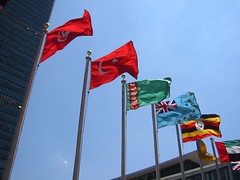
For some years, the Oxford Research Group (ORG) has been analysing the likely underlying drivers of global insecurity over the coming years, and ways to develop sustainable responses to these threats. This analysis has focused on four trends that are expected to foster substantial global and regional instability, and large-scale loss of life, of a magnitude unmatched by other potential threats. These are climate change, competition over resources, marginalisation of the ‘majority world’ and global militarisation.
Read the full article here.
Author: Hannah Brock
Image source: WorldIslandInfo.com
-
Marginalisation of the majority world
A gap continues to exist between the international community’s rhetoric about conflict prevention and its responsibility to protect people from severe human rights violations. The record of human misery caused by violent conflict is testimony to the chronic lack of political will to respond collectively to newand emerging threats to peace. The ineffectiveness of many global efforts at preventive diplomacy is evidence that traditional diplomatic approaches, including the use of force, simply may not work.
Article source: East West Institute
Image source: AfghanistanMatters
-
Competition over resources
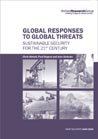 This major report was the result of an 18-month long research project examining the various threats to global security, and sustainable responses to those threats. Read more »
 -
Competition over resources
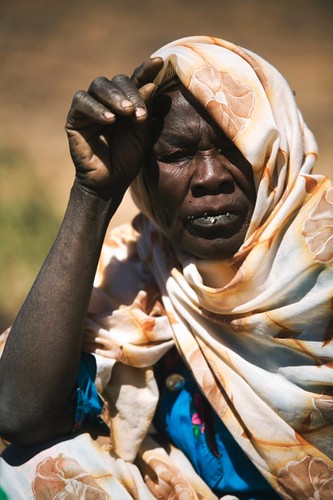 The Human Security Report Project has published a new book exploring the links between climate change and conflicts over natural resources across Africa.
From the book’s synopsis:
The climate change phenomenon is a global concern, which typically threatens the sustainability of the livelihoods of the majority of the population living in the developing countries. Africa, particularly the sub-Saharan region, is likely to be negatively impacted by climate variability and change. Extreme natural occurrences such as floods and droughts are becoming increasingly frequent and severe. Climate variability and change have further exacerbated the scarcity of natural resources on the African continent, leading to conflicts with regard to access to, and ownership and use of these resources. The scarcity of natural resources is known to trigger competition for the meagre resources available among both individuals and communities, and even institutions, thus affecting human security on the continent.
Image source: Albert Gonzalez Farran
-
Global militarisation
 In the Lowy Institute’s latest Strategic Snapshot, International Security Program Associate Ashley Townshend explores the strategic dynamics between China and India in the Indian Ocean.
 -
Competition over resources
A hurricane of crises across the world – financial meltdown, economic recession, social inequality, military power, food insecurity, climate change – presents governments, citizens and thinkers with a defining challenge: to rethink what “security” means in order to steer the world to a sustainable course. The gap between perilous reality and this urgent aspiration remains formidable.
SustainableSecurity.org Associate Editor Paul Rogers, highlights the need for fresh, effective and transforming approaches to security.
This article was originally posted on openDemocracy
-
Climate change
International Alert’s Janani Vivekananda discusses how climate change will will interact with other social, economic and political stressors to drive instability.
“Rather than climate change being this single, direct causal factor which will spark conflict at the national level,” Vivekananda said, these stressors “will shift the tipping point at which conflict might ignite.” In places that are already weakened by instability and conflict, climate change will simply be an additional challenge.
Source: youtube
