Blog

  • Sustainable Security

    Losing control over the use of force: fully autonomous weapons systems and the international movement to ban them

    Later this month, governments will meet in Geneva to discuss lethal autonomous weapons systems. Previous talks – and growing pressure from civil society – have not yet galvanised governments into action. Meanwhile the development of these so-called “killer robots” is already being considered in military roadmaps. Their prohibition is therefore an increasingly urgent task.

    Read Article →

    From The Great War to Drone Wars: The imperative to record casualties

    The centenary of the First World War also marks the anniversary of the practice of recording and naming casualties of war. But a century on, new forms of ‘shadow warfare’ limit the ability to record casualties of conflict and thus threaten to allow states a free hand to employ dangerous new tactics without threat of individual or international accountability. Without verifiable casualty figures, – including information on who is being killed and how – we cannot evaluate the acceptability, effectiveness or impact of ‘remote control’ tactics as they are rolled out among civilian populations.

    Read Article →

  • Sustainable Security

    Losing control over the use of force: fully autonomous weapons systems and the international movement to ban them

    Later this month, governments will meet in Geneva to discuss lethal autonomous weapons systems. Previous talks – and growing pressure from civil society – have not yet galvanised governments into action. Meanwhile the development of these so-called “killer robots” is already being considered in military roadmaps. Their prohibition is therefore an increasingly urgent task.

    Read Article →

    From The Great War to Drone Wars: The imperative to record casualties

    The centenary of the First World War also marks the anniversary of the practice of recording and naming casualties of war. But a century on, new forms of ‘shadow warfare’ limit the ability to record casualties of conflict and thus threaten to allow states a free hand to employ dangerous new tactics without threat of individual or international accountability. Without verifiable casualty figures, – including information on who is being killed and how – we cannot evaluate the acceptability, effectiveness or impact of ‘remote control’ tactics as they are rolled out among civilian populations.

    Read Article →

  • Sustainable Security

    In our two-part discussion ‘Countering Militarised Public Security in Latin America’,  Sarah Kinosian and Matt Budd explore the roots of the increasing trend towards militarisation of  public security across Central and South America and ask what lessons can be learnt from alternative methods. Part 1 is available here.
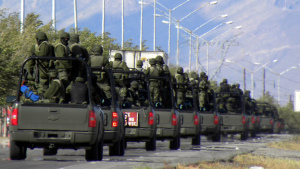
    Armed forces being transported in Mexico, where they are being used to fight the 'war on drugs'. Source: The Daily Gumboot

    Armed forces being transported in Mexico, where they are being used to fight the ‘war on drugs’.
    Source: The Daily Gumboot

    Over the past decade there has been a sharp and sustained increase in crime and violence across Central America. Fuelled by a rise in organised crime, the growth and expansion of domestic gangs, poor socioeconomic conditions and State institutions lacking in terms of their capacity and territorial coverage, crime and violence have rocketed. Homicide rates, taken as the main measure of insecurity in public debates in the region, have soared. In the Northern Triangle, where socioeconomic conditions and institutional capabilities are generally worse, a figure of 85.5 per 100,000 inhabitants makes Honduras the most dangerous country in the world, whilst figures of 34.3 and 41.5 for Guatemala and El Salvador place them within the upper echelons.

    In response to public and media pressure, there has been a notable tendency to resort to militarised responses focused on reactionary and repressive policies that seek immediate short-term results. This is particularly true of the Northern Triangle countries, which have an established history of involving the military in public security tasks. In El Salvador, following the ‘New Dawn’ campaign (Campaña Nuevo Amanecer), initiated in 2009 to reinforce security in response to the high incidence of crime, 39% of the Armed Forces are currently involved in public security tasks. This involves, for example, their collaboration in patrols to increase security in border areas and unofficial border crossings, the provision of perimeter security in penitentiary centres, and task forces that carry out patrols, apprehensions and joint operations with the national police. In Guatemala, the assistance, collaboration and coordination of the Armed Forces in public security has been further institutionalised through the Protocol for Inter-institutional Action, which regulates these activities. This approach is perhaps best epitomised, however, by the case of Honduras. Characterising a lack of political will to fully engage in the long and difficult task of reforming and developing existing police institutions, Honduras has placed its military at the centre of public security, and, with the recent creation of the Military Police of Public Order, located within the Ministry of Defence, a permanent policing role has effectively been handed to the institution. As such, prevention and reconciliation often take a back seat behind reactive and militarised approaches.

    A better way?
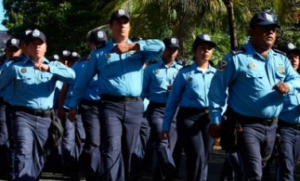
    Nicaragua National Police

    Nicaragua National Police
    Source: Insight crime

    While Nicaragua does not depart from this pattern of engaging the Armed Forces in public security tasks[1], the government has simultaneously invested in the long term development of a policing model that stands out due to its grass roots focus on prevention, and for the results it has achieved as a consequence (in 2010, in Panama, it was pronounced as the best in the region by a panel of public security experts). Closely linked to the Sandinista Revolution out of which it grew, Nicaragua’s community policing model has developed through a process of continual reform in the light of the identification of good police practice. As such, what began as a routine focus on community relations has since developed into a model characterised by broad and deep relations between the community and the police. These permeate not only the actions of individual police officers, but also guide the structure, organisation, deployment and entire philosophy of the institution. This is combined with a proactive focus on attention, which involves the continual identification of social factors driving crime and insecurity combined with the constant evaluation of police competencies to respond to them. By monitoring the relationship between security phenomena and police competences in an anticipated rather than reactive fashion, it allows for a concerted analysis, and response to, the conditions and circumstances that are driving crime and insecurity.

    The decentralised approach of the Nicaraguan National Police (PNN) is one of the keys to its success. It places emphasis on the local drivers and manifestations of both local and national security challenges. It does this by establishing broad and permanent channels of communication with the community, both through participation in community assemblies and maintaining direct links with local residents. One such example is the use of heads of sectors specialised in public security. They are police that are located in a particular territorial area, and their functions include cultivating close community ties through activities such as frequent door-to-door visits to speak to local residents.

    Similarly, the Social Prevention of Crime Committees, which are made up of 40,000 members, and the Cabinets of Citizen Power, which number 143 across the country, also provide a direct link with the community. Amongst their functions, they organise assemblies, work with local public and private institutions to find solutions to security problems, and collaborate on working plans to prevent crime.  These fluid links with the community allow the police to cultivate a close and trusting relationship with them, gain an understanding of the security perceptions of local residents and actors, and extract useful information regarding crimes, particularly regarding drugs, robberies and violence between groups of youths. Community policing therefore provides police with a specialised knowledge of the local situation and the drivers of insecurity.

    Tackling social drivers of crime
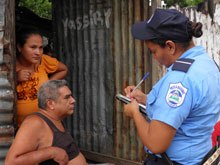
    http://www.policia.gob.ni/prensa_nota4.html

    On patrol in the community
    Source: Policía Nacional de Nicaragua

    The prevention of crime requires targeting the social conditions that cause it and instead, cultivating conditions which reduce it. In order to achieve this, the PNN has created specialist bodies that focus on two major causes of insecurity: youth violence and intra-family or sexual violence (20% of crimes).

    Specialised Police Stations for Women and Children were created as specialist units for prevention and attention to victims of intra-family, psychological or sexual violence. To combat these problems, attention is focused on the particular drivers of these forms of violence: the economic and social vulnerability of women and children, the attitudes of males in the community, and the lack of comprehensive victim support, which contributes to an unwillingness to denounce such crimes. Work is therefore carried out in a 3 stage response:

    1)      Transformation of the local environment, using education and training in detection and response to increase awareness of the problems and how to report them;

    2)      comprehensive victim support, through a leading role in coordinating with NGOs, health centres, shelters for victims, state institutions etc,  in the provision of health, psychological and legal support, in addition to the investigation and prosecution of crimes;

    3)      and empowerment of women and children through vocational training and education.

    By combining an understanding of local conditions driving insecurity with an integral response to them, the Police are better placed not only to respond to manifestations of intra-family violence, but to also reduce occurrences through preventive measures.

    The Directorate of Youth Affairs uses the same logic in its attention to at-risk youth, those with established links to gangs, or those who have previously been incarcerated. Through a highly personal and humanistic approach, it seeks to change the attitudes and values of these young people, increase their bonds with the local community, and create opportunities for them to reintegrate into society. Recipients begin by making a commitment to change and handing over any weapons they possess, with social and psychological support applied within the family environment to deal with personal issues, such as low self-esteem or personal identity. Training and education programmes are provided through private and public scholarships, as well as through the National Police’s Centre of Youth Training and Development, through which they gain skills to assist them in finding employment, and that contribute to the development of their community. Recipients also engage in community leisure and social activities and are assisted in finding work as part of their social reintegration. As a result, the number of gangs recorded in Managua has decreased from over 200 to approximately 20, according to the PNN, with a total of 42 gangs registered across the country in February 2012, and reductions in gang-related crime have been registered in neighbourhoods such as Bello Amanecer. By engaging in prevention programmes that focus on those conditions that drive youth into gangs and violence, and by coordinating these programmes within the family and community environment, the PNN has developed a model that seeks to reduce crime and insecurity in a sustainable and long term manner.

    Lessons to guide police reform in Latin America

    Whilst the contextual origins of the model and the particularities unique to each country would make attempts to duplicate the model in the region futile, the Nicaraguan model provides a number of clear lessons that can be extracted. At the foundation of each of these lessons is the community-police relationship, which has come to permeate throughout the institution and its programmes. It acts as a tool to both gain an understanding of the underlying drivers of insecurity and to provide a comprehensive response to them, through a combination of preventive strategies and comprehensive victim attention programmes. While the efficacy of involving special military units to target particular security challenges should not be negated, the benefits of a police force with strong community roots and a community policing philosophy are clear. For lasting gains to be made, these lessons, together with those to be extracted from other successful experiences in the region, should underpin reform processes.

    Matt Budd is a security analyst at RESDAL (Red de Seguridad y Defensa de America Latina – Latin American Security and Defense Network) in Buenos Aires, where he focuses on public security issues in Central America. Matt holds an honours degree in International Relations from the London School of Economics. Matt has most recently been working on RESDAL’s  Public Security Index, which provides information on public security challenges and institutional responses to them in Central America.


    [1] The Armed Forces of Nicaragua engage in a range of public security tasks, including rural security, border security, protection of the coffee harvest, and tasks against organised crime and drug trafficking.

    Featured Image:  Policeman consulting with a member of the local community in Managua, Nicaragua. Source:  John Holman, YouTube
  • Competition over resources

    In a small village along the waters of Lake Turkana in northwestern Kenya, two fishermen were murdered last month as they were putting out their nets.

    A cascade of retaliatory violence between the Kenyan Turkana and Ethiopian Daasanach (sometimes called Merille) has led to the deaths of at least four Ethiopians and 20 Kenyans ethnic groups, though some Kenyan government officials place the toll as high as 69, according to the Kenya-based Daily Nation. Though the fighting has been localized, it has put pressure on both nations to deal with strife between nomadic groups who are competing for diminishing resources.

    Image source: Aocrone

    Article source: Circle of Blue

    Read more »

  • Sustainable Security

  • Sustainable Security

  • The United States, Niger & Jamaica: Food (In)Security & Violence in a Globalised World

    The United Nations Development Programme (UNDP) defines food security as “all people at all times having both physical and economic access to the basic food they need”. However, due to a complex range of interconnected issues from climate change to misguided economic policies, political failure and social marginalisation, over 2 billion people across the world live in constant food Insecurity. It is important to take a sustainable security approach to look at the importance of “physical and economic access to basic food” by exploring the links between food insecurity and violence.

    A recent article published by the journal Conflict, Security & Development examines food riots as representations of insecurity and looks at the relationship between contentious politics and human security.

    Thomas O’Brien, author of the article, argues “the upheaval caused by a food riot can lead to lasting instability and violence as social and political structures are challenged”. Global rises in basic food prices triggered demonstrations and often violent protests in “over 30 countries across Africa, Asia, Latin America and the Middle East in 2007-08”. The article puts recent food riots and the current global food crisis in historical perspective. Food riots are about more than “just access to food”.  They represent dissatisfaction with political structures and perceived injustices.

    It is important to note that “the extreme nature of the rise in food price in the absence of much evidence of food shortages, left a sense of something unnatural about the way food markets were working”. Although poverty, weak states, ineffective civil society and lack of political freedom all contribute to food insecurity and the possibility of violent food riots, we cannot ignore to challenge underlying transnational and global power structures: “146 protests in 39 countries over the 1976-92 period were linked to the imposition of International Monetary Fund and World Bank structural adjustment policies.” Food security is fundamental to human security and needs to be approached by addressing underlying causes and drivers. A sustainable response to food insecurity would take global cooperation, justice and equity as key requirements.

    An often mentioned driver of food insecurity is climate change. Climate change already has a great impact on global security concerns and the physical, social and economic effects will undoubtedly only be exacerbated in the near future. Increasingly high temperatures and little or inconsistent rainfall have devastating effects on crop yields in places such as India, Africa’s Sahel region and the mid-western United States.

    The catastrophic food crisis in Niger in 2005 for example was largely attributed to the effects of climate change and competition over limited resources. Years of too little and too inconsistent rainfall have meant devastating droughts and diminishing harvests in this Sahel country of west Africa which has the highest birth rate in the world. Increasingly advanced desertification due to climate change means competition and potentially violent conflict, over limited resources such as water and arable land, intensifies.

    In the 2005 food crisis however, although thousands of children died of malnourishment, Niger had produced enough food to feed its population. The real issue was a food shortage in neighbouring Nigeria. Nigeria has an economy based primarily on oil exports with a significantly weakened agricultural sector. Instead of Niger feeding its own population, much of the harvest was sold to wealthier Nigeria at prices much higher than anyone in Niger could have afforded. This is a good example of why free market economy and trade liberalisation do not necessarily benefit all parties involved. Writing about the great famines of the last century, Nobel laureate Amartya Sen noted “a drought is natural but famine is man-made”. What this tells us is that although the challenges we face by climate change are serious threats, there is much that can be done to ensure more food security through political and economic policies.

    Farmers in Niger are struggling. But so are farmers in Jamaica. In contrast to Niger, Jamaica has a wealth of fruit, vegetables, fish and an abundance of fertile land. About one fifth of this island’s population is employed in the agricultural sector. Still, farmers are struggling to survive because they cannot compete with the much lower prices of subsidised agricultural imports from the USA. As cheap foreign products flood the market, Jamaican prices are driven down which makes local food production by and large unprofitable. As they rely more on foreign food imports, Jamaicans will be increasingly vulnerable to price volatility on the global marketplace. With the average Jamaican spending about half of household income on food, such vulnerability to price changes is a real danger to food security.

    Importing less foreign food products is a difficult matter for Jamaica because of the strict trade liberalisation policies imposed on the country through its debt relief agreements. One could also argue that if it is cheaper for Jamaica to import food than to produce its own, why should it still encourage its local agricultural sector? When a country is dependent on food imports, it cannot assure food security for its population.

    So far US imports have been much cheaper than local Jamaican produce. 2012 however has seen the “worst US drought in 50 years” according to last month’s Aljazeera article entitled Food riots predicted over US crop failure. “Grain prices have skyrocketed and concerns abound the resulting higher food prices will hit the world’s poor the hardest- sparking violent demonstration” says the newspaper. Corn is a primary staple in Sub-Saharan Africa, Central and South America, and prices have already gone up 60 per cent since June because “the United States accounts for 39 per cent of global trade in corn and stockpiles are now down 48 per cent” due to the drought.

    Price fluctuations on the global food market do not affect all people in the same way as “people in wealthy industrialised countries spend between 10 to 20 per cent of their income on food. Those in the developing world pay up to 80 per cent. According to Oxfam, a one per cent jump in the price of food results in 16 million more people crashing into poverty.”

    A sustainable approach to food security would address underlying forces such as climate change, economic and political policies and social marginalisation.

    Paul Rogers, expert on global conflict and consultant to the Oxford Research Group on global security, was recently featured on the BBC Radio 4 programme Costing the Earth. When asked whether free markets can help feed us, he replied:

    “It will contribute in some way, but I think it is fairly minimal. There are far more important things to consider. Look at it this way: Back in the world food crisis in the early 1970s, which was the worst for about 80 years, there were about 450 million people malnourished.  Now the figure is closer to 800 million. Now, that malnourishment and lack of food is not generally because there isn’t enough food to go around. Even at the height of that crisis there was still half the normal reserve. It is because people cannot afford to get the food or to buy the food. […]  If you are looking at the situation of poor people across the majority world, there has to be some way in which we can actually improve the production of food in and around those areas to provide greater resilience in the face of what is coming because beyond all of this is the whole issue of climate change. I think we will have a wakeup call this year in terms of what might come.” 

     
    The Conflict, Security and Development article Food riots as representations of insecurity is available for paid download here
     
    The AlJazeera article Food riots predicted over US crop failure is available here
     
    The Pulitzer Center for Crisis Reporting project Agriculture and Jamaica’s rural poor is available here
     
    Paul Rogers’ Monthly Global Security Briefings can be read and subscribed to here
     
     
    Image source: Dioversity International
  • Petroleum and its Impact on Three Wars in Africa: Angola, Nigeria and Sudan

    This article focuses on the complex role that oil has played in many conflicts on the African continent. It begins by highlighting oil’s influential role within war at a wider international level and provides a brief theoretical base from which to explore oil’s role in the African continent. Then, the article provides evidence of petroleum’s impact on violent conflicts in three African countries, namely Angola, Sudan and Nigeria, in order to highlight oil’s multi-faceted role on war in Africa.

    The full article can be accessed here.

    Image source: Maks Karochkin

  • Sustainable Security

    Nuclear Weapons: From Comprehensive Test Ban to Disarmament

    Despite not yet entering into force, the 1996 Comprehensive Test Ban Treaty has succeeded in almost eliminating nuclear weapons testing and in establishing a robust international monitoring and verification system. A breakthrough in its ratification by the few hold-out states could have important positive repercussions for the Nuclear Non-Proliferation Treaty or nuclear disarmament in the Middle East.

    Read Article →

    Humanitarian Consequences of Nuclear Weapons: Five Reasons for the P5 to participate in Vienna

    The ‘humanitarian dimension’ initiative highlighting the consequences of nuclear weapons has evolved and consolidated itself in the non-proliferation regime since 2010. The five nuclear weapons states (NWS or P5) under the NPT – China, France, Russia, UK and US – boycotted the first two international conferences on the humanitarian consequences of nuclear weapons. A third conference will be held in Vienna on 8-9 December 2014. This article gives five reasons why the P5 should consider participating.

    Read Article →

    Building the Case for Nuclear Disarmament: The 2014 NPT PrepCom

    The humanitarian impact of nuclear weapons, highlighted by a wide-ranging, cross-grouping, multi-aim initiative which continues to consolidate itself in the non-proliferation regime, has come to the fore in the 3rd Prepatory Committe for the 2015 NPT Review Conference. Frustrated with the lack of progress towards NPT Article VI commitments to complete nuclear disarmament, the initiative has invigorated attention to the urgency of nuclear disarmament and a need for a change in the status quo. NPT member states and civil society continue to engage actively in publicizing the humanitarian consequences of nuclear weapons as an impetus to progress towards nuclear disarmament.

    Read Article →

    In piaffe: multilateral nuclear disarmament dialogue in the year of the horse

    Shortly after the lunar New Year, UN Secretary-General Ban Ki-moon challenged the Conference on Disarmament to run with the ‘spirit of the blue horse’ towards substantive engagement on multilateral nuclear disarmament in 2014. While the regime may not achieve this speed, there are initiatives underway this year that may well help nuclear disarmament dialogues pick up speed ahead of the 2015 NPT review conference.

    Read Article →

  • Libya: Where Are the BRICs?

    Following the vote at the UN Security Council, the United Kingdom, France, and the United States have embarked on military action against Gaddafi’s forces in Libya. They have been careful to include a few Arab states in this new coalition of the willing. But these three countries are the driving force behind the imposition of a no-fly zone and the attacks on the government’s military positions and forces. Yet among the permanent and non-permanent member of the Council who were asked to authorize “all necessary measures” to protect civilians rebelling against the regime, the BRIC powers of Brazil, Russia, India, and China were conspicuously absent. The implications of this Security Council vote will be far greater than just what happens to the Gaddafi regime for it also tells us something about the role of the new candidates for global leadership.

    Brazil, Russia, India, and China are all represented on the Council at the moment — Brazil and India currently hold non-permanent seats — and collectively have become the face of what has been presented as the irreversible shift in global power toward a multipolar world. Goldman Sachs, for instance, has breathlessly ascribed to these four countries the ability to dramatically alter the global economic landscape over the next 50 years. If such projections are accurate, the key question is whether these new powers will seek to overturn the existing US-led order or simply join it as more equal partners. This question extends to China’s “peaceful rise,” the way that India and Brazil climb their way to the top-tier of global politics, and Russia’s re-emergence on the back of sustained high energy prices.

    China and Russia are not surprisingly reluctant to engage in Western-led military action under the principle of the “responsibility to protect.” Both countries have significant internal turmoil and both prefer to hold on to the option of responding with brute force to domestic opposition if push comes to shove. For India and Brazil the story is not quite so straight forward. Although neither country has been particularly enthusiastic about the concept of a responsibility to protect, both have spent considerable political capital to appear like responsible stakeholders and serious players on the world stage. Both would dearly love a permanent seat on the UN Security Council with its power of veto and prestige of higher social status. Both look to the United States to facilitate such a move and assist with dampening the protests of their respective regional rivals, Pakistan and Argentina. So far India has been very successful in winning U.S. and UK support, and Brazil is hoping that a visit by President Obama this past weekend will spur the United States to join France in publicly supporting a Brazilian seat.

    In the short term, however, the Brazilian and Indian abstentions on the Libya vote will not likely have helped to advance their plans for permanent membership of the Security Council. President Obama’s strategy for dealing with America’s relative decline and the rise of these new centers of power has been to try and co-opt potential challengers wherever possible into existing structures rather than set up showdowns for the decades to come. Yet this strategy is not fool-proof and leaves plenty of room for new powers to resist the liberal foundations of the U.S.-led order painstakingly constructed since 1945.

    The uprisings across the Arab world have thrown up a number of problems for Western powers. Their time-honored position of attempting to ignore the deep marginalization of large swathes of the “majority world” and to contain or manage corrupt regimes for the sake of assured energy supplies and intelligence cooperation has come apart at the seams. The brutality of the Gaddafi regime and the belated and chaotic response of rightly incensed countries such as Britain, France, and the United States have forced the hands of these reluctant interveners at the 11th hour.

    The Western response to the Libyan crisis has not addressed how this fundamental tension between a responsibility to protect vulnerable people and a global order based on the principle of national sovereignty can be resolved with the full participation of the emerging BRIC powers as well as the established trans-Atlantic ones. The people of Libya may be glad that such a large and difficult question has not been allowed to prevent outside assistance as they face down Gaddafi’s forces. But the United States and its allies will not be able to ignore this problem for long if a peaceful transition to a new global order is to be achieved in the years to come.


    Foreign Policy In Focus contributor Ben Zala manages the Sustainable Security Programme at the Oxford Research Group. He works on issues of global security and great power politics and is also a member of the editorial team of the academic journal Civil Wars (published by Routledge).


    This article originally appeared on Foreign Policy in Focus.