Blog

  • Sustainable Security

    The ban on women serving in close combat units in the British military was recently lifted by former Prime Minister David Cameron. This marks a step towards bringing the British military into the modern age. 

    Background

    On 08 July 2016 at the NATO summit in Warsaw, then British Prime Minister David Cameron publicly announced a long awaited decision by the British military to remove all effective barriers for women to participate in combat jobs in the British Military. The decision came after a two-year in-depth study that examined multiple facets of the issue of women serving in combat related vocations, such as physiological problems, unit cohesion, recruiting, combat effectiveness, deployability, and survivability.

    The study determined that female physiology created a scenario that resulted in higher musculoskeletal injuries in physical training situations, but it also posited a solution.  The study further found that a decrease in injuries related to training has a direct impact on the ability for units to deploy and survive in combat situations. Moreover, the majority of injuries would be prevented by changing the way physical training is conducted and the way that combat gear is carried and used.  In an effort to “make the most of all their [women’s] talent”, while still retaining the high quality of the training of military forces, the British Military Service Chiefs have determined that operational standards will not be lowered to suit females who want to serve in combat roles.  They propose rigorous communication between soldiers and supervisors, specific training adapted to the physiology of all soldiers, the implementation of cultural change and cultural training, leadership training to increase unit cohesion, and a phased implementation of women in combat units.

    The move was hailed by many as a progressive step, bringing Britain into the 21st century while aligning the British military with their Canadian, Australian, and United States allies who have already moved to allow women to serve in combat roles.  Some critics, however, have cited long-held arguments, now largely disproven, as to why women should not serve in combat roles in the British military.  Retired Colonel Richard Kemp, former Commander of the British Forces in Afghanistan in 2003, claimed in several recent interviews that the inclusion of women in combat roles in the British Military will, inevitably, result in a lowering of training standards to ensure adequate female participation, despite definitive statements made to the contrary by the British Military Service Chiefs.  Critics of the move argue that currently only 4.5-5% of British women would be able to pass the requisite physical standards.  However, there is no comparable percentage for British males in the general population that would be able to meet the same standards.  Kemp further supposes that those women able to pass the inevitably lower training standards will “become the weak link in an infantry team” thus fostering resentment among their male colleagues, another claim that does not appear to hold up under serious and critical scrutiny.

    Arguments Women in Combat

    Servicewomen of the Army Air Corps are pictured on parade at Middle Wallop airfield in Hampshire. The Army Air Corps (AAC) operates alongside the other Combat Arms of the Infantry and Royal Armoured Corps. Combat Arms are those forces that use fire and manoeuvre to engage with the enemy with direct fire systems. The forces providing fire support and operational assistance to the Combat Arms are called Combat Support Forces. ------------------------------------------------------- © Crown Copyright 2013 Photographer: Peter Davies Image 45156340.jpg from www.defenceimages.mod.uk Use of this image is subject to the terms and conditions of the MoD News Licence at www.defenceimagery.mod.uk/fotoweb/20121001_Crown_copyright_MOD_News_Licence.pdf For latest news visit www.gov.uk/government/organisations/ministry-of-defence Follow us: www.facebook.com/defenceimages www.twitter.com/defenceimages

    Servicewomen of the Army Air Corps on parade. Image (cropped) via Flickr.

    The first type of argument against women serving in combat roles cites the biological limitations of the female body in combat operations.  In the case of the British military, criticisms of the biological limitations of women are frequently related to physiology.  Essentially, the arguments against women serving in combat relate to the frequency of musculoskeletal injuries caused by disproportionate upper body strength and lower load bearing ability seen in training.  While raw data obtained from a two-year study tends to support the assertion that females are more prone to musculoskeletal injuries during training, the solution to the issue is not to deny women the opportunity to serve in combat roles, but to modify physical fitness training so that the potential for injury is minimized while the benefit to physical fitness is maximized.  Studies of modified physical fitness training has shown to reduce injuries by over 47% among both men and women.

    The second type of argument against women serving in combat roles cites the psychological limitations of female psyche in combat operations.  In particular, these arguments stress the sensitivity of women, their “natural” tendency to nurture, and an asserted inability to perform under intense pressure.  Setting aside the fact not all women are nurturers, it has been proven time and again that women can and do perform well in combat.  Women have seen combat in both Iraq and Afghanistan, largely due to guerilla warfare and insurgency tactics, and have performed well in those instances.  In one case, USMC 2nd Lieutenant Rebecca Turpin was directing a convoy that fell victim to multiple IEDs and an ambush but successfully escaped the situation with her convoy, receiving the Navy and Marine Corps Commendation Medal with a distinction for valor.  In another case, US Army PFC Monica Lin Brown was awarded the Silver Star for providing lifesaving medical care under direct mortar fire (6 women who fought in direct combat). Furthermore, studies in the US have shown that women and men who experience combat develop Post-Traumatic Stress Disorder (PTSD) at similar rates, but note that males disproportionately deal with this trauma by turning to alcohol and violence while females tend to take advantage of available mental health resources.

    A third type of argument against women serving in combat roles cites the biological effects that the physical presence of women will have on male soldiers.  Critics like Colonel Kemp have claimed that the presence of a female in a combat unit will distract male soldiers because the development of romantic feelings is inevitable in such circumstances.  These arguments rest on a few critical assumptions: 1) that all male soldiers are heterosexual (and not attracted to their male colleagues), 2) that male soldiers will find any female in their combat unit romantically attractive, and 3) that male soldiers will not be able to control their own desires when they encounter female soldiers.  Biological effects arguments also include arguments claiming that the inclusion of women in combat roles will increase incidences of sexual assault in combat units.  Some arguments further claim that, because many of the military actions in the world today are occurring in cultures that prize heteronormativity, female soldiers will not be accorded the same respect as male soldiers, and in fact, may be victims of sexual assault if captured.  This phenomenon that has anecdotally and repeatedly been shown to be a false assumption not based on an understanding of cultural practices in these regions that view all soldiers, regardless of sex, in a masculine sense.  These arguments are a shrouded attempt at victim blaming, in which it is the fault of the sexual assault victim that she (or he) was assaulted in the first place, rather than placing the onus for the act on the perpetrator.  The remedy for the phenomenon of combat rape is two-fold: develop reporting procedures that not only protect the victim but also vigorously prosecute cases of sexual assault if and when they occur, and work to change the pervasive masculinist and sexist culture that is pervasive in military units.

    The final strand of arguments against women serving in combat roles cites the psychological effects that the physical presence of women will have on male soldiers in combat.  These arguments tend to assume that males will see themselves in a chivalrously protective role over their fellow female soldiers, and will experience significant stress when and if those female soldiers are injured or killed in combat.  Given the large portion of male combat soldiers returning home with PTSD related to the trauma of seeing their male colleagues injured or killed, it may be that the issue with psychological trauma is not so much the biological sex of the injured soldier but the effect of witnessing the trauma happen in the first place.

    Notable Criticism

    Kemp’s arguments follow four familiar strands of objection that have been argued in all countries where the participation of women in combat has been the subject of consideration.  They assert rather archaic notions of physical and mental inability of women to work effectively with their male counterparts, and emphasize how the well-intentioned male combat soldiers will be forced to change their ways to accommodate females in combat.  Notwithstanding the fact that the basis of each of his arguments has been refuted by an intensive, multi-modal, scientific study of the effects of the participation of women in combat, Kemp and others sharing his sentiments continue arguing against proponents of inclusion considered to be “politicians desperate to be seen as ‘progressive’, feminist zealots, and ideologues hell-bent on equality of opportunity without exception”.

    Current Studies

    A study by Ellen Haring (What Women Bring) found that collective unit intelligence increased with an increase in the percentage of women in the military unit.  Her study further showed that, in cases where women were allowed to participate in combat vocations, they performed just as well as, or even better than their male colleagues, earning high distinctions while under direct fire from enemy combatants.

    Allowing and encouraging women to take on combat vocations in military units is a large step towards reducing rampant sexism and misogyny in the military.  But again, it is only one step.  Additional work will need to be done to change a military culture that is traditionally sexist and even misogynistic.  Time will tell if the British military will have the same success of integrating female soldiers into combat vocations as Australia, Canada, and to a lesser extent, the United States.  Two things are certain, however: The British military is well informed on how to make the transition as easy and as effective as possible, and they are not afraid of making the changes necessary to bring the British military into the modern age.

    Lisa DeLance is a Ph.D. Candidate at the University of California, Riverside studying Mesoamerican Archaeology. Her dissertation project examines the social and political implications for the use and deposition of ceramic figurines at the site of Cahal Pech, Belize. As a graduate student, she authored the entry for “Women in Combat” for the international Encyclopedia of Gender and Sexuality Studies, published in 2016. She obtained her Bachelor’s degree from the University of Minnesota in Sociology of Law, Crime, and Deviance where her research focused on gendered power relations during the Chinese Cultural Revolution. An Iraq War veteran, DeLance is especially interested in the institutionalized use of power and the intersections between the use of power, gender, and sexuality.

  • Competition over resources

    Good news does not sell newspapers. Nor, it seems, does the idea of respect for human dignity. In West Asia, where the majority of people have known little other than outright war or simmering conflict, it should come as little surprise that people have lost their faith in the possibility of real peace. Real peace can be a frightening prospect; it means burying the hatchet and beating swords into the proverbial ploughshares. No easy task when we are all burdened by historical and psychological baggage.


    Source: www.gulfnews.com

    Image source: Nino Jose Heredia/Gulf News


    Read more »

  • Sustainable Security

  • Sustainable Security

    Former combatants can play a powerful role in preventing violence, as the case of former combatants in Northern Ireland shows. Former Islamic State fighters could have a role to play in counter-terrorism, however there are potential limits to this.

    The value in re-integrating former combatants in post-conflict environments has been widely recognised in terms of reducing the risk of recidivism and fostering stability in a peace process. While there are examples of former combatant in larger scale post-conflict environments following the path of a de-politicised re-integration into society, there are also examples of former combatants – or ‘former terrorists’ – taking a much more active role in preventing future violence.  Former combatants in Northern Ireland, for example, have had some notable success in delivering restorative justice programmes, de-militarising communities, preventing inter-communal violence and articulating counter-narratives against the use of violence. If former combatants are having some success in preventing terrorism and political violence in Northern Ireland, what are the criteria for successfully utilising former combatants, and does this point to a potential role for former Islamic State combatants in the UK?

    Utilising Former Islamic State Combatants

    The question of utilising former Islamic State combatants is not entirely left-field as there has been a range of voices expression different potential ways of their utilisation to serve preventative ends. One emerging perspective has emphasised how former combatants can play a preventative role, with former MI5 and MI6 chief, Richard Barrett, arguing that they can help explain “why going to fight abroad is a bad idea” and that ex-extremists are often the most successful at “undermining the terrorist narrative.” The ability to use extremists who “renounce violence” and are “genuinely remorseful,” according to this perspective, can provide a credible and persuasive message to stop the flow of people engaging in IS-related terrorism. Terrorism expert Peter Neumann argues that IS defector narratives can encourage others to leave the group and deter others from joining on the basis of their experience and credibility. Subsequently, he has recommended that the U.K. government needs to provide defectors the opportunity to speak out, assist them in their resettlement, and to remove legal disincentives that prevent them going public. An alternative would be to do nothing or continue with the current approach; however former Islamic State combatants are already returning and not all of them are prosecuted. In other words, these former combatant networks exist, they risk solidifying, and will be sharing their views and experiences, therefore it may be more effective in the long-run to co-opt and utilise them for positive ends.

    There is clearly a potential role for former Islamic State combatants in preventing others engaging in such activities. The nature of utilisation could be minimalist (narrative-based), whereby third parties disseminate former combatant narratives. For example, one UK counter-terrorism official mentioned how they have distributed one specific article on Islamic State defector narratives to help people play a preventative role. A more controversial role would be a maximalist approach (narrative and network-based) like in Northern Ireland, whereby former combatants themselves engage in activities with the goal of prevention. Should the UK government consider enabling or facilitating former Islamic State combatants in a preventative capacity?

    Former Combatants as a Conveyor-Belt to Terrorism?

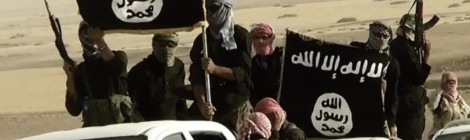
    isis

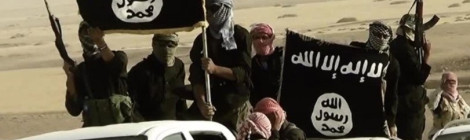
    Image by Day Donaldson via Flickr.

    One of the potentially biggest arguments against a maximalist approach is that such activities could be counter-productive and could risk serving as a conveyor-belt to engaging in violence rather than act as a fire-wall. A common trend with former combatants is they often do not de-radicalise: while they may disengage from terrorism because of dissatisfaction, disillusionment or burnout, they tend to maintain their ideological views. From this perspective – and endorsed by the UK government’s counter-terrorism policy – even non-violent extremist ideology can encourage others to engage in violence. While the conveyor-belt perspective has been heavily critiqued, the experiences of former combatants in Northern Ireland actually points to a middle-ground between these two perspectives. This consequently contributes to the debate on radicalisation but also on the potential role of former combatants in a preventative capacity.

    The findings of my own research on former combatants in Northern Ireland placed emphasis, not on ideology or attitudes to violence, but the framing process – in other words, how is violence and non-violence represented by actors and how it resonates with an audience, and what structural factors facilitate this resonance. Former combatants in Northern Ireland interact on a regular basis with young people through a number of programmes. Interestingly, despite the former combatants having maintained an ideology similar to violent groups, and despite the former combatants not supporting violence in the current conditions, it was realised that the interaction between former combatants and young people led the latter to view the use of violence positively. However, while this may seem to corroborate the conveyor-belt perspective, it actually showed that it was how former combatants framed violence that produced the conveyor-belt effect, not ideology on its own but also not simply that the former combatants were anti-violence.

    Re-Framing Violence

    In the past, former combatants explained their transition away from violence by framing violence it as conditionally acceptable during the 1960s civil rights protest period and that since these grievances were addressed in today’s conditions that violence was no longer legitimate. There are many reasons why the former combatants re-framed violence in this particular way, and it was particularly effective at ensuring the majority of the Provisional IRA disengaged; however this particular framing of violence to a younger audience without such experiences interpreted the framing as glamourising violence. Reflecting upon this, former combatants actively reframed violence when in dialogue with young people by emphasising the less glamorous aspects of violence more. One study showed that the former combatant reframing of violence in this manner has discouraged young people in engaging in violence. Former combatants were persuasive because they had credibility in the ‘hard to reach’ areas and they maintained narrative fidelity with audiences on ideology and identity.

    The point here is that there is some truth to the conveyor-belt perspective – that former combatants opposed to violence can encourage young people to engage in violence – but it has little to do with the ideology more broadly and much more to do with the framing process between the former combatants and the audience. Those who advocate the conveyor-belt perspective underplay the organisational interests in not having potential members becoming violent. In the Northern Irish case, former combatants had the time to reflect upon the effects of interacting with the younger generation and to engage in a re-framing process. Their reflexivity was encouraged by organisational interest as well as network structures which ensured they would be in regular interaction with young people and an environment in which funding was available to engage in projects.

    Empowering Reflexive Networks

    Thus, ideology is a crude means of determining the success of former combatants in a preventative role. Former combatants can be utilised in this capacity – or at the very least not discouraged – and the enablement of reflexive networks which resonate with young people can act as a firewall to participation in violence. However, there are a number of potential constraints and objections when this is applied to former Islamic State combatants. Working on the assumption that the purpose of counter-terrorism is to ‘counter terrorism’ and not to counter ideologies which a state does not like, and leaving aside the normative dimension of the rights of victims which Alonso excellently covers, the article focuses on two main points on the pragmatism and efficacy of using former combatants to prevent violence.

    Firstly, the UK government’s wholesale adoption of the conveyor-belt perspective makes the provision of funding much more rigid than in Northern Ireland. Interestingly, Northern Ireland’s very own prevent policy in the 1980s curtailed which organisations could receive funding on the basis of their ideology, but this was gradually dropped in recognition that the development of the community route could help to facilitate disengagement. The funding former combatants receive in Northern Ireland is detached from the government, thus increasing buy-in across communities, and the conditions of the funding are pragmatically based (often turning a blind eye to paramilitary behaviour in anticipation that funding and accreditation would incentivise moving away from such behaviour). Ideology is not factored in – alternative identities are strengthened and shown they can be non-violent rather than trying to encourage the ‘centrefication’ of political identities. In the current UK context, similar changes would be required before former combatants and former extremists could be fully utilised.

    A second objection is that the network and community structure – while a crucial factor in determining the efficacy of former combatants in a preventative role – is completely different in the Islamic State context. Former Islamic State combatants are smaller in numbers, they are set apart from their returning communities, and they may be politically disengaged (so why not just leave them like that). However, the size of networks is not important – a network of about a dozen former combatants in Belfast has been sufficient in preventing interface violence. Indeed, following the conveyor-belt logic limits the number of potential partners for the government to work with, in addition to its policies eroding trust through creating the perception of ‘suspect communities’. While the utilisation of former combatants (and extremists) can challenge and disrupt moderate communities, the target audience of these initiatives are individuals this moderate community struggle to meet. Finally, while we don’t know what former Islamic State combatants are doing upon their return, political passivism should not be viewed as a boat not to be rocked. In the case of Northern Ireland, it was the lack of active framing in combination with stories of the Troubles (often told in a social environment) in the context of parents and teachers not actively speaking about the Troubles, which led young people to view violence as attractive.

    Minimalist and Maximalist Roles for Forrmer Combatants

    In conclusion, former combatants can play a powerful role in preventing violence. The factors which determine whether this will be successful is not based on ideology but neither is it solely on whether they are non-violent. The network structure and incentivising environment can enable former combatants to be reflexive of the narratives they impart and how to best re-frame anti-violence narratives to ensure these resonate with young people in ‘hard to reach areas’. Former Islamic State combatants also have a potential role to play, however the lack of an enabling environment would limit this to minimalist interventions in the short term until the infrastructure for maximalist interventions are developed. Maximalist interventions are more effective at resonating with ‘hard to reach’ audiences as they decrease the likelihood of a conveyor belt effect, an effect which is likely to occur without interventions.

    Gordon Clubb is Lecturer in International Security at the University of Leeds and is co-leading the interdisciplinary Radicalisation and Violent Extremism Network. His recent book focuses on Social Movement De-Radicalisation and he has also written on the role of former combatants in preventing violence, how militant groups frame disengagement, and on whether non-violent radical ideology acts as a conveyor-belt to terrorism.

  • Sustainable Security

  • Sustainable Security

    Community-led counterterrorism presents an untapped opportunity, as it recognises that religiously defined communities have a distinct role to play in responding to growing terrorist recruitment efforts in Europe and North America.

    How is security against terrorism risk with a domestic origin to be created in an effective and sustainable way? The first instinct of many politicians, especially on the populist right, is to turn to the state and its diverse apparatus of police, military, and intelligence agencies as the canonical supplier of protection against violent risk. The so-called “travel ban” recently enacted in the United States is one example; the aggressive use of Section 44 stop and search powers in the United Kingdom is another.

    But a different dynamic is often at play when terrorism incidents are in fact interdicted—a dynamic that the state and its agents are less keen to publicize:

    • In 2008, British police arrested a man named Isa Ibrahim (né Andrew Philip), a convert to Islam, in Bristol, England, on the basis of information from the city’s Muslim community. A detective leading the investigation stated, “He was an unknown. Without the information from the community we may not have got to him. Without the community’s help he could have killed dozens of people.”
    • On February 17, 2015, three teenagers from the Bethnal Green neighborhood of east London boarded flights from London’s Gatwick airport to Turkey with plans to join the Islamic State. Distraught, their families appealed for their return, but also criticized the Metropolitan Police for failing to share information that might have allowed parents and close friends to have intervened and thereby prevented the girls’ departure. Even if the state would have lacked the authority to act coercively against the girls, family members persuasion and appeals from close relations could have mitigated IS’ allure.
    • In 2004, a Jamaican-born imam, Abdullah el-Faisal, was convicted in London of solicitation to murder and provocation of racial hatred. Yet a group of Salafists from Brixton had already brought el‑Faisal’s propaganda in favor of terrorism to the attention of London police some years earlier. The same Brixton-based Salafist group had also attempted (unsuccessfully) to persuade the English-born Richard Reid—later to secure renown as the ‘shoe bomber’—to reject el‑Faisal’s teachings.

    In each of these examples—and they can be multiplied—a nongovernmental actor with ties of some sort to an alleged terrorism suspect independently took an action that mitigated the threat of terrorism without priming or prompting by the state. In almost every case, the sheer fact of daily interaction endowed the relevant actor with an epistemic or credibility advantage in comparison to the government. The resulting intervention, to be sure, was not always a success. Sometimes, it was not forceful enough. Other times, the state failed to follow through. But still, each intervention made a terrorist act less likely in expectation. At a minimum, these examples should provoke an investigation of what I call the social production of counterterrorism—social mechanisms external to state apparatus that are conducive to collective security against terrorism—to ascertain better its magnitude and significance, its causal predicates, and its policy entailments.

    The social production of counterterrorism

    Image credit: Diamond Geezer/Flickr.

    Given the increasing claims made on behalf of state coercion and control, there is a pressing need to explore the potential theoretical or evidentiary foundations for an account of counterterrorism’s social production. In a series of articles, I have identified three causal mechanisms that might underwrite the social production of counterterrorism: ideological competition, ethical anchoring, and cooperative coproduction. Each works by changing the costs of terrorist groups’ action.  The first two involve raising the cost to terrorists of transparency at the moment of recruiting; the last involves raising the cost of opacity downstream.

    First, ideological competition is the possibility that social action can raise the cost of terrorism by providing substitute forms of social solidarity and vehicles of collective political action. The ideological competition mechanism works through the disciplining effect of competition, which, as in any other domain, conduces to higher costs and smaller operating margins. A terrorist organization seeking to attain certain policy goals or appealing on the basis of particular foreign policy disputes must compete in a market of social movements, both political and religious. The greater the competition it faces, the more onerous its task.

    By populating the marketplace of ideas more densely, ideological competition raises terrorism’s propagandizing and recruitment costs. At the same time, this mechanism is not free of risk: Perhaps a plurality of private associations that share the liminal political views—but not the penchant for violence—of terrorist organizations might instead hinder efforts to minimize terrorism risk. Beyond this enabling effect, an increase in the frequency of antiestablishment messaging by quietist but politically radical organizations may have the effect of legitimating terrorist organizations’ calls to arms. Ultimately, the net effect of ideological competition is an empirical question. The important point here is that ideological competition is at least a plausible candidate mechanism through which the social production of terrorism might work, even if its sign and magnitude may well vary according to circumstance.

    A second way in which social action can prevent a person from even considering the possibility of violent political action is through the ethical anchoring effect of close affiliations. This mechanism hinges on the manner in which a network of friends, colleagues, and kin members can impose social pressure on an individual to eschew the use of violence for political ends. Political violence necessitates the violation of generally shared ethical commitments, which in turn can lead to breaches with otherwise close members of familial and social networks. To the extent that members of tight social networks reiterate and reinforce those ethical norms, with the implicit threat of ostracism and social sanction in the background, recruitment costs will be higher. And to the extent that these networks furnish affirmative role models, individuals will feel less need to seek out violent forms of social action in the first instance.

    Finally, the possibility of cooperative coproduction focuses on the manner in which private individuals can substitute more fine-grained epistemic instruments for the blunter investigative methods government otherwise employs. Whereas ideological competition and ethical anchoring raise terrorist organizations’ front-end recruitment costs by increasing the price of effective publicity, this third species of social action against counterterrorism is valuable because it increases the cost of opacity during the period in which a terrorist group seeks to render its activities immune from public, and in particular official, scrutiny.

    For example, members of the public will be better able than the state to interpret ambiguous and fragmentary social cues from otherwise scattered and disconnected individuals in their social milieu. In the case of the Brixton Salafis, there is some reason to believe that they were able to discern the difference between individuals drifting toward violence, as opposed to those becoming more religiously committed but quietist. Even if the state can develop an extensive and deep system of intelligence collection through electronic data, undercover agents, and paid informants, it is still not at all clear that these sources have the same epistemic competence in situating nuanced social actions in context as members of a close-knit community. Moreover, there is always a concern that the state apparatus itself will be captured by elements with a xenophobic or racist agenda.

    Conclusion

    Assuming these causal mechanisms are fruitful, can the state promote them? To date, states have not seriously considered how efforts to promote beneficial social action intersect with other policy efforts. Nor have they seriously considered how efforts to promote counterterrorism’s social production might interact with other security‑related policies.

    The place to start in thinking about how to promote the social production of security is programs like the U.K.’s  Prevent  and the U.S.’s Countering Violent Extremism. These have been subject to considerable criticism, and have not succeeded in the main in fostering healthy relationships between Muslim communities and law enforcement. Often, quite the opposite has occurred. These programs, though, could be reengineered (with considerable effort) to be less directive, more inclusive, and more enabling of a range fof different voices.

    Moreover, any government’s security strategy will inevitably have coercive elements. At times, these may work at cross-purposes with security’s social production. A government that is serious about security (as opposed to mere security theater) will carefully examine any such conflicts, and do its best to mitigate rather than exacerbate them.

    Striving to achieve these policy goals at a moment when political pressures bend in a quite different direction will require vigorous argument and clear thinking in the coming years.

    Aziz Huq is an assistant professor at the University of Chicago Law School.

  • Sustainable Security

  • Sustainable Security

    Democratic Republic of Congo’s sexual violence epidemic is not only a weapon of ongoing violent conflict but an expression of entrenched systemic problems. Indeed, sexual and gender-based violence (SGBV) is most commonly perpetrated by the security services in place to protect civilians. In Quartier Panzi in South Kivu province, innovative processes of security sector reform and strengthened police-civilian channels of communication may be providing an opportunity for change.   

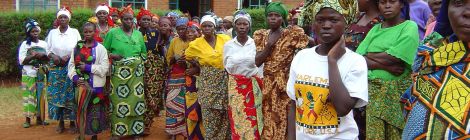
    Meeting of victims of sexual violence in the Walungu, South Kivu in Democratic Republic of the Congo. Source: Wikipedia

    Meeting of victims of sexual violence in South Kivu,  Democratic Republic of the Congo. Source: Wikipedia (from USAID)

    Quartier Panzi—the populous, restive neighborhood of Bukavu, South Kivu province—is renowned in international development circles as the ground zero of the Democratic Republic of Congo’s sexual violence epidemic. Rape as a weapon of war is not so much perpetrated by enemy forces but, most often, by the very parties sent by Kinshasa to protect and serve civilians. Much as Selma, Alabama was to the American civil rights movement, Panzi’s ongoing tragedy has transformed the area into a vibrant arena for grassroots opposition and international solidarity in the fight to restore women’s bodies and lives. Women’s organizations have formed to denounce continued abuses and government denial, to reverse cultural stigmas around female culpability in rape, and to demand trial for Congolese security forces suspected of sexual abuses.

    The courage and commitment of Dr. Denis Mukwege, chief gynecologist at Panzi Hospital and twice nominated for the Nobel Peace Prize, is emblematic of this resilience. International networks like V-Day and Women for Women International support these local actions and fund sanctuaries for survivors, such as the City of Joy. These innovations aim to be restorative and empowering for survivors, focusing on the crisis as experienced by women and girls, offering healing and vocational training options otherwise non-existent. However, the causes of this specific form of cruelty and degradation, rooted in violent masculinities and impunity among security actors, remain unaddressed.

    Rewiring the security sector

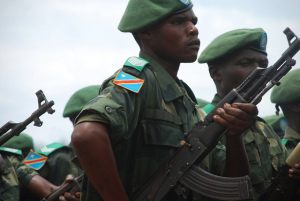
    Congolese soldiers march in Walikale, DRC, 2011. Source: ENOUGH (Flickr)

    Congolese soldiers march in Walikale, DRC, 2011. Source: ENOUGH (Flickr)

    Like any deep malaise, Congo’s rape crisis is but one expression of entrenched, systemic problems. Local witnesses, security analysts and medical professionals who treat survivors present overwhelming evidence that the primary perpetrators are uniformed Congolese security actors. A weak justice system may be responsible for the failure to discipline or punish perpetrators, but the sources of this behavior lie within the security sector itself. Accessing the security elite, Congo’s infamous ‘black box’, is notoriously difficult. As a result, very little analysis exists of the problem from the perpetrators’ perspective: analysis and evidence that deciphers the institutional culture and internal organization of the security sector, or that maps relations between senior officers, politicians and economic actors. By design, opacity reigns supreme.

    A variety of international donors support the national army and police with numerous ‘train and equip’ initiatives, an international cooperation model unchanged since the Cold War.These ‘security development’ partnerships aim to strengthen national capacity through field and classroom training and equipment upgrades; behavior change and public accountability are not part of the approach. Within the security services, there is typically an absence of civilian oversight, and widespread rent-seeking and illicit trade in protected flora, fauna and minerals, but no questions are asked by international partners, as diplomacy and formality dominate.

    Supply-side approaches such as these long pre-date the advent of ‘security sector reform’ among development actors, which does seek behavior change and greater accountability. The older aid modality remains popular with the Congolese leadership because it expressly avoids any calling to account or inculcation of security as a public service and legal right.

    There is state and donor complicity in all of this. Strength without constraint or accountability defines the DRC’s security sector today. Its predatory practices range from unchecked rape and pillage in the East to the repression of free speech and public inquiry, as witnessed by the 2010 murder in Kinshasa of prominent human rights activist, Floribert Chebeya. To placate critics, a military tribunal mounted a kangaroo court in the wake of the murder; the film documenting and exposing its empty theatrics, L’Affaire Chebeya, Un Crime d’Etat, remains banned in Congo.

    Such officially sanctioned practices and attitudes are salient features of the Congolese state since independence, and well known to all Congolese. In the early 1970s, President Mobutu Sese Seko began encouraging civil servants and security forces to ‘feed on the population’ (“Population baza bilanga ya bino). Anecdotes such as these are more than flippant asides; they explain the persistent appeal of this patrimonial compact (across four chapters of Congolese leadership: Mobutu, Kabila père, transitional government, Kabila fils) as a declaration of complicity between political elites and the entire public sector. In its truncated audacity, this single utterance reconfigures and reduces the entire means and ends of the state to elite enrichment and group impunity.

    In Panzi, armed crime and physical/sexual assault reached unprecedented levels in the aftermath of the primary war in South Kivu province. State security had long colluded with local armed gangs, and popular recourse options ranged from individual vengeance to military tribunals, as civil courts are unreliable. Mob justice is also widely practiced. The formation of neighborhood watch groups raised local hopes for improved safety (e.g. SAJECEKForces Vives). Despite their initial popularity, they soon joined local police and armed gangs in perpetrating the very crimes they first sought to oppose.

    How urban police understand this license to extort and harass the population, and the higher interests these practices serve, has been well captured and analyzed by Maria Eriksson Baaz and Ola Olsson. Transforming Congo’s security sector from inside is an elusive challenge, and donors are struggling to develop the programmatic savvy, influence and access to inspire the necessary political will.

    Demand for reform

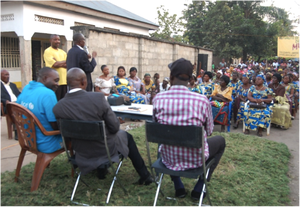
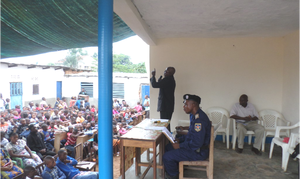
    Community meeting in Kananga, DRC, where security officials and civilian leaders converse directly with local community leaders. Source: DAI Europe (with permission)

    Community meeting in Kananga, DRC, where security officials and civilian leaders converse directly with local community leaders. Source: DAI Europe (with permission)

    The UK’s Department for International Development (DFID) has experimented with alternative supply-and-demand models of public sector reform, and is applying these to the Congolese National Police (PNC). According to this strategy, supply-side ‘train and equip’ assistance targets weak service areas, including the prevention of and response to sexual and gender-based violence (SGBV). This is complemented by efforts to mobilize popular demand for more responsive policing at the community level.

    A particular understanding of the partner institution, the PNC, informed this theory of change. This included the hypothesis that payment of regular salaries would not end extortion and rent-seeking (’tracasseries’) by the PNC, given the scale of these rackets and the enormous sums they generate. With no compelling alternative on offer, and as long as ‘reform’ is understood to involve replacing tracasseries with ‘protecting and serving’, change will elude would-be reformers. Given that such arrangements will not change in the forseeable future, the more nuanced strategy accommodates the reality of low, irregular salaries and uniformed extortion for the foreseeable future, and seeks behavior change through increased public-police interaction. Faster paced improvements in human security and responsive policing began emerging on the demand side of the pilot sites, including Bukavu and Quartier Panzi in particular.

    Launched in Bukavu, Matadi and Kananga in 2009, the Security Sector Accountability and Police Reform Programme (SSAPR) is distinct for coupling its community policing approach with regular neighborhood meetings (forums du quartier) where locally appointed representatives voice their security concerns, identify emerging threats and suspects. It is common for community policing programs to seek a more responsive, service-oriented local police, but SSAPR is distinguished by its effort to cultivate citizen networks at the most local level to identify and articulate their fears, threats and suspicions forward to the actors most able to respond. Police officers, urban administrators, local community and neighborhood leaders then meet regularly in informal, local security councils to discuss proposals for containing a threat or resolving a violent dispute, as equipment and manpower are often lacking. Initiated entirely informally, these experiments in public relations gradually began to change expectations, reinforce collaboration and gain momentum.

    Concurrently, the National Parliament submitted a motion to formalize the Conseils Locaux pour la Sécurité de Proximité(or CLSP, finally passed in late 2013), which recognizes the right of civilian representatives to participate in official security discussions at the municipal level. Over three years, SSAPR legal advisers worked with national parliamentarians to build support and draft a bill. Given the long-standing animosity between politicians and civil society, this new décret was a highly significant opening. The platform has since been incorporated into other police reform efforts (such as the European Union’s EUPOL) that also understand SSR in the Congolese context as primarily a governance challenge requiring civilian involvement.

    SGBV DRC 2

    Community meeting in Kananga, DRC, where security officials and civilian leaders engage directly with local community leaders. Source: DAI Europe (with permission)

    Raising security problems through the CLSP increased dialog between communities and security officials, but who would represent the civilian side? In rough urban neighborhoods like Panzi, citizens experience a host of threats, not all of them equally or in the same way. The SSAPR helped Panzi neighborhood chiefs and community leaders coordinate an informal system whereby youth, women and men would alternately represent their community concerns first to a forum de quartier, then directly on to the CLSP. This neighborhood dynamic continues today across Bukavu’s three communes.

    Making Progress?

    These are small steps toward a more accountable security sector and restored public trust, but has sexual assault around Panzi declined as a result? Recently the SSAPR helped a women’s NGO organize a nocturnal walk through several Bukavu neighborhoods, including Panzi, to record their own safety concerns as well as those of women and girls met along the way. In a recent meeting, NGO members insisted they would never before have visited these neighborhoods, particularly at night, but that the chance to report their findings to a receptive and interested police commisariat justified the risk.

    In response, new light fixtures are planned in darkened alleys where assaults have occurred, and patrols redirected to suspicious areas noted by the NGO delegation. In another pilot city, Kananga (Kasai Occidental), assaults on women and girls who were walking long distances to fetch water, often at night, decreased dramatically after local women lobbied for regular police patrols in these areas. This, in itself, was indicative of a greater local confidence in the police as protectors.

    Community police units are involved in implementing these changes, but they represent a small minority of the PNC. It is unknown if these lower rates of sexual violence are attributable to behavior change among uniformed security or if the increased patrols and better lighting are deterring other possible assailants. Retrospective studies have been conducted, but no consensus exists on the total quantitative extent of SGBV in DRC, where just one in twenty cases is thought to be reported to authorities. Nor are cases raised with the police guaranteed to be registered or pursued. Impunity persists due to a weak national justice system, as well.

    Other insights emerge from this experience, particularly around ‘bottom-up’ approaches to renewed legitimacy in fragile states. In the DRC, where central government continues to stall on commitments to decentralization and provincial institutions exploit this limbo (enrichment via parallel markets; legal and financial opacity) leaving communities in the breach, these small successes show that by investing at the periphery—that most-local interface where citizens and public service providers meet in person—bridges of trust and respect can be built through participatory problem solving. Communities can show resilience and security services can prove they are responsive and effective.

    Edward Rackley is a Security and Governance consultant for the World Bank, based in Washington DC. He provides periodic technical and strategic advice to the SSAPR program via DAI Europe, one of the program’s managing agents. (The views expressed in this article are not necessarily those of these institutions.)

  • Sustainable Security

  • Sustainable Security


    BZ smallTwo new reports surveying the strategic trends that are likely to shape the next few decades of global politics point very clearly to the prospect of a severely resource-constrained world. Released two days apart, both the new Chatham House report on Resource Futures and the US National Intelligence Council report on Global Trends 2030: Alternative Worlds raise a number of important questions relating to conflict and security.

    According to the Chatham House report,

    The spectre of resource insecurity has come back with a vengeance. The world is undergoing a period of intensified resource stress, driven in part by the scale and speed of demand growth from emerging economies and a decade of tight commodity markets. Poorly designed and short-sighted policies are also making things worse, not better. Whether or not resources are actually running out, the outlook is one of supply disruptions, volatile prices, accelerated environmental degradation and rising political tensions over resource access.

    The report outlines what the authors refer to as volatility being “the new normal.” For this reason “High and fluctuating prices are spurring new waves of resource nationalism and making unilateral and bilateral responses more attractive.” This should be cause for concern, especially in relation to the ways in which the response of governments and other actors to scarcity (or at least perceptions of scarcity) can interact with existing tensions and conflicts between and within communities. As the report highlights, “In addition to efforts to reduce demand at home, governments and other actors have moved to ensure access to affordable resources, reshaping the landscape of international politics. The return to largely protectionist and beggar-thy-neighbour manoeuvres – often in reaction to short-term supply bottlenecks or perceptions of scarcities rather than actual ones – can act as fuel to the fire.”

    As well as mapping the consumption and trade trends across a series of important resources, the report also discusses the impact of external variables such as population growth and climate change. These are “multiple stress factors” which “render countries vulnerable to different types of shocks such as environmental disasters, political unrest, violent conflict or economic crises – increasing both local and systemic risks. Such factors can create new tensions and flashpoints as well as exacerbating existing conflicts and divisions along ethnic and political lines.”

    The report includes a section on resource conflict flashpoints (p. 114) which outlines fifteen different potential flashpoints relating to territorial/economic zone disputes in resource-rich areas, shared water resources and transboundary river systems and resource-related rebellion and insurgency. The report is also linked to an interactive website that maps some of these trends and potential flashpoints.

    The day after this report was released, the US National Intelligence Council released their own on the key trends over the next twenty years that the United States will need to adapt to or try and shape in order to “think and plan for the long term so that negative futures do not occur and positive ones have a better chance of unfolding.”

    Among other so-called mega trends such as urbanisation and changing demographics, the report echoes the Chatham House research by pointing to an increasingly complex situation in terms of global resources. The report argues that,

    “We are not necessarily headed into a world of scarcities, but policymakers and their private sector partners will need to be proactive to avoid such a future. Many countries probably won’t have the wherewithal to avoid food and water shortages without massive help from outside. Tackling problems pertaining to one commodity won’t be possible without affecting supply and demand for the others.”

    The key trend or ‘tectonic shift’ as the report calls it is that “demand for food is expected to rise at least 35 percent by 2030 while demand for water is expected to rise by 40 percent. Nearly half of the world’s population will live in areas experiencing severe water stress. Fragile states in Africa and the Middle East are most at risk of experiencing food and water shortages, but China and India are also vulnerable.”

    While this may lead some towards overly pessimistic conclusions about a world defined by instability, human insecurity and geopolitical tensions, it is refreshing to see the NIC emphasising the importance of how the US can respond now. In his forward, the Council’s Chairman Christopher Kojm states that “We are at a critical juncture in human history, which could lead to widely contrasting futures. It is our contention that the future is not set in stone, but is malleable, the result of an interplay among megatrends, game-changers and, above all, human agency.” It is worth noting the deliberate use of the phrase ‘alternative worlds’ in the report.

    While some degree of adaptation to these structural trends mapped out by both Chatham House and the National Intelligence Council will undoubtedly be necessary, the importance of both of these reports is that they remind us of the need for clear and far-sighted thinking on policy responses now. The worst case scenarios that these reports discuss are not inevitable and risks can be mitigated. National security policymakers will do well to study the scenarios outlined in these two impressive reports and to try and understand the drivers and ‘tipping points’ that lead to certain pathways. Both reports offer prescriptions for current decision makers (the Chatham House recommendations on ‘targeted resource dialogues’ and ‘coalitions of the committed’ are particularly worthwhile). While volatility and uncertainty might be the ‘new normal’ in global resource politics, one thing is entirely certain – inaction and ‘business-as-usual’ when facing “a critical juncture in human history” is a recipe for disaster.

    Ben Zala is a Lecturer in International Politics at the University of Leicester.

    Image source: Stayraw