Blog

  • Kenya and Somalia: Landscape of Tension

    Kenya’s troubled relationship with Somalia and its own population of ethnic Somali citizens is coming to a head. Kenyan troops crossed the border on 16 October 2011 as Operation Linda Nchi (“Protect the Nation”) got underway. In response, hundreds of fighters from the Somali militia called al-Shabaab converged on the town of Afmadow in southern Somalia to meet them.

    In an ominous sign of the most likely trajectory of this expedition, a suicide-attack on 19 October close to the building in Mogadishu hosting talks between Kenyan and Somali ministers killed five people. Al-Shabaab has threatened further attacks on Nairobi. “Kenya doesn’t know war. We know war”, the group’s spokesman told the BBC. “The tall buildings in Nairobi will be destroyed.”
    The attacks in Kampala in July 2010 suggest that Kenyans would do well to heed the warning. The grenade-attack on a bar in Nairobi on the night of 23-24 October hich injured thirteen people adds to its immediacy. But Kenyans would also be advised to look even closer to home to understand why it is they find their country at war.

    The insecurity complex

    To some observers, the Kenyan government is behaving creditably. “African countries that step up to tackle an African problem, rather than sitting back and then complaining when the West tries to do it for them, are to be applauded”, writes the Guardian’s Simon Tisdall. There is some merit to the argument that Kenya is simply reacting to provocation from across the border. Many outside Kenya are familiar with the murder of David Tebbutt and the abductions of his wife Judith, the now-deceased Marie Dedieu, and the medical workers Blanca Thiebaut and Montserrat Serra.

    But readers or viewers outside Kenya may be less familiar with the long-running disruption to humanitarian efforts, raids on border-posts, and fears of terrorist attacks in Nairobi caused by al-Shabaab. It is worth noting that no evidence has yet been provided by the Kenyan government that al-Shabaab carried out the abductions; while this seems plausible, little effort has been made in Nairobi to prove the case for war.

    The actions of the Kenyan military in the second half of October 2011 are, in many respects, an extension of existing policy. The Kenyan police have long been providing training to their Somali counterparts on behalf of the Transitional National Government in Mogadishu. The Kenyan government has also made considerable efforts to bolster anti-al-Shabaab militias in southern Somalia, including the recruitment of Kenyan-Somalis on the Kenyan side of the border.

    In the meantime, the government has grumbled about the burden placed upon it by anti-piracy efforts. It has also been content, in the words of a report from the Center for American Progress, to profit “from humanitarian traffic through its port and its status as an international development hub”. Indeed, the same report argues, Nairobi has experienced an “economic boom as a result of Somali diaspora investment.”

    Such measures have done little to check the insecurity in border areas, however. Some local commentators were therefore relieved by the invasion and bullish in their forecasts. “Al Shabaab is used to pinching the bottom of a goat and now that they pinched that of the lion, that is more fiercer and more prepared, it should be in for trouble”, Mathew Buyu of the United States International University in Nairobi told The Standard newspaper. For its part Kenya’s navy set its army counterparts a poor example when its efforts to rescue Marie Dedieu resulted in the deaths of two officers after their boat capsized.

    The security response

    The Kenyan security forces seem to be eager for the fight, but there are many reasons to think that they are ill-suited to their mission. The armed forces stayed out of the post-election violence of January 2008 for the most part; at the time, responsibility for suppressing protests and subsequent clashes was left to the police and the paramilitary General Service Unit. The armed forces were, however (according to Human Rights Watch) “responsible for horrific abuses, including killings, torture and rape of civilians” in a security crackdown along the western border later in the same year (see “All the Men Have Gone: War Crimes in Keny’a Mt. Elgon Conflict”, Human Rights Watch, 27 July 2008).

    The Kenyan military is not attuned to winning hearts and minds. Nor is it used to fighting wars; its only major campaign since independence was the campaign against Somali irredentists seeking secession from Kenya and absorption by Somalia during the 1960s.

    The task of establishing a buffer-zone in southern Somalia will be difficult enough, even more so the apparent goal of taking and holding the city of Kismayo that has been part of military planning over the past couple of years. Whatever the objective, there is, as other analysts note, little reason to think Kenya will succeed where the battle-hardened Ethiopians failed in recent years.

    President Yoweri Museveni of Uganda, whose armed forces are part of the African Union peacekeeping effort in Somalia, is another sceptic. In conversations with the United States assistant secretary of state, Johnnie Carson, and other senior American diplomats in January 2010, Museveni described the Kenyan military as a “career army” and wondered “Is Kenya used to fighting like this?”

    The US seems to agree, or at least it did in December 2009 when one diplomat portrayed any plan by Kenya to occupy parts of southern Somalia “as a bad idea that would more likely add to Somalia’s instability than to help stabilise the country”. The state department has been noticeably silent since the Kenyan operation began.

    The Kenyan problem

    But Kenya’s military adventure cannot usefully be considered solely in terms of an external threat from Somalia. There is, as with all conflicts, no single reason why the country finds itself at war. A complex mix of local politics and economics is at play, as well the activities of al-Shabaab.
    The strong presence of al-Shabaab inside Kenya reflects the region’s troubled history. Ever since the British colonial government and Kenyan nationalist leaders rode roughshod over the demands of Kenya’s Somali population to be allowed to join with Somalia at independence in 1963, the relationship between Kenyan-Somalis and the state has been fraught.

    The opposition to Somali secession resulted in a low-intensity war in northeastern Kenya between 1963 and 1967. The official number of insurgents killed is 2,000, but it is likely that many more died during the war. Thousands more were forced from their homes during a campaign of compulsory resettlement. Once the war was over, promised development funds never materialised. Without any stabilising effect from Nairobi in the form of a legitimate state presence, northeastern Kenya remained prone to tremors emanating from across the border.

    As Somalia spun into crisis in the 1980s, so cross-border incursions by armed gangs became more common. But efforts by the Kenyan government to restore a semblance of order made little effort to discriminate between those from Somalia itself and those from the local Somali population of the North Eastern Province. Restrictions were placed on movement on Kenyan-Somalis and the community was subject to numerous incidents of gross human-rights abuses. None was as significant nor remembered with as much bitterness by Kenyan-Somalis as the Wagalla massacre in February 1984 when at least 1,000 civilians were killed by the Kenyan security forces.

    The continued failure of successive governments to extend the full benefits of citizenship to Kenyan-Somalis has, unsurprisingly, meant that al-Shabaab has built up networks of support within Kenya itself (see the UN Security Council report of 18 July 2011). “We are not part of Somalia, and the Kenyan government treats us as second-class citizens”, mayor Mohammed Gabow from Garissa town told al-Jazeera in 2009. “It’s a dilemma”.
    Such a sense of grievance has been reinforced on a regular basis. A security crackdown targeted at Somalis living inside the Kenyan border in October 2008, for instance, was described by Human Rights Watch as “a deliberate and brutal attack on the local civilian population”.

    The recent military action has been followed quickly by promises of tough action against Kenyan-Somalis. On 19 October 2011, a junior minister responsible for internal security, Orwa Ojodeh, promised parliament “a massive operation to get rid of Al Shabaab and Al Qaeda here in Nairobi.” Al Shabaab is, Ojodeh claimed, “a big animal with its main network in Kenya and only a fraction of it extending into Somalia.” Kenyan-Somalis now face tighter movement restrictions, which MPs representing them claim are both unconstitutional and unrelated to the conflict in Somalia.

    It is true that some Kenyan-Somalis and migrants from Somalia are working actively in support of al-Shabaab in Nairobi. They play a vital role in the organisation through raising and transferring funds for the insurgency, handling contraband, recruiting new fighters and providing medical treatment to the injured. Moreover, support for al-Shabaab has recently grown amongst the wider Muslim community in Kenya. Strong efforts were made by the opposition in the 2007 election campaign to court the support of Muslim voters dismayed by the Kenyan participation in renditions and security purges linked to the global “war on terror”.

    But Islamophobia plays well with certain sections of an increasingly evangelised Christian Kenyan middle class. Several incidents – the terror attacks of 2002 in Mombasa, the bombing of the US embassy in Nairobi in 1998, and (more distantly) the Norfolk Hotel bomb on new-year’s eve 1980 – are cited as evidence of a Muslim propensity for violence. A government that holds an annual national prayer breakfast can expect a war against self-proclaimed jihadists to play well with some voters, at least until the casualties begin to mount.

    Al-Shabaab can operate inside Kenya only because of much wider problems that have (according to the International Peace Institute) also allowed organised crime to gain a foothold in Kenya. These include porous borders, impunity, corruption and the complicity of leading political figures have created a conducive environment for the groups’s activities. It is relatively easy to move illicit funds in and out of the country and use it as the base for the movement of illegal goods, be it cocaine or smuggled charcoal from Somalia.

    If the Kenyan government is serious about checking al-Shabaab’s operations, there are other ways of achieving this goal than invading southern Somalia. But if accusations by the US government are true, implementing measures that would also restrict international organised crime will be politically indelicate.

    In this light, al-Shabaab can be understood as a Kenyan problem as well as a Somali one, and insecurity within Kenya’s borders can be said to be a product of the shortcomings of the Kenyan state as well as the instability in its stateless neighbour. With the state’s footprint of effective rule far smaller than the boundaries drawn on a map, insecurity has been endemic in Kenya’s periphery for decades. This no-man’s-land makes up vast swathes of territory thousands of kilometres long and hundreds deep. The state’s presence is often invisible, policing inadequate, firearms readily available and the resident populations engaged in fierce competition for grazing and water.

    At times of crisis, such as political upheaval or drought, that equation often produces bloodshed. Even as troops massed on the Somali border over the weekend of 14-16 October, for instance, clashes between Borana and Somali communities some 500 kilometres inside the border took the lives of ten people.

    It is hard, furthermore, to argue that al-Shabaab presents any greater risk to the residents of northern Kenya than Ethiopian cattle-raiders. In just one incident in early May 2011, up to sixty-nine Kenyan citizens were killed along that border after they crossed just inside Ethiopia to buy food at a market.

    The development lens

    So why do tourists and aid workers abducted or killed by al-Shabaab seem to matter more to the government in Nairobi than the many more of its citizens killed along the border with Ethiopia? In addition to the ideas discussed above, the answer might lie in developments in and around the Lamu archipelago over the past few years.

    Lamu is a designated “world heritage site” and was long a sleepy backwater – a stopping-off point on the hippy trail, and a destination for other adventurous travellers attracted by its beguiling mix of tropical paradise and rich Muslim culture. Now host to numerous high-end hotels, Lamu and nearby resorts account for nearly a quarter of all tourists who head to Kenya’s Indian Ocean beaches. Tourism is a vital part of the economy, bringing in $800 million a year at a time when the shilling is plummeting in value. Tourists are, as expected, cancelling their holidays in line with travel advice from the British and French governments.

    Tourism matters to this story only insofar as the development of Lamu has meant Kenya’s major economic interests have encroached on the internal, unofficial buffer-zone that once protected the key centres of economic activity in southern, highland parts of the country from the more unstable periphery. Lamu has become an important part of ambitious development plans funded by China that involve the wider northeast African region.
    The area has been earmarked as a hub for transport links, a new port, an oil pipeline stretching from South Sudan, and a refinery. Whereas once the Kenyan government could afford to turn a blind eye to events on the archipelago and its hinterland, the area now matters. And not just to Kenya; landlocked Ethiopia and South Sudan see such ties to Kenya as a way of escaping from their own difficult relationships with Eritrea, Djibouti and Sudan.

    Both investors and likely customers have viewed recent events with trepidation. The threat of piracy unnerves shipping companies and political instability concerns other investors. The Kenyan government has sought to reassure those who will ultimately pay for the projects. The archipelago is, President Mwai Kibaki said in July 2011, “the next frontier of development in our country and region”. In part because of that, Lamu now finds itself on the frontline of a war.


    This article originally appeared on openDemocracy.  

  • UK Opposition Parties outline potential Defence Spending Cuts

    Liberal Democrat Treasury spokesman Vince Cable and Shadow Chancellor George Osborne have both highlighted potential defence spending cuts should their parties come to power. In a pamphlet for the think tank Reform, Cable identified nine ideas for budget savings, which included scrapping the Trident nuclear missile system as well as other defence procurement programmes including tranche three of the Eurofighter aircraft. Osborne, following a speech at a conference organised by the Spectator magazine, echoed Cable in citing the Eurofighter project and also identified the project to build 2 new aircraft carriers and a £2.7 billion order for 25 A400 transport aircraft as specific potential savings.

    Whether these statements amount to anything more than political posturing in the run up to the general election remains to be seen. However, such statements will likely increase the pressure for a rigorous 2010 defence spending review following the general election. Whilst the scrapping of ‘white elephant’ defence projects is welcome, any savings should not just be absorbed by the spending deficit, but go hand in hand with a realignment of spending that contributes towards tackling the route causes of global insecurity that are highlighted on this site.

  • Conflict Resolution and Environmental Scarcity

    The third, fully revised and updated, edition of Contemporary Conflict Resolution written by Oliver Ramsbotham, Tom Woodhouse and Hugh Miall has just been released and includes a chapter on ‘Environmental Conflict Resolution.’

    The authors – three of the most eminent conflict resolution experts writing today – track the debates around environmental scarcity and degradation and the relationship to conflict. Key themes such as ‘Tragedies of the Commons’ and conflicts of interest over climate change are addressed as well as multilateral and other responses.

    The authors argue that “The social cost of mitigation and adaptation is far lower than the cost of unrestricted climate change. The problem is that different individuals, interest groups and states perceive very different costs and benefits, and institutions capable of balancing global costs and benefits do not yet exist” (p. 297).

    Different strategies and analytical approaches are examined by the authors who conclude that “The supreme test for the human species is to learn collectively how to understand and anticipate … ‘unintended’ systemic effects of human action and, even at this late hour, to succeed in adapting conflict resolution approaches for overcoming local ‘tragedies of the commons’… to a global setting” (p. 304).

    More information (including ordering) can be found on the Polity website.
     

  • Women debate a new way forward for the World’s financial system

    Many in the west are blind to the fact that poverty and social injustice create a breeding ground for conflict. “An Iraqi youth recently said to me that if he and his family were hungry and he couldn’t get a job, he would go to fight with whoever will pay him. Wars are not only about armies and bombs, but about economic instability.”  This is the view of Zaib Salbi, founder of Women for Women International.  She is one of more than 1000 female activists, business leaders and politicains attending the Fifth International Women’s Forum for the Economy and Society in Deaville October 17/18 2009.

    Read the full article here.

  • Sustainable Security

    A version of this article was originally published on Paul Roger’s column on openDemocracy on 11 September 2014.

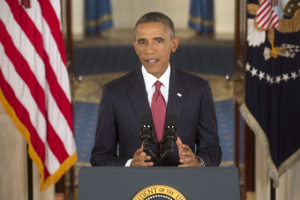
    Soon after the start of the Iraq war in March 2003, I wrote of the risk of a “thirty-year war” in the Middle East. More than eleven years on – and after thirteen years of the “war on terror” – Barack Obama has now committed the United States to “degrade and ultimately destroy” the Islamic State with “a comprehensive and sustained counter-terrorism strategy”.

    President Barack Obama delivers an address to the nation on the U.S. Counterterrorism strategy to combat ISIL, in the Cross Hall of the White House, Sept. 10, 2014. (Official White House Photo by Chuck Kennedy)

    President Barack Obama delivers an address to the nation on the U.S. Counterterrorism strategy to combat ISIL, in the Cross Hall of the White House, Sept. 10, 2014. (Official White House Photo by Chuck Kennedy)

    This will be a long-term project that goes way beyond Obama’s own second term, and thus his 10 September Address to the Nation may be the most important speech of his presidency. Beyond that, it is likely to be the prelude to two more decades of war – and perhaps even on to that thirty-year timescale.

    The BBC summarises the strategy as Obama outlined it:

    * A systematic campaign of airstrikes against IS targets “wherever they are”, including in Syria;

    * Increased support for allied ground forces fighting against IS – but not President Assad of Syria;

    * More counter-terrorism efforts to cut off the group’s funding and help stem the flow of fighters into the Middle East;

    * Continuing humanitarian assistance to civilians affected by the IS advance.

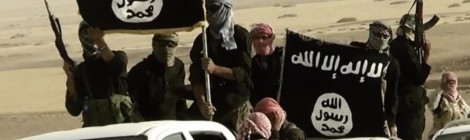
    The Iraq element of this strategy has already been underway for a month, with at least 154 airstrikes by 10 September.  An initial analysis of the targets attacked shows that the Islamic State paramilitaries are lightly armed, highly mobile and prone to use commercial vehicles for much of their mobility. They have acquired US weapons, not least from overrunning Iraqi army bases, but they use these sparingly. A Breaking Defense analysis suggests that their capabilities would be limited against well-protected and well-armed defenders, but that their versatility would make it difficult for air-strikes to degrade and ultimately destroy them.

    Tip-toeing back into Iraq

    The United States intention is to work with other states, including the Iraqi government and the Iranian (though that is not admitted in public). Also it already has its own substantial forces in the region, primarily air and naval power. The latter includes the George H W Bush carrier battle-group in the Persian Gulf and the USS Cole cruise-missile-armed destroyer in the eastern Mediterranean. The USS Cole itself was an early victim of an al-Qaida-linked operation when it was bombed in Aden harbour in October 2000, killing seventeen American sailors and injuring thirty-nine.

    The US airforce has even stronger forces available: air-bases in Kuwait, Qatar, the United Arab Emirates and Turkey as well as facilities in Jordan. It could also utilise the large UK base at RAF Akrotiri in Cyprus. President Obama has stated that the US operations will differ greatly from the “boots-on-the-ground” wars in Iraq and Afghanistan, with their deploymernt of huge numbers of ground troops. More indicative of what is intended are the operations in Yemen and Somalia, with their heavy reliance on armed-drones, special forces, and aid to local militias.

    In each of these examples, though, early successes have been followed by regroupings of opponents. The Yemeni government is currently struggling to cope with a resurgent al-Qaida in the Arabian Peninsula (AQAP). Al-Shabaab in Somalia may have been excluded from some of the country’s few large urban areas, but it has influence across swathes of countryside as well as regional abilities through to Kenya and beyond.

    In any case, the US secretary of state John Kerry has acknowledged – in a revealing comment at a Baghdad press conference on 9 September – that in extreme circumstances, the United States might commit combat-troops on the ground in Iraq. Indeed, several hundred more US troops are already heading for Iraq, albeit reportedly for defensive purposes only; but special-forces units are likely to be already in the country, many of them involved directly in combat (though again this would never be acknowledged officially).

    In the labyrinth

    All this raises the issue of why the Islamic State’s paramilitary capabilities have come to the fore so rapidly and lethally. It remains a central question. The answer will determine how deeply the US and its coalition partners gets immersed in a new war, and relates quite strikingly to how the United States conducted the previous war in Iraq before the withdrawal of most of its forces in 2011.

    The well-informed Guardian journalist Martin Chulov reports that at the core of the Islamic State’s paramilitary force is a tightly-knit group around its leader Abu Bakr al-Baghdadi. Many of them are Iraqis who fought the American and British special forces in perhaps the most vicious phase of that singularly dirty war, which lasted for three years from late 2004.

    At that time, the US joint special-operations command (JSOC) under General Stanley McChrystal was facing a relentless and capable insurgency inflicting huge US casualties. In response it developed a new form of network-centric warfare focusing on mobile special-force groups that were highly autonomous yet connected in “real time” to a wide range of intelligence capabilities.

    The operation reached its peak in 2005 in the form of Task Force 145 (TF 145), comprising four groups working in four geographical locations around central Iraq. Three of the groups were based on US forces – SEAL Team 6 from the navy, a Delta squadron and a Ranger battalion. The fourth, Task Force Black, was organised around a British SAS squadron.

    The entire JSOC operation was centred on rapid night-raids that killed or captured insurgent suspects. Those captured would often be subject to intensive interrogation (a.k.a. torture) – the results immediately used, sometimes within hours, to prompt further raids. Steve Niva, in his remarkable academic paper “Disappearing violence: JSOC and the Pentagon’s new cartography of networked warfare” in the journal Security Dialogue (June 2013) recounts: “By the summer of 2005, JSOC teams undertook an estimated 300 raids per month, hitting targets every night, eventually turning their focus to suspected local players and middle managers in insurgent networks”. A further valuable source is Mark Urban’s book Task Force Black (2010).

    The learning game

    The full death-toll among the insurgents is not known but believed to be in the thousands. More significant in this context, however, is that many tens of thousands of insurgents were detained by JSOC units and others. Some of them were kept for years in squalid conditions in huge prison-camps such as Camp Bucca, south of Basra – which at its peak had 20,000 inmates. Some of the prisoner abuse came to light at Abu Ghraib, but other centres were engaged as well in straightforward torture (one was the infamous “Black Room” at Camp Nana near Baghdad).

    By 2009, Barack Obama had been elected president in the US and the war began to wind down. Most of the prisoners were released, including the current Islamic State leader, Abu Bakr al-Baghdadi, who may himself have been radicalised partly by his time in Camp Bucca. Nouri al-Maliki, prime minister of Iraq since 2006, was marginalising the Sunni minority. From the Sunni ranks arose a renewed extreme lslamist group in Iraq which developed into the Islamic State, linking increasingly from 2011 onwards with paramilitaries fighting Bashar al-Assad’s regime in Syria.

    The Islamic State is thus part of a long-term evolution of a process that originated in Iraq in 2003, was badly knocked back by McChrystal’s JSOC forces by 2008, but has now re-emerged to provide the hardline core of a revived movement – veterans of urban conflict against well-trained and heavily-armed US troops, marines, and special forces.

    These are people likely to have an intense hatred of the United States and its forces – coupled with a cold ability to avoid that hatred clouding their judgment. They will be people, including Abu Bakr al-Baghdadi himself, who will positively welcome US military action, especially when it extends to the greater use of special forces and the even more welcome possibility of regular troops. These are individuals who survived intense air-attacks and special-force operations for years in Iraq. They will be prepared for what now, following Obama’s speech, is likely to ensue: a new phase in a very long war.


    Paul Rogers is professor in the department of peace studies at Bradford University and Global Security Consultant at Oxford Research Group.  He is the author of numerous books including Why We’re Losing the War on Terror (Polity, 2007), and Losing Control: Global Security in the 21st Century (Pluto Press, 3rd edition, 2010). He is on twitter at: @ProfPRogers 

    Featured Image: Iraqi troops run through a smoke screen in Baqubah, central Iraq, 22 June 2007, followed by US troops from the 3rd Stryker Brigade Combat Team. The action was part of Operation Arrowhead Ripper against al-Qaida in Iraq (precursor of Islamic State) as part of the 2006-07 Diyala Campaign. Source: Sgt. Armando Monroig, 5th Mobile Public Affairs Detachment, Tikrit (via Wikipedia)

  • Sustainable Security

  • Climate change

    This case study explores the potential impact of climate change on security and conflict in Bangladesh. As international researchers have started to make the link between climate change, insecurity and conflict, they have raised concerns that Bangladesh’s extreme vulnerability to the environmental effects of climate change may create conditions that put it at risk of greater insecurity and possible conflict.
  • Sustainable Security

  • Sustainable Security

    International Dimensions of the Ukraine Crisis: Syria and Iran

    The Russian annexation of Crimea may be in direct contravention of international agreements but is popular in Russia and almost certain to hold. Given tensions within Ukrainian society and its weak transitional government, there remains some risk of further intervention in eastern Ukraine and possibly the Trans-Dniester break-away region of Moldova. Even if there is no further escalation in the crisis, the deterioration in EU/Russian and US/Russian relations is of great concern, not least in relation to two aspects of Middle East security – the Syrian civil war and the Iran nuclear negotiations.

    Read Article →

  • Al-Qaida: the Yemen factor

    The closing weeks of 2009 have seen an intensive focus among western policy-makers and media on the war in Afghanistan. The long-awaited surge in American troop deployments ordered by President Barack Obama, whose effects will be seen as 2010 unfolds, sets the scene for increased combat. The new United States strategy is mainly a response to the increased activity of Taliban and other militias; there are even claims by Mulla Sangeen that 80% of Afghanistan is under Taliban influence (see “Taliban claim control of over 80pc of Afghanistan”, PakTribune, 22 December 2009). This may be an exaggeration, but the many elements opposed both to the Hamid Karzai regime and the foreign military presence in Afghanistan have undoubtedly increased the movement’s influence (see “Afghanistan: from insurgency to insurrection”, 8 October 2009).

    There is something of a conundrum here, for the surge is being launched in a period where many argue that al-Qaida itself – the original target of the invasion of Afghan in October 2001, rather than its Taliban hosts – is actually in decline. This narrative cites the retreat of key al-Qaida leaders to western Pakistani districts where they are under constant risk of drone-attacks (which have killed many middle-ranking operatives) and are pressed by the Pakistani army to contend that al-Qaida is a diminishing threat. The implication is that if the Taliban in Afghanistan can be sufficiently squeezed into a degree of political acquiescence, then the war there can actually be won.

    True, civil planners in the United States take a far more cautious view on this issue than their military equivalents (see Rajiv Chandrasekaran, “Civilian, military planners have different views on new approach to Afghanistan”, Washington Post, 26 December 2009). But the military strategists who played a central role in the discussions preceding the new strategy are at the forefront of policy, and they are active in disseminating the case that the al-Qaida movement is in decline.

    The call of home

    This makes Umar Farouk Abdulmuttalab’s attempt on 25 December 2009 to destroy a Northwest Airlines flight as it approached Detroit after its journey from Amsterdam even more worrying. There is still more speculation than hard fact about the operation, but what little detailed information there is suggests that the young Nigerian had some connections with Yemen.

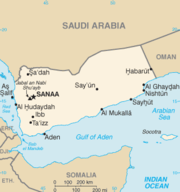
    Most of the focus of the United States war on al-Qaida since 9/11 has been on Afghanistan, Pakistan and Iraq; relatively little attention has been given to the two states on either side of the Gulf of Aden – Yemen and Somalia. Any surplus resources away from the middle east and southwest Asia have tended to be devoted to Algeria and Mali as potential sites for al-Qaida activity.

    True, Washington has looked with concern at Somalia as the internal troubles of this “failed state” have intensified; the expanding power of the al-Shabab Islamist militias – which may have loose connections with al-Qaida – in Somalia have deepened the US’s involvement here (see Harun Hassan & David Hayes, “Somalia: between violence and hope”, 15 July 2009). There is much clearer evidence, however, that Al-Qaida is active in Yemen; indeed, the group calling itself “Al-Qaida in the Arabian Peninsula” (AQAP) has claimed responsibility for the Northwest Airlines attack.

    Four elements of the Yemeni context are relevant in clarifying a complex situation:

    * Many Yemenis fought against the Soviets in Afghanistan in the 1980s and were welcomed back afterwards. Osama bin Laden himself is half-Yemeni.  More recently, a Saudi clampdown and conflict in western Pakistan have encouraged many more Yemeni paramilitaries to return home (see Ginny Hill, “Yemen: the weakest link”, 31 March 2009)

    * The Yemeni state does not control much of its territory, and its capabilities are further limited by a rebellion in the north; the latter is being waged with Saudi aid, including cross-border bombing raids by Royal Saudi air force F-15 strike-aircraft (see Michael Horton, “Borderline Crisis”, Jane’s Intelligence Review, January 2010).  A separatist movement in the south presents yet further problems to a beleaguered government

    * The government lacks the resources to maintain security. Yemen faces severe economic difficulties, in part because its oil reserves are now severely depleted and because it has been badly affected by the international financial downturn (see Fred Halliday, “Yemen: travails of unity”, 3 July 2009)

    * There has long been an Islamist paramilitary movement within the country; past attacks include the bombing of the USS Cole in Aden harbour in 2000 and the attack on the Limburg tanker in 2002 (see Fred Halliday, “Yemen: murder in Arabia Felix”, 13 July 2007).

    AQAP received a particular boost in February 2006 when twenty-three prisoners escaped from a prison in Sana’a. The group, which appears to have had support from sympathetic security officials, included the current AQAP leader Nasir al-Wuhayshi (see Sudarsan Raghavan, “Al-Qaeda group in Yemen gaining prominence”, Washington Post, 28 December 2009). In the subsequent period AQAP has become steadily more active; for example, it launched an attack on the US embassy in Sana’a and tried to assassinate Saudi Arabia’s head of counter-terrorism.

    The developments in Yemen in these four years have already prompted a strong response from the United States. The Pentagon has more than doubled military aid to Yemen, and committed over $70 million to training Yemeni security forces. There is a US special-forces presence in the country, and strong support from Washington for air-strikes against presumed AQAP targets; these include two bombing-raids on 17 and 24 December 2009 that are reported to have killed more than sixty militants (see Barbara Starr, “U.S. fears Yemen a safe haven for al Qaeda”, CNN, 28 December 2009).

    The government of Yemen’s president, Ali Abdullah al-Saleh, is working increasingly closely with the United States. The connection was expanded following a visit from the head of US Central Command, General David H Petraeus, in July 2009. The full extent of the cooperation is hidden, but it is likely that US forces are directly involved in Yemen’s internal operations – quite probably with armed drones and possibly US carrier-based strike-aircraft (see Eric Schmitt & Robert F Worth, “U.S. Widens Terror War to Yemen, a Qaeda Bastion”, New York Times, 27 December 2009).

    The inner story

    The rhetorical force of President Obama’s response to the Northwest Airlines attack makes it more than likely that Yemen will evolve into another military front against al-Qaida. This in turn will increase the perception that, after apparent reversals in Iraq and western Pakistan, the movement has staged a major comeback.

    The problem with this narrative is that it perceives al-Qaida as a clearly-structured and hierarchical movement with a coherent world plan. The reality, supported by developments in Yemen, is more complex (see Fawaz Gerges, “Al-Qaida today: a movement at the crossroads”, 14 May 2009). It is more accurate to say that al-Qaida has elements of a movement, a belief-system, a franchise and a very informal cluster of networks, yet at the same time it is widely dispersed and has relatively few internal interconnections.

    Many of the informal networks revolve around Islamist paramilitaries who fought in Afghanistan in the 1980s or in Iraq, Afghanistan and Pakistan in the 2000s. Some of the links have been consolidated by groups coalescing in detention-centres across the world, including Guantánamo. There are also indications that paramilitaries of several nationalities have moved to Yemen in recent years.

    The term “al-Qaida” is therefore best used to connote a loose rather than a ight or integrated movement. It is thus possible for the “old” leadership in western Pakistan to be under pressure while the broader movement continues to evolve. Similarly, it is also possible for the movement to have lost support in Iraq, Pakistan and the wider Islamic world (in large part because of the civilian deaths its attacks have inflicted) while it is still capable of attracting dedicated young men – including the scion of a wealthy Nigerian family – prepared to give their lives to the cause (see “Al-Qaida’s afterlife”, 29 May 2008).

    The US-led war in Yemen is likely to expand in the early months of 2010. It is not easy to see what else the Obama administration feels it can do, given that the Christmas Day attack came close to killing hundreds of people above Detroit. 

    But if the issue is seen through the other end of the telescope – a task that becomes ever more vital – and an increased American involvement in Yemen may well prove to be a hugely welcome gift to al-Qaida and its affiliates. Already its propagandists are at work, pointing to the civilian casualties of the December air-raids (as of those in the coalition’s latest Afghanistan attacks).  They will go on to develop a very clear narrative of the “far enemy” now extending its war against Islam to yet another country.

    Barack Obama may make an impressive speech on relations with the Islamic world in his Cairo speech of June 2009 – but this is seen as merely a sham. Instead, what will be portrayed is a “crusader” enemy that occupies Iraq and Afghanistan, exerts control over the Pakistani government, equips and aids the “Zionist” armed forces that suppress the Palestinians, and now kills Muslims in yet another country. It is a powerful and dangerous narrative, and one that retains great potency.