Blog

  • Arms Flows to Sub-Saharan Africa

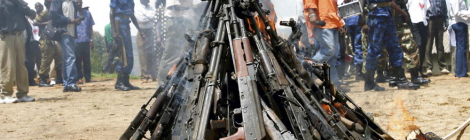
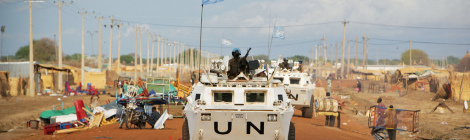
    SIPRI has published a policy paper examining arms flows into sub-Saharan Africa. The summary of the report below indicates that even legal transfers into the continent have implications for peace and security, not only because many SALW (small arms and light weapons) make their way illicitly to rebel groups or countries under UN embargo, but also because, “The supply of arms can be argued to to have been an incentive for the recipients to try to achieve their goals via violence instead of dialogue.”  The summary also touches on the motives behind supplier countries’ weapons sales, which include securing access to natural resources in the mineral-rich continent.

    There is a general need for more clarity throughout the arms-transfer process, as African governments themselves are not necessarily forthcoming in their reasons for wishing to purchase weapons, despite regular expressions of support for international arms control initiatives. With the waters this muddied, arms purchased both legally and illegally pose a serious threat to security in Africa.

    (To view or purchase a copy of the full policy paper, please go to the Publications page on the SIPRI website)


    Pieter D. Wezeman, Siemon T. Wezeman and Lucie Béraud-Sudreau, SIPRI Policy Paper 30 – Summary, December 2011

    Concerns regarding arms transfers to sub-Saharan Africa are widespread and have motivated worldwide efforts to control arms flows. Sub-Saharan Africa (excluding South Africa) accounted for 1.5 per cent of the volume of world imports of major arms in 2006–10. Although this is low by global standards, with little indigenous arms-production capacity in the region, most countries are fully dependent on arms imports.

    States in sub-Saharan Africa have received major arms from a wide variety of countries all over the world. China, Russia and Ukraine are consistently among the largest suppliers. Other countries that play a relatively modest role as arms exporters globally are significant arms suppliers to individual countries in sub-Saharan Africa or provide a significant proportion of the major arms supplied to the region as a whole. Due to a lack of accurate information, no comprehensive picture of transfers of small arms and light weapons (SALW) and other military equipment to the region can be given, but available open source information shows that transfers of such equipment to the region in 2006–10 was common.

    The motives for arms transfers to sub-Saharan African destinations are diverse, including direct financial revenues—even if they are small compared to revenues from sales to other regions—and strengthening political influence in sub-Saharan Africa in order to gain access to natural resources and to further the security interest of the supplier.

    Intergovernmental transparency is necessary for an informed debate about how the military needs of sub-Saharan Africa states should be taken into account in discussions on arms control in the region. While countries in the region regularly express support for conventional arms control initiatives, their low level of participation in the United Nations Register of Conventional Arms (UNROCA)—the key intergovernmental reporting instrument on conventional arms—casts doubts on their willingness to actively control arms. Public debate about arms procurement is often based on incomplete and confusing information which emerges only after key decisions have been made. Even those governments that have been more forthcoming with public information about their arms procurements tend to remain reluctant to discuss the rationale and underlying threat assessments in public or in the parliament.

    Case studies show that supplies of SALW and major arms play a role in armed conflict in sub-Saharan Africa; even supplies of relatively small quantities of older weapons can have a notable impact on conflicts. The uncertainty about the impact of arms transfers to conflict areas in sub-Saharan Africa is reflected in the experience of 2006–10. In several cases it could be argued that arms supplies have contributed to a government’s ability to legitimately maintain or restore stability in its country, including with the use of force against rebel groups. In a number of cases, exporting countries have supplied arms to governments in the region which supported efforts to achieve these objectives and in line with UN statements or actions. The least controversial arms supplies are those aimed at improving African states’ capabilities to participate in peace operations, even though these supplies remain insufficient to fulfil the needs of regional peacekeepers.

    However, in many cases arms supplied to sub-Saharan Africa have had clearly undesirable effects.

    1. The supply of arms can be argued to have been an incentive for the recipients
    to try to achieve their goals via violence instead of dialogue.
    2. Arms have been used in human rights violations.
    3. Arms recipients often do not have the capability to secure their stockpiles
    and weapons have been lost or stolen, including by rebel groups.
    4. Arms recipients have deliberately diverted weapons to targets of UN arms
    embargoes or rebel groups in neighbouring countries.
    5. Arms supplied to governments have been turned against those governments
    in military coups d’état.

    As a result of ambiguity about the impact and desirability of arms transfers, arms export policies by individual supplier countries vary widely. Some suppliers appear reluctant to supply arms to most countries in the region; others seem to consider only UN arms embargoes as a reason not to supply arms. The ambiguity is also reflected in the inconsistent approach of the international community to conflicts in sub-Saharan Africa: whereas arms embargoes have been agreed in relation to some conflicts, in other cases no embargo has been imposed.

    Weapons used in conflicts in sub-Saharan Africa by government forces have in general been delivered with the consent of the governments both in the supplier and recipient countries. Nonetheless, it appears that the illegal arms trade continues to play a role in the procurement of arms by both government and rebel groups in the region even though there is no hard evidence of widespread large illegal supplies from outside the region into sub-Saharan Africa in 2006–10. However, there have been regular instances of weapons flows within the region to, in particular, rebel groups in violation of UN embargoes. To better understand the nature of the illegal arms trade in sub-Saharan Africa, information about interceptions by government authorities of illegal arms transfers and related legal activity should be centrally collected, for example in the annual national reports
    on the UN Programme of Action on SALW.

    The lack of transparency in arms flows to sub-Saharan Africa obstructs an informed debate on the proposed arms trade treaty (ATT) and would be a serious obstacle to its verification. A starting point for improving transparency would be to support initiatives on corruption in the arms trade. Interest in the corruption issue and increasing willingness by governments to discuss it could be a stepping stone towards more transparency in arms procurement. If sub-Saharan African states want to persuade arms suppliers—which regularly hinder arms exports by refusing export licences—that they have legitimate reasons to procure arms, they should be more forthcoming about their motives.

    Article Source: Stockholm International Peace Research Institute

    Image Source: Enough Project


  • Sustainable Security

  • Sustainable Security

  • Sustainable Security

    Beyond Privacy: The Costs and Consequences of Mass Surveillance

    Last week the new UN privacy chief said UK surveillance was “worse than [George Orwell’s novel] 1984”. In the two years since the Snowden leaks revealed the existence of bulk internet and phone surveillance by US intelligence services and their partners, including the UK, the British government continues to engage in the mass collection of citizens’ communications data.

    Read Article →

    The cooling wars of cyber space in a remote era

    As current discussions highlight the possibility of “major” cyber attacks causing a significant loss of life or large scale destruction, it is becoming harder to determine whether these claims are hype or are in fact justified fears. Esther Kersley, Katherine Tajer and Alberto Muti offer some clarity on the subject by assessing the major issues in cyber security today to help better inform the debate and assess what threats and challenges cyber issues really do pose to international peace and security.

    Read Article →

  • Impact of Climate Change on Agriculture

    A report published on the 30th September by the International Food Policy Research Institute (IFPRI) estimates that 25 million more children will be malnourished by 2050 due to the effects of climate change. The report predicts that climate change will lead to price increases for the most important agricultural crops: rice, wheat, maize and soybeans. Wheat prices are projected to increase globally by 170 – 191% whilst rice prices may increase by 113 – 121%.

    The study: Climate Change: Impact on Agriculture and Costs of Adaptation, uses the IPCC Fourth Assessment Report’s A2 scenario with a best estimate temperature rise of 3.4 degrees centigrade and a likely range of 2.0 to 5.4 degrees centigrade. However, the report does not account for: the effects of increased variability in weather caused by climate change; the loss of agricultural lands due to rising seas levels; climate change induced increases in pests of diseases; or increased variability in river flows as glaciers melt.

    “Agriculture is extremely vulnerable to climate change, because farming is so water-dependent. Small-scale farmers in developing countries will suffer the most” not Mark Rosegrant, director of IFPRI’s Environment and Production Technology Division and report co-author. Gerald Nelson, IFPRI senior research fellow and report lead author suggested, “This outcome could be averted with seven billion U.S. dollars per year of additional investments in agricultural productivity to help farmers to adapt to the effects of climate change. Investments are needed in agricultural research, improved irrigation, and rural roads to increase market access for poor farmers. Access to safe drinking water and education for girls is also essential.”

    The full report can be downloaded here.


  • Sustainable Security

  • Preparing for the Impact of a Changing Climate on U.S. Humanitarian and Disaster Response

    Climate-related disasters could significantly impact military and civilian humanitarian response systems, so “an ounce of prevention now is worth a pound of cure in the future,” said CNA analyst E.D. McGrady at the Wilson Center launch of An Ounce of Preparation: Preparing for the Impact of a Changing Climate on U.S. Humanitarian and Disaster Response. The report, jointly published by CNA and Oxfam America, examines how climate change could affect the risk of natural disasters and U.S. government’s response to humanitarian emergencies.

    Connecting the Dots Between Climate Change, Disaster Relief, and Security

    The frequency of – and costs associated with – natural disasters are rising in part due to climate change, said McGrady, particularly for complex emergencies with underlying social, economic, or political problems, an overwhelming percentage of which occur in the developing world. In addition to the prospect of more intense storms and changing weather patterns, “economic and social stresses from agricultural disruption and [human] migration” will place an additional burden on already marginalized communities, he said. 

    Paul O’Brien, vice president for policy and campaigns at Oxfam America said the humanitarian assistance community needs togalvanize the American public and help them “connect the dots” between climate change, disaster relief, and security. 

    As a “threat multiplier,” climate change will likely exacerbate existing threats to natural and human systems, such as water scarcity, food insecurity, and global health deterioration, said Vice Admiral Lee Gunn, USN (ret.), president of CNA’s Institute for Public Research. Major General Richard Engel, USAF (ret.), of the National Intelligence Council identified shifting disease patterns and infrastructural damage as other potential security threats that could be exacerbated by climate change.

    “We must fight disease, fight hunger, and help people overcome the environments which they face,” said Gunn. “Desperation and hopelessness are…the breeding ground for fanaticism.”

    U.S. Response: Civilian and Military Efforts 

    The United States plays a very significant role in global humanitarian assistance, “typically providing 40 to 50 percent of resources in a given year,” said Marc Cohen, senior researcher on humanitarian policy and climate change at Oxfam America. 

    The civilian sector provides the majority of U.S. humanitarian assistance, said Cohen, including the USAIDOffice of Foreign Disaster Assistance (OFDA) and the State Department’s Bureau of Population, Refugees, and Migration. These organizations provide leadership, funding, and food aid to developing countries in times of crisis, but also beforehand: “The internal rationale [of the Office of Foreign Disaster Assistance] is to reduce risk and increase the resilience of people to reduce the need for humanitarian assistance in the future,” said Edward Carr, climate change coordinator at USAID’s Bureau for Democracy, Conflict, and Humanitarian Assistance.

    The U.S. military complements and strengthens civilian humanitarian assistance efforts by accessing areas that civilian teams cannot reach. The military can utilize its heavy lift capability, in-theater logistics, and command and control functions when transportation and communications infrastructures are impaired, said McGrady, and if the situation calls for it, they can also provide security. In addition, the military could share lessons learned from its considerable experience planning for complex, unanticipated contingencies with civilian agencies preparing for natural disasters. 

    “Forgotten Emergencies” 

    Already under enormous stress, humanitarian assistance and disaster response systems have persistent weaknesses, such as shortfalls in the amount and structure of funding, poor coordination, and lack of political gravitas, said Cohen. 

    Food-related aid is over-emphasized, said Cohen: “If we break down the shortfalls, we see that appeals for food aid get a better response than the type of response that would build assets and resilience…such as agricultural bolstering and public health measures.” Food aid often does not draw on local resources in developing countries, he said, which does little to improve long-term resilience. 

    “Assistance is not always based on need…but on short-term political considerations,” said Cohen, asserting that too much aid is supplied to areas such as Afghanistan and Iraq, while “forgotten emergencies,” such as the Niger food crisis, receive far too little. Furthermore, aid distribution needs to be carried out more carefully at the local scale as well: During complex emergencies in fragile states, any perception of unequal assistance has the potential to create “blowback” if the United States is identified with only one side of a conflict.

    Engel added that many of the problems associated with humanitarian assistance will be further compounded by increasing urbanization, which concentrates people in areas that do not have adequate or resilient infrastructure for agriculture, water, or energy. 

    Preparing for Unknown Unknowns

    A “whole of government approach” that utilizes the strengths of both the military and civilian humanitarian sectors is necessary to ensure that the United States is prepared for the future effects of climate change on complex emergencies in developing countries, said Engel. 

    In order to “cut long-term costs and avoid some of the worst outcomes,” the report recommends that the United States:

    • Increase the efficiency of aid delivery by changing the budgetary process;
    • Reduce the demand by increasing the resilience of marginal (or close-to-marginal) societies now;
    • Be given the legal authority to purchase food aid from local producers in developing countries to bolster delivery efficiency, support economic development, and build agricultural resilience;
    • Establish OFDA as the single lead federal agency for disaster preparedness and response, in practice as well as theory;
    • Hold an OFDA-led biannual humanitarian planning exercise that is focused in addressing key drivers of climate-related emergencies; and,
    • Develop a policy framework on military involvement in humanitarian response.

    Cohen singled out “structural budget issues” that pit appropriations for protracted emergencies in places like Iraq, Afghanistan, and Darfur against unanticipated emergencies, like the 2010 earthquake in Haiti. Disaster-risk reduction investments are not a “budgetary trick” to repackage disaster appropriations but a practical way to make more efficient use of current resources, he said: “Studies show that the return on disaster-risk reduction is about seven to one – a pretty good cost-benefit ratio.” 

    Edward Carr said that OFDA is already integrating disaster-risk reduction into its other strengths, such as early warning systems, conflict management and mitigation, democracy and governance, and food aid. However, to build truly effective resilience, these efforts must be tied to larger issues, such as economic development and general climate adaptation, he said. 

    “What worries me most are not actually the things I do know, but the things we cannot predict right now,” said Carr. “These are the biggest challenges we face.”

    Article source: The New Security Beat

    Image source: Oxfam International

  • Resources and Militarisation in the East China Sea

    As the long running tensions over the set of islands in the East China Sea appear to be coming to a head, the time for thinking through the alternatives to the militarisation of this conflict seems to be well and truly upon us.

    The conflict raises interesting issues about sovereignty claims based on offshore territories, particularly as we face a climate-constrained future as well as the increasing importance of competition over scarce resources. The latter is fast becoming one of the most important global trends if one thinks about the potential ‘drivers’ of conflict and even war.

    Spiralling naval spending in the region has been tracked by analysts for some years now, and flashpoints such as the dispute over the Senkaku/Diaoyu islands could show rampant military spending and arms racing for the dangerous trends that they are if things deteriorate rapidly. Arms racing helps to reinforce security dilemmas (the problems of interpreting the motives of potential adversaries and responding in-kind by arming yourself thus creating a spiral towards ever increasing militarisation). Arms racing also discourages the development of what Ken Booth and Nicholas Wheeler refer to as ‘security dilemma sensibility’ – the ability to “perceive the motives behind, and to show responsiveness towards, the potential complexity of the military intentions of others. In particular, it refers to the ability to understand the role that fear might play in their attitudes and behaviour, including, crucially, the role that one’s own actions may play in provoking that fear.”

    But what is particularly important to note in relation to this crisis is the interaction between the trends of increasing militarisation and competition over resources. The potential hydrocarbon resources beneath the ground around the islands as well as the rich fishing grounds in the surrounding waters gives the competing claims to sovereignty a particular strategic bite.

    Imposed on top of this is the effect of unresolved historical tensions and fierce nationalist sentiment in some quarters of both Japan and China. The coverage of the dispute in the media has been particularly important. Kevin Clements and Ria Shibata have noted that “this might be expected in China, which has a state-run media. In democratic Japan and Taiwan, however, the media have also promoted official and unofficial nationalist positions on the conflict. This has been accompanied by a marginalising or silencing of moderate voices favouring negotiated non-violent solutions to the conflict.” Interestingly, the most constructive voices calling for calm who have been able to cut through the jingoism and sabre rattling have been the business community concerned with the bigger picture issues of losing trade and tourism between China, Taiwan, Japan and South Korea. 

    Clements and Shibata have outlined five initial steps that could be used to de-escalate the issue and begin the difficult but unavoidable process of a negotiated solution. In the longer-term, both regional powers and important external players will need to put addressing the inter-linked trends of militarisation and increasing competition over strategic resources at the heart of any attempts to avoid the worst case scenarios playing out.

    Image source: Al Jazeera English. 

  • Sustainable Security


    Bay of bengal Climate InsecurityThere is no region of the world that faces more threats from climate change than South Asia. Of particular concern is the littoral surrounding the Bay of Bengal, including the Eastern Indian states of West Bengal and Odisha, Bangladesh, and coastal Burma. This region is uniquely vulnerable to a changing climate because of a combination of rising sea levels, changing weather patterns, and uncertain transboundary river flows. Away from the seashore, China holds the high ground in the Tibetan Plateau and the Himalayas, and complicates the geopolitical picture further by acting as the source of the region’s fresh water.

    On the Bay of Bengal’s coast these problems of a changing climate combine with already existing social problems like religious strife, poverty, political uncertainty, high population density, and rapid urbanization to create a very dangerous cocktail of already security threats. Climate change has been called a “threat multiplier” or “an accelerant of instability” by military and intelligence communities because of how it will impact these already existing threats. With a population of more than 300 million people (91 million in West Bengal, 42 million in Odisha, 142 million in Bangladesh, 52 million in Burma), tense militarized borders, overlapping ethnic and religious communities, and uncertainty about the future, there is no region in the world that faces a more dangerous combination of threatsfrom climate change than here.

    Rising Sea Levels

    One of the key tenets of national security is the ability of a country to ensure the integrity of its sovereign territory. Yet, as glaciers far from South Asia melt, the sea rises and encroaches upon its farms, villages, and cities. As Hemingway wrote about going bankrupt, sea level rise happens “gradually, then suddenly.” Slowly, a rising ocean brings increasing intrusion of brackish water into groundwater, harming costal agriculture. Moreover, gradual ocean encroachment harms the coast’s natural protections, whether dunes, reefs, barrier islands, or mangrove forests. Then, suddenly, when a major cyclone blows in a storm surge will overcome previously unsurmountable barriers.

    The shorelines of the Bay of Bengal stand to lose swaths of territory from sea level rise. Bangladesh, as a country predominantly composed of river delta, is most at risk. It stands to lose 11% of its territory – home to 15 million people – from a sea level rise of only 1 meter, a level that is not a particularly extreme prediction over the next 4 decades. Few invading armies could do worse damage.

    Oddly enough, the world’s oceans do not rise at the same rate. With rising global sea levels, in some areas the sea level could actually fall while it rises in others. A recent study from the National Center for Atmospheric Research (NCAR) found that sea level rise will be particularly high along the Bay of Bengal, due to changes in currents caused by rapid surface warming of the Indian Ocean.

    In the region, the cities of Dhaka, Kolkata, and Yangon all lie in major river deltas and are vulnerable to storm surges. In its 2007 report, the Intergovernmental Panel on Climate Change (IPCC) specifically listed cities in Asian mega deltas as “hotspots for vulnerability” because of sea level rise and changing patterns of river flow. Already straining at their infrastructure limits, these densely packed cities are becoming more vulnerable in a warming world.

    Changing Transboundary Water Flow

    Water does not stay within lines on a map. Instead, gravity draws it inexorably from the mountains to the sea. China, through its control of Tibet, controls the headwaters of almost all of the major rivers of Asia – only the Ganges lies outside of China’s control, originating in India. Of the major rivers that empty into the Bay of Bengal, all cross borders. Water is only plentiful during the monsoon season, so these rivers provide much-needed sustenance to agriculture, people, and ecosystems throughout their trip to the sea during the dry season – when they are fed by glacier and snow melt. Competition and tension over that flow is evident around the world when water crosses borders.

    This is true of Bangladesh and India, for which the flow of the Ganges are a source of tension. The Farakka Barrage on the Ganges River, just 10 miles upriver from the Bangladesh border, allows India a measure of control over the river. The dam allows India to divert the flow of the Ganges down a canal to the Hooghly River and into the port of Kolkata. Since the dam was built in 1975, there have been allegations from Bangladesh that India diverts water in the dry season and releases too much in the monsoon season. In 1996, the two countries agreed to a 30 year treaty to share the Ganges’ flow, but tensions still remain.

    The Brahmaputra River, meanwhile, provides a source of tension between the two regional powers, India and China. China recently announced that they are building a series of hydroelectric dams along the Brahmaputra’s upper reaches in Tibet, but they have forsworn any attempt to divert or hold back the great river’s flow. However, these assurances have not quieted all voices in India, who point to plans in China’s South-North Water Diversion Project to divert water from the Brahmaputra in order to ensure water for industry and the cities of China’s parched north. China’s leaders have denied these extravagant plans, but their engineers have lobbied for such a project. It would complete a dream of Chairman Mao’s, who said: “Southern water is plentiful, northern water scarce. If at all possible, borrowing some water would be good.”

    Climate change exacerbates these concerns about transboundary water management in the region. Climate change is threatening both the glaciers that sit at the top of these mighty rivers, feeding them during the dry season, and the very viability and predictability of the Indian Monsoon rains. Temperatures in the Tibetan Plateau and the Himalayas have risen 1.5 degrees Celsius since 1982, a rate more than three times as fast as the global average. Meanwhile, changes in weather patterns due to climate change could cause repeated failures in the monsoon. While there is little likelihood of an immediate and total melting of the glaciers, uncertainty about their future flows is enough to stoke tension in the region.

    The Potential for Conflict

    Climate change is altering the environment of the region; the glaciers are retreating, the rivers’ flows are becoming more unpredictable, and the seas are rising. However, whether those changes manifest themselves into either civil or interstate conflict will depend upon how both the populations and the governments in the region react to those changes. How long governments have to adapt depends upon unpredictable weather and climate patterns – but as the Stern Review bore out, earlier action is almost always cheaper and more effective than waiting. How governments adapt is important as whether; some adaptations, like capturing water that would otherwise flow across borders in new reservoirs could actually make the threat of conflict worse. If countries do not work cooperatively, they could stoke conflict.

    Throughout history, one of the most effective ways to deal with climate change has been migration – from a climate that is no longer hospitable to one where living is easier. However, modern borders do not reflect the historical ties between the regions. Migration is a natural response. However, in areas with already high population density and an overlapping patchwork of ethnic and religious communities, new immigrant communities often come into direct conflict with established communities. Last year saw ethnic strife in the Indian state of Assam between indigenous Bodos and immigrant Muslims, many of whom hailed from over the nearby border in Bangladesh. Over 75 people died, and over 400,000 people were temporarily displaced. In this region, it is impossible to say whether a group of migrants are “climate refugees” or simply moving to a place with better economic opportunity, but this is what we should expect in the future.

    It is difficult to find examples of any interstate wars fought directly over water; to the contrary, water has been a catalyzer of cooperation. However, as countries realize that they can control and shape water flow through mega dams and water diversion projects, there is a danger that the claims of downstream countries could be ignored. Along the Mekong River, for example, China has proceeded to dam and control the river’s flow through its territory – leading downstream neighbors to complain that China is causing droughts. Yet because of the power imbalance between China and smaller countries like Laos and Cambodia, the Chinese have little to fear. Similar thinking by Chinese leadership over dam building along the Brahmaputra, their shared river with India, could lead both countries to stumble into a conflict that neither of them want.

    In the age of climate change, conflict is more likely as threats are multiplied. Nowhere is this truer than around the Bay of Bengal. However, war is never pre-ordained. Instead, the threat of conflict is determined by how countries react. Good international governance can encourage countries to not simply pull up the drawbridge and think only of themselves, but will encourage them to see what their actions will mean for regional neighbors. Climate change is increasing the threat of wars and unrest around the Bay of Bengal; but foresight about its impacts can help the region’s leaders work together to solve a problem that knows no boundaries.

    Andrew Holland is Senior Fellow for Energy and Climate at American Security Project, a Washington D.C based think tank. He is an expert on energy, climate change, and infrastructure policy. He has over seven years of experience working at the center of debates about how to achieve sustainable energy security and how to effectively address climate change.

    Image source: amioascension

  • Global Security and the War on Terror: Elite Power and the Illusion of Control

    Image of Global Security and the War on Terror: Elite Power and the Illusion of Control (Contemporary Security Studies)

    • Purchase from Amazon:
    • Global Security and the War on Terror: Elite Power and the Illusion of Control (Contemporary Security Studies)
    • Author: Paul Rogers
    • Publisher: Routledge ()
    • Binding: Paperback, pages
    • Price: £22.99