Blog

  • Climate Change, Nuclear Risks and Nuclear Disarmament: From Security Threats to Sustainable Peace

    On 17 May the World Future Council released its latest report entitled Climate Change, Nuclear Risks and Nuclear Disarmament: From Security Threats to Sustainable Peace. It is the outcome of groundbreaking research by Prof. Dr. Jürgen Scheffran of the University of Hamburg.

    The report examines the linkages between nuclear and climate risks, noting that these two clear threats may interfere with each other in a mutually re-enforcing way. It also acknowledges that finding solutions to one problem area could lead to solutions in the other: “Preventing the dangers of climate change and nuclear war requires an integrated set of strategies that address the causes as well as the impacts on the natural and social environment.” Prof. Dr. Scheffran offers an approach to move away from these security threats to building sustainable peace.

    The study brings to light the multidimensional interplay between climate change, nuclear risks and nuclear disarmament, and its critical implications for the strategic security environment. In addition, it explores prospects and openings to tackle these key challenges, stressing the role played by institutions to “strengthen common ecological and human security, build and reinforce conflict-resolution mechanisms and low-carbon energy alternatives, and create sustainable lifecycles that respect the capabilities of the living world.”

    Read the full report here.

    Image source: GreenDominee

  • Sustainable Security

    In spite of early signs of progress, 2016 saw damaging levels of wartime environmental damage. Will 2017 be any different?

    Marking the UN’s international day on conflict and the environment in November, the Special Rapporteur tasked with reviewing and developing the law protecting the environment before, during and after conflict argued that 2016 was “…set to be a milestone in global efforts to protect the environment in connection with armed conflict.” But it has also been a year where such efforts have seemed more vital and urgent than ever. This blog takes a look back at conflict and the environment in 2016, at the progress made and considers what should come next.

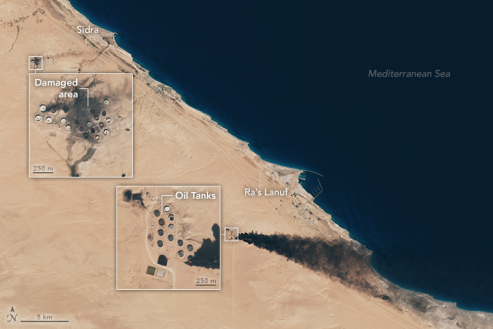
    Fires from burning oil facilities are one of the most visible forms of wartime environmental damage; 2016 began in flames, and it will end in flames. Back in January, facilities in Libya’s oil crescent were being targeted by Islamic State. The smoke plumes from the huge blazes at the storage sites at As Sidr and Ras Lanuf were visible from space, the attacks – branded an economic and environmental disaster by local emergency staff – were intended to help further destabilise the fragile interim government.

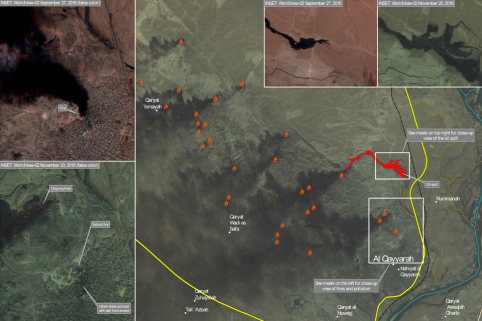
    The year will close with another environmental disaster caused by oil, this time in northern Iraq where oil well fires, again started by Islamic State, have burned for months and with no end in sight. As of November, data from UNOSAT showed that 29 fires were burning near Qayyarah, and two oil slicks were travelling down a tributary of the Tigris.

    qayyarah_unosat_images_dec_16

    Map illustrating satellite-detected fires and oil spills between September and November at and around Al Qayyarah, approximately 60km south of Mosul, Iraq. Credit: UNOSAT/UNITAR

    libya_sn2_2016005

    Satellite photos of fires at oil production and storage facilities near Sidra, Libya. Image credit: NASA


    25 years on from the last time

    The fires in Libya, Iraq and also in Syria – where facilities have been targeted by all sides of the conflict – have served as a perverse marker of the 25th anniversary of the 1991 Gulf War. A reminder, were it needed, that while our understanding of the environmental causes and consequences of conflicts has grown, our formal systems of protection and response appear as weak today as they were 25 years ago.

    But as 2016 began, there were modest signs of progress. States at the preparatory meetings for the second UN Environment Assembly (UNEA-2) were considering three draft resolutions on conflict and the environment: on the environmental consequences of human displacement from the Syrian conflict; on the need to assess Gaza’s environment; and on the protection of the environment in all areas affected by armed conflict.

    After months of mergers, disagreements and redrafts, the last of these, sponsored by Ukraine, was passed by consensus in May. Co-sponsored by a number of conflict-affected and Western States, in some ways it too marked an anniversary, that of the weak UN General Assembly resolution passed in response to the environmental disaster of the Gulf War in 1992. The UNEA-2 resolution is a significant step forward in many ways. Its scope, which includes the humanitarian consequences of environmental degradation, natural resources, displacement, protected areas, human rights, post-conflict assessments and assistance, is a world away from that passed in 1992. Both were products of their time, reflecting the concerns of States and civil society, but also the international community’s knowledge and understanding of the issues at hand.

    Untangling conflict and the environment

    The often complex linkages between conflict, peace, environment and health were visible throughout 2016. For Colombia and its peace agreement, it meant costing up the financial benefits of peace – the health and environmental savings that could accrue if the deal were to pass. But peace seemed likely to also herald new challenges for Colombia’s environment, biodiversity and human rights, from an anticipated expansion of the extractive industries, from accelerated deforestation and conflict over rural land rights.

    In Syria, the health of children and communities is being harmed by pollution from makeshift oil refining. This coping strategy has flourished thanks in part to a chain of events initiated by policies intended to destroy and degrade the country’s oil production and refining capacity, some of which had fallen into the hands of Islamic State. Satellite images have also captured the wholesale collapse of Syria’s agricultural system as a result of displacement and insecurity. The latter completing the closely related story of growing environmental pressures in Syria’s neighbours due to the influx of people fleeing the conflict, a conflict that has now caused local, national and transboundary impacts on the environment.

    Effective policy-making requires that we work to fully understand the causal linkages between conflict and insecurity, and environmental degradation and its impact on human health and ecosystems. While it may be tempting to present simplistic narratives – such as those proposed in relation to Syria and climate change – this year has shown just how important it is to comprehensively document and interrogate the evidence. One powerful example of this has been a new study on conservation in conflict zones, which identified institutional collapse as the single greatest threat to wildlife.

    Legal initiatives contribute to a sense of momentum

    The complexity and scope of conflict and the environment was also apparent in a major legal development this year. The third report from the UN’s International Law Commission’s (ILC) ongoing study into the protection of the environment in relation to armed conflicts primarily dealt with the law applicable after conflicts. The report’s draft principles cover everything from military bases, to peace operations, peace agreements, the rights of indigenous peoples and toxic remnants of war; with still more topics proposed for study by governments. The principles that the ILC is formulating are merging humanitarian, environmental and human rights law in an effort to clarify the disparate norms and practices that could provide a legal framework for enhanced protection.

    Elsewhere, the chief prosecutor of the International Criminal Court announced a new focus on the prosecution of individuals involved in the illegal exploitation of natural resources, deliberate environmental destruction, and land grabbing. All problems associated with armed conflicts and a potentially useful contribution if the court follows through on the decision. Meanwhile the 33rd session of the UN Human Rights Council heard from its Special Rapporteur on the management and disposal of hazardous wastes, on the impact of toxic remnants of war on health and the environment. He recommended that States improve monitoring of such threats and ensure that remediation and assistance takes place.

    These parallel legal and political pathways are providing a long-overdue framework for debate and State engagement on conflict and the environment. The renewed energy around the topic was clear on November 6th this year – the UN’s international day on conflict and the environment. The level of interest this year was a world away from previous years, with compelling statements calling for progress from the UN Secretary General, the heads of UNEP and UNOCHA, governments, experts and civil society.

    Where next for conflict and the environment?

    oil-fires-libya

    Photo of Sirda oil fires. Image credit: NASA/Flickr

    The question of “where next?” is currently being considered by a number of parties. Whatever the outcome, it remains the case that civil society will have an important role to play in working with international organisations and progressive States to encourage further progress. The momentum to date is the result of seven years of work and the conditions for advancing protection for the environment and civilians in relation to conflict come around rarely.

    When this same question was posed to governments in 1992 in the wake of the Kuwaiti oil fires, the response mirrored the situation today: “Some States felt that the existing rules were sufficient and what was needed was ensuring better compliance with them. However, most of the States represented thought it also necessary to clarify and interpret the scope of some of those rules, and even to develop other aspects of the law relating to the protection of the environment in times of armed conflict.”

    But it cannot just be a question of law and compliance. Like that other cross-cutting issue gender, what seems to be required is effective environmental mainstreaming throughout the conflict cycle. Good work has and is being done with regard to peacebuilding and humanitarian response but more is needed. There are also strong arguments in favour of a more robust system of environmental response in the wake of conflicts. And of course more visibility and stigmatisation for the practices that can cause serious harm to the environment and human health. Vague objectives for now maybe, but they perhaps demonstrate one possible direction of travel. Civil society can continue to contribute through research and advocacy, in untangling and communicating complexity, and by engaging at key moments, but achieving substantive progress will require greater capacity and coordination than we have at present.

    Work on conflict and the environment in 2017 should aim to signpost the direction of travel, and make more use of the parallel processes currently in play. If they can be identified and agreed, a clearer destination and mode of transport will allow a greater number of States and civil society to engage, something that will be vital if we are to make use of the momentum that has been created this year.

    Doug Weir manages the Toxic Remnants of War Project.  The project is on Twitter: @detoxconflict

  • Sustainable Security

    DU-turn? The changing political environment around toxic munitions

    Is the US backpedalling on its use of depleted uranium (DU) rounds? There are indications that the use of these highly toxic munitions could increasingly be a political liability for the US, with countries affected by DU, like Iraq, other UN Member States, and populations in contaminated areas all expressing concerns over its use and impact. But stigmatisation, although important, is not enough on its own – in order to make sustained progress on accountability and in reducing civilian harm, a broader framework that addresses all toxic remnants of war is needed.

    Read Article →

    Too Quiet on the Western Front? The Sahel-Sahara between Arab Spring and Black Spring

    While the world’s attention has been focused on the US-led military interventions in Iraq and Syria a quieter build-up of military assets has been ongoing along the newer, western front of the War on Terror as the security crises in Libya and northeast Nigeria escalate and the conflict in northern Mali proves to be far from over. In the face of revolutionary change in Burkina Faso, the efforts of outsiders to enforce an authoritarian and exclusionary status quo across the Sahel-Sahara look increasingly fragile and misdirected.

    Read Article →

    Colombia and Mexico: The Wrong Lessons from the War on Drugs

    As activists around the world participate in a Global Day of Action against criminalisation of drug use, evidence from the multi-billion dollar War on Drugs in Colombia suggests that militarized suppression of production and supply has displaced millions of people as well as the problem, not least to Mexico. The wrong lessons are being exported to Central America and beyond, but a groundswell of expert and popular opinion internationally is calling for alternative approaches to regulating the use and trade in drugs.

    Read Article →

    Beyond crime and punishment: UK non-military options in Syria

    The defeat of the UK government’s parliamentary motion on support in principle for military action against the Syrian regime means that Britain will play no part in any direct attack on Syria. What then are its options for resolving the Syrian conflict, protecting civilians and punishing those responsible for war crimes there? This article assesses what the UK can do in terms of pushing for a negotiated peace settlement and to hold accountable those responsible for using chemical weapons and any other war crimes committed during this century’s worst humanitarian crisis.

    Read Article →

  • Why START is only a beginning on the long road to nuclear disarmament

    Why START is only a beginning on the long road to nuclear disarmament

    Andrew Futter

    The ‘New START’ Treaty signed by Barack Obama and Dmitry Medvedev in Prague on 8th April 2010 is an important first step in the renewed drive for nuclear disarmament, but its overall contribution towards the goal of a world free from nuclear weapons should not be overstated.  In many respects the treaty merely codifies the current status quo, and is arguably more about symbolism than it is about substance, and in this respect much of the hard work in reducing and potentially eliminating the vast stockpiles of nuclear weapons held by nations across the globe is still to be done.  Perhaps most importantly, before any meaningful multilateral talks and possible agreements on abolition can seriously begin, the US and Russia will need to go much further in reducing their nuclear ordinance.  Moreover, it will only be after US and Russian weapons stockpiles have been reduced to numbers in the low hundreds that the push for more widespread reductions, and possibly abolition, can seriously and credibly begin.  As such, and while many are aware of the problems of going from only a few nuclear weapons to zero, this article argues that many of the toughest problems are likely to come in the first phase of the disarmament process, a phase that will involve reducing US and Russian nuclear stockpiles down to numbers more in line with that of other nuclear weapons states.

    The New START treaty is certainty important in a number of political, diplomatic and strategic ways.  First, it commits both the US and Russia to reduce their deployed strategic warheads to 1550 and deployed delivery vehicles to 700 within seven years – representing a 65% reduction from the numbers contained in the original 1991 START treaty negotiation signed by George HW Bush and Mikhail Gorbachev, and a 30% cut in numbers from the Moscow Treaty negotiated by former President’s George W Bush and Vladimir Putin in 2002.  Of equal importance is the fact that the treaty ensures the continued verification of both nations nuclear stockpiles (that had expired with the first START treaty in December 2009), which in turn allows for transparency in measuring both governments compliance with the new agreement as well as ensuring the security of each nation’s nuclear sites. This is particularly important in Russia.  On top of this and perhaps in many ways the most important part of the agreement is its political symbolism and significance, and more broadly its importance for US-Russian strategic dialogue, international cooperation and a predictable relationship.  Politically, the treaty cements previous work by the Obama administration to ‘reset relations’ with Russia and from the administration’s perspective, should help enlist Russian support with other US foreign policy objectives.  Diplomatically it establishes a link between the two sides from which to push on and attempt to negotiate further arms control agreements.  For Russia it is also an important chance to be involved in international policy at the highest levels as the country tries to mitigate its declining strategic world role.

    Militarily however, the treaty really changes very little.  It is likely that regardless of the new agreement the US would have made further (possibly unilateral) reductions in its nuclear weapons stockpile – and indeed may continue to do so even if the Senate does not ratify the treaty in the coming months.  Moreover, it is likely that the US – through NATO – may choose to withdraw its tactical nuclear weapons from Europe, and possibly from other regions across the globe – especially in areas where ballistic missile defences are beginning to play a larger role in strategic deterrence.  On the Russian side the treaty essentially codifies the current state of the Russian nuclear arsenal, which after years of underfunding and neglect is now essentially in a state of disrepair.  It is therefore likely that despite the vast stockpiles of nuclear related material still in Russia, only a percentage of this nuclear ordinance is actually serviceable and usable.  When economic pressures in both countries – but particularly Russia – are added to this, much suggests that a renewed drive to service or embark on a large-scale plan to build new nuclear weapons by either nation is highly unlikely.

    However, and whilst the provisions contained in START are important, and indeed mark a notable diplomatic achievement, far deeper cuts in US and Russian nuclear stockpiles will need to be made before any serious multilateral nuclear reductions can be contemplated.  However, because both strategic and political pressures will make further significant reductions in US and Russian stockpiles far harder to agree, it is arguably in this pre-nuclear abolition stage that most of the short-term problems with the disarmament agenda reside.  Fundamentally, without significant further US and Russian reductions – perhaps reducing warhead numbers to the low hundreds – it will be very difficult to multilateralise the push for disarmament and consequently begin making meaningful strides towards possible nuclear abolition.  Making things more completed is the fact that nothing in the recent START agreement prevents the modernization and testing of US or Russian warheads or delivery vehicles, or provides any official constraints on ballistic missiles defences.  Additionally the treaty does not include any reductions of the several thousand tactical nuclear weapons still deployed by both the US and Russia.  Moreover, and although President Obama has suggested that negotiating a tactical nuclear weapons treaty with Russia is a key priority, and despite rumours that US tactical weapons may be removed from Europe, continued and indeed increasing Russian reliance on these types of weapons will make the pursuit of such an agreement an arduous task.  What is more, because dismantling and destroying nuclear weapons takes a long time, and because both countries already have huge stocks of weapons awaiting destruction, the number of operationally inactive US and Russian stockpiled warheads will remain in the high thousands for many years to come.

    The first big hurdle to further reductions is going to be the increasing political and strategic reliance by Russia its nuclear weapons complex.  Politically Russian leaders feel that the countries substantial nuclear weapons ordinance is one of the few things that allows it to retain ‘great power status’ and thus enables it to pursue a role at the forefront of global politics, whilst militarily, Russian nuclear weapons are gaining increased importance because of the declining size, capability and professionalism of Russian conventional forces.  As such, nuclear weapons are becoming more, not less, important components of Russian security thinking, and this suggests that further Russian agreements on nuclear reductions will be far harder than has been the case with START.  The second big hurdle will be overcoming the political and bureaucratic pressures in the US, where one of the biggest problems facing any administration will be how to gain acquiescence from hawkish members of Congress and the Joint Chiefs of Staff about where the cuts should be made, and how low stockpiles can go before the concept of a three part nuclear deterrence posture becomes unfeasible.  What is more, the continued spread of nuclear weapons and their proliferation and acquisition by so-called ‘rogue states’, added to Russian intransigence and general disinclination to disarm beyond a certain point, is also likely to make it far harder politically for any US President to push ahead with unilateral nuclear disarmament measures.  Strong criticism from many conservatives in Congress concerned about America’s ability to protect itself are equally likely to make reductions in nuclear weapons capabilities politically challenging, especially if – as in the current case – they are pursued by a Democrat President.  More broadly the rising price of energy is likely to see both nations expand their domestic civilian nuclear infrastructures, further entrenching a reliance on nuclear power, and providing both with a substantial ‘virtual’ weaponization capability.

    Lastly, there is the issue of the offense-defence balance that has surrounded the nuclear arms race almost from its inception, and which since George W Bush’s abrogation of the Anti Ballistic Missile Treaty in 2002, has become an even more important component of international stability.  Under the Bush administration, and now under Obama, the US ballistic missile defence programme has grown substantially and seems well on its way to becoming a ‘normalised’ component of security policy.  Moreover, and although questions remain over the technology being deployed, and regardless of the fact that the stated goal of the system is protection against a limited rogue state attack or accidental missile launch from an established nuclear power, and not in defeating a strategic strike by Russia, the expansion of the system has caused concern in Moscow.  Indeed, missile defence – particularly in Europe – was one of the main stumbling blocks that prevented the START agreement from being concluded far sooner.  Consequently, strategic logic suggests that the more the US and Russia reduce their nuclear arsenals the more important, and potentially destabilising, missile defences may become, thus creating something of a ‘disarmament paradox’.  Both nations, but particularly Russia (and subsequently China) will want to ensure they maintain a credible nuclear deterrent that can overcome any US (or NATO) missile defence system.  Moreover, the opposition to US missile defence plans remains a key way to garner domestic support and score rhetorical points for Russian leaders.

     
    The New START agreement is an important first step on the road to nuclear disarmament but its actual relevance and importance in the larger quest for nuclear abolition should not be overstated.  This is because the US and Russia will need to go far further than the agreements reached in the current treaty before they can credibly begin calling on other smaller nuclear powers to eliminate their own nuclear stockpiles.  Although there will be pressures making further disarmament difficult in the United States, particularly for a Democrat President, it will be in Russia that the greatest stumbling blocks to this process will be found.  Growing Russian reliance on nuclear weapons, not just for security but also for political and diplomatic reasons, will make further substantial reductions in the Russia nuclear arsenal very difficult to achieve.  Moreover, such Russian intransigence, coupled with a potential growth in the number of states – many of them unstable or hostile – seeking to acquire nuclear weapons will make any unilateral disarmament moves by the US equally difficult to achieve.  Consequently, and while much attention is paid to the latter stages of the problem of how nuclear weapons can finally be abolished or how to deal with securing fissile material, we may in fact need to concentrate far more on the significant problems of US-Russian nuclear reductions that must necessarily precede this.

    Andrew Futter is a PhD candidate in the Department of Political Science and International Studies at the University of Birmingham.

    Image source: PhillipC<!–[endif]–>

  • Sustainable Security

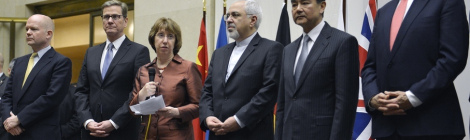
    The Iran Interim Deal: Responses, Potential Impacts, and Moving Forward

    Implementation of the interim deal with Iran, which freezes the country’s nuclear enrichment in exchange for limited sanctions relief, began in January. As a result, we are witnessing a substantial shift in diplomatic relations between Iran and its regional neighbours – some positive, some not. This deal marks a significant step for the international non-proliferation regime, but will it achieve the trust and confidence-building goals intended? As the US and Iran face increasing domestic pushback on the terms of the agreement, questions remain on the interim deal’s impact on relations in the region and abroad, and the effect these relations may have on the prospects of coming to a full comprehensive follow-up agreement between Iran and the P5+1 countries.

    Read Article →

    Sustainable Security and the Challenges of 2014

    2014 is a time for looking backwards and forwards. While the dynamics of the war on terror are still very much in play, the withdrawal from Afghanistan and the re-escalation of violence in Iraq and Libya present an opportune context for sincere reflections on the disastrous consequences of war without borders. Such inquiry needs to look forward too, to the implications of the current administration’s ‘war-lite’ and the unstoppable proliferation of remote control technologies.

    Read Article →

    What next for Iran? Foreign Policy after a Nuclear Agreement

    If Iran and the P5+1 succeed in negotiating a robust agreement on the nuclear issue, then Iran will be less preoccupied with rebalancing its relationship with antagonistic western powers and its role in the Middle East and the wider region has scope for developing in many new directions. This briefing looks ahead to a post-agreement environment and assesses where Iran might chose to concentrate its resources. A key question is whether it will work to build better links with the US and selected European states or whether it will be more interested in the BRIC and other states, not least Turkey. Its choice will be influenced strongly by domestic politics and the urgent need for a more stable region.

    Read Article →

  • Sustainable Security

    Remote Warfare series intro – read other articles in the series.

    RC_long_logo_small_4web

    This article is part of the Remote Control Warfare series, a collaboration with Remote Control, a project of the Network for Social Change hosted by Oxford Research Group.


    Editor’s note:
    Remote Warfare and the War on Drugs mini-series: This series of articles explores how remote warfare is being used in the war on drugs. To date, much of the debate on remote warfare has focused on its use in the war on terror. However, the use of drones, private military and security companies (PMSCs), special forces and mass surveillance are all emerging trends found in the US’s other long standing war, the War on Drugs. The articles in this series seek to explore these methods in more depth, looking at what impact and long term consequences they may have on the theatre in which they’re being used.

    US drug policy has become increasingly privatised in recent years as the US government contracts private military and security companies (PMSCs) to provide intelligence, logistical support and training to state security forces in drug-producing and –transit states. As the cases of Colombia and Mexico illustrate, this privatisation strategy is having a damaging impact on these already fragile environments.

    Since the mid-1970s, the US government has invested billions of dollars in anti-drug assistance programmes. The main objective is to reduce the flow of Latin American-sourced illicit drugs to the US. At the beginning of this so-called War on Drugs, the US treated the fight against drugs as a police problem, providing equipment and supplies to civilian law enforcement for counter-narcotic efforts. Since the 1980s, however, US drug policy has been militarised and, more recently, privatised: the US government provides military-grade equipment and training to police forces and contracts private military and security companies (PMSCs) to provide intelligence, logistical support, and training to state security forces in drug-producing and -transit states, such as Colombia and Mexico.

    The privatisation of the War on Drugs has had a significant impact in countries where it is waged, adding further complexity to these already complicated environments. As states often fail to properly control PMSCs’ activities, this tends to increase the risk of human rights violations and impunity in contexts where the application of the rule of law is already uneven. The use of PMSCs in the War on Drugs often weakens the rule of law and so is counterproductive. The cases of Colombia, where the use of PMSCs takes place largely under the guise of Plan Colombia, and Mexico, where PMSCs have been used since the implementation of the Merida Initiative, illustrate these issues well.

    Colombia: Human rights violations and impunity

    Colombia is experiencing an armed conflict where the Colombian government fights against several armed groups, such as Fuerzas Armadas Revolucionarias de Colombia—Ejército del Pueblo (FARC, Revolutionary Armed Forces of Colombia) and Ejército de Liberación Nacional (ELN, National Liberation Army) that are well-organized and heavily linked with drug trafficking. Since the 1960s, the US has collaborated militarily with Colombia in the fight against those armed groups, as well as drug traffickers. In 2000, Colombia and the US agreed on a new plan of cooperation called Plan Colombia: Plan for Peace, Prosperity, and the Strengthening of the State (usually referred to as Plan Colombia).

    street art

    Image of Mexican Drug War-themed street art. Picture entitled: The Mexican Dead by Suslan Soosay via Flickr

    Although Colombia and the US had long cooperated in fighting drug trafficking, Plan Colombia represented a shift. Since its implementation, the US State and Defense Departments have contracted PMSCs to carry out activities related to US military and police aid to Colombia. For example, the 2007 Reports to Congress On Certain Counternarcotics Activities in Colombia–partly reproduced here–mention that Telford Aviation provided logistical support for reconnaissance airplanes and ITT and ARINC were responsible for operating radar stations. Furthermore, in 2006, Chenega Federal Systems was in charge of maintaining an intelligence database, and Oakley Networks was responsible for Internet surveillance. Other sources reported that Military Professional Resources Incorporated (MPRI) helped restructure the Colombian armed forces to aid their fight against drugs; Northrop Grumman, under its contract, flew over the Colombian jungle with aircraft equipped with infrared cameras in order to track illegal activities related to drugs or guerrilla movements; and DynCorp has been in charge of the fumigation of coca plants since 2000.

    The concern about human rights violations by PMSCs is particularly acute in Colombia because all US personnel, including PMSC employees, working in Colombia through Plan Colombia have been granted immunity from Colombian jurisdiction by bilateral treaty with the US.

    The lack of control and supervision has been observed on many occasions, including by US authorities. A report on contracting oversight by the United States Senate Committee on Homeland Security and Governmental Affairs concluded that the “State Department, which has awarded over $1 billion in counternarcotics contracts in Latin America to one company, DynCorp, has conducted sporadic oversight of that company.”

    There have been numerous allegations of human rights violations at the hands of PMSCs operating under Plan Colombia, but, so far, none of these violations have been brought to justice. For example, in 2004, a pornographic movie went public that included US contractors from the Colombian base Tolemaida sexually abusing minors. No investigation took place and no one was ever punished. DynCorp’s activities, particularly the fumigation of coca plants, have also caused concern. In 2008, Ecuador filed suit against Colombia at the International Court of Justice, arguing “Colombia has violated its obligations under international law by causing or allowing the deposit on the territory of Ecuador of toxic herbicides that have caused damage to human health, property and the environment.” In August 2013, the governments of Colombia and Ecuador announced an agreement ending the dispute, with Colombia paying reparations for the damage caused.

    Mexico: Increasing violence and a lack of state control

    The drug-related violence in Mexico that has captured so many headlines in recent years is not new to the country. Although drug traffickers have operated in Mexico for more than half a century, serious violence related to drug activity started around the 1990s, when the drug market became more lucrative and the centralized power of the Mexican government started to slip. Mexico is now a major supplier of all kind of illegal drugs—heroin, methamphetamine, marijuana, and cocaine—to the US drug market: the drug market between US and Mexico is estimated by US government reports as ranging between US $18 and 39 billion in profits annually.

    In 2007, following President Calderón’s lead to crack down on the drug cartels, the US and Mexico cemented a plan to cooperate in fighting drug trafficking and increasing security in the region. This plan, called the Merida Initiative: Expanding the US/Mexico Partnership (hereinafter the Merida Initiative), established full cooperation between the two countries, with the US providing an anti-crime and counter-drug assistance package to Mexico that included training and equipping Mexican forces. The provision of Merida Initiative assistance to Mexico has included contracting PMSCs to train local forces.

    As in Colombia, the human rights situation in Mexico is complicated. Militarizing the War on Drugs in Mexico has been severely criticized due to the resulting human rights abuses. For instance, Human Rights Watch (HRW) reported in 2011 “credible evidence of torture in more than 170 cases across the five states surveyed” and documented “39 ‘disappearances’ where evidence strongly suggests the participation of security forces.” HRW concluded that “rather than strengthening public security in Mexico, Calderón’s [and now Peña Nieto’s] ‘war’, has exacerbated a climate of violence, lawlessness, and fear in many parts of the country.”

    In this scenario, the activities of PMSCs, which are hired by the US, raise additional concerns about the respect of human rights. In fact, contractors have been accused of training Mexican police in torture techniques. As is the case in Colombia, the use of PMSCs by the US government to perform security tasks in another country tends to adversely affect human rights, when the purpose should be the contrary.

    A worrying (and growing) strategy

    The privatization of the “war on drugs” is one more element endangering human rights in an already complex environment. Privatization is often resorted to as a strategy when the use of public resources is seen as risky. Indeed, in both Colombia and Mexico, public forces have been involved in massive human rights violations. Given their past history of human rights violations in Colombia and Mexico, the unrestrained use of PMSCs is not the best strategy for improving security and upholding the rule of law. Unfortunately, the trend of privatizing the War on Drugs is not diminishing: following the Plan Colombia and Merida Initiative, the US government implemented the Central American Regional Security Initiative (CARSI) to fight against drugs in Central America, and PMSCs are a key actor in its execution.

    Antoine Perret is visiting research fellow at Columbia Law School. He holds an LLM and a PhD in Law from the European University Institute (Florence), an MA in International Affairs from the Universidad Externado de Colombia (Bogotá) in collaboration with Sciences Po (Paris) and Columbia University (New York), and a Licence in International Relations from the Graduate Institute of International and Development Studies (Geneva). He was a lecturer and researcher at Universidad Externado de Colombia (Bogotá) and research fellow at the Center for Latin American and Latino Studies at American University (Washington, DC). Through his work on PMSCs he has collaborated with the Geneva Center for Democratic Control of Armed Forces (DCAF), the UN Working Group on Mercenaries, and the UN Regional Centre for Peace, Disarmament and Development (UNLIREC).

  • The climate peril: a race against time

    The approach to the United Nations climate-change summit in Copenhagen on 7-18 December 2009 is mired in controversy as blocs of states vie with each other to determine the real agenda.  The multiple interests involved range from elite trading-networks and powerful oil-producers to small-island states in the global south. The underlying reality is a deep-seated inequality in bargaining-power in which the United States and leading European Union member-states can assemble delegations of a hundred or more specialist advisers, whereas the poorest states may have two or three diplomats with no special help. The stark injustice is reinforced by the fact that the climate dynamics of the world’s environment put the majority world most at risk.
    The beginning of progress in redressing current dangers and unfairness is accurate information and sound analysis. There have great advances here since the significance of atmospheric carbon- accumulation was registered in the mid-1970s, around the time of the original study of The Limits to Growth. At that time, most analyses predicted that climate change would have its dominant impact on the temperate latitudes of north and south. In part this was because very long-term natural changes in climate (across millions of years) appeared to have had little impact on the tropics and sub-tropics. When the British land-mass was covered in ice and snow around 11,000 years ago, for example, the climate of sub-Saharan Africa was not greatly different to what it is today. The conclusion reached was that the regions likely to experience the largest climate- change impacts were also among the world’s richest – and thus would be best able to adjust.

    The next generation saw improvements in climate-change modelling that by the early 1990s had overturned this thinking. There was now a recognition that the tropical and sub-tropical land- masses would indeed be greatly affected, though less by a process of warming than by major changes in world rainfall-distribution; the expectation being that more of the world’s rain would fall over the oceans and the northern and southern polar regions, and far less over the tropics and sub-tropics (see David Rind, “Drying out the tropics”, New Scientist, 6 May 1995). This “drying-out” of the tropics would – if not prevented by radical cuts in carbon-emissions – drastically reduce crop-yields. With two-thirds of the world’s people dependent on local food- production, the consequences could be disastrous.  

    The sinking road

    Some current analysis on climate change also predicts increasing variations in rainfall distribution, part of a damaging global asymmetry in temperature-related trends. A study by Britain’s Met Office made public on 28 September 2009 assesses several recent climate-change models in terms of the consequences of a 4ºC overall rise in temperature (using 1980 as the baseline of comparison). This may seem alarmist; but since average temperatures in 1980-2009 have already risen around 0.7ºC, and since there is a very long time-delay between cutting carbon-emissions and containing climate change, the approach is actually realistic. The projection is quite properly indicative of the world as it could look in 2055, unless there are radical cuts in carbon-emissions that go a very long way beyond current plans (see Shanta Barley, “A World 4ºC Warmer”, New Scientist, 3 October 2009).

    The asymmetry of impact predicted by this recent modelling is very significant. Many parts of the world will warm relatively slowly; much of the southern ocean will become only marginally warmer; most other oceans (the Arctic excepted) will warm by 2-3ºC compared with 2009 levels. Some continental land-masses will experience a slightly below-average rise; in this category will be the southern part of south America, parts of southern India, and southeast Asia and Australia. Even so, these regions still face temperature increases of 3ºC or more, leading to dangerous shifts in climate, while the ocean-warming will intensify tropical storms and lift sea-levels.

    This is serious enough, but the modelling should cause even greater concern in relation to the projected impact on other land-masses and the Arctic. Much of Amazonia, and central and north America, is expected to warm by around 10ºC on average on current trends; as will southern Africa, central and eastern Europe, much of the middle east, and central and north Asia right through to the Pacific.  The temperature increases across the Arctic could even exceed 12ºC, leading to wholesale melting of the Greenland and Canadian Arctic island icecaps and major increases in sea-levels across the world.  These are potentially catastrophic changes.

    It is possible that further modelling will lead to some modification of these results, and there is no pretence that climate-change predictions made at a single point in time are immutable. But the work that has been done suggests with reasonable certainty that the continuation of present trends will carry two major consequences.

    The first is that the impact of climate change will be highly variable across the world. Its effect on land-masses will be massive, on the oceans (apart from the Arctic) slightly less so. The most worrying in ecological terms among all the expected outcomes would be the  destruction of the Amazonian rainforest, a process that would accelerate the existing impacts of human activity. 

    The second is that many of the poorest regions of the world, those least able to cope with climate change, will suffer the most (see Camilla Toulmin, Climate Change in Africa [Zed Books, 2009]). The severity of the effects can be gauged if it is recalled that the world’s tropical and sub-tropical land-masses are home to a majority of the world’s people and produce almost all of their food.

    The saving pressure

    What are the implications of this analysis for the Copenhagen summit? It is important to emphasise the context of the meeting, namely that it is part of a process rather than an isolated event. This in turn means that not everything depends on its outcome alone – but the larger picture is such that the process does need to be accelerated in 2010-12 in order to prevent catastrophic impacts by 2040-50. The radical action required includes a reduction in carbon- emissions by industrialised and industrialising states amounting to 40% by 2020 and 80% by 2030.

    This may seem from the perspective of the present – including the widespread low expectations of the Copenhagen meeting – impossibly idealistic. But there are also many hopeful indicators, both at grassroots and government levels. The emergence of a new generation of determined and organised climate-change activists in a number of western countries, prepared to take non-violent direct action is one such; the embrace by some politicians of the need for bold action, after the “lost decade” of George W Bush, is another. The developments in China are especially interesting; the official Chinese stance may foreground demands that western states curb their emissions while allowing China’s economy to catch up, but on the ground there are signs of an embrace of wind-power, photovoltaics and solar-thermal systems, as well as efforts at least to curb the increase in carbon-emissions.

    But for large-scale and comprehensive progress to occur, nothing less than a reworking of the structures of the global economy that addresses the issues of socio-economic divisions and environmental constraints is needed.  Here too there are positive signals, such as the support by British prime minister Gordon Brown (at the G20 finance ministers’ meeting in Scotland on 7 November 2009) for a Tobin-like tax on financial transactions. This, from the leader of one of the world’s larger economies, represents a near-astonishing breakthrough whose impact among financial analysts is just beginning to be felt (see Saskia Sassen, “A global financial detox”, 3 September 2009).

    Beyond this, the economic shift of the coming generation must be grounded in a serious analysis of the essentials of the new green economy. The work being done by the London-based New Economics Foundation (NEF) – for example, in its new “great transition” project – is just one welcome indicator. Much more research is needed, but even the initial analysis by the NEF is enough to show that “blue-sky” thinking can also be deeply practical.

    Copenhagen may not achieve much, but this itself may not be fatal; for in terms of preventing the extremes of climate change, what happens elsewhere may well turn out to be more vital. The work of independent think-tanks (such as Sustainablesecurity.org) and dedicated activists could, in combination, become a singularly powerful force; the response of enlightened political leaderships could prove invaluable. But these agencies will  need an infusion of more energy and broad-based support to enable the pressure for fundamental change to reach a tipping-point.


  • World Development Report 2010: Development and Climate Change

    The World Development 2010 climate Change Report published in September outlines how a 2 degree centigrade rise in global temperature would likely cost Africa 4% of GDP whilst the impact on India would be %5 of GDP. Developing countries are already disproportionately impacted by climate change with 80% of the worlds population located in the developing world.

    As the report states:

    “Solving the climate problem requires a transformation of the world’s energy systems in the coming decades.   Research and Development investments on the order of US$100 – $700 billion annually will be needed—a major increase from the modest $13 billion a year of public funds and $40 billion to $60 billion a year of private funds currently invested. 

    Developing countries, particularly the poorest and most exposed, will need assistance in adapting to the changing climate. Climate finance must be greatly expanded, since current funding levels fall far short of foreseeable needs. Climate Investment Funds (CIFs), managed by the World Bank and implemented jointly with regional developing banks, offer one opportunity for leveraging support from advanced countries, since these funds can buy-down the costs of low-carbon technologies in developing countries.”

    The report is published at an important juncture as world leaders begin positioning themselves in the run-up to negotiations at Copenhagen.

    The full report can be downloaded here. 

  • Marginalisation and Political Violence: Understanding Boko Haram

    The Nigerian militant group Boko Haram has become one of the most potent examples of the ways in which underlying structural inequalities can drive political violence. The brutal attacks on 25 December last year are only the latest in a number of violent events linked to the group and fighting has continued over the last two months. Writing for Consultancy Africa Intelligence, Ronan Farrell discusses the emergence of Boko Haram against a backdrop of economic growth in Nigeria (on the back of high oil and gas prices) but extreme inequality.

    Farrell focuses particularly on the concentration of profits in the south of the country at the expense of the north and the effect of an overly militarised response to the popular protests against inequality and corruption. This he says gave rise to a set of conditions, characterised by repression and marginalisation, out of which Boko Haram have emerged and grown.

    The analysis notes that “Although religious identity and extremist beliefs are often cited as the main factors contributing to inter-communal violence in Nigeria, many of these clashes are in reality more rooted in political and economic tensions. Longstanding battles for control over political power, as well as economic rivalries between various ethnic groups often underline this violence.”

    Importantly, there is increasing pressure in the United States to add the organisation to the US list of foreign terrorist organisations. Yet as Farrell argues, “Whilst doing so would give the Nigerian Government access to significant resources and funding, the military actions which might follow are unlikely to deal with the underlying reasons for the growth of the movement, including the high level of support it undoubtedly has amongst northern Nigerians given the economic disparities and perceived social injustices in the north.”

    The full article can be accessed here.

    Image source: pjotter05. 

  • Sustainable Security

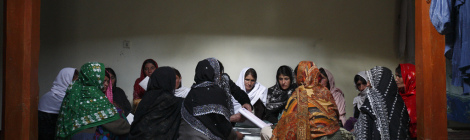
    Engendering Peace? The militarized implementation of the women, peace and security agenda

    Almost 15 years after the first resolution to address women, peace and security, the agenda’s implementation is increasingly subverted by the militarised security paradigm. Implementing UNSCR 1325 has been interpreted as being about fitting women into the current peace and security paradigm and system; rather than about assessing and redefining peace and security through a gender lens. As a result, the opportunity to create a new recipe for peace and security, based on taking women’s perspectives into account, is being lost.

    Read Article →