Blog

  • Sustainable Security

    The French Front National is now one of the most successful political protest forces in Western Europe. The party is preparing to participate in the April 2017 Presidential election where the migrant crisis and the capacity of the government to provide security from terrorist attacks will be pressing issues.

    According to some scholars, such as Cas Mudde, the French Front National (FN) now appears to be one of the most successful populist radical right parties in Western Europe. Since the mid-1980s, the FN has established itself as a permanent force in French politics. Nowadays, the party appears to offer strength in a climate where European security appears weak and vulnerable. Flourishing in a France characterized by strong concerns about the migrant/refuges crisis and recent terrorist attacks by Islamic extremists, the party is currently placed in a European ideological space of extreme right protest, often dominated by racism and xenophobia. The FN supports a concept of “Europe of Nations” and protectionism. These ideas have been encouraged by the recent winning of the “leave” campaign in the UK referendum and the Donald Trump’s rise in the USA. What are the origins of the FN, its current strategies and its role in the contemporary political landscape (at national and supranational level)?

    From Jean-Marie to Marine: a family party
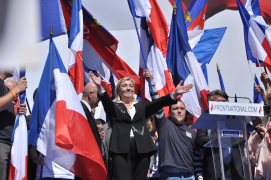
    meeting_1er_mai_2012_front_national_paris_46

    Image credit: Blandine Le Cain/Wikimedia Commons.

    Since Marine Le Pen took over party leadership from her father in 2011, the FN has entered a new stage of its political development, which demonstrates its adaptability and an ability to survive its founding leader: Jean-Marie Le Pen. However, the party has an even longer history in French politics. It was founded in 1972 from a small neo-fascist organization, Ordre Nouveau, as an electoral umbrella for nationalist groups to run in the 1973 legislative elections. The FN remained electorally irrelevant during the first decade of its starting phase. Its turning point was the 1984 European elections where it obtained about 11% of the vote. From the mid-1980s, the party maintained a sort of electoral stability (between 11 and 15% of electoral support). Since 1984, the FN has also fielded candidates in all local and regional elections, winning representation in regional, departmental and municipal councils, as well as in the European Parliament.

    The change of leader in 2011 reinforced the party’s electoral appeal: the FN under Marine Le Pen has enlarged its base of support, reaching new heights in the 2012 Presidential election with about 18% of the vote. The FN also topped the 2014 European election winning a quarter of the national vote and 24 seats, which allowed Marine Le Pen to establish leadership over the pan-European nationalist right. Success at the national level has been corroborated locally. In the 2014 municipal election, the party won 11 municipal councils and 1,544 councillors, outperforming its previous record (1995). The departmental elections of March 2015 showed another surge in FN support at 25% of the vote, with 62 local councillors. In 2015 again (December) the party participated in the regional elections and it obtained a new record. In particular in two regions (Provence-Alpes-Côte d’Azur and Nord-Pas-de-Calais-Picardie) the FN arrived at 40% of the vote during the first round of elections.

    Under Marine Le Pen’s leadership, party change has been embedded in the concept of “de-demonization” (dédiabolisation). As Gilles Ivaldi suggests, de-demonization is primarily characterized by the attempt to detoxify the party’s extremist reputation, while simultaneously preserving its populist radical right potential for voter mobilization. The current FN seeks to improve its credibility through party modernization and professionalization. Whilst the 2011 leadership election represented a first notable step towards greater intra party democracy, there is little evidence of a more substantial move towards a party “normalization”, neither ideologically nor organizationally. Instead, the party has taken a process of “Marinization” (personalization) whereby Marine Le Pen has successfully replaced her father as charismatic leader, both inside and outside the party.

    The 2011 congress represented probably the most important change in the French Front National organizational path, with Marine Le Pen taking over the party. Following Jean-Marie Le Pen’s decision to step down, the party had initiated an internal leadership campaign. During the same campaign against Bruno Gollnisch, Marine Le Pen had indicated that she would turn the party into a professionalized and more effective party organization: “I want to create a renewed, opened and well-functioning party”, she said. In 2011, the FN had experienced its first change of leader since 1972, together with a new executive team and a new logo. The “new” FN has pushed an agenda, which aims primarily to shed its extreme right profile and to achieve agency credibility.

    A “Europe of Nations”

    The FN articulates a strong populist anti-establishment agenda. It opposes European integration, exemplifying the “hard Euro-scepticism” defined by Aleks Szczerbiak and Paul Taggart as “a principled opposition to the EU and European integration”. Its opposition to Europe concerns a wide range of institutional, economic and national identity issues. The FN’s concept of a “Europe of Nations”, argues that institutional cooperation should only take place between sovereign nation-states, opposes the EU as a supranational entity, and criticizes the EU as elitist and bureaucratic. A pledge for a return of competences and powers to the national level has been central to the FN electoral platforms since the early 1990s. The 2014 FN ’s programme featured primarily the promise to shed the Euro which was portrayed as “ a jail” serving the “sole interests of bankers and the wealthy”, and from which the French people “should free themselves”.

    The FN’s distrust of European integration revolves around immigration and issues of national identity, and it is often linked with welfare-chauvinist positions. The FN’s hostility towards the EU is underpinned by the party’s traditional ethno-nationalist policies. As Mudde suggests, the FN’s anti-EU positions are incorporated into a typical populist radical right agenda, which combines nativism, authoritarianism and anti-establishment populism.

    The party is notorious for its politicization of immigration issues. During the 1980s, Jean Marie Le Pen laid out the basis for a potent ethno-nationalist and welfare-chauvinist “master frame”, which later diffused throughout Europe. In 2014, the European campaign by the FN was marked by the continuation of xenophobia and welfare-chauvinism, showing no significant departure from the party’s traditional ethno-nationalist ideology.

    The FN committed to “defending, in all circumstances, France’s values, identity, traditions and way of life” against what would be stigmatized as a “sieve Europe”. The party’s 2014 platform lashed out at the Schengen agreement, campaigning on withdrawal, and claiming that the FN would close France’s borders to “stop uncontrolled immigration and put an end to the free movement of Roma and delinquents across Europe”. In line with its 2012 manifesto, the FN proposedpolicies, which would remove the possibility within French law to regularize illegal migrants. The party’s 2012 presidential platform featured a range of nativist policies, including the FN’s traditional “national preference” scheme, which seeks to give priority to the French people over foreigners in welfare, jobs and housing.

    A product of France’s political system and climate?

    French political parties are characterized by their instability, organizational weakness and fragmentation. As one of the oldest parties in France, FN has shown greater signs of stability over time. Since 1972, it has experienced only one change at the top and it has retained its name. The Parti Socialiste (PS – Socialist Party), currently the most important centre-left party in France, underwent important organizational changes since 1971 as it opened itself to other political forces. Parties of the right exhibit an even greater degree of volatility over time. In 2002, the loose electoral alliances of the 1980s and the 1990s between the Gaullists and the Centre-Right gave way to organizational merger with the creation of the Union pour un Mouvement Populaire (UMP – Union for a Popular Rally), which was an attempt by the centre-right to consolidate its identity.

    In 2007, the new president of the UMP, Nicolas Sarkozy, was elected in the presidential election. In 2011, however, disgruntled liberals and Christian Democrats left the UMP to form an independent party, the Union des démocrates et indépendants (UDI). Following Sarkozy’s defeat in 2012, the UMP entered a period of high ideological, leadership and strategic factionalism. In November 2014, Sarkozy returned to the UMP and won the leadership election with a large internal consensus. He pushed important changes to the party statutes, including a renaming of the party to Les Républicains (The Republicans). Recently, the party reorganized itself around a new right-wing leader, François Fillon, who became the Presidential candidate in view of 2017 appointment and after a victory during an open primary election.

    The same event has generated a new political and social weakness in France, also fuelled by the election of Donald Trump as US president in November 2016. In current context, France is faced with another crucial battle between populist radical right and establishment (right again) forces. The unexpected victory of Fillon in the Republican primary, Socialist President François Hollande’s decision not to run again, may be complicating Le Pen’s efforts to turn her political success into an electoral victory in the two rounds of voting scheduled for April 23 and May 7, 2017. In fact, there are themes, such as Islam, insecurity and immigration, with which the FN is able to rule the debate in general and worry public opinion.

    The FN has been able to aquire a new agenda, a sort of “cultural hegemony”, a “vocabulary” even more used also by other traditional party from the centre-right area. France remains, therefore, pervaded by a strong wave of right-wing extremism. In this changed and menacing context, the FN maintains a high appeal and it is ready to prepare its battle in the 2017 Presidential election and probably it is going to reinforce its campaign and its strategies. In any case, it has become (and  remained) a constant presence in the French political system.

    Maria Elisabetta Lanzone, PhD, is Research Fellow and Teaching Assistant at University of Genoa (Italy). She is expert in comparative populism, Euro-scepticism and migration policies. She is the author, with Gilles Ivaldi, of the book chapter From Jean-Marie to Marine Le Pen: Organizational Change and Adaptation in the French Front National (2016, Palgrave Macmillan). From April 2015 she is also member of the ERMES Laboratory at University of Nice-Sophia Antipolis (France).

  • Sustainable Security

    Authors’ Note: The opinions expressed by the writers are theirs alone and not necessarily those of the United States government or any of its departments.

    As a response to the attacks by violent extremists around the world, policymakers have invested considerable effort into comprehending terrorists’ use of the Internet and initiating counter-measures.

    The internet is undeniably an important factor in understanding the radicalization trajectories of many violent extremists. A senior official at the U.S. Department of Homeland Security recently observed that extremists’ “deft use of Internet propaganda, together with that content’s wide availability, has broadened the population of potentially vulnerable individuals, and shortened the timespan of their recruitment.” Supporting this statement, terrorism expert Magnus Ranstorp lists social media as one of nine factors that may exacerbate causes of an individual’s radicalization, including individual and social factors as well as cultural and ideological motivators.

    Research has also shown that the internet facilitates both early engagement with violent ideologies and opportunities for learning and sharing criminal information. For instance, a study by the University of Maryland’s START terrorism consortium found that “the internet played a primary or contributing role in the radicalization of 86%” in the cases of over 200 U.S.-based foreign fighters. These individuals used the internet to “view extremist materials, research conflicts, groups and attack methods, and participated in online communities of like-minded individuals.” Moreover, results from the same dataset show that the internet “may be speeding up the radicalization timeframe” as compared to radicalization before the advent of the internet. Similar findings from a study of over 200 terrorist offenders in the United Kingdom found that 54% of the perpetrators used the internet to learn about their intended criminal activities and, in 44% of the cases, extremist media (e.g., videos, audio lectures and photographs) were found, viewed, or downloaded by the perpetrators.

    The authors of the UK study, however, recognize that terrorists’ use of the internet “is perhaps unsurprising given the ubiquity of Internet usage in the most benevolent activities across wider society.” Indeed, a good deal of research has examined terrorists’ expansive use of the internet, such as the terrorist organization known as the Islamic State of Iraq and Syria (ISIS) to build a network of ideological conformity through social media platforms like Twitter. A report from the Institute for Strategic Dialogue has shown not only how life under the Islamic State is romanticized through social media postings, but also how important digital connectivity can be to those in the field, describing young women in ISIS controlled territory who resort to “climbing pine trees to gain Internet reception.”

    Countering extremism online

    Image credit: Andres Eldh/Flickr.

    These studies shed light on the particular ways that terrorists use the internet and underscore the importance of law enforcement intervention into online criminal activities. However, an ongoing challenge for researchers and policymakers engaged in preventing and countering violent extremism (CVE) is how to proactively address the role of the internet and social media in the context of violent extremism before criminal activity has occurred. To respond to that challenge, two broad policy approaches have emerged.

    One approach advocates for online content removal and account suspension in order to reduce the supply of non-criminal but potentially extremist content. The European Commission recently instituted content-flagging mechanisms modelled after an initiative by the British government’s Counter Terrorism Internet Referral Unit. Outside of government, technology companies also have taken steps to remove terrorist content. In December 2016, social media companies announced their own cooperative efforts to use hashing techniques to quickly identify and take down extremist images and content that violate terms of service agreements. In their latest annual transparency report, Twitter suspended around 636,000 accounts between August 2015 and December 2016 for promoting extremist content.

    Research studies that have assessed whether content removal and account suspension efforts work to curb the propagation of violent extremist messages suggest promising outcomes. For instance, a report from the George Washington’s Program on Extremism found that “over time, individual users who repeatedly created new accounts after being suspended suffered devastating reductions in their followers.” While ISIS users quickly learn how to overcome account suspensions and restore some followers, the study suggests these actions to reestablish followers have only “limited benefits” once a suspension has occurred.

    Yet, as technology companies like Twitter, Microsoft, and Facebook become more effective at detecting extremist content with tools that recognize unique “fingerprints” of extremist content, terror groups have also become more agile in how they use the internet to facilitate their work. Terrorism researcher Audrey Alexander describes how attempts to limit terrorist content online have pushed extremists away from public platforms and to encrypted tools like WhatsApp, Telegram, and ProtonMail. Indeed, Telegram now “appears to be the top choice among both individual jihadists and official jihadist groups.” The covert nature of these platforms poses significant barriers to researchers and authorities seeking to understand, track, and measure the terrorist threat.

    Another method for combatting online violent extremist content suggests creating counter narratives to refute terrorist claims. The idea is to craft messages that will appeal to vulnerable individuals to persuade them that violence is not the answer.  To explore this approach, the U.S. government has sponsored an initiative along with support from Facebook that known as the Peer to Peer: Challenging Violent Extremism program to engage young people, who may be most vulnerable to violent extremist messages, to create credible counter message for their own peers. Since the program launched in 2015, over 5,000 students have taken part. The 2016 winning team from Rochester Institute of Technology developed an awareness campaign called “Ex-Out Extremism” to “open people’s eyes” to violent extremism and to encourage them to take a stand against it. While initiatives like Peer to Peer typically reach broad audiences, foster educational engagement and increase public awareness, researchers have pointed out that continued work is needed to understand what can inoculate or prevent radical ideologies from taking root in the first place.

    A more targeted approach for reaching at-risk individuals online has been piloted at Jigsaw, Alphabet’s technology incubator focusing on geopolitical challenges, to redirect users from ISIS propaganda to curated YouTube videos that credibly debunk ISIS recruiting themes. Similarly, the Institute for Strategic Dialogue conducted a pilot study to direct individualized online intervention services to those demonstrating affinity to violent extremist groups through their online activities. The results found that intervention messages that reached at-risk individuals were “highly likely” to cause behavior change, either by prompting radicalizing individuals to change their privacy settings or to send direct messages to the intervenors for more engagement.  While these results are based on a very small sample, directed intervention programs may offer options for providing “off ramps” to individuals at critical points.

    The value of partnerships

    Whether intervening online to remove content and suspend accounts or developing credible counter messages or intervention options, effectively addressing violent extremism will require innovative partnerships inside and outside government.  To this end, in 2016 the United States government launched an interagency task force to address countering violent extremism with representation from both security and non-security agencies along with engagement from civil society groups.  While these multidisciplinary partnerships are challenging bureaucratically, they underscore the need for developing networked approaches to emerging security challenges. Similar cooperative agreements might span across national boundaries, not only for the purposes of information sharing between law enforcement officials, but also to include cooperation, such as the recent announcement by the Netherlands and Kenya to build a comprehensive partnership around a range of security related issues including deradicalization efforts.

    Although some have suggested that there is little evidence that terrorism prevention works, there is a small but growing literature providing support for the application of prevention science to the problem of violent extremism. Without question, more attention is needed for rigorous assessment of these programs, especially with regard to evaluating the effectiveness of online campaigns. To fill this gap, the RAND Corporation recently released an evaluation toolkit for countering violent extremism, which includes guidelines for assessing programs’ social media metrics. The London-based Royal United Services Institute has published a guide to CVE program design and evaluation, which provides guidance for articulating relevant impact measures. Ultimately, these resources, coupled with innovative public and private sector partnerships, will contribute to preventing radicalization to violence both online and offline.

    Tackling online radicalization will undoubtedly be a major security priority for policymakers in the future. Following the deadly May 22, 2017 bomb explosion in Manchester, leaders of the G7 convened in Taormina, Italy to reaffirm their efforts to counter terrorism and violent extremism.  In a statement, members underscored several areas for continued engagement, not only through traditional counterterrorism measures like “knowledge-sharing” and cutting off “sources and channels of terrorist financing,” but also through technology sector engagement “to substantially increase their efforts to address terrorist content” and well as civil society engagement to promote “alternative and positive narratives rooted in our common values.” The future war against online extremism may prove to be a long and difficult one, but it is a fight that must be won.   

    Dr. Susan Szmania has served in government and academic positions addressing violent extremism.  She is currently a senior research analyst at the U.S. Department of Homeland Security in the Office for Community Partnerships.  In this capacity, she leads the research and analysis line of effort on the U.S. government’s interagency Countering Violent Extremism Task Force.  Prior to this work, Dr. Szmania was a senior researcher at the University of Maryland’s National Consortium for the Study of Terrorism and Responses to Terrorism, and she served in government positions at U.S. Embassies in Sweden and Spain to implement programs to counter violent extremism. She received her Ph.D. in Communication Studies from the University of Texas at Austin in 2004.

    Matthew Conway has served in various research capacities focusing on conflict and extremism, both independently and with two London-based think-tanks. He is currently a research adviser for the Department of Homeland Security’s Office for Community Partnerships, where he focuses on Countering Violent Extremism research. He received his Master’s in Conflict, Security and Development from King’s College London in 2015 and his Bachelor’s in Political Science and International Studies from the University of Wisconsin-Madison in 2013.

  • Sustainable Security

    Closing Europe’s borders and politicizing the attempt to admit refugees at a time when the growing humanitarian crisis poses mounting human rights challenges to the international community is fundamentally wrongheaded. These approaches only strengthen the hand of Islamic State.

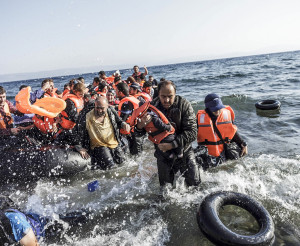
    While violent extremism, terrorism, and civil wars have drawn the most attention, coming to grips with the refugee crisis—emanating mainly from Syria’s civil war, but also more generally from the Middle East and North Africa’s political environment (MENA) in the aftermath of the 2011 Arab uprisings—has never been more essential. The Syrian crisis has propelled a wave of migrants to the neighboring countries of Jordan, Lebanon, Iraq, and Turkey. The Syrian refugee population stands at approximately 4.7 million, of whom 1.7 million live in Lebanon and Jordan and even more in Turkey. It is estimated that Turkey now hosts the world’s largest community of displaced Syrians.

    Defeating the Islamic State in Iraq and Syria (ISIS, also known as ISIL and by its Arabic acronym as Da’esh), while at the same time fulfilling the Responsibility to Protect (R2P) in the Syrian situation, has presented a complex challenge to the international community. The growing threat of ISIS as shown in attacks in Paris (2015) and Brussels (2016), magnified by the increased threat of individual terrorists—the so-called “lone wolves” in San Bernardino, the United States—has stemmed a wave of nationalist, right-wing alarm, reinforcing a general concern about the influx of immigrants and asylum seekers, while underlining the shift from a regional to the international nature of both threat and risk. These security issues have also illustrated the willingness of great powers to support military reactions to ISIS in order to stem the atrocities perpetrated by this group, while putting the departure of the Assad regime on the back burner—at least for now. For all intents and purposes, ISIS poses a much greater threat to Europe than does the current regime in Damascus.

    An Unavoidable Tradeoff

    freedom-house-refugee

    Image by Freedom House via Flickr.

    Confronting and dismantling ISIS need not be achieved by stigmatizing refugees and subjecting them to religious litmus tests. Closing Europe’s porous borders and politicizing the admission of refugees at a time when the growing humanitarian crisis poses mounting human rights challenges to the international community is fundamentally misguided. After all, fortifying European borders, while effective in the short term, strengthens the hands of ISIS and other terrorist groups that portray such policies and practices largely in terms of apocalyptic visions and arcane Islamic prophecies of great battles against Western imperialists.

    Defeating ISIS requires strategic endurance and long-term prudent political decision-making involving internal and external actors in the MENA region. While doing so, it is important to avoid the enemy’s repressive, atavistic, and brutal methods, eschewing certain tactics that could potentially play into ISIS’s hands. It is important to bear in mind that the tactics that terrorist groups like ISIS employ pose mostly political and ideological challenges to the West and that the real fight will be in defeating and destroying the claims and values that these groups assert.  In the end, defeating ISIS requires that its demonic ideology and tactics be confronted and exposed.

    Preventing further refugee crises in the future requires that fighting ISIS be at least temporarily prioritized over the overthrow of the Assad regime.  Seeking a political solution in conjunction with harnessing a multipronged strategy may in fact be among the most effective tools and processes of dealing with current humanitarian crises that the world faces. The possibility of working with the Russians and the Iranians in order to seek a political solution in Syria also raises questions about whether this tradeoff is justified. If the intent is to defeat ISIS, al-Qaeda, and the Levant Conquest Front (formerly known as al-Nusra Front), then this tradeoff is inevitable even as it buttresses the Assad regime in Syria for the foreseeable future. This solution is not problem-free or without significant challenges, however.

    Competing Views

    While the military actions against ISIS are warranted and can be coordinated by both inside and outside actors, the nature of such military missions and their consequences are also subject to further debate and negotiations. The inclusion of Russia and Iran, allies of Assad, in the fight against ISIS raises concerns that their stated goal of curbing ISIS is merely a pretext to prolonging Assad’s rule. Likewise, Turkish participation in air strikes in northern Syria in the war against ISIS has raised the possibility that Ankara will target the Kurds, who have successfully fought against ISIS since the beginning of the conflagration. Turkey’s interest in settling political scores with the Kurds, an interest that it believes is vital to its security, imperils whatever impartiality one might have hoped for in a fight solely against ISIS.

    The massive movement of migrants and refugees to Europe, coupled with the ISIS-led attacks on soft targets in Europe, has created a new urgency among Western leaders to fully confront this new global threat and seriously contemplate the possibility of cooperating with Russia in a coordinated effort. Compromises must at times be made when a multifaceted campaign that includes both countering ISIS and precipitating the removal of the Assad regime is waged. The collapse of the Assad regime would create a significant security void that ISIS and other terrorist groups could easily exploit.

    There is no denying the fact that the Paris, Brussels, and San Bernardino terrorist attacks have heightened the securitization of the refugee threats, as the Islamic State has been using the wave of the migrant influx to infiltrate Europe and North America. The number of terrorists hiding among the refugees is small. ISIS has exploited the flood of refugees to smuggle jihadis into Europe by distributing fake passports in Greek refugee camps to allow its terrorists to travel within Europe. On April 22, 2016, The Washington Post reported that more than three dozen suspected militants who had posed as migrants have been arrested or died while planning or carrying out acts of terrorism.  They included at least seven individuals who were directly linked to the bloody attacks in Paris and Brussels.

    But even a few of these will be highlighted by conservative circles in all Western countries to call for the repatriation or active policing of refugee communities.  Donald Trump Jr.’s notorious analogy between refugees and poisoned Skittles is a case in point. Conservatives rank the issue of terrorism much higher than do liberals in the West, the latter agreeing that one cannot stop all terrorism and that the chances of being caught in a terrorist attack are still quite small. Vigilance and the exclusion of possible threats by governments, however, is prioritized over the compassionate acceptance of refugees.

    The Flaws of the Current Refugee Regime

    The issue remains to be discussed within the core conception of the mandate of the United Nation High Commissioner for Refugees (UNHCR). Remaining at the center of the global refugee regime, UNHCR faces new challenges. Today, for example, most refugees tend to flee from violence and flagrant human rights violations—not necessarily from the threat of persecution, which is a key requirement according to the 1951 Refugee Convention.

    This has resulted in confusion and lack of clarity regarding who qualifies for refugee status and what are the rights to which all refugees are entitled— issues left up entirely to states to interpret. To compound matters further, in the case of Syrian refugee crisis, the neighboring countries of Lebanon, Jordan, and Iraq have never ratified the 1951 Refugee Convention. Now, more than ever, a robust and comprehensive discussion about the future of refugees, whose numbers will only increase with the worsening effects of climate change, is not only timely but necessary, given the tumultuous nature of international politics.

    It is important to bear in mind that refugees can be a destabilizing factor, especially when displaced, alienated, and bitter persons among them are recruited into armed extremist factions. Many studies have shown that the absence of a protective and enabling environment is likely to render more young people vulnerable to racist ideologies and movements and ease the process of their recruitment into the ranks of radical groups like the Islamic State or al-Qaeda. The traditional method of relying on purely humanitarian remedies has proven counterproductive in the face of new influxes of refugees. There is a need for a new thinking that envisions relief and humanitarian aid as fundamentally linked to the granting of work permits to the refugees. To dwell solely on the conventional method of humanitarian aid, and to ignore the importance of wage-earning employment for the refugees, is to wear blinders.

    Shifting Focus from Protection to Empowerment

    The focus of the 1951 refugee protection regime should shift to new ways of dealing with displaced persons that take into account the self-interested reasoning of host countries and the concerns of their citizens regarding competition over jobs. This shift will help to eliminate risks to refugees’ personal security by reducing human smuggling and trafficking by land and sea. Some experts, such as Alexander Betts and Paul Collier, have offered solutions along the line of creating “spaces of opportunity” for the refugees through “special economic zones” that provide jobs, training, and education.

    Helping refugees, I would argue, should begin with technical education and vocational training, coupled with a strategy focused on creating jobs immediately in economic zones from which both host societies and displaced Syrians can benefit. The need to work is inseparable from human security and thus crucial to preserving human dignity. The refugees’ right to legal employment makes good ethical and logical sense. Designing, for example, a vocational skills training program tailored to the needs of women refugees can significantly reduce the incidence of sexual trafficking and abuse. These projects offer a more plausible solution in the long term, not only because they will develop transferable skills that refugees can use in their countries of origin upon return, but also because they create monetary disincentives for refugees to emigrate to Europe in the first place.

    Dr. Mahmood Monshipouri is a professor of international relations at San Francisco State University and he is also a visiting professor at UC-Berkeley, teaching Middle Eastern Politics, and editor, most recently, of Information Politics, Protests, and Human Rights in the Digital Age (New York: Cambridge University Press, 2016).  For more on the perspectives provided here, see Mahmood Monshipouri, Claude Welch Jr., and Khashayar Nikazmrad, “Protecting Human Rights in the Era of Uncertainty: How Not to Lose the War against ISIS,” Journal of Human Rights Online version, July 28, 2016, available at <http://www.tandfonline.com/doi/pdf/10.1080/14754835.2016.1205477>.

  • Sustainable Security

  • Articles EXCLUSIVELY written for sustainablesecurity.org

    To browse a list of all of the articles EXCLUSIVELY written for sustainablesecurity.org – follow this link

  • South Sudan: Enhancing Grassroots Peacebuilding

    South Sudan’s referendum has come and gone. What lies ahead post-independence in terms of peace, development and security is however still to be determined. The 15 years of war left over one million people dead and more than three million displaced. Negotiations led to the Comprehensive Peace Agreement (CPA) in 2005, which included provision for a referendum on independence for the Southerners.  The referendum was held in January, with overwhelming support for succession. But serious challenges face South Sudan as it prepares for independence on 9 July 2011.

    The challenges facing a new nation

    A range of challenges are present themselves with this new nation attempting to stand on its own. Aside from the issues of governance and poor service delivery, the most serious is the seemingly unending internal conflicts. Hence, the government of the new South Sudan should consider:

    • Embracing pluralism by allowing political participation of the citizenry. To do otherwise could pave the way for more conflicts through insurgencies, militia activities, army defections, and latent grievances within the security sector.

    • Post-referendum negotiations between the Sudan People’s Liberation Movement (SPLM) and National Party Congress (NCP) should focus on ensuring a peaceful separation and a constructive North-South relationship based on mutual benefit from the oil resources, averting the ‘resource curse’.

    • South Sudan has to cooperate with its neighbours to overcome security threats by the Lord’s Resistance Army (LRA) and other militia, as well as cross border conflicts. The state of Western Equatoria is particularly suffering under rampaging LRA troops, displacing farmers, and potentially leading to a humanitarian crisis due to heightened food insecurity. Communities will increasingly turn to militia groups for protection if government security is absent.

    • At the national level, the significant role of opposition parties and civil society in the forthcoming transition needs to be acknowledged. There is thus a need for an inclusive constitutional review committee adhering to the agreements of the CPA.

    The gravity of violence needs further deliberate and integrated efforts. The 2010 Human Rights Report: South Sudan noted the abuses and internal conflicts South Sudan faces at independence. Inter-ethnic fighting, post-election militia attacks, cattle rustling, and LRA attacks, all resulted in deaths and displacement in the South since the referendum.

    Coupled with the violence, 2 million Internally Displace Persons (IDPs) and 350,000 refugees have returned to the South since 2005. Given the lessons learnt from the returnees of Liberia, there is a need to find ways of enhancing co-existence between host communities and returnees.

    What role can grassroots peacebuilding play here?

    Enhancing grassroots peacebuilding

    Grassroots peacebuilding encompasses efforts of enhancing localised structures and mechanisms of constructively responding to violence, aiding relief, and conflict transformation. This vital approach is the social fabric that builds durable peace. It is the people at the grassroots who have suffered most from the war, and continue to suffer through displacement, grief, trauma and day-to-day community clashes. Peace is a common good that we must promote and guard.

    March was characterised by community clashes in Mvolo between the Jur and the Dingas in Western Equatoria. Over 60 died and many more internally displaced. With a history of tribal clashes, cattle rustling, and growing insecurity, one would ask: what can be done at a grassroots level to enhance peacebuilding?

    Improving accountability of security forces

    One option for grassroots level work is the improvement of security forces. There are several cases where security forces were blamed for instigating or participating in violence. As illustrated by these incidents, it becomes imperative for a new country to respect the rights and rule of law. It is through the promotion and protection of human rights that peace among the people is enhanced across all sectors and levels.

    When looking at peacebuilding and security reforms in prior post-conflict zones, three lessons are obvious:

    • A lack of governance of the security sector is often a source of conflict and forms a key obstacle to peacebuilding.

    • Security institutions can play an effective, legitimate and democratically accountable role in society.

    • If law-breakers face prosecution and social disapproval, people will be discouraged from engaging in armed violence. This is underlined by the 2011 Word Development Report, with the call for citizen security and justice in order to break the cycle of violence. Indeed, there is need to improve accountability among the security forces and fostering restorative justice in South Sudan so as to prevent and manage a relapse into violence.

    Realise the role of religion

    A second option for grassroots engagement is to work with and through religious communities and structures. In many cases the Church seems to have greater leverage than almost anybody else in brokering peace talks between warring factions. The historical, cultural and traditional embeddedness of the Church has credibility and relevance to the community. It’s extensive network reaches even into the most remote areas. Further, the Church has an integration of social and pastoral work focusing on the psycho-social and spiritual dimension of conflict transformation, although the church is at times blamed for exlusionist tendencies. As an indicator for church influence, around 40% of the population of South Sudan regard themselves Catholics and 30% Anglicans.

    Quiet diplomacy

    A third grassroots option is quiet diplomacy. Influential civil society leaders, among them high profile religious leaders, have the potential of applying preventative diplomacy mechanisms in cooperation with the government.

    This back door approach is suggested because the state is still young. It is further backed up by the cultural background, suggesting that a leader should not be degraded in public. Instead of undermining transparency, this approach acknowledges the huge expectations of a new nation. Normal and open confrontation may be acceptable to the public, but may not bring about the desired democratic state.

    Conclusion and recommendations

    Grassroots peacebuilding has to be enhanced across South Sudan. This can be done through holding the security forces and leaders accountable; realising the essential (commending, condemning, correcting and coalescing) role of the Church, and the application of quiet diplomacy. It is hoped that localised and indigenous peacebuilding efforts can consolidate peace, stability, security and development. Therefore, I would like to make the  following recommendations:

    1. People, parties and civil society to:

      • strengthen women, youth, and community participation in peacebuilding;
      • empower local government structures;
      • invest in education and especially adult literacy;
      • adopt a comprehensive security framework of human security;
      • continue applying corrective and commending public figures through quiet diplomacy.
    2. The government of South Sudan to:

      • build supporting impartial partnerships towards grassroots peacebuilding;
      • enhance trauma healing across all sectors and levels of the country;
      • establish and empower local government structures so as to enhance accountability among county and state executives;
      • deploy security personnel, especially the police, to actively protect the citizenry from community clashes, militia attacks, and the LRA;
      • invest in education in every village;
      • retain and emphasise the rule of law across the country.
    3. The international community:

      • to support grassroots peacebuilding through partnerships;
      • to encourage and facilitate continued dialogue and cooperation between the governments of Sudan and South Sudan.
      • to build impartial supportive partnership with the people of South Sudan and its government, while drawing a clear line between the government and the SPLM.

    Article source: Insight on Conflict

    Image source: United Nations Photo

  • Sustainable Security

    One of the negative aspects of China’s increasing engagement with African states is the spread of small arms and/or light weapons especially in conflict zones and were opposition is violently suppressed. These weapons have undoubtably contributed to the enhancement of closer ties between China and authoritarian regimes and served as an instrument for consolidating its presence in the continent.

    China has developed an extensive presence in Africa through infrastructure such as airports, roads, hospitals,  convention centers,  media investment, agricultural  and health education, among many other  activities that seemingly put China in a good light.  At the same time many of China’s seemingly worthwhile activities by have not consolidated its ties to the African political elite and incumbent regimes as much as its arms sales to authoritarian regimes have.  Its positive contributions in the continent have been offset by the lure of the benefits that are associated with arms sales to African states despite their negative consequences in growing African states.

    Chinese small arms have been implicated in ethnic violence and war crimes in Sudan, South Sudan and the Democratic Republic of Congo (DRC) among others.  They have also been instrumental in the suppression of democratic progress in Zimbabwe, and at the same time expanding its influence and political economic ties with the authoritarian regime of President Robert Mugabe. China’s worldview which puts social and economic rights over individual liberties and political rights is often quick to supply weapons to authoritarian African states because it does not make human rights observance a condition for arms sales to any country. Incumbent African regimes that face severe threats to their survival are therefore quick to turn to China as a source of arms supply in the struggle to preserve their power.

    Apart from the lure of profits for China’s arms sales to Africa, there is also the added benefit of China finding employment opportunities for its skilled Chinese citizens. This contributes to spreading its technical and personnel   influence in the continent. At times, an arms supply relationship also involves establishing an arms factory in a recipient state that requires the expertise of skilled Chinese scientists, engineers, and industrial managers. Such a relationship for China leads to a long term business and security relationship with the African country. This is one reason why China’s influence in Sudan is so strong. However, what happens is that weapons that are sold by China or produced by China in Africa end up fueling and feeding the conflicts in countries such as the DRC, Sudan, South Sudan, and the Central African Republic, among others.  Regime survival or incumbent regime power consolidation efforts fuel arms transfers in South Sudan and Burundi. Chinese arms are often implicated in these conflicts because of China’s aggressive arms sales strategy w is based on the following:

    • A “catch all” customers strategy that has established an arms transfer or military relationship with several large  African states such as Egypt, Nigeria, Ethiopia, Zimbabwe, and South Africa, as well as smaller states like the Republic of Congo, Equatorial Guinea, Eritrea,  Burundi, and Sierra Leone, among others;
    • A favorable  financing strategy especially for African countries that cannot afford to buy sophisticated weapons and  afford to pay the market price for small or light weapons; and
    • China’s use of frequent and aggressive small arms marketing of its and more sophisticated military hardware at annual arms exhibits in various states within the continent. The wide array of Chinese arms enables China to sell weapons to both rich authoritarian African states as well as poorer smaller ones. The Chinese policy of placing no human rights or democracy conditions on arms sales as well its overall policy of non-interference in the politics of African states translates into the availability and affordability of Chinese arms in many African states.

    The bloody footprints of China’s arm sales in Africa

    Image credit: Lance Corporal Jad Sleiman/Wikimedia.

    It is not therefore surprising that arms from China have been implicated in the Ethiopian-Eritrean conflict in which China is known to have supplied arms to both sides in the conflict. It is also well documented that Chinese weapons were used in Sudan’s suppression of rebels in Darfur following a revolt in 2003 which led to a genocide against the region’s people.  It is alleged that the light weapons used in the massacres in eastern DRC were of Chinese origin. There, children as young as 11 years old were given weapons  by warlord Thomas Lubanga, and forced to participate in interethnic killings in the early 2000s. Furthermore, Chinese trained Congolese troops have been implicated on several occasions in ethnic killings of innocent civilians in the eastern DRC.  Similarly, in 2009 Chinese-trained Guinean Commando units were responsible for the killings of about 150 people during a protest against authoritarian and undemocratic rule in the country.

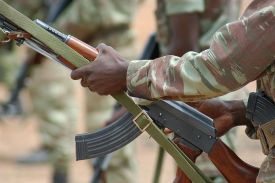
    According to the Stockholm International Peace Research Institute ( SIPRI) report of 2010, China was found to be the foremost exporter of arms to Africa. The Chinese Type 56 which is China’s version of the Russian Kalashnikov (AK47) assault rifle is much easier to use as a light weapon.  The argument could be made that in spite of China’s claim that it does not interfere in the internal affairs of other countries, the fact that it supplies weapons to warring factions within a sovereign nation is itself inherently interventionist by nature. Such interference produces consequences such as gross human rights violations, murder, rapes, tortures, and extra-judicial killings. China’s arms sales to Africa attract negative attention especially because they are made available to states like Sudan and Zimbabwe and the DRC, known for blatant human rights violations in Africa. This often means that China is reaping the profits of selling weapons to both incumbent regimes and rebel groups. The general outcome is the consolidation and expansion of its ties and presence in the continent.

    Looking forward: an unsustainable arrangement

    China’s propensity to spread small arms and light weapons (SALW) among African states will end up undermining whatever positive perception it has generated in the continent as well as taint its goals to support sustainable development and contribute to the national development goals of individual African states.  In particular,  it will cast doubt on its  willingness to support Millenium Development Goals, and other specific  development goals in the continent such as the Program for Infrastructure Development in Africa and similar such programs.

    So far, China’s military to military ties with African states has been a source of frustration for the United Nations.While it China contributes to peacekeeping efforts  in the continent, the United Nations does not know details of its military engagement, or specific  military ties,  with the countries in which its peacekeepers  are deployed such has the DRC, South Sudan, Liberia, Mali, among others. In other words, the expanding military ties with African states, and perhaps the access by rebels to Chinese arms are factors that are likely to undermine UN peacekeeping functions of disarmament of ex-combatants. It is difficult to know whether Chinese arms complement or undermine the efforts to enhance security in fragile African states. It is a question of whether China is willing to ensure that its military ties with countries of concern such as the DRC, Sudan, South Sudan, and Zimbabwe, complement peacekeeping activities there or help to promote peace, stability, democracy and development.

    Human rights organizations have often called attention to the destabilizing role that Chinese arms play in conflict zones in Africa. China so far seems determined to support and forge closer ties with authoritarian regimes in their goals of power consolidation, oppression of the opposition. China on the other hand is preoccupied with spreading its influence, consolidating its ties and deepening its engagement with every African state regardless of whether it is democratic or authoritarian. Accordingly, Chinese SALWs are supplied to both national armies in Africa as well as to rebel groups in the DRC, Chad and Uganda, and now the warring factions in South Sudan.

    China’s supply of arms to both rebels and national armies is often a violation of embargoes as well as a blatant case of economic self-interested behavior. The glimmer of hope in all this is that China has at times bowed to international pressure to cease supplying weapons in areas of gross human rights violations such as was the case with Darfur. But overall China still gives priority to concern over sovereignty and often defers  to incumbent regimes such that human rights  observance and non-proliferation of SALWs  are relegated a secondary role in China’s foreign policy rights towards Africa states.

    Earl Conteh-Morgan is Professor of International Studies in the School of Interdisciplinary Global Studies at the University of South Florida, Tampa, Florida. He is currently working on a book-length manuscript on Sino-African relations from a Political Economy Approach.

  • Global militarisation

    To browse a list of all of the articles EXCLUSIVELY written for sustainablesecurity.org – follow this link

    Read more »

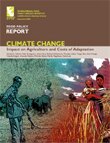
  • Climate Change: Impact on Agriculture and Costs of Adaptation

    This Food Policy Report presents research results that quantify climate-change impacts, assess the consequences for food security and estimate the investments that would offset the negative consequences for human well-being.

    The analysis brings together, for the first time, detailed modeling of crop growth under climate change with insights from an extremely detailed global agriculture model, using two climate scenarios to simulate future climate. The results of the analysis suggest that agriculture and human well-being will be negatively affected by climate change.
     

    See front page article.

  • Marginalisation of the majority world

    “The climate agenda goes well beyond climate,” said Dan Smith, secretary general of International Alert at a recent Wilson Center event. “In the last 60 years, at least 40 percent of all interstate conflicts have had a link to natural resources” and those that do are also twice as likely to relapse in the five years following a peace agreement, said Neil Levine, director of the Office of Conflict Management and Mitigation at USAID.

    Article source: The New Security Beat

    Image source: DfID

    Read more »