Blog

  • Sustainable Security

  • The US Navy in a Warming Arctic

    A new report by the U.S. Naval Forces Naval Studies Board about the implications of climate change for the US Navy finds that “many changes are already under way in regions around the world, such as in the Arctic, and call for action by U.S. naval leadership in response.”

    The report and its findings and recommendations are organized around six discussion areas—all presented within the context of a changing climate: 

    1. Disputes of boundaries and exclusive economic zones as a result of new maritime transits and competition of new resources;

    2. Strains on naval capabilities—given continuing first responder missions, and the opening of new international and territorial waters;

    3. Vulnerabilities to naval coastal installations due to sea-level rise and increased storm surges;

    4. Demands for establishing greater U.S., allied, and/or international maritime partnerships;

    5. Impacts on the technical underpinnings that enable, in part, naval force capabilities, particularly those that operate and train in the Arctic; and

    6. Investments for additional research and development that have implications for future naval operations and capabilities and might not be met by other groups pursuing climate-related research.

    One of the most interesting findings of the report is that “The ability of U.S. naval forces to carry out their missions would be assisted if the United States were to ratify UNCLOS.” According to the report:

    The committee has studied the implications of the failure of the United States to ratify the 1982 United Nations Convention on the Law of the Sea (UNCLOS) from the standpoint of potential impacts on national security in the context of a changing climate. As climate change affords increased access to the Arctic, it is envisioned that there will be new opportunities for natural resource exploration and recovery, as well as increased ship traffic of all kinds, and with that a need for broadened naval partnership and cooperation, and a framework for settling potential disputes and conflicts.

    The report is available from the National Academies Press website.

  • Sustainable Security

    The War in Syria: Responding to Stalemate

    The Syrian War is now in its fourth year and the indications are that the regime will survive and consolidate its position in 2014. This is radically different from early last year when many analysts thought it was under serious pressure, and it should be recalled that in mid-2011, a few months into the war, the prevailing view was that the regime would not last to the end of that year. The costs have been huge, with around 140,000 killed, twice that number injured and more than a third of the population displace, millions of them refugees in other countries. Here, Paul Rogers seeks to put this appalling conflict in a longer term regional context as an aid to looking at possible policy options in attempting to bring the war to an end.

    Read Article →

    International Dimensions of the Ukraine Crisis: Syria and Iran

    The Russian annexation of Crimea may be in direct contravention of international agreements but is popular in Russia and almost certain to hold. Given tensions within Ukrainian society and its weak transitional government, there remains some risk of further intervention in eastern Ukraine and possibly the Trans-Dniester break-away region of Moldova. Even if there is no further escalation in the crisis, the deterioration in EU/Russian and US/Russian relations is of great concern, not least in relation to two aspects of Middle East security – the Syrian civil war and the Iran nuclear negotiations.

    Read Article →

    Responding to Climate Disruption – Developing the Agenda

    Recent examples of short-term climate disruption have done much to bring the overall issue of climate change up the political agenda. In responding to what will be one of the key challenges of the next decades – well beyond the 15-year lifetime of the post-2015 global development goals currently under discussion – much of the attention has been focused on the need to adapt to those elements of climate change that are already irreversible and also to the need to decarbonise existing high carbon-emitting economies. What needs much greater attention is the fundamental need to ensure that low-carbon emitters in the Global South are enabled to combine effective human development with responding to the challenges of climate change.

    Read Article →

    What next for Iran? Foreign Policy after a Nuclear Agreement

    If Iran and the P5+1 succeed in negotiating a robust agreement on the nuclear issue, then Iran will be less preoccupied with rebalancing its relationship with antagonistic western powers and its role in the Middle East and the wider region has scope for developing in many new directions. This briefing looks ahead to a post-agreement environment and assesses where Iran might chose to concentrate its resources. A key question is whether it will work to build better links with the US and selected European states or whether it will be more interested in the BRIC and other states, not least Turkey. Its choice will be influenced strongly by domestic politics and the urgent need for a more stable region.

    Read Article →

  • Sustainable Security

    As activists around the world participate in a Global Day of Action against criminalisation of drug use, evidence from the multi-billion dollar War on Drugs in Colombia suggests that militarized suppression of production and supply has displaced millions of people as well as the problem, not least to Mexico. The wrong lessons are being exported to Central America and beyond, but a groundswell of expert and popular opinion internationally is calling for alternative approaches to regulating the use and trade in drugs.

    The arrest of the Mexican drug kingpin Joaquin ‘El Chapo’ Guzman on 22 February was cheered by US and Mexican officials as the most important success against narco-trafficking since the killing of Pablo Escobar two decades earlier. Designated in 2013 by the Chicago Crime Commission as the ‘public enemy number one’ and featured among the ‘most powerful’ by Forbes, he was the leader of the Sinaloa Federation. This is considered the most powerful drug trafficking group worldwide, responsible for around 25% of the cocaine that enters the US market and enjoying connections in various continents.

    UH-60 Black Hawk fotografiádo después del desfile militar del 15 de septiembre de 2009 en la ciudad de méxico

    Mexican UH-60 Black Hawk lands in the Zocalo, Mexico City’s main square, 15 September 2009. (Source: Wikipedia)

    If the ‘War on Drugs’ logic is followed, the event should mark the beginning of the end of drug-related violence in Mexico. But the lessons from the elimination of Pablo Escobar and the defeat of the Medellín (and later Cali) cartels in Colombia suggest otherwise. Whether El Chapo continues to run operations from jail, full leadership is assumed by the remaining commander, or the group breaks into smaller factions, the drug business is likely to survive.

    What could be reinforced is the trend to fragmentation already in place, which does not necessarily means less violence, at least in the short and medium term, and could give birth to a decentralized and networked drug business. In this sense, Mexico could well be now where Colombia was 15-20 years ago.

    Colombia’s success narrative

    Despite their different insertion into the global political economy of drugs, both countries are remarkable examples of militarized approaches to the drug war promoted by the US in Latin America (and beyond). The focus is almost entirely on the supply side: criminalization, eradication and aggressive enforcement with the aim to put a halt to the global supply of illegal drugs. The burden is mostly assumed by countries of production and transit that are evaluated on an annual basis against compliance with those prescriptions.

    The terms of the debate about this issue have until recently been limited and based on partial evidence in at least two aspects. Success is measured by the figures of crops eradication, detentions and seizures of drugs, not by net impact on the trade (drug availability and market prices). And the consequences in violence, violations of human rights, marginalization, corruption and institutional failure, have been exclusively attributed to illegal drugs and organized crime and not to the war on drugs itself. Fortunately, those terms are changing and a range of new voices, including at highest political levels, are joining a necessary and urgent discussion.

    Colombia has undertaken an amazing journey in this regard. Once criminalized in the international arena through its identification with the drug trade, in recent years it has been promoted as the brightest example of success in the drug war. The narrative of success is based on two main elements: the defeat of the big cartels in the 1990s and Plan Colombia in the 2000s.

    However, the story has critical under-reported angles. What followed the demise of Medellin and Cali was not elimination of the drug trade but the decentralization and fragmentation of the market into around 300 smaller, flatter and networked groups. The Revolutionary Armed Forces of Colombia (FARC) – and, to a lesser extent, National Liberation Army (ELN) insurgents and United Self-Defense Forces of Colombia (AUC) paramilitaries – furthered their involvement in the drug business and provided the armed ‘muscle’ in order to finance their nation-wide expansions.

    Moreover, the biggest cocaine profits shifted from Colombia to Mexico, contributing to the financial and armed power of its drug trafficking groups as the smaller rings and armed actors in Colombia lacked the power, contacts and/or will to control international logistics and operations, not to mention distribution in the US. The vacuum was filled by the Mexican cartels that established a direct buying presence in Colombia (and later Peru), logistic bases in the Caribbean and Central America for transportation, and distribution networks in the US market.

    Plan Colombia

    The largest counter-drugs programme ever launched, Plan Colombia was funded by the US with more than $7 billion to conduct massive aerial spraying of illicit crops and provide equipment and training to the Colombian armed forces.

    The focus of Plan Colombia was counter-insurgency against the FARC, particularly after the US Congress unblocked in 2002 the use of counter-drug funds for counter-terrorism. The group was weakened by increased state military power and mobility, and is currently involved in peace talks with the government. But it retains 8,000 combatants and has increasingly relied on urban militias. More importantly, despite the propaganda, the FARC was never the only (nor main) group involved in drug trafficking.

    The AUC paramilitaries had a mixed criminal-political character from their beginnings. Born out of an array of self-defence groups and narco-trafficking interests, these two ‘souls’ coexisted for years but the drug trade eventually prevailed. The demobilization of more than 31,000 AUC combatants in 2006 was immediately followed by the emergence of 30 new criminal groups that drew membership from former AUC members and mid-level commanders and sought (and eventually won) control of cultivation and trade in areas and routes formerly under paramilitary control.

    With an estimated initial membership of 4,000 members, these new criminal groups later expanded throughout the territory and are now present in 17 out of 32 departments. Those groups have never been a unified project but an array of decentralized criminal networks. Infighting and shifting alliances are the norm among them and with sectors of the FARC and the ELN also involved in drug trafficking. According to the Colombian police, they were responsible for half the total murders committed in 2010.

    Uncounted costs

    The Colombian success in the war on drugs has been partial at best and come at a high price. Taking the accumulated figures of the US International Narcotics Control Strategy Report, around 2 million hectares have been fumigated to eradicate crops since 2000. Massive herbicide spraying destroyed coca, but also livelihoods and protected natural areas, and impacted food security, health and the environment. The complex marginalization problems of rural communities that resort to coca as a livelihood strategy were addressed through securitization and criminalization (coca farmers have often been identified with the FARC). The result, for many, was forced displacement and further vulnerability. Cultivation expanded to new areas and departments, and fragmented as a result.

    The levels of violence have decreased slightly nowadays, but the homicide rate stayed at 32 for 100,000 in 2013, well above Mexico in its worst year of violence (2011, with 24 for 100,000). Also in 2013, between 140,000 and 219,000 persons (depending on the sources) were forcibly displaced in Colombia. Those figures are lower than in the past but nonetheless immense and add to a total of 6 million people forcibly displaced since 1985. The specialized agency Insight Crime interprets the current high incidence of this phenomenon in the Pacific regions and intra-urban settings as an indicator of displacement by criminal –not political- violence.

    Mexico’s War on Drugs

    Regardless of the real situation on the ground, those policies (and apparently, the high levels of popular support enjoyed by then Colombian president Alvaro Uribe) inspired President Felipe Calderón to launch an all-out war against drugs in Mexico in 2007. Around 100,000 soldiers and thousands of marines were deployed to fight the cartels in an effort to overcome the problems of corruption and ineffectiveness of the police forces, a policy later backed by the US under the Merida Initiative. The strategy got results, with relevant high and mid-level commanders of drug trafficking groups captured or killed, and seizures of illegal drugs soaring amidst the crackdown.
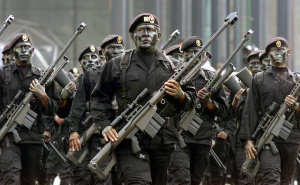
    Mexican Special Forces with Barrett M82 sniper rifles.

    Mexican Special Forces with Barrett M82 sniper rifles. (Source: Wikipedia)

    But the destabilization of the drug market triggered an escalation of violence. Violent competition for power erupted within the groups and coalitions as leaders were eliminated, coupled with fierce battles for territorial control among groups. The response against the state scaled up with the cartels creating militarized wings and using sophisticated military weaponry and tactics to fight the military and the police. The process of fragmentation and decentralization accelerated and the six big cartels of 2006 have split into around 15 today, coupled with a diversification of transnational criminal activities and soaring incidences of kidnapping and extortion. The Sinaloa Federation and the Zetas remain the most powerful cartels but have also suffered splits and setbacks.

    More than 60,000 people have died and 26,000 ‘disappeared’ in just six years. The formerly respected military have been accused of grave human rights violations including extrajudicial killings and forced disappearances. More than 4,000 complaints for human rights violations by military personnel were filed in 2006-2010 This was more than the total figure for the previous 15 years.

    Mexico has come under close scrutiny by the Inter-American Court on Human Rights and other international institutions. On June 12, the UN Special Rapporteur on extrajudicial, summary or arbitrary executions warned about unacceptable levels of violations to the right to life and impunity. Although recognizing some positive steps by the government of Enrique Peña Nieto, he warned that “a heavy-handed military approach is unlikely to improve the situation” and what is needed is “systematic, holistic and comprehensive strengthening of the rule of law”.

    As in Colombia, the Mexican victims of violence face further victimization as the government and sectors of the media dismiss them as criminals. Families and civil society groups claiming for justice may become targeted themselves. Unabated violence and institutional failure are the factors behind the emergence of armed self-defence groups, first in Michoacán and Guerrero and currently in around 10 states, as civilians take up arms to face lawlessness and fight the cartels (and sometimes corrupt authorities). This adds a new layer of armed actors whose evolution may not be easily put under control.

    Challenging the Colombian success narrative

    In Colombia, and later in Mexico, the militarized drug wars have proved ineffective in halting the drug trade but their impact is hugely negative on security and human rights, development and governance. While marginalization feeds the illegal economy, the securitized responses criminalize communities and add abuses and institutional failure to the problem of exclusion. The focus on the military also delays the hugely needed efforts to establish functioning justice systems and effective rule of law. Meanwhile, the drug business learns and adapts, moving from strict hierarchies to networked configurations.

    Despite those evidences, growing international debates about drug policies and a shifting internal public opinion, the US continues to promote a securitized approach to drugs that is most evident now in Central America. The use of Colombia as a symbol of success for Mexico and others, and as an actual ‘proxy’ to provide support in counter-narcotics and counter-insurgency to third parties including West Africa, should raise some basic questions about the premises, effectiveness and potential consequences of those policies.

    This month, the West African Commission on Drugs – an expert panel convened by Kofi Annan and chaired by former Nigerian president Olusegun Obasanjo – has called for decriminalization of drug use and to “avoid militarisation of drug policy and related counter-trafficking measures, of the kind that some Latin American countries have applied at great cost without reducing supply.”

    This potentially brings West Africa into line with the Organisation of American States, which in a report of May 2013 proposed “alternative legal and regulatory regimes” for tackling drugs, starting with cannabis”. Uruguay has already decriminalized cannabis and Colombia’s President Juan Manuel Santos, re-elected this month, has at times advocated drug policy reform. Enrique Peña Nieto has recently called on the US to start an open debate and a revision of ‘failed’ hemispheric policies whose outcome has been the rise of drug production and consumption.

    There are growing calls internationally to open a global debate over drug use and the policies needed to address it, including addressing demand in consumer countries. No less a figure than Sir William Patey, British Ambassador to Afghanistan from 2010 to 2012, has called for legalization of the heroin trade as the war on drugs in Afghanistan fails to address the complex problems at the roots of opium cultivation. Dozens of high profile British individuals and organisations, including the Prison Governors Association, have also called for decriminalization of drug use.

    The debate seems to be reaching a tipping point as the numbers and diversity of the sceptical and critical voices grow worldwide. Now it is the turn of policy makers to listen and act.

    Mabel González Bustelo is a journalist, researcher and international consultant specialized in international peace and security, with a focus on non-state actors in world politics, organized violence, conflict and peacebuilding. You can follow her at her blog The Making of War and Peace, her webpage, and Twitter (@MabelBustelo).
  • Global militarisation

    Executive Director of the Sustainable Security and Peacebuilding Initiative at the Center for American Progress, John Norris discusses the need to consider options carefully to avoid militarising the West’s response to the crisis in Libya. He writes that blowing up a runway or imposing a no-fly zone are not silver bullets. And one would hope that after the experience of both Afghanistan and Iraq—and earlier interventions such as Kosovo and Bosnia—we understand that war is a dangerous, uncertain business.

    Image source: Quigibo. 

    Read more »

  • Sustainable Security

    Following the 1998 peace agreement, Northern Ireland has been promoted as a model for peacemaking. Human rights discourse played a role as a cause and cure of the conflict.

    Since the civil rights movement of the 1960s, the Northern Irish conflict has captivated imaginations far beyond the island. Following the 1998 peace agreement, the region has been internationally promoted as a model for peace-making. Politicians from the region have shared wisdom of the Northern Ireland peace process in far-flung countries in conflict, including the Philippines, Sri Lanka, Iraq, and Afghanistan. Some of the lessons exported from Northern Ireland’s peace process are general prescriptions, such as the necessity of engaging with enemies or the need for multi-party talks to include even the smallest parties. Broader lessons promoted about Northern Ireland’s peace process are claims about the role of human rights in conflict resolution. During the peace process, a popular history emerged with rights—political, economic, and human— occupying a central role as a cause and cure of the conflict.

    Human Rights as Political Narrative

    The broad outlines of this narrative are: after partition in 1921, the new state in Northern Ireland systematically denied civil and economic rights to Catholics and maintained Protestant dominance. In the late 1960s, when peaceful civil rights demands were met with both loyalist and state violence and state reforms failed, the republican movement was forced into armed struggle. During the conflict, the British state engaged in human rights violations, further compromising the legitimacy of UK governance. In the late 1990s, republicans, unionists, and the British state settled the conflict by agreeing to new political institutions that ensured equal rights for all.

    However, human rights lessons from Northern Ireland’s peace process are not quite as tidy as this narrative suggests. My longstanding ethnographic and historical research in the region suggests caution about the comforting certainties of this causal account. In the 1960s, grassroots advocates protested that nationalists’ civil rights were systematically undermined since partition, and throughout the conflict, “first generation” rights to speech and association, or freedom from torture, were violated and remain deeply contentious. At the same time, human rights were absorbed into the conflict, and became another arena for ethnopolitical contest. In the Good Friday Agreement (GFA), an explicit commitment to human rights was envisioned for the new political arrangements. Yet as the agreement was implemented, rights politics have often been vehicles for the claims of nationalists and unionists, rather than universal human subjects.

    Ethnopolitics and Human Rights

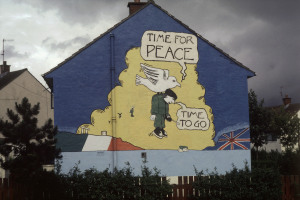
    Time_for_Peace

    “Time for Peace” mural, Whiterock Road, Belfast. Image available under the GNU Free Documentation License via Wikimedia Commons.

    Since the GFA, the tendency to argue ethnopolitical conflicts in terms of human rights has intensified, to the detriment of both wronged parties and broader understandings of human rights. A compelling example of how human rights were an incomplete solution to the conflict emerged early in the post-GFA era, in 2001, when a dispute in Ardoyne, north Belfast, resulted in shocking, violent loyalist protests at the Holy Cross Primary school (a Catholic girls’school). In June 2001, loyalists from the Glenbryn estate began picketing Holy Cross Primary School in nationalist Ardoyne, north Belfast. The school entrance was located just on the Glenbryn side of a famous “peace line.” Police in riot gear were deployed to protect small girls as they walked to school past lines of enraged adults. The dispute continued for four months, with violent conflicts during the summer break and a resumption of the pickets when the new term began in the autumn. Riots spread throughout north Belfast that autumn and winter, along with attacks on children travelling to other schools.

    Families of the distressed children eventually backed an unsuccessful challenge of police conduct under the Police (Northern Ireland) Act 2000, and under Articles 3, 8, 13, and 14 of the European Convention. That case, P.F. and E.F. v. the United Kingdom (Application no. 28326/09), was eventually ruled inadmissible by the European Court of Human Rights. Its long legal journey ended in 2010, when the European declared that, horrific as the protests were, there was no evidence of European convention breach.

    The dispute and legal proceedings very nearly derailed the new Human Rights Commission formed under the GFA.  In 2002-3, six members resigned or withdrew from the commission, citing multiple reasons related to the commission’s lack of authority and resources, its approach to drafting a Bill of Rights, and, most notably, its approach to handling the Holy Cross protests. Although the commission as a whole voted not to become involved, its casework committee committed the commission to supporting the families’ lawsuit. Individual commissioners took contradictory public positions and became increasingly divided. Meanwhile, the commission was perceived as part of an ethnopolitical conflict rather than as public advocates for either the protection of vulnerable people or fundamental rights.

    The Holy Cross protest was not resolved by human rights institutions or advocacy; some might argue that it has never been resolved. The situation revealed several problematic dimensions of treating human rights as a cure for conflict. One difficulty is that human rights laws concern the conduct of state actors. Paramilitary organizations, neighborhood associations, and transnational corporations do not sign human rights treaties.

    Human Rights in the Good Friday Agreement

    Another issue making it difficult for human rights law or advocacy to provide a resolution to conflict was how the GFA itself situates human rights principles in relation to power-sharing as a means to manage conflict. One innovation of the GFA is that it makes human rights central to the settlement, with the entirety of section 6 devoted to “Rights, Safeguards and Equality of Opportunity.” However, the GFA is more strongly oriented by political scientist Arend Lijphart’s consociational model. This model prescribes the management of conflict through power sharing among parties defined in ethnic or communal terms. Thus, the GFA situates human rights within a broader logic that privileges collective political rights. This conceptual maneuver mirrors the way political rhetoric and everyday life absorb human rights claims into regional ethnopolitics, rather than creating a transformative alternative to ethnopolitics.

    In the Holy Cross conflict, protagonists framed the dispute in terms of collective rights and alleged that these rights were being differentially allocated by the state. Families of the girls argued that the protests subjected them to inhuman and degrading treatment—violations of their human rights. Furthermore, they said, police did not use force to stop the protests because the girls were Catholic, but they would have ended any such protest by nationalists. Loyalists claimed that free assembly was an unconditional right, irrespective of sectarian content or whether violence might be a consequence.

    Unfortunately, the kinds of conflicts and challenges for human rights politics raised in the Holy Cross conflict are neither unusual nor uncommon in Northern Ireland. For example, in Donaldson v. the United Kingdom (Application no. 56975/09) the European Court of Human Rights refused to hear the complaint of a republican prisoner that his human rights were violated when the prison service did not allow him to wear a lily (a symbol of the republican struggle for a unified Ireland) outside his cell. Disputes over rights to display emblems may appear frivolous outside the region, but they are part of a broader process, in which human rights laws and institutions have been insufficient to resolve the disputes that emerge from Northern Ireland’s longstanding political conflict.

    Enduring Lessons and the Everyday Life of Rights

    In my 2014 monograph, I explore at length how rights politics have often functioned war by other means over time, rather than providing a comprehensive resolution to conflict. I conclude that advocacy such as the lesbian, gay, bisexual, and transgender (LGBT) equality movement have been more transformative in human rights terms than attempts to balance ethnopolitical rights. This cautionary point about how human rights politics have been received, reinterpreted, and transformed in the Northern Ireland context is not intended to dismiss the peace process’ significant achievements, including the profound diminution of political violence, paramilitary demobilizations, and decommissioning.

    Nevertheless, the successes of the process also require recognition that throughout the fitful implementation of the GFA, political polarization intensified, past violence and political symbols have been repeatedly contested, and riots surrounding parades and symbolic matters like flags have become dangerous and costly recurrent events, intimating, for some, a return to conflict. Violence casts a long shadow across the present peace; prosecutions and re-investigations of past murders and atrocities continue, recent killings like the murder of Kevin McQuigan last summer destabilize power-sharing institutions, and ministers continue to warn of resurgent paramilitary activity – such as a recent upsurge in bomb attacks.

    Understanding the role of human rights in everyday politics in both the past and present is necessary for making nuanced claims for human rights advocacy and law in conflict resolution. Northern Ireland’s tremendous reduction in violence must not be dismissed, but it is important to recognize that the settlement also sustains a form of ethnopolitics that is not always congruent with the goals of human rights advocacy. As the politics of the conflict continue to structure the settlement, it is fair to ask how transformative human rights politics have been. Such an approach can make us conscious of perilous conditions that constrain the present fragile peace, and highlight achievements that are durable and transferrable for the future.

    Dr. Jennifer Curtis is Honorary Fellow in Social Anthropology at the University of Edinburgh. She is the author of Human Rights As War By Other Means:  Peace Politics in Northern Ireland, published by the University of Pennsylvania Press. Her work focuses on how grassroots social movements appropriate and alter rights advocacy and law. She has conducted long-term ethnographic research in Belfast, Northern Ireland and in the United States.  She is currently completing an ethnographic monograph on race, sexuality, and civil rights in red state America, based on fieldwork in Missouri. The book explores the local and national significance of #BlackLivesMatter, movements for LGBT equality, and anti-equality movements, within the broader historical context of racialized violence, slavery, and inequality in the American South.

  • Global militarisation

    In a paper exclusively written for sustainablesecurity.org, Serena Joseph-Harris (former High Commissioner for Trinidad and Tobago) focuses on competition over natural resources, the role of maritime routes in the Caribbean, and the importance of multilateral approaches to finding sustainable solutions in the Caribbean.

    Image source: Len@Loblolly

    Read more »

  • Sustainable Security

    The environment has often taken a backseat in discussions about conflict, but an increasing amount of evidence suggests that environmental and wildlife conservation could and should be very useful to post-conflict recovery work.

    The notion that the environment can play a useful role in peacebuilding has been around for a number of decades. The environmental peacebuilding theory emerged after research found that even while countries were engaged in armed conflict they were cooperating over water management. The theory was that water management could establish cooperation and lay a platform for wider peacebuilding initiatives. Peace Parks follow the same principles to use transboundary biodiversity conservation to support peacebuilding. While both are appealing projects, their failure to translate from environmental cooperation into wider scale peacebuilding processes suggest they are of only limited use for peacebuilding and post-war recovery.

    While the above processes have been of limited effectiveness, the shared geography of many areas of armed conflict and biodiversity hotspots suggests that conservation could and should be useful to post-conflict recovery.

    Guerrillas and Gorillas

    Research has found that 80% of modern armed conflicts occurred in biodiversity hotspots, and 90% within countries containing biodiversity hotspots. The use of ‘conflict timber’ and the illegal wildlife trade to finance conflict, and the presence of many armed groups in and around protected areas, creates clear links between conflict and the environment. Conflict also often leads to widespread environmental damage, and the post-conflict period can cause even more damage as short term human needs lead to ungoverned and unsustainable exploitation of the environment. This destroys key ecosystem services, opens opportunities for banditry and corruption, and increases the risk of natural disasters.

    Addressing these threats to security and protecting the environment in the aftermath of conflict is therefore vital to ensure a resilient recovery process. This creates an opportunity for conservation to support the post-conflict recovery effort by simultaneously addressing threats to security and protecting the environment to support economic development. Current approaches to do this are limited, but potential exists for much more work to be carried out. I have therefore proposed the umbrella term of ‘Ecological Development’ to create a framework of methods to actively use conservation as a tool for post-conflict recovery.

    Environmental Peacekeepers

    Virunga_National_Park_Gorilla

    Mountain Gorilla in Virunga National Park, in the Democratic Republic of the Congo. Image via Wikimedia.

    Some work has already been undertaken in this area, such as the proposal to create a ‘green helmets’ UN force, with a mandate for environmental protection. Whether funding for such a force could be obtained, and a mandate agreed upon, is doubtful; even if it was, it is unlikely to be an effective unit. Current UN peacekeeping missions have regularly failed in their roles to protect civilians, so are unlikely to be able to effectively extend their mandate to environmental protection. Peacekeepers have also been caught with illegal fauna and flora. While the UN Peacekeeping operations now have an environment department to reduce the footprint of missions and educate soldiers about the environment, their role in environmental protection is now, and will likely be for the foreseeable future, minimal.

    Using a country’s army to support conservation work has also been trialled, but with limited impact; for example, in the Democratic Republic of Congo the army became involved in poaching ivory. Both this and the proposed green helmets UN force also take a combative approach to conservation, seeking to fight poachers and armed groups in protected areas rather than addressing the underlying causes of poaching and deforestation. A different approach is required.

    Instead, I have proposed the conversion of rebel groups en masse into a ‘Yellow Berets’ force under UN, or other neutral, control; their role would be to support existing wildlife rangers to protect the environment and start to engage in ecosystem regeneration and sustainable exploitation projects. Such a scheme would form a significant contribution to post-conflict recovery in several ways: it would employ ex-combatants, reducing the risk of a relapse into conflict; it would protect critical ecosystems, species and carbon sinks vital for human populations (and arguably worth protecting in their own right); and it would support efforts to develop sustainable natural resource extraction businesses to bring in revenue and create jobs to support post-conflict recovery. Crucially, this process seeks to address security threats with dollars not bullets; engaging rebel groups as paid eco-guards rather than engaging them in battle.

    The DRC provides an example of the necessity and benefits of such a programme. Work is already underway to ensure Virunga National Park brings multiple economic benefits to surrounding populations, including the development of hydropower electricity generation. Security threats remain a major concern in the park, however, and there are too few rangers to address these threats. The ecological development method would offer financial incentives to rebel groups to join the yellow berets unit. This would simultaneously increase the number of conservation personnel and decrease the security threat, opening the way for an expansion of development projects around the park. It would also enable the restoration of forest areas – which could be financed by carbon offset schemes – and the further development of a tourist industry centred not only on gorillas but multiple other attractions in the region. Such a process would not be without challenges: securing the long-term finance required to pay wages; coping with disruptive private interests intent on perpetuating insecurity; and avoiding conflict between Congolese army soldiers and police who receive their wages intermittently or not at all.

    Nevertheless the project holds promise, even in such a difficult operating environment as the DRC. It could also be used in other parts of the world where rebel groups operate in protected areas, as a means to bring an end to conflict and deal with ex-combatants efficiently and at scale.

    Conservation for Development

    The Yellow Beret process would require a large amount of finance to pay the wages of several hundred or even thousand eco-guards that would form it. While donor finance could be mobilised for such a process – combining conservation, security, humanitarian and carbon finance – this would be difficult both to obtain initially and also, critically, to sustain over the long term. Protected areas must therefore become sites of revenue and job creation in order to finance such an initiative.

    The work being undertaken in Virunga, described earlier, is an example of this, but more is required. Projects that support the livelihoods of local communities and also bigger schemes that can generate greater revenues and create jobs on a large scale need to be trialled and refined. Examples of community projects are livestock and micro-finance schemes to provide sources of protein and finance to start small enterprises. These projects alleviate communities’ dependence on protected area natural resources by providing sustainable sources of sustenance and protein, and improving the perception of conservation.

    At the same time, larger schemes are required that seek to create products for sale into international markets; this may be ‘green gold’ projects seeking to make gold mining both sustainable and ethical; sustainable timber exploitation and processing for sale; or the creation of ‘wildlife-friendly’ businesses that could create a range of products from tea to clothing, and help to grow the certification scheme into something akin to the size of the Fairtrade and Rainforest Alliance schemes. The benefit of such schemes is two fold: firstly, they are profit making, so would not be reliant on hard-to-access donor funding; secondly, they would generate jobs and revenue around protected areas that could be taxed and support the yellow beret and other conservation initiatives.

    Traditionally, tourism has been the main, and in many cases sole, commercial method used for conservation to support development. This narrow focus on tourism leads to a lack of innovation and a dependence on an unreliable industry. Particularly in regions of armed conflict, tourism can at best play a small role in development programmes; too few people are willing to visit a dangerous area to make it a viable business model. The other methods described above are therefore necessary.

    Justifying Conservation

    Time and time again I have heard that ‘a hungry man is an angry man’. Indeed, groups of unemployed young men are particularly dangerous. To transition from conflict to a successful post-conflict recovery, peace must be more attractive than conflict; there must be good opportunities for secure, paid employment for actors in conflict. Conservation can and must play a role in providing those opportunities.

    In short, for the environment – and protected areas in particular – to play a useful role in post-conflict recovery, they must be demonstrably beneficial to people. Most crucially, they must be able to help improve security and generate revenue from conservation quickly and to a value in excess of alternative uses such as agriculture. Protected areas must therefore become sites of revenue and job creation in the post-conflict period. This will help to improve security and support post conflict economic recovery while protecting key environmental assets and species; at the same time it would lay a platform for longer term commercial investment in eco-man friendly industries once security has been assured.

    Richard Milburn is Research Co-ordinator and PhD candidate at the Marjan Centre for the Study of Conflict and Conservation, within King’s College London’s Department of War Studies. His research examines the security threats associated with biodiversity loss as well as the opportunities to utilise conservation as a core component of post-war recovery, particularly in the Democratic Republic of Congo. He is also the UK representative of the Pole Pole Foundation, a Congolese conservation charity based in Bukavu.

  • Human Security and Marginalisation: A case of Pastoralists in the Mandera triangle

    This paper seeks to bring out the relevance of human security in pastoral areas of Mandera triangle and the relationships and contradictions that exist between it and national security. The “Mandera Triangle” encompasses a tri-border region of Ethiopia, Somalia, and Kenya that exemplifies, in a microcosm, both a complex and a chronic humanitarian crisis that transcends national boundaries. The resident Somali pastoral population is highly vulnerable to periodic droughts and floods; high levels of poverty; long-term disruption to the traditional systems of livelihood; ongoing inter-clan conflicts and border tensions between states. Human security can be said to have two main aspects. It means, first, safety from such chronic threats as hunger, disease and repression. And second, it means protection from sudden and hurtful disruptions in the patterns of daily life – whether in homes, in jobs or in communities.

    Violence in the Mandera triangle is often viewed narrowly as a symptom of inter-tribal conflict over cattle and other common property resources. This line of thinking is questionable given that an important issue in understanding insecurity among pastoralist groups is their distant and often oppositional relationship to the state. As with other peripheral groups, pastoralists in the region have suffered systematic marginalization by central authorities and have a history of rejecting the authority of the state, which they view as threatening to their distinct nomadic way of life. Pastoralist violence must therefore be situated, in terms of these forces of mutual opposition and exclusion as well as the struggle for control of resources. Ultimately, pastoralists do not partake in the nation’s so-called ‘public goods’. They are often denied government services and since formal legal and police services are usually nonexistent in pastoralist communities, the state seldom plays a role in guaranteeing their security. When they do become an object of state interest and intervention, it often involves forced settlement and other coercive efforts which only strengthens their resolve to remain apart.

    Until rather recently there was a pronounced “blame the victim” approach in discussions about the pastoralists. The searing images from the famines of the 1970s and 1980s, much of it from the Sahel, reinforced the notion that the pastoralist was largely responsible for these immense difficulties. This understanding spurred much inappropriate development that is only now beginning to be fully understood and reassessed. The human security dimensions of the pastoralist plight are now more clearly understood as being attributable to a combination of population growth, immigration, conflict and specific government policies. Yet if we are to move beyond blaming the pastoralists, neither will simply victimising them suffice.

    An adequate conceptualization of human security for Mandera triangle states and other states in Africa should ‘link human security with human development’. Economic development will have to be at the top of the institutional agenda, since development and security are ‘two sides of the same coin’. Non-state actors do not have the power to bring about large-scale development or to resolve the new security threats alone, without any state assistance. In the final analysis, studies of internationalized pastoral conflicts in Mandera triangle suggest that interest in these conflicts is justified on a number of practical grounds which have been summarized by Peter Wanyande as follows:

    “First is that the conflicts are very costly to the governments and the peoples of the region as a whole and the individual countries in which they occur. The costs are in terms of loss of human life and property and the destruction of public infrastructure. Hundreds of thousands of people have been killed in many of the countries in which the conflicts occur. Many others have also suffered and continue to suffer untold psychological trauma associated with conflicts. Second, these conflicts drain the scarce resources available to the affected countries. Once conflicts occur, scarce resources are inevitably diverted to the purchase of military equipment at the expense of socio-economic development. This is not to mention the fact that the conflicts disrupt normal economic activities such as agriculture and trade. Third, the conflicts and violence they generate in any one country creates insecurity and related problems far beyond the countries in which they originate. Conflicts in the region have also caused diplomatic tensions between neighbouring countries in the region. Fifth, most of these conflicts have resulted in large numbers of refugees and displaced persons.”

    This implies that states in the region must invest a substantial effort in trying to understand, and abandon the current relative indifference to, the complex interconnections between regional political instability, poverty and lawlessness.

    Image source: TURKAIRO

    Abdul Ebrahim Haro is an employee of Practical Action Eastern Africa (an international NGO) in the Reducing Vulnerability Programme, and is the Area Coordinator for Somali Cluster Region in the tri-border areas of Kenya-Ethiopia-Somalia. Abdul Haro has a masters in International conflicts management and is a consultant in Pastoralism and security matters in pastoral areas.

  • Sustainable Security

    Deforestation: REDD-y for peace or fuelling conflict?

    REDD forestry efforts don’t pay enough attention to their influence on local conflict dynamics. For REDD+ to be an effective mechanism to curb deforestation and strengthen peace opportunities, it has to pay more attention to pre-existing land and forest conflicts linked to tenure, take into account the interests of the local communities and be more sensitive to the local context

    Read Article →

    The Global Land Rush: Catalyst for Resource-Driven Conflict?

    Michael Kugelman of the Woodrow Wilson International Center, argues that the factors that first sparked many of the land acquisitions during the global food crisis of 2007-08 — population growth, high food prices, unpredictable commodities markets, water shortages, and above all a plummeting supply of arable land — remain firmly in place today. He writes that land-lusting nations and investors are driven by immediate needs, and they have neither the incentive nor the obligation to slow down and adjust their investments in response to the wishes of distant international bureaucrats. This, he argues, has serious consequences for global security.

    Read Article →