Blog

  • Sustainable Security


    NPT Double Standards 4President John F. Kennedy once said:

    “You cannot negotiate with people who say what’s mine is mine and what’s yours is negotiable.”

    However a small group of states (including the state of which Kennedy was President) have done just this in relation to the possession of nuclear weapons for decades. Five of them (China, France, Russia, the United Kingdom and the United States) have held the position of being the privileged few allowed to possess nuclear weapons under the terms of the 1968 Treaty on the Non-Proliferation of Nuclear Weapons (NPT)  while all others agree to forego developing the ‘ultimate weapon’ in return for access to civilian nuclear technology. Three others have refused to sign the treaty (India, Israel and Pakistan) and instead developed their own nuclear weapons (overtly in the cases of India and Pakistan after 1998 and covertly in the case of Israel from the late 1960s) happy to free-ride on the lack of global proliferation ensured by the treaty. To paraphrase Kennedy, the decision of these eight states (nine if you include North Korea from 2003 onwards) to inflict mass destruction on an adversary is theirs, but everyone else’s decision to acquire the same capability can be negotiated away.

    What is perhaps most extraordinary about the NPT ‘grand bargain’, as it is often called (although given that the five nuclear weapon states have exactly the same access to civil nuclear technology as the rest of the signatories, ‘bargain’ here really is a polite term for ‘scam’), is that it has remained largely intact for so long. For something built on such a seemingly unsustainable basis as an institutionalised double standard (particularly one that relates to the ultimate survival of nation states), the fact that its indefinite extension was negotiated in 1995 and that the treaty is still with us defies most conventional wisdoms about the ‘dog-eat-dog’ nature of self-help politics in an anarchical international system. Yes, the treaty may have been abused by some states and used as a cover to develop covert weapons programmes (Iraq, Libya, North Korea and possibly Iran) and one state has even withdrawn from the treaty under Article X (North Korea in 2003), but these are four cases in a treaty that boasts 189 signatories.

    Challenging sustainable security

    In many ways the success of the treaty regime provides one of the most robust challenges to the whole concept of sustainable security. Why bother addressing the root causes and underlying drivers of nuclear proliferation if you can effectively stem the flow of nukes by maintaining a treaty which promotes a ‘norm’ of non-proliferation as good international behaviour, and allows you to deflect charges of hypocrisy as long as you make encouraging noises about ‘eventual’ nuclear disarmament at some unspecified point in the future?

    However, like a building with rotten foundations, it may be that what has appeared to be a relatively sustainable global non-proliferation regime is far less stable than many believe it to be. Recently, Egyptian negotiators walked out of the UN talks that are held in the lead-up to each five yearly review conference of the NPT. This dramatic move from Egypt was a public expression of the long-held private frustrations of its diplomats who, after being effectively promised serious negotiations towards a Middle East Weapons of Mass Destruction Free Zone (WMDFZ), in return for their support for the indefinite extension of the Treaty in 1995 (and re-affirmed explicitly at the review conference in 2010), face the continued postponement of such talks. The problem is, Israel has no interest at all in such a zone – why would it? A combination of the NPT and Western action against would-be proliferators such as Iraq, Libya and Iran have meant that the construction of a WMDFZ in the Middle East would mean that Israel would either have to join and give up its position as the only state in the region with nuclear weapons, or be the one state in the region that refuses to join. Either way, it would also mean attracting global attention to its nuclear weapons arsenal, something Israel has managed to successfully avoid of late in all the focus on the weaponisation concerns over Iran’s civil programme.

    Calling it like it is

    Before leaving the NPT preparatory talks, Egypt’s Ambassador Hisham Badr explicitly referred to the resolution passed in 1995 that called for negotiations on a Middle Eastern WMDFZ, and called out those that thought they could get away with Egypt sticking to its side of the bargain and getting little in return. His comments challenged the idea that the double standard could be maintained indefinitely when he stated clearly that “we cannot wait forever for this resolution to be implemented.”

    Perhaps the most worrying signs here are the responses to Egypt’s move. Israeli diplomats have effectively said that with the security situation in Syria, in Egypt itself and elsewhere in the region, a WMDFZ is the least of its concerns. The United States has referred to the episode as “theatrics” and in the meantime has pushed on with negotiating a nuclear trade pact with Saudi Arabia. These trade deal talks are taking place at a time when experts are tracking an increase in the acquisition of strategic ballistic and cruise missiles by the Kingdom. The other nuclear weapons states have been conspicuously quiet throughout.

    So rather than seeing this as a sign of the potential unravelling of an unsustainable regime based on a double standard, those who have most to gain from the NPT arrangement (both inside and outside the regime), are betting on this being just another ‘NPT in crisis’ – a moment they assume will pass. Whether this storm will blow over (like a mushroom cloud over the Pacific Ocean…no, sorry that bad pun is stopping right there!) is now THE big question for those concerned about nuclear threats. If the regime falls apart and 189 states are no longer happy to give up nuclear weapons, the simple days of dealing with Iranian and North Korean nuclear ‘crises’ will be looked back upon with great fondness.

    Time for regime change?

    While the NPT regime story is one of a continuing death foretold, it is difficult to see how the all-important 2015 review conference can outrun the double standard that sits at the heart of the regime without all signatories applying some degree of what could be called a ‘sustainable security’ approach. As Egypt’s actions make clear, anything less than a regime specifically geared towards addressing the reasons why some states seek nuclear weapons  – including regional insecurity, conventional weapons imbalances and the prestige attached to nuclear arsenals by their possessors – is a regime existing on borrowed time.

    Ben Zala is a Lecturer in International Politics at the University of Leicester.

    Image source: Wikimedia

  • A Study on the Inter-Relation between Armed Conflict and Natural Resources

    The article investigates the inter-relation between armed conflict and natural resources and its implications for conflict resolution and peacebuilding.

    Since changing the natural and geographical characteristics of natural resources is almost impossible, the article argues that conflict resolution and peacebuilding policies should be aimed to reduce those political, societal and economic situations that, if inter-related with the presence of natural resources in a country, can affect armed conflicts. The analysis discusses how the presence of natural resources should be addressed during the resolution of a conflict and should be considered during the post-conflict peacebuilding phase. Finally, it tries to identify how international actors can have an effective role in conflict resolution and peacebuilding when natural resources are at stake.

    Article source: Journal of Peace, Conflict and Development

    Image source: Tim Pearce

  • Sustainable Security

    RC_long_logo_small_4webThis article is part of the Remote Control Warfare series, a collaboration with Remote Control, a project of the Network for Social Change hosted by Oxford Research Group.

    States’ ability to move forward on the issue of lethal autonomous weapons will depend on not only finding consensus on key concepts but also having the will to find concrete outcomes.

    UN_Meeting_of_Experts_Lethal_Autonomous_Weapons_CCW_April_2015

    UN Meeting of Experts on Lethal Autonomous Weapons in April 2015. Source: Flickr | UN Geneva

    April’s meeting of experts at the UN on lethal autonomous weapons systems (often shortened to LAWS or AWS) set out to consider questions relating to this emerging military technology, a continuation of UN talks begun in May 2014. These meetings took place under the aegis of the Convention on Certain Conventional Weapons (CCW), and brought together state representatives, NGOs and academics. The CCW meetings have demonstrated a divergence of views on the ethical and legal concepts that should be employed, and a complex debate that at times felt detached from reality; moreover, without a negotiating mandate there is a fear that the meetings could simply mire the issue in abstract debate, leaving states free to continue developing the technology in the meantime.

    The UN Convention on Certain Conventional Weapons

    For a long time the CCW was a neglected treaty; regarded by states and NGOs as an overambitious and failed attempt to combine elements of international humanitarian law with arms control. By the end of the 1980’s, the CCW appeared to be floundering with only 29 state parties. Yet in recent years, participation has increased and there are now 121 state parties to the convention. A total of 87 countries sent representatives to the first meeting on autonomous weapons, marking a record high level of participation for the CCW. Eighty-eight countries were present at April’s meeting.

    The purpose of the CCW is explicitly “to ban or restrict the use of specific types of weapons that are considered to cause unnecessary or unjustifiable suffering to combatants or to affect civilians indiscriminately.” The CCW is an evolving body of international humanitarian law, with a framework that is dynamically structured to be responsive to the concerns raised by the international community. The recognition that the law is not static is therefore a particular strength, indeed a cornerstone of the CCW.

    The CCW’s talks in May 2014 and April 2015 were undertaken with a mandate “to discuss the questions related to emerging technologies in the area of lethal autonomous weapons systems, in the context of the objectives and purposes of the convention.” A ban on autonomous weapons would join five other CCW protocols on non-detectable fragments, landmines, incendiary weapons, laser weapons and explosive remnants of war. The uptake of the issue of lethal autonomous weapons by the CCW has been unprecedented in its speed, and could indicate a move towards prohibition. However, because there is no negotiating mandate, it could also be a strategic move to engage in these discussions on the part of states keen to engage in the debate of abstract principles, while at the same time continuing to develop the technology. The annual meeting of the CCW in November 2015 will decide formally whether to continue the talks, based largely on the content of the April meeting.

    Autonomy

    The most contentious issue discussed so far is the issue autonomous weapons pose with regard to human control. This issue was discussed through reference to the contested concepts of ‘autonomy’ and ‘meaningful human control’. The United States, the UK, France and Germany are all in favor of the notion of autonomy as a guiding principle. The US was one of the first states to advocate for this concept when its Department of Defense issued the first policy announcement by any country on autonomous weapons systems in November 2012, just three days after Human Rights Watch had brought the issue into the global spotlight.  Interestingly, the directive refers not to ‘fully autonomous’, but to ‘autonomous weapon systems’ that include human supervision. This supports the view advocated by the US at April’s CCW meeting: as long as humans are ‘in the loop’, weapons systems are not fully autonomous and therefore compliant with international humanitarian law. The UK, France and Germany attach human involvement to autonomous weapons systems as well. In a general exchange of views the UK representative assured, “there will be human oversight in this new territory where lethal autonomous weapons systems can go […] Autonomous systems do not exist, and will never exist” (author’s own transcription).

    However, some objected that this was a ‘knockdown’ argument intended to rhetorically shut down the controversy about the lack of human control. The International Committee for Robot Arms Control (ICRAC) is an international association of experts that was sat up with the specific goal of getting governments to talk to each other about the continuous automation of warfare, and was present at both the 2014 and 2015 meetings. ICRAC’s interpretation of the DoD policy was that it was designed to “green-light” weapon systems able to select and engage human targets. Together with 272 experts in computer science, engineering, artificial intelligence, robotics, and related disciplines from 37 countries, ICRAC issued ‘The Scientists’ Call’,  stating: “[G]iven the limitations and unknown future risks of autonomous robot weapons technology, we call for a prohibition on their development and deployment. Decisions about the application of violent force must not be delegated to machines”. Their message was clear, that within such systems, human control would not be ‘meaningful’.

    Meaningful human control

    India and Pakistan expressed confusion over this idea of meaningful human control, observing that the presence of meaningful human control would mean the weapons systems would not then be ‘autonomous’. In their opinion the question should be whether or not independent weapon systems can comply with international humanitarian law: whether they can distinguish between civilians and combatants, make proportionality assessments, and comply with other time-tested legal principles. A counter-argument was raised by Richard Moyes from Article 36 that if discussion is too focused on undefined hypothetical systems’ ability to comply with international humanitarian law, then legal arguments could become separated from reality. In particular, he argued that the law is a human framework applied to humans. A state representative from Greece agreed, saying that autonomous weapons should be addressed ethically rather than legally or technically, as the question is whether or not humans should delegate life and death decisions to a machine. The debate around autonomous weapons’ ability to comply with international humanitarian law is a misguided one if it fails to grapple with the bigger, underlying issues that would be raised. Banning such systems, in fact, is about maintaining something unique in the decision-making process: a human with intent behind the act of killing. Cuba, Ecuador, Pakistan, Sri Lanka and Palestine agreed with this argument and called for a prohibition.

    Potential for convergence

    Consensus was reached on the undesirability of fully autonomous weapons systems. Ambassador Michael Biontino of Germany, who chaired the April meeting, wrote in his report that the following area of common understanding had emerged: “machines or systems tasked with making fully autonomous decisions on life and death without any human intervention, were they to be developed, would be in breach of international humanitarian law, unethical and to possibly even pose a risk to humanity itself.” However, because parties largely disagree about what constitutes human intervention, this statement is of limited value. The contradictory definitions used at the CCW meetings have created a lack of clarity for policymakers; it remains largely undecided what the world would look like if autonomous weapons came into existence.

    The April talks not only give some idea of the shape of the debate going forward, but also of the potential limitations of the CCW talks themselves, as a forum for discussion, but without a negotiating mandate. One significant milestone would be the establishment of a broad, representative and universal Group of Governmental Experts (GGE) next year that would move the discussion from an informal to a formal setting. It has been suggested that the current lack of common language makes this discussion challenging, and that it is critical to avoid rushing into formal discussions. However, it does not seem premature for prohibition to be on the agenda in a body that has been designed to create prohibitions. A GGE seems a necessary next step to keep states focused on a practical outcome.

    Lene Grimstad served as an observer at the 2014 and 2015 Geneva Meetings of Experts on Lethal Autonomous Weapons Systems, and holds a MA in Society, Science and Technology in Europe from the University of Oslo and ESST (European Inter-University Association on Society, Science & Technology) .

    Featured Image: Meeting of Experts on Lethal Autonomous Weapons Systems in April 2015. Source: Flickr | UN Geneva

  • Climate change

    The publication of the Strategic Defence and Security Review and the Coalition’s first National Security Strategy provided ample opportunity for the government to deliberate on the strategic implications of climate change for the UK.  Yet while claims that we continue to live in a post-Cold War ‘age of uncertainty’ lay at the heart of both documents, on  closer reading there is very little to suggest that uncertainty about climate change was a concern for those who conducted the review.  

    Article source: RUSI

    Image source: U.S. Geological Survey

    Read more »

  • Sustainable Security

    By Oxford Research Group’s Sustainable Security Programme Manager Ben Zala

  • New Films on Nuclear Threats and the Prospects for Disarmament

    Two new films in TalkWorks’ series about nuclear disarmament have been released. In the latest instalments, Baroness Shirley Williams and Sir Jeremy Greenstock give their personal perspectives on the current state of affairs regarding nuclear dangers and progress with the multilateral nuclear disarmament agenda.

    Baroness Williams is a Liberal Democrat Peer and former advisor to the British Prime Minister on Nuclear Proliferation. She is also a member of the UK Top Level Group and was part of the International Commission on Nuclear Non-Proliferation and Disarmament.

    Sir Jeremy Greenstock is the former British Ambassador to the United Nations and was the UK’s Special Representative for Iraq. He has recently taken over as chair of the United Nations Association of Britian and also joined BASIC’s newly formed independent Trident Commission.

    The two films can be viewed here.


  • Sustainable Security

    Often seen as a tactic harnessed by the weak, guerrilla warfare can also be a employed by the strong. States have at times used guerrillas in inter-state and civil conflict.

    Guerrilla warfare is widely viewed as a weapon of the weak. To Mao Tse-tung, it was the optimum strategy of those “inferior in arms and military equipment.” He drew inspiration from the Russian troops accomplishing, in 1812, what their militarily superior European counterparts could not: drive Napoleon’s Grand Army out of their country. They did this not only by taking advantage of Russia’s distinctive geography and climate, but also by using guerrillas – Cossacks and peasants – to go after the French troops “as unconsciously as dogs bite to death a rabid stray dog.”

    But, guerrilla warfare can also be a weapon of the strong. States with robust conventional military capabilities at times use guerrillas in inter-state and civil conflict.

    Guerrilla Warfare

    pkk-guerilla

    Image by kurdishstruggle via Flickr.

    Guerrillas’ advantages stem from their organization and local ties. They typically operate as small, independent units, thereby exercising more maneuverability, alertness, concealment, and access to the local population than their regular counterparts. Carl von Clausewitz recommended supplementing a regular army with bands of armed civilians. He observed that, when faced with adversity, soldiers typically “cling together like a herd of cattle,” while civilians “scatter and vanish in all directions, without requiring a special plan.” But, he emphasized that the latter should not be used “to pulverize the core but to nibble at the shell and around the edges” of regular armies.

    Both Clausewitz and Mao viewed guerrillas as useful for weakening a conventionally strong rival through harassment and psychological warfare, but recognized that they are “but one step in the total war.” It is the regular troops that must, in the end, directly confront and defeat the enemy. Thus, for example, the recent U.S. strategy of sponsoring local rebels in Syria against Bashar al-Assad’s (Russia-supported) army was likely to fail not least because of the difficulties inherent in using nonstate proxies. The U.S. strategists – presumed students of Clausewitz – failed to recognize the necessary role of the regular forces, or else significantly underestimated their capacity to form a regular army out of irregulars while in the midst of a war. Or, they were simply constrained by the political unfeasibility of setting regular U.S. soldiers’ boots on the ground.

    In addition to weakening (or hopelessly trying to defeat) a rival’s regular forces, states often use guerrillas – or “counter-guerrillas” – against guerrilla rivals. The latter are typically rebels fighting to gain, maintain, or reclaim territorial control from an established government or occupying power. The former are sometimes also referred to as “pro-government militias.”

    In a recent article published in the Journal of Strategic Studies, I closely examine and disaggregate the different types of counter-guerrillas states use in counterinsurgency operations. I identify two types of counter-guerrillas: self-defense militias and death squads. Self-defense militias typically comprise ordinary civilians, such as peasants, while death squads are usually manned by experienced militants, such as turned rebels or violent criminals.

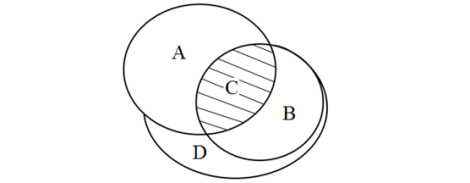
    I argue that states make proxy choices based on the latter’s comparative advantage, availability, and controllability. The state’s ideal partners are highly skilled fighters with deep knowledge of the insurgent network and links to the local population. Regular soldiers are highly skilled fighters, but possess limited local and insurgent knowledge. Partnering with nonstate actors means tackling the classic principal-agent problem, and the state’s capacity to do so is significantly shaped by its spatial reach (i.e. territorial control) across the theater of war. Figure 1 illustrates the different configurations of territorial control.

    Figure 1. Zones of Control

    figure-1-zones-of-control


    In Zone A, the state exercises full control. Zone B represents the insurgent-dominated area, whereas Zone C is the contested region where both sides actively compete for influence. Zone D represents an area that has been largely neglected in the burgeoning civil war literature. It is a zone that is neither fully controlled nor, for the time being, actively contested.

    Among the nonstate alternatives, the ideal partner for the state is a skilled fighter with insider knowledge of the insurgency and its logistics network. The disadvantage of using this type of proxy is that his fighting skills make him dangerous and difficult to control. The cost of losing control of skilled fighters can be unpalatably high. Unless they are weak or collapsed, modern states will prefer to use skilled fighters when and where they can supervise them.

    Nonstate actors that possess the desired local knowledge and have significant experience wielding extra-institutional violence, whether of criminal or rebel nature, may be harnessed to counter the insurgents. Their comparative advantage is in performing specialized, offensive, and highly targeted tasks (e.g. assassinations) that take advantage of their high mobility and combat skills. Consequently, they are likely to be used where the insurgents are actually located (Zones B and C). We should expect them in Zone C, where the state can exercise control over their activities. Using death squads in Zone B requires the state to create robust control mechanisms, such as embedding these groups firmly within special operations units of regular military or police forces. Where the state exercises full control (Zone A), or where the insurgents are not yet present (Zone D), states do not require highly targeted offensive operations and, consequently, death squads.

    While the comparative advantage of death squads is in highly targeted offensive operations, self-defense militias are best at performing static defensive tasks, such as guarding villages, communication lines, transportation networks, and vital installations. They are, consequently, more likely to be used to facilitate the operation of state forces in contested regions (Zone C) or to deny the insurgency access to areas where neither side has effective control (Zone D). In Zone B, self-defense militias are helpless against the insurgents. Not only can their government-provided weapons easily fall into rebel hands, but also, given the high rates of defection in insurgent-dominated areas, they may become a fertile source of rebel recruits. Remnants of self-defense militias (once created in Zone C or D) may persist in Zone A, but only because demobilization of nonstate actors is usually slow and costly.

    The Kashmir Case

    India’s use of counter-guerrillas in Kashmir illustrates the logic of the argument. In response to an insurgency breaking out in the late 1980s in the Indian state of Jammu and Kashmir (here referred to as “Kashmir”), the Indian army used former rebels (i.e. “renegades”) and villagers to combat the insurgents. Initial efforts relied on local police enforcement, treating the insurgency as an issue of “law and order.” However, the local policemen proved ineffective and were supplemented by three paramilitary forces (the Central Reserve Police Force, the Border Security Force, and the Indo-Tibetan Border Police). The Indian army’s role expanded further in 1993 with the introduction of the Rashtriya Rifles, an elite army unit created specifically for counterinsurgency operations.

    Former rebels were used mostly in the contested areas (Zone C) and, under the supervision of the Rashtriya Rifles, in Zone B. Kashmiri ex-insurgents, who were also popularly known as “Ikhwanis,” were used to eliminate rebels and their sympathizers. In Zone D – the mountainous areas of the Jammu region – the state instituted the civilian-manned Village Defense Committee (VDC) system. Figure 2 illustrates the distribution of the “renegades” and the VDCs. Official statements place the number of VDC volunteers at 6,000, but a prominent Kashmiri journalist I interviewed in Srinagar (the summer capital of Kashmir) estimated the figure to be closer to 23,000.

    Figure 2. Zones of Control in Kashmir

    zone-of-control-in-kashmir-figure-2


    Costs of Counter-Guerrillas

    Counter-guerrillas may be good for war, but they are bad for peace. Weaponizing turned rebels, criminals, and civilians offers tempting tactical benefits, but it also carries significant post-conflict costs. The conventional wisdom is that outsourcing violence lowers the cost of conflict and provides states with plausible deniability. However, as I learned from my fieldwork in Kashmir and other conflict zones, the local population quickly becomes aware of the illicit links between the counter-guerrillas and the government, as does the international community.

    The “renegades” may have helped the Indian army achieve military victory over the insurgents, but they also significantly boosted the widespread and enduring resentment against the Indian government. The arming of a select ethnic group (mostly Hindus and some Sikhs) in Jammu generated “intermittent outburst of communal violence” as well as incidents of looting, abduction, and rape.

    Playing local groups against one another is a classic strategy of colonialism, with a lasting impact on the peace and prosperity of many postcolonial states. Perhaps India’s Supreme Court said it best. It described the arming of over 6,000 young men in the tribal tracts by the central Indian state of Chhattisgarh to fight the Naxalite-Maoist insurgents as “tantamount to sowing of suicide pills that could divide and destroy society.”

    Yelena Biberman is an Assistant Professor of Political Science at Skidmore College and Nonresident Fellow at the Atlantic Council’s South Asia Center.

  • Next Israeli-Lebanese war looms large

    Beirut is immersed in political squabbles while Tel Aviv is building international support on disputed sea borders

    Israel is preparing for its fifth war against Lebanon, as it believes that Beirut is not entitled to offshore natural gas deposits, allegedly falling outside non-demarcated maritime borders. This wild assertion is advanced allegedly because the 2007 marine boundary negotiations between Israel and Cyprus on the one hand, and those between Beirut and Nicosia separately, delineated offshore lines.

    On July 10, the Israeli government approved an updated demarcation of its territorial waters along the border with Lebanon, and submitted fresh plans to the UN that expanded its naval boundaries by more than 1,500 square kilometres of what were essentially Lebanese waters.

    Naturally, this drew the ire of several Lebanese officials, including President Michel Sulaiman, who warned Israel against “unilateral decisions” in the segregation of a shared maritime border. Energy Minister Jibran Bassil asserted that Beirut would not give up its nautical rights though the declaration was typically tangential since no one said that Lebanon was not entitled to its natural resources.

    In fact, and legitimate criticisms of Prime Minister Najeeb Mikati’s government notwithstanding, there were no differences between the Hezbollah-dominated cabinet with the Sa’ad Hariri national unity government that was toppled last January. Both prime ministers adopted similar stands in the growing conflict over offshore gas reserves. Rather, the dissimilarity was political because Hariri enjoyed some western support, whereas Hezbollah lacks any.

    That is why the dispute was bound to escalate as the Israeli proposed maps lay out sea borders that conflict significantly with those suggested by Lebanon in its own submission to the world body.

    Even if Lebanese authorities somehow managed to draw persuasive charts that confirmed Lebanon’s rights in the Special Economic Zone, as announced by Foreign Minister Adnan Mansour, Beirut was faced with a conundrum: how to dissuade Israel?

    Self-sufficient

    The quarrel is not minor as significant resources are at stake. Both Israel and Lebanon are energy dependant countries that must import oil and gas, which means that the two recent discoveries, the Tamar and Leviathan fields, could allow both to be self-sufficient and even enable them to export surplus production.

    The Tamar field, laying approximately 90 kilometres off the coast of northern Israel, was the world’s largest gas find in 2009 while the Leviathan field, 45 kilometres farther out to sea, was said to be the largest deep water natural gas find in a decade. The Tamar field potentially contained 8.4 trillion cubic feet (tcf) of natural gas, while Leviathan was estimated to contain an additional 16 tcf of natural gas, half of which belonged to Beirut. In fact, because the Leviathan field is located about 130 kilometers northwest of the city of Haifa, at a depth of 1,700 metres, it was largely inside Lebanese territorial waters. This is why Israel decided to redraw the map to get a hold of its contents.

    It thus behooves the Mikati government to remain vigilant and rise up to the dual challenges of avoiding a war with Israel while preserving Lebanon’s legitimate national rights. Despite his personal posture, both goals will require outside support, as Beirut must call in friendly chips in this high-stakes game, which are all found in the West.

    Mikati and Bassil ought to know that Israel plans to establish a pipeline to Greece, from where it could export gas to Europe, which will further endear it to European governments and, more important, to ordinary people who need heat in cold winters. Needless to say that Lebanon ought to adopt similar ‘friendly’ plans towards Europe and the West.

    Instead of considering such plans, Lebanon reportedly begun to explore its own undersea oil resources with Iran, which was bound to add to the country’s volatile conditions. Time will tell whether Mikati will preserve Lebanon or become the instrument of war that will set the country back by another few decades.

    For now, and since the only internationally enforced accord between Lebanon and Israel is the so-called Blue Line that was drawn up by the UN after Israel withdrew from Southern Lebanon in 2000, a maritime settlement will not be easy to reach. Israel will thus advance the notion that the West and especially Washington ought to side with it and reject any Hezbollah contentions. Few should be surprised if the Obama administration, which is already in election-mode, sides with the Israeli interpretations — despite perfunctory declarations to prevent a flare-up of hostilities.

    Today, Lebanon is confronted by an overlapping boundary question, which will require utmost attention if war is to be averted. Mired in interminable political squabbles that will never be resolved, Lebanon is wasting its time while Israel positions itself by fiat, further strengthening its international contacts that will automatically side with it.

    Consequently, the time has come for Beirut to hire the world’s top lawyers to argue its case at United Nations fora, for the looming battle is beyond the writ of Oriental machinations that may work in underground bunkers but need to be argued in the open.

    Either that or Lebanon should stop everything and prepare for the next war with its nuclear neighbour, a war that it cannot possibly win, and one that it need not contemplate.

     Dr Joseph A. Kechichian is a commentator and author of several books on Gulf affairs.

    Article source: Gulf News

    Image source: portland general

  • Sustainable Security

  • Sustainable Security

    Deforestation: REDD-y for peace or fuelling conflict?

    REDD forestry efforts don’t pay enough attention to their influence on local conflict dynamics. For REDD+ to be an effective mechanism to curb deforestation and strengthen peace opportunities, it has to pay more attention to pre-existing land and forest conflicts linked to tenure, take into account the interests of the local communities and be more sensitive to the local context

    Read Article →

    The ‘High Politics’ of Sustainable Security

    If events like those in Ukraine have taught us anything it is that, despite the predictions of many, the potential for conflict between the major powers is still one of the defining characteristics of world politics. Crisis diplomacy and inter-state rivalry is back on the global agenda. But if policymakers, analysts and civil society actors are to try and come up with ways of reversing the trend towards an increasingly competitive, militarised and crisis-driven inter-state order, then thinking carefully through the implications of a sustainable security approach to great power politics would appear to be a most useful starting point.

    Read Article →

    National Security, Climate Change and the Philippine Typhoon

    Super Typhoon Haiyan made landfall in the Philippines on 8 November, and is possibly the most powerful tropical cyclone on record. Beyond the immediate impact of the typhoon, the natural disaster is already proving to be a threat to national security, with reports surfacing of massive looting and military engagement following attacks on government relief convoys. As US and UK naval convoys head to support the situation, Andrew Holland discusses climate change’s impact as a threat multiplier and what plans militaries and governments must make to prevent the insecurity that will come with future disasters of this scale.

    Read Article →

    Can the Nuclear Non-Proliferation Treaty outrun its double standard forever?

    The recent walkout by Egyptian negotiators at UN talks have demonstrated that, like a building with rotten foundations, the nuclear non-proliferation regime is far less stable than many believe it to be. Egypt’s actions make clear that anything less than a regime specifically geared towards addressing the reasons why some states seek nuclear weapons is a regime existing on borrowed time.

    Read Article →

    Myanmar: peaceful transition to democracy or storm clouds on the horizon?

    Analysing a recent report by International Crisis Group, Anna Alissa Hitzemann argues that in order for the transition from authoritarian rule to democracy to be stable, and for peace and security to be sustainable, the government of Myanmar will have to face and resolve major challenges such as idespread militarization and the political and social marginalization (past and present) of ethnic and religious groups.

    Read Article →