Blog

  • Policies for Renewable Energy in Developing Countries

    Q&A, December 2010

    Last month, the Heinrich Boell Foundation and WRI convened a group of international experts to discuss policies and incentives for increasing the use of renewable energy in the developing world. WRI’s Davida Wood and Lutz Weischer discuss the key lessons learned at the workshop and their work on helping developing countries make the transition to renewable energy.

    What are some of the key renewable energy success stories in developing countries?

    Lutz: There are many success stories, as many developing countries have scaled up renewable power in recent years. Of course, China gets a lot of attention, but the trend is much broader than that. The Renewables 2010 Global Status Report counts 45 developing countries with renewable energy targets and 42 with some sort of promotion policy.

    One approach that has worked well in many countries is the so-called “feed-in-tariff,” which is a guarantee that renewable energy producers will be able to sell the electricity they generate at a price set in advance by the government. To date, there are 78 countries, states, and provinces that have passed feed-in-tariffs for renewable energy, including a rising number of developing countries. These include major emerging economies such as China and India, as well as smaller countries such as Tanzania and Thailand. In all of them, the feed-in-tariffs have led to more investment in renewable energy generation and an increased share of renewables in the electricity mix.

    Davida: In India, electricity regulators at the state level have a mandate to set feed-in tariffs for a range of renewable energy technologies. Some of these state regulators have been very active and have succeeded in attracting considerable investment. For example, in the state of Gujarat, the regulatory commission set a tariff in January 2010 for photovoltaic solar power. Power purchase agreements for 500 megawatts (MW) were signed in just six months, backed up by financial guarantees.

    But there are other approaches. In Brazil, after experimenting with various incentive schemes for increasing investments in renewable energy, the National Agency for Electrical Energy held the country’s first wind-only power auction in December 2009. More than 1800 MW of wind power was contracted for.

    Lutz: One thing I’d like to add on India is that this has also been a success story for industry development and employment. India’s use of policies to create stable demand for wind power has led to development of a successful manufacturing base, making India the fifth largest wind power market in the world. An Indian company, Suzlon, which began in 1995 with just 25 people, is now the third largest wind turbine manufacturer in the world, employing over 16,000 people globally.

    What are the barriers to increased development of renewable energy in the developing world?

    Lutz: The number one barrier to renewable energy scale-up in the developing world is cost. Access to modern forms of electricity is crucial for both basic improvements in quality of life and for being able to develop a robust, modern economy. But most people in developing countries simply cannot afford the cost of electricity with increased renewables. They need policies that drive down the costs and increase the deployment of these technologies. Until clean power technologies reach full price parity with fossil fuels, even the best policies will come at an additional cost that can’t be borne by poor ratepayers in developing countries. That’s why international support is needed. For an international donor like the World Bank that’s committed to increasing energy access, you will get more renewable energy if instead of investing in individual wind farms, you invest in the policy environment that makes people want to build wind farms.

    Davida: An important element for this approach is access to data and methodologies. While feed-in-tariffs are widely adopted, regulators do not have sufficient access to information about the costs of renewable energy, and are dependent on project developers to provide these figures. At a forum convened by WRI and Prayas Energy Group, a commissioner from the Indian state of Gujarat I mentioned previously described the process by which his state’s tariff had arrived: a combination of technical inputs, public consultations, and artful guesswork. Participants at the renewable energy policy workshop we recently held at WRI also stressed that access to methodologies, benchmarking data and performance metrics, and techniques of competitive bidding are badly needed to support development of renewable energy resources. Independent oversight from civil society is a key ingredient here.

    Lutz: That’s right; feed-in-tariffs can be quite successful, but they’re only successful if you’re doing a good job in setting your rates. If you set rates too low, you get no deployment, but if you only rely on information from developers, you end up setting your rate too high and providing windfall profits. Even if there’s good policy in place, developing countries often don’t have the domestic investment capital for these projects. So, you need an international mechanism that mobilizes finance and investment for these projects at affordable interest rates.

    Davida: Furthermore, from a planning perspective, much more could be done to design off-grid renewable energy systems–in rural areas for example–that take advantage of the synergies between different forms of renewable energy. For energy on the grid, building capacity on integrated resource planning is key to integrating renewable and conventional energy sources.

    Lutz: Yes, that’s true; the challenge of managing a national grid with multiple intermittent sources of energy is greatest in developing countries. You need engineers who are able to install renewable energy technologies, maintain them, and manage the grid.

    Finally, some countries simply have not been able to replicate these success stories because they don’t know about them, or don’t know how to implement them in their own countries. So, one priority is facilitating the exchange between countries that have policies and those that don’t.

    What is WRI doing to help overcome these barriers?

    Lutz: We’re working with the World Bank on reforming their energy strategy, so that in the future, renewables will play a larger role in the Bank’s portfolio. We are also helping to disseminate information on successful policies, for example by convening a renewable energy policy workshop together with the Heinrich Boell Foundation North America. The workshop brought together 20 experts from developing countries that have implemented these policies or are currently considering them.

    In the context of the United Nations climate change negotiations, we are advocating for a technology mechanism that will support capacity building and knowledge sharing on regulatory and policy incentives for renewables. We’re also working with negotiators in parallel processes such as the Clean Energy Ministerial and bilateral initiatives. In the coming months, we’ll also be working closely with major emerging economies to develop low-carbon development strategies for their power sector.

    Davida: WRI’s Electricity Governance Initiative [EGI] is a joint project of WRI and Prayas Energy Group that works with civil society organizations in developing countries to analyze policy and regulatory decision-making processes. We are increasingly turning our attention to renewable energy. We have convened three forums that have brought regulators and civil society together to share experiences. Prayas has written a seminal paper on attempts to promote clean energy in five Indian states that holds lessons relevant to other countries. And our partners in South Africa and Thailand have used EGI methodology to intervene in national planning processes.

    What’s next for this issue? What signs of progress should we look for in the near future?

    Lutz: One thing we should look for is an increase in the number of countries that use these policies. There are also international moves in the works. Deutsche Bank has proposed a global feed-in-tariff mechanism. It will be interesting to see how that develops. The revised World Bank energy strategy will come out in 2011, and will hopefully give more weight to renewable energy. We should also look towards the technology mechanism that came out of the climate conference in Cancun, which will create a network of experts and clean technology centers that will help share experiences and build capacity. I’m also optimistic that the Clean Energy Ministerial next year in the United Arab Emirates will produce some more ambitious initiatives on renewable energy.

    Davida: There are a lot of promising signs to look for: countries developing a better understanding of best practices in clean energy regulation. These include standardized power purchase agreements; increased transparency of the methodologies used to assess resource capacity, costs, and performance (which will benefit both governments and civil society organizations); harmonization of renewable and conventional energy policy and planning. Most of all, though, the way you’ll know that these policies are working is when you see falling prices and improved reliability for electricity from renewable sources. Ultimately, that’s the real test of these policies.

    For further information see: the Heinrich Boell Foundation website.


  • Sustainable Security

    From Surveillance to Smuggling: Drones in the War on Drugs

    In Latin America drones are being used as part of the War on Drugs as both regional governments and the US are using surveillance drones to monitor drug trafficking and find smuggling routes.. However, as drones are increasingly being used by drug cartels themselves to transport drugs between countries, could Latin America find itself at the forefront of emerging drone countermeasures?

    Read Article →

    Belize: challenges and contradictions in gang policy

    Like its neighbours in the northern triangle (El Salvador, Honduras and Guatemala), Belize has a high murder rate that is closely connected to the strong presence of gangs. But the character of gang activity in Belize is quite different from its Central American neighbours. Belize has pioneered some innovative solutions to the problem it is facing. But it will need to overcome the challenges of internal resistance and an acute lack of resources in order to address the political, economic and social issues that marginalise Belize’s large youth population.

    Read Article →

    Nuclear Weapons: From Comprehensive Test Ban to Disarmament

    Despite not yet entering into force, the 1996 Comprehensive Test Ban Treaty has succeeded in almost eliminating nuclear weapons testing and in establishing a robust international monitoring and verification system. A breakthrough in its ratification by the few hold-out states could have important positive repercussions for the Nuclear Non-Proliferation Treaty or nuclear disarmament in the Middle East.

    Read Article →

    Colombia and Mexico: The Wrong Lessons from the War on Drugs

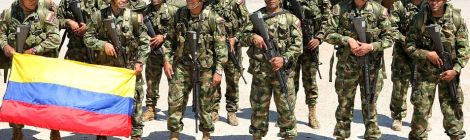
    As activists around the world participate in a Global Day of Action against criminalisation of drug use, evidence from the multi-billion dollar War on Drugs in Colombia suggests that militarized suppression of production and supply has displaced millions of people as well as the problem, not least to Mexico. The wrong lessons are being exported to Central America and beyond, but a groundswell of expert and popular opinion internationally is calling for alternative approaches to regulating the use and trade in drugs.

    Read Article →

    Mexico’s Conflicting Migration Policy Goals: National Security and Human Rights

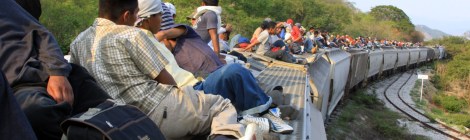
    Mexico has rapidly become a major site of transmigration from Central America to the United States, as people move in search of employment opportunities or escape from social violence. This rise in migrant flows from Mexico’s southern border overlaps with problems of control of contraband, organised crime, and the trafficking of drugs and arms. However, the government’s militarised approach to the phenomenon means that the use of force and human rights violations go unresolved and military approaches to preserving public order go unchecked. As long as migration remains a security issue, instead of a developmental and human rights matter, it will not be tackled appropriately. Instead, the government must start to view the matter through a citizen, not national, security lens.

    Read Article →

    Exporting (in)Security? Questioning Colombian Military Engagement in West Africa

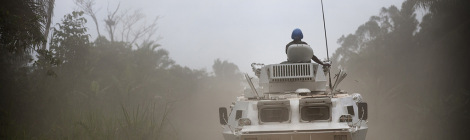
    With skills and expertise in fighting insurgencies and drug trafficking networks, Colombia’s armed forces are increasingly being sought for engagement in similar security challenges in West Africa. But increasing Colombian engagement gives rise to a number of important questions – not least of which is the goal and expected outcomes of replicating militarised approaches to the war on drugs that have already failed in Latin America.

    Read Article →

  • Migration Due to Climate Change Demands Attention

    Governments in Asia and the Pacific need to prepare for a large increase in climate-induced migration in the coming years, says a forthcoming report by the Asian Development Bank (ADB).

    Typhoons, cyclones, floods and drought are forcing more and more people to migrate. In the past year alone, extreme weather in Malaysia, Pakistan, the People’s Republic of China, the Philippines, and Sri Lanka has caused temporary or longer term dislocation of millions. This process is set to accelerate in coming decades as climate change leads to more extreme weather.  

    “No international cooperation mechanism has been set up to manage these migration flows, and protection and assistance schemes remain inadequate, poorly coordinated, and scattered,” the report states. “National governments and the international community must urgently address this issue in a proactive manner.”

    ADB expects to issue the report, Climate Change and Migration in Asia and the Pacific, in early March as part of a broader ADB project aimed at increasing awareness of, and enhancing regional preparedness for, migration driven by changing weather patterns.

    The report highlights specific risks confronting climate change “hotspots”, including megacities in coastal areas of Asia. These hotspots of climate-induced migration face pressure from swelling populations as rural people seek new lives in cities. The problem is compounded by greater dislocation of people caused by flooding and tropical storms.

    Climate-induced migration will affect poor and vulnerable people more than others,” said Bart W. Édes, Director of ADB’s Poverty Reduction, Gender, and Social Development Division. “In many places, those least capable of coping with severe weather and environmental degradation will be compelled to move with few assets to an uncertain future. Those who stay in their communities will struggle to maintain livelihoods in risk-prone settings at the mercy of nature’s whims.”

    On the positive side, the report says that if properly managed, climate-induced migration could actually facilitate human adaptation, creating new opportunities for dislocated populations in less vulnerable environments.

    The ADB project, Policy Options to Support Climate-induced Migration, is the first international initiative that aims to generate policy and financing recommendations to address climate-induced migration in Asia and the Pacific.

    To obtain a copy of the draft report, contact  or +63 2 632 6643. For further information visit www.adb.org/SocialDevelopment/climate-migration.

    Article source: Asian Development Bank

    Image source: Hamed Saber

  • Sustainable Security

    Islamic State (IS) appear to attach considerable importance to dreams and have started publishing dream accounts of martyred jihadists. Do IS see this as a way of ‘calling’ potential lone wolf jihadists to action?

    Over the last decade, several studies have shown that militant Islamists make extensive use of reported night dreams to inspire, announce, and validate violent jihad. Bin Laden himself brought up dreams in one of the first videos released after 9/11. Mullah Omar was understood by his followers to have founded the Taliban, and run his campaign, inspired and even guided by his dreams. Dream accounts can be found of numerous other well-known militants, including Richard Reid, the failed shoe bomber, the two core 9/11 planners, Ramzi bin al-Shibh and Khalid Sheikh Muhammad, and the ‘20th’ suicide bomber, Zacarious Moussaoui.

    This tradition has continued with Islamic State (IS) members and sympathisers who appear to attach considerable importance to dreams. This article updates the discussion and analysis of the role of dreams for IS jihadists, and, through looking at some recent case studies, asks whether IS is publishing martyred jihadist dreams as a way of ‘calling’ potential lone wolf jihadists to action.

    Dreaming in Islam

    mosque-night

    Image by four12 via Flickr

    To understand the jihadi appreciation for dreams, it is important to first understand that dreams are both historically and contemporaneously important in Islam. Indeed, today, Arabic TV programs are replete with dream interpretation programs and the internet is awash with Islamic dream interpretation websites.

    The dream tradition is similar across all the main branches of Islam: Sunni, Shia, Salafi and Sufi, as well as amongst the minority Alevi and Ahmadiyya sects. In the Sufi mystical traditions, dreaming is highly regarded. While Sufis have traditionally paid the most attention to dreams, the more literalist Salafis appear to have become more interested in them over time.

    The Islamic tradition distinguishes between three types of dreams: the true dream (al-ru’ya), the false dream, which may come from the devil (shatan), and the meaningless everyday dream (hulm) which could be caused by what has been eaten by the dreamer and comes from the nafs (ego, or lower self).  The interpretive tradition regarding the “true dream” (al-ru’ya) is a fundamental feature of Islamic theology. The true dream tradition is reported more extensively in the hadith. 

    Islamic dream interpretation differs from Western attitudes to dreams, which, being largely shaped by a scientific materialist outlook of the world, generally see dreams as bearing little or no relevance for people. But in Islam, dreams are understood as, on occasion, offering a portal to the divine will, and are seen as the only appropriate form of future divination. Dreams have a special authority as they are believed to communicate truth from the supernatural world (dar al-haq).  Lamoreux summarises the importance of dreaming in Islamic societies:

    Dream interpretation offered Muslims a royal road that led not inward but outward, providing insight not into the dreamer’s psyche but into the hidden affairs of the world. In short, the aim of dream interpretation was not diagnosis, but divination.

    Based on his anthropological research in Egypt, Gilsenan offers further insights:

    In dreams began responsibilities. Judgements were made. Commands issues. Justifications provided. Hope renewed. Conduct was commented on by holy figures, by the Prophet himself, by the founding Sheik who had died some years before but who appeared with his son and successor.

    Dreams were public goods, circulated in conversational exchanges, valorizing the person, authoring and authorizing experience, at once unique and collective visual epiphanies. Dreams thus constituted a field of force and framed interchange between the living and the only apparently dead.

    There is extensive literature on the art and science of dream interpretation in Islam going back over a thousand years, and scholars like Sirriyeh are emphatic about the importance of the Prophet Mohammed’s God-guided interpretation of dreams. Mohammed’s and his companions’ dreams played a significant role before, during and after the Qur’anic revelation. In the six months before the  revelation began, his wife Aisha said his dreams came true like the ocean’s waves. The Prophet’s famous night journey from Mecca to Jerusalem (Laylat ul-isra wal miraj), in which Muhammed ascended to heaven and was initiated into the mysteries of the cosmos, is understood by many Muslims, though not all, as being in a dream vision (al-ruya can refer to vision and or dream). Mohammed would start the day asking about his companions’ dreams as a source of possible illumination and spiritual guidance. The Prophet’s companion, Abd Allah b. Zayd, is understood to have dreamt the Islamic call to prayer. There are three dream reports in the Qur’an, two reported as received by the Prophet Mohammed. One of these directly relates to the decisive Battle of Badr  (624 CE). The Joseph Sura contains the reported dream experiences of the Prophet Joseph, such as that of the seven fat and seven lean cows.

    The continued vitality and relevance of dreams in the Islam is well shown in the following examples of Islamic State fighters drawn from Dabiq, the Islamic State magazine.

    Recent dream accounts published by Islamic State

    In April 2016 (issue 14) Dabiq published three dream accounts purporting to have inspired Khalid El Bakraoui in his martyrdom operation on the Brussels metro killing 14 people. Khalid’s first dream was a ‘life-changing’ dream in prison in which he fought alongside the Prophet Mohammed against unbelievers. After the Paris 2016 attacks he is reported in the same Dabiq as having had two further motivational dreams. In the second, he ‘arose to a high place, as if I was in space, surrounded by stars; but the sky was the blue of night’. He says he heard a voice telling him he was only created to worship Allah and ordering him to fight for his cause and make his word supreme’. The third dream follows on almost in a sequence as Khalid dreams of his own martyrdom:

    I saw myself on a boat along with Abu Sulayman and another brother. Each of us had a Turkish soldier as a hostage. I had a pistol and Abu Sulayman had a belt. I told him to give me his belt, as I would feel better having it. So he gave me the belt and I gave him my pistol. I then quickly advanced with the Turkish hostage in order to close in other soldiers, two of whom were in front of us. I detonated my belt, killing the soldiers. My head then descended to the ground. One of the brothers working on the operation and Shaykh al-Adnani took my head and said, ‘check to see if he is smiling or not’. I then saw my soul and those of the three soldiers. All of a sudden, the soldiers souls burned and vanished and, suddenly, the banner of Islam – represented in the dream by the flag of the Islamic State – came out of the earth and was shining brightly. My soul then became full of light’.

    He then claimed he heard a voice telling him he had achieved deliverance.

    This tripartite dream account sequence evokes familiar Islamic dream tropes, images and ideas. In the first dream we see the dreamt and visualised conversion to violent jihad, including the ‘presence’ of the Prophet Mohammed which is understood in Islam as denoting a holy dream if the dream message is congruent with the teachings of the Qur’an and hadiths. Prison surroundings are famous, or infamous, for religious conversion dreams as many customary behaviours are circumscribed.

    The second dream report reads as almost from an ancient holy text; high places and mountain tops are traditionally sites of vision. Indeed Attar’s famous C12 epic Sufi poem ‘The Conference of the Birds’ (Farid ud-Din Attar, 1984 (written 1177) is a tale of Islamic revelation and enlightenment, symbolised by the human journey to the mountain top from where and from within Allah/God can be directly known and joined. The instruction to worship, fight and ‘make his word supreme’ would make excellent sense to a pious Muslim as long as the notion of fighting was referenced to the greater jihad of fighting the lower self, the nafs or selfishly orientated ego. Khalid’s membership of IS and the bloody and relentless killing of all peoples of a different religious persuasion (or none) by IS will have been experienced and apparently shared by militant jihadists as an example of the highest call to arms and martyrdom.

    The third dream completes the sequence from the first calling dream to his visualised death and the spiritual testing of the martyrdom operation. Authorisation and sanctity are communicated via the imagery of Khalid’s soul being composed of, or infused with, light while the enemies (Turkish soldiers) clearly have weaker or non-existent souls which may help validate (to themselves and others) their killing even though they are also Muslims. The dream also conveniently defines Islam as Islamic State. And then ‘deliverance’ is signified at the end of this epic dream narration sequence. As propaganda, now to be read by thousands of jihadist and interested potential recruits, almost all of whom may be aware of the potentially sacred nature in Islam of at least some dreams as being divine emanations and commands, this dream story is a classic. Remove the IS context and many Muslims would feel blessed to have received such dreams.

    In the following Dabiq (no 15) a future paradise dream example is quoted:

    Abul-Muthanna as-Sumali (Ali Dirie) was a man of great character and worship. After being imprisoned by the Crusaders for seven years, he was able to flee Canada despite being banned from travel. Upon the official expansion of the Islamic State to the Levant, he rushed to revive the Muslim Jama’ah through his bay’ah. Several weeks later, he had a dream in which the Hur (the maidens of Paradise) gave him glad tidings of martyrdom on a specific date (one which I have forgotten). A week before his martyrdom, several of our friends decided to go shopping for new military attire. He told them he wouldn’t be going with them, because he was expecting martyrdom soon, and narrated to them his dream. When that day arrived ….Abul-Muthanna rushed to battle ….fighting, until he was severely wounded, bleeding until he surrendered his soul to his Lord….May Allah accept him and add the blessing of caliphate we enjoy today to the scroll of his good deeds and that of all other martyrs.

    These issues are the first times Dabiq has contained personal dream reports of significant IS members intending to demonstrate the glorious Allah inspired sacrifice of their martyrs.

    Dreams may also feature in decision-making processes at different levels in the Islamic State organization. It was reported that Abu Bakr al-Baghdadi’s decision to withdraw forces from Mosul in late 2014 was inspired by a dream in which Prophet Mohammed ordered al-Baghdadi to evacuate the city.

    Both IS leaders and members strongly relate to their night dreams and IS have started recently publishing them. Is there a particular purpose to this new propaganda practice using dreams?

    The transpersonal communication of night dreams in Islam

    ‘Heroic’ (in an Islamic form/genre) dream accounts are now being ‘weaponised’ to influence other IS members, followers and jihadi wannabees. We know the media has enormous effect on our dreams. We also know, though this is maybe irrelevant as IS hate Sufis due to their shrine and Shaykh workship, that in the mystical Sufi Islamic groups it is normative for the top Shaykhs to ‘send’ dreams to their followers.

    In April 2005 I interviewed Shaykh Nazim, a famous Naqshbandi Shaykh, who is now deceased, following numerous reports by his UK followers that he was sending them night dreams of spiritual advice. He told me, “Yes, sometimes I send my power in dreams, when necessary.” I asked how he did this, and he said, “First you must take a step, even half a step, away from the material world, and we Sufis have ways to do this”; enigmatic indeed!. Can dreams be implicitly or even explicitly ‘sent’ in some form, or maybe just believed to be so communicated? Such a thought may well seem farfetched and fanciful to Western post-enlightenment minds, but certainly many Sufis think so and such practices have a long history in Sufism.

     Conclusion

    The last two Dabiqs have contained personal dream reports of significant IS members seemingly for the first time. IS recognise and value some kinds of night dream accounts and see a role for them in their movement’s public propaganda war; so why now for this high tech, high media skills Caliphate-named organisation? IS are slowly being degraded from without and are ruthlessly striking at Western symbolic soft population centres; IS are now strongly encouraging their followers to attack western centres; we see a rise in the self-inspired, via the internet and perhaps dreams, of the lone wolf who is previous to their attack, untraceable. A few lone wolves in summer 2016 seem to have responded to IS media exhortations to attack western targets and some seem clearly to have a history of prior mental illness. Does this make them more vulnerable to being influenced by dreams? We don’t know yet. But vulnerable young people on the net who spend a lot of time reading about the ‘heroic’ caliphate and its actions may well start having related dreams.

    Intelligence agents have spoken to me (2012) of the critical role of dreams in motivating potential jihadis from contemplation to decisive action. I was once told of a jihadi dreaming of his future death during anticipated jihad in Somalia, and another agent told me about a prospective jihadist experiencing two different peoples’ contradictory voices debating with him in his dream about whether he should go on jihad. Such uninterpreted and undigested dream images and accounts may conceivably convince a vulnerable young person, possibly after their consulting an IS dream interpretation twitter account and/or their baqiya (IS ‘family’), that their holy mission is through violent jihad. Is it possible then that potential lone wolves, perhaps with histories of mental health problems, believe themselves as being ‘called’ and then in part recruited not only through the internet, but through the sublime power of ‘glorious’ dream accounts of recent jihadi martyrs? We will have to wait for more autobiographical, media and trial accounts to emerge to know.

    Dr Iain R. Edgar is Emeritus Reader at the Department of Anthropology, University of Durham, UK.

  • Sustainable Security

    This piece by sustainablesecurity.org’s Zoë Pelter and Richard Reeve was originally published on 5 September, 2013 on openDemocracy 

    4815774738_b9962f4875_b

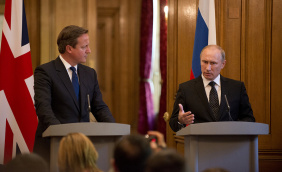
    Image: The Prime Minister during a joint press conference with US President Barack Obama. Source: The Prime Minister’s Office

    The narrow defeat on 29th August of the UK government’s parliamentary motion on support in principle for military action against the Syrian regime has forced Prime Minister David Cameron to concede that Britain will play no part in any direct attack on Syria. If the UK is to play no military role in ‘punitive’ responses to the regime’s alleged use of chemical weapons, what options are open to the UK in terms of resolving the Syrian conflict, protecting civilians and punishing those responsible for war crimes there? And how does Cameron’s overt preference for the military option, with or without UN mandate, condition these non-military options?

    Pushing for peace

    The possibility of a negotiated peace in Syria should not be dismissed. Neither the regime’s military, militia and foreign allies, nor the variety of armed factions ranged against them (and, increasingly, each other) are exhausted. Nor do the Assad regime’s mid-year successes in central Syria presage any imminent likelihood of it regaining control of the north and east. The strategic stalemate that appeared to set in to the conflict in June, after pro-Assad forces retook al-Qusayr, arguably presented a breathing space for negotiations and the so-called Geneva II conference, proposed by the US and Russia, with UN and Arab League backing, the previous month. As recently as mid-August, the Geneva talks were expected to resume in September.

    But even convening these talks will now prove far harder. Expectation of Western intervention against President Bashar al-Assad, as well as their own increasing divisions, gives the Western-backed armed opposition groups an incentive to delay talks. Jihadist groups that have proved effective militarily are largely excluded. US and Russian facilitation of the Geneva process, however fraught, also tends to exclude the voices of regional actors like Turkey, Iran, Iraq and Saudi Arabia, each of which feels its interests very directly threatened in Syria and gives active support to one or more armed faction.

    This calls for a rethinking of the Geneva process, if not the 2012 transition roadmap, to bring in the full range of actors, not the abandonment of peace talks. Threat of US-led intervention and its own increasing international marginalisation, should it be proved to have launched a chemical attack on 21st August, could incline the Assad regime towards a negotiated settlement, perhaps even an exit and exile strategy.

    Cameron and Putin

    Image: The Prime Minister welcomes President Vladimir Putin to Downing Street ahead of the G8 Summit. Source: The Prime Minister’s Office

    This will not happen without pressure from Iran and Russia. Both have much to lose in Syria, but neither is entirely closed. Iran is still in its post-electoral opening and under severe economic pressure, looking to cut a wider deal with the West. Russia may not be comfortable with its isolated position defending the alleged user of chemical weapons. Like the US, it fears the growing influence of jihadi groups while the current stalemate continues. While there is little hope of Moscow abandoning its Security Council veto over action against Syria, it will be embarrassed if it stands almost alone defending Assad in the Council or against a General Assembly resolution. Neutrally collected and analysed evidence of Syrian regime culpability for chemical weapons attack will be crucial to shifting Russia’s position.

    Having made clear its preference for ‘punitive’ military action, and been frustrated by parliament in pursuing such action, the UK government is not ideally placed to broker negotiations. Yet the UK does have influence with Syrian opposition groups, in the Gulf States and, when it acts in concert with its less interventionist EU partners, with Russia, Turkey and Iran.

    Fighting impunity

    Again, the importance of due investigative and legal process through UN Fora is crucial. When asked on 29 August if he agreed that Assad should be prosecuted at the International Criminal Court (ICC), David Cameron replied curtly that these processes take time. Yes, the wheels of institutional responses turn slowly, not least justice institutions. Yet the most obvious response to any breach of customary international law on the use of chemical weapons (Syria is one of just five states not to have signed the 1993 Chemical Weapons Convention) is a war crimes prosecution through the ICC. It is not important that Syria has not signed the Court’s establishing Rome Statute. Assad and any responsible commanders could still be subject to international prosecution if the Security Council referred Syria formally to the ICC.

    The UN has been investigating a wide range of alleged crimes committed by both sides with a view to future prosecutions. Clearly, the presence on the Security Council of Syrian allies and a majority of non-signatories to the Rome Statute presents obstacles to referral, but the Council has overcome such obstacles before, notably China’s reluctance to see its Sudanese allies prosecuted over actions in Darfur. With France and other allies, the UK should take the lead within the Security Council in pushing to refer Syria to the ICC based on the same ‘moral minimum’ or red line that has been deployed in favour of armed intervention. This, in turn, may provide leverage to persuade pro- and anti-Assad factions alike to take peace negotiations more seriously.

    Notwithstanding the heavy shadow of its past action in Iraq, the UK’s moral standing is bolstered by commitment to legal and democratic process. The UK should take a breath, step back from punitive reaction and recommit itself to a multilateral, inclusive and legally rigorous approach to resolving the war in Syria and its many affiliated regional conflicts. No other form of intervention will effectively protect the lives and rights of Syrian civilians either in the current war or the difficult peace that must follow.

    Richard Reeve is the Director of Oxford Research Group’s Sustainable Security Programme. He works across a wide range of defence and security issues and has particular expertise in Sub-Saharan Africa, peace and conflict analysis, and the security role of regional organisations.

    Zoë Pelter is the Research Officer of Oxford Research Group’s Sustainable Security Programme. She works on a number of projects across the programme, including Rethinking UK Defence and Security Policies and Sustainable Security and the Global South.

  • Sustainable Security

  • Sustainable Security

  • Mano Dura: Gang Suppression in El Salvador

    El Salvador’s gang history dates back to the 1960s. At the time, numerous neighbourhood-based groups provided marginalised urban youths with the means to hang out, party, take drugs, and fight their rivals. These gangs constituted a nuisance for the affected residents but did not represent a public security threat. The situation drastically changed when the Central American civil wars ended and the United States stepped up its deportations of offending non-citizens, including members of Mara Salvatrucha (or MS-13) and Calle Dieciocho (18th Street). Both gangs had been formed in Los Angeles’ immigrant barrios, a haven for Central American refugees some of whose children responded to difficult circumstances by joining existing gangs (such as the Dieciocho) or forming their own group (Mara Salvatrucha). Tired of the stresses of gang life, many deportees arrived in their country of origin hoping to make a fresh start. Faced with poor reinsertion opportunities, however, they continued with what they knew best. Their comparatively nice dress, money, and tales of gang exploits held a fascination that local adolescents found hard to resist. Soon the imported gangs absorbed their smaller counterparts and continued to grow, since widespread social exclusion made El Salvador fertile ground for gang proliferation. Over time gang members resorted to greater levels of violence and drug activity, but the country long lacked a full-fledged gang policy.

    In 2003 – eight months before the 2004 presidential elections – President Francisco Flores of the conservative ARENA party launched Plan Mano Dura (“Strong Hand”), ostensibly to dismantle the gangs and curb the number of homicides, most of which had been attributed to these groups. Backed by considerable media publicity, the measure entailed not only area sweeps and joint police-military patrols, but was also accompanied by a temporary anti-gang law that permitted the arrest of suspected gang members on the basis of their physical appearance alone. Both the nature and the timing of the initiative suggested that it had been designed to improve the ruling party’s electoral position rather than to ensure effective gang control. Plan Mano Dura enjoyed huge support among a population that had become weary of permanent insecurity, but human rights defenders, judges, and opposition politicians criticised it for its abuses and neglect of prevention and rehabilitation. The measure helped ARENA win the elections, but the incoming administration of Antonio Saca responded to the earlier criticism by incorporating prevention and rehabilitation into his Plan Super Mano Dura. These alternative approaches, however, were a largely rhetorical concession since suppression remained the dominant strategy. Contrary to the official discourse of success, Mano Dura was spectacularly ineffective: the homicide rate escalated, and the gangs adapted to the climate of repression by toughening their entry requirements, adopting a more conventional look, and using heavier weaponry. More importantly, confinement in special prisons allowed gang members to strengthen group cohesion and structure. Moreover, the large-scale incarceration of gang members fuelled the need for more resources for both the inmates and their families and resulted in an upsurge in extortions, particularly in the transport sector.

    By June 2009, when the government of ex-journalist Mauricio Funes and the FMLN (the former guerrilla army) came into power, the gang problem had become intractable. MS-13 and Dieciocho clicas (subgroups) sprawled hundreds of marginal urban communities, their members committed a variety of crimes – ranging from threats, robbery, injuries, auto theft, and the illegal carrying of firearms to drug sales, extortions, rapes, kidnappings, and homicides – and their violence had become increasingly diffuse and brutal. The Funes government announced a comprehensive crime policy comprising social prevention, law enforcement, rehabilitation, victim support, and institutional and legal reforms. The strategy, however, is underfunded (state coffers had been plundered by previous administrations), and gangs are being tackled through the overall crime policy rather than a specific gang programme. The police – now under a new command – has stopped conducting mass raids in gang-affected zones and begun to strengthen its investigative capacity. These are promising steps, but events on the ground soon pushed policy in another direction. Public demands for a quick reduction of homicides and media coverage alleging government incompetence led President Funes in November 2009 to deploy the army. Military participation in public security tasks is no recent development. At present, however, the army has been given broader powers, permitting it to conduct patrols, perform searches, and arrest criminals caught red-handed as well as to maintain perimeter security at the prisons. In what appears to be a face-saving gesture, the Funes administration adopted a gang strategy that exhibits ominous parallels with the earlier Mano Dura policies. Meanwhile, prevention and rehabilitation have once again taken the backseat.

    Sonja Wolf is a Post-doctoral Fellow at the Universidad Nacional de Mexico, Mexico City where she conducts research on street gangs and organised crime in Central America.

    Image source: VCK xD

  • Sustainable Security

    Sustainable Finance and Energy Security

    General volatility in financial markets – fuelled by irresponsible lending and trading practices, as well as evidence of market manipulation – have had an effect on oil prices. Although the specific effects of the finance sector on oil prices requires further investigation, we can already understand that a sustainable and secure future will require the development of a wider energy mix to meet rising demand. To this end, more sustainable financial systems must be developed to service the real needs of citizens

    Read Article →

  • Climate change

    International Alert’s Janani Vivekananda discusses how climate change will will interact with other social, economic and political stressors to drive instability.

    “Rather than climate change being this single, direct causal factor which will spark conflict at the national level,” Vivekananda said, these stressors “will shift the tipping point at which conflict might ignite.” In places that are already weakened by instability and conflict, climate change will simply be an additional challenge.

    Source: youtube 

    Read more »