Blog

  • Security Net: Nuclear Risk Reduction in Southern Asia

     “Security Net” is a scenario for a future Nuclear Risk Reduction Regime in Southern Asia.  It  explores what such a regime might look like, how it might come into existence, what are its central challenges, and what might be its ramifications for nuclear proliferation and non-proliferation policy in Southern Asia today.

    This study examines the idea of a “Southern Asia” itself and considers the differences between the relationship  of  regional identity  formation  to  nuclear  non-proliferation in Southern Asia in comparison  to  Southeast  Asia  and  Latin America.  It then considers what sort of internal drivers,  wild  cards,  or outside forces could create  incentives for regional cooperation on Nuclear RiskReduction in Southern Asia the future.  

    The full article can be accessed here.

    Image source:  jmuhles

  • Sustainable Security

  • Competition over resources

    As the global population soars toward nine billion by 2045, this corner of Africa shows what’s at stake in the decades ahead. The Rift is rich in rainfall, deep lakes, volcanic soil, and biodiversity. It is also one of the most densely populated places on Earth. A desperate competition for land and resources—and between people and wildlife—has erupted here with unspeakable violence. How can the conflict be stopped? Will there be any room left for the wild?

    Image Source: DFID

    Read more »

  • Sustainable Security

    This article is taken from Paul Rogers’ Monthly Global Security Briefings and was originally posted by Oxford Research Group on 12 March, 2014.

    Recent examples of short-term climate disruption have done much to bring the overall issue of climate change up the political agenda. In responding to what will be one of the key challenges of the next decades – well beyond the 15-year lifetime of the post-2015 global development goals currently under discussion – much of the attention has been focused on the need to adapt to those elements of climate change that are already irreversible and also to the need to decarbonise existing high carbon-emitting economies. What needs much greater attention is the fundamental need to ensure that low-carbon emitters in the Global South are enabled to combine effective human development with responding to the challenges of climate change.

    Asymmetric Impacts

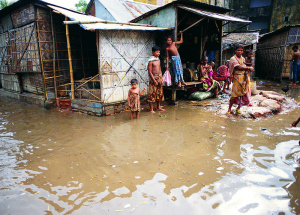
    Floodwaters surround houses in Dhaka, Bangladesh, one of the world's most climate vulnerable countries.

    Floodwaters surround houses in Dhaka, Bangladesh, one of the world’s most climate vulnerable countries. Source: CAPRA Initiative (Flickr)

    The scientific evidence that climate change is happening is now overwhelming and only a tiny handful of scientists question its anthropogenic causes. The most recent decadal report from the World Meteorological Office (WMO), for 2001-2010, confirms that climate change already involves disruption, with the decade seeing a clear increase in impact across the world. Events since 2010, including excessive heat waves, floods, droughts and the strongest land-fall cyclone (Typhoon Haiyan) ever recorded all point to accelerated disruption.

    In recent years there has been a relative pause in the rate of atmospheric warming but research points to aspects of the Southern Oscillation being responsible, temporarily slowing the overall rate of warming of the atmosphere, but not of the oceans. This is expected to change in the second half of the current decade and the effect of this will be that anthropogenic-induced warming and natural cycles will be in synchrony, leading to rapid change and greater climatic disruption.

    Climate change is thus expected to accelerate but there is, in addition, abundant evidence that it is already a markedly asymmetric process. There are many indications that substantial areas of the tropics and sub-tropics will heat up and dry out faster than temperate latitudes. This is significant for four reasons:

    • These regions support the majority of the world’s people and produce the majority of the world’s food, much of it being locally produced in subsistence farming systems.
    • Most of the poorer and more marginalised people live there, with least resilience to climate disruption.
    • These regions also include most of the rapidly growing megacities where infrastructure is not keeping pace with growth, resulting in low urban resilience.
    • They include the vast “carbon sinks” of the Amazonian, African and Southeast Asian rain forests, the diminution of which will accelerate atmospheric carbonisation.

    The other element of asymmetry – relatively faster warming of the near-Arctic – is directly advantageous to some countries, most notably Russia and Canada, both of whom stand to benefit in the short term in three ways:

    • Sea ice will diminish, opening up new commercial sea routes.
    • Arctic fossil and other mineral resources will be easier to exploit.
    • Agriculture will “move North”, opening up new regions for development.

    These two countries are also major fossil fuel producers so they benefit through these revenues, including easier exploitation of Arctic reserves, as well as from the impact of their use since this is likely to enhance Arctic warming. It is hardly surprising that neither government has much interest in controlling carbon emissions. As a Permanent Observer at the Arctic Council, the UK could do much to work with the five Nordic countries, all Main Council Members, on this issue, also involving new observer states, such as China, India, Japan and South Korea that have an interest in new sea routes, but are increasingly aware of the potential direct negative impacts on their own economies of climate change.

    The Changing Political Environment

    The direct denial of climate change as a phenomenon affecting human society still persists and is most clearly seen in two powerful interest groups. One is the fossil fuel industry, especially oil companies and producer countries that have a clear interest in protecting their revenues. There are also major interest groups clustered around those who genuinely believe that the unrestricted free market form of capitalism is the only appropriate system for the global economy. As such they are deeply suspicious of governmental interference in the economy and therefore highly suspicious of a world-wide challenge that demands strong intergovernmental coordination and government action.

    Both groups have been powerful and effective supporters of the denial community and though they are helped by the governmental attitudes of countries such as Russia and Canada, their greatest support came from the Bush administration in the United States in 2001-2009. Their influence is now declining for three broad reasons.

    • One is that the frequency of severe and even extreme weather events is changing public opinion in many countries. The UK is a good example where serious winter flooding was enough to ensure that the Prime Minister, David Cameron, agreed that climate change was of huge concern, even though many in his own party remain doubters. At a global level, the WMO report adds credibility to the view that extreme weather events, like the canary in the coal mine, are harbingers of what is to come.
    • A second element is that the most powerful state, under Barack Obama, acknowledges that climate change is happening, even though powerful denier elements remain resolute in their resistance.
    • Finally, a number of major industrial groups, especially those in the engineering industry, are embracing the prospects for new market opportunities as renewable energy technologies and techniques of storage and conservation come into their own

    Current Responses to Climate Change

    The two main responses to climate change currently envisaged are the progressive decarbonisation of carbon-intensive societies and the adaptation of high- and low- carbon societies to the impacts of climate change that are inevitable given the existing increases in atmospheric carbon. Both of these remain likely to gain in importance given the recognition of the huge challenges ahead. While the action so far is inadequate, it at least now shows signs of some prioritising. Whether the 80% carbon emission requirements of industrial societies can be achieved within twenty years is, at most, questionable, but it is now at least recognised as a worthy aim.

    There is also recognition that adaptation is addressing symptoms rather than responding to causes – improved flood defences in a country such as Britain may well be necessary but unless climate change is halted they are just short-term responses that will progressively be overwhelmed. Similarly, there is already good work going on in aiding the adaptation of less developed economies through, for example, the breeding of robust food grain varieties more able to withstand low rainfall. Such work needs considerable expansion but this, and the progressive decarbonisation of high emitters still misses out a crucial element in responding to climate change.

    The Missing Element

    In relative terms, the missing element is the low level of investment in the evolution of low-carbon economies of societies that have not substantially industrialised, mainly those in the tropical and sub-tropical regions of the Global South. Such countries include most of the most marginalised and poorest people on Earth where there is a deep-rooted desire for far greater life chances, yet these cannot be met through the modes of economic organisation of the industrialised North. If the marginalised majority is to see its development prospects enhanced then this has to be achieved through new forms of low-carbon economic development. Countries have to succeed without following the path taken by industrialised states over the past two hundred years.

    It follows that there is a very strong case for a state such as the UK prioritising any form of development assistance which aids this process. Much of this will centre on any form of low carbon energy use, including a wide range of renewable technologies, with major improvements in energy conservation and storage. Much work is already going on in this area, not least in relation to renewable energy technologies readily available to non-networked societies. It is also notable that when technologies emerge which demonstrate obvious utility, the speed of take-up can be remarkable. The cell-phone revolution in sub-Saharan Africa is just one example.

    Regrettably, UK Department for International Development (DFID) operational plans for 2013-14 indicate that low carbon development (LCD) targets from the Department’s 2011-15 strategy have been reduced or abandoned. The 2015 target for installed clean energy capacity has been reduced by almost 97%, from 3GW to 100MW. The original target to raise $610 million in private finance for LCD has disappeared, having raised $15 million by 2013.

    If the UK development programme was to commit just 20% of its budget to this area of work, the results could be extremely valuable, especially if part of that was to encourage North-South research and development partnerships. Furthermore, while the British development programme has many faults, it has grown to be the world’s second largest and there is sufficient cross-party support for this to be sustained against opposition. Because of the size of this programme, the UK has a more powerful voice than most in intergovernmental fora relating to development. It can use this voice to help ensure that the commitment promoted here is shared by other national and intergovernmental development programmes.

    Conclusion

    Climate disruption is one of the greatest challenges facing humankind, a challenge that is at last becoming recognised as such because of the extreme nature of many recent weather events. Decarbonising major industrial economies and funding adaptation to the already inevitable impact of climate change are essential responses but they must be accompanied by major programmes to ensure that human development in the poorer economies can be fully accomplished through processes of low carbon economic development. This is a critically important task over the coming decades, is insufficiently recognised as such, and should be a priority for any serious political party committed to the world-wide development of human well-being.

    Paul Rogers is Global Security Consultant to Oxford Research Group, for which he writes monthly security briefings.  He is Professor of Peace Studies at the University of Bradford and author of numerous books including ‘Beyond Terror’. Paul writes a weekly column for openDemocracy  and tweets regularly at @ProfPRogers.

  • Sustainable Security

  • Sustainable Security

    The Global Land Rush: Catalyst for Resource-Driven Conflict?

    Michael Kugelman of the Woodrow Wilson International Center, argues that the factors that first sparked many of the land acquisitions during the global food crisis of 2007-08 — population growth, high food prices, unpredictable commodities markets, water shortages, and above all a plummeting supply of arable land — remain firmly in place today. He writes that land-lusting nations and investors are driven by immediate needs, and they have neither the incentive nor the obligation to slow down and adjust their investments in response to the wishes of distant international bureaucrats. This, he argues, has serious consequences for global security.

    Read Article →

    Human Security and Marginalisation: A case of Pastoralists in the Mandera triangle

    This paper seeks to bring out the relevance of human security in pastoral areas of Mandera triangle and the relationships and contradictions that exist between it and national security. The “Mandera Triangle” encompasses a tri-border region of Ethiopia, Somalia, and Kenya that exemplifies, in a microcosm, both a complex and a chronic humanitarian crisis that transcends national boundaries.

    Read Article →

  • Sustainable Security

  • Influential European Figures Issue Unprecedented Statement on Nuclear Dangers

    The recently signed arms control treaty between the United States and Russia brings welcome reductions in deployed nuclear warheads and an agreed ceiling on the number of delivery vehicles that each side may possess. We applaud the new agreement and the acts of political leadership required in both countries to bring it about. The breakthrough is all the more welcome, coming just weeks before both the Washington Summit on Nuclear Security and the Review Conference of the Non-Proliferation Treaty. Across Europe, and at this moment of diplomatic opportunity, we have joined together to declare our unequivocal support for President Obama’s vision of a world without nuclear weapons, to declare our desire to re-set the security relationship between Europe, the US and Russia, and to show strong European support for the measures necessary to deliver these goals.

    Let no-one doubt the importance of this endeavour. The risks of proliferation are growing. India, Israel and Pakistan have already entered the nuclear club. If Iran gets the bomb, others certainly will follow.  We know that terrorist groups want to acquire nuclear materials, making the security of those materials an issue of truly global significance. Nuclear armed states inside the NPT have not been disarming fast enough, straining the confidence of their non-nuclear partners in the credibility of the NPT grand bargain. Without further action, there is a real danger that the world will be overwhelmed by proliferation risks and incidents of nuclear weapons use, with all their catastrophic consequences.

    The strategic implications of this are profound. Nuclear deterrence is a far less persuasive strategic response to a world of potential regional nuclear arms races and nuclear terrorism than it was to the Cold War.

    The circumstances of today require a shift in thinking. We must, through further multilateral agreement, reduce the role and the number of nuclear weapons in the world, deepen confidence in the non-proliferation regime, and improve the security of existing nuclear weapons and materials. We must achieve these goals while at the same time helping those countries that wish to go down the civil nuclear energy route do so safely.

    The practical steps necessary to achieve our goals are clear. In Washington, we must demonstrate wider international ownership of the issue of nuclear security. This is not just a concern for those fearing a nuclear terrorist attack. Any major nuclear security incident anywhere is likely to derail the civil nuclear renaissance everywhere. Regardless of whether we as individuals support the idea of more nuclear power, this may ultimately undermine global attempts to meet the challenge of climate change, an outcome we all have a stake in avoiding.

    The Washington Summit also must agree practical action on programmes to control and destroy nuclear materials and ready-made weapons within four years; and participants must agree to rationalise the many complex overlapping international conventions, initiatives and resolutions that are the current institutional architecture aimed at addressing this issue.

    In May, at the NPT Review Conference in New York, the Treaty, for 40 years the foundation of counter-proliferation efforts, must be overhauled and reinforced. All signatory nations should accept the strengthened monitoring provisions of the Additional Protocol. The IAEA needs that strengthened inspection power if it is to provide effective monitoring of declared and undeclared nuclear material and activities. Nations wishing to develop a civil nuclear capability must first agree to proper verification procedures and unimpeded access for the IAEA.

    Progress of this nature will not be possible without a credible process for nuclear disarmament. Beyond START follow-on we need urgent and more radical initiatives from the nuclear weapons states. Increasingly it is becoming more challenging to explain why some countries should have, and others should not be allowed to possess nuclear weapons.

    All nuclear weapons, including tactical ones, must be included in disarmament talks. Where this necessitates discussion of conventional force imbalances, these too must be included. States that now possess nuclear weapons must work together to reduce their importance to national and international security.

    The establishment of nuclear free zones in Latin America, sub-Saharan Africa and Central Asia is very encouraging. By the end of the NPT Review Conference there must be a credible process for the discussion of a Weapons of Mass Destruction Free Zone in the Middle East.

    After May, attention must also return to other issues. The countries that have not yet ratified the Comprehensive Test Ban Treaty including the US, China, Israel, Pakistan, India and North Korea should do so urgently, allowing it to come into force. The stalemate in the Geneva Disarmament Conference on a Fissile Material Cut-Off Treaty must also be overcome. We need a treaty-sanctioned prohibition of the production of the basic materials required to manufacture nuclear explosive devices.

    Europe, through NATO, is central to the security relationship with Russia and can influence it through NATO diplomacy and the ongoing revision of NATO’s Strategic Concept. The UK and France, working with other nuclear weapons states, can play their full part in discussions on disarmament, and in efforts to implement any internationally agreed and verifiable reductions in warhead numbers. In addition to that leadership Europe is a key player in civil nuclear power and nuclear security.

    In short, Europe can and must play a vital role in building the cooperation necessary for meeting the global nuclear challenge. All our futures depend on it.

    Signed:

    Kåre Willoch, Former Prime Minister of Norway

    Kjell Magne Bondevik, Former Prime Minister of Norway

    Oddvar Nordli, Former Prime Minister of Norway

    Dr Gro Harlem Brundtland, Former Prime Minister of Norway

    Thorvald Stoltenberg, Former Minister of Defense and Minister of Foreign Affairs of Norway

    Wlodzimierz Cimoszewicz, Former Prime Minister and Foreign Minister of Poland

    Ruud Lubbers, Former Prime Minister of the Netherlands (author of “Moving beyond the stalemate”)

    Jean-Luc Dehaene, Former Prime Minister of Belgium and current MEP

    Guy Verhofstadt, Former Prime Minister of Belgium and current MEP,

    Lord Geoffrey Howe of Aberavon, Former British Deputy Prime Minister, Chancellor of the Exchequer and Foreign Secretary

    Laurens Jan Brinkhorst, Former Deputy Prime Minister and Minister of Economic Affairs of the Netherlands

    Jan Kavan, Former Deputy Prime Minister and Foreign Minister of the Czech Republic

    Volker Rühe, Former Defence Minister of Germany

    Elisabeth Rehn, Former Defence Minister of Finland, Former UN Under-Secretary-General, SRSG

    Hans Blix, Former Minister for Foreign Affairs of Sweden

    Wolfgang Ischinger, Former Deputy Foreign Minister of Germany

    General Bernard Norlain, Former French General, Former commander of the French Tactical Air Force and military counselor to the Prime Minister

    Lord George Robertson of Port Ellen, Former British Defence Secretary and Secretary General of NATO

    Sir Malcolm Rifkind, Former British Defence Secretary and Foreign Secretary

    Admiral the Lord Michael Boyce, Former British Chief of the Defence Staff

    Lord Charles Guthrie of Craigiebank Former British Chief of the Defence Staff

    Lord Douglas Hurd of Westwell Former British Foreign Secretary

    Margaret Beckett, Former British Foreign Secretary

    Des Browne, Former British Defence Secretary

    Lord Tom King of Bridgwater Former British Defence Secretary

    Louis Michel MEP Former, Minister for Foreign Affairs of Belgium

    Mogens Lykketoft MP, Former Minister for Foreign Affairs of Denmark

    Niels Helveg Petersen MP, Former Minister for Foreign Affairs of Denmark

    Uffe Ellemann-Jensen, Former Minister for Foreign Affairs of Denmark

    Frits Korthals Altes, Former President of the Senate and Minister of Justice of the Netherlands

    Michael Ancram, Former British Shadow Foreign Secretary and Shadow Defence Secretary

    Dr. John Reid, Former British Defence Secretary

    Sir Menzies Campbell, Former British Leader Liberal Democrat Party and Liberal Democrat Shadow Foreign Secretary

    Shirley Williams (Baroness Williams of Crosby) Former Adviser on Nuclear Proliferation to British Prime Minister Gordon Brown

    Charles Clarke, Former British Home Secretary

    James Arbuthnot, Former British Chair of the Defence Select Committee

    Adam Ingram, Former British Defence Minister of State (Armed Forces)

    Prof. Ivo Šlaus, Former Croatian MP, former member of Foreign Affairs Committee and current Emeritus Professor of Physics

    Francesco Calogero, Italian theoretical physicist & former Secretary General of Pugwash

    Giorgio La Malfa MP, Former Italian Minister of European Affairs

    Federica On. Mogherini Rebesani, Member of the Italian Parliament


    Source: Top Level Group of UK Parliamentarians For Multilateral Nuclear Disarmament and Non Proliferation

    Image source: BlatantNews.com


  • Copenhagen: the challenge ahead

    Copenhagen failed dismally to set firm targets either for greenhouse gas reductions and the aid offered to poorer countries to counter the impact of climate change was minimal. Scarcely anything was achieved other than most states accepting that the global temperature increase must be kept below 2ºC.


    As world leaders try to minimise the scale of the failure we have to remember that this was the biggest ever attempt to respond to the potential disaster of climate change and it needed to have resulted in:


    • Radical and legally-binding decreases in climate gas emissions, starting with the industrialised states where 40% cuts by 2020 are the absolute minimum required.

    • Agreement to limit temperature increases to a world average of just 1ºC.

    • Aid of at least $100 billion a year from 2011 to start preparing for the impact on the poorer countries of the South of climate changes that are already likely.


    These were the minimum requirements for two main reasons. One is that poorer states have very limited capabilities for combating the impact of climate change and the second is that the recent modelling of climate change demonstrates repeatedly that its impact is asymmetric.


    What is crucial here is that an average increase of 2ºC world-wide is likely to mean a much smaller increase for most of the oceans, apart from the Arctic, but very much larger increases for most of Central and South America, much of Africa and the Middle East and large parts of South and South-East Asia.


    Anticipated temperature increases above 6ºC for Amazonia will mean the destruction of the world’s largest rain forests, with massive additional releases of carbon. Similar increases for the Arctic and near-Arctic will mean loss of icecaps leading to substantial sea level rises flooding heavily populated coastal cities in the tropics and inundating of some of the most fertile croplands in the world’s great river deltas. Release of carbon from thawing Arctic permafrost vegetation will accelerate greatly if there is a 6ºC rise, making matters even worse.


    Copenhagen failed because of a lack of international leadership, determined efforts of trans-national corporations to denigrate the science of climate change and a world-wide failure to recognise that radical action is required in the next five years to prevent catastrophes in the coming decades.


    How can it all be turned round? The widespread recognition that Copenhagen failed is a start, as is the changing attitude of the United States – a McCain administration would have had little truck with the whole process. The spotlight on climate change provided by Copenhagen was also hugely welcome, and there was always the risk that a partial success might have lulled too many people into a false sense of security by covering up what really needs to be done.


    The Copenhagen outcome shows the political state of the world as it really is, and this reality must form the basis for what is going to have to be a sustained and concerted effort to make up for lost time. The first decade of this century was largely lost but the second decade offers more hope. The physical evidence of climate change is increasing by the year, growing numbers of younger activists are determined not to see the future ruined, and in think tanks and civil society groups across the world new ideas and approached are being developed.


    The blinkered political realities of Copenhagen may be discouraging but they remind us of how great the task is and we are beginning to get a clear idea of what has to be done. We have now to work intensively to make the second decade of this century the period of real change when we move decisively towards an idea of genuine security that is rooted in emancipation and environmental sustainability.


  • Transatlantic Dialogue on Climate Change and Security

    On February 25, 2009, the International Institute for Strategic Studies (IISS) launched the “Transatlantic Dialogue on Climate Change and Security”, funded by a grant from the European Commission, with the purpose of analyzing the impact of climate change on global security and stability. The dialogue has included some of the foremost environmental and security experts from government, including the military and intelligence communities, academia, international organizations, and the private sector. The results, presented here, are intended to inform policymakers on both sides of the Atlantic on how to most effectively address climate change.

    Source: IISS

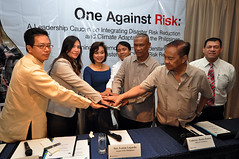
    Image source: UNISDR Photo Gallery