Blog

  • Sustainable Security

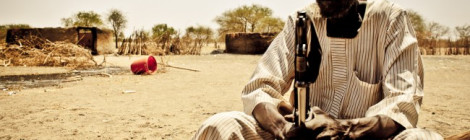
  • Turning swords into ploughshares: Environmental degradation and water poverty are reaching a tipping point after which serious instability and suffering will be unavoidable

    Good news does not sell newspapers. Nor, it seems, does the idea of respect for human dignity. In West Asia, where the majority of people have known little other than outright war or simmering conflict, it should come as little surprise that people have lost their faith in the possibility of real peace. Real peace can be a frightening prospect; it means burying the hatchet and beating swords into the proverbial ploughshares. No easy task when we are all burdened by historical and psychological baggage.

    Ours is a hungry region: hungry for development, for work, for freedom, for democracy, for dignity, for the essentials of energy and, above all, water. It is broadly accepted that states have a responsibility to protect their constituents; protection of and access to basic natural resources for all should be seen as a similar responsibility.

    According to figures released by the Strategic Foresight Group, the Middle East North Africa (Mena) region is set to experience a decline of per capita annual renewable water availability from approximately 750 cubic metres at present to approximately 500 cubic metres by 2025. Such general indicators hide bleak truths that are specific to individual societies. There are regions within Jordan, Syria, Israel and, apparently, water-rich Turkey, which already suffer from a serious deficit. Some of these countries (i.e. Jordan and Israel) have already crossed a water utilisation rate of 100 per cent, threatening not only future generations, but current wellbeing.

    With a projected decrease as dramatic as that, the governments of the Mena region should be urgently implementing a long-term regional strategy for water management and planning, and I welcome the numerous conferences now being held across the region in this respect. A new and more ethical paradigm is needed in which individual rights, states’ rights and international rights are seen as an indivisible and dynamic unity, not a source of polarisation and conflict. For too long people have come a poor second to investment considerations. This is particularly true when it comes to the privatisation of the commons. The nod is given to their needs by Corporate Social Responsibility, though these are substantially ignored. The people of the region must become the subject, not the object of development; the economy should serve them and not vice versa.

    One positive strategy, which has been implemented implicitly in India, and more explicitly and effectively in South Africa, focuses on access to water as a human right. States in the Mena region should come together and recognise water as justifiable, as a human right, enabling the people of the region to seek legal recourse when deprived of access to basic water resources.

    There is an urgent need for a supra-national water commission that looks thematically, on a non-partisan and inclusive basis, at water and energy for the human environment and develops a carrying capacity concept based on a factual analysis of the region’s human, natural and economic resources. We do not have to reinvent the wheel. A concept was evolved facilitated by the United States and in the context of peace and the Middle East North Africa Summit of 1994, of a plan for the Jordan Rift Valley which could be expanded to the Greater African Rift Valley. This would not be a corridor, rather a fully-integrated regional development plan. Naturally, it would include the Dead Sea — the possible imminent demise of which is the subject of much discussion.

    The point is that creative solutions, based on inter-regional collaboration across the West Asia-North Africa (Wana) region are required. The Euphrates, the Nile and other great rivers run through this region, the latter affecting 10 African states. Shared waters could mean shared opportunities, yet no agreements, partial or otherwise (such as the precedents in the Rhine or Indus Commissions) exist for these or for other important waterways.

    Culturally attuned empowerment

    The region needs to move away from heated rhetoric to forward thinking, consultation and conceptual mode. Of course, political issues must continue to be negotiated, yet in the interim, post-war reconciliation and reconstruction should continue for the sake of our people. Culturally attuned empowerment through the combination of modern technologies and authentic regional policies that have a traditionally proven record of success, such as the concept of al hima (Arabic for conservation) is within our reach when addressing the future water and energy needs of the region.

    The Desertec concept of Concentrated Solar Power, for example, which involves the creation of a ‘solar technology belt’ across the Mena region to harness the intense energy of the desert sun, could supply us with unlimited clean and affordable energy within the next 10 years. Another example is a plant, preferably on the Egyptian side of the Gaza border, which could provide clean drinking water and electricity for the people of Gaza. Likewise Yemen’s capital Sana’a is on the verge of a major crisis. It seems short-sighted in the extreme that while the country’s political volatility is the centre of international conferences, scant attention is being paid to recent projections suggesting Sana’a will run out of economically viable water supplies by 2017. The point is that while national grids may be able to reach large cities, small communities on the margins are all too often ignored by the official economy, and as a result, turn to the informal economy.

    Continuous instability has conditioned the very way in which we approach every-day tasks; the way we plan our interventions and the way we monitor and re-evaluate them. Ad hoc existence and short-termism are the norm. The most terrifying thing is that environmental degradation and water poverty are reaching a tipping point after which all the best intentioned dialogue in the world will be unable to prevent serious instability and suffering. We must realign our thinking now, galvanise decision makers now, change our direction now. Above all, we must rekindle hope, through positive, inclusive and participatory action to meet the challenges we face.


    Source: www.gulfnews.com

    Image source: Nino Jose Heredia/Gulf News

  • International politics

    The deluge of publicity about a large-scale military operation against the Taliban must be set against Afghan realities that tell a different story. The task of reaching an accurate assessment of the real state of the conflict must look beyond such public-relations campaigns from military sources.

    Image source: Reuters

    Read more »

  • Sustainable Security

    Sustainable security and peacebuilding remain elusive in northern Uganda. But gender-relational peacebuilding offers a potential avenue to strengthen post-conflict peacebuilding efforts.

    Sustainable peacebuilding in post-conflict northern Uganda is intricately interwoven into the fabric of regional security. Intrastate conflicts in South Sudan and the Democratic Republic of the Congo, as well as the multidirectional refugee and rebel army flows across borders contribute to destabilizing regional peacebuilding and security efforts. When taking these regional concerns and ongoing internal problems into consideration, it becomes clear that sustainable security and peacebuilding remain elusive in northern Uganda. One avenue to strengthen current post-conflict peacebuilding efforts is to appropriately gender interventions. Implementing appropriately gendered interventions will need to adequately address ongoing gendered violence that has become central to both regional and internal conflicts.

    The Conflict in Uganda

    During active conflict between the Government of Uganda (GoU) and Lord’s Resistance Army (1987-2006), approximately 1.8 million northern Ugandans were internally displaced, many of them into poorly maintained internal displacement (IDP) camps. The conflict, displacement, and subsequent return processes have been deeply gendered. During the conflict, young girls and boys were abducted by the Lord’s Resistance Army (LRA); many were forced to fight, carry LRA cargo long distances, and were subjected to sexual violence. Abductions ended in northern Uganda when the LRA was pushed out of the country, but the LRA continues to be a threat to regional security and peacebuilding. Abductions continue in the Central African Republic and Democratic Republic of the Congo, and the LRA’s regional presence is but one more complex component of ongoing conflicts in South Sudan, the CAR, and the DRC.

    Beyond LRA abductions, women were often subjected to sexual violence both as abductees and while living in IDP camps. During encampment, women, treated as heads of household, were given aid to distribute among their family members; this essentially cut men out of their traditional roles as the breadwinner. The gendered allocation of resources challenged cultural norms – a phenomenon which many rural residents blame as one reason for increasing domestic violence during and after conflict. Many men and women lost access to education and economic productivity during encampment, creating employment crises post-conflict. Simultaneously, people were displaced from their land holdings, devastating their economic livelihoods; this is compounded by the rampant killing and stealing of cattle, a source of economic and social wealth. Thus, displacement decimated men’s ability to be economically productive and their sources of wealth and authority, necessary social capital for rites such as marriage, were all stripped away. Unemployment continues to be a pervasive problem as people lost access to their land and do not have the educational attainment necessary for wage employment.

    Despite the far-reaching gendered dynamics of conflict and the post-conflict return process on economic production, political standing, and kin relations, peacebuilding efforts in the region concentrate on physical forms of violence, such as rape.

    Research conducted in 2013 shows that many rural residents cited economic violence, such as access to land and resources, equitable employment, and social services, as a pervasive and unaddressed concern. When combined with ongoing dissatisfaction with the current government, the result is a suite of peacebuilding approaches that may fail to generate sustainable peace in northern Uganda, with wider implications for regional security.

    Redefining “Gendered” Approaches to Peacebuilding
    widows-program-1

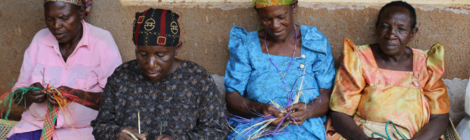
    Women from ‘The Widows’ Programme’ making crafts at the Twezimbe Development Centre, Mbikko, Uganda. Photo by Lisa Byrne via Flickr.

    “Gendered” peacebuilding approaches in past years became synonymous with women and conflict-related sexual violence, such as rape and defilement. Such ostensibly gender-sensitive approaches are inherently problematic; they ignore the experiences of men, the diverse experiences of women, and make women’s narratives valuable only insofar as they narrate conflict-related sexual violence. Resolutions, such as UNSCR 1820 and 1325, have made strides towards recognizing the impact of war on women; however, their operationalized emphasis on physical gendered violence continue to reflect this myopic perspective. Resolutions supporting gendered peacebuilding have historically failed to meaningfully include all genders, stereotype or homogenize the experiences of people in conflict, and may reflect non-local cultural values and understandings.

    Sexual violence is a serious concern during and after conflict, especially where it is a wartime tactic, there is little support for survivors of violence, and where local sociocultural norms and communities have broken down. However, homogenizing women as singularly vulnerable, passive, and the subject of violence obscures the diverse experiences of both women and men during and after conflict. These homogenous characterizations are paralleled by only addressing gendered violence among men as conflict is either an assault on or a reflection of masculinity. Both of these perspectives are imbued with often uncritical assumptions that fail to see genders as relational and embedded within complex social, political, and economic contexts.

    Thus, scholars developed a gender-relational approach to analyzing conflict and implementing peacebuilding frameworks. Gender-relational approaches stand in contrast to prior perspectives that rely on gender binaries and homogenous categories. Instead, gender-relational scholars examine gender as an intersectional category that is intimately bound up in social, political, and economic contexts before, during, and after conflict. Utilizing a gender-relational perspective allows researchers and peacebuilders to identify the most vulnerable in society, allowing precisely-targeted interventions and more effective implementation. Gendered peacebuilding in this way shifts the focus from women’s sexuality and sexual experiences and men’s masculinity, to identifying and targeting the contextually specific needs of the most vulnerable in post-conflict societies.

    Appropriately Gendering Peacebuilding to Promote Sustainable Peace

    Gendering peacebuilding in post-conflict northern Uganda must go beyond the censure of physical SGBV, such as rape, to take into account the complex experiences, relationships, and sociopolitical and socioeconomic needs prior to, during, and after conflict. In this local and regional context, gendering peacebuilding appropriately takes into account the various experiences of men and women as they are embedded within ancestral communities pre-conflict, during displacement and in the IDP camps, and post-conflict return process, and as they are affected by age, education, ability, and other intersectional categories.

    Engaging a gender-relational framework for peacebuilding in northern Uganda can illuminate a number of discrepancies between local needs and concerns and ongoing peacebuilding efforts. While traditional political systems, which predominately support and were led by men, degraded, the loss of property and cattle – traditionally for economic productivity, social status, and marriage and kinship – have negatively impacted all genders. Although the degradation of sociopolitical systems and loss of agricultural and pastoral productivity have disempowered men, it has simultaneously empowered women. Women have broken traditional gender roles by entering public workspaces and shouldering normatively male responsibilities. However, these shifts along with pervasive poverty have also contributed to domestic violence and local pushback against the implementation of international human rights standards.

    For example, although conflict-related sexual violence was, and remains, an entrenched concern in northern Uganda and the region more generally, many rural northern Ugandans are deeply concerned about economic forms of gendered violence. Both men and women cite land wrangling or grabbling – the forceful taking of land – as pervasive concerns that inhibit access to economic livelihoods, spiritual fulfillment, political authority, and kin networks. According to one resident in Nwoya District, before the war [SGBV] was there. During, it escalated and after has been added on because of land wrangles.” Although land is often wrangled by neighbors or even relatives, many rural residents fear land grabs from South Sudanese and other foreigners who are reportedly buying up large tracts of land for farming. Widows in particular cite the lack of support for them as they make claims with the legal, local political, or religious authorities to have their case heard and get their land back. Widowhood in rural northern Uganda is precarious – normally women rely on their husband for land ownership (not mandated by law) and when he passes away depend on the community to uphold their right to continue living and producing on the land. However, the unique challenges of the post-conflict region, including ongoing security concerns and a lack of arable land more generally, means that there is less support from elders, the legal system, and religious leaders for widows with land wrangling complaints. This example of widows demonstrates the power of gender-relational approaches to post-conflict peacebuilding.

    Land wrangling disproportionately affects women, widows, and the elderly, and remains a serious security and peace concern for residents throughout the northern reaches of Uganda. These ongoing conflicts are embedded within a nation-state that has consistent human rights violations and political uncertainty, and a region that is beset by internal and regional conflicts. Utilizing such data-driven approaches, we can better develop, implement, and target peacebuilding efforts towards those groups and the leaders that are in positions to help widows resolve such conflicts. As these conflicts are also intricately bound up in ongoing gendered divisions and reconfigurations, appropriately gendering peacebuilding has the potential to open avenues to contribute to regional conflicts and security concerns. Several organizations in the northern Uganda region have been conducting this difficult work, including the Refugee Law Project, Centre for Reparations and Rehabilitation, and the Women’s Advocacy Network. Each of these organizations were generated and are propelled forward by northern Ugandans and each reflects the myriad needs facing residents in the post-conflict period, such as economic violence and insecurity, education, social inequality, and lack of social services. By addressing these points as part of a gendered peacebuilding program, practitioners can grapple with pervasive concerns, such as land conflict, that affect both women and men; thus, they may also begin to unravel some of the regional security concerns tied to inter- and intrastate conflict.

    Amanda J. Reinke specializes in conflict resolution amid displacement. She received her PhD from the University of Tennessee’s Department of Anthropology and Disasters, Displacement, and Human Rights Program. Financial support provided by the W.K. McClure Scholarship and the Minority Health International Research Training Program (MHIRT) at Christian Brothers University (Grant Number T37MD001378; National Institute on Health and Health Disparities). Amanda can be contacted at or @LegalAnthro.
  • Drought in east Africa the result of climate change and conflict

    Aid agencies say that weather in the region has become more erratic and years of war leave populations especially vulnerable

    Prolonged drought in the Horn of Africa is the immediate cause of the severe food crisis already affecting around 10 million people in parts of Kenya, Ethiopia, Djibouti and Somalia. Rains have failed over two seasons, with a strong La Niña event having a dramatic impact across the east coast of Africa. Now this year’s wet season has officially ended, there is little prospect of rain or relief before September.

    How far the current conditions, classified by the UN as “pre-famine” – one step down from “catastrophe” – can be attributed to climate change is not clear. The last intergovernment panel on climate change reportsuggested that the Horn of Africa would get wetter with climate change, while more recent academic research has concluded that global warming will increase drought in the region. However, according to aid agencies, the weather has become more erratic and extreme in recent years. The same area suffered a drought in 2006 as well as flash floods.

    The structural causes of the crisis go deeper. The Horn of Africa has long been one of the most conflict-riven areas of the world and a focus of geopolitical struggles from the days of the British empire, through the cold war, to today’s the “war on terror”.

    Read the rest of the article here.

    Image source: Oxfam International 

  • Sustainable Security

    This interview was conducted by the Remote Control project. 

    Tara McCormack is Lecturer in International Politics at the University of Leicester.

    In this interview, Dr McCormack discusses the British military interventions in Libya, Iraq and Syria, the shift that these interventions mark away from the longstanding Royal Prerogative on war-making and how the use of remote warfare is effecting the democratic oversight of the use of military assets in conflict.


    Q. In Britain, the power to declare war and deploy troops in conflict is one of the few remaining Royal Prerogatives. Recently, however, British military interventions in Iraq, Syria and Libya were all first put to a vote in the House of Commons. Did these cases mark a move towards greater democratic oversight of the decision to go to war in Britain?

    The Royal Prerogative (RP) is a set of (not fully defined) powers that used to belong to the Monarch but are exercised by the government and Prime Minister. In essence, the RP allows the Prime Minister to make a decision without consulting Parliament or even his/her Cabinet. The power to commit armed forces to a conflict is one important RP power. Since the end of the Cold War the RP has been seen to be increasingly problematic for a number of reasons to do with a decline in trust in government and broader problems of legitimacy.

    The power to take the country to war has been seen as particularly problematic and during the 90s and 00s there were a number of Parliamentary debates and reports that considered this question of the Prime Minister’s power to declare war without broader Parliamentary authorisation.

    However, historically when Britain has gone to war, although Parliament has not voted on the decision it has been customary for some kind of debate to take place, often as the military action has begun. This was so for the Kosovo (1999) war. In March 2003, under pressure from a number of MPs, Tony Blair agreed to a vote on a motion about British military intervention in Iraq on the eve of the American invasion.

    The Conservative Party pledged that if they came to power would make it a matter of course that Parliament would have a substantive vote on taking Britain to war, and this was done over the Libyan intervention and then Syria. The debate and vote to go to war in Syria received a great deal of media coverage and was reported on hour by hour as indeed was the vote to go to war and even the first military planes that flew.

    This new parliamentary convention on authorising military intervention is now well established.  It is a very important convention as, in principle, this new parliamentary convention gives democratic authority and legitimacy to decisions to commit British armed forces to war.

    However, at the same time there has been another significant trend in warfare, and that is that governments are increasingly using methods of intervention that are in essence ‘off the books’, for example the increasing use of special forces, or drones. Paul Rogers has called these modes of intervention ‘security by remote control’. This is an excellent phase as it highlights the way in which these methods of intervention allow governments to intervene militarily but without the clear lines of public and democratic accountability that more traditional methods entail.

    Q. Why do you think there was this shift towards making the process of going to war more democratic under the Conservative Party?

    The shift away from the Royal Prerogative (RP) has been an on-going process since the end of the Cold War for the reasons I mentioned in my first answer, in particular questions of trust and legitimacy combined with a number of observable changes in voting behaviour, e.g. falling voter turnout, increased voter volatility and so on. What we see from the mid-90s are a number of parliamentary debates and reports about what is perceived to be the problem of the RP in this context. Of course, the decision to take a country to war is something that is particularly problematic in a context in which there seems to be a loss of trust in the government.

    I think that the reason why the Conservative Party made it an explicit pledge was not that Hague and Cameron (for example) were greater democrats than Blair and New Labour, but because of this on-going debate within the political elite about the RP.

    Q. Could the high financial, human and regional geopolitical costs of the Iraq War may have also contributed to the shift away from the Royal Prerogative?

    I do think that the Iraq War has been significant in terms of British politics certainly. The Iraq War, the ‘dodgy dossier’ and Blair’s claims exacerbated the problem of trust and raised a question over British military intervention.

    However, I do want to stress that the underlying dynamics behind the new parliamentary convention are pre-Iraq, e.g. loss of trust in government, as is clear from the debates and discussions in the House of Commons.

    I think it is also worth remembering that many of our politicians have ‘mis-remembered’ the Iraq debate and the immense political support there was for this most disastrous intervention.   Tony Blair did hold a debate and vote on the Iraq intervention (albeit on the eve of military action). There was strong support for the intervention. But there were some brave voices arguing against the intervention whatever the ‘evidence’.

    It is easy now to blame Tony Blair and his ‘dodgy dossier’ for all the ills in British politics.

    Q. So how is this use of ‘remote warfare’ affecting the democratic oversight of armed conflict in the UK?

    I think that the shift towards what Paul Rogers has called ‘remote control warfare’ means that there is less democratic oversight of armed conflict in the UK. This is because methods of intervention such as the use of special forces, drones and also cyber warfare are carried out with little public scrutiny or political debate.

    It is not that information about these methods of intervention is impossible to find out, it can be found out through Freedom of Information requests, and sometimes Parliamentary questions and similar. However, compared to the very public political debate and media coverage about what might be called traditional modes of military intervention, there is very little public knowledge or scrutiny or indeed, crucially, parliamentary debate.

    Q. Due to remote warfare often being highly secretive, public knowledge of the UK’s use of this tactic may be limited. But is there any reliable data on the British public’s views of remote warfare and the democratic oversight of this practice? For example, are there any opinion polls on the British public’s attitudes to security, armed forces and democratic oversight?

    That is a really important question. As far as I am aware this is not something that has been fully investigated yet but it is something that needs to be looked at.

    There are polls and surveys that look at public attitudes to armed conflict. Basically, British people are reluctant to intervene militarily (the idea of the ‘post-heroic’ West is more or less true) in particular for ‘wars of choice’.  So for example, a recent Gallup International poll found that only 27% percent of British people would be willing to fight for their country. A YouGov poll found a minority in favour of Britain attempting to influence events around the world.

    Interestingly, however, the YouGov poll has found that whilst the majority of people oppose sending regular troops to somewhere like Syria, 60% support airstrikes or use of drones (note this is against ISIS not Assad).

    This suggests that public perception is that intervention by remote control is less consequential than conventional intervention. However, I would suggest that this is not the case and that the consequences of warfare by remote control need to be more openly discussed.

    Q. The Foreign Affairs Committee’s (FAC) recent report on the 2011 Libyan military intervention acknowledged the presence of UK special forces currently operating in Libya, which is arguably a surprising move given the ‘culture of no comment’ surrounding UK special forces. Looking to the future, do you feel that this may offer some grounds for optimism or do you think that the erosion of the democratic oversight of Britain’s military actions will continue?

    Yes I noticed that and also that the FAC report specifically mentioned that this is not really publicly scrutinised. The thing about ‘remote control warfare’ is not that it is totally unacknowledged, information does come out in reports (such as the FAC report on Libya), FoI requests (the website Drone Wars is very good on this) but it is very limited. Compare, for example, the high level of debate and discussion given to Britain’s decision to launch airstrikes on Syria, and of course the vote under the new Parliamentary Convention.

    I just do not know the answer to the final part of the question, it depends on so many factors. Certainly it is something that I think is very important to get into the public realm as much as possible.

  • Climate change

    Writing exclusively for SustainableSecurity.org, Joe Thwaites takes an in-depth look at the discussion at the UN Security Council on the security implications of climate change. Joe analyses the debate over whether the Council is an appropriate forum for dealing with climate change discussing the views of both great powers and those who are set to lose most from a warmer global climate in the years ahead. 


    Image source: United Nations

    Read more »

  • Sustainable Security

    Colombia and Mexico: The Wrong Lessons from the War on Drugs

    As activists around the world participate in a Global Day of Action against criminalisation of drug use, evidence from the multi-billion dollar War on Drugs in Colombia suggests that militarized suppression of production and supply has displaced millions of people as well as the problem, not least to Mexico. The wrong lessons are being exported to Central America and beyond, but a groundswell of expert and popular opinion internationally is calling for alternative approaches to regulating the use and trade in drugs.

    Read Article →

    Exporting (in)Security? Questioning Colombian Military Engagement in West Africa

    With skills and expertise in fighting insurgencies and drug trafficking networks, Colombia’s armed forces are increasingly being sought for engagement in similar security challenges in West Africa. But increasing Colombian engagement gives rise to a number of important questions – not least of which is the goal and expected outcomes of replicating militarised approaches to the war on drugs that have already failed in Latin America.

    Read Article →

  • Sustainable Security

    Getting Older But Not Wiser: the Arms Trade Treaty’s First Birthday

    April 2nd marked the first anniversary of the adoption of the much celebrated Arms Trade Treaty (ATT), the world’s first treaty to establish common standards of international trading in conventional weapons and which in turn aims to ‘ease the suffering caused by irresponsible transfers of conventional weapons and munitions’. But with the continued irresponsible arms trading and an overall rise in the global arms trade, it seems that some states have yet to put the ideals of the ATT into practice.

    Read Article →

    Beyond crime and punishment: UK non-military options in Syria

    The defeat of the UK government’s parliamentary motion on support in principle for military action against the Syrian regime means that Britain will play no part in any direct attack on Syria. What then are its options for resolving the Syrian conflict, protecting civilians and punishing those responsible for war crimes there? This article assesses what the UK can do in terms of pushing for a negotiated peace settlement and to hold accountable those responsible for using chemical weapons and any other war crimes committed during this century’s worst humanitarian crisis.

    Read Article →

    A top-down approach to sustainable security: the Arms Trade Treaty

    2012 has been hailed as a potential landmark year in the push for greater regulation of the global trade in conventional arms. After more than a decade of advocacy to this end, negotiations took place throughout July towards the world’s first Arms Trade Treaty (ATT), which is intended to establish the highest possible common international standards for the transfer of conventional weapons. However, although significant progress was made during the month of intense negotiations, the ATT is not yet open for signature. In this article, Zoë Pelter explores what role a potential treaty – if reopened for further negotiation – could play in a move towards sustainable security.

    Read Article →