Blog

  • Sustainable Security

    Too Quiet on the Western Front? The Sahel-Sahara between Arab Spring and Black Spring

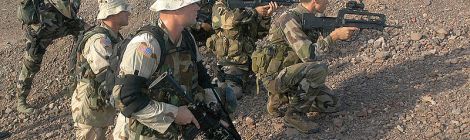
    While the world’s attention has been focused on the US-led military interventions in Iraq and Syria a quieter build-up of military assets has been ongoing along the newer, western front of the War on Terror as the security crises in Libya and northeast Nigeria escalate and the conflict in northern Mali proves to be far from over. In the face of revolutionary change in Burkina Faso, the efforts of outsiders to enforce an authoritarian and exclusionary status quo across the Sahel-Sahara look increasingly fragile and misdirected.

    Read Article →

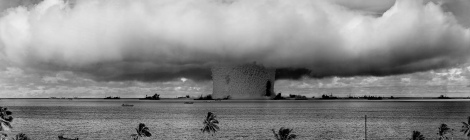
    Humanitarian Consequences of Nuclear Weapons: Five Reasons for the P5 to participate in Vienna

    The ‘humanitarian dimension’ initiative highlighting the consequences of nuclear weapons has evolved and consolidated itself in the non-proliferation regime since 2010. The five nuclear weapons states (NWS or P5) under the NPT – China, France, Russia, UK and US – boycotted the first two international conferences on the humanitarian consequences of nuclear weapons. A third conference will be held in Vienna on 8-9 December 2014. This article gives five reasons why the P5 should consider participating.

    Read Article →

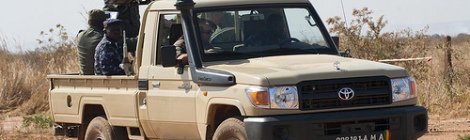
    VIDEO – Militarisation of the Sahel: An interview with Richard Reeve

    Sustainable Security programme Director Richard Reeve discusses our latest report ‘From New Frontier to New Normal: Counter-terrorism operations in the Sahel-Sahara’. The report, commissioned by the Remote Control project, finds that 2014 is a critical year for militarisation of the Sahel-Sahara and the entrenchment of foreign powers there.

    Read Article →

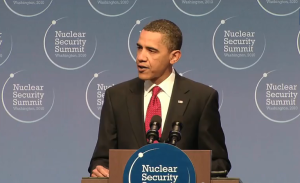
    Building the Case for Nuclear Disarmament: The 2014 NPT PrepCom

    The humanitarian impact of nuclear weapons, highlighted by a wide-ranging, cross-grouping, multi-aim initiative which continues to consolidate itself in the non-proliferation regime, has come to the fore in the 3rd Prepatory Committe for the 2015 NPT Review Conference. Frustrated with the lack of progress towards NPT Article VI commitments to complete nuclear disarmament, the initiative has invigorated attention to the urgency of nuclear disarmament and a need for a change in the status quo. NPT member states and civil society continue to engage actively in publicizing the humanitarian consequences of nuclear weapons as an impetus to progress towards nuclear disarmament.

    Read Article →

    Beaux Gestes and Castles in the Sand: The Militarisation of the Sahara

    Whatever the benefits for Mali, the French-led eviction of jihadist groups from northern Mali may have made the wider Sahara a less safe place, and has done little to lower the capacity of such groups to threaten European interests.. In 2014, France is implementing a major redeployment of its forces in Africa into the Sahel and Sahara. Meanwhile, the US has been quietly extending its military reach from Djibouti to Mauritania. However, as elsewhere, the western military approach to countering Islamist insurgency in the Sahel rests on very unsteady foundations and the potential to provoke wider alienation and radicalisation is strong.

    Read Article →

    Can the Nuclear Non-Proliferation Treaty outrun its double standard forever?

    The recent walkout by Egyptian negotiators at UN talks have demonstrated that, like a building with rotten foundations, the nuclear non-proliferation regime is far less stable than many believe it to be. Egypt’s actions make clear that anything less than a regime specifically geared towards addressing the reasons why some states seek nuclear weapons is a regime existing on borrowed time.

    Read Article →

  • Sustainable Security

  • The Arab Uprising and the Implications for Western Policies

    Europeans just cannot seem to get Islam, or more properly, Islamism, out of their heads. This seems to be particularly true of Europeans who have not spent much time in the Islamic world, and whose idea of immersion journalism is to spend an afternoon wandering round an immigrant neighbourhood in the European capital city of their choice with a view to chatting up a few swarthy-looking men over a cup of mint tea.

    And even some more serious writers have ended up falling into the same trap over the last few weeks. Take Timothy Garton Ash, for instance, whose reporting of the decline of the Soviet empire in Eastern Europe in the 1980s was exemplary in its combination of in-depth research and first-hand experience. In a series of articles in The Guardian, Garton Ash has been greeting the wave of insurrections sweeping across the Arab world with a wall of worry. In his latest piece, published last week, a visit to the Calle de Tribulete in Madrid plunged him into new depths of anxiety. Despite garnering some half-hearted expressions of ill-defined hope, it was not long before he and his interlocutors were overtaken by the memories of terrorism past. He even managed to run into a young man at a bus stop spouting Wahhabi-inspired anti-semitic conspiracy theories to casual passers-by. Needless to say, the overall effect was far from encouraging.

    “Only a fool would fail to recognise that this is a moment of danger, as well as opportunity,” he concludes. “The path forward for Tunisia and Egypt is far less clear than it was for east European countries – and there is no warm, safe house of EU membership beckoning at the end of the road.”

    The leitmotiv of Garton Ash’s fears is that the threat of Islamic fundamentalism is real, however it may have been instrumentalised by western democrats and their client dictators, and that the task now falls to Europe to do something to prevent this menace from bring translated into reality. Without our help and guidance, the current upheaval in our Arab neighbours is likely to install regimes more oppressive for their citizens, and more dangerous for us than those which they have replaced.

    The problem with this scenario is not just that it depends on a faulty reading of history, one which minimises or ignores the role of the western powers in supporting the rise of Islamism in the first place, and in particular in installing a theocratic regime in Iran in order to ensure ‘stability’ and preempt a genuinely progressive revolution[1]. Even if history did agree with Garton Ash, his argument would still be undermined by the present. For it is entirely contradicted by everything we know about what is happening today in Egypt, the only one of these revolutions so far to have reached a point where, at least provisionally, the balance of power seems to have given the revolutionaries some measure of control.

    All the reports we have concur that once this particular Arab street had liberated itself, its first instinct was not to revert to some authoritarian moralistic Golden Age, the mediaeval theme park of Orientalist imagination, but rather to create an entirely new kind of society symbolised by and embodied in the occupation of Tahrir Square. The result, as Yasmine El-Rashidi has described it, was something like a cross between a vernacular religious festival (the kind of joyfully chaotic carnival which textbook Islamists generally cannot stand), and an anarchist commune. A space that was self-organising, self-securing, self-policing, self-recycling, and in which people were constantly devolving power back to one another – devout Muslims to Christians and to ‘godless’ youth[2], has-been and potential leaders to the mass of the people, and soldiers (up to fairly senior officer rank) to civilians.

    In other words, absent outside intervention, whether positive or negative, the most likely course of the Arab revolutions now in progress would be to produce creative forms of political organisation and social conviviality which, while rooted in the long histories of their indigenous cultures, and in the more recent civilisational traditions that overlay them, are as unprecedented in the experience of those now living through them as they are unpredictable for external observers.

    The problem, then, is not what Europe can do to help them, but how we Europeans can keep our governments safely out of their way, and ensure that our political and financial elites do not try to subvert these movements for their own purposes. (This is a practical problem, and it requires practical solutions – that is, things we can do, not just things we can demand that others do.) The greatest problem facing Egypt today is not the Muslim Brotherhood, or high levels of poverty and illiteracy, but the vicious co-dependency that exists between the upper echelons of the Egyptian army, the Israeli military-political complex and the bi-partisan US establishment, and of which the most obscene symbol is the US armament casings that littered the streets of Cairo after the insurrection’s blackest days[3]

    “Friends of the family”

    Led by the Egyptians and the Tunisians, the Arab world stands on the brink of inventing forms of democracy and participation that should not only destroy the dominant Orientalist image of the region once and for all, but from which the people of the US and Europe have much to learn, too. What is not clear is whether the leaders of the west, and their paranoid courtiers in the media, are ready to let us benefit from this inspiration.

    The good news, however, is that it is probably already too late for them to stop us. The people of the west have already had ample opportunity to see both what real democracy in action looks like over the last month – what it is like, that is, when people take their rights for themselves, rather than voluntarily down-converting them into “privileges” to be granted by a higher authority – and how our so-called democratic leaders react when confronted with this kind of behaviour. From Tony Blair’s description of Mubarak as “a force for good”, to Hillary Clinton’s admission that she and her husband counted the dictator of Egypt and his wife as “friends of the family”, or the revelations that half the French cabinet seems to have been relying on North African tyrants for cut-rate holidays and last-minute travel plans, we have been reminded of something that should have been obvious from the beginning. The attitude of our elected leaders towards the bullies, torturers and thieves who still continue to run a large part of the tragically misnamed “developing world” is not just one of uncomfortable tolerance. These are their friends, their allies, their co-conspirators. Though the ways in which they have risen to power may differ, the culture which that power confers upon them is essentially the same.

    The problem with Blair and Clinton is not that they are prepared to compromise their Enlightenment values for the sake of political expediency – in order to protect Israel, to ensure access to cheap energy resources, or to take advantage of a police force that is happy to torture their prisoners for them while they keep their own hands clean. The real problem with ‘our’ leaders is that they have more in common with ‘their’ leaders than they do with the vast majority of the people whom they are widely, if implausibly, supposed to ‘represent’. And that, in the end, is why we need laws: not to govern us, but to restrain them.

    Of course, the web of ties which binds together the internally violent and corrupt police states that still run most of the extractive zones of the world economy, and the externally violent and corrupt oligarchies-by-consent which are the ornament (and, increasingly, not much else) of those zones where consumption is the dominant form of oppression, is structural in nature, as well as personal. This is not just about Tony and Hillary sipping drinks by the pool with Hosni and Suzanne. Our governments and corporations sell their armies and police forces “non-lethal” weapons, and then train them in how to use them to create maximum terror among their populations. And we do this, not out of the kindness of our hearts, but precisely so that they can sell us in return their countries’ natural resources at a discount to the rate that would have to be applied if it was recognised that these resources belonged to all the people of that country, collectively and indivisibly, and not just to some tiny tyrannical minority that has managed to grab hold of the levers of former colonial power, and re-purpose them for the post-colonial era.

    In this context, David Cameron’s decision to surf the wave of people power by stopping over in Egypt on Monday looks particularly opportunistic, on the part of a man whose government has managed in the space of a few months to authorize sales of tear gas to Bahrain, crowd-control ammunition to Libya, combat helicopters to Algeria and armoured personnel carriers to Saudi Arabia. Wherever we shouldn’t have been selling weapons this winter, we have been doing it. And our role in equipping dictators and their goons seems set to continue this week at the International Defence Exhibition and Conference (IDEX), the largest arms trade exhibition in the Middle East, which opened in Abu Dhabi Sunday. The Middle East remains a ‘priority market’ for the UK industry, supported by UKTI, and one in ten of the exhibitors at IDEX are UK-based companies[4].

    Bringing Tahrir to Kensington

    One of Garton Ash’s more implausible claims is that Europe has a duty to help the Arab nations determine their path going forwards, because we have a particularly rich experience of achieving successful transitions from dictatorship to democracy. It could equally well be said, however, that our power elites have a particularly rich experience of ensuring that the transition from colonial dependency to independent state in Africa, the Middle East, Latin American and large parts of Asia, turned out entirely compatible with the continuation and intensification of the old colonial circuits of exploitation and oppression.

    Indeed, even within Europe itself, our leaders have always tried to ensure that any transition from authoritarianism to democracy, while openly welcomed, was effectively emptied of any real substance. In the process, ‘democracy’ was transformed from the real lived participation of all in the government of everyday life, into a pure spectacle – a system of propaganda that exists principally to make injustice and inequality far more ‘bearable’ than could any explicitly authoritarian regime (as Saroj Giri recently suggested, in the course of comparing the events in Egypt to the situation in India). Seen in this way, the advice of our governments on how to manage the ‘transition’ to democracy is probably something the Arab world will want to do without.

    But that does not mean that Europe and the Arab world have nothing to learn from each other. On the contrary. If the revolutions now underway across the region are indeed able to deliver on their promise of reempowering their people, without being subverted by the combined economic and military power of the USA, the EU, Israel and Saudi Arabia, then it may be that the new Arab nations which emerge from this process will need and want to share their experience with us. Indeed, they may see it as vital to their own interests to help us, the people of Europe, retake control over our own economies and our own societies, not simply in order to export their revolution, but as the minimum condition for transforming us into a good neighbour for the rest of the region, rather than the source of chronic instability and insecurity we have been over the past several centuries.

    Ongoing protests and actions in places from Madison, Wisconsin, to Central London have already appealed to the Egyptian experience, both explicitly, and symbolically. American public service workers last week brandished Egyptian flags to express their rejection of the state’s attempts to deprive them of their union rights, while British activists have called for a day of action in March to “bring Tahrir Square to Hyde Park”. While the nature of every act of human revolt is specific and, at some level, untranslatable, the energy of empowerment which it releases is by its nature infectious, and transgressive. How long before here, in the West, our own governments’ politically-motivated “austerity” programmes create the conditions in which a thousand Tahrirs can bloom? Looking back to recent events in France and Greece, we may feel that day is perhaps not so far away.

    Noam Chomsky recently claimed that what western leaders are really afraid of is not an Islamist takeover in the Arab region, but the emergence of genuinely independent and democratic Arab states which will no longer kow-tow to Washington and do its bidding. That is surely part of the story. But I believe that what they are most afraid of is not just the emergence of democracy in the Arab world. However uncomfortable and embarrassing that may be, they know they can live with it. What they are most afraid of is that, having slept through the last 60 years of democracy, their own citizens/subjects may be about to wake up again to their own power: that, having seen what it is like when a people dictate to their government what it should do for them, rather than the reverse, we might start to take our own rights back, wholesale, rather than waiting for our rulers to grant us them in homeopathic doses – or fob us off with a placebo.

    The victory of the revolutionaries of Tahrir Square, however partial and provisional, reminds us that we once started our own revolution, and that we failed to finish it. Maybe this is our time that has come again, too.

    [1] See Serge Bricianer, Une étincelle dans la nuit – Sur la révolution iranienne 1978-1979, Ab Irato, Paris, 2002, for an account of how Iranian workers’ movements were sidelined and ultimately defeated in 1979.

    [2] See Omar Kamel, “Regarding the Brotherhood…”, for a particularly moving illustration of this phenomenon.

    [3] See Pratap Chaterjee, “Egypt’s military-industrial complex”, The Guardian, 4 February 2011.

    [4] See “CAAT condemns empty words from Government as arms sale drive continues” and “UK arms sales to Middle East include tear gas and crowd control ammunition to Bahrain and Libya” for more details.

    Frederick Bowie is an independent journalist. He has spent many years living and working in the Middle East, and was a regular contributor to Al-Ahram Weekly (Cairo). The original version of this article appeared on openDemocracy. 

  • Sustainable Security

    The True Finns Party have surged to the forefront of Finnish politics and fundamentally turned the nation’s political discourse in a more nationalist direction. What are the causes of this rise in Finnish populism?

    The populist Finns Party, formerly known in English as the True Finns party (Finnish: Perussomalaiset), rushed to the surface of Finnish politics in the 2011 parliamentary election, snatching a remarkable 19 per cent of the vote. Its charismatic leader Timo Soini positioned himself on the side of the ordinary man and against corrupt elites. Referring to ethno nationalism and Christian social values, Soini emphasized Finnishness and the need to protect the national culture from being contaminated by immigrants and other foreign influences. The Party’s surge to the forefront of Finnish politics has fundamentally turned the political discourse in Finland towards a more nationalist direction. In order to gain a fuller understanding of the drivers behind this growth of Finnish populism, it is necessary to examine Finland’s recent history.

    A sense of suffering

    Traditionally, Finnish society was split on a double axis: urban and rural, landowners and peasants. Through history, it was the bloodiest area in the Nordic region. The Finnish national identity, including a sense of common suffering, was at least partly defined by being locked between powerful and often aggressive neighbours, Sweden and Russia, who repeatedly took turns in dominating Suomi, the Finnish heartland. Nationalistic movements grew strong in the nineteenth and early twentieth centuries and, though it was rather a by-product of the Bolshevik revolution, Finland finally won its independence in 1917. Authoritarian movements soon emerged; for example, the nationalist Lapua movement. Nationalist sentiments were growing fast in the interwar years, but this was also a period of internal conflict, spurring into a full-blown Civil War between authoritarian Nationalists and Social Democratic groups.

    Surviving under constant threat from its eastern neighbour, Finland aligned with Germany for a period in the Second World War. Tensions on the Finnish–Soviet border also grew leading up to the Second World War, breaking into the Winter War between the two in autumn 1939. After showing surprising fighting resilience, Finland had still lost 12 per cent of their land in the war in Karelia. When the Germans invaded Russia in 1941, the Finns fought alongside them, in what is referred to as the Continuation War, in an attempt to regain lost territories in Karelia. They were beaten back by the Soviets once again three years later and devastated by repeated conflicts. Over the course of these repeated and prolonged conflicts a militaristic mentality developed in Finland, still evident in contemporary life.

    Finland emerged humbled from the war, surely with a sense of suffering but also one of perseverance. The country was not only in dire straits economically but also firmly within the sphere of strategic influence of the Soviet Union. Finnish diplomacy revolved around appeasing their powerful eastern neighbour. The geopolitical balancing act, of constructing a Nordic liberal marked orientated welfare state while appeasing the Soviets, paid off, and Finland became a prosperous Nordic state. Crisis, however, hit once again in 1990 when the Scandinavian banking crisis coincided with loss of markets in the East when the Soviet Union dissolved in the wake of collapse of communism.

    Still, Finland emerged from the crisis with a growing self-confidence in international affairs, not only by joining the EU but also by adopting the Euro and seeking a core position with the EU. Finland was a homogeneous country with a low level of immigration. Right-wing nationalist populist politics were thus not prominent in the latter half of the twentieth century. Still, agrarian populist versions existed since the 1960s with a noteworthy support. Right-wing populist parties like those that emerged in Denmark and Norway did not, however, gain much popular support until after the Euro crisis hit in 2009.

    The Finnish Agrarian Party

    Although nationalist extreme-right politics similar to those on the European continent only became prominent in Finland with the surge of the True Finns party in the new millennium, agrarian populism had been present in Finnish politics ever since the beginning of the 1960s. The Finnish Agrarian Party (Suomen Maasedun Puolue – SMP) established in 1959 was founded in opposition to the urban elite and claimed to speak on behalf of the common man in rural Finland, those that they referred to as the ‘forgotten people’ (unohdetun kansa) in town and country, against the detached ruling class in the urban south.

    The SMP exploited the centre-periphery divide in Finland. Its greatest electoral success came in 1970, 1972 and in 1983 when the party won approximately a tenth of the vote each time. Their main appeal was with rural workers and the unemployed, who felt alienated in the fast moving post-war society. In a rapid social structural change, Finland was transformed from being predominantly agricultural to a high-tech communication-based society. The SMP ran into serious financial difficulty and a new nationalist populist party, the True Finns Party, absorbed its remains in 1995. In 2011, the party’s English name was shortened to the Finns Party.

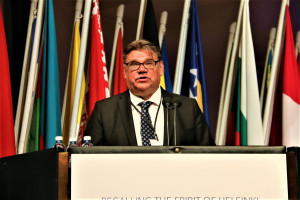
    Timo Soini and the True Finns

    somio

    Image credit: OSCE Parliamentary Assembly/Flickr.

    In 1997 the charismatic Timo Soini took the helm of the True Finns Party. Soon, the party found increased support, rising from 1.6 per cent in the 2003 parliamentary election to 4.1 per cent in 2007. It was, though, only in wake of the international financial crisis, that the party surged, winning 19.1 per cent of the vote in the 2011 parliamentary election and becoming the third largest party in the country, behind only the right-of-centre conservative National Coalition Party (NCP) and the Social Democrats (SDP). This was also referred to as the ‘change election’ or the ‘big bomb’, when Finnish politics, to a significant degree, came to revolve around the Finns Party and its populist politics.

    The party had increased its vote five fold since the 2007 election, adding full 15 percentage points, which was the biggest ever increase of a party between elections in the Eduskunta, the Finnish Parliament. Its initial rise had, however, started two years earlier, in the European Parliament election of 2009, when the True Finns grabbed 9.8 per cent of the vote. In 2015 the party saw only limited decline in its support, clearly reaffirming its strong position in Finnish politics, and entering coalition government for the first time.

    Previously, the True Finns had been widely dismissed as a joke, a harmless protest movement, and a nuisance on the fringe of Finnish politics. Their discourse was aggressive and rude and the media mostly only saw entertainment value in them. After the 2011 election, however, it had surely become a force to be reckoned with. During the election campaign, they had clashed with the mainstream parties and called for ending of the one-truth cosy consensus politics of the established three parties. The Finns Party had now become a forceful channel for the underclass.

    Contrarily to most similar parties elsewhere, the Finns Party accepted being branded as populist. Soini, however, refused to accept that his party was extreme-right. Contrary to the progressive parties of Denmark and Norway, the Finnish populists never flirted with neo-liberal economic policies. Rather, the Finns Party inherited the centrist economic policy of the SMP. Its right wing populism was thus never socio-economic, but rather socio-cultural.

    Three themes emerged as the main political platform of the Finns Party:

    • First to resurrect the ‘forgotten people’, the ordinary man, to prominence and speaking in their name against the elite;
    • second, to fight against immigration and multiculturalism;
    • thirdly, to stem the Europeanization of Finland.

    The forgotten people

    Finland has been historically prone to polarization; for example between East/West; Socialism/Nationalism; Urban-rich/Rural-poor; Cosmopolitan/Local. Building on the SMP’s politics, the Finns Party kept exploiting the centre-periphery divide, effectively exchanging the agrarian focused populism for a more general cultural divide based on a more ethno-nationalist program. Timo Soini, for example, adopted the phrase of the ‘forgotten people’, which refers to the underprivileged ordinary man, which, he argued, the political elite had neglected.

    The political elite was continuously presented as corrupt and arrogant, having suppressed the ordinary blue-collar man. Positioning themselves against the urban Helsinki-based cosmopolitan political elite consolidated around the south coast, the Finns Party representatives claimed to speak in the name of the ‘forgotten people’, mainly working in rural areas.

    Drawing on traditional Christian values the ‘forgotten people’ were discursively depicted as pure and morally superior to the privileged elite. This sort of moralist stance was widely found in the party’s 2011 election manifesto, including claims of basing their politics on ‘honesty’, ‘fairness’, ‘humaneness’, ‘equality’, ‘respect for work and entrepreneurship’ and ‘spiritual’ concerns.

    The Finns Party was also staunchly socially-conservative on matters such as religion, morality, crime, corruption, law and order. It is thus more authoritarian than libertarian. They are surely anti-elite, but not anti-system. Indeed, it firmly supports the Finnish state, its institutions and democratic processes, including keeping the relatively strong powers of the president to name but one example.

    Finnish ethno-nationalism

    Timo Soini and his followers have offered a clear ethno-nationalist focus, strongly emphasising Finnish national cultural heritage. It was suspicious of Swedish influence, dismissive of the indigenous Sami’s heritage in Suomi – often referred to as Lapps in English – and outright suppressive in regard to the small gypsy population. In a classical populist ‘us’ versus ‘them’ style a running theme of the Finns Party’s disourse was to emphasise Finnishness by distinguishing Finns from others.

    The Finns Party promoted patriotism, strength and the unselfishness of the Finnish people and argued that the Finnish miracle should be taught in school in an heroic depiction; that is, how this poor and peripheral country suppressed by expansionist and powerful neighbours was, through internal strength and endurance, able to fight their way from under their oppressors to become a globally recognised nation of progress and wealth.

    More radical and outright xenophobic factions have also thrived within the party. Jussi Halla-aho, who became perhaps Finland’s most forceful critic of immigration and multiculturalism, led the anti-immigrant faction. He has referred to Islam as a ‘totalitarian fascist ideology’ and for example wrote on his blog in 2008 that, ‘since rapes will increase in any case [with inflow of immigrants], the appropriate people should be raped: in other words, green-leftist do-gooders and their supporters’ He went on to write that prophet Muhammad was a paedophile and that Islam as a religion sanctified paedophilia.

    Many similar examples exist. A well-known party representative, Olli Immonen, for example, posted on Facebook that he was ‘dreaming of a strong, brave nation that will defeat this nightmare called multiculturalism. This ugly bubble that our enemies live in, will soon enough burst into a million little’.

    Many other prominent populist and extreme-right associations also existed in Finland, some including semi-fascist groupings. Indeed, a few MP’s of the Finns Party belonged to the xenophobic organisation Suomen Sisu. In early 2016, in wake of the refugee crisis hitting Europe, mainly from Syria, a group calling themselves Soldiers of Odin took to patrolling the street of several Finnish towns. Dressed in black jackets, decorated with Viking symbolism and the Finnish flag, they claimed to be protecting native Finns from potential violent acts of the foreigners.

    Riding the Euro-crisis

    Finns Party’s rise was helped significantly by their opposition to the EU and the European Central Bank, who seemed powerless in dealing with the Euro-crisis. They depicted the EU as unworkable and claiming that democracy cannot work in the context of supranational EU governance, and that it favoured elites over ordinary citizens in the European countries. There was a clear demand for a EU critical party, a void the Finns Party was happy to fill because the mainstream parties then held a pro-EU stance.

    Leading up to the 2011 elections he Finns Party turned opposition to bailouts for debt-ridden Euro countries into their main issue. That also helped in securing good results in European Parliament elections in 2014, after which they joined the radical-right European Conservatives and Reformists Group (ECR) in the EP.

    After coming into government in 2015 the Finns Party found diminished support in opinion polls. Still, their influence had steadily grown and they had found much greater acceptance than before. They clearly led in the growing anti-EU discourse in the country. Soon, many of the previously pro-EU mainstream parties began to adopt their anti-EU rhetoric, and some, subsequently, also became increasingly anti-immigrant.

    Eirikur Bergmann is Professor of Politics at Bifrost University in Iceland and Visiting Professor at the University of Ljubljana in Slovenia. He is furthermore Director of the Centre for European Studies in Iceland. Professor Bergmann writes mainly on Nationalism, Populism, European Integration, Icelandic Politics and on Participatory Democracy. He has also written two novels which are published in Icelandic.

  • Sustainable Security

  • Climate Cycles Are Driving Wars, Says Study

    In the first study of its kind, researchers have linked a natural global climate cycle to periodic increases in warfare. The arrival of El Niño, which every three to seven years boosts temperatures and cuts rainfall, doubles the risk of civil wars across 90 affected tropical countries, and may help account for a fifth of worldwide conflicts during the past half-century, say the authors.

    The paper, written by an interdisciplinary team at Columbia University’s Earth Institute, appears in the current issue of the leading scientific journal Nature.

    In recent years, historians and climatologists have built evidence that past societies suffered and fell due in connection with heat or droughts that damaged agriculture and shook governments. This is the first study to make the case for such destabilization in the present day, using statistics to link global weather observations and well-documented outbreaks of violence. The study does not blame specific wars on El Niño, nor does it directly address the issue of long-term climate change. However, it raises potent questions, as many scientists think natural weather cycles will become more extreme with warming climate, and some suggest ongoing chaos in places like Somalia are already being stoked by warming climate.

    “The most important thing is that this looks at modern times, and it’s done on a global scale,” said Solomon M. Hsiang, the study’s lead author, a graduate of the Earth Institute’s Ph.D. in sustainable development. “We can speculate that a long-ago Egyptian dynasty was overthrown during a drought. That’s a specific time and place, that may be very different from today, so people might say, ‘OK, we’re immune to that now.’  This study shows a systematic pattern of global climate affecting conflict, and shows it right now.”

    The cycle known as the El Niño-Southern Oscillation, or ENSO, is a periodic warming and cooling of the tropical Pacific Ocean. This affects weather patterns across much of Africa, the Mideast, India, southeast Asia, Australia, and the Americas, where half the world’s people live. During the cool, or La Niña, phase, rain may be relatively plentiful in tropical areas; during the warmer El Niño, land temperatures rise, and rainfall declines in most affected places. Interacting with other factors including wind and temperature cycles over the other oceans, El Niño can vary dramatically in power and length. At its most intense, it brings scorching heat and multi-year droughts. (In higher latitudes, effects weaken, disappear or reverse; La Niña conditions earlier this year helped dry the U.S. Southwest and parts of east Africa.)

    The scientists tracked ENSO from 1950 to 2004 and correlated it with onsets of civil conflicts that killed more than 25 people in a given year. The data included 175 countries and 234 conflicts, over half of which each caused more than 1,000 battle-related deaths. For nations whose weather is controlled by ENSO, they found that during La Niña, the chance of civil war breaking out was about 3 percent; during El Niño, the chance doubled, to 6 percent. Countries not affected by the cycle remained at 2 percent no matter what. Overall, the team calculated that El Niño may have played a role in 21 percent of civil wars worldwide—and nearly 30 percent in those countries affected by El Niño.

    Coauthor Mark Cane, a climate scientist at Columbia’s Lamont-Doherty Earth Observatory, said that the study does not show that weather alone starts wars. “No one should take this to say that climate is our fate. Rather, this is compelling evidence that it has a measurable influence on how much people fight overall,” he said. “It is not the only factor–you have to consider politics, economics, all kinds of other things.” Cane, a climate modeler, was among the first to elucidate the mechanisms of El Niño, showing in the 1980s that its larger swings can be predicted—knowledge now used by organizations around the world to plan agriculture and relief services.

    The authors say they do not know exactly why climate feeds conflict. “But if you have social inequality, people are poor, and there are underlying tensions, it seems possible that climate can deliver the knockout punch,” said Hsiang. When crops fail, people may take up a gun simply to make a living, he said. Kyle C. Meng, a sustainable-development Ph.D. candidate and the study’s other author, pointed out that social scientists have shown that individuals often become more aggressive when temperatures rise, but he said that whether that applies to whole societies is only speculative.

    Bad weather does appear to tip poorer countries into chaos more easily; rich Australia, for instance, is controlled by ENSO, but has never seen a civil war. On the other side, Hsiang said at least two countries “jump out of the data.” In 1982, a powerful El Niño struck impoverished highland Peru, destroying crops; that year, simmering guerrilla attacks by the revolutionary Shining Path movement turned into a full-scale 20-year civil war that still sputters today. Separately, forces in southern Sudan were already facing off with the domineering north, when intense warfare broke out in the El Niño year of 1963. The insurrection abated, but flared again in 1976, another El Niño year. Then, 1983 saw a major El Niño–and the apocalyptic outbreak of more than 20 years of fighting that killed 2 million people, arguably the world’s bloodiest conflict since World War II. It culminated only this summer, when South Sudan became a separate nation; fighting continues in border areas. Hsiang said some other countries where festering conflicts have tended to blow up during El Niños include El Salvador, the Philippines and Uganda (1972); Angola, Haiti and Myanmar (1991); and Congo, Eritrea, Indonesia and Rwanda (1997).

    The idea that environment fuels violence has gained currency in the past decade, with popular books by authors like Jared Diamond, Brian Fagan and Mike Davis. Academic studies have drawn links between droughts and social collapses, including the end of the Persian Gulf’s Akkadian empire (the world’s first superpower), 6,000 years ago; the AD 800-900 fall of Mexico’s Maya civilization; centuries-long cycles of warfare within Chinese dynasties; and recent insurgencies in sub-Saharan Africa. Last year, tree-ring specialists at Lamont-Doherty Earth Observatory published a 1,000-year atlas of El Niño-related droughts; data from this pinpoints droughts coinciding with the downfall of the Angkor civilization of Cambodia around AD 1400, and the later dissolution of kingdoms in China, Vietnam, Myanmar and Thailand.

    Some scientists and historians remain unconvinced of connections between climate and violence. “The study fails to improve on our understanding of the causes of armed conflicts, as it makes no attempt to explain the reported association between ENSO cycles and conflict risk,” said Halvard Buhaug, a political scientist with the Peace Research Institute Oslo in Norway who studies the issue. “Correlation without explanation can only lead to speculation.”  Another expert, economist Marshall Burke of the University of California, Berkeley, said the authors gave “very convincing evidence” of a connection. But, he said, the question of how overall climate change might play out remains. “People may respond differently to short-run shocks than they do to longer-run changes in average temperature and precipitation,” he said. He called the study “a useful and illuminating basis for future work.”

    The Earth Institute’s Ph.D. in sustainable development program is run jointly with Columbia’s School of International and Public Affairs, and the university’s Graduate School of Arts and Sciences.

    Image source: The U.S. National Archives

    Article source: The Earth Institute

  • Sustainable Security

    The 2011 Libyan intervention and the anarchy which ensued has highlighted an aspect of the responsibility to protect principle that has, to date, been overshadowed by the debates on the use of force; the responsibility to rebuild.

    While the carnage in Syria has dominated policy agendas and newspaper headlines in the recent years, the aftermath of the 2011 Libyan intervention elicited much deserved attention following Obama’s candid review of his foreign policy legacy and, more recently, the UK Foreign Select Committee report on the government’s handling of the intervention. Obama openly accused David Cameron of having become ‘distracted’ over Libya and failing to follow through the military intervention. A similar accusation was levelled against Downing Street by the Foreign Select Committee report on Libya published in August that berated Cameron for having failed to develop a coherent plan for post-intervention Libya. This was evident in the fact that the UK government spending on reconstruction was less than half of its spending on the intervention, the report points out. The report argues further that the intervening governments, with particular focus on Britain and France as the leaders of the intervention, had a distinct responsibility to help to reconstruct the Libyan state. The failure to de-arm and de-mobilise fighters after the ousting of Gaddafi and the subsequent violence rendered the construction of political and economic institutions an impossible task.  Indeed, Libya today has made little headway to becoming a stable state; fighting between militant factions and the emergence of ISIS have left many wondering whether civilians are better off today than they were under the Gaddafi regime.

    The intervention to protect civilians in Libya was hailed by some as an example of successful realisation of the ‘responsibility to protect’ principle that sets out the joint responsibility of states and the international community to protect civilians from so-called atrocity crimes (crimes against humanity, war crimes, genocide and ethnic cleansing). Where governments fail to do so, the international community has the responsibility to assume the duty to protect. The emergence of the principle in the late 1990s and early 2000s stirred much debate. While some rejected it as a thinly-veiled attempt by Western states to legitimize use of force for political purposes, others lauded the principle as a first step in finding consensus on the contentious issue of conducting humanitarian interventions. Libya, as is well-known now, provided few answers to those seeking clarification on issues pertaining to civilian protection and responsibility to protect.

    As I have argued elsewhere, the Libyan intervention has highlighted an aspect of the responsibility to protect principle that has to date been overshadowed by the debates on the use of force; responsibility to rebuild. The responsibility to protect principle was first formulated by the Canadian government-sponsored International Commission on Intervention and State Sovereignty (ICISS). The Commission famously argued in its 2001 report that state sovereignty was no longer an irrevocable right but a responsibility to protect populations from mass atrocities such as genocide and ethnic cleansing. In its initial formulation, responsibility to protect entailed three interlinked duties; to prevent, react and rebuild. While prevention of mass atrocities was the starting point for any government endorsing the principle, rebuilding societies in the aftermath of military interventions was seen to logically follow the ‘reactive’ pillar of the principle.  The rebuilding pillar was seen to consist of providing security in post-intervention states, promoting reconciliation between former enemies and promoting economic development. These measures, it was argued, are crucial for stability and self-sustaining peace in societies targeted by protection interventions.  One of the key aims of the principle was, in other words, to ensure that the need for protection intervention would not arise again as the capacity of domestic authorities to realise their protection responsibility would be augmented through rebuilding assistance.

    This sequential conception of the principle was short-lived, however. While many Western governments were reluctant to commit to costly and often long-drawn out rebuilding missions, some in the Global South saw the notion of responsibility to rebuild as a throwback to imperialist foreign interference. In the light of these and other concerns, the R2P was refashioned along more statist lines; the rebuilding component was dropped from the framework and the responsibilities of states to protect their citizens were emphasised at the expense of the international community’s obligation to protect. This was evident in the 2005 UN World Summit Outcome Document where governments, for the first time, endorsed the R2P principle. This recalibration of the R2P was outlined in detail in the UN Secretary General’s report on the responsibility to protect in 2009. It proposed a three-pronged understanding of the principle, centred on the states’ responsibility to protect their citizens, the international commitment to capacity-building assistance and, finally, the international community’s responsibility to protect. The rebuilding component was, again, notable in its absence; the principle was largely understood in terms of the preventative responsibility of governments. Although preventative and rebuilding measures overlap to a certain extent, lack of attention to specific rebuilding tasks, such as the provision of post-intervention security, was striking in the UN Secretary General’s 2009 report and in those thereafter.

    The Future of the Responsibility to Rebuild

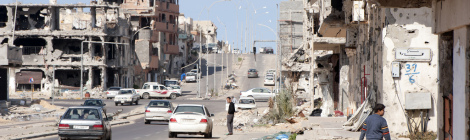
    libya-sirte

    Image by ECHO/DDG/Flickr.

    The Libyan experience indicates that this change in the focus of the responsibility to protect has not been a matter of mere semantics. Although Libyans, eager to take charge of their own affairs after the fall of the Gaddafi regime, rejected plans for UN peacekeepers, they requested capacity-building assistance. Some assistance was provided by the intervening governments – for example the UK government’s Security, Justice and Defence Programme – but on the whole the immediate aftermath of the intervention was marked by the policy of disengagement as Libya observers have argued. The UN reconstruction strategy and donor government policies were premised on the emphasis of domestic ownership, coupled with references to the wealth of the Libyan state that could be utilised for the reconstruction process. It was not until emergence of the ISIS threat in the region that the Libyan authorities’ appeals for assistance gained attention in the Western capitals.

    While it is of course impossible to state with certainty the effects that an alternative course of action (continued engagement in the rebuilding of Libya in the immediate aftermath of the intervention) could have had, it is not hard to see how the rebuilding measures outlined by the ICISS in its 2001 report may have helped to stabilise Libya.  In the absence of the permission to dispatch peacekeepers, more extensive assistance to the Libyan authorities in providing day to day security after the intervention would have not gone amiss. Perhaps more importantly, concentrating international efforts and resources to supporting inter-communal reconciliation would have been vital, given that the precarious security situation in the country following the fall of the Gaddafi regime has been caused by the lack of political solution on how, and by whom, the country should be governed.

    The instability and violence that has plagued Libya since the 2011 intervention suggest that if the aim of protection interventions is to generate self-sustaining peace rather than just carry out regime change operations, re-incorporating the rebuilding pillar into the current responsibility to protect framework is crucial. Doing so would not necessarily mean overhauling the entire principle: many of the measures regarded as ‘pillar II’ responsibilities provide the basis for incorporating rebuilding tasks into the framework. Pillar II, the commitment by the international community to assist the capacity and resilience-building in conflict-affected societies, refers to a range of measures such as fostering dialogue between communities and indigenous conflict resolution skills. Adding measures that address the short-term issues faced by societies in the wake of military interventions would strengthen the pillar and the framework as a whole.  This would inevitably mean increased costs and commitment on behalf of those undertaking protection interventions, something that is likely to be deeply unpopular in the context of the lengthy engagements in Iraq and Afghanistan as well as the increasing pressure on public spending. The alternative, however, as the refugee flows from Libya and the rise of ISIS in the country have shown, may mean having to face even more troublesome questions in the long run.

    Outi Keranen is Teaching Fellow in International Relations at the Department of Political Science, University College London. Her research interests are in post-conflict statebuilding and the responsibility to protect. Her monograph ‘The Contentious Politics of Statebuilding’ (Routledge) is coming out in May 2017. In addition to post-conflict statebuilding, Outi has researched and written on identity-building, symbolic politics and the responsibility to rebuild.

  • Sustainable Security

    Sustainablesecurity.org is a project of the Sustainable Security Programme at Oxford Research Group (ORG). ORG, which is now based in two offices in London, is one of the UK’s leading of advocates for alternatives to global conflict. By combining in-depth political and technical expertise and experience in promoting serious analysis, dialogue and change, we develop alternative thinking on security issues.

    With 30 years of building trust between policy-makers, military and civil society and academics,  ORG works to address the toughest security questions using detailed research and drawing on deep understanding of how human beings behave. Our consultants combine detailed knowledge of global security issues together with a deep understanding of political decision-making, and many years of expertise in facilitating constructive dialogue.

    ORG is a registered charity, and a public company limited by guarantee under English law. It was first established in 1982 by Dr. Scilla Elworthy.  ORG, and its founder, was awarded the Niwano Peace Prize in 2003. The Independent newspaper named ORG as one of the top 20 think-tanks in the UK in 2005.

    The Sustainable Security Programme

    The programme aims to develop the sustainable security concept and promote it to a wide international audience, ensure that voices from the global South play a central role in its development, and define specific options for sustainable security policies. These aims are achieved via in-depth research, dialogues with analysts and decision makers and providing new avenues for creative thinking and discussion on the real threats to global security in the 21st century.

    For more information, please click HERE

  • Global militarisation

    The ‘New START’ agreement recently signed by the US and Russia is an important first step on the road to nuclear disarmament but much of the hard work in reducing and potentially eliminating the vast stockpiles of nuclear weapons held by nations across the globe is still to be done. Before any meaningful multilateral talks and possible agreements on abolition can seriously begin, the US and Russia will need to go much further in reducing their nuclear ordinance writes Andrew Futter, exclusively for sustainablesecurity.org
    Image source: PhillipC

    Read more »

  • Climate change

    Many leading military analysts in the United States are increasingly alert to the link between security and climate change. Is international terrorism really the single greatest threat to world security? Read more »