Blog

  • Sustainable Security

  • Sustainable Security

  • Lao PDR

    Food security will remain out of reach for many people, especially women and children, in the Lao People’s Democratic Republic, or Laos, if the country continues to emphasize commodities and resources development at the expense of the environment and livelihoods while ignoring global trends for food and energy. Read more »

  • Sustainable Security

    Why has the US failed so dramatically in Afghanistan since 2001? Dominant explanations have ignored the impact of bureaucratic divisions and personality conflicts on nation-building in Afghanistan. These divisions meant the battle was virtually lost before it even began.

    This article presents alternative findings about US efforts to construct a stable and prosperous Afghan state. It concentrates on the bureaucratic conflict surging beneath the surface of the mission, which compromised state-building goals and bedevilled the implementation of policies across a wide range of issues linked to law and order, development, governance and counter-narcotics. The fact that internal bureaucratic problems were an important explanation for the lack of progress has been underestimated in the current scholarship. With this in mind it is stressed here that the machinations of the agencies and individuals who make up the US foreign policy bureaucracy must be recognised alongside external factors in order to provide a complete picture of the difficulties and frustrations characteristic of US state-building in Afghanistan.

    Afghanistan: a twenty-first century state-building project

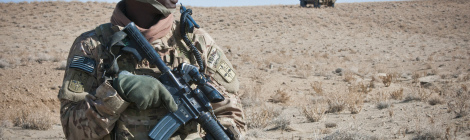
    taskforce-stan

    Image by DVIDSHUB via Flickr.

    Afghanistan has been considered the first major test case for state-building in the twenty-first century. From 2001 onwards, there were some significant achievements as a result of efforts on the part of the United States and its allies. A variety of actors collaborated to sink hundreds of wells and construct many health clinics. According to some estimates, death rates among adult males have declined, and access to clean water has helped to curb disease and improve life expectancy. Millions of Afghan children are now enrolled in schools.

    But given the vast expenditure of the international community these achievements are underwhelming. Close to a quarter of Afghanistan’s population still do not have access to clean water, and nearly half of Afghan children are malnourished. Hunger is widespread and there is rampant unemployment. Schools lack equipment and sometimes even a schoolroom, and sewerage or electricity infrastructure outside of Kabul is practically non-existent.  Corruption is endemic at all levels of government and brutal strongmen, such as the capricious Gulbuddin Hekmatyar, continue to play a central role in national politics. Afghanistan also remains a narcostate that produces an alarming 90% of the world’s heroin with the Taliban now functioning a veritable drug cartel.

    What, then, explains this lack of progress? A smooth transition to Western-style democracy was always an unlikely, given Afghanistan’s ethno-sectarian fissures, economic underdevelopment and institutional fragility. It is now widely accepted that the strength of cultural, religious, and political traditions was underestimated. US insouciance in the years immediately after the invasion, thinly disguised beneath the euphemistic language of having a ‘light footprint’, also contributed to the rise of a ferocious and destabilizing insurgency. This heralded the return of the Taliban as a violent, tenacious and seditious force. In a more general sense, externally generated state-building would have been an ambiguous and difficult process in any country, let alone Afghanistan; the graveyard of empires.

    A bureaucratic tangle

    All of the above issues have been mentioned in media reports and scholarly works. Less attention, however, has been directed to the fact that the responsibilities of the various actors within the US state remained undefined or ambiguous. State-building was compromised by each agency’s unique culture, interests, norms and past experiences; all of which encouraged particular patterns of behaviour. In Afghanistan bureaucratic conflict circumscribed the capacity of the US government to act as a homogeneous and purposeful unit. The impact of this disorder was widespread, but it was particularly problematic in respect to counter-narcotics, law & order and infrastructure projects.

    The US government was not paralysed by the complexity of Afghanistan’s drug problem; however, there was no common conception or understanding of that problem between the relevant parties. During the Bush Administration’s time in office in particular, eradication, interdiction, and the Alternative Livelihoods Program were not subjected to a single calculated counter-narcotics policy, nor was there consensus in regards to the strengths and weaknesses of the three strategies. A lack of leadership from the White House and Congress augmented the capacity of agency rivalry to ensure that the United States failed to pursue a counter-narcotics effort that was united or reflective of Afghanistan’s needs.

    The Bush Administration’s approach to Afghanistan’s drug problem was not only ambiguous but also sporadic, and congressional engagement was not simply selective but also obsessive, advocating short-term solutions that revealed a limited knowledge of the situation on the ground (akin to the 10,000 mile screwdriver). Meanwhile, elements within the civilian wing of the US foreign policy bureaucracy, meanwhile, had their own ideas about Afghanistan’s drug problem. The Bureau of International Narcotics and Law Enforcement Affairs (INL) was influenced by its previous experiences in Columbia and elsewhere, so it prioritized eradication above all else.

    The Drug Enforcement Administration (DEA) favoured interdiction, but much like the INL, the agency struggled to convince other bureaucratic factions that its conceptualization of Afghanistan’s drug problem was the most accurate one. The United States Agency for International Development (USAID) is an actor not normally associated with drug prevention, and it was more concerned with the preservation and protection of its developmental mandate than using agricultural projects to prevent poppy farming. For the US military, counter-narcotics was only valid if it was subordinate to counterinsurgency, and even then both the Defense Department and the US Armed Forces were reluctant to commit resources and manpower to the task.

    The disharmony that plagued the US counter-narcotics program was also characteristic of US efforts to promote the rule of law. US agencies were placed under no significant pressure to initiate rule of law projects by the White House, nor was it in the interest of any agency to spearhead legal reform, given the array of other (often competing) responsibilities that they had already accepted. Other issues took priority: development projects for USAID; diplomacy for the State Department and counterinsurgency for the military. The State Department employed separate contractors and also paid prosecutors on loan from the Department of Justice, who operated independently; while USAID ran its programs through separate contractors. No effort was undertaken by any agency to identify duplicate or conflicting programs and none of them could provide a clear picture of US expenditures.

    Competing ideas about how infrastructure development should be undertaken engendered another web of conflict. Namely, USAID’s perspective clashed with that of the rest of the State Department and US military. USAID considered projects that were conducted by the State Department and the military to be out of tune with the ‘developmental reality.’ Its preference for long-term initiatives coupled with a perceived lack of man-power fostered the impression among military officials that it was ineffective and unreliable. Similarly, the relationship between the State Department and USAID was often characterized by indecision and competing priorities, which precluded the two agencies from establishing a united development front.

    As the insurgency intensified, the US military and the State Department used their influence in Washington to convince USAID to prioritize road-building and agriculture projects in Afghanistan’s most dangerous provinces: Helmand and Kandahar. Often, but not always, USAID yielded to the pressure of more powerful bureaucratic forces and implemented projects that it perceived to be cosmetic. But in order to fulfil these obligations, USAID relied on contractors. These contractors operated in a nebulous area between the private sphere and the foreign policy bureaucracy. They added another layer of confusion to already divided development efforts. Many of the contractors left an array of unfinished school, roads, power supplies and medical clinics. USAID was criticized by the State Department and the US military for delegating projects to Berger, Chemonics and other contractors, but then failing to sufficiently monitor their activities.

    Lessons learned

    No single US official or agency is to blame for the problems outlined in this article, but it meant the battle in Afghanistan was virtually lost before it began. To overcome such bureaucratic conflict, more effort—both in Washington and the field—must be directed toward encouraging a whole-of-government approach to complex foreign policy issues. This should involve staff exchange programs, compulsory inter-departmental meetings and a greater emphasis on aligning interests with policy platforms from senior figures within each agency and, most importantly, the White House. Political will and dedication from the US leadership is certainly essential, but government-based training programs must also infuse prospective US public servants with an understanding of the structure and nuances of the foreign policy bureaucracy in order to promulgate practices that encourage empathy and flexibility. Given the criticism the United States has faced for its state-building efforts in Afghanistan and Iraq, it is unlikely that a similar mission will be attempted in the near future. However, US policy-makers should be careful not to forget these experiences; as was the case following the Vietnam war. The United States still considers ‘fixing’ failed states to be an important foreign policy goal. With is in mind, it is probable a situation will arise requiring the mobilisation of resources and agencies towards state-building. In such a scenario, a cohesive intra-governmental front will be help the US to avoid the bureaucratic disorder that pervaded state-building in Afghanistan.

    Dr Conor Keane has degrees in law and politics, and a doctorate on nation-building in Afghanistan from Macquarie University. His research interests include counter terrorism, state building, bureaucratic politics and US foreign policy. He has published several articles on these topics in journals such as Armed Forces & Society and International Peacekeeping.

  • Sustainable Security

    Due to the absence of a functioning government, a counterinsurgency in a failed state can be a difficult enterprise. Since Somalia’s state collapse in 1991, various actors have been combating the threat of Al-Shabaab with mixed results.

    Counterinsurgency measures, as the name suggests, are meant to suppress an insurgency and in the long run create an enabling political environment for the establishment of a functional state capable of ensuring sustainable security. These goals are, however, difficult to achieve under conditions of state collapse given the virtual absence of a functional government. As a collapsed state that has had no functional government since the end of Siad Barre’s rule in 1991, Somalia represents an interesting case.

    Since 1991, many of Somalia’s counterinsurgency operations launched have been driven by concerns regarding the impact of Somalia’s conflict on regional security and the desire to create a functional state capable of providing basic human and physical security to its citizens. Given that Somalia is a collapsed state, the initiative of adopting and effecting counterinsurgency measures in the country has been externally driven by regional and international organisations such as the African Union (AU) and the United Nations (UN), as well as Western countries such as the United States (US) rather than by the Federal Government of Somalia (FGS).

    This article focuses on the military component of the peace enforcement African Union Mission in Somalia (AMISOM), which has positioned itself as a counterinsurgency force against the armed insurgency group Harakat Al-Shabaab Al Mujaheddin group, commonly known as Al-Shabaab.

    Somalia’s insurgency and counterinsurgency

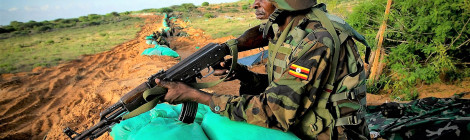
    aminson-somalia

    Image of AMISON troop via UN Photo/Flickr.

    The nature of insurgency and counterinsurgency in Somalia is complex as it involves a variety of non-state, state and international actors. The militant Islamist group Al-Shabaab, the most significant armed non state actor, describes and perceives itself as an insurgent movement but is labelled and depicted by the FGS and external actors as a terrorist group as they see it as a transnational violent armed non-state actor. The conceptualisation and labelling of Al-Shabaab both simultaneously as an insurgent and terrorist group only complicates counterinsurgency operations in the country. This is so, in that it is not effective enough to conduct counterinsurgency as counterterrorism to suppress a group that perceives itself and thereby conducts its operations as an insurgent rather than a terrorist one.

    The combination of state collapse with the complexity and paradoxical nature of insurgency and counterinsurgency operations in Somalia has adversely affected human and physical security in the country and has provided Al-Shabaab with new political opportunities to sustain violent action. The AMISOM’s strategic concept of operations (CONOPS) and rules of engagement (ROE) indicate that its short-term repressive security measures are better clarified as counterterrorism rather than counterinsurgency, as they appear to focus on both simultaneously national and transnational terrorist activities, rather than efforts to defeat the insurgency in Somalia and ultimately create a functional state.

    The AMISON’s CONOPS combine all ongoing separate military operations in Somalia into a coordinated and coherent effort against Al-Shabaab so as to extend the authority of the FGS country-wide. It also aims at creating an enabling environment for the effective implementation of AMISOM’s mandate. AMISOM’s CONOPS have, however, been adversely hindered by the mission’s lack of adequate financial, human and military resources, thereby rendering it ineffective in its mandated operations. AMISOM’s ROE are key to ensuring that military operations are conducted in compliance with international humanitarian law obligations in Somalia’s socio-political context.

    Though the ROE are in conformity with the operational realities of the mission, AMISOM continues to operate in extremely volatile conditions created by state collapse, whereby Al-Shabaab’s asymmetrical warfare targets civilians within populated areas. This situation makes it extremely difficult for AMISOM to ensure civilian protection in the conduct of its operations and to consistently apply the mission’s ROE Counterinsurgency operations that cannot consistently sustain themselves for long periods are ineffective and will not achieve the intended outcome of enhancing sustainable security.

    A success or failure?

    The successes or failures of insurgency and counterinsurgency operations in Somalia depend on population support.  So far, the counterinsurgency strategies in Somalia conducted by AMISOM and its coalition forces, especially the Somali National Army, have been unable to gain the support of the people. Al-Shabaab’s led insurgency has gained popular support among the local-level communities, largely due to the social services and more importantly the local-level security governance it provides, in the absence of a functional state. All these strategies of Al-Shabaab, which are aimed at legitimising itself, are implemented through variants of Islamism. The movement was very effective in the provision of alternative governance structures at the local-level prior to the pre-2010 military intervention of AMISOM. The literature on counterinsurgency operations in Somalia indicates that the security vacuum created by Al-Shabaab’s departure as a result of AMISOM’s operations in these areas has led to an increase in the levels of insecurity thereby questioning the legitimacy of the latter’s operations.

    The Somali populace also perceives these counterinsurgency efforts as externally driven and extremely hesitant to engage, positively, with the fundamental Somali socio-political structures such as the clan structure and Islam. In order to be effective counterinsurgency measures, should take into account the legitimacy of these socio-political structures that play a significant role in local-level peacebuilding and governance processes.

    Doomed from the start?

    Counterinsurgency operations in Somalia have also been adversely affected by poor planning and their inability, so far, to create an enabling environment which enhances state capacity. Any credible counterinsurgency operation with a military component requires careful planning before any military incursion begins. A number of indicators suggest that, in the early stages, AMISOM neither planned nor implemented an effective counterinsurgency strategy. The initial objective of Kenya’s military incursion into Somalia through Operation Linda Nchi and subsequent incorporation into AMISOM was not peace enforcement countering the direct physical threats posed by Al-Shabaab on its territory.

    Counterinsurgency measures were later driven by socio-political and economic interests rather than peacebuilding in Somalia. Kenya’s military intervention in Somalia can be perceived as counterterrorism rather than counterinsurgency efforts given that they were initially driven by short-term strategic interests.  The establishment of a functional state has so far not been achieved in Somalia as it has been has been compromised by the manner in which regional and international peacekeeping efforts, have been conducted in the country. Most of these, if not all have been characterised by failures rather than successes. For example, the UN Monitoring Group on Somalia constantly accuses the Kenya Defence Forces component of violating AMISOM’s mandate. AMISOM has not been effectively taking the appropriate measures aimed at supporting the creation of a functionally effective state due to the strategic interests of its member states. This has compromised peacebuilding and security governance in the country.

    The resilience of Al-Shabaab as a transnational violent non-state armed actor, is partly a function of ineffective repressive counterinsurgency measures in Somalia. The repressive counterinsurgency operations conducted largely by external actors in the country are reactive, achieve unintended consequences ande hence counterproductive. A political strategy supported by security operations in the formulation and implementation of counterinsurgency operations is still ideal for any country facing an insurgency.

    Counterinsurgency measures, however, that do not require repressive security operations that focus on causes not symptoms are best suited for Somalia in the medium and long-term.  Since Somalia does not have a functional government capable of providing effective counterinsurgency operations let alone human and physical security, non-repressive measures would best be conducted by non-state actors such clan leaders and clans, and Islamic civil society organisations.

    Non-state actors are appropriate in the implementation of non-repressive counterinsurgency measures in that they not only located within fundamental Somali socio-political structures, but also have the capacity to use informal process oriented means rather than formal goal-oriented ones. Informal process-oriented methods are more appropriate when it comes to addressing the root causes of the insurgency while formal goal-oriented ones are reactive focussing on symptoms. These measures, such as those that focus on countering violent extremism, take into account fundamental Somali socio-political structures, and their corresponding customs norms and traditions thereby gaining population support and subsequently legitimacy. Such counterinsurgency measures will achieve their intended outcome of dealing with insurgency, the grievances of that insurgency and ultimately create the socio-political environment required to establish a functional state.

    Oscar Gakuo Mwangi (PhD) is an Associate Professor at the Department of Political & Administrative Studies National University of Lesotho.

  • Sustainable Security

    Jenny Nielsen and Marianne Hanson

    The first week of the third Preparatory Committee (PrepCom) for the 2015 Review Conference (RevCon, held every five years) of the Nuclear Non-Proliferation Treaty (NPT) has witnessed a heavy emphasis on issues relating to the disarmament pillar. In particular, the humanitarian impact of nuclear weapons, highlighted by a wide-ranging, cross-grouping, multi-aim initiative which continues to consolidate itself in the non-proliferation regime, has come to the fore. Frustrated with the lack of progress towards NPT Article VI commitments to complete nuclear disarmament, the initiative has invigorated attention to the urgency of nuclear disarmament and a need for a change in the status quo. NPT member states and civil society continue to engage actively in publicizing the humanitarian consequences of nuclear weapons as an impetus to progress towards nuclear disarmament.

    The Humanitarian initiative

    Austria has announced the dates of a Third International Conference on the Humanitarian Consequences of Nuclear Weapons, to be held on 8-9 December 2014 in Vienna. This conference will follow the March 2013 Oslo conference and the February 2014 Nayarit conference, which were both notably boycotted by the five NPT nuclear weapons states (NWS: the UN Security Council permanent members, or P5).  Whether any of the five NWS will participate in the Vienna conference, remains to be seen. Given the Chair’s summary of the Nayarit conference, which includes some of the Mexican chair’s personal perceptions on the humanitarian initiative’s aims, the Austrian Ministry of Foreign Affairs may find that appealing to the NWS to attend will be a challenging task.

    UN General Assembly. Source: Wikipedia

    UN General Assembly. Source: Wikipedia

    At the PrepCom, the Mexican delegation explained that the Chair’s Summary of the Nayarit conference, ‘reflects the opinion of the overwhelming majority of delegates, in the sense that these discussions should lead to the commitment by States and civil society to achieve new standards and standards through a legally binding instrument prohibiting nuclear weapons in the same way, as in the past, the weapons that have been eliminated were first banned’. Furthermore, the Mexican delegation to the PrepCom stressed that ‘the time has come to initiate a diplomatic process, to define specific time lines and the most appropriate fora to achieve this work’.

    Since the inclusion of the humanitarian consequences issue in the Final Document of the 2010 NPT RevCon and the reinvigoration of this initiative in the PrepComs since then, the NWS have been cautious of the initiative’s coordinated activities and continue to question the aims of the initiative.  In particular, the NWS will not readily engage in the initiative as long as they interpret or perceive it to be the pathway towards a delegitimization process and, ultimately, a ban on nuclear weapons’ possession and use. For this reason, controlling the initiative’s external communication of its aims and activities will need to be carefully managed in order to sustain its broad, cross-grouping support-base and participation. This, in turn, will enforce its credibility and longevity in the regime towards the goal of progress towards nuclear disarmament.

    Suing for Nuclear Zero

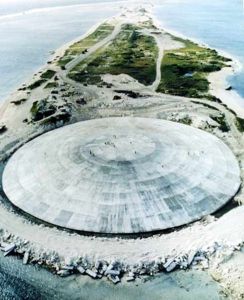
    Cactus Dome, Runit Island, Enewetak Atoll, Marshall Islands - a concrete-capped burial pit for radioactive waste from US nuclear tests.

    Cactus Dome, Runit Island, Enewetak Atoll, Marshall Islands – a concrete-capped burial pit for radioactive waste from US nuclear tests. Source:  US Defense Special Weapons Agency (via Wikipedia)

    On 24 April, a few days before the NPT delegations convened at the UN for the PrepCom, the Republic of the Marshall Islands filed cases in the International Court of Justice and the U.S. Federal District Court claiming that all nuclear-armed states—including the four non-NPT states: India, Israel, DPR Korea, Pakistan—‘have failed to comply with their obligations […] to pursue negotiations for the worldwide elimination of nuclear weapons’.  These cases, referred to as the Nuclear Zero lawsuits, are based on treaty law obligations (for the five NPT NWS) and customary international law (for the four non-NPT member states). The Labour Party of New Zealand (currently in opposition) has pledged support for the lawsuits. Civil society groups at the NPT PrepCom have heralded the motion.

    As a testing ground for U.S. nuclear weapons (between 1946 and 1958), the Republic of the Marshall Islands bears firsthand experience of the effects of radiation. On the first day of the PrepCom, the Minister of Foreign Affairs of the Marshall Islands, Tony de Brum, delivered a powerful statement including a personal account of his own childhood memories of U.S. nuclear testing. Given the close US-Marshall Islands economic and defence ties, including an agreement for use of the U.S. Army Kwajalein Atoll missile test range, it is an interesting bilateral development.

    In her 29 April statement to the 2014 PrepCom, U.S. Under Secretary Rose Gottemoeller asserted that ‘it is the United States’ deep understanding of the consequences of nuclear weapons use—including the devastating health effects—that has guided and motivated our efforts to reduce and ultimately eliminate these most hazardous weapons’. Gottemoeller stressed that ‘it is imperative that we make sure people remember the human impact of nuclear weapons’. In a nod to the Nuclear Zero lawsuits she added that her ‘recent trips to the Marshall Islands and Hiroshima were potent reminders of the need to persevere in confronting this challenge’. The inclusion and attention to these issues in the U.S. statement is an indicator of the prominence and importance of the humanitarian dimension initiative. Notwithstanding universal formal engagement, the initiative is percolating through national statements and embedding itself in discourse widely.

    Article VI commitments

    Strategically timed for impact during the PrepCom and in furtherance of commitments to transparency, on 29 April, the U.S. State Department released newly classified information on the U.S. nuclear weapons stockpile. As noted by the Federation of American Scientists, the new figures revealed by the Obama administration boil down to only 309 warheads fewer than the 5,113 reported in 2010. While underwhelming for some in civil society given high expectations on deliverables under Article VI, the U.S. reporting on stockpile figures should be welcomed and acknowledged as a positive move by one of the five NWS.

    The New Agenda Coalition (NAC, comprising Brazil, Egypt, Ireland, Mexico, New Zealand and South Africa) submitted a meaty working paper on Article VI to the PrepCom. As highlighted by the Irish delegation, this suggests four options for the way forward, outlining ‘prospects for a Nuclear Weapons Convention, a Nuclear Weapons Ban Treaty, a looser framework arrangement of mutually reinforcing instruments, or a hybrid of any or all of the above’. The NAC offers these options for discussion without prescription for one outcome. Ireland argues that discussions must begin immediately in order to identify what is needed and how to frame this. Warning that ‘we will not, under any circumstances, countenance a simple roll-over of the 2010 Action Plan’ at the 2015 RevCon, Ireland stressed that ‘to do so would inflict even further damage on the NPT as a credible driver of disarmament and non-proliferation efforts’.

    Mushroom cloud and water column on Bikini Atoll, Marshall Islands, Operation Crossroads Baker, 25 July 1946. Source: US Department of Defense (via Wikipedia)

    Mushroom cloud and water column on Bikini Atoll, Marshall Islands, Operation Crossroads Baker, 25 July 1946. Source: US Department of Defense (via Wikipedia)

    With 128 states supporting the joint statement on the humanitarian consequences of nuclear weapons at the UN General Assembly First Committee in October 2013, the second week at the PrepCom is likely to witness growing support for the initiative’s statement, but only if its wording can balance the political and strategic needs of all of the wide-ranging states. Notably, at the 2013 PrepCom, Japan opted not to pledge formal support to the statement due to trepidation about a clause in the initiative’s statement which was interpreted as having implications for its strategic alliance and coverage under the US nuclear umbrella. Alienating key states – especially US allies – by expressing views too categorically will not serve the humanitarian initiative well. At the same time, it is hard to deny the frustration felt by most states at the lack of progress towards nuclear disarmament.

    Civil society engagement

    Akin to the wide range of support and engagement for the humanitarian dimension initiative shown by states parties, civil society groups have made many broad-ranging contributions to highlight the initiative’s aims. Chatham House published a thorough report on the risks of inadvertent, accidental or deliberate detonation of nuclear weapons based on an assessment of historical cases of near nuclear use, offering recommendations for mitigating these risks. The European Leadership Network (ELN) released a group statement (supported by 52 high-level signatories) with a list of broad ranging recommendations for necessary steps for a successful 2015 NPT Review Conference. Warning that the humanitarian dimension initiative ‘has become a deeply divided issue among NPT states-parties’ and arguing that ‘this division is damaging the diplomatic atmosphere’, the ELN calls on the P5 to participate in the initiative’s third conference in Vienna in December.

    Across the Atlantic, a coalition of US-based civil society organizations published an open letter to President Obama calling for action on nuclear disarmament, including amongst several suggestions, participation in the Vienna conference. The coalition highlights the deterioration in US-Russia relations, given continuing and foreseeable NATO expansion and in light of the crisis in Ukraine, noting concern for prospects for future bilateral arms reduction negotiations.

    Other disarmament advocacy groups including Reaching Critical Will and ICAN are steadfastly calling for a process of negotiations for a new legal instrument prohibiting nuclear weapons. Demanding a nuclear ban, the Geneva Nuclear Disarmament Initiative, aka Wildfire, continues to head-on challenge and mock the status quo of the NPT review process, exposing inconsistencies in nuclear policies by NPT states, with a focus also on NNWS relying on extended nuclear deterrence, particularly Australiaand those NNWS hosting NATO theater nuclear weapons, such as the Netherlands.

    A major challenge faced by the PrepCom’s Chair, Peruvian Ambassador Roman Morey, will thus be to reconcile these disparate approaches and views while preserving the essential aims of the humanitarian initiative. There is a clear need to engage the NWS and seek their attendance at the Vienna conference in December and to steer diplomacy as well as civil society activism towards an achievable path for the elimination of nuclear weapons. If the PrepCom concludes with recriminations and division, it will bode ill for next year’s NPT Review Conference.


    Jenny Nielsen is a Postdoctoral Research Fellow in the School of Political Science and International Studies at the University of Queensland. Previously, she was a Research Analyst with the Non-proliferation and Disarmament Programme at the International Institute for Strategic Studies (IISS), a Programme Manager for the Defence & Security Programme at Wilton Park, and a Research Assistant for the Mountbatten Centre for International Studies (MCIS) at the University of Southampton, where she co-edited the 2004-2012 editions of the NPT Briefing Book.

    Marianne Hanson is Associate Professor of International Relations at the University Of Queensland and Director of the University’s Rotary Centre for International Studies in peace and conflict resolution. She has published widely in the field of international security, with a focus on weapons control, and is currently engaged in a book project examining the emergence of the humanitarian initiative in nuclear weapons debates.

  • Sustainable Security

    The Gacaca courts were set up in the aftermath of the Rwandan genocide to try and help Rwandans live together in peace. But research suggests that this system has been used as a tool for vengeance, and political and economic gain. 

    In the aftermath of the 1994 Rwandan genocide, the Rwandan Patriotic Front (RPF) government was faced with the task of bringing justice and reconciliation to a divided and devastated country. Gacaca, meaning “justice amongst the grass”, a traditional justice system once used to try local disputes between neighbours, was restored to relieve the overwhelmed prison system.

    Initially, it was well received. For those accused of genocide crimes, it was a long awaited step towards justice, an opportunity for the truth to be heard and them to be judged (see Tertsakian 2008: 376).  For the survivors, it meant that they would be able to tell their story and have justice for their loved ones.

    Between 2001 and 2012, gacaca processed nearly two million cases.  Most, if not all have involved Hutu as defendants. Gacaca was set up to try only genocide crimes. Crimes committed by RPF and out of revenge were excluded from the mandate. Waldorf notes that:

    Early on Penal Reform International warned that the implementation of gacaca was emphasizing legalistic retribution over socio-political reconciliation.  Since then, gacaca has become increasingly retributive, both in design and practice

    As a result, the legal system is perceived as being used against Hutu to not only criminalize them, but to obtain their wealth and resources. This paper examines the ways in which gacaca has been used as a tool for vengeance and to serve political or economic interests.

    The misuse of gacaca

    Beginning in March 2008, I carried out ethnographic research in Gisenyi and Cyangugu Rwanda as well as Goma and Bukavu Democratic Republic of the Congo (DRC). My research has emphasised that Hutu participants did not outright reject gacaca, rather they rejected how the system was being misused, as Zach, a Hutu participant, argued

    Gacaca is good idea, but those who work in the government are bad. The rules are written in a book but they are not obeyed. …Gacaca would be very good, if the government didn’t influence the decisions.  But this is not the case; judges are influenced by soldiers, genocide survivors and others.

    According to another Hutu participant, Huey:

    Some Hutu begin a business and the government will stop them.  There are many example of this.  One man had a very successful business of selling materials for repairing cars.  However, people took him to gacaca because he had lots of money.  He gave them money even though he wasn’t guilty.  He gave them lots of money.  Now he had to change the way he conducts business.  He doesn’t like to show the materials he has, because he’s scared that he will get dragged back to gacaca.

    Alphonse, another Hutu participant, agreed “They (the government) like to charge rich Hutu. When they don’t find anything, they take that Hutu to a different district and charge him with the same crimes there.” Robert was a Hutu participant arrested for genocide crimes in 1997 and for ‘genocide ideology’ in 2008. He believes the underlining cause for both arrests centred on property disputes:

    I was accused of killing my neighbour by his brother.  During the genocide, my neighbour was caught at a roadblock.  I explained to the men there that this man was my brother, but he didn’t have his identity card to prove it.  They told me they wouldn’t kill him, but to find some way to prove his identity.  I went to the District Office and paid for an identity card that said my neighbour was Hutu and my brother.  It was a lot of money. They released my neighbour, who fled to Congo.  When he arrived at the border, the Interahamwe killed him.  I fled with my family to Congo after the genocide.  When I returned, I was arrested on genocide crimes for this man’s death.  I had spent years in prison when the formal courts found me innocent.  I told them everything and they found that my neighbour’s brother had lied. Next the brother brought me in front of gacaca for the same crimes [killing his brother]. The gacaca judges were confused as to why this case was in front of them.  They agreed with the previous ruling and I was released.  [Why was your neighbour’s brother going to all these lengths to charge you?] Because, while I was in Congo, my neighbours had moved into my house and did not want to give it back.  When I returned, I reclaimed my house, but it was stripped of all windows and doors.  Two days later I was arrested for the death of his brother.

    Robert was in fact lucky. According to Human Rights Watch (HRW), Rwandan law protects an individual from double jeopardy. However, the practice has been allowed due to a loophole in the 2004 Gacaca law. HRW reported a case that was nearly identical to Robert’s, where a man was cleared by the formal courts and then given a thirty-year sentence in gacaca. He was released upon a successful appeal. In another case, in the district of Huye, a gacaca judge told how there were two cases where the men were acquitted in conventional courts, but convicted with lengthy prison sentences through gacaca (ibid).

    Coercion within gacaca

    gacaca

    Image credit: Elisa Finocchiaro/Flickr.

    According to Douglas, a Hutu participant, who was also a RPF member and gacaca official, guilt and innocence are often determined by the government. He told me “For those Hutu who are rich, the decision is always made before he is charged, before the judges reach a decision.” The involvement of the government became evident when I was allowed to attend a gacaca proceeding in Douglas’s jurisdiction.

    The accused was a former leader, who had been convicted by the formal courts of killing someone during the genocide. Upon appeal to the Supreme Court, the man’s conviction was overturned. He was finally released from prison and freed for only one night, when the police arrested him again. People from surrounding areas had accused him of killing and stealing a motorcycle during the genocide. However, some of those murder charges were the same accusations that the Supreme Court had previously overturned.

    Douglas explained that a genocide survivors’ organisation had initiated a campaign to mobilise survivors to accuse those who were ‘guilty’ of genocide crimes. However, the organisation and gacaca officials were unable to find anyone to accuse this particular man. As a result, the trial was cancelled and the case was postponed for a month. I asked Douglas if this was a form of coercion:

    Oh for sure, I’ve already been contacted. …I was told that I have to convince the judges and that we must charge this former leader and find him guilty.  We have to do this.  This is a heavy burden… As a team, we say that he is guilty. But in private we know this prisoner is innocent, we have no choice.  That prisoner was my neighbour.  I had seen everything that happened.  A former local leader took him to the market, where those Tutsi were.  He did nothing! He didn’t kill or hurt anybody!

    Genocide ideology, a tool for vengeance

    In all likelihood the ending of gacaca will not offset the misuse of the legal system as a tool for vengeance. In 2008, the Rwandan government passed Law No. 18/2008 that defined genocide ideology as:

    an aggregate of thoughts characterized by conduct, speeches, document and other acts aiming at exterminating or inciting others to exterminate people basing on ethnic group, origin, nationality, region, colour, physical appearance, sex, language, religion or political opinion, committed in normal periods or during war.

    Human rights organisations have been concerned with the imprisonment of Rwandans on vague accusations of ‘genocide ideology.’ Amnesty International argues that ‘genocide ideology’ legislation, like gacaca, ‘is compounded by the reality and perception that most accused come from one ethnic group.’  Furthermore, it is not uncommon for individuals to use ‘genocide ideology’ laws for personal gain.

    In fact, Amnesty was only able to find one case where a Hutu attempted to bring ‘genocide ideology’ charges against a Tutsi. The individual was offended after a Tutsi neighbour had called him a Hutu. The case was dropped by the prosecution. Robert believed that in connection with gacaca, ‘genocide ideology’ becomes a weapon that is used to discriminate and imprison innocent Hutu:

    Gacaca is used for stopping those Hutu who are rising up in society.  It allows Tutsi to take their property.  It helps to promote young Tutsi to occupy jobs.  A Tutsi can claim genocide ideology as a way of forcing a Hutu out of their post. It is like a business, anyone who gets into an argument at work can be accused of genocide ideology. Then they get put into prison.  Just ask why charges of genocide ideology only exist against Hutu, but Tutsi have genocide ideology as well.

    In 2008, Robert was arrested on allegations of ‘genocide ideology’ made by the same man who accused him of murder. Robert felt that having failed to obtain his property through accusations of genocide crimes, the man now turned to ‘genocide ideology.’

    I decided to rebuild a granary, after a few days the community leader came to me and told me that I must destroy the granary, because it was in the road.  I told him he didn’t have the authority… My neighbours sent that official, the same ones who had me arrested before, those that accused me before. They called the police and told them I had insulted them [a way of saying that a racial/ethnic epithet was used].  It was planned! The leader had told them that I had beaten him.  I am an old man; the leader is a young man. I cannot beat him!  When I got to prison, they charged me with crimes of genocide ideology and opposition to the government’s programmes. My wife’s brother came to intervene on my behalf.  He told me that I must be quiet; because they have many things they could charge me with.  The Police Commissioner also told me to go home and keep quiet.  Now I’m quiet.

    The other man involved was a neighbour, with whom Robert was having a boundary dispute with.  According to Robert, the men believe that if Robert returned to prison, he wouldn’t be able to pay back a bank loan and his house would be repossessed, solving both problems. Robert’s testimony highlights how the misuse of the legal system through gacaca and genocide ideology presents challenges to reconciliation. While, at the same time, demonstrating that there is a desire and a demand for it, he states,

    Those Tutsi were looking for any reason to condemn me to prison.  I didn’t do anything.  If I say anything, they will get me again and put me in prison. Everyday they accuse me.  Their (genocide survivors) agenda is like revenge there was no reason for them to do what they did.   They see me and their hearts accuse themselves.  When I was released (the first time) they were not happy to see me…In 2002, after I was released, I had electricity and water and my neighbours didn’t.  They came to me asking me for water.  They say, “This Hutu has TV, water, we have nothing”.  They think of me as being rich.  They say, “this Hutu, who has all these things, how can he get these things”? It’s a major reason why they want to punish me.  I put myself in Allah’s hands. …The best thing for all Rwandans would be to share power and forget.  To work for the nation, forget about the divisions or favouritism and use the same Arusha Accords as a power sharing agreement.  Only then can Rwanda be one house with one parent, to care for all children.

    Conclusion

    Much has been written and debated about whether or not gacaca has achieved reconciliation in Rwanda. While most would agree and recognize that gacaca was “one of the most ambitious transitional justice experiments in history”, it was also developed and carried out within the context of “deep political and ethnic division, fear, suspicion, intimidation and corruption” (see Tertsakian 2008: 362). The consequences of this is that gacaca was never going to be able to bring about reconciliation for all Rwandan, but rather contributed further wounds of mistrust and division.

    Larissa R. Begley received her PhD in Social Anthropology from the University of Sussex. She is currently a lecturer in African and African American Studies at Iowa State University. Her research focuses on understanding the implication of genocide ideology laws as a form of state violence in Rwanda.


  • Towards sustainable civilian security in South Sudan

    Last week saw the start of yet another armed anti-government revolt in South Sudan’s Jonglei state.  Reportedly led by Murle militia leader Major General David Yau Yau, there are now fears that the revolt will escalate as a result of longstanding local grievances with the army of South Sudan, the Sudan People’s Liberation Army (SPLA).

    The unrest comes as a result of a widely criticised government-led civilian disarmament campaign in Jonglei state – so-called ‘Operation Restore Peace’ – which was launched after violent clashes between Lou Nuer and Murle communities in January. Carried out by the SPLA, with an additional 15,000 soldiers and 5,000 members of the South Sudan Police Service, the campaign has been condemned by the United Nations Mission in South Sudan and groups such as Human Rights Watch for alleged human rights violations including killings; allegations of torture, simulated drowning and beatings; rape and attempted rape; and abductions. On October 3rd, Amnesty International issued a press statement calling on the government to take immediate action to end these reported human rights violations, launching a new report ‘Lethal Disarmament’ which highlights abuses in Pibor County of Jonglei State.

    Not for the first time, the Government of South Sudan’s  civilian disarmament initiative has failed to improve security in South Sudan. In 2006, as described by the Human Security Baseline Assessment at Small Arms Survey, the SPLA’s forcible civilian disarmament operation in northern Jonglei State succeeded in collecting 3,000 weapons from the local community. However, as a result of the campaign’s focus on the Lou Nuer community and martial and poorly planned approach, as well as a lack of subsequent security guarantees for the community, heavy fighting ensued and more than 1,600 people were killed.

    In 2008, Interim President  of Southern Sudan, Salva Kiir issued a decree to start a six month disarmament period across the country. Conducted by the SPLA, the aim of the operation was to get all civilians to surrender their weapons in a peaceful manner, although ‘appropriate force’ could be used. However, as operational logistics were not outlined after the decree, a lack of centralised strategy resulted in various outcomes and in many places, an increased sense of insecurity. For example, in Lakes State local police had their weapons confiscated and weapons searches became violent as reportedly drunken soldiers stole from people’s homes.

    Thus far, civilian disarmament operations in South Sudan have done little to increase long term security. After decades of war, small arms and light weapons are notoriously rife in the young country, but attempts to solve this problem by confiscating these weapons does little to deal with the root causes of insecurity and communities’ need for self-protection.  Small Arms Survey estimates that prior to the interim separation of Sudan and South Sudan after the Comprehensive Peace Agreement in 2005, there were between 1.9 and 3.2 million small arms in circulation, with about two-thirds of these in civilian hands.  While these weapons come from a number of sources – including the SPLA during the Second Civil War – it is also important to understand why civilians feel they must arm themselves.

    South Sudan’s severe underdevelopment, lack of infrastructure – with only 300km of paved road  – seasonal floods, and subsequent lack of service provision and security capacity, means that there is a considerable absence of established security services across the country.  Persistent, and often deadly, cattle raiding and escalating inter-communal armed conflict between groups such as the Lou Nuer and Murle in Jonglei State leave individuals and communities to seek ways to protect themselves and their property. Subsequently, informal community security structures are common; ranging from community initiatives to groups such as the Lou Nuer’s ‘White Army’, which was originally formed to protect cattle and now constitutes a major threat to Murle communities in Jonglei. In effect, the Government’s inability to ensure security at the community level means that groups are forced to take matters into their own hands, often challenging the state’s right to a monopoly of violence because of a lack of confidence in its ability to provide adequate protection.

    In current approaches to civilian disarmament, communities are often left in a ‘security vacuum’, without the means to protect themselves from immediate security threats but without any guarantees that even short term immediate security assistance will be provided.  This state of vulnerability in turn leads to community backlashes, rapid re-arming or attempts not to turn weapons in.

    As stated in a report by Saferworld in February 2012, ‘on its own, civilian disarmament does virtually nothing to address the factors fuelling demand and supply of these weapons, which requires a much more complex and long-term strategy.’  Reducing and managing the proliferation of civilian use of small arms and light weapons will require the Government of South Sudan to create a holistic strategy that addresses the demand for weapons as well as their supply. As has been proven in efforts until now, addressing the single issue of weapons supply without dealing with the underlying need for guns undermines attempts to decrease proliferation of small arms and light weapons. A government strategy would necessarily address structural issues, including the state’s capacity to provide professional security services that can be relied upon for protection, such that communities feel safe from immediate threats.

    In no small measure, this will involve degrees of security sector reform, particularly with focused training on civilian interaction and ethnic impartiality in operations if the army is to be used for future operations. As the latest Amnesty report demands, the Government must ‘provide security forces carrying out civilian disarmament with the necessary training and resources to enable them to have a clear understanding of how to carry out disarmament in accordance with international human rights standards’. This must also include measures to address the structural issues facilitating civilian arms possession, including sales of weapons to civilians by government security forces because of lack of pay and porous regional borders that allow illicit trade. Such augmentation of basic infrastructure and security capacity in South Sudan will take years, and so attempts to reduce proliferation must also include measures to address immediate security threats, in addition to tackling longer term structural, capacity and training issues. 

    Civilian disarmament campaigns in South Sudan currently attempt to tackle one of the many symptoms of the country’s militarised post-war society. Instead, these campaigns must be seen as one aspect of an overarching and sustainable disarmament and security sector reform strategy that must be undertaken long term, while ensuring that the immediate security of communities is safeguarded and that their need for weapons to protect themselves is adequately addressed and reduced. 


    Image Source: ENOUGH Project

  • Sustainable Security

  • A New Road for Preventative Action

     A gap continues to exist between the international community’s rhetoric about conflict prevention and its responsibility to protect people from severe human rights violations. The record of human misery caused by violent conflict is testimony to the chronic lack of political will to respond collectively to new and emerging threats to peace. The ineffectiveness of many global efforts at preventive diplomacy is evidence that traditional diplomatic approaches, including the use of force, simply may not work.

    Article source: East West Institute

    Image source: AfghanistanMatters