Blog

  • Sustainable Security

    Increasingly, non-traditional threats to maritime security are linked to resource scarcity and conflict. An overriding challenge for policymakers is how to address these threats.

    The relatively new concept of ‘maritime security’ has received increasingly greater attention both within the marine resource management and national security communities, particularly since the early 2000s.  While definitions of maritime security vary, there is broad agreement that maritime security generally encompasses the policies, regulations, and operations designed to secure the governance and management of a nation’s maritime jurisdiction (e.g., exclusive economic zones or territorial waters). This definition is broad enough to attract the relevant interest of and contributions from several fields of study, including: global policy; defense and security; natural resource economics; criminal justice; international development; and environmental management.

    During the last two decades, a number of investigations have been conducted into the threats facing maritime security, particularly within the transnational waters of three regions: the Gulf of Aden and Horn of Africa in East Africa (see Sumaila and Bawumia 2014; Bueger 2013; Hansen 2011; Gilmer 2017); the Gulf of Guinea in West Africa (see Jacobsen 2017); and the South China Sea and Sulu-Sulawesi Seas of Southeast Asia (see Pomeroy et al. 2016; Chapsos and Malcolm 2017; Pomeroy et al. 2007).

    Such research has encouraged careful analysis by the international community to identify relationships between relevant political, socioeconomic, and environmental factors with regional stability and maritime security.  Such investigations are of increasing interest to those addressing national security, international policy, and sustainable development concerns.

    Linking Marine Resource Scarcity and Maritime Security

    Maritime security can be viewed as a non-traditional security threat, defined by Caballero-Anthony as “challenges to the survival and well-being of peoples and states that arise primarily out of nonmilitary sources, such as climate change, environmental degradation and resource depletion, infectious diseases, natural disasters, irregular migration, food shortages, people smuggling, drug trafficking, and other forms of transnational crime”. Increasingly, non-traditional security threats are linked to natural resource scarcity. Whether considering energy, food, or freshwater shortages, such resource scarcities exhibit common attributes.

    • First, they share common drivers, or factors that influence and cause or exacerbate scarcity, such as poverty, food insecurity, ecological degradation, human population growth, and ineffective governance and enforcement.
    • Second, they are linked to each other through feedback loops, which create a major risk of unintended consequences when one scarcity issue is tackled without reference to other scarcity issues.
    • Third, they have common impacts. That is, they disproportionately impact poor and fragile states, cause economic stress, and result in the potential for increased and strategically-targeted resource competition and conflict.

    Bueger identifies four, interrelated concepts as an analytical foundation of maritime security: national security; human security; economic development; and the marine environment.  Building from this economic-environment-security framework, other research has investigated the relationship between the relative abundance (or scarcity) of available marine resources, the type and degree of extractive effort for such marine resources, and the level of resource competition and conflict (see Pomeroy et al. 2016; Bueger 2015b; Pomeroy et al. 2007).  These studies highlight how various political, socioeconomic, institutional, and cultural factors are linked to and cumulatively influence maritime security.  This research also illustrates how maritime insecurity can influence broader trends related to civil unrest (nationally or locally) and regional peace and order.

    In this work, there is growing recognition of how increasing fisheries scarcity, competition, and conflict exacerbates rates of illegal, unreported, and unregulated (IUU) fishing in central Indonesia, Liberia, eastern Malaysia (Sabah), the southern Philippines, and Somalia.  In turn, IUU fishing further increases scarcity, competition, and conflict over remaining resources, eroding peace and order and decreasing maritime security.  Declining marine resource availability and decreasing maritime security also threaten the conservation and sustainable management of in situ marine biodiversity within these regions.

    The Role of Non-State Actors and Transnational Crime
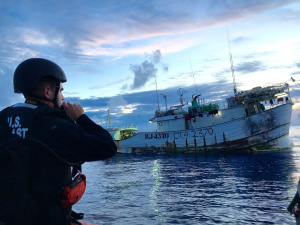
    Image credit: U.S. Coast Guard. Photo by Chief Petty Officer Sara Mooers.

    Investigations into marine resource scarcity, competition, and conflict have also highlighted how non-state actors and non-traditional threats are influencing maritime security.  Transnational crime has a notable influence on both marine resource scarcity and maritime security.  For example, illicit maritime commerce (such as human trafficking and the smuggling of narcotics or small arms via ocean vessels in Southeast Asia and West Africa) and piracy (including armed robbery at-sea, kidnapping for ransom, and oil bunkering off Indonesia, Malaysia, Nigeria, the Philippines, Somalia, and Yemen) committed by non-state (and in some cases, stateless) actors are linked both to marine resource scarcity (via both illegal fishing and piracy of post-harvest fishing vessels) and increased armed conflict and civil unrest (via increased rates of armed conflict/violence at sea and logistical and supply support for insurgencies and acts of terrorism).

    As highlighted recently by an INTERPOL study (2016), 80% of the world’s nations today recognize environmental crime as one of their nation’s highest national security priorities (INTERPOL and UN 2016).  INTERPOL investigations reveal how environmental crimes are linked to both transnational criminal networks and terrorism.  Such crimes include the illegal exploitation of high-value natural resources from conflict areas (and in some cases, to fuel or sustain conflict in such areas).

    Criminal supply chains trafficking in high-value natural resources (e.g., timber, oil, fisheries, diamonds, and gold) are documented as often converging under broader, networked operations of organized transnational crime.  Such transnational crime networks include actors operating within high-value fishery supply chains, including those for tuna, shark fins, and live reef fish.  Such criminal supply chains illustrate how closely linked marine resource scarcity and maritime security are.

    Moving from Investigation to Prediction and Intervention

    Building upon the recommendations outlined by INTERPOL and the UN, we propose that the international community move beyond investigating the relationships between political, socioeconomic, and cultural factors with maritime security (now documented), and move toward supporting three, focused interventions to bolster maritime security, particularly in sensitive or destabilized regions of transnational waters.

    First, we propose the development of a predictive model of observed versus forecasted changes to the relative level of maritime security within a specific nation or region.  To do this, an empirical approach must be taken to build a predictive, multivariate model of national and regional maritime security trends (as the dependent or outcome variable), based on observable, real-time data related to political, socioeconomic, and cultural factors that are known to be correlated (independent variables).

    By periodically monitoring such multivariate models at the national and regional levels, ‘tipping points’ in maritime security and regional stability can be identified prior to being reached, thus allowing opportunities for timely and focused interventions.  Such a model would require identification and measurement of an adequate, sensitive, reliable, and practical set of maritime security indicators across relevant dimensions; for example, Germond identifies geopolitical indicators of maritime security.

    Next, we argue that current and future maritime security operations be redesigned from being largely specialized, narrowly-defined efforts to becoming broader, multidisciplinary efforts that account for the correlation and interdependence of relevant political, socioeconomic, institutional, and cultural factors present.  This will require the deliberate and focused recruitment, consultation, and active participation of non-traditional actors (e.g., fisheries managers; resource economists; rural development experts) into national security operations and defense policy.

    By redesigning such maritime security activities, they can interfere with the ability of such factors to converge and cumulatively exacerbate civil and environmental insecurity.  Such maritime security activities include: coastal defense and security operations or missions; national marine resource management policies and actions; ‘good’ governance programs relating to nautical jurisdictions; economic development programs for coastal and marine industries; international foreign aid and development programs.

    To be effective, redesigned security activities must address a broad suite of relevant factors rather than narrowly focus in on a specific aspect of maritime security; e.g., redesigning counterterrorism activities within coastal areas of unrest to include targeted marine resource livelihood and community-supported enforcement projects.  Case studies of successful models of broader, multidisciplinary maritime security operations can be documented and shared across nations and regions.

    Finally, we propose that maritime security operations move away from being largely single country-specific efforts that are driven by national security agendas to that of collaborative, multinational efforts that are driven by a mutual, regional maritime security strategy.  Addressing transnational maritime threats and regional criminal networks in the seafood supply chain requires a collaborative approach that relies on coalition building and shared (negotiated) tactical objectives.

    In some cases, such regional processes and multinational policy fora already exist, and can serve as a platform for targeted, collaborative, multinational maritime security operations; e.g., transnational security forces patrolling regional seas under the Regional Plan of Action to Combat IUU Fishing by the Association of Southeast Asian Nations (ASEAN).  Such collaborative, multinational efforts to reduce marine resource conflicts and improve maritime security would be a logical, strategic, and high-value approach commensurate with addressing the multiple operating conditions.

    Conclusion

    Maritime security is an important but often overlooked dimension of the broader “sustainable security” framework.  A complex web of multivariate drivers influencing maritime security are increasingly documented and recognized as being interconnected with the emerging security challenges of the 21st century, including by non-state actors through non-traditional threats.  Addressing the contributions of marine resource scarcity, competition, and conflict in eroding maritime security is an important step that must be taken to uphold the rule of law, strengthen national security, and promote regional peace and order.

    Robert Pomeroy is currently a Professor in the Department of Agricultural and Resource Economics and Connecticut Sea Grant College Fisheries Extension Specialist at the University of Connecticut – Avery Point in Groton, Connecticut USA. Dr. Pomeroy has his PhD in Resource Economics from Cornell University. His areas of professional interest are marine resource economics and policy, specifically small-scale fisheries management and development, coastal zone management, aquaculture economics, international development, policy analysis, and seafood marketing. Dr. Pomeroy has worked on research and development projects in over 70 countries in Asia, Africa, the Caribbean and Latin America.

    John Parks has worked, for more than twenty years, with local communities, indigenous leaders, resource users, government agencies, non-governmental groups, and donors to design and implement marine resource management solutions that strengthen both environmental and civil security within coastal communities around the world. He has served in a number of non-government and government organizations, including as a federal officer with the United States National Oceanic and Atmospheric Administration and as senior staff with the Nature Conservancy, the World Resources Institute, and World Wildlife Fund. John assists government and non-government clients around the world design and implement marine management solutions, including for fisheries management, marine protected area design and management, citizen-supported maritime enforcement, and climate change adaptation in coastal communities. John earned his undergraduate and graduate degrees from the Rosenstiel School of Marine and Atmospheric Science at the University of Miami, with a dual focus on behavioral science and tropical coastal ecology. He is a member of the IUCN World Commission on Protected Areas, and has been a contributing or lead author on numerous peer-reviewed journal articles, books, and other publications.

  • The Costs of Water Insecurity

    The post-Rio +20 discussion has focused a great deal on trade-offs between the global environment and the global economy. This sort of thinking obscures the extent to which global trends like increasing competition over scarce resources not only threatens both national and human security but actually threatens long-term economic stability as well. In an interview for the Woodrow Wilson Center, explorer and a co-founder of Earth Eco International, Alexandra Cousteau explains how this relates to the global use of water.

    The New Security Beat blog, a project of the Woodrow Wilson Center which emphasises the connections between population, health and environment policies for global security, have picked up on the importance of this issue at a time of continuing global economic crisis. The false trade-off between environmental sustainability and economic recovery was reflected in the Rio+20 talks. While the talks produced a laudable outcome document on “The Future We Want” which calls for “integrated and sustainable management of natural resources and ecosystems that supports, inter alia, economic, social and human development” very little of substance on the most pressing environmental and development issues emerged from the meeting. The talks were by and large overshadowed by economic crises in Europe and elsewhere with the predictable result that short-term and competitive impulses outweighed long-term and strategic discussions.

    Alexandra Cousteau’s interview highlights that a healthy economy is dependent upon sustainable approaches to resources such as fresh water supplies. One of the key reasons for this is that increased competition over water creates insecurity of many different kinds (sometimes with the potential for conflict) – and this is never good news for growth and development.

    The full New Security Beat article with an excerpt from Alexandra Cousteau’s interview is available here.

    Image source: Oxfam International.

  • Sustainable Security

    by Marianne Hanson and Jenny Nielsen

    Deep tensions and frustrations are rising to the fore as the Nuclear Non-Proliferation Treaty Review Conference in New York gets underway. All parties must act bravely to bridge these deep divides if they are to make progress towards a nuclear-free world.

    This year marks several important events in the international nuclear non-proliferation and disarmament regime, including the 2015 Non-Proliferation Treaty Review Conference (NPT RevCon) being held in New York currently, the hoped-for finalization of the Iran deal with the P5 +1 states, and the 70th commemoration of the Hiroshima and Nagasaki bombings. It also marks five years since international humanitarian law was first mentioned explicitly in the NPT process, prompting some states to pursue a ‘humanitarian initiative’, a framing of the discourse on nuclear weapons away from a purely strategic context and towards an emphasis on the catastrophic human, health, resource and environmental consequences which would result from any use of nuclear weapons.

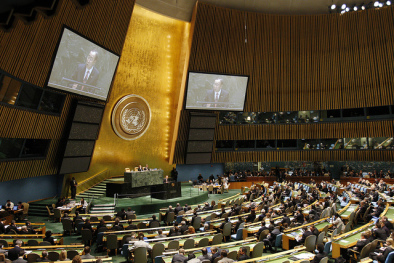
    Opening meeting of the 2010 NPT RevCon in New York. Source: Flickr | IAEA

    The RevCon, held every five years, is an important diplomatic process for international security. It takes stock of what has been done in the preceding period to curb nuclear proliferation and to implement measures for disarmament, but also looks forward and sets goals for driving these processes further. Since the ending of the Cold War, the divide between those NPT member-states which do not have nuclear weapons and the ones which do possess them (the US, Russia, China, Britain and France) has grown, with many in the former camp deeply disillusioned about the prospects for getting the latter group to disarm. The Conference aims to reach consensus in its final outcome document on what actions should be taken, but it is far from assured that such consensus will be possible this month.

    The US administration continues to stress that ‘as long as nuclear weapons exist, the US will maintain a safe, secure, and effective nuclear arsenal’, and this sentiment is echoed by other nuclear weapon states. It is important to note, however, that while we have been lucky in avoiding a nuclear conflict since 1945, given the evidence and research on the risks associated with nuclear arsenals, as long as nuclear weapons exist, there is no guarantee that our luck will hold. As politicians, strategists, diplomats, and civil society groups convene at the UN, they may wish to reflect on what type of brave new nuclear world they want to create.

    Divisive issues

    The 2015 RevCon  takes place  20 years after  the NPT—widely regarded as the cornerstone of the nuclear non-proliferation regime—was indefinitely extended  through a compromise package deal (of three decisions and a Resolution on the Middle East). The Middle East resolution specifically called for efforts towards the establishment of a Middle East zone free of nuclear and all other WMD and their delivery systems. With the elusive Helsinki conference mandated by the 2010 NPT Action Plan yet to be held, due to diverging postures by the regional parties, this issue remains a challenge for states at the New York meeting.

    Not surprisingly, there exists a divergence of views on the pathway and measures needed to work towards the elimination of nuclear weapons, including on which proposals are feasible in today’s strategic and political environment. The nuclear weapon states continue to insist that only an incremental, step-by-step approach, with slow reductions, is realistic, given the security tensions present in many parts of the world today. It seems to many non-nuclear weapon states and civil society groups however that this approach has not produced results, and they fear that disarmament will always be postponed and held hostage to such claims. These advocates of disarmament stress the dangers of continuing to rely on nuclear weapons; for a growing number of them, creating a legal ban against nuclear weapons is seen as desirable and feasible, even if the nuclear states do not sign  up to such an agreement at the outset.

    Any serious efforts to address these divides will require engagement and informed dialogue between the various constituencies involved in the nuclear weapons policy debate. These constituencies include:

    • Strategic nuclear communities of nuclear weapon states who devise, implement and sustain nuclear deterrence policy, and who inevitably argue for continuation of the status quo;
    • Non-nuclear weapon states and civil society groups driving and advocating nuclear disarmament (including those driving the humanitarian initiative);
    • Non-nuclear weapon states – including those in NATO, East Asia and Australia – relying on extended nuclear deterrence.

    It appears very difficult to bridge the diverging views held by these constituencies. A nuclear ban and the stigmatization of nuclear weapons will surely not be acceptable to those individuals and states who still promote nuclear deterrence as a core component of defence doctrines. Some in these strategic communities may perceive the NPT RevCons as merely high-level diplomatic theatrics that take place every five years and which have no direct relevance to infrastructure and ‘real’ policy on nuclear deterrence. Efforts to consolidate a stigmatization of nuclear weapons through a legal framework, such as a proposed nuclear weapons ban treaty—without the engagement of the nuclear weapon possessors and their respective strategic communities will not garner internalized changes. At the 2015 NPT RevCon, the nuclear weapons states will argue that proposals for a nuclear ban at this time will divert focus away from the agreed 2010 Action Plan and the P5 ‘step-by-step’ process.

    But many non-nuclear states and civil society groups argue that the lack of implementation of the 2010 Action Plan is undermining the credibility of the regime and the entire NPT review process. They suggest that a nuclear weapon ban treaty ought to be considered. Their argument is that while this will certainly not create a risk-free world in international security, neither will continuation of the status quo provide us with long-term security and stability. Indeed they argue that the status quo carries with it far higher levels of risk to human security and will inevitably lead to discord in international cooperation on non-proliferation priorities.

    Opportunities

    States parties to the NPT, the nuclear armed states outside the NPT and civil society groups should act bravely to bridge the deep divides on preferred and promoted pathways towards implementing nuclear disarmament, in order to move towards a frank dialogue and progress. This will require balanced assessment by all constituencies of perspectives and priorities. A continuation of the status quo vis-à-vis implementation of Article VI commitments to disarm will not be acceptable to many non-nuclear weapon states whose frustration has been simmering for decades over perceived unfulfilled ‘empty promises’ made in 1995, 2000, and 2010.

    At present, the discourse on nuclear weapons policy remains engaged only in ‘enclave deliberation’, perpetuating the views within and excluding external or opposing views and arguments. Palpable frustration and miscommunication abounds within and between these various constituencies, making it imperative to engage and stimulate meaningful dialogue between them. There is a real need to promote informed, respectful, and frank engagement and dialogue between these camps.

    Perhaps a way to inch closer to establishing such a dialogue would be to convene key stakeholders in a non-binding, Track II forum, with informed individuals from these separate constituencies, and with a progressive yet balanced agenda which addresses the underlying social constructs, assumptions and rationales of the role of nuclear weapons in security strategies and defence doctrines. An informed forum across the spectrum of diverging perspectives could help to bridge these deep divides.

    If the important discussions on framing a humanitarian narrative regarding nuclear weapons which are taking place in New York (as well as in Geneva, and recently in Oslo, Nayarit and Vienna) are to have an actual impact on nuclear deterrence policy, efforts need to be focused on promoting these ideas to the stakeholders within the defence and strategic communities of the nuclear weapon states (as well as to those four nuclear weapon states who remain outside the NPT framework).

    The evidence highlighted so far by the humanitarian initiative describes catastrophic scenarios of devastation and nuclear winter. Such dystopias are not inevitable; we have the means to avert them. A nuclear-free world is surely a worthy goal to aim for, but moving these efforts forward will require an understanding of and engagement with alternatives to nuclear deterrence as well as the courage from all constituencies to engage with one another.

    Marianne Hanson is Associate Professor of International Relations at the School of Political Science and International Studies, University Of Queensland. She has published widely in the field of international security, with a focus on weapons control, and is currently engaged in a book project examining the emergence of the humanitarian initiative in nuclear weapons debates. 

    Jenny Nielsen is a Postdoctoral Research Fellow in the School of Political Science and International Studies. Previously, she was a Research Analyst with the Non-proliferation and Disarmament Programme at the International Institute for Strategic Studies (IISS), a Programme Manager for the Defence & Security Programme at Wilton Park, and a Research Assistant for the Mountbatten Centre for International Studies (MCIS) at the University of Southampton. She holds a PhD from the University of Southampton which focused on U.S. nuclear non-proliferation policy vis-à-vis Iran in the 1970s.

    Featured image: US nuclear test detonation in 1952. Source: WikiMedia

  • Security Studies and the Marginalisation of Women and Gender Structures

    In her seminal 1987 text, Bananas, Beaches and Bases, Cynthia Enloe directs the reader’s attention to the realm of international politics and asks the question “where are the women?”. One might reasonably be expected to answer – they are everywhere. From the political economy, in which women comprise 80% of the global factory workforce and unpaid female domestic labour is estimated to contribute up to 35% of global

    GDP, to modern warfare, a theatre wherein the majority of victims are women, gender is centrally implicated in the machinations of the international system. The emergence of critical theory and the encroachment of feminist scholarship into the mainstream International Relations (IR) discourse, along with the ratification of resolution 1325 by the United Nations Security Council in 2000, have gone some way toward highlighting the position of women within the international security framework. And yet, the theoretical perspectives which dominate security studies, specifically realism and neo-realism, have been accused of approaching the study of IR “through a male eye and apprehended by a male sensibility”, neglecting the gender variable. Indeed, out of five thousand articles in the top five security journals, fewer than forty addressed gender issues as an independent theme.

    It is the opinion of the author that traditional approaches to security have underestimated, or ignored the role played by gender in international relations. As a result, the existence of gender based hierarchies has been obscured, marginalising the unique security concerns of women.

    The narrative will be divided into two constituent parts. Firstly, it will examine the gendered dimensions of states and the state system relating this to the exclusion of women from the domestic and international security discourse. Section two will look at the way in which this impacts on women’s experience of security and insecurity, with reference in particular to violence and conflict.

    Read the full article here.

    Image source: jrseles

  • Sustainable Security

    Due to a conflict within policy circles between those who want more inclusive approaches to resolving conflict in Africa and those who want robust responses to violent jihadism, a problematic imbalance in African security governance is being created.

    Introduction

    African peace and security policy-makers and intellectuals within and beyond the continent are calling for more inclusive political approaches to resolving conflict in Africa. Yet, patterns of decision-making, most evidently by the African Union (AU) Peace and Security Council, indicate that proactive, robust and joint responses to jihadist terrorism and radicalized armed non state actors are preferred because these threats pose particularly urgent challenges to Africa’s security and political order. This argument has important transnational echoes and an imbalance in African security governance is being created as a result of these developments. The more implementation of the African peace and security architecture (APSA) is measured by how well the AU together with global partners fight global terrorism, the more likely an excessive over-reliance on military responses to political problems seems. Such over-reliance risks militarizing the people, ideas and institutions of Africa’s security governance. Many voices in AU peace and security circles are pulling in a de-militarizing direction and are attempting to mobilize behind an enhanced prevention and mediation-agenda, and a value-driven vision of African ownership.

    The preventive pivot

    AMISON

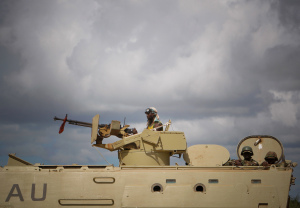
    Image by AMISON Public Information via Flickr.

    Preventing armed conflicts is a strategic priority for the African Union Peace and Security Architecture (APSA) as seen in APSA Roadmap 2016-2020. This follows on from the Windhoek Declaration and AU-adopted commitment to end all wars and ‘Silencing the Guns in Africa by 2020’ which forms part of the continent-wide Agenda 2063. The Agenda 2063 document, adopted by the AU Assembly of African Heads of state and government in May 2013, sets forth a value-based vision of a united and prosperous Africa. Understood as one leg of the pan-African political body, the APSA should arguably first and foremost facilitate Africa’s unity, development and prosperity through early conflict prevention.

    The Roadmap sets out the objective for the AU and the Regional Economic Communities (REC) and Regional Mechanisms (RM) to contribute to the prevention of conflicts and crises. Early warning systems with state of the art data collection and monitoring tools exist at continental and regional levels. Enhancing capacity means that they must coordinate and collaborate better with each other and other relevant component parts of APSA. The sometimes sensitive information that these early warning bodies gather is only as good as the use decision-makers and the AUPSC make of it.

    The use of special envoys, senior mediation panels and networks of elders is one of the AU’s ‘best kept secrets’.  To underscore their importance, the APSA Roadmap sets out as one objective to show evidence of frequency, relevance and efficacy of preventive diplomatic missions undertaken by the AU and the RECs. On a case by case basis, it has always been possible to gather knowledge about the roles and outcomes of preventive mediation efforts. Only a select few can claim to have the overall picture of their scales, roles and achievements. Most often mediation missions are set up rapidly and with an ad hoc initial role. At times, the AU Panel of the Wise is used, yet in other conflicts a high-level panel is tailored to the specific conflict by comprising former heads of state with high moral standing in the eyes of the conflicting parties.

    The Roadmap notes that early warning capacity and inclusive mediation-capacity must be connected with the strategic security priorities of decision-makers. Early warning systems cannot collect equally in-depth and actionable data on all forms of conflict in Africa. However, concerning the most geo-strategically sensitive conflicts their reports are not likely to be as welcome or as frequently used by decision-makers. Might intellectuals and policy experts help change the mindset of decision-makers if they could point to research and verified information showing that prevention at early stages of conflict is most sustainable and effective? There exist examples of early warning/information sharing mechanisms which bridge the ‘soft’ approach with ‘hard’ security issues. For instance, the ‘Nouakchott process’ aims to enhance security cooperation between intelligence and security-services of states in the Sahelo-Sahara region. However, the political oversight and support of this process must be ensured. Early warning data can otherwise of course be narrowly used towards the military approach of regional states.

    The preventive mediation tool has been used extensively, especially in the most geo-strategically important conflicts. However, their tasks, roles and achievements are less well known outside APSA’s decision-making circle. Often, references are made to Africa’s rich tradition of culturally aware and dialogue-centered ‘Baobab tree’ meetings. But it remains hard to access best practices and the gold standard of AU’s recruitment, support, as well as linking its preventive mediation to other external mediation initiatives. Changing this should be a key priority, especially since high-level gatherings and summits on Africa’s peace and security argue that prevention is the most cost-effective and the most successful form of conflict management for Africa. References are often made to the vital importance of inclusivity in African mediation culture. Dialogue must occur with all conflict actors. Talking to terrorists and non-state radicalized actors is therefore not excluded. The Windhoek Declaration argues that reflection is needed on the direction of the counter-terrorism agenda in Africa and importantly forefronts the value of Africa’s rich tradition of mediation. This offers a possible bridge between ethical-political arguments (advocates of the preventive pivot) and interest-based arguments (advocates of robust action on global terrorism).

    Reflection is required on how to calibrate prevention as a core phase in traditional conflict resolution with emerging specialized notions such as preventing mass atrocities (in line with the Responsibility to Protect), preventing acts of terrorism, and perhaps also preventing electoral violence. Diverging prevention agendas under conditions of resource scarcity might otherwise compete and bring with them rivalling perspectives and bureaucratic silos on prevention. More strategic discussions are needed about conflict patterns and structural as well as direct causes of wars and security threats. The Windhoek Declaration discusses how state fragility when considered a structural cause of radicalization of youth indicates that efforts aimed at enhancing democratic governance, security sector reform and state-society relations will prevent radicalization more effectively than military efforts because these only focus on ‘symptoms’ of state fragility.

    A preventive turn might also be detected in global policymaking. The UN Secretary-General has placed prevention of atrocity crimes and the roles of regional actors in achieving this as a core priority in his July 2015 report on the Responsibility to Protect (R2P). The UN General Assembly and UN Security Council on 27 April this year endorsed as a framing concept ‘sustaining peace’ in the recognition of the finding by the advisory group of experts’ review of the peacebuilding architecture that peacebuilding must be an inclusive endeavor, and necessitates holistic approaches and global commitment starting with preventive mediation efforts.  At the 24 May UN Security Council meeting on UN cooperation with regional and sub-regional organisations, a number of state representatives actually referred to the concept of ‘sustaining peace’ and/or the crucial role of UN-regional partnerships as glimmers of hope at this time of heightened pressure on global institutions to respond to several extremely complex conflicts. Some argued that the current global security situation requires a new mind set, even a ‘paradigm shift’ in global affairs.

    Militarized institutional narratives and practices

    The joint fight against violent extremism featured primarily at the first ever Africa-based core group meeting of the Munich Security Conference in April this year. The framing of the discussion was that global terrorism in North Africa, East Africa and the Sahel needed urgent, robust and joint action. The readiness of Africa’s own peace and security institutions to lead on terrorism and other sources of insecurity was emphasized. The dominant position was starkly defensive: a strong perception is that the sovereign’s role as main provider of territorial order and security is under unacceptable assault by non-democratic forces. Given the importance attached to stable African governments, such a perceived assault justifies military responses short term. ‘Combat’, ‘fight against’, and ‘counter’ violent terrorism and extremism were the common terms used at this event, and further echoed in relevant AU PSC meeting communiqués (for example on 29 Jan 2016), as well as at the 5th Tana Security Forum in April 2016.

    Present were representatives of academic institutions and CSOs that objected to the dominant trope and the prioritization of heavy handedness. These actors preferred to talk about historical and structural causes of terrorism (such as weak state-society relations, demographic challenges and unemployment rates). Or, they raised the acute absence of knowledge surrounding radicalization and recruitment into extremist groupings. Additionally, it was argued that strengthening or stabilizing central government and its ruling capacity by itself would not change the structural causes of marginalization and exclusion in many African societies.

    It might be argued based on the assumption that global terrorism requires a global fight that it is a lesser ill that hard approaches overshadow alternative political, developmental and humanitarian-based approaches. Certainly, part of the global push towards strategic partnerships with African regional actors is linked to seeing African states and institutions as playing specific useful roles in world order. France and the US have most candidly expressed that the AU and certain African states play very useful combat roles in active conflicts, and that partnerships are strategic in so far as they help all involved partners identify and secure their respective interests. Partnerships offer one way to strengthen a global hybrid coalition of counter-terrorism. This is the predominant trend, even as counter-strategies and counter- arguments exist and will hopefully take hold. Prevention and responding to terrorism-rationales are not mutually exclusive, but are better understood as mirror images. The trick for the foreseeable future is how to rebalance APSA, and develop legitimate and sustainable ways to prevent/respond to terrorism.

    There is a serious danger that context-driven, root-cause based values embedded in AU foundational documents and the APSA are being pulled in a direction to serve short-sighted militaristic values. In the medium to long term this will favor autocratic modes of governance on the continent and already extends a level of international legitimacy to autocratic leaders (for example Chad’s Idriss Déby, Djibouti’s Ismail Omar Guelleh and Uganda’s Yoweri Museveni). This will also infer the AU with legitimacy and capacity building packages chiefly on basis of counter-terrorism practices. Consequently, other APSA programmes rank lower on the global priority ladder unless they are coupled with the ‘fight’ on terrorism. Adding to the pressures on APSA policy mechanisms to demonstrate capacity is the argument by certain African leaders and external partners that the African Standby Force and its rapid reaction capability must become more efficient. This line of argument has increased incentives for states to favor state-to-state relations and hybrid regimes to enable rapid and more efficient forms of political and security cooperation.

    African peace operations receive external recognition due to their militarized characteristics. Most AU peace operations are stabilization missions, using combat operations against specific aggressors (sometimes terrorist groups) in bounded conflict theatres. The troop contributing countries to the AU Mission in Somalia (AMISOM) have been commended and supported by the international community for the willingness to combat Al-Shabab fighters. As noted by Yvonne Akpasom in a book on Africa-led peace operations while this combat readiness may be necessary, it is crucial for APSA and for host populations in conflict-affected states that these stabilization missions are always linked to a political objective. AU-led missions to date have demonstrated operational readiness, but have been insufficiently streamlined with political strategic-level direction. In need of development are: realization of protection of civilians policies and guidelines, human resources to plan for, for example, policing components and human rights observers, reflection on security sector reform and law and order efforts.

    Conclusion

    For AU member states and APSA policy organs, the first strategic priority is really the achievement of full ownership over regional security governance. The counter-terrorism developments referred to do not aim to settle whether global terrorism poses the biggest security threat to Africa’s societies and populations. What is at stake is Africa’s political authority to define conflicts and threats on the continent. To achieve a bigger impact on global governance, the AU has to balance the different pressures on it to demonstrate authority and capacity to manage security threats in Africa.

    Linnéa Gelot is a Senior Researcher at the Nordic Africa Institute (NAI), Sweden and a Senior Lecturer at the School of Global Studies, Gothenburg University, Sweden. Her most recent publication is The Future of African Peace Operations: From Janjaweed to Boko Haram, co-edited with Cedric de Coning and John Karlsrud, with Zed Books. She is currently leading the project ‘AU Waging Peace? Explaining the Militarization of the African Peace and Security Architecture’ in which the concept of militarization and security practice theory are employed to study militarizing/de-militarizing institutional discourses and practices. Additionally, she has worked as a consultant and substance matter expert (African peace and security and the protection of civilians in UN peace operations) for UNITAR in Geneva, as well as other consultancy firms.

  • Sustainable Security

    NPT Double Standards 4President John F. Kennedy once said:

    “You cannot negotiate with people who say what’s mine is mine and what’s yours is negotiable.”

    However a small group of states (including the state of which Kennedy was President) have done just this in relation to the possession of nuclear weapons for decades. Five of them (China, France, Russia, the United Kingdom and the United States) have held the position of being the privileged few allowed to possess nuclear weapons under the terms of the 1968 Treaty on the Non-Proliferation of Nuclear Weapons (NPT)  while all others agree to forego developing the ‘ultimate weapon’ in return for access to civilian nuclear technology. Three others have refused to sign the treaty (India, Israel and Pakistan) and instead developed their own nuclear weapons (overtly in the cases of India and Pakistan after 1998 and covertly in the case of Israel from the late 1960s) happy to free-ride on the lack of global proliferation ensured by the treaty. To paraphrase Kennedy, the decision of these eight states (nine if you include North Korea from 2003 onwards) to inflict mass destruction on an adversary is theirs, but everyone else’s decision to acquire the same capability can be negotiated away.

    What is perhaps most extraordinary about the NPT ‘grand bargain’, as it is often called (although given that the five nuclear weapon states have exactly the same access to civil nuclear technology as the rest of the signatories, ‘bargain’ here really is a polite term for ‘scam’), is that it has remained largely intact for so long. For something built on such a seemingly unsustainable basis as an institutionalised double standard (particularly one that relates to the ultimate survival of nation states), the fact that its indefinite extension was negotiated in 1995 and that the treaty is still with us defies most conventional wisdoms about the ‘dog-eat-dog’ nature of self-help politics in an anarchical international system. Yes, the treaty may have been abused by some states and used as a cover to develop covert weapons programmes (Iraq, Libya, North Korea and possibly Iran) and one state has even withdrawn from the treaty under Article X (North Korea in 2003), but these are four cases in a treaty that boasts 189 signatories.

    Challenging sustainable security

    In many ways the success of the treaty regime provides one of the most robust challenges to the whole concept of sustainable security. Why bother addressing the root causes and underlying drivers of nuclear proliferation if you can effectively stem the flow of nukes by maintaining a treaty which promotes a ‘norm’ of non-proliferation as good international behaviour, and allows you to deflect charges of hypocrisy as long as you make encouraging noises about ‘eventual’ nuclear disarmament at some unspecified point in the future?

    However, like a building with rotten foundations, it may be that what has appeared to be a relatively sustainable global non-proliferation regime is far less stable than many believe it to be. Recently, Egyptian negotiators walked out of the UN talks that are held in the lead-up to each five yearly review conference of the NPT. This dramatic move from Egypt was a public expression of the long-held private frustrations of its diplomats who, after being effectively promised serious negotiations towards a Middle East Weapons of Mass Destruction Free Zone (WMDFZ), in return for their support for the indefinite extension of the Treaty in 1995 (and re-affirmed explicitly at the review conference in 2010), face the continued postponement of such talks. The problem is, Israel has no interest at all in such a zone – why would it? A combination of the NPT and Western action against would-be proliferators such as Iraq, Libya and Iran have meant that the construction of a WMDFZ in the Middle East would mean that Israel would either have to join and give up its position as the only state in the region with nuclear weapons, or be the one state in the region that refuses to join. Either way, it would also mean attracting global attention to its nuclear weapons arsenal, something Israel has managed to successfully avoid of late in all the focus on the weaponisation concerns over Iran’s civil programme.

    Calling it like it is

    Before leaving the NPT preparatory talks, Egypt’s Ambassador Hisham Badr explicitly referred to the resolution passed in 1995 that called for negotiations on a Middle Eastern WMDFZ, and called out those that thought they could get away with Egypt sticking to its side of the bargain and getting little in return. His comments challenged the idea that the double standard could be maintained indefinitely when he stated clearly that “we cannot wait forever for this resolution to be implemented.”

    Perhaps the most worrying signs here are the responses to Egypt’s move. Israeli diplomats have effectively said that with the security situation in Syria, in Egypt itself and elsewhere in the region, a WMDFZ is the least of its concerns. The United States has referred to the episode as “theatrics” and in the meantime has pushed on with negotiating a nuclear trade pact with Saudi Arabia. These trade deal talks are taking place at a time when experts are tracking an increase in the acquisition of strategic ballistic and cruise missiles by the Kingdom. The other nuclear weapons states have been conspicuously quiet throughout.

    So rather than seeing this as a sign of the potential unravelling of an unsustainable regime based on a double standard, those who have most to gain from the NPT arrangement (both inside and outside the regime), are betting on this being just another ‘NPT in crisis’ – a moment they assume will pass. Whether this storm will blow over (like a mushroom cloud over the Pacific Ocean…no, sorry that bad pun is stopping right there!) is now THE big question for those concerned about nuclear threats. If the regime falls apart and 189 states are no longer happy to give up nuclear weapons, the simple days of dealing with Iranian and North Korean nuclear ‘crises’ will be looked back upon with great fondness.

    Time for regime change?

    While the NPT regime story is one of a continuing death foretold, it is difficult to see how the all-important 2015 review conference can outrun the double standard that sits at the heart of the regime without all signatories applying some degree of what could be called a ‘sustainable security’ approach. As Egypt’s actions make clear, anything less than a regime specifically geared towards addressing the reasons why some states seek nuclear weapons  – including regional insecurity, conventional weapons imbalances and the prestige attached to nuclear arsenals by their possessors – is a regime existing on borrowed time.

    Ben Zala is a Lecturer in International Politics at the University of Leicester.

    Image source: Wikimedia

  • Sustainable Security

    Russia’s conflictual relationship with the West has been described as a Cold War-like confrontation. In reality, these powers are engaged in an asymmetric rivalry, not a Cold War.

    Russia’s relations with the United States and other Western nations have been increasingly conflictual. The Kremlin has challenged the position of American hegemony globally and in regional settings. Following election of Donald Trump as the U.S. President, Russia’s military strategy, cyber activities, and media role have been under particular scrutiny although the Kremlin has acted assertively since the second half of the 2000s.

    While many Western observers place responsibility for the conflict on Russia, some tend to blame the West. However, most observers agree that a Cold War-like confrontation is set to define the two sides’ relations. Today the narrative of a new Cold War commands the attention of political and scholarly circles.

    The Misleading Cold War Framework

    As compelling as it may seem to some observers, the Cold War framework is misleading. In particular, it fails to address the global power shift and transitionary nature of the contemporary international system. In today’s world, the old ideological rivalry is no longer applicable. The new world is no longer divided by the communism-capitalism dichotomy. Instead the competition of ideas is predominantly one between liberal and nationalist principles of regulating the economy and political system. While in the eyes of many the West continues to represent liberalism, the realities of Brexit, Trump, and tightening migration regulations in the European Union demonstrate the global power of nationalist ideas. On the other hand, China, Russia, and other allegedly autocratic and nationalist polities continue to favor preservation of liberal global economy, and oppose regional autarchy and Trump-favored protectionism.

    Instead of reviving old Cold War rules and principles, new rules and expectations about the international system and state behavior are being gradually formed. China, Russia, India, Turkey, Iran, and others are seeking to carve out a new space for themselves in the newly emerging international system, as the United States is struggling to redefine its place and identity in the new world.

    The described changes altered position of the only superpower in the international system. Structurally, it is still the familiar world of American domination with the country’s superiority in military, political, economic and symbolic dimensions. Yet dynamically the world is moving away from its US- and West-centeredness even though the exact direction and result of the identified trajectory remained unclear.

    As a result, many non-Western countries are developing their own rules and arrangements in world. Russia and other non-Western countries increasingly have international options they never had before as new global and regional institutions and areas of development outside the influence of the West gradually emerge.

    This does not mean re-emergence of a new international confrontation. Most non-Western nations are not looking to challenge the superpower directly and continuing to take advantage of relations ties with the West. The U.S.-balancing coalition or a genuine alternative to the West-centered world has not yet emerged. Unlike the previous eras, the contemporary world lacks a rigid alliance structure. The so-called Russia-China-Iran axis is hardly more than a figment of the imagination by American neoconservatives and some Russia conspiracy-minded thinkers. The world remains a space in which international coalitions overlap and are mostly formed on an ad hoc basis depending on issues of interests.

    Partly because of these global developments, the Cold War perspective also misunderstands Russia’s motives and power capabilities. Unlike the old era, Russia does not seek to directly confront or defeat the other side. Rather, the objective is to challenge the rival party for the purpose of gaining recognition and negotiating a greater space within the still largely West-influenced global order.

    Furthermore, Russia is in no position to challenge the Western nations globally given the large – and in some areas widening – gap between the U.S. and Russian capabilities. The importance of defending Russia’s interests and status by limited means has been addressed through the idea of asymmetric capabilities applied on a limited scale and for defensive purposes. When the chief of the Russian General Staff Valery Gerasimov first described the so-called hybrid war he did not mean to provide a template for an offensive military strategy. Rather, as several military analysts noted, he intended to recognize that the West had already being engaged in such war against Russia and that Russia had to be better prepared for the new type of war. While Russia’s President Vladimir Putin is not acquiescing to American pressures, he is engaged in asymmetric rivalry. The latter targets the competitor’s selected vulnerable areas and is designed to put on alert and disorient, rather than achieve a decisive victory. Asymmetric methods of Russian foreign policy include selective use of media and information technology, cyber power, hybrid military intervention, and targeted economic sanctions.

    Finally, the Cold War narrative underestimates a potential for Russia’s cooperation with the West in selected areas. The described asymmetric rivalry does not exclude the possibility of Russia and Western powers cooperating in some areas (nuclear non-proliferation, counter-terrorism, cyber issues) and regions (Middle East and North Korea) while perceiving each other as competitors over preferred rules and structure of the international system. In the increasingly fragmented world, Russia and the West may move beyond viewing each other as predominantly rivals if they learn to focus on issues of common concern and find a way to reframe their values and interests in non-confrontational terms.

    Future Co-operation?

    Cooperation with Russia remains possible and indeed desirable. Russia’s constant attempts to engage the United States and other Western nations in cooperation, including those over Iran and Syria, demonstrate the importance to the Kremlin of being recognized in relations with the outside world. Despite its internal institutional differences from Western nations, Russia sees itself as an indispensable part of the West and will continue to reach out to Western leaders in order to demonstrate Russia’s relevance.

    Although the West continues to possess the power of influence, Western leaders have not been effective in using such power. Instead of devising a strategy of selective engagement and recognition, they largely rely on containment and political confrontation in relations with Russia. The West remains fearful of Russia and wants to force the Kremlin to comply with Western demands to relieve pressures on Ukraine or conduct a more restrained foreign policy.

    These pressures are not likely to work. If the West continues to challenge Russia’s perceived interests, there are indeed reasons to expect that Putin may fight back. Even with a stagnating economy, the Kremlin commands a strong domestic support and an ample range of asymmetric tools for action.

    However, for reasons of psychological and economic dependence on the West, Russia, unless provoked, is not likely to engage in actions fundamentally disruptive of the existing international order. If the United States does not engage in actions that are viewed by Russia as depriving it of its great power status, the Kremlin will refrain from highly destabilizing steps such as abdication of the INF treaty or military occupation of Ukraine or other parts of Eurasia.

    As difficult as it might be to accept for the West, there is hardly an alternative to engaging Russia in a joint effort to stabilize the situation globally as well in various regions including Ukraine and wider Europe. The new policy must be based on understanding that the Kremlin’s “revisionism” is partly a reaction to the West’s refusal to recognize Russia as a potential partner. The alternative to the new engagement is not a compliant Russia, but a continued degradation of regional and global security.

    Andrei P. Tsygankov is professor of political science and international relations at San Francisco State University. He has published widely in the United States, Russia, Europe, and China. His books include Russia’s Foreign Policy and Russia and the West from Alexander to Putin, and he has recently edited the Routledge Handbook of Russian Foreign Policy (to be published in 2018).

  • Sustainable Security

  • Governments Must Plan for Migration in Response to Climate Change, Researchers Say

    Governments around the world must be prepared for mass migrations caused by rising global temperatures or face the possibility of calamitous results, say University of Florida scientists on a research team reporting in the Oct. 28 edition of Science.

    If global temperatures increase by only a few of degrees by 2100, as predicted by the U.N. Intergovernmental Panel on Climate Change, people around the world will be forced to migrate. But transplanting populations from one location to another is a complicated proposition that has left millions of people impoverished in recent years. The researchers say that a word of caution is in order and that governments should take care to understand the ramifications of forced migration.

    A consortium of 12 scientists from around the world, including two UF researchers, gathered last year at the Rockefeller Foundation’s Bellagio Center to review 50 years of research related to population resettlement following natural disasters or the installation of infrastructure development projects such as dams and pipelines. The group determined that resettlement efforts in the past have left communities in ruin, and that policy makers need to use lessons from the past to protect people who are forced to relocate because of climate change.

    “The effects of climate change are likely to be experienced by as many people as disasters,” UF anthropologist Anthony Oliver-Smith said. “More people than ever may be moving in response to intense storms, increased flooding and drought that makes living untenable in their current location.”

    Article Source: University of Florida. “Governments must plan for migration in response to climate change, researchers say.” ScienceDaily, 27 Oct. 2011. Web. 1 Nov. 2011.

    “Sometimes the problem is simply a lack of regard for the people ostensibly in the way of progress,” said Oliver-Smith, an emeritus professor who has researched issues surrounding forced migration for more than 30 years. But resettlements frequently fail because the complexity of the task is underestimated. “Transplanting a population and its culture from one location to another is a complex process — as complicated as brain surgery,” he said.

    “It’s going to be a matter of planning ahead now,” said Burt Singer, a courtesy faculty member at the UF Emerging Pathogens Institute who worked with the research group. He too has studied issues related to population resettlement for decades.

    Singer said that regulatory efforts promoted by the International Finance Corporation, the corporate lending arm of the World Bank, are helping to ensure the well-being of resettled communities in some cases. But as more people are relocated — especially very poor people with no resources — financing resettlement operations in the wake of a changing climate could become a real challenge.

    Planning and paying for resettlement is only part of the challenge, Oliver-Smith said. “You need informed, capable decision makers to carry out these plans,” he said. A lack of training and information can derail the best-laid plans. He said the World Bank increasingly turns to anthropologists to help them evaluate projects and outcomes of resettlement.

    “It is a moral imperative,” Oliver-Smith said. Also, a simple cost-benefit analysis shows that doing resettlement poorly adds to costs in the future. Wasted resources and the costs of malnutrition, declining health, infant and elder mortality, and the destruction of families and social networks should be included in the total cost of a failed resettlement, he said.

    Oliver-Smith said the cautionary tales of past failures yield valuable lessons for future policy makers, namely because they point out many of the potential pitfalls than can beset resettlement projects. But they also underscore the fact that there is a heavy price paid by resettled people, even in the best-case scenarios.

    In the coming years, he said, many projects such as hydroelectric dams and biofuel plantations will be proposed in the name of climate change, but moving people to accommodate these projects may not be the simple solution that policy makers sometimes assume.

    A clear-eyed review of the true costs of forced migration could alert governments to the complexities and risks of resettlement.

    “If brain surgeons had the sort of success rate that we have had with resettling populations, very few people would opt for brain surgery,” he said.

    Article Source: University of Florida. “Governments must plan for migration in response to climate change, researchers say.” ScienceDaily, 27 Oct. 2011. Web. 1 Nov. 2011.

  • Himalayan Sub-regional Cooperation for Water Security

    Trans-boundary collaboration over the issue of shared water is critical since water is scarce in most areas. Today, the Himalayan region is facing severe water stresses. To overcome the challenge, there is a need to promote Himalayan Sub-Regional cooperation to ensure water security and a climate of peace and progress. There is no alternative to cooperation in view of the retreat of glaciers, resulting decline in river flows in parts of the region and flooding in other parts, tectonic changes in the Himalayan region, threat to food security and the risk of increase in inequity. A cooperative and open approach to Himalayan rivers, starting with new fundamentals has become imperative in this regard.

    In this backdrop, BIPSS hosted the Second International Workshop on “Himalayan Sub-regional Cooperation for Water Security” in Dhaka on January15-16, 2010 in collaboration with the Strategic Foresight Group, India.

    Speaker presentations, participant lists and previous reports are available here.