Blog

  • Sustainable Security

  • Beyond dependence and Legacy: Sustainable Security in Sub-Saharan Africa

    Sub-Saharan Africa is too readily dismissed from the outside, but the regional perception is often one of optimism. It is an area rich in natural resources: ranging from oil and natural gas to other minerals such as chrome, nickel and zinc. Nearly half the population are under the age of 14, making the region free from the demographic burden of an ageing workforce prevalent in other parts of the world. There are also promising beginnings to regional approaches to tackling shared security problems; with the draft framework for a Common African Defence and Security Policy being a good example of this.

    However, it is undeniable that sub-Saharan Africa does face considerable difficulties. It contains only 10% of the world’s population but is the location of 90% of world malaria cases and home to 67% of world HIV sufferers. Conflict, famine, genocide and disease have all plagued the region over recent decades. Of all the regions of the developing world, sub-Saharan Africa remains the most marginalised and least likely to achieve the Millennium Development Goals. Colonial powers, corrupt leaders and, to an extent, the NGO/aid complex have all contributed to the region’s difficulties.

    This report is based on the outcomes of a consultation that Oxford Research Group (ORG) and the Institute for Security Studies (ISS) held in South Africa in December 2008. Bringing together security experts, academics, former government officials and civil society leaders from across sub-Saharan Africa, the two-day meeting explored the implications of the sustainable security framework for the region.

    Download as PDF

  • Competition over resources

    While the public debate about resource conflicts focuses on the risk of supply disruptions for developed countries, the potentially more risky types of resource conflict are usually ignored. As part of a two-year research project on behalf of the German Federal Environment Agency, adelphi and the Wuppertal Institute for Climate, Energy, and Environment have analyzed the risks of international conflict linked to natural resources in a series of reports titled Beyond Supply Risks – The Conflict Potential of Natural Resources.

    Article source: The New Security Beat

    Image source: Olmovich

    Read more »

  • Sustainable Security

    This post is taken from Paul Rogers’ Monthly Global Security Briefings and was originally posted by Oxford Research Group on 31 March, 2014.

    The Russian annexation of Crimea may be in direct contravention of international agreements but is popular in Russia and almost certain to hold. Given tensions within Ukrainian society and its weak transitional government, there remains some risk of further intervention in eastern Ukraine and possibly the Trans-Dniester break-away region of Moldova. Even if there is no further escalation in the crisis, the deterioration in EU/Russian and US/Russian relations is of great concern, not least in relation to two aspects of Middle East security – the Syrian civil war and the Iran nuclear negotiations.

    President Vladimir Putin’s recent actions have been generally popular in Russia where recent political developments in Kiev have been seen as a serious encroachment by the EU into a crucial Russian sphere of influence and a massive setback to Putin’s idea of creating a counter-weight Eurasian Union. Putin’s muscular approach to restoring Russia to its historic greatness, readily seen in the huge expenditure on the recent Winter Olympics as well as the Eurasian Union vision to reconnect former Soviet republics, is well received by many Russians.

    Whether there is further intervention depends very much on the weak government in Kiev’s capacity to limit civil disorder that might be fomented by ultra-nationalists, including around the 25 May presidential election. This will not be easy since it would be in Russia’s interest to be able to respond to just such disorder and it may well seek to encourage local militias in southern and eastern Ukraine. Understanding the perceptions of the Kremlin (and wider Russian society) towards both the rest of Europe and Ukrainian nationalism is critical in understanding how Moscow may act in the coming months.

    The Question of Perceptions

    A key issue in the crisis is the question of perceptions.  At the height of the Cold War, there were very few western analysts and politicians who were able to visualise the world from the Kremlin’s perspective. The so-called “Red Team” studies in NATO defence ministries were primarily concerned with how the Soviet Union might fight a war, not with its wider world view.  There was, for example, little understanding of the enduring impact of the Great Patriotic War on Soviet/Russian attitudes towards Germany and elements, including Ukrainian, Romanian/Moldovan and Baltic nationalists, which cooperated with its invasion of the USSR.

    While Russia sees itself as a once-great superpower that justifiably seeks to re-establish that status, there remains a deep resentment stemming from the experience of the 1990s.  The embrace of “turbo-capitalism”, the near collapse of the economy and, above all, the disdain with which Russia was treated by the West are all still deeply embedded in the political outlook, and it is this which does much to make the “tilt” of Ukraine towards the EU so unacceptable.

    The western perception of Russia, though, is also significant. Anyone over the age of forty, which includes almost the entire western political class, has deep memories of the Cold War era in which the Soviet Union was seen as the head of a hugely powerful bloc that had overwhelming military superiority in Europe, only counter-balanced by NATO’s nuclear forces.  The vision of massed tank armies deployed right into Eastern Europe was deep-seated but it also assumed that there was strength in depth within the Soviet heartland – Russia. Even now, Russia as the successor state of the Soviet Union is seen to retain some of those elements of power, but this is not supported either by its current economic strength or its conventional military capabilities.

    Russia: a Paper Bear?

    Although Russia has enjoyed reasonable economic growth over the past decade this has been from a very low base and does not bring Russia anywhere near the economic power of the United States, China, Japan or even Germany. Russian GDP is less than a seventh of that of the US, a quarter of that of China and much less than half of that of Japan. In spite of its (declining) population being more than double the size of the UK or France, its GDP matches neither country and is not even two-thirds that of Germany.

    Furthermore, much of Russia’s wealth is concentrated in and around Moscow and St Petersburg and is largely in the hands of a small elite. Most of Russia has benefited little from the growth of recent years, but control of the media by the state and its power over political processes limits the extent of the recognition of these divisions and of opposition to Putin.

    While Russia is still a substantial nuclear power, its conventional armed forces are singularly weak, as was shown by the considerable difficulties in mounting air operations against Georgia in August 2008. There is substantial spending now devoted to rebuilding Russia’s conventional armed forces but this is still at an early stage. To put it bluntly, Russia’s impressive array of forces used in Crimea and massed close to Ukraine hide a deep-seated conventional weakness in an economy which is heavily resource-dependent.

    In the short term, Putin can maintain control of Crimea and may increase Russian influence in the rest of Ukraine, but its recent actions actually militate against the development of the Eurasian Community. Furthermore, Western European states will now be far more cautious in their economic dealings with Russia and will work progressively to limit their dependence on Russian gas and oil. In the long term, the recent popular actions in Crimea are likely to damage Russia, and it is most likely that any further western sanctions will be represented by Putin as further proof of the need for Russia to be strong and independent.

    Context Implications for Syria and Iran

    Syria: The war in Syria continues to be bedevilled by the double proxy element, with regime support from Iran and Russia countered by rebel support from Saudi Arabia and the West.

    Western policy is in disarray:

    • Secular elements in the rebellion are weak and disunited, offering limited opposition to the regime.
    • Radical Islamist paramilitaries are offering much stronger resistance to the regime but are not themselves united even if some elements now control substantial territory.
    • The regime is firmly ensconced even if it is presiding over a terribly damaged country.

    Western policy seems now concentrated on providing support for the disunited rebels, especially south of Damascus, while ensuring that advanced weapons do not get into the hands of jihadist elements concentrated in the north and east. This may be so difficult that it is essentially impossible, meaning that the extent of the support will be limited. The Syrian War thus has no prospect of ending unless the major proxy players, the US and Russia, are prepared to work together. The Ukraine crisis makes this far less likely than even a month ago, when the Geneva II peace talks adjourned without progress.

    On present trends the war will continue. The main regime tactic is to use its considerable firepower advantage (in terms of artillery, rockets and air-dropped barrel bombs) to so damage rebel areas that they lose control of territory. Since the regime does not have the reliable ground forces available to hold such territory the policy is one of denial, but the human and economic costs are immense. As the regime continues with this approach, it becomes more likely that Gulf States such as Qatar and Saudi Arabia will resist US pressure and return to their policy of backing a wider range of Islamist rebels.

    Iran: The negotiations on the nuclear issue between the US and Iran are continuing, albeit at a low level, but have so far survived considerable opposition from within Iran and the US. They may be influenced by the domestic economic problems that the Rouhani government is currently experiencing and his honeymoon period is essentially over.

    US/Russian relations are less relevant here but will come to the fore if the negotiations do make progress because this may give Rouhani more room to improve relations with Saudi Arabia. Any improvement in the Saudi/Iranian relationship should be encouraged by any means possible – it is one of the few areas in the region with potential. However, if there is progress and this can serve to diminish the differences over Syria, then Russia’s influence over the Assad regime will become more significant.

    Conclusion

    The crisis that has erupted in Ukraine is an occasion for just the kind of analysis that was so missing in the Cold War period. Russian behaviour over Ukraine – and Crimea in particular – may be entirely unacceptable in the west but, given the nature of the Putin regime and its recognition of deep-seated and enduring Russian sensibilities over the loss of empire twenty years ago, it is entirely understandable. In spite of the problems it causes, there is a real need for caution, not least because Putin may prefer a continuing crisis in order to bolster domestic support. If the Ukraine crisis escalates further, the impact for European security is likely to be substantial but the limiting of prospects for any kind of progress in Syria will be an even greater human disaster.

    European policy-makers can help to mitigate the negative impacts of the crisis in three ways:

    • Urging caution on the part of NATO in response to the Ukraine crisis;
    • Encouraging in-depth analysis by European states of current Russian attitudes;
    • Endeavouring to support improvements in Iranian-Saudi relations in order to bypass the likely new deadlock in US-Russian relations over Iran and Syria.

    None is easy – all are necessary.

    Paul Rogers is Global Security Consultant to Oxford Research Group, for which he writes monthly security briefings.  He is Professor of Peace Studies at the University of Bradford and author of numerous books including ‘Beyond Terror’. Paul writes a weekly column for openDemocracy  and tweets regularly at @ProfPRogers.

    Featured image:Protester wearing Ukraine state flag colors facing the massive fire set by protesters to prevent internal forces from crossing the barricade line  Source: Wikimedia

  • Water Conflict: Violence Erupts Along Ethiopia-Kenya Water-stressed Border

    In a small village along the waters of Lake Turkana in northwestern Kenya, two fishermen were murdered last month as they were putting out their nets.

    A cascade of retaliatory violence between the Kenyan Turkana and Ethiopian Daasanach (sometimes called Merille) has led to the deaths of at least four Ethiopians and 20 Kenyans ethnic groups, though some Kenyan government officials place the toll as high as 69, according to the Kenya-based Daily Nation. Though the fighting has been localized, it has put pressure on both nations to deal with strife between nomadic groups who are competing for diminishing resources.

    Both groups are traditionally pastoral nomads living within the Elemi Triangle—a once disputed area between Kenya, Sudan, and Ethiopia—which has dry pastureland, historically used by both the Turkana and the Daasanach, as well as the Didinga, Toposa, and Inyangatom (also called the Dong’iro) communities.

    The Turkana live in northwestern Kenya, making up 2.5 percent of the national population, or close to a million people, according to the 2009 Kenyan census. The Daasanach primarily reside in southern Ethiopia and make up less than 1 percent of the national population, or around 50,000. More recently, the Daasanach have lost significant portions of their lands and animals—in part due to climate change—and have become more agropastoral in nature.

    Citing Joseph Nanok, Kenya’s forestry assistant minister, the Daily Nation reported that the traditional border between the Turkana and Daasanach people was located at the Omo River Delta, which flows into Kenya’s Lake Turkana from Ethiopia. This border, however, has been moving south due to receding waters.

    According to The Christian Science Monitor, the Daasanach have begun increasingly cultivating the land and fishing the waters of the River Omo-Lake Turkana Delta, where they compete with the Kenyan Turkana people for both land and water resources.

    Thus, not surprisingly, the recent attacks coincide with the settlement of an estimated 900 armed militia and 2,500 Ethiopian civilians on Kenyan territory around Lake Turkana. The Kenyan government has made claims that these illegal immigrants have taken control of 10 Kenyan villages and has vowed to send them back to Ethiopia, according to the Daily Nation.

    Though this appears to be a territorial dispute, it can be, at least partially, attributed to the sharing of stressed water resources.

    “Water exacerbates current tensions,” Aaron Wolf—a leading researcher on global water conflict and resolution and a professor at Oregon State University—told Circle of Blue. “It is very hard to separate a water conflict from a land conflict from an economic conflict, because water is tied to everything we do.”

    Wolf’s research team conducted a five-year study about the causes of water conflicts and concluded that there are two major factors that play a role:

    • The rate of change within a water basin. Scarcity, economic growth, and population growth can all affect the availability of water resources.
    • The institutional capacity of the region; what Wolf calls “the human systems built to mitigate the change.”

    It is also important to define a conflict, since people’s interests frequently conflict, while violence is much more rare, Wolf added.

    “If someone builds a dam and negotiates with all of the people affected, there probably won’t be a conflict,” Wolf said. “Conflict occurs if there is sudden, rapid change [to the water resource] and an absence of institutional capacity…As you drop in scale, the likelihood of violence increases. Whereas two countries will rarely go to war over water, you see tribal violence quite often, or two farmers who will shoot at each other.”

    However, Wolf stressed that, although water can be a source for tension, it can also be the catalyst for creative, peaceful solutions.

    “Water brings focus on settings that are stressful, but that same focus is used to create treaties and negotiations—even between people who don’t like each other very much,” he said. “There is a rich history of stakeholders coming together. When countries do anything about water, cooperation outnumbers conflict two to one.”

    For more information on water conflicts across the globe, see the Pacific Institute’s Water Conflict Chronology database.

    Image source: Aocrane

    Article source: Circle of Blue

  • The Great Transition

    Humanity appears caught in a trap with no way out. ‘Business as usual’ is no longer an option. However, halting and reversing our consumption of more and more ‘stuff’ appears likely to trigger a massive depression with serious unemployment and poverty. This is certainly true if all we do is ‘apply the brakes’ without fundamentally redesigning the whole economic system. We are facing a series of interlinked systemic problems – consuming beyond our planetary limits; untenable inequality; growing economic instability and a breakdown in the relationship between ‘more’ and ‘better’. The only way to overcome these systemic problems is through a set of solutions which themselves address the whole.

    In this report we have sketched out how, in the light of these challenges we face as a country and as a world, things could ‘turn out right’ by 2050. We have focused particularly on the UK, but many of the solutions we outline apply globally. We have called the process by which this could happen the Great Transition as a deliberate echo of The Great Transformation, written by Karl Polanyi in the 1940s. While in a relatively short report such as this we could not hope to achieve anything remotely comparable to Polanyi’s great work, the scale of the change we need to see is at least the equal of the changes he described.

    Document source: the new economics foundation

    Image source: Matt from London

    Attach PDF: 

  • Sustainable Security

    The Costs of Security Sector Reform: Questions of Affordability and Purpose

    In considering security sector reform, questions of affordability have often been subordinated to questions of effectiveness and expediency. A recent series of reviews of security expenditures by the World Bank and other actors in Liberia, Mali, Niger and Somalia has highlighted several emerging issues around the (re)construction of security institutions in fragile and conflict-affected states.

    Read Article →

    Human Security and Marginalisation: A case of Pastoralists in the Mandera triangle

    This paper seeks to bring out the relevance of human security in pastoral areas of Mandera triangle and the relationships and contradictions that exist between it and national security. The “Mandera Triangle” encompasses a tri-border region of Ethiopia, Somalia, and Kenya that exemplifies, in a microcosm, both a complex and a chronic humanitarian crisis that transcends national boundaries.

    Read Article →

  • Sustainable Security

    Our expanding group of contributors comes from a wide range of specialist backgrounds, and includes researchers,  academics, security and development practitioners and NGO staff based around the world. Some of our most recent authors include:

    Chris Abbott
    Chris is the founder and executive director of Open Briefing, the world’s first civil society intelligence agency.  He is an Honorary Visiting Research Fellow in the School of Social and International Studies at the University of Bradford and the former deputy director of Oxford Research Group.

    Phillip Bruner
    Phillip is Founder of the Green Investment Forum and a guest lecturer in global political economy at the University of Edinburgh.

    Matt Budd
    Matt is a security analyst at RESDAL (Red de Seguridad y Defensa de America Latina – Latin American Security and Defense Network) in Buenos Aires, where he focuses on public security issues in Central America. Matt holds an honours degree in International Relations from the London School of Economics. Matt has most recently been working on RESDAL’s  Public Security Index, which provides information on public security challenges and institutional responses to them in Central America.

    Mabel González Bustelo
    Mabel is a journalist, researcher and international consultant specialized in international peace and security, with a focus on non-State actors in world politics, organized violence, conflict and peacebuilding. She has worked as a researcher on peace and security  in Colombia, Ecuador, Mexico, Angola and the Palestinian territories and holds an MLitt in terrorism Studies from the University of St Andrews. Mabel blogs at The Making of War and Peace.

    David Cliff
    David Cliff works as a researcher at the Verification Research, Training and Information Centre (VERTIC) in London. There, his work focuses on research into the verification, implementation and compliance aspects of nuclear and chemical arms control and disarmament treaties. He holds a BA in Geography and an MA in International Affairs, both from the University of Exeter in the UK.

    Lisa Dittmar
    Lisa is the CEO and founder of NitrogenWise,  a website that brings together research and straightforward communication to explain the complexities of nitrogen in a meaningful and relevant way.

    Bernard Harborne
    Bernard Harborne is lead of the Violence Prevention Team in the World Bank, having joined in 2004. He has worked for over 20 years on conflict-affected countries for the UN, World Bank, NGOs and the British Government. He has a background in law, including a Masters in International Law from the LSE, and is an adjunct professor at George Washington University. Opinions expressed in his article represent his personal views and not those of the World Bank.

    Cameron Harrington
    Cameron  is an Adjunct Professor of Political Science at King’s University College and Brescia University College, at Western University (Canada), where he teaches in the areas of environmental politics and international relations. His Ph.D thesisbuilds a framework to combat water insecurity in the 21st century by focusing on the ethics of security.

    Anna Alissa Hitzemann
    Alissa is a Peaceworker with Quaker Peace and Social Witness. In this capacity, she previously wortked with Oxford Research Group as a Project Officer for the Sustainable Security Programme, with a focus on the  ‘Marginalisation of the Majority World’ project.

    Andrew Holland
    Andy is Senior Fellow for Energy and Climate at American Security Project, a Washington D.C based think tank. He is an expert on energy, climate change, and infrastructure policy. He has over seven years of experience working at the center of debates about how to achieve sustainable energy security and how to effectively address climate change. He tweets regularly via @TheAndyHolland.

    Sarah Kinosian
    Sarah is a program associate for Latin America at the Center for International Policy, a nongovernmental organization based in Washington D.C. that promotes transparency and accountability in U.S. foreign policy and global relations. She works on their Just the Facts project, monitoring U.S. defense and security assistance to Latin America and the Caribbean.

    Jenny Nielsen
    Jenny Nielsen is a Research Analyst with the Non-proliferation and Disarmament Programme at the International Institute for Strategic Studies (IISS). Previously, she was a Programme Manager for the Defence & Security Programme at Wilton Park and a Research Assistant for the Mountbatten Centre for International Studies (MCIS) at the University of Southampton. At MCIS, Jenny was tasked with the co-editing the 2004-2012 editions of the NPT Briefing Book. She holds a PhD from the University of Southampton which focused on US nuclear non-proliferation policy vis-à-vis Iran in the 1970s.

    Zoë Pelter
    Zoë is a Research Officer of Oxford Research Group’s (ORG) Sustainable Security Programme, where she works on a number of projects including ‘Rethinking UK Security and Defence’ and Sustainable Security and the Global South’.

    Edward Rackley
    Edward Rackley is a Security and Governance consultant for the World Bank, based in Washington DC. He provides periodic technical and strategic advice to the Security Sector Accountability and Police Reform Programme program  in Democratic Republic of Congo via DAI Europe, one of the program’s managing agents.

    Richard Reeve
    Richard  is the Director of Oxford Research Group’s Sustainable Security programme. He works across a wide range of defence and security issues and is responsible for the strategic direction of the programme. Richard has particular expertise in global security, Sub-Saharan Africa, peace and conflict analysis, and the security role of regional organisations.

    Rachel Staley
    Rachel Staley is currently the Programme Manager for the British American Security Information Council (BASIC) in their London office. Since 2011, Rachel has managed the operations of the office and assisted in developing the organisation’s programmes working on nuclear non-proliferation and disarmament in the Middle East, as well as engaging directly in the Trident renewal debate in the United Kingdom. Rachel holds an MA with Distinction in Non-Proliferation and International Security from King’s College London and a BA with Honours in International Affairs and Anthropology from Northeastern University.

    Sonja Wolf 
    Sonja Wolf is a researcher at the Institute for Security and Democracy (INSYDE), Mexico City. She has acted as project coordinator and principal investigator of INSYDE’s Assessment Study of Mexico’s National Migration Institute (INM), the first comprehensive study to examine the INM’s institutional and migration management and the ways in which it facilitates corruption and migrant abuse.

    Ben Zala
    Ben is a Lecturer in International Politics at the University of Leicester and former Director of the Sustainable Security Programme at Oxford Research Group.


  • Sustainable Finance & Energy Security

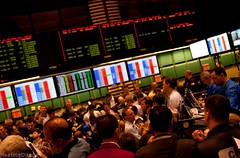
    The link between volatility in financial markets and volatility in energy prices is poorly understood. Nevertheless, it is possible to understand certain aspects of the relationship between the two. First, we know that as cheap and easy access to conventional fossil fuel supplies diminishes due to rapidly rising demand in the majority world, the process of extracting resources from remaining reserves (or ‘provinces’) is prone to what the Industry Taskforce on Peak Oil and Energy Security has called ‘peaky behaviour’. The so-called peaky behaviour of lesser-known provinces is erratic and naturally less predictable than the usual behaviour of known provinces. This matters a lot in the case of oil extraction, as price stability in oil markets is predicated on understanding and making informed guesses about the rate at which oil can be brought to market.

    As access to predictable supply declines and new sources are sought offshore in the deep seas, among Arctic ice or onshore in untapped kerogen rock, the ability of retailers and speculators to understand the oil market is hindered by an added layer of uncertainty. Experimenting with new methods of extracting oil lacks a historical track record, which normally provides a more stable framework for making sound decisions about supply and demand management – decisions which oil companies, traders and regulators are usually adept at making. Industry professionals must now cope with attempts to acquire a more nuanced understanding of the impact which erratic rates of extraction can have on oil markets. They must also cope indirectly with volatility in consumer demand for oil-based products.

    Financing an oil shock?

    Volatility in financial markets, due to unsustainable lending practices and the rise in use of exotic trading instruments, affects consumer demand for everyday products, particularly in oil-importing nations such as the United States and Britain. Because oil is the lifeblood of the modern industrial economy on which all businesses in the supply chain depend, when oil prices increase, so too do the prices of mainstay consumer goods. In the West, we are dependent on our thriving oil-driven economies, where the transport of goods and services are very closely linked to oil prices. So when global oil prices rise or fall, foreign and domestic businesses transfer the added costs downstream to consumers who feel the impact. Or, in cases where the added expense cannot be borne by consumers, businesses may either attempt to reduce wages or absorb the price shocks internally, which can lead to downsizing and layoffs. When the prices of consumer goods increase, we also use more of our income to pay for oil-derived products, and as a result our spending on other goods and services declines. This means that demand for many types of non-essential goods and services drops, including holiday travel, dining out, new cars, computers and more expensive homes. These impacts have a compound effect on prospects for a speedy economic recovery, making it more difficult for growth to be restored post-crisis and threatening longer-term stability.

    Betting on volatility
    It may be a coincidence that at the height of the most recent stock market crash in July 2008, oil prices skyrocketed to $147 dollars per barrel. However, it wouldn’t seem so on the basis of an article in the Guardian published one month earlier, in which billionaire hedge fund manager George Soros , predicted that the price of oil had become a bubble that could trigger a stock market crash. On 3 June, Soros informed the US Senate commerce committee that oil had been ‘pushed to its $135 a barrel mark’ – at that time a record high – by a ‘new wave of speculators’. Soros claimed that the doubling in the price of oil from 2006-08 was partly due to investment institutions, such as pension funds, channelling money into indexes that link to the cost of crude. Soros proceeded to warn the committee that, “there could be very serious consequences for global stock markets if the institutions suddenly began betting on a fall in the oil price.” Finally, he compared the speculative pressures being forced by institutional investors on oil prices in 2008 with the stock market crash of 1987, which was partly caused by a sudden rush of money into portfolio insurance – which institutions used to hedge themselves against a fall in share prices. According to Soros, institutional investors have been engaged in propping up one side of the market so as to give them sufficient weight to unbalance it if so decided. “If the trend were reversed and the institutions as a group headed for the exit as they did in 1987 there would be a crash”, he said.

    A more recent example of energy market manipulation on a regional scale is that of Barclays’ involvement in manipulating California power markets. The U.S. Federal Energy Regulatory Commission has recently proposed a total $470 million fine on Barclays for its actions – the largest ever by the agency – revealed partly on the basis of communications by four traders at Barclays’ West Coast power desk. The trading activity allegedly took place over two years from late 2006, in which the team exchanged messages explaining how they would ‘crap on’ prices in one market in order to profit in another. The traders stand accused of having wilfully manipulated energy prices, i.e. ‘driving up or down physical power prices to make money with their financial swap positions’. Their actions, if proven true, may have resulted in losses for other traders amounting to $139 million, netting Barclays gains upwards of $34.9 million.

    Unsustainable finance and the threat to energy security?
    The critical importance of predictable access to reliable energy supplies to meet electricity and fuel demand have been well documented in previous articles published by SustainableSecurity.org contributors. Economic recession, while potentially offsetting oil demand, could stand to make diminishing supplies last longer, buying time for other alternative clean energy sources to comprise a wider portion of overall generation. But economic recession also has another more subtle impact on energy production – it rattles investor confidence in innovative technologies that might otherwise stand to make oil-dependent economies more energy secure. Currently, a hot debate is raging in the UK and US on the future of conventional oil and gas, as well as nuclear energy, in curbing global demand for fossil fuels. This added uncertainty deters renewable energy investments while forecasts for economic recovery remain dismal. General volatility in financial markets, fuelled by irresponsible lending and trading practices, has an effect on oil prices as well, which further stifles economic growth. While the complexity of global markets demands wider investigation into the causes and effects of finance in relation to oil prices, evidence of market manipulation is unsettling. A sustainable and secure future, where a wider energy mix has been developed to meet rising demand, will no doubt require a more sustainable financial system which can service the real needs of citizens.

    Phillip Bruner is Founder of the Green Investment Forum and a guest lecturer in global political economy at the University of Edinburgh
     

    Image source: Heatingoil

  • Sustainable Security

    Summary

    After three years and over 22,000 air strikes, the Levantine ‘Caliphate’ manifestation of the Islamic State seems destined for destruction in 2017. Yet the revolt of radicalised Sunni Arabs is unlikely to abate in Iraq or Syria, with the battlefield shifting to localised guerrilla insurgency, increasing attacks within western states, and the opening of new fronts in the global margins, not least Asia and Africa. Such revolutions of frustrated expectations will be a major part of the geopolitical landscape for decades to come.

    Introduction

    By 28 June the Iraqi Army had largely re-established control of the city of Mosul which had been taken over by the so-called Islamic State (IS) three years earlier. In the process the army was aided hugely by coalition air power and artillery support, as well as the actions of a number of Shi’a militias and assistance from personnel linked to the Iranian Revolutionary Guards Corps. This closing phase of the Mosul operation coincided with the early stages of an assault on the city of Raqqa in northern Syria by a range of Kurdish and Syrian militias, again supported by the coalition. The two operations seemed likely to mark the end of the IS “caliphate” and raised the question of the future of the movement.

    Oxford Research Group has tracked and analysed the development of IS and its predecessor groups such as al-Qaida in Iraq (AQI) since the early 2000s, and two monthly briefings last summer (July and August 2016) made an initial assessment of the status of IS through a two-part analysis – A World After IS. There was some updating of this analysis in the briefings of January and February 2017, but the rapid changes in the status of the movement make it useful to take a broader view once more.

    The four articles taken together covered the recent experience and the current direction of IS and this briefing seeks to develop the analysis further, with an emphasis on longer term trends in global Jihadist movements, especially the advance of IS affiliates in South and South East Asia.

    Context

    IS as a territorial movement is under severe pressure as a result of the coalition’s extensive use of air power since August 2014. There have so far been over 22,000 air strikes, mostly on multiple targets and using over 80,000 precision bombs and missiles. Six months ago, the US Department of Defence reported that over 50,000 IS personnel had been killed, and the independent AirWars monitoring group has recently given a figure of close to 4,000 civilians killed. That last number will most likely have to be revised upwards substantially when the number of civilian casualties in Mosul is known.

    IS has lost control of most of its territory in Iraq and a substantial part of its territory in Syria. At the time of writing (28 June) the Iraqi government is reporting that the final defeat of IS in Mosul is only days away, albeit not the first time it has made (and revised) such projections. There remain reports of IS personnel staging attacks in parts of Mosul that have supposedly been liberated by government forces. Meanwhile, the battle to retake Raqqa, in Syria, is in its early stages and while Syrian and Kurdish forces backed up by coalition air strikes are reported to be making progress, independent verification is difficult.

    The operation to defeat IS in Mosul has actually taken over eight months rather than the two and a half months planned, and the elite Iraqi Army forces spearheading the attack have taken serious casualties. Since these forces will be crucial in ensuring the stability of the country after IS loses Mosul, the transition of IS from a force controlling territory to an anti-government insurgency will be easier for it.

    That task will further be aided by the near-certain role of Shi’a militias and Iranian forces in maintaining national stability, as well as the creeping advance of the Iraqi Kurdish presence in northern Iraq. These eventualities are deeply worrying to Iraq’s Sunni Arab minority and likely to make some elements of that minority more sympathetic to IS as it re-embraces an insurgent role.

    The Evolving IS Strategy

    It is clear that IS is in the process of re-inventing itself for the post-caliphate era and it is useful to tease out the more significant elements of its post-Mosul and post-Raqqa evolution.

    Firstly, it is probable that it will modify its claim of ruling a caliphate that is, from its perspective, a true exemplar of a new Islamist world order. Instead it will change that to a demonstration of what it was possible to achieve for three years, even against overwhelming force used by regional regimes strongly supported by the western coalition – the “near enemy” allied to the “far enemy”. Thus, the short-lived caliphate will be presented as a rich symbol of another world which will surely develop again and will eventually be victorious.

    IS propagandists will most likely focus on this approach and will also make much of the numbers of young people who were willing to die for the cause. In relation to that last point it is certainly the case that the Iraqi government and its coalition partners have been shocked and daunted by the sheer numbers of suicide bombers, well over a thousand, that could be gathered together to help defend Mosul. It is strange that the eschatological nature of IS is still not fully appreciated by its opponents.

    While the transition of IS in Iraq and Syria into a guerrilla force is one element of its strategy, the other two are also important. One, which has been much discussed in recent briefings, is the move to encourage, incite and even assist in attacking the far enemy. This is reminiscent of the al-Qaida approach between 2002 and 2006 and differs fundamentally from the IS focus on an actual caliphate prior to 2015. Then it was concentrating on the creation and strengthening of this caliphate and had little interest in attacking the far enemy. The sheer intensity of the coalition’s air assault changed that and one outcome was that attacks on western states increased substantially, as shown first in France, Belgium and Germany and more recently by the Westminster Bridge, Manchester and London Bridge attacks and the failed attempt in Brussels which, had it succeeded, would have killed many people.

    These attacks have three aims. One is demonstrating that IS remains a significant part of the response to what is seen as the western threat to Islam, and another is to show revenge and a capacity for retaliation against the perpetrators of the air assault in Iraq and Syria. Most important, though, is the intention of damaging community relations and catalysing Islamophobia and anti-Muslim bigotry. The aim is to polarise, destabilise and damage western societies by inciting inter-communal violence. In this context the substantial increase in the number of hate crimes in Britain, and especially the recent terror attack on a group of Muslim worshippers during Ramadan at the Finsbury Park Mosque, will have been welcome developments for the IS leadership.

    IS and the Global Margins

    Finally, there is the manner in which the IS outlook is gaining adherents in other parts of the world, especially across the Global South. Again, this trend has been touched on in some recent ORG briefings but may now be the most important element in IS’s revised strategy. As well as Bangladesh, northern Nigeria and the Lake Chad basin, Yemen and Somalia, there are three other countries to watch.

    In Afghanistan the US Department of Defence is concerned at the effectiveness of IS paramilitary groups and sees this as an added reason to deploy several thousand more US troops into the country, reversing the long-term withdrawal undertaken by the previous Obama administration. This ‘Khorasan’ branch of IS is also increasingly active in Pakistan, particularly against civilian Shi’a targets.

    In Egypt the Sisi government is reacting to the increased threat of violence from Islamist groups linked to IS with a firm policy of suppression, but this is being applied to a wide range of Islamic movements, not least the Muslim Brotherhood, and it is highly likely that it will simply increase support for more extreme elements. Egypt’s growing anti-Islamist intervention in Libya has at best dispersed IS elements there into the cities or neighbouring countries.

    Of even greater concern is the Philippines, where a coalition of extreme Islamist groups pledging links to IS took control of the southern city of Marawi in late May. Since then the Philippine Army has struggled to regain control, even though it is being supported by US Special Forces and US and Australian navy surveillance aircraft. The operation is now in its sixth week with mortar fire and air strikes directed largely at paramilitary sniper positions resulting in a rising toll of civilian casualties. Although not much covered in the western media, the Marawi situation has caused consternation across South East Asia, not least in Indonesia and Thailand.

    Conclusion

    As IS loses its caliphate it is making the transition to a guerrilla insurgency in Iraq and Syria, is escalating its attempts to damage social cohesion in western states and it is doing what it can to spread the message and gather supporters across the Global South.

    While the emphasis among western security analysts may be on the first two trends it may actually be the third which is most significant. This is because of underlying demographic and socio-economic trends that have been discussed repeatedly in ORG analyses over nearly two decades. A movement such as IS can successfully draw support from what may be described as the “majority margins” across the Global South – many tens of millions of mostly young people, fairly well-educated but with minimal life prospects. In the Middle East and Africa, in particular, this is exacerbated by the demographic bulge, with an especially high proportion of the population under the age of 30, but this also applies to an extent across South and South East Asia.

    While most of the focus is on IS and a presumed problem with Islam, it is worth noting that neo-Maoist movements persist, not least with the Naxalite rebellion in India. Perhaps the wise conclusion has to be that IS, the Naxalites, Boko Haram and others should all be seen as examples of an evolving era of revolts from the margins, revolts that may simply not be amenable to control and suppression by military action.


    Image credit: Mstyslav Chernov/Wikimedia


    Paul Rogers is Global Security Consultant to Oxford Research Group and Professor of Peace Studies at the University of Bradford. His ‘Monthly Global Security Briefings’ are available from our website. His new book Irregular War: ISIS and the New Threats from the Margins will be published by I B Tauris in June 2016. These briefings are circulated free of charge for non-profit use, but please consider making a donation to ORG, if you are able to do so.