Blog

  • Afghanistan: victory talk, regional tide

     A seductive narrative of military progress in Afghanistan is spreading among United States analysts. The real story is more complicated.

    There has in March 2010 been a cautious drumbeat of optimism about the United States’s military effort in Afghanistan. A series of briefings from senior military figures has begun to suggest that real progress on the ground is being made. A number of articles from astute observers confirms the picture of a turning-point having been reached (see Fareed Zakaria, “A Victory for Obama”, Newsweek, 22 March 2010)

    The more hopeful atmosphere among American strategists and analysts in the early spring of 2010 draws in particular on two developments: the apparent expulsion of Taliban elements from the centre of Afghanistan’s southern Helmand province (which in turn anticipates a probable move to take control of the city of Kandahar city in coming months); and the Pakistani security forces’ capture on 8 February 2010 of a senior Taliban leader, Mullah Abdul Ghani Baradar, and some of his close associates.

    At first sight, these two events do indeed support the argument that the United States and its Nato/International Security Assistance Force (Isaf) partners are making significant advances. It is appropriate then to assess them in the context of the broader military picture in Afghanistan and the region.

    An embedded enemy

    The first piece of evidence for a turning tide is the steady advance of American forces on areas where Taliban militias operate in Helmand. This fuels the consistent perception that the Taliban is a both a homogenous and an “external” entity: an integrated grouping which enters a region from elsewhere to occupy territory. The argument, which underpins much of the military analysis of recent operations, generates the conclusion that Taliban units can be or are being “expelled” from parts of Helmand; and that their comrades who must have similarly moved in to take control of most of Kandahar city can and must also be evicted.

    The mindset at work here is both enduring and notably impervious to contrary evidence. Its lineage can be traced to the mid- and late-1990s, when the view took hold among western agencies that the Taliban was composed of a network of militants trained in Pakistani madrasas who had then “inflitrated” across the border. The implication is that the Taliban are not ordinary Afghans but in essence outsiders; and that the US-led coalition is engaged less in counterinsurgency than in a fight to liberate much of Afghanistan from foreign (or at least non-local) forces.

    However, both experience on the ground and what is known of the longer-term history of the Taliban make this case hard to sustain. A truer understanding of the movement needs to take into account the mujahideen struggle against the Red Army in the 1980s, a decade before the name “Taliban” emerged to describe the new formation. A valuable source here is a new Taliban “memoir” which both describes a fascinating personal trajectory and reveals the deep Islamist motivation that from the start fired the anti-Soviet campaign (see Abdul Salam Zaeef, My Life with the Taliban, C Hurst, 2010).

    The evidence of Abdul Salam Zaeef’s account is that the mujahideen may have tended to live at a certain distance from the society around them – but they belonged fully to Pashtun society and were in no way “outsiders”. By the early 1990s, as much of Afghanistan was descending into rampant and brutal warlordism, they formed the core of an expanding Taliban movement. True, some militants did join the struggle from Pakistan and elsewhere – including the nucleus of what became al-Qaida – but the Afghan Taliban were always far more “embedded” in or close to their own communities than the dominant western perception assumed.

    The point is very relevant to the current campaign in central Helmand. There, many Taliban militants have indeed been dispersed into local communities – but (rather as they retreated from Kabul in November 2001) they have not been “defeated” in the conventional sense of that term. The same logic applies to the image of Kandahar city as a Taliban stronghold which will have to be besieged and “taken”; for if Taliban elements are immersed in the city’s very social fabric, the notion of defeat and eviction makes very little sense (see “Afghanistan: from insurgency to insurrection”, 8 October 2009).

    This suggests that the apparent political willingness among some western governments to envisage negotiation and compromise with “moderate” sections of the Taliban may be a more realistic way forward than the dream of vanquishing the enemy on the battlefield – if indeed this proposal were to be accepted on the other side (see Syed Saleem Shahzad, “War and peace: A Taliban view”, Asia Times, 26 March 2010). Some respected analysts (such as those associated with the of the International Crisis Group) in any case take a different view, arguing strongly that certain designated leaders at least – such as Abdul Ghani Baradar himself – be brought before the International Criminal Court to answer war-crimes charges (see Candace Rondeaux & Nick Grono, “Prosecuting Taliban War Criminals”, International Herald Tribune, 24 March 2010).

    An interested region

    The second piece of evidence adduced for optimism about the Afghan war is the newfound activism of Pakistani security agencies against members of the Afghan Taliban. This includes the detention of leading figures in the Quetta shura in northern Balochistan, and the arrest of Mullah Abdul Ghani Baradar (see Shibil Siddiqi, “’Strategic depth’ at heart of Taliban arrests”, Asia Times, 24 March 2010).

    The Pakistani operations have been interpreted as a welcome shift by the Pakistani army and the powerful Inter-Service Intelligence agency (ISI) towards greater collaboration with US/Nato forces in the “anti-terrorist” struggle.

    Here again, as with the perception of the nature of the Taliban, there is a misunderstanding. Pakistan’s fundamental calculation is the need to maximise its political influence in a future Afghanistan (see Shaun Gregory, “Pakistan and the “AfPak” strategy”, 28 May 2009). This would give the country its much-vaunted “strategic depth” to counter the regional superpower of India, and provide a buffer against Russian and other intrusions to the north and west. The Islamabad elite is particularly concerned about the close relationship that the Hamid Karzai regime has developed with India, including enhanced links with Indian military intelligence (see Kanchan Lakshman, “India in Afghanistan: a presence under pressure”, 11 July 2008).

    Pakistan’s military worries too that the Afghan president is reaching out to elements of the Taliban, perhaps even in ways that go further than what his United States overlords would wish. A pro-Indian Karzai regime that is dealing with the Taliban is simply not something that Pakistan can accept. In this light, the real aim of Pakistan’s policing actions is not to aid the United States and far less to help Karzai: it is to gain more leverage over the Taliban.

    These considerations of national interest also cast the US-led military operations in Helmand and elsewhere in a very different light. The US and it coalition partners are – following the new strategy outlined by Barack Obama in his West Point speech on 1 December 2009 – continuing to build up their troop-strength towards a total of around 140,000 on the ground; but this “surge” will not be the real dynamic of change in Afghanistan (see “Afghanistan: new strategy, old problem”, 3 December 2009).

    Rather, Afghanistan’s future will be decided by the evolving interaction between (principally) Kabul and Islamabad, with other regional powers – Delhi certainly, but also Tehran, Beijing and even Moscow – playing a role and seeking advantage. The US/Isaf’s massive financial and military commitments lead western states naturally to regard themselves as the masters of Afghanistan’s destiny; but the hard reality is that emerging regional geopolitics are consigning the west more and more to the sidelines (see Harry Reid, “We are doing all the fighting but China will win the peace”, Herald [Glasgow], 25 March 2010).

    This regional dimension accentuates the United States’s predicament. In Afghanistan, as in Iraq, the proclamation of approaching victory in a grinding war has often been followed by further reversals. And behind the noise and smoke of combat, other interested parties are quietly reordering the “grand chessboard”. A conflict now approaching its tenth year has more surprises to come.

  • Sustainable Security

    In June,  a judicial review into the legality of UK arms sales to Saudi Arabia was announced. This will be the first time that UK arms export policy has been put under the spotlight and scrutinised in this way. Campaign Against Arms Trade discuss this historic decision.

    On 30th June there was a heavy silence in the moments before High Court Judge Justice Gilbart announced that he was granting a judicial review into the legality of UK arms sales to Saudi Arabia. A quiet relief fell over those of us in the public gallery. Decorum ensured that the response was muted, but the decision was historic. This will be the first time that UK arms export policy has been put under the spotlight and scrutinised in this way. It is an unprecedented step that is likely to focus on not just the extent of UK arms sales to Saudi, but also the scale of collusion and government support that goes with it.

    Our claim calls on the government to suspend all extant licences and stop issuing further arms export licences to Saudi Arabia for use in Yemen while the court holds a full review into whether the weapons sales are compatible with UK and EU legislation. The UK’s arms export policy will thus now undergo a full three-day investigation in front of two judges, which must take place before February 1st 2017.

    Fuelling the flames in Yemen

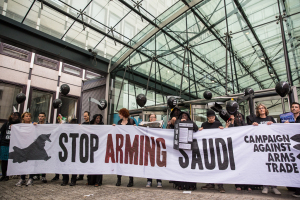
    London, UK. 11th July, 2016. Human rights campaigners protest against arms sales to Saudi Arabia outside the Defence and Security Organisation (DSO), the Government department responsible for arms export promotions.

    London, UK. 11th July, 2016. Human rights campaigners protest against arms sales to Saudi Arabia outside the Defence and Security Organisation building. Image by CAAT via Flickr.

    UK arms exports have been central to the ongoing Saudi-led bombardment of Yemen. As we write this, UK-licensed Eurofighter jets may well be over Yemeni airspace, guided by UK-trained military personnel and dropping UK-made bombs from the skies. It would be hard to overstate the humanitarian crisis that has been unleashed, with the UN having ranked the humanitarian situation in the war-torn country as a “Level 3” emergency – the highest possible emergency ranking. The bombing campaign has lasted over 15 months following a Saudi Arabian-led intervention into Yemen’s civil war. Saudi forces are acting alongside Yemen’s government against forces led by the former president, Ali Abdullah Saleh, and the Houthis, a northern Shia militia. There is no question that atrocities have been committed on all sides, although the UN has accused Saudi forces of killing twice as many civilians as all other forces.

    More than 2.5 million people have been displaced, and vital infrastructure, including schools, hospitals and cultural heritages sites have been destroyed. Of those who remain in Yemen, millions have been left without access to clean water or electricity, and 80% of the population has been left in need of aid. Even the Home Office has acknowledged the scale of the destruction, concluding that to allow people to return to Yemen could be a breach of their human rights.

    The need for legal accountability

    The destruction hasn’t only been immoral, it has also been illegal. A UN panel of experts, the European Parliament and many of the most respected humanitarian NGOs in the world, including Human Rights Watch and Amnesty International, have accused Saudi forces of serious breaches of international humanitarian law (IHL).

    The UN report “documented 119 sorties relating to violations of international humanitarian law” and reported “starvation being used as a war tactic.” More recently, Human Rights Watch has linked UK arms to specific attacks on businesses and civilian targets. The reports have been thorough and in-depth and their evidence has been compelling, but they have fallen on deaf ears in Whitehall.

    Arms exports control regulations are very clear: a licence should not be granted in the circumstances where there is a “clear risk” that it “might” be used to violate IHL. In spite of this, the UK has licensed over £3.3 billion worth of arms sales to Saudi Arabia since the bombing began, including fighter jets, bombs and missiles.

    There can be little, if any, control over how and when these arms will be used. A recent report from Amnesty International found that cluster bombs sold decades ago by the UK are being used in Yemen, a terrible reminder that the shelf life of arms is very often longer than the two year licence under which they are sold.

    Moreover, even if such control was possible, there is no reason to believe it would be applied. This is because if arms were found to be used in a way that violated the terms of their sale agreement this would result in licences being cancelled—which could affect the profitability of exports.

    Burying the truth

    In the last hours of the last day of the most recent session of parliament, the government performed a major U-turn by publishing written corrections that reveal, contrary to earlier claims, that there has been no oversight of how arms are being used. At best it represented staggering incompetence on the part of government ministers— at worst it was a cynically timed admission of how they had previously distorted the truth.

    Either way, it underpins the point that the Saudi government hasn’t just bought arms and military support, it has also bought silence, compliance and a seal of political approval. That’s why, only nine months ago, we saw the despicable, but ultimately unsurprising, revelations that UK diplomats had lobbied and campaigned behind the scenes for Saudi Arabia to Chair the UN Human Rights Council.

    So who benefits from the current situation? Certainly not the Yemeni people living under bombs, or the Saudi people being persecuted and oppressed. One obvious beneficiary is the arms companies. BAE Systems, for example, enjoys the full support of the UK government in its arms sales to Saudi. Earlier this year, BAE Chairman Roger Carr told Channel 4 News that he sees Saudi Arabia as “a very important customer with which we have a very strong relationship.” This point is alluded to in the last BAE annual report. The ‘principal risks’ section of the report identifies the commercial risk that state buyers may consider cutting their military budgets, before suggesting this will be mitigated in part because “in Saudi Arabia regional tensions continue to dictate that defence remains a high priority.”

    BAE and the UK’s special relationship

    For decades now, UK governments of all political colours have worked hand in glove with the arms companies and Saudi authorities, continuing to sell arms and provide political support while turning a blind eye to the grotesque human rights abuses that are being carried out every single day.

    Regardless of who has been in charge, the Saudi Royal Family’s influence and interests have been core to Whitehall’s approach to arms sales and the Middle East. Over recent years we have seen Tony Blair intervening to stop a corruption investigation into arms exports to Saudi, David Cameron flying out to Riyadh to meet with Royalty, and the outlandish and humiliating spectacle of Prince Charles sword dancing to secure sales for BAE Systems.

    The government’s inability to uphold its responsibility in regards to human rights and domestic law is evidence of just how far it is willing to go to maintain this toxic relationship. Despite the legal action, there has been no change to the government’s policy. Only two weeks after the judicial review was ordered, Saudi military representatives were in the UK for the Farnborough Airshow where they were shopping for weapons.

    Stop arming Saudi Arabia

    At a time when the UK should be using its close relationship with Saudi to apply pressure and push for meaningful peace negotiations and vital reform, it is instead carrying on with business as usual. The government’s refusal to act responsibly underlines the enormous power of the arms trade lobby and the pernicious nature of the UK-Saudi relationship, a relationship that fuels instability and repression and corrupts our political system.

    Whatever the outcome of the review, the campaign will go on. As long as terrible crimes are being committed with UK weapons and with our government’s support, we will continue. The UK’s shameful relationship with Saudi Arabia and the terrible examples above show just how far (and how low) the machinery of government will go to protect the Saudi Royal Family’s interests.

    The UK-Saudi alliance has boosted the Saudi regime while lining the pockets of arms company executives, but it has had devastating consequences for the people of Saudi Arabia and Yemen. For the sake of those people, the UK government must finally stop arming and empowering the brutal Saudi monarchy.


    Andrew Smith and Vyara Gylsen are writing on behalf of Campaign Against Arms Trade (CAAT). Andrew Smith is Head of Media for Campaign Against Arms Trade. Vyara Gylsen is an anti arms-trade campaigner that volunteers and works with Campaign Against Arms Trade. You can follow CAAT on Twitter at
    @CAATuk.

  • Sustainable Security

    Much has been written about the prevalence of sexual violence in the Democratic Republic of Congo (DRC), and in particular about the use of rape as a “weapon of war”. The horrific stories of rape and sexual violence published worldwide have led to the DRC being labeled the “worst place in the world for women” and the “rape capital of the world”. Feminists have long decried the silence which has historically surrounded rape and sexual violence during conflict, and so the fact that political leaders and world media are now talking about sexual violence in the DRC and pushing for solutions to this problem should be applauded. However, much of the discourse and reporting reduces this to a simple narrative of “bestial” or uncontrolled soldiers or militias raping the women and girls in villages which they attack. This narrative, in addition to employing colonialist and racist stereotypes about the behaviour of Congolese men and women, fails to grasp the complexities of gender relations in the DRC, the multiple and varied nature of sexual and gender-based violence, and of the social structures and norms which underlie this violence.

    One of the common perceptions about gender-based violence in the DRC, is that rape is the prevalent form of this violence and that sexual violence committed as a direct consequence and/or a strategy of war. It is undeniable that Forces Armées de la République Démocratique du Congo (the official army of the DRC) soldiers as well as numerous other rebel fighting groups have committed acts of sexual violence during the multiple and ongoing conflicts in the country, and continue to do so, as demonstrated by an attack in 2015 on the town of Kikamba in South Kivu during which over 100 women were raped. But to think of gender-based violence only as war rape is to miss the multiple other forms of violence, and the fact that these persist not only in areas of the country most directly affected by the conflict (notably the Eastern Regions) but across the whole country.  Common barriers to reporting GBV, such as stigma and fear of reprisals of the survivors, as well as poor infrastructure within the DRC mean that there is a lack of accurate statistics on GBV. But studies that do exist have shown that most of the incidences of GBV recorded in recent years are committed by civilians and not by soldiers, and that the most prevalent forms of GBV are domestic or intimate partner violence. A recent study by UNFPA listed multiple forms of GBV which are common in DRC including domestic  violence, rape and sexual violence, forced and early marriage, mistreatment of widows, psychological violence, economic violence and deprivation of resources.

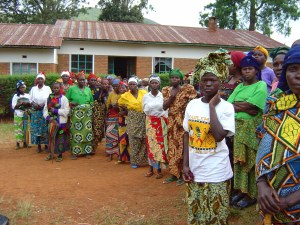
    Meeting of victims of Sexual violence in the Democratic Republic of the Congo.

    Meeting of victims of Sexual violence in the Democratic Republic of the Congo. Image by USAID via Wikimedia.

    So although armed conflict has exacerbated gender-based forms of violence in the DRC, it cannot be the only explanation for the existence or persistence of this violence. Instead, we should look to the country’s underlying gender norms, discriminatory laws and policies, and socio-economic structures. Although the new  2006 constitution of the DRC has made some progress towards recognizing gender equality, such as in article 14 which states that the public authorities should ensure the promotion and protection of women’s rights,  discriminatory laws still remain, which reinforce persistent norms and beliefs about the roles of men and women in society. The Family Code of the DRC still maintains that a man is the head of the household who has authority over all other members of the household including his wife who must obey him. Women must obtain their husband’s permission before performing any legal act such as selling or leasing property, opening a bank account or applying for a visa or passport. The idea that men are heads of the household is strongly engrained and supported by many Congolese who see it as a part of the national “family values”. This persistence of a family code which legitimates men’s control over women and the symbolic and normative values which it perpetuates are key barriers to the achievement of gender equality. Further, research has shown that prevalent gender norms seem to accept a certain level of violence within couples as normal and even desirable.

    A new law on sexual violence passed in 2006, showed progress in criminalizing forms of violence not previously recognized such as sexual harassment, sexual slavery or forced pregnancy, but it still fails to recognize marital rape. This reflects that fact that many men and women think it is part of a woman’s duty to have sex with her husband whenever he wishes. And, for many, a certain level of violence within couples is “normal”, so that a man giving a “light tap” to his wife or girlfriend to keep her in line is perfectly acceptable.  Some even share the belief that if a man does not hit his partner, then he does not really love her. This normalization of a certain level of violence in intra-personal relationships is just part of a wider continuum of gender-based violence which is normalized and accepted. There are also various forms of violence which are condoned or encouraged by customary law which remains strong in some areas of the country, such as the rules of sororate and levirate under which women may be forced to marry the brother of their dead husband or the widow of their dead sister.  The continuum of these different forms of violence, which are accepted and normalized within Congolese society, can be seen to provide the context within which the rape and sexual violence, that has occurred during the armed conflicts, should be understood.

    The normalization of GBV also contributes to the continuing impunity of perpetrators, as do the weak police and judicial systems in the country. As noted above, many incidences of GBV are not even recognized as such, and even when it is acknowledged that an act of gender-based violence has been committed, it is unlikely that he perpetrator will be prosecuted or punished. And in the absence of a robust judicial system, many cases are still settled through “amicable” arrangements between perpetrator and victim.

    Gender inequalities are also obvious in many areas of public life, such as the lack of women in decision making positions in the government. Women make up only 8.9% of representatives in the National Assembly, 5.5% of Senators and 14.8% of government ministers (despite a strong recommendation from the national consultation held in Kinshasa in 2013 to appoint at least 30% of women to the government). Although a law on gender parity in political representation was passed by the National Assembly in April 2014, so far it has not had any noticeable impacts. There is still widespread opposition to women’s participation in public and political life because this is equated with a threat to the “traditional” family life and culture of the DRC. Women have also been under-represented in all of the various peace negotiations which have taken place to try and end the conflicts in the DRC, and remain a very small minority in the armed forces, the police and the judiciary.

    Much more can be written about the various forms of gender inequality which persist in the DRC and which provide foundations for the various forms of GBV which exist in the country. The necessary links between broader social gender inequalities and GBV are vital to understand if there is to be any effective response to the problem of GBV, and effective policies for prevention. The Women, Peace and Security agenda, has a focus on not only prevention of violence, but also of increased participation of women in public life and decision making. Increasing participation means considering women not only as “vulnerable victims” of sexual violence, but as actors should be given an equal role in political life.  All of the many complexities and layers of gender inequality need to be taken into account if real solutions to the problem of GBV are to be found, and in doing so Congolese women need to be actively engaged in making decisions and finding the solutions.

    Jane Freedman is Professor at the Université Paris 8, and member of the Centre de recherches sociologiques et politiques de Paris (CRESPPA). She has researched and published widely on issues relating to gender, violence, conflict and forced migration.

  • Sustainable Security

  • Sustainable Security

    Over 10 years ago, the Cathedral Peak Hotel, which nestles among the peaks of South Africa’s majestic Drakensburg Mountains, played host to what was, at the time, a unique gathering. Scholars from around the globe (the United States, Britain, Switzerland, Australia, Germany, South Africa, and Israel) met with representatives of international NGOs (the International committee of the Red Cross and the Geneva Center for the Democratic Study of Armed Forces, among others) and members of the private military and security industry to discuss and debate the growing role of private contractors in contemporary conflict zones. I was the convener of that conference and co-editor of the subsequent volume of the same title, Private Military and Security Companies: Ethics, Policies and Civil-Military Relations (Routledge 2008).

    Though the modern private military company can be traced back to companies such as David Stirling’s WatchGuard International in the 1960’s, and though there was some related early scholarly research, it was the massive use of contractors by the United States in Iraq in the civil war that emerged after the 2003 invasion which ultimately sparked serious public and scholarly interest in the sector. Just a year before the conference, the killing and gruesome mutilation of four Blackwater contractors by insurgents had been a major cause of the bloody and ultimately fruitless first battle of Fallujah. Given the context, it’s particularly interesting that Doug Brooks – then the President of the largest industry body for PMSCs, the International Peace Operations Association (now the International Stability Operations Association) – chose to focus his contribution to the conference, and his co-authored contribution to the book, on peacekeeping operations.

    Brooks argued then that, with the growth of what he called ‘Westernless peacekeeping’ (i.e. UN and African Union peacekeeping operations carried out without major support from NATO and ‘NATO-class’ military forces) PMSCs should have an increasing role in peacekeeping operations, contributing capabilities not possessed by the military forces of developing world countries like Bangladesh, Ethiopia, Nepal, Indonesia and Rwanda, who contribute the bulk of peacekeepers for UN operations.  Contractors, Brooks contended, offer ‘faster, better and cheaper’ solutions to capability challenges in peacekeeping operations, operate with a smaller and less culturally sensitive footprint than equivalent military forces, and act as a force-multiplier through the provision of specialist and niche capabilities.

    private-miltary

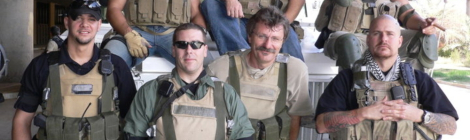
    Private military contractors in Baghdad, Iraq. Image by Babeltravel via Flickr.

    A decade on and Iraq is still in the news, but Western boots on the ground are largely absent, and the previously booming market for contractors there and in Afghanistan has shrunk dramatically. As Molly Dunigan and Ulrich Petersohn and their collaborators show in a recent edited collection, the once-championed ‘global market for force’ has proven itself to be, in fact, a conglomeration of quite different markets for force, and it is a mistake to conflate the legitimate with the illegitimate. The United States, Britain and other nations continue to employ the services of private military contractors for lower priority tasks where doing so is (or at least appears to be) cost and manpower effective.

    The US State Department’s five-year $10.2 billion Worldwide Protective Services contract, the next phase of which was announced in mid February, is distributed largely among companies like SOC, Triple Canopy and Aegis Services which made their names during the Iraq post-invasion boom. And the old stomping ground is showing signs of a revival – according to a report by Bloomberg Business week, “Operation Inherent Resolve, the Pentagon’s anti-Islamic State initiative, employed 7,773 contractors in the second quarter of 2016, up from 5,000 in the first quarter of 2015.” Many of those contracts are for logistical, training and advisory roles in conflict and post-conflict environments in Africa and the developed world. And, quietly, the United Nations has also become a significant employer of PMSCs, as a careful reading of the UN Department of Procurement’s list of registered vendors reveals. As long ago as 2011 the Geneva Center for the Democratic Control of Armed Forces (DCAF) released a report showing that, despite the sensitivities involved, “the UN has increasingly paid private military and security companies (PMSCs) for a range of services in the areas of humanitarian affairs, peacebuilding and development.” The companies themselves have become increasingly corporatized and professional in their structures and practices, an evolutionary necessity for those companies which survived the ‘gold rush’ days of post-invasion Iraq.

    The more dramatic pronouncements by both proponents and opponents of the PMSC industry have failed to come to pass. Contractors have neither rendered state-based peacekeeping and stability operations obsolete, nor have they radically undermined the monopoly on force of the states that employ them or created greater instability in the international sphere.

    Looking to the future, what might we expect regarding the involvement of PMSCs in peacekeeping and stabilization operations? Despite their popularity as ‘bad guys’ in television dramas and Hollywood films, and an uncomfortable legacy of past serious human rights abuses committed by contractors, the evidence suggests that in the real world the use of PMSCs is increasingly becoming normalized, and that in policy circles there is a growing understanding of the potential value contractors can provide if properly employed. While there are still contractors operating in the global periphery who better fit the old ‘mercenary’ moniker, we can expect this process of normalization to lead to an increase in the employment, and more open employment, of PMSC’s in peacekeeping operations (though the term ‘PMSC’ will likely decline in usage).

    The improved clarity about the status and responsibilities of contractors in zones of armed conflict that resulted from the publication of the ICRC sponsored Montreaux Document of 2008 has played an important role in this process of normalization. Though this was unquestionably not the intended purpose of the creation of the document (which carries no legal weight but summarizes the status of contractors under international law and gives recommendations to both PMSCs and the states that contract them), the Montreaux process cleared up numerous misconceptions and provided a firm framework to which companies could attach their claims to legitimacy.

    Over the past decade there has been much debate and discussion over what functions ought to be considered by states to be ‘inherently governmental’ and which therefore ought not to be contracted out. A similar discussion will likely occur as the outsourcing of peacekeeping functions becomes more publicly acknowledge. However, it will likely be pragmatic factors which establish the limits of outsourcing.  Whatever those limits turn out to be in practice, it is certain that there will be limits. Even in today’s complex and spoiler afflicted environment, effective peacekeeping relies heavily on the perception of legitimacy, and that means blue UN helmets or the green berets of the African Union, not beards and Oakley sunglasses.

    Dr Deane-Peter Baker is a Senior Lecturer in the School of Humanities and Social Sciences at UNSW Canberra, located at the Australian Defence Force Academy. He is also a Researcher in the Australian Center for the Study of Armed Conflict and Society. His research interests include military ethics, private military and security companies, special operations, military strategy and the ethics of public policy. He is the author of Just Warriors Inc.: The Ethics of Privatized Force and Citizen Killings: Liberalism, State Policy and Moral Risk.

  • Sustainable Security

    The Global Land Rush: Catalyst for Resource-Driven Conflict?

    Michael Kugelman of the Woodrow Wilson International Center, argues that the factors that first sparked many of the land acquisitions during the global food crisis of 2007-08 — population growth, high food prices, unpredictable commodities markets, water shortages, and above all a plummeting supply of arable land — remain firmly in place today. He writes that land-lusting nations and investors are driven by immediate needs, and they have neither the incentive nor the obligation to slow down and adjust their investments in response to the wishes of distant international bureaucrats. This, he argues, has serious consequences for global security.

    Read Article →

  • Sustainable Security

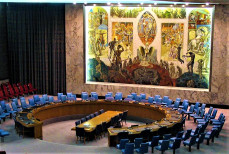
    Over the past two decades, the United Nations Security Council has responded more strongly to some humanitarian crises than to others. This variation in Security Council action raises the important question of what factors motivate United Nations intervention.

    The United Nations (UN) selective response to humanitarian crises—as evidenced most recently by the organisation’s uneven reaction to the conflicts in Libya and Syria—is arguably among the most contentious issues in international politics. Some scholars and observers heavily criticize this practice, arguing that the selectiveness of humanitarian interventions undermines their legitimacy and ultimately their success; that the uneven response to humanitarian emergencies suggests that these intervention are motivated not by humanitarian concerns but by the military and economic interests of powerful states; and that the selective enforcement of human rights norms undermines the emerging rule of law in international politics (for examples see Archibugi 2004, Chomsky 1999)

    Others disagree and claim that selectivity is not only unavoidable for the UN but also desirable. The selectivity of humanitarian intervention, so the argument goes, reduces the risk of over commitment; it helps to maintain cooperation among the great powers; and it prevents the UN from becoming involved in ill-conceived operations (see Roberts and Zaum 2008)

    But what explains why UN humanitarian interventions remain selective in the first place? Why is it that the UN has taken strong action to respond to some crises, like those in Northern Iraq, Somalia, Bosnia, Sierra Leone or—more recently Libya—but not to other like those in Colombia, Myanmar, Sudan, or—currently—Syria?

    The scholarship on humanitarian intervention often argues that each humanitarian crisis (and the responses to them) is historically unique and therefore requires a case-by-case explanation. While I agree that attention should be paid to the specificities of each crisis, my research shows that the UN’s response to them is not random but follows remarkably consistent patterns (see Binder 2015, 2017). More specifically, I argue that a combination of four factors explains whether the United Nations does or does not take strong action (sanctions, ‘robust’ peacekeeping operations, military action) in response to a humanitarian crisis. This explanation has been developed and tested through a systematic comparative analysis of the UN’s response to more than 30 humanitarian crises after the end of the Cold War combined with several in-depth case studies of intervention decisions in the UN Security Council.

    • The first explanatory factor is the extent of human suffering in a crisis. In a humanitarian crisis people suffer and die while human rights norms are massively violated. This generates a morally motivated pressure to come to the rescue of threatened populations and to defend international norms.
    • Secondly, whether the UN intervenes depends on the extent to which a crisis spills over to neighbouring countries and regions. Humanitarian crises often affect neighbouring countries or regions in negative ways. Spill over effects include regional conflict diffusion, refugee flows, terrorism or economic downturn. Spill over effects create a material interest to intervene.
    • The third explanatory factor for UN intervention is the ability of a target state to resist outside intervention. Militarily strong target states, or target states that have powerful allies, can raise the costs and risks of UN intervention and affect its chances of success.
    • Fourth and finally, UN intervention is explained by the level of material and reputational resources the UN has committed to the resolution of a crisis in the past (sunk costs). To the extent that the UN have invested time, money, and diplomatic prestige in the resolution of the crisis, this creates the wish to protect these investments through continued or escalated involvement.

    None of these explanatory factors is sufficient in itself to explain selective intervention. In combination, however, they provide a powerful explanation for the UN’s uneven response to humanitarian crises.

    When does the UN take strong action?

    Image credit: Bernd Untiedt/Wikimedia.

    The UN can be expected to take strong action—coercive measures including economic sanctions, ‘robust’ peacekeeping operation or (the authorization of) military action—if the extent of a humanitarian crisis (in terms of victims and internally displaced persons) is large, and if the organisation has committed substantial resources to its resolution. This, however, leads to intervention only when the crisis also generates substantial negative spill over effects (e.g., refugee flows) or when the target state of an intervention is weak and therefore unable to resist to outside intervention.

    Explaining limited UN action (or inaction)

    A limited response of the UN to a humanitarian crisis, such as UN observer missions, humanitarian assistance, or even complete inaction of the UN, is best explained by the ability of a potential target state to resist outside intervention (e.g., through military capabilities). However, other factors must be present as well. Military capabilities must be either complemented by a low level of previous UN involvement; or by a relatively low level of human suffering and spill over effect to neighbouring countries.

    A few brief examples may help to illustrate how these four factors interact to lead to strong or limited UN action.

    Bosnia

    UN intervention in Bosnian crisis was clearly driven by a combination of motivational factors. For one, UN members were strongly concerned by the large-scale plight of the Bosnian civilian population and the grave human rights violations committed by the parties to the conflict (ethnic cleansing, the installation of concentration camps, the siege of Sarajevo, and the massacres at Srebrenica). Second, the intervention was motivated by the wish to prevent the crisis from spilling over to Western European countries, most notably in form of refugee flows, and to stop a more generalized destabilization of the Balkan region. A third important driver of UN intervention in Bosnia was the wish of UN member states to protect the tremendous investments both material (through humanitarian assistance and peacekeeping) and reputational (diplomatic efforts) the UN had made over the course of the conflict. However, when the Bosnian Serbs took hundreds of UNPROFOR blue helmets hostage, this brought the UN to the brink of failure and put the UN’s efforts in the Bosnian crisis in jeopardy. In this situation, rather than withdraw, the organisation escalated its response. Finally, outside intervention was facilitated by the inability of the Bosnian Serbs and the Serbian government to generate sufficient resistance against outside intervention by the UN (and later by NATO).

    Cote d’Ivoire

    Very similar motivational patterns can be observed with respect to the UN’s decision to authorize military intervention in the context of post-election violence in Côte d’Ivoire in 2010. The dramatic levels of internal displacement and the fears of genocide, given the xenophobic politics of ‘Ivoirité’ that characterized the conflict, raised strong humanitarian concern in the UN. At the same time, UN members wished to prevent the conflict from spilling over to other Western African countries, most notably to Liberia which was slowly recovering from a long and brutal civil war. Moreover, the substantial and longstanding involvement of the UN in the country generated an additional institutional dynamic pushing towards intervention. The UN had invested heavily in the resolution of the crisis in Côte d’Ivoire—most notably through peacekeeping and peacebuilding. UN members wished to protect these investments they saw at stake, should country relapse into civil war. Finally, former President Laurent Gbagbo and his supporters were too weak to effectively resist outside intervention in in the country. By the time the UN decided to authorize military action, large parts of the country were controlled by forces loyal to Gbagbo’s opponent Alassane Ouattara.

    Libya

    As in the crises in Bosnia and in Côte d’Ivoire, humanitarian intervention in Libya was driven by more than one factor. Muammar al Gaddafi’s public announcement to commit a massacre in the town of Benghazi generated particular pressure on the part of UN members to act. Concerns to prevent spill over effects also played an important role. In addition to destabilizing effects for neighbouring Egypt and Tunisia—both of which are undergoing important political change in the wake of the ‘Arab Spring’—Western UN members feared that hundreds of thousands of Libyan refugees would cross the Mediterranean towards Europe. At the same time, the Gaddafi regime was not in a strong position to resist outside intervention. Not only was there a capable opposition movement in the country, but also Tripoli had managed to alienate nearly all of its former Arab and African allies. Libya also lacked partners in the Security Council who might have opposed or blocked UN intervention. However, the Libyan case fails to provide strong support for the previous institutional involvement explanation in that the UN did not invest substantial material and immaterial resources to the resolution of the crisis prior to the intervention.

    Syria

    The ongoing crisis in Syria illustrates how a combination of factors prevents strong UN action. The available evidence suggests that massive human rights violations, the spiralling violence in the country as well as the severe spill over effect of the Syrian conflict for neighbouring countries, most notably Lebanon, raised strong concerns on the part of UN members. A majority of UN members have pushed for sanctions against the Assad regime in the UN Security Council. That the UN has nevertheless not taken strong action in Syria can be explained by two factors. First, unlike the cases discussed before, Syria is more able to resist outside intervention—most notably because the Assad regime enjoys the continued support of its Russian and Chinese allies, who block any coercive measures against Syria in the UN. Second, the UN has not been substantially involved in Syria in the past and has not committed substantial resources to the resolution of the crisis. As such, a complementary dynamic of escalating commitment could not unfold in the UN to push towards coercive measures.

    Summary

    Whether the UN intervenes or does not intervene in a humanitarian crisis cannot be explained by a single factor. Rather, a combination of conditions – the extent of human suffering, the level of spill over effects, the military strength of a target state and the extent to which the UN has been involved in a crisis before – accounts for this variation in UN action to a large extent. While the explanation I suggest here does not account for all UN responses to humanitarian crises, it covers more than 80% of the UN humanitarian interventions after the Cold War.

    Martin Binder is Associate Professor in International Relations at the University of Reading. His research focuses on humanitarian intervention, the authority and legitimacy of international institutions, and rising powers. His work has been published in the Journal of Peace Research, International Studies Quarterly and International Theory, among others. His recent book The United Nations and the Politics of Selective Humanitarian Intervention has been published in 2017 with Palgrave Macmillan.

  • Moving Beyond Crisis: Survival 2100 and Sustainable Security

    In a piece for the International Movement for a Just World, William Rees maps out a vision for what he calls ‘Survival 2100.’ The goal of such a strategy would be “to engineer the creation of a dynamic, more equitable steady-state economy that can satisfy at least the basic needs of the entire human family within the means of nature.” The alternative, Rees argues is to “succumb to more primitive emotions and survival instincts abetted by cognitive dissonance, collective denial, and global political inertia.”

    The call from Rees echoes the sentiment coming from many different – and often unusual – quarters that are responding to the major implications for security and survival of the combined ecological, political and economic crises that either characterise or are looming in the international system.

    While some of the ideas in the piece may need some further thinking through (eg. “The world community will have to agree to fund worldwide social marketing programs to ameliorate “pushback” and bring the majority of citizens on board” – ie. people will need to fund a campaign to convince themselves!), the fundamental focus is sound. Rees identifies the need for a genuinely strategic approach to the governance and management of the global environment and the global economy. Once one thinks through the real costs of inaction on issues like climate change (global insecurity and a greater potential for conflict is but one such cost), the costs that we account for in global market failures take on a different character. Rees argues that “As any good economist will acknowledge, government intervention is legitimate and necessary to correct for gross market failure. Indeed, resistance to reform makes hypocrites of those who otherwise tout the virtues of market economies. Truly efficient markets require the internalization of heretofore hidden costs so that prices tell consumers the truth.”

    Such ideas are not radical at all, simply a reflection of doing the sufficient cost-benefit analysis that planning for long-term survival requires. Therefore the message for national defence planners is clear –attempting to ‘maintain control’ over global insecurity is ultimately futile, the time to put the principles of prevention and sustainability at the heart of national security planning is now.

    The full article on the JUST website is available here.

    Image source: hundrednorth.

  • Climate change

    An IPI policy forum launched a new joint study by a UN office and a prominent Norwegian group showing that 36 million people were displaced in 2008 by sudden onset natural disasters — 20 million of them by climate-related disasters such as storms and floods.

    Read more »

  • Sustainable Security

    Too Quiet on the Western Front? The Sahel-Sahara between Arab Spring and Black Spring

    While the world’s attention has been focused on the US-led military interventions in Iraq and Syria a quieter build-up of military assets has been ongoing along the newer, western front of the War on Terror as the security crises in Libya and northeast Nigeria escalate and the conflict in northern Mali proves to be far from over. In the face of revolutionary change in Burkina Faso, the efforts of outsiders to enforce an authoritarian and exclusionary status quo across the Sahel-Sahara look increasingly fragile and misdirected.

    Read Article →

    The Costs of Security Sector Reform: Questions of Affordability and Purpose

    In considering security sector reform, questions of affordability have often been subordinated to questions of effectiveness and expediency. A recent series of reviews of security expenditures by the World Bank and other actors in Liberia, Mali, Niger and Somalia has highlighted several emerging issues around the (re)construction of security institutions in fragile and conflict-affected states.

    Read Article →

    Beaux Gestes and Castles in the Sand: The Militarisation of the Sahara

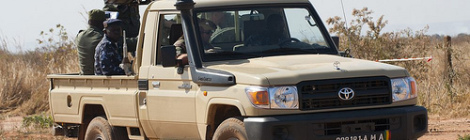
    Whatever the benefits for Mali, the French-led eviction of jihadist groups from northern Mali may have made the wider Sahara a less safe place, and has done little to lower the capacity of such groups to threaten European interests.. In 2014, France is implementing a major redeployment of its forces in Africa into the Sahel and Sahara. Meanwhile, the US has been quietly extending its military reach from Djibouti to Mauritania. However, as elsewhere, the western military approach to countering Islamist insurgency in the Sahel rests on very unsteady foundations and the potential to provoke wider alienation and radicalisation is strong.

    Read Article →